Off World presents the final album in its trilogy of surreal and spacious leftfield electronics. "A stellar project headed by Sandro Perri, one of the most singular producers in contemporary music" (Boomkat), this third volume is another distinctive collection of tracks constructed from semi-improvised ensemble recordings made over the past decade with a varied cast of coconspirators. Drew Brown, Matthew Cooper, Susumu Mukai and Andrew Zukerman join Perri again on a variety of synths and machines, along with violinist Jesse Zubot (Tanya Tagaq, Fond Of Tigers). Perri also continues to add organ and piano to the mix, while Volume 3 notably features first-time Off World contributors Nicole Rampersaud on trumpet and Martin Arnold on guitar, both mainstays of Toronto's vibrant improv and out-music scenes. The Quietus calls Off World "genuinely explorative_the musical equivalent of a Dali-esque landscape" which through all sorts of genre-defying twists and turns, at times evokes "offkilter, late Miles Davis ambience". Off World 3 doubles down on that jazz-adjacent trope in certain respects, while holding fast to Pitchfork's dictum that Perri "cultivates his own genreless brand of futurism." Marked by longer tracks than previous collections, three of the album's five songs clock in around the 10-minute mark, where overtly improvised instrumental playing wends its way across alternately bubbling and woozy electronic beds. "Impulse Controller" is a languidly skewed rhumba where ambling melodic undercurrents and dubby electronic pointillism provide a dulcet promenade for Rampersaud's Miles-esque trumpet excursions. "Ludic Loop" see-saws along in a slow synthy two-step, punctuated by Perri's restrained piano chords and Arnold's fried electric guitar. "Empasse" is perhaps most reminiscent of earlier Off World collections, though again slowed and stretched, with oozing synth bass ostinatos counterposed by ambient layers of viola and violin filigree from Zubot. These three centerpiece longform tracks each highlight one of the album's instrumental improvisers, and taken together, make for the most scintillating sedate and ruminant album in the trilogy. Off World 3 sounds as sui generis as ever, but in wrapping up the series, Perri sprinkles the project's emblematic alien surrealism with decidedly anthropic elements and temporalities. This final volume in the trilogy could also be seen as a re-statement of Perri's politico-aesthetic mission, as aptly celebrated by Pitchfork and its glowing 8.0+ reviews of Perri's 2018/2019 solo albums In Another Life and Soft Landing (released between Off World 2 and the present volume): a uniquely purposeful, subtly detailed cannon of songs "busy, vibrant, and bursting with life, but that aren't ever in a rush to get anywhere."
Buscar:q ram
Limited 200 Copy
Cherry Bandora is an oriental jewish princess singing in poetic Greek, rhythmical Turkish and Hebrew slang. The fresh combination of the greek blues guitar, the bouzouki, with the psychedelic hammond organ, accompanied by lively middle eastern grooves on drums creates an exciting clash of tradition and rebellious attitude.
Supported by Initiative Musik GmbH with project funds from the Federal Government Commissioner for Culture and Media
The last twelve months have been a whirlwind for Henry Counsell and Louis Curran, the men who make up Joy (Anonymous). Having established themselves during the Covid-19 era by playing impromptu meet-ups on London’s South Bank, they have graduated to bigger venues, travelled to far-flung locales and recorded their second album, Cult Classics, while maintaining the spontaneous energy and irrepressible joy that made their name. Their music revels in the euphoria of being alive and all the feelings, good or bad, that come with it. It invites us into a community, draws us close and promises the night of our lives.
Recorded over the course of a year, the blueprint for Cult Classics was laid down over a two-week span at Imogen Heap’s Round House in east London. Joy (Anonymous) invited friends old and new to visit - they’d record live instruments in jam sessions upstairs and then retreat to a second room to flip and loop and generally mess with the sounds, moulding them into sizzling dance tracks. “Loads of people were coming up to me like ‘I thought this was going to be a dance record?’” Louis says, remembering the quietly beautiful music they’d be recording. “I’d be like, don’t worry about that, just keep playing.” He’d send it back to people later and they’d be floored - “That was my bit and you’ve made it... jungle!”
It was an organic and creatively fulfilling approach, one that didn’t allow any of the music to get stale or stagnate. As they built the tracks from the sounds they’d collected, Joy (Anonymous) would weave the new songs into their famously improvised live sets, testing them, refining them, taking note of the audiences’ reactions. In a year punctuated by a lot of travel, they’d also incorporate the voices of people they met along the way - “Beazley’s Poem”, which opens the record, features the words of a man who was working security at a Fred Again show at New York’s Terminal Five. “He was basically doing the opposite of his job and being a hype man, climbing on the fence and ramping up the crowd - we ended up hanging out with him - like, who’s this legend?” Louis explains. “He just speaks really amazingly about his life, all these amazing thoughts and opinions - he started jumping on the mic when we were playing, preaching these amazing messages to the crowd, like that we all need to be nicer to each other. The first time we played the record in its entirety, he introduced us and that’s the recording we’ve used.”
Joy (Anonymous) remain dedicated to the spirit of spontaneity. They shut a street down with a surprise waterside party in New York. On a trip to Copenhagen they played an impromptu set in a cafe, which turned into a house party and a night-long good time. In Lithuania, they ended up playing in a decommissioned prison. It’s harder, perhaps, to keep that spirit alive now that they are operating more within the confines of the music industry but they will keep lugging their kit to wherever the party calls for as long as they can. “I think if we lose that, we’ve kind of lost what makes us us,” Henry says.
Bursting with multi-genre reference points and disparate influences, Cult Classics is very much a dance album. The samples we made ourselves or we took from music that is quite different to dance music, but we definitely wanted to shout out a lot of the dance influences that we love,” Henry says. They listened to a lot of Daft Punk and Basement Jaxx as well as The Prodigy (“more rage stuff”), taking songwriting tips from their dance forebears, but also recording bits that felt more like jazz and motown (see: A Place I Belong and the lovely album closer, You’re In Or You’re Out). Emir Taha’s gentle classical guitar runs like a thread throughout Cult Classics, washing into the undertones of the record, tying it all together.
The album follows the beat of a night out, from frenetic, sweaty movement to the gentler winding down as the dawn breaks. At times it is euphoric, celebratory and pure, whirling fun, at others it seeks the joy in the darker emotions that life throws our way. 404 is designed to encapsulate everything about the Joy (Anonymous) journey so far. Skittering beats and ghostly vocals give way to vibrating house chords: sirens blare as we approach a dubstep drop. It’s dramatic and wild, ratcheting up, seeming to settle then hitting you with an intense and frantic breakdown before the ghostly vocal returns to lull us back into the world. It has the feel of a hungry cat playing with a mouse, toying with it before letting it get away.
What sounds like someone playing the spoons on playful, housey How We End Up Here is actually Louis’ restless habit of clicking his rings on everything, one of a myriad of calling cards and easter eggs that day one fans will recognise. They rework Miley Cyrus and Swae Lee’s Party Up The Street into a French-electro-inspired future classic, adding a note of melancholy to a tune that you can imagine hearing blaring from every car on a summer drive. The lyrics on Cult Classic are generally reassuring, inspirational, originally drawn from Henry in stream-of-consciousness freestyles. You’re fine the way you are, they seem to say - the repeated “No need to try” of A Place I Belong, the assurance that “It’s in me all the time” on In Me All The Time. Even the summery but regretful Did You Wrong hints at the growth that is possible from less than ideal behaviour. For Joy (Anonymous), joy isn’t about just being “happy” all the time - it’s about relishing every element of your being.
The name ‘Joy (Anonymous)’ is taken from the work Henry did with Alcoholics Anonymous groups: it is a way to build a community around sharing joy. Their impromptu live sets are known as ‘meetings’; they encourage fans to share moments of joy to their website. They care deeply about the scene they’ve come up in and are determined not to leave it behind. Every show is another chance to reach out and connect with people who love to come together and revel in music as loud as it can go.
Support slots for Fred Again and The Streets, wild B2Bs with Fred and Skrillex, and a set at Four Tet’s Finsbury Park all-dayer this summer have given the duo the opportunity to live out childhood dreams and introduced their infectious live shows to new audiences at huge venues.
With an album as assured and joyful as Cult Classics on the horizon (and a killer collab with The Blessed Madonna coming up), they’re only going to reach higher heights. But the essence of Joy (Anonymous) remains on the South Bank. Between shows at Ally Pally in September, they dragged their camping chairs and gear back down to the banks of the Thames: and it just felt right.
La preuve is a rearguard action. Most of the people who inspired it are dead or retired. Old teenagers flay their former loves. They bear witness to a bygone era, but happily embraced, digested and spat out. Everything was still possible. Or possible at last. Psychedelia opened the doors of perception. Romanticism wasn't relegated to a dull formatting, a cheese without a rind. The group Poudingue, which started out ten years ago, has some fine leftovers. These are the crumbs from purgatory.
The proof (la preuve, in French) is in the pudding (poudingue, in French) is an expression coined by Friedrich Engels meaning that the value, quality or truth of something must be judged on the basis of direct experience or its results. The expression is a modification of an old saying that makes the meaning a little clearer: the proof of the pudding is in the eating.
Nicolas CHEDMAIL – vocals, guitar, bass, keyboard, trumpet, French horn, trombone, helicon, pipes, flute, siren, alto sax, harmonica, melodica, violin, cello, shahi baaja, sanza / texts 2 4 5 6 9 10 / music 1 to 10 Frédéric MAINÇON – guitar, vocals / texts 1 3 7 8 9 / music 3 4 7 8 9 Jean-Jacques BIRGÉ – synthesizer, sampler, effects, field recording, erhu, inanga, shahi baaja, waldteufel, vocals / music 1 3 4 5 9 Guest: Benjamin SANZ – drums
Lebanese-Canadian musician and classically-trained singer and pianist, Natalie Chami, records music under the moniker TALsounds. On her 3rd LP, Shift, Chami’s intimate electro-acoustic compositions
glow with a crisp, icy tonality. She injects the drama and raw emotion of Björk and Sade into the alien rameworks of ambient, drone, and noise quadrants of the experimental.
- 1: Ángel Cabral (Sung By Edith Piaf) La Foule
- 2: Georges Bizet Carmen: "Habanera
- 3: Mike Wilsh Et Mike Deighan (Sung By Joe Dassin)
- Waterloo Road (Les Champs-Elysées)
- 4: Franz Lehár La Veuve Joyeuse: "Heure Exquise
- 5: Joseph Kosma Les Feuilles Mortes
- 6: Jean- Philippe Rameau Les Indes Galantes: Danse Des
- Sauvages
- 7: Michel Legrand Un Été 42
- 8: Georges Brassens Les Copains D'abord
- 9: Charles Gounod Romeo Et Juliette: "Ah, Je Veux Vivre!
- 10: Francis Lai Un Homme Et Une Femme
- 11: Jean-Jacques Goldman , Arr. Gautier Capuçon/Jérôme
- Ducros Pense À Nous
- 12: Ennio Morriconne Chi Mai
- 13: Maurice Ravel Pavane Pour Un Infante Défunte
- 14: Charles Aznavour La Bohème
- 15: Claude Debussy , Arr. Jérôme Ducros After Jascha
- Heifetz Beau Soir
- 16: Richard Cocciante Belle (Notre Dame De Paris)
- 17: Jean-Jacques Goldman Envole Moi
- 18: Philippe Sarde La Chanson D'hélène, From "Les Choses
- De La Vie" Soundtrack
- 19: Jacques Offenbach Les Contes D'hoffmann: Barcarolle
- 20: Georges Delerue Le Mépris
- 21: Gabriel Fauré Sicilienne
- 22: Vladimir Cosma , Arr. V. Cosma La Boum
Place of longing Paris - with the cellist Gautier Capuçon "Gautier Capuçon is like a diamond in a ring and sparkles on its setting", with enthusiasm the New York Times resorted to figurative comparisons. With such effusive praise, it is no wonder that the famous cellist's albums are also absolute bestsellers.
Intuition, Emotions and Sensations are now followed by his next album with a ravishing program: Destination Paris is dedicated to atmospheric evergreens and ranges from popular film music to French chansons and classical works.
On new EP twotwentytwo, indie riser THALA continues to embrace vulnerability, summoning long-buried emotions to colour her ardent love for lyricism amid psych-tinged `90s indie soundscapes. Filled with potent songwriting and coming-of-age anthems straight from the heart, these everyday love stories surrender to life's insecurities. Evoking the soundscapes of Slowdive and Deerhunter, whilst recalling the widescreen pop of boygenius and Snail Mail. Recorded in London and Berlin earlier this year, twotwentytwo follows the release of `In Theory Depression', THALA's first EP on Fire Records. Spanning six tracks, it builds on its predecessor's fearless lyricism, excavating deep-set feelings of loss, pain, desire and conflict against luminous production and addictive melodies. Following rammed appearances at SXSW and The Great Escape, and having picked up the attention BBC Radio 1's Jack Saunders, THALA shows no signs of slowing down_ Blissful guitars and evocative crescendos permeate THALA's unique vision of dreampop, reveling in soaring choruses and intimate storylines. On its surface, twotwentytwo boasts a kind of glorious emotive draw - you'd be forgiven for mistaking any one of these tracks as a backdrop to any teen-angst drama. However, while THALA wants her songs to feel nostalgic, it's the complexity of her songwriting that sees her modern compositions really resonate and she is keen to stress her lyrics can be interpreted in numerous ways. And therein lies the heart of this release - a cathartic, wildly empowering, self-explorative from a future indie heartbreaker at her gutsy best. Ltd Clear Vinyl, A5 insert, dlc
- 1: My Beach
- 2: My Wave
- 3: Teenage Girls
- 4: Shoulder Hopper
- 5: The Dummies
- 6: Beer Can Beach
- 7: Surfer's Nitemare
- 8: I Live For The Sun
- 9: Meet Me At The Beach
- 10: Big Top
- 11: Somebody Ripped My Stick
- 12: Letter From Hawaii
- 13: The Surfmen
- 14: Can’t Get A Tan
- 15: The Surf Instructor
- 16: Punch Out At Malibu
- 17: Bird Bathroom
Remastered Reissue des 1980er Klassikers 'My Beach' der 'verwöhnten Gören aus Malibu', den widerwärtigen und respektlosen Surf Punks. Ein Sommer-Soundtrack aus Surf-Rock, New Wave und SoCal-Punk, für Fans von Descendents, Ramones, Agent Orange und Devo. Streng limitierte Auflage auf 'Kook Juice' farbigem Vinyl im Hochglanzcover mit Redux-Artwork und farbiger Innenhülle, samt Faltposter mit Lyrics und Surfbegriffsglossar und einem Surfbrettaufkleber.
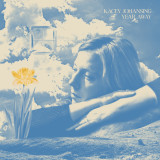
In March of 2020, after learning that a dear friend’s life was coming to an end, Johansing sat down and in one sitting wrote the song “Daffodils”. An elegiac tribute to someone facing death with grace and curiosity, the lyrics confront Johansing’s own mortality by observing the brief lifespan of a Hlower. Only a week later when the world came to an abrupt standstill, she soon found herself processing this recent loss while trying to make sense of a new global reality. Across the ensuing months, Johansing found herself increasingly untethered by a world of isolation and political upheaval.
Having been a frequent touring member of bands like Hand Habits and Fruit Bats, and often being called into the studio to lend her harmonies and multi-instrumental talents to records, Johansing’s phone no longer rang. Living in Los Angeles she feared her musical community was vanishing, as friends and collaborators continually announced they were leaving the city. It was in returning to her piano nightly that she found the greatest solace, feverishly writing the songs that would be collected on her next album. Resulting from this new sense of time and focus was a deepening of her songwriting. As Johansing recalls, “I felt like a metamorphosis happened during that time. There was a lot of personal growth and healing.”
Throughout Year Away Johansing traverses uncharted emotional landscapes brought upon by the changes occurring all around her. The forced self-reflection of the moment is aptly captured by “Old Friend”, featuring an aching melody and swooning production that recalls the best of Harry Nilsson. The epic piano and saxophone-driven “Smile with My Eyes” addresses the loss of community as friends became distant and political divides between family grew. On “Smile” Johansing pushes her vocals further than ever, expanding her range and using her peerless voice as the singular instrument it is. Facing the loss of a family home due to environmental destruction, “Shifting Sands” is marked by soaring Hlutes, Hield recordings and glassy synthesizers that nod to Japanese New Age.
“Daffodils”, the stunning album centerpiece, is built from a pastiche of looping samples, swirling Mellotron and dazzling vibraphone. “Keep your heart open wide, you never know your time / Keep your heart wild, true Hlower child”, Johansing sings as she says goodbye to an elder, while the band reaches a grief-stricken crescendo of woodwinds and chiming bells. On the title track, Johansing takes listeners on an eerily meditative journey of collective experiences. “I wanted to keep the progression simple and repetitive so that musically we could add new elements little by little, while the emotional tone of the lyrics becomes increasingly more strained and expressive”. The song grows to a fever pitch as Johansing sings higher than she thought possible; the tension of the repeating chords Hinally resolving into a hopeful coda as multiple soloists weave around each other.
Amidst heavier themes, Johansing still leaves room for her love of irresistible pop melodies and lush production. The driving “Last Drop” and mid-tempo “Valley Green” are two of her catchiest songs to date. On the former Johansing sings the anthemic chorus, “As if it were the last drop, and nothing ever lasts forever / As if it were the last stop, too far out to come back ever”, longing for a love that she’ll never take for granted, while also admitting that she doesn’t always know how good she has it. “Valley Green” features shimmering layers of 12- string guitars, stacked horns and an impeccable solo by co-producer and multi- instrumentalist Tim Ramsey (Vetiver, Fruit Bats), hinting at a love for bands like NRBQ.
Having been eager to capture the initial spark of songwriting, Johansing booked time at Highland Park’s 64 Sound Studio the week that it reopened. Over the course of three days, she and her band gathered basic tracks for 10 songs, before returning home to Hinish the record with Ramsey. Setting forth to make an album that paid homage to the music that kept them company during the months spent alone together, the duo pulled inspiration from a wide net including Burt Bacharach, John Carroll Kirby & Haruomi Hosono. Ramsey’s newfound love of early digital synthesizers dovetailed effortlessly with Johansing’s fondness for classic 70’s horn and string arrangements, creating a sound that is distinctly modern yet warm and familiar.
Once again Johansing called upon some of the Hinest players of Northeast Los Angeles’ vibrant music community to lend a hand with the record. The 70s R&B-folk of “Watch It Like a Show” features an electric guitar solo from Hand Habits’ Meg Duffy, while album closer “Endless Sound” boasts backing vocals from electronic musician Kaitlyn Aurelia Smith and swooping Indian-inspired violins from Amir Yaghmai (HAIM, The Voidz). The record shines brightly thanks to an ace mix from veteran producer Rob Schnapf (Beck, Elliott Smith, Cat Power), woodwinds from Logan Hone (John Carroll Kirby, Eddie Chacon), and a featured rhythm section of drummer Josh Adams (Jenny Lewis, Bedouine) and bassist Todd Dahlhoff (Feist, Devendra Banhart). Recorded across multiple studios including LA’s famed Sunset Sound, the album remains steadfastly buoyed by the adept engineering of Tyler Karmen (MGMT, Alvvays).
Though born of turbulent times, Year Away is ultimately interested in moving forward. The album ends with “Endless Sound,” where Johansing laments seismic global changes, (“The water is hotter, the mighty thaw / The current’s reversing, the last are lost”) but vows to keep going (“No storm can take me down / Endless light, endless sound”). It’s Year Away’s resilience that shines through despite the darkness. It’s a sound all her own and Johansing’s most cohesive set of songs yet.
Unzählige wollten Thomas Rainer aufhalten, ihn stürzen und haben alles getan, um ihn Dreck fressen zu sehen. Sie belächelten ihn für seine Vision, für seinen grenzenlosen Willen, seinen Herrschaftsanspruch erbauen, zu untermauern und zu mehren. Doch das ist Vergangenheit. Längst pflastern sie als besiegte Gegner seinen Weg, hängen als Trophäen an den Wänden seines Hauptquartiers. Er kam, sah, siegte - und führt nun seinen endgültigen Triumphzug durch die Straßen der gefallenen Städte. "Veni Vidi Vici" lautet der Name des Kreuzzugs, mit dem Thomas Rainer Mauern einreißen, Armeen auslöschen und ganze Reiche zu Fall bringen wird. Mit ihm oder gegen ihn - etwas anderes lässt dieser Tanzdiktator nicht gelten. Überlege dir gut, ob du an seiner Seite durch ein Meer aus willigen Gespielinnen und rauschender Sünde waten und dich selbst so fühlen willst wie der berüchtigte Caligula - oder ob du als Verlierer von der Geschichte vergessen werden willst.
NACHTMAHR haben ihre "Kriegserklärung" propagiert - und liefern mit dem gleichnamigen Song nur einen von vielen Beweisen für die Überlegenheit dieses Club-Kolosses. Doch das ist erst der Anfang: "Tradition" wird mit seinem infernalischen Maschinen-Beats gleich hinterhergejagt, "Mütterchen Russland" ist voller marschierender Wucht und russischer Epik, das langsame, wogende "Die letzten Dämme" oder die allumfassende Industrial-Vernichtungswaffe "Hoffnung" als zertrümmernder Schlusspunkt erweisen sich als übermächtige Attacken zeitgemäßer Clubkultur. Geschmierter denn je läuft seine Industrial Infanterie, unter der stolz in die Höhe gereckten Standarte des Austrian Imperial Industrial versammelt der Trümmergeneral ein einschüchterndes Arsenal schwerer Waffen, die jeden Club in seine Einzelteile zerlegen werden und die Konkurrenz aus der Geschichte fegen werden wie eine lästige Fliege.
Die Welt wird brennen. Entzündet an den Überresten der untergegangenen Gegner, spiegelt sich im Widerschein dieses Triumphs der musikalischen und körperlichen Exzesse eine neue Weltordnung des Industrial, ein in Stein gemeißelter Beweis für die Überlegenheit von NACHTMAHR. Dabei ist es bedeutungslos, ob der Herr der übermächtigen Beat-Brigade flirrende Industrial-Exzesse, donnernde EBM-Rammböcke, schleppende Rhythmen oder noisigen Terror in die Schlacht schickt: Das Ende wird stets dasselbe sein, NACHTMAHR werden das Schlachtfeld stets als Sieger verlassen. Den Gegnern schallt es in den Ohren, die Frauen flüstern es andächtig: "Veni vidi vici" - bis in alle Ewigkeit.
- 01: Sell Out
- 02: Eric Cantona Stomp
- 03: Matula, Hau Mich Raus
- 04: Das Ist Heute Nicht Dein Tag
- 05: Ich Bin Ein Snob
- 06: Die Axt Im Walde
- 07: Eine Autobahn Im Regen
- 08: Nein Nein Nein
- 09: Ich Kann Nicht Nein Sagen
- 10: Guybo
- 11: Es Kann Nicht Ganz Schlecht Sein
- 12: Gespenster
- 13: Heraus Zum Ersten Mal
- 14: Der Mann Auf Der Bank
- 15: Du Hast Es Nicht Weit Gebracht
Das fing mit Superpunk Mitte der 90er vollkommen ambitionslos an. Plan war es, eine Band zu gründen, um auf Partys Kracher aus den Sixties zu spielen. Leider scheiterte die Band bereits an relativ simplen Garage-Rock-Klassikern wie "I need you" von den Kinks. Und wer hätte gedacht, dass "Friday on my mind" derart viele Akkorde hat? Das kann sich doch nun wirklich kein Mensch merken. Da erschien es erheblich einfacher, sich eigene Songs auszudenken, konnten andere schließlich auch. Aber erst mal musste ein Name her. Zur Auswahl standen "Fifi", "Schnellbus", "Hamburg Spinners", "Superminister Riesenhuber" und "Superpunk". Mit einfacher Mehrheit und wie immer ohne viel nachzudenken, entschied man sich für letzteres Mit den ersten eigenen Songs wurden dann richtige Konzerte gespielt, die zum Teil gut ankamen. Bei einem dieser Auftritte war auch Thies. Dem gefiel, dass die Band, jetzt aus dem Stegreif memoriert, "wie eine total zerkratzte Ray-Charles-Platte auf falscher Geschwindigkeit" klang. So gut gefiel das dem Thies, dass er fortan als Keyboarder dabei war. Und das ist auch wirklich eine treffende Beschreibung für den frühen Superpunk-Sound. So, jetzt aber: Es wurden fleißig eigene Songs gemacht und als genügend da waren, dachte sich die Band: "Die könnten wir eigentlich mal aufnehmen." Auf der Straße, irgendwo zwischen "Eis-Gerd" und "Pudel" trafen sie Bernd Begemann, der sagte: "Ich habe einen 4-Spur-Kassettenrekorder, ich nehme euch auf!". "Toll, danke, Bernd!" Und so brachte Bernd seinen Kassettenrekorder, mehrere Kassetten (die teuren, Chrome II), Mikrophone und eine seltsame Apparatur (ein Stimmgerät) mit in den Übungsraum im Bunker bei der Apostelkirche und nahm mit einer Engelsgeduld das Album auf. Auf der Straße, irgendwo zwischen "Heinz Karmer"s" und "Komet" traf die Band dann Bernd Kroschewski, der sagte: "Ich habe ein Label, ich bring euer Album raus!" "Toll, danke, Bernd", hieß es erneut. Und so erschien ziemlich genau vor 25 Jahren "A bisserl was geht immer" auf Fidel Bastro. Da waren, muss man zugeben, etliche Hits drauf: "Matula, hau mich raus", "Ich kann nicht nein sagen", "Das ist heute nicht Dein Tag", "Die Axt im Walde". Aus der ambitionslosen, verhinderten Partyband wurde dann doch noch eine (beinahe) richtige Band, mit Platte und Label und dem ganzen Schnick Schnack. Sogar auf Tour sind Superpunk mit dem Album gegangen, das war was, zwischen Hölle (null Zahlende in Kassel) und Himmel (ausverkaufter Pudel, Rekordgage von 300 Mark + gekühlte Freigetränke). Falls ihr noch nie "A bisserl was geht immer" gehört habt, stellt euch eine Mischung aus 39 Clocks, Cockney Rejects und dem Ramsey Lewis Trio vor. Zugegeben, leichte Kost ist das nicht, aber einer, wenn nicht der einzige Meilenstein des Hamburger DIY/ Outsider/Beats
"Bring us the Head" ist unsere Liebeserklärung an das Kino der Achtziger und Neunziger, mit dem wir aufgewachsen sind", weiß Sänger Jens zu berichten.
"Während der Corona-Pandemie haben wir viele dieser Streifen "wiederentdeckt". Viele werden das nachvollziehen können - man saß zu Hause, hatte ungewohnt viel Freizeit, und dank der Streaming-Dienste kam trotzdem selten Langeweile auf.
Irgendwann sprachen wir im Scherz darüber, dass es doch cool wäre, eine Platte über unsere alten Lieblingsfilme zu machen... gesagt, getan."
Fans von Streifen wie "Terminator", "Conan", "Army of Darkness" oder "Escape from New York" werden somit ihre helle Freude an dem Album haben, für dessen detailverliebtes Cover-Artwork einmal mehr Besil Wrathbone verantwortlich zeichnet. Auch eine Cover-Version des Ramones-Klassikers "Pet Sematary" nahm die Band für "Bring us the Head" auf. Jens erklärt:
"Da wir den Song seit Jahren im Live-Programm haben, und er außerdem so wunderbar ins Konzept des Albums passt, lag die Idee förmlich auf der Hand."
Der neue Langspieler wird am 27. Oktober 2023 über Reaper Entertainment in den Plattenläden aufschlagen.
Dark Horse Records feiert den 20. Jahrestag von JOE STRUMMERs (The Clash)2003er Album Streetcore. Der Sound wurde von Paul Hicks (The Beatles, The Rolling Stones, George Harrison) neu gemastert und die Grafiken wurden von der Originalveröffentlichung reproduziert.
Dem Vinyl liegt ein exklusiver Druck von Strummers handgeschriebenem Text zu "Coma Girl" bei.
Das dritte Studioalbum von Joe Strummer and the Mescaleros, das die Single "Coma Girl" enthält, wurde nach Joes Tod im Jahr 2002 veröffentlicht. Daher wurden viele der Tracks als erste und einzige Gesangsaufnahmen veröffentlicht. Die bei den Fans beliebte Coverversion von Bob Marleys "Redemption Song" und der Track "Long Shadow" wurden von Rick Rubin produziert. Dark Horse feierte kürzlich den 70. Geburtstag von Strummer mit der Veröffentlichung von Joe Strummer 002: The Mescaleros Years.
Various Color pressing
I spent a lot of time crossing the Detroit/Windsor boarder tunnel. - My family lives half in the US and half in Canada and my father crossed daily for for work and materials. My brother and I would sit on old paint cans in the back of his work truck. long trips to home depot in the hopes that we could get a rally’s banana milkshake before heading home. - I hated that work truck, but we loved the trips, no matter how mundane. We would spend hours crossing that boarder tunnel when it was busy, our bottoms would hurt from the metal paint cans. When i was in high school i would smuggle cigarettes to sell to the Canadian kids, it was a good business. The dark tunnel in disrepair built over 90 years ago felt like a relic of the past, its leaky walls and pale yellow tiles were always crumbling around you. It was claustrophobic and uncomfortable. But the tunnel made your mind wander with thoughts of what was above you, giant cargo ships or sea monsters. It was an anxious place, the uncertainty of its structure or the dreaded boarder patrol on the other side. Would be be pulled in and searched? would the carton of camels i hid under the seat be found? - It was a special place and a special time. These sounds are about traffic and the movement and time in this strange tunnel.
Kalipo prepares to launch his new album Happy Little Accidents, which counts with twelve electro-focused tracks as well as the participation of feature artists Rampue, Ira Atari, Oberst & Buchner and subkutan. Iconic 80s painter and TV host, Bob Ross is celebrated for his thirty-minute landscapes, recognizably soothing voice as well as the 'happy little quotes' he imprinted on pop culture. One of Ross' most memorable turns of phrase, "We don't make mistakes; we just have happy accidents," went on to encourage thousands worldwide. And not just painters. "For me, this album was about letting the songs develop very quickly and not evaluating them too much, or trying to avoid mistakes," says German electronic music producer, Kalipo (Jakob Häglsperger) who named his latest release Happy Little Accidents after Ross' signature phrase. "Bob Ross really impressed me as a child, he was always so accessible to everyone and demonstrated how easy it was for anyone to work creatively," says Kalipo, who translated Ross' fast and instinctive wet-on-wet painting technique to music-making on Happy Little Accidents. The 12 tracks that make up PART I and PART II of the album are a celebration of the method - sometimes it's a floaty journey with tinkering sounds, at other times dark fast beats create the core of the music, but there's always a sense of intuition and heart driving Kalipo's productions.
Short Attention has more than grabbed ours with its first two EPs and this third one keeps up that good early form. It's a heavy-hitting mix of pivotal house talents starting off with prolific Windy City player Boo Williams.
The big man's 'Transformation' is a smooth and chord-laced house roller that has a more reflective vibe than his usual party-starting offerings.
Atlanta don Kai Alce's 'Love Exists' is a heartfelt house romance then the long-time partnership of Owen Jay & Melchior Sultana douse us in star-gazing chords on 'Soul Expression' that leave you feeling refreshed. Hector Ram's 'Morning Sun Vibes' then uplifts with beautifully gentle piano chords.
Label : Croque Macadam / Requiem Pour Un Twister
Playing : Maxence Tomasso / Etienne Chuc / Samuel Ramon / Ilhan Palayret / Stanislas de la Fuzz
Recording : Alexis Fugain & Vincent Hivert
Mixing : Vincent Hivert & Samuel Ramon
Mastering : Luc Gyrou
Photos : François Grivelet
Illustration : Audrey Matt-Aubert
Artwork : Etienne Gimenez
Classy French deep house label D3 Elements (D3, pronounced day-trois, is French for Detroit, which is a big inspiration on its sound) returns with more of that lush and timeless backroom tackle, this time from Neuronphase.
'Outside' is a dusty jam with atmospheric vocal samples and sustained chords, 'Information Society' has a more playful piano lead and ramshackle drums and 'Shadows' then brings some acid madness. 'Soru' comes as a skipping, percussion-laden original and as a hi-tek soul remix with cosmic leads from Hugo LX rework. Plenty to love here, as always from this label.
Not many heroes of indie folk have won an Oscar or created the basis of a successful stage musical, but Glen Hansard is an artist who can wear both of those feathers in his cap. As a member of the Frames and the Swell Season, Hansard won acclaim for his literate, intelligent, and passionate songwriting and his nuanced vocals, and he"s gone on to win similar accolades as a solo artist. Hansard first gained an audience for the limber but emphatic indie rock he created as a member of The Frames, then gained international fame with fellow singer and songwriter Markéta Irglová in the duo The Swell Season, whose emotionally open, primarily acoustic indie folk became the centerpiece of the award-winning independent romantic drama Once. After going out on his own with his 2012 solo debut, Rhythm and Repose, Hansard has shown a stylistic diversity as he embraced the sound of "70s singer/songwriters on 2015"s Didn"t He Ramble, vintage soul on 2018"s Between Two Shores, and an eclectic swing between subtle folk and noisy indie rock on 2019"s This Wild Willing. Glen Hansard now presents All That Was East Is West Of Me Now, his first solo album in 5 years. The album demonstrates the Oscar-winning singer-songwriter"s unique ability to blend Irish folk with modern rock & the punch of his storied live shows.