- Panda Bear, Voice of the Seven Woods, Mammane Sanni Abdoulaye. File under: Jazz / Electronic. Titi Bakorta almost didn't make it. Born in and raised in Kinshasa, the Congolese multi-instrumentalist was on his way to Uganda when he fell off the boat as it traversed the mighty Congo River. Unable to swim, Bakorta was saved by a friend who dragged him to the closest city Kisangani, where he was unexpectedly acquainted with local singer Dancer Papalas. Soon they were performing in bands together, traveling across the continents and settling in Tanzania, South Sudan and Dubai - they even appeared in front of General Defao, the beloved Congolese vocalist who fronted legendary soukous bands Grand Zaiko Wawa, Choc Stars and Big Stars. Now based in Kampala, Bakorta offers his own unique take on Congolese pop and folk sounds, weaving traditional elements through a psychedelic lattice of guitar loops, mangled voices and eccentric beatbox rhythms on his debut full-length. He bends woodblock snaps on 'Kop' into stuttered blurs, wailing emotionally over twanging riffs and bizarre, theatrical xylophone twinkles. It's still pop music on some level, but curved around Bakorta's unwieldy personal narrative - there's a sense that everything could unravel at any time but it all hangs together, strengthened by Bakorta's confident, contemporary production smarts. 'Elles Vais' is more airy, with celestial soukous vocals that float above tight, electronic drums. Tangled guitar echoes overlap each other like dense, weaved tapestries, contrasting perfectly with Bakorta's urgent, driving pulse. Occasionally, he transcends completely, like on 'Molende' where his chants and phrases neatly flutter between praise music and contemporary R&B. "Hustling, hustling, hustling, everyday I'm hustling," an angelic voice coos over phased electric guitar plucks and looped, AutoTuned chorals. It makes perfect sense that Bakorta should team up with Metal Preyers' Jesse Hackett on the album's final track, the aptly-titled 'Titis Haunted House'. The two artists share a similar obsession with moonlit, carnivalesque soundscapes, and Hackett's eerie synths provide a suitably eccentric foundation for Bakorta's ghostly wails and fuzzy guitar sounds.
Cerca:q unique
Nottingham’s hottest prospects, the four piece have been making waves with their definitive, genre-spanning sound that incorporates elements of post-punk, indie and art pop to create something remarkable and unique. 2022 saw the band release their debut EP ‘Soft Soap’ which garnered rapturous praise from BBC Radio 1, NME, Clash and more, cementing their place as an outfit to watch.
Following the success of Hiroshi Sato's reissue, Wewantsounds is proud to announce an ambitious programme to release Akiko Yano's albums outside of Japan starting with her 1981 synth-pop masterpiece 'Tadaima.', co-produced by Ryuichi Sakamoto and featuring YMO. The reissue includes original artwork by cult illustrator King Terry, a 2 page insert and OBI Strip (LP) plus a new introduction by renowned Electro DJ Joakim. Japan's best kept secret, Akiko Yano is one of the most ground-breaking artists to come out of the 70s Japanese music scene along with HaruomiHosono, Ryuichi Sakamoto. A piano child prodigy, Yano started her solo recording career in 1976 at just 21, recording her debut album "Japanese Girl" with no less than Little Feat as the backing band. This album created a stir on the Japanese scene and Yano was on the map. She went on to record a series of superb albums mixing Funk, Electro and City Pop featuring the cream of Japanese (and sometimes American and English) musicians; The fact she was producing, writing and composing herself made her a true maverick in a very male-dominated industry. These albums, incredibly, have never been released outside of Japan to this day. "Tadaima." ("I'm home" in Japanese) recorded in 1981 is Yano's fith studio album co-produced by her then husband Ryuichi Sakamoto and featuring all the musicians from YMO (HaruomiHosono, Yukihiro Takahashi and Sakamoto), the group she was touring with at the time. "Tadaima." is Yano's first attempt to leave the acoustic piano aside and delve into the synth sounds of the early 80s. The result is a fascinating electro pop masterpiece showcasing her talent as a writer, musician and singer, creating her own unique universe. Mixing Japanese and English lyrics, Yano crafts perfect pop songs such as "Tadaima" "I Sing", "HarusakiKobeni" (which became one of her most famous songs after its use in a Japanese cosmetics ad), while "Taiyo No Onara" is a suite composed of nine short stories written by Children. Contributors on Tadaima also include ShigesatoItoi, one of Japan's most famous copywriters (for Studio Ghibli among others) who wrote two tracks on the album and his friend legendary illustrator TeruhikoYumura - aka King Terry - who revolutionised underground manga in the 70s with his 'heta-uma' (bad-good) style, as showcased on the album's striking artwork. 'Tadaima.' is the perfect entry point to Akiko Yano's unique body or work.
The reissue comes with the original obi strip artwork, extensive liner notes and a new introduction from Joakim
Wewantsounds Is Pursuing Its Ambitious Akiko Yano Reissue Program With The Release Of "japanese Girl", Her Landmark Debut Album From 1976. Backed By Little Feat With Lowell George And By The Cream Of Japanese Musicians (including Haruomi Hosono), Japanese Girl Is One Of The Most Important Japanese Albums Of The 70s, Mixing Pop, Rock, Japanese Folk Together With Little Feat's Superb Classic Sound. This Is The Very First Time The Album Is Released Internationally. The Deluxe Lp Edition Includes Remastered Sound, Tip-on Lp Sleeve, Download Card Plus The Original 4-page Insert With Lyrics And Full Line-up!
When Akiko Suzuki Left Her Home Town Of Aomori For Tokyo In The Early 70s Aged Just 15 To Become A Professional Musician, She Quickly Started Making Waves On The Local Music Scene Performing At The Jazz Club Rob Roy. In 1973 She Released A 7" With The Group Zariba And Caught The Attention Of A&r Man Koki Miura. She Then Recorded One Song, "oinaru Shiino-ki" With Haruomi Hosono On Bass And Drummer Tatsuo Hayashi (who Features On Many Hosono Albums And Also Hiroshi Sato's 1979 Album Orient) With A Full Album In Mind.
After A Marriage With Musician/producer Makoto Yano And The Birth Of Her Son (named Fuuta), Yano And Her Team Resumed The Recording Of The Album And Decided To Pitch Little Feat For A Collaboration As She Loved The Group. Against All Odds They Said Yes And Yano Left Tokyo For Los Angeles In March 1976 To Record A Full Side With Them. The Legend Has It They Found It So Difficult To Keep Up With Yano's Compositions They Returned Some Of Their Fee. The Session Was Nevertheless Stunning And Lowell George Even Compared Yano To Stevie Wonder. The Little Feat Blend Of New Orleans Groove Matched Yano's Melodies Perfectly, As Witnessed On "funamachi-uta Part 2." Originally A Traditional Song From The Nebuta Festival In Her Hometown Of Aomori (part I On Side 2 Gives A Good Idea Of What The Original Form Sounds Like), The Little Feat Version Is A Formidable Slow-funk Workout Not Dissimilar To Their Classic, "spanish Moon", Serving Yano's Beautiful Vocals And Sense Of Groove To Perfection. The Whole Side Is A Match Made In Heaven, Showcasing The Classic Little Feat Line Up At Their Funkiest With Yano's Unique Japanese Twist.
The Japanese Side On The Album Gives A Great Snapshot Of The Tokyo Music Scene Of The 70s With Many Musicians Gravitating Around Haruomi Hosono (and Present On His 1973 Classic Album 'hosono House' Including Sound Engineer Kinji Yoshino) And Also Several Musicians From Japanese Band, The Moonriders.
Recorded At The Legendary Onkyo Haus Studio In Tokyo, The Sessions Mix Singer-songwriter Sensitivity And Pop With Traditional Japanese Sounds And Instruments Like The Shinobue Transverse Flute, The Koto String Instrument Or The Tsuzumi Hand Drum As Played On "hekoriputaa" By The Legendary Percussionist Kisaku Katada Who Was Appointed Living National Treasure By The Japanese State In 1999; Together They Create A Beautiful East-meets-west Mix Masterfully Driven By Yano's Creativity And Unique Talent.
A Breathtaking Debut Album That Made Akiko Yano One Of The Most Important Artists To Emerge From The 70s, Japanese Girl Has Since Become A Milestone In Japanese Music With A Recent Documentary On Nhk Tv Telling The Whole Story Behind This Classic. Wewantsounds Is Now Proud To Present This Essential Album To The Rest Of The World.
Innercity Griots is an album with a legendary status among fans of hidden Hip Hop gems of the 90's.
At the heart of Innercity Griots is the unique sound and style of Freestyle Fellowship. This group of four talented MCs (Aceyalone, Myka 9, Self Jupiter, and P.E.A.C.E) and their producer, J-Sumbi, created a sound that was both experimental and deeply rooted in the traditions of hip-hop.
The sound of the group is recognizable with a unique jazz-infused style. What really sets the group apart from other jazz-influenced Hip Hop from that era is their incredible lyricism. The raps are packed with dense wordplay, complex metaphors, and social commentary. This all together makes it a rich and rewarding listen.
YMO DRUMMER YUKIHIRO TAKAHASHI'S SOPHISTICATED CITY FUNK CLASSIC FROM 1978 CO-PRODUCED BY RYUICHI SAKAMOTO AND FEATURING HARUOMI HOSONO, MINAKO YOSHIDA AND TATSURO YAMASHITA. RELEASED FOR THE FIRST TIME OUTSIDE OF JAPAN - WITH REMASTERED AUDIO, LP COMES WITH OBI AND FOUR PAGE INSERT
Wewantsounds is delighted to announce the release of Yukihiro Takahashi's debut solo album 'Saravah!'. One of the key Japanese albums of the 70s, it was released in 1978 at a key time when, following his tenure with Sadistic Mika Band, Takahashi had just joined the nascent line up of Yellow Magic Orchestra. A sophisticated mix of Disco Funk, synth Pop, Ambient, French Exotica and Bossa Nova, the album has the stylish feel of a night out clubbing in Paris circa 1978. It’s the missing link between the City Pop scene of the late 70s and the synth sound of YMO which was about to revolutionise the world. Newly remastered by renowned engineer Mitsuo Koike, the LP features original artwork with photos by Masayoshi Sukita (David Bowie's Heroes), a 4-page insert and a new Introduction by Benjamin Barouh (Saravah records).
The month before recording the YMO debut album that would help alter the course of music, Yukihiro Takahashi entered the studio with his fellow band-members Ryuichi Sakamoto and Haruomi Hosono to record 'Saravah!' together with the cream of the Japanese scene. He drew his inspiration from globe-trotting French musician Pierre Barouh who had introduced Bossa Nova in France in 1966 with "Samba Saravah" (featured in soundtrack the Oscar Winner A Man And A Woman which he co-wrote) and subsequently launched Saravah Records.
'Saravah' starts off with a couple of French and Italian exotica classics ('Volare' and 'C'est Si Bon') with delicious touches of synth while 'Saravah!' a nod to Pierre Barouh, is a languid Bossa Nova with beautiful soulful strings arranged by Ryuichi Sakamoto. The album gets hotter with 'La Rosa' a superb mid tempo ambient funk featuring Takahashi's beat backed by Haruomi Hosono's bumping bass line, Sakamoto's Hammond Organ and Shigeru Suzuki's fluid guitar.
The first side ends with an amazing exotica-synth version of the standard 'Mood Indigo', announcing the midi revolution that was to come before things get funkier on Side Two starting with Ryuichi Sakamoto's superb up-tempo Disco instrumental ‘Elastic Dummy’ featuring soulful strings and horns with solos by Sakamoto and guitarist Tsunehide Matsuki. The album then moves on to the ambient synth pop of ‘Sunset’ before switching back to Disco Funk with 'Back Street Midnight Queen’ which. like 'Elastic Dummy' has become a dancefloor cult classic over the years.' Saravah! ends on a perfect note with the beautiful 'Present' a perfectly crafted pop song which Takahashi wanted to do in a City Pop mode, featuring a superb melody and high-class arrangements. The perfect soundtrack to an early morning stroll in the Paris streets as illustrated by Masayoshi Sukita's photos featured on the album cover.
A sophisticated album full of glitz and fun, 'Saravah!' gives a unique insight into the versatility the YMO musicians and how funky they could play under Yukihiro Takahashi's influence. This was a key time when the three musicians were just transitioning to a sound that would be dominated by synthesizers and 'Saravah' catch them just at that fascinating moment.
Limited 2023 Repress of MADICNH002 By Tripped pressed on Transparent 12" record with Blue and Orange marbles, Comes in plain black record sleeve. Each copy is unique.
An eclectic EP heavy on the old-school vibes as familiar from the Madback label chief.
Going anywhere from Hard Techno, doomy Hardcore, Acid & Hardcore Techno. Don't miss out!
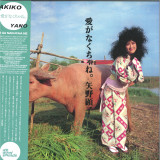
Wewantsounds continues its Akiko Yano series with the reissue of her cult classic 'Ai Ga Nakucha Ne' recorded in 1982 and co-produced by Ryuichi Sakamoto. Featuring Japan, the album includes additional recording in Tokyo with YMO and is mixed by Steve Nye and Shinichi Tanaka. It is the first time the album is released outside of Japan and the deluxe LP features the original artwork with gatefold sleeve and a lavish 24-page colour booklet with sessions photos by Pennie Smith (famous for The Clash's London Calling photo). The reissue also includes a new introduction by Mac DeMarco and a dual interview with Akiko Yano and Steve Jansen by journalist Paul Bowler. The audio remastered from the Original tapes by Mitsuo Koike.
'Ai Ga Nakucha Ne' ('there must be love' in Japanese) is Akiko Yano’s 6th studio album and follows 'Tadaima' in 1981. It continues exploring the electro-pop sound of its predecessor, hot on the heels of her touring with Yellow Magic Orchestra between 1979 and 1980. For this album, Akiko decided to try something new; she enrolled English fellow musicians Mick Karn, Steve Jansen and David Sylvian from Japan and booked the Air Studios in London under the supervision of engineer Steve Nye. Over a couple of weeks, the musicians created a fascinating soundscape full of catchy pop tunes, sung in both Japanese and English. Reminiscing about the studio sessions, Steve Jansen notes "Our music’s different but we maybe had a similar process of working. It was a great environment because the studio was a great place to work. It was very insular. There were four studios and there were always groups working in there 24/7."
The eleven tracks featured on "Ai Ga Nakucha Ne," mostly composed by Akiko - are a great collection of catchy tunes featuring her distinctive vocals and accompanied by the Japan musicians. As Akiko explains about the creative process, "I didn’t think to imitate or to make another Tin Drum. But I had Steve Jansen and Mick Karn, these excellent musicians. They were eager to understand the songs, then they put in everything they had. I knew the material was different from what they usually played in Japan. But it was a great experience working with them.
There are many highlights on the album, from the pop edge of "Aisuru Hito Yo" to the avant groove of "Another Wedding Song", each song is memorable and the album ends with the superb “Good Night” sung by Akiko and David Sylvian.
The original 1982 LP release included a 24 page booklet featuring many photos by Pennie Smith and Japanese photographer Bishin Jumonji. The booklet is reproduced in its entirety here and the album on top of contributions by Mac DeMarco, a longtime fan of the album, Akiko and Steve Jansen making this release of 'Ai Ga Nakucha Ne' a unique testament to Akiko Yano's greatness.
Under the alias 4E, producer Can Oral created his own unique sound of raw, futuristic acid-electro. The A-Side tracks "Ask Isadora" and "Conga Banana" first appeared on the album, Blue Note, released on Home Entertainment in 1996. On the flip are two unreleased tracks picked from his extensive archive and edited by FIT Siegel. These were also recorded during this era, which Can describes below:
"In the 90s I moved to NYC to start a band with Jimi Tenor. I had a small flat in the East Village with the apartment number 4E and that became my artist name for the downtempo and electro material I was working on. The style I called Futuristic Electro because I didn't want to relate to the old school with this. I had my studio on the kitchen floor and pretty much only used EMU SP-1200, TB-303, TR-808 and SH-101 by good ol’ Roland. In a way NYC was still developing because it was all about house music. In 1995, I opened Temple Records in Manhattan with Dr Walker from Air Liquide and DJ DB from Smile Communications. The record shop was inside the Liquid Sky clothing store. After a fire in the shop, along with a falling out with the owner I decided to talk to a fortune teller to find out what the future held. Her name was Isadora, and she had a TV show called "Ask Isadora." She told me on live television to move out, have my own shop and be independent, so I did. Thanks Isadora!"
Wewantsounds is delighted to announce a special edition of the legendary 1979 Masahiko Togashi album "Song of Soil," recorded in Paris with Don Cherry and Charlie Haden and released on Japanese label Paddle Wheel. Supervised by Parisian producer Martin Meissonnier - then Don Cherry"s right hand man - "Song of Soil" reaches heights of spirituality mixing Eastern influences with jazz and deep ambient soundscapes. The album is reissued here with its original artwork and remastered by King Records in Japan. It includes the original Japanese 2-p insert plus a deluxe 8-page booklet featuring new notes (Eng/Fr) by Martin Meissonnier in conversation with Jacques Denis and also an Togashi Biography by Paul Bowler and never-seen photos by cult French photographer philippe gras who witnessed this unique session.
Matching expansive ambience with environmental sound, Chihei Hatakeyama’s new album continues Field Records’ exploration of Japan and the Netherland’s shared approach to water management. As with Sugai Ken’s 2020 album Tone River, a specific project becomes Hatakeyama’s area of focus - in this case the Hachirōgata Lake in Akita Prefecture.
Previously the second largest body of water in Japan, the government ordered extensive drainage work of Hachirōgata Lake after the second world war with the help of Dutch engineers Pieter Jansen and Adriaan Volker. After the project was completed in 1977, reclaimed land took up eighty percent of Hachirōgata Lake’s total size. As a result, a new ecosystem was established as plants spread from surrounding areas, bringing with them a wider variety of birds and other wildlife.
Hatakeyama’s approach to this unique subject matter took in field recordings from particular locations around the lake - the drainage channels, the Ogata bridge, grassland conservation reserves and other key areas. The aquatic subject matter and sonic material is a natural fit for Hatakeyama’s accomplished sound, which has featured on numerous solo works for labels including Kranky, Room40 and his self-run White Paddy Mountain.
From the intimate intricacies of the sampled material to the glacial expanses of droning synthesis and languid guitar, Hatakeyama creates a tangible environment which at once reflects the settings around Hachirōgata Lake, while offering the listener any number of imagined scenes to observe in their mind’s eye.
An antidote to the tough-guy hardcore spreading from CBGB's, emo outliers Native Nod's unique genre juxtaposition of damaged art-rock, daring/naive songwriting, and raw, poetic vocals have set them apart from the glut of early-'90s post-hardcore. Compiled here are the band's trio of seminal 7" EPs for the Gern Blandsten label, with liner notes by Jenn Pelly and scores of unseen photographs and ephemera.
András Cséfalvay makes simple music with a potent atmosphere. A well-known figure in the Slovak underground (artistic, literary and music) scene, he returns after years of silence with a collection of intense songs. It's music which tackles both fantasy concepts and environmental trauma; Cséfalvay, armed only with the voice of a bard and his own hand-made guitar, will kindle your imagination and take you to the most unexpected corners of your mind.
More than a singer, on 'Future Role of the Church in the Forthcoming Enviromental Transformation' Cséfalvay acts like a narrator, wearing his heart on his sleeve. He sings of his hate of percussion instruments, Jupiter and other planets, tells tales of guns and love, nature and Mithrandir. His unique style is completely absorbing, despite the minimal, traditional set-up known from his live performances. Existential, yet light, these twelve songs mark a welcome return of a fascinating artist who presents his own vision of the past, present and future – it's bleak and existential, but also filled with purity and honesty that's impossible to resist.
'Future Role of the Church in the Forthcoming Environmental Transformation' is András Cséfalvay's second album, and his first for the sincere label Weltschmerzen.credits
Toying with the familiar but not afraid to break with expectations, AVEM presents a versatile range of works that make up his debut album.
Dream State was largely written and produced in times of the pandemic, specifically during lockdown periods — a context that grants the album an air of melancholic isolation. Offering seven songs on a double LP, it marks the collective imprint LOKD’s vinyl premiere. Merging sounds of Electronica, House and Techno, LOKDLP001 finds its place neatly outside of common categories.
In the past years, the Swiss DJ, producer and live act has made a name for himself with a steadily growing catalogue: not only through a handful of EPs, but also by releasing countless singles, remix- es and live recordings. In autumn of 2023, the Basel– based artist now reveals his first studio album.
Instrumentation ranges from studio percussion re- cordings, synthesizer & drum machine classics, all the way to ethereal piano and vocal performances; all performed and recorded by the artist himself.
Familiar structures of House and Techno are introduced, only to be broken again by gleam- ing twists and turns. A focus on percussion is ap- parent throughout the album, be it in the dynamic texture of drum recordings or in the evolving break- beat rhythms of a guiding bass drum.
Dream State tells an ephemeral tale of the uncertain, treading through an unique territory of opposites — from rapid progression to outright hypnosis, from weightless yearning all the way to euphoric catharsis.
The album is her first featuring all original material since her 2014 debut, Unstoppable, and shows the 29-year-old "Acoustic Songbird" reaching a new level of maturity. It includes twelve new tracks, all self-penned meditations on love and life except for Chlara's uniquely ethereal reframing of David Bowie's iconic "Heroes" track. Highlights include the recent singles "I Is The Loneliest Letter" and "Come To Bed"; also ear-catching is the blissful chillout groove "Sunburn" and the sensual bedroom ballad "747," where Chlara exudes a smouldering eroticism.
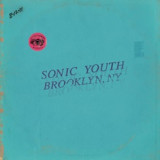
The final U.S. show, a triumphant and blistering bookend to the storied career of one of the most influential bands in rock music, featuring a unique and expansive eighty-five minute set list that spans Sonic Youth’s nearly three decade catalog. Mixed from multitrack by longtime live engineer Aaron Mullan and mastered and cut by Carl Saff. On August 12, 2011 Sonic Youth played their final US show on an outdoor stage overlooking the East River at the Williamsburg Waterfront in Brooklyn. Fitting that their storied career would bookend with a panoramic view of New York City where it all began 30 years before, having left in their wake one of one of the most powerfully influential careers in rock music. Following incredible sets from Kurt Vile and Wild Flag, the band took the stage. As the sun went down over the city, Sonic Youth ripped through a 17 song set that spanned from deep cuts off their first studio album and highlighting many other albums all the way through to their last, like a band with everything to prove. Or as Brooklyn Vegan’s Andrew Sacher said at the time: “While most bands who are thirty years into their career are either fading away or living off of the nostalgia of their older material, Sonic Youth continue to sound and perform as fresh as ever.” Steve Shelley explains the uniquely career spanning set list of Live in Brooklyn 2011 and how it came to be, as well as the importance of outdoor NYC summer shows in Sonic Youth’s legacy: “This show was a culmination of a run of really special outdoor summertime shows in New York City for us, starting in ’92 with Summerstage in Central Park when we played with Sun Ra. For the Williamsburg Waterfront show I wrote out the set list to present to the band and it was a lot of material we hadn’t played in a while, a lot of deep cuts, so I wasn’t sure if everybody would feel like doing it. After worrying about which songs the band might say yes or no to, I threw those concerns out the window and I just made a list of songs that I thought would be a great set. We practiced the week of the show at our space in Hoboken and put the set together. First we’d try and make sure we had a guitar in the song’s tuning, then we’d try to remember the arrangement and try and put it together, sometimes re-learning bar by bar. In the end I think the whole song list made it through. Even as early as ’86 and ’87 we stopped playing ‘Death Valley 69’ and ‘Brave Men Run’ with any regularity. We’d just get excited about new material coming into the set and songs would get ‘retired’ and wouldn’t get played again for years. So on this particular night in Brooklyn a lot of those retired songs and deep cuts got dusted off and played for this show. It turned out to be a pretty special event with a really special song list.” The band would go on to fulfill a contracted festival run in South America a few months later but, by then, the group’s center was severed beyond repair and the festival appearances didn’t hold the same kind of weight. “The stage was facing the East River from the Williamsburg, Brooklyn waterfront, and I recall the sun going down in the west during our set. It was a pretty magical, if kinda weird day. Fitting, somehow, that our ‘last show’ should be in New York City, our home and where it all began…” Lee Ranaldo The Williamsburg Waterfront show would fondly become referred to as ‘The Last Show’ by fans and band alike, equally for its triumphant high energy performance, its unique and expansive set list and locale. Newly remixed and remastered, Live in Brooklyn 2011 is presented for the first time on 2xLP, 2Xcd, August 18, 2023.
In the beginning there was FAUVE, cult french rock band with unique on-fire spoken-word singing & epic concerts.
4 out of the 5 former Fauve members decided to resume creation and to change everything. They are back on a new name : MAGENTA & with a totally different global identity, up to the music: new foundations. No more rock, pure electronic music from classic french touch to new electro vibes. But still featuring lyrics & singing reminding their former roots. And electronic played live using a drummer & a guitarist on top of machines & keyboards.
- A1: Puppet (Equinox Remix)
- A2: Daisy Takes Two (Meat Beat Manifesto Dub Selection Remix)
- B1: Stachybotrys (Coco Bryce Rework)
- B2: Lucky Gonk (Macc & Dgohn Remix)
- C1: Electryon (Wisp Remix)
- C2: Lucky Gonk (Forest Drive West Remix)
- D1: Turnips Are Ok (Rognvald Remix)
- D2: Conty (Scrase Remix)
- E1: Ninnyhammer (Djrum Remix)
- E2: Robin's Windmill (Skee Mask Remix)
- F1: Af0156984 (Quavis Remix)
- F2: Invisible Sandwich (Carl Brown's Pea & Mint Mix)
repressed !
Undesignated remixes is an expansive project containing 12 remixes of tracks from dgoHn’s iconic 2020 full-length by some choice artists from in and around the Love Love sphere. Remixes that take dgoHn’s unique razor-sharp original productions and send them through a loop and round the twist, some stripped down, some messed up, most but not all maintaining the speedier tempos that dgoHn likes to work around. The result is a collection of seriously futuristic electronic music with some stylistic leanings towards labels like braindance or drumfunk or jungle but completely genre-eluding as a whole, reshaped from the minerals of the original LP by some absolute dons of their craft.
Opening the album Equinox does a fantastic job highlighting the lushness of ‘Puppet’ layering sky-high sunshine pads before sliding into Meat Beat Manifesto’s heavy sci-fi acid dub version of ‘Daisy Takes Two’. A woozy remix of ‘Lucky Gonk’ by Macc & dgoHn marks the first new material from them as a duo since ’09 and Wisp also makes a rare appearance bringing his inimitable post-rephlexian vibes on an agonisingly wonderful, melody-heavy remix of 'Electryon'. Skee Mask’s choice of remixing ‘Robin’s Windmill’ turns the original into a bundle of writhing rhythms organically unfolding with swelling ambient tones. Homegrown heroes Rognvald & Scrase both opt for pumped up post-breakcore in unconventional time signatures while Djrum emphatically provides the LP’s dose of peak jungle choppage, tempering the drum breaks of ‘Ninnyhammer’ with a blistering amen. Also featured on the LP are crisp and beefy drum workouts courtesy of Coco Bryce and Forest Drive West, visceral and apocalyptic half-time bass from Activia Benz affiliated duo Quavis and virtuosic noir-jazz tearout from fellow East-Anglian Carl Brown.
While stationed in Germany in the RAF during the late 1950s and early 1960s, York-born alto and soprano saxophonist Trevor Watts met the drummer John Stevens, with whom he would form the Spontaneous Music Ensemble upon returning to the UK in 1965, which became an important vehicle for British free improvisation. Watts’ spin-off project Amalgam came two years later with Stevens and bassist Jeff Clyne, previously in the Jazz Couriers with Ronnie Scott; their debut LP Prayer For Peace is jazz improv at its most melodic, an unpredictable album of varying shades, with three unique takes of the song ‘Judy’s Smile.’


![Tripped & [KRTM] - MADINCH001](https://www.deejay.de/images/l/6/6/1026066.jpg)