Julian Cannonball Adderley's only Blue Note album, Somethin' Else, would likely forever be famous in music lore if just for the presence of Miles Davis. The iconic composer/trumpeter steps into the role of sideman on the 1958 set, one of just a handful of times he'd make such a move after the calendar passed the mid-1950s. Yet evaluating Somethin' Else strictly on Davis' involvement misses the big picture. Plain and simple, Adderley's jubilant work remains a jazz landmark due to the chemistry of its Hall of Fame personnel, enthusiasm of its participants, and sophistication of its arrangements – not to mention the reference-grade production and inclusion of the definitive renditions of two all-time jazz standards.
Limited to 6,000 numbered copies, pressed on dead-quiet MoFi SuperVinyl at RTI, and mastered from the original master tapes, Mobile Fidelity's ultra-hi-fi UltraDisc One-Step 180g 45RPM 2LP collector's edition pays tribute to the record's merit and includes the bonus track "Allison's Uncle." Offering reference-calibre sonics, this spectacular collector's version provides a clear, transparent, ultra-dynamic, and up-close view of a cornerstone effort that witnesses Adderley and Davis sharing horn duty alone for the only time in their fabled careers – an arrangement that occurred as a result of Adderley having joined Davis' majestic sextet a year prior.
The premium packaging and beautiful presentation of the UD1S Somethin' Else pressing befit its extremely select status. Housed in a deluxe slipcase, it features special foil-stamped jackets and faithful-to-the-original graphics that illuminate the splendour of the recording. No expense has been spared. Aurally and visually, this UD1S reissue exists as a curatorial artefact meant to be preserved, touched, and examined. It is made for discerning listeners that prize sound quality and production, and who desire to fully immerse themselves in the art – and everything involved with the album, from the iconic photos to the gorgeous finishes.
The vibrant potency reveals itself openly on an analogue set that provides full-range reproduction of an ensemble that also includes pianist Hank Jones, bassist Sam Jones, and drummer Art Blakey. Each and every snare hit, downbeat, and cymbal splash registered by the latter take on realistic proportions, blooming and decaying as they would right in front of you on a stage. Jones' foundational bass lines register with uncommon depth and palpability, the litheness of the strings and fullness of the instrument epitomizing the definition of rhythm. Stellar, too, are the surefooted 88s. Sublime in scale, tonality, and attack, with the delineation such you can practically separate the white and black keys in your mind. As for that liquid interplay between Adderley and Davis? Breathtakingly lifelike in timbre, naturalism, purity, and presence. This collector's version takes you there – there being Rudy Van Gelder's legendary New Jersey studio in March 1958 to witness it all unfold, again and again.
For reasons that extend far beyond the outstanding playing and flawless repertoire, Somethin' Else is without question a record you'll always want to watch and hear come together. As veteran critic Bob Blumenthal observed writing about the album four decades after its release, "The instant rapport achieved by the quintet is thus the product of much shared and common history, though the tensile strength that they create throughout created a totally unique feeling that can be attributed to the sensitive musicianship of all concerned, including the supposedly hard bopping leader and drummer." Such inimitable feeling, or emotion, courses throughout every passage, and no where more obviously than on "Autumn Leaves" and "Love for Sale."
Without question, the discreet interpretations of the Johnny Mercer and Cole Porter songs, respectively, found on Somethin' Else have long been considered part of jazz's alluring mystique. Adderley and Davis bring contrasting approaches to the table yet sound of a singular mind on "Autumn Leaves," with the latter's muted trumpet and the headliner's lush alto saxophone dovetailing into a performance that endures as a blueprint for expression, counterpoint, sophistication, fluidity, and linearity. Blues, melody, and romance pour from their horns. Their bandmates, picking up on the intimate vibe and calm mood here – as well as on the spry, head-over-heels spirit of "Love for Sale" – join in on the conversation with sharp economy and float-on-air roundedness.
Not to undersell the other three numbers, all deserving five-star status. Twelve measures in length, the title track offers a slow burn in swing. Written by Adderley's brother, Nat, the 12-bar "One for Daddy-O" transmits funk flavors. The closing "Dancing in the Dark" pops with lushness and temptation, its stream of bold colours and understated textures calling for a moonlight twirl, or at least fantasies suggestive of a memorable night. Somethin' else, indeed.
Buscar:quest ensemble
- A1: Avalon - Linked (Move D Remix)
- A2: Alegria - Danger (It's For Real) (Alien Remake)
- A3: Gemini - 7 15 Pm
- B1: Solar Quest - Acid Nation
- C1: Modulate - Dreams
- C2: Nu Era - Pisces
- C3: Hans G - Anything You Like (B2)
- D1: Q-Burn's Abstract Message - Mess Of Afros (Glenn Underground Remix)
- D2: Hector Zazou & Harold Budd - The Light Gave Us Away (House Mix By Herbert)
Hi Scores is beyond excited to present SSR Records: In Retrospect. This 2LP compilation album presented in a beautiful gatefold sleeve and through all digital platforms, wishes to highlight the immense and hard to grasp legacy of the Brussels based label. SSR Records was founded in 1988 by Marc Hollander as a sub label of his Crammed Discs and spanned the nascent years of house, acid, rave, trance, new beat, hip-hop, future jazz and broken beat, collaborating internationally and racking up close to 200 releases until it was put to sleep in 2002. Far ahead of their time, SSR Records released music of both European and North American artists that hadn’t broken through yet, such as those collected on this compilation: Move D, Nu Era, Gemini, Bjørn Torske, Glenn Underground or Matthew Herbert.
SSR Records was run by Crammed Discs chief Marc Hollander and Minimal Compact singer Samy Birnbach aka DJ Morpheus. SSR Records: In Retrospect comes with extended liner notes, exploring the pivotal milestones in the history of the adventurous label and zooming in on the origins of all records featured on the compilation.
All nine tracks on SSR Records: In Retrospect were selected by Hi Scores’s head honcho Kong DJ and have been remastered. Created between 1990 and 1996 and in the at the time pioneering spheres of house, breakbeat, electro and trance music, these treasures from the vast SSR catalog today stand as a stunning testimony to a truly remarkable and timeless musical legacy. Kong DJ: ‘While collaborating with Crammed Discs on the releases of Aksak Maboul in 2016 and Zazou / Bikaye in 2018 on Ensemble, I began to grasp the impressive catalog of the label and its sub labels, including SSR. Surprised by the tiny footprint SSR had left on the world wide web - often the case for labels ceased before the internet revolution - I wrote an article for British website The Vinyl Factory.
This would later prove to be the first step towards this compilation album, collecting favorites from the label as a kid in a giant candy store.’
"As I write these notes sitting on my balcony in July 2022, it has been more than 9 years since the release of my debut album and more than 11years since it was recorded, the time since has been a personally tumultuous period of twists and turns - retreat, reflection, realization, reassessment, therapy, triumph, trial and error - entangled in a decade-long creative block that had me questioning whether
I would ever be able to compose again and though I felt there was so much I wanted and needed to say, I felt I had lost my voice, or perhaps never had one in the first place. A constant knot had grown tighter and tighter within me over time, but I did not understand what had created it or how it might be undone. In 2018, shaken awake by the collision of two transients, I suddenly saw in a new light old
patterns whose familiar presences I realized I had felt for much of my life, but had until then never seen for what they were. Following a third, I finally found the humility to surrender, and as I began re- examining and confronting myself, I slowly started to discover new answers - and new questions to ask.
Then the Covid-19 pandemic happened, and the world stopped. Like so many of us caught in the new eerie calm, I retreated into inner spaces. I began revisiting sketches of ideas I had accumulated over the years, and finally, very, very slowly, new music started to come. " - Jussi Reijonen.
"Electrifying and deeply resonant, monumental and profoundly personal, Reijonen's five- movement suite is a beautifully crafted, remarkable journey of sound and emotion performed by a knockout nine-piece ensemble." - Monarch
"He's written one hell of a piece." - The Arts Fuse
"On this remarkable and ambitious new recording, Reijonen delivers an epic transcultural suite that feels as deeply personal as it is expansive and farreaching." - All About Jazz "a remarkable sophomore album" -The Boston Globe
"This is an album meticulously pulled together into a dense fabric of diverse musical threads. It merits repeated listening; with each fresh listen, the richness of Reijonen's intercultural vocabulary becomes more apparent." London Jazz News
"Even in our present jazz moment, when the art form is worldwide and vital, albums that come as complete surprises are relatively rare. Three seconds Kolme Toista is a stunner." Jazz Times
"Three seconds Kolme Toista is spellbinding from beginning to end, and full of virtuoso performances." All About Jazz
- A1: Afrocult Foundation - The Quest (Version Piano Solo)
- A2: Orchestre Lipua-Lipua - Distingue (Edit)
- A3: B G. And Fibre - (G#) Thanks And Praises
- A4: Akwassa - I Don`t Want No-Body (To Tell Me)
- A5: Aura - I Got To Make It
- B1: Akofa Akoussah - Ramer Sans Rame
- B2: Francis Bebey - La Condition Masculine
- B3: Benis Cletin - Jungle Magic
- B4: Sorry Bamba - M&Bife Je T`aime
- B5: Gregoire Lawani - Elle M` Mordu La Langue
After "Afro Exotique - Adventures In The Leftfield, Africa 1972-88" was enthusiastically embraced by heads, collectors and core Africa Seven enthusiasts alike, we dived back down into the vaults, and hope we've come up with another volume of listenable esoterica from roughly the same period.
"The Quest", courtesy of fleeting 1978 leftfield supergroup Afro Cult Foundation (featuring Joni Haastrup, Remi Kabaka and friends) sets the tone-bar high and sideways, with 4.50 mins of atmospheric, effected solo piano drift to get things started.
Congolese ensemble band "Orchestre Lipua Lipua" introduces gently lilting Soukous with 1977's, "Distingue", before BG and Fibre's "Thanks and Praises" introduces some wobbly, Moog tinged Lagos reggae shuffle to proceedings.
Akwassa's 1974 funker "I Don't Want Nobody" peels off into a Hammond / wah wah / moog mini odyssey half way through, before Tongolese chanteuse Akofa Akoussah's stirring "Ramer San Rame" introduces emotional charge into proceedings.
Francis Bebey's "La Condition Masculine" (1976) is a centre piece of the album, with it's skippy drum machine rhythm and spoken world vocal, but we'll admit, we probably wouldn't have used it if we'd read a translation of that vocal first.
Benis Cletin's "Jungle Magic" (1979) acid funk intro then gives way to a blatant, and at times slightly unhinged homage to the all conquering (at the time) "I Feel Love", Sorry Bamba's "M'Bife Je T'Aime" keeps the leftfield funk groove rolling, before the mournful, immersive croon of Gregoire Lawani's "Elle M'a Mordu La Langue" brings proceedings to a reflective close.
End of Everything is the intrepid seventh album from Mega Bog, a nightmarish experimental pop ensemble led by Erin Elizabeth Birgy. In 2020, Birgy was surrounded by seemingly endless turmoil: mass death, a burning planet, and a personal reckoning when past traumas met fresh ones. Living in Los Angeles, against the backdrop of brilliantly horrifying forest fires, she questioned what perspective to use moving forward in such dumbfounded awe. Deciding to seize something tangible, she produced a record that spoke of surrender, of mourning, and support in the face of tumultuous self-reflection. Writing on piano and synthesizer, instead of the familiar guitar, Birgy explored a spectrum of new sounds to illuminate a state of volatility and flux that was both universal and personal. Speaking of this transition, she describes the need “to feel… instantly. I didn’t want to dig into secret codes. I no longer wanted to hide behind difficult music. I was curious to give others the same with the music I create; to make music someone could use to explore drama, playfulness, and dancing, to shake the trauma loose.” Heavy grooves, metal guitar squeals, Italo disco bass lines, rhapsodic synth layers, and huge choruses stomp around the delightfully sanguine pop drama. Where previous records stretched out into the abstract and ethereal, End of Everything delivers a hit straight to collective awareness and healing. A seemingly disparate jukebox of sounds – ranging from Thin Lizzy, Bronski Beat, Franco Battiato and Ozzy Osbourne to 90’s house classics like Haddaway’s ‘What is Love’ and Corona's ‘Rhythm of the Night’ - foregrounded a new punchy theatricality in Birgy’s music. The songs she was creating at home followed suit with bolder hooks and more dancefloor energy than she’d ever dared before.
Repress!
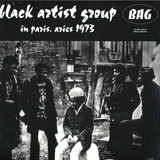
Outstanding free jazz session recorded in 1973 in Paris by Chicago outfit BAG.
It was Lester Bowie, trumpeter with the Art Ensemble of Chicago, who suggested that the Black Artists' Group (BAG) should head for Paris. In 1972 several members of BAG took his advice and flew to France for an extended stay. The following year a concert featuring saxophonist Oliver Lake, trumpeters Baikida Carroll and Floyd LeFlore, drummer Charles Bobo Shaw and trombonist Joseph Bowie (Lester's younger brother) was recorded and subsequently issued as In Paris, Aries 1973, a strictly limited edition LP on the group's own label.
Since the formation of Black Artists' Group in 1968, the home of this multidisciplinary arts collective had been St Louis, Missouri, the city where the Bowie brothers had grown up. It was there that Lester Bowie had started to investigate the expanding horizons of jazz before moving, in 1966, to Chicago where he joined the recently established Association for the Advancement of Creative Musicians (AACM). His close friend Oliver Lake visited Bowie, attended AACM concerts and meetings and was inspired not only by their artistic vision and integrity but also by their efficient organisation. In Chicago musicians were making things happen for themselves, taking control of their own destinies and giving shape to their lives as creative artists.
In June 1969, the Art Ensemble of Chicago had taken their music to France. During the preceding decade Paris had established a reputation for audiences that were unusually well-informed and open-minded, receptive to the uncompromising music of black American innovators such as Cecil Taylor, Ornette Coleman, Albert Ayler and Sun Ra. The city that had nurtured not only Cubism and Surrealism, but also Jean-Luc Godard and contemporary cinema's Nouvelle Vague was well prepared for the sonic collage forms and stylistic dislocations of the Art Ensemble. During that same month violinist Leroy Jenkins, trumpeter Leo Smith and saxophonist Anthony Braxton also arrived in Paris, three further emissaries from the AACM.
The adventure of collective improvisation resonated with the Parisian zeitgeist. Enthusiastic audiences attended their concerts and coverage in the media. In Paris, Aries 1973 offers an isolated and fascinating glimpse into that phase of the group's existence. The album is dedicated to the memory of Kada Kayan, a bassist who had hoped to make the trip from St Louis to France but, tragically, had grown ill and died. His absence adds special poignancy to the sound of the bass when it appears on this recording, played by Baikida Carroll. Listeners keen to hear Kayan himself in the company of Lake, Bowie, Shaw, LeFlore and Carroll should seek out Red, Black and Green by the 10-piece Solidarity Unit, Inc. That album, recorded on 18th September 1970 and dedicated to Jimi Hendrix, who died on that day, features an earlier version of Shaw's composition 'Something to Play On.'
In Paris, Aries 1973 reveals BAG's musical affinities with the Art Ensemble of Chicago. Both groups preserved an independently minded approach to the notion of free jazz and a carefully filtered awareness of pan-African musical practices, while their creative interest in space, mobile structure, chance occurrences and simultaneity also suggests parallels with the concerns of leading experimental composers working at that time. These performances in Paris of Shaw's 'Something to Play On' and Lake's 'Re-Cre-A-Tion,' plus two collective compositions/improvisations, display the dedication to structural fluency and sensitivity to coloration that accompanied BAG's unorthodox group dynamics and their unconventional instrumental combinations. In this case the musicians embrace congas, log drums, marimbas, woodblocks, cowbells and gongs. This is not a showcase for solos, but a shape-shifting and multi-centred statement of togetherness, quest and discovery. Removed from BAG's original multidisciplinary context the music still exudes an exhilarating spirit of collaborative exploration and shared excitement.
Finnish bassist Antti Lötjönen returns in February 2023 with his second Quintet East album on We Jazz Records. With Verneri Pohjola on trumpet, Mikko Innanen and Jussi Kannaste on saxes, and Joonas Riippa on drums, Quintet East is a hard-hitting ensemble of Helsinki scene A-listers. The new release sees the quintet work with Lötjönen's inspired new music with remarkable spirit, spreading out on a quest for new sounds and ideas, and returning to base with a fresh batch of acoustic creative music, wild to the bone even when sounding completely in control.
Circus/Citadel is essentially a coherent album, rather than a series of loosely connected compositions. There's plenty of diversity within Lötjönen's compositions and the band's dynamics, yet it all flows into one effortlessly, creating a suite of sorts, even outside of the title composition which consists of three parts. During the course of the album, the quintet often gets together in smaller formations: in trios and duos of different combinations of the players. The music breathes and maintains its energy at all times, leaving plenty of headroom for the all-out quintet "attacks" when needed. It all comes together in a shape that feels unified and cyclical, leaving the listener hungry for repeated listens in order to get deeper into the many layers found within.
Antti Lötjönen says:
"These compositions vary in terms of form and density, with each player having enough room to re-invent and expand on the music within the pieces. I wrote this music over a relatively brief time span. This, I think, is something you can also hear on the album, as the temporal closeness of the ideas brings with it a certain kind of unity. The world we live in sometimes feels like and absurd circus, from which you need to get away from to get new ideas and energy. Everyone needs their citadel, whatever it may be. This pairing of the two words Circus/Citadel is inspired by a poem by the Romanian-born German-language poet Paul Celan (1920–1970)."
Circus/Citadel is released by We Jazz Records on 24 February, 2023, as white and black vinyl editions, on CD and digitally. The artwork displays a freeform graphic score of the music by We Jazz artistic director and designer Matti Nives. The vinyl versions are housed in heavy duty tip-on sleeve with silver-embossed lettering, and the CD comes in a matte digisleeve with silver-embossed lettering. Antti Lötjönen Quintet East performs live in Finland in January and February.
Finnish bassist Antti Lötjönen returns in February 2023 with his second Quintet East album on We Jazz Records. With Verneri Pohjola on trumpet, Mikko Innanen and Jussi Kannaste on saxes, and Joonas Riippa on drums, Quintet East is a hard-hitting ensemble of Helsinki scene A-listers. The new release sees the quintet work with Lötjönen's inspired new music with remarkable spirit, spreading out on a quest for new sounds and ideas, and returning to base with a fresh batch of acoustic creative music, wild to the bone even when sounding completely in control.
Circus/Citadel is essentially a coherent album, rather than a series of loosely connected compositions. There's plenty of diversity within Lötjönen's compositions and the band's dynamics, yet it all flows into one effortlessly, creating a suite of sorts, even outside of the title composition which consists of three parts. During the course of the album, the quintet often gets together in smaller formations: in trios and duos of different combinations of the players. The music breathes and maintains its energy at all times, leaving plenty of headroom for the all-out quintet "attacks" when needed. It all comes together in a shape that feels unified and cyclical, leaving the listener hungry for repeated listens in order to get deeper into the many layers found within.
Antti Lötjönen says:
"These compositions vary in terms of form and density, with each player having enough room to re-invent and expand on the music within the pieces. I wrote this music over a relatively brief time span. This, I think, is something you can also hear on the album, as the temporal closeness of the ideas brings with it a certain kind of unity. The world we live in sometimes feels like and absurd circus, from which you need to get away from to get new ideas and energy. Everyone needs their citadel, whatever it may be. This pairing of the two words Circus/Citadel is inspired by a poem by the Romanian-born German-language poet Paul Celan (1920–1970)."
Circus/Citadel is released by We Jazz Records on 24 February, 2023, as white and black vinyl editions, on CD and digitally. The artwork displays a freeform graphic score of the music by We Jazz artistic director and designer Matti Nives. The vinyl versions are housed in heavy duty tip-on sleeve with silver-embossed lettering, and the CD comes in a matte digisleeve with silver-embossed lettering. Antti Lötjönen Quintet East performs live in Finland in January and February.
Local Action is proud to present Cyclorama, the long-awaited debut album by Ariel Zetina.
A resident DJ at Chicago’s iconic Smartbar, a long-standing Discwoman family member and a key part of the city’s dance music and LGBTQ+ communities, Ariel has established herself as one of the most exciting electronic artists operating today - through releases such as 2020’s acclaimed MUAs at the End of the World and 2017’s Organism, and her meticulous approach to DJ mixes - as recently evidenced on Sestina, her 2020 contribution to Mixtape Club.
Written across 2021 and honed this Spring, Cyclorama is Ariel’s most impressive and all-encompassing work yet, showcasing her as a producer, vocalist and also curator, pulling together an ensemble cast of her peers in Chicago (Cae Monāe, Mia Arevalo, DANNN) and some of the most exciting names in contemporary club music (Violet, Bored Lord).
Conceptually, Cyclorama draws heavily from Ariel’s background as a theater writer and producer. Popularized in 19th century German theater, a cyclorama (or cyc) is a large curtain, placed on the back wall of the stage. This creates an illusion of extra depth in the background, and often is used to represent the sky. In Ariel’s words, “I imagine all the tracks on this as the lights and action projected onto the cyclorama. The whole album is like the cyc, a representation of the sky. Or an imagined sky. An imagined dancefloor. An imagined theatrical production.”
As well as drawing conceptually from Ariel’s background in theater, the album draws on a personal level from Ariel’s journey as a trans woman of color - most directly on Cyclorama’s three vocal tracks, ‘Gemstone’, ‘Slab of Meat’ and lead single ‘Have You Ever’.
On ‘Have You Ever’, Ariel collaborates with Cae Monāe, a dear friend and fellow trans woman of color. “‘Have you ever been with a girl like me before?’ and all the lyrics refers to the fear and anxiety that cis men who are attracted to trans women feel, and also any woman that doesn’t fit the mold of a stereotypical woman”, Ariel explains. “Cae and I - and many trans women - have been in so many situations where society tells cis men they cannot be with trans women and this explores that and gives power to all trans women in this situation. The techno reflects that, as well as the “Spell my name” section at the end, showing the true power of trans women.”
On ‘Slab of Meat’, Ariel delivers a hypnotic solo vocal performance that builds in intensity with each line (“I am treated like a slab of meat both emotionally and sexually sometimes, especially one left in the freezer on the back burner. Why did you bring this meat home from the market? For what? You’re wasting meat!”), while ‘Gemstone’, a collaboration with Mia Arevalo, continues the empowering themes of ‘Have You Ever’ in a different context:
“‘Gemstone’ is a call for trans women to take time with your transition because it will all happen eventually. As two girls who have started our transition almost a decade ago, I think we have both seen that we have always needed to take our time to take our time. Reminders not to rush or compare yourself to other girls. I love the metaphor of gemstone months representing different periods of transition. I’ve been so many different women in recent years, and I'm excited to continue my journey.”
It’s immediately followed by album closer ‘Tropical Depression’, the title of which is a reference to Ariel growing up with tropical depressions, storms and hurricanes affecting her hometown of Jacksonville, Florida as well as her family in Belize City:
“This track for me is about living day to day and continuing while dealing with my really intense clinical depression. The sample comes from “Why can’t you let me go?” but is supposed to be transformative and not necessarily legible. How we hold on to our trauma and depression like a protective shell. This is an attempt to deal with it in a different way.”
The Cyclorama album cover, directed by Dylan Bragassa, stars Ariel alongside Monāe and Arevalo in an imagined theater production. In Ariel’s words, “a theoretical performance starring only trans women of color - I wanted an ensemble shot to represent the ensemble nature of this album! Love how Dylan combines so many ideas to create a very unique image that asks so many questions.”
- A1: Al Norte 01 00
- A2: Into Love / Stars 05 44
- A3: Exit Strategy To Myself 03 08
- A4: Where You Find Me 02 31
- A5: Ship 04 04
- B1: Loose Ends 05 31
- B2: Into The Ice Age 06 21
- B3: Oh Sweet Fire 03 50
- B4: Ghost 01 23
- B5: Sans Soleil 03 16
- C1: Night‘s Too Dark 02 55
- C2: *Stars* 01 10
- C3: Al Sur 03 18
- C4: Into Love Again 05 08
Yellow Vinyl[37,52 €]
2023 Repress On Vertigo Days, the first album in seven years for The Notwist, one of Germany’s most iconic independent groups are alive to the possibilities of the moment. Their music has long been open-minded and exploratory, but from its engrossing structure, through its combination of melancholy pop, clangorous electronics, hypnotic Krautrock and driftwork ballads, to its international musical guests, Vertigo Days is both a new step for The Notwist, and a reminder of just how singular they’ve always been. Most importantly, the core trio of Markus and Micha Acher and Cico Beck are reaching out: as Markus reflects, “we wanted to question the concept of a band by adding other voices and ideas, other languages, and also question or blur the idea of national identity.”
It’s been seven years since The Notwist’s last album, Close To The Glass, and in that time the various members of the group have been busy with side projects (Spirit Fest, Hochzeitskapelle, Alien Ensemble, Joasihno), guest appearances, a record label (Alien Transistor), movie scoring, helping organise the Minna Miteru compilation of Japanese indie pop & running a festival (Alien Disko). Those divergent paths feed back into Vertigo Days in surprising ways, from its structure, built from group improvisations, with songs flowing and melting into one another in a collective haze, to its spirit, which feels refreshed and alive. There’s something cinematic about Vertigo Days too, reflective of the group’s time working on soundtracks, and reflected in the rich, moody photographic artwork by Lieko Shiga that adorns the cover.
The first sign of this newfound openness was the album’s lead single, “Ship”, where the group were joined by Saya of Japanese pop duo Tenniscoats, her disarmingly hymnal voice sighing over a propulsive, Krautrocking beat. Elsewhere, American multi-instrumentalist Ben LaMar Gay sings on “Oh Sweet Fire”, also contributing “a love lyric for these times, imagining two lovers in an uprising hand in hand.” American jazz clarinettist and composer Angel Bat Dawid adds clarinet to the spaced-out dream-pop of “Into The Ice Age”, while Argentinian electronica songwriter Juana Molina gifts some gorgeous singing and electronics to “Al Sur”. Saya also reappears as a member of Japanese brass band Zayaendo, who guest on the album. Throughout, The Notwist also capture the openness of their live performances, too, where they mix and link their songs in unexpected ways.
Indeed, what’s most impressive about Vertigo Days is the way it sits together as one long, flowing suite, the album conceptualised as a whole entity – it’s perfect for the long-distance, dedicated listening experience. This is also captured by the album’s lyrics, which Markus states, “feel more like one long poem.” The dimensions of that poem are multi-faceted, something intensified by the geopolitical weirdness of its times: “As the situation changed so dramatically, while we were working on the record, the theme of ‘the impossible can happen anytime,’ more about personal relationships in the beginning, became a global and political story.” But it also works at a level of poetic abstraction, such that each song gestures in multiple directions – the deeply private pans out to the global. The one certainty is that there is no certainty. “It’s maybe mostly about learning and how you never arrive anywhere,” Markus concurs. To sit within uncertainty is brave, but it’s also where we feel most alive, and Vertigo Days is an album that is brimming with life, with enthusiasm and love for music and for community, all wide-eyed and dreaming.
- A1: Al Norte 01 00
- A2: Into Love / Stars 05 44
- A3: Exit Strategy To Myself 03 08
- A4: Where You Find Me 02 31
- A5: Ship 04 04
- B1: Loose Ends 05 31
- B2: Into The Ice Age 06 21
- B3: Oh Sweet Fire 03 50
- B4: Ghost 01 23
- B5: Sans Soleil 03 16
- C1: Night‘s Too Dark 02 55
- C2: *Stars* 01 10
- C3: Al Sur 03 18
- C4: Into Love Again 05 08
Black Vinyl[26,85 €]
2023 Repress on Yellow Vinyl
On Vertigo Days, the first album in seven years for The Notwist, one of Germany’s most iconic independent groups are alive to the possibilities of the moment. Their music has long been open-minded and exploratory, but from its engrossing structure, through its combination of melancholy pop, clangorous electronics, hypnotic Krautrock and driftwork ballads, to its international musical guests, Vertigo Days is both a new step for The Notwist, and a reminder of just how singular they’ve always been. Most importantly, the core trio of Markus and Micha Acher and Cico Beck are reaching out: as Markus reflects, “we wanted to question the concept of a band by adding other voices and ideas, other languages, and also question or blur the idea of national identity.”
It’s been seven years since The Notwist’s last album, Close To The Glass, and in that time the various members of the group have been busy with side projects (Spirit Fest, Hochzeitskapelle, Alien Ensemble, Joasihno), guest appearances, a record label (Alien Transistor), movie scoring, helping organise the Minna Miteru compilation of Japanese indie pop & running a festival (Alien Disko). Those divergent paths feed back into Vertigo Days in surprising ways, from its structure, built from group improvisations, with songs flowing and melting into one another in a collective haze, to its spirit, which feels refreshed and alive. There’s something cinematic about Vertigo Days too, reflective of the group’s time working on soundtracks, and reflected in the rich, moody photographic artwork by Lieko Shiga that adorns the cover.
The first sign of this newfound openness was the album’s lead single, “Ship”, where the group were joined by Saya of Japanese pop duo Tenniscoats, her disarmingly hymnal voice sighing over a propulsive, Krautrocking beat. Elsewhere, American multi-instrumentalist Ben LaMar Gay sings on “Oh Sweet Fire”, also contributing “a love lyric for these times, imagining two lovers in an uprising hand in hand.” American jazz clarinettist and composer Angel Bat Dawid adds clarinet to the spaced-out dream-pop of “Into The Ice Age”, while Argentinian electronica songwriter Juana Molina gifts some gorgeous singing and electronics to “Al Sur”. Saya also reappears as a member of Japanese brass band Zayaendo, who guest on the album. Throughout, The Notwist also capture the openness of their live performances, too, where they mix and link their songs in unexpected ways.
Indeed, what’s most impressive about Vertigo Days is the way it sits together as one long, flowing suite, the album conceptualised as a whole entity – it’s perfect for the long-distance, dedicated listening experience. This is also captured by the album’s lyrics, which Markus states, “feel more like one long poem.” The dimensions of that poem are multi-faceted, something intensified by the geopolitical weirdness of its times: “As the situation changed so dramatically, while we were working on the record, the theme of ‘the impossible can happen anytime,’ more about personal relationships in the beginning, became a global and political story.” But it also works at a level of poetic abstraction, such that each song gestures in multiple directions – the deeply private pans out to the global. The one certainty is that there is no certainty. “It’s maybe mostly about learning and how you never arrive anywhere,” Markus concurs. To sit within uncertainty is brave, but it’s also where we feel most alive, and Vertigo Days is an album that is brimming with life, with enthusiasm and love for music and for community, all wide-eyed and dreaming.
'Gulliver', the latest Condor Gruppe album, is a nod to yet another spiritual journey in the band's ever-evolving saga. Released 23rd September via the groove-obsessed Sdban Ultra, the Antwerp-based nine-piece ensemble take you on a hypnotic trip, paying tribute to obscure Italian 70s film soundtracks, krautrock and psychedelic grooves. Fuse the melancholy of Pink Floyd, the heroism of Ennio Morricone and the world grooves of GOAT and you get an idea of what Condor Gruppe is.
Always looking to push musical boundaries, Condor Gruppe rely on the adventurous use of their instruments and their intriguing musical patter. Melancholic, exotic, surreal, the band's sound is enriched by instruments including the handpan, Jew's harp, darbouka and tanpura. Diverse sounds, rhythms and melodies build, exciting the listener whilst always remaining familiar. From the thunderous, spacious prog rock sounds of 'What Could Have Been', to the loose, laidback grooves of the mystical 'Farid' and groovy 'Rhymes On Our Mind', 'Gulliver' is a soundtrack for visits to far-flung places and a mesmerizing trip through the band's own record shelves.
Condor Gruppe released their debut album 'Latituds del Cavall' in 2014 with nine exotica fuelled songs that echo the sound of an intoxicated ride through the desert. This was followed up in 2016 with 'FROG BOG - A Tribute to Moondog' - an adaptation of the work of the legendary composer and outsider. Containing six Moondog interpertations, trumpet player Dirk Timmermans, saxophonist Matti Willems and baritone saxophonist Hanne De Backer joined the five original members of Condor Gruppe, with the results a spectacular mix between Moondog's jazzy compositions and Condor Gruppe's dreamy instrumental sound.
Second album proper 'Interplanetary Travels' (2018) - a nostalgic, melancholic soundtrack - saw the introduction of the Anoushka Shankar-trained Nicolas Mortelmans on sitar. The title hinting at Sun Ra is no coincidence. Condor Gruppe recorded 8 songs that give you the creepy feel of a horror scene, the heroism of the best film scores and the hypnotizing grooves of jungle tribes.
At this year's Ghent Film Festival, Condor Gruppe performed a live version of the score for the dark, hypnotic, surreal, erotic vampire film 'Daughters of Darkness' (1971), directed by Belgian cult director Harry Kümel. The score was originally recorded by François de Roubaix, a self-taught musician and jazz enthusiast, and he composed almost a hundred soundtracks, mostly for French films. In 1976, he won a César for best soundtrack with his work on 'Le Vieux Fusil' - awarded posthumously as de Roubaix had passed away just the year before. De Roubaix has always been a great source of inspiration for Condor Gruppe, so they were only too happy to sink their teeth into his scintillating score.
Members of Papir & Causa Sui travel through new musical realms. 3 musicians with their own compass: Martin Rude & Jakob Skott have shared a wide range of musical quests: from Causa Sui's "Bitches Brew of Stoner Rock" crossing the folk meditations of Sun River and arriving most recently as members of the pre-fusion electric dealings of the London Odense Ensemble. Papir guitarist Nicklas Sorensen is not merely adding a new layer to an established duo, but his presence to the party have brought it into more meditative dwellings. These pieces move slowly, evolving like the slow growth underneath the ground. Whereas Causa Sui & Papir have always excelled at blistering panoramic and often sundrenched sounds, Edena Gardens take a dive inwards and downwards rather than outwards. But there's also an electrically charged ecstatic rawness to the dealings. Like Æther, the 10 minute opener's 2 guitars-and-a-drum kit improv, finding it's way from tumbling drones into monolithic slow riffage. Elsewhere, we find trails of electronic vapors, misfiring bursts of noise and slow drones stretched out. Edena Gardens is a thing to be experienced first hand - it's not for everyone, but those who decide to stay are greatly rewarded. It's a debut unlike any other record on El Paraiso, perhaps unlike any you've ever heard. Welcome to Edena Gardens.
- A1: Rock This Mother
- A2: Talk To Me Girl
- A3: You Can Find Me
- A4: Check This Out
- A5: Jesus Going To Clean House
- A6: Hope You Understood
- A7: Is It What You Want
- A8: Love Is Everlasting
- A9: This Is Hip-Hop Art
- A10: Opposite Of Love
- A11: Do You Know What I Mean
- B1: Saving All My Love For You
- B2: Look Out Here I Come
- B3: Girl You Always Talking
- B4: Have A Great Day
- B5: Take My Hand
- B6: I Need Your Love
- B7: Your Town
- B8: Talk Around Town
- B9: Booty Head/Take A Little Walk
- B10: I Love My Mama
- B11: I Never Found Anyone Like You
Vinyl LP[23,49 €]
As the sun sets on a quaint East Nashville house, a young man bares a piece of his soul. Facing the camera, sporting a silky suit jacket/shirt/slacks/fingerless gloves ensemble that announces "singer" before he's even opened his mouth, Lee Tracy Johnson settles onto his stage, the front yard. He sways to the dirge-like drum machine pulse of a synth-soaked slow jam, extends his arms as if gaining his balance, and croons in affecting, fragile earnest, "I need your love… oh baby…"
Dogs in the yard next door begin barking. A mysterious cardboard robot figure, beamed in from galaxies unknown and affixed to a tree, is less vocal. Lee doesn't acknowledge either's presence. He's busy feeling it, arms and hands gesticulating. His voice rises in falsetto over the now-quiet dogs, over the ambient noise from the street that seeps into the handheld camcorder's microphone, over the recording of his own voice played back from a boombox off-camera. After six minutes the single, continuous shot ends. In this intimate creative universe there are no re-takes. There are many more music videos to shoot, and as Lee later puts it, "The first time you do it is actually the best. Because you can never get that again. You expressing yourself from within."
"I Need Your Love" dates from a lost heyday. From some time in the '80s or early '90s, when Lee Tracy (as he was known in performance) and his music partner/producer/manager Isaac Manning committed hours upon hours of their sonic and visual ideas to tape. Embracing drum machines and synthesizers – electronics that made their personal futurism palpable – they recorded exclusively at home, live in a room into a simple cassette deck. Soul, funk, electro and new wave informed their songs, yet Lee and Isaac eschewed the confinement of conventional categories and genres, preferring to let experimentation guide them.
"Anytime somebody put out a new record they had the same instruments or the same sound," explains Isaac. "So I basically wanted to find something that's really gonna stand out away from all of the rest of 'em." Their ethos meant that every idea they came up with was at least worth trying: echoed out half-rapped exhortations over frantic techno-style beats, gospel synth soul, modal electro-funk, oddball pop reinterpretations, emo AOR balladry, nods to Prince and the Fat Boys, or arrangements that might collapse mid-song into a mess of arcade game-ish blips before rallying to reach the finish line. All of it conjoined by consistent tape hiss, and most vitally, Lee's chameleonic voice, which managed to wildly shape shift and still evoke something sincere – whether toggling between falsetto and tenor exalting Jesus's return, or punctuating a melismatic romantic adlib with a succinct, "We all know how it feels to be alone."
"People think we went to a studio," says Isaac derisively. "We never went to no studio. We didn't have the money to go to no studio! We did this stuff at home. I shot videos in my front yard with whatever we could to get things together." Sometimes Isaac would just put on an instrumental record, be it "Planet Rock" or "Don't Cry For Me Argentina" (from Evita), press "record," and let Lee improvise over it, yielding peculiar love songs, would-be patriotic anthems, or Elvis Presley or Marilyn Monroe tributes. Technical limitations and a lack of professional polish never dissuaded them. They believed they were onto something.
"That struggle," Isaac says, "made that sound sound good to me."
In the parlance of modern music criticism Lee and Isaac's dizzying DIY efforts would inevitably be described as "outsider." But "outsider" carries the burden of untold additional layers of meaning if you're Black and from the South, creating on a budget, and trying to get someone, anyone within the country music capital of the world to take your vision seriously. "What category should we put it in?" Isaac asks rhetorically. "I don't know. All I know is feeling. I ain't gonna name it nothing. It's music. If it grabs your soul and touch your heart that's what it basically is supposed to do."
=
Born in 1963, the baby boy of nine siblings, Lee Tracy spent his earliest years living amidst the shotgun houses on Nashville's south side. "We was poor, man!" he says, recalling the outhouse his family used for a bathroom and the blocks of ice they kept in the kitchen to chill perishables. "But I actually don't think I really realized I was in poverty until I got grown and started thinking about it." Lee's mom worked at the Holiday Inn; his dad did whatever he had to do, from selling fruit from a horse drawn cart to bootlegging. "We didn't have much," Lee continues, "but my mother and my father got us the things we needed, the clothes on our back." By the end of the decade with the city's urban renewal programs razing entire neighborhoods to accommodate construction of the Interstate, the family moved to Edgehill Projects. Lee remembers music and art as a constant source of inspiration for he and his brothers and sisters – especially after seeing the Jackson 5 perform on Ed Sullivan. "As a small child I just knew that was what I wanted to do."
His older brother Don began musically mentoring him, introducing Lee to a variety of instruments and sounds. "He would never play one particular type of music, like R&B," says Lee. "I was surrounded by jazz, hard rock and roll, easy listening, gospel, reggae, country music; I mean I was a sponge absorbing all of that." Lee taught himself to play drums by beating on cardboard boxes, gaining a rep around the way for his timekeeping, and his singing voice. Emulating his favorites, Earth Wind & Fire and Cameo, he formed groups with other kids with era-evocative band names like Concept and TNT Connection, and emerged as the leader of disciplined rehearsals. "I made them practice," says Lee. "We practiced and practiced and practiced. Because I wanted that perfection." By high school the most accomplished of these bands would take top prize in a prominent local talent show. It was a big moment for Lee, and he felt ready to take things to the next level. But his band-mates had other ideas.
"I don't know what happened," he says, still miffed at the memory. "It must have blew they mind after we won and people started showing notice, because it's like everybody quit! I was like, where the hell did everybody go?" Lee had always made a point of interrogating prospective musicians about their intentions before joining his groups: were they really serious or just looking for a way to pick up girls? Now he understood even more the importance of finding a collaborator just as committed to the music as he was.
=
Isaac Manning had spent much of his life immersed in music and the arts – singing in the church choir with his family on Nashville's north side, writing, painting, dancing, and working various gigs within the entertainment industry. After serving in the armed forces, in the early '70s he ran The Teenage Place, a music and performance venue that catered to the local youth. But he was forced out of town when word of one of his recreational routines created a stir beyond the safe haven of his bohemian circles.
"I was growing marijuana," Isaac explains. "It wasn't no business, I was smoking it myself… I would put marijuana in scrambled eggs, cornbread and stuff." His weed use originated as a form of self-medication to combat severe tooth pain. But when he began sharing it with some of the other young people he hung out with, some of who just so happened to be the kids of Nashville politicians, the cops came calling. "When I got busted," he remembers, "they were talking about how they were gonna get rid of me because they didn't want me saying nothing about they children because of the politics and stuff. So I got my family, took two raggedy cars, and left Nashville and went to Vegas."
Out in the desert, Isaac happened to meet Chubby Checker of "The Twist" fame while the singer was gigging at The Flamingo. Impressed by Isaac's zeal, Checker invited him to go on the road with him as his tour manager/roadie/valet. The experience gave Isaac a window into a part of the entertainment world he'd never encountered – a glimpse of what a true pop act's audience looked like. "Chubby Checker, none of his shows were played for Black folks," he remembers. "All his gigs were done at high-class white people areas." Returning home after a few years with Chubby, Isaac was properly motivated to make it in Music City. He began writing songs and scouting around Nashville for local talent anywhere he could find it with an expressed goal: "Find someone who can deliver your songs the way you want 'em delivered and make people feel what you want them to feel."
One day while walking through Edgehill Projects Isaac heard someone playing the drums in a way that made him stop and take notice. "The music was so tight, just the drums made me feel like, oh I'm-a find this person," he recalls. "So I circled through the projects until I found who it was.
"That's how I met him – Lee Tracy. When I found him and he started singing and stuff, I said, ohhh, this is somebody different."
=
Theirs was a true complementary partnership: young Lee possessed the raw talent, the older Isaac the belief. "He's really the only one besides my brother and my family that really seen the potential in me," says Lee. "He made me see that I could do it."
Isaac long being a night owl, his house also made for a fertile collaborative environment – a space where there always seemed to be a new piece of his visual art on display: paintings, illustrations, and dolls and figures (including an enigmatic cardboard robot). Lee and Issac would hang out together and talk, listen to music, conjure ideas, and smoke the herb Isaac had resumed growing in his yard. "It got to where I could trust him, he could trust me," Isaac says of their bond. They also worked together for hours on drawings, spreading larges rolls of paper on the walls and sketching faces with abstract patterns and imagery: alien-like beings, tri-horned horse heads, inverted Janus-like characters where one visage blurred into the other.
Soon it became apparent that they didn't need other collaborators; self-sufficiency was the natural way forward. At Isaac's behest Lee, already fed up with dealing with band musicians, began playing around with a poly-sonic Yamaha keyboard at the local music store. "It had everything on it – trumpet, bass, drums, organ," remembers Lee. "And that's when I started recording my own stuff."
The technology afforded Lee the flexibility and independence he craved, setting him on a path other bedroom musicians and producers around the world were simultaneously following through the '80s into the early '90s. Saving up money from day jobs, he eventually supplemented the Yamaha Isaac had gotten him with Roland and Casio drum machines and a Moog. Lee was living in an apartment in Hillside at that point caring for his dad, who'd been partially paralyzed since early in life. In the evenings up in his second floor room, the music put him in a zone where he could tune out everything and lose himself in his ideas.
"Oh I loved it," he recalls. "I would really experiment with the instruments and use a lot of different sound effects. I was looking for something nobody else had. I wanted something totally different. And once I found the sound I was looking for, I would just smoke me a good joint and just let it go, hit the record button." More potent a creative stimulant than even Isaac's weed was the holistic flow and spontaneity of recording. Between sessions at Isaac's place and Lee's apartment, their volume of output quickly ballooned.
"We was always recording," says Lee. "That's why we have so much music. Even when I went to Isaac's and we start creating, I get home, my mind is racing, I gotta start creating, creating, creating. I remember there were times when I took a 90-minute tape from front to back and just filled it up."
"We never practiced," says Isaac. "See, that was just so odd about the whole thing. I could relate to him, and tell him about the songs I had ideas for and everything and stuff. And then he would bring it back or whatever, and we'd get together and put it down." Once the taskmaster hell bent on rehearsing, Lee had flipped a full 180. Perfection was no longer an aspiration, but the enemy of inspiration.
"I seen where practicing and practicing got me," says Lee. "A lot of musicians you get to playing and they gotta stop, they have to analyze the music. But while you analyzing you losing a lot of the greatness of what you creating. Stop analyzing what you play, just play! And it'll all take shape."
=
"I hope you understood the beginning of the record because this was invented from a dream I had today… (You tell me, I'll tell you, we'll figure it out together)" – Lee Tracy and Isaac Manning, "Hope You Understand"
Lee lets loose a maniacal cackle when he acknowledges that the material that he and Isaac recorded was by anyone's estimation pretty out there. It's the same laugh that commences "Hope You Understand" – a chaotic transmission that encapsulates the duality at the heart of their music: a stated desire to reach people and a compulsion to go as leftfield as they saw fit.
"We just did it," says Lee. "We cut the music on and cut loose. I don't sit around and write. I do it by listening, get a feeling, play the music, and the lyrics and stuff just come out of me."
The approach proved adaptable to interpreting other artists' material. While recording a cover of Whitney Houston's pop ballad "Saving All My Love For You," Lee played Whitney's version in his headphones as he laid down his own vocals – partially following the lyrics, partially using them as a departure point. The end result is barely recognizable compared with the original, Lee and Isaac having switched up the time signature and reinvented the melody along the way towards morphing a slick mainstream radio standard into something that sounds solely their own.
"I really used that song to get me started," says Lee. "Then I said, well I need something else, something is missing. Something just came over me. That's when I came up with 'Is It What You Want.'"
The song would become the centerpiece of Lee and Isaac's repertoire. Pushed along by a percolating metronomic Rhythm King style beat somewhere between a military march and a samba, "Is It What You Want" finds Lee pleading the sincerity of his commitment to a potential love interest embellished by vocal tics and hiccups subtlely reminiscent of his childhood hero MJ. Absent chord changes, only synth riffs gliding in and out like apparitions, the song achieves a lingering lo-fi power that leaves you feeling like it's still playing, somewhere, even after the fade out.
"I don't know, it's like a real spiritual song," Lee reflects. "But it's not just spiritual. To me the more I listen to it it's like about everything that you do in your everyday life, period. Is it what you want? Do you want a car or you don't want a car? Do you want Jesus or do you want the Devil? It's basically asking you the question. Can't nobody answer the question but you yourself."
In 1989 Lee won a lawsuit stemming from injuries sustained from a fight he'd gotten into. He took part of the settlement money and with Isaac pressed up "Saving All My Love For You" b/w "Is It What You Want" as a 45 single. Isaac christened the label One Chance Records. "Because that's all we wanted," he says with a laugh, "one chance."
Isaac sent the record out to radio stations and major labels, hoping for it to make enough noise to get picked up nationally. But the response he and Lee were hoping for never materialized. According to Isaac the closest the single got to getting played on the radio is when a disk jock from a local station made a highly unusual announcement on air: "The dude said on the radio, 107.5 – 'We are not gonna play 'Is It What You Want.' We cracked up! Wow, that's deep.
"It was a whole racist thing that was going on," he reflects. "So we just looked over and kept on going. That was it. That was about the way it goes… If you were Black and you were living in Nashville and stuff, that's the way you got treated." Isaac already knew as much from all the times he'd brought he and Lee's tapes (even their cache of country music tunes) over to Music Row to try to drum up interest to no avail.
"Isaac, he really worked his ass off," says Lee. "He probably been to every record place down on Music Row." Nashville's famed recording and music business corridor wasn't but a few blocks from where Lee grew up. Close enough, he remembers, for him to ride his bike along its back alleys and stumble upon the occasional random treasure, like a discarded box of harmonicas. Getting in through the front door, however, still felt a world away.
"I just don't think at the time our music fell into a category for them," he concedes. "It was before its time."
=
Lee stopped making music some time in the latter part of the '90s, around the time his mom passed away and life became increasingly tough to manage. "When my mother died I had a nervous breakdown," he says, "So I shut down for a long time. I was in such a sadness frame of mind. That's why nobody seen me. I had just disappeared off the map." He fell out of touch with Isaac, and in an indication of just how bad things had gotten for him, lost track of all the recordings they'd made together. Music became a distant memory.
Fortunately, Isaac kept the faith. In a self-published collection of his poetry – paeans to some of his favorite entertainment and public figures entitled Friends and Dick Clark – he'd written that he believed "music has a life of its own." But his prescience and presence of mind were truly manifested in the fact that he kept an archive of he and Lee's work. As perfectly imperfect as "Is It What You Want" now sounds in a post-Personal Space world, Lee and Isaac's lone official release was in fact just a taste. The bulk of the Is It What You Want album is culled from the pair's essentially unheard home recordings – complete songs, half-realized experiments, Isaac's blue monologues and pronouncements et al – compiled, mixed and programmed in the loose and impulsive creative spirit of their regular get-togethers from decades ago. The rest of us, it seems, may have finally caught up to them.
On the prospect of at long last reaching a wider audience, Isaac says simply, "I been trying for a long time, it feels good." Ever the survivor, he adds, "The only way I know how to make it to the top is to keep climbing. If one leg break on the ladder, hey, you gotta fix it and keep on going… That's where I be at. I'll kill death to make it out there."
For Lee it all feels akin to a personal resurrection: "It's like I was in a tomb and the tomb was opened and I'm back… Man, it feels so great. I feel like I'm gonna jump out of my skin." Success at this stage of his life, he realizes, probably means something different than what it did back when he was singing and dancing in Isaac's front yard. "What I really mean by 'making it,'" he explains isn't just the music being heard but, "the story being told."
Occasionally Lee will pull up "Is It What You Want" on YouTube on his phone, put on his headphones, and listen. He remembers the first time he heard his recorded voice. How surreal it was, how he thought to himself, "Is that really me?" What would he say to that younger version of himself now?
"I would probably tell myself, hang in there, don't give up. Keep striving for the goal. And everything will work out."
Despite what's printed on the record label, sometimes you do get more than one chance.
LP comes with a Side D etching in triple gatefold jacket + full album download. The Will to Live was produced by Titus Andronicus singer-songwriter Patrick Stickles and Canadian icon Howard Bilerman (Arcade Fire, Leonard Cohen, The Whole Nine Yards) at the latter’s Hotel 2 Tango recording studio in Montreal. Drawing on maximalist rock epics from Who’s Next to Hysteria, Bilerman and Stickles have crafted the richest, densest, and hardest hitting sound for Titus Andronicus yet. All at once, the record matches the sprawl and scope of the band’s most celebrated work, while also honing their ambitious attack to greater effect than ever before. “It may strike some as ironic we had to go to Canada to record our equivalent to Born in the USA,” quips Stickles, “but the pursuit of Ultimate Rock knows no borders. ”For his recent stretch of personal stability, he credits a newfound domestic bliss and steadfast mental health regimen (“Lamictal is a hell of a drug”) as well as the endurance of what has become the longest-running consistent lineup of Titus Andronicus—Liam Betson on guitar, R.J. Gordon on bass, and Chris Wilson on drums. On the crueler side of the coin, however, The Will to Live was created in large part as an attempt to process the untimely 2021 death of Matt “Money” Miller, the founding keyboardist of the band and Stickles’ closest cousin. Stickles explains: “The passing of my dearest friend forced me to recognize not only the precious and fragile nature of life, but also the interconnectivity of all life. Loved ones we have lost are really not lost at all, as they, and we still living, are all component pieces of a far larger continuous organism, which both precedes and succeeds our illusory individual selves, united through time by (you guessed it) the will to live.” “Naturally, though, our long-suffering narrator can only arrive at this conclusion through a painful and arduous odyssey through Hell itself,” he qualifies. “This is a Titus Andronicus record, after all.” When Titus Andronicus made their long-awaited return to the stage in 2021, it was to celebrate the anniversary of their landmark breakthrough The Monitor, and the act of playing that material before an ecstatic audience left the band determined to deliver an album that would reach for those same lofty heights, relying this time less on the reckless fire of youth and more on the experience and perspective at which a band only arrives with a thousand shows under their belt. Through this golden ratio, Titus Andronicus have arrived at the peak of their creative powers. From its adrenalizing opening instrumental “My Mother Is Going to Kill Me” to its wistful closing benediction “69 Stones,” The Will to Live conjures a vast landscape and sends the listener on a rocket ride from peak to vertiginous peak. Rock fans will find themselves a feast, whether they crave barn-burning rock anthems such as “(I’m) Screwed” and “All Through the Night,” rapid-fire lyrical gymnastics (“Baby Crazy”), symphonic punk throwdowns (“Dead Meat”), or an adventurous excursion into the darkness that delivers thrills as it breezes boldly past the 7 minute mark, “An Anomaly.” As if that wasn’t enough gas for the tank, The Will to Live features sterling contributions from members of the Hold Steady, Arcade Fire, and the E Street Band, as well as duets with the aforementioned Betson, former Titus Andronicus drummer Eric Harm, and Josée Caron of the Canadian rock band Partner. The album comes packaged with gorgeous triple-gatefold artwork by illustrious illustrator Nicole Rifkin, a Hieronymus Bosch–inspired triptych which mirrors the three-part structure of the narrator’s perilous voyage across the corresponding three sides of vinyl. All together, this esteemed ensemble, with Stickles and Bilerman determined and defiant at the helm, have found The Will to Live—now, the question is… will you?
SIDE A 1. My Mother is Going to Kill Me 2. (I’m) Screwed 3. I Can Not Be Satisfied 4. Bridge and Tunnel SIDE B 5. Grey Goo 6. Dead Meat 7. An Anomaly SIDE C 8. Give Me Grief 9. Baby Crazy 10. All Through the Night 11. We’re Coming Back 12. 69 Stones SIDE D Etching
- A1: The Poet Acts
- A2: Morning Passages
- A3: Something She Has To Do
- A4: “For Your Own Benefit”
- B1: Vanessa And The Changelings
- B2: “I'm Going To Make A Cake”
- B3: An Unwelcome Friend
- B4: Dead Things
- C1: The Kiss
- C2: “Why Does Someone Have To Die?”
- C3: Tearing Herself Away
- D1: Escape!
- D2: Choosing Life
- D3: The Hours
‘Was there ever a more perfect film for Glass’s lyrical manner? He refers to his own past, but the way in which the material is treated transforms it inevitably into that eternal present. Such a feeling of fragile beauty is a rare achievement.’ – Gramophone
‘Simple and complex by turn, Glass’s score adds dignity and depth to the movie, and to the tragedies and triumphs, big or small, of ordinary life.’
– Guardian
‘Underpinning the anguish at the heart of The Hours a beautiful score. Glass’s motifs capture the passage of time and the universality of human experience.’ – Classic FM’s Best Soundtracks
Nonesuch releases Philip Glass’s award-winning soundtrack to The Hours on vinyl for the first time to coincide with its 20th anniversary and Glass’ 85th birthday concert season. Originally released in December 2002, Glass’s score to the Academy Award-winning film was itself nominated for an Academy Award, as well as a Golden Globe and a Grammy, and went on to win a BAFTA and a Classical BRIT.
Directed by Stephen Daldry, The Hours is the story of three women searching for more potent, meaningful lives. Based on Michael Cunningham’s 1999 Pulitzer Prize–winning novel, with a screenplay by David Hare, the film interweaves the stories of three women – a book editor in New York (Meryl Streep), a young mother in California (Julianne Moore), and the author Virginia Woolf (Nicole Kidman). Their stories intertwine, and finally come together in a surprising, transcendent moment of shared recognition.
Philip Glass’s score was conducted by Nick Ingman, with Michael Reisman on piano and the Lyric Quartet, and recorded at Abbey Road Studios and Air Studios, London. The score was a key element in this acclaimed triptych of dramatic tales. ‘The inter-cutting of personal stories over a wide span of time,’ said NPR, ‘is held together by a single music approach.’
In his original liner note, Michael Cunningham wrote, ‘Each novel I’ve written has developed a soundtrack of sorts; a body of music that subtly but palpably helped shape the book in question. The one constant since I started trying to write novels, however – my only ongoing act of listening fidelity – has been the work of Philip Glass. I love Glass’s music almost as much as I love Woolf’s Mrs. Dalloway. Glass, like Woolf, is more interested in that which continues than he is in that which begins, climaxes, and ends; he insists, as did Woolf, that beauty often resides more squarely in the present than it does in the present’s relationship to past or future. So, when I heard he’d agreed to contribute the music to the film version of The Hours, it seemed both inevitable and too good to be true. I’m not sure if I can offer any higher praise than this: When I saw the movie with the music added, I thought automatically of how I could use the soundtrack, when it came out, to help me finish my next book.’
“This is a movie about art and how art affects life," explains Philip Glass. “The story is very complicated and the music could take on a very important role in the film, as I saw it – to make it viewable, to make it comprehensible, so the stories of the three women in the film didn’t seem separate, that they were tied together. The music had to be the thread that tied the movie together. There’s no question that the emotional point of view is conveyed by the music. Music is the arrow you shoot in the air. Everything follows that.’
Born in Baltimore, Maryland, in 1937, Philip Glass is a graduate of the University of Chicago and the Juilliard School. By 1974, Glass had created a large collection of music for The Philip Glass Ensemble. The period culminated in the landmark opera, Einstein on the Beach. Since Einstein, Glass’s repertoire has grown to include music for opera, dance, theater, orchestra, and film. His scores have received Academy Award nominations (including Kundun and The Hours, both released on Nonesuch, as well as Notes on a Scandal) and a Golden Globe (The Truman Show). Recent works include Glass’s memoir, Words Without Music, Glass’s first Piano Sonata, opera Circus Days and Nights, and Symphony No. 14. Glass received the Praemium Imperiale in 2012, the US National Medal of the Arts from President Barack Obama in 2016, and 41st Kennedy Center Honors in 2018.
Nonesuch’s relationship with Glass began in 1985, with the release of the score for Paul Schrader’s Mishima. In addition to The Hours (2002) and Kundun (1997), over the years other Glass works on Nonesuch have included Einstein on the Beach (1993), Music in Twelve Parts (1996), the soundtracks for Powaqqatsi (1988) and Koyaanisqatsi (1998), Glass Box (2008), and Kronos Quartet’s Performs Philip Glass (1995), amongst others.
Red Vinyl[24,58 €]
Sounding simultaneously from the past, the present, and the future, the debut album 'MLDE' by Marxist Love Disco Ensemble seeks to eradicate both the trite from disco and the sobriety from political music. Half poetic, half tongue-in-cheek, this stunning compact eight-track album is influenced by Eastern European and Mediterranean 70s disco records. In the words of band member Paolo, ''it was written in response to hearing 'I love America' by Patrick Juvet. The song prompted the question: why does disco, a genre originally created by oppressed minorities, eventually become synonymous with American capitalist excess?" MLDE seeks to break this connection.
Merging disco, post-disco 80s pop, and boogie into the fold, 'MLDE' was recorded using only analogue instruments, giving it warmth and space. Recorded on cassette, ¼ and ½ inch tape, this gives moments of lo-fi abstraction between the beats of an aggressive, tight drum kit. Instruments used for this recording range from saxophone, trumpet, harpsichord, guitar, and rare analogue synthesisers. The bass sound is shaped by early 80s boogie records, whilst the influence of artists such as Hamlet Minassian can be heard in some of MLDE's more driving-disco outings, such as 'Hues of Red'. In the tradition of Soviet vocal group records, which the band has studied, some songs are sung by a vocal quartet in homage to this tradition.
Tracks such as '1905' and 'Brumaire' have a greater pop aesthetic, with Paolo's vocal style on these more pop-driven songs evoking early 80s bands such as Orange Juice and Chas Jankel.
The format and message of pop and disco are commonly viewed just to entertain and move bodies around a dancefloor; however, lyrically, the subjects range from dialectical and historical materialism, class struggle, Marxist theory and praxis, as well as the concept of Marxist disco music.
Adding the icing to the cake, mastering don Joker aka Liam McLean dusted the album with his magic, giving the songs space where the room is needed, as well as the kick and punch demanded by the modern dancefloor.
Yes, this is a press release, and they are always full of hype, but we were blown away when we heard this album, and we hope it enriches you too.
- A1: Rock This Mother
- A2: Talk To Me Girl
- A3: You Can Find Me
- A4: Check This Out
- A5: Jesus Going To Clean House
- A6: Hope You Understood
- A7: Is It What You Want
- A8: Love Is Everlasting
- A9: This Is Hip-Hop Art
- A10: Opposite Of Love
- A11: Do You Know What I Mean
- B1: Saving All My Love For You
- B2: Look Out Here I Come
- B3: Girl You Always Talking
- B4: Have A Great Day
- B5: Take My Hand
- B6: I Need Your Love
- B7: Your Town
- B8: Talk Around Town
- B9: Booty Head/Take A Little Walk
- B10: I Love My Mama
- B11: I Never Found Anyone Like You
Cassette[11,72 €]
As the sun sets on a quaint East Nashville house, a young man bares a piece of his soul. Facing the camera, sporting a silky suit jacket/shirt/slacks/fingerless gloves ensemble that announces "singer" before he's even opened his mouth, Lee Tracy Johnson settles onto his stage, the front yard. He sways to the dirge-like drum machine pulse of a synth-soaked slow jam, extends his arms as if gaining his balance, and croons in affecting, fragile earnest, "I need your love… oh baby…"
Dogs in the yard next door begin barking. A mysterious cardboard robot figure, beamed in from galaxies unknown and affixed to a tree, is less vocal. Lee doesn't acknowledge either's presence. He's busy feeling it, arms and hands gesticulating. His voice rises in falsetto over the now-quiet dogs, over the ambient noise from the street that seeps into the handheld camcorder's microphone, over the recording of his own voice played back from a boombox off-camera. After six minutes the single, continuous shot ends. In this intimate creative universe there are no re-takes. There are many more music videos to shoot, and as Lee later puts it, "The first time you do it is actually the best. Because you can never get that again. You expressing yourself from within."
"I Need Your Love" dates from a lost heyday. From some time in the '80s or early '90s, when Lee Tracy (as he was known in performance) and his music partner/producer/manager Isaac Manning committed hours upon hours of their sonic and visual ideas to tape. Embracing drum machines and synthesizers – electronics that made their personal futurism palpable – they recorded exclusively at home, live in a room into a simple cassette deck. Soul, funk, electro and new wave informed their songs, yet Lee and Isaac eschewed the confinement of conventional categories and genres, preferring to let experimentation guide them.
"Anytime somebody put out a new record they had the same instruments or the same sound," explains Isaac. "So I basically wanted to find something that's really gonna stand out away from all of the rest of 'em." Their ethos meant that every idea they came up with was at least worth trying: echoed out half-rapped exhortations over frantic techno-style beats, gospel synth soul, modal electro-funk, oddball pop reinterpretations, emo AOR balladry, nods to Prince and the Fat Boys, or arrangements that might collapse mid-song into a mess of arcade game-ish blips before rallying to reach the finish line. All of it conjoined by consistent tape hiss, and most vitally, Lee's chameleonic voice, which managed to wildly shape shift and still evoke something sincere – whether toggling between falsetto and tenor exalting Jesus's return, or punctuating a melismatic romantic adlib with a succinct, "We all know how it feels to be alone."
"People think we went to a studio," says Isaac derisively. "We never went to no studio. We didn't have the money to go to no studio! We did this stuff at home. I shot videos in my front yard with whatever we could to get things together." Sometimes Isaac would just put on an instrumental record, be it "Planet Rock" or "Don't Cry For Me Argentina" (from Evita), press "record," and let Lee improvise over it, yielding peculiar love songs, would-be patriotic anthems, or Elvis Presley or Marilyn Monroe tributes. Technical limitations and a lack of professional polish never dissuaded them. They believed they were onto something.
"That struggle," Isaac says, "made that sound sound good to me."
In the parlance of modern music criticism Lee and Isaac's dizzying DIY efforts would inevitably be described as "outsider." But "outsider" carries the burden of untold additional layers of meaning if you're Black and from the South, creating on a budget, and trying to get someone, anyone within the country music capital of the world to take your vision seriously. "What category should we put it in?" Isaac asks rhetorically. "I don't know. All I know is feeling. I ain't gonna name it nothing. It's music. If it grabs your soul and touch your heart that's what it basically is supposed to do."
=
Born in 1963, the baby boy of nine siblings, Lee Tracy spent his earliest years living amidst the shotgun houses on Nashville's south side. "We was poor, man!" he says, recalling the outhouse his family used for a bathroom and the blocks of ice they kept in the kitchen to chill perishables. "But I actually don't think I really realized I was in poverty until I got grown and started thinking about it." Lee's mom worked at the Holiday Inn; his dad did whatever he had to do, from selling fruit from a horse drawn cart to bootlegging. "We didn't have much," Lee continues, "but my mother and my father got us the things we needed, the clothes on our back." By the end of the decade with the city's urban renewal programs razing entire neighborhoods to accommodate construction of the Interstate, the family moved to Edgehill Projects. Lee remembers music and art as a constant source of inspiration for he and his brothers and sisters – especially after seeing the Jackson 5 perform on Ed Sullivan. "As a small child I just knew that was what I wanted to do."
His older brother Don began musically mentoring him, introducing Lee to a variety of instruments and sounds. "He would never play one particular type of music, like R&B," says Lee. "I was surrounded by jazz, hard rock and roll, easy listening, gospel, reggae, country music; I mean I was a sponge absorbing all of that." Lee taught himself to play drums by beating on cardboard boxes, gaining a rep around the way for his timekeeping, and his singing voice. Emulating his favorites, Earth Wind & Fire and Cameo, he formed groups with other kids with era-evocative band names like Concept and TNT Connection, and emerged as the leader of disciplined rehearsals. "I made them practice," says Lee. "We practiced and practiced and practiced. Because I wanted that perfection." By high school the most accomplished of these bands would take top prize in a prominent local talent show. It was a big moment for Lee, and he felt ready to take things to the next level. But his band-mates had other ideas.
"I don't know what happened," he says, still miffed at the memory. "It must have blew they mind after we won and people started showing notice, because it's like everybody quit! I was like, where the hell did everybody go?" Lee had always made a point of interrogating prospective musicians about their intentions before joining his groups: were they really serious or just looking for a way to pick up girls? Now he understood even more the importance of finding a collaborator just as committed to the music as he was.
=
Isaac Manning had spent much of his life immersed in music and the arts – singing in the church choir with his family on Nashville's north side, writing, painting, dancing, and working various gigs within the entertainment industry. After serving in the armed forces, in the early '70s he ran The Teenage Place, a music and performance venue that catered to the local youth. But he was forced out of town when word of one of his recreational routines created a stir beyond the safe haven of his bohemian circles.
"I was growing marijuana," Isaac explains. "It wasn't no business, I was smoking it myself… I would put marijuana in scrambled eggs, cornbread and stuff." His weed use originated as a form of self-medication to combat severe tooth pain. But when he began sharing it with some of the other young people he hung out with, some of who just so happened to be the kids of Nashville politicians, the cops came calling. "When I got busted," he remembers, "they were talking about how they were gonna get rid of me because they didn't want me saying nothing about they children because of the politics and stuff. So I got my family, took two raggedy cars, and left Nashville and went to Vegas."
Out in the desert, Isaac happened to meet Chubby Checker of "The Twist" fame while the singer was gigging at The Flamingo. Impressed by Isaac's zeal, Checker invited him to go on the road with him as his tour manager/roadie/valet. The experience gave Isaac a window into a part of the entertainment world he'd never encountered – a glimpse of what a true pop act's audience looked like. "Chubby Checker, none of his shows were played for Black folks," he remembers. "All his gigs were done at high-class white people areas." Returning home after a few years with Chubby, Isaac was properly motivated to make it in Music City. He began writing songs and scouting around Nashville for local talent anywhere he could find it with an expressed goal: "Find someone who can deliver your songs the way you want 'em delivered and make people feel what you want them to feel."
One day while walking through Edgehill Projects Isaac heard someone playing the drums in a way that made him stop and take notice. "The music was so tight, just the drums made me feel like, oh I'm-a find this person," he recalls. "So I circled through the projects until I found who it was.
"That's how I met him – Lee Tracy. When I found him and he started singing and stuff, I said, ohhh, this is somebody different."
=
Theirs was a true complementary partnership: young Lee possessed the raw talent, the older Isaac the belief. "He's really the only one besides my brother and my family that really seen the potential in me," says Lee. "He made me see that I could do it."
Isaac long being a night owl, his house also made for a fertile collaborative environment – a space where there always seemed to be a new piece of his visual art on display: paintings, illustrations, and dolls and figures (including an enigmatic cardboard robot). Lee and Issac would hang out together and talk, listen to music, conjure ideas, and smoke the herb Isaac had resumed growing in his yard. "It got to where I could trust him, he could trust me," Isaac says of their bond. They also worked together for hours on drawings, spreading larges rolls of paper on the walls and sketching faces with abstract patterns and imagery: alien-like beings, tri-horned horse heads, inverted Janus-like characters where one visage blurred into the other.
Soon it became apparent that they didn't need other collaborators; self-sufficiency was the natural way forward. At Isaac's behest Lee, already fed up with dealing with band musicians, began playing around with a poly-sonic Yamaha keyboard at the local music store. "It had everything on it – trumpet, bass, drums, organ," remembers Lee. "And that's when I started recording my own stuff."
The technology afforded Lee the flexibility and independence he craved, setting him on a path other bedroom musicians and producers around the world were simultaneously following through the '80s into the early '90s. Saving up money from day jobs, he eventually supplemented the Yamaha Isaac had gotten him with Roland and Casio drum machines and a Moog. Lee was living in an apartment in Hillside at that point caring for his dad, who'd been partially paralyzed since early in life. In the evenings up in his second floor room, the music put him in a zone where he could tune out everything and lose himself in his ideas.
"Oh I loved it," he recalls. "I would really experiment with the instruments and use a lot of different sound effects. I was looking for something nobody else had. I wanted something totally different. And once I found the sound I was looking for, I would just smoke me a good joint and just let it go, hit the record button." More potent a creative stimulant than even Isaac's weed was the holistic flow and spontaneity of recording. Between sessions at Isaac's place and Lee's apartment, their volume of output quickly ballooned.
"We was always recording," says Lee. "That's why we have so much music. Even when I went to Isaac's and we start creating, I get home, my mind is racing, I gotta start creating, creating, creating. I remember there were times when I took a 90-minute tape from front to back and just filled it up."
"We never practiced," says Isaac. "See, that was just so odd about the whole thing. I could relate to him, and tell him about the songs I had ideas for and everything and stuff. And then he would bring it back or whatever, and we'd get together and put it down." Once the taskmaster hell bent on rehearsing, Lee had flipped a full 180. Perfection was no longer an aspiration, but the enemy of inspiration.
"I seen where practicing and practicing got me," says Lee. "A lot of musicians you get to playing and they gotta stop, they have to analyze the music. But while you analyzing you losing a lot of the greatness of what you creating. Stop analyzing what you play, just play! And it'll all take shape."
=
"I hope you understood the beginning of the record because this was invented from a dream I had today… (You tell me, I'll tell you, we'll figure it out together)" – Lee Tracy and Isaac Manning, "Hope You Understand"
Lee lets loose a maniacal cackle when he acknowledges that the material that he and Isaac recorded was by anyone's estimation pretty out there. It's the same laugh that commences "Hope You Understand" – a chaotic transmission that encapsulates the duality at the heart of their music: a stated desire to reach people and a compulsion to go as leftfield as they saw fit.
"We just did it," says Lee. "We cut the music on and cut loose. I don't sit around and write. I do it by listening, get a feeling, play the music, and the lyrics and stuff just come out of me."
The approach proved adaptable to interpreting other artists' material. While recording a cover of Whitney Houston's pop ballad "Saving All My Love For You," Lee played Whitney's version in his headphones as he laid down his own vocals – partially following the lyrics, partially using them as a departure point. The end result is barely recognizable compared with the original, Lee and Isaac having switched up the time signature and reinvented the melody along the way towards morphing a slick mainstream radio standard into something that sounds solely their own.
"I really used that song to get me started," says Lee. "Then I said, well I need something else, something is missing. Something just came over me. That's when I came up with 'Is It What You Want.'"
The song would become the centerpiece of Lee and Isaac's repertoire. Pushed along by a percolating metronomic Rhythm King style beat somewhere between a military march and a samba, "Is It What You Want" finds Lee pleading the sincerity of his commitment to a potential love interest embellished by vocal tics and hiccups subtlely reminiscent of his childhood hero MJ. Absent chord changes, only synth riffs gliding in and out like apparitions, the song achieves a lingering lo-fi power that leaves you feeling like it's still playing, somewhere, even after the fade out.
"I don't know, it's like a real spiritual song," Lee reflects. "But it's not just spiritual. To me the more I listen to it it's like about everything that you do in your everyday life, period. Is it what you want? Do you want a car or you don't want a car? Do you want Jesus or do you want the Devil? It's basically asking you the question. Can't nobody answer the question but you yourself."
In 1989 Lee won a lawsuit stemming from injuries sustained from a fight he'd gotten into. He took part of the settlement money and with Isaac pressed up "Saving All My Love For You" b/w "Is It What You Want" as a 45 single. Isaac christened the label One Chance Records. "Because that's all we wanted," he says with a laugh, "one chance."
Isaac sent the record out to radio stations and major labels, hoping for it to make enough noise to get picked up nationally. But the response he and Lee were hoping for never materialized. According to Isaac the closest the single got to getting played on the radio is when a disk jock from a local station made a highly unusual announcement on air: "The dude said on the radio, 107.5 – 'We are not gonna play 'Is It What You Want.' We cracked up! Wow, that's deep.
"It was a whole racist thing that was going on," he reflects. "So we just looked over and kept on going. That was it. That was about the way it goes… If you were Black and you were living in Nashville and stuff, that's the way you got treated." Isaac already knew as much from all the times he'd brought he and Lee's tapes (even their cache of country music tunes) over to Music Row to try to drum up interest to no avail.
"Isaac, he really worked his ass off," says Lee. "He probably been to every record place down on Music Row." Nashville's famed recording and music business corridor wasn't but a few blocks from where Lee grew up. Close enough, he remembers, for him to ride his bike along its back alleys and stumble upon the occasional random treasure, like a discarded box of harmonicas. Getting in through the front door, however, still felt a world away.
"I just don't think at the time our music fell into a category for them," he concedes. "It was before its time."
=
Lee stopped making music some time in the latter part of the '90s, around the time his mom passed away and life became increasingly tough to manage. "When my mother died I had a nervous breakdown," he says, "So I shut down for a long time. I was in such a sadness frame of mind. That's why nobody seen me. I had just disappeared off the map." He fell out of touch with Isaac, and in an indication of just how bad things had gotten for him, lost track of all the recordings they'd made together. Music became a distant memory.
Fortunately, Isaac kept the faith. In a self-published collection of his poetry – paeans to some of his favorite entertainment and public figures entitled Friends and Dick Clark – he'd written that he believed "music has a life of its own." But his prescience and presence of mind were truly manifested in the fact that he kept an archive of he and Lee's work. As perfectly imperfect as "Is It What You Want" now sounds in a post-Personal Space world, Lee and Isaac's lone official release was in fact just a taste. The bulk of the Is It What You Want album is culled from the pair's essentially unheard home recordings – complete songs, half-realized experiments, Isaac's blue monologues and pronouncements et al – compiled, mixed and programmed in the loose and impulsive creative spirit of their regular get-togethers from decades ago. The rest of us, it seems, may have finally caught up to them.
On the prospect of at long last reaching a wider audience, Isaac says simply, "I been trying for a long time, it feels good." Ever the survivor, he adds, "The only way I know how to make it to the top is to keep climbing. If one leg break on the ladder, hey, you gotta fix it and keep on going… That's where I be at. I'll kill death to make it out there."
For Lee it all feels akin to a personal resurrection: "It's like I was in a tomb and the tomb was opened and I'm back… Man, it feels so great. I feel like I'm gonna jump out of my skin." Success at this stage of his life, he realizes, probably means something different than what it did back when he was singing and dancing in Isaac's front yard. "What I really mean by 'making it,'" he explains isn't just the music being heard but, "the story being told."
Occasionally Lee will pull up "Is It What You Want" on YouTube on his phone, put on his headphones, and listen. He remembers the first time he heard his recorded voice. How surreal it was, how he thought to himself, "Is that really me?" What would he say to that younger version of himself now?
"I would probably tell myself, hang in there, don't give up. Keep striving for the goal. And everything will work out."
Despite what's printed on the record label, sometimes you do get more than one chance.
Black Vinyl[25,42 €]
Sounding simultaneously from the past, the present, and the future, the debut album 'MLDE' by Marxist Love Disco Ensemble seeks to eradicate both the trite from disco and the sobriety from political music. Half poetic, half tongue-in-cheek, this stunning compact eight-track album is influenced by Eastern European and Mediterranean 70s disco records. In the words of band member Paolo, ''it was written in response to hearing 'I love America' by Patrick Juvet. The song prompted the question: why does disco, a genre originally created by oppressed minorities, eventually become synonymous with American capitalist excess?" MLDE seeks to break this connection.
Merging disco, post-disco 80s pop, and boogie into the fold, 'MLDE' was recorded using only analogue instruments, giving it warmth and space. Recorded on cassette, ¼ and ½ inch tape, this gives moments of lo-fi abstraction between the beats of an aggressive, tight drum kit. Instruments used for this recording range from saxophone, trumpet, harpsichord, guitar, and rare analogue synthesisers. The bass sound is shaped by early 80s boogie records, whilst the influence of artists such as Hamlet Minassian can be heard in some of MLDE's more driving-disco outings, such as 'Hues of Red'. In the tradition of Soviet vocal group records, which the band has studied, some songs are sung by a vocal quartet in homage to this tradition.
Tracks such as '1905' and 'Brumaire' have a greater pop aesthetic, with Paolo's vocal style on these more pop-driven songs evoking early 80s bands such as Orange Juice and Chas Jankel.
The format and message of pop and disco are commonly viewed just to entertain and move bodies around a dancefloor; however, lyrically, the subjects range from dialectical and historical materialism, class struggle, Marxist theory and praxis, as well as the concept of Marxist disco music.
Adding the icing to the cake, mastering don Joker aka Liam McLean dusted the album with his magic, giving the songs space where the room is needed, as well as the kick and punch demanded by the modern dancefloor.
Yes, this is a press release, and they are always full of hype, but we were blown away when we heard this album, and we hope it enriches you too.
Who are the spirit fakers? What do they want? These are just two of the many questions posed by The Difference Machine on their 3rd full length album, 'Unmasking the Spirit Fakers'.
Loosely based on an essay by the master magician himself, Harry Houdini, 'Unmasking the Spirit Fakers' finds the Atlanta-based psychedelic hip hop outfit examining the motives and practices of those who attempt to provide cure-alls and treatments for spiritual ills. Are they gurus or snake oil salesmen? Though abstract in their approach, The Difference Machine attempts to pin down these answers for the listener via a vast backdrop rich with dense lyricism and mind-bending production. Songs like 'Repeater' and 'Flat Circles' place them in the role of shaman whereas songs like 'Car Key' and 'It Ain't' venture to ask if they themselves are the spirit fakers in question.
Regardless of what role the ensemble assumes, the album was crafted with the human psyche in mind. Poignant guest appearances from hip hop heavyweights such as Sa-Roc (Rhymesayers), Quelle Chris (Mello Music Group), Homeboy Sandman, Denmark Vessey, Dillon & Sum add more colors to the canvas. The only wish of The Difference Machine is that the listener is both entertained and enlightened by this auditory adventure. They hope whatever conclusion you come to will be through honesty and sincerity.
Perhaps one day we will all be unmasked.
Dewa Alit, Bali’s master of contemporary Gamelan composition, returns to Black Truffle with Chasing the Phantom, presenting two recent works played by the composer’s Gamelan Salukat, a large ensemble that performs on instruments specially built to his designs, using a unique tuning system that combines notes from two traditional Balinese Gamelan scales. Alit explains that the ensemble’s name suggests “a place to fuse creative ideas to generate new, innovative works” and both compositions demonstrate the composer’s ability to wring stunning new possibilities from variations on the traditional Gamelan ensemble. While using familiar elements of Balinese Gamelan music, such as unison scalar melodies and stop-start dynamics, Alit’s music is overflowing with harmonic, rhythmic, and timbral inventions, the latter often facilitated by unorthodox playing techniques.
“Ngejuk Memedi”, an English translation of which gives the LP its title, results from Alit’s reflection on the complex relationship between tradition and modernity in Balinese culture, particularly in the way that belief in the phantoms or spirits known as ‘memedi’ are shared through social media using digital technologies. Embodying this uncanny co-existence, the opening passages of the piece are at once immediately recognisable in their use of the metallophones of the Gamelan ensemble and strikingly reminiscent of electronics in their timbre and movement. At points, what we hear seems to have been fragmented with digital tools, or even to originate in some incessantly glitching DX7. Short melodic figures loop irregularly, with the ensemble splintering into polyrhythmic shards before unexpectedly recombining for intricate unison passages. After several minutes of this manically tinkling metallic sound world, the metallophones are joined by drums for a meditative passage of lower dynamics, as the uniformly high pitch range explored in the opening sections gradually opens up to include resonant low gong hits. Recovering some of the manic energy of the opening, but now enhanced with the full range of percussion, the piece weaves through a series of tempo changes to a stunning passage of rapid-fire melodies and ringing chords that sweep across the metallophones, their unorthodox tuning creating complex clouds of wavering harmonies.
“Likad”, written during Covid-19 lockdowns, channels anxiety and uncertainty into musical form, resulting in a piece that, even by Alit’s standards, is stunning in its complexity and the virtuosity it demands of Gamelan Salukat. Its opening section is perhaps most remarkable for its mastery of texture, with rapid transitions between dry, muted strikes and metallic shimmers calling to mind the use of filters in electronic music. At points, the complex irregular repetitions of short melodic patterns, where the music seems to get stuck or be suddenly interrupted by a skip, recall the mad sampler works of Alvin Curran or the skittering surface of prime period Oval more than anything familiar from acoustic percussion music. Moving through a dizzying series of twists and turns, the piece ends with a majestic sequence of chords possessing an almost hieratic power. A major statement from a radical contemporary composer, one cannot help but agree with Alit when he sees Chasing the Phantom as an answer to the “question of the future of Gamelan music”.
Following the precursor singles of 2021, Formality Jerne-Site’s unveiling is finally cast upon her already-growing fanbase. Trained classically as a composer and completing a masters at the Royal Danish Academy of Fine Arts, Jura introduces a highly-anticipated playground of carefully sculpted characters, plots and lessons - sometimes charming, sometimes nefarious, always absolute and sincere. A fictional land opens its doors and roof to us. A trio of trans kids run amok in rural suburbia. Various sorcerers of the wild future enter the scene on some songs; on others, the mind is cast to sun-drenched drives and journeys of yesteryear. At the heart is a pop sensibility: yearning, reflections, vanity, guesswork, hope. Jura is adamant about practice and precision. Dead seriously she offers, about making music: ‘Nothing should be half-hearted or an accident.’ There’s a maturity and elegance to her compositions, arrangements that - although at first sound seem abstract - lean away from experimental, somehow. She sing-speaks in English, and somehow not typically theatrically for such a play of a record. The theatrics are all real. It’s a fantasy land for sure, but it's based on hard facts. Like academia subdivided into poetry. It’s that weird-ass specificity she mentioned. Opener ‘Someone’s Lifework’ introduces less a choir of voices, than a choir of personalities. The art of storytelling is at the center of the musical expression. A protagonist relinquishes control of chaos that’s bigger than them on a perilous journey on some vessel: they comfort their co-passengers. There’s a sense that the hero - or anti-hero - might be more canny and cunning than the sweetness they first sell to fellow players. 'Is this our getaway chance?’ sings fellow Copenhagener Ydegirl amongst swelling synths and reverb that become so definitely Jerne-Site as the quest continues. The search? For intimacy, perhaps. ‘Same late Age (dIcK bIfFeReNcE)’ imbibes at once, some further disorientation, perhaps a little hallucinatory feeling which may come over the listener. Through a synthesizing of political themes that work across time ‘Same Late Age (dIcK bIfFeReNcE)’ bears reminiscences of the musical expressions of anti-capitalism in the 1980es, although in a new body and context. “I have a feeling that music reconjures societal morals and ideas from the time in which it was written when we press play or hear a live performance. From the moment at a concert when the symphonic orchestra starts tuning in, the time traveling begins. So I imagined how it would be to be trans sitting there playing the first violin, having the job of producing that first tone that all the other musicians around me tune in ona, ” Jura explains. The listener yearns for more; and subsequent tracks deliver. On ‘How Intimate It Gets,’ Jura meditates on the futility of closeness, begging the audience to enter the blood and guts of their own entanglements, the blueprints of focusing entering. Jura sings richly about fingers being lines, pointing or bending, and we’re reminded of their own wicked ways we can’t control. A history of singing in choirs informs the harmony of myriad inner voices heard across the album. At once prophetic and enigmatic, some of the songs rearrange historical events out of pop musical language. The enormously entertaining ‘Pinot-Botticelli Toast to European Users’ conjures scenes of Cold-War world leaders stuck on a cruise in the Transatlantic vacuum, and the protagonist watches a devastating heartbreaker careen on into the picture, led by his own hips on ‘The Lasceaux Associate’. Finally, on title track ‘Formality Jerne-Site’, American English rises to the occasion like a verdict around the narrative of three trans teenagers in rural Colorado: language turns into something sensual and haptic, playing with the snare and sizzle of syllables. The words twist and bend, while the music follows its own synaesthetic logic: “around us pop culture made a vow to a normative desire, drawing in like water color percussion”. Anyines is a site of play and documentation, with a canon so far quite nice. Their future is one that envisions supporting the galaxies their dear friends embody, be it music, performance, video games or beyond. Highlights from their discerning back catalogue include myriad formats: live and digital, plus releases binded to physical artefacts that enhance the live experience such as sculptures and scents. Their history also includes disappearing time-sensitive shadow-tracked material and cross-disciplinary opportunities that reflect deep professionalism and a totally non-schooled semblance of sound and drama. Recent releases include a dance-theatre soundtrack, a traditional shiny pop record, and the acclaimed ML Buch sophomore, Skinned.
Ivo Neame's twisting grooves and harmonic ingenuity have helped
establish his distinct voice in international contemporary jazz
The celebrated Phronesis pianist returns to Whirlwind for 'Glimpses of Truth', a
powerful artistic statement marking the first time Neame's big band
compositions have been committed to disc. Neame's most assured body of work
to date will undoubtedly be remembered as one of this period's most impressive
artistic achievements. "Having lots of people play this intricate polyrhythmic
music can be really emotionally powerful," says Neame. Taking inspiration from
Phronesis' large ensemble projects, the compositions also played a didactic role,
as a way of introducing newcomers to complex rhythmic structures. The
pandemic flipped that idea on its head: faced with dwindling opportunities to hear
these compositions live, Neame thought "'I'm just going to plough on regardless
and record it all'." Composed, multi-tracked (Neame plays all the tutti sax lines),
videoed, mixed and mastered remotely over the pandemic period, 'Glimpses of
Truth' embraces the digital on a global scale, as Gilad Hekselman, Jim Hart and
Ingrid Jensen appear alongside a stellar selection of UK musicians.
Neame stumbled across an article which claimed that 12 million Americans
believe interstellar lizards run the United States. "I wanted to write a tune that
would encourage people to wake up and question their beliefs" - 'Rise of the
Lizard People' is what followed, immediately dropping you into Neame's world of
pulsing rhythms and shifting feels.
The album finds Neame well equipped on his continued search for hard- fought
truths.
FRENCH COMPOSER, PRODUCER AND MULTI INSTRUMENTALIST ADRIEN DURAND’S THIRD ALBUM
"Our last album, “La Course” was released in 2020 during the lockdown. Inspired by the feedback from listeners, who received the music with special attention, the idea and need for “(Loin des) Rivages” was born.” - Adrien Durand
Bon Voyage Organisation is the story of the construction of an ensemble, the quest for harmony, through music, between beings. This story has been the central leitmotif in Adrien Durand's composition and production work for almost ten years. Adrien Durand is a renowned Parisian bass keyboard player, composer, producer and mixing engineer having worked with noteworthy projects such as Amadou & Mariam and Papooz among others. Known for his knowledge of ensemble recording and arrangement techniques, BVO is his attempt at meticulously creating a musical dialogue around his compositions with a distinguished cast of musicians from di?erent backgrounds without the pressure associated with pop music recordings reminding us of the musical ensembles of the 70’s such as that of Carla Bley, Soft Machine or Irakere. (Loin des) Rivages was recorded over five days in June 2020 at Studio Atlas, the studio of Air’s Jean- Benoit Dunckel and mixed the following summer by Adrien Durand in his Parisian studio, Bureau 12. It was an orchestrated performance considering that all ten tracks of the album were played live, gathering up to thirteen musicians in the same room. The album follows what was initiated with BVO’s previous album La Course: an entirely instrumental sound free from any constraints. The close collaboration between Adrien Durand and the members of the ensemble allowed for an exquisite completion. Together, they deliver the incredible energy of "Le Sentier des Orpailleurs", the depth of melancholy of "Apacheta", and the originality of "Et s’éveillent"... Inspired by the great explorers of the soul: Sun Ra, Moondog and Coltrane - a cover of his Naïma actually opens the album - Adrien Durand mixes humanity’s first instruments (percussion and the wind) with its latest ones (mixing desks and synthesizers). Thus, he continues the most interesting yet rewarding artistic journey: The journey inward, far from the standards of civilization, in the heart of what some can take for madness, reaching into a jungle of the soul so marvelously represented in Clément Vuillet’s artwork. This is not an intellectual record but rather a spiritual e?ort, because, as Adrien Durand likes to repeat in his concerts: "Let us step into music as we step into a sanctuary."
After the Bend is the second album from Louisville based Flanger Magazine, and the follow up to FM’s 2018 debut, Breslin. Whereas Breslin was the solo creation of Christopher Bush, an album noted for “an astute synthesis of ‘library music’ and solo acoustic guitar,” and “a seamless blend into the uncluttered and airier side of classic 1970’s giallo,” After the Bend is an ensemble affair. An ecosystem, a perfect mutualism bodies forth—of strings, outdoor recordings, electronics, reeds, and percussion—featuring new FM players Anna Krippenstapel (Frekons (Freakwater + Mekons), The Other Years), Jim Marlowe (Equipment Pointed Ankh, Tropical Trash, Sapat), Eric Lanham and Benjamin Zoeller (both from Caboladies). The various combos perform with both a distinguished efficacy and unhurried Sunday drift—charged and beautiful, pulsating and pleasing. The production is subtle and tasteful. Mutating past the old saws of bounded individualism, a strange form of tentacular life accrues, cyborgian-fungral-tangles of the more-than-human variety.
Robert Beatty’s cover art of otherworldly and interconnected river-scape gradients, coupled with song titles like “Reservoir,” “Falls Fountain Removed,” and “Sympathies for the River,” cue and clue the listener toward a river as a singular multitude analogue for the album. Interstitial gaps, clearings and openings give rise and merge into an accumulated flow from the tributaries of spirited improvisational performance, palimpsestic song cycles, and high fidelity studio production. The composite sound-image of After the Bend refuses to put both oars down into any one of the eddies of the folk, sound, chamber, electronic, or jazz idioms, and instead glides along the currents found within the slipstreams between.
Gathering samples, a River Doctor Limnologist inspecting the properties of After the Bend might note the specter of Leroy Jenkin’s free-violin heat-light deepin the water’s thermal stratification. Or mortgage the late-Maestro’s time with Gruppo di Improvvisazione Nuova Consonanza to pay down the growing river heat budget. Or take one’s dirty buckets to the banks of the 19th laundromat where Walt Dickerson plays his vibraphone parts from Divine Gemini with dowsing rods. Or excavate the bedrock in the drainage basin, noting skeletal remains of a Shostakovich string quartet attempting to tune up a Kentucky Fiddle’s subsequent influence on the chemical composition of the water. Or consult the historical revisionist reenactment troupe’s episode of Fishing with John (Fahey) in which Codona, The Sea Ensemble and Nuno Canavarro guest host as their fleet of paddle boats churn river water into a regal lager, and all the fish get drunk in their quest for the leaner enamel Hosianna Mantra GPS coordinates of the Fattened Herb.
Bush and Marlowe recorded and produced the album at End of an Ear Studios, located in the Portland neighborhood, in the west end of the city of Louisville, bordering the Ohio River, between Kentucky’s Upper South and the Indiana’s Midwest, during the first year of the global pandemic, amidst the planet’s sixth great extinction event. As good a time to be alive as any other. (by Kris Abplanalp)
Features new collaborations with Laraaji, Janie Cowan, Masayoshi Fujita, Qasim Naqvi, Brad Weber, Hanna Benn, and PRINTtEXT. A coproduction of Anchorage Museum, National Geographic Society, and Temporary Residence Ltd. What does the Earth sound like? In Stations, the 10th volume in the Field Works series, producer Stuart Hyatt approaches that question with a team of scientists working on the EarthScope experiment. Using sophisticated ground recording
devices, Field Works has created a new type of music in which human voices sing along with the actual voice of the Earth. Stations features an all-star ensemble of vocalists and instrumentalists, including Hanna Benn, Janie Cowan, Masayoshi Fujita, Stuart Hyatt, Laraaji, Qasim Naqvi, and Brad Weber. The deluxe vinyl edition includes a bonus digital album of peer reviews by Deantoni Parks, Green-House, Olga Wojciechowska, Afrodeutsche, Nathan Fake, Ben Chatwin, Sophia Loizou, Amulets, Penelope Trappes, and Alva Noto. Stations was commissioned by The Anchorage Museum and The National Geographic Society. “For those interested in the intersection between field recordings and music, this is a must-have.” A Closer Listen // “A beguiling and quietly astonishing piece of work.”
Alto saxophonist Immanuel Wilkins follows-up his acclaimed debut Omega (NY Times Best Jazz Album of 2020) with another striking album featuring his remarkable quartet with Micah Thomas on piano, Daryl Johns on bass, and Kweku Sumbry on drums plus special guest appearances by flutist Elena Pinderhughes and the Farafina Kan Percussion Ensemble The album consists of an hour-long suite comprised of seven movements that strive to bring the quartet closer to complete vesselhood by the end, where the music would be entirely improvised, channeled collectively. The title is derived from a question steeped in Biblical symbolism: If the number six represents the extent of human possibility, Wilkins wondered how it would sound to invoke divine intervention and allow that seventh element to possess his quartet. “It’s the idea of being a conduit for the music as a higher power that actually influences what we’re playing,” he says.
- 1: Unidentified Members Of The Royal Drums Ensemble (Mujaguzo) - Mujaguzo
- 2: Erusana Lutwana & Budo African Music Club - Ffe Basajja Ba Kabaka
- 3: Albert Bisaso Ssempeke & Band As The Lyres, Fiddles, And Drums Ensemble (Abadongo) - Akasozi Bamunanika Keyagaza
- 4: Kopolyano Kyobe & Band As The Xylophone And Drums Ensemble (Abantamiivu) Ssematimba Ne Kikwabanga
- 5: Unidentified Members Of The Royal Flutes And Drums Ensemble (Abalere) - Akwana Omwami Tagayala
- 6: Evaristo Muyinda - Sewaswa Kazala Balongo
- 7: Maria Nanemba Muyinda - Twaliraana Mayumba Emmeeme Tezaalirana
- 8: Evaristo Muyinda - Twabonabona
- 9: Unidentified Members Of The Royal Trumpets Band (Abakondere) - Bagabye Mukwenda Owange Talina Nnaku
- 10: Kalema Hassan Katipa & Band - Byananyinimu
- 11: Unidentified Members Of The Royal Big Xylophone Ensemble (Abakadinda) - Bandaba Okulya Etoke Bampita Mulamu Dala
- 12: Temutewo Mukasa, Royal Harpist (Omulanga) - Okwagala Omulungi Kwesengereza
- 13: Unidentified Members Of The Royal Drum-Chime Ensemble (Abatenga) - Kifwe Kze Kya
- 14: Semuwemba George William - Kubikira Amadinda
- 15: Semuwemba George William & Sekindi John - Emirembe Ngalo
- 16: Albert Ssempeke - Omusango Gw’abalere
- 17: John Ssempeke & Sebuufu Steven - Osiibye Otyano
From its founding in the late 14th century, the kingdom of Buganda has been celebrated through sound and nurtured a rich musical tradition in its royal court. Coming from across the kingdom, musicians would take turns in the palace to sound drums, xylophones, flutes, lyres, and more to praise and honour the existence of the kingship. In recent years however, the tradition has been more difficult to maintain, especially since 1966 where there was a violent attack on the palace that abruptly abolished the kingdom and during which royal musicians fled or were killed. And while the kingdom was re-established in 1993 as a cultural institution, many of the remaining musicians had since chosen to sideline their skills to deal with the issues of their day to day lives, the practice of the royal tradition waning in popularity, especially with younger listeners and players. But all is not lost. Scattered across the kingdom, a motivated team of older veterans and attentive young players are still keeping the tradition alive. Offering a transversal glimpse into the past and the present, "Buganda Royal Music Revival" collects recordings made in between the late 1940s and 1966 illustrating the older generation's skills, and presents them alongside recent recordings featuring old and young musicians who still carry on this musical tradition, some even performing for the current king, Muwenda Mutebi II. The later were made during the shooting of the 2019 documentary "Buganda Royal Music Revival" that presents through a film what this album conveys through sounds: a packed dive into a century-old tradition. The music displayed here is diverse and vibrant, presenting a variety of styles and highlighting instruments that illustrate the depth and sophistication that stemmed from the royal court experience of Buganda. As a starter, the album opens with 'Mujaguzo'. Often translated as 'The Drums of the Kingship', the mujaguzo is a crucial ensemble for the cultural tradition, made from drums collected by the kingdom throughout its long history and numbering around 100 drums (historical records suggest there were at some point over 300). They are the vitality of the kingship packaged into sound. From here, we're introduced deeper to an array of instruments and textures, like the buzzing Bugandan lyre (endongo) by contemporary royal player Albert Bisaso Ssempeke, the resonant akadinda xylophone with its 21 large wooden keys, Temutewo Mukasa's restless praise sung with his harp (ennanga), the hand-made gourd trumpet (amakondere), the entenga "drum-chime" and its core set of 12 drums tuned like the amadinda xylophone, or the tightly intertwined melodies of the flutes ensemble (abalere). With the music, the hissing and swishing sounds of old tapes reminds at times the listener of the long process, from the original recording to its archival digitization, that allows the talent of past musicians to still vibrate nowadays. This rousing selection of music and moods is a unique and all too rare exploration of sounds that celebrates the common history of generations of musicians, and the question remains open as to how this rich cultural tradition will shape and be shaped by the upcoming Bugandan future, and what engagement it will trigger among audiences within, but also beyond, the kingdom of Buganda.
Marco Gomes is coming with a much personal and intimate album named ” week “, as much as a real research on sounds and textures. It’s a day to day travel in which each element of the week, each day, with its particular soundscape, is part of an ensemble that expresses the complexity of emotions and the difficulties to catch the real life in its crudeness. This album is kind of melancholic, it’s hard to deny it, but it’s not expressed in a naive or depressed language. Some dark sounds, industrial, are always balanced with melodic or harmonic elements. Rhythms change along the pieces, the idea remains, in this kind of sharp and sweet poetry, in a kind of spiritual romanticism. This quest of sound of structures is an existential investigation on the modern life through the prism of ruled time oppression versus sublimation of the machines.
- My Mistress’ Eyes (Sonnet No. 130)
- When In Disgrace (Sonnet No. 29)
- Tired With All These (Sonnet No. 66)
- When Most I Wink (Sonnet No. 43)
- Sin Of Self-Love (Sonnet No. 62)
- As An Unperfect Actor (Sonnet No. 23)
- Mine Eye Hath Played The
- Painter (Sonnet No. 24)
- Let Me Not To The
- Marriage Of True Minds (Sonnet No. 116)
- How Like A Winter (Sonnet No. 97)
Birgit Minichmayr captures the imagination and holds centre-stage on
‘As An Unperfect Actor: Nine Sonnets by William Shakespeare’. This
won’t come as a surprise to people in the German-speaking world,
where the Austrian actor is well-known from countless appearances on
TV and a substantial filmography. Perhaps equally unsurprising is the
deep experience she can bring to Shakespeare: as an ensemble
member of the Burgtheater company in Vienna, she has repeatedly lived
out the searingly dramatic lives of the Bard’s characters, notably the
daemonic anger of Lady Macbeth, the sadness of Ophelia and even the
uncomfortable truths of the Fool in King Lear.
What might be more of a surprise, however, is the exhilarating musicality
she shows on this, her first complete album as a vocalist. One could
have predicted the crystal clarity, meaning and intent in her words - the
desolation in her voice in “the very birds are mute... the leaves look pale”
in Sonnet 97, for example. And yet there is more, much more, not least
Minichmayr’s uncannily instinct to find artful and felicitous ways to shape
musical phrases.
Composer/ pianist Bernd Lhotzky has provided a wonderful array of
musical contexts. As Minichmayr says: “He got so deep into the meaning
of each sonnet, his music made it different every time. And we talked a
lot about the colour, the meaning of each poem.” The opening track, ‘My
Mistress’ Eyes (Sonnet 130)’ is a masterfully deft piece of gender-fluid
irony. In the poem, a man is describing possibly the ugliest woman he
has ever seen - while also declaring that she is the one he loves.
Lhotzky gives us an acerbic version in that most male-led of dances, the
tango, complete with bandoneon, in which the words are sung by... a
woman. Minichmayr then gives a masterclass in how to end a song as
she hits, holds and nails the words “false compare” with triumphant
fearlessness.
Throughout the course of the album, we are magically transported to
new musical and emotional places. As Minichmayr says: “Through
singing, through just doing it, I was able to find deep love, or deep
sadness. I was really touched by it.”
One of the secrets to this album’s success is Lhotzky’s wish to find
melodies which have a certain ease and straightforwardness about
them. He says that he approaches all music - whether he is listening to it
or writing it - with one simple and direct question: “What story is this
telling me?” Lhotzky is known for his work in the field of early jazz, but
the range here is far broader, with allusions to such examples of fine
songwriting as Brassens, Robert Plant and James Taylor.
LP pressed on 140g black vinyl.
‘Part I’ is the debut LP from Indigo, the moniker and ongoing project of Melbourne-based composer and arranger, Nick Roder.
The first release in what will be an ongoing three-part series, Part I features nine tracks for bass guitar and tenor saxophone. Part II, an exploration of a slightly larger, more sonically diverse musical world will feature string quartet and voice. Finally, Part III will collaborate with choreographer Siobhan McKenna, who alongside Nick will develop a percussive movement work that seamlessly intertwines with the musical work.
“My aim is to create music that is sonically and musically atypical whilst still belonging to an accessible contemporary scene. Each project, album or ‘part’ will set out to explore a single ensemble or group of instruments. In the case of Part I, that ensemble is hollow body bass guitar and tenor saxophone. “ - Indigo (Nick Roder)
The Indigo project itself was inspired by Saxophone & Bass Guitar by Sam Gendel and Sam Wilkes, which prompted Nick to write an album of music for the same type of ensemble. Having only just purchased a bass guitar for a different project, the instrument was still very new to him.
“I was curious to see what I would write with my self-imposed rule of not being able to overdub material, and further, how my limitations as a relatively green bass guitarist would influence the writing of the material. A strong focus on harmonic movement and melodic material was where I eventually found my happy place.”
The result is a phenomenal debut. Burrowing into the space between it’s sparse instrumentation and dulcet tones, Part I is the realisation of a minimalist and concise vision of what a symbiotic relationship between two instruments can yield.
About Indigo
Indigo is the moniker and ongoing project of Melbourne-based composer and arranger, Nick Roder. The Indigo project was conceptualised in 2020 and focuses on deep sonic exploration of little-heard ensembles in a contemporary space.
Since 2018, Nick has been composing soundtracks for video games including The Invisible Hand, Roadwarden, N1NE: Splintered Mind, This Dead Winter and Miska. Nick has also played in art-rock ensemble, Tulalah, exploring sonic textures, combining contemporary jazz/rock with chamber sounds. The modular ensemble released The Flood (Equinox Recordings, 2015) and The Question (Independent, 2017).
The first release in what will be an ongoing three-part series, Part I features nine tracks for bass guitar and tenor saxophone. Part II, an exploration of a slightly larger, more sonically diverse musical world will feature string quartet and voice. Finally, Part III will collaborate with choreographer Siobhan McKenna, who alongside Nick will develop a percussive movement work that seamlessly intertwines with the musical work.
“My aim is to create music that is sonically and musically atypical whilst still belonging to an accessible contemporary scene. Each project, album or ‘part’ will set out to explore a single ensemble or group of instruments. In the case of Part I, that ensemble is hollow body bass guitar and tenor saxophone. “ - Indigo (Nick Roder)
The Indigo project itself was inspired by Saxophone & Bass Guitar by Sam Gendel and Sam Wilkes, which prompted Nick to write an album of music for the same type of ensemble. Having only just purchased a bass guitar for a different project, the instrument was still very new to him.
“I was curious to see what I would write with my self-imposed rule of not being able to overdub material, and further, how my limitations as a relatively green bass guitarist would influence the writing of the material. A strong focus on harmonic movement and melodic material was where I eventually found my happy place.”
The result is a phenomenal debut. Burrowing into the space between it’s sparse instrumentation and dulcet tones, Part I is the realisation of a minimalist and concise vision of what a symbiotic relationship between two instruments can yield.
About Indigo
Indigo is the moniker and ongoing project of Melbourne-based composer and arranger, Nick Roder. The Indigo project was conceptualised in 2020 and focuses on deep sonic exploration of little-heard ensembles in a contemporary space.
Since 2018, Nick has been composing soundtracks for video games including The Invisible Hand, Roadwarden, N1NE: Splintered Mind, This Dead Winter and Miska. Nick has also played in art-rock ensemble, Tulalah, exploring sonic textures, combining contemporary jazz/rock with chamber sounds. The modular ensemble released The Flood (Equinox Recordings, 2015) and The Question (Independent, 2017).
CRIMSON/BLACK COLORED
Indie Retail Exclusive Crimson & Black color vinyl Originally conceived as a medium for Chicago-based multi-media artist/activist Damon Locks's sample-based sound collage work, Black Monument Ensemble (BME) has evolved from a solo mission into a vibrant collective of artists, musicians, singers, and dancers making work with common goals of joy, compassion, and intention. A genuinely multi-generational collective, ages of BME members range from 9 to 52 years old; members include instrumentalists and fellow IARC recording artists Angel Bat Dawid and Ben LaMar Gay. Their debut album Where Future Unfolds was released in 2019 by International Anthem glowing praise; landing at #3 on Bandcamp's "Best Albums of the Year," #25 on WIRE Magazine's "Best Albums of 2019," and being repeatedly dubbed "The Best Album of 2019" by BBC/Worldwide radio titan Gilles Peterson. Locks & BME's new album NOW was created in the final throes of Summer 2020, following months of pandemic-induced fear & isolation, the explosion of social unrest, struggle & violence in the streets, and as the certain presence of a new reality had fully settled in. Set up safely in the garden behind Chicago's Experimental Sound Studio, the music was recorded in only a few takes, capturing the first times members of BME had ever played or sang the tunes. For Locks, the impetus was more about getting together to commune and make art than it was about producing an album. In his words: "It was about offering a new thought. It was about resisting the darkness. It was about expressing possibility. It was about asking the question, 'Since the future has unfolded and taken a new and dangerous shape... what happens NOW?'"
Originally conceived as a medium for Chicago-based multi-media artist/activist Damon Locks's sample-based sound collage work, Black Monument Ensemble (BME) has evolved from a solo mission into a vibrant collective of artists, musicians, singers, and dancers making work with common goals of joy, compassion, and intention. A genuinely multi-generational collective, ages of BME members range from 9 to 52 years old; members include instrumentalists and fellow IARC recording artists Angel Bat Dawid and Ben LaMar Gay. Their debut album Where Future Unfolds was released in 2019 by International Anthem glowing praise; landing at #3 on Bandcamp's "Best Albums of the Year," #25 on WIRE Magazine's "Best Albums of 2019," and being repeatedly dubbed "The Best Album of 2019" by BBC/Worldwide radio titan Gilles Peterson. Locks & BME's new album NOW was created in the final throes of Summer 2020, following months of pandemic-induced fear & isolation, the explosion of social unrest, struggle & violence in the streets, and as the certain presence of a new reality had fully settled in. Set up safely in the garden behind Chicago's Experimental Sound Studio, the music was recorded in only a few takes, capturing the first times members of BME had ever played or sang the tunes. For Locks, the impetus was more about getting together to commune and make art than it was about producing an album. In his words: "It was about offering a new thought. It was about resisting the darkness. It was about expressing possibility. It was about asking the question, 'Since the future has unfolded and taken a new and dangerous shape... what happens NOW?'"
** 12” LP edition of 300 copies with cover artwork and booklet featuring illustrations by Ettore Tripodi ** In September 2019 Alessandro Bosetti was invited by fellow composer and curator Riccardo La Foresta to create a new work for a newly created ensemble as part of a residency program hosted by Centro Musica in Modena, Italy. The very first encounter took place on Skype – kind of a prediction of the forthcoming physically distanced pandemic times. The first, straight-to-the-point question Bosetti posed to each musician was to tell him the history of their life. The materials collected in the interviews subsequently underwent a process of anonymization, selection and cut-up in order to create the imaginary autobiography of Didone, a genderless character on whom Bosetti composed a combinatory poem in 84 aphorisms, six of which have been translated into music. The ensemble consists of extremely different musical profiles: the contemporary soprano Giulia Zaniboni, minimalist banjo and acoustic guitar player Glauco Salvo, and four musicians with a jazz background such as guitarist Luca Perciballi, drummers Andrea Grillini and Simone Sferruzza, and saxophonist Dan Kinzelman (also part of Hobby Horse trio and long-time collaborator of Enrico Rava). Some of the stylistic features of Bosetti’s project Trophies (along with Kenta Nagai and Tony Buck) can be detected here and there. Persistent repetitions, mesmerizing sonic masses and extended, oblique melodic lines are here led by the clear and precise voice of soprano Giulia Zaniboni.
The voice is at the heart of this work: the textual fragments of the autobiographies are filtered through Zaniboni’s contemporary vocality, while informing the instrumental writing as well. Themes and textures unveil traces of words or sentences; fragments of biographies are embedded in the intricate instrumental dialogue between the two drummers. A final layer was added by Ettore Tripodi, a unique and out-of-time visual artist who imagined Didone in a series of illustrations accompanying the poem. "Didone" is a work about the reconfiguration and recombination of identities, where every specific sense of belonging melts into an indistinct swarming of possibilities.
Alessandro Bosetti is a Marseille-based composer and sound artist with a particular interest in the musicality of language and in the voice, conceived as an autonomous object and an instrument of expression. His works enact a dialogue between language, voice and sound within complex tonal and formal constructions, often crossed by oblique irony. He builds surprising devices, often linked to the radio medium and to a tireless reflection on the relationships between music and language, questioning aesthetic categories and listening postures.

His work has been shown in reference venues such as the GRM / Présences Electronique festival in Paris, Roulette and The Stone in New York, Café OTO in London, the Liquid Architecture Festival in Melbourne and Sydney, the Serralves Museum in Porto and the San Francisco Electronic Music Festival. His music is released by labels such as Errant Bodies Press, Holidays Records, Rossbin, Sedimental, Unsounds, Monotype, Weird Ear Records.
The three players in Chicago’s Moontype orbited each other for years before they came in phase. Bodies of Water, their debut album for local label Born Yesterday, documents travel, insecurity, friendship, and the titular element—all of which are representative of the band members’ strong connection to place and to one another. “Being rooted in the landscape became important to me while studying geology, which completely changed how I think about the world,” offers songwriter, vocalist and bassist Margaret McCarthy of the album’s central themes. The arrangements themselves feel like open-hearted negotiations; sparse fingerpicking gives way to saturated tube-screaming as naturally as the changing of tides. Over twelve tracks, Moontype revels in the woozy concoction of its many influences, but always lands on punchy hooks, shifting between arrangements both spacious and mystifying without abandoning their conversational warmth.
Conservatory students at Oberlin College’s prestigious music program, each member focused on exploring different sounds. Guitarist Ben Cruz, who came up on classic rock shredding and migrated into jazz performance, admired the indie pop of Fountains of Wayne, the groundbreaking composition work of pianist Vijay Iyer, and the genre-morphing folk of heavy hitters like Neil Young and Joni Mitchell. He played in several projects alongside Emerson Hunton, who’d drummed from age six and entrenched himself in the Twin Cities improvised music scene before even heading to college. Margaret—who grew up outside of Boston playing piano, singing in choirs and writing on guitar—spent her time creating knotty, riot grrrl-and-hyperpop inspired songs for bass and voice, as well as noise soundtracks for art installations. Inspired by artists like Adrianne Lenker and Gillian Welch, she recorded the EP bass tunes at home in an apartment over the town’s optician, releasing it upon graduation. A week later she migrated even farther west to Chicago, where Ben and Emerson had already enmeshed themselves in several projects, from avant garde ensembles to a country group.
Ben was instantly impressed by Margaret’s songs, at once “challenging and unlike anything I had played before.” The duo decided to try performing together, but knew this special music would be even better fortified with drums. Emerson was the obvious choice—as Ben puts it, “He’s our great friend and also the best drummer we know. Who else do you call?” Moontype-as-trio gigged around town, eventually embarking on a first fall tour in Emerson’s Prius. On that trip, they felt the music morph into something living, and the care and trust between them intensified. They decided to put together songs for a record, recorded at the end of 2019 with Jamdek Recording Studio’s Doug Malone, a dependable collaborator whose patient process perfectly captured the magic of their newfound familiarity. While Margaret’s skeletal demos still informed the bulk of Moontype’s full-band debut (some of which are re-recordings of bass tunes cuts), the resulting arrangements are songs reborn and strengthened by the three musicians’ absorption of one another’s ideas.
On Bodies of Water, Margaret’s soothing, unadorned alto is often peppered by the gliding, eerie harmonies of her bandmates. “We love the act of singing together,” explains Ben, who describes it as “connecting and grounding and wholesome.” The push-pull search for common ground characterizes the instrumentals as well. Round basslines occupy higher octaves, trading space with guitars chugging in lower registers, and all the while drums break apart and glue back together in idiosyncratic grooves that never lose the pocket. Of the complicated rhythms that sometimes result: “Any mathy moments are based on how the lyrics fall naturally, which feels like it frees us up from having to stay in one time signature,” says Emerson. “Rhythmic elements never feel like they’re being added in, more like they’re already there and we just float on through.”
Touring’s restlessness informed these songs, but so did the DIY scene that welcomed Moontype to Chicago—including, according to Margaret, the “wild harmonies” of Ohmme, the “deadpan explanatory rock” of Ratboys, and the “luxe math rock pattern music” of The Knees. Working at beloved venue Sleeping Village inspired Margaret’s observational vignettes; “We are sitting at the desk and you are mixing all the bands,” she reports in the middle of the dextrous folk hammer-ons of “3 Weeks,” gently admitting, “I am trying to have fun and I am trying to get paid” in a world of bikes, trucks, and velvet. “About You,” a robust power-popper written about a post-gig romp around Richmond with artist Bebé Machete, opens with a Phair-ian quip: “Looking at you with my fuck me eyes / Do you wanna get inside of mine?” Meanwhile, the spectre of lost camaraderie looms over “Ferry,” an atmospheric and anthemic standout that questions, “If I’m not your best friend / then who am I to anyone?” Alongside water, this preoccupation with friendship is a focal concern lyrically, but the palpable love between Moontype’s players is essential in communicating that desire for connection, and all three members are dedicated to exploring sound and meaning organically and together. Care and generosity are at the core of Moontype, and Bodies of Water is a clever album full of insightful music, as cosily enveloping as it is incisively honest.
Armellodie Records is proud to present 'whence, the', the new album from Thirty Pounds of Bone aka, Johny Lamb. 'whence, the' is the sixth full-length album by Thirty Pounds of Bone and the third in a series of records that play deliberately with the affordances and problems of studio recording. 2015's 'The Taxidermist' was awash with huge, constructed ensemble pieces, 2019's critically-acclaimed, 'Still Every Year They Went' was recorded live, at sea, on a commercial fishing boat, and this last takes Johny Lamb's fascination with analogue synths further than before using Eurorack modular synths as the bedrock for each song. The result of working in this way is of course, that many of the parts on the record are all but impossible to recreate; the nature of the patches being built in the moment, captured, and undocumented. This time around Johny has focused on the tiny details of sadness, largely inspired by the events of 'A Story of Long' where the central moment of the song is observing a close friend pouring his husband a glass of water in a hospice, just some few hours before his death. This was an intimacy and time that Johny did not expect to be a part of (the album is dedicated to the couple in question). But this stirred a way of thinking about how huge events are often typified or defined by very small gestures or happenings, and each of the tracks here comes from that place. Be it the existential crisis brought on by stripping wallpaper in 'Woodchip', how a single day might signify the end of a long relationship ('A Note to Myself'), or the miniature resignations to compromise we make in professional life which eventually overwhelm our very identity ('The Cynical Start to a Jaded Career #1'). Johny's lyricism and composition remain oblique but touching, and these songs of little moments of sadness, regret and grief are built to remain small. They are paradoxically content in their sorrow and should perhaps be kept as companions to similar feelings. "Organic and immediate. Music you can touch with your fingertips" The Irish Times // "Talent to appeal far more than only folk fans alone" Record Collector // "Exquisite index of gin-soaked desolation.... Lamb sings like a man unable to see beyond keeping a stiff upper lip to the end of the song. Even if he manages it, you might not." Mojo
As Dense & Pika, Alex Jones and Chris Spero have garnered an enviable reputation for making devastating club ordnance that finds the sweet spot between dark, mysterious house and roaring, brawny techno. With over a decade of material under their belt, Jones and Spero are set to release their first studio length debut album, ‘Colour Burn’ via London major imprint BMG on 4th December, home to the likes of Leftfield, The Prodigy, Holy Ghost and Faithless.
‘Colour Burn’ is a 13-track composition crossing through downtempo house and electronica, built as a conceptual sonic representation of the pair’s live audio and visual set up. The album is a step away from harder and faster material and a move towards a more leftfield sonic trajectory, featuring a handful of impressive heavyweight features of Jones & Spero’s musical heroes who have informed the Dense & Pika output.
Released today, album moment ‘Honey’ features the master of sensual, slow-burn techno, Matthew Dear whose contribution to ‘Honey’ arrives in vocal form – a breathy, brooding ensemble of spoken word that glues perfectly with the duo’s trademark rough and textured sound palette. It helps turn what Alex calls “a headsy, dusty piece of housey tech” into something sensual and otherworldly.
Dark and smouldering, it seems to the suck the air out of the room like a tightly packed subterranean dancefloor deep in the throes of night. Glitched out percussion and fizzling hi-hats feel caustic against the track’s low-end frequencies. The thumping bassline and kick drum combination delivers punch and pressure to the mix in a true Dense & Pika format. Matthew’s sauntering vocal contribution guides the track into a deep and hypnotic groove well equipped for any late-night excursion. “The boys sent over a lengthy jam, but there was that simple loop that stood out and had me hooked. I put it on repeat and let the mind and pen wander. It’s a bit of cosmic abandonment, brazenly sung by a professional of the night.” Matthew Dear
Elsewhere on the LP, standout track ‘Hidden’ features the drums of Sepultura’s legendary metal icon Igor Cavalera resulting in a fabulous frenzy of percussion and driving rhythm. The equally momentous and unforgettable ‘Control’ features the heavily robotic vocoder of Leftfield’s Neil Barnes aiding and abetting in its quest to be a high-octane, twisted rave jam.
The impressive features on ‘Colour Burn’ are an insight into the hugely artistic and visionary A&R skills of Alex and Chris and the start of a new chapter for Dense & Pika kicking off with the long-awaited release of their first studio length album.
- A1: Spooky - Frankie Greer Quartette
- A2: Early In The Morning - Bill Beau Trio
- A3: String Around My Heart - Eunice Haze
- A4: My Man - Phylis Hendricks
- A5: Kitchen Cookin - Eddie Buster Band
- B1: Coming Home Baby - Ronny Pellers Satin Sound
- B2: Under The Covers - The Kats
- B3: The Mustang (Pt 1&2) - The New Philadelphians
- B4: Evil Ways - The Lido
- B5: El Mexicano - Brazada
- C1: Title Town - Herb Crawford Jazz Ensemble
- C2: Louisville Assembly Plant - The Runningboards
- C3: Little Sister (Pt 1&2) - The Headliners
- C4: Body Wave - Victoria
- D1: Radiation Funk - Maxwell
- D2: Oh Linda - Starfoxx
- D3: Come On - Johnny Spinosa
- D4: Monkey Time - Johnny Spinosa
+ Bonus 7" 400 ltd!
Christina Aguilera, Donny Hathaway, and Gregory Porter. If you are curious to learn how these three names are connected with Movements Vol.10 then all you got to do is to keep on reading.
Those of you who have been enjoying Tramp Records' Movements series from the very beginning know that this series is not just about funk. It actually covers a wide spectrum of genres: early Rhythm & Blues, Soul-Jazz, Latin-Soul, heavy James Brown-style Funk, and mid-70's pre-Disco. The track listing is, as on all previous volumes, selected in chronological order.
For this, our 10th jubilee album, we go back in time more than 60 years. The Frankie Greer Quartet opens the set with their beautiful composition "Spooky". Just as sweet is "Early in the Morning" by the Bill Beau Trio which was recorded in 1958. What Eunice Haze, Phylis Hendricks and the Eddie Buster Band have in common is the fact that each of them has recorded only one 45rpm single in their musical career.
Johnny Spinosa's "Come On" is a fierce Rhythm 'n Blues monster of the highest order. The same goes for The New Philadelphians. No one would question if "The Mustang" was announced as an unreleased Blue Note recording by Lou Donaldson from 1968. Cleveland Eaton, who became one of the most versatile and best jazz bassists in 1970s, started out with his band The Kats in the late 1960s. "Under the Covers" was arranged by none other than Donny Hathaway (of "The Ghetto" fame) with who he has worked closely together in his early days.
Probably one of the finest and most sought after versions of "Coming Home Baby" out there has been recorded by a german dude and bis band, Ronny Pellers Satin Sound. Another excellent cover version is delivered by The Lido which should leave any latin-jazz fan speechless. "El Mexicano" is an inconspicuous little groover while the next two tunes by Herb Crawford's Jazz Ensemble and The Runningboards are more in the soul-jazz vein. Listen to the dummer on "Louisville Assembly Plant" who goes nuts!
Samuel Rohrer CONTINUAL DECENTERING With his Arjunamusic label and a growing catalog of categorydefying releases, Samuel Rohrer continues to quietly, yet confidently, make a name for himself as a genuinely unique Gigure within the European electronic music realm. In the current era, talk of blurring boundaries between musical genres and attitudes is more the rule than the exception, but not always something done with any degree of success. Rohrer is one of those rare alchemical explorers to have truly created a hybrid which is all his own, one that does not just exist to melt distinctions for its own sake, but is a natural result of years of experimentation with both the determination of electronic music and the ludic spirit of ‘free improvisation.’ On his newest offering, Continual Decentering, this vision is applied to a set of mostly in real time (live) performed explorations. In keeping with his many years’ worth of fruitful collaborations, the tonal palette on this new record is one that is expectedly rich for those familiar with his work, yet still surprising in terms of how exactly the differing tonal colors come together. Representative tracks like Spondee and The Fringe are brimming with dub pulses, noir shivers and blooming timbral variations that are in many places carefully isolated / focused and in other places blended together in vivid fusions. In terms of the emotional atmosphere created here, the pensive and questioning tone hearkens back to the ‘wide open’ state of electronic music in the mid-late 1990s, yet with a greater clarity and maturity of vision that makes this music feel like a possible answer to aesthetic questions being raised at that time. As with Rohrer’s most recent solo work, like the Range of Regularity LP, Continual Decentering showcases the artist’s skill in turning the drum kit into a lead instrument. While the term “lead instrument” denotes a kind of exuberant “Glash,” or a clear separation from the rest of the voices in an ensemble, we can take the term to mean something different throughout this listening program of 13 short vignettes: that is to say, everything else within the audible environment exists to complement the character of the percussive playing rather than to stand apart from it. It helps that Rohrer has, in fact, developed a unique and complex hybrid system in which drum hits trigger modular synthesizer processes, the use of which makes for an incredibly fluid response time between distinct sonic events. In contrast to the previous Range... LP, this new offering is propelled less by interlacing threads of intensity and more by a shared sense of deep listening. As displayed on pieces like All Too Human, there is a profound sense of attention to silences or thoughtful pauses that maybe hints at another crucial aspect of Rohrer’s style: over the course of this program, we tend to hear the player not only playing but listening, an activity which makes perfect sense given the sense of instrumental dialogue already mentioned. All of the above come together to give Continual Decentering a “live”-ness that will easily translate from recorded document to dynamic performance.