
Cerca:quick response

the artists will be named after 1 month - just follow the qr code with your mobile! btw. this artist is very famous :)

5
The label shows also on secord part the artist one month after release date online - just follow the QR code!


10
Loud Ambient 2 picks up directly from where Loud Ambient left off. After picking the drum machines back up, we returned to the colourfield ideas that shaped the first record. Rothko remained a key reference, along- side a strong recommendation to spend time with the work of Josef Albers. We did exactly that, and it paid off.
Alongside the music, we created 50 new pieces of artwork for Loud Ambient 2. These became tools rather than decorations. Working this way felt open and rewarding, and brought a real sense of play back into the process. We already understood what a Loud Ambient track could be, so slipping back into that headspace felt natural. The tracks came together quickly, full of energy, movement and that familiar noodle quality.
The creative side landed easily this time. There is some- thing about working with colourfields that frees you up and pushes you further into abstraction. It removes hesitation and keeps the focus on instinct and response.
With the drum machines and synths loaded, we kept our heads down and made the kind of music we want to hear on a dance floor. Loud Ambient 2 is the result.
10
Gatefold Sleeve
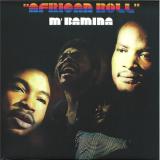
M’Bamina – African Roll (1975)
The story of an album born between Africa, Italy, and the nightclub culture of the 1970s
In the heart of 1970s Italy — a country undergoing profound social change and a music scene just beginning to open itself to distant sounds and cultures — an extraordinary, almost improbable story took shape. It is the story of a group of young African musicians who found their way to Europe, of a Turin nightclub that became a crossroads for communities and experimenters, and of an album which, released in small numbers and largely unnoticed at the time, is now considered a rare jewel of Afro-fusion.
The band called themselves M’Bamina — an ensemble of musicians from Congo, Cameroon, and Benin, who arrived in Italy in the early Seventies. Settling between northern Italy and the Pavia area, they began performing in small clubs and community events, bringing with them a vibrant rhythmic heritage: African polyrhythms, call-and-response vocals, funk-infused bass lines, and Caribbean or Afro-Latin colours absorbed along their musical journeys. Their raw, contagious energy on stage quickly drew attention.
Meanwhile, in Turin, another story was unfolding. There was a venue becoming almost legendary: Voom Voom, one of the city’s liveliest nightclubs, run by Ivo Lunardi. The club attracted an eclectic crowd — students, artists, foreigners, night owls — and Lunardi quickly understood that the dancefloor wasn’t just a place for music, but a melting pot for a new kind of cultural energy. Out of this vibrant atmosphere came his idea: to turn the club’s name into a small independent record label, Voom Voom Music, capable of capturing the spirit of those years and giving voice to unconventional projects.
When Lunardi heard M’Bamina, he immediately sensed that this was the sound he had been searching for: fresh, different from anything circulating in Italy at the time, and capable of blending African tradition with funk and European sensibility. He brought them into the studio.
Production was handled by Lunardi along with Christian Carbaza Michel, while the engineering was entrusted to Danilo Pennone, a young sound technician with a sharp, intuitive ear.
The recording sessions — held in Turin in 1975 — produced a remarkably warm and direct sound. The music feels almost live: grooves rooted in African tradition, but open to funk-rock structures and modern arrangements. It is a natural fusion, never forced. Tracks move between tribal rhythms, funk basslines, light electric guitars, congas and Afro-Latin percussion, with call-and-response vocals and melodies that echo both Congolese tradition and the lineage of Latin jazz. Not by chance, one of the album’s most striking tracks, Watchiwara, reinterprets a Latin standard through M’Bamina’s own rhythmic language.
The album was titled African Roll — a name that was already a statement of intention. It is African music that “rolls,” that moves, adapts, transforms within a new geographic and cultural setting. It is not strictly Afrobeat, nor Congolese rumba, nor Western funk: it is a spontaneous, hybrid blend, shaped more by lived experience than by any calculated aesthetic program.
When African Roll was released, the world around it barely noticed. Distribution was limited, and 1970s Italy had yet to develop a cultural framework for receiving such music. The national music press rarely paid attention to African or “world” productions. The album slipped into silence — though the band’s own story did not.
M’Bamina continued performing across Europe and Africa, even sharing a stage in Cameroon with none other than Manu Dibango. By the late Seventies, they moved to Paris, signed with Fiesta/Decca, and recorded a second LP, Experimental (1978). Meanwhile, the peculiar record they had made in Turin began to resurface quietly among vinyl collectors, Afro-funk enthusiasts, and DJs hunting for forgotten grooves.
That is when the album’s fate began to shift.
Over the decades, African Roll emerged as an almost unique document: a snapshot of an intercultural Italy before the word “intercultural” even existed, a fragment of migrant history, a spontaneous experiment in musical fusion born far from major industry circuits but rich in authenticity. Original copies began commanding high prices on the collector’s market, and the album became recognized as one of the hidden classics of European Afro-fusion from the 1970s.
Today, more than fifty years later, this reissue finally restores visibility and dignity to a project that deserves to be heard, studied, and celebrated. It is not simply an album: it is the testimony of a rare cultural encounter, born in an Italy unaware of how fertile such exchanges would one day become.
It is the story of a visionary producer, an extraordinary band, and a fleeting moment in which music, migration, and nightlife came together to create something genuinely new.
African Roll is — now more than ever — the sound of a bridge: between continents, between eras, between cultures. A record that, after rolling far and wide, has finally come home.

12
Following her debut album, I’ll Look for You in Others (Past Inside the Present), earlier this year, Patricia Wolf joins Spain’s Balmat label with See-Through, her second album. See Through finds the Portland, Oregon musician and field recordist continuing to develop her signature style of ambient, balancing radiant soundscaping with a carefully expressive sensibility. But the new album is also marked by an important difference. Where I’ll Look for You in Others was largely written in response to the death of a loved one, See-Through represents a kind of rebirth.
“After a long period of grief, I had been hoping to find my way to a place of lightness, peace, playfulness, curiosity, and sensuality again,” Wolf says. “What I was surprised and pleased to find is that for the most part, I had.”
She wrote and recorded many of the album’s songs quickly, in preparation for an August 2021 broadcast on the online radio platform 9128 Live. Excited for the opportunity to play live after more than a year of the pandemic, Wolf decided to write all new material for the event, working with a lean setup of Octatrack, Roland Synth Plus 10, Make Noise 0-Coast, and Novation Summit. (In fact, Wolf was the first sound designer invited to create patches for the Summit.) She also picked up an acoustic guitar that her brother had loaned her. “I decided to take the surrealist approach of ‘pure psychic automatism’ to see what poured out of me,” she recalls. “Woodland Encounter,” “Under a Glass Bell,” “The Grotto,” “The Mechanical Age,” “The Flaneur,” and “Psychic Sweeping” are all products of those sessions; the through line holding them together is their exploratory spirit and clarity
of vision.
Other songs, like “A Conversation With My Innocence,” “Recalibration,” and “Psychic Sweeping,” wrestle with the traumas of the preceding year. Though they may linger on the heaviness of loss, Wolf says, “What I discovered is that a stronger archetype had grown inside me to steer my emotions and thoughts to a better place.” Likewise, “Wistfulness” and “Upward Swimming Fish”—her first experiments with VST synthesizers—balance the bittersweet embrace of melancholy with the freedom to choose happiness.
“Pacific Coast Highway,” the album’s lone song with drums, might at first seem like an outlier. But it also signals Wolf’s interest in finding a fusion between the introspection of ambient and the togetherness of beat-oriented music. “Experiencing loss and isolation is what drove me into gentler territories of sound,” she says, “but I want to start making more beat-oriented music. After an extended period of loss and isolation, I’m ready to experience more joyous and social things.”
Listeners with keen ears might recognize the album’s closing song, “Springtime in Croatia”: A different mix of the song originally appeared on the 2021 digital compilation secondnature & friends Vol. II, from the Seattle label secondnature. This marks its first appearance on vinyl, however, and its spiritual home is undoubtedly here, at the close of See-Through. As the bookending answer to the opening “Woodland Encounter”—another song in which field recordings play a crucial role—it closes the circle of an album that is itself keyed to the steadily turning cycles of life.

With Stronger, her third EP, Mira Ló continues her rapid ascent within the French electronic scene. A cathartic project born from a period of personal upheaval, this EP is both a cry of resilience and a celebration of club culture as a space for healing. The Paris-based queer producer and DJ turns pain into creative force, and the dancefloor into refuge, release, and rebirth. Across four emotionally charged tracks, Stronger traces the contours of a club where one rises through the energy of the beat, the warmth of a caring community, and the affirmation of self through sound and movement. “This EP is my response to a very dark period in my life. I chose to turn pain into strength, to stand back up through music, and to reconnect with joy, intensity, and the collective. Each track follows a movement, of a body rising, a heart beating stronger, a soul regaining its light. Stronger is also a tribute to those who carried me when I could no longer stand on my own. It's proof that even in chaos, we can rebuild together.” Mira Ló The first chapter of this inner journey, “Riser” is a house track filled with enveloping melodies, ethereal pads, and organic chords that create a suspended sonic space. Its steady pulse and warm basslines evoke a rising from within. “I wanted this track to feel like a build-up, like breathing again. It's about that moment when you feel you're ready to rise once more, even after a fall, like a gentle but powerful wave,” says Mira Ló. With its R&B textures, pop-infused touches, and radiant production, “Brighter” glows with warmth. It captures the return of inner clarity, the rediscovery of joy and ease. Made to bring people together, it’s Instagram | Youtube | TikTok | SoundCloudboth immediate and heartfelt. “It’s a song about shining again, after the dark. I wanted something full of light and simplicity, a track that speaks to the heart and makes you want to dance without thinking.” A personal and introspective nod to the French Touch, “Higher” is driven by filtered basslines and hypnotic grooves. It channels a sense of euphoria that builds gradually, almost meditatively, like a joyful vertigo. “This track is about finding euphoria again, that moment when music lifts you beyond yourself. I grew up with the French Touch, and this is my way of coming back to it with my own voice.” Closing the journey, “Louder” is the most assertive track on the EP. Inspired by the UK bassline and garage scene, it bursts with percussive, punchy energy. This is where everything comes into full light, bold, unapologetic, and free. “I wrote Louder as a statement: I’m here, I exist, and I won’t stay silent anymore. It’s about partying as self-affirmation, as a joyful, powerful scream of identity. Meant to be played loud. Very loud.” Mira Ló, born Ana Lopez, is a queer producer and DJ based in Paris. Drawing from the full spectrum of club music, her sets and productions blend melancholic emotion with a unique, high-energy, euphoric touch - inspired by artists like Disclosure, salute, and Sammy Virji. From her early days playing in Parisian bars and intimate clubs, she quickly rose to the lineups of top French venues and festivals such as Peacock Society, Marvellous Island, and Lollapalooza - extending her reach across Europe and even to Chicago. She’s carved out a strong place for herself within the new wave of the French electronic scene, leaving a lasting impression with every appearance. In 2023, she released her debut EP Memories and was featured in Apple Music’s “Women In Electronic” series. That same year, she became a resident at Sacré in Paris, before unveiling her second EP Tribute To Chicago in 2024. She returns in 2025 with her third release, Stronger - once again proving she’s one of the most promising artists shaping the future of electronic music.

3
Welcome on Vibes Addikt !!
Label Owned by N.O.B.A, An artist with a large number of tracks that have been lucky enough to top the Beatport Top 100, but also the support of big names such as Amelie Lens, Mark Sherry, Nusha, Frankyeffe, Klaudia Gawlas, Frank Biazzi, Charlotte De Witte, Mha Iri, Sebastian Groth, Steve Shaden, Yves Deruyter ... and many more...
This 3rd Vibes Addikt present Dimitri Cooman
Belgium Techno and Hard Techno artist who play on all events from the legendary Cherry Moon Club (Lokeren.Be)
Born near Brussels, Dimitri fell in love with music early on.
The interest in house –and techno music grew since the start of going out to small venues and raves at the age of 16.
Soon he visited one of the mayor Belgian clubs, Cherry Moon, there everything changed.
Impressed by the "the club, the people, the music" he quickly fell in love with 'The House of House' and that love for the club would not change until this day.
During this period he started mixing himself, playing the music he loved from his homebase.
Since a while ago he is an official resident and one of the driving forces behind the Cherry Moon events, runs the techno imprints Cherry Moon Records & Nachtkabarett Recordings, manages the brand and parties of 'Techno Avenue' and tours with all of this all over Belgium whilst also playing on numerous techno events.
His EP's and remixes have also been released on Cherry Moon Records, the Berlin based Db130,the italian labels No Response Records and SMR Underground, Strohm Records, Dark Distorted Signals, Bonzai & Ithica Records, Sonaxx Records and soon Reload Records, DIKI records and Vibes Addikt.
He present on Vibes Addikt "Vanished Technologies" an Underground EP including a remix from Fhase87, French Artist who have support by Mark Broom, Ben Sims, Dj Rush ... and others big name
EP already supported by Frank Biazzi, Frauleinz, Samuel Sanders ... and many more

A double take, an awkward smile, my cheeks begin to blush
When from the dance floor my eyes lock with those of my club crush
A person I don’t recognise a figure floating there
But to a luster, love can muster almost anywhere
A quick exchange of broken words plays out between my ears
Should I approach them or will then the magic disappear
The bass begins to growl at me, the snare begins to bark
Who am I to you except a stranger in the dark
Will my adoration meet an elated response
Or is this not the place for a romantic renaissance
And with that thought I feel my body pulled into a trance
I think I’d best forget it close my eyes and start to dance

10
'Experimental multi-instrumentalist Dave Cudlip releases his debut full- length album as Radiolarians via brand new experimental label Klang Tone Records.
Having already garnered plaudits from one of the most authoritative voices in UK electronic music, Electronic Sound magazine, the 10-track album presents a stunning and unique combination of ethereal ambient soundscapes, undulating rhythms and jarring sound collages; the result of what Cudlip describes as a “quick and spontaneous” recording process using a limited setup of analogue synthesisers and drum machines.
The release marks an exciting new chapter for Klang Tone, which is already considered a musical institution in the vibrant town of Stroud, Gloucestershire. The record shop, founded by avant-grade sound artist and obsessive crate-digger Sean Roe has earned a reputation as one of the South West’s nuclei for contemporary jazz, electronic and experimental music.
After the instantly sold-out limited edition lathe-cut 7” of the Radiolarians single ‘Obsidian 2’, Klang Tone is now proud to launch its label arm proper with Radiolarians as its first limited run vinyl release.'
Dave Cudlip was born in North Devon. After moving to Stroud as a child and playing in bands as a teenager, he left the West Country to study archaeology at Durham University, with his subsequent work as an archaeologist taking Cudlip all over Britain. After returning to Stroud, Cudlip has continued to make music, drawing on his love for the work of artists such as Harmonia and Autechre. He created Radiolarians in response to what he calls the “tyranny of choice” when it comes to electronic instruments, streamlining his creative process and consciously limiting his options to produce a veritable distillation of extraordinary ideas.

Recorded during an almost 24-hour marathon first-day session for All My Relations, "Mitote" emerged from group improvisation and composition, featuring Sunny Jain (Red Baraat) on the dhol. Bosco and the band worked up an arrangement quickly with a heavy backbeat, building the melody on a blues form-embodying the world's nature of ecstasy and struggle.
"D i l o" was recorded during the Ancestros Futuros sessions, but was left off the album. The rhythmic framework was composed by Brian Wolfe and arranged by the band. The song features call and response between the percussion and saxophone punctuated by high bell patterns and low bottom drum hits.

Yesterday it started to rain…
The smell of damp tarmac rising up through open windows, a smell which is uniquely evocative for us all depending on our individual histories: a suburban pavement, a school playground, a basketball court.
The rain cut through a band of low pressure that had been lying over the city for days, pinging rhythmically off metal, causing rolling tyres to hiss and spit.
The music that soundtracked this meteorological shift was the debut full length from Rain Text (Giuseppe Ielasi & Giovanni Civitenga), simply titled III. Scattered throughout the nameless eight tracks there are moments of low-end pressure relieved by the fizz and clatter of metallic rhythms; there is static, there is discord, there is release.
The individuals comprising Rain Text have a long history of manipulating sounds for evocative ends, Giuseppe Ielasi has been making music as one half of Bellows for many years, each album stretching and destroying their sound in beautiful increments. He has also released reliably inspirational music either solo or in collaboration for the likes of Editions Mego, Shelter Press and Faitiche. His sensitive ears are also in high demand as a mastering engineer. It is worth perusing the 800+ releases he has technical credits for on Discogs: from classics of the avant-garde to the freshest faces of the Swedish underground, the chances are some of your favourite albums are included.
Giovanni Civitenga helms the SKYAPNEA long-running NTS show. Joining him, you can enjoy the fruits of a lifetime of deep listening through shows that flit between the industrial and the devotional, a space that is fully explored on III.
The album was recorded quickly over three fertile days in Ielasi’s studio in Monza, but of course results like this can only be achieved at such a pace by spending a lifetime obsessing over the mechanics and possibilities of sound.
Those who are enamoured by the rain—who are returned by it to the surfaces, smells and sounds of a lost and idealised youth; who feel themselves restored—are known as ‘pluviophiles’. Their response to rain may well have a biological explanation: when rain hits tarmac negative ions are released into the air, which are thought to result in feelings of wellbeing and positivity. All the more reason, then, to return to the vivid ecosystem that Rain Text has so carefully cultivated for III."
Words by The Dengie Hundred – August 2024


Four cuts of unapologetic, immediate Jungle that capture Tim Reaper’s frantic energy and Fracture’s deadly sonics — a perfect balance of aggression and detail. No holds barred, examined with a fine-tooth comb. Precision Pandemonium. Alongside the music, the collaboration extends to artwork, with each label’s iconic logo reimagined in the other’s style. This visual partnership spans the 12” label and sleeve design, as well as an extensive range of streetwear merch.
Fracture says:
I’ve known Ed for over 15 years, going back to the forum days of Subvert Central and Dogs On Acid. Even then, his approach to Jungle was authentic and compulsive. He’s stayed on that path with unwavering focus, never chasing trends—just pure, raw Jungle. What he’s built with Future Retro London is so desperately needed in this day and age: a space where music and community come first, shining a light on artists and DJs often overlooked by mainstream channels that favour gimmicks. His passion for Jungle is infectious, and I’ve always wanted to work with him so doing a full label collaboration feels completely right. Working with Ed is a real eye opener - he’s so full of ideas and the speed at which he can generate patterns is scary. Watching him fly around his laptop, chopping breaks and writing basslines is like watching a Grandmaster play speed chess—always on, never off. Shout out Tim Reaper each and every. An incredible DJ as well.
Tim Reaper says:
I think this is probably the longest ever I've spent on any release for Future Retro London, clocking in at just over 3 years of back & forth between me & Fracture in the making of this. There's a lot of backstory behind this project, so excuse my ramblings below.
The story starts with me hearing Sully playing a tune by Fracture called "Booyaka Style" which I really liked and thought would be great to release. I reached out to Fracture about it and found out later that he already made plans to include it on an album project (0860) that he was working on at the time which later came out on his label Astrophonica. He asked if I would be up for sending him any tunes to be considered for release on Astrophonica, but in response to this, I suggested a joint label project that both of us would have tunes on & he seemed keen to do it.
Few months later, I got back in touch to ask if he had done any tracks for this release but he was still busy with other things and instead sent me a track he had been working on, with the suggestion of us collaborating on it. We finished a track together that we both liked & felt as if it was a good starting point for the release. We then got a few more collabs done with a fair bit of back & forth, but upon reflection, he felt as if they could be a lot better than what they currently were and so, the release started to change in format a bit. Fracture suggested that we should meet up in his studio and work on some tunes together in person, with the aim of getting a few bits done over a bunch of sessions and getting it all sorted out in a much quicker timeline. Thankfully, this actually worked, we managed to get some collabs done that both of us are very happy with (even managing to sample a recording of Blackeye from a set from a Future Retro London event!)
Thanks to Fracture for his co-operation & perseverance with this release, helping to see it through to the end & not allowing it to be anything less than the best possible version of itself, thanks to Mark at Sequence for his role in helping with the logistics/manufacture of this release, thanks to Utile for assisting on the design on this release and most importantly, a very special thanks to all the obstacles along the way that I faced in the making of this release, which helped me appreciate getting to this point so much more than I ever could have!
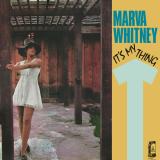
- A 1: It’s My Thing (Pt 1)
- A 2: It’s My Thing (Pt 2)
- A3: Things Got To Get Better (Get Together)
- A 4: What Kind Of Man
- A5: If You Love Me
- A6: In The Middle
- B 1: Unwind Yourself
- B2: You Got To Have A Job
- B 3: I’ll Work It Out
- B4: Get Out Of My Life
- B 5: I’m Tired, I’m Tired, I’m Tired
- B6: Shades Of Brown
Among the most revered voices in funk, Marva Whitney holds a special place thanks to her fierce energy and unmistakable style on tracks like the classic 'Unwind Yourself,' a long-time favorite for DJs and dance floors alike. Emerging from the dynamic world of the James Brown Revue in the late 1960s--alongside iconic names like Lyn Collins and Vicki Anderson--Marva quickly carved out a name for herself. In 1969, she began recording as a solo artist under James Brown's King label, scoring a Top 20 R&B hit with 'It's My Thing.' While mainstream hits were few, her music resonated deeply with funk lovers and crate diggers around the world. Songs like 'You Got to Have a Job' and the endlessly sampled 'Unwind Yourself' have only grown in stature over the decades. Her album, "It's My Thing", dropped that same year and has since become a touchstone of the genre. Backed by the legendary JB's and produced by James Brown himself--who also contributed to most of the songwriting--the album captures a raw, unapologetic funk sound with a distinctly female voice at the forefront. From the explosive opening of 'It's My Thing'--a bold response to the Isley Brothers' 'It's Your Thing'--Marva channels sheer intensity, backed by a band that doesn't let up. The pace briefly softens with 'If You Love Me,' a soul soaked ballad in the spirit of Otis Redding, before diving back into the rhythmic grit of tracks like 'Unwind Yourself.' Decades later, "It's My Thing" continues to inspire, sampled by producers and treasured by collectors--a powerful snapshot of funk at its most uncompromising. Reissue on 180g vinyl.

- A1: Always Lost
- A2: We Will
- A3: Insular
- B1: Aretha
- B2: Woollen Women
- B3: Breaking
Belgian singer-songwriter Emma Hessels releases her debut EP 'Constant Distance' on October 24 via Unday Records. With a voice that lingers long after the song has ended and lyrics that feel like pages torn from a diary, Hessels has quickly carved out her place in the Belgian scene. She was named laureate of Sound Track in 2023, went on to play intimate yet arresting sets at Ancienne Belgique, Botanique, and the prestigious Cirque Royal, and appeared at Best Kept Secret this summer.
Milestones that signaled the arrival of a singular new voice in folk and soul.
'Constant Distance' gathers six songs bound by a recurring undercurrent: the presence of distance in its many forms - absence, longing, loneliness, the fear of loss, but also the desire for belonging. The songs weren't conceived around a single theme, but when brought together, a pattern revealed itself. Loss implies distance, longing implies distance, even love can. Yet the EP closes on 'Breaking', a gospel-tinged anthem of connection and alignment, written during a women's writer's retreat where community and music became inseparable.
Musically, 'Constant Distance' moves between folk and soul, carrying the feel of modern blues and occasionally leaning into gospel's call-and-response. The atmosphere is warm and nostalgic, drawing inspiration from Laura Marling, Damien Rice and Big Thief as much as from Aretha Franklin, Nina Simone and Richie Havens. Emma's voice remains the constant thread: soulful, unforced, quietly commanding. "I hope my songs can be like a warm blanket, something that keeps you company, that makes you feel a little less alone."
Though written solo on guitar, often during long train rides, the songs expanded into layered productions through collaboration with Aram Santy, Nard Houdmeyers and Fender Mackenson Rooms, with additional contributions such as Marthe van Droogenbroeck's evocative trumpet. Recorded over two intense days at Studio Beertje, the EP captures both intimacy and expansiveness. The result is music that carries the weight of Emma's fears and questions, but also the joy of collective creation.
With 'Constant Distance', Emma Hessels doesn't just deliver a debut - she opens a world where fragility and strength coexist, and where music becomes a way of closing the gap between people.

- Vampirella
- Ghost Girl
- Wild Young Ways
- Little Flashes Of Yesterday
- How To Be Kind
- Go Home Stay Home
- All Hail The Daffodil
- In Praise Of Right Now
- With Wings We'll Soar The Heavens
- Gladwrap
- Life Said To The Boy
- Clean Hanky
- Left
If you're a serious music fan but not a native Kiwi, your first awareness of New Zealand's fab music scene may have come from the debut of The Chills' mesmerising Kaleidoscope World collection of early singles. Within a few years, a great number of NZ acts saw music released by various UK and US labels . . . generally to great praise and enthusiasm. That this occurred without any of these acts having to move abroad to further their chances was nearly as delightful a feat as the music itself. The exception to this was Dead Famous People, radical in a snap decision after a five-song 12" for Flying Nun, Lost Persons Area, to change hemispheres and make a go for it in London. It started well. Three London recordings were added to three from their Flying Nun EP and put out by Billy Bragg's Utility label - about as perfect a mini-album as there's ever been. Response was positive, more songs recorded, the group did a John Peel session and played out often, but the vaguely impoverished group began to fall apart. Singer and primary writer Dons Savage - determined to make it - had a near-miss at becoming Saint Etienne's singer on an early take of their 'Kiss And Make Up' cover, and there was a fine performance from her on The Chills' 'Heavenly Pop Hit' . . . but dismay had set in. Upon learning of her mum's passing back home, Dons returned to NZ and was quiet for decades. Most of their London recordings were later released later in minuscule quantities by very small labels, but these saw scant press or attention and enjoyed next-to-no sales. Their moment had passed, and the band has suffered the strange fate of being the least-known of the truly brilliant acts associated with Flying Nun. Listening to these `lost' songs, it seems unfathomable that they could have fallen by the wayside. No NZ songwriter comes as close to equalling Martin Phillipps' pop brilliance as Dons. Her superbly sweet vocals, delicious harmonies and sophisticated arrangements aside, the songs dealt perceptively with universal follies of youth and yearning in tandem with a then-unusual twist of lyrics dealing matter-of-factly with her sexuality at a time when `women's music' was seen as exclusionary (segregated into its own bin in shops, if it existed there at all), and the riot grrrl movement was years away, later breaking through due to its radical stance. Dons is a pioneer in myriad ways, the irony of her transcendent brilliance failing to propel a greater career may rest in the fact that she leapt to the head of the class too quickly for people to grasp it; a fate that's befallen so many musical geniuses acknowledged today but less in their time - something rather tragically acknowledged in old pal Martin Phillipps' song with The Chills, 'A Song For Randy Newman, Etc.' None of these thirteen songs fails to deliver something both immediate and unique. And we're proud to debut 'Vampirella"', a magical fantasy song of longing and intrigue - surely one of the most perfect tunes to ever sit around unreleased for decades! Dons is again busy conjuring new songs; in the meantime we're delighted to unveil these obscure gems from the past.
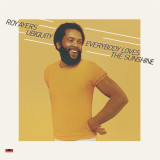
- A1: Hey, Uh-What You Say Come On
- A2: The Golden Rod
- A3: Keep On Walking
- A4: You & Me My Love
- A5: The Third Eye
- B1: It Ain't Your Sign (It's Your Mind)
- B2: People & The World
- B3: Everybody Loves The Sunshine
- B4: Tongue Power
- B5: Lonesome Cowboy
In "Everybody Loves the Sunshine" (1976), Roy Ayers seamlessly blends genres, creating a timeless sound that continues to influence musicians and DJs around the world. He makes the vibraphone the central instrument, a jazz-funk approach that defines his unique style. Over time, the album has remained an essential reference in Roy Ayers' discography and in the history of 70s Black music. Summertime soul classic! 180g vinyl.
In 1976, legendary musician and composer Roy Ayers released one of the most iconic albums of his career: "Everybody Loves the Sunshine." This album not only solidified Ayers as a key figure in the world of jazz-funk but also marked a milestone in soul music and contemporary jazz. It features a sophisticated blend of irresistible grooves, smooth melodies, and a unique sound that has endured over the years, becoming a reference for multiple generations of musicians and listeners.
By the mid-70s, Ayers had already established his reputation with his band, Roy Ayers Ubiquity, and his distinctive use of the vibraphone, which became his personal trademark. However, with this album, Ayers ventured into a smoother, more accessible sound, partly in response to the rise of disco music and the growing interest in more experimental sounds within the music scene. Throughout its ten tracks, Ayers managed to create a sonic atmosphere that evoked both the warmth of summer and the sophistication of jazz from that era, set against a backdrop of modern soul. The production was carried out by Ayers himself, along with his producer and friend, David R. Williams, and features the wonderful sound of Phillip Woo's Fender Rhodes and the powerful energy of the rest of the band, achieving an unmistakable authenticity and freshness. Some of its most well-known songs include the title track, ‘Everybody Loves the Sunshine,’ ‘The Golden Rod,’ and ‘The Third Eye,’ which quickly became classics of jazz-funk and soul. This album is crucial in Roy Ayers' career, as it demonstrates his ability to remain relevant and creative in an ever-changing music industry. Over the years, "Everybody Loves the Sunshine" has become a cult album, frequently featured in DJ sets by artists like Gilles Peterson, Theo Parrish, and Lefto. Summertime soul classic!

This is a recorded document performed by Mark Holub, Johanna Pärli and Sofía Salvo.
As a trio, they had not met until sound-checking for their gig at Berlin’s Cashmere Radio on September 1, 2023 — a fact that may be concealed by their immediate understanding as a musical entity but is obvious by their artistic freedom and curiosity towards each hoc encounters, flexible and steadfast in its performance, and that culminated in an experience that shook the floor of the radio station’s headquarters.
The day after, Sofía, Johanna and Mark gathered in Adam Asnan’s studio and deepened their quest for a communal language. They ignored any musical fetters or conventions, enjoyed the possibilities of a wider time frame without a live audience — and exceeded all hopes of what three personalities can achieve when they are given the space and time to experiment, detached from any restrictions.
Mark Holub is a drummer of outstanding versatility and responsiveness, full of ideas and quick on his feet. Through his playing as well as his experience as a band-leader and composer he is able to steer this coequal group towards thundering crescendo, but sits equally comfortable in the centre of complex and fine rhythm probing in response to impulses thrown in by his companions.
Johanna Pärli makes use of her double bass’s entire body, extracting an armada of multi- layered sounds with an immensely high sonic spectrum that is also reflected in the diversity of her musical projects. She is both patient and wildly adventurous in her performance, and in this trio her contribution wanders from considerate bow work to brisk fingerpicking, gnarly string strikes and pedal use to startling effects.
Sofía Salvo unleashes the full unbounded potential of her voice by taking advantage of her baritone saxophone’s broad range of possibilities. She is one of Berlin’s most singular musicians and her widely proven capabilities cover gentle additions to support and underline pulsive interplay just as masterfully as rapid licks and roaring bursts of noise, spurring the collective to unpredictable intensity.
If music of this particular kind often gives the impression of a constant search, this international trio certainly managed to find common ground and capture a special moment in time for listeners to (re-)discover. Contrary to what frequent misconception sometimes suggests, it’s also tremendous fun.
NERR — Filling Open Spaces was instantly composed and performed live in studio by Mark Holub on drums, Johanna Pärli on double bass and Sofía Salvo on baritone saxophone, recorded in Berlin on September 2, 2023 and mixed by Adam Asnan. Mastered and cut by Rashad Becker, vinyl pressed at Pallas. Artwork and design by Stefan Lingg, produced by Christoph Berg and Stefan Lingg.

"One of the most iconic groups of the late 20th century, Dire Straits established their timeless sound from the
moment they first appeared on the London gig circuit, in 1977. With faultless musicianship and memorable songs
that quickly connected with music lovers, it was clear the group would set their own path, proving that, even amid
the new-wave era, classic songwriting would never go out of fashion.
After three years of relentless hard work, touring, writing and recording their music, the group entered the 1980s
well on their way to becoming the biggest-selling band in the world. That year’s Making Movies album would also
make its presence felt on the silver screen, thanks to the inclusion of the UK No.8 single ‘Romeo And Juliet’ – later
used in films such as Empire Records, Hot Fuzz and I, Tonya – and live favourite ‘Tunnel Of Love’, which featured in
the 1982 Richard Gere film, An Officer and a Gentleman. Dire Straits’ frontman, Mark Knopfler, would later explain
to The Times how satisfying it was to write ‘Tunnel Of Love’: “It’s the moment when you know you’re really on to
something,” he said. “There’s a certain part of the song that I call the breakdown and when I got there I could feel
the drums, the piano, all the things that I wanted all the instruments to do. When you get to that state, there’s a
strange sense of one thing following another, of elements falling into place quite naturally.”
Paying extra attention to those elements, this half-speed master of Making Movies has been overseen by Miles
Showell at Abbey Road Studios, in London, resulting in a cut that has a superior high-frequency response (treble)
and very solid and stable stereo images. Pressed on 180g vinyl, it comes with alternative artwork that swaps the
red and the blue of the original album sleeve, plus a printed inner sleeve, a “Half-Speed Master”-branded obi-strip
and an Abbey Road certificate of authenticity.
"


Eight months after the release of Wake Of The Flood, the GRATEFUL DEAD followed up that masterpiece with the second album on their Grateful Dead Records label, From The Mars Hotel. To this day, most of the songs on From The Mars Hotel are played frequently by the band members as they continue to bring the music to the people, and during the GRATEFUL DEAD’S touring career, more than half of the songs were important parts of their live repertoire. “Scarlet Begonias,” “Ship Of Fools,” and “U.S Blues” arrived on the scene in 1974, with “China Doll” and “Loose Lucy” coming a year earlier, and they all quickly became staples of GRATEFUL DEAD live sets for decades, although “Loose Lucy” had a 15 year hiatus 1975-1989. Phil's two songs on the album are often played live these days when Phil performs with his rotating cast of Friends, and these songs, “Pride Of Cucamonga” and “Unbroken Chain” are elicit ecstatic responses. These would be the final two Phil-sung songs on a GRATEFUL DEAD studio album. Peaking at #16 on the Billboard Top 200 chart in 1974, the album's terrific batch of new songs and exceptional production had Dead Heads scooping up the album 50 years ago upon its release.

Eight months after the release of Wake Of The Flood, the GRATEFUL DEAD followed up that masterpiece with the second album on their Grateful Dead Records label, From The Mars Hotel. To this day, most of the songs on From The Mars Hotel are played frequently by the band members as they continue to bring the music to the people, and during the GRATEFUL DEAD’S touring career, more than half of the songs were important parts of their live repertoire. “Scarlet Begonias,” “Ship Of Fools,” and “U.S Blues” arrived on the scene in 1974, with “China Doll” and “Loose Lucy” coming a year earlier, and they all quickly became staples of GRATEFUL DEAD live sets for decades, although “Loose Lucy” had a 15 year hiatus 1975-1989. Phil's two songs on the album are often played live these days when Phil performs with his rotating cast of Friends, and these songs, “Pride Of Cucamonga” and “Unbroken Chain” are elicit ecstatic responses. These would be the final two Phil-sung songs on a GRATEFUL DEAD studio album. Peaking at #16 on the Billboard Top 200 chart in 1974, the album's terrific batch of new songs and exceptional production had Dead Heads scooping up the album 50 years ago upon its release.

"The debut longplayer from Washington, DC-based Ekko Astral is a complex mesh of bubblegum noise punk and no-wave art rock that holds an elastic space for the knotty, tangled horrors of living in the imperial core. Their songs thrash with intense, necessary defiance against codified gender-based violence, their distortion and sibilance a direct response to the dangers outside our front doors.
pink balloons opener “head empty blues” specifically bites back against the terrors of the normative male gaze that dominates so much of American culture. Over a post-punk passage that plays call and response with a wall of harsh noise, frontwoman Jael Holzman belts playfully morbid details of the head-exploding anxieties that haunt her daily: “is it bon eye-ver or bon iver? / i don’t care / i’ve got stalkers outside / not going out tonight / gonna sit and take pics / in my underwear.”
Holzman formed the band in 2021 with best friend Liam Hughes (guitar), and eventually rounded out the band’s lineup with Miri Tyler (drums), Guinevere Tully (bass), and Sam Elmore (guitar). Ekko Astral’s local scene quickly welcomed the band for their wildly fierce live presence, emboldened by the community-building message behind the band’s mascara mosh pit brand.
Ultimately, Ekko Astral are here to uplift, a mission exemplified by the frenetic and bewitching pre-release singles “baethoven” and “devorah,” cornerstones of pink balloons in both style and theme. The former serves as a reminder to keep your larger than life personality in a world that wants to downsize you, where the latter proclaims urgent solidarity with missing and murdered people. Such crucial messages of upliftment are the foundation of pink balloons, and, by extension Ekko Astral, whose thrashing debut leaves no stone of solidarity unturned."

Ngwaka Son Systéme’s debut album Iboto Ngenge means “power struggle” or “seizing the opportunity” but while words can only be roughly translated, the music reaches listeners unambiguously: A potent mixture of techno, rumba, soukous, zagué and dancehall with the unique “Kinoise” brand fresh out of Kinshasa, the Congolese megacity that never stops innovating in the music landscape worldwide. Ngwaka Son Systéme is led by musicians Love Lokombe and Bom’s Bomolo, having previously founded the band KOKOKO!. This new project continues the contemporary Congolese tradition of reinventing electronic music by shaping and crafting music instruments made of household objects. As a means to continue strengthening the links between Africa and Latin America, Eck Echo has tasked Colombian dub engineer Diego Gomez with the analog mixing of the stems, originally recorded by Levy David at Timbela Ba Studio in Kinshasa. With the aim to bring the lexicon of shared Colombian and Congolese music into the next chapter, we proudly present to the world the magnificent music of Ngwaka Son Systéme. The inadvertently techno-oriented Lakala, a trance-inducing experience where listeners can quickly relish to the lyrics even without speaking Lingala, for the shapes of the words are already inviting listeners to dance, sing and smile, all the while virtuoso percussionist Steroy operates the DIY-drum kit at high-tempo. The call-and-response effect, where each musician lends their voice to the choir, is particularly felt in Bo Lobi Pe, where the vocals guide us ever so playfully to the tune of an acoustic guitar that invites us to take off our shoes, kick back and relax. Zanga Mbongo (translated as “there is no money”) is lyrically a proud anthem to celebrating life in spite of economic scarcity, and musically it is a triumphant renewal to the legendary soukous genre of the 1970s, championed by worldwide renowned stars such as Pepe Kallé and Sam Mangwana.

11
About 20 years ago, Carlos Giffoni quickly made a name for himself both as a noise guitarist and a laptop noisician upon arriving in New York (via Florida and Venezuela). His expertly curated annual No Fun Festival, as well as his No Fun label, further solidified him as a key figure in the international noise scene. The festival's success proved the formula for experimental and improvised music fests could work with the noise underground as well, but it also capitalized on the faster rate of connections being made between geographically disparate artists as a result of the (still relatively nascent) internet. Back then Carlos would play his laptop like a pinball machine, in contrast to the static stage presence of most laptop performers, and his solo music, like many others' at that time, expressed a less dark and dour vision of the implications of harsh noise. By the close of the 2000s, he had stopped doing the festival, switched gears musically to playing the lighter No Fun Acid sets, and moved to LA. Now he has re-emerged in a big way with Dream Walker, his first full-length since 2018's Vain (and only his second since 2010). Inspired by the masterful performances and diffusions he heard at the February 2023 GRM electronic music festival in Paris, particularly sets by old friends Lasse Marhaug, Jim O'Rourke, and Eiko Ishibashi, he began conceptualizing new music of his own in response, turning to synthesizers and other hardware to produce a work more firmly in the tradition of European electronic music than anything else he's done. Intended as a late night listen that evokes the edge of consciousness, with Carlos getting as close as possible to a trance state during the actual recording and mixing, each of the eleven tracks transition into one another rather than being standalone discrete pieces, forming two side-long suites that proceed like stages of a dream. Unabashedly tonal and repetitive, the glistening opener "Now Dream," the droning "Sleep Walker," and the closing triptych of "Lost in Descanso," "Sunrise," and "The Hidden Path" occupy a power electronics-ambient nexus that feels spiritually close to the Mego label. Elsewhere, "Ticking Clock" is reminiscent of Stereolab's non-easy listening vintage electronic side, while the two-part arpeggiated "Euphoria" recalls early Oneohtrix Point Never (which Carlos released on No Fun). The contrast between "One Breath"'s crackling opening and its remarkably fluid and soaring sustained synthesized chords is a distillation of the album's lingering tension between electronics' ability to project mechanical rupture as well as the organic and the infinite _or "walking between dreams," as Carlos himself puts it. Produced by Lasse Marhaug (who also mastered Carlos' first solo album, Welcome Home, back in 2005), released by Stephen O'Malley (who I remember DJing at the No Fun fest), with cover art and photos by personal friends, Carlos considers the album a family affair. But Dream Walker most of all heralds a maturation of the artist, and stands as a record that exists out of pure desire, rather than obligation or force of habit; a statement of reconnecting with music not by merely revisiting it, but by building on what's come before, both in his own work and in the music he loves. -Alan Licht, New York, December 2023

Introducing, the experimental violinist and performer Vanessa Bedoret.
The London-based French musician today announces that she’ll be joining, Scenic Route, a label renowned for selecting and nourishing rising stars for the release of her debut album, Eyes, due out on 8th of March 2024. Launching with a taste of what’s to come, today she also shares single “1/2”, a textural track that tells of the dichotomy between those who are selfless and those who are self-centred, and their need to merge as one. This duality is reflected in the industrial metallic echoes under Vanessa’s soaring vocals and the piercing strings of her chosen instrument, the violin.
Treating songwriting as an instinctive process, Bedoret transforms her deeply personal experiences into pure emotion. Not following any set narrative, Eyes takes the listener on a journey via their own experiences, prompting introspection through Bedoret’s hypnotic melodies.
Through the album, she awakens the audience's imagination, to open up their emotional response. On “Ballad”, a vague, loving lyrical letter to someone close, Bedoret’s heartbreakingly soft lament is barely audible over the dramatic atonal strings. She flips her narrative again in the titular track, “Eyes”, so the listener empathises through her isolated violin, and takes on her anguish, not needing to understand the full story.
Bedoret began her classical training at age 6 and on completion at 18 she embraced the thrill of playing guitar in punk bands, and like many at the turn of adulthood, was quickly captured by the allure of the dancefloor. Her far-reaching taste doesn’t stop there, she also counts black metal to opera and from eurodance to IDM as inspiration. Her deep understanding of musical form elevates her experimentation to a truly unique sonic experience, one that never strays too far from her original love of classical music.
With only a string of releases under her belt via independent labels like Laura Lies In and Archaic Vaults, her refined skillset has meant she’s been in high demand for both solo shows and collaborations. These accolades include playing violin with New York avant garde collective Standing On The Corner at The Serpentine, as well as a part of Kahil El’Zabar conducts MOKI at the ICA, and Linder: Another Music in a Different Arcadia at the Design Museum alongside artist Linder Sterling, Naima Cherry, Maxwell Sterling, Kenichi Iwasa & Ella Frears.
For her solo performances, she’s shared stages with Standing on the Corner, Ekaterina Bazhenova-Yamasaki, Philomème Pirecki, John T. Gast and Nexcyia to name a few. She’s also performed as a duo alongside musician Severin Black in support of their collaborative EP release, First Passage / Excommunicated.
Through the lens of a life lived to it’s fullest and one that does not shy from experiencing the rawest of emotions, it’s clear that Bedoret has a nack for translating personal observations into cinematic crescendoes. The field recordings throughout only heighten this feeling adding both a grounding and other worldy sensibility. Lyrically, she allows you to peek into her private world and for a fleeting moment letting you lock eyes with hers, asking what do you see?
This debut is a glowing experimental work that purrs with a distinctive narrative. Vanessa Bedoret is a promising new act, ready to take 2024 by storm.

Teichmann + Söhne’s »Flows« is not so much the result of a collaborative process as it is a process in itself. Over the course of nine pieces, the Gebrüder Teichmann—Andi and Hannes—and their father Uli repeatedly find common ground between the very different musical styles, sound aesthetics, and subcultural codes they have internalised throughout their lives. The source material out of which the album evolved was culled from several recordings of rehearsal sessions in preparation for the trio’s concerts that took place between the years 2012 and 2022. The three added only a few overdubs to those recordings but edited them rigorously to both preserve and transform the spirit of their unlikely collaboration. The combination of Uli’s background as a versatile jazz artist and multi-instrumentalist with his sons’ penchant for dub techniques, modular synthesis, and live sampling as well as their interest in electronic dance music take on ever-different shapes. »Flows,« released on the occasion of Uli’s 80th birthday, is as joyful, lively and free-spirited as its makers.
It took the three musicians decades to get together to jam. Uli and Lu, the mother of Andi and Hannes, ran the legendary Jazzclub Kneiting between 1978 and 1983 while he also made a name for himself as a musician who, besides jazz, is knowledgeable in a plethora of music styles from all over the world and has an instrument collection to match. Naturally, Andi and Hannes rebelled against this versatility by opting for simplicity. Already as pre-teens, they formed a punk band and once they got a whiff of the burgeoning techno scene, strayed even further from their father’s path. They eventually moved from their native Regensburg to Berlin where they made a name for themselves with a slew of releases on seminal labels like Disko B or Kompakt before starting to more regularly collaborate with musicians from the realms of Contemporary Music, Improv, and Sound Art. Even after Uli had finally contributed some saxophone licks to the brother’s 2011 »They Made Us Do It« LP, it indeed needed someone else to make them do it, i.e. finally get together to reconcile their musical differences in a creative way.
Finding out that the three had never performed together, Yoichi Osaki from Berlin’s iconic Miss Hecker venue, a focal point of the city’s so-called Echtzeitmusik (real-time music) and Improv scene, scheduled them to play their first concert on April 1, 2012. Even though the date was chosen deliberately, things got serious very quickly and this first joint concert proved to be the first of many. It also laid the foundation for »Flows« since the three would start recording their rehearsals. Revisiting the roughly 90 recordings, some of which clock in at a full hour, after ten years of playing with each other then started what Hannes describes as a »form-finding process.« It was a holistic one and involved all three of them, extending also to their choice of cover artwork, a piece created by Lu, who died in 2016 and to whom the album is dedicated. For the collage, she had used photos of the place where it all began, Regensburg, and the river that flows through it, the Danube. This made the piece, coincidentally created around the time Teichmann + Söhne started playing their first concerts together, correlate perfectly with the working process of the three musicians on a visual level.
Similarly, Teichmann + Söhne can be thought of as a human-musical collage. It is a meeting of three different musicians who all have in common that they have occupied alternative spaces and perfected a variety of musical styles and subcultural codes throughout their lives. When those flow into each other, this necessarily creates something that is as unique as the nine tracks collected on this album. While it is mostly Uli who takes the lead on pieces like the appropriately titled »Im Zwischen« (»In the Inbetween«), the brothers respond by live sampling his playing, thus serving as a creative interface between acoustic sounds and electronic responses. This in turn provides a framework in which Uli can improvise on a variety of acoustic instruments like the saxophone and the clarinet as well as a mandolin and glockenspiel or even percussion. This indeed makes their music flow—across different generations, between different musical ideas and genres, into previously uncharted territory.

Marathon is not just a band, it's a top-level sport. The Amsterdam-based trio is bursting with energy, and it explodes out of them on stage, captivating audiences everywhere they go. With four Paradiso
shows under their belt, a packed Popronde, Welcome to the Village, Grauzone and many more, Marathon has quickly amassed an impressive live reputation, culminating in a top-10 spot at
Noorderslag. Both KINK and 3voor12 recognize the band as one of the talents of 2023.
V2 Benelux has signed Marathon for their debut EP, set to be released in May 2023. This is a major milestone for the band and a testament to their skills. Marathon's music is a passionate response to the crisis-ridden twenty-first century, channelling the energy of punk and the dissonance of shoegaze and post-punk to give voice to urban anxiety. Lennart's dynamic drumming, Kay's aggressive vocal delivery, and Nina's skillful six-string bass work create an explosive mix that is both raw and polished. Live, Marathon is a force to be reckoned with, with keyboardist Sofie and guitarist Victor bringing even more depth to their layered songs. Together, they create a high-energy defense against the doom and gloom of the modern world, making the uncomfortable bearable. Marathon is a band that demands attention, and their growing fan base is a testament to their undeniable talent.

Monsieur Dimitri from Paris works his magic on Casbah 73's organic disco grooves with a remix treatment that surpasses all expectations.
'To Be Free' and 'Doing Our Own Thing' had a fantastic response when released on 12", at the end of 2019. It received wide support from people in the know like Red Greg, Danny Krivit, Folamour, Soul Clap, Kenny Dope and many others. The first pressing quickly sold out and the tracks were sounding strong on discerning dancefloors until, well, "The Thing" hit and everything stopped.
Despite this, the record has continued to grow by word of mouth, and so we thought it would be wonderful to have a 7" version with an edit or even a remix of the jazzy funky disco banger 'Doing Our Own Thing'. No one better than Dimitri from Paris for the job, one of the DJs who happened to tell us he loved the track. His two-part edit of 'Doing Our Own Thing' is a bomb that will make people dance for years to come.

10
Tartelet Records is thrilled to present the debut album from Doc Sleep – 10 tracks of exquisitely rendered melodies and rhythms shaped with grit and beauty in equal measure. Birds (in my mind anyway) is a widescreen vision of electronica as a medium to express your personal situation and respond to your environment – a rave adjacent art form free from the perceived rules of the dancefloor. To date, Melissa Maristuen known as Doc Sleep has established herself in the context of the club – first engaging with the culture in San Francisco before moving to Berlin. She helps run the Room 4 Resistance party, DJs on Refuge Worldwide, co- owns the Jacktone label and has released on Detour, Dark Entries and her own label. But in making Birds (in my mind anyway) she set herself an ultimatum.
“At the time of recording this album, my life, all my routines and priorities had to change – music was no exception. I decided if I couldn't be happy making an album free of the dancefloor, I was finally going to be done with music. Instead, I found a musical voice free of tempo and textural restriction. Eventually, I had a sound, and once I had the sound, the album came pretty quickly. It was a very different process writing music for no one...except myself.”
If the impression given is one of a consistent style across the album, think again. Doc Sleep moves freely between tempos and themes, even if there are some recurring qualities binding the music together. She weaves fluttering arps with poise, lending them an almost choral quality which gives the album a very human touch. But they’re equally emotionally ambiguous or pockmarked with sonic interference – reflections of the collisions and conflicts
that typify the human experience.
Every inch of the album is a personal touch – the title was pulled from Doc Sleep’s mother’s response to hearing the album, while her friend Kiernan Laveaux offered a beautiful text which appears on the back. Those closest to her all fed into the artwork process, which captures the curious dichotomy between urban brutalism and botanical finery often found in the parks of Berlin – a vital place of respite when she was making the album.

9
PINK VINYL
Austin-based, shoegazers Blushing will see the release of their debut EP Tether for the first time on vinyl on February 10, 2023 through Kanine Records. The limited (700 copies) pink colored vinyl is packaged as a double EP. Paired with sophomore EP Weak on the b side, the vinyl features new double-sided cover artwork, where fans can choose which side's cover art to display and includes an mp3 download code. Blushing's first step out into the musical world showcases shimmering guitars chords and infectious choruses, which sent shivers through the deam-pop community upon its original release After receiving such a positive response from Tether, Blushing quickly got to work writing and recording a follow up EP. Weak, a bit of a misnomer, solidified the group's reputation for writing catchy hooks over dreamy, soaring and at times extremely heavy instrumentation, which resulted in the band finding their signature sound. This release follows up Blushing's 2022 full album release, Possessions, an album with charismatic vocals, dreamy guitar hooks, swirling bass lines, filled with dream pop intensity and produced by Elliott Frazier (Ringo Deathstarr). Lead single "Blame" featured Miki Berenyi (Lush) and Mark Gardener (Ride) lent a hand on mixing and mastering. Blushing features two husband and wife duos consisting of Michelle Soto (guitar, vocals), Jacob Soto (drums), Christina Carmona (vocals, bass), and Noe Carmona (guitar). Jacob and Noe have been lifelong friends that played in bands growing up in El Paso, TX. Blushing is a part of the modern dream pop and shoegaze community that has helped Blushing create an album that all indie music lovers need to hear. Fans of LUSH, Cocteau Twins, My Bloody Valentine, RIDE, Slowdive won't be able to resist.

- A1: Rock This Mother
- A2: Talk To Me Girl
- A3: You Can Find Me
- A4: Check This Out
- A5: Jesus Going To Clean House
- A6: Hope You Understood
- A7: Is It What You Want
- A8: Love Is Everlasting
- A9: This Is Hip-Hop Art
- A10: Opposite Of Love
- A11: Do You Know What I Mean
- B1: Saving All My Love For You
- B2: Look Out Here I Come
- B3: Girl You Always Talking
- B4: Have A Great Day
- B5: Take My Hand
- B6: I Need Your Love
- B7: Your Town
- B8: Talk Around Town
- B9: Booty Head/Take A Little Walk
- B10: I Love My Mama
- B11: I Never Found Anyone Like You
22
disponibile anche
Vinyl LP[23,49 €]
As the sun sets on a quaint East Nashville house, a young man bares a piece of his soul. Facing the camera, sporting a silky suit jacket/shirt/slacks/fingerless gloves ensemble that announces "singer" before he's even opened his mouth, Lee Tracy Johnson settles onto his stage, the front yard. He sways to the dirge-like drum machine pulse of a synth-soaked slow jam, extends his arms as if gaining his balance, and croons in affecting, fragile earnest, "I need your love… oh baby…"
Dogs in the yard next door begin barking. A mysterious cardboard robot figure, beamed in from galaxies unknown and affixed to a tree, is less vocal. Lee doesn't acknowledge either's presence. He's busy feeling it, arms and hands gesticulating. His voice rises in falsetto over the now-quiet dogs, over the ambient noise from the street that seeps into the handheld camcorder's microphone, over the recording of his own voice played back from a boombox off-camera. After six minutes the single, continuous shot ends. In this intimate creative universe there are no re-takes. There are many more music videos to shoot, and as Lee later puts it, "The first time you do it is actually the best. Because you can never get that again. You expressing yourself from within."
"I Need Your Love" dates from a lost heyday. From some time in the '80s or early '90s, when Lee Tracy (as he was known in performance) and his music partner/producer/manager Isaac Manning committed hours upon hours of their sonic and visual ideas to tape. Embracing drum machines and synthesizers – electronics that made their personal futurism palpable – they recorded exclusively at home, live in a room into a simple cassette deck. Soul, funk, electro and new wave informed their songs, yet Lee and Isaac eschewed the confinement of conventional categories and genres, preferring to let experimentation guide them.
"Anytime somebody put out a new record they had the same instruments or the same sound," explains Isaac. "So I basically wanted to find something that's really gonna stand out away from all of the rest of 'em." Their ethos meant that every idea they came up with was at least worth trying: echoed out half-rapped exhortations over frantic techno-style beats, gospel synth soul, modal electro-funk, oddball pop reinterpretations, emo AOR balladry, nods to Prince and the Fat Boys, or arrangements that might collapse mid-song into a mess of arcade game-ish blips before rallying to reach the finish line. All of it conjoined by consistent tape hiss, and most vitally, Lee's chameleonic voice, which managed to wildly shape shift and still evoke something sincere – whether toggling between falsetto and tenor exalting Jesus's return, or punctuating a melismatic romantic adlib with a succinct, "We all know how it feels to be alone."
"People think we went to a studio," says Isaac derisively. "We never went to no studio. We didn't have the money to go to no studio! We did this stuff at home. I shot videos in my front yard with whatever we could to get things together." Sometimes Isaac would just put on an instrumental record, be it "Planet Rock" or "Don't Cry For Me Argentina" (from Evita), press "record," and let Lee improvise over it, yielding peculiar love songs, would-be patriotic anthems, or Elvis Presley or Marilyn Monroe tributes. Technical limitations and a lack of professional polish never dissuaded them. They believed they were onto something.
"That struggle," Isaac says, "made that sound sound good to me."
In the parlance of modern music criticism Lee and Isaac's dizzying DIY efforts would inevitably be described as "outsider." But "outsider" carries the burden of untold additional layers of meaning if you're Black and from the South, creating on a budget, and trying to get someone, anyone within the country music capital of the world to take your vision seriously. "What category should we put it in?" Isaac asks rhetorically. "I don't know. All I know is feeling. I ain't gonna name it nothing. It's music. If it grabs your soul and touch your heart that's what it basically is supposed to do."
=
Born in 1963, the baby boy of nine siblings, Lee Tracy spent his earliest years living amidst the shotgun houses on Nashville's south side. "We was poor, man!" he says, recalling the outhouse his family used for a bathroom and the blocks of ice they kept in the kitchen to chill perishables. "But I actually don't think I really realized I was in poverty until I got grown and started thinking about it." Lee's mom worked at the Holiday Inn; his dad did whatever he had to do, from selling fruit from a horse drawn cart to bootlegging. "We didn't have much," Lee continues, "but my mother and my father got us the things we needed, the clothes on our back." By the end of the decade with the city's urban renewal programs razing entire neighborhoods to accommodate construction of the Interstate, the family moved to Edgehill Projects. Lee remembers music and art as a constant source of inspiration for he and his brothers and sisters – especially after seeing the Jackson 5 perform on Ed Sullivan. "As a small child I just knew that was what I wanted to do."
His older brother Don began musically mentoring him, introducing Lee to a variety of instruments and sounds. "He would never play one particular type of music, like R&B," says Lee. "I was surrounded by jazz, hard rock and roll, easy listening, gospel, reggae, country music; I mean I was a sponge absorbing all of that." Lee taught himself to play drums by beating on cardboard boxes, gaining a rep around the way for his timekeeping, and his singing voice. Emulating his favorites, Earth Wind & Fire and Cameo, he formed groups with other kids with era-evocative band names like Concept and TNT Connection, and emerged as the leader of disciplined rehearsals. "I made them practice," says Lee. "We practiced and practiced and practiced. Because I wanted that perfection." By high school the most accomplished of these bands would take top prize in a prominent local talent show. It was a big moment for Lee, and he felt ready to take things to the next level. But his band-mates had other ideas.
"I don't know what happened," he says, still miffed at the memory. "It must have blew they mind after we won and people started showing notice, because it's like everybody quit! I was like, where the hell did everybody go?" Lee had always made a point of interrogating prospective musicians about their intentions before joining his groups: were they really serious or just looking for a way to pick up girls? Now he understood even more the importance of finding a collaborator just as committed to the music as he was.
=
Isaac Manning had spent much of his life immersed in music and the arts – singing in the church choir with his family on Nashville's north side, writing, painting, dancing, and working various gigs within the entertainment industry. After serving in the armed forces, in the early '70s he ran The Teenage Place, a music and performance venue that catered to the local youth. But he was forced out of town when word of one of his recreational routines created a stir beyond the safe haven of his bohemian circles.
"I was growing marijuana," Isaac explains. "It wasn't no business, I was smoking it myself… I would put marijuana in scrambled eggs, cornbread and stuff." His weed use originated as a form of self-medication to combat severe tooth pain. But when he began sharing it with some of the other young people he hung out with, some of who just so happened to be the kids of Nashville politicians, the cops came calling. "When I got busted," he remembers, "they were talking about how they were gonna get rid of me because they didn't want me saying nothing about they children because of the politics and stuff. So I got my family, took two raggedy cars, and left Nashville and went to Vegas."
Out in the desert, Isaac happened to meet Chubby Checker of "The Twist" fame while the singer was gigging at The Flamingo. Impressed by Isaac's zeal, Checker invited him to go on the road with him as his tour manager/roadie/valet. The experience gave Isaac a window into a part of the entertainment world he'd never encountered – a glimpse of what a true pop act's audience looked like. "Chubby Checker, none of his shows were played for Black folks," he remembers. "All his gigs were done at high-class white people areas." Returning home after a few years with Chubby, Isaac was properly motivated to make it in Music City. He began writing songs and scouting around Nashville for local talent anywhere he could find it with an expressed goal: "Find someone who can deliver your songs the way you want 'em delivered and make people feel what you want them to feel."
One day while walking through Edgehill Projects Isaac heard someone playing the drums in a way that made him stop and take notice. "The music was so tight, just the drums made me feel like, oh I'm-a find this person," he recalls. "So I circled through the projects until I found who it was.
"That's how I met him – Lee Tracy. When I found him and he started singing and stuff, I said, ohhh, this is somebody different."
=
Theirs was a true complementary partnership: young Lee possessed the raw talent, the older Isaac the belief. "He's really the only one besides my brother and my family that really seen the potential in me," says Lee. "He made me see that I could do it."
Isaac long being a night owl, his house also made for a fertile collaborative environment – a space where there always seemed to be a new piece of his visual art on display: paintings, illustrations, and dolls and figures (including an enigmatic cardboard robot). Lee and Issac would hang out together and talk, listen to music, conjure ideas, and smoke the herb Isaac had resumed growing in his yard. "It got to where I could trust him, he could trust me," Isaac says of their bond. They also worked together for hours on drawings, spreading larges rolls of paper on the walls and sketching faces with abstract patterns and imagery: alien-like beings, tri-horned horse heads, inverted Janus-like characters where one visage blurred into the other.
Soon it became apparent that they didn't need other collaborators; self-sufficiency was the natural way forward. At Isaac's behest Lee, already fed up with dealing with band musicians, began playing around with a poly-sonic Yamaha keyboard at the local music store. "It had everything on it – trumpet, bass, drums, organ," remembers Lee. "And that's when I started recording my own stuff."
The technology afforded Lee the flexibility and independence he craved, setting him on a path other bedroom musicians and producers around the world were simultaneously following through the '80s into the early '90s. Saving up money from day jobs, he eventually supplemented the Yamaha Isaac had gotten him with Roland and Casio drum machines and a Moog. Lee was living in an apartment in Hillside at that point caring for his dad, who'd been partially paralyzed since early in life. In the evenings up in his second floor room, the music put him in a zone where he could tune out everything and lose himself in his ideas.
"Oh I loved it," he recalls. "I would really experiment with the instruments and use a lot of different sound effects. I was looking for something nobody else had. I wanted something totally different. And once I found the sound I was looking for, I would just smoke me a good joint and just let it go, hit the record button." More potent a creative stimulant than even Isaac's weed was the holistic flow and spontaneity of recording. Between sessions at Isaac's place and Lee's apartment, their volume of output quickly ballooned.
"We was always recording," says Lee. "That's why we have so much music. Even when I went to Isaac's and we start creating, I get home, my mind is racing, I gotta start creating, creating, creating. I remember there were times when I took a 90-minute tape from front to back and just filled it up."
"We never practiced," says Isaac. "See, that was just so odd about the whole thing. I could relate to him, and tell him about the songs I had ideas for and everything and stuff. And then he would bring it back or whatever, and we'd get together and put it down." Once the taskmaster hell bent on rehearsing, Lee had flipped a full 180. Perfection was no longer an aspiration, but the enemy of inspiration.
"I seen where practicing and practicing got me," says Lee. "A lot of musicians you get to playing and they gotta stop, they have to analyze the music. But while you analyzing you losing a lot of the greatness of what you creating. Stop analyzing what you play, just play! And it'll all take shape."
=
"I hope you understood the beginning of the record because this was invented from a dream I had today… (You tell me, I'll tell you, we'll figure it out together)" – Lee Tracy and Isaac Manning, "Hope You Understand"
Lee lets loose a maniacal cackle when he acknowledges that the material that he and Isaac recorded was by anyone's estimation pretty out there. It's the same laugh that commences "Hope You Understand" – a chaotic transmission that encapsulates the duality at the heart of their music: a stated desire to reach people and a compulsion to go as leftfield as they saw fit.
"We just did it," says Lee. "We cut the music on and cut loose. I don't sit around and write. I do it by listening, get a feeling, play the music, and the lyrics and stuff just come out of me."
The approach proved adaptable to interpreting other artists' material. While recording a cover of Whitney Houston's pop ballad "Saving All My Love For You," Lee played Whitney's version in his headphones as he laid down his own vocals – partially following the lyrics, partially using them as a departure point. The end result is barely recognizable compared with the original, Lee and Isaac having switched up the time signature and reinvented the melody along the way towards morphing a slick mainstream radio standard into something that sounds solely their own.
"I really used that song to get me started," says Lee. "Then I said, well I need something else, something is missing. Something just came over me. That's when I came up with 'Is It What You Want.'"
The song would become the centerpiece of Lee and Isaac's repertoire. Pushed along by a percolating metronomic Rhythm King style beat somewhere between a military march and a samba, "Is It What You Want" finds Lee pleading the sincerity of his commitment to a potential love interest embellished by vocal tics and hiccups subtlely reminiscent of his childhood hero MJ. Absent chord changes, only synth riffs gliding in and out like apparitions, the song achieves a lingering lo-fi power that leaves you feeling like it's still playing, somewhere, even after the fade out.
"I don't know, it's like a real spiritual song," Lee reflects. "But it's not just spiritual. To me the more I listen to it it's like about everything that you do in your everyday life, period. Is it what you want? Do you want a car or you don't want a car? Do you want Jesus or do you want the Devil? It's basically asking you the question. Can't nobody answer the question but you yourself."
In 1989 Lee won a lawsuit stemming from injuries sustained from a fight he'd gotten into. He took part of the settlement money and with Isaac pressed up "Saving All My Love For You" b/w "Is It What You Want" as a 45 single. Isaac christened the label One Chance Records. "Because that's all we wanted," he says with a laugh, "one chance."
Isaac sent the record out to radio stations and major labels, hoping for it to make enough noise to get picked up nationally. But the response he and Lee were hoping for never materialized. According to Isaac the closest the single got to getting played on the radio is when a disk jock from a local station made a highly unusual announcement on air: "The dude said on the radio, 107.5 – 'We are not gonna play 'Is It What You Want.' We cracked up! Wow, that's deep.
"It was a whole racist thing that was going on," he reflects. "So we just looked over and kept on going. That was it. That was about the way it goes… If you were Black and you were living in Nashville and stuff, that's the way you got treated." Isaac already knew as much from all the times he'd brought he and Lee's tapes (even their cache of country music tunes) over to Music Row to try to drum up interest to no avail.
"Isaac, he really worked his ass off," says Lee. "He probably been to every record place down on Music Row." Nashville's famed recording and music business corridor wasn't but a few blocks from where Lee grew up. Close enough, he remembers, for him to ride his bike along its back alleys and stumble upon the occasional random treasure, like a discarded box of harmonicas. Getting in through the front door, however, still felt a world away.
"I just don't think at the time our music fell into a category for them," he concedes. "It was before its time."
=
Lee stopped making music some time in the latter part of the '90s, around the time his mom passed away and life became increasingly tough to manage. "When my mother died I had a nervous breakdown," he says, "So I shut down for a long time. I was in such a sadness frame of mind. That's why nobody seen me. I had just disappeared off the map." He fell out of touch with Isaac, and in an indication of just how bad things had gotten for him, lost track of all the recordings they'd made together. Music became a distant memory.
Fortunately, Isaac kept the faith. In a self-published collection of his poetry – paeans to some of his favorite entertainment and public figures entitled Friends and Dick Clark – he'd written that he believed "music has a life of its own." But his prescience and presence of mind were truly manifested in the fact that he kept an archive of he and Lee's work. As perfectly imperfect as "Is It What You Want" now sounds in a post-Personal Space world, Lee and Isaac's lone official release was in fact just a taste. The bulk of the Is It What You Want album is culled from the pair's essentially unheard home recordings – complete songs, half-realized experiments, Isaac's blue monologues and pronouncements et al – compiled, mixed and programmed in the loose and impulsive creative spirit of their regular get-togethers from decades ago. The rest of us, it seems, may have finally caught up to them.
On the prospect of at long last reaching a wider audience, Isaac says simply, "I been trying for a long time, it feels good." Ever the survivor, he adds, "The only way I know how to make it to the top is to keep climbing. If one leg break on the ladder, hey, you gotta fix it and keep on going… That's where I be at. I'll kill death to make it out there."
For Lee it all feels akin to a personal resurrection: "It's like I was in a tomb and the tomb was opened and I'm back… Man, it feels so great. I feel like I'm gonna jump out of my skin." Success at this stage of his life, he realizes, probably means something different than what it did back when he was singing and dancing in Isaac's front yard. "What I really mean by 'making it,'" he explains isn't just the music being heard but, "the story being told."
Occasionally Lee will pull up "Is It What You Want" on YouTube on his phone, put on his headphones, and listen. He remembers the first time he heard his recorded voice. How surreal it was, how he thought to himself, "Is that really me?" What would he say to that younger version of himself now?
"I would probably tell myself, hang in there, don't give up. Keep striving for the goal. And everything will work out."
Despite what's printed on the record label, sometimes you do get more than one chance.

- A1: Rock This Mother
- A2: Talk To Me Girl
- A3: You Can Find Me
- A4: Check This Out
- A5: Jesus Going To Clean House
- A6: Hope You Understood
- A7: Is It What You Want
- A8: Love Is Everlasting
- A9: This Is Hip-Hop Art
- A10: Opposite Of Love
- A11: Do You Know What I Mean
- B1: Saving All My Love For You
- B2: Look Out Here I Come
- B3: Girl You Always Talking
- B4: Have A Great Day
- B5: Take My Hand
- B6: I Need Your Love
- B7: Your Town
- B8: Talk Around Town
- B9: Booty Head/Take A Little Walk
- B10: I Love My Mama
- B11: I Never Found Anyone Like You
22
disponibile anche
Cassette[11,72 €]
As the sun sets on a quaint East Nashville house, a young man bares a piece of his soul. Facing the camera, sporting a silky suit jacket/shirt/slacks/fingerless gloves ensemble that announces "singer" before he's even opened his mouth, Lee Tracy Johnson settles onto his stage, the front yard. He sways to the dirge-like drum machine pulse of a synth-soaked slow jam, extends his arms as if gaining his balance, and croons in affecting, fragile earnest, "I need your love… oh baby…"
Dogs in the yard next door begin barking. A mysterious cardboard robot figure, beamed in from galaxies unknown and affixed to a tree, is less vocal. Lee doesn't acknowledge either's presence. He's busy feeling it, arms and hands gesticulating. His voice rises in falsetto over the now-quiet dogs, over the ambient noise from the street that seeps into the handheld camcorder's microphone, over the recording of his own voice played back from a boombox off-camera. After six minutes the single, continuous shot ends. In this intimate creative universe there are no re-takes. There are many more music videos to shoot, and as Lee later puts it, "The first time you do it is actually the best. Because you can never get that again. You expressing yourself from within."
"I Need Your Love" dates from a lost heyday. From some time in the '80s or early '90s, when Lee Tracy (as he was known in performance) and his music partner/producer/manager Isaac Manning committed hours upon hours of their sonic and visual ideas to tape. Embracing drum machines and synthesizers – electronics that made their personal futurism palpable – they recorded exclusively at home, live in a room into a simple cassette deck. Soul, funk, electro and new wave informed their songs, yet Lee and Isaac eschewed the confinement of conventional categories and genres, preferring to let experimentation guide them.
"Anytime somebody put out a new record they had the same instruments or the same sound," explains Isaac. "So I basically wanted to find something that's really gonna stand out away from all of the rest of 'em." Their ethos meant that every idea they came up with was at least worth trying: echoed out half-rapped exhortations over frantic techno-style beats, gospel synth soul, modal electro-funk, oddball pop reinterpretations, emo AOR balladry, nods to Prince and the Fat Boys, or arrangements that might collapse mid-song into a mess of arcade game-ish blips before rallying to reach the finish line. All of it conjoined by consistent tape hiss, and most vitally, Lee's chameleonic voice, which managed to wildly shape shift and still evoke something sincere – whether toggling between falsetto and tenor exalting Jesus's return, or punctuating a melismatic romantic adlib with a succinct, "We all know how it feels to be alone."
"People think we went to a studio," says Isaac derisively. "We never went to no studio. We didn't have the money to go to no studio! We did this stuff at home. I shot videos in my front yard with whatever we could to get things together." Sometimes Isaac would just put on an instrumental record, be it "Planet Rock" or "Don't Cry For Me Argentina" (from Evita), press "record," and let Lee improvise over it, yielding peculiar love songs, would-be patriotic anthems, or Elvis Presley or Marilyn Monroe tributes. Technical limitations and a lack of professional polish never dissuaded them. They believed they were onto something.
"That struggle," Isaac says, "made that sound sound good to me."
In the parlance of modern music criticism Lee and Isaac's dizzying DIY efforts would inevitably be described as "outsider." But "outsider" carries the burden of untold additional layers of meaning if you're Black and from the South, creating on a budget, and trying to get someone, anyone within the country music capital of the world to take your vision seriously. "What category should we put it in?" Isaac asks rhetorically. "I don't know. All I know is feeling. I ain't gonna name it nothing. It's music. If it grabs your soul and touch your heart that's what it basically is supposed to do."
=
Born in 1963, the baby boy of nine siblings, Lee Tracy spent his earliest years living amidst the shotgun houses on Nashville's south side. "We was poor, man!" he says, recalling the outhouse his family used for a bathroom and the blocks of ice they kept in the kitchen to chill perishables. "But I actually don't think I really realized I was in poverty until I got grown and started thinking about it." Lee's mom worked at the Holiday Inn; his dad did whatever he had to do, from selling fruit from a horse drawn cart to bootlegging. "We didn't have much," Lee continues, "but my mother and my father got us the things we needed, the clothes on our back." By the end of the decade with the city's urban renewal programs razing entire neighborhoods to accommodate construction of the Interstate, the family moved to Edgehill Projects. Lee remembers music and art as a constant source of inspiration for he and his brothers and sisters – especially after seeing the Jackson 5 perform on Ed Sullivan. "As a small child I just knew that was what I wanted to do."
His older brother Don began musically mentoring him, introducing Lee to a variety of instruments and sounds. "He would never play one particular type of music, like R&B," says Lee. "I was surrounded by jazz, hard rock and roll, easy listening, gospel, reggae, country music; I mean I was a sponge absorbing all of that." Lee taught himself to play drums by beating on cardboard boxes, gaining a rep around the way for his timekeeping, and his singing voice. Emulating his favorites, Earth Wind & Fire and Cameo, he formed groups with other kids with era-evocative band names like Concept and TNT Connection, and emerged as the leader of disciplined rehearsals. "I made them practice," says Lee. "We practiced and practiced and practiced. Because I wanted that perfection." By high school the most accomplished of these bands would take top prize in a prominent local talent show. It was a big moment for Lee, and he felt ready to take things to the next level. But his band-mates had other ideas.
"I don't know what happened," he says, still miffed at the memory. "It must have blew they mind after we won and people started showing notice, because it's like everybody quit! I was like, where the hell did everybody go?" Lee had always made a point of interrogating prospective musicians about their intentions before joining his groups: were they really serious or just looking for a way to pick up girls? Now he understood even more the importance of finding a collaborator just as committed to the music as he was.
=
Isaac Manning had spent much of his life immersed in music and the arts – singing in the church choir with his family on Nashville's north side, writing, painting, dancing, and working various gigs within the entertainment industry. After serving in the armed forces, in the early '70s he ran The Teenage Place, a music and performance venue that catered to the local youth. But he was forced out of town when word of one of his recreational routines created a stir beyond the safe haven of his bohemian circles.
"I was growing marijuana," Isaac explains. "It wasn't no business, I was smoking it myself… I would put marijuana in scrambled eggs, cornbread and stuff." His weed use originated as a form of self-medication to combat severe tooth pain. But when he began sharing it with some of the other young people he hung out with, some of who just so happened to be the kids of Nashville politicians, the cops came calling. "When I got busted," he remembers, "they were talking about how they were gonna get rid of me because they didn't want me saying nothing about they children because of the politics and stuff. So I got my family, took two raggedy cars, and left Nashville and went to Vegas."
Out in the desert, Isaac happened to meet Chubby Checker of "The Twist" fame while the singer was gigging at The Flamingo. Impressed by Isaac's zeal, Checker invited him to go on the road with him as his tour manager/roadie/valet. The experience gave Isaac a window into a part of the entertainment world he'd never encountered – a glimpse of what a true pop act's audience looked like. "Chubby Checker, none of his shows were played for Black folks," he remembers. "All his gigs were done at high-class white people areas." Returning home after a few years with Chubby, Isaac was properly motivated to make it in Music City. He began writing songs and scouting around Nashville for local talent anywhere he could find it with an expressed goal: "Find someone who can deliver your songs the way you want 'em delivered and make people feel what you want them to feel."
One day while walking through Edgehill Projects Isaac heard someone playing the drums in a way that made him stop and take notice. "The music was so tight, just the drums made me feel like, oh I'm-a find this person," he recalls. "So I circled through the projects until I found who it was.
"That's how I met him – Lee Tracy. When I found him and he started singing and stuff, I said, ohhh, this is somebody different."
=
Theirs was a true complementary partnership: young Lee possessed the raw talent, the older Isaac the belief. "He's really the only one besides my brother and my family that really seen the potential in me," says Lee. "He made me see that I could do it."
Isaac long being a night owl, his house also made for a fertile collaborative environment – a space where there always seemed to be a new piece of his visual art on display: paintings, illustrations, and dolls and figures (including an enigmatic cardboard robot). Lee and Issac would hang out together and talk, listen to music, conjure ideas, and smoke the herb Isaac had resumed growing in his yard. "It got to where I could trust him, he could trust me," Isaac says of their bond. They also worked together for hours on drawings, spreading larges rolls of paper on the walls and sketching faces with abstract patterns and imagery: alien-like beings, tri-horned horse heads, inverted Janus-like characters where one visage blurred into the other.
Soon it became apparent that they didn't need other collaborators; self-sufficiency was the natural way forward. At Isaac's behest Lee, already fed up with dealing with band musicians, began playing around with a poly-sonic Yamaha keyboard at the local music store. "It had everything on it – trumpet, bass, drums, organ," remembers Lee. "And that's when I started recording my own stuff."
The technology afforded Lee the flexibility and independence he craved, setting him on a path other bedroom musicians and producers around the world were simultaneously following through the '80s into the early '90s. Saving up money from day jobs, he eventually supplemented the Yamaha Isaac had gotten him with Roland and Casio drum machines and a Moog. Lee was living in an apartment in Hillside at that point caring for his dad, who'd been partially paralyzed since early in life. In the evenings up in his second floor room, the music put him in a zone where he could tune out everything and lose himself in his ideas.
"Oh I loved it," he recalls. "I would really experiment with the instruments and use a lot of different sound effects. I was looking for something nobody else had. I wanted something totally different. And once I found the sound I was looking for, I would just smoke me a good joint and just let it go, hit the record button." More potent a creative stimulant than even Isaac's weed was the holistic flow and spontaneity of recording. Between sessions at Isaac's place and Lee's apartment, their volume of output quickly ballooned.
"We was always recording," says Lee. "That's why we have so much music. Even when I went to Isaac's and we start creating, I get home, my mind is racing, I gotta start creating, creating, creating. I remember there were times when I took a 90-minute tape from front to back and just filled it up."
"We never practiced," says Isaac. "See, that was just so odd about the whole thing. I could relate to him, and tell him about the songs I had ideas for and everything and stuff. And then he would bring it back or whatever, and we'd get together and put it down." Once the taskmaster hell bent on rehearsing, Lee had flipped a full 180. Perfection was no longer an aspiration, but the enemy of inspiration.
"I seen where practicing and practicing got me," says Lee. "A lot of musicians you get to playing and they gotta stop, they have to analyze the music. But while you analyzing you losing a lot of the greatness of what you creating. Stop analyzing what you play, just play! And it'll all take shape."
=
"I hope you understood the beginning of the record because this was invented from a dream I had today… (You tell me, I'll tell you, we'll figure it out together)" – Lee Tracy and Isaac Manning, "Hope You Understand"
Lee lets loose a maniacal cackle when he acknowledges that the material that he and Isaac recorded was by anyone's estimation pretty out there. It's the same laugh that commences "Hope You Understand" – a chaotic transmission that encapsulates the duality at the heart of their music: a stated desire to reach people and a compulsion to go as leftfield as they saw fit.
"We just did it," says Lee. "We cut the music on and cut loose. I don't sit around and write. I do it by listening, get a feeling, play the music, and the lyrics and stuff just come out of me."
The approach proved adaptable to interpreting other artists' material. While recording a cover of Whitney Houston's pop ballad "Saving All My Love For You," Lee played Whitney's version in his headphones as he laid down his own vocals – partially following the lyrics, partially using them as a departure point. The end result is barely recognizable compared with the original, Lee and Isaac having switched up the time signature and reinvented the melody along the way towards morphing a slick mainstream radio standard into something that sounds solely their own.
"I really used that song to get me started," says Lee. "Then I said, well I need something else, something is missing. Something just came over me. That's when I came up with 'Is It What You Want.'"
The song would become the centerpiece of Lee and Isaac's repertoire. Pushed along by a percolating metronomic Rhythm King style beat somewhere between a military march and a samba, "Is It What You Want" finds Lee pleading the sincerity of his commitment to a potential love interest embellished by vocal tics and hiccups subtlely reminiscent of his childhood hero MJ. Absent chord changes, only synth riffs gliding in and out like apparitions, the song achieves a lingering lo-fi power that leaves you feeling like it's still playing, somewhere, even after the fade out.
"I don't know, it's like a real spiritual song," Lee reflects. "But it's not just spiritual. To me the more I listen to it it's like about everything that you do in your everyday life, period. Is it what you want? Do you want a car or you don't want a car? Do you want Jesus or do you want the Devil? It's basically asking you the question. Can't nobody answer the question but you yourself."
In 1989 Lee won a lawsuit stemming from injuries sustained from a fight he'd gotten into. He took part of the settlement money and with Isaac pressed up "Saving All My Love For You" b/w "Is It What You Want" as a 45 single. Isaac christened the label One Chance Records. "Because that's all we wanted," he says with a laugh, "one chance."
Isaac sent the record out to radio stations and major labels, hoping for it to make enough noise to get picked up nationally. But the response he and Lee were hoping for never materialized. According to Isaac the closest the single got to getting played on the radio is when a disk jock from a local station made a highly unusual announcement on air: "The dude said on the radio, 107.5 – 'We are not gonna play 'Is It What You Want.' We cracked up! Wow, that's deep.
"It was a whole racist thing that was going on," he reflects. "So we just looked over and kept on going. That was it. That was about the way it goes… If you were Black and you were living in Nashville and stuff, that's the way you got treated." Isaac already knew as much from all the times he'd brought he and Lee's tapes (even their cache of country music tunes) over to Music Row to try to drum up interest to no avail.
"Isaac, he really worked his ass off," says Lee. "He probably been to every record place down on Music Row." Nashville's famed recording and music business corridor wasn't but a few blocks from where Lee grew up. Close enough, he remembers, for him to ride his bike along its back alleys and stumble upon the occasional random treasure, like a discarded box of harmonicas. Getting in through the front door, however, still felt a world away.
"I just don't think at the time our music fell into a category for them," he concedes. "It was before its time."
=
Lee stopped making music some time in the latter part of the '90s, around the time his mom passed away and life became increasingly tough to manage. "When my mother died I had a nervous breakdown," he says, "So I shut down for a long time. I was in such a sadness frame of mind. That's why nobody seen me. I had just disappeared off the map." He fell out of touch with Isaac, and in an indication of just how bad things had gotten for him, lost track of all the recordings they'd made together. Music became a distant memory.
Fortunately, Isaac kept the faith. In a self-published collection of his poetry – paeans to some of his favorite entertainment and public figures entitled Friends and Dick Clark – he'd written that he believed "music has a life of its own." But his prescience and presence of mind were truly manifested in the fact that he kept an archive of he and Lee's work. As perfectly imperfect as "Is It What You Want" now sounds in a post-Personal Space world, Lee and Isaac's lone official release was in fact just a taste. The bulk of the Is It What You Want album is culled from the pair's essentially unheard home recordings – complete songs, half-realized experiments, Isaac's blue monologues and pronouncements et al – compiled, mixed and programmed in the loose and impulsive creative spirit of their regular get-togethers from decades ago. The rest of us, it seems, may have finally caught up to them.
On the prospect of at long last reaching a wider audience, Isaac says simply, "I been trying for a long time, it feels good." Ever the survivor, he adds, "The only way I know how to make it to the top is to keep climbing. If one leg break on the ladder, hey, you gotta fix it and keep on going… That's where I be at. I'll kill death to make it out there."
For Lee it all feels akin to a personal resurrection: "It's like I was in a tomb and the tomb was opened and I'm back… Man, it feels so great. I feel like I'm gonna jump out of my skin." Success at this stage of his life, he realizes, probably means something different than what it did back when he was singing and dancing in Isaac's front yard. "What I really mean by 'making it,'" he explains isn't just the music being heard but, "the story being told."
Occasionally Lee will pull up "Is It What You Want" on YouTube on his phone, put on his headphones, and listen. He remembers the first time he heard his recorded voice. How surreal it was, how he thought to himself, "Is that really me?" What would he say to that younger version of himself now?
"I would probably tell myself, hang in there, don't give up. Keep striving for the goal. And everything will work out."
Despite what's printed on the record label, sometimes you do get more than one chance.
Temples is a tempting invitation into another world, full of light and movement. From the second the synth comes in this track has got us deep in its pocket. Shotter manages something that is hard to achieve - he has us floating completely, yet steadily carried by tip-toeing metallic rhythm elements and the relentless swells of bright synths. The game changer in the second half is a new, gritty bass quality, which couldn't roll in any more fiercely. At its fullest the track has us in an uncompromising trance, a relentless movement that we don't ever want to escape from. Breaking back down to pleasantly gentle hi-hat reverb-tails and inducing synth patterns Temples lets us down easy, with the unspoken promise to return.
Ueno claims the room to itself completely and immediately. The rise and fall of melodic synth lines lead us through a labyrinth at first, leaving plenty of space for imagination. Before we notice playful call-and-response rhythms are teasing our ears, until the track surrenders itself to an ever-growing wave of synth patterns and their behind-the-beat-delay. It climaxes into a haunting silence with tenuous high-pitched sounds and a clear outer space feel. Finally, all elements lock into a comforting groove, driving us forward, not too fast, not too slow - exactly right.
The track starts off with a blissfully nostalgic vintage-feel - slightly muffled, like the humbling quality you get from an old Technics playing your favourite LP. But don't be fooled, Cube March is bold. And unexpected. Stomping rhythms take over quickly and full-blown gritty synth-stabs cut the air effortlessly, like blades. An unapologetic and careless pumping bass line makes us want to move with every cell in our body. Shotter demonstrates his fearlessness in experimenting with heavy contrasts and elements from different genres here. A break with tastefully placed repetitive rhythm elements is complemented by the constant ebb and flow of melody lines. Both in volume and presence they fluctuate, one handing over the spotlight to the other seamlessly, keeping us hooked until the very end.
This remix lures you away from reality in a matter of seconds, with Definition's signature heavy hitting bass dominating. He expertly weaves shimmery fills into buoyant synth lines and brings us a skilful mix of dark minimal techno, breaks and infectious monster synth lines. Every so often, he adds a new layer, increasing the depth of the track, before letting it all crumble in a breakdown where time stops and tension grows, as we impatiently await the next rise to carry us away. The lengthy build-ups give this remix the energy to fill any room, easily. It is subtle, yet propulsive, too - a lane that Definition seems to manage regularly.

3
It started with a night out at New York’s Sound Factory - and turned into an obsession, Inner City main man Kevin “Reese” Saunderson and his then manager, Neil Rushton, were at the NY uber house club when The Pressure by The Sounds Of Blackness got its’ debut World play, with the ecstatic response from the crowd meaning it was spun three times in a row.
Nobody was more knocked out than Kevin who vowed there and then to come up with a Detroit answer, much to the delight of Soul mad Rushton, co-owner of the Network label.
The idea of The Reese Project was quickly turned into House Heaven reality as Kevin recruited Detroit vocalist diva Rachel Kapp to record the anthemic Direct Me & The Colour Of Love as the first two singles.
Network made the group a main priority, coming with a whole slew of remixes to complement the original USA mixes on the subsequent album. Three of the most loved Network remixes are on this wonderful timeless 12.
The Dave Lee Joey Negro mix from 1991 is rated by many as one of Network’s finest moments, and maybe Lee’s finest ever “remixed with extra production” epics.
Rushton remembers meeting Lee to collect the remix, and instantly phoning Saunderson proclaiming “you won’t believe this”.
Underground Resistance’s Mike Banks added his magic to the 1991 original mixes of “The Colour Of Love” and the results were so overwhelming great that the idea of subsequent remixes was daunting.but the classic 1994 Network remix by The Playboys flew the flag for U.K. House.
C.J, Mackintosh set the production standards for U.K. Soul filled House and his 1993 remix of “So Deep” - sung by La’Trece - is a gem to be cherished forever and a day.
Network’s passionate crusade to crossover The Reese Project from House Music superstars to Pop success came tantalising close but never quite happened. But the Network remixes are a glorious legacy of House Music’s golden age and three of the very finest are remastered here and presented on one glorious 12.
Reese Project - Songs Not Slogans.

Running with the ball that 2020’s “Serve To Serve Again” punted forward, this album marks another energetic break towards the goal for Vintage Crop. ‘Kibitzer’ sees the band define their field of play, more melodic at times, still bruising, forever droll. These ten tracks of ‘snappy as elastic’ Australian punk are packed with tensile riffage, hefty beats and witty refrains of everyman curiosity.
‘Kibitzer’ was written in quick response to their critically lauded ‘Serve To Serve Again’ album. Harsh guitars, a brutish rhythm section and a knack for always having the right words at hand are still abundant, but this time Vintage Crop’s songs expand upon their forceful nature with greater harmonic arrangement. It was recorded by Jasper Jolley in one single session on a former apple orchard in Geelong, a backdrop that mirrors the band’s own organic growth whilst highlighting their willingness to approach capturing their own sound their own way. The album was then mixed and mastered by Mikey Young.
‘Kibitzer’ delves into themes of identity, resilience and acceptance; some of the more upbeat notions that the band have dealt with to date. ‘Casting Calls’ opens the record, slamming through the speakers with gusto and setting the tone for the following 30 minutes. “It’s rolling, we’re rolling, we’re winding back the tape, we’re getting better with each take” sings lead songwriter Jack Cherry. Accepting your limitations and taking pride in your work are key themes on ‘Kibitzer’. In fact ideas around learning, growing and being able to take things in your stride are strongly felt through their entire body of work. These themes hit home with the album’s title too, with Cherry feeling that ‘Kibitzer’ is an apt way to describe a lot of the band’s focus. “I feel like a lot of our lyrics over the years have been our unsolicited opinions on other people’s situations, the very definition of the word Kibitzer. So for this record we wanted to lean into that tendency by acknowledging it and even go as far as stamping it on the album cover.”
Musically the band have expanded their palette on this album; exploring a world of rhythmic harmony and a newfound vocal melodicism. There’s also greater lyrical elaboration and considered song structures at play. ‘The Duke’ is a mob of rollicking chants and heavy hitting, catchy to the core. ‘The Bloody War’ is a more sanguine reflection of tumbling drums, struck chords and shrill keyboard warble. “He’s got the keys to the universe and they’re hanging from his belt loop, his wit is as quick as lightning, his disapproving gaze is the thunder that follows” pipes Cherry on ‘Double Slants’, guitars chiming through the hubbub. ‘Hold The Line’ turns the wry amusement of dealing with cold callers into a fidgety anthem of knowing frustration. Whilst ‘Switched Off’ even welcomes the introduction of horns (courtesy of Heidi Peel) to the group’s repertoire, ushering in an unexpected serenity into their tough sound.

Running with the ball that 2020’s “Serve To Serve Again” punted forward, this album marks another energetic break towards the goal for Vintage Crop. ‘Kibitzer’ sees the band define their field of play, more melodic at times, still bruising, forever droll. These ten tracks of ‘snappy as elastic’ Australian punk are packed with tensile riffage, hefty beats and witty refrains of everyman curiosity.
‘Kibitzer’ was written in quick response to their critically lauded ‘Serve To Serve Again’ album. Harsh guitars, a brutish rhythm section and a knack for always having the right words at hand are still abundant, but this time Vintage Crop’s songs expand upon their forceful nature with greater harmonic arrangement. It was recorded by Jasper Jolley in one single session on a former apple orchard in Geelong, a backdrop that mirrors the band’s own organic growth whilst highlighting their willingness to approach capturing their own sound their own way. The album was then mixed and mastered by Mikey Young.
‘Kibitzer’ delves into themes of identity, resilience and acceptance; some of the more upbeat notions that the band have dealt with to date. ‘Casting Calls’ opens the record, slamming through the speakers with gusto and setting the tone for the following 30 minutes. “It’s rolling, we’re rolling, we’re winding back the tape, we’re getting better with each take” sings lead songwriter Jack Cherry. Accepting your limitations and taking pride in your work are key themes on ‘Kibitzer’. In fact ideas around learning, growing and being able to take things in your stride are strongly felt through their entire body of work. These themes hit home with the album’s title too, with Cherry feeling that ‘Kibitzer’ is an apt way to describe a lot of the band’s focus. “I feel like a lot of our lyrics over the years have been our unsolicited opinions on other people’s situations, the very definition of the word Kibitzer. So for this record we wanted to lean into that tendency by acknowledging it and even go as far as stamping it on the album cover.”
Musically the band have expanded their palette on this album; exploring a world of rhythmic harmony and a newfound vocal melodicism. There’s also greater lyrical elaboration and considered song structures at play. ‘The Duke’ is a mob of rollicking chants and heavy hitting, catchy to the core. ‘The Bloody War’ is a more sanguine reflection of tumbling drums, struck chords and shrill keyboard warble. “He’s got the keys to the universe and they’re hanging from his belt loop, his wit is as quick as lightning, his disapproving gaze is the thunder that follows” pipes Cherry on ‘Double Slants’, guitars chiming through the hubbub. ‘Hold The Line’ turns the wry amusement of dealing with cold callers into a fidgety anthem of knowing frustration. Whilst ‘Switched Off’ even welcomes the introduction of horns (courtesy of Heidi Peel) to the group’s repertoire, ushering in an unexpected serenity into their tough sound.

7
"The past 5 years we have taken our music all over the world: Europe, Asia, Africa besides our homeland Denmark, and even though we cannot speak with many of the people we meet, our music is a universal language that transcends borders. The meetings we have had (and continue to have) all over inspire us to create new music. But of course we are the composers of the music, so this is our representation of those meetings.
Our 3rd album is called AFROTROPISM. Tropism is a biological phenomenon that indicates growth of a plant in response to the environment; so when you see a plant turning for the sunlight, this is tropism. In other words, this is not so much about the plant's roots but more about how it reacts when it touches the air, feels sunlight or rain - in other words the outside world. So AFROTROPISM refers to the fact that we are drawn towards the African traditions, but we are "growing" our own music.
On our first two albums we have recorded extensively with African musicians, and AFROTROPISM is centered around The KutiMangoes (TKM) as a band. We are developing our artistic direction by going more in depth with how we can mix our inspirations with our own musical heritage. Our musical mission is (and has always been) to mix cultures and create our own sound.
With our background in jazz music, TKM counts virtuoso instrumentalists with a heartfelt intent and sound innovators with our horns, effect pedals, synthesizers, drums and percussion from all over the world. AFROTROPISM is a further and deeper development of our trademark bold sound that experiments with synthesizers, soundscapes and a bit of electronic effects without losing it's focus on groove, melody, atmosphere and musicianship."
The KutiMangoes, July 2019
About each track:
STRETCH TOWARDS THE SUN
This track opens up with a synthesizer groove that is inspired by the polyrhythmic grooves played by the balafon (a predecessor of the piano) from West Africa. Our rolling sequence could not be played on the balafon because of the key changes, but the basic idea comes from that instrument. Quick and light, we wanted to write a song where you can feel the sun coming out and feel the energy it's rays give. The combination of the programmed groove, the horn-arrangement, the huge percussion section and the live instruments makes for a sound that we have not heard before, and it illustrates what this album is all about (and what the track's title refers to): that we stretch towards the things that give us energy – and that although our roots are in Denmark, when we encounter a musical tradition as rich as in West Africa, it changes us and our music.
A SNAKE IS JUST A STRING
The first time we saw Mali-bluesman extraordinaire Vieux Farka Touré on stage was just after we had played at a huge festival in Burkina Faso, and we almost literally caught on fire. Their groove was so strong and insistent that we were mesmerized, and it inspired us to come up with the opening guitar part of this song. Basically a bluesy tune with some unusual chord changes and a crazy synthesizer solo by Johannes Buhl Andresen reminiscent of that fuzzy guitar-sound we love so much in the Mali blues. The title is an homage to the Nigerian writer Chinua Acheba, who in his masterpiece novel "Things Fall Apart" tells that in the village during the night, to ward off the fear of darkness, people would call dangerous animals by a different name: don't be afraid, a snake is just a string.
KEEP YOU SAFE
It is a basic human necessity to have a place where you can feel safe. But there are far too many people in our world that fear for their safety, their livelihood, their children, their relatives – and this is surely not a feeling that helps us to flourish as humans. With this song we are saying that we all need to make it a priority to help our fellow humans to feel safe. And of course, if our song can offer a feeling of safety and comfort for a short time to those who listen, we are truly thankful.
MONEY IS THE CURSE
This track is directly inspired by Fela Kuti's ability to create music that is both physical and political. Dance music with a serious message about our times. For the solo part we wanted a more melancholy, pensive feel (than the full-on baritone-trombone melody) and also wanted to experiment with some choppy, stuttering effects to make the horns sound desperate. Money is the curse because it can become the objective of our life; money is the curse because it changes the relationships we have with our fellow humans. Money is the curse.
THORNS TO FRUIT
This melody is inspired by the scales and developments of a traditional Bambara folk-song. We love the way these melodies constantly evolve with small developments and changes. We felt like an accompaniment that is really dry, sparse and earthy would fit well and then made a contrasting solo part. As a group we are interested in how to develop our improvisations together and create sonic landscapes that evoke a distinctive atmosphere – so here, we have no soloist, but a collection of synthesizer parts, saxophone lines and guitar-sounds that together create a dreamy and lush ambience.
SAND TO SOIL
We started out with a short ngoni riff played by our good friend and master musician Aboubacar Konaté. We then sampled it, built soundscapes and our own both meditative and pumping groove around it. We created a melody with both melancholy and joy, with afterthought and impulse and then the brilliant Aske Drasbæk added an emotive and blistering saxophone solo. The title refers to the contrasts in our humanism. As part of our human nature, we have a dark side that drives us (and each other) towards destruction – making the fertile soil into barren sand. The title is an encouragement to emphasize the opposite movement in our nature: to create life and help it flourish. We keep ourselves human by insisting that we must never forget this side of our nature no matter how tough, tiresome or trying it might be. Let's keep our focus on the light, the warmth, the positive energy – that can turn the cold stone into fertile ground.
