After the Alma EP' by Shanti Celeste, secretsundaze' s 19th release comes from another UK home grown favourite Wbeeza.
Beeza is a firm part of the secretsundaze family and although it's his first release on the label, he has been a regular fixture at the parties now for 5 or 6 years playing at both the London events and touring internationally with Giles and James as a live act, as well touring extensively by himself.
We hope his music needs no introduction - his sound is quite simply fresh; an amalgamation of so many things from house, techno, jazz, hip hop to more UK leaning garage vibes. Born and bred in South London and the youngest of 6 brothers he has dance music pumping through his veins.
Black Moon EP is up there with the very best of his work and all 3 tracks show a level of maturity that comes from releasing over 14 EPs and close to 2 LPs (his second LP entitled Visions of Love drops next month on Third Ear)
Title track Black Moon is a murky, growling techno workout with syncopated lo fi beats, a thunderous bass line that is eq'd to within an inch of its life, and white noise FX. Within the right hands this should be a deadly weapon.
Like Butta is a hazy, percussive tool that keeps the tension high while B side track Ferguson is arguably the strongest track of the EP. Referencing the Ferguson case in Missouri that sparked vigorous debate about the relationship between the police and African Americans, the track is a timeless groove, coming on like a modern day version of Maurizio's 'M4' with its heads-down, hypnotic deep techno flow that one could simply listen to on repeat. Wbeeza on secretsundaze.....Need we say more!
Buscar:quit
- A1: Interview - Salut Des Salauds
- A2: Philippe Krootchey - Qu'est Ce Qu'il A (D'plus Que Moi Ce Négro-Là)
- A3: Gérard Vincent - Gérard Vincent Pas Gérard Vincent
- A4: Style - Playboy En Détresse
- B1: Pierre-Edouard - A Mon Age Déjà Fatigué
- B2: Casino - Pât Impérial
- B3: Bianca - La Fourmi
- B4: Trigo & Friends - La Dégaine
- B5: Hugues Hamilton - Je M'laisse Aller
- C1: Pascal Davoz - Cinéma
- C2: Anisette - Scratch Au Standard
- C3: Pilou - Ça Va
- C4: Henriette Coulouvrat - Miam Miam Goody
- D1: New Paradise - Easy Life
- D2: Gérard Vincent - Tas Qu'à Fermer Ta Gueule
- D3: Ich - Ma Vie Dans Un Bocal
- D4: Attaché Case - Les Crabes
- D5: Yannick Chevalier - Ecoute Le Son Du Soleilv
This is France in the Mitterrand years: fashions fleet as fast as governments. In the early eighties, the happy-go-lucky gather the nectar of each and every new release.
Believing in a bright future for videotex, and loosened up by the sexy talks broadcasted on the budding pirate radios, the new generation dreams of dance floors and holiday clubs. French Boogie, which preserves the spirit of these years of boodle and bunkum, is the ideal soundtrack to their dreams.
What the web now refers to as French Boogie is some synthetic funk reflecting the spirit of those days when nothing was impossible, or so it seemed. Its syncopated flow heralded the dawning of French rap. Often considered as some kind of post-disco, inspired as much by black music as by new wave, this carefree pop music with bawdy lyrics indulged in simple pleasures: holidays, swank and sun were recurrent themes. Totally in tune with its time, it incidentally glorified luxury, success, and a certain consumerism embodied, for instance, in Bernard Tapie.
In popular clubs such as La Main Bleue in Montreuil, or L'Echappatoire in Clichy-sous-Bois - where Micky Milan could be seen behind the decks - an enthusiastic audience discovered this new sonic wave, influenced as much by French pop as by Sugar Hill Gang or Kurtis Blow. The artists who first launched the movement engaged in it wholeheartedly, but as often the case with new music trends in France, humour and casualness quickly became a decoy to impose a new style. This explosive mixture, in which startling and typically Frenchy French lyrics go along New-York-style tunes, is sometimes reminiscent of the kinky comedies directed by Max Pécas or Claude Zidi. On this prolific scene, partly originating from the Jewish community, everybody was looking for success, trying to hit the jackpot with what was to hand. Famous media personalities, one-hit wonders or John Does in quest of fame, all had a go at French Boogie - more or less successfully. Apart from « Vacances j'oublie tout » by Elégance, « Un fait divers et rien de plus » by Le Club, or « Chacun fait ce qui lui plaît » by Chagrin d'amour (produced by Patrick Bruel), very few songs became hits: the story of funk in France is that of a half-baked robbery.
In this myriad of new musicians, the very young François Feldman and Phil Barney pioneered a fresh and hybrid style. Other well-known artists like Gérard Blanc from Martin Circus (Attaché Case), Richard de Bordeaux (Ich), or Jean-Pierre Massiera (Anisette, Pirate Scratch Band, Mandrake, Scratch Man...) added an eccentric touch to this sound-wave, making it often entertaining, and sometimes showy.
Capture d'écran 2015-10-26 à 12.55.43Singers like Agathe (the author of 'La Fourmi' and of the hit song 'Je ne veux pas rentrer chez moi seule') were far more than just window dressing. They even tried to give an ironic and subversive twist to this rather harmless genre. The very vindictive rebel Gérard Vincent shared in this spirit, but as a whole, French Boogie became associated with nonchalance and sauciness. Thus, Stéphane Collaro, Gérard Jugnot, Alain Gillot Pétré and other TV clowns would clumsily contribute to this French variation on funky sounds. In a few but intense years, French Boogie gave all the tips to party with style.
If some hits made it possible for the happy few to get a real house under truly exotic palm trees, the wave actually ebbed away very quickly, leaving quite a few musicians stranded on the shore. Whether they were sincerely motivated, or simply opportunistic, they had failed. In 1984, French Boogie was already breathless, and got merged with other genres: on the one hand, rap and breakdance adapted its flow to a more urban world, especially with Sydney's show, H.I.P.H.O.P, and Dee Nasty's broadcasts on Radio Nova; on the other, italo, new beat and house began to rule over dance floors, even more strongly asserting the will to develop music for clubs.
Squeezed in between the age of disco and that of modern electronic music, French Boogie was a transitional phase, but it remains an amazingly refreshing testimony to the intermingling of pop and underground cultures. The genre was hastily categorized as anecdotal in spite of its pioneering synthetic groove and matchless bass lines. An attentive ear will discover the poetry of the ephemeral beyond the eccentricities of the genre, as well as a certain unexpected avant-gardism. At the origin of major music trends, always cheerful and catchy, French Boogie is what you need to party.
Jemek was never easy to read: Is he serious or is it all a
joke
With his new album »Jemek Jemowit is Doktor Dres« the one-man
band, DJ and conceptual artist that is Jemek Jemowit moves
between old-school rap, Southern trap and EBM, skillfully
mixed by the infamous hardcore techno legend Marc Acardipane.
Jemowit's anarchistic-dadaistic and often quite explicit
lyrics (there is a sticker on the front of the vinyl record
warning the listener of »swear words«) the, to quote the
artist, »post-patriotic« Jemek sings in Polish, the language
of his parents and in German, the language of the country he
grew up in, he studied in and in which he lives today.
On his last »hyper-patriotic« (Jemowit) EP »Tekkno Polo«
which came out on the Polish Label Oficyna Biedota in 2012,
Jemowit focused on Polish culture in Poland. On the Polish
market the Pole with a German passport, presenting music that
was recorded in Italy and which had used the Polish sub-genre
»Disco Polo«, the Polish equivalent to »Euro Dance«, as
template was an exotic. Subjects Jemowit touched were
national dishes like bigos or bizarre figures of Polish pop
culture. Was he serious or was it all a joke
Until today Jemowit finds it »remarkable«, without taking
sides, that Poles in Germany »so easily adapt, they seem to
merge into German culture so quickly«. On his new album
»Jemek Jemowit is Doktor Dres« which is released on the
Berlin-based label »Martin Hossbach« Jemek embraces the role
of the Pole in Berlin. In Polish, peppered with new word
creations and grammatical mistakes, he states that his alter
ego »Doktor Dres« (Dres is the Polish word for tracksuit)
leads a better live in Berlin that he used to do in Poland.
He often switches into the German language, too. In an
interview with label founder Martin Hossbach Jemowit said:
»I'm the perfect Pole in Germany who goes shopping at the
most expensive warehouse in West-Berlin, the KaDeWe, without
reproach and my German is pretty good, too!« He has now
become the person that »Tekkno Polo« reacted against with its
»hyper-patriotic« approach. Germany is now the sacred land
and on album track »Oryginalne Adidasy« he invites his fellow
Poles to come and visit him, he who »grew up between The Wall
and Moschino«, in Berlin and have Polish dumplings (pierogi),
made by Gucci at KaDeWe. »Endlessly bragging / Style without
class / Deutsche Mark / Oryginalne Adidasy« - this is Doktor
Dres' slogan and the read threat for Jemek Jemowit's new
album.
Chris Alexander: Musician, Director and former editor of Fangoria presents this, his first album in quite some time, remastered and rejigged for vinyl by us here at GDHQ. The soundtrack for your bleak midwinter. Dark as space, drugged-out helltracks for paranoid dreamers and night-fantastists. Spooktactular art by Eric Lee, Mastered by Alek Stark.
- A1: Goneville (Feat. Max Graef)
- A2: Computer Killer
- A3: Throwback (Album Cut)
- A4: Shit Iz Real
- B1: (Forgotten Intro) 4 My Peeps
- B2: Bochum (Feat. Imyrmind)
- B3: You Can't Groove
- B4: To The Beat Interloot
- C1: Still Shining
- C2: Kilometer Disco (Feat. Max Graef)
- C3: Ødland
- D1: One For Viktor
- D2: Long Live Human (One For Sveta)
- D3: A Bit Warmer
- D4: Brother T (Greeting To Rasho)
Essen's own Glenn Astro has called his first album Throwback, and the name is at once a perfect fit and not nearly the extent of the story. On the one hand, Astro has filled the double-LP with a wealth of old-school gestures and textures—the warm whoosh of analog synths, the rattle of Rhodes tines and the sizzle of jazzy drums,all held together by the comforting glue of tape hiss and vinyl crackle. If you're used to the clean sonic lines and stylistic streamlining of so much contemporary house music, then Throwback is sure to feel less like a record you just pulled out of plastic wrap than a well-seasoned one salvaged from a flea market or unfinished basement. And yet like so many Tartelet releases—particularly the label's last two full-lengths,
Max Graef's Rivers of the Red Planet and Uffe's Radio Days—it feels fresh and keenly contemporary no matter how vintage the fabric. Rather than throw back to any one moment, he's given us a collage of styles that's quite literally timeless. Astro makes brilliant work of his influences, drawing on hip-hop, house, funk and soul in such equal measure that it's hard to argue that one impulse dominates the other. The sound certainly flirts with the dance floor, with Astro applying highpressure
deep house pads on the title cut, gliding on shimmering keys for "One For Viktor," and taking us on a vibraphone-fueled workout with "Kilometer Disco," one of a pair of cuts featuring Max Graef. But Astro obviously relishes the time he spends on the sidelines absorbing the atmosphere, or at home head-nodding to the dustiest corners of his record collection. For every house beat you hear, you'll also dip into juicy, 90's-style beat science, toasty ambience and buttery chord progressions.
Expertly paced but never hustling you along, Throwback begs to be heard as a whole but explored at your own easy pace—a record for hazy mornings-after, vibey
nights in and endless summer afternoons.
LIMITED COPIES
Capital Bass continues to gather Russian names under one roof and expand stylistic variations. Next big thing is a three-track EP from Ponty Mython (Alex).
This is the second EP by sir Ponty Mython on Capital Bass. It has been two years since his bulletproof Jesus EP in 2013.
During these two years Ponty Mython has been working with such iconic house imprints as Arma, Quintessential, Dirt Crew and others. His new Adverbs EP is a quite eclectic thing.
Side A is a filtered house banger Gracefully - a result of sampling games with Moscow house star Lay-Far (Local Talk, In-beat-ween). Side B - Afterwards tune is a real one-loop thriller, dirty and raw, with African samples and invisible sub bass line.
On B side you can also find a psychedelic version of Afterwards by Saint Petersburg techno artist Nocow (Roots United, Fauxpas Musik). (Roots United, Fauxpas Musik)
Toby Tobias has been responsible for some fine quality music over the past 10 years with labels such as Rekids, Nang, Let's Play House and Quintessentials all dropping his unique brand of raw, analogue house and techno. A DJ's DJ who always seems to pull out a lesser known gem and make it sound like a classic, Toby knows his music as well as his studio, inside out. We've been proud to deliver three EP's from him on Delusions but we all felt the time was right for a full length, especially considering that 7 years have passed since his debut LP Space Shuffle on Rekids. Toby fully embraced the scope and breadth that an LP affords a producer, holing up in his Hackney studio and losing himself in his machines. Rising Son is the result of those sessions and it's brilliant!
From the opening machine funk of The Wonder featuring vocals from Atwell we can hear that Toby is quite sure about the direction he's taken for the LP. 808 beats bring vintage electro vibes whilst Atwell's vocal hints at the golden era of Chicago house, adding a soulful touch to the rigid groove. Love Affair continues the theme of off-world utopia where the droids have a heart and soul and sing torch songs of love lost, the Moroder-esque influences bringing a retro sheen to the LP. As we continue through tracks such as Sloflava and Sending Signals we find blissful, downtempo jams which perfectly soundtrack this imagined night time world which Toby seems so happy to immerse himself and his listeners in.
I Robot follows, providing the one cover version on the LP from the Alan Parsons Project as well as being an LP defining focal point. A track which shows that when the machines are working for you, it could just be a perfect world. But Broken Computer soon shows us what can happen when things go wrong. Incidentally, this is from a genuine computer crash which Toby managed to capture using his phone. A beautiful glitch in the system which spewed out such a mournful noise and a very happy accident that would be completely impossible to create if you set out to try.
As we continue we're treated to the likes of Friday Analogue Jam, Whisper It and Weird Danger, all echoing bleeps, squelching bass notes, heavenly pads and precision beats. In some ways we get a feeling of a land that time forgot, in others something of sublime beauty and futurism. That Toby can paint pictures with his music in this way speaks volumes, knowing instinctively when to draw out a mood or feeling or flip things on their head to command your attention and beg another listen. And another.....
Something is looming on the horizon, a flickering presence, a sparkle in the twilight, hardly visible at first, then slowly taking shape and finally coming into view: "I will depart/I see, I will, I won't go far," Stefanie Boehm (Couch) sings on "Sirens", one of 10 tracks Ms. John Soda have recorded for "Loom", their first album in eight years – and it's true: It's a return that often feels like yet another departure, like it's time to say farewell once again, one last hug and off it goes into the valley, where life is already waiting.
A lot has changed since Ms. John Soda released the first 7" back in 1998, since Micha Acher (The Notwist, Tied & Tickled Trio, Alien Ensemble) joined Stefanie Boehm and completed the creative nucleus of this band around the turn of the millennium; day-to-day life indeed feels different some 16 years later (and half as many since the release of their sophomore album, "Notes and the Like"), but the basic chemistry, the intricate balance of electronic and analog molecules that orbit this nucleus – and thus, the resulting mood and vibe -, they're still recognizable, still undeniably Ms. John Soda: Whether it's the dense, intensely rushing soundscapes of "Hero Whales", numerous layers pushing and taking off into the same direction, the propelled clatter of "Sirens", a track like "Millions" that blows off more and more steam, a glistening, wheezing sort of madness even (though there is a tender side to it as well), the perpetual, magic lantern-like motions of "Name It" (think Trish Keenan and Broadcast) or the gradually descending melodies of opening track "In My Arms" – they're all lined with a certain tension, underpinned by a certain atmosphere, a unique brand of melancholy that never quite gives in, keeps searching for new outlets and answers.
The album title Ms. John Soda have chosen for their third full-length, "Loom", obviously hints at this feeling of re-emergence, gathering and looming, but according to the singer, it also refers to a weaving loom: It's about "weaving and combining a vast number of influences, ideas, instruments, melodies, rhythms, and layers to create a whole," says Boehm, whose vocals span these new tracks like thick, reliable ropes that glow with marine luminescence. "It's about weaving individuals into a group ('Millions'), weaving and merging former ideals and hopes with reality ('The Light'), combining 'hi' and 'bye', beginning and end ('Hi Fool'), interweaving opposite or contradicting concepts, such as pushing forward vs. being pushed ('In My Arms')." And while the weaving, just like life itself, can easily get out of hands, "because you lose track, and yet life goes on ('Name It')," a lot of these songs – e.g. "Hero Whales", the billowing "Sodawaltz", "Fall Away" – revolve around a shimmering sense of something we can't quite grasp or put a finger on just yet: "Intuitions, hopes, dreams, wishes, affinities, distances, temptations…"
Whereas Cico Beck aka Joasihno (drums, electronics), also part of Aloa Input and the latest addition to Ms. John Soda's live band, and drummer Thomas Geltinger helped out on various tracks they recorded with Oliver Zülch in Weilheim, Boehm and Acher were also joined by Karl-Ivar Refseth (percussions) and Matthias Götz (trombone). Together, they keep feeding the loom with countless spools of yarn, until epic piano closer "Fall Away" seems to offer a temporary respite: "find your way/take the dry suit off/for a night". Time to rest, to take a deep breath. Or is it already the first rays of dawn looming on the horizon?
Milos has been causing quite a stir of late with his limited handstamped MSR & Milos Recordings projects, gaining support from key players including Ben Sims, Gez Varley (LFO), and Colin Dale. Now we look forward to Receptive Visions, a label focused on no bullsh*t, real dancefloor techno. Kicking off with the euphoric yet raw "Reconery Flight", razor sharp hats, and massive drops pave the way for gauranteed dancefloor response! Flip for "Away Days", heads straight down, with a distinct gnarled, ragged intensity and thick pulsating grooves! One to watch!
We were very excited indeed to see the third release from the quite promising Love Notes from Brooklyn imprint! Marco Zenin was a featured artist on the last release under his DJ Octopus guise, and this time he's featured again with his other project, the more techy/ more minimal Die Roh, who recently had an underground athem with their release on Black Venison. The duo here seemingly lean their sounds in the direction of the label's and offer two-cut EP which is their deepest effort yet to date. Surely more DJs will play the dancier A side, Behind 6000, but for us, the groovier B side and title track Genghis Kahn is the choice cut. Label owner, Nathaniel Jay, continues in the precendent he's set with each release having its own unique "Love Note", authored by him, making every one of these records collectable.
Vanguard Sound! returns with it's first full EP by a Vanguard Crew Member other than Chris or Amir. G. Marcell's Model Music EP is a
special tribute to the Legendary Chicago Artist named Paul Johnson who has been both a friend and mentor to G. for quite some time.
4 tracks of Modern Chicago house music with that classic vibe, G flips beats, chops samples, and flexes synths to keep dance floors moving from opening to peak-time, as well as late late night/after hours closing sets.
Special Words from artist himself.....
"It was an honor to create a project for such a musically creative pioneer in the house industry. I thank him for his seal of approval to create this release and it's great that he enjoys this release". - G.Marcell
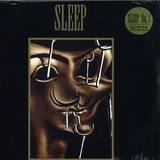
BACK IN STOCK NOW!! "Volume One is the debut album. It was the only album recorded with original guitarist Justin Marler, before he became an Orthodox monk. Volume One showcases a darker sound and stronger doom metal influence than Sleep's later work. The image featured on the cover is taken from the Salvador Dali painting "Soft Self-Portrait with Fried Bacon".
Their only album as a four piece of Al Cisneros, Matt Pike, Justin Marler and Chris Haikus
LP repressed for first time in many years.
allmusic
"For all their budding, precocious talent, Sleep's 1991 debut, Volume One, quickly betrays their still quite heavy debt to doom metal forefathers like Black Sabbath, Witchfinder, and Saint Vitus. Driven by Matt Pike and Justin Marler's lumbering mass of low-tuned guitar riffs, Al Cisneros' (still going as Luke here) serpentine bass and ragged screams, and drummer Chris Haikus' cyclopean kit pummeling, occasional highlights such as "The Suffering," "Nebuchadnezzar's Dream," and "The Wall of Yawn" prove less memorable than they are sensorially overwhelming. And yet, ironically, Sleep's rhythm guitars would never again be kept as under control, nor would their leads sound quite as refined as they do here (see the cleaner harmonies employed to good use on "Numb" and "Catatonic," for example). This was probably due to the onetime involvement of the significantly less stoned Marler, who would soon exchange the group for a monastery where he would study to become a monk. Fittingly enough, however, losing the versatility of a second guitarist was exactly what Sleep needed to focus their singular power into a crushing force, and the remaining trio would flourish immediately behind the sheer physicality of Pike's six-string style, as proven by 1993's superlative sophomore LP, Sleep's Holy Mountain."
It's been a while since the first release on forTunea came out. Now it's time to wake up from hibernation! Klaus Benedek delivers us this time with - Calm Before The Storm an extraordinary piece of music. This over 9 minute journey bundles the sound of current deep house with a breakbeat rhythm. This track takes its time and builds up to a smooth string chorus that will certainly give you goosebumps. The B-Side on the other hand stays more traditionally in the house sector. First we engaged the service of Vienna's MPC wizard Roman Rauch (Philpot, Quintessentials, Tenderpark) to give KB's track - Still Daydreaming a harder edge, while the EP's title track on B2 bounces with it's hypnotic filtered hookline the listener into new heights. Give this release a try! It is definitely a record that is quite unique in its own way. Enjoy!
Limited to 300 copys! There will be no repress! Mastering by Patrick Pulsinger.
3 Shit hot tracks on MB's debut for Bio Rhythm... What can we say 'The Miracle Sign' hit us by surprise... Title track is a beautiful and epic journey in techno soul quite rare to hear these days, reminding a bit of early nineties Detroit/UK techno and even some of the early Speedy J works, all with nowadays production skills. Stunning contemporary techno the classic way. Then from heaven to hell with '60606', an evil distorted acidic drum track guaranteed to damage kids brains worldwide... But no time to think long anyway cause there's 'We Only Have', an autistic out-of-the-box jack track providing a sneaky tool for the more adventurous dj. This will separate the gurners from the dancers. Top-notch showcase by the unstoppable man-machine that is Marco Bernardi..!
Originally released in Japan only, back in 1979, Prone is considered by most aficionados to be Ned Doheny's crowning glory. Even better than the superlative Hard Candy. So quite why this AOR/soft-funk gem has not been available legitimately on vinyl for over 35 years is anyone's guess.
To celebrate 'Be With Ned' - the West Coast maestro's first ever tour of the UK and Europe in March 2015 - Be With Records proudly present the first ever officially licensed reissue of this forgotten-funk classic. What makes this release truly special is the inclusion of the full-vocal version of jazz-funk classic To Prove My Love. It's the version of Prone that everybody has been waiting for.
Produced again by the legendary Steve Cropper, Prone's super-smooth grooves showcase Ned's beautifully laid-back vocals, virtuoso playing and forever-wry lyricism. Aside from To Prove My Love, it boasts some of Doheny's most under-appreciated tracks: witness the slickness of Think Like A Lover, Guess Who's Lookin' For Love Again and Funky Love.
Pressed on audiophile 180gram vinyl and featuring the original artwork for both jacket and lyric-insert, this limited reissue is one to treasure.
He is not so easy to find. You have to follow the kilometres of pipes down and along a labyrinth of corridors, to enter in the basement den of Romain Turzi. This once cavernous space has been metamorphosised into a recording studio for the purpose of creating and completing the A & B albums trilogy with the latest LP release: C. Closed off from the world, without natural light and water supply, but full of consoles, synthesizers and old guitars, Romain cocooned himself here for several months to perfect his music and sonically construct the soundtrack that is C, with tracks entitled by nine types of birds, to glide you through this treasure hunt through the complexities of his musical mind.
After Turzi's sophomore album: B, recorded under the Corsican sun, the change of conditions is quite radical. Closing off from the world in a place where you can only do one thing, make music, Turzi was able to gain the greatest luxury within this process: time.
The follow-up to the great Holla EP by Johannes Brecht Henrik Schwarz's Sunday Music imprint. In the meantime labels like Mule Musiq and Boso succesfully released their own Brecht tracks and extended the audience worldwide. In My Time Of Dyin' continues the deep, musically output of Henrik Schwarz's Sunday Music label in the best way possible. Very recent, reflecting jazz, classical minimal music into electronic music. Deep trippy music with a strong swing on the A-side. Cleverly written music patterns with a hypnotic vibe. Side B features a live jazz version in 6/8 signature on piano and drums (drummer of german popstar Max Herre). Johannes Brecht is by the way the classical music arranger on Henrik Schwarz upcoming full orchestra album, coming in April 2015. When Henrik Schwarz heard the music from Johannes Brecht he knew now was the time to reactivate his label SUNDAY-MUSIC again that hasn't released a record in quite a while now. Johannes is a wonderful musician that plays bass and keyboards and also writes music for orchestra. When a classically trained musician looks into electronic music and manages to bring together the best of both worlds the result can be very exciting.
This EP was made during a period where my whole outlook on everything was transforming. The Voidloss project started as an investigation, I was conducting a lot of research and study on the mind, the occult, on different thought modes, and the Voidloss project represented this. The idea was about a leap in to the void. A leap of abandonment into the dark, with total acceptance, total commitment. The idea was to lose myself to the void. This was mainly a spiritual journey for me, and could be best explained by 3 things, the void of Miyamoto Musashi from Go Rin No Sho, The concept of the Tao from the writings of Lao Tzu, and the concept of the abyss from the works of Aleister Crowley. Part of this journey deep inside the self was frightening and horrific, the total loss of self, of all identity and ego, and part of it was beautiful and enlightening. I wanted the music to reflect this, and I wanted the music to change as I changed, as I went to and through all these interesting places. In essence this was about freedom. So fast forward some years and I felt I had sharpened my mind quite effectively, the music had twisted and changed and flowed with me. At the point I began making the music for this EP, I had grown quite angry with the amount of conformity I was perceiving in life. Politically, socially, musically, there was this drive of conformity in the world. I think part of it, and only a part, comes from the prevalence of social media, the need to belong and to be liked, the idea of judging yourself and your works through the perception of others. Musically I felt that within techno there was a tendency for the music to fit within a set of confines dictated by fashion and hype, and this was reducing the diversity of the music, it seemed also that the practices of commercial music were seeping in to techno as the music became more popular. Hype and business driven decisions, brand building and so on. I always felt techno was more about art, and I began to get frustrated. Equally I felt that politically there was less and less choice, as all decisions seemed to lead to the same outcomes. I became more interested in the concept of anarchism, of the idea that government was no longer needed. I have always in my life had a drive to question everything. I've always been 'naughty' and rebellious and done things my way, to my advantage or my disadvantage, I could never accept being anything other than myself all the way. If everyone walks in one direction, I will walk the other way, even if it takes me over the edge of a precipice, just to see what is there. All this stuff influences my music, and during the period of making this EP I was angry, kicking against the things I no longer liked or wanted, screaming dissent. There is a lot of anger and rage, and of course rebellion. I wanted the music to capture that unbridled fury you have when you are in your late teens, when you just start learning about yourself and you start rebelling and questioning things around the time the world is really pushing you to conform. I was soundtracking my own philosophical riot. Previous to this my Voidloss stuff had been more introverted, more pensive and melancholy, more self destructive, more cerebral. For this new music I wanted something more immediate but without being too obvious. In terms of the choices I made I still leaned more towards broken rhythms for beat structure. I find it very difficult to do anything interesting with 4x4 kicks any more, it's too rigid for me, it limits my freedom. I like the looseness you get from more 'drummer' like beats, I guess probably because I have been playing drums all my life. The challenge is to get the same rolling power from broken rhythms as you get from 4 to the floor. It's not easy, there is a ridiculous amount of trial and error and the rejection percentage is high. I also was trying to use less 'synthy' sounds. I wanted to try to take a more acousmatic approach to sound design. With the current modular synth revival in techno I was hearing a lot of 'old' synth sounds re-emerging, and this didn't seem like a progression to me. I wanted to make sounds that were hard to source for the listener, where they weren't sure if it was synth or real world sample, digital or analogue. This involved a lot of experimentation. My process involved a lot of field recording, especially with contact microphones, which open up a whole new world of interesting sounds. You are effectively recording sounds through objects in the environment, 'hearing' the world as these objects hear them, I was using guitars, feedback loops, handmade instruments as well. So I was combining this with different synthesis, granular synthesis, sample synthesis, physical modelling, FM synthesis and of course analogue. Everything was reprocessed and re-synthesised, I tried hard to obscure the source and make something new as much as possible. The stuff on this EP was part of my live PA for some time, so as I learned how the music worked live I could go back and make changes, sometimes the environment I was playing in transformed the sound as well, and so I would try to go back an incorporate this in to the music. For remixes I wanted to choose artists that I respected for their vision as well as for their output, so my list of people I wanted was extremely short. Inigo Kennedy has always been an artist I have respected greatly. His music has always been unique to himself, he remains outside of fashions and trends even though his name has become very big recently. He takes risks with his work, experimenting and exploring, yet remaining relevant to the club, and just tirelessly forging ahead, seemingly for the sake of art above all else. And he's just a really nice guy to deal with. His remix is everything I expected it to be in that it is the unexpected. Regis is another artist who forges his own path in music, you cant really even begin to discuss the avantgarde in techno without including his name, he is one of the foundation stones for artistry and the outsider mentality in techno. His music is always unique to his own vision, and along with it comes an interesting artistic philosophy taking in situationism, post punk and industrial ideology and a good dose of tricksterism ala PT Barnum, all of which comes out in his music and the way it is presented. The man is a truly singular force and it is an honour to have him on this record. Overall the concept here is that of rebellion and dissent. Of asking questions, following your own path, of maintaining some place in yourself that burns like a forest fire.
Whether or not I have succeeded I guess is down to the listener, I'm never happy with my music, I keep wanting to move forwards, or somewhere else, and am constantly trying and failing to capture some essence of perfection. But like Bukowski said
'It's the only good fight there is'
Working on opposite sides of the landmass we call Canada, Vancouver/Montreal duo Potatohead People (producers Nick Wisdom & AstroLogical) have been making waves for quite some time with their signature jazzy boom-bap meets boogie inside the bassbin vibes. Called a "formidable tandem" by OkayPlayer, their sounds have been championed early on by the likes of Kaytranada, Soulection, Nightmares on Wax, Pomo, Exmag, Big Boi, and Phife Dawg. After a few early releases on Vancouver based netlabel Jellyfish Recordings, Brooklyn's Bastard Jazz reissued their 2012 landmark Kosmichemusik EP and pressed a 7" released on Valentine's Day 2013. The association landed their song "Back To My Sh*t" (featuring Frank Nitty of Frank'n'Dank) on a Powerade produced LeBron James documentary and Nick and Astro began working on a debut LP for Bastard Jazz, presented here.
Big Luxury draws from influences disparate as classic jazz, prog rock, disco 90's hop, DJ Shadow-Era downtempo beats, alongside modern influences like the Brainfeeder crew and new electronic sounds coming out of Nick Wisdom's adopted hometown of Montreal. What's resulted is a finely honed, extra buttery album that effortly glides between tempos, but never loses the mood. The album also features a whole host of guest vocalists - J Dilla's younger brother Illa J, legendary Canadian MC Moka Only, New Zealand's Sorceress, and Amalia all provide contributions to the sounds within. Big Luxury is a velvety ride through vibes and a magnificent debut for these talented young Canadians.
The most interesting, advanced electronic musicians create unique, hermetic soundworlds that seem to emanate from unknown realms. See/hear Aphex Twin, Autechre, Farmers Manual, Iannis Xenakis, and Bernard Parmegiani, among a handful of others. If Chloe Harris isn't quite in that echelon yet, she is quickly approaching it with Dose.(This album was originally issued on very ltd.-ed. cassette in 2012 and is now getting a vinyl release, mainly due to the urging of Italian techno magus Donato Dozzy.) A former globetrotting DJ, Harris has shelved that lifestyle and aesthetic for a more stable family life in the Seattle area and a more cerebral approach in the studio. With this collection of exploratory compositions, she decided to experiment with an array of synthesizers, mainly the Waldorf Q. Working on the eight tracks here in her home setup, Harris would 'layer as much as I could or sometimes there was no layering at all. I tried to let the machines talk. I was trying to find my own voice. It was sad and melancholy because I stopped DJing and decided to try something new in my career.' This change had financial and creative risks, but Harris has transitioned boldly into this more adventurous musical mode.