A collaboration between US label Astral Spirits and Sweden’s Thanatosis Produktion, It could / If I marks the debut album from Stockholm-based duo Johan Jutterström (saxophone) and Alex Zethson (piano). Together, they reinterpret jazz standards and explore an eclectic mix of compositions by Leonard Cohen, Pet Shop Boys, John Lurie, and 19th-century composer Alexander Fesca.
Jutterström and Zethson’s musical partnership dates back to their teenage years, when they bonded over a love for jazz and the struggle to find their own voice within it. Their duo work has always been about navigating that tension—trying to capture jazz, failing, and finding another way forward. This album continues that pursuit, emphasizing not just what is played, but how it is played.
The record’s title reflects their approach: a process of reaching for something just out of grasp. Songs are deconstructed, rearranged, and treated like palimpsests—scrubbed clean and rewritten while allowing traces of the original to shine through. The result is a dynamic and deeply personal exploration of sound, filled with both reverence and reinvention.
Both musicians have extensive backgrounds in jazz, improvisation, and experimental music. Zethson, a prolific pianist and composer, has worked with ensembles like Fire! Orchestra and Trondheim Jazz Orchestra, and plays keyboards in ensembles such as Vilhelm Bromander Unfolding Orchestra, Goran Kajfes Tropiques, Vathres, and Angles (current with the jazzopera The Death of Kalypso). Jutterström, a saxophonist with an artistic PhD, has performed internationally and runs the ensemble STHLM svaga, a band who have performed commissioned pieces by jazz legends such as Ron Carter, Archie Shepp and Roscoe Mitchell.
With It could / If I, the duo crafts an intricate, ever-shifting dialogue—an ongoing attempt to "stick jazz music," as they put it, constantly approaching, never quite arriving, and finding beauty in the pursuit.
Search:quit
Blue & White Galaxy Vinyl[30,04 €]
Tuneful, feedback- slathered surges like "Half Way Fine" and "Spright" feel as
comfortable as a beaten-up pair of Chuck Taylors, introducing dramatic dynamic
shifts and savvy melodic change- ups to keep you on your toes. You may not
always be able to make out Hartlett's lyrics amid the cyclonic fuzz, but the
despondence and disillusionment in his voice always cut through loud and clear.
And when he can't quite find the right words, he and fellow guitarist Morgan Luzzi
unleash that simmering angst through nonverbal means, like the roiling guitar
tsunami that brings the hazy-headed "Baby Alligator" to a cataclysmic close.
Stuart Berman, Pitchfork
Under the Malmin-moniker you’ll hear on “Med Ashild Vetrhus” original organic grooves and timeless tunes from three masters of the quite unheard ‘untamed, hypnotic, raw and chanting’ folk music of Rogaland: Olav Christer Rossebo, Anders Hana (also known from the bands Moha! and Naaljos Ljom) and vocalist Ashild Vetrhus. This record consists of traditional and spiritual music from the Rogaland region in Norway (in the south-west of the country, around the city Stavanger). The album includes upbeat ‘dance’ and nostalgic folk music with a religious touch here and there. The typical national and sometimes even regional instruments used on this record in addition to voice is: hardanger fiddle, langeleik (a zither-like instrument), microtonal mandolin and guitar, mouth harp and fiddle. The performers have learned the music directly from traditional sources, but most of the material on this record has derived from the study of archive recordings from the Ryfylke Museum (in the city of Sand).
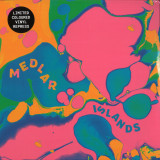
South Londons’ indomitable Medlar delivers an ambitious new album
The long-time underground favourite has collaborated with the likes of Dele Sosimi, Rebekah Reid, Deevoenay, Finn Peters, Sam Virdie, Afla Sackey and Arnau Obiols on an album that finds him taking his production to new levels.
From roots playing illegal raves in the South West to building up a cultured catalogue that bounces between house and garage, Medlar has long been part of the underground conversation. He has dropped a previous album and many innovative remixes and edits for the likes of Billy Cobham and Shirley Lites, worked in the studio and on stage with Afro legend Dele Sosimi and most recently released an album under his own name that collected myriad different sonic sketches from the past 15 years.
Islands is an altogether different proposition that comes after establishing himself as a mix engineer and producer of other people's music. In that time, Medlar has honed his skills, learnt new tricks and grown more able to express himself in sound. The result is an album that explores a more electronic palette inspired by '80s fusion sounds whilst maintaining a loose, organic flow through his use of live instrumentation. “The idea for the LP was for a collection of music which could sit alone as club tracks, but would work equally well as part of a whole. The name Islands came from this, as there's some connecting ideas but the tracks sit independently in their own little sonic worlds. I took a lot of inspiration from early 80’s electronic music produced during early years of MIDI technology… proto house, jazz fusion, electronic disco and experimental ambient. I wanted to juxtapose some of these methods with more contemporary production and make something that's ultimately quite fun!” says Medlar of the record which could easily soundtrack a summer road trip.
Across 11 tracks, he blends old-school techniques like a fusion of live instruments, FM synthesis and MIDI triggered vocal samples with more contemporary touches such as punchy, club-friendly drums and dub inspired, speaker-wobbling low end. The result is less reliant on samples than his previous works and makes for a perfect blend of retro authenticity and future freshness.
The Ick — a sense of sanity amidst the storm of information. This album by Archetype is an abstract scream for something quite fragile — a polarizing society, disruptive isolation, and the fading collective experience. Utilizing dramatic vocals, industrial trip-hop, and post-punk-leaning electronics, Archetype marks the new moniker by the ever-versatile Viennese Rotterdammer, Leonard Prochazka. Following his manifold of concept-driven, instinctive musical output, Archetype's "The Ick" releases in 2024, following "Strapazen und Genesung" as Geier Aus Stahl on Knekelhuis in 2022.
With Leaving It All to Chance, Roomer don't quite leave everything up to fate. The Berlin outfit's debut album hums with guitar-driven heartbreak, pairing mind-splitting noise with seductive melodies. Capturing the gritty yet emotive energy of their live performances, the album welcomes in the occasional ear-candy, staying true to the raw physicality of a hazy club show all while sharpening its edges-crafted in true DIY spirit and released by Munich's Squama Recordings.
Roomer is the meeting point of four distinct creative forces in the European music scene, united through long-standing friendships and years of collaboration across projects ranging from avant-garde free improv to ethereal folk and ambient electronica. Inevitably-if surprisingly late-the question arose: why not start a band? In their hands, the rock band format became a canvas for their many musical worlds to collide.
- When She Walked In With The Dawn
- Someone Indistinct
- Once I Had A Love
- Evensong
- To Whom It May Concern
- Night Vision 1
- A Swimmer In A Summer River
- Morning In A Great City
- Chandeliering - On The Ceiling
- Night Vision
- Wherever You Are
'Wherever You Are' is a new solo piano album, played and composed by John Foxx. Most of the recordings were made at home and in the early hours of morning in the weeks following his rare live performance at Kings Place, London in October 2023, as part of the BBC Radio 3 'Night Tracks' event. 'Around dawn is the best time to play piano,' says Foxx. 'Self-critical mechanisms mostly dormant, so I'm free to invent and enjoy for a while. The piano faces a window overlooking a valley surrounded by hills, where the sun comes up. There's often an early mist in the valley - and quite often, it rains. Some notes and sounds resonate with remembered experiences and you get glimpses of times and people. It's valuable. Quiet. Free association, myriad moments orbiting - and off you go.' He adds: 'Lately I'm realising how we get formed by other people. Everyone we know or knew, who affects the way we think and the way we see things - even in a small way, has a voice, and all those voices remain in a sort of lifelong conversation. I hear them all the time. It's not at all frantic, it's more oceanic - calm and pleasant and it eventually makes us the way we are. Luckily, I seem to have met - and meet - mostly good, generous, bright people and I'm still learning a great deal from all of them. They give you the touchstones, the maps, the weather. It's how we find our way. So - simply, thanks. Wherever you are.'
Flying Vipers record murky dubwise reggae on a Tascam 8-track in their basement bunker. Their love of Jamaican and UK 70's roots and dub is their north star, but eclectic crates of records and a couple decades worth of punk shows bleed through on tape. Twin brothers Marc & John Beaudette on drums and bass telekinetically lock-in with Zack Brines' layers of vintage organs and electric pianos in concise melodic meditations. "With ‘Off World’, their first full-length album featuring vocalist Kellee Webb, the Boston area band uses this foundation to explore the fight or flight of contemporary survival." While largely original compositions, three covers encapsulate the lyrical and musical themes found throughout the LP; an alienation anthem from Northwest punk pioneers Wipers; the theme from the cult classic animated film La Planete Sauvage, featuring the acclaimed jazz harpist Brandee Younger; and quite possibly the first dubwise Sun Ra tribute. Their own singles like "Believers & Deceivers" and "Jackals" confront the grim reality of modern culture, wondering if life in America, and/or Earth, is worth fighting for or leaving behind. Through it all the drum and bass is there, to help you hold your ground and to guide your escape into sonic space.
Another foggy day in Yorkshire. A steel grey sky. Raindrops tracing one another down the windowpane. Kirk Barley sits in his studio and assembles compositions from scraps of found sound and live instrumentation. Melodies swell, withdraw and repeat like waves. Time slows. Accelerates. Slows again. The light bends, tweaked at the edges. Twisted by rhythms that never quite resolve.
Written, recorded and produced by Barley in Yorkshire in early 2024, Lux picks up where 2023 LP Marionette leaves off, conjuring a mystical, reflective space between formal minimalism and sonic imaginaries of northern landscapes.
And yet, where Marionette relied at times on more recognisable field recordings, Lux leans into Barley’s skill as an instrumentalist and sound designer, working from a palette of short samples and utilising a variety of alternate tuning systems to build, layer and coax his compositions into being. Most evident on tracks ‘Vita’, ‘Sprite’ and ‘Descendent’, these tunings create an otherworldly harmonic language that is easier to perceive than describe.
Alongside more familiar instruments of guitar, bass, drums, organ and clarinet, here Barley draws on plastic saxophones and bells, and recordings of glass, wood and metal sound objects to provide the organic matter. Rather than directly representative of the natural world, Lux enters into a dialogue with it which, like the grasses and flowers of the album’s cover, exists somewhere between reality and artifice.
On album opener ‘Cache’, Barley constructs his own sense of time from a recording of an umbrella crank, a sparse and spectral piece which hints at memories embedded in the track’s title. Introspection blossoms into new life on ‘Vita’, crumpling again into the percussive ambience of ‘Verre’. A track that takes its harmonic lead from the clinks of glass, it features Barley’s long-time collaborator Matt Davies on drums, whose nuanced, tonally sensitive playing gives ‘Verre’ a fizzing, ice-like quality.
There are several moments where Lux picks up on themes Barley explored under electronic moniker Church Andrews on recent works with Davies, stretching and distorting temporalities most explicitly on ‘Descendent’, whose ritualistic air unfurls around a pattern in exponential decline.
Embracing the surrealism Barley absorbed over years watching classic film noir and the works of David Lynch and Federico Fellini, Lux wends its way through the enchanted sound worlds of ‘Sprite’ and ‘Balanced’ before arriving at the album’s title track.
An expression of his recent experiments in live, prepared guitar, ‘Lux’ brings the album back to earth, returning us to the room where the rain has stopped, the clouds have parted, and the soft warmth of the spring sun is pouring in through the open window.
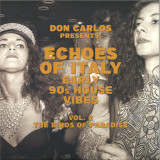
- A1: Montego Bay - Everything (Paradise Mix) 04 59
- A2: Atelier - Got To Live Together (Club Mix) 06 06
- A3: Golem - Music Sensations 04 56
- B1: The True Underground Sound Of Rome Feat. Stefano Di Carlo - Gladiators 05 26
- B2: Eagle Parade - I Believe 04 26
- C1: Dj Le Roi - Bocachica (Detroit Version) 05 28
- C2: Green Baize - Synthetic Rhythm 01 41
- C3: M.c.j. Feat. Sima - Sexitivity (Deep Mix) 05 30
- D1: Kwanzaa Posse Feat. Funk Master Sweat - Wicked Funk (Afro Ambient Mix) 06 31
- D2: Progetto Tribale - The Bird Of Paradise 06 29
- D3: Mbg - The Quite 06 59
Vol 1[28,99 €]
Googling “paradise house”, the first results to pop up are an endless list of European b&b’s with whitewashed lime façades, all of them promising “…an unmatched travel experience a few steps from the sea”. Next, a little further down, are the institutional websites of a few select semi-luxury retirement homes (no photos shown, but lots of stock images of smiling nurses with reassuring looks). To find the “paradise house” we’re after, we have to scroll even further down. Much further down.
It feels like yesterday, and at the same time it seems like a million years ago. The Eighties had just ended, and it was still unclear what to expect from the Nineties. Mobile phones that were not the size of a briefcase and did not cost as much as a car? A frightening economic crisis? The guitar-rock revival?! Certainly, the best place to observe that moment of transition was the dancefloor. Truly epochal transformations were happening there. From America, within a short distance one from the other, two revolutionary new musical styles had arrived: the first one sounded a bit like an “on a budget” version of the best Seventies disco-music – Philly sound made with a set of piano-bar keyboards! – the other was even more sparse, futuristic and extraterrestrial. It was a music with a quite distinct “physical” component, which at the same time, to be fully grasped, seemed to call for the knotty theories of certain French post-modern philosophers: Gilles Deleuze, Félix Guattari, Paul Virilio... Both those genres – we would learn shortly after – were born in the black communities of Chicago and Detroit, although listening to those vinyl 12” (often wrapped in generic white covers, and with little indication in the label) you could not easily guess whether behind them there was a black boy from somewhere in the Usa, or a girl from Berlin, or a pale kid from a Cornish coastal town.
Quickly, similar sounds began to show up from all corners of Europe. A thousand variations of the same intuition: leaner, less lean, happier, slightly less intoxicated, more broken, slower, faster, much faster... Boom! From the dancefloors – the London ones at least, whose chronicles we eagerly read every month in the pages of The Face and i-D – came tales of a new generation of clubbers who had completely stopped “dressing up” to go dancing; of hot tempered hooligans bursting into tears and hugging everyone under the strobe lights as the notes of Strings of Life rose up through the fumes of dry ice (certain “smiling” pills were also involved, sure). At this point, however, we must move on to Switzerland.
In Switzerland, in the quiet and diligent town of Lugano, between the 1980s and 1990s there was a club called “Morandi”. Its hot night was on Wednesdays, when the audience also came from Milan, Como, Varese and Zurich. Legend goes that, one night, none less than Prince and Sheila E were spotted hiding among the sofas, on a day-off of the Italian dates of the Nude Tour… The Wednesday resident and superstar was an Italian dj with an exotic name: Don Carlos. The soundtrack he devised was a mixture of Chicago, Detroit, the most progressive R&B and certain forgotten classics of old disco music: practically, what the Paradise Garage in New York might have sounded like had it not closed in 1987. In between, Don Carlos also managed to squeeze in some tracks he had worked on in his studio on Lago Maggiore. One in particular: a track that was rather slow compared to the BPM in fashion at the time, but which was a perfect bridge between house and R&B. The title was Alone: Don Carlos would explain years later that it had to be intended both in the English meaning of “by itself” and like the Italian word meaning “halo”. That wasn’t the only double entendre about the song, anyway. Its own very deep nature was, indeed, double. On the one hand, Alone was built around an angelic keyboard pattern and a romantic piano riff that took you straight to heaven; on the other, it showcased enough electronic squelches (plus a sax part that sounded like it had been dissolved by acid rain) to pigeonhole the tune into the “junk modernity” section, aka the hallmark of all the most innovative sounds of the time: music that sounded like it was hand-crafted from the scraps of glittering overground pop.
No one knows who was the first to call it “paradise house”, nor when it happened. Alternative definitions on the same topic one happened to hear included “ambient house”, “dream house”, “Mediterranean progressive”… but of course none were as good (and alluring) as “paradise house”. What is certain is that such inclination for sounds that were in equal measure angelic and neurotic, romantic and unaffective, quickly became the trademark of the second generation of Italian house. Music that seemed shyly equidistant from all the rhythmic and electronic revolutions that had happened up to that moment (“Music perfectly adept at going nowhere slowly” as noted by English journalist Craig McLean in a legendary field report for Blah Blah Blah magazine). Music that to a inattentive ear might have sounded as anonymous as a snapshot of a random group of passers-by at 10AM in the centre of any major city, but perfectly described the (slow) awakening in the real world after the universal love binge of the so-called Second Summer of Love.
For a brief but unforgettable season, in Italy “paradise house” was the official soundtrack of interminable weekends spent inside the car, darting from one club to another, cutting the peninsula from North to centre, from East to West coast in pursuit of the latest after-hours disco, trading kilometres per hour with beats per minute: practically, a new New Year’s Eve every Friday and Saturday night. This too was no small transformation, as well as a shock for an adult Italy that was encountering for the first time – thanks to its sons and daughters – the wild side of industrial modernity. The clubbers of the so-called “fuoriorario” scene were the balls gone mad in the pinball machine most feared by newspapers, magazines and TV pundits. What they did each and every weekend, apart from going crazy to the sound of the current white labels, was linking distant geographical points and non-places (thank you Marc Augé!) – old dance halls, farmhouses and business centres – transformed for one night into house music heaven. As Marco D’Eramo wrote in his 1995 essay on Chicago, Il maiale e il grattacielo: “Four-wheeled capitalism distorts our age-old image of the city, it allows the suburbs to be connected to each other, whereas before they were connected only by the centre (…) It makes possible a metropolitan area without a metropolis, without a city centre, without downtown. The periphery is no longer a periphery of any centre, but is self-centred”.
“Paradise house” perfectly understood all of this and turned it into a sort of cyber-blues that didn’t even need words, and unexpectedly brought back a drop of melancholic (post?)-humanity within a world that by then – as we would wholly realise in the decades to come – was fully inhuman and heartless. A world where we were all alone, and surrounded by a sinister yellowish halo, like a neon at the end of its life cycle. But, for one night at least, happy."
“Salsa con charanga” is really a feast for all salsa music lovers, a true jewel, which deserved much better when it originally came out in 1978. It comprises eight great, solid tracks; some, new interpretations from other albums in which Mike Guagenti participated with his handsome and captivating voice - a crooner with a salsero soul -, that, at times, could remind us of the late Tito Rodríguez, and even Ray Ramos.
It In addition to being a great salsa album, has the distinction that was released on Orfeon, a Mexican record label, due to the diligent work of the extraordinary producer Bobby Marin, and which miraculously received air play when powerhouse Fania label and few others ruled radio in the salsa music world. It comprises eight great, solid tracks; some, new interpretations from other albums in which Mike Guagenti participated with his handsome and captivating voice - a crooner with a salsero soul -, that, at times, could remind us of the late Tito Rodríguez, and even Ray Ramos. "The Mike Guagenti album," as indicated by Marin, "is a compilation of recordings by other artists. Originally a salsa album, I brought in Cuban Pupi Legarreta (violin and flute) and Panamanian Mauricio Smith (flute) to give it a charanga sound." With the exception of the cut ‘Salsa con charanga,’ which is an instrumental, the rest feature vocals by Guagenti. “Salsa con charanga” has developed a cult following, and finding a copy of the original could be quite expensive. Luckily, this officially licensed and restored edition will fill that void.
Bristol label-turned-blog Innate launches a new sub-label, Innate Editions, which it says is dedicated to timeless UK techno, IDM, electro and ambient music, and it will all come on heavyweight vinyl. The first release revives Connective Zone's Palm Palm, a millennium-era cult classic and Ben UFO favourite that first came out on Mark Broom and Dave Hill's Unexplored Beats in 2001. Now, this long-out-of-print, expensive and hard to find gem has been remastered by Jamie Anderson and so sounds superb with many lavish electronic layers, richly emotive melodies and dynamic drums that lean on UK techno, IDM, and deep electro. Sounds as good now as it ever did.
DJ Feedback
Dan Curtin (Metamorphic):
"This sounds fantastic. I don't think I ever got it back when it came out but I'm glad I do now, it's really nice. Every track is the standout track!"
Dj Harri (Sub Club):
"Lovely stuff here, will be playing and supporting."
Laurent Garnier (COD3QR):
"Awesome 4 tracker, thanks a million times for this. Beautiful way to start a new label."
Midland:
"Thanks for sending this over. Really in to it, Function especially."
Mr Scruff (Ninja Tune):
"Thanks for this! Didn’t know this release. Function is great. Quite like Returned too."
first pressing sold out on pre-order - here's a repress for late March 2025 on green vinyl - new barcode, new SKU.
After a first This album cover is quite mysterious, isn't it? Let's uncover what's behind it. The first notes of the opening track immediately set the tone: the journey begins. Take the album title literally and allow yourself to be comforted by the tenderness the British band is about to offer.
Dream pop is a genre of its own, characterized by a warm sound, enveloping bass lines, dreamy synths, and beautiful vocals. With "No Rush," Tokyo Tea Room guides the listener through an exploration of their emotions and an escape from everyday life.
Each of the 13 tracks on this project exudes the same tender energy, yet stands out with creative and meticulously crafted compositions. This project is poised to become a staple of the genre.
- We Came To Destroy
- Smile
- End Of The World
- Bad Habit
- She's The Most
- Cut It Out
- Anti-Social
- My Heart's Tattooed On My Sleeve
- Do You Hear What I Hear?
- Give Up
- Lie To Me
- Get Over You
- The One Thing
- Bottom Feeder
- Fade To Black
Based in Ottawa, Ontario, the capital city of Canada, The Riptides have been cranking out high-energy blasts of melodic, poppy punk rock for over 25 years. With their new LP Burn After Listening, the band makes the move to Pirates Press Records, and are ready to bring their sound to an all new worldwide audience! Originally formed in 1998, the band wasted no time assembling their own studio and label, putting out their own records as well as their fellow Ottawa bands. Word spread quickly, and the band's notoriety grew, particularly in the US, and soon the band found that they enjoyed rising to the challenge of leaving home and recording at noted US studios, with Burn After Listening being no exception. This album was recorded at the legendary Blasting Room in Fort Collins, CO, with Andrew Berlin at the helm for tracking and Jason Livermore in charge of the final master. These studio sessions included a cavalcade of friends & guest musicians, including members of Teenage Bottlerocket, All American Rejects, Screeching Weasel, and The Queers. A number of songs on the record also bear co-writing credits from fellow Pirates Press Records artist Matt DeeCRACK. Blending attitude-driven downstroke riffs with irresistible hooks and harmonies, combined with an aesthetic informed by everything from nerdy pop culture and surfing, they've already amassed quite the following across the decades, but this record stands poised to introduce them to many new fans.
- 1: On The Brink
- 2: Stay In Your Lane
- 3: Dim
- 4: Void Of Passion
- 5: Overlord
- 6: Quit The Act
Formed in Oakland just before the pandemic's onset in late 2019, SPY has built on the foundation of bands like Bad Brains and Poison Idea rather than following the current wave of metallic hardcore. They’re set to unleash their latest EP, Seen Enough, on Closed Casket Activities, out February 21. No song on Seen Enough ever overstays its welcome, instead embodying what makes hardcore frenetic. Burning through six songs in under ten minutes, every track is a testament to the energy the band has built up through relentless touring. SPY worked with Jack Shirley at Oakland's Atomic Garden to record the EP. Shirley captured their essence by recording live to tape, eschewing the modern practice of individual tracking in favor of a more immediate, visceral approach that better represents their explosive live show. That in-room chemistry is immediately apparent – songs like "Stay In Your Lane" maintain the texture and grit you'd get at a show in between every huge riff. Seen Enough doesn't hide what it's about: society's continued descent with diminishing hope for course correction. From the jump, SPY has followed in the lineage of Bay Area punks like Dead Kennedys and Ceremony in both attitude and awareness. Their latest offering maintains the critical edge of their earlier material while expanding their lyrical scope, delivering a streamlined punch that hits hard through its runtime. By staying true to themselves, SPY has carved out their own niche in the modern hardcore landscape. After touring with legends and contemporaries alike including Gel, Full of Hell, Ceremony, Municipal Waste, Sunami and playing basically every fest worth caring about including Sound and Fury, Outbreak, Sick New World and LDB, 2025 is set to be a monstrous year for SPY.
- A1: Idrissa Soumaoro Et L'eclipse De L'ija — Nissodia (Joie De L'optimisme)
- A2: Rail Band — Mouodilo
- A3: Les Ambassadeurs Du Motel De Bamako — M'bouram-Mousso
- B1: Super Tentemba Jazz — Mangan
- B2: Sorry Bamba — Yayoroba
- B3: Super Djata Band — Worodara
- C1: Zani Diabaté Et Le Super Djata Band — Fadingna Kouma
- C2: Salif Keita — Mandjou
- C3: Alou Fané & Daouda Sangaré — Komagni Bèla
- D1: Super Djata Band De Bamako — Mali Ni Woula
- D2: Idrissa Soumaoro Et L'eclipse De L'ija — Fama Allah
Mr Bongo is proud to present 'The Original Sound of Mali', compiled by Vik Sohonie & David Buttle.
Malian music is arguably deeper, more sophisticated and lyrical than any other form of African music. Those of us deeply entranced by Malian culture, and, in particular, the immense hypnotic beauty of Malian music, have put together a
selection of songs from across the country.
Compiled by Vik Sohonie & Dave 'Mr Bongo' Buttle, the story of this release began in 2015 when Dave happened upon the Soul Bonanza blog. A treasure chest of rare finds from around the world! One mix in particular stood out and totally enthralled Dave - le monde à change: a tribute to mali 1970 - 1991. He
already knew of Malian legends such as the Rail Band, Salif Keita, & Les Ambassadeurs du Motel de Bamako, but this mix was something else! Deep & culled from the collections of some of the heaviest African music collectors in the world, legends like Vik Sohonie, Hidehito Morimoto, Philippe Noel, Gregoire
Villanova, and Rickard Masip. Dave immediately contacted Vik and a journey of discovery tracking down the rights-holders began. He also turned to the font of Malian music knowledge, Florent Mazzoleni. Florent has written the definitive book about Malian music - 'Musiques modernes et traditionnelles du Mali'. He
proposed some incredible tracks to include and provided the back bone of the sleeve notes and photos that are used in the album. No Malian album would be complete without a striking front cover photo, and ours is sourced from the late great Malian photographer Malick Sidibé.
On this album you will find well-known artists sitting next to rarer
discoveries. The Rail Band, who are one of the best known of all the big bands in Mali, gave us the stars Mory Kanté and Salif Keita. Les Amabassedeurs du Motel de Bamako were another big act that had Idrissa Soumaoro, Kanté Manfila, and for a while Salif Keita in their ranks. Sometimes Salif would play in both bands in one night, quite a feat considering the bands were fierce rivals. As an albino Salif has had to face considerable prejudice from society, focussing on his musical career to help overcome this.
A major discovery on the album has been Idrissa Soumaoro et L'Eclipse de L'Ija. L'Eclipse de l'Institut des Jeunes Aveugles was a Blind teenagers institute and their record was produced by the German association that took care of blind Malian teenagers in Bamako. It was never properly released commercially and was the first recordings by the legends of Malian music Idrissa Soumaoro, Amadou Bagayoko and Mariam Doumbia. Amadou & Mariam later got married and became household stars, including making an album with Manu Chao.
This album is a concerted global effort to showcase the most vital cornerstone of Malian culture in an attempt to preserve its reputation in the face of its current, grim reality. We hope our highlights of Mali's rich history of musical innovation will serve as a starting point for reclaiming an image tainted by unnecessary conflict. May peace and music return to Mali soon.
Dedicated to Malick Sidibé.
It’s a decidedly busy time at INVINC HQ at the moment with the 10-year anniversary looming in May.
The six months preceding this date are peppered with a flurry of releases every couple of months, which started with the Mondo Ritmo EP that came in October, the Gamma Knife LP in December and now this brand new album by Sordid Sound System, which lands early March before a rather promising sounding 2xLP compilation lands in May to mark the occasion.
It’s been a good few years since something by Sordid Sound System aka Stuart Evans has been released on the label and it’s a welcome return. In our opinion it's some of Evans’ best work and so it’s a pleasure to have him back on board the good ship Inc.
Remarkably, this music is even harder to pigeon-hole than usual...even for Stu, who’s known for his raw, analogue, live takes that veer between dub and post-kraut this is definitely quite "different": part surf acid, part dub, part psych-exotica, part motorik...and that's just the A-side. The B-side leans more towards ambience but of the oddball experimental soundtrack variety...a thoroughly enjoyable ride.
Enjoy the trip.
Yore returns with Alfonso Bottone bringing it so Deep, it literally hurts.
This four track EP is by far the deepest shit we've heard in quite some time. Fans of the Deep4Life sound will love this. Deep, Bright and with so much warmth.
Strictly limited to 200 Copies worldwide (no repress). Grab yours while they last.
Two new faces on the label with the two-faced eagle! Both artists have been much respected forces on the international club circuit for a while. IDA ENGBERG is best known for her affiliation with Stockholm’s Drumcode and Truesoul labels. For her Speicher debut though, she’s tapping into a quite different sound territory. “Nothing Feels The Same” will go down in history as the first 2 Step track ever released on KOMPAKT EXTRA. It’s as sensual as it’s booming. Definitely one for those late morning hours. With “Pink Monkeys” is an EBM/sawtooth trance amalgamation of the highest order with enough psychedelic headroom for the festival season.
MARCO RESMANN’s deep involvement with the late Berlin club legend Watergate has made him one of the German capital’s beacons of house and techno. He’s one half of Lunar City Express and former member of Pan-Pot which speaks volumes about his stylistical versatility.”“RIMA feat. Laatz” he delivers a frenetic rollercoaster ride of a techno track. It’s radical, it’s menacing and super fun all at once – A truly one of a kind techno track. “Dimensions” is a low-slung electro bulwark full of intricate details to keep head and feet going in unison.
Zwei neue Gesichter auf dem Label mit dem doppelköpfigen Adler! Beide Künstler sind seit einiger Zeit angesehene Größen in der internationalen Clubszene. IDA ENGBERG ist vor allem für ihre Zusammenarbeit mit den Stockholmer Labels Drumcode und Truesoul bekannt. Für ihr Debüt auf Speicher betritt sie jedoch ein ganz anderes Sound-Territorium. „Nothing Feels The Same“ wird als erster 2-Step-Track, der jemals auf KOMPAKT EXTRA veröffentlicht wurde, in die Geschichte eingehen. Es ist ebenso sinnlich wie dröhnend. Definitiv etwas für die späten Morgenstunden. Mit „Pink Monkeys“ ist eine EBM/Sägezahn-Trance-Verschmelzung der höchsten Güteklasse mit genug psychedelischem Headroom für die Festivalsaison entstanden.
MARCO RESMANNs tiefe Verbundenheit mit der jüngst verstorbenen Berliner Clublegende Watergate hat ihn zu einem der Fixpunkte der deutschen Hauptstadt in Sachen House und Techno gemacht und weit darüber hinaus. Er ist eine Hälfte von Lunar City Express und ehemaliges Mitglied von Pan-Pot, was Bände über seine stilistische Vielseitigkeit spricht. Mit „RIMA feat. Laatz“ liefert er eine frenetische Techno-Achterbahnfahrt, die gleichermaßen radikal, bedrohlich ist und ungemein Spaß macht – ein wirklich einzigartiger Track für die Ewigkeit. ‚Dimensions‘ wiederum ist ein tiefgründiges Electro-Bollwerk voller komplexer Details, das Kopf und Füße sicher im Einklang hält.
When it comes to musical discovery, sometimes the stars just align. DJ and record collector, Steve KIW, put Mr Bongo onto this amazing Chilean cover version of Jamie Principle & Frankie Knuckles' all-time classic 'Your Love'. Despite being originally released 13 years ago, it had recently started to prick the ears of house and Balearic connoisseurs in the UK, further cemented by inclusions in the Idjut Boys epic sets. Steve heard them play it, tipped us off and it soon became a favourite at Mr Bongo HQ.
By pure chance when the Mr Bongo DJs joined Luke Una to play at La Paloma ballroom in Barcelona a few weeks later, Luke dropped this incredible interpretation at the peak of his set. A good friend of his, Michelle from Huddersfield, had also put him onto the track and he instantly fell in love. A serendipitous coming together, 'Tu Amor' seemed like the perfect next instalment in the E Soul Cultura discography. The version in question was released in 2012 as part of a digital-only EP.
It came courtesy of the Chilean DJ, producer and singer Mamacita (Carolina Vallejos) and producer Sebastian Roman, aka Persona RS. Meeting Sebastian while out partying in Santiago during a boom time for electronic music in Chile, their shared passion for making house music in Spanish and their admiration for Frankie Knuckles led to the creation of this raw and unique cover version. Recorded on lo-fi equipment, including an old Windows laptop and a borrowed Neumann microphone, it nods to the DIY ethos of the early Chicago productions. The result is a stripped-back, quirky cosmic take on a stone-cold classic, full of squelching synthlines and Carolina's stunning Spanish vocals, that became a club hit on Chile's underground circuit. However, aside from some Latin American and US DJs picking it up, it never got the international recognition it deserved.
Fast forward to 2025, and E Soul Cultura is proud to present the glorious 'Tu Amor' on vinyl for the first time, backed with a new, extended, club re-edit by E Soul Cultura captain Luke Una and Luke Solomon (Classic Music). On first hearing 'Tu Amor' Luke Una recalls, There was a real charm to it, it was quite an unorthodox arrangement, a huge wonkiness and just sounded so DIY in a brilliant way. I was chatting to Luke (Solomon) about how much we loved it and we decided to re-edit it together. Accentuating the wonk of those crazy synths, we've extended it to make a fiercer underground club tool, without taking away that very charming cosmic feel.