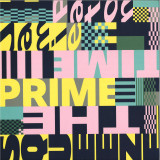
Psychedelic deep soul of the highest order, Symphonic Four was a St Louis based band (as was the original label Zudan). Word is the record was recorded in Detroit, and the backing band was made up of some members of Parliament/Funkadelic which would make a lot of sense. A long time spin for Deep Soul head but deserving of a wider audience and that why we could not resist to pull this one from the now again Catalogue, 500 copies only.
Suche:r 04
Kate Tempest returns with her third studio album, The Book of Traps and Lessons.
The highly anticipated album was crafted with Rick Rubin and Dan Carey over the course of the past five years. It follows Tempest’s previous releases, 2014’s Everybody Down and 2017’s Let Them Eat Chaos, both of which were shortlisted for Mercury Prize in 2014 and 2017, respectively. Last year, Kate Tempest was nominated at The BRIT Awards for Best Female Solo Performer.
A handful of words often tell you everything you need to know. When asked, who is Kate Tempest? She gives a brief, albeit telling answer. “Kate Tempest is the words,” she responds. You haven’t ever seen, heard, or experienced anyone quite like her. Tempest uncovers the missing link between the Golden Ages of literature and hip-hop. The London-born BRIT Award-nominated spoken word artist, rapper, poet, novelist, and playwright rhymes with a century-turning fury. Since her emergence in 2011, she has redefined what it means to be a wordsmith in the Modern Age. To date, she has published three poetry collections, staged three plays, and released two studio albums. Along the way, she entranced audiences on The Tonight Show Starring Jimmy Fallon, NPR’s “Tiny Desk,” and more. Not to mention, she garnered widespread critical acclaim from The New York Times, The New Yorker, Forbes, and more, to name a few. In the midst of this whirlwind journey, she performed a passage of her popular 75-minute narrative poem, Brand New Ancients, on Charlie Rose. Legendary producer and American Recordings Founder Rick Rubin caught the show, tracked down her phone number, and made a call. This set a series of events in motion that led to her 2019 debut album for American Recordings, The Book of Traps and Lessons, set for release on June 14th.
Yonder Kids get a deserved spotlight 20 years after the journey suddenly stopped.
A musical legacy which could have been lost in the background noise of time is finally edited, mastered and cut into vinyl.
Irishman Jimmy Rouge of Orange Tree Edit fame joins the Razor-N-Tape team with a 2-track EP of bumping edit heat.
On the A-side “So Long” flips a cheeky hook over a rub-bery bass-line, with tension-building synth interludes that release into an ear worm of a vocal riff. On the flip, “Movin'” is a deep uptempo burner with piano stabs, rhythmic guitar plucks and an unstoppable groove.
RNT takes it back to their OG format of a single track per side, running loud and proud…one listen to these belters and you’ll see why!
Pre-Order. Releases June 21.
Unsurprisingly for a creator as prolific as Muslimgauze’s Bryn Jones was, when he was asked for a contribution for any sort of group project, he would tend to provide more options than necessary. In the case of longtime label Staalplaat’s 1996 compilation Sonderangebot, where Jones would find himself in the company of everyone from Charlemagne Palestine to Reptilicus, the selected track was the characteristically headspinning “Kaliskinazure”, nine minutes of insistent digital percussion bouncing the listener back and forth between samples of wailing women’s voices and a trebly, blurry little whirr that traces the percussion. It’s distinctive enough even among the vast Muslimgauze corpus, but as the continued excavation of DATs Jones submitted to his labels continues, sure enough there’s more to that track’s story, too.
An extended “Kaliskinazure” makes up the second of four tracks on Babylon Is Iraq, although it’s been lost to the mists of time whether an outside editor excised the more drifting, less needling coda that makes up the extra six minutes found here, or whether Jones simply submitted both versions of the track at different times. This more complete version of “Kaliskinazure” is surrounded by shorter tracks, with the opening “Kaliskinazure — Momada” sounding not very much like either track it references (instead being a barely-there wisp of far-away sampled wind instruments and what sounds like treated cymbal sounds) and the title track constantly coming to a full, roiling digital boil. The lengthy “Momada” closes out the album with a different, more tersely internal arrangement surrounding the same percussion pattern that will be familiar to any Sonderangebot fans, although the way the quieter atmosphere transforms the feeling of that rhythm indicates once more than Jones’ way of reconfiguring his pieces over and over was perhaps more purposive and even more effective than he’s sometimes given credit for. The result is a fascinating expansion on one of Muslimgauze’s strongest stand-alone moments.
Side A begins with ‘Patala’ and frenetic synths influencing the mind through airy hypnotism, exhibiting subtlety in creating a dance-floor groove. Tadeo’s ambitious remix blossoms from the original adding new musical landscapes and marvelous sounds.
Side B starts with ‘Prithvi’ keeping you on edge between the underlying vocals scattered between a gripping baseline and off-kilter synth movements with timely off-beat drums that culminate into a dramatic show overall. ‘Svarga’ stretches out with twisting and curving synth lines and intensifies with an ebb and flow of eerie sound and spacious atmosphere.
The Analogue Cops are back on Memento, after their acclaimed remix of Francesco Farfa “Synchronicty 13”, with “Lucretio versus Marieu Vol. 1”.
This will be the first chapter of a series dedicated to a tidy compromise-less selection of their most groundbreaking club oriented tracks. On Lucretio’s side, “Accelerating Osc” is a minimalistic relentless techno cut that explores algorithmic sequencing and the boundaries of real-time delay manipulation in Kyma; pounding away, “Neon 3” is a furious peak-time ride with jacking drums, sharp hi-hats and worrisome hypnotic synthesizers.
Marieu’s side is a slower paced groove affair focused on his distinguishing seductive use of sampling: “Alterate Indigo” festive bass line and enthusiastic cymbals blossom with an enchanting blues piano and an handful of filtered quirks, while “Room Mate” combine hot vocal hooks and a funky bass-line with a massive kick-drum.
Cult, obscure 1976 proto-electronics masterpiece 'Viaje' is a purely brain frying avant garde flipout from the electroacoustic musicians Eduardo Polonio and Horacio Vaggione (probably most known for his album on Cramps). Together, they deploy synths, electric guitars, organs and bass and squash them all up together in sundry sense befouling ways. On the A side, they're tangled into an overpowering threshing machine of spitting electronic mayhem, while the B side moves the proceedings into overtly acidy territory, everything ratcheting down and expanding outward into a delirious psychedelic electronic whirlpool. Beautiful gatefold vinyl reproducing the original artwork.
his time with rapid-fire synths and dance beats that worm their way into your brain and get stuck there. Keeping it Cyberpunk and dance-able, he surprisingly tops himself once again. We can just spew more praise but let's let this album speak for itself, along with his amazing collaborators.
Scottish producer Alex returns to Playmaker Media Records after his previous album ‘X’ was released through the label last year. After a few releases through New Retro Wave he’s becoming a house hold name in the alternative synth scene with his unique mix of dark synth and cyber pop".
Atangana Records presents its 4th releases, beginning a new collaboration
with Henri Debs & Fils imprint.
This record is a first tribute that Atangana Records and Henri Debs & Fils
wanted to give back to the great Guadeloupean producer Henry Debs.
With this compilation EP, gathering rare and unpublished titles, Déni Shain
and his team aim to dust off the archives of the label and allow as many
people as possible to discover the pearls of the French Caribbean Islands.
Performing throughout the 1980s as Art Carnage to the gloomy hipsters of Portland, Attilio Panissidi III decided he needed a vacation. The result of his creative escape became Art Takes A Holiday, an album of fabricated FM synthscapes and MIDI environments that embrace elements of smooth jazz, new age, and pop.
Attilio had been playing in bands since he was thirteen, and had opened live shows for countless acts, from The Shangri-Las to Bruce Hornsby. The experience of producing, performing, as well as years spent writing for local music magazine The Downtowner, earned Attilio a gig to score a commercial film for a home security systems company. The opportunity allowed him to explore softer elements in his writing, and he created a suite of songs much deeper than the commission warranted. These instrumentals caught the attention of Marlon McClain (Gap Band, Shock), who invited Attilio to produce and release the music on his fledgling Nu-Vision label. Thus Art Takes A Holiday found its commercial release on cassette and CD in 1989. Although originally intended as soundtrack music, the album retains its own momentum, narrative and evocative imagery that betrays Attilio's years of crafting songs. Attilio found a perfect ambience on this mythic retreat, somewhere between William Aura's summer cottage on Half Moon Bay and DJ Alfredo's Balearic island getaway.
A beautiful fox that knows no bounds, it's presence keeps me move around, Upon a hill I watch her brown, she thought that I will leave her drown, I chase her tail and watch her shy, but as I catch her she's still not mine ...
From the mysterious forest a black 12". Vinyl only!
Eduardo De La Calle s recent Distortion Theory III EP on Abstract Reasoning was another impressive piece of work from the prolific producer. Now come four diverse remixes of the title track, each with their own unique twist on the warped machinations of the original.
J - Keel kicks off proceedings with a droning, tense interpretation which toughens up the original considerably. Reversed chord stabs pitch up and down as ominous bass bores a steady course through the track s underbelly, with ticking percussive elements ensuring a motorik pulse.
The masterful Roman Fl gel teases out the chime motif of the original and supplements them with muted marimba-esque arpeggios for a soothing, underwater feel. The beats are kept to a succinct minimum, with subtle swathes of strings bringing a majestic, dreamlike tinge to this refined, minimalistic production.
Fellow Spaniard ORBE brings an ambient feel to the hazy, delicate melodics of his mix, with the delayed, warped synth patterns that struggle to be heard and beautiful atmospherics recalling Carl Craig. Moments of distorted pressure seep through and remind us of the buggedout flavour of the original.
Holland s Conforce rounds things off with plump low end throbs and sparse synth pulses reminiscent of Basic Channel, with gently shuffling hi-hats underpinning the murky yet warm textures and broad, heavily reverbed swathes of chord drama.
A Sagittariun’s third album chronicles the journey back to Telepathic Heights; an expedition that encounters many obstacles along the way. The feuding parties of the two planets make for a journey of determination and self-discovery for our techno lone ranger that will ultimately deliver him to the sacred site on which Telepathic Heights stands. Conceived as a space western soundtrack to the cinematic interpretation of this tale, Return To Telepathic Heights delivers ten chapters that journal the ultimate mission to reach the imposing tower of Telepathic Heights, where dream telepathy has become the primary communicative tool amongst its peaceful and harmonious community who have opted out of the planetary war that continues to rage, seemingly with no armistice anytime soon. The score fittingly winds its way through the trials and tribulations of this journey, blending minimal and harmonic rhythms, industrial funk, dreamy synthwave and transcendental techno into the rich tapestry of music that documents the ‘Return To Telepathic Heights’. The album features original artwork by Johnny Bruck, fully licensed, and taken from the legendary German science fiction novel series, ‘Perry Rhodan’, which ran weekly from the early 1960s, and was the most successful sci-fi book series ever written.
Emerging artists rarely exceed listeners’ expectations with a complete album right out of the box, but Deena Abdelwahed is the exception that proves the rule. While the young artist of Tunisian origin stood out with her daring DJ sets, it is her surprising first album, "Khonnar", released at the end of 2018 on InFiné which sealed her status of eclectic producer, guaranteeing her a place among the best releases of the year by Resident Advisor, Trax, Tsugi, The Quietus and Vinyl Factory. Khonnar remixes compiles a series of remixes in 12”, inspired by the unique atmosphere of Deena Abdelwahed's first album, while extending it across the entire spectrum of electronic, club and experimental music.
Black Truffle is honoured to announce the first ever vinyl reissue of David Rosenboom’s legendary Brainwave Music, originally released on A.R.C. Records in 1975 and here expanded to a double LP with the addition of over 40 minutes of contemporaneous material. Pioneer of live electronics, innovator in music education, collaborator with artists as diverse as Jon Hassell, Jacqueline Humbert, Terry Riley and Anthony Braxton, Rosenboom is renowned for his ground-breaking experiments with the use of brain biofeedback to control live electronic systems.
Each of the three pieces that make up the original Brainwave Music LP integrates biofeedback with musical technology in different ways. In the side-long opening piece “Portable Gold and Philosophers’ Stones”, four performers have electrodes and monitoring devices attached to their bodies to receive information about brainwaves, temperature, and galvanic skin response. This information is analysed and fed into a complex set of frequency dividers and filters, manned by Rosenboom, but essentially played by each of the performers through their psychophysiological responses to the situation. The result is a slowly unfolding web of filtered electronic tones over a tanpura-esque fundamental, possessing the unhurried, stately grandeur of an electronic raga. In “Chilean Drought”, three different variations of a text about a drought in Chile, each read by a different voice in a different style, are associated with the Beta, Alpha, and Theta brainwave bands. Alongside an insistent piano accompaniment, we hear a constantly shifting combination of the three vocal recordings controlled by the relative preponderance of each of the brainwave bands in the soloist whose brainwaves are being monitored. “Piano Etude I (Alpha)”, the earliest piece included here, is based on research into the link between Alpha brain wave production and the execution of repetitive motor tasks. As Rosenboom plays a very rapid, incessantly repeated pattern in both hands – deliberately designed to be difficult to execute without being in an alert, non-thinking state similar to that associated with strong Alpha brainwave production – two filters controlled by monitoring his brainwaves process the piano sound, moving gradually higher in frequency as the average Alpha amplitude increases, resulting in a hypnotic, constantly shifting blur of repeated notes reflected through the shimmering, watery lights of the filters. For this reissue, the original LP is supplemented with an additional LP containing an unreleased 1977 live recording of Rosenboom’s “On Being Invisible”, in which the composer himself performs on an array of electronics that are fed information from his brainwaves. Stretching out over 40 minutes, the piece begins in similar territory to “Portable Gold and Philosophers’ Stones” but eventually becomes far wilder, building up to pointillistic bleeps and dense layers of electronic fizz that unexpectedly cut to near-silence. As Rosenboom explains, the piece creates a situation in which the ‘performer’s active imaginative listening became one of the ways to play their instrument, as well as an active agent in how self-organizing musical forms might emerge.’ Enriched with archival images and new notes from the composer, this expanded reissue of Brainwave Music is essential listening for anyone interested in the history of live electronic music and alive to the possibilities it might still contain.