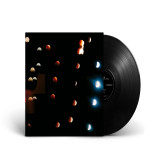
As part of the series - Blockhead presents his new album, Luminous Rubble, where the artist dives deep into KPM’s iconic music and sound design library. Blockhead has released 15 albums over the past 15 years and is regarded as one of the modern masters of instrumental hip-hop. It’s a producer’s dream: Being given access to a vast library of material to construct something completely new and exciting out of all of it and when Blockhead’s at the controls, the results are a listener’s paradise, too. The New York City-based hip-hop production legend’s Luminous Rubble is the latest missive in a particularly busy period for the underground hip-hop veteran, who’s spent the last decades lending his considerable talents to work from artists like Armand Hammer, billy woods, Murs, and Open Mike Eagle; in 2021, he released the critically acclaimed collab LP Garbology with rap legend and longtime collaborator Aesop Rock, just last year he unleashed his twelfth solo album, The Aux. “For me, as a producer who uses samples, there’s nothing better than free rein. That was so exciting for me. Their vault is the one I’m most familiar with,” he says with a laugh. “Back when I used to go record shopping a lot, I would pretty much buy any KPM record on sight. They were always a huge find at record stores. So to be able to tap into these records with no limitations was really nice. Having no boundaries can be overwhelming when it comes to the creative process. Working with these samples forced me to find middle ground in cases where I’d typically just walk away and look elsewhere.” After hearing Luminous Rubble, you’ll be happy he stuck around.
Search:r lend
- 1: Different Type Time (Prod. Quelle Chris & Cavalier)
- 2: Custard Spoon (Prod. Quelle Chris)
- 3: Can’t Leave It Alone Feat. Eric Jaye (Prod. Glassc!Ty)
- 4: Come Proper (Prod. Jacob Rochester)
- 5: Touchtones (Prod. Aummaah)
- 6: Déjà Vu / Tydro ‘97 (Prod. Messiah Muzik / Quelle Chris)
- 7: Doodoo Damien (Prod. Quelle Chris)
- 8: Baby I’m Home (Prod. Wino Willy)
- 9: Yeah Boiii (Prod. Quelle Chris)
- 10: All Things Considered (Prod. Wino Willy)
- 11: Pears (Prod. Malik Abdul-Rahmaan)
- 12: Told You (Prod. Fushou)
- 13: Badvice (Prod. Low Key)
- 14: Think About It Feat. Billzegypt (Prod. Obliv)
- 15: Up From Here / 7Th Ward Spyboy (Prod. Ahwlee / Quelle Chris)
- 16: Manigaults / I Miss Them (Prod. Ruffiankick)
- 17: Lazaroos (Prod. Vinny Cuzns)
- 18: Bespoke Feat. Dominic Minix (Prod. Hann_11)
- 19: 50 Bags Feat. Lord Chilla (Prod. Child Actor)
- 20: Axiom / My Gawd (Prod. Glassc!Ty / Quelle Chris)
- 21: Flourish (Prod. Quelle Chris)
"It seemed that if I didn’t somehow repeat the process of greatness, and do so immediately, multiple times away to satisfy playlist and binge watch culture, then I “wasn’t shit”. After a while I was like “nah this doesn’t feel good,… I don’t know if I am finding joy in this”. I would record songs and not release them, obsess over sessions recorded in my home with 30 takes of vocals and wake up only to delete them. When it began to feel right I found solace in an epiphany that I was not obligated to operate at any other wavelength. I am moving on a different type of time, and that doesn’t expire." -Cavalier
For heads of a certain time period of NYC hip-hop, Brooklyn born, New Orleans-based rapper and songwriter, Cavalier was the one that got away. The outrageously talented artist whose name and reputation preceded him everywhere you went in the scene. The rapper who everyone knew was so dope that he had to blow, but who never seemed concerned with any of that. The pretty boy draped in Polo who stole every live show with a feather in his hair and a mouth full of gold fronts. The cat so dedicated to his own independence that even indie labels stopped trying to sign him and projects came when they came, but when they came they were undeniable.
Cavalier was THAT guy for a lot of us; a silver-tongued philosopher with an eye for the poignant details of black life and a delivery as effortless as a young Ken Griffey’s swing. All that said, it never really felt like Cav had that moment in the spotlight that we always assumed was coming. After chiseling away through headier cult corners of the NYC hip-hop scene Cavalier was recognized for his memorable co-pilot to Quelle Chris’ 2013 Mello Music debut, Niggas Is Men. The critically acclaimed LP helped propel Quelle Chris into the forefront of indie hip-hop (and also happened to be the first production credits for Messiah Muzik). Cav followed up with his first full length, Chief, which sports a notable Raekwon feature but also early work from producers like Ohbliv and Tall Black Guy. A relocation to New Orleans and partnership with producer/vocalist Iman Omari yielded two more projects: 2015’s Lemonade EP and Private Stock in 2018. Great records all; eagerly sought by collectors and signal boosted by influential media like OkayPlayer, Solange’s Saint Heron, and Pitchfork. Cavalier’s bonafides have never been in question, but his new album Different Type Time feels like a revelation—a sonic suspension bridge between his rich history and the artform’s future.
Different Type Time doesn’t sound like the future though, its vibrations are somewhere all their own. It sounds like jazz, like a conversation overheard in roti shop, or a pool hall, or the foyer of your old building on a fall day, front door propped open with a brick. The blues is in there too, and the south—the American South, and theGlobal South, and South Brooklyn. It’s not that it sounds like the past, but you can hear everything that came before in the thick of the basslines and the yearning of the keys. Different Type Time also doesn’t sound like now, it sounds like RIGHT NOW; the bounce of the lyrics like the staccato of basketball in the park, carried on a spring breeze.
Although he doesn’t rap on DTT, Quelle Chris plays a pivotal role; producing eight songs and serving as associate producer/consigliere to Cav throughout the creative process. “There is no time wasted in explaining things when I collaborate with Quelle. He understands the universe I am in and the realities I want to create. He’s in them. And I don’t think I can envision one without him,” Cavalier explains. Messiah Muzik, Wino Willy, Ohbliv, Ahwlee, Child Actor, Fushou and several other producers round out the credits, all lending their talents to the album’s spaciously soulful sound. At the center of all these alchemies is Cavalier, nimbly dancing in and out of pockets like a sidewalk game of jumprope. Different Type Time is a masterclass in this thing we call hip-hop; daring and original, yet always standing deeply rooted in the culture.
- Part - Hiirejaht 1965
- Part - Operaator Kops Uksikul Saarel 1968
- Rannap - Lend 1973
- Rannap - Varvilind 1974
- Rannap - Lugu Janesepojast 1975
- Grunberg - Klaabu Kosmoses 1981
- Grunberg - Liigub Liigub 1977
- Grunberg - Linalakk Ja Rosalind 1978
- Ehala - Aeg Maha 1982
- Aare - Korb. Dzungel - Kas Maakera On Ummargune 1977
- Aare - Linn - Kas Maakera On Ummargune 1977
- Aare - Kodu - Kas Maakera On Ummargune 1977
- Naissoo - Naerupall 1984
- Naissoo - Meemeistrite Linn 1983
- Ehala - Kaelkirjak 1986
- Ehala - Pagar Ja Korstnapuhkija 1982
- Ehala - Harjutusi Iseseisvaks Eluks 1980
Compilation of (mainly instrumental) music from 1960-80s Estonian animated films. Comes with 8-page full-colour booklet in Estonian with texts by Andreas Trossek and Berk Vaher.
Musically all over the place, as you'd expect.
Note: The animated films of this LP can be watched online at kohilarecords.eu/ark
In the mid1970s, when Tallinnfilm animation studios recruited a youthful bunch of skilled artists and cartoonists, interesting things started to happen. Contemporary themes and ironic depictions of domestic life were introduced into Estonian animation – as well as pop-art aesthetics and even psychedelic imagery. Also, composers found their chance to exercise something beyond the routine standards of pop and academic music, to try their hand at the edges of orchestral sonic palette and electronic soundscapes.
Suddenly, pop art merged pop music, and electric guitars, Rhodes pianos and synthesizers were telling tales of a better future that still hasn’t fully arrived today.
Colored[29,37 €]
Atmosphere and gravity lean into each other. They are simultaneously expansive, and anchoring. They hold us, and lend a sense of perspective. They provide a stability and a knowingness which is essential in the absolute, and yet we can't help but find ourselves gazing upward, outward and reaching towards that which sits outside those things and ways we know. Selene is a record about that this lingering desire for that which sits beyond. It is work that seeks new perspectives snatched from familiar vistas, and it meditates on that sense of anchor and perspective. The work is also a speculative hymn to the visions of the celestial zones that spill ever outward. These visions, once merely what we could perceive with the naked eye are now so much more. Our minds eye is fed in equal parts by radio telecopy, filmic dreams and fiction renders of a place most of us will never know first-hand. This recording ties into a linage that reaches back, while stretching forward. It is just one story of so many, told across places, across cultures, across generations. It sits in the in-between of before and after, and in that moment invites us to situate ourselves and lean into it.
Black[25,63 €]
Atmosphere and gravity lean into each other. They are simultaneously expansive, and anchoring. They hold us, and lend a sense of perspective. They provide a stability and a knowingness which is essential in the absolute, and yet we can't help but find ourselves gazing upward, outward and reaching towards that which sits outside those things and ways we know. Selene is a record about that this lingering desire for that which sits beyond. It is work that seeks new perspectives snatched from familiar vistas, and it meditates on that sense of anchor and perspective. The work is also a speculative hymn to the visions of the celestial zones that spill ever outward. These visions, once merely what we could perceive with the naked eye are now so much more. Our minds eye is fed in equal parts by radio telecopy, filmic dreams and fiction renders of a place most of us will never know first-hand. This recording ties into a linage that reaches back, while stretching forward. It is just one story of so many, told across places, across cultures, across generations. It sits in the in-between of before and after, and in that moment invites us to situate ourselves and lean into it.
"Philadelphia’s So Totally are a portrait of utmost devotion, and how longevity in any kind of relationship can’t occur without it. Since 2015, the band originally called So Totally In Love has humbly studied their surroundings and themselves, perfecting a sound that from inception was present. So Totally’s shimmering guitars and melodies typically sit underneath lush vocals that concurrently embed themselves in a listener’s subconscious, haunting them with heavy mood and nostalgia for 90’s rock groups like Swirlies, Pixies, and The Breeders. Previous releases, and their dedication to spending years playing regionally, brought So Totally to the point of singular focus on drafting a third album, entitled Double Your Relaxation, while in quarantine in 2020.
Upon formation, So Totally collectively bonded over an admiration of Land of Talk. While the influence is certainly present in vocalist/guitarist Roya Weidman’s sugary vocals, the band's love of comfortably resolving melodies, and auxiliary percussion, So Totally sonically have more in common with bands like Sonic Youth, My Bloody Valentine, and Spirit of the Beehive…creating massive walls of sound on each record that plainly implies the quartets towering live experience. Such huge tones aren’t only because of Weidman and guitarist/vocalist Matt Arbiz playing, but the collective effort of the band, which is rounded out by bassist Ryan Wildsmith and drummer Joe McLaughlin.
Lyrically and thematically, Double Your Relaxation explores where influence and “hypnosis” exist in life, specifically in environment, media, relationships, and self (via mental illness), bouncing between perspectives of witnessing, interacting with, and contributing to illusion and how that ultimately affects our idea of identity. The moody and, at times, surreal nature of the songs lends itself very appropriately to the shoegaze and heavy indie style So Totally plays, making them a perfect addition to the canon of the genre."
Ngwaka Son Systéme’s debut album Iboto Ngenge means “power struggle” or “seizing the opportunity” but while words can only be roughly translated, the music reaches listeners unambiguously: A potent mixture of techno, rumba, soukous, zagué and dancehall with the unique “Kinoise” brand fresh out of Kinshasa, the Congolese megacity that never stops innovating in the music landscape worldwide. Ngwaka Son Systéme is led by musicians Love Lokombe and Bom’s Bomolo, having previously founded the band KOKOKO!. This new project continues the contemporary Congolese tradition of reinventing electronic music by shaping and crafting music instruments made of household objects. As a means to continue strengthening the links between Africa and Latin America, Eck Echo has tasked Colombian dub engineer Diego Gomez with the analog mixing of the stems, originally recorded by Levy David at Timbela Ba Studio in Kinshasa. With the aim to bring the lexicon of shared Colombian and Congolese music into the next chapter, we proudly present to the world the magnificent music of Ngwaka Son Systéme. The inadvertently techno-oriented Lakala, a trance-inducing experience where listeners can quickly relish to the lyrics even without speaking Lingala, for the shapes of the words are already inviting listeners to dance, sing and smile, all the while virtuoso percussionist Steroy operates the DIY-drum kit at high-tempo. The call-and-response effect, where each musician lends their voice to the choir, is particularly felt in Bo Lobi Pe, where the vocals guide us ever so playfully to the tune of an acoustic guitar that invites us to take off our shoes, kick back and relax. Zanga Mbongo (translated as “there is no money”) is lyrically a proud anthem to celebrating life in spite of economic scarcity, and musically it is a triumphant renewal to the legendary soukous genre of the 1970s, championed by worldwide renowned stars such as Pepe Kallé and Sam Mangwana.
Kerri Chandler, Dennis Quin and Troy Denari join forces to deliver ‘You Are In My System', a modern take on the iconic 1998 ‘You’re In My System’.
The original mix of ‘You’re In My System’ has been a staple for many in House music DJ sets for the past twenty-five years, a record that perfectly encapsulates the soul of House and Kerri’s distinctive sound. Here we see Kerri Chandler put a contemporary twist on this celebrated cut from his back catalogue, this time collaborating again with vocalist Troy Denari and Dutch artist Dennis Quin, who’s delivered numerous hits on Kerri’s Madhouse imprint such as ‘Move Out Of My Way’ and the last collaboration between the three, ‘Be Strong’.
Here the three artists collaborated to rework and replay the entire composition and create this new 2023 version, Kerri and Dennis using the same hardware used in the original composition and singer/songwriter Troy Denari, lends his vocals to this new version of the track, reimagining the vocals of Mic Murphy to capture the essence and spirit of the 1980's hit by American Synthpop band The System.
Throughout 'You Are In My System' Kerri Chandler’s signature soulful keys, bouncy bass line and dynamic synth work ebbs and flows amongst Dennis Quin's sturdy, swinging and crisp drum style while Troy Denari's refreshed vocals then bring a modern soul and warmth to things, resulting in the dynamic future classic presented here, destined to work its way onto many late summer dancefloors and beyond. Dennis Quin also offers up his 'DQ Dub' for a more raw groove focused fix.
Antal plays the Extended Club Mix at Dekmantel Selectors
Early DJ Support:
Antal - even more effective for nowadays attention span!
Hector Romero - Very nice job on this one. On it.
Domenic Cappello - Still a great tune and love these versions
Sasha - very cool
Massimiliano Pagliara - All time favourite!
Elevating, uplifting and beautifully arranged. Jasmine Myra's sophomore album Rising builds on the success of her
breakthrough album Horizons to deliver a major statement from one of UK Jazz's rising stars. Produced by Matthew Halsall and mixed by Greg Freeman (Hania Rani, Matthew Halsall, Portico Quartet), Rising delivers a confident and vibrant follow up that joins the musical dots between Myra’s influences Kenny Wheeler, Bonobo and Shabaka Hutchings while delivering something unique, beautiful and profound.
Rising is also the sound of a composer and performer growing in stature and adding extra layers of confidence and poise to both her playing and composing. Aided and abetted by Matthew Halsall who once again lends his production skills, Rising is fuller, richer and deeper as Myra develops her uniquely uplifting sound.
Much like my first album, Rising is a reflection of a period of my life. It is a continuation from Horizons, which was all about my experience during lockdown, and entailed overcoming my struggles with mental health. Following on from that experience, I set out to continue building my self-confidence. This album has an uplifting and spiritual sound, drawing influence from artists such as Makaya McCraven, Bonobo and Shabaka Hutchings.
Rising features the same core of musicians as Myra’s debut album Horizons (Gondwana records GOND052): guitarist Ben Haskins, drummer George Hall pianist Jasper Green, harpist Alice Roberts (who both also perform with Matthew Halsall) and bassist Sam Quintana who collectively bring a deft understating of the subtle textures of Myra’s music and perform with a collective empathy and drive that really pushes the music on a radiant journey. And a string quartet add gently elevating textures to Still Waters, Knowingness, From Embers and How Tall The Mountains.
Pull the Rope, the new record by Ibibio Sound Machine, casts the Eno Williams and Max Grunhard-led outfit in a new light. The hope, joy, and sexiness of their music remain, but, further honing the edge of their acclaimed 2022 album Electricity, the connection they aim to foster has shifted venues from the sunny buoyancy of a sunlit festival to a sweat-soaked, all-night dance club. Williams and Grunhard attribute this shift to a matter of collaborators, recording Pull the Rope with Sheffield-based producer Ross Orton (Arctic Monkeys, M.I.A.) over the course of two weeks. The way the pair wrote songs changed significantly_rather than Eno penning lyrics to music generated by Max and company's jamming, Orton started with Eno and Max writing together before adding the band. With less time in the studio and a new way of considering how they built songs, the duo found making decisions about Pull the Rope's sound quicker and more instinctual than before. "Ross is from Sheffield, which has an edgier, more industrial vibe than London," Grunhard explains. "He hears things differently than us, is more grounded in rave and grungier sounds, and knew when to add drums or push the instrumentation more. It was very different for us, but it lends itself to where Ibibio Sound Machine is going." In melding their songwriting process, Grunhard and Williams have, impossibly, pulled the trick of making Ibibio Sound Machine a tighter band than ever before, building out from their core in a way that highlights the electrifying group of musicians they play with. Rather than recording with the full band in the room, Pull the Rope was sculpted, elements added and shaped by Grunhard, Williams, and Orton along the way. As a result, Pull the Rope is a nimble, sleek machine that's thrilling from the first note of the opening title track, Eno's otherworldly voice and PK Ambrose's throbbing bass driving through a kaleidoscopic array of house, post-punk, funk, Afrobeat and disco, bangers and ballads, making an argument for unity that begins on the dancefloor. "We are the places we grew up, the places we've been, and the people we've met along the way," Williams says. "Hopping around the globe, we've found that people are fundamentally the same_they're people. Opposing sides push and pull, but there is an alternative to war, violence, and suffering." Lead single "Got to Be Who U Are" literally globetrots, name checking locales across the world that would feel disparate were it not for how well-traveled they are. Eno growing up in the musical melting pot of the Ibibio region of Nigeria and Max being a conservatory-trained musician from Australia, one could call their meeting in London and formation of Ibibio Sound Machine predestined. "Mama Say" and "Let My Yes Be Yes" touch themes of female empowerment. They're indicative of the band's depth as they push further into the electronic; "Mama Say" hits notes of electropop while "Let My Yes Be Yes" fuses electro to Afrobeat. Ibibio Sound Machine have always imbued their music with political consciousness, and the light that shines through in Williams' vocals and voice has never felt more necessary. The sound of Pull the Rope, then, is hope in darkness, bliss in spite of bleakness. Once again, Ibibio Sound Machine are here to provide the soundtrack to the best night of your life, and the better world to come.
A tribute to one of the greatest songwriters & artists of our time! Features newly recorded covers from Keith Richards, Joan Jett and the Blackhearts, Rufus Wainwright, Lucinda Williams, Maxim Ludwig & Angel Olsen, Rickie Lee Jones, Mary Gauthier, Bobby Rush, Automatic, The Afghan Whigs, and Rosanne Cash. Special Record Store Day Edition pressed on Silver Nugget vinyl and housed in a silver laminated jacket Booklet features liner notes by compilation producer & former Lou Reed publicist Bill Bentley, featuring photos by Mick Rock and Timothy Greenfield-Sanders. "To me, Lou stood out. The real deal! Something important to American music and to ALL MUSIC! I miss him and his dog." - Keith Richards "Lou seemed fearless to me, like he'd rather die than be a people-pleaser. I took inspiration from that." - Rosanne Cash "Lou Reed is my earliest influence, my introduction to punk rock, and the soundtrack to the beginning of my romance with Maxim." - Angel Olsen "Lou Reed has been gone now for many years. He's one of the few people whom I miss as much now as when he left. There are so many instances where I wonder what he would say or what he would think. His general aura would always lend something really unique to the room. Thank God he left his great music and recordings. His personality is sorely missed. Love you, Lou." - Rufus Wainwright // It goes without saying that the legendary Lou Reed was a true rock 'n' roll pioneer. From The Velvet Underground's debut in 1967 all the way through the end of his days, Reed sang truth from his heart. He lived life to the limit-and then some. The Power of the Heart is a tribute to Reed's freedom of expression with covers spanning his ground-breaking years with the Velvets into his majestic solo career. Each track is a glorious extension of the Rock 'n' Roll Animal's soul, ever adventurous and avant-garde. The Power of the Heart: A Tribute to Lou Reed kicks off with a legend in his own right, Keith Richards, reimagining the Velvets' classic, "I'm Waiting for the Man." Richards' rendition instantly invites you on board this unforgettable ride. In stark contrast, "Perfect Day" is somehow even more melancholy than the original given the Rufus Wainwright treatment, featuring sparse fingerpicking and gentle harmonies. Joan Jett and the Blackhearts deliver a version of "I'm So Free" that would have even Lou rockin' in his grave. It's thrilling to hear these songs reinterpreted and sung by such heavyweights; you can even hear as Lucinda Williams channels the spirit of Lou with her take on "Legendary Hearts." Other notable tracks include a punk-drunk, loved-up duet by real-life lovers Angel Olsen & Maxim Ludwig with "I Can't Stand It," and Rickie Lee Jones' reimagining of "Walk on the Wild Side," both whimsical and enticing with her whispery vocals, stripped-down percussion, and a piano fit for a late-night lounge. This tribute album truly defies genre, but its throughline, in the end, is its heart: a deeply thoughtful collection of songs that shaped a generation, each paying homage to a man whose body of work still sings.
Elevating, uplifting and beautifully arranged. Jasmine Myra's sophomore album Rising builds on the success of her
breakthrough album Horizons to deliver a major statement from one of UK Jazz's rising stars. Produced by Matthew Halsall and mixed by Greg Freeman (Hania Rani, Matthew Halsall, Portico Quartet), Rising delivers a confident and vibrant follow up that joins the musical dots between Myra’s influences Kenny Wheeler, Bonobo and Shabaka Hutchings while delivering something unique, beautiful and profound.
Rising is also the sound of a composer and performer growing in stature and adding extra layers of confidence and poise to both her playing and composing. Aided and abetted by Matthew Halsall who once again lends his production skills, Rising is fuller, richer and deeper as Myra develops her uniquely uplifting sound.
Much like my first album, Rising is a reflection of a period of my life. It is a continuation from Horizons, which was all about my experience during lockdown, and entailed overcoming my struggles with mental health. Following on from that experience, I set out to continue building my self-confidence. This album has an uplifting and spiritual sound, drawing influence from artists such as Makaya McCraven, Bonobo and Shabaka Hutchings.
Rising features the same core of musicians as Myra’s debut album Horizons (Gondwana records GOND052): guitarist Ben Haskins, drummer George Hall pianist Jasper Green, harpist Alice Roberts (who both also perform with Matthew Halsall) and bassist Sam Quintana who collectively bring a deft understating of the subtle textures of Myra’s music and perform with a collective empathy and drive that really pushes the music on a radiant journey. And a string quartet add gently elevating textures to Still Waters, Knowingness, From Embers and How Tall The Mountains.
Blushing's unique brand of dreampop-infused indie rock hearkens back to the halcyon days of college radio. With a diverse array of influences including Elastica, Curve, Veruca Salt, Lush, The Breeders, and Smashing Pumpkins, Blushing manages a deftly executed eclecticism that recalls the best elements of alt rock's past while retaining a vitality and immediacy that tethers them firmly to the present. On their recently completed third LP, Sugarcoat, Blushing's dynamism is on full display, flitting effortlessly from spacey psychedelia to twee pop jangle with finesse and panache. Sugarcoat is a dense, reverb-laden exploration of alt rock's 40+ year history that conjures up concord from chaos. This album is where the band get to explore their love for expanding genres, from Post-punk (Seafoam), Psych-gaze (Slyce), Grunge pop (Silver Teeth), Indie Pop (Tamagotchi), Slowcore (Sugarcoat) and beyond. A huge highlight when making the album was the ability to collaborate with Jeff Schroeder on the track "Seafoam". The band had the opportunity to meet with him a few times over the years and asked him to see if he would be interested in lending lead guitar on the track as they were nearing the end of recording. He agreed right away and wrote a perfect accompanying lead while out on tour with the Smashing Pumpkins. The contribution elevated the song and the band are so grateful to have his influence captured on the album.
Rising, enigmatic Brighton songwriter Milo Korbenski delivers his debut album proper When You Gonna Tell ‘Em the Truth, Aaron?, a stunning collection of haunted, heavy, unique art-dream-indie-pop earworms.
Milo Korbenski is a shadowy, anonymous Brighton solo musician only publicly seen in a featureless white mask, Stetson and denim jacket. However, his deeply expressive take on lo-fi slacker indie invokes a heartfelt intimacy, singing straight from the soul. This new album - an official debut following a period of self-releasing - displays endless catchy-as-hell hooks, clever lyrical wordplay, and deceptively lean instrumentation that belies its own simplicity.
The music of WYGTETTA? (Milo’s own stylisation) crosses references points as broadly spread as Kurt Vile, Helado Negro, Black Sabbath, The xx, The Cocteau Twins, Siouxsie Sioux, Jagwar Ma and Calvin Johnson while retaining a vitally singular energy. Milo’s underlying unreality is more haunted than the indie-leaning acts mentioned here, and the readymade homespun cassette sonics lend a charm beyond the prettified sheen of his pop influences.
Longtime music activists Rawmance and Asymmetrical from Rome have joined forces to create new music under the name 'La Nuit Je Mens'. Their debut work, titled 'Les Nuits Magnétiques', features two
of their songs on a hand-stamped 7" vinyl. Utilizing a bass guitar, analog synthesizers and vintage drum machines, their music is infused with French vocals, lending it a cinematic touch and a sense of depth.
While strongly inspired by the sound of the 80s, this record establishes its own unique identity, offering something new and refreshing.
Finally available again – in a special new psychedelic splatter vinyl limited edition of 600 copies! Kvartetten Som Sprängde (The Quartet That Exploded) “Kattvals” (“Cat Waltz”). A reissue of one of the most beautiful and sought after psych rock, progressive pre-jazz rock instrumental albums ever recorded in Sweden. Originally released during the summer of 1973 by the obscure Gump label. Powered by a C-3 organ, Ludwig kit and 50-watt Marshall head with a home-built cabinet, this skilled 3-piece (not a quartet) absolutely soars and blast away heavenly. The delicate use of the studio echo-chamber lends a magical, gossamer reverb to the whole sound. Includes a 4-page insert with rare photos and extensive liner notes by Reine Fiske (Dungen).
Pieces of debris washed up on a coastline shrouded in mist. Gratification comes from an eternal search for solace. Locked away at the top of a lighthouse somewhere on an unnamed isle, Grady Steele broadcasts to those within the beacon’s reach. A soundsystem built of driftwood and salvaged car stereos is pieced together with precision and laboriously dragged to the top of the obelisk. A timeless fugue state spent playing arpeggios on a Spanish guitar, the PA system ebbing out phasing loops across benevolent waters. Layering, occasionally faulting, stopping, recording, starting again. The phosphorescent glow atop the obelisk is ever-present.
Perhaps the first release on Archaic Vaults to feature (at least prominent) use of the guitar, these six compositions feel sketch-like and yet burned into the retina, like that of a passing car’s headlights leaving an impressionistic imprint of the source material. To mention this is Grady Steele’s debut release is not to imply he is new to working with sound, having been the proprietor of one of London’s most important soundsystems for the last decade. An obsession with fidelity can be heard and and at times deliberately perverted amongst the body of work. The warm and melancholic tones of the Spanish guitar evident in almost all songs are juxtaposed with various collaged material, including what sounds like hastily captured iPhone recordings and drum machines neglected at the back of the studio, dragged out for one or two stubborn, lurching takes and then once more committed to storage. The 90s voice-imitator pads glowing with undulance are reminiscent of John T. Gast’s early studio takes, and the synergy and precision in guitar layering could lend a clue as to what Fuck Buttons would have sounded like had they sold off their studio equipment for a couple of wooden 12-stringers. Stare long enough at those Windows 95 screensaver-esque rolling hills, and one might witness some miniscule movement in the growth.
Music composed and arranged by Grady Steele Painting by Antoine Larrera Mastered by Owen Pratt Design by Severin Black
Heavyweight vinyl LP version comes with full colour inner sleeve and free download card
Designed by Julian House
"The Carrier is a succinct distillation of folk-rock magnificence." SHINDIG
"The Carrier an impressive package all round, and one that could easily end up on a few Album of the Year lists." - WE ARE CULT
Large Plants started as a solo project for Jack Sharp, the singer and guitarist for Wolf People. It was spurred on by a writing frenzy during the lockdown of 2020 when Sharp played and recorded all the parts for what would become the debut single, La Isla Bonita and the first album The Carrier. In summer of 2021 the tracks were mixed by songwriter Chris Cohen (formerly of Deerhoof & Ariel Pink’s Haunted Graffiti).
Large Plants’ songs are immediate, heavy psychedelic rock belters filtered through a haze of analogue tape flutter. Sharp’s voice has an eerily distant and delicate tone that lends a strong folk sensibility to the album; like the scent of winter mornings and fresh soil mixed with the whiff of petrol. Though the songs are generally three-minute gems, they are lyrically more like ancient ballads; peopled with tragic youths, witches, lovelorn troubadours and femmes fatales.
Sharp is now touring Large Plants as a four piece along with Ed Taylor on drums, Ollie Taylor on bass and Joe Wooley on guitar with dates booked so far at OSLO, Hackney -17th April and The Betsy Trotwood, Clerkenwell 5th May
Pull the Rope, the new record by Ibibio Sound Machine, casts the Eno Williams and Max Grunhard-led outfit in a new light. The hope, joy, and sexiness of their music remain, but, further honing the edge of their acclaimed 2022 album Electricity, the connection they aim to foster has shifted venues from the sunny buoyancy of a sunlit festival to a sweat-soaked, all-night dance club. Williams and Grunhard attribute this shift to a matter of collaborators, recording Pull the Rope with Sheffield-based producer Ross Orton (Arctic Monkeys, M.I.A.) over the course of two weeks. The way the pair wrote songs changed significantly_rather than Eno penning lyrics to music generated by Max and company's jamming, Orton started with Eno and Max writing together before adding the band. With less time in the studio and a new way of considering how they built songs, the duo found making decisions about Pull the Rope's sound quicker and more instinctual than before. "Ross is from Sheffield, which has an edgier, more industrial vibe than London," Grunhard explains. "He hears things differently than us, is more grounded in rave and grungier sounds, and knew when to add drums or push the instrumentation more. It was very different for us, but it lends itself to where Ibibio Sound Machine is going." In melding their songwriting process, Grunhard and Williams have, impossibly, pulled the trick of making Ibibio Sound Machine a tighter band than ever before, building out from their core in a way that highlights the electrifying group of musicians they play with. Rather than recording with the full band in the room, Pull the Rope was sculpted, elements added and shaped by Grunhard, Williams, and Orton along the way. As a result, Pull the Rope is a nimble, sleek machine that's thrilling from the first note of the opening title track, Eno's otherworldly voice and PK Ambrose's throbbing bass driving through a kaleidoscopic array of house, post-punk, funk, Afrobeat and disco, bangers and ballads, making an argument for unity that begins on the dancefloor. "We are the places we grew up, the places we've been, and the people we've met along the way," Williams says. "Hopping around the globe, we've found that people are fundamentally the same_they're people. Opposing sides push and pull, but there is an alternative to war, violence, and suffering." Lead single "Got to Be Who U Are" literally globetrots, name checking locales across the world that would feel disparate were it not for how well-traveled they are. Eno growing up in the musical melting pot of the Ibibio region of Nigeria and Max being a conservatory-trained musician from Australia, one could call their meeting in London and formation of Ibibio Sound Machine predestined. "Mama Say" and "Let My Yes Be Yes" touch themes of female empowerment. They're indicative of the band's depth as they push further into the electronic; "Mama Say" hits notes of electropop while "Let My Yes Be Yes" fuses electro to Afrobeat. Ibibio Sound Machine have always imbued their music with political consciousness, and the light that shines through in Williams' vocals and voice has never felt more necessary. The sound of Pull the Rope, then, is hope in darkness, bliss in spite of bleakness. Once again, Ibibio Sound Machine are here to provide the soundtrack to the best night of your life, and the better world to come.
You get older, you have a family, and you start to slow down-that's how things are supposed to go, right? Not for Montreal band Corridor, who have returned on their fourth album, Mimi, with a sound and style that's more widescreen and expansive than anything that's preceded it. The follow-up to 2019's Junior is a huge step forward for the band, as the members themselves have undergone the type of personal changes that accompany the passage of time; even as these eight songs reflect a newfound and contemplative maturity, however, Corridor are branching out more than ever with richly detailed music, resulting in a record that feels like a fresh break for a band that's already established themselves as forward-thinkers. Mimi immediately recalls the best of the best when it comes to indie rock-Deerhunter's silvery atmospherics immediately come to mind, as well as the spiky effervescence of classic post-punk-but despite these easy comparisons, Corridor remain impossible to pin down from song to song, which makes Mimi all the more thrilling as a listen. "The goal was to work differently, which is the goal we have every time we work on a new album-to build something in a new way," Robert explains. "This time, we took our time." And so in the summer of 2020, Corridor's members-Robert, vocalist/bassist Dominic Berthiaume, drummer Julien Bakvis, and multi-instrumentalist Samuel Gougoux-holed away in a cottage to engage in the sort of creative experimentation that would lead to Mimi's ultimate creation. Corridor tinkered with the songs' raw parts digitally and remotely over the next few years, with co-producer Joojoo Ashworth (Dummy, Automatic) lending their own specific talents in the theoretical booth. The process was a byproduct of not having access to their rehearsal space due to the COVID-19 pandemic, but also a result of the four-piece leaning harder into incorporating electronic textures than on previous records. "For a long time, we identified as a guitar-oriented band, and the goal of making this whole record was trying to get away from that," Berthiaume states. Berthiaume also describes Mimi as a record about "getting older" and "figuring out new parts of life"-but despite any claims of transitional growing pains from the band, Mimi is a record bursting with new energy and life, a vibrance that's owed in no small part to Gougoux joining the band full-time after pitching in on live performances in the past. "I come more from a background of electronic music, so it was nice to involve that with the band more," he explains, and Mimi contains a distinct rhythmic pulse reminiscent of classic era-post-punk's own melding of dance and rock textures. Over bright, chiming guitars and ascending synths, Robert addresses his looming mortality on "Mourir Demain": "I wrote it when my girlfriend and I were shopping for life insurance," he laughs. With our little daughter growing up, we also considered making our will. I said to myself, 'Oh shit, from now on I'm slowly starting to plan my death." Don't mistake this as music about dead ends, though, as Mimi embraces and champions unfettered creativity while paving a way for Corridor's own bright future. "We just focused on making a record that sounded the way we wanted," Gougoux exclaims while discussing the band's aims. "There were no limitations when it came to what was possible."