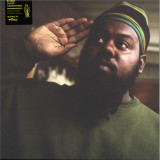
Martin had been a surprise choice for the commission.
It was the Spring of 1977 and two Interstellar Mariners were to be sent hurtling into deep space. Glass was to provide weekly "sonologues" of their progress, audio diarist for a pair of mute mechanical adventurers.
Delivered with a near fanatical diligence over the course of nearly three decades, these stuttering musical biographies would soon bewilder those who had first asked for them.
Martin's work, they judged, had begun to plot its own eccentric orbit, charting more than just the ships' material progress, but rather their imagined psychogeography ("What will they say about me?" "I will never conserve my instruments" "Nobody has gone further").
With his sonic dispatches increasingly ignored and unheard, all funding for the project swiftly fell to dust.
The very best of these scores, chosen from a vast compendium of source material, are now assembled here for the first time. Their muses, two arthritic spacecrafts now nearly half a century old, limp on through deep space, forever onwards and onwards forever...
Rerelease of the fourth album of the Intercommunal Free Dance Music Orchestra recorded with the Guinean saxophonist Jo Maka. The title says it all: Vol.4 – Jo Maka.
The Intercommunal Free Dance Music Orchestra was created in 1971 by an “old hand” of French free jazz, François Tusques. Free Jazz, was also the name of the recording made by the pianist and other like-minded Frenchmen (Michel Portal, François Jeanneau, Bernard Vitet, Beb Guérin and Charles Saudrais) in 1965. But, six years later Tusques had had his fill of free jazz.
So he then founded the Inter Communal, an association a name under which the different communities could become closer and compose, simply. In 1976, on the first album: L’Inter Communal, we can already hear Tusques playing without borders in the company of Carlos Andreu, Ramadolf, Michel Marre and Jo Maka (as a conclusion to this Vol. 4, we can hear them in 1977 at the Moulin de Prades Le Lez). Over the next decade, the, association kept going with concerts at the Dunois theatre, in 1980 and 1981, it welcomed old hands and new recruits (Bernard Vitet, Jean-Jacques Avenel, Jacques Thollot, Sylvain Kassap…).
If Vol. 4 – Jo Maka is an homage to the Guinean saxophonist, who passed away a few months before the release of this selection of concert recordings, it also displays a proud collective inspiration! One foot in the blues, and ears open to everything else, Tusques begins with a lament that the Company rapidly transforms into a joyful dance (“Vive la Commune”), weaves a full-blown party piece (“Poses ton fardeau et remets la machine en route”, “7 rue des prêcheurs”, “Mazir”) or gets fabulous with Mingus (“Fable Of Faubus”). And there you have it, with so many revolutions François Tusques is almost back to free jazz.
It’s always fun to let our audience peer through the party peephole with some hot behind-the-scenes info. For months, Black Light Smoke’s Control EP has supplied several of label head Tiga’s secret DJ weapons. In fact, he’s been sneaking out constantly after 9pm to play it out anywhere they’ll have him. And it’s little wonder to those who wonder why, as the Chicago-born producer’s top-flight mix of EBM, electro and Benadryl-soaked vocals has all the right people dancing.
Leadoff track "New York Is Dead” eulogizes the famous Big Apple Dance Party Scene in a way that will confuse the many who have embraced the city’s thriving “Groove With the Avengers” day rave series in Times Square. But the nihilism-liking doesn’t stop there, with the Friday-Til-I-Die attitude of “Black Hole at the Disco,” the pleather-dreaded post-cyberpunk of “Last Song Before Sunrise”, and the oxygen-deprived acid of “Break Your Back” culminating in the 11:45am-peak-time industrial trance of closer “Mind Control.”
Because we want this to be available to as many inhabitants of the blasted apocalyptic landscape we have pencilled in for 2034 or so, we have decided to make this release available both digitally and on vinyl. So whether you’ve managed to jack in illegally to a Spotify Wind Farm or you’re relegated to the hand-cranked misery of a Victrola while living in a barn or something, we’ve got you covered!
out of Stock
Last delivered 10 months ago available to reorder, subject to availability
Mit ihren unberechenbaren Live-Auftritten und Songs wie "Zurück zum Beton" und "Industriemädchen" sorgten S.Y.P.H. Ende der 70er für Furore - als eine der Bands, die rund um Düsseldorfs Ratinger Hof begannen, deutschsprachig zu texten. Die Band brach von Beginn an mit genre-konformistischen Erwartungshaltungen und machte Musik, die sich bei Rock, Punk und Kraut genauso bediente wie bei der Zügellosigkeit des Dadaismus und der Realität des Tagesgeschehens. Nach dem ersten Album und mehreren Singles (wiederveröffentlicht bei Tapete Records im Dezember 2024) produzierte die Band zwei weitere Alben - Pst und S.Y.P.H. (Album 4) - gemeinsam mit CANs Holger Czukay. Von 1978 bis 1981 entstanden neben Tapete Records veröffentlicht beide Alben gemeinsam mit einer Sammlung zuvor unveröffentlichter Raritäten - Punkraut 1978-1981. Auf dieser Compilation wurden rare und zuvor unveröffentlichte Aufnahmen aus den ersten drei Jahren der Bandgeschichte zusammengestellt: Die Songs "Blech" und "Mondpogo", 1978 live performt bei S.Y.P.H.s erstem Konzert im Düsseldorfer Carsch-Haus und fünf Aufnahmen, die zwischen 1978 und 1979 in Solingen entstanden. Außerdem gibt es drei Studio-Aufnahmen aus den Hamburger Container-Studios im Dezember 1981 - Aufnahmen aus einer Zeit, in der "sich die Band sowohl endgültig vom Punk als Musikrichtung verabschiedet hatte, als auch vom Einfluss des zwischenzeitlichen Produzenten Holger Czukay und einen völlig eigenen Stil gefunden hatte." (Kurt Dahlke, DAF)
Invitation to the Dance is the second album by nu metal band 40 Below Summer. The album was released on October 16, 2001. The album combines the downtuned riffs of nu metal/alternative metal with elements of New Jersey hardcore, hip hop, jazz and hard rock. Invitation to the Dance was made with the help of with well-known rock and metal producer GGGarth (Rage Against the Machine, Mudvayne) Allmusic wrote about the album "Invitation to the Dance at first glance may seem to be just another hard rock album, but along with further observation it is apparent that 40 Below Summer is striving to spice up what modern hard rock became in the 21st century." Invitation to the Dance is now available for the first time ever on vinyl, it's a numbered limited edition of 750 copies on translucent green coloured vinyl and includes an insert.
With Leaving It All to Chance, Roomer don't quite leave everything up to fate. The Berlin outfit's debut album hums with guitar-driven heartbreak, pairing mind-splitting noise with seductive melodies. Capturing the gritty yet emotive energy of their live performances, the album welcomes in the occasional ear-candy, staying true to the raw physicality of a hazy club show all while sharpening its edges-crafted in true DIY spirit and released by Munich's Squama Recordings.
Roomer is the meeting point of four distinct creative forces in the European music scene, united through long-standing friendships and years of collaboration across projects ranging from avant-garde free improv to ethereal folk and ambient electronica. Inevitably-if surprisingly late-the question arose: why not start a band? In their hands, the rock band format became a canvas for their many musical worlds to collide.
Nicolás Melmann (born in Buenos Aires and now based in Barcelona) explores sound's social and poetic dimensions through transdisciplinary projects. Drawing inspiration from Erik Satie's concept of "furniture music," Melmann's compositions transform the listening experience into havens of calm and contemplation.
Música Aperta is a fusion of acoustic and electronic sounds, rich in beautiful harmonies, where carefully soft elements interplay with delicate raspiness. Made up of three parts, the music unfolds slowly, immersing the listener in time. Música Aperta resonates with echoes of Satie, the meditative minimalism of Arvo Pärt, the roughness of Phill Niblock, and the nostalgic reflections of Richard Skelton.
Another way of listening to Música Aperta is through its digital encore – an extension of the album experience that brings the concept of open music to life – "a work that remains unfinished and open to transformation." The website features a reactive audiovisual interface where images dynamically respond to the music's behavior, translating electroacoustic frequencies into real-time cinematic landscapes. The album blends instrumental and electronic textures while allowing listeners to interact with different layers through a virtual mixer, enabling them to create unique sound combinations and personal sonic experiences.
All songs written and performed by Nicolás Melmann in Château Éphémère.
Mastered by Rafael Anton Irisarri at Black Knoll Studio, NY.
Artwork by Daniel Castrejón.
"Children Will Be Furious" ist bereits das dritte Album der Hamburger Band Palila. Das Indie Rock Trio entwickelt sich in Sachen Punch, Druck, Groove und kompositorischer Dichte immer weiter und erschafft noch rauere und zum Teil angriffslustigere Songs als zuvor. Palila nennen Bands wie Built To Spill, Guided By Voices, Dinosaur Jr., Nada Surf, Pixies oder die frühen Smashing Pumpkins als Einflüsse, schaffen aber ihren ganz eigenen Sound, der sie bereits u.a. auf das Orange Blossom Special und das Rolling Stone Beach gebracht hat.
Refreshing Modern Metal meets Alternative und Nu-metal! Luna Kills sind zweifellos der erfrischendste modern Metal Newcomer der Szene, der Alternative- und Nu-Metal-Vibes mit von Game-Soundtracks inspirierter Elektronik kombiniert. Ihre Frontfrau Lotta zwingt das Publikum mit ihrem Jazz-Gesang im Hintergrund und ihrem unglaublichen Fry-Scream-Gesang in die Knie – es sei denn, es rast in Moshpits umher, wie man es bei ihren feurigen Live-Shows desöfteren sieht. Nachdem Luna Kills bereits die Tür zu ihrem geliebten Gaming-Team geöffnet hatten gab es ihre Musik auch auf der erfolgreichen mobilen App Beatstar zu hören.Die 2019 gegründete Band hat bereits ihre ersten Shows auf europäischen Bühnen bravorös absolviert und die Aufmerksamkeit mehrerer Rockradiosender in ihrer Heimat Finnland auf sich gezogen. Nun ist die Zeit reif, um ihr erstes Album in voller Länge bei SharpTone Records als Debüt zu veröffentlichen.
Second volume of tributes from Kutmah.
A beat tape for the brotha from anotha planet, the most high Ras G & the Afrikan Space Program
All beats by Kutmah / Cover Photos By Kevin Ramos
out of Stock
Last delivered 18 months ago available to reorder, subject to availability
SYML is the solo venture of artist Brian Fennell. Welsh for “simple”—he makes music that taps into the instincts that drive us to places of sanctuary, whether that be a place or a person. Born and raised in Seattle, Fennell studied piano and became a self-taught producer, programmer, and guitarist. Says Fennell about his album Nobody Lives Here, "We change, the world changes, and there is so much unknown. About a year ago I started writing songs that represent the change that is happening in front of my face, a group that have emerged to become the third SYML album. Many of these songs are about getting older, and the intimate, and sometimes frightening, passing of time. Some are about how getting older revolves around looking forward to things happening, and when they don’t happen, or they feel different than anticipated, we can be left with surprise and sadness. I’m actually reminded of this watching my 2 year old! We learn to live with disappointment. I recorded some of these songs with kids and dogs making noise in the background, and others in silent studios with musicians I’ve listened to and admired for many years. These songs are meant to be pieces of clothing to wear as you need (or I need). Some are bright and bold and others are gentle, but they were all made with a sense of comfort in mind, even when things feel bleak. My wife jokes that when our friends hear some of these songs, they might think we are not “ok”. Thankfully, putting myself inside a sad song is still a good place to feel happy. There's this generally unspoken feeling that musicians don’t listen to their own music. That isn’t true for me. I love living with my songs because their meaning changes as I change. There is as much fear and beauty in the big questions as there is wonder and possibility in the simple, everyday shit we live through.”
"BODIES marks a bold evolution in our ever-developing sound. HEROINE was defined by its meticulously crafted and tightly woven concept, but the weight of this careful construction sometimes overshadowed the energy of the music itself, leaving some listeners feeling disconnected. With BODIES, we have embraced a more immediate, unfiltered approach that feels like a lightning bolt, looking to capture the energy of “Thornhill right now.” The album thrives on spontaneity and freedom, foregoing rigid concepts in favor of pure, in-your-face authenticity. It’s less about delivering a carefully constructed narrative and more about creating a visceral, open-ended experience. BODIES serves as a sonic moodboard—a collection of feelings and vibes—intentionally left open to interpretation. It has an upbeat and almost celebratory, party energy at times, but also retains all the emotion and intensity Thornhill are known for, making it our heaviest and most explosive work to date. With BODIES, we invite listeners to connect on their own terms. It’s raw, personal, and unapologetically immediate—a record that thrives in the moment, capturing our band at our most authentic and free."
The Passion of the Christ is a 2004 biblical drama film by Mel Gibson with music composed by John Debney. The soundtrack received an Academy Award nomination for Best Original Score and it was on the first place in both Top Christian Albums and Top Soundtracks in 2004. In 2005, the album won a Dove Award for Instrumental album of the year at the 36th GMA Dove Awards. The soundtrack succeeds as a coherent, moving, well-executed musical statement whether or not one has seen the film. The album is a combination of folk instruments, Eastern-tinged harmonics, solo, and choral voices. Debney worked together with Indian master violinist and vocalist L. Shankar, and singer/double-violinist Gingger Shankar. The Passion of the Christ is available as a limited edition of 750 numbered copies on gold coloured vinyl and includes a 4-page booklet.
PITCHFORK “This ‘Director’s Cut’ is the way it was always intended to be heard” - Patterson Hood In 2004 the Drive-By Truckers released what would become the best selling album in their illustrious catalog. The Dirty South is a concept album that examines the state of the South, and unveils the hypocrisy, irony, and tragedy that continues to exist. The album features live show staples like, “Tornadoes”, “Where The Devil Don’t Stay” and “Puttin’ People On The Moon” as well as rarities like “Goode’s Field Road” and “Daddy’s Cup.” The Complete Dirty South is a band-led rework of the original album. Principal member, Patterson Hood, took the reins and reimagined this record as it was originally intended. The complete version features resequenced audio, three additional tracks, four remixes along with updated vocals. The packaging comes with a perfect bound book featuring liner notes from Patterson Hood, track by track descriptions from Mike Cooley and Jason Isbell as well as never before seen photos along with updated artwork from the late Wes Freed.
Ennio Morricone composed and arranged scores for more than 500 film and television productions, making him one of the most influential and best-selling film composers since the late 50s. The Legend of 1900 (Italian: La leggenda del pianista sull'oceano) is a 1998 Italian drama film directed by Giuseppe Tornatore and starring Tim Roth, Pruitt Taylor Vince, and Mélanie Thierry. The film is inspired by Novecento, a monologue by Alessandro Baricco. The Legend Of 1900 was nominated for a variety of international awards, winning several for its soundtrack, including a Golden Globe for Best Original Score - Motion Picture. This release includes the song “Lost Boys Calling” featuring Roger Waters & Eddie van Halen. Throughout his career, Morricone received an unprecedented amount of awards, including Grammys, Golden Globes and BAFTAs. Ennio Morricone has influenced many artists including Danger Mouse, Dire Straits, Muse, Metallica, Radiohead, Hans Zimmer, and many more. The Legend of 1900 is available as a limited edition of 2500 numbered copies on green coloured vinyl and contains an insert and is housed in a deluxe sleeve with silver foil finish.
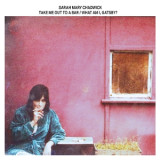
Take Me Out To a Bar / What Am I, Gatsby? marks a deliberate pivot. The album’s open, introductory chords evoke seem fit to score a scene in a Michael Haneke movie in which some stern German woman stomps down a whitewashed hallway. By the time that Chadwick’s crackly soprano joins in, it figures almost as a kind of intrusion upon what had been, up until that point, a pure mood. “You don’t have to listen to all the lyrics,” she attests. Chadwick's calling card since her earliest releases — a jagged, one-take immediacy — has been dialed back, leaving room to inconspicuously crowbar as much poeticism into the songs as she possibly could.
j.o.y.s. is both the moniker of and the debut self-titled LP by the Los Angeles based artist Ramon Narvaez. j.o.y.s. is an acronym for “jump out of your skin”. While the phrase can conjure moments of shock and surprise, Narvaez, however uses the phrase as a foot lamp illuminating a path towards momentary transcendence through creating beautifully conjured ambient music that recalls work by Daniel Lanois, suss, Dean Hurley and Tim Hecker. While the pedal steel is prominent, j.o.y.s., as a project, is more in conversation with shoegaze and noise than what has recently been deemed ambient country. Heavy brutalist slabs of noise, swirling feedback create the sound bed of these songs. Collaborator Justin Gaynor’s pedal steel on this album operates as important connective tissue as both the road and the traveler between the light and shadow zones. Drones are wrapped in distortion, processed just below the threshold where we’d throw the word “harsh” around. Rather, there is a delicate dance between Gaynor’s top-rope pedal steel lines - always sweet and always just a bit mournful - with Narvaez’s ringing bass notes and noise chatter. j.o.y.s. revels in intransigence. Nothing can last. As Matt Colquhoun puts in the introduction to Mark Fisher’s heartbreaking Ghosts of My Life - our identity and relationship to the past are “portals in perpetual collapse”. Depression, friendship, longing are all briefly satiated while in the peak experience of creating something as a response to them. But even that is impermanent. These sounds - improvised, exploratory, ecstatic - are eventually edited, whittled down and pressed to wax - not tombs but portals to the past.
Teen Jesus and the Jean Teasers are a powerhouse, celebrated for their raw emotion and incisive social observations. Their talent has earned them nominations for Best Independent Punk Album or EP at the AIR Awards, Emerging Songwriter of the Year and Song of the Year at the APRA Awards, along with nods from the J Awards and Rolling Stone Awards. Recognised as Spotify's RADAR Artist, their rising global influence is undeniable.
Following their award winning 2022 EP, Pretty Good For A Girl Band, their debut album I Love You charted at number 6 on the ARIA Albums Chart, marking a significant milestone. The accompanying tour saw them sell out iconic venues like 170 Russell in Melbourne, the Metro Theatre in Sydney, and The Triffid in Brisbane. They capped off the year supporting the Foo Fighters at AAMI Park in Melbourne and launched into 2024 by supporting The Vaccines across the EU/UK. They will support Pearl Jam on select dates in the United States mid-2025.
I Love You showcases the bands growth, with each member contributing to songwriting. It stands as a definitive statement of their sound—joy, rage, and euphoria, delivered with precision and heart. Teen Jesus and the Jean Teasers continue to make waves, solidifying their place in the music industry.
Happy Birthday, Ratboy combines the old and new — containing 10 brand new recordings of their earliest material + a newly-written bonus track, this record celebrates a decade of Ratboys: a 10-year songwriting partnership, an evolving live show, a D.I.Y. project, a web of friendships, and every thing in between. Almost as soon as Julia Steiner and Dave Sagan met during their college orientation, they started playing music together. What came out of their dorm rooms was the 5-song RATBOY EP, uploaded to Bandcamp on April 1, 2011 to share with friends and family. Now, to mark a decade since (to the day), Ratboys have hit the studio to re-inhabit these songs and bring them back to life. New recordings of the 5 original RATBOY EP songs make up the A-side of Happy Birthday, Ratboy, with 5 new versions of rare college-era tracks and the newly-written standout, “Go Outside” on the B-side. Featuring mainstays from their live show over the years, including “The Stanza” & “Space Blows,” pressed to vinyl for the first time and given the full band treatment, Happy Birthday, Ratboy introduces new Ratboys fans to the band’s beginnings while also raising a toast to those who’ve been there from the start.
Mit ihren unberechenbaren Live-Auftritten und Songs wie "Zurück zum Beton" und "Industriemädchen" sorgten S.Y.P.H. Ende der 70er für Furore - als eine der Bands, die rund um Düsseldorfs Ratinger Hof begannen, deutschsprachig zu texten. Die Band brach von Beginn an mit genre-konformistischen Erwartungshaltungen und machte Musik, die sich bei Rock, Punk und Kraut genauso bediente wie bei der Zügellosigkeit des Dadaismus und der Realität des Tagesgeschehens. Nach dem ersten Album und mehreren Singles (wiederveröffentlicht bei Tapete Records im Dezember 2024) produzierte die Band zwei weitere Alben - Pst und S.Y.P.H. (Album 4) - gemeinsam mit CANs Holger Czukay. Tapete Records veröffentlicht beide Alben gemeinsam mit einer Sammlung zuvor unveröffentlichter Raritäten - Punkraut 1978-1981.
Mit ihren unberechenbaren Live-Auftritten und Songs wie "Zurück zum Beton" und "Industriemädchen" sorgten S.Y.P.H. Ende der 70er für Furore - als eine der Bands, die rund um Düsseldorfs Ratinger Hof begannen, deutschsprachig zu texten. Die Band brach von Beginn an mit genre-konformistischen Erwartungshaltungen und machte Musik, die sich bei Rock, Punk und Kraut genauso bediente wie bei der Zügellosigkeit des Dadaismus und der Realität des Tagesgeschehens. Nach dem ersten Album und mehreren Singles (wiederveröffentlicht bei Tapete Records im Dezember 2024) produzierte die Band zwei weitere Alben - Pst und S.Y.P.H. (Album 4) - gemeinsam mit CANs Holger Czukay. Tapete Records veröffentlicht beide Alben gemeinsam mit einer Sammlung zuvor unveröffentlichter Raritäten - Punkraut 1978-1981.
THE NIGHTINGALES veröffentlichen ihr erstes Studioalbum seit dem viel gelobten Vorgänger "The Last Laugh" von 2022. Ihr neues Album "The Awful Truth", das am 4. April bei Fire Records erscheint, ist eine moderne Music-Hall-Interpretation mit Popsongs und 80er Nostalgie. Gefeiert in dem exzellenten, von Stewart Lee erzählten Film "King Rocker of 2020", in dem der Vorhang für die Magie des "altgedienten Punk/Alternative-Rock-Freiwilligen" (The Quietus) Robert Lloyd gelüftet wurde, sind THE NIGHTINGALES so aktuell wie eh und je, denn sie veröffentlichen eine scharfes Statement-Album auf die moderne Zeit, die zu Recht als "The Awful Truth" betitelt wird. Das Eröffnungsstück "The New Emperor's New Clothes" ist ein beschwingter, mitreißender Ausbruch mit einem dröhnenden Klavier, das den Song einleitend begleitet und dann in wilder, improvisierter Popmusik endet. Die Band über den Track: "A stream of consciousness. Initially inspired by the tawdry but tractable trend of the vacant, voluntarily egged on by ego hungry politicians, pop stars, beauties, ballers, ingrowing haters and hard-nosed influencers. One hundred percent on point with the nonsense of neo populism and savagely edited to fit the music, it is far from silky, it is futile and silly. Real rock 'n' roll." In den frühen 80er Jahren genossen sie Kultstatus als Lieblinge der glaubwürdigen Musikszene und wurden von John Peel angepriesen, der über sie sagte: ,Ihre Auftritte werden dazu dienen, ihre Exzellenz zu bestätigen, wenn wir weit genug von den 1980er Jahren entfernt sind, um diese Zeit rational zu betrachten, und andere, unendlich viel bekanntere Bands als Scharlatane entlarvt werden." Ihre Zeit ist in der Tat gekommen. The Nightingales sind Robert Lloyd, Andreas Schmid (Faust) am Bass, Fliss Kitson (Violet Violet) am Schlagzeug und Gitarrist James Smith (Damo Suzuki). "They genuinely sound more vital than ever." Uncut - "One of rock's unsung heroes" Esquire - "Still stunningly relevant" London Evening Standard - "Lloyd is the most underestimated songwriter of his generation" The Independent
Long coveted by diggers, connoisseurs and beat makers, here we have the first-ever reissue of Amedeo Tommasi's "Industria 2000", released in 1974 via RCA's "Original Cast" series under his Jarrell alias. These 12 sonic experiments - totally devoted to synthesizers - offer tense tonalities, dissonant ambiences, complex textures, white noise rides and muted rhythms that can easily be seen as cornerstones of what would become later known as Industrial Music, also anticipating the sonic landscapes found in some of the early Warp Records releases.
Comprising 12 tracks entirely devoted to synthesizers, Industria 2000 explores a range of stark, tense tonalities and dissonant atmospheres. The album’s complex textures, white noise swells, and muted rhythms can be seen as precursors to industrial music, anticipating the aggressive, abrasive soundscapes that would later come to define the genre. It is clear that Tommasi's work was not only ahead of its time, but was also laying the foundations for the sound realms explored in the early days by major electronic record labels of the 1990s and future electronic pioneers.
'Wherever You Are' is a new solo piano album, played and composed by John Foxx. Most of the recordings were made at home and in the early hours of morning in the weeks following his rare live performance at Kings Place, London in October 2023, as part of the BBC Radio 3 'Night Tracks' event. 'Around dawn is the best time to play piano,' says Foxx. 'Self-critical mechanisms mostly dormant, so I'm free to invent and enjoy for a while. The piano faces a window overlooking a valley surrounded by hills, where the sun comes up. There's often an early mist in the valley - and quite often, it rains. Some notes and sounds resonate with remembered experiences and you get glimpses of times and people. It's valuable. Quiet. Free association, myriad moments orbiting - and off you go.' He adds: 'Lately I'm realising how we get formed by other people. Everyone we know or knew, who affects the way we think and the way we see things - even in a small way, has a voice, and all those voices remain in a sort of lifelong conversation. I hear them all the time. It's not at all frantic, it's more oceanic - calm and pleasant and it eventually makes us the way we are. Luckily, I seem to have met - and meet - mostly good, generous, bright people and I'm still learning a great deal from all of them. They give you the touchstones, the maps, the weather. It's how we find our way. So - simply, thanks. Wherever you are.'
Bethesda Game Studios und Laced Records haben sich zusammengetan, um die Musik von 'Starfield' auf Deluxe-Vinyl zu bringen.
In allen Titeln der Bethesda Game Studios ist die Musik ein wesentlicher Bestandteil der Reise des Spielers und ein ständiger Begleiter während seines Abenteuers. Die langjährige Zusammenarbeit zwischen dem Komponisten Inon Zur und dem Studio begann bereits 2008 mit der Veröffentlichung von Fallout 3. Die Musik zu 'Starfield' sollte sowohl die Weite des Weltraums als auch die Neugier der Menschen auf das Unbekannte zum Ausdruck bringen. So verwob Zur traditionelle und nicht-traditionelle orchestrale und elektronische Klänge zu einem Klangteppich aus Organischem und Synthetischem.
Während der Entwicklung hat das Team ein eklektisches Spektrum an Referenzpunkten durchlaufen: Es begann bei den Sci-Fi-Grundsäulen von John Williams und Jerry Goldsmith, durchquerte einen klassischen Nebel von Debussy, Ravel und Prokofiev, flog an Vangelis' überragendem Synthesizerwerk vorbei und warf einen Blick auf die experimentellen Arbeiten der Einstürzenden Neubauten und von John Cage.
In den Orchesterstücken von Starfield, die vom Budapester Filmorchester eingespielt wurden, beschwören verschiedene Instrumentalgruppen oft imaginäre Aspekte des Weltraums herauf. Schnelle, sich wiederholende Sequenzen in den Holzbläsern stellen Partikel dar. Streicher, die wellenförmige Akkorde spielen, imitieren lange Wellen interstellarer Energie. Die Blechbläser werden zum Leuchtfeuer der Melodie, das über die Galaxie hinaus strahlt. In ähnlicher Weise erhalten die eher elektronischen Cues ein Gefühl von Erhabenheit durch schwere Synthesizerflächen, die kryptische, sich wiederholende Muster und ungewöhnliche perkussive Schläge untermauern.
Aeralie Brighton (DEATHLOOP, Ori-Serie) ist auf dem Soundtrack als Sängerin zu hören.
Die Berliner Post-Punk-Band The Underground Youth um den Musiker und Autor Craig Dyer meldet sich mit ihrem zwölften Studioalbum „Décollage“
zurück. Das von Dyer selbst geschriebene, aufgenommene und produzierte Album ist eine Übung in künstlerischer Dekonstruktion, sowohl im Namen
als auch in der Form, und markiert eine entscheidende musikalische Wende. „Décollage ist die Kunst, ein Bild zu erschaffen, indem man Teile eines
bereits existierenden Werks herausreißt, abreißt oder entfernt. Meine Idee war es, diese Technik auf die Musik anzuwenden“, erklärt er. „Ich baute
Wände aus statisch überzogenen Hip-Hop-Drum-Samples, Schichten von Streicherarrangements im Stil von Lee Hazlewood und von Serge Gainsbourg
inspirierten Mellotron-Melodien auf, dann begann ich, diese schönen, chaotischen Wände aus Lärm abzureißen und legte einen neuen Sound für The
Underground Youth frei.“
Von Momenten geisterhaften Minimalismus bis hin zu ausladenden Crescendos aus Lärm und Melodie haben die Songs hier eine schattenhafte,
traumhafte Qualität. Neben Dyer besteht The Underground Youth aus der Schlagzeugerin und bildenden Künstlerin Olya Dyer, dem Gitarristen
Leonard Kaage (der auch bei der Postproduktion des Albums mitwirkte) und der Bassistin Samira Zahidi. Ursprünglich als Soloprojekt von Dyer im Jahr
2008 gegründet, hat die Band inzwischen 11 - mittlerweile 12 - Studioalben und 4 EPs veröffentlicht und dabei einen einzigartigen Sound entwickelt,
der im Laufe der Jahre von cineastischer Lo-Fi-Psychedelia über rauen, melancholischen Post-Punk bis hin zu Gothic-Folk-Noir reichte.
Flying Vipers record murky dubwise reggae on a Tascam 8-track in their basement bunker. Their love of Jamaican and UK 70's roots and dub is their north star, but eclectic crates of records and a couple decades worth of punk shows bleed through on tape. Twin brothers Marc & John Beaudette on drums and bass telekinetically lock-in with Zack Brines' layers of vintage organs and electric pianos in concise melodic meditations. "With ‘Off World’, their first full-length album featuring vocalist Kellee Webb, the Boston area band uses this foundation to explore the fight or flight of contemporary survival." While largely original compositions, three covers encapsulate the lyrical and musical themes found throughout the LP; an alienation anthem from Northwest punk pioneers Wipers; the theme from the cult classic animated film La Planete Sauvage, featuring the acclaimed jazz harpist Brandee Younger; and quite possibly the first dubwise Sun Ra tribute. Their own singles like "Believers & Deceivers" and "Jackals" confront the grim reality of modern culture, wondering if life in America, and/or Earth, is worth fighting for or leaving behind. Through it all the drum and bass is there, to help you hold your ground and to guide your escape into sonic space.
In the midst of recording his 12th album 'Why The Worry', wavering in his resolve to finish what he'd started, Seth Walker came to the realization: "This does not define me; this is not who I am forever; this is just a moment" . "Distance colors compositions over the years and each album is left as merely a reflection of its own period in time." The new album finds Walker reunited with old friends and familiar names. Once again Jano Rix steps behind the boards, co-producing the album with Seth and engineer Brook Sutton. In the producer's fifth outing he's become an invaluable sounding board, the kind that knows what's missing and, just as importantly, what needs to be taken away. Oliver Wood (The Wood Brothers) lends a pen to the title track and Seth's classically trained father Scott adds strings to "I'm Getting Ready," a song penned by Walker's contemporary Michael Kiwanuka. Mostly, though, the record was shepherded into shape by Walker's trio, rounded out by longtime confidants Rhees Williams (Guitar, Piano) and Mark Raudabaugh (Drums). The three let the studio guide them, entering without agenda, set straight by the title's mantra to stop worrying where they'd end up.
The term Miao is a very ancient Chinese misleading pseudo-ethnic categorisation, what we call the Hmong in western languages, a term recognised by colonial French Indochina. Miao became a generic term which does not reveal the diversity of 38 subgroups or 9 million people, mostly in Southern China Guizhou Province.
China having moved towards the market economy, a large number of minority regions have marketed a commodity available only to them: their ethnicity itself. Ethnic tourism has developed in a big way in China since the 1990s for Chinese and foreign tourists, and is often promoted as the way to create income in those areas for development. I usually stay away from ethnotouristic shows and try to get music which is not a commodity! I was based in Dali, Yunnan, China between 2006 and 2013.
With a growing international reputation for championing forward-thinking artists in the contemporary jazz space, Denmark"s April Records proudly presents the third album from instrumental collective Andorra. Their most ambitious undertaking yet, the audio-visual release invites audiences to fully immerse themselves in the energetic grooves, lyrical melodies, and colorful modern production that define their sound. Andorra"s eponymous 2021 debut reunited five friends who met at the Funen Music Conservatory and went on to work across a range of disciplines, from film music and orchestral work to large ensembles and chamber jazz. Realising their long-held desire to explore their collective creative potential, the ensemble describes their sound as "modern vintage", bringing together the nostalgic warmth of analog synthesis, present-day digital audio manipulation techniques, and jazz musicianship steeped in tradition. Taking a decisive step to perfect the production of their music, the quintet recorded at Lundgaard Studios - one of Denmark"s most prestigious studios - and placed the responsibility of mixing in the hands of their own synth-guru Peter Moller, whose deep understanding of the band"s sound made him best suited for the role. Taking a step back from the dark, brooding music often associated with the Nordic countries, "III" is a playful, high-energy, deep pocket collection of seven original pieces that are unapologetic in their grooving, in-your-face attitude. Driving complex drum parts, shimmering guitar textures, squelching synth pads, thick old-school bass tones, and lush timbres from Mads La Cour"s horns deliver catchy and danceable hooks as easily as they do spacious explorations of texture and vivid harmony. The entire album has been shaped into a concert film directed by photographer Jesper Van, set to premiere at select cinemas across Denmark - soon to be available online - offering global listeners a comprehensive experience of Andorra"s creative vision.
Danish drummer Daniel Sommer completes his internationally acclaimed Nordic Trilogy (featured in Stereogum, Downbeat Magazine, Bandcamp"s Best of Jazz and more...) with the release of Lost Threads on March 21st, 2025, via April Records. Following As Time Passes and Sounds & Sequences, the highly anticipated third chapter features Finnish pianist Artturi Rönkä and Swedish bassist Thommy Andersson. Together, the trio embarks on a deeply introspective exploration of time, space, and their shared Nordic spirit of improvisation. Described by Sommer as "a process-oriented project prioritizing musical risk and flow," the Nordic Trilogy has sought to illuminate Nordic approaches to composition and improvisation across generational and stylistic divides. With Lost Threads, this vision culminates in a collection of music that embraces vulnerability, spontaneity, and togetherness. "Most of the music emerged as Daniel and I improvised in my living room in Helsinki," Rönkä recalls. "Later, when Thommy joined us for a couple of concerts and recording sessions... his highly personal way of playing the bass inspired Daniel and me to try to develop the music in further, unexpected directions." The result is a dynamic and emotionally resonant album, recorded live in a Helsinki studio with all three musicians in the same room, without headphones or edits whatsoever. The title track and Den ensommes dans pulse with energetic groove and rhythm, while pieces like Meditation, Silent Steps, and Forgotten Song float with a haunting, rubato lyricism. With influences ranging from Nordic folk, Western Classical music and the jazz tradition, Lost Threads continues the trilogy"s history of blurring the boundaries between composition and improvisation. The trio"s collective sound-anchored by Rönkä"s nuanced piano, Andersson"s deeply personal bass tones, and Sommer"s textural drumming-creates a sonic landscape both timeless and contemporary. As the trilogy closes, Lost Threads invites listeners into a contemplative space where silence and sound intertwine, offering a balm for the modern world"s relentless pace. True to the spirit of the Nordic Trilogy, it stands as both a conclusion and a testament to the boundless possibilities of collective improvisation.
Ein argentinisch-baskischer Grrrl-Powerpunkpop-Split! LAS VIN UP wurden 2008 im Süden von Buenos Aires gegründet. Die Band besteht aus drei Frauen und einem Gitarristen. Die Musik ist ein melodischer Mix aus RAMONES und MUFFS-Parts die Songs sind Ohrwürmer von den man nicht genug bekommen kann. Die Band ist ein fester Bestandteil der Buenos Aires-Punkszene, ihre Konzerte werden frenetisch vom Publikum gefeiert. LARRU BELTZAK kommen aus Onati, einer kleinen Stadt im Baskenland in Spanien. Die Band wurde 2020 gegründet, aber alle Musiker haben vorher schon in diversen Bands gespielt. Die Musikstil ist Punk mit unglaublichen melodischen Gitarren, dazu ein sehr ausdrucksstarker Gesang von Sängerin Naiara. Die Band singt auf baskisch. Die beiden CDs, die die Band bisher veröffentlicht hat, genießen Kultstatus in Spanien Die LP kommt eingeschweißt mit Einleger und vielen Infos. Pop Punkrock/Punkrock für Fans von RAMONES/RAMONAS, MUFFS, 77er Powerpop/Punkrock
Eine spezielle Trojan Records-Veröffentlichung für 420-Vibes, sorgfältig zusammengestellt von Ras Jammy
von Suns of Dub. Die Verbindung zwischen Dub-Musik und Cannabis/420 hat tiefe kulturelle und historische Wurzeln und ist größtenteils mit der jamaikanischen Musikszene und dem Rastafariismus verbunden – zwei großen Einflüssen auf die Entwicklung von Dub. Dieses Album enthält die Werke einiger der
wichtigsten Pioniere des Genres, darunter King Tubby, Scientist, Dennis Bovell und Roots Radics.
*180g virgin leaded vinyl in a deluxe textured heavy gatefold cover, with paste-on artwork and special anti-static innersleeve.* Note: The pressing is absolute on point!!!!
Vincent Gallo and Harper Simon with a beautifully recorded suite of songs and instrumentals.
" More than two decades since he blew minds with a suite of brilliant releases on Warp, Vincent Gallo returns to the world of music at long last in Butterfly, his duo with Harper Simon, with the project’s full-length debut, “The Music of Butterfly”. A gesture of gentle, DIY / bedroom left-field pop, falling within the rough territory for which Gallo became renowned during the late '90s and early 2000s, while interweaving fascinating flirtations with minimalism and experimentalism, it’s a truly captivating piece of work that’s hard to get off the turntable after the first needle drop.
In the arts, the lines between genius and madness, as well as fact and fiction, often blur. Such, it seems, has always been the life of the artist, filmmaker, actor, musician, and composer Vincent Gallo. A cult figure and a member of various creative undergrounds for the better part of half a century, Gallo has courted controversy, ruffled feathers, and made some of the most singular statements to flirt at the outer edges of popular culture that can be called to mind. Arguably most well known for his work in film, during the late '90s and early 2000s - notably with his soundtrack for “Buffalo 66” and a suite of releases on Warp - Gallo became something of a sensation in the world of independent music for a visionary, incredibly unique and sensitive approach to sonority. For a time, the world was abuzz, waiting on bated breath for more, and yet time passed. Bar a few fragments, appearing here and there, almost nothing has been heard from Gallo, within the world of music, for more than 20 years. That is, until now, with the release of “The Music of Butterfly”, the debut full-length of Butterfly, his duo with Harper Simon: beautifully produced and issued by Family Friend Records - Gallo’s own label, founded in 1981 - in a deluxe edition that simply left us speechless: 180g vinyl in textured heavy gatefold cover with paste-on artwork and thick anti-static innersleeve. More or less picking up from where we last encountered him, spinning captivating melodies and gentle song-craft within the quieter temperaments of DIY, left-field pop, once again, and at long last, Vincent Gallo, encountered in an incredibly successful collaboration with Harper Simon as Butterfly, reminds us that he’s as much a force within the realm of music as he is within film. Not to be missed. This one isn’t going to sit around for long.
Vincent Gallo’s biography reads like the stuff of blaring beauty: a figure of moderate fame in his own right, who has remained at the centre of cultural ferment as the decades have rolled by. Born in 1961, in Buffalo, New York, as the story goes he ran away to New York City at the age of 16 and fell into the brewing counterculture of the Downtown scene, William Burroughs and John Giorno, in addition to the cream of his own peers, and began making paintings, music, and experimenting with film. In addition to being a member of the now legendary band Gray, with the artist, Jean-Michel Basquiat, and the filmmaker, Michael Holman, Gallo appeared in the cult 1981 film “Downtown 81”, before slowly beginning a career as an actor and catching the eye of Claire Denis, who brought his talents into the broader cultural gaze. Catapulted into the public by his own subsequent career as a filmmaker with “Buffalo '66” (1998) and “The Brown Bunny” (2003), both of which were marked by controversy and praise, Gallo further captivated the public with a partially brilliant, if not relatively brief, flurry of activity in the realms of music.
While Gallo had already been making music for roughly two decades at the time of his release of the “Brown Bunny” soundtrack, and the four release issued by Warp in rapid succession between 2001 and 2002 - “When”, “Honey Bunny”, “So Sad”, and “Recordings of Music for Film” - the almost fanatical fandom reached a fever pitch at the moment, allowing him, for some, to be regarded as much, if not more, as a musical artist than an actor and filmmaker. Anyway you cut it, in a few short years, he proved himself to be a polymath of rare talent. Somewhere along the way, while both were working as members of Yoko Ono's Plastic One Band, Gallo met the New York based, highly regarded singer-songwriter, guitarist, and producer, Harper Simon, who also happens to be the son of Paul Simon. The pair fell into an incredibly fruitful duo collaboration, which came to be called Butterfly, and “The Music of Butterfly” being their debut full-length release.
Written, performed, and recorded by Vincent Gallo and Harper Simon in New York City between the winter of 2018 and the spring of 2019, the ten tracks comprising “The Music of Butterfly” are cumulatively a gesture of gentle, DIY / bedroom left-field pop, falling within the rough territory for which Gallo became renowned during the late '90s and early 2000s, making one feel like barely a moment had passed since we’d encountered his graceful hand at song-craft. Stripped back and raw, while retaining a sense of warmth and intimacy, across the length of “The Music of Butterfly” the duo of Gallo and Simon weave something completely captivating at the juncture of minimalism, experimentalism, and pop: meandering moments of texture and tone, slowly forming toward flirtations of melody that flower into song and back again. Somehow playful and light, while also remarkably emotive and personal, it’s almost as though each of these tracks crystallised out the air, unlabored and exactly as they should be without a note or beat more.
An engrossing immersion into both Gallo and Simon’s remarkably accomplished minds, having followed the path toward one another after radically different experiences and careers, “The Music of Butterfly” is one of those records that’ll be hard to get off the turntable after that first needle drop, and rarely leave the listening pile for some time to come. Issued by Family Friend Records in a beautiful deluxe edition that is unmatched even among the most stunning recent productions we can call to mind - 180g vinyl in textured heavy gatefold cover with paste-on artwork and thick anti-static innersleeve - it’s lovely to have Gallo back in the musical mix after so many years. "
Liz Stringer has been a steadfast and captivating feature of the Australian musical landscape over a six album career. Venerated by her musical peers and devoted fanbase alike, Stringer's world-class vocals, multi-instrumental prowess, notoriously powerful live performances and story-rich, genre-defying songs place her among the most important songwriters of her era. Mirroring the scope and complexity of Stringer's sensibilities and accomplishment as an artist, The Second High draws from Stringer's wider influences of jazz, funk and soul, and takes her ability to dissect the minutiae of the human condition through song - and connect with her audience - to a new level. The album is redolent with motifs of self-actualisation, lessons learned, sharp and ever-relevant commentary on social issues, and a strong and consistent focus on justice and equality. Fuelled by keys-driven grooves ranging from poignant grand piano lamentations (When You Met Me), the Rhodes-led jazz odyssey of On the Level, hip-hop flavoured keys brightening the bottom-heavy and deeply funky The Second High, to virtuosic keys that dance between strings and soaring multi-layered vocals in To Survive, Stringer's seventh studio album is a fresh and engaging ride to a destination yet uncharted, even by Stringer's standards - thrilling, stark and transformative. If 2021's First Time Really Feeling was an excavation, The Second High is an exorcism.
Kneading dough is tricky – you should know how it’s supposed to feel. If you try too hard you could make it worse. It’s a beautiful practice – creation with a gentle touch, to work at something so it can be left alone. “If it’s too drawn out it’s awful. It’s easy to give too much.” Dance in the mirror. Contemplate your veiny hands. Who do they remind you of?
You begin by mixing flour and water. “What happens when your people die? Why’d they move the rock to the other side of Ulster Park?” Eliza Niemi asks two seemingly unrelated questions in a rising melody with guitar accompaniment, like fingers playing spider up to the nape of your neck. Gentle pressure. Strands of gluten form to bind the mix. A new question lingers in the binding. When she admits “but I don’t know how to tell if I’m feeling it or not,” that question surfaces through the text. It is reiterated throughout the album. When I’m working with dough I think the same thing to myself.
On Progress Bakery, her second album as a solo artist, Eliza knows to leave some questions alone – to let juxtaposition and tension be the proof. It doesn’t have to be hard. The feelings and revelations they provoke rise in the heat. The smell is sweet. Crispy on the outside and soft all the way through. She playfully slip-slides through words and sounds and images, delighting in surprise, skimming ideas like stones cast across clear water, touching down briefly with uncommon grace.
The question provoked between those opening lines resurfaces in the strands between songs – “Do U FM” is fully formed and beautifully layered, while “Novelist Sad Face” is a short, acapella rendering of gentle curiosity. What is holding these ideas together? Some songs demand more, seem to carry a whole load – eventually the skipping stone will halt to sink and resume its idle duty – while others drift in and out of focus, the way thoughts and dreams become interwoven before the mind is sunk into true sleep.
Music and words don’t always have to interact. Where she decides to keep them apart gives a new contour to where and how she puts them together. The kind of thing you’re supposed to take for granted with songs and their singers comes alive in Eliza’s hands – the little miracle of mixing, kneading, stretching, and stopping.
So often on Progress Bakery, Eliza teases out truth and meaning by asking questions. “Do I wanna be crying?” “Do you want me good or do you want me bad?” “Do I need an eye test?” “I’m writing songs in my head while you’re going over stuff with me — is that cruel??” In “Pocky” Eliza ends with a question that feels to me like the actual biography, succinct and revealing:
I don’t wanna be made to see
I just wanna ask “what’s that?”
Grace that ought to be rare, but in its care and precision is offered humbly, with great generosity, and without announcing itself. Eliza’s simple, miraculous music is given further form and shape by a group of collaborators – invaluable guest musicians Jeremy Ray, Evan Cartwright, Steven McPhail, Kenny Boothby, Ed Squires, Carolina Chauffe, Dorothea Paas, Louie Short, and Avalon Tassonyi. Together with Louie Short, who recorded, mixed, and produced the album along with Jeremy Ray and Lukas Cheung, Eliza has cultivated a richness in sound and texture that prods and provokes the ticklish ear. Barely audible guitar tinkering, a brief lo-fi field recording of trumpets, the harmonic clicking of a looped synthesizer, a flourish of reeds, a child’s conversation, each uncanny sound perfectly placed, rippling out under a soft breeze.
Lay in bed alone at night and ask aloud to the stillness,
“What were you doing at the Albuquerque Airport?
What were you doing there??”
And hear your question answered by a dream of swelling, undulating cellos. Try to grasp at the melody and structure. It’s not an answer (if there could be one), but it moves deeper, closer to the weird layer of fleeting moments and disconnected images, barely perceptible at its core. Wait for the dream reel to click into place.
Eliza took me for a ride in Nicole (her beloved Dodge Grand Caravan) and told me she’d been thinking of the album as an embodiment of transition – and I think every transition, known or unknown, carries the weight of new meaning, skittering off the surface tension of life as you know it, creating ripples, sometimes bouncing off and sometimes breaking through. There is a trick you can use to tell if a dough is glutinous enough. You’re supposed to stretch it out as thin as you can without breaking it and hold it up to the light. If you can see through, even if it renders the world murky and uncertain, you should leave it alone. I love this trick. It’s one that Eliza seems to know intuitively: work gently and ask questions and don’t always expect answers, and when you can, take a glimpse at something new, and then leave.
Kneading dough is tricky – you should know how it’s supposed to feel. If you try too hard you could make it worse. It’s a beautiful practice – creation with a gentle touch, to work at something so it can be left alone. “If it’s too drawn out it’s awful. It’s easy to give too much.” Dance in the mirror. Contemplate your veiny hands. Who do they remind you of?
You begin by mixing flour and water. “What happens when your people die? Why’d they move the rock to the other side of Ulster Park?” Eliza Niemi asks two seemingly unrelated questions in a rising melody with guitar accompaniment, like fingers playing spider up to the nape of your neck. Gentle pressure. Strands of gluten form to bind the mix. A new question lingers in the binding. When she admits “but I don’t know how to tell if I’m feeling it or not,” that question surfaces through the text. It is reiterated throughout the album. When I’m working with dough I think the same thing to myself.
On Progress Bakery, her second album as a solo artist, Eliza knows to leave some questions alone – to let juxtaposition and tension be the proof. It doesn’t have to be hard. The feelings and revelations they provoke rise in the heat. The smell is sweet. Crispy on the outside and soft all the way through. She playfully slip-slides through words and sounds and images, delighting in surprise, skimming ideas like stones cast across clear water, touching down briefly with uncommon grace.
The question provoked between those opening lines resurfaces in the strands between songs – “Do U FM” is fully formed and beautifully layered, while “Novelist Sad Face” is a short, acapella rendering of gentle curiosity. What is holding these ideas together? Some songs demand more, seem to carry a whole load – eventually the skipping stone will halt to sink and resume its idle duty – while others drift in and out of focus, the way thoughts and dreams become interwoven before the mind is sunk into true sleep.
Music and words don’t always have to interact. Where she decides to keep them apart gives a new contour to where and how she puts them together. The kind of thing you’re supposed to take for granted with songs and their singers comes alive in Eliza’s hands – the little miracle of mixing, kneading, stretching, and stopping.
So often on Progress Bakery, Eliza teases out truth and meaning by asking questions. “Do I wanna be crying?” “Do you want me good or do you want me bad?” “Do I need an eye test?” “I’m writing songs in my head while you’re going over stuff with me — is that cruel??” In “Pocky” Eliza ends with a question that feels to me like the actual biography, succinct and revealing:
I don’t wanna be made to see
I just wanna ask “what’s that?”
Grace that ought to be rare, but in its care and precision is offered humbly, with great generosity, and without announcing itself. Eliza’s simple, miraculous music is given further form and shape by a group of collaborators – invaluable guest musicians Jeremy Ray, Evan Cartwright, Steven McPhail, Kenny Boothby, Ed Squires, Carolina Chauffe, Dorothea Paas, Louie Short, and Avalon Tassonyi. Together with Louie Short, who recorded, mixed, and produced the album along with Jeremy Ray and Lukas Cheung, Eliza has cultivated a richness in sound and texture that prods and provokes the ticklish ear. Barely audible guitar tinkering, a brief lo-fi field recording of trumpets, the harmonic clicking of a looped synthesizer, a flourish of reeds, a child’s conversation, each uncanny sound perfectly placed, rippling out under a soft breeze.
Lay in bed alone at night and ask aloud to the stillness,
“What were you doing at the Albuquerque Airport?
What were you doing there??”
And hear your question answered by a dream of swelling, undulating cellos. Try to grasp at the melody and structure. It’s not an answer (if there could be one), but it moves deeper, closer to the weird layer of fleeting moments and disconnected images, barely perceptible at its core. Wait for the dream reel to click into place.
Eliza took me for a ride in Nicole (her beloved Dodge Grand Caravan) and told me she’d been thinking of the album as an embodiment of transition – and I think every transition, known or unknown, carries the weight of new meaning, skittering off the surface tension of life as you know it, creating ripples, sometimes bouncing off and sometimes breaking through. There is a trick you can use to tell if a dough is glutinous enough. You’re supposed to stretch it out as thin as you can without breaking it and hold it up to the light. If you can see through, even if it renders the world murky and uncertain, you should leave it alone. I love this trick. It’s one that Eliza seems to know intuitively: work gently and ask questions and don’t always expect answers, and when you can, take a glimpse at something new, and then leave.