Peer through the windows of the sun-dappled homes in Sicily and you will be faced with a small, strange ceramic object adorning each hallway. It is a glistening pine cone standing upright – a pigna – the longstanding symbol of Sicilian openness and welcome hospitality.
The pigna is a delightfully unusual and yet apt symbol for the title of the third record from Benjamin Harris, AKA Yarni. Ever since his debut LP release in 2017, Yarni has established a following committed to his musical openness, an intuitive curiosity that has spanned everything from house and techno to cinematic ambience and Japanese percussion, as well as jazz horns and afrobeat fanfares. For Yarni, anything goes and everyone is welcome. Now, Pigna sees Yarni reach his fullest and most musically diverse expression, taking its name and ethos from Sicily, but finding a sonic home in the luscious orchestration of a new ensemble of musicians.
Here, at the helm of a nine-person ensemble, Yarni artfully pieces together live improvisations to create the warmth of a seasoned group performing deep within the groove. Opener “Midnight Getaway” places the listener squarely within the disco-funk of Daft Punk as Yarni’s top-line synth intersects with a rolling bassline and a lyrical flute solo from Rachel Shirley. This optimistic tone of sunlit spaciousness is then heightened on “Utopia”, as Yarni’s horn section comes to the fore to pay homage to the ineffable syncopations of Fela Kuti’s pioneering afrobeat.
Rather than scratch at the surface of these musical genres, Yarni’s attuned ear embodies the emotive essence of his various sounds by paying intimate attention to their creation. There is the punch of that afrobeat sax on “Utopia”; the rhythmic skitter of breakbeats on “The Astral”; the sludging thump of funk in the bassline on “Nova”. Collaborators are given free reign, too, to incorporate their own unique stylings into this remarkable whole, from vocalist Emily Marks’ languid tone on “In A Dream”, to saxophonist Jonoa’s innate swing on “Cherub”, and the metronomic movement of bassist Ally McMahon’s playing throughout.
Listening to Pigna is ultimately to find yourself squarely within the comforting embrace of Yarni’s musical mind. It is a truly LP experience – a record to be placed on the turntable’s platter and then left to play, allowing yourself an immersion in these journeying soundscapes. It is no wonder fellow sonic travellers such as the late Andrew Weatherall and DJ Harvey have been supporters of Yarni’s work, since here is a kindred spirit – an artist shaped in the form of radical openness, speaking the hospitable, universal language of beautiful music.
Cerca:radical chic
Peer through the windows of the sun-dappled homes in Sicily and you will be faced with a small, strange ceramic object adorning each hallway. It is a glistening pine cone standing upright – a pigna – the longstanding symbol of Sicilian openness and welcome hospitality.
The pigna is a delightfully unusual and yet apt symbol for the title of the third record from Benjamin Harris, AKA Yarni. Ever since his debut LP release in 2017, Yarni has established a following committed to his musical openness, an intuitive curiosity that has spanned everything from house and techno to cinematic ambience and Japanese percussion, as well as jazz horns and afrobeat fanfares. For Yarni, anything goes and everyone is welcome. Now, Pigna sees Yarni reach his fullest and most musically diverse expression, taking its name and ethos from Sicily, but finding a sonic home in the luscious orchestration of a new ensemble of musicians.
Here, at the helm of a nine-person ensemble, Yarni artfully pieces together live improvisations to create the warmth of a seasoned group performing deep within the groove. Opener “Midnight Getaway” places the listener squarely within the disco-funk of Daft Punk as Yarni’s top-line synth intersects with a rolling bassline and a lyrical flute solo from Rachel Shirley. This optimistic tone of sunlit spaciousness is then heightened on “Utopia”, as Yarni’s horn section comes to the fore to pay homage to the ineffable syncopations of Fela Kuti’s pioneering afrobeat.
Rather than scratch at the surface of these musical genres, Yarni’s attuned ear embodies the emotive essence of his various sounds by paying intimate attention to their creation. There is the punch of that afrobeat sax on “Utopia”; the rhythmic skitter of breakbeats on “The Astral”; the sludging thump of funk in the bassline on “Nova”. Collaborators are given free reign, too, to incorporate their own unique stylings into this remarkable whole, from vocalist Emily Marks’ languid tone on “In A Dream”, to saxophonist Jonoa’s innate swing on “Cherub”, and the metronomic movement of bassist Ally McMahon’s playing throughout.
Listening to Pigna is ultimately to find yourself squarely within the comforting embrace of Yarni’s musical mind. It is a truly LP experience – a record to be placed on the turntable’s platter and then left to play, allowing yourself an immersion in these journeying soundscapes. It is no wonder fellow sonic travellers such as the late Andrew Weatherall and DJ Harvey have been supporters of Yarni’s work, since here is a kindred spirit – an artist shaped in the form of radical openness, speaking the hospitable, universal language of beautiful music.
The ninth album in BBE Music's J Jazz Masterclass Series presents ‘At the Room 427’ by Koichi Matsukaze Trio Featuring Ryojiro Furusawa, a rarely heard exemplar of post-modal power bop and free jazz. Delivered by a trio playing with an intensity and energy that draws on classic Eric Dolphy and mid-era Coltrane but definitely with its own particular vibe, At the Room 427 is an exemplar of febrile improvised jazz that could only come from Japan. This deluxe reissue sees a welcome return to the J Jazz Masterclass series for saxophonist Koichi Matsukaze. Originally issued in 1976 on the cult ALM label, At the Room 427 is the debut album from one of the most exciting and forward-thinking instrumentalists to emerge in the mid 1970s. Matsukaze's distinctively angular, deconstructive style adds an unpredictable quality to the session that is balanced by the muscular bass of Koichi Yamazaki and the kinetic drumming of Ryojiro Furusawa, who provides a sound footing for Matuskaze’s fiery solos and free-form chemistry. The album opens with the epic Acoustic Chicken, a 20-minute tour de force of dynamic and explosive interplay. Featured on J Jazz: Deep Modern Jazz From Japan volume 3 and written by Furusawa, Acoustic Chicken's strong melody lines and scorching sax finely mesh with the driving rhythm section. Furusawa’s Elvin Jones-like rolls and batteries of percussion are underpinned by Yamazaki’s driving and rounded bass. At the Room 427 also includes a radical deconstruction of the Billie Holiday classic Lover Man and three more original compositions by Matsukaze. The album was recorded live in November 1975 before a small audience in – as the title states – Room 427, a classroom in Chuo University, the alma mater of both Matsukaze and Furusawa. However, despite the rudimentary surroundings, the recording by Yukio Kojima, founder of ALM, manages to give the listener the feeling of being in the room itself, up close to the band, bristling with an intense energy. This reissue of a long-lost rarity of post-bop/free playing maintains the exceptionally high standard set by the previous releases in the BBE Music J Jazz Masterclass Series. As with all releases in the series, At the Room 427 comes with full reproduction artwork and extra sleeve notes, with artist interviews and biographies. The J Jazz Masterclass Series is curated by Tony Higgins and Mike Peden for BBE Music.
“Mekons fght off the darkness with stout hearts and great songs on
Exquisite…Recorded remotely during the pandemic, the eternally enduring
post-punk crew’s latest is a fne addition to their enormous catalog…
We’re living through history; it’s a blessing to have Mekons along for the
ride
”– Rolling Stone
Hunkered down and unable to record together, in 2020 the MEKONS created a
glorious digital chain letter of an album. Exquisite is a sprawling manifesto of
connection and defance that deftly slides through fddle tunes, digi-dub, freside
ballads and urgent rock & roll. And that’s just side A.
The original recording plan was to have been the whole-band-in-a-room session in
Valencia, Spain. When the pandemic rendered that impossible the process took a
sharp swerve. The album credits describe it this way: "Exquisite was recorded in
lockdown on mobile phones, broken cassette recorders, clay tablets & other
ancient technologies in Aptos, Chicago, London, Los Angeles, New York & Devon.
"
This legendary group from Leeds, have written contemporary music history for
the last 40 years as radical innovators of both frst generation punk and insurgent
roots music, and Exquisite is another powerful vector of that legacy.
Hungry Shells, the seventeenth entry in RVNG Intl.’s intergenerational collaborations series FRKWYS, brings together vocalist, multi- instrumentalist, and sound artist Ka Baird with avant-garde composer and radical performance art pioneer Pekka Airaksinen. Recorded six months before Pekka’s passing, Hungry Shells alchemizes separate but similar spiritualistic practices, canvassing Baird’s voice and synthesizer rituals and Airaksinen’s lysergic sound explorations into startling, surreal landscapes.
Pekka Airaksinen, who left this realm for another in May 2019, is recognized as a pioneering composer both in and outside his native Finland’s fringe art community. A founding member of the late 60s art and music collective The Sperm, Airaksinen discovered Buddhism in the early 1970s, eventually establishing a number of meditation centers around Finland. Throughout his career Airaksinen embraced a degree of obscurity and anonymity that was inspired by his Buddhist learnings, and afforded him complete creative freedom. As he explained, “The less success you have, the more time there is to develop things.”
Ka Baird, who found her musical footing in Chicago playing in Spires That In The Sunset Rise before moving to New York to pursue her solo career, has developed a practice based in forms of active and engaged embodiment. Inspired by Charlemagne Palestine’s Body Music, Baird’s performances explore physical extremes as a catalyst for charged immediacy and presence. “I’m interested in the
places between precision and something unrestrained,” she told The Wire in 2019. Drawing on minimalism’s ecstatic deployment of duration and endurance, her recordings explore the outer limit sounds of her voice and its synthesis with developing music technology.
Airaksinen and Baird convened in Utrecht in the fall of 2018 to write, rehearse, and record Hungry Shells ahead of a performance at the Dutch festival institution Le Guess Who? Sessions took place between contemplative walks along the city’s medieval canals, and, for Airaksinen, lengthy meditations in his hotel room. Early on in the trip, Pekka shared ODO with Ka, a collection of Buddhist parables that he divinely received while meditating. After translating several of these texts from Finnish to English the duo used them as text for the album, and a sort of psychic foundation.
- 1: O Mar
- 2: I_Still Hear_The Roar Of A Distant Crowd
- 3: Small Piece With Walfisch And Autodrum
- 4: ??
- 5: Icaro
- 6: Cycloïd-E
- 7: Móbil
- 8: Escucha Para Acelerador De Partículas, Parancatadora Y Voz
- 9: Música Nocturna
- 10: Tripa Con Dientes
- 11: Uma Isis Esfera
- 12: Aerodrones
- 13 1: Prepared Dc-Motor, 1 Mdf Wheel, Touch Fasterner, Mdf Box 25X25X9Cm
HIGHLIGHTS: Objetos Musicais is a collection of 13 sound pieces created by artists from South America and Switzerland, who work in an intermediate zone among the craft of luthiers, visual arts and experimental music. Their works evoke the visionary ideas of Walter Smetak, a Swiss composer who lived in Salvador, Bahia (Brazil) Smetakian spirit tunes in with a new community of contemporary artists, who relate to the work of the so-called "experimental luthiers": artists who build their own instruments, lead them towards radical extended versions or take the exploration towards the building of resonant machines. DESCRIPTION: Objetos Musicais is a collection of 13 sound pieces created by artists from South America and Switzerland, who work in an intermediate zone among the craft of luthiers, visual arts and experimental music. Their works evoke the visionary ideas of Walter Smetak, a Swiss composer who lived in Salvador, Bahia (Brazil). Smetak was a pioneer of musical experimentation in that country and developed, in the 60s and 70s, a musical poetics that was captured in two seminal albums, Smetak (1974) and Interregno (1980), both of which, after being out of print for a long time, have been reissued today, hence the motivation for this tribute. On those two albums, Smetak combined Afro-Brazilian ritual traditions, theosophy, microtonality studies, collective improvisation and the use of unconventional musical instruments, which he called Plasticas Sonoras. Smetak came to build around 150 acoustic instruments, many of which are true sound sculptures of great visual impact. This latter aspect is the most directly evoked one on this album-and it so happens that the Smetakian spirit tunes in with a new community of contemporary artists, who relate to the work of the so-called "experimental luthiers", artists who build their own instruments (Marco Scarassatti, Phillipp Laeng, Maria Anália), lead them towards radical extended versions (Ruben Dhers, Claudio Merlet), develop hybrid projects involving instruments and sound sculpture (Javier Bustos, Alvaro Icaza and Verónica Luyo, Juan Pablo Egúsquiza, Edgardo Rudnitzky) or take the exploration towards the building of resonant machines (Nicole L'Huillier, O Grivo, Zimoun, Cod.Act), without these categories being mutually exclusive, but rather tending to mix, thereby opening up new sonic possibilities. This new community of artists has begun to create a whole new field of research and, in a way, a new discipline, understandable within the context of this new paradigm opened by the maker culture, which has pushed creators and developers from all over the world to conceive alternative-anti-hegemonic and DIY-forms of production. Therefore, this collection allows the artists to evoke Walter Smetak but also to connect his work to this new scene-to which it precedes-a link for this new art that makes its way at some point among the work of experimental luthiers, sound art, experimental music and the DIY ethics. Curated by Luis Alvarado and Chico Dub. Art by René Sánchez. Limited edition of 300 copies on vinyl. This project is part of the experimental music and sound art platform Incidencias Sonoras: COINCIDENCIA, by the Swiss Arts Council Pro Helvetia.
Concentric Records presents Radiant, the third compilation of its introductory release trilogy. Featuring music by ASWA, HOLOVR, Max Loderbauer, Petre Inspirescu, Supply, The Waves, William Selman, the album evokes luminous, iridescent and ethereal sonic spaces - a journey that overcomes struggles, spinning upward towards the light.
The album opens with calm, bright and assertive tonalities, evoking mental spaces prone to exploration and wondering. Molecular textures and real-world sounds bring us closer to an intimate and physical sphere, a voice. Ultimately everything dissolves into a synthetic domain of acid-like washes, in a cinematic sense of departure.
MAX LODERBAUER has been an active engineer, producer, and musician across four decades. He first came to notice in the late ‘80s as a member of Fischerman’s Friend. Known then as Daimler Max, Loderbauer’s associates included Stephan Fischer and Tom Thiel, as well as producer Thomas Fehlmann. Once the group went dormant, Loderbauer and Thiel established Sun Electric; one of the leading sources of entrancing downtempo and ambient techno through the ‘90s. During the 2000s and 2010s, Loderbauer collaborated in numerous settings, including NSI with Tobias Freund, Chica & the Folder with Paula Schopf, and Moritz von Oswald Trio with Vladislav Delay and Moritz von Oswald. Loderbauer was partly responsible for some of the most progressive and experimental electronic music released during these years. In 2011, he and contemporary Ricardo Villalobos assembled Re: ECM, a project that involved radical transformations of ECM label recordings by the likes of Bennie Maupin, Christian Wallumrød, John Abercrombie, and Arvo Pärt. More recently he consolidated the collaboration with Ricardo Villalobos via the Vilod project, and with Samuel Rohrer and Claudio Puntin as Ambiq - both described as ‘a fertile patch of inspiration, shaking up the principles of minimal techno with the loose, expressive qualities of jazz’. The album opening track - ‘Harmonic’ - feels like a glowing dream. Composed of stunning electronics in a polychromatic, blinding and shimmering light; harmonious interwoven melodies calmly wind down invoking a serene mental state and grounding peace.
WILLIAM SELMAN was the very first artist ever approached by Concentric Records prior to the label’s birth, back in 2018, following his defining release ‘Musica Enterrada’. A musician and multimedia artist currently based in Portland, Oregon, his work employs analogue and digital synthesis techniques, live percussion and instrumentation, and his own rich field recordings to create compositions and sound art focused on the ideas of place and environment. Selman's recent works have been released on Mysteries of the Deep and Hausu Mountain.
PETRE INSPIRESCU is an extremely versatile composer. As co-founder of the legendary RPR Soundsystem together with Rhadoo and Raresh, he mostly produced club-ready, heavily textured takes on tech-house and minimal techno. In 2015 he released his first album on Mule Musiq, considered a significant departure from his previous work, scoring piano, strings and woodwind instruments for the first time, resulting in a set that sat somewhere between ambient and neo-classical. Since then, he continued to explore further sonic territories, adding in vintage synthesizers and occasional nods to dub techno, resulting in melodious sequences of musical movements that relate to the work of classical composers, American minimalists and ambient legends. ‘The Garden’ is a dreamy, intimate and nature inspired composition, recorded in his home studio in Ibiza sometime in the Summer.
DJ and producer SUPPLY (youngest so far on the label) was born and raised in Gießen, within sight of the skyscrapers of Frankfurt am Main, and has been living in Berlin since 2017. Musically socialised through hip hop, he found his connection to electronic music produced in Chicago and Detroit in the 90s by moving to FFM in 2013. For almost 6 years he has hosted his own events in his hometown. His productions connect the dots between hip hop, retro futuristic movie soundtracks and techno, he recently released on YAY Recordings. ‘Inhale / Exhale’ was created during a time of stress and mental tension, partly self-inflicted, partly result of my surroundings, as it turned out in retrospect. The track tries to capture a moment of taking a deep breath by releasing that tension for a moment. I came up with the first sketch one night around 4am, the final arrangement found its way onto a C60 Chromoxid Cassette - inhale - exhale.’ - Supply
THE WAVES is a post-punk and synthwave-inspired project led by Maayan Nidam, that places her vocals at its front and centre. As a musician obsessed with sound and the technology behind its creation, her workflow places a strong focus on the studio environment. Triggering chain reactions between guitar pedals, drum machines, modular synths and acoustic instruments, generating sounds in unpredictable ways. Drum machines keep a steady groove as to give support to an array of guitars and synthesisers, all topped with The Waves own, mostly unmasked, lyrics and voice. ‘Hold On’ was written by Maayan during the 2020 pandemic as she dived deeply in studio work in Berlin. Her lyrics are featured as part of the art print insert, and have became a central statement to the LP and its narrative - the power to hold on and break through.
Jimmy Billingham's HOLOVR project has racked up various releases on some of the most forward-thinking electronic music labels over the past few years, including Firecracker Recordings, Likemind, Further Records, Opal Tapes and his own Indole Records. Though best known for melodic, drifting acid techno and electronica, he's equally at home crafting textured ambient soundscapes. HOLOVR's deeply emotional synth passages and pads will take you on a journey into the outer. 'Melancholy of Time came out of a period exploring ways of producing and recording outside of the grid-based structures that I was previously working with. I wanted to strip it back to what I often find to be the emotional core of a piece of electronic music - ebbing and flowing synth pads - but to push and pull it a bit to create a slight disjointedness, unpredictability and shop-worn texture, as if it's coming apart and fraying, yet retaining a sonic clarity. I recorded it live using looped and layered synth phrases, underpinned by a layer of hiss and pin-prick textures. I find reflections on time and its passing to be a recurrent feature of my work, both in a more straightforward way of harking back to music of a certain period or pieces of equipment but also in a more abstract sense of creating a feeling where time doesn't matter - a deep feeling of now; that escape that you find in music and other ecstatic experiences. Though of course we’re always in - and running out of - time, and hence the melancholy.’ - Jimmy Billingham
Hailing from the German underground scene, ASWA aka Attila Fidan has an intricate, hypnotic style of electro, techno and ambient. Coming from visual arts and not primarily a trained musician, Attila produces under various and multiple monikers: ‘I never really start out knowing which moniker the track will be made under’. Since 2017 he runs a boutique Berlin label named ‘Tape Archive’. ‘Dust Palace’ is a synthetic piece that resonates with a cinematic vastness, closing the LP in an uplifting tone that evokes new departures and new beginnings.
It's not often that an album disavowed by its own author at the time of release goes on to become considered a modern classic. Yet that's exactly what happened with Chicago blues legend Howlin' Wolf's 1969 LP The Howlin' Wolf Album, a release that has since attained mythical status due to the controversy behind it. Released on Cadet Records, a subsidiary of legendary imprint Chess Records, The Howlin' Wolf Album was a radical experiment for a wellestablished artist: attempt to integrate electric instruments and psychedelic arrangements into his revered signature blues sound. The result was an album that Wolf himself initially disregarded on the nowinfamous cover, but one that has won a special place amongst dedicated music aficionados thanks to its unique mix of traditional blues and electric rock elements. Get On Down's reputation for high quality reissues continues with The Howlin' Wolf Album, which features a special Stoughton vinyl pressing with audio remastered from the original analog tapes for optimum sound quality and comes packaged in a paste-on style jacket featuring the album's famous original artwork. A1. Spoonful A2. Tail Dragger A3. Smokestack Lightning A4. Moanin' at Midnight A5. Built For Comfort B1. The Red Rooster B2. Evil B3. Down In The Bottom B4. Three Hundred Pounds Of Joy B5. Back Door Man
Nimbus West spirit jazz essential: the Creative Arts Ensemble's classic debut One Step Out. One of the most sought after and highly-regarded titles to have appeared on Tom Albach's celebrated Nimbus West imprint, One Step Out is a timeless work of spiritualized jazz. A true gem from the Los Angeles jazz underground, the album was pianist and composer Kaeef Ruzadun Ali's first recording as leader of the Creative Arts Ensemble, the only large ensemble group that emerged directly from Horace Tapscott's legendary Pan Afrikan Peoples Arkestra community jazz group. A Los Angeles native, Kaeef was introduced to the Tapscott circle in the late 1970s. His first experience of the Arkestra's ethos was through PAPA tenorist Michael Session, who took him to the famous "Great House" at 2412 South Western Ave., LA -- a large mansion house which members of the Arkestra had taken over as a space for communal living. Life in the Great House was a continuous stream of music, dance and community events. "When I walked in there," recalled Kaeef, "it was like this whole rush came over me, just from going in the front door -- It was like a very, very warm feeling of love. I went and I came out with 'Flashback Of Time', and that was my first arrangement." Kaeef quickly became a significant contributor of compositions to the Arkestra's songbook -- his piece "New Horizon" would be recorded by Horace Tapscott for the latter's Tapscott Sessions series. But "Flashback Of Time" would eventually appear on One Step Out, played by the new group he had put together from stalwart Arkestra members. Inspired by both Tapscott's example and by the Art Ensemble of Chicago, Kaeef had wanted to follow their lead by assembling a larger unit. Featuring seasoned Arkestra regulars including reedsman Dadisi Komolafe, drummer Woody "Sonship" Theus and altoist Gary Bias, with veterans Henry "The Skipper" Franklin on bass and George Bohannon on trombone, One Step Out is a key document of the Los Angeles radical jazz underground. Featuring the sanctified vocals of Kaeef's sister, B. J. Crowley, the album is a tour de force of spiritually energized independent jazz music.
· First release of the Jagjaguwar 25th anniversary celebration happening in 2021. · Features production and composition accompaniment from Bon Iver, Mary Lattimore, Angel Bat Dawid, Gia Margaret, and Sam Gendel. · Limited edition Opaque Green vinyl. Over the last 12 years, Ross Gay's poems have given us indelible images and phrases of radical empathy and unabated gratitude; about community, collaboration, connectedness and hard work. They have crept into our hearts and made a home of all of us. And so we are launching our 25th Anniversary celebration with `Dilate Your Heart', our first spoken word album since titan Robert Creeley's self-titled release twenty years ago. "Catalog of Unabashed Gratitude" is given a gorgeous, slowly creeping bed of vines by Bon Iver, as Gay's unadorned voices speaks a lifetimes of Thank You's. On "Burial," harpist and composer Mary Lattimore's lunar landscape follows Gay's voice into space, telling of our endless energy exchange with nature. Chicago's Angel Bat Dawid dances with the frenetic, joyous scene Gay leads us through on "To the Fig Tree on 9th and Christian," in which a group of Philadelphia strangers scramble together to harvest the fruit of the titular urban fig tree. Songwriter Gia Margaret provides a mystical, amniotic environment for Gay's "Poem To My Child If Ever You Shall Be," a love letter to an imagined future child, treating Gay's voice like a message in a bottle to a far off idea made only of love and potential. Sam Gendel, a secret weapon collaborator, affects Gay's voice on "Sorrow Is Not My Name" to something glassy and almost singsongy. Throughout, Gay recites his poems with bright aliveness, his voice as warm and easy when he speaks about death as when he speaks about mercy, or love.
Verisimilitude’ continues drummer/composer Tyshawn Sorey’s effort to shatter the jazz piano trio tradition by extending the form to encompass the influence of the likes of Feldman, Debussy and Xenakis.
Now available on vinyl for the first time.
One of the most in-demand drummers in improvised music - he has collaborated extensively with the likes of John Zorn, Vijay Iyer, Steve Lehman, Claire Chase, George Lewis, and Roscoe Mitchell, among myriad others - Sorey is also in the vanguard of artists working in that liminal space between spontaneous composition and notated music.
The New Yorker calls Sorey “among the most formidable denizens of that inbetween zone,” while The Wall Street Journal has called him “a composer of radical and seemingly boundless ideas.”
Featuring Cory Smythe on piano and Chris Tordini on bass, the trio’s first release, ‘Alloy’ (Pi 2014), was described as “shadowy and elegant” by The New York Times. His 2015 release, ‘The Inner Spectrum of Variables’, which also features the same group joined by a string trio, was called “devastatingly gorgeous” by The Chicago Reader and “a genuine masterwork” by Stereogum.
The new work utilizes a wide array of percussion, along with judicious use of electronics to explore a wider textural soundscape. The result is a far-reaching and intensely beautiful work that daringly blurs the boundaries between composition and improvisation.
Personnel: Tyshawn Sorey (drums, percussion), Corey Smythe (piano, toy piano, electronics), Chris Tordini (bass)
- 1: Capitalism A..f
- 2: The Flood
- 3: Two Minutes To Midnight
- 4: Riffin On Jimi
- 5: De-Escalate And Dialogue Now
- 6: Music Is The Sound Of Life
- 7: I Nt Ernationalism
- 8: Mutual Aid
- 9: Weed
- 10: Lamenting Autotuned Life
- 11: Musica Sin Fronteras
- 12: Noise Dancer
- 13: Who Controls The Past
- 14: The Ol' Mass Extinction Blues
- 15: Robot Flamenco Shit
- 16: The Chickens Are Coming Home
- 17: The Machine
- 18: From Civilization To Barbarism
Consolidated, the political dance/industrial music band from the early 90ties joined again for a studio session in San Francisco last summer, resulting in a new album. 'We're Already There'. The first release on Consolidated's own label 'The End Of Records'. What else to expect, the new recordings are an innovating mix of industrial, to hip-hop, to rock and funk with mixtures of live instruments and electronics. Topped with left political activism and politically radical lyrics address issues such as America, Covid and ecocide with song The Flood, demand *'Free Music, Stop America'* with Musica Sin Frontieras & welcome guest vocalist GRETA THUNBERG on the track The 'ol Mass Extinction Blues. The album starts in 'traditional Consolidatedgroove' with the song 'Capitalism A.F.', a mix of beats, industrial sounds and hiphop. Followed by funkypop songs, danceable industrial jams, techno beats, reggae and blues influences plus a remarkable noise track. Main musicians are Adam Sherburne (guitar/vocals) and Mark Pistel (synths/beats) backed by Lynn Farmer (Meat Beat Manifesto) on drums, who replaces the original drummer Phil Steir. The complete album is recorded, mixed and mastered by Mark Pistel at 'Room 5' in San Francisco. The cover shows art paintings from Ayelet Hay (front) and William Kendall (back). On 'We're Already There' Consolidated plays more music than ever. "I have zero interest in being in a band, especially my own_" "I had to develop a different way to be involved with music for aesthetic and mental health reasons_" "FREE MUSIC! is not to the detriment of artists, it's literally the end of artists-as anyone perceives them in the last 500 years" -Adam Sherburne - Consolidated are known for their live performances, in which a microphone is passed among audience members to discuss, rebut, argue or elaborate on song topics. Consolidated: Adam Sherburne & Mark Pistel.
NEP was a loose multimedia collective formed in 1982 Zagreb, ex-Yugoslavia. The founder Dejan Krsic collaborated with various artists in a quest of re-thinking the stale concepts of art history, position of the author and the barriers between pop and elitist high culture. Heavily influenced by Walter Benjamin and Andy Warhol in theory and Brian Eno and Kraftwerk in music, Krsic created NEP as an umbrella term (meaning Nova Evropa or New Europe) of diverse rule-breaking activities, covering graphic design, music, photography, video, news-media and theoretical work. Musically NEP focused on experiments in ambient and tape-music, self-released and hard to find compilation tapes like "The Cassette Played Poptones" (1988). Deeply immersed in pop-culture, politics and art theory Krsic's search for perfect pop music with cutting critical edge peaked in 1989, the year 'Decadance' track was conceived in studio. Fox & His Friends published the single in 2017 with Snuffo Remix on B-side. It received rave reviews in music press like MixMag and DJ Mag and it is still played on dance-floors around the world. But the story around the NEP is musically (as well as artistically) much wider: for the first time Fox & His Friends team compiles best cuts from unreleased and rare NEP tapes, covering the period from 1985 to 1989 on POP NOT POP abum. Dejan Krsic is now famous graphic designer and art historian in Croatia. Other collaborators include Laibach and Borghesia photographer Jane Stravs, artist and TV director Gordana Brzovic, Jovan Culibrk, now Bishop at The Serbian Orthodox Church and Anja Rupel, singer of cult Yugoslavian synth-pop group Videosex as well as the other members of Videosex, Iztok Turk and Janez Krizaj who produced some of the tracks. Other collaborators were talented producers Robert Logozar and Davor Daga Devcic, singers Linda Cooper, Natalija, Alexx Kovacs... The list of collaborations is long. Some of the memorable moments on POP NOT POP album are early demo version of Decadance 'How Do I Dance To This Music?' with blue movies samples and drum machine experiments like early Cabaret Voltaire, then Krsic's reinterpretation of legendary Kraftwerk's Trans Europe Express anthem as 'Transcendance', or 'Radical Chic', where Dejan himself and Anja Rupel from Videosex make lovely couple of dandy-esque fashionistas, singing chart-friendly radio synthpop tune that contrasts the A-side (The 'NOT POP' side) - full of experiments, dark wave and industrial nods to Test Department and Cabs. B-side is 'THE POP' side that will surprise most of the NEP followers from their early experimental cassette days. Sunny, danceable, joyfull pop that reveals the many faces of NEP. As Kraftwerk today is more of a concept than a band, NEP does the same by re-writing its products (musical, graphical, theoretical, activist) and constantly puts them in permanent state of change or re-mix. In the future, only NEP logo will be enough to consider something an art piece, and NEP will be everybody who wants to, as their Art Manifest claims. Until that day comes, 'POP NOT POP' is a document of how the vivid and creative were art-scenes in socialist Yugoslavia. Some of the graphic work, cut-ups from theory and Manifesto are also included on this LP, designed by Dejan Krsic aka NEP himself. This release is made from the original master tapes and published for the first time on vinyl.
"Timeless", Goldie's first album in 1995, changed the face of the musical culture in England by democratizing the drum & bass scene, conscripting Goldie as a local star. But not only: with the
enthusiastic support from artists such as David Bowie, he crossed the Channel and the Atlantic.
However, while everyone was waiting impatiently the following of "Timeless", Goldie had other plans: with "Saturnz Return" (1998) he came back with a concept album of 150 minutes (in its CD version), innovative, experimental and cleavable.
21 years later, his radical and innovative vision was taken up and adapted by many artists, from Carl Craig to Pete Tong. For the first time, thanks to London Music Stream label, "Saturnz Return" is finally ready to receive the critical reception it should have received when it was released. The avant-garde has become a reference.
- A1: Dim Grimm -Drivel To Balsam
- A2: Zimpel / Ziolek - Wrens
- A3: Tujiko Noriko - Tennisplayer Makes A Smile
- A4: Gerhard Zander - Wabi Sabi 35
- A5: A.p.a.t.t - Young Free & Parasite
- A6: Ssellf - Visitors
- B1: The Reboot Joy Confession - Enjoy Solitude
- B2: Merz Feat. Sartorius Drum Ensemble - The Hunting Owl (Julian Sartorius Drum & Vocal Rendition)
- B3: Helen Money - Mf
- B4: Oceaneer - The Sea
'For The Colleagues Of Ubu & Their Authorities' is the brainchild of Vienna based vinyl enthusiast, DJ & producer The Reboot Joy Confession. What once started as a series of mixes has been expanded into this compilation, on which he brings together diverse genres of music like electronica, modern minimalism, folk, post-rock, avant-garde or modular music, which also reflect his own versatile musical taste. 'As I stopped thinking in genres, my attempt was to merge my musical taste in the most fluent way possible onto one record. There are mesmerizing songs from some of my favourite contemporary artists - I feel a timelessness in their music, I can ´t get tired of. With the compilation I wanted to create a contemplative, fictitious, surreal world, merging those different styles together. Giving it that title, I wanted the listener to be able to imagine a tale that is building up with each song. I am really happy about the outcome of this compilation and hope that many other listeners can feel the magic.' The compilation includes the surreal work of Swiss producer Dim Grimm (also known as Dimlite), as well as a collaboration between Merz & Julian Sartorius Drum Ensemble who radically altered the original version of 'The Hunting Owl' into a monstrous percussive live version. Taken off the debut album from one of Poland ´s most interesting musicians at the moment, Waclaw Zimpel & Kuba Ziolek, 'Wrens' is a fusion of folk, jazz and modern minimal music. Experimental pop musician & filmmaker Tujiko Noriko appears with an emotional piece that challenges the paths between pop and avant-garde. Gerhard Zander, whose musical work started on the outskirts of experimental pop music in the early seventies in Germany, delivers a modular synth masterpiece with unique sounds, textures and a far-out synth choir. Rock and ambient influenced musician Helen Money (also known as Alison Chesley) is a Los Angeles based cellist and composer who appears with a massively dark post-rock song called 'MF', which was recorded at Steve Albini's Electrical Audio studio in Chicago in 2009. Often compared to Frank Zappa and known for their richness of ideas, Liverpool's a.P.A.t.T. contribute the hypnotic 'Young Free & Parasite', with references to British glam, post-punk or synth rock, but in a fresh and obscure sounding outfit. SSELLF, the moniker of New Zealand ´s Christoph El Truento, inspired by post-punk and noise. 'Visitors' is simple and simply in your face, with lo-fi drums, distorted synths and raw vocals by Christoph himself. After a few seclusive years, The Reboot Joy Confession returns with a new, crispy and soulful track. Cinematic strings written by Martin Riedler, arranged by Flip Phillip, and recorded at the established Vienna Konzerthaus, based on a properly arranged drum outfit and played by a villain named Gurlimu. Both strings and drums are guiding through the whole song and culminate in Glockenspiel and Rhodes melodies. Oceaneer aka Japanese pianist Oneechan Nanashi completes the compilation with her beautiful and profound composition 'The Sea, Forever'. She describes her music as 'improvised instrumental underwater music from the bottom of the Pacific Ocean, played with broken instruments, directed by the spirit of drowned people who are talking through the hands of the pianist. It's lonely and bleak music for the dead.'
White Shadows In The South Seas is the title of a book written in 1919 by Frederick O'Brien as part of a trilogy he wrote based on his experiences living in the Pacific islands in the early part of the 20th century. His book was taken as the starting point for a film to be directed, initially, by Robert Flaherty (famous at the time for his groundbreaking documentary / fiction film Nanook Of The North) with W.S.Van Dyke as his support. The film, ultimately, apart from the title, had little to do with O'Brien's book and Flaherty left the film after a few months leaving Van Dyke to finish it.
I purchased O'Brien's book, along with many others, from Basement Books, a secondhand bookstore in Melbourne/Australia. Part of my 'Islomania' and on going fascination with all things Pacific. When I discovered there was a 1929 silent film based on the book I sought it out and started to present it as part of my 'Live Music/Silent films' repertoire. Tabu by Frederick Murnau, which coincidently also had Flaherty as co-director originally, was the first film I ever wrote / improvised a score for and presented as a live film/music performance. My repertoire extends to over 23 films now.
My eclectic and diverse musical and artistic interests extend into 'Hawaiian', 'Exotica', 'Ambient' and 'Electronic' Music. I have produced several volumes of so called 'Electronic, Ambient, Exotica' on CD and Vinyl, including Kiribati, Globe Notes, Rayon Hula ( on Vinyl, CD and digital format ) and most recently, New Globe Note on Vinyl and White Shadows In The South Seas on CD.
White Shadows In The South Seas features some of the music presented in my live screenings of the 1929 silent film.
The film is the story of Dr. Matthew Lloyd, an alcoholic doctor who is disgusted by the exploitation by white people of the natives on a Polynesian island. The natives dive for pearls, however, numerous accidents occur and one diver dies. In anger, Dr. Lloyd punches Sebastian, the employer. As revenge and to prevent further interruption of his activities, he tricks Dr. Lloyd onto a ship with a diseased crew (thinking they are ill) and his men rough him up and send the ship off into a storm. Dr. Lloyd survives and is washed ashore on an island where none of the natives have ever seen a white man before. Lloyd is rescued and ultimately falls in love with the chief's daughter, who is Taboo, hence Lloyd is prevented from pursuing his love for her. An incident occurs and a young boy is thought to have drowned but Lloyd is able to revive him, earning him points and permission with the chief's daughter. Lloyd begins to realise that the local islanders have no sense of the value of the black pearls which grow in abundance around their island and he starts to dive for them and collect them. One morning the white man Sebastian unexpectedly turns up on a scooner and starts to offer the islanders trade for their pearls. Llloyd tries to interrupt the encounter and is shot and dies. His wife and the islanders morn for his dead body and, symbolically, the passing of a way of life.
Mike Cooper plays - Electric and acoustic lap steel guitars / electronics / Zoom Sampletrack / Kaos Pad / Casio SK1 / Korg Drum Machine / Self Made Instruments.
It also features field recordings made on Pulau Ubin by Mike Cooper during a month as Artist In Residence for The Artist Village / Singapore.
I would like to acknowledge and thank Lawrence English (Room40 Records) for his assistance and encouragement with the original recordings and the CD version of White Shadows In The South Seas.
All music written and played by Mike Cooper PRS/MCPS - except Po Mahina (trad. Arr. Cooper) and Hilo Hanakahi (trad. Arr. Cooper)
Recorded and Mixed at the Steelworks in Rome 2012/2013.
A White Shadow In The South Seas
In February 2014 'A White Shadow In The South Seas' was the title of an audio-visual installation I made at the Teatro In Scatola in Rome, Italy, presented as part of a series of sound installations titled 'Visitazioni' produced by Proposte Sonore.
The essay below, as well as our collection of Hawaiian shirts, Exotica and Hawaiian vinyl records, was an inspiration for this installation.
'..the transformation and reconstitution of the souvenir commodity as an indigenous ethnic art form and a scarce relic of Hawai'i's romanticized past...' from - Clothing and Textile Reasearch Journal - From Kitsch to Chic by Marcia A. Morgado.
And....
Michael Thompson's Rubbish Theory (1979)
' ...a critical aspect of Western culture is the pre-disposition to see objects in terms of two overt categories: the transient and the durable. Objects identified as transient have finite life spans and lose value over time, whereas those identified as durable have infinite lives and over time increae in value....category assignments are arbitrary, but once assigned a category membership determines relative value. Fashion apparel-by defenition-is assigned to the transient category; paintings commonly are designated durables....how is it that transient objects.. ( e.g. Hawaiian shirts and vinyl records ) ..sometimes become durables.
Objects assigned to the rubbish category are largely invisible, have no value and, ideally, no life span. Fashion for example, no longer worn and relegated to the back of the wardrobe has fallen into the covert rubbish category. But rubbish can be rescued and transformed. Thompson says ' What I believe happens is a transient object gradually declining in value and in expected life span may slide across into rubbish. Here it exists in a timeless and valueless limbo where it has a chance to be re-discovered and be successfully transformed to a durable. Such transferes are radical: objects gradually slide from transcience to rubbish, but the transformation from rubbish to durable involves an all-or-nothing leap across two boundaries, that separating the worthless from the valuable and that between the covert and the overt. Things drift into obscurity but they leap into prominence.
The delightful consequence of this hypothesis is that in order to study the social control of value we must study rubbish.
The rubbish-to-durable transformation is accompanied by the development of highly specialized knowledge derived from the discovery of subtle variations and complex details that went unnoticed in the objects transient stage. The discoveries initiate renewed interest in the object and its market value begins to climb. As prices soar beyond the reach of ordinary people, the object becomes available only in high priced collectors' markets. Furthermore, as market values rise, the aesthetic value of the object undergoes a reassessment as well, and it becomes increasingly apparent that the objects intrinsic beauty has been overlooked. Ultimately the object is re -assigned as a durable and becomes recognized as a timeless classic.
Exotica, Ambience and Pacificism - A dialogue with Mike Cooper & Professor Philip Hayward Deputy Pro Vice Chancellor of Research Southern Cross University, Lismore, Australia.
Lost Futures is a new label that explores experimental and often radical approaches to dance music from the past. In a musical landscape that increasingly claims to seek and reward new forms and ideas, Lost Futures delves into the recent past to revisit forward-thinking, optimistic projects that, owing to the social, musical or outright political climate, perhaps struggled to find an audience. Allowing only time to re-contextualise these leftfield, sometimes misunderstood and ultimately human bodies of work, Lost Futures taps into the inherent idealism of rave.
LF001 trips back until the early nineties to revisit the alternative scene emerging from the Dutch city of Utrecht. Here, three young men - DJ Zero One (Sander Friedeman), TJ Tape TV (Arno Peeters) and DJ White Delight (Richard van der Giessen) - joined forces to form 'The Awax Foundation'. Inspired by the transcendent and revolutionary electronic music arriving on their shores imported from Chicago and Detroit, combining their knowledge, gear and ever-expanding vinyl collection allowed additional freedom in paying sincere tribute to these intoxicating sounds, while also developing their tastes in a more personal, eclectic direction.
The musical flavours of Awax initially leaned toward acid house and the roots of techno. However, with three different mindsets in the mix, their tastes were rarely fixed. One thing each shared in common was a devotion to collecting rare sounds, specifically more adventurous and international samples than those emanating from the increasingly-hard, masculine dance music emerging from the Netherlands during the period. Inspired by the cross-over global sound of bands like Suns of Arqa, or 'World Music', as it was perhaps patronisingly termed at the time, the trio became interested in the idea of making techno with 'ethnic instruments'.
Of course, this being 1992, none of The Awax Foundation had access to such instruments, instead, they had a vast, collective library of samples from all over the world. There were no collaborations and no clear plan. Instead, they set to work using a Yamaha TX16W sampler, the legendary Atari 1040ST computer, a cheap mixing desk and a couple of low-end synths and FX machines. When Richard mentioned the project to his friend, Akin Fernandez, the London DJ and owner of cult label Irdial Discs, Fernandez was intrigued enough to invite the trio to record a one-hour show for his 'Monster Music Radio' series on London's then-burgeoning Kiss FM.
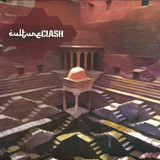
Forced to come up with a name, 'CultureClash' seemed like the obvious choice, even if the members of Awax were only creatively sparring among themselves. Along with the term 'ethno-techno', slightly dubious to a hopefully more conscious Western audience in 2017, these were the only guiding principles to the quietly ambitious project that soon combined cutting-edge machine rhythms with samples sourced from everywhere from Bolivia to Togo, and inspired by everything from Ravi Shankar's epic soundtrack to the Oscar-winning movie Ghandi, to the technical limits of their own setup requiring a dazzling degree of cut-and-paste work. Some tracks even emerged out of academic studies within the ethnomusicology department at The University of Amsterdam.
The show aired on October 2nd, 1992, recorded in one blistering take and without any rehearsals, traversing a huge variety of tempos and styles. If the performance wasn't seamless, it was undeniably thrilling, fresh and ambitious. As such, several labels, including Fernandez's aforementioned Irdial Discs expressed an interesting in commercially releasing CultureClash, while another imprint proposed a series of twelve-inches and an album. But the sheer complexity of the project meant that it never saw the light of day, while the trio embarked on different journeys ahead, both creative and personal.
Twenty five years later, and the original CultureClash lineup and founding members of The Awax Foundation provide the sound of the first release from Lost Futures. An otherworldly, ambitious and optimistic compilation, accompanied by extensive sleeve notes from the trio, CultureClash is a timeless ode to experimentation in dance music's ever-overlapping culture.
'Sounds from the Great House! Outernational Sounds proudly presents a Nimbus West spirit jazz essential: the Creative Arts Ensemble's classic debut One Step Out. Mastered at 45rpm on double vinyl for enhanced sound, this release features all tracks at full length for the first time on wax.
One of the most sought after and highly regarded titles to have appeared on Tom Albach's celebrated Nimbus West imprint, the Creative Art Ensemble's One Step Out is a timeless work of spiritualised jazz. A true gem from the Los Angeles jazz underground, the album was pianist and composer Kaeef Ruzadun Ali's first recording as leader of the Creative Arts Ensemble, the only large ensemble group that emerged directly from Horace Tapscott's legendary Pan Afrikan Peoples Arkestra community jazz group.
A Los Angeles native, Kaeef was introduced to the Tapscott circle in the late 1970s. His first experience of the Arkestra's ethos was through PAPA tenorist Michael Session, who took him to the famous 'Great House' at 2412 South Western Ave., LA - a large mansion house which members of the Arkestra had taken over as a space for communal living. Life in the Great House was a continuous stream of music, dance and community events. 'When I walked in there,' recalled Kaeef, 'it was like this whole rush came over me, just from going in the front door...It was like a very, very warm feeling of love. I went and I came out with 'Flashback of Time', and that was my first arrangement.'
Kaeef quickly became a significant contributor of compositions to the Arkestra's songbook - his piece 'New Horizon' would be recorded by Horace Tapscott for the latter's Tapscott Sessions series. But 'Flashback of Time' would eventually appear on One Step Out, played by the new group he had put together from stalwart Arkestra members. Inspired by both Tapscott's example and by the Art Ensemble of Chicago, Kaeef had wanted to follow their lead by assembling a larger unit. 'I would like to form a group that would be an extension of the Pan Afrikan Peoples Arkestra,' he told Tapscott. The group was to be known as the Creative Arts Ensemble, and One Step Out, released in 1981 by Nimbus West, was their debut.
Featuring seasoned Arkestra regulars including reedsman Dadisi Komolafe, drummer Woody 'Sonship' Theus and altoist Gary Bias, with veterans Henry 'The Skipper' Franklin on bass and George Bohannon on trombone, One Step Out is a key document of the Los Angeles radical jazz underground. Featuring the sanctified vocals of Kaeef's sister, B. J. Crowley, the album is a tour de force of spiritually energised independent jazz music. Community uplift and sacred vision straight from the Great House, back on vinyl for the first time since 1981!
Cute Heels is the solo project of Bogota´ born, experimental producer Victor Lenis. Since the early 2000's Lenis has been working on a myriad of electronic projects, including the management of the labels Black Leather Records and Romance Moderne, in his current home of Brussels. Drawing on the influences of the radical punk scene that surrounded him growing up in Columbia while nurturing his passion for synthesizers and drum machines, Lenis developed the broody, gloomy brand of electro-techno that is Cute Heels. Deemed by Juan Atkins as ''the new blood and spirit for the next step in techno music'' Cute Heels has released various digital only releases over the years, as well as his first vinyl release, an EP on Gooiland Elektro. His debut album Spiritual, rides the line between cold electro-techno and left field electronic body music. Inspired by equal parts Liaisons Dangereuses and Drexciya, Spiritual takes the listener on a journey over 8 tracks and 40 minutes of music. Listening to "Spiritual" you can see why. The songs on this full length reveal a sublime influence from Detroit techno, early Chicago house and new wave; advanced electronics for the dance floor, pumping and sophisticated. The album was recorded and mixed by Victor at Sensorium Studio in Zagreb, Croatia in November 2013. Each song has been mastered for vinyl at Fantasy Studios in Berkeley by George Horn. Each LP is packaged in a custom-made jacket by our in-house designer Eloise Leigh and incorporates the geometry of analog synthesizers and celestial rose patterns.