pre-order now18.09.2026
expected to be published on 18.09.2026
28,15 €
expected to be published on 18.09.2026

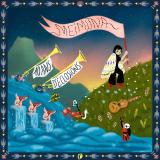
Kaiso Power is a collection of rare jazz, calypso and percussive gems from Trinidad and Tobago from the revolutionary generation of the 1970s, bringing radical new political vision and reclaiming ancient spiritual consciousness through music. At the dawn of the 70s a shift was taking place all around the world. The streets of Port of Spain thronged with Black Power marches, trade union demonstrations and Carnival protest bands - one epicentre in a growing global exchange of ideologies and strategies among Pan Africanist circles in Jamaica, Guyana, London, New York, Montreal, Lagos, Accra and beyond. And when the meetings were over, the revolution moved to the cramped secret dance halls, the Carnival fetes, the steelband yards. The music always had a sharp edge. Searing commentary has always been part of the various types of music in Trinidad, and in the absence of lyrics, the defiant use of the drum maintains the resistance, as well as the re-framing of the playing of European instruments to the needs of the message. Lancelot Layne, Delano Abdul Malik De Coteau, Andre Tanker, Clive Zanda, Mansa Musa were more than artists, they were teachers, community workers and advocates for justice. These recordings are as raw as an all-night Carnival jam, the horns loud, the percussion ringing out, the bass dripping with joy and rebellion. Under the modern influences is a solid rhythm, an unbroken connection to Africa, the songs and keys and cadences brought across the middle passage. These songs are a peep into the untapped treasures of a revolutionary generation, looking at the world with fresh eyes and believing that music was a central part of the mission to build consciousness and regain confidence.
Order now and we will order the item for you at our supplier.

With “La Fiesta Seria y Nuevas Formas de Tecnaco”, the fourth chapter in the ESTADO DE BIENESTAR series, the project continues to delve deeper into a singular sonic territory, situated at the fringes of experimental electronics and free from any aesthetic constraints, moving unapologetically between tribal dub, primitive electro, hypnotic ambient and even classical piano structures, articulating a musical discourse that is as disconcerting as it is coherent.
Most of this work emerges from the use of CV sequences which, with their distinctive human groove, trigger iconic synthesizers from different generations, giving rise to a new radical exploration of proto-electronics as an open and constantly evolving language.
Recorded almost entirely in analog, the album preserves a lo-fi aesthetic that has become one of the project’s defining characteristics.
Previously described by various international specialist media outlets as “a new genre because of its unclassifiable nature”, ESTADO DE BIENESTAR continues to develop a language of its own: one that follows no one and, in its own way, follows everyone. A sonic territory that, at Oráculo, we have chosen to call Transelectronica.
expected to be published on 14.09.2026

Texas trio Riley! channel the restless energy of Midwest emo into something raw, chaotic, and unmistakably their own on TO LIVE AND DIE IN THE AMERICAN SOUTH, their debut release for Pure Noise Records. Built on twinkly guitars, explosive hooks, and deeply personal songwriting, the EP captures the feeling of growing up isolated while searching for connection and belonging. Featuring guest appearances from Tades Sanville of Hot Mulligan, Eric Egan of Heart Attack Man, and Gabe Wood of Saturdays at Your Place, Riley! deliver a fearless and emotionally charged collection that positions them as one of emo’s most exciting new voices.
expected to be published on 11.09.2026
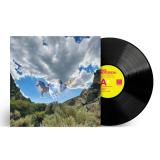
Der Progressive-Rock- und Jazz-Fusion-Künstler Nate Mercereau präsentiert gemeinsam mit Künstlern wie Carlos Niño, Aaron Shaw und Deantoni Parks sein neuestes Album „Fantastic Thoughts“. Sein maximalistisches, aufrichtiges und nicht selten verletzliches Album fordert den Hörer heraus: „Was wäre, wenn du es tun würdest?“
expected to be published on 11.09.2026

Love as Art, Love under the Patriarchy, Love as a political and radical act - in short 'The Fatal Flaw' examines Love from a deeper and philosophical perspective. Even the songs that aren't about Love, also are. They are about the absence of love, and what happens in those spaces, so they are songs about the necessity of love, and the consequences of its absences.
expected to be published on 04.09.2026

Across two song cycles separated by nearly four decades – Richard Wagner’s »Fünf Gedichte für eine Frauenstimme« (the »Wesendonck Lieder«) and Johannes Brahms’ late »Vier ernste Gesänge« (»Four Serious Songs«) – Wagner’s songs, written under the spell of his relationship with Mathilde Wesendonck and already pointing towards »Tristan und Isolde«, and Brahms’ final composition, which gives the album its name and was shaped by grief, illness, and meditations on biblical texts, circle the same existential questions.
Desire and mortality, ecstasy and resignation appear less as opposites than as mirrored states. The voices of Wesendonck’s poetry seem to answer the solemn reflections of Ecclesiastes and Corinthians, revealing an unexpected dialogue across time.
Without seeking historical authenticity or revisionist spectacle, »Serious Songs« listens for what still resonates beneath these works: the suspended moment where love, loss, and transcendence become indistinguishable. The harp assumes the role of the piano as the foundation, pulse, and emotional compass. The vocal line, liberated from classical convention, inhabits a contemporary expressive space without severing its bond to the original scores. It is Romantic music viewed through the acoustics of the present. The project emerged from a moment of professional disillusionment familiar to many classically trained musicians. This led to a confrontation with some of classical music’s traditional flaws that became an invitation to reimagine it.
Sissi Rada approaches the spinal properties of the Romantic Lieder, fragile enough to transform and resilient enough to survive. Intimate, lucid, and quietly radical.
expected to be published on 04.09.2026

That sound reaches a new height with her fourth solo record, Fireflies. Recorded with producer Tony Braunagel in Nicole's hometown of Kansas City, it's not just a record about roots -- it's about the growth that occurs when reflection, resilience, and real artistry all combine. From nostalgic tracks like "Take Me Back" (featuring North Mississippi Allstars' Luther Dickinson) to empowered anthems like "Gaslight" and "Tug of War," Fireflies burns bright, deepening Danielle Nicole's exploration into soul, R&B, and the rich tapestry of American roots music.
expected to be published on 28.08.2026
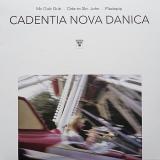
John Tchicai (1936 – 2012) was one of the most important free improvising saxophonists of the 20th Century: an artist of rare vision and aptitude whose lines soared and stood out even in the most hallowed company, and whose body of work as a leader / composer is among the most singular and distinct within the entire canon of that music. But Tchicai’s importance doesn’t end there. Born in Copenhagen, Denmark, to a Danish mother and a Congolese father, his life and career represent a crucial bridge between the European and American traditions of free jazz. Initially trained on violin as a child, Tchicai shifted his focus to the clarinet and alto saxophone during his mid-teens, and began touring Europe as a professional musician by his early 20s, which landed him at a socialist youth festival in Helsinki, Finland, where he met the trumpeter Bill Dixon and saxophonist Archie Shepp. Impressed by what they heard, Dixon and Shepp encouraged the young saxophonist to move to New York, and in so doing changed the history of jazz forever.
Tchicai’s arrival in New York marks the rare occurrence of a European player joining the intimate circle that was first wave of American free jazz. Following his landing in the city in November of 1962, in addition to regularly sitting in with Don Cherry’s group, Tchicai began playing with Bill Dixon's band alongside Archie Shepp and Roswell Rudd, forming the nucleus of the foundation of the New York Contemporary Five - one of the most important groups of the era - which counted Tchicai, Shepp, Cherry, Don Moore, and J. C. Moses as its members. From the ashes of this group, Tchicai would go on to found the legendary ensemble, New York Art Quartet, with Roswell Rudd, Milford Graves, and Lewis Worrell, as well as working within Albert Ayler's band, recording “New York Eye and Ear Control”, Shepp’s band, recording “Four for Trane”, the ensemble that recorded John Coltrane's “Ascension”, and the Jazz Composer's “Orchestra”.
By the time he decided to return to Denmark in 1966, had Tchicai chosen to record little else, his legacy within the history of music would have been ensured. Incredibly ambitious, his arrival home marked the beginning of an incredible period of activity which saw him radically expanding his creative explorations, which by the end of the decade would include becoming a founding member of Amsterdam's Instant Composers Pool and helping to record John Lennon and Yoko Ono's “Unfinished Music No.2: Life with the Lions”. This, however, was proceeded the formation of a new orchestra, Cadentia Nova Danica, led by Tchicai, dedicated to radical cross-disciplinary exploration. Remaining together between 1966 and 1971, the group and its shifting membership regularly fell into collaboration with artists and composers, notably Musica Elettronica Viva, who existed beyond the realms of jazz, as well as participating within multi-media events that incorporated the visual realms.
Cadentia Nova Danica’s only two LPs - “Cadentia Nova Danica” (Polydor, 1968), and “Afrodisiaca” (MPS, 1969) - are effectively Tchicai recorded efforts as a leader, and are legendary. There’s little mystery, once heard, why the later landed on Thurston Moore’s iconic “Top Ten from the Free Jazz Underground”, published by Grand Royal in 1996. Sadly, despite playing extensively during their five year run, with exception of a CD documenting a performance at Jazzhus Montmartre, in 1966, until now there has been no other publicly available recordings that allow us to capture a glimpse of this astounding band at work. Alga Marghen / Formalibera’s vinyl pressing of a never before released body of recordings, made in Copenhagen between 1969 and 1970, changes that in the most exciting of ways.
Comprising three pieces - “Mc Gub Gub, (I–VIII)”; “Ode to Skt. John”; and “Pladepip” - the material on this stunning LP comes from two specific events. The first, which encompasses the first side, “Mc Gub Gub, (I–VIII)” was recorded by Cadentia Nova Danica - in this instance, Tchicai, Sune Weimar, Theo Rahbek, Christian Kyhl, Niels Holt, Jørgen Thorup, Michael Schou, Morgens Bollerup, Allan Gregersen, Ole Matthiessen, Pierre Dørge, Willy Jaegert, Anthony Barnett, and Jon Finsen - on May 29th, 1969, at the ABC-Theatre in Copenhagen. Penned by Tchicai, the piece is a sprawling, evolutionary composition at the outer reaches of free jazz, rooted in large blocks of colliding tonality and rhythm - a sound only accessible to larger ensembles - that push territories explored by Charles Mingus to previously unimagined heights, threaded by moments of hard blown fire. Writhing like a stormy sea - skronking and devilish - “Mc Gub Gub, (I–VIII)” is a work of profound complexity that singlehandedly illuminates not only Tchicai’s singular vision as a composer, but also the power and uniqueness of Cadentia Nova Danica during the band’s most vital period.
The two pieces - “Ode to Skt. John” and “Pladepip” - taking up the flip side, were recorded on February 21st, 1970, at the Danish Broadcasting Corporation’s Radio House, and are the outcome of Cadentia Nova Danica’s extended residency there between 1969 and 1970. In many ways, these two recordings offer some of the best insights into the broad collaborative approaches that defined the band, in this case encountering them working with Danish experimental composer, Svend Erik Werner, who was among the earliest in his country to embrace stylistic pluralism and the use historical forms within a modern context. “Ode to Skt. John” - based on aspects of Gregorian music - was penned by Werner, incorporating heady improvisation by the members of Cadentia Nova Danica, this time made up by Tchicai, Sune Weimar, Hugh Steinmetz, Theo Rahbek, Christian Kyhl, Michael Schou, Morgens Bollerup, Ole Kühl, Torben Enghoff, Mauritz Tchikai, Kjeld Ipsen, Willy Jaegert, Ole Matthiessen, Ole Thilo, Pierre Dørge, Steffen Andersen, Jon Finse, and Clause Bøje. The piece is a fascinating binary of the composed and improvised, utilising the band’s large scale to introduce a remarkable sound within its slow progressions and furious, driving free moments, in this incredible meeting of worlds.
The album’s final piece, “Pladepip”, is arguably its most historically significant: an entirely singular piece, unlike anything in Tchicai’s recorded canon as his foray into musique concréte. Drawing upon two recordings of full-band improvisations by Cadentia Nova Danica, for its creation Tchicai also gouged the surfaces of 78rpm records in his collection to skip and create repeated phrases and patterns, creating a stunning sound collage of hard angles and abrupt phrase, that creates a striking counterpoint to the band’s flowing improvisations that bookend those passages. The result is an engrossing listen and easily one of the most unique and culturally important gestures in the entire history of musique concréte.
Truly incredible, Alga Marghen / Formalibera’s vinyl pressing of this never before released body of recordings, made by John Tchicai’s Cadentia Nova Danica, in Copenhagen between 1969 and 1970, offers an unprecedented window into one of the most important groups working in Europe during that period, significantly expanding their rare and slim discography to date. Accompanied by extensive exploratory liner notes by veteran jazz writer, Ed Hazell, this is easily one of the most historically important archival releases of the year and is impossible to recommend enough. Absolutely essential on every count.
expected to be published on 28.08.2026
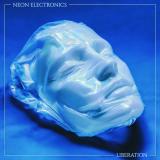
Neon Electronics presents “Liberation”, the final chapter of the project born as the successor to The Neon Judgement—an essential vehicle for Dirk Da Davo, an artist who helped lay the foundations of EBM and post-punk. As co-founder of The Neon Judgement, he forged a sonic language that continues to resonate across generations. With “Liberation”, he brings Neon Electronics to a close, marking the end of this era with clarity and intent.
Joined by longtime collaborators Glenn Keteleer (Radical G) and Pieter-Jan Theunis, this release captures the essence of his most vital years. It distills the spirit of the ’80s and early ’90s into a sequence of tracks that unfold like a collection of undeniable hits—direct, timeless, and uncompromising.
The record reaches its final form with remixes by Ancient Methods, a leading force in industrial techno, and Patrick Codenys of Front 242—one of the few acts whose legacy stands alongside Dirk’s own.
For the label, presenting this final work is both a privilege and a responsibility: a closing statement from one of the true architects of the sound itself, and the definitive work of Neon Electronics as a project.
Order now and we will order the item for you at our supplier.

Since their debut, Rising Insane have evolved from a fierce independent quintet into a global heavy-hitter, amassing millions of streams across their previous catalog. Their journey to the top has been defined by elite company, having shared stages with genre icons like Papa Roach, Of Mice & Men, and Stray From the Path, transforming them into an unstoppable live force. This momentum is now reaching a fever pitch with their upcoming album, Deathrace. The record includes the standout track "Good Enough" (feat. Matt Flood of Caskets), which proved the band's immense reach by surpassing one million streams right at its release, alongside the dark and mature "Error" (feat. Steven Jones of Bleed From Within). Fans can also look forward to explosive new collaborations on the album with ACCVSED and David Schneider (The Butcher Sisters). Deathrace marks the band’s most radical chapter yet, stripping away polished refinement in favor of raw power and primal riffs. It is a limit-breaking statement that finally pushes their sound to the absolute limit - Rising Insane have never stood still, but now they are finally flooring it.
expected to be published on 21.08.2026

Geometrik Records is delighted to once again play a part in the exclusive recovery of Marcelo Expósito's previously unpublished work, which had been lost since its original creation in the 1980s. Marcelo Expósito is one of Spain's most internationally renowned contemporary artists, whose work is regularly exhibited across Europe and Latin America. He began his career at a very young age during the era of sound experimentation that flourished in the wake of so-called industrial culture, which found particularly fertile ground in Spain. As co-editor of legendary publications such as the fanzine Experiencias (1983) and, above all, the cassette-fanzine publisher Necronomicón (1983-1987), which operated on an international scale, Marcelo Expósito has, in recent years, been reconstructing those of his sound experiments that had been lost for decades. The album we are now presenting brings together material previously released on cassettes as EGK023 in a very limited edition. These tracks have now been remastered and expanded to complete this record, which noise musician Mattin has described as "secret recordings that constitute a gem from the rich Spanish underground of the 1980s". In the words of Luis Alvarado, editor of the Peruvian label Buh Records, this album allows us to appreciate how "Expósito developed a style of his own that understood sound as a malleable material open to chance. The recordings gathered on The Lost Tapes reveal an artist who moves as much through territories of unsettling textures and atmospheres as through zones of abstraction and radical noise". Influenced by the early work of figures such as Maurizio Bianchi, Nurse With Wound, and La Otra Cara de un Jardín, the release of this album provides a key piece in reconstructing the genealogical puzzle of Spanish experimental music. This carefully curated edition-in Spanish and English-includes a lengthy essay by Marcelo Expósito on the creative processes behind his work and the historical context of the industrial culture of the 1970s and 1980s, as well as extensive liner notes contributed by Vittore Baroni, editor of the legendary Italian label Trax; Francisco Felipe, co-founder of the Ars Sonora programme on Radio Clásica (Radio Nacional de España) and one of the most active names on the Spanish experimental scene of the 1980s; Mattin and Susana López (Susan Drone), key figures in the sound experimentation of the generation that emerged in the 2000s; as well as the aforementioned Luis Alvarado.
expected to be published on 21.08.2026

Klaus Kotai, a Viennese who had made Berlin his home, found a receptive audience in Cologne as early as the mid-90s with his records on Elektro Music Department. This club and label conglomerate, run with co-producer and DJ Mo Loschelder and the artist Daniel Pflumm, was working towards a radical streamlining of techno. A certain kinship with the pre-Kompakt sound of Cologne could not be denied. They exchanged greetings from afar.
Then came the 2000s, an exciting era for club music, rich in innovation and characterised above all by the burgeoning genres of minimal and electro clash. In 2002, Kotai’s ‘Sucker DJ’ was released, featuring the brilliant remix by Marcin “Highfish” Kozlowski, on WMF Records – the label belonging to the eponymous cult Berlin club. A true hit that struck a perfect balance between both worlds and was played across genres by virtually every DJ.
Exactly 20 years after the last re-release on Elektro Music Department (also distributed by Kompakt at the time), it’s now time for ‘Sucker DJ’ to make a comeback. Judging by Marco Cariolaa’s ‘Cringe Vibes’, it’s needed more urgently than ever.
Remastered, with new artwork by Daniel Pflumm, and still “fucking up your place”.
Der Wiener Wahlberliner Klaus Kotai stiess in Köln schon Mitte der 90er Jahre mit seinen Platten auf Elektro Music Department auf offene Ohren. Dieses mit Co-Produzentin & DJ Mo Loschelder sowie dem Künstler Daniel Pflumm betriebene Club-/Label-Konglomerat arbeitete sich an einer radikalen Entschlackung des Techno ab. Eine gewisse Seelenverwandtschaft zum Kölner Prä-Kompakt-Sound war nicht von der Hand zu weisen. Man grüßte sich aus der Ferne.
Dann kamen die 2000er, eine aufregende, an Innovationen nicht arme Ära für Clubmusik, die vor allem von den aufblühenden Genres Minimal und Electro Clash geprägt war. Im Jahr 20 02 kam dann Kotais ‘Sucker DJ’ mit dem kongenialen Marcin “Highfish” Kozlowski Remix auf dem zum gleichnamigen Berliner Kult-Club gehörenden Label WMF Rec ords heraus. Ein echter Konsenshit, der äußerst komfortabel zwischen beiden Welten saß und genreübergreifend von nahezu allen DJs gespielt wurde.
Genau 20 Jahre nach der letzten Wiederveröffentlichung auf Elektro Music Department (damals ebenfalls im Kompakt Vertrieb) ist es nun an der Zeit, dass der ‘Sucker DJ’ zurückkommt. Wenn man sich Marco Cariolaa’s Cringe Vibes so anschaut, wird er dringender gebraucht denn je.
Neu gemastert, mit neuem Artwork von Daniel Pflumm und immer noch “fucking up your place”.

This special collector's edition is available in a strictly limited run of only 250 copies. The vinyl version is pressed on transparent vinyl and features metallic paper packaging along with a printed inner sleeve made from dyed paper stock. The entire release was designed by the exceptionally creative graphic designer Weronika Lipniewska, resulting in an edition that is as captivating visually as it is musically.
EY AY (Deluxe Slay Jazz) is the second album by Piotr Checki - an artist who, following the intimate, home-recorded debut PE, returns with something radically different: a living, spontaneous work captured in real time. If PE was a personal document of moments enclosed within a controlled studio environment, EY AY is its opposite - a sonic organism that breathes, pulses, and unfolds in the here and now.
The album was created in just two weeks during a period of intense inspiration. Ch?cki developed a series of compositional sketches which were then expanded together with drummer Tymek Papior and pianist Marcel Balinski during a single six-hour recording session. Crucially, the entire album was recorded as one-take performances. No overdubs, no edits, no second attempts. It is a document of pure presence - a moment that can never be repeated.
The subtitle Deluxe Slay Jazz carries an additional personal layer of meaning. It serves as a subtle yet significant nod to one of Checki's greatest passions: ski jumping. The initials "DSJ" may also evoke the cult classic ski-jumping computer game released in 1999, beloved by an entire generation of players.
With EY AY, Checki redefines his approach to music-making. Instead of constructing rigid structures, he places trust in the process. Instead of production, interaction. Instead of perfection, authenticity. This is music that does not strive to be finished - it simply exists.
Order now and we will order the item for you at our supplier.

Second Skin is Nene H's declaration of liberated identity. Across nine tracks, Nene traces the metamorphosis from conformity to authenticity that unfolds after a breakup. They trace a step-by-step transformation: the shedding of imposed narratives and the layering of a new, liberated self. The result is a sonic diary of emancipation, where musical ideas move through noise, South West Asian modalities, trap, future bass, house, trance, minimal and deconstructed club music fusing and mutating freely. With their second album, Second Skin, Berlin-based artist Nene H deepens their commitment to radical honesty through sound. Where their debut was a tribute to their late father and a processing of personal grief, the second album turns inward toward identity, the fracturing and reassembling of the self that follows the dissolution of a long-term relationship. They carefully infuse shattered Southwest Asian motifs with their vocals. Vocals appear and disappear like traces of memory. The opening track, Where Was I, continues the story of their previous album Ali. From there, the question "where was I?" transforms into an existential inquiry. The starting point of both their personal journey and the journey of this album. After stepping through that door, the album unfolds into a deliberate balance: four deconstructed pieces and four more straightforward 4/4-driven tracks. The sibling tracks on A2-A3 and B3-B4 share the same DNA, though their destinies are not the same. Every element is placed with intention; every sound carries its own narrative thread. Each track gestures toward a different genre, a different world, yet together they form a coherent, flowing story. It's the story of closure and liberation.
expected to be published on 27.07.2026

60 Years celebrates six decades of of pianist and composer Horace Tapscotts radical and uplifting musical and social vision. Digging deep into the Arkestra"s archives, the album gathers breath-taking unreleased material, including previously unheard compositions, from every stage of the band"s development - from Tapscott"s earliest iterations of the group, recording at home in 1961, to the current incarnation of the band, led by the new generation of young musicians. Remastered from archival sources by the Arkestra"s longstanding engineer Wayne Peet, 60 Years is presented by The Village, a label operated by members of the Pan Afrikan Peoples Arkestra. With archival photographs documenting the Arkestra"s history, the album arrives with liner notes featuring track-by-track commentary from Arkestra members past and present. In the words of Mekala Session, "This release is the culmination of 60 years of Black history through sound". South Central"s musical colossus is still very much awake, and 60 Years reveals the secrets of the Ark.
expected to be published on 24.07.2026
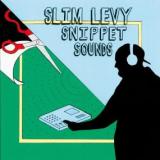
Super-cosmic Dub album by bass & keys wizard Slim Levy, full of song writing magic and it’s very own cassette tape mojo.
Fourteen beautifully messy dub tracks, psychedelic floor movers and short curveball riddims, inspired by Lee Perry’s radical mixing desk treatment on “Dub Revolution” but infused with the musicality of the “Pet Sounds” album by the Beach Boys.
Initially a professional bassist, Slim Levy fell in love with the golden age of Jamaican music of the 60s and 70s after a formative tour alongside the legendary Lee “Scratch” Perry.
In 2020 he launched his career as a producer. At his home studio in Strasbourg / France he is always on the search for sound artifacts and magic imperfections, shaping his distinct sound.
Order now and we will order the item for you at our supplier.

Consolidated, the political dance/industrial music band from the early 90ties joined again for a studio session in San Francisco last summer, resulting in a new album. 'We're Already There'. The first release on Consolidated's own label 'The End Of Records'. What else to expect, the new recordings are an innovating mix of industrial, to hip-hop, to rock and funk with mixtures of live instruments and electronics. Topped with left political activism and politically radical lyrics address issues such as America, Covid and ecocide with song The Flood, demand *'Free Music, Stop America'* with Musica Sin Frontieras & welcome guest vocalist GRETA THUNBERG on the track The 'ol Mass Extinction Blues. The album starts in 'traditional Consolidatedgroove' with the song 'Capitalism A.F.', a mix of beats, industrial sounds and hiphop. Followed by funkypop songs, danceable industrial jams, techno beats, reggae and blues influences plus a remarkable noise track. Main musicians are Adam Sherburne (guitar/vocals) and Mark Pistel (synths/beats) backed by Lynn Farmer (Meat Beat Manifesto) on drums, who replaces the original drummer Phil Steir. The complete album is recorded, mixed and mastered by Mark Pistel at 'Room 5' in San Francisco. The cover shows art paintings from Ayelet Hay (front) and William Kendall (back). On 'We're Already There' Consolidated plays more music than ever. "I have zero interest in being in a band, especially my own_" "I had to develop a different way to be involved with music for aesthetic and mental health reasons_" "FREE MUSIC! is not to the detriment of artists, it's literally the end of artists-as anyone perceives them in the last 500 years" -Adam Sherburne - Consolidated are known for their live performances, in which a microphone is passed among audience members to discuss, rebut, argue or elaborate on song topics. Consolidated: Adam Sherburne & Mark Pistel.
expected to be published on 24.07.2026

Lorelle Meets The Obsolete return with their seventh album. It's the Mexican duo's finest, most ferocious work to date which sees them turbo-charge their psychedelic post-punk with a new electronic engine. Mixed by Antoine Goulet (live sound engineer for SUUNS) and mastered by Mikey Young (Eddy Current Suppression Ring), the most obvious comparison in terms of mood and mode is Primal Scream's classic XTRMNTR, another record that processed personal and political conflicts and spat them out as distorted dance music. It shows the influence of the duo's DJ sets and last year's radical Remezcla remix collection on their way of thinking and why they are now namechecking the likes of Moor Mother, MF DOOM, Patrick Cowley, The Bug, Paula Garcés, Phil Kieran, Coby Sey, Run the Jewels and Anadol."Playing other artists' music is different," says Lorena Quintanilla about the change of direction towards the dancefloor. "You're not just listening, you're watching how energy flows and how it affects other people. It gives you the chance to witness what moves other bodies." And Corporal, as the title suggests, is all about the body. "The body is what carries the weight of stress, exhaustion, sadness. It's the body that the system breaks first," explains Lorena. "Unintentionally, while composing the album, our bodies were seeking joy in the songs. Reconnecting with pleasure became a way to open new dimensions - a way to escape, yet remain present." The theme is carried over into the lyrics which, according to Lorena, variously refer to "the bodies that disappear, the abused bodies, the bodies we miss, the bodies that march together in protest, the bodies that are being controlled".
Order now and we will order the item for you at our supplier.

Standrard[22,65 €]
The 12th studio album from Death Metal Veterans, JUNGLE ROT. DAVE MATRISE (Vocals/Guitars): "Let's start off by saying what an amazing accomplishment it is to hit 12 releases in my career. Never would I think I'd still be doing this 30+ years later. I guess be careful what you wish for I'm very grateful to all of our fans that have supported us for so many years and for never giving up on us. To my bandmates for all of their hard work and dedication to me and JRot over all these year’s. Cruel Face Of War will not disappoint. It's full of crushing grooves and violent hooks that will surely break anyone’s neck. We have stood the test of time. We are still here playing our trademark style of Oldschool Death Metal that has carved a legendary name for us in the underground scene today." Produced by Chris Djuricic at Bell City Sound Company. Mixed and Mastered by Dan Swano at Unisound Studio. Artwork and design by Gyula Havancsak
expected to be published on 17.07.2026

2026 Repress
The Architects of Shadows explores the volatile undercurrents shaping today's polarized world, where extremes on all sides vie for influence and control. Against a backdrop of rising nationalism, digital echo chambers, and deepening distrust, each track captures a stage in the gradual radicalization of society. Through dark, immersive soundscapes, the album delves into how unseen architects exploit fear, amplify division, and pull the strings of public sentiment, leading society toward ideological extremes. The Architects of Shadows invites listeners to confront the forces behind the fracturing of Western societies in an era marked by profound political and cultural polarization.

40 years after its creation, MOß GARTEN – Sekvensstyrd 1981–1986 arrives as a compelling double vinyl LP, diving deep into the early Swedish DIY electronic scene. Inspired by pioneers such as Kraftwerk, Cabaret Voltaire, John Foxx, and The Human League, Mikael Isaksson developed a distinct sound situated between minimal electronics, industrial, synth wave, and experimental sound art. At its core was the sequencer: pulsing, programmed structures forming the backbone of dense, often hypnotic compositions.
Working initially with his cousin Jan or friend Thomas and later evolving into a largely one-man project, recordings were made on cassette tapes and in improvised studios—often under time pressure, frequently recorded and mixed within just a few hours. These very limitations gave the tracks their raw and immediate character. Pieces like “Moderna Kvinnor,” “Soon Soon,” “Ensam,” and “Music From The Border” exemplify the uncompromising, sequence-driven (“sekvensstyrd”) approach that defined this era.
Using an arsenal of analog synthesizers, early sequencers, and drum machines, the project created music that feels at once cold, mechanical, and deeply emotional. Sekvenssytrd 1981–1986 is more than a collection of archival recordings—it is a vivid document of a time when electronic music was conceived as a radical and deeply personal form of expression.
Mastered by Martin Bowes. Graphic design by Steve Lippert.
2LP features: limited to approx. 200 copies, solid moss green vinyl, gatefold outer sleeve gloss lamination, polylined inner sleeves, hand-numbered silver foil paper insert with lyrics, download coupon)
expected to be published on 10.07.2026

Between her elaborately conceptual Drag City singer-songwriter albums and celebrated soundtracks for Ryusuke Hamaguchi, in recent years Eiko Ishibashi has quietly self-released a significant body of solo and collaborative work on her Bandcamp page. At times resembling her solo live performances in their organic interweaving of instrumental, electronic, and concrete sounds, each of these less feted online releases offers a snapshot of the experiments always underway at Atelier Eiko. Some Fine Legacy is pleased to announce a vinyl edition of one of the most intriguing of these works, Gasping_Sighing_Sobbing, made in collaboration with Hiroshi Minami and first released in 2021.
Active since the 1980s, Hiroshi Minami is a key figure in the Tokyo jazz scene, as well as a respected memoirist. Devoted to the great standards, which he explores with an Evans-ish delicacy of touch and Impressionist harmonic extensions, he is equally at home working up variations on tunes by Ryuichi Sakomoto and The Beatles or experimenting with ambient electronics. A single note from his piano is the first thing we hear on Gasping_Sighing_Sobbing, the space left by its decay unexpectedly filled by a synth arpeggio that quickly fades away as the piano returns with a balladic chord sequence.
Like her frequent collaborator Jim O’Rourke, Ishibashi possesses the virtue of patience, recognising the beauty of lingering at length in a single musical environment. Throughout its 40-minute duration, Gasping_Sighing_Sobbing remains lost in this maze of obstructed and fragmented piano balladry. The musical surface is in one respect placid, but close listening reveals dynamics and processes that are deeply strange: the resonance of a chord dying away is frozen, expanding to become a cloud that suddenly makes way for the piano’s return; or the piano is looped into a ticking glitch or a time-stretched shudder, momentarily sinking under lapping waves, distant bells, and snatches of conversation. Ishibashi’s subtle vocals and synths colour the piano passages like views through distorted glass. The metaphor of cinéma pour l’oreille is perhaps overused in discussions of the musique concrète tradition, but here the visual associations are almost unavoidable: especially when Daisuke Ijichi joins on upright bass, it’s hard to shake the cinematic image of a smoky jazz bar—shown in a sequence, perhaps, that cuts repeatedly to the musicians’ and audience’s thoughts and dreams. Like much of Ishibashi’s work, this collaboration with Hiroshi Minami is inconspicuously radical, shaped at the deepest level by electro-acoustic procedures even as it luxuriates in melancholic beauty.
expected to be published on 10.07.2026

Ondanaconda does not compose with the jaw harp, but through it. For their self-titled debut album, the quartet turns this lamellophone, often perceived as archaic, into the record"s sole sound source. Found for centuries across continents, from Asia to Europe, the jaw harp is played against the teeth, using the mouth as a resonating chamber, shaping sound through breath and bodily movement. Here, amplified, prepared and sometimes pushed to its limits, it becomes percussion, bass, drone and texture - a true mouth synthesizer with vast possibilities. Between performance and trance, Ondanaconda crafts an unidentified sonic object, somewhere between collective ritual and raw electroacoustic experiment. Each piece emerges from specific combinations of instruments, exploring timbral affinities and rhythmic or harmonic potentials, while leaving room for drift and improvisation. Repetition acts as an unstable engine, bending patterns until they morph into something else. Together, Laurent Bruttin, Antoine Läng, John Menoud and Daniel Zea weave a dense, shifting mass where individual voices dissolve into an organic, almost hallucinatory polyphony. Conceived as a continuum, the album unfolds as a hypnotic flow, a physical and immersive music that moves from mouths to bodies, saturating the surrounding space. A radical UFO, at the crossroads of concert, performance and sound installation.
expected to be published on 03.07.2026

NU-S3RVO Vol. 2 is the second compilation released by NU-S3RVO. In this release, we continue our exploration of the sounds of modern East Asia, shifting our focus toward female creators within the local scene. This album features works from seven producers based in Beijing, Shanghai, Hong Kong, Guangzhou, and Chengdu, spanning genres from Ambient and Bass to IDM and Techno.
The juxtaposition of “Eastern” and “Female” is not intended to annotate a specific identity, but rather to present an entirely autonomous field. For too long, the “East” has been constructed as a feminine, mysterious, and sensory-indulgent mirror of the “Other.” Such aesthetic norms act not only as gendered shackles but as extensions of colonial logic, forcing both women and the East to share a fate of being “spectacularized” for the gaze. Electronic music, as a creative medium, derives its radical freedom precisely from its departure from this destiny of “spectacle.” It represents the oscillator’s transcendence of physical acoustics and functions as a liberatory technology, offering creators a sanctuary to dismantle traditional constraints and reconstruct the self. In fact, since the inception of modern sound, women have been at the very core of inventing and defining the technologies, interfaces, and expressive techniques of the craft.
Stripping away the romanticized and semioticized cultural shells, each local artist in this compilation is a master of diverse technical crafts. Through their unique logic and emotional resonance, we aim to establish a decentralized acoustic language within the fissures of modern civilization.
Order now and we will order the item for you at our supplier.

Der weltweite Popstar Dua Lipa kündigt „Dua Lipa (Live From Mexico)“ an, ein brandneues Live-Album,
das während ihrer drei ausverkauften Konzerte im Estadio GNP Seguros in Mexiko-Stadt aufgenommen
wurde. „Dua Lipa (Live From Mexico)“ entstand beim grandiosen Abschluss der „The Radical Optimism
Tour“ und enthält ein Duett mit Fher Olvera von der Band Maná. Dieser Auftritt war Teil der Show, in der
Dua für jede Stadt, die sie besuchte, eigens zusammengestellte Coverversionen präsentierte. Die „Radical
Optimism Tour“ gipfelte in 92 Shows auf fünf Kontinenten, darunter zwei aufeinanderfolgende ausverkaufte
Termine im Wembley-Stadion, wobei während der weltweiten Tour insgesamt über 1,75 Millionen Tickets
verkauft wurden.
expected to be published on 26.06.2026

For nearly four decades, since its founding during the mid 1980s, the Belgian imprint, Sub Rosa, has continuously plumbed the depths of numerous, radical creative histories, assembling a catalog of releases that has almost no equivalent, while remaining nearly impossible to nail down. That said, for most of its run, Sub Rosa has been primarily recognized for its rigorous explorations of the lesser explored shadows of experimental sound practice (sound-art, sound-poetry, early electronic and electroacoustic music, free-improvisation, etc.), delivering a remarkable body of artifacts that have collectively helped to rewrite history in their wake. While it's always been impossible to anticipate where the label might take us next, threading their catalog are plenty of releases that throw further wrenches in the cogs, expanding our understanding of what they pursue, as in the case of a handful of titles, appearing as early as the 1980s, dedicated to ethnographic field-recordings from various parts of the world. Among the most striking and celebrated of these was 2017's Ethiopian Urban And Tribal Music: Mindanoo Mistiru / Gold From Wax, comprising an astounding body of recordings made by Ragnar Johnson and Ralph Harrisson in Ethiopia during 1971, reissuing material originally released by Lyrichord the following year. Now, Sub Rosa returns to the incredible work embarked upon by the pair and captured on that same trip with Ethiopian Musics 1971, comprising the recordings originally released by Ocora shortly after their completion, expanded in this edition to include an entire disc of never before released music. Widely regarded as some of the most important field-recordings ever made of indigenous Ethiopian folk music (as captivating and intoxicating as they are revelatory: providing insights into the roots of the country's singular traditions of popular music and jazz that have come to be celebrated the world over), this incredible collection is issued by Sub Rosa in a beautifully produced 2LP edition, complemented by a four page insert providing detailed descriptions of each song, as well as notes by the ethnomusicologists and recordists, as well as a 2CD edition, with a twelve page booklet. Insanely good and absolutely essential for any fan of field-recording, ethnomusicology, the music of Ethiopia, or the label's mission at large. Once again, Sub Rosa has defied our expectations and delivered a remarkably important intervention in the history of recorded sound.
Located in the Horn of Africa region of East Africa, few cultures are distinctly singular, while being so diverse (containing 80 distinct ethnic groups who speak 70 languages and 200 dialects) as that of Ethiopia. The home to some of the oldest surviving sects of Judaism, Christianity, and Islam (each contributing important aspects of its collective cultural body), particularly the country's culinary and musical traditions have become celebrated the world over, and (generally speaking) feel entirely independent of those of its neighbors. Given this, it's unsurprising that, during the summer of 1971, the young ethnographer, Ragnar Johnson, accompanied by Ralph Harrisson, traveled to Ethiopia to begin his brief career as a field recording ethnomusicologist, capturing material on reels of magnetic tape that would be subsequently released across three LPs for Lyrichord and Ocora, respectively, coming to form a cornerstone of documentation and study of the country's many indigenous musical traditions, as well as providing wide, global access to them for the first time. While Johnson's recording career was relatively brief, ending toward the end of the decade when he began to focus more on teaching in UK universities, with a focus on the anthropology of art and social anthropology, his impact on the field was lasting. Between 1971 and 1979, in addition to those he made in Ethiopia, he made hugely significant recordings in Yemen (also issued by Lyrichord before being reissued by Sub Rosa) and Papua New Guinea, which were originally released by David Toop's Quartz Publications to wide celebration, before being revisited by Ideologic Organ in 2023.
While it's worth noting that commercial releases of ethnomusicological recordings by labels like Folkways, Lyrichord, and Ocora were still in their relatively early days when he entered the field, Johnson's recordings quickly stood apart for their vivid qualities and clarity of space, allowing them to stand the test of time. As he later stated: "I used a Uher Report L stereo tape recorder, BASF quarter inch tapes at a recording speed of seven and a half inches per second with two directional microphones mounted to record an isosceles triangle of stereo sound," he reveals. "The location of the microphones and musicians was critical. The musicians were fully informed of all aspects of the recording process."
Johnson's recordings are extremely vivid, there is a clear sense of space and the cries of the flutes exist across the entire stereo field. It's a reflection of Johnson's skill as a field recordist that his recordings continue to be reissued over forty years later. "I used a Uher Report L stereo tape recorder, BASF quarter inch tapes at a recording speed of seven and a half inches per second with two directional microphones mounted to record an isosceles triangle of stereo sound," he reveals. "The location of the microphones and musicians was critical. The musicians were fully informed of all aspects of the recording process… I used to enjoy being in the moment and hearing something wonderful despite the stress of the vigilance required to ensure that the recordings were accomplished according to plan. The responsibility is to record and document the music as effectively as possible so that it has been preserved for posterity. It is better to actually record music than to sit in a seminar room debating the ethics of recording music." It is this very ethos and sense of clarity that can be encountered across the length of Ethiopian Musics 1971.
For the sake of clarity, the two LPs of material that comprise Ethiopian Musics 1971 should be regarded as a single body of recordings alongside those made in Ethiopia by Ragnar Johnson and Ralph Harrisson during the summer of 1971 (previously issued by Lyrichord and reissued by Sub Rosa), and as two that have, until now, remained historically distinct. The first LP gathers that material released by Ocora during the early 1970s on Musiques Ethiopiennes, while the second comprises (as far as we can tell) twelve never before issued recordings, expanding the journey and making this the definitive edition of the release with its incredible total of 23 recordings of songs, allowing it ever greater scope to achieve the recordists' modus operandi of capturing the broadest and most diverse cross section of Ethiopia's many musical cultures, ranging from different forms of urban music captured in Addis Ababa, documenting largely orally transmitted idioms within which lyrical content is given greater emphasis than the instrumental components (played on masenko fiddles, craar and bagana lyres, washint flutes and kabaro drums), to folk idioms hailing from the Danakil desert and the border regions with Sudan and Kenya. There are songs sung and played in bars, divination chants, laments, dances, Christian songs, and Amharic sung poetry, to only begin to scratch the surface.
Ethiopian Musics 1971 is one of those rare albums where each musical moment is pure, intoxicating gold, while also being greater through the sum of its parts. There are the many songs, forming a rich tapestry of remarkable range across the respective two LPs/CDs (moments that wondrously flirt with sonic abstraction; hypnotic rhythms; pulsing chant; melodies that, in structural arrangement and tonal combination, help us reframe how such a thing might be understood, and a great deal more), each imbued with a remarkable directness and emotive sensibility, and there is the stunning quality of these recordings themselves, transporting each sound to our ears as though we intimately share its creator's space, while being imbued with the pure heart and remarkable spirit with which they were made. As we said before, it's little wonder, once heard, why these recordings and this music feels as fresh and relevant (enduring more than 50 years) today as when they were made. Once again, Sub Rosa has raised the bar with this essential addition to the incredible work that Ragnar Johnson and Ralph Harrisson did back in Ethiopia during 1971, radically expanding our access to the sounds that they captured with these stunning, beautifully produced 2LP and 2CD editions. Absolutely engrossing from the first sounding to the last, this one can't be missed.
expected to be published on 26.06.2026

WRWTFWW Records unleashes the first ever release of legendary post-disco, funk, soul and electronic UK trio Imagination's cult album Night Dubbing in (well deserved) double LP format. The limited edition full-length comes with pristine audiophile treatment and luxurious packaging : a 45rpm and Half Speed Mastered DLP housed in heavyweight silver cardboard sleeve.
Imagination's singular 1983 album Night Dubbing is a refined deconstruction of black British soul and club pop, filtered through the deep studio and mixing techniques of dub music. Elegant, restrained, and, in its very own subtle way, radical, the record reshapes choice selections from the group's stellar catalogue into an immersive and out-of-this-world listening experience.
The special mixes on Night Dubbing are built on time and space. Basslines elongate and dissolve. Vocals appear, vanish, and reappear like ghosts. Drums fall away into vast silences, while echoes, tape edits, and precise engineering manoeuvres smoothly slide across the stereo field, revealing themselves like magic over repeated listens. Far from simple extensions or 12" versions, Night Dubbing treats the studio itself as an instrument, opening new dimensions of sound.
Often cited as a foundational record in the genesis of the house genre, the album also features the historic Larry Levan remix of "Changes", a Paradise Garage anthem that helped shape the direction of club music for decades to come.
More than 40 years on, Night Dubbing remains a seminal work. Its influence continues to echo through contemporary dance music, offering a blueprint for how pop could be transformed into something darker, stranger, more physical - a timeless sound that drifts effortlessly from the dancefloor into space.
Important note : it sounds amazing played on 33rpm too !
Order now and we will order the item for you at our supplier.

Brussels based pianist Giovanni Di Domenicowas born in Rome in 1977. Majoring in 'jazz piano' at music school - he further built on an encyclopaedic technique; rhythm, harmony and tone are informed by non-western traditions yet equally sensitive to Debussy's "Préludes", Luciano Berio's "Sequenzas", to the 'ambi-ideation' heard in Borah Bergman's Soul Note recordings, Cecil Taylor's polissemic density, Paul Bley's bruised transparency and of course, the most radical manifestations stemming from the underworld of pop music, invariably tied together by his own original praxis.
A distinction - one would call it generational - he shares with many of the musicians he has crossed paths with recently, of which we could enumerate Nate Wooley, Chris Corsano, ArveHenriksen, Jim O'Rourke, Alexandra Grimal, Tetuzi Akiyama, João Lobo or Toshimaru Nakamura.
At the request of W.E.R.F. Records, Giovanni created an entirely new repertoire, teaming up with saxophonist Alexandra Grimal and drummer Eric Thielemans. This collaboration resulted in Echolalia, a suite consisting of three parts: Aoede, Melete, and Mneme. The music is captivating, adventurous, and above all, fascinating.
Order now and we will order the item for you at our supplier.
LTD. EGG YOLK VINYL[29,20 €]
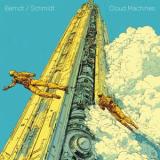
Cloud Machines is the extraordinary debut collaboration between M.C. Schmidt of legendary electronic duo Matmos and John Berndt, the Baltimore avant-garde institution and band leader behind High Zero Festival, the Red Room collective, Geodesic Gnome, and radical sonic concepts like Spectral Relay (a bespoke signal processing architecture) and Relabi (a conceptual genre defined by a Rorschach-blot pulse. These two iconoclasts have delivered something genuinely unexpected: an oddly sweet electronic opus that"s as immediately engaging as it is a series of delicious puzzles. When two of experimental music"s most irascible characters spend twelve years crafting an album, you don"t just get another release - it is an anthology of pocket universes. The record is a love letter to two of their strongest mutual influences of the 1980s - the delirious comic books of French auteur Jean Giraud (AKA Moebius) and the beautiful miniatures of the SKY Records Cluster/Eno/Conny Plank collaborations. Cloud Machines honors the spirit of those ineffably "hermetic" creations by reinventing their legacy through the lens of decades of accumulated experimental practice and the duo"s singular creative personalities. The result feels simultaneously like rediscovering a lost classic from 1978 and receiving a transmission from an alternate, somehow better timeline in 2026. Yet unlike so much "difficult" experimental music, Cloud Machines maintains an uncanny and sneaky accessibility - each track a self-contained world, inviting and alien in equal measure.
expected to be published on 12.06.2026

Cloud Machines is the extraordinary debut collaboration between M.C. Schmidt of legendary electronic duo Matmos and John Berndt, the Baltimore avant-garde institution and band leader behind High Zero Festival, the Red Room collective, Geodesic Gnome, and radical sonic concepts like Spectral Relay (a bespoke signal processing architecture) and Relabi (a conceptual genre defined by a Rorschach-blot pulse. These two iconoclasts have delivered something genuinely unexpected: an oddly sweet electronic opus that"s as immediately engaging as it is a series of delicious puzzles. When two of experimental music"s most irascible characters spend twelve years crafting an album, you don"t just get another release - it is an anthology of pocket universes. The record is a love letter to two of their strongest mutual influences of the 1980s - the delirious comic books of French auteur Jean Giraud (AKA Moebius) and the beautiful miniatures of the SKY Records Cluster/Eno/Conny Plank collaborations. Cloud Machines honors the spirit of those ineffably "hermetic" creations by reinventing their legacy through the lens of decades of accumulated experimental practice and the duo"s singular creative personalities. The result feels simultaneously like rediscovering a lost classic from 1978 and receiving a transmission from an alternate, somehow better timeline in 2026. Yet unlike so much "difficult" experimental music, Cloud Machines maintains an uncanny and sneaky accessibility - each track a self-contained world, inviting and alien in equal measure.
expected to be published on 12.06.2026
French label Latency presents ‘Estradas (Versions)’ - a dynamic reimagining of the acclaimed collaboration between drummer-composer Valentina Magaletti and Afro-Portuguese producer Nídia. Following Estradas’ recognition as one of 2024’s Best Albums by Pitchfork, The Wire, Resident Advisor, Artforum, Bandcamp, and more, ‘Estradas (Versions)’ invites a diverse lineup of producers and DJs to deconstruct and reimagine the raw percussive language initially crafted by Magaletti and Nídia. Where the original Estradas channeled their distinct rhythmic sensibili- ties into a bold sonic statement, this collection pushes those ideas further - opening the material to radical transformation across tempo, genre, and mood.
One of the leading baile funk innovators from Belo Horizonte, Dj Anderson do Paraíso opens the release by transforming “Andiamo” into a slow-burning, hallucinatory drift. Mexico-based Rosa Pistola and Freebot follow with “Rapido,” infusing it with syncopated, raw heat drawn from the pulse of underground Latin dancefloors. Lebanese-Australian producer Dj Plead pares “Sicilia” down to its core, distilling its essence into stripped-back, polyrhythmic ten- sion. On “Mata,” Brazilian DJ and producer BADSISTA delivers a fierce, bass-heavy version driven by slicing synths and unrelenting club pressure. Multidisciplinary artist FAUZIA sharpens the rhythmic intricacy of “Nasty” with her signature blend of speed and emotion.
London-born DJ, producer, and label founder Sherelle - known for her high-octane 160bpm mix of footwork and jungle - injects “Estradas” with blistering breakbeat energy, reframing its urgency through a razor-sharp UK lens. Chinese musician and sound artist Yu Su offers a fluid, atmospheric reinterpretation of the same track, softening its edges while preserving its momentum. Scottish composer and producer Fergus Jones pulls “No Promises” into hypnotic new rhythmic terrain. Dominican producer and multidisciplinary artist Kelman Duran stretches “Ta A Bater Ya” into a shadowy, reverberant space, while Lebanese composer and multi-instrumentalist Charif Megarbane and its Cosmic Analog Ensemble reimagines it with layered, cinematic textures echoing vintage library music and psych-jazz soundtracks.
These artists treat Estradas as raw material - reframing its structures and reactivating its rhythmic possibilities through entirely new prisms. What emerges is not a conventional remix album, but a vibrant constellation of versions : a response to Estradas’ percussive provoca- tions, and an extension of its spirit of exploration - all while keeping its pulse alive.
expected to be published on 12.06.2026
Even in these most turbulent of times, dub musician and fatigued onlooker Elijah Minnelli remains an inexplicable stalwart on the lower rungs of the Breadminster County Council.
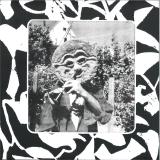
His latest record ‘Clams As A Main Meal’ continues his astute siphoning of council funds, this time with help from the Breadminster Board of Abstinence. As a further mark of respect, the original head of the Board, Dr. K'houldoux, graces the cover art in his infamous ‘Looming Moon of Desire’ guise.*
As fine a backdrop as any for Minneli’s off-brand dub experiments, and ‘Clams...’ is the truest representation of his varied wheelhouse yet...
We find vocal appearances from dub goliath Dennis Bovell and Welsh-language singer Carwyn Ellis. A pair of tracks which build on 2024’s acclaimed ‘Perpetual Musket’, a collection of folk songs reworked alongside reggae vocalists, released by FatCat Records. It garnered glowing reviews, with nods from The Guardian and The Quietus concluding with prominent appearances on their respective yearly round-up lists.
Elsewhere, the album finds Minnelli in a more experimental mode, all wheezing contraptions and cockeyed bass, creaking with the weight of creation, a satisfying tactility laid seam-side up.
As well as ‘Perpetual Musket’, the new album follows years of sold out 7" singles, handmade and self-released. Online, the tracks have amassed global streams numbering in the millions. His tracks have found play across an eclectic range of radio mixes and dance floors, most notably the likes of Andrew Weatherall, Batu, Optimo and Zakia Sewell (BBC6Music).
It is perhaps worth mentioning that this everbuilding interest in his work is at great odds with the growing suspicions amongst his fellow townsfolk, who see his Breadminster County Council Music Initiative as nothing more than an empty cash-grab.
Further Reading on the Breadminster Board of Abstinence
In the late 70s, Breadminster was awash with the last vestiges of the hippy era. Though the flared silhouette of the lower leg remained, the utopian ideals that had once flowed merrily around the youth's shaded ankles had begun to wane. LSD and free love had led to a sharp spike in population and a generation of children raised by air-headed psychonauts unprepared for the bleary-eyed strictures of parenthood.
Aware of the crisis, the County Council entrusted Dr. Paulinque K'houldoux to spearhead a pushback, and it was his pro-abstinence movement - a mixture of education initiatives and radical renutrition campaigns - that came to impact Breadminster's census deep into the new millennium.
Being a pseudo-archipelago Breadminster has fundamentally limited resources, however deep-seated ties to distant coastal villages meant that oysters were a regular part of the local diet. K'houldoux pinpointed this as a factor in the town's overpopulation, and believed that simply replacing these with clams (a “lesser mollusk”) would help lower the erotic urges of the people. It was his “anti-aphrodesia” movement that first championed the idea of “Clams As A Main Meal,” and the slogan “Consider Abstinence” carried the message yet further.
The Breadminster Board of Abstinence soon became involved in all cultural happenings in the area, with K'houldoux MCing at prominent festivals and performances, sometimes dressed as the “Looming Moon of Desire” - an idea of his relating to the tide, seafood, menstrual cycles, and his privately held celestial predilections.
It was in 1981 that it was revealed Dr. K'houldoux had never fully qualified as a doctor and was seeking exile in Breadminster due to a series of botched bracelet heists in which he had previously been involved. K'houldoux was subsequently extradited to Basingstoke, where he served 3 of a 12-year sentence, owing to the lunar-oriented prisoner health campaigns he helped implement.
It has been a strange twist of bureaucratic fate that the Breadminster Board of Abstinence has never stopped receiving public funding, despite its lack of clear utility. And while its roots are tied to a rose-tinted past, the Board continues to sponsor cultural events and projects to this day.
An extract from: Eugeniq Schooner's article in Sydney Parishioner: “Clams, Breadminster and Countercultural Abstinence Trends” (2008)
Order now and we will order the item for you at our supplier.
Bolka is known as the man with the cap. His cap has lived through a lot: his glitchy and microtonal experiments, studies at Institute of Sonology in The Hague or through countless performative works. A few years ago, Bolka’s cap fell apart. By that time he was already a fixture on the slovak experimental scene, but only releasing his debut album, “smutné stropy.” He started wearing new caps from then: somehow reminiscent of the old one, but much more varied — same as “smutné stropy,” bubbling with motifs, charming humour and pop sensitivity layered over detailed soundscapes popping with surprises.
On schwarzkopf, Bolka returns wishing for a thick black hair. With his charming love songs, that are positioned somewhere between a tightly run freak folk orchestra, deconstructed ballads and colorful ecstatic melancholy, he creates an album that thrives on juxtapositions that are completely unique, yet strangely familiar. Bolka’s songwriting is at once tender and irreverent — lovestruck whispering suddenly tripping over absurdist jokes and surreal images that fizz like soda. His songs move in that strange space between vulnerability and mischief, where intimate confessions collide with radical playfulness and the poetic rubs shoulders with the delightfully ridiculous.
On schwarzkopf, Bolka expands his world with a wide circle of collaborators and an even richer sonic palette. The album is meticulously detailed yet carefree: delicate moments sit next to sudden explosions, drifting from gentle pop to bursts of noise. Toward the end, the album even slips into a footwork-infused remix by Kodiki, passes through Julek ploski’s signature neon-baroque string perspective, and briefly wanders into Lénok’s cinematic sonic world. Bolka sings that he wants to dissolve into a healing ointment, to be ground in a mortar with calendula — and he invites us into this musical spa with him: a place that stings a little but ultimately soothes, a gorgeous soundscape that is both painful and joyful at the same time.
expected to be published on 05.06.2026

* A highly influential and sought-after benchmark dub LP, originally released on the Jah Works label in 1995.
* Produced by the late Rej Forte AKA Jah Rej, who was one of the most creative minds from the UK reggae and dub scene from the last 40 years.
* The album features recognisable tracks from the Jah Works cannon, but dubbed into oblivion with special effects galore. All tracks played by humans, with the exception of a drum machine.
* Dub Crusaders feature members of Revolutionary Dub Warriors (On-U Sound, Ariwa), and Radical Dance Faction.
* Recorded at Channel One under the supervision of Martin Campbell, whose vocals feature twice on this set.
Order now and we will order the item for you at our supplier.
As keyboard maestro James Taylor arrives at his 40th year leading his Quartet, he has re-signed with his original label Acid Jazz and is embarking on a series of the most radical projects he has ever worked on. Following his first classical album ‘Shadows and Dreams’ earlier this year, he brings the Quartet together for a remarkable new album. ‘Te Deum’ sets the ancient, 4th-entury Christian text to intense jazz, funk, and Latin grooves. The music sees the James Taylor Quartet working alongside the children of the Benenden Chapel Choir, and a guest horn section and legendary Acid Jazz percussionist Snowboy. Lead track ‘Have Mercy On Us’ mixes Brazilian samba with Gregorian chants, ‘The Comforter’ sounds like a Donald Byrd with voices Blue Note Records experiment, and last year’s radio favourite ‘Wildflower’ mixes bossa nova with sunshine pop harmonies and a positive message. The JTQ is on tour throughout the year - as he always is and will be worth catching live.
expected to be published on 29.05.2026

EU/UK Exclusive[23,11 €]
The 12th studio album from Death Metal Veterans, JUNGLE ROT. DAVE MATRISE (Vocals/Guitars): "Let's start off by saying what an amazing accomplishment it is to hit 12 releases in my career. Never would I think I'd still be doing this 30+ years later. I guess be careful what you wish for I'm very grateful to all of our fans that have supported us for so many years and for never giving up on us. To my bandmates for all of their hard work and dedication to me and JRot over all these year’s. Cruel Face Of War will not disappoint. It's full of crushing grooves and violent hooks that will surely break anyone’s neck. We have stood the test of time. We are still here playing our trademark style of Oldschool Death Metal that has carved a legendary name for us in the underground scene today." Produced by Chris Djuricic at Bell City Sound Company. Mixed and Mastered by Dan Swano at Unisound Studio. Artwork and design by Gyula Havancsak
expected to be published on 22.05.2026
Australian composer-performers Judith Hamann and James Rushford have worked together in countless projects for two decades, perhaps most notably in Golden Fur, their trio with Sam Dunscombe. Black Truffle is pleased to announce Midmeste, their first work as a duo. Its title is Middle English for ‘the middlemost point’, alluding to how the piece builds on the points of overlap between the highly personalised musical languages Hamann and Rushford have developed in recent years. Performed on cello and a variety of pipe organs, Midmeste is a spacious, sometimes unsettling exploration of their shared interest in alternative tunings, psychoacoustic phenomena, the physical properties of their instruments, and the usually peripheral sounds generated by the performing body.
Beginning with a sequence of austerely vibrato-less harmonics from Hamann's cello, trailed by Rushford's whistling portative organ tones, the music soon expands into a slow-moving melodic wander, pausing at times to linger over an uncomfortable harmony or particularly resonant cello tone. Hamann and Rushford have long histories of engagement with pre-Classical European musical traditions, having in past projects performed and radically extended the work of Solage, Louis Couperin, Johann Conrad Beissell and other composers. Here they use a 15th century song by John Dunstaple, ‘O rosa bella’, which returns throughout the piece, distorted, aerated and splayed into new forms.
Developed while the two shared residencies at Akademie Schloss Solitude, Stuttgart in 2020 and La Becque on Lake Geneva in 2023, Midmeste integrates recordings made (at at the invitation of the Biennale Son) on the organ of the Basilica St Valere in Sion, Switzerland—the world’s oldest playable organ, built in the early 15th century. Played by both Rushford and Hamann, the instrument’s idiosyncratic features, including bellows pumped manually using massive wooden beams, are integrated into the music through amplification. Creaks and thumps locate the music physically both in the performers’ bodies and the specific site of its making. Moving through a series of distinct episodes across its forty-minute span, Midmeste makes space for near-silent duets of high harmonics and hissing air, moments where twittering high tones and rumbling sub-bass could be electronic, and static fields that unexpectedly blossom into almost Romantic harmonies.
Listeners familiar with Hamann and Rushford’s work will find many familiar features here: the stunningly rich cello tones, their patient sustain allowing heightened awareness of the inner life of sound and its interactions with the environment; the care with which acoustic space is activated, becoming at times a third instrumental voice; the attention to fragile, unstable sonorities that sometimes have a comic edge. A major work from two key figures in contemporary experimental music, Midmeste synthesises rigorous exploration of fundamental questions of sound and performance with an unapologetic embrace of beauty.
expected to be published on 22.05.2026
40 Thieves have been part of the Leng family since 2011 during which time they have released many quality singles and EPs as well as their sole full-length album, 2014’s epic The Sky Is Yours. Even so, double A-side ‘Love Is’/’Let Me Show You’ still marks their first release on Leng for almost three years.
In keeping with their signature sound, ‘Love Is’ is trippy, hallucinatory and gently mind-altering, with psychedelic guitar sounds, echoing percussion, and a heady lead vocal courtesy of crew member and Alona, all of which rides a chunky dub disco bassline and chugging mid-tempo beats. Richard Sen, a DJ and producer known for his love of dubbed-out sonics and pulsating grooves, delivers a typically spaced-out and otherworldly rework. Rooting his revision to the dancefloor via an undulating electronic bassline that throbs away restlessly throughout, Sen stretches out the track and emphasises its more trippy elements before introducing dreamier chords and heady vocals with a brilliant interpretation.
On ‘Let Me Show You’, 40 Thieves step things up to deep house tempo while remaining firmly rooted in 21st century San Francisco nu-disco with rich, dubby bass guitar, tactile piano chords, futurist synths and knowing nods to Patrick Cowley productions of the late 1970s and early ‘80s. The track is presented in two forms: the superb ‘Vocal Mix’, where Alona’s vocal rises above the groove and intoxicating electronics, and a genuinely radical and out-there dancefloor focused ‘Dub’. Pushing the track’s wilder and more out-there elements to the max via stripped-back arrangements and a smorgasbord of effects, 40 Thieves re-wire the cut as a heads-down psychedelic disco chugger topped off with wonderfully loved-up chords.
Order now and we will order the item for you at our supplier.

Firstly, there is also a new special limited-edition one-off pressing edition orange-pressed CD enclosed in jewel case and slipcase. 18 years on from its original release Studio One Dub remains super-hard hitting featuring classic + rare Dub tracks from Studio One, many available on vinyl for the first time in over thirty years.
Studio One Dub includes the dubs of many classic tracks such as Horace Andy’s “Skylarkin”, Johnny Osbourne’s “Truth and Rights”, John Holt’s “Hooligan”, Freddie McGregor’s “Bobby Bobylon” plus many more rare tracks.
The album also comes with two rare interviews - one with Clement 'Sir Coxsone' Dodd about dub and dubplates and one with the sound engineer Sylvan Morris, talking about his groundbreaking period at Studio One and his many innovations that he evolved there.
In short, this is a 100% essential album!
"Almighty slab of dub featuring loads of rare and classic dub versions of Studio One's foundation tracks." Rough Trade
“Quite a treat awaiting here for the unsuspecting reggae faithful – as always with Soul jazz chock full of a bunch of big tunes – but here in version form lies some of the freshest rhythms and most radical revisions of some of the greatest Studio One music. The darkest and the absolute deepest in the series – naturally essential.” Boomkat
"Continuing the Studio 1 Series this album features classic and rare Dub tracks from Studio One, many available for the first time in over thirty years. Studio One Dub includes the dubs of many classic tracks such as Horace Andy’s “Skylarkin”, Johnny Osbourne’s “Truth and Rights”,
John Holt’s “Hooligan”, Freddie McGregor’s “Bobby
Bobylon” plus many more rare tracks. In short, this is an essential album!" Wax Museum
expected to be published on 06.05.2026