For decades, the voice of Jean Carne has been a crucial part of the American musical landscape, tying together generations of Jazz, Gospel, and R&B artists. Many will recognize Carne from her output in the early 1970s, alongside her then-husband Doug Carn, for the lauded Black Jazz label. As a solo artist, backing vocalist, and vocal coach, she has contributed to and collaborated with the likes of Norman Connors, Doug Carn, Dexter Wansel, Phyllis Hyman, Lonnie Liston Smith, Michael Jackson, and many more. At 74, she shows no signs of slowing down. Her latest collaboration with Ali Shaheed Muhammad and Adrian Younge is a clear demonstration of the continuous referencing of the past to illuminate the future.
Buscar:raíz
“I’m closing a chapter in my life,” Barbie Bertisch says to me from a park bench in Greenpoint, “I spent the last four years working towards gaining confidence around my ideas and my creative perspective. This feels like a culmination of that process” The “this,” in question is Bertisch’s debut record Prelude, a collection of eleven songs that chronicle 5 years of Bertisch’s life. The legendary musician Anna Domino describes the record best: “Prelude is a record of layers and depths. The melting phases and soaring distances.”
Raised in Buenos Aires and Miami, Bertisch has called New York home for most of her adult life. When she started piecing together Prelude, she was in her Brooklyn kitchen. It was early quarantine. Stuck at home instead of DJing at clubs, she found the space to parse through the archives. What she previously considered unworthy of attention in the era of distractions, finally made sense as a whole once all the noise was turned down. Compiling a list of songs in various states of completion, Bertisch dreamed up an album, a chronicle in growth and healing frustrations of the past, an honest account of someone trying to find her own voice. That in and of itself was a journey. It took years for Bertisch to accept that she was an artist. “I felt like I was surrounded by men who ruled every space. I constantly felt like I had to ask permission to enter, always around bands but never the girl in the band” she says.
Prelude is an introspective record. It explores all of the valences of being and feeling. Some songs are chaotic and choppy. Others are soft and searching. There is rage and innocence, and moments of forced stillness, like capturing the aftermath of panic attacks, as in “After The Storm”. Bertisch also focuses on rhythm, bass guitar being her main instrument, and no stranger to the power of the beat. The record also draws on influences as varied as Kaitlyn Aurelia Smith, Cocteau Twins, Berlin School, and pioneering producer François Kevorkian. Both sonically and conceptually, Prelude is a portrait of who Bertisch is as a person.“Is This What You Wanted?” is fiery, a pointed provocation to domineering figures from her past. It’s full of strobing, strident synths, and heady lines of bass. It gives off the same vibe as a fire alarm, as a big room dance track that subverts your expectations of what it means to dance in a sea of bodies. “28,” the record’s opening track is more peaceful. It’s all languid keyboard arpeggios with the occasional flourish of a cascading synth effect.
Since most of the songs already existed in some form or another, Bertisch’s job on Prelude was to refine and reimagine music that had previously been private. She spent time rearranging, rewriting, adding elements newly available to her, such as the saxophone, and pushing the limits of the rough mixes to mold the universe she envisioned. Along the way, Bertisch grew more excited about her abilities as a musician. The resulting record is one that is inherently confident.
Prelude is also a homespun release. It’s coming out on Bertisch’s own label, Love Injection Records, which she runs with her partner Paul Raffaele. The two also DJ and make zines under the name, which started in 2015. Love Injection is a love letter to New York. Prelude is a word of encouragement to those struggling with self-actualization. The record was mixed by Justin Van Der Volgen and mastered by Walter Coelho. Love Injection Records holds the remix tradition in high regard, and they’ve enlisted reworks by some of Barbie’s favorite producers. It’s all a labor of love for Bertisch. Prelude is her: Barbie the musician.
©℗ Love Injection Records 2022
- A1: Claudja Barry– Love For The Sake Of Love
- A2: Tony Silvester & The New Ingredient– Cosmic Lady
- A3: Sam Jam*– Dance And Chant
- B1: Sticky Jones Gang– Tunisian Ride
- B2: Eli's Second Coming– Love Chant
- B3: Dunn Pearson Jr – Groove On Down
- B4: Biddu Orchestra– Rain Forest
- C1: Eddie Drennon & The B B.s. Unlimited– Let's Do The Latin Hustle
- C2: Jakki– You Are The Star
- C3: The Writers (2)– Star Black
- D1: Roger Gravel Avec Flashback (12)– Un Habit En La Bémol
- D2: Supercharge (2)– I Think I'm Gonna Fall (In Love)
- D3: Bus Connection– Dreamin' Of You
‘Self Oscillation’ is made up of 5 club-ready psychedelic workouts swaying with natural momentum, from
Ecuadorian superstar Nicola Cruz, who makes his 2nd appearance on London’s Rhythm Section INTL.
The internationally renowned producer, Nicola Cruz, has been instrumental in pioneering the sound of Andean music over the last decade. Born and raised in Ecuador, Nicola has found his own unique way to tap into Latin America’s illustrious musical past to create something utterly contemporary. His previous projects have had the 4 elements running through as major themes: Fire and lava erupted during his sophomore album, Siku, with an Ecuadorian volcano doubling up as a recording space. And now, with his second Rhythm Section release, we are met with sounds of flowing water that Nicola describes as “aqueous explorations”. On this EP, ‘Self Oscillation’, Nicola Cruz fuses experimental production techniques with underwater, bass-heavy constructions. Moods change like the tides; from euphoric highs with acid riffs and latin drum patterns, the music quickly dives to moody submarine basslines and dark, frenetic rhythms.
‘Self Oscillation’ sees Nicola’s production move to new heights as he expertly bridges the gap between natural and mechanical sounds. With the help of iconic 80s and 90s synths and the retro colours of a Roland Space Echo, his newest work is a hybrid of electronic dance music and a synaesthetic image of nature. In the spirit of his previous EP on Rhythm Section INTL, ‘Self Oscillation’ showcases the synergy - or rather ongoing battle between the organic and inorganic, the analog and digital, civilisation confronted and confounded by nature. It’s within this dichotomy that Cruz revels, and manages to say so much, without words.
- A1: Please Send To Jf (With Marisa Anderson)
- A2: Richness Of Peace (With M Ward)
- A3: Golden (With Chris Funk)
- A4: Takoma (With Marisa Anderson)
- A5: Juxaposition (With Chris Funk)
- B1: Something Else (With M Ward)
- B2: Before & After (With Marisa Anderson)
- B3: Illumination (With Chris Funk)
- B4: Mid The Ice & Snow (With Marisa Anderson)
Jose Medeles feat. M Ward, Marisa Anderson & Chris Funk
Railroad Cadences & Melancholic Anthems Led by drummer Jose Medeles (Breeders, 1939 Ensemble, Revival Drum Shop), Railroad Cadences & Melancholic Anthems is a drummer's tribute to guitarist and DIY iconoclast John Fahey Joined for a series of guitar and drum duets with M. Ward, experimental guitarist Marisa Anderson, and Chris Funk (Decemberists, Stephen Malkmus), it's a genuinely honorific project, featuring not Fahey compositions, but rather a series of improvised rendezvous inspired and informed by his looseness and rhythmic idiosyncrasies. Recording in the comfortable setting of Bocce Recording in Vancouver, WA, in 2020, these duets are playful and spiritually deep, presented with snapshot clarity Medeles likens to the recordings of Alan Lomax or Chris Strachwitz, 'who boldly captured field recording of Southern chain gangs and juke joint raconteurs decades ago. The result here is similar: pure and honest recordings.'
Sean Thompson's Weird Ears self-titled full-length debut centers the
seasoned singer-songwriter/guitarist in the immediacy of he present
moment - Born and raised in Nashville, Thompson cut his teeth playing in
a slew of projects around the city's rock, folk, and experimental scenes
both as creative collaborator and session player, spanning from the
experimental math-rock of Gnarwhal to the psychedelic country rock of
Teddy & the Rough Riders, Promised Land Sound, or Skyway Man, to
more Recently joining singer-songwriter Erin Rae as a one-man-righthand band
When asked about the connective throughline in his projects, Thompson doesn't
hesitate: "From Gnarwhal to now, I've always wanted to make something that
feels alive." Taking equal inspiration from the improvisational grooves of the
Grateful Dead as well as the craft of songwriters like JJ Cale & Joni Mitchell,
Thompson's songwriting debut marks the arrival of a unique voice grounded by
wide-reaching, generous ears.
He may not have known it before, but Toronto-born, New York-based
guitarist Matthew Stevens, prized for his forceful, distinctive electric
sound was an ideal candidate to make an album fully devoted to solo
acoustic guitar: the intimate, unadorned, straightforwardly titled
'Pittsburgh'
September 2020, Stevens was hunkering down in his wife's family's hometown of
Pittsburgh, while navigating his way through the crisis. He had with him a vintage
Martin 00-17, a small- body mahogany guitar. Practicing daily on the Martin, he
began generating a series of short song "starts" - ideas and sketches he thought
might lead somewhere. Then one rainy Pittsburgh day, Stevens' bike slid out from
under him and he broke his right elbow. Rather than getting derailed musically, he
became immersed in a creative process that led straight to 'Pittsburgh': a
document of those short song "starts" from the notebook, now hatched as
completed compositions. "Playing this music became a big part of my rehab,"
Stevens recalls.
As the album took shape, it became clear to Stevens that he was headed in the
direction of a wholly unaccompanied recital, with no overdubs or sound layering
of any kind. Just him and this special Martin, two Neumann U89 mics and enough
peace of mind across two separate sessions to make 'Pittsburgh' the triumph that
it is.
In addition to his extensive high-profile work with Esperanza Spalding (serving as
co- producer on 'Exposure' and '12 Little Spells'), Stevens is also a member,
songwriter and co-producer of Terri Lyne Carrington's GRAMMY-nominated Social
Science band. He has made vital contributions to groups led by Dave Douglas,
Linda May Han Oh, Christian Scott aTunde Adjuah, Ben Williams and more. With
tenor saxophonist Walter Smith III he co-leads the In Common collective. Stevens
has also amassed many credits beyond the jazz world, collaborating on
forthcoming releases by Anna B Savage, Jamila Woods, Tyler Armes
(Murdagang) and Berlin-based electronic artist Robag Wruhme.
- A1: Empty Hearted Town
- A2: Steady Rain
- A3: Join Me In La
- A4: Heasten Down The Wind
- A5: Werewolves Of London
- A6: Tule's Blues
- A7: The French Inhaler
- A8: Going All The Way
- B1: Poor Poor Pitiful Me
- B2: Sudebaker
- B3: Accidentally Like A Martyr
- B4: Carmelita
- B5: (I Used To) Ride So High (I Used To)
- B6: Stop Rainin' Lord
- B7: The Rosarita Beach Cafe
- B8: Desperados Under The Eaves
- C1: I Was In The House When The House Burned Down
- C2: Warren Speaks On Songwriting & The Early Days Of His Career
- C3: Musings On Mortality, Song Noir & The King Of Rock N' Roll
- C4: A Chat About Producers & The Stark Sounds On The Album
- D1: Back In The High Life
- D2: Warren's Take On Winwood's Classic & Warren's Inspirations
- D3: Talk Of Tv, Movies, Acting & Performing
- D4: Don't Let Us Get Sick (Solo Acoustic)
Er gründete die Band im Oktober 1982 gemeinsam mit Schlagzeuger Vinny Appice, nachdem beide ihre Band Black Sabbath verlassen hatten. Ergänzt wurde die Band durch den irischen Gitarristen Vivian Campbell (Sweet Savage) und Bassist Jimmy Bain (Rainbow, Wild Horses). Im Mai 2010 verstarb Ronnie James Dio. Dies war der Grund für die Auflösung der Band. 1994 war für DIO eines der erfolgreichsten Live-Jahre. Am 10.Juli 1994 absolvierte die Band ein grandioses Konzert in den USA, welches vom US-Radiosender FSW-5 mitgeschnitten und nun freigegeben wurde. Diese strikt limitierte
Schallplatte enthält alle großen Hits und Alltime-Klassiker der US-Rock-Gruppe und kann als zeitliches Dokument angesehen werden.
Limited edition 400 copies double pack 7” single presented in a deluxe gatefold sleeve • Includes unique edit of the only song ever credited as co-written by Bowie & Ronson • Includes fully remastered contents of the promotional flexi disc issued in 1974 as well as 2 tracks recorded on Mick’s ‘Slaughter on 10th Ave’ tour at the Rainbow Theatre in London. Record 1 1/Hey Ma Get Papa (C'mon let's do it again) 2/Original 1974 Promotional Flexi Disc - Spoken word and extracts of Love Me Tender Record 2 1/Leave My Heart Alone (Live at The Rainbow) 2/Slaughter on 10th Ave (Live at The Rainbow)
"The past 5 years we have taken our music all over the world: Europe, Asia, Africa besides our homeland Denmark, and even though we cannot speak with many of the people we meet, our music is a universal language that transcends borders. The meetings we have had (and continue to have) all over inspire us to create new music. But of course we are the composers of the music, so this is our representation of those meetings.
Our 3rd album is called AFROTROPISM. Tropism is a biological phenomenon that indicates growth of a plant in response to the environment; so when you see a plant turning for the sunlight, this is tropism. In other words, this is not so much about the plant's roots but more about how it reacts when it touches the air, feels sunlight or rain - in other words the outside world. So AFROTROPISM refers to the fact that we are drawn towards the African traditions, but we are "growing" our own music.
On our first two albums we have recorded extensively with African musicians, and AFROTROPISM is centered around The KutiMangoes (TKM) as a band. We are developing our artistic direction by going more in depth with how we can mix our inspirations with our own musical heritage. Our musical mission is (and has always been) to mix cultures and create our own sound.
With our background in jazz music, TKM counts virtuoso instrumentalists with a heartfelt intent and sound innovators with our horns, effect pedals, synthesizers, drums and percussion from all over the world. AFROTROPISM is a further and deeper development of our trademark bold sound that experiments with synthesizers, soundscapes and a bit of electronic effects without losing it's focus on groove, melody, atmosphere and musicianship."
The KutiMangoes, July 2019
About each track:
STRETCH TOWARDS THE SUN
This track opens up with a synthesizer groove that is inspired by the polyrhythmic grooves played by the balafon (a predecessor of the piano) from West Africa. Our rolling sequence could not be played on the balafon because of the key changes, but the basic idea comes from that instrument. Quick and light, we wanted to write a song where you can feel the sun coming out and feel the energy it's rays give. The combination of the programmed groove, the horn-arrangement, the huge percussion section and the live instruments makes for a sound that we have not heard before, and it illustrates what this album is all about (and what the track's title refers to): that we stretch towards the things that give us energy – and that although our roots are in Denmark, when we encounter a musical tradition as rich as in West Africa, it changes us and our music.
A SNAKE IS JUST A STRING
The first time we saw Mali-bluesman extraordinaire Vieux Farka Touré on stage was just after we had played at a huge festival in Burkina Faso, and we almost literally caught on fire. Their groove was so strong and insistent that we were mesmerized, and it inspired us to come up with the opening guitar part of this song. Basically a bluesy tune with some unusual chord changes and a crazy synthesizer solo by Johannes Buhl Andresen reminiscent of that fuzzy guitar-sound we love so much in the Mali blues. The title is an homage to the Nigerian writer Chinua Acheba, who in his masterpiece novel "Things Fall Apart" tells that in the village during the night, to ward off the fear of darkness, people would call dangerous animals by a different name: don't be afraid, a snake is just a string.
KEEP YOU SAFE
It is a basic human necessity to have a place where you can feel safe. But there are far too many people in our world that fear for their safety, their livelihood, their children, their relatives – and this is surely not a feeling that helps us to flourish as humans. With this song we are saying that we all need to make it a priority to help our fellow humans to feel safe. And of course, if our song can offer a feeling of safety and comfort for a short time to those who listen, we are truly thankful.
MONEY IS THE CURSE
This track is directly inspired by Fela Kuti's ability to create music that is both physical and political. Dance music with a serious message about our times. For the solo part we wanted a more melancholy, pensive feel (than the full-on baritone-trombone melody) and also wanted to experiment with some choppy, stuttering effects to make the horns sound desperate. Money is the curse because it can become the objective of our life; money is the curse because it changes the relationships we have with our fellow humans. Money is the curse.
THORNS TO FRUIT
This melody is inspired by the scales and developments of a traditional Bambara folk-song. We love the way these melodies constantly evolve with small developments and changes. We felt like an accompaniment that is really dry, sparse and earthy would fit well and then made a contrasting solo part. As a group we are interested in how to develop our improvisations together and create sonic landscapes that evoke a distinctive atmosphere – so here, we have no soloist, but a collection of synthesizer parts, saxophone lines and guitar-sounds that together create a dreamy and lush ambience.
SAND TO SOIL
We started out with a short ngoni riff played by our good friend and master musician Aboubacar Konaté. We then sampled it, built soundscapes and our own both meditative and pumping groove around it. We created a melody with both melancholy and joy, with afterthought and impulse and then the brilliant Aske Drasbæk added an emotive and blistering saxophone solo. The title refers to the contrasts in our humanism. As part of our human nature, we have a dark side that drives us (and each other) towards destruction – making the fertile soil into barren sand. The title is an encouragement to emphasize the opposite movement in our nature: to create life and help it flourish. We keep ourselves human by insisting that we must never forget this side of our nature no matter how tough, tiresome or trying it might be. Let's keep our focus on the light, the warmth, the positive energy – that can turn the cold stone into fertile ground.
- 1: Can I Sing With You? Ft. Sidi I.b
- 2: No Hay Pescado Ft. Sidi I.b., El Latigazo & Mame Samba
- 3: Neuron Landfill (Vertedero De Nueronas)
- 4: Smelk
- 5: The Light Mandem Forward Ft. Kiki Hitomi W/ Javier Afonso
- 6: Guidance & Healing Ft. Mame Samba
- 7: Monsanto Ft. Troy Harkin*
- 8: Mike Input At Loud Speakers Corner*
- 9: Bus Meter Ft. Zeeteah & Sidi I.b
- 10: Assuage No.9 Ft. Zeeteah
Helmed by Dave Watts aka D.WattsRiot (Fun-da-mental), the debut KingL Man album, ‘Headonix’ is beat-laden shout out in response to the perpetual state of war we seem to find ourselves at. Outrage and disgust, love and hate, history and presence.
Contributions come from four continents.
Fresh on the scene is Senegalese vocalist Sidi I.B., who arrived on Canarian shores with two hundred other compatriots, cold, wet and hungry after seven days at sea with nothing but his future in his hands.
Temporarily housed at the infamous migrant holding centre in Las Raíces, Tenerife, the studio environment provided an avenue of relief from the inadequate conditions at the overcrowded camp.
Also from Senegal, living in Santa Cruz de Tenerife, is rapper Ibrahima El Latigazo who delivers his lyrics in French, Wolof, Spanish, English & Sérère. Rounding up the Senegalese contingent is Mame Samba, a group that hold the spirits close when performing. Their contribution is from recording sessions they had with François R. Cambuzat & Gianna Greco (Putan Club / Ifriqiyya Electrique).
Kiki Hitomi (Waq Waq Kingdom/King Midas Sound) returns to the fold, exhaling positivity with Canarian multi-instrumentalist Javier Afonso (Grenouille). The Canarian faction also includes violinist Mónica Viñoly, Dani Garcia (Lagoss/Tupperwear) and Vakawuare. Further guests include percussionist Miroca Paris (Cesária Évora/Madonna); Hamid Mantu (TransGlobal Underground);
Ramjac (Dub Colossus), drums and percussion respectively.
- A1: Take It Easy
- A2: Mighty Crazy
- A3: Your Own Fault, Baby, To Treat Me The Way You Do
- A4: I've Had My Fun If I Don't Get Well No More
- A5: The Trouble Blues
- A6: Lightnin's Piano Boogie
- A7: Wonder Why
- A8: Mister Charlie
- A9: Rainy Highway (Bonus Track)
- A10: When My First Wife Quit Me (Bonus Track)
- A11: Walk On (Bonus Track)
- A12: Lightnin's Guitar Boogie (Bonus Track)
- A13: Black Cat (Bonus Track)
- A14: Come Go Home With Me (Bonus Track)
Recorded November 15, 1960 at the Nola Penthouse Sound Studios in New York, Lightnin' In New York captures the legendary bluesman in classic form, including some rare solos on the piano. Produced by Candid Records label co- founder, famed music critic and social activist, Nat Hentoff, and recorded at a time when Hopkins was being "rediscovered" by white audiences, the bluesman was reluctant in accepting his new role as an "artist" before predominantly white audiences.
After her stunning collaboration with Jim O’Rourke (Le Piano Englouti, BT055), Brunhild Ferrari returns to Black Truffle with Stürmische Ruhe, her first duo with Christoph Heemann. A legendary figure in underground music, Heemann has quietly produced a unique body of work since his beginnings with the absurdist cutups of H.N.A.S. in the mid-1980, including collaborations with Merzbow, Organum and Nurse With Wound, the eerie psychedelia of Mirror (with Andrew Chalk), In Camera (with Timo van Lujik) and Plastic Palace People (with Jim O’Rourke), and the precise cinema pour l’oreille constructions of his solo works. Created together in Ferrari’s Parisian studio (once shared with Luc) between 2011 and 2014, Stürmische Ruhe is a single half-hour piece that folds rain and storm recordings into a intricately woven fabric of haunted electronics, unexpected edits and disorienting processing. Banging with the jarring thump of a slamming door (an element that will reappear periodically throughout the piece as a kind of punctuation mark), it is immediately obvious that concrete sound is used here in a free, poetic way outside of the strict confines of documentary field recording. The wind captured by Ferrari’s microphone roars and whistles, accompanied by thick clusters of wavering tones whose unpredictable rises and falls in volumes are synchronised with the bumping and thudding of windows and doors. At some points the microphone sound melts into a wavering low-bit digital smear before fanning out into broad, atmospheric depths. The cinema for the ear constructed here suggests not linear narrative or documentary, but an organic flow of cross-fades, double-exposures and abrupt cuts, a free-associative dream in which wind and water take on mythical characteristics. Throughout the piece's second half, layers of synthetic floating tones and pinging upward glissandi negotiate a constantly shifting balance with wind-borne whispers and rustles, at times dropping to silence, at others rising up with elemental force. As Ferrari explains in her liner notes, Stürmische Ruhe is a meeting of ‘completely opposite sound worlds’ in which ‘almost-violence’ is joined with a ‘reconciling harmony’. Reaffirming the infinite possibilities of the musique concrète tradition while avoiding its academic tropes, Stürmische Ruhe is accompanied by tri-lingual liner notes from Brunhild Ferrari and arrives in a sleeve graced with the beautiful art informel paintings of her father, Wolfgang Meyer Tomin. Cut at 45rpm for maximum fidelity.
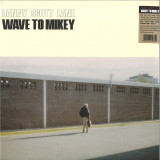
Wave to Mikey, the fourth album from the Los Angeles-based actor, musician and photographer Danny Lane is a nocturnal, neon-lit ode to the friendships that shape us. “I made this album for my friend Mikey from back home,” Danny explains. “We were pretty much inseparable for a large part of our lives, and our musical and social minds were always in sync in a special way. Then with age, we drifted apart, especially since I moved to Los Angeles. This album is just a little wave hello to an old friend and a kindred spirit.”
Equal parts avant-garde composition, instrumental city-pop, ambient, Kankyō Ongaku (environmental music) and Fourth World music, Wave to Mikey is an impressionistic and reflective cycle of eleven richly detailed memory portraits. Throughout the album, the influence of Jon Hassell, Arthur Russell, Hiroshi Yoshimura and Yellow Magic Orchestra hangs in the air like late-night mist, adding character but never overshadowing the rhythmic ambience of Danny’s musical visions.
Wave To Mikey began as a series of sketches on analog synthesisers, guitar, sample and found percussion sketches, initially recorded in Danny’s home studio. Once he’d located the vibe, Danny called on his friends E Talley II, Solange collaborator John Carroll Kirby and Destroyer session musician Joseph Shabason, who respectively added flute, spiritual synth textures and saxophone to the record.
For Glossy Mistakes founder Mario G.R., who originally discovered Danny through his photography, Wave To Mikey captures a vivid feeling of melancholy and peace. “He's able to encapsulate emotions in a very straightforward way, either in his portrait or songs,” Mario says. “I think that's a kind of virtue or skill given to talented artists, no matter the field.”
Born and raised in Staten Island, New York, Danny began playing music with his friends when he was thirteen, before putting that passion on pause to study Fine Arts (Theatre) at Rider University in Lawrence Township in pursuit of an acting career. Acting led him to photography, after playing a photographer in a film, he was inspired to pursue the medium. Danny began shooting photos on film for magazines and lifestyle brands, spent a stint living in New York’s Chinatown neighbourhood, and eventually relocated to Los Angeles in 2017.
Four years ago, Danny started recording and releasing music under his own name, leading to the trilogy of releases that preceded Wave To Mikey, How To Empty A Cup (2019), Memory Record (2019) and CAPUT (2021). Over the course of these releases, he’s revealed himself to be a sophisticated composer and producer with a studied ear from years spent digging through record bins for ambient, experimental, new age, jazz and electronica records from around the globe, with a particular emphasis on Japan.
“Music is something that’s always been involuntary for me,” Danny reflects. “It’s unconditional, always there. It’s something I just have to do. I’ve taken breaks and it’s always gloomy when I’m not playing. I just want to get better and better and understand more and more.”
Here at Glossy Mistakes, Wave To Mikey marks our second contemporary album release, following on from Evenings by Japanese composer Metoronori. We’re proud to be able to present Danny, Metoronori and other modern musicians' work alongside reissues of classic works from Stevia aka Susumu Yokota, Akira Ito, Yuji Toriyama & Ken Morimura, and Takashi Kokubo.
Mastered by Damian Schwartz, Wave To Mikey will be released on Vinyl LP Glossy Mistakes on June 27 2022. Besides the regular black vinyl, a limited clear vinyl will be available in an edition of 100 copies. Both editions come packaged with original cover art photography shot by Danny.
Following appearances on Ellen Allien’s UFO Inc. and Bpitch Control, Lobster Theremin,and many more, NYC-based singer,multi-instrumentalist, DJ, and producer Heidi Sabertooth readies her first appearance on New York Trax this Spring, turning in a fierce four track EP of gritty hardware techno jams. Leading the release, ‘BeMyISM’ brings raw and crunching percussion alongside grinding low end for a high energy start to the EP. The fast-paced ‘JupiterCalling’ follows, raising thetempo to 150bpm as pounding kicks meet grinding, machinist percussion while trippy synthesis unfurls towards the tail end of the track. On the flip, ‘Welcome2MirrorWorld’ sees warped acid lines and sizzling percussion bring a dark and moodyatmosphere, before ‘You Must Have 10000 Followers (For Me To Book You)’closes out the release. A jittery slice of bass heavy electro, the punchy track makes use of squelchy synthesis, knocking drums and an assortment of unruly sounds. Heidi Sabertooth ‘Nine Hundred Lives EP ’drops this Spring
Philip Lawn is an Italian music producer, co-founder of Turbokitchen, releasing on labels such as Motek and My Favorite Robot Recordings.
In his debut EP as solo artist for Thisbe Recordings, “Ten Years of Travel”, he tells the tale of the Odyssey and his protagonist Ulysses through the use of machines (such as Nord Lead 4, Roland SPD-30, Behringer TD -3, Yamaha Reface CS & Moog sub 37) and hot grooves. Out of his secret garden, a perfect acoustically isolated walk-in closet, “Ten Years of Travel” was born. Particular to the structure of the EP is that each track has its own remix.
With a rework of “Distorted View”, Days of Being Wild deliver a dark disco classic, true to their idiosyncratic sound and original beats, mesmerizing the dancefloor straight away. Traveller and cosmic poet Pyrame rework of the single “Start” first feels like rain dropping before the storm comes and reveals an euphoric feeling as the break starts. Romain FX nails a fine remix of Ten Years of Travel, the main single of Philip Lawns´EP. His remix is a pure italo disco rework of the original, infused with pop synths and keys, that won´t leave anyone still and quiet. Banger.
Amy Winehouse’s Live at Glastonbury 2007 will be available on vinyl for the first time from June 3. It captures her performance on the Pyramid Stage at that year’s festival, 15 years ago this summer.
Winehouse’s show, her second at Glastonbury, will be released in a 2LP black vinyl set. They bring back to the fore one of the most memorable highlights of her all-too-short career, capturing not only her unique artistry and song craft, but the singer and writer’s trademark, between-songs banter and the sheer love for her emanating from the festival crowd. Highlights include “Rehab,” “You Know I’m No Good,” “Love Is A Losing Game,” “Valerie,” and “Tears Dry On Their Own,” as well as her cover of Toots and the Maytals’ “Monkey Man.”
Amy played a second set later the same day on the Jazz World Stage, and returned to the Pyramid Stage the following year, firmly establishing herself as part of the world-famous festival’s remarkable history. The artwork for the forthcoming release includes recollection of the performance by Glastonbury Festival’s co-organizer Emily Eavis. “Amy Winehouse was a Glastonbury-goer through and through,” she says. “She either came and played or, when she wasn’t working, came and camped. She played in the blistering heat and the heavy rain, and there were so many magical moments to her performances.”