Cerca:random movement

Generi
Tutto
Yasuhito Ohno - Music in DNA

Yasuhito Ohno

Music in DNA

12inchEMC029LP
EM Records
27.03.2026

When you notice the cheerful mystery playing with the synths, the edges of this small world start to look slightly distorted. In any era, someone is always creating mysterious music on their own. (7FO)

----------------------------

Music in DNA is an album recorded in the early 1980s in New York City by Yasuhito Ohno, a young Japanese man breaking free from the constraints of his homeland. The album is a naive burst of outsider DIY enthusiasm, inspired by the multiple avant-garde movements of the era, in music, painting and performance, as well as the native energy of 80s NYC. Ohno channeled his youthful "edge" and zeal into open-minded lo-fi musical explorations using a mere two machines: the then-new technological glories of a four-track cassette recorder and that polyphonic synthesizer masterpiece, the Roland Juno-60; on several pieces he vocalizes. These seven tracks have a zestful, innocent, anything-goes charm, free from preciousness and self-consciousness: a raw and youthful human spirit at play in a new world. Ohno was also inspired by the humanistic promise of the general technological developments of the day, including DNA research, personal computing, and early computer graphics, an example of which can be found on the cover. Ohno later returned to Japan, becoming a renowned composer/producer. In an era of jaded cynicism, Music in DNA is a welcome taste of big-hearted innocence, a revival of a raw self. Available on CD/LP/Digital, with E/J liner notes.

pre-ordina ora27.03.2026

dovrebbe essere pubblicato su 27.03.2026

21,81
Nurse With Wound - She And Me Fall Together In Free Death (3x12")
  • A1: She And Me Fall Together Like Free Death
  • B1: Black Is The Color Of My True Loves Hair
  • B2: Chicken Concret
  • B3: Gusset Typing
  • C1: She And Me Fall Together Like Free Death (Phosphorous Mix)
  • D1: Chicken Korma
  • D2: Fine Writin
  • E1: She And Me Fall Together In Free Death (Funereal Mix)
  • F1: Yellowed
  • F2: Seeting Red
  • F3: Black

Logical Absurd is very proud to present the 20th Anniversary of the album "She And Me Fall Together In Free Death" by Nurse With Wound. "She and Me Fall Together in Free Death" is probably the most approachable, largely "musical" album that NWW has released since Rock N' Roll Station. It's also one of his strangest concepts, a marriage of trance inducing Krautrock grooves with a traditional jazz standard and some jarringly atonal musique concrete. Side A is the 20- minute title track: a slow-motion jam reminiscent of of one of Can's sidelong tracks on Tago Mago or the more avant-garde grooves of Tony Conrad and Faust's Outside the Dream Syndicate.

The propulsive Jaki Liebezeit drumbeat is the foundation for a long jam session with what sounds like a dijderidoo and layers of guitar feedback. It's a massive, heavy sound, the kind that Julian Cope would devote a whole chapter to in his "Kratrocksampler". Side B is one long piece with three distinct movements. Beginning with those familiar, World Serpent-trademark windchimes, the listener is quickly ushered into Staple- ton's singing debut (!) in a rendition of the oft-covered traditional jazz ballad "Black is the Color of My True Love's Hair" This was a favorite of the recently deceased Nina Simone, and also of the avant-jazz screamer Patty Waters. Nurse With Wound's version is backed by cello drones, repetitive guitar strums and tambourine, sounding very much like The Velvet Un- derground's "Venus in Furs".

It's such a treat to hear Steven Stapleton's multitracked vocals cover this classic song, and this eerie version rates as one of my favorites. This song and the title track prove to the naysayers that Nurse With Wound is equally adept at rock n' roll songcraft as he is at demented sound collages. The creepy jazz cover seques into "Chicken Con- cret (For Missy E)", a truly warped tape-edit job that juxtaposes chicken squawks and sythesized birdcalls with random bleeps, speaker hiccups and gongs.

pre-ordina ora06.02.2026

dovrebbe essere pubblicato su 06.02.2026

36,93
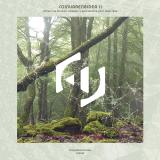
Soinuarenbidea II - Sintesis de Paisaje sonororos y Electrónica post industrial

Una interpretación de Soinuarenbidea II debería partir de esta premisa: todo es posible, nada es aleatorio, y en sí mismo es un imposible de aleatoriedades. El escenario planteado explora la idea de realidad aumentada desde una percepción sonora, ambiental y colectiva. La obra transita hacia adelante y hacia atrás recreando experiencias extintas de porvenir incierto, tratando de facilitar un fin pacificador. Cada pieza sonora se crea, se despliega, se repliega y se destruye, en una torsión permanente de toda la realidad que hace posible cada fragmento musical, cada identidad acústica, cada espacio sonoro. Lo onírico, la ficción, y el viaje están continuamente presentes, y es en el transitar de cada fragmento donde se produce el diálogo de la exposición musical. Los elementos de esta ficción se recrean continuamente, en un continuum donde se entrelazan y se van contorsionando a medida que crecen o decrecen con cada fragmento de síntesis concreta. Los temas explícitamente musicales son el magma que conduce a dar voluptuosidad al disco, siendo la piel un contexto o límite que en sí mismo fluctúa indefinidamente en texturas y configuraciones posibles. Y la urdimbre del silencio es la síntesis que está continuamente presente y que trata de cohesionar los fragmentos en continua colisión expresiva. Las grabaciones de campo proporcionan el material sonoro concreto, y como un fractal sonoro cada una de ellas ofrece diferentes grados de interpretación que a su vez conduce a nuevos fragmentos y nuevas creaciones. Así que se puede pensar que esta es una síntesis de una posible realidad, pero interpretable en infinidad de maneras. Un movimiento y una estaticidad implícitas que generan estructuras y dinámicas acústicas. Lo que se escucha no es real, pero en sí mismo forma parte de la realidad, creando un escenario expectante. Lo cinematográfico, plástico y teatral, danzante y dinámico cobra importancia en este juego, porque se trata de contar una historia, una experiencia recreada desde los puntos de vista del arte visual. Es a su vez hilo conductor y entretenimiento, discurso político y puro divertimento. Es desde este espacio de convivencia artística que tiene sentido la totalidad y justifica el formato sonoro planteado. La contradicción de la obra es patente en el formato, y es a su vez el planteamiento de una accidentalidad en el devenir vital. Contenedor de Ruido recoge todas estas contradicciones y las manifiesta en la obra Soinuarenbidea II. Es una historia sonora, es un cuento acústico. Es un fragmento de vitalidad en imágenes audibles. Es una invitación a la reflexión, a la crítica, al disfrute, a la meditación, a la celebración. Y sobre todo es esperanzadora apreciación de la realidad como algo maleable que confeccionamos colectivamente, que requiere de una paciente observación y la participación colectiva global, en un mundo finito pleno de diversidades y del que ignoramos prácticamente todo, al que deberíamos volver con respeto y devoción.

Soinuarenbidea II-ren interpretazio batek premisa honetatik abiatu beharko luke: dena da posible, ezer ez da ausazkoa, eta, berez, ausazkotasun ezinezko bat da. Planteatutako agertokiak errealitate areagotuaren ideia aztertzen du, soinu-, ingurumen- eta talde-pertzepzio batetik abiatuta. Lanak aurrera eta atzera egiten du, etorkizun zalantzagarriko esperientzia desagertuak birsortuz eta helburu baketsua lortzen saiatuz. Soinu-pieza bakoitza sortu, hedatu, tolestu eta suntsitu egiten da, musika-zati bakoitza, identitate akustiko bakoitza eta soinu-espazio bakoitza ahalbidetzen dituen errealitate osoaren etengabeko bihurdura batean. Onirikoa, fikzioa eta bidaia etengabe daude presente, eta pasarte bakoitzaren joan-etorrian gertatzen da musika-erakusketaren elkarrizketa. Fikzio honen elementuak etengabe birsortzen dira, continuum batean, non sintesi zati zehatz bakoitzarekin hazi edo txikitu ahala elkar lotzen eta bihurritzen diren. Esplizituki musikalak diren gaiak diskoari atsegintasuna ematera eramaten duen magma dira, azala testuingurua edo muga izanik, testura eta konfigurazio posibleetan mugarik gabe aldatzen dena. Eta isiltasunaren irazkia etengabe presente dagoen sintesia da, zatiak etengabeko adierazpen-talkan kohesionatzen saiatzen dena. Landa-grabazioek soinu-material zehatza ematen dute, eta soinu-fraktal batek bezala, horietako bakoitzak interpretazio-maila desberdinak eskaintzen ditu, eta horrek, aldi berean, zati eta sorkuntza berrietara eramaten du. Beraz, pentsa daiteke errealitate posible baten sintesia dela, baina hamaika modutan interpreta daitekeena. Egitura eta dinamika akustikoak sortzen dituzten mugimendu eta estatikotasun inplizitu bat. Entzuten dena ez da erreala, baina, berez, errealitatearen parte da, eta agertoki espektakularra sortzen du. Zinematografikoak, plastikoak eta antzerkikoak, dantzariak eta dinamikoak garrantzia hartzen dute joko honetan, ikusizko artearen ikuspegitik birsortutako istorio bat, esperientzia bat, kontatzea baita helburua. Aldi berean, hari gidaria eta entretenimendua da, diskurtso politikoa eta dibertimendu hutsa. Elkarbizitzarako espazio artistiko honetatik osotasunak zentzua du eta planteatutako soinu-formatua justifikatzen du. Obraren kontraesana nabarmena da formatuan, eta, aldi berean, bizi-bilakaeran istripu-tasa bat planteatzea da. Zarata-edukiontziak kontraesan horiek guztiak jasotzen ditu eta Soinuarenbidea II obran adierazten ditu. Soinu istorio bat da, ipuin akustiko bat. Bizitasun zati bat da, irudi entzungarrietan. Hausnarketarako, kritikarako, gozamenerako, meditaziorako eta ospakizunerako gonbidapena da. Eta, batez ere, itxaropentsua da errealitatea modu kolektiboan egiten dugun gauza xaflakor gisa hautematea, behaketa pazientea eta partaidetza kolektibo globala eskatzen dituena, dibertsitatez betetako mundu mugatu batean, ia guztia kontuan hartzen ez duguna, eta errespetuz eta debozioz itzuli beharko genukeena.

An interpretation of Soinuarenbidea II should start from this premise: everything is possible, nothing is random, and in itself is an impossible randomness. The proposed scenario explores the idea of ​​augmented reality from a sonic, environmental, and collective perception. The work moves back and forth, recreating extinct experiences of an uncertain future, seeking to facilitate a peaceful end. Each sound piece is created, unfolds, retreats, and is destroyed, in a permanent twisting of all reality that makes each musical fragment, each acoustic identity, each sonic space possible. The dreamlike, the fictional, and the journey are continually present, and it is in the transit of each fragment that the dialogue of the musical exposition takes place. The elements of this fiction are continually recreated, in a continuum where they intertwine and contort as they grow or diminish with each fragment of concrete synthesis. The explicitly musical themes are the magma that leads to the work's voluptuousness, the skin being a context or boundary that in itself fluctuates indefinitely in possible textures and configurations. And the warp of silence is the synthesis that is continually present and seeks to unite the fragments in a continuous expressive collision. The field recordings provide the concrete sound material, and like a sonic fractal, each one offers different degrees of interpretation that in turn lead to new fragments and new creations. So one can think of this as a synthesis of a possible reality, but interpretable in an infinite number of ways. An implicit movement and staticity that generate acoustic structures and dynamics. What is heard is not real, but in itself is part of reality, creating an expectant scenario. The cinematic, plastic and theatrical, dance and dynamic aspects take on importance in this game, because it is about telling a story, an experience recreated from the perspective of visual art. It is at once a common thread and entertainment, political discourse and pure entertainment. It is from this space of artistic coexistence that the whole makes sense and justifies the proposed sound format. The contradiction of the work is evident in its format, and it is, in turn, the presentation of an accidentality in the course of life. Noise Container gathers all these contradictions and manifests them in the work Soinuarenbidea II. It is a sound story, an acoustic tale. It is a fragment of vitality in audible images. It is an invitation to reflection, to critique, to enjoyment, to meditation, to celebration. And above all, it is a hopeful appreciation of reality as something malleable that we collectively craft, requiring patient observation and global collective participation, in a finite world full of diversity and of which we know practically nothing, to which we should return with respect and devotion.

Paisajes sonoros, diseño sonoro, drones y música grabada, realizada y arreglada para Contenedor de Ruido por David Aranaz. Coro: Basandere Ahotsak. Producido y mezclado por David Aranaz. Mástering: Estanis Elorza. Fotografía: David Aranaz. Texto: David Aranaz. Traducción: Saioa Aranaz Oreja. Trabajo y Diseño artístico: Cristina Martinez. Edición: Contenedor de Ruido Producciones y Sarbide Music. Distribución: Contenedor de Ruido.

Contenedor de Ruido agradece el apoyo en la realización de Soinuarenbidea II al coro Basandere Ahotsak y en especial a Eva Orbara Goicoa.

Soinuarenbidea II está dedicado al pueblo palestino.

Paisajes y objetos Sonoros, samplers y otras músicas transformadas para Soinuarenbidea II
Burlada: Paseos sonoros matinales por Merindad de Sangüesa, Calle Mayor, Capuchinas, Parque Uranga y varias iglesias y plazas. Pasajes del cotidiano: basura de papel, cristal y plástico.
Pamplona: Cementerio de San José. CEIP Sanduzelai /// Quinto Real: Fábrica de Armas, Puerto de Urkiaga y alrededores. Suite del silencio, bosques en movimiento /// Fábrica de armas de Orbaiceta: regatas, biosques, paseo sonoro hasta regata /// Belate: Puerto de Belate y alrededores. Vacas en pradera junto a las turberas /// Bardenas Reales: Suite de guitarra y Suite del silencio, estepa desértica /// Austria: Tranvías de Graz y Viena. Muchedumbre del metro de Viena.
Voces cinematográficas de: Matanza en Texas, Robocop, Espíritu Sagrado, Solo los Amantes Sobreviven, Voces de Gaza, Yojimbo, Terciopelo Azul, Los 7 Magníficos.
La pista A2 está dedicada a la memoria de David Lynch.
La pista B4 está dedicada a Eva Orbara Goicoa.
Pista A4: Contiene interpretaciones de piano de Three Piano Pieces Op.11 de Arnold Schoenberg.
Pista A5: Es una interpretación expandida con síntesis FM del Concerto Op. 24 - Etwas lebhaft - de Anton Webern.
Pista A7: Contiene la canción Besarkatu ninduzun (Letra de Josune López y música de Josu Elberdin) en interpretación de Basandere Ahotsak en la iglesia de Burutain bajo la tormenta.
Pista B2: Contiene la canción Recuerdos de la Alhambra (Fernando Tárrega) en interpretación torsionada de David Aranaz Sarasa.
Pista B14: Contiene la canción Agur María (Letra y Música de Estíbaliz Robles “Estitxu” y arreglo exclusivo de Alfonso Ortiz para Basandere Ahotsak) en interpretación de Basandere Ahotsak.

Equipamiento para Soinuarenbidea II.
Micros de condensador SE7, configuración XY y ORTF; Micros de cinta ORTIZ LUTHIER configuración XY y Blumlein; Grabadoras MARANTZ y ZOOM; Sintetizadores y samplers Elektron MONOMACHINE SPS-1, MACHINEDRUM SFX6 y MODEL:SAMPLES. Dave Smith MOPHO. Torso Electronics S-4. Sintetizador Modular 333 DIY; Guitarra clásica ALHAMBRA 6P; Esculturas Sonoras tipo Baschet, cristal y metales; Mesa Soundcraft FX16ii; Interface de Audio RME Babyface Pro FS; DAW Logic Pro; Procesamiento de modelado analógico con Acústica Audio, Waves, Softube, Brainworx, Sonible, Analog Obsesion, Tokio Dawn. Metering de Logic y RME DigiCheck . Amplificación Hafler PRO2400. Monitorización BW DM602 S3. Mezcla digital; Mastering híbrido.

pre-ordina ora30.01.2026

dovrebbe essere pubblicato su 30.01.2026

26,47
GASTR DEL SOL - CROOKT, CRACKT, OR FLY
  • Wedding In The Park
  • Work From Smoke
  • Parenthetically
  • Every Five Miles
  • Thos. Dudly Ah! Old Must Dye
  • Is That A Rifle When It Rains?
  • The C In Cake
  • The Wrong Soundings

Gastr del Sol"s second album returns at last to the vinyl format - its first physical manifestation in well over a decade. Once again, a drop of the needle may ignite any number of queries, summed simply in one: What IS this music? Such is the potent energy of Crookt, Crackt, or Fly, retaining its otherworldly qualities some 32 years and countless musical movements since. Crookt, Crackt, or Fly expands upon The Serpentine Similar"s minimalist stance in unexpected ways, imposing further austerity in the soundscape but for an unpredictable expansive quantity periodically overflowing, waves of blood sluicing through the elevator doors. This is partially due to a change within the group dynamic: the departure of bassist Ken "Bundy" Brown and the arrival of a new partner for guitarist and singer David Grubbs - guitarist and sound fuckerer Jim O"Rourke. O"Rourke"s initial work with Gastr involved editing and recomposing recordings of the Grubbs-Brown-&-sometimes-John-McEntire lineup, producing an utterly outré collage of cut-ups and other types of tape processing. This became the "20 Songs Less" single, after which he was invited to play with the group. It was a time of flux; Brown recalls playing a Gastr show at the Metro around this time featuring himself, John McEntire, Grubbs and O"Rourke - and one of the pieces played was a Tortoise song! Throughout these shifts, Gastr del Sol"s music was never less than fully considered and composed, even in moments redolent with the suggestion of the random and the non-sequitur. Grubbs and O"Rourke made no attempt to replicate Serpentine"s arrangement of thick, scaly drones and hypnotic song-visions in their own partnership, finding Crookt, Crackt,"s sound instead in spiny, gamelan-like interactions between their (mostly acoustic) guitars, played precisely in and out of formation with bright, fleet-fingered abandon. O"Rourke"s fondness for field recordings and his capacity for tape manipulation intersected with Grubbs" sensibilities, edifying his evolving song style: written with increased sharpness and sly surreal humor, sung closer to silence. Halfway into "Work from Smoke", the sudden collapse of the sound-walls around us signals Crookt, Crackt"s major departure. From the thicket of guitars, a swell of drones and free-jazz squeals, made up of bass clarinet, vibraphone and organ, pulls the listener into an entirely other acoustic space. "Every Five Miles" derails in similarly tactile fashion: a guitar duet boils up thunderously, then fragments and spirals apart. As a free electric guitar part crops up, improbably holding the center, the acoustic space around it continues to disintegrate in ambient stereo. A wedding of folk music idioms to classical, improvised and modern compositional modes (including Gastr"s own formative post-punk mode), Crookt, Crackt, or Fly is a song-based reality steadily giving way to its alternative alchemies playing out within.

pre-ordina ora05.09.2025

dovrebbe essere pubblicato su 05.09.2025

31,72
Kuttin Edge - (115)

Kuttin Edge

(115)

12inchPLAYME12011
Play Musik
22.08.2025

* 140gm vinyl in charcoal black reverse-board disco bag, with red/ hot pink/ blue/ off-white patterned wraparound sticker, and embossed play:musik icon on front sleeve.

* Kuttin Edge arrives on p:m with (115), a musically adventurous set that draws from a range of influences - West African funk, UK and US electronics, Autonomic moods, minimal techno, and Brutalism; while a focus on analogue feel, overdubbing, and textural detail processes tie it together. An interesting, experimental, yet firmly dancefloor friendly EP.

* Tracklist:
A1. Onyeabor: a unique track full of vintage-sound synths, bright melodic lines, Moog-style arpeggios, and rhythms built on a CR78, layered with live drums, tambourines, and bass guitar. Disco funk samples and fx add texture, alongside heavy overdubbing. Inspired by early William Onyeabor aesthetics.

A2. Dark Horse: Dark Horse: an atmospheric arrangement of phase-y pads reminiscent of the peak Autonomic era, filtered through the abstract lens of artists like Actress or King Britt. The pacing and negative space give the tune a weighty but airy feel, punctuated by heavy toms and documentary-style foley. Soulfully cosmic.

B1. Loop Me: polyrhythmic arpeggios, swirling delays, unstable harmonic structure, and chromatic movement form a tense, shifting progression. Built around a single bell sample, the track is reshaped through layering, modulation, subtle changes in texture, and filtered transitions. A techno stepper.

B2. Geiger Scale: experiments with playful but controlled randomness, minimal structure and off-grid sequencing. The idea centres on a toy synth with loose notes and laidback groove formed of irregular, rhythmic patterns. Geiger Scale perfects restraint as the arrangement bubbles along with sparse melodies. Smokey and potent.

non in magazzino

Ordina ora e ordineremo l'articolo per te presso il nostro fornitore.

17,61

Last In: 8 months ago
Domu - Them Things / A Madness / Not Him Again

After limping back from retirement with a remix or two and a single on Neroli, Domu makes it back to his birthplace, 2000black.

After 25 years of ups and downs, highs and lows and down and ups, it's now time to rest for good. As the spirit of his jungle past still haunts the hallways of what is left of record and clubland, Domu instead lays down to accept, for him at least, enough has been said.

A Madness is the result of layers and layers of random obscure rhythmic samples with some textbook Domu keys. Urgency pours out of it. Quick let me finish this before I die.

Not him again is a result of a jam with long time collaborator Robert Marin with Domu leading the creative direction. Do we like house records that could be on the wrong speed? Yes. Do we like Hip Hop that doesn't accept any of the standard conventions of Hip Hop? Yes. And this is the result.
And finally Them Things. Domu has been trying this whole time to convey a feeling, that weird feeling that those special 'odd numbers' create. Not a specific genre or tempo or movement with a catchy name, just a thing you can't quite explain. Maybe he got close now and again, maybe he didn't but this feels like it could be the closest we'll ever hear.

Miss this end of an era at your peril.

non in magazzino

Ordina ora e ordineremo l'articolo per te presso il nostro fornitore.

12,56

Last In: 8 months ago
Peter Van Hoesen - Prime Directive

Big new release by Peter Van Hoesen! Continuing his exploration of intricate techno systems, their effect and direct perimeter of action, Peter van Hoesen turns in his newest four-track piece, ‘Prime Directive’: a fascinating dive into the artist’s shape-shifting headspace and inner creative chaos.

Fuelled on a furnace-hot mix of abstract-leaning immersion and hi-octane rhythmic thrust, ‘Prime Directive’ looks at contemporary techno from the angle of experimentation and intuitive abandon. The result comes in the form of four distinct movements, each carving out their own logic and associated behaviour out an endless pool of potentialities. Here comes chaology unfolding in all its unadulterated, visceral glory.

‘Definition by Absence’ breaks the trip in to the sound of a faux-random symphony: its train-like swing and fiery bass seesaw coalesce through an elliptic fluttering of sorts, iterative and not, patterns moving in and out of synchronicity as van Hoesen applies more or less pressure on both ends. All in gusty in-your-face-ness, ‘Variables Edit 1’ whirls and swirls like an ominous vengeance of nature; Its puncturing kicks and whistling menace set against stellar winds and rabid machinery on the prowl for its next victim.

An even more unsettling piece of disjointedly arrhythmic, anti-club music for the dance floor, ‘Prime Directive’ will have you zoning out like a bad dream, flush with metronome-faced monsters and molten clocks hanging from dead trees. ‘Morphology’ could be PVH’s attempt at giving his concepts a carnal carcass to hold onto. Here, rhythm becomes somewhat less erratic, offering his 360-degree vision more melodic surface and actual room for dispersion. One to keep the boundaries pushed and status-quo challenged, this is techno at its most entrancingly bold and fearless.

*This new four-track epic from Peter van Hoesen comes draped in a fine piece of artwork courtesy of Atact, and pressed according to our standards in 180g audiophile quality so you get to experience the Belgian master's chiselled sound design in all its glory.

non in magazzino

Ordina ora e ordineremo l'articolo per te presso il nostro fornitore.

13,24

Last In: 6 months ago
Teho Teardo & Blixa Bargeld - Nerissimo

2024 Reissue

The second album of songs resulting from the collaboration between Teho Teardo and Blixa Bargeld was released in 2016, three years after the celebrated debut with "Still Smiling". Often the nature of collaborations is fleeting, usually not involving a sequel; in this case, however, we are faced with the evident settling of a bond, human and artistic, that is no longer occasional but has reinvented itself to explore other territories and will not stop there either. The album cover is inspired by the famous 1533 painting by Holbein the Younger, "The Ambassadors": a work celebrating an official visit, a meeting between two friends, the pride of their gazes still strong despite time, distance, despite everything. Teho and Blixa return with an album of new songs, sung in German, English and Italian. "Nerissimo" is the superlative of black in Italian and there is something rather black about the music on this album. Not in the sense of dark, an adjective often used to define certain sounds, but just as it happens with the colour black, which contains all other colours, so this music contains a multitude of possibilities."Nerissimo" is also the title of the track in English that opens the album and closes it, as if between two parentheses, in Italian. A temporal passage between languages that links Rome and Berlin, where the album was recorded, ever more intimately. A crossing of the last three years of work together for Teho and Blixa. This record is also a nocturnal story of apparitions, of colours that disappear from the world just by naming them, of aeroplane flights with the lights off in the cabin, of objects whose symbolism represents the passions and interests of the two artists (starting with the objects reproduced on the cover); a sort of tale through objects, continuous movements and the discovery of sounds, even random ones. Sounds intercepted in the space of these three years and which ended up on the disc as interferences that challenged the structure of some songs, resulting in their adaptation to the invasion of foreign sound bodies. "Nerissimo" does not only contain songs but also features experimental tracks, such as "Ulgæ", in which the lyrics explain, like a subtitle, the sounds that follow one another in a story.

non in magazzino

Ordina ora e ordineremo l'articolo per te presso il nostro fornitore.

19,29

Last In: 18 months ago
Jeffrey Lewis & Los Bolts - Manhattan LP

Jeffrey Lewis’s 2015 masterpiece ‘Manhattan’ in random-colour reground vinyl. “Lewis’s catchiest and finest album” - (Grade: A) Vice. Blang Records are thrilled to announce they’ll be bringing the wild streets of Manhattan to the UK and Europe this autumn with the vinyl re-release of Jeffrey Lewis’s 2015 masterpiece ‘Manhattan’. The LP sold out of its first pressing and has been impossible to buy anywhere for years…until now. Out on exclusive Random Mix Colour Reground EcoVinyl in record shops from 20th September. Blang Records and Jeffrey Lewis have history: before Blang was a label, it started life as a live night at the 12 Bar Club in Denmark Street, hosting many a set of the NY Antifolk artists over on UK shores, including Jeffrey Lewis. Now 20+ years since Jeffrey first played Blang, it feels fitting that tour support comes from UK antifolk linchpins, Blang Records mainstay, and arguably one of the UKs most criminally underrated bands, David Cronenberg’s Wife (“A mix of 80’s fall and the Velvet Underground” - NME). Native New Yorker Jeffrey Lewis is a comic book writer/artist and a musician. A cult hero birthed from the now infamous antifolk movement that sprung up on Manhattan’s Lower East Side in the 90s, Jeffrey has released dozens of albums showcasing his unique blend of bleakly witty observations, scratchy, lo-fi punk and croaky folk/anti-folk, all firmly rooted in a strong DIY sensibility. Jeffrey and his band have toured the world multiple times over, released albums on Rough Trade, Moshi Moshi and Don GIovanni Records, and have been featured by NPR, The History Channel, The NY Times and more. ‘Manhattan’ was mixed by John Agnello (Dinosaur Jr., Phosphorescent, War On Drugs) and recorded by Brian Speaker at SpeakerSonic Studios NY, produced by Brian Speaker and Jeffrey Lewis. “We’ve been fans of Jeffrey Lewis since seeing him at the Sidewalk Cafe in 2001, so we’re really really pleased to be really-re-releasing the excellent album ‘Manhattan’ just in time for his September UK Tour. This all started when Jeffrey asked for help looking after his merch after his UK tour finished last year and we said we’d help him press some records in Europe from a UK address as the postage costs from the US were way too much. This ultimately led to us re-releasing his classic album (and respectful nod to Lou Reed's New York) ‘Manhattan’. It's beyond a dream come true. Blang is the home of fantastic lyricists and that's exactly what Jeffrey is - this is a perfect fit.” - Blang Records. “Jeffrey Lewis is an amazing musician, and if you don’t know his songs you probably have a hole in your heart that can only be filled by his words… I did!” – Regina Spektor. “Jeffrey is the best pure songwriter I know of… ‘Sad Screaming Old Man’… is one of my favourite songs ever written.” – David Berman, Silver Jews. Tour Dates: Jeffrey Lewis & The Voltage, w/ support from David Cronenberg’s Wife - Aug 29th Hertford – Corn Exchange, 30th Coventry – The Tin Music & Arts, Sept 1st Stockton-on-Tees – Georgian Theatre, 2nd York – The Crescent, 3rd Stirling, Scotland – The Tolbooth, 4th Birkenhead – Future Yard, 5th !SOLD OUT! – Halifax – The Grayston Unity, 6th Norwich – Norwich Arts Centre, 7th Northampton – The Black Prince, 8th Carmarthen – CWRW, 9th Nottingham – The Old Cold Store, 10th Southampton – The Joiners Arms, 11th Hastings – The Pig // Jeffrey Lewis solo: 12th London – West Hampstead Arts Center, 13th London – West Hampstead Arts Center

pre-ordina ora20.09.2024

dovrebbe essere pubblicato su 20.09.2024

27,31
Marco Maldarella - Clinamen LP

"Clinamen" is the random and unpredictable movement of atoms, which inexplicably change direction during their fall and thus encounter each other. From this chance encounter, the divine does not arise but actually dies, since the atom is nothing more than the aggregation of infinitesimal parts of matter, converging into unity. From this one, from this singular, from this self, I want to escape. Having abandoned the vain glory and hope of passions, I strive towards the sacred, for the gods themselves are also made of atoms. In this sacred secularism of mine, in this exodus from myself, I finally recognize the truth: there is no difference between us and them. Everything converges into a single point, which is the whole. And I find peace. You will find the rhythmic and unpredictable chaotic tale of the atomic fall towards oneself. As the infinitesimally small and the infinitesimally large come to coincide in the creative moment, even time bends and adapts in the service of this imperceptible revelation. Through post-tribe sounds of ancient remiescence to the most contemporary clubbing subculture, passing through an exasperated minimalism that leaves no detail behind. Complex, elegant, profound. Open to any change

non in magazzino

Ordina ora e ordineremo l'articolo per te presso il nostro fornitore.

14,08

Last In: 13 months ago
Djalma Corrêa - Espontaneamente se Tenta: Aventuras Sonoras de Djalma Correa LP 2x12"

"Espontaneamente se Tenta: Aventuras Sonoras de Djalma Corrêa is an album of deeply exploratory pieces by legendary percussionist and composer Djalma Corrêa. This double-LP set features previously unreleased recordings that cover a wide range of sonic experiments, revealing an unknown side of the prolific and groundbreaking Brazilian artist. Most of the tracks on this album were digitized for the first time – directly from the original tapes – and were compiled in collaboration with Corrêa just before he passed.

The result is a wild and unsettling collage that shows us just how original and intense Corrêa could be: from the unorthodox electroacoustic piece Evolução (Para Fita e Filme), which channels ancestral African inspirations to create a sonic cosmogonical narrative, to the proto-mixtape Exemplo de Sintetizadores, in which he transitions from transcendental drones to astral cha-cha-chas.

While the compilation might seem disjointed at first listen, it is in fact the most accurate translation or representation of his central concept: spontaneous music. Djalma's relationship with sound was always guided by his fearless approach to listening, and by his audacious and dynamic interaction with both musicians and equipment, which enabled him to work across a wide array of genres: from jazz to completely abstract music, always through a personal DIY ethic.

Corrêa developed a strong bond with experimentalist and inventor Walter Smetak, with whom he shared a studio during his formative years at Universidade Federal da Bahia. Suite Contagotas, featured in this collection, is no less than a sonic materialization of that bond: an experiment revolving around dripping water and its randomness – a tentative exploration of the ideas and possibilities envisioned by Smetak for his audacious, albeit unrealized, Estúdio OVO.

Djalma, however, is best known for his studio work in historical albums, including many by Caetano Veloso, Gilberto Gil and Jorge Ben, and for his own polyrhythmic opus Baiafro. The last track is an early recording called Bossa 2000 dC, first performed by Djalma at the 1964 Nós, Por Exemplo concert, an event which is often cited as marking the beginning of the Tropicalia movement. At the time, he was the only artist in the lineup using electronic devices to create sounds, e.g. medical oscillators and contact mics to augment his percussive palette.

The artwork is an amalgamation of material found in the Djalma Corrêa Archive (currently managed by his son Caetano Corrêa) and other material created during the period in which the record was being put together. The intention is to guide the listeners through this possibly tempestuous soundscape, giving them additional resources so that they may draw their own meanings and make their own sense of this extremely immersive and original experience – which is like nothing we've ever heard before."

pre-ordina ora01.06.2024

dovrebbe essere pubblicato su 01.06.2024

28,99
Flore Laurentienne - 8 Tableaux LP

With 8 tableaux, I tried to give musical form to a painting. Music is an art that takes place over time. Painting is a freeze-frame at a precise moment in the painter's creative flow.

So how do you combine these two art forms? Do you have to stop time? How do you stop time in music? By basing the structure of the pieces on cycles that recur again and again, we can make the listener believe that the music was there before, and that it will also be there afterwards.

With no beginning and no end, all that's left is this musical freeze-frame. In taking this approach, it became clear to me that music and painting both appeal to contemplation. Another concept I worked on for this record is the notion of randomness in music. Riopelle is often associated with the Automatist movement.

For me, his major works from the 50s are more reminiscent of romantic abstraction or even a great organic and organized chaos (a link to be made with nature here). It was on the basis of this reflection that I tried to integrate the notion of controlled chance or, rather, of chaos filtered through emotion.

pre-ordina ora01.03.2024

dovrebbe essere pubblicato su 01.03.2024

23,32
BRUCE FLAKIAN - BRUCE FLAKIAN LP

Bruce Falkian is a world famous contemporary artist who exhibits at the world's most prestigious art galleries and fairs. Bruce Falkian moonlights as an agent of espionage against the Terrorism Industrial Complex. Wait... what?

To understand Bruce Falkian we first must understand the link between image and war. In the late 1800s the precursor to the video camera was invented. It was directly inspired by guns, specifically, Samuel Colt's Revolver. It borrowed not only its barrel mechanics, swapping bullets for exposures, but its terminology too. Load, point, scope, aim, shoot, flash. The camera and the gun, united by cordite, would go on to prove the most efficacious tools in shaping the modern world.

The 20th century was a laboratory when it comes to killing and image making, glorified through Hollywood and the Western genre. Propaganda would prove highly effective in creating and sustaining support for militaries fighting for ideological global control. Devised first in the aptly title 'Propaganda' (1928) by Edward Bernays, a nephew of Sigmund Freud, Advertising and Public Relations became the leading media industries, learning how to control the population through images, usually just to buy random crap they didn't need, but other times to overthrow democratically elected politicians in foreign countries. Eventually Western Liberal Democracy assumed domination, built of course on the enslavement of all peoples and nations who didn't fall in line with its specific ideas of living. The Red Scare inspired countless anti-leftist, anti-communist works of art throughout the Cold War, notably and most bizarre, funding the abstract expressionist movement as a non-ideological alternative to socialist realism art. When the Soviet Union fell, Western Liberal Democracy was able to promulgate its unhindered views around the world through its various media empires and actor states. Is it a coincidence that a third of the almost $85 billion dollar global camera equipment market is represented by the greatest propaganda beast the world has ever seen, the USA?

Guns are dangerous because of the obvious. Images are dangerous because we are bad at perceiving what is real (as any jump scare, deepfake, newsreel will attest to.) Videos aren't technically real, they are only a collection of rapidly changing static images which give the illusion of movement. It's easy for us to collectively decide that a video is real, because that's the way our brains perceive reality. People who lead the world of media understand this, which is how they are able to control us, make us invade foreign countries, vote for specific politicians, feel ugly or fat etc. However, ubiquitous as they are, it seems that the image is in crisis. It seems that we've run out of them. Or perhaps our understanding of an image is changing, with the aid of near instantaneous text-to-image AI technology. So what does this mean for guns? What does this mean for war? How will images be used as an aid to war in the 21st century? It remains to be seen, but Bruce Falkian will be a useful agent.

non in magazzino

Ordina ora e ordineremo l'articolo per te presso il nostro fornitore.

24,58

Last In: 2 years ago
Various - Sound of Space (Random and Emblematic) 2x12"

it’s a pleasure to bring together, on this album, musicians with whom we feel a very special connection, namely Felicia Atkinson, Büþra Kayýkçý, Carmen Villain, Kuniyuki Takahashi, Pavel Milyakov,
KMRU, Ana Quiroga, Abul Mogard and Pedro Vian. All of them have been very generous in their willingness to participate in an artistic experiment: to build bridges between architecture and music.
Each of these artists chose a space and translated it into a piece of music, and the result is a sonic kaleidoscope through which specific territories can be gazed upon from unexplored points of view. The
compositions that make up this compilation are synaesthetic windows through which we can observe with our ears. To look through them, all we have to do is listen and we’ll be able to contemplate, in a unique
way, spaces located in such different places as Vilches (Chile), Istanbul (Turkey), Oslo (Norway), Sapporo (Japan), Nairobi (Kenya), London (England), Rome (Italy), Berlin (Germany), or even in imaginary universes.

non in magazzino

Ordina ora e ordineremo l'articolo per te presso il nostro fornitore.

28,15

Last In: 3 months ago
Hastings of Malawi - Choreological Exchanges

Recorded at the height of the global pandemic, and at a time when remote communication was becoming increasingly prevalent, "Choreological Exchanges" is part of Hastings Of Malawi's continuing investigations into the medium of communication itself. Prior to telephony becoming digital, all phone calls were routed through mechanical telephone exchanges, and the majority of the sounds on side one are the sounds of these exchanges and some of the voices of the engineers who worked with them.

Hastings Of Malawi make strange records and this one is no exception although it has a more linear narrative structure in opposition to what critics have described as their Dadaist approach. Their records certainly resist genre classification and do not really fall into the category of music. Hastings Of Malawi have themselves described previous records as films without light, radio plays and as poems. This one is a dance - a dance that takes place within the chain, or pipe, that is brain - mouth - telephone - telephone exchange - telephone - ear - brain.

"It is a dance record but not in the way that these are usually understood. An invitation to dance appears twelve minutes in on the first side. It is a dance within the wires, movement around noise used as a sculptural material rather than unwanted signals and a joyful exploration of sonic materiality. The second side begins with the voice of a telephone engineer, who states that in the top floor switch room of the exchange is the only vestige of human control. Is this top floor switch room the human brain? The sounds on this side, float between the mechanical telephone exchange and the body where the messages are created and interpreted - it is an exploration of the relationship between thought and the material devices in which telephone sound is propagated and transformed. Side two ends with a long list of randomly generated words created by digital voice synthesis." - HOM

pre-ordina ora03.03.2023

dovrebbe essere pubblicato su 03.03.2023

18,03
A.Garcia - Nihilism EP

A.garcia

Nihilism EP

12inchDOCILE031
Docile Records
22.12.2022

Each realm moves its own time in the now. Our space in this realm moves in time with the greater mechanism, at our own pace. We focus less on the gears of the mechanism and more on the energy that turns motion. Our music is a reaction to falling; an instinctual jerk that breaks momentum. Our sounds are taken from the background of our environment. Conversations that blend, the rattling hydraulics of a bus, the ringing of your ears, the random bangs of a floundering stumble corralled into a rhythm and submerged in synth. Docile is a style that is gritty to smooth on an honest simple funk. It is a stripped down 4\4 minimalism with a backbone. We transmit the frequency of our time and space through the noise of the technosphere; determined to advance our movements into unknown areas.

Docile Recordings is owned and managed by Andy Garcia. Docile 31 was produced by Garcia in his laboratory located in downtown Detroit. Every Docile product is pressed by Garcia at Archer Records on an American made Lened press.

non in magazzino

Ordina ora e ordineremo l'articolo per te presso il nostro fornitore.

11,39

Last In: 3 years ago
Melvin Gibbs - Anamibia Sessions 1: The Wave

A potentially surprising release on Editions Mego. Another planned prior to the untimely passing of Peter Rehberg in 2021.

Melvin Gibbs is the renowned bass player and producer from Brooklyn who’s vast resume includes playing with Sonny Sharrock, John Zorn, The Rollins Band, Dead Prez, Caetano Veloso and Femi Kuti amongst others. A solid resume, no doubt, but what is Gibbs doing on Editions Mego?

Behind the scenes, those who know Gibbs knew that amongst all this he was also tinkering away at another form of music, one which skirts around the border between music and sound design. The Wave is the first release that reveals this side of Gibbs’ creative output to those outside his inner circle.

The driving force for this output is Gibbs’ multi-decade friendship with acclaimed American video artist and cinematographer Arthur Jafa. Over the course of time Gibbs and Jafa have had many conversations about music and the connection between film and music. Jafa’s desire to make film that worked the way Black (as in Black/African-American/ Afro-diasporic peoples) music worked inspired Gibbs to study the filmmakers Serge Eisenstein and Dziga Vertov and incorporate their philosophies and tactics when recording his own music. The two discussed sound design which directly informed Gibbs’ choice of music making tools and led to him acquiring Symbolic Systems Kyma software and hardware, incorporating this as a composition tool and sound design and component in his work. These conversations bore concrete fruit through Gibbs’ work for TNEG, the film studio Jafa ran with filmmakers Malik Sayeed and Elissa Blount Moorhead. Gibbs created the soundtrack for their very first project, the short film “Deshotten 1.0” (2009 - directed by Jafa and Sayeed) as well as their Martin Luther King-inspired meditation on Black life “Dreams Are Colder Than Death” (2013, directed by Jafa)

The bass-forward music, or ‘sonics’ as Gibbs calls it, emerged from an alternative mode of contemplation, a mode that he sees as closer to the mindset of a rootworker, an African-American herbal doctor who cures psychic ailments using means derived from African spiritual practice, entering a forest to find the right plants for a suffering client than a mediator attempting to invoke mindfulness. Gibbs says this practice yields results that suggest an aural form of creation akin to coagulation, a formal movement that gives the sense that a flow of sounds can emit something bearing resemblance to solidifying objects.

In 2020 Jafa asked Gibbs to work on the soundtrack for a work in progress called “The Wave''. When they got together to work on the soundtrack, Jafa played Gibbs a selection of sounds that included random moments of (probably unwanted) feedback on 70's Miles Davis records, Pop Smoke's Brooklyn drill, the music of Bernard Gunter and Darmstadt-style compositions made with test equipment. Those sounds, filtered through years of conversation with Jafa about Black creativity and the possible evolution of Black music, formed the sonic vocabulary of “The Wave”.

non in magazzino

Ordina ora e ordineremo l'articolo per te presso il nostro fornitore.

12,19

Last In: 3 years ago
ALCIDES NEVES - TEMPO DE FRATURA LP

A joint release between Discos Nada & Litoral. One of the first independently released Brazilian records, Alcides Neves’ debut LP ‚Tempo de Fratura’ is reissued for the first time on vinyl, alongside his second release ‚Des (Trambelhar) Ou Não‘.

Hailing from the Brazilian North East, Alcides Neves released his debut album a few years after moving to São Paulo, in 1979. The LP’s release coincided with the emergence of the city’s seminal Vanguarda Paulista movement, which led some researchers to locate Alcides within the movement. As the artist himself affirms; however, he did not fit into any established musical movements, and while it is perhaps possible to identify some influences, it is not possible to consider his music as belonging to a specific lineage either.

Alcides’ singularity and experimental disposition is on full display on his opening album, which revels in its own disformity and lack of external interference, made possible by releasing the LP independently.

The album translates to ‚Time of Fracture‘, a fitting moniker for the context in the final years of the Brazilian military dictatorship. The eleven songs that comprise the album are proof that the album was not named randomly, showcasing a broad range of both experimental and folk influences, while also including lyrics that originally did not get past federal censors.

Carefully remastered by Paulo Torres with updated original artwork, the record is reissued in a gatefold sleeve including a promotional image from the time of release. This LP furthermore includes an insert with a text written by the journalist and researcher Bento Araujo, editor of the bimonthly publication ‚Poeira Zine‘ and author of the ‚Lindo Sonho Delirante‘ series of books.

pre-ordina ora15.11.2022

dovrebbe essere pubblicato su 15.11.2022

19,71
Sunda Arc - Tides

Sunda Arc

Tides

12inchGONDLP035LE
Gondwana Records
08.11.2022

Sunda Arc are brothers Nick Smart and Jordan Smart. Best known as key members of folk and jazz influenced minimalists Mammal Hands, their Sunda Arc project takes inspiration from the likes of Jon Hopkins, Rival Consoles, Moderat and Nils Frahm as well as their own music world. Their debut EP 'Flicker' was released in December 2018 and now the duo are set to release their debut LP, 'Tides' on 7th February 2020.

Named for a volcanic arc in the Indian Ocean, created by the process of massive tectonic plates colliding, Sunda Arc strives to mingle electronic and acoustic sounds until they become almost indistinguishable from each other. It's a process where they draw the acoustic properties and quirks out of electronic sounds and find the electronic potential in acoustic sounds. "Finding the ghost in the machine or blending the human elements of playing live is something we are always trying to explore in our work.

Experimentation is a large part of our process and we tend to combine carefully composed material with chaotic ideas to find the balance between the two" — Sunda Arc 'Tides', their debut album, takes its name from the idea of unseen forces that can affect our lives in myriad ways, being pushed and pulled and at the whim of powerful forces outside of our control as well as offering a nod to things such as the tides on our planet, tectonic plate movements and weather systems. There are often chaotic elements in these systems that function in a way that produce a type of controlled randomness on a large scale. This is something they try to reflect in their music by adopting some of the ways these systems work into musical sequences, and using ideas such as chaos theory to control musical parameters. "Tides is a reference to themes we were thinking a lot about during the making of this album. These include the similarities between macro and micro systems, or the circulatory and nervous systems in the body. Things that produce a type of controlled randomness on a large scale". — Sunda Arc 'Hymn', the first single from the album, uses Nick's voice sampled and played back through a keyboard to create a human yet electronic feel.

It mixes soft vocals with heavier electronic elements to create a danceable yet human sound world. 'Dawn', is best described as uplifting-techno, its use of repeated phrases building in intensity and variations to put you into a hypnotic state whilst also being industrial and danceable. 'Daemon' is one of the tracks that really resonates live. Drawing on the sound of UK dubstep it's intense but fun and the bass clarinet blends with synths at the end to create a sound almost like a vocal. 'Secret Window' brings forward another side of the band, focusing around a lo-fi recording of felted piano and bass clarinet.

These are blended with granularised and processed versions of themselves which emerge like ghosts of the instruments throughout the track. 'Cluster' is another key track. It utilises a small group of notes looped in an unusual way to create a sense of cascading patterns over a solid danceable drum groove. It emphasises soprano sax blended into the sound world half-way through to lift into the final section.

non in magazzino

Ordina ora e ordineremo l'articolo per te presso il nostro fornitore.

20,97

Last In: 3 years ago
Kemialliset Ystävät - Alas Rattoisaa Virtaa

Jan Anderzén and his partners celebrate the transcendental power of ecstatic music. Alas Rattoisaa Virtaa is the first Kemialliset Ystävät album in four years. It is the result of chance enhancing online collaboration methods, desire to get lost in the sound archives and the high art of meticulous editing. The album title is from visions of rivers running down from Heart of Darkness to the City of Joyful Noise. If contemporary music is a high speed train passing by then KY's music would be an orgy of light under a railway bridge.

A band member Lars Mattila experiences the music of Alas Rattoisaa Virtaa in spatial terms:

"There are worlds accessed only through our auditory system. I hear a Wunderkammer of freestanding sound objects. Rhythms like sequences of seemingly random stuff laid out on the forest floor: a pair of thrones, a Henry Moore sculpture, a watermelon, two thrones, a Moore sculpture, a melon... I trust the path to go on even if I can't see behind the hill. There's motion, wether it be drunk driving or super human rapid eye movement. The sheer amount of detail makes it impossible to take everything in at once. One's perception and shifting focus reshape the experience on each listen. I remember my visit to Cappella Palatina in Palermo where Normann architecture, Arabic arches and Byzantine dome form a harmonious whole. Various cultural and spiritual influences are recognized as equals. The sense of space also brings to mind the end scene of The Lawnmower Man when the dude is trying to escape the virtual world."

pre-ordina ora21.10.2022

dovrebbe essere pubblicato su 21.10.2022

17,61
Articoli per pagina:
N/ABPM
Vinyl