Black Truffle is thrilled to present a previously unheard performance by rudra veena master Ustad Zia Mohiuddin Dagar, recorded in the North Indian city of Vrindavan at the Druhpad Samaroh festival in 1982. Z.M. Dagar was a nineteenth-generation descendant of the Dagar family of musicians, famed for their profoundly meditative approach to the tradition of Hindustani court music. Perhaps the most revered members of the family were the brothers Mohinuddin and Aminuddin Dagar, who played a key role in reawakening interest in dhrupad in the mid-20th century. The great exponents of the tradition from whom Z.M. Dagar descended were all singers, and dhrupad is essentially vocal music. However, as Z.M. Dagar explained, the veena family of instruments plays an important role in the education and practice of dhrupad singers, especially as an aid to mastering the fine microtonal nuances of pitch essential to the genre. Introduced as a child by his father to the rudra veena, a large and low-pitched veena amplified by two enormous gourds, Z.M. Dagar became the first modern dhrupad musician to perform with it as an instrumental soloist, giving his first recital at the age of 16. Devoted to the instrument throughout his life, he made innovations to its design and materials, as well as introducing novel techniques (such as playing without the use of the traditional wire plectrum, resulting in the remarkable warmth of his tone). In the great Dagar family tradition, his approach to the various ragas that make up the dhrupad repertoire was stately, slow, and considered, with a great emphasis on the alap, the heavily improvised exposition section. True to form, in this recording of Dagar performing the night raga Yaman Kalyan, the alap section stretches out to more than forty minutes of slow-motion bliss, a frozen tanpura drone hovering above Dagar’s gracefully bent notes and elegantly twisting phrases. In the alap’s first half, Dagar’s figures are so intently focused on the lower reaches of the rudra veena’s range that they register more as shudders and moans than melodic patterns. As the performance continues, he slowly climbs in pitch, though continuing with the same intent focus on the articulation of single notes and subtle microtonal variations. This leads to the jod section of the performance, which, though still accompanied only by the tanpura, gradually takes on a more rhythmic character. Developing almost imperceptibly over the course of nearly thirty minutes, the jod moves from the stillness of the opening alap to a rapid pulse that announces the closing section of the piece, where Dagar is joined by Shrikant Mishra on the pakhawaj (a double headed hand drum). Where many performers use the final section of the raga as an exercise in unrestrained virtuosity, Dagar and Mishra subtly weave a web of finely shifting accents and hypnotic melodic variations, bringing the recording to a fitting conclusion while remaining within the meditative space occupied by the performance as a whole. Adorned with beautiful archival photographs of Dagar taken by Swedish percussion legend Bengt Berger and accompanied by detailed notes from Bradford Bailey, Vrindavan 1982 is a stunning document of music unmatched in its patient focus and mysterious emotional depth. .
Cerca:range
"There could barely be a better figurehead for Belgrade's simmering multi-limbed music scene than Jan Nemeèek" The Quietus `Dissolved', a new album by Serbian synthesist and sound designer Jan Nemeèek, began its life cycle in a studio live room. It unpacks the paradigm of the individualistic act of computer music creation, transporting it into the communal setting of a band, its performers contributing elements ranging from prepared piano to Turkish lyre. The album opens with an unexpected falter, a false start that imbues the album with a sense of vulnerability. It's as if the album itself is finding its footing, mirroring the dissonance of an orchestra tuning. This digital ensemble, an assembly of electronic voices, seems to search for its harmony, its discord, its pitch, its timbre - much like a traditional counterpart would. As it unfolds, `Dissolved' further taps into the raw tonalities of partially defunct digital synthesizers, ranging from early 2000s' attempts at neural networks to precursors of oscillator-laden software synthesizers, in order to build its cloud of suspended tension and alternate histories. Through this clash of wistful piano and biting frost of digital pads with the iridescent hum of tube amps, the album reflects New Age tropes through the prism of metal (machine) music. Hailing from Belgrade, Serbia, Jan Nemeèek has been releasing electronic music since 2005, with a particular focus on ambient and bass-heavy electronic compositions. Nemeèek's music is characterized by his use of a wide range of sound generating tools, including neural networks, analog synthesizers, and granular synthesis. His approach to music production allows his work to unfold with patience, influenced by borderline dub sub-bass movements and heavily based on deconstructed recordings. Jan has released several albums, most notably 2014's Fragmented and later Recurrences. Prior to that, he co-founded the Creative Commons-based net label Norbu. `Dissolved' is set to be released on vinyl and digital on 10th November 2023 via Refractions, a new imprint founded by Nemeèek.
ele
Straight Outta Caledonia is the first commercially available “Greatest Hits” of the outsider songwriter Jackie Leven, an artist
who has largely remained in obscurity in his native Scotland despite being one of the greatest wordsmiths – and singers – it ever
produced. A well-travelled musician who began making psychedelic, progressive music in the late 60s before emerging as an
epic storyteller full of pathos, humour and humanity in the 90s, Leven lived and wrote like many of the fragile, gregarious
characters of his songs; large, full of life and empathy. Leven passed away in 2011 after recording 30+ albums under different
guises or with his briefly successful New Wave band Doll by Doll. Straight Outta Caledonia is a compilation collated by Night
School Records on its Archival label School Daze that seeks to introduce Leven’s music to new generations.
In an age of isolation, alienation and loss of visceral experience, Jackie Leven’s music can be massive and welcoming. It feels
connected to some universal humanity and vibrates with vitality. His songs are often full of tragedy and comedy simultaneously,
cutting straight to the heart, often plugging directly into the nervous system of the listener. His lyrics are rich, dense with imagery
that can veer from apocalyptic to the comically banal in a sentence, with a songwriting panache that can be heavy handed to
almost bursting point before skewering the song with a clownish, warm punchline. His productions ranged from Bob Dylan’s
Rolling Thunder Revue style rock band orchestrations with strings and organ as on the epic Ancient Misty Morning or they could
be pared down to the purest form of folk song as on Poortoun: Leven on stage alone with an acoustic guitar, albeit played with a
mastery of the instrument that he often only hinted at. Musically his sound can bend traditional structures or stay completely
confined within them yet still forever push towards an ecstatic release, as on the cinematic Snow In Central Park.
The most exciting, jaw-droppingly effective tool at Leven’s disposal was his voice. A multi-octave instrument that, though
damaged during a savage assault in Fife, he used with flair; he had both a brazen disregard for the rules and a deep humility, all
of which is evidenced with every phrasing. A baritone that could flit up through the register – always touched by his gentle
Kirkcaldy accent – it’s the prime delivery method for his songs. Leven’s voice enabled him to inhabit the characters in his songs to
an uncanny degree, a skill that in turn enables the listener to empathise with them and, subsequently, the singer. It’s most evident
in stand out song The Sexual Loneliness Of Jesus Christ, a breathtaking re-telling of the life of its protagonist, not as a pure,
sinless messiah but as a sexually frustrated, solitary man condemned to an existential loneliness no one else will ever feel. In
many ways the track is the archetypal Jackie Leven song. Produced by Pere Ubu’s David Thomas, what strikes the ear first –
after the samples of unemployed workers in Glasgow following the closing of the Clyde shipyards – is the audacious, rhythmic
tremolo effect Leven employs through the verses before the production opens up to allow Leven’s vocal to lift into a soar, a
freeing glide powered both by the force of the singer’s chutzpah and the inherent, doomed destiny of the protagonist. With any
other singer such subject matter could come across as gauche or worse, pretentiously sonorous, but Jackie Leven’s genius was
such that he could be this cinematic and brazen while touching something elemental and true in the beholder. It’s a skill evident in
every song on Straight Outta Caledonia, the trademark of a songwriter who revelled and excelled in intensity with a lightness of
touch.
In his lifetime, Jackie Leven toured, wrote and recorded at a ferocious rate. He recorded under aliases to avoid record contract
restrictions, played house shows in Europe after or instead of official concerts, events which were often spoken word story telling
masterclasses as well as performances of his often bewilderingly dense songbook. His music has traditionally been catalogued
as “folk” music and has been largely banished to a small, dedicated group of international fans and apostles both private and well
known, like author Ian Rankin or Glenn Matlock. Since his passing in 2011 however, there has been a growing recognition
amongst a newer generation, with artists like James Yorkston or Molly Nilsson publicly stating the influence of the unsung
troubadour on their own craft. Jackie Leven’s fairytales for hard men are often forensic deconstructions of masculinity, sad and
ecstatic, light and shadow, always endlessly rich, a resource as bountiful as Leven himself’s human spirit undoubtedly was.
The Sad Clown Bad Dub series first started as a string of limited cassette tapes and CD-R's for Atmosphere to sell exclusively on tour. Since its inception in 1999, the Sad Clown series has seen over a dozen iterations in numerous formats, including rare 4-track demos, live recordings, a DVD of behind-the-scenes tour footage, a mixtape, 7” vinyl singles and more. To this day, one of the earliest volumes – Sad Clown Bad Dub 2 – still remains one of the most celebrated and coveted installments from the series.
Originally released in 2000, Sad Clown Bad Dub 2 was a rather stripped-down DIY release – a simple CD tucked behind an illustrated cover with handwritten tracklist and liner notes. The recordings were equally as rough, consisting of a dozen raw 4-track demos that hadn't been treated to any sort of mixing or mastering. Although Atmosphere initially produced only 500 copies of these CD's to sell on the road for extra cash, the buzz and the subsequent demand from fans eventually led the group to pressing more of the CD's, this time stamp- ing the cover art with the phrase "Authorized Bootleg" as a sly nod to those who'd been ripping and sharing the files. The unpolished nature of Sad Clown Bad Dub 2 was no deterrent from the appeal of its contents though.
Generally considered an underground classic in hip-hop circles, Sad Clown Bad Dub 2 is often mentioned as one of the standout releases in Atmosphere's extensive discography. It is a deeply introspective project that explores a range of complex thoughts and emotions, counter-balanced by occasional moments of darkly humorous sarcasm and wit. Slug's writing is sharp and insightful with a knack for turning his personal struggles into universal themes that listeners can relate to. Ant's production is minimalistic, moody, even eclectic in nature, full of atmospheric textures and unconventional rhythms. This release is very clearly one of the early stepping stones in developing their unique and distinctive sound together, helping to establish their reputation as one of the most innovative and boundary- pushing acts in hip-hop.
We're excited to reintroduce the legendary Sad Clown Bad Dub 2, digitally remastered from the original 4-track tapes and available on vinyl for the first time ever!
Released in 1976, Eternity was Alice Coltrane's first album for Warner Bros. after eight wondrous records on Impulse! Combining the drones and textures of India, the gospel and R&B of her Detroit youth and the dissonance of modern classical composition, Coltrane's music in the '70s would become increasingly difficult to categorize.
Having moved a few years earlier to California (where she founded the Vedantic Center, an Ashram for spiritual studies), Coltrane stretches out on Eternity – incorporating various musical styles, including a stirring adaptation of Igor Stravinsky's The Rite of Spring – and the results are dazzling, both in sonic scope and emotional range
Opener "Spiritual Eternal" sways between Alice's exploratory organ and the dramatic swell of lush strings. A meditative solo piece for harp, "Wisdom Eye," precedes the rollicking rhythms of "Los Caballos," which showcases some of her finest soloing.
"Om Supreme" is the album's first track to be built around bhajans (Hindu devotional songs). Featuring graceful keyboards backed by an angelic choir, this piece hints at the ecstatic devotional music that she would later make with members of her Ashram.
While Coltrane would delve deeper into her spiritual journeys and continue to expand her musical interests on subsequent LPs, Eternity remains a vivid and compelling display of her unique vision, myriad talents and passions.
GREEN AND WHITE MARBLE VINYL.
The Beths occupy a warm, energetic sonic space between joyful hooks, sun-soaked harmonies, and acerbic lyrics. Their debut album Future Me Hates Me, forthcoming on Carpark Records, delivers an astonishment of roadtrip-ready pleasures, each song hitting your ears with an exhilarating endorphin rush like the first time you heard Slanted and Enchanted or 'Cannonball.'
Front and center on these ten infectious tracks is lead singer and primary songwriter Elizabeth Stokes. Stokes has previously worked in other genres within Auckland's rich and varied music scene, recently playing in a folk outfit, but it was in exploring the angst-ridden sounds of her youth that she found her place. 'Fronting this kind of band was a new experience for me,' says Stokes. 'I never thought I had the right voice for it.'
From the irresistible title track to future singles 'Happy Unhappy' and 'You Wouldn't Like Me,' Stokes commands a vocal range that spans from the brash confidence of Joan Jett to the disarming vulnerability of Jenny Lewis. Further honeying Future Me Hates Me's dark lyrics that explore complex topics like being newly alone and the self-defeating anticipation of impending regret, ecstatic vocal harmonies bubble up like in the greatest pop and R+B of the '60s, while inverting the trope of the 'sad dude singer accompanied by a homogenous girl-sound.'
All four members of The Beths studied jazz at university, resulting in a toolkit of deft instrumental chops and tricked-out arrangements that operate on a level rarely found in guitar-pop. Beths guitarist and studio guru Jonathan Pearce (whose other acts as producer include recent Captured Tracks signing Wax Chattels) brings it all home with an approach that's equal parts seasoned perfectionist and D.I.Y.
'There's a lot of sad sincerity in the lyrics,' she continues, 'that relies on the music having a light heart and sense of humor to keep it from being too earnest.' Channeling their stew of personal-canon heroes while drawing inspiration from contemporaries like Alvvays and Courtney Barnett, The Beths serve up deeply emotional lyrics packaged within heavenly sounds that delight in probing the limits of the pop form. 'That's another New Zealand thing,' Stokes concludes with a laugh. 'We're putting our hearts on our sleeves—and then apologizing for it.'
- A1: Euphoria 1 49
- A2: Soft Hallucinations 2 00
- A3: Sky Move 2 40
- A4: Destroyed Dreams 2 06
- A5: Horror Trip 1 39
- A6: Floating Illusions 2 23
- A7: Lost Chance 1 46
- A8: The Morning After 3 15
- A9: Random Thoughts 1 12
- B1: Heroin 2 44
- B2: Night Trip 2 54
- B3: Day Trip 1 21
- B4: Dealer's Corner 3 23
- B5: Sad And Hopeless 1 53
- B6: Riding Pegasus 3 32
- B7: Hopeless Chaos 2 15
- B8: Goin' Mad 2 06
Sven Torstenson's notorious Drugs is a loopdigga's fever dream, bursting with breaks for days and featuring possibly the most iconic cover of all library music's cult classics. First released in 1980, it's now a hyper-rare and seriously sought-after electronic album full of experimental soundscapes and samples just waiting to be flipped. It's both terrifying and terrifyingly good. So much so, it's been brilliantly sampled by Kendrick Lamar and Chance The Rapper.
The sleeve describes Drugs as containing "the newest dimensions of electronic sounds. Dramatic underscores for all problems of today's life and society, at the border between reality and delusion." That's pretty spot-on. The fast moving "Euphoria" is an incredible, unignorable opener. It's loaded with disorientating effects and really needs to be heard to be believed. It's followed by the gorgeous "Soft Hallucinations", containing quiet, meditative and beautiful sounds - as the title suggests. One listen and you'll want to live in the warm embrace of this beatless, harmonic gem. Sinister squelchy synth stabs don't distract from the sheer beauty of the track's main (gentle) thrust. They only serve to elevate its trippy magic.
Next up, "Sky Move"'s agitated and repetitive rhythm makes it an intense listen but with a broad melody that will appeal to many. "Destroyed Dreams" utilises a muffled church organ and it sounds heavenly to begin with but it gradually invites increasingly distorted elements. Yes, you've had trips like this, we're pretty certain. Mental! Talking of bad trips, never have they sounded so good as "Horror Trip"; this fractured drama-synth just needs some some dusty beats to hold it up - get involved.
"Floating Illusions" almost sounds like a beatless Spiritualized bomb from the early-mid 90s; melodic, synthy, church organ-drenched. The mournful, dramatic "Lost Chance" pulses along on a bed of acidy synths whilst "The Morning After" is the sonic equivalent of the extreme fear and doom experienced in the aftermath of the previous night's carnage. Whilst somewhat uncomfortable listening, again, it's pretty compelling thanks to the myriad effects being expertly utilised. Fascinating. The sprawling, fragmented "Random Thoughts" is described as containing "confused melody phrases" - yeah, pretty much sums this one up.
The B-Side is ushered in by "Heroin" and it's as sketchy as you might think, all mysterious minor chords with a dominating - but not overbearing - bass refrain. Next up, the dream-like synthy fanfare of "Night Trip" climaxes after a few minutes of dramatic, ecclesiastical sounds whilst "Day Trip" layers its melody over a repetitive rhythmic base.
Next up, one of the *REAL* highlights makes itself known. Absolutely not to be missed, "Dealer's Corner" is all shifting tenors from quiet to hectic and back around again. The hectic parts are like a totally synthed-out-the-eyeballs jazz-funk collective wigging out with the latest electronic toys from 1980. This one totally SMOKES.
The dramatic "Sad And Hopeless" is appositely replete with dissonant, minor church-organ chords whilst "Riding Pegasus" uses a creepy ostinato bass melody to create irrational bleepy menace that's ripe for sampling. The penultimate track, "Hopeless Chaos" is another disorientating trip, a bleepy confection of sounds and phrases whilst closer "Goin' Mad" is all electronic percussion with an unpleasant rhthymic feel and irritating melody. Music to annoy your partner with!
Established in Munich in 1965 by Gerard and Rotheide Narholz, Sonoton introduced library music to Germany. Initially intended to cater to the country's new TV market, the library also provided an avenue for Gerhard Narholz's astonishing musical prolificacy, and soon became a haven for a wide range of European composers and musicians. In 1969, Sonoton struck a deal with the British label Berry Music for international publishing rights, exposing its catalog to a worldwide audience; when Berry was bought out by EMI in 1973, Sonoton transitioned into a full-fledged international label, with successes in the library and commercial fields and many innovations to its credit. Now a worldwide operation with hundreds of producers and composers under its employ, Sonoton nonetheless remains an independently run business still helmed by its founders - a remarkable achievement in an era when nearly every other major library has been absorbed by a multinational conglomerate.
The audio for Drugs has been remastered by Be With regular Simon Francis, ensuring this release sounds better than ever. Cicely Balston's expert skills have made sure nothing is lost in the cut whilst the original, iconic sleeve has been restored here at Be With HQ as the finishing touch to this long overdue re-issue.
The long out of print album “Junkyard Speedball” by LEFT LANE CRUISER is back on SMASH (RED / BLACK) VINYL! This SUPER LIMITED PRESSING of 350 also includes a new INSERT with lyrics
and photos. Joining Freddy J IV (guitar/vocals) and Brenn “Sausage Paw” Beck (drums/washboard/trash kit) on four tracks, is the soulful keyboard of JAMES LEG (aka J.W. Meyers of the BLACK DIAMOND HEAVIES). Produced in Detroit by JIM DIAMOND, the album brings
together elements of the heavy, heart thumping, trash blues stomp the Indiana duo is known for, but it also showcases a wider range, with slower numbers that will make you groove, baby! “Assimilates the
Mississippi Delta blues laid down by guys like Big Joe Williams and Son House and cultivates it into a country punk ‘n’ blues speedball.” – POPMATTERS
Collignon is a three-piece band with Yves Lennertz on guitar (and bass), Gino Bombrini on drums (and percussion) and Jori Collignon on the keyboards (and taking care of the production). The three friends have been making music together for some time, collaborating in different groups and settings, Jori and Gino as part of the band SKIP&DIE, Gino as a producer for Yves’ former group, YĪN YĪN.
After a decade of touring the world, Jori settled in the quiet and dusty village of Lagoinha, Portugal, where he built a studio complete with a guesthouse, a small piece of land, and a few chickens. From here, Jori worked with a global range of artists from La Reunion, Colombia, Argentina, Mozambique, Angola, Brazil, Cape Verde, Guiné-Bissau, and beyond. All these experiences led to the creation of his first album, suitably named ‘Lagoinha’.
Shortly after its release, Gino and Jori jumped on the tourbus again, and later, Yves joined them to complete the band. They initially started developing new material live on stage, allowing for improvisation and exploration. After finalizing these new songs in the studio, the result is an explosive and high-energy mix of sounds that has surprised audiences all over Europe during the past summer.
- 1: Ángel Cabral (Sung By Edith Piaf) La Foule
- 2: Georges Bizet Carmen: "Habanera
- 3: Mike Wilsh Et Mike Deighan (Sung By Joe Dassin)
- Waterloo Road (Les Champs-Elysées)
- 4: Franz Lehár La Veuve Joyeuse: "Heure Exquise
- 5: Joseph Kosma Les Feuilles Mortes
- 6: Jean- Philippe Rameau Les Indes Galantes: Danse Des
- Sauvages
- 7: Michel Legrand Un Été 42
- 8: Georges Brassens Les Copains D'abord
- 9: Charles Gounod Romeo Et Juliette: "Ah, Je Veux Vivre!
- 10: Francis Lai Un Homme Et Une Femme
- 11: Jean-Jacques Goldman , Arr. Gautier Capuçon/Jérôme
- Ducros Pense À Nous
- 12: Ennio Morriconne Chi Mai
- 13: Maurice Ravel Pavane Pour Un Infante Défunte
- 14: Charles Aznavour La Bohème
- 15: Claude Debussy , Arr. Jérôme Ducros After Jascha
- Heifetz Beau Soir
- 16: Richard Cocciante Belle (Notre Dame De Paris)
- 17: Jean-Jacques Goldman Envole Moi
- 18: Philippe Sarde La Chanson D'hélène, From "Les Choses
- De La Vie" Soundtrack
- 19: Jacques Offenbach Les Contes D'hoffmann: Barcarolle
- 20: Georges Delerue Le Mépris
- 21: Gabriel Fauré Sicilienne
- 22: Vladimir Cosma , Arr. V. Cosma La Boum
Place of longing Paris - with the cellist Gautier Capuçon "Gautier Capuçon is like a diamond in a ring and sparkles on its setting", with enthusiasm the New York Times resorted to figurative comparisons. With such effusive praise, it is no wonder that the famous cellist's albums are also absolute bestsellers.
Intuition, Emotions and Sensations are now followed by his next album with a ravishing program: Destination Paris is dedicated to atmospheric evergreens and ranges from popular film music to French chansons and classical works.
The latest album release by acclaimed Norwegian band Erlend Apneseth Trio is made in collaboration with renowned experimental composer and vocalist Maja Ratkje. Their impromptu concert together in 2022 was a glorious kick-off for a five-day festival and was luckily put on tape. After reworking and reimagining the recorded material with their steady collaborator Jorgen Træen, the result is a refreshing take on improvisations-turned-compositions. Featuring innovative soundscapes with archival material and an engaging transitory state. Listening to the album is akin to being on a voyage of discovery, in and out of the dream state. From the very beginning, the listener is met by ancient voices on tape, surrounded by distorted and dispersed sounds. Like stars on a moonless night, the sounds fall in and out of perceptibility, most twinkling, some falling. You suddenly wake up on a speeding train. As it enters a tunnel, ghostly voices sing a lullaby. The music gradually unfolds from mesmerizing melancholia to a ritualistic blowout. The music always takes the route of the unexpected and reaches momentums which shows why this is one of Norway's most unique constellations. Orbiting sounds gather around and assemble themselves into scenes, forming uncanny rooms collectively dreamed up by the artists. The album's first track Tre Vegar follows an enthralling pathway layered with field recordings and intensified by noise, suddenly plunging into a delightful stream of chords fleeting in mid-air. The variety of sounds that make up this glorious and aptly named 'Collage' is astounding. Elemental sounds range from the howling wind and soft-bright ringing of sheep-bells to the timeless trickling of a small stream of water. Strings of many timbres soar over animated croaks and quacks, assembling into a swampy symphony. The well-balanced diversity of acoustic and electric sounds has become the band's trademark. It is ever-present, complementing and creating new improvisatory trails to follow. Erlend Apneseth: Hardanger fiddle Stephan Meidell: baritone acoustic guitar, live sampling, modular synth Oyvind Hegg-Lunde: acoustic & electronic drums, percussion, timpani Maja S. K. Ratkje: voice, electronics
During the peak of Australia's post-punk scene, Melbourne's The Wreckery captivated with their darkly atmospheric rock, combining swamp blues, noir-jazz, and deadpan rock. Fast forward 35 years, and "Fake is Forever" resurrects The Wreckery's signature sound, featuring Charles Todd's baritone sax, Hugo Race's poignant lyrics, and Clayton-Jones' angular guitars. With Nick Barker and Frank Trobbiani providing a solid rhythm, this iconic band delivers an album that ranges from sarcastic and provocative tracks like "Smack Me Down" to romantic melodrama in "The Devil in You," all with a quieter yet equally menacing and intoxicating presence compared to their '80s brashness.
As the front person of celebrated indie band Cymbals Eat Guitars, guitarist and singer Joseph D'Agostino spent over a decade setting autobiographical, emotionally vivid lyrics against a backdrop of soaring and compositionally ambitious rock. After four critically acclaimed LPs that solidified D'Agostino's reputation as a gifted songwriter, he chose to break from his long-term band and debut a new project: Empty Country. The project's second full-length is a thrilling affair, delivering an engaging and deeply moving rumination on time, family, and the disintegration of America. Although it is a record about the forces that drive Americans apart, it's also imbued with empathic love and an understanding of what binds people to family and country-in spite of the darknesses we encounter. The concept of a Great American Rock Album might scan as outdated in 2023, but with this sprawling and uncompromising epic, D'Agostino and Empty Country shatter ambivalence and confront the horrors with a community-minded sense of cautious optimism. "We may be staring into an abyss," says D'Agostino. "But we're all staring together." Despite the stoicism of its storytelling, Empty Country II cuts the darkness with beauty, humor, and an earnest belief in the transcendent power of rock music. Its sprawling and sonically adventurous arrangements range from luminous jangle-pop to scorching emo-punk to narcotized Americana. Empty Contry II featuring ome of D'Agostino's most danceable songs too. Legendary recording engineer John Agnello, whose previous collaborations with Cymbals Eat Guitars resulted in their 2014 high-water mark, LOSE, brought his trademark clarity and nuance to the process, helping Empty Country II crackle with a vital energy that imbues these stories with genuine lifeforce. RIYL: Silver Jews, Pixies, Husker Du, Wilco, Pavement, Superchunk, Modest Mouse. Ltd pink vinyl LP (500 copies ww)
“Azazel” is the second vinyl release of this year and the EP debut from Priorato (MX), with some interesting and outstanding remixes by Colossio, Ludviq, and Chinosynth. This vinyl release will offer a diverse range of remixes, each bringing its own interpretation and style to the original track "Azazel".
A1. Led by Rubén Torres, a DJ and producer from Ciudad Juárez, Chihuahua, focusing on indie dance and techno, the original track for "Azazel" is characterized by a solid bass sequence, hypnotic vocals, and a blend of electronic and organic elements.
The song creates an enigmatic and immersive atmosphere, gradually building a powerful and addictive groove, it offers a musical experience that transports listeners to a trance-like state, inducing feelings of euphoria and escapism.
A2. For the first remix we have the honor to have again on board Colossio, he’s also known as one of Mexico's most talented producers, with previous releases on labels like Duro, Calypso, and Exit Strategy. His remix of "Azazel" is expected to bring a mix of high energy and darkness to the track, showcasing his signature style.
B1. Originally from Guadalajara, Mexico but now based in Barcelona, Spain, Head honcho Ludviq, delivers a remix that promises to be energetic, groovy and psychedelic, incorporating unconventional percussions and sounds recorded from the city chaos and nature calmness environments.
B2. Based in Culiacán, Mexico, Chinosynth's remix aims to infuse a human touch into the track by incorporating analog sounds from studio instruments such as guitars, bass, and synths, while maintaining a dance floor-oriented vibe.
- A1: Puccini Tosca “Vissi D’arte”
- A2: Bizet Carmen Habanera. “L'amour Est Un Oiseau Rebelle”
- A3: Puccini Madama Butterfly “Un Bel Dì Vedremo”
- A4: Verdi Rigoletto “Gualtier Maldè!” – “Caro Nome”
- A5: Puccini Turandot “Signore, Ascolta!” (Bonus Track Only On Picture Disc Lp)
- A6: Catalani La Wally “Ebben? Ne Andrò Lontana”
- B1: Bellini Tosca “Casta Diva”
- B2: Verdi La Traviata“Ah, Fors'è Lui Che I'anima” –“Follie! Follie! Delirio Vano È Questo!”
- B3: Puccini La Bohème “Sì. Mi Chiamano Mimì”
- B4: Donizetti Anna Bolena “Coppia Iniqua, L'estrema Vendetta”
- B5: Puccini Gianni Schicchi “O Mio Babbino Caro”
- B6: Maria Callas Soprano
Maria Callas is credited with changing the history of opera. Known as La Divina, she continues to fascinate as a supreme artist, but also as a woman and an icon of style. Her interpretations were as compelling for their dramatic truth as for their musical integrity. Her voice, with its extraordinary range, was as distinctive as her infallible sense for a phrase. A magnetic presence, she brought operatic heroines to vivid life, magically shaping and colouring her tone, and making insightful use of the text of the libretto.
Since the 1970s Mario De Leo works as a musician and visual artist. His mechanical paintings are hybrid works that reveal the cosmic spiritualism hidden in the meanders of electronics. With Riccardo Sinigaglia (Futuro Antico, Correnti Magnetiche, Doubling Riders) De Leo consolidates an artistic and human partnership with Lettera Cosmica, a work unpublished to date, produced and recorded in 1981. In a wacky electronic vision of the succession of time, the tracks trace the four seasons in a fine process of analog loops, prepared tapes of strings and piano, time and pitch shifts, filtering with Synthi Ems and Teac 3340 4-track recorder. On this seemingly cold palette, De Leo deploys his own personal Mediterranean fingerpicking, with vocal timbres peculiar to the music of the South of Italy, but no longer circumscribed to the origins of his Pugliese regionalism, as much as to an expressive range seasoned also with irony and avant-garde.The sound writing harmonizes with the evocative cover, in which emerges a warmest human note of "technological peasant”.
Infernal Sounds bring their digital series to life with this spicy VA compilation, snipping four of the standout tracks from their first four EP's. The VA presents tracks from all over the world, spanning from Japan to the US, back home to Bristol and bouncing to Barcelona. Karnage, 'Spirit Bomb' kicks things off by slicing and dicing you with mid-range blades and tearing you apart with the heavy trap-style low-end ruckus. Switching things up completely on the A2 is Kodama with the wonderful 'Clear Your Head', entangling you in the beautiful melodies and uplifting mainframe, before Chief Kaya spins you all the way back to '06 on 'Ma'at'. The track brings about an essence of the old-school and a premium beat that you need to feel on a soundsystem. Finally, Khanum drops you in with and takes you under with 'Bun Politician', a strong message for the times, and a forceful track at that.
The tracks on this EP have had heavy support from the likes of Truth, N-type, BunZer0, Sicaria Sound, Deep Tempo, Hamdi and many more.
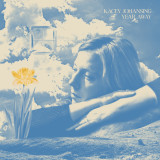
In March of 2020, after learning that a dear friend’s life was coming to an end, Johansing sat down and in one sitting wrote the song “Daffodils”. An elegiac tribute to someone facing death with grace and curiosity, the lyrics confront Johansing’s own mortality by observing the brief lifespan of a Hlower. Only a week later when the world came to an abrupt standstill, she soon found herself processing this recent loss while trying to make sense of a new global reality. Across the ensuing months, Johansing found herself increasingly untethered by a world of isolation and political upheaval.
Having been a frequent touring member of bands like Hand Habits and Fruit Bats, and often being called into the studio to lend her harmonies and multi-instrumental talents to records, Johansing’s phone no longer rang. Living in Los Angeles she feared her musical community was vanishing, as friends and collaborators continually announced they were leaving the city. It was in returning to her piano nightly that she found the greatest solace, feverishly writing the songs that would be collected on her next album. Resulting from this new sense of time and focus was a deepening of her songwriting. As Johansing recalls, “I felt like a metamorphosis happened during that time. There was a lot of personal growth and healing.”
Throughout Year Away Johansing traverses uncharted emotional landscapes brought upon by the changes occurring all around her. The forced self-reflection of the moment is aptly captured by “Old Friend”, featuring an aching melody and swooning production that recalls the best of Harry Nilsson. The epic piano and saxophone-driven “Smile with My Eyes” addresses the loss of community as friends became distant and political divides between family grew. On “Smile” Johansing pushes her vocals further than ever, expanding her range and using her peerless voice as the singular instrument it is. Facing the loss of a family home due to environmental destruction, “Shifting Sands” is marked by soaring Hlutes, Hield recordings and glassy synthesizers that nod to Japanese New Age.
“Daffodils”, the stunning album centerpiece, is built from a pastiche of looping samples, swirling Mellotron and dazzling vibraphone. “Keep your heart open wide, you never know your time / Keep your heart wild, true Hlower child”, Johansing sings as she says goodbye to an elder, while the band reaches a grief-stricken crescendo of woodwinds and chiming bells. On the title track, Johansing takes listeners on an eerily meditative journey of collective experiences. “I wanted to keep the progression simple and repetitive so that musically we could add new elements little by little, while the emotional tone of the lyrics becomes increasingly more strained and expressive”. The song grows to a fever pitch as Johansing sings higher than she thought possible; the tension of the repeating chords Hinally resolving into a hopeful coda as multiple soloists weave around each other.
Amidst heavier themes, Johansing still leaves room for her love of irresistible pop melodies and lush production. The driving “Last Drop” and mid-tempo “Valley Green” are two of her catchiest songs to date. On the former Johansing sings the anthemic chorus, “As if it were the last drop, and nothing ever lasts forever / As if it were the last stop, too far out to come back ever”, longing for a love that she’ll never take for granted, while also admitting that she doesn’t always know how good she has it. “Valley Green” features shimmering layers of 12- string guitars, stacked horns and an impeccable solo by co-producer and multi- instrumentalist Tim Ramsey (Vetiver, Fruit Bats), hinting at a love for bands like NRBQ.
Having been eager to capture the initial spark of songwriting, Johansing booked time at Highland Park’s 64 Sound Studio the week that it reopened. Over the course of three days, she and her band gathered basic tracks for 10 songs, before returning home to Hinish the record with Ramsey. Setting forth to make an album that paid homage to the music that kept them company during the months spent alone together, the duo pulled inspiration from a wide net including Burt Bacharach, John Carroll Kirby & Haruomi Hosono. Ramsey’s newfound love of early digital synthesizers dovetailed effortlessly with Johansing’s fondness for classic 70’s horn and string arrangements, creating a sound that is distinctly modern yet warm and familiar.
Once again Johansing called upon some of the Hinest players of Northeast Los Angeles’ vibrant music community to lend a hand with the record. The 70s R&B-folk of “Watch It Like a Show” features an electric guitar solo from Hand Habits’ Meg Duffy, while album closer “Endless Sound” boasts backing vocals from electronic musician Kaitlyn Aurelia Smith and swooping Indian-inspired violins from Amir Yaghmai (HAIM, The Voidz). The record shines brightly thanks to an ace mix from veteran producer Rob Schnapf (Beck, Elliott Smith, Cat Power), woodwinds from Logan Hone (John Carroll Kirby, Eddie Chacon), and a featured rhythm section of drummer Josh Adams (Jenny Lewis, Bedouine) and bassist Todd Dahlhoff (Feist, Devendra Banhart). Recorded across multiple studios including LA’s famed Sunset Sound, the album remains steadfastly buoyed by the adept engineering of Tyler Karmen (MGMT, Alvvays).
Though born of turbulent times, Year Away is ultimately interested in moving forward. The album ends with “Endless Sound,” where Johansing laments seismic global changes, (“The water is hotter, the mighty thaw / The current’s reversing, the last are lost”) but vows to keep going (“No storm can take me down / Endless light, endless sound”). It’s Year Away’s resilience that shines through despite the darkness. It’s a sound all her own and Johansing’s most cohesive set of songs yet.
Critically-acclaimed experimental band New Age Doom has teamed up with Norwegian indie singer Tuva Hellum Marschhäuser, known as Tuvaband, to create There Is No End, an original collab album
releasing on October 27, 2023 through We Are Busy Bodies. This record showcases New Age Doom's evolution towards a more melodic direction while retaining their signature freewheeling chaos.
Co-producers Eric J. Breitenbach and Greg Valou worked with Tuva and a range of new and returning collaborators to craft a record of profound sonic contrasts. Tuva's ethereal vocals elevate New Age
Doom's genre-bending, densely-layered sound with lyrical themes about rebirth, emergence from the underground, living fearlessly, and the subjective nature of time.