"Later Than You Think" erscheint bei seinem neuen Label YOUNG und beschäftigt sich mit Themen wie Trauer, Gerechtigkeit, Wiedergeburt, Transformation und spirituellem Kampf. Es ist ein Werk von Bekenntnis und Konfrontation, für das sich Affekt, Intellekt und Geist auf der Suche nach dem Schönen, der Wahrheit und dem Realen zusammenschließen. Entstanden ist das Album in den Ozarks von Missouri. Die 16 Tracks vereinen Elemente und Gegensätze wie Üppigkeit und rohe Reduziertheit, das Heilige und das Profane, minimalistische Disziplin und maximale Schwelgerei, Kontrapunkt und simple Popharmonien. Im Kern unterstreicht das Album aber vor allem Maus" Hingabe an radikale Aufrichtigkeit und emotionale Wahrhaftigkeit in einem Zeitalter der Entfremdung - angetrieben von Konfrontation, Glauben und der tiefen Überzeugung, dass Sinn und Bedeutung noch immer etwas meinen. Maus, der einen Abschluss in Experimental Music und einen Doktortitel in Politikwissenschaft hat, wurde für die Art und Weise, auf die er akademische Sorgfalt und Lo-Fi Synthpop-Ästhetik verbindet, mal als "philosopher pop star" mal als "analog futurist" bezeichnet. Sein Wirken zieht sich dabei quer durch die Popkultur - von der Grime-Ikone Skepta, der seinen Track "I"m Only Human" sampelte bis zum Gen-Z-Rapper nettspend, von Filmemacher Josh Safdie ("Uncut Gems") bis zum Fotografen Wolfgang Tillmans. Sein Track "Cop Killer" ist im 2025er Film "Friendship" mit Tim Robinson und Paul Rudd enthalten. Mit exzessiven Liveshows und seinen bislang erschienenen Alben, auf denen Ironie, Trauer, Freude und Absurdität stets dicht beieinander liegen, hat Maus einen einzigartigen Weg beschritten und sich eine ergebene Fanbase erspielt.
Suche:rap
On September 26th, 2025, two decades and seven albums into his career, American musician, composer, and academic John Maus will release his most transcendent work yet: Later Than You Think. Arriving via his new label YOUNG, the album explores themes of grief, justice, rebirth, transformation, and spiritual warfare - coalescing into a work of confession and confrontation: an aural metaphysics where affect, intellect, and spirit converge in search of the beautiful, the truth and the real. Written, produced, and recorded in the Ozarks of Southwest Missouri, Later Than You Think spans 16 tracks and contains multitudes - the lush and the bare, the sacred and the profane, minimalist discipline and maximalist indulgence, counterpoint and simple pop harmony. At its core, the album reaffirms John Maus’ commitment to radical sincerity and emotional truth in an age of alienation. Powered by confrontation, faith and transformation - driven by the urgent belief that meaning still matters, and time is of the essence. Holding a degree in experimental music from CalArts and a PhD in political science from the University of Hawaii, Maus has been dubbed a “philosopher pop star” and “analog futurist” for the way he merges academic rigor with lo-fi synth-pop aesthetics. His influence spans genres and generations—from UK grime icon Skepta, who sampled his track “I’m Only Human,” and Gen-Z rapper nettspend, to filmmaker Josh Safdie, actor Natasha Lyonne, and photographer Wolfgang Tillmans. His track “Cop Killer” features in the 2025 film Friendship, underscoring his continued relevance across high and low culture. With five previous albums under his belt - Songs (2006), Love Is Real (2007), We Must Become The Pitiless Censors of Ourselves (2011), Screen Memories (2017) and Addendum (2018) - Maus has carved out a singular path where irony, grief, joy, and absurdity can coexist and gained a cult following along the way. On Late r Than You Think Maus doesn’t just return—he confronts, confesses, and transforms. The result is not only a career-defining work, but a rare artistic offering: one that dares to believe in meaning, beauty, and the possibility of transcendence
Zum Jahresjubiläum zu ”Alligator Bites Never Heal” veröffentlicht Doechii ihr Album im neuen Look.
Mit Doechiis neuem Mixtape „Alligator Bites Never Heal“ liefert die Rapperin, Sängerin und visionäre
Künstlerin Doechii 19 Tracks, die an die wöchentlichen „Swamp Session“-Folgen anknüpfen, die das Internet mit auffälligen Visuals und ebenso fesselnden Bars in Brand setzten. Mit einem aussagekräftigen Mix
aus Boom Bap, Rap und RnB zeigt Doechii wie vielseitig sie ist und überzeugt damit auch die größten
Künstler ihrer Zeit:
It Takes Two is at it again. The 45 duo, founded in 2020 is here with a repress of there fifth release.
Supported by DJ Koco aka Shimokita, DJ Robert Smith and Marc Hype of Dusty Donuts many more. Edits by DJ's for DJ's filled with scratch samples and perfect intros/outros. After 001, 002 and 003 sold out, they're back with 005!
Previously released as ITT003 (SOLD OUT) white label Dilla Tribute. Now available as ITT005.
The A side is a remake of Dilla's 'You Know How I Feel' beat, that got lost.
The B side is an edit of 'Fall In Love' and a cover of Fall In Love.
Limited to just 200 copies.
After two albums inspired by vast northern landscapes, the forces of nature, and an ever-present sense of duality, Glass Museum shifts gears. The Brussels-based group-originally formed in 2016 by pianist Antoine Flipo and drummer Martin Grégoire-welcomes bassist Issam Labbene as an official third member, opening up a richer, more immersive sound and setting its sights on the rhythms of the modern city.
A true turning point in Glass Museum's career, the new album 4N4LOG CITY twists the codes of electronic music, explores the depths of jazz, and asserts its eclecticism through a fresh and infectious groove.
Signed to the forward-thinking Belgian label Sdban Records, the group shapes its identity within the vaulted ceilings of Volta, a creative hub in Brussels frequented by the vanguard of Belgium's "new scene." Sharing space with acts like ECHT!, Lander & Adriaan, and Tukan, the band continues to push its boundaries through collaboration and reinvention.
Recorded between the French countryside of Drôme, the industrial edges of Brussels, and Volta, 4N4LOG CITY features striking guest appearances. Swiss drummer Arthur Hnatek-known for his work with Tigran Hamasyan and Erik Truffaz, and praised by Gilles Peterson and Laurent Garnier-drives the opener "GATE 1" into hypnotic, krautrock-inspired territory. Meanwhile, rising vocalist JDS lends soulful grace to "Call Me Names", evoking the emotive textures and elegance of vintage soul-jazz reminiscent of the likes of Jordan Rakei or Tom Misch & Yussef Dayes.
Without abandoning their melodic roots and foundational approach, the trio takes daring steps into new terrain. The experimental centerpiece "III" explores the piano as a textural and rhythmic force, drifting between ambient and breakbeat. Elsewhere, the gritty "VAN GLAS"-a hip-hop-tinged track featuring rapper JAZZ BRAK of STIKSTOF-the band ventures far beyond their comfort zone, injecting streetwise lyricism in their mix of electronics and jazz.
Fueled by the heartbeat of the city, 4N4LOG CITY captures the mechanical ebb and flow beneath concrete towers-the anonymous rhythms of daily life moving over the asphalt, and the fleeting, meaningful connections made along the way. Produced by Antoine Flipo and mixed by Elsa Grelot (Avalanche Kaito), the album stands at the intersection of human emotion and urban architecture-a post-modern, deeply cinematic work that asserts Glass Museum's place at the cutting edge of European music.
Black VInyl[13,03 €]
Based in the small but rather cool northern UK town of Todmorden, Tea Breaks is making a big name for itself, much like the local hotspot The Golden Lion, which has long been booking top-tier DJs and throwing proper good parties. Now the label delivers another standout release that collides legendary hip-hop with global rhythms. Opener 'Breathe & Stop' fuses Bollywood vocals with classic East Coast bars while 'Tea & Beer' drifts on woozy rhythms, world percussion and smooth female bars. 'Broad Nod Factor' brings golden-era goodness and sunny flutes, and 'Ms Fat Booty' closes with dark soul swagger that defined NYC in the mid-90s. These are, once more, four inventive mash-ups that bridge cultures and eras with effective style.
classic East Coast bars, 'Tea & Beer' has drunken rhythms and world percussion with silky female rap tones, 'Broad Nod Factor' rolls deep with a golden-era edge and sunny flutes and 'Ms Fat Booty' shuts down with dark soul swagger. Four great mash-ups.
Eternal Atake is the second studio album by Lil Uzi Vert and features a guest appearance from American singer Syd. The production was handled by Bobby Raps, Brandon Finessin, Bugz Ronin, Chief Keef, Oogie Mane, TM88, Wheezy, and more. The album was supported by the singles "Futsal Shuffle 2020" and "That Way", which later appeared as the album's bonus tracks. On release Eternal Atake received widespread acclaim from critics, debuting at number one on the US Billboard 200
Sticking a dirty thumb in the eye of fate, our third collaboration sees this marrow deep family malarky turn official as Pace Yourself teams up with YS’s own imprint ERF REC for a split release. As if our status as minor celebrities and footnotes of the underground could level off no further: the unification no one asked for is here. Sticking it to the man, handing your arse to ya on plate; cauterising infected suburban minds world over.
Burn is the second YS album and written as a direct follow-up album to Brutal Flowers. If their first album was an exercise in the incremental, a construction of poise and patience, Burn, should be taken way the fuck at it’s word: it quite literally finds catharsis in twisted reverse. Birthed out the malignant kick found in deconstruction and chaos. Evil twin, psychotic younger sibling, call it what the hell you like. It might take you a moment to get the lay of the land in this darkly mutated world. Like a bug eye’d native first confronted with a zippo, the hit is radical and instant: a new way for the world to go up in smoke.
Splice the Seattle slacker scene with the spliffhead soundsystem culture of the 90s Bristol trip-hop scene, then cross-breed that with the DIY optimism and glee in creation found in the cut-and-paste worlds of skate, graffiti and hiphop, now run that through the skitzo basement mind of John.T. Gast and you’re close to the kind of scorched earth and spiked suburbia that birthed Burn.
Dunno quite what YS have been ingesting of late but this massively twisted LP touches on a host of gloriously fucked totemic underground sources while not sounding much like any of them. It has the ballsy swagger and hard flipping of the script as Massive Attack’s seminal Blue Lines. Indeed, the eponymous album tracks sound similar - the opener ‘Burn’ is like a hard nosed jammed out redux of ‘Blue Lines’. Getting into a kind of slow-spinning overdubbed maximal euphoria ending with mumbled downer vocals, struggling to conceal their tongues in their cheeks there’s an air of paranoia and proto-conspiracy theory. It’ll leave you scratching your head, feeling like you’ve stepped into a New World Order governed by a cacophony of drop outs, dope fiends and apocalyptic stoners. A cracked out world somewhere between Richard Linklater’s movie Slacker (1990) and Marc Singer’s Dark Days (2001).
The rest of the album parts like a tongue on a wine glass: Smith and Mighty, Bandulu, ambient Luke Slater records, Wah Wah Wino, Nurse with Wound, Land of the Loops, Placid Angels, Adrian Sherwood, Urban Tribe and DJ Shadow can all be heard in momentary splatters - but Burn like other works by YS, is its own ritual beast. ‘Moth’, a track which has been knocking about the underground deejai circuit for many moons, is a real raw chopped and screwed slice of stoner erotica that reeks of obsession and unrequited desire. Elsewhere, on tracks like ‘Switch’, ‘Trying’ and ‘Drift’ the throughline from Brutal Flowers can be heard. Underneath the driving heavy gravity the trademark emotional intimacies of YS linger: eternal recurrence, ghosts of static and shortwave, worn memories of the playful and painful sort. The brief moments where flashes of orchestral ambience get out from underneath the swagger are so pure, personal and unguarded that for a moment they leave you completely lonesome. In the album’s closer ‘End’, you can hear the fleeting promise and DIY possibilities of an analogue world and embers of ash that flutter in its wake: where it seemed, for a brief moment, that collective of DJs, engineers, rappers, graffiti artists and skate crews were emerging from the streets, giving the middle fingers to the system, before just as quickly disappearing back to the doldrums of obscurity. ‘End’ is a bittersweet ode to early soundsystem culture, MCs and pirate radio - an out of step time where for a moment the underdogs and weirdos seemed to be kicking on the door of something bigger.
A veritable teenage doof suite dosed with desire, claustrophobia and deviance. Burn is a good old howl at the moon: lonely, raw, and out for blood; basement style exegesis at its best. A thump to the gut, a stud through your blood. A dubbed-to-death classic straight out of the annals of nowhere. A perfect post card from oblivion. A bleak, bold and personally ferocious vision of tomorrow and tomorrow and tomorrow.
This is everything that record collectors skip dates for. Fuck the scene and keep that shit underground. That’s what it is all about. Know what I mean, if you do? You’re in…
Ten City is universally known as one of the foundational House Music artists who helped to preach the gospel of House from Chicago out to the world during the genre’s formative years in the late 80’s. Remarkably Ten City is still recording and performing, with the voice and face of Ten City Byron Stingily delivering classic songs like “That’s The Way Love Is,” “Devotion” and “Right Back To You” to adoring fans from multiple generations around the world.
Throughout his career, Byron has always had a keen sense of where House Music is going both on a musical and cultural level, and the role Ten City could play to stay at the forefront. He saw that now in the year 2025 the time was right to collaborate with a new generation producer who could “walk the walk” in terms of knowing how to utilize to the fullest the multiple emerging production techniques making House Music dancefloors jump. At the same time, whomever he worked with to create a new Ten City album had to be so well versed and respectful of the group’s legacy that they would not stray too far from what the original songs and albums were all about.
He found his man in another Chicago native DJ Emmaculate, who is well known among house music fans as one of the most talented writer / producer / DJs in the genre.
For the new album on Nervous Records, appropriately entitled “The Next Generation,” Byron and Emmaculate have expanded the Ten City sound both musically and in terms of vocal contributors. While “Voice Of House Music” Byron Stingily still delivers slam-dunk hits with his inimitable style, the album also includes supreme vocal contributions from Mon’Aerie, Uneq’ka, DRAMA D. Lylez, and a rap delivery from OVEOUS.
This Double Pack vinyl consisting of 8 songs with a custom jacket is a priceless and must-have addition to anyone and everyone who is a fan of the house music genre.
It was the 90s. Paris had the blues, French rap was beginning its slow rise, and a new musical genre was emerging: Acid Jazz. Imported from England by DJ Gilles Peterson, this groovy style blended 70s funk with a certain idea of jazz tailored for the dancefloor. Its heroes were Galliano, Brand New Heavies, Incognito, and the James Taylor Quartet. Jamiroquai topped the charts, MC Solaar recorded with Urban Species, and suddenly, France was swept up in the swing whirlwind. Starting in 1993, Parisian clubs embraced this union of jazz and groove, and in 1994, a compilation was released: Paris Groove Up. Around ten groups delivered the French version of this British style: Mellowman, Mad In Paris, Vercoquin, Ready Made... and Dis Bonjour À La Dame. The band wasn’t new—their roots went back to the late 80s, when bassist Marc Israël brought together a brass section and some seasoned musicians. But the real beginning of DBALD came in 1992 with the arrival of singer Sital. "Christophe Denis joined on guitar and songwriting. In 1993, we opened for Jamiroquai and Maceo Parker, and that’s when the major labels interested in the acid jazz market started noticing us," recalls Marc. Their track Chris’tal, the centerpiece of the compilation, was released as a single, and Dis Bonjour À La Dame's album began production in late 1994 in London, at Roundhouse Studio. “We must’ve been among the last sessions there—it was demolished shortly after. It was a very 70s studio, with old gear, a Fender Rhodes, everything was vintage! We recorded for a month, all playing together live, then added the brass and finally Sital’s vocals. We were lucky to have two exceptional backing singers, Sarah Brown and Mark Anthoni, who worked with Incognito and Urban Species.” The self-titled album came out in early 1995, and it had all the ingredients of a hidden funky gem from the 90s: Hey Mama with its ironclad groove, the irresistible instrumental Sheherazade Groove opening the record, Soul Body with its R\&B sensuality... The hip-hop touch came courtesy of Lee Rick’s, the MC from Mellowman, who laid down rhymes on Hall Blues. The brass section was on fire, the bass went wild, and Sital added a sensual spark to the whole thing. In short, a solid album produced by Fred Versailles (producer of NTM’s first album) and mixed by Paul Borg (Urban Species, UFO, -M-, Mory Kanté), a testament to a time when big funky bands made Paris groove—with Dis Bonjour À La Dame leading the charge. Nearly thirty years later, it’s time to (re)discover DBALD.
Mustard Yellow Vinyl. Eine der umfangreichsten Instrumental-Hip-Hop-Reihen aller Zeiten, MF DOOMs gefeierte Special Herbs"-Serie versammelt eine riesige Sammlung seiner Beats, von exklusiven Tracks bis hin zu leicht überarbeiteten Favoriten, die er für sich selbst und andere produziert hat. Unter dem Pseudonym Metal Fingers veröffentlicht, gelingt es Special Herbs", DOOMs äußerst einflussreichen Sound einzufangen, der immer wieder die Regeln des Spiels zugunsten des Super-Bösewichts bricht und neu interpretiert. Super-Villain. Die Welt ist eine Fundgrube für Sounds, und der Metal-Fingered DOOM kennt keine Grenzen: 70er-Jahre- Soul-/Funk-Klassiker, 80er-Jahre-R&B-Hits, Rap-Nostalgie und sogar Soundbites aus Kinderplatten und dem Fernsehen finden ihren Platz in den Zutaten, die er für seine perfekten Rezepte benötigt.
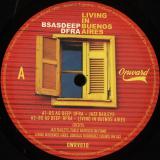
In this vinyl we maintain the format that we have been proposing for a few years.
The idea is to include musicians to be able to achieve really musical tracks.
In this case we have the interventions in the different tracks of:
Jazz baileys: Pablo Raposso on Piano
Living In Buenos Aires : Gonzalo Rodriguez Vicente On Sax
Rhodes Senses: Pablo Daniel Quipildor on keys
Kiss My Soul: Juan Klass on sax and flute, Pablo Raposso on Piano,
Ezequiel Dutil on Bass.
all tracks produced and by Bs As deep and DFRA.
- A1: Lost Blocks F. Elucid Produced By Messiah Musik
- A2: The Big Nothing Produced By Messiah Musik
- A3: Flatlands Produced By Messiah Musik
- A4: Woodhull Produced By Willie Green
- A5: U-Boats F. Elucid Produced By Driver For Raygunomics & Aesop Rock
- A6: Zulu Tolstoy Produced By Willie Green
- A7: Warmachines Produced By Messiah Musik
- A8: Carpetbagger F. Elucid Produced By Brother Hall
- B1: Born Yesterday Produced By Messiah Musik
- B2: Sleep Produced By Willie Green
- B3: Scales F. L’wren Produced By Messiah Musik
- B4: Poor Company F. Elucid & Henry Canyons Produced By Elucid & Messiah Musik
- B5: Dreams Come True Produced By Messiah Musik
- C1: Bicycles F. Henry Canyons Produced By Blockhead
- C2: African Dodger F. Elucid Produced By Dosg4W
- C3: Lambs Produced By Messiah Musik
- C4: Slow Week Produced By Dosg4W
- C5: Weeper F. Curly Castro Produced By Messiah Musik
- C6: Rpms Produced By Messiah Musik
- D1: Dark Woods Produced By Steel Tipped Dove
- D2: True Stories Produced By Blockhead
- D3: Borrowed Time Produced By Junclassic
- D4: Benediction Produced By Elucid
- D5: Good Night Produced By Blockhead
When billy woods released Today, I Wrote Nothing ten years ago, it was an unexpected departure from a rapper who was just starting to make waves in the indie rap scene. After spending the earlier part of his career in the wilderness, woods had managed to crawl out of obscurity with the minor success of 2012’s History Will Absolve Me. Dour Candy, 2013’s collaboration with underground legend Blockhead drew accolades, which only increased with Armand Hammer’s debut Race Music.
Then, woods dropped out of sight for two years before returning with Today, I Wrote Nothing, a record that deviated significantly from what had come before. Where Dour Candy had been concise and focused, TIWN was a sprawling 24 tracks. Where History Will Absolve Me was anchored by hard-hitting beats, anthemic songs, and a couple high powered features, TIWN was comprised of short vignettes, quietly eclectic production, and the only guests were his Backwoodz label-mates. Only one video was released; the claustrophobic “Flatlands”, shot on a shoestring budget in a Brooklyn housing project. Reviewers didn’t know quite what to make of the record, and in many cases, neither did fans.
As is often the case for woods’ albums, many perspectives shifted as the years passed. Listeners came to see the sad, quiet beauty of Today, I Wrote Nothing; a road trip album that doubles as a meditation on life’s journeys and death’s hiding places. The album’s power is in it’s intimacy, it’s insistence on holding your hand through the darkness. Now, TIWN is considered one of the more unique and vital records in woods catalogue. The dynamic woods created with TIWN vis-a-vis History Will Absolve Me and Dour Candy is one that would come to define his ouerve; constant experimentation, a refusal to be pigeonholed, and an unwavering search for the emotional heart of his subject. For us at Backwoodz, being able to repress this album on it’s ten year anniversary is especially sweet, because we remember how long it took us to sell that original run of 500. To everyone who copped one of those and helped us keep the lights on, this is for you too, we couldn’t have gotten here otherwise.
- A1: Intro/Uvs
- A2: Demolition Of Human Skull
- A3: What Lies Beyond
- A4: Passage
- A5: Yelling And Breaking Things For No Reason
- A6: Beaten Back To Life
- A7: Brutal Reality
- B1: Dissolution (Of All Things)
- B2: Reduced To Ragu
- B3: Normalization Of Inhumanity
- B4: My Choice, Feat Maurice
- B5: A Light In The Distance
- B6: Lucky Number 13 - Bonus Track
Its no secret that Samiyam is a certified beathead and appreciated hiphop producer - we have been in touch with him since his self released Rap beats volume 1 CD (or actually since his contribution with FlyLo as Flyamsam on the Beat Dimensions compilation), and later took in further releases on Stones Throw, Brainfeeder, Poo-Bah, All City & Hyperdub . What we did not know is Sam got heavily into Death Metal for the past 5 years and is a big horror movie fan. (check the artwork here !)
On Death Metal, Sam mentioned 'I started revisiting some old shit and realized I really love it and there's so many cool bands I didn't even know about.. I started making some shit with drums, drum programming, and ideas inspired by some of the stuff I like and realized I should just make an album out of it."
So here it is - 13 beat takes, Metal style - put together by a man whose output is sparse but never dissapoints !
Limited edition US import
Hommage is the 20th studio album from prolific Detroit rapper Boldy James. In following the formula that has brought him success, Hommage continues the series of full-length collaborative albums that his fans have come to love, and marks his first project with fellow Detroit producer, Antt Beatz (formerly of Team Eastside, production credits for Lil Baby, 42 Dugg, Eminem, Tee Grizzley). Steeped in the styles and sounds of Detroit, Hommage does exactly that – pays homage to the city that Boldy & Antt Beatz came up in. From the beats, to the tasteful features (all from fellow Detroit artists), to Boldy’s iconic style, it’s hard to come across an album that represents The Motor City better - polished and magnificent yet undeniably gritty and humbly hardworking. Previously released singles include “Super Mario,” “Dead Flowers,” & “Street Cred.”
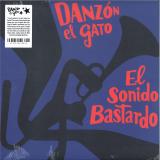
Das Debütalbum des enigmatischen Kollektivs Danzón El Gato stellt einen faszinierenden Dialog zwischen Jazz, Funk und Roots-Musik her. Gegründet im Untergrund der Madrider Experimentalszene, gehen die Mitglieder vom Groove aus, um Traditionen zu erkunden. "El Sonido Bastardo" ist ein Kaleidoskop aus Rhythmen, Landschaften und Echos aus Nordafrika, den Tropen und Lateinamerika, verflochten mit einer rockigen Rhythmussektion, die gleichermaßen von 1970er Library Music wie dem Hip-Hop inspiriert ist. "El Sonido Bastardo" fängt die Essenz eines kulturellen Schmeltiegels im ständigen Wandel ein, dessen Musik in der Tradition verankert ist, aber gleichzeitig einen kosmopolitischen und überschwänglichen Look aufweist. Die beiden Kernmitglieder Javier Adán und Santiago Rapallo schrieben in der Vergangenheit experimentelle Stücke fürs Kino und das Prado-Museum.
Das dritte Album der äusserst produktiven und genreübergreifenden Musikerin Jane Remover erscheint in einer ersten limitierten Auflage auf dem jungen Indielabel deadAir und enthält ein Danny Brown-Feature ("Psychoboost"). Die in New Jersey aufgewachsene und in Chicago lebende Künstlerin vermengt Hyperpop, Dubstep, Noise, Hip-Hop und Alternative zu einem exzessiven Amalgam, das nicht nur die Kritiker begeistert. "Die experimentelle Künstlerin macht im Vergleich zu ihrem vorherigen Album eine komplette Kehrtwende und entfesselt ein Inferno aus rohen Gedanken, das alles – Rap, Pop, Stimme, ihre künstlerische Persönlichkeit – bis zum Zerreissen treibt." - Pitchfork
The writer Max Sebald often pondered over the nature of human memory, specifically, how our thoughts and desires - and their results - overlap and mutate over time. In A Place in the Country, he writes of the significance of what see as “similarities, overlaps and coincidences”. Are they the “delusions” of the self and senses, or manifestations of “an order underlying the chaos of human relationships, ... which lies beyond our comprehension”?
Song of the Night Mists, the new album by post-classical composer Stefan Wesołowski, often feels it draws on Sebald’s premise.
On a simpler plane, the one where the market dictates the neatly ordered information we consume, Song of the Night Mists can be described thus: recorded in the main by Stefan Wesołowski in Gdańsk, both in his studio and in Saint Nicholas' Basilica, the album incorporates acoustic instruments - piano, violin, double bass - and classic synthesizers such as the Roland Jupiter-8, the Soviet Polivoks. A Roland Space Echo RE-150 tape delay was also pressed into service as an instrument. We also hear the basillica’s organ and field recordings from the Tatra Mountains. Other musicians were Maja Miro, who played the flute parts on ‘Glacial Troughs’ and brother Piotr Wesołowski, who played the organ on ‘Wilhelm Tombeau’. Sound engineer was Marcin Nenko, who was also on hand to record the basilica organ parts. The album was mixed in New York by Al Carlson (Oneohtrix Point Never, Jessica Pratt, Zola Jesus, Lady Gaga, and Liturgy) and Rafael Anton Irisarri handled the mastering.
Ostensibly, Song of the Night Mists is the last in a trilogy, following on from albums Liebestod (2013) and Rite of the End (2017). All three deal with existential matters such as love, death, decay and “an ultimate end”; apocalyptic and Promethean in spirit, and betraying very human conceits. The Sebaldian nature of the new record starts to make itself felt when Wesołowski talks of how he used sampling. One element is unexpected, that of sampling himself: “I go back to dozens of my own unused sketches and recordings, treating them as raw material to cut, slow down, reverse, and transform in every possible way.” Memory as sound, to be reemployed by the listener through their own imaginings.
Another set of samples made by Wesołowski plays another role. These are field recordings, originally created for an audio illustration of the formation of the Tatra Mountains, and used in a film by sound designer Michał Fojcik. Wesołowski: “You can hear cracking ice, streams, footsteps in the snow and the wind, and a real avalanche, recorded from the inside.” The “Tatra connection” on the album is also found in samples referencing composer Karol Szymanowski. The album’s title alludes to a poem about the mountains by Polish poet, Kazimierz Przerwa-Tetmajer.
Wesołowski’s Tatra recordings are “about a world without humans - about the fact that the world existed, was beautiful, and had meaning long before people arrived, and for the vast majority of its history, it was a place without us.” Wesołowski, using one iteration of the natural world, plays out in sound Sebald’s idea of another order, underlying the chaos of human relationships lying beyond human comprehension.
These feelings play themselves out on the five album tracks. Sonorous and rich, they illustrate tectonic shifts we have no control over. Wesołowski hints that the overall sound is a “meditation on the metaphysics of the non-human set against the spirituality that human presence has brought into it.” In that light, the opening number, ‘Core’, with its slow build, and crackling and straining sound effects, create an effect of the earth groaning into life in a creation myth. Once the piano part raps out a simple melody and modulated tonguing trumpet samples add to the overall atmosphere, the listener can certainly find a cue in the “spiritual”, or “human” side of the story. Human versus nature: from the strains and harmonic muscle stretches of the second number, ‘Glacial Troughs’, through to the powerful and filmic ‘Stalagmite’ and heart-on-sleeve romance expressed in closer, ‘Wilhelm Tombeau’, we listeners are cast as Friedrich’s wanderer, looking out over a landscape that will appear only if we engage with it.
Formations of melody appear incrementally, almost appearing by chance - like hidden footings in the rock shelves to give us something to grasp onto. Rhythms are used sparsely: the prolonged percussive taps on ‘Glacial Troughs’ are an anomaly and maybe there to give pace to the album to come; essentially to keep the listener strapped in. Elsewhere, percussion is used as an aid to mood, the two thudding, timpani-style passages on ‘Peak’ there to offset the short, beautiful, kosmische passage that splits them.
Elements of the borderline religious spirit that drove German electronic music in the late 1960s and 1970s also find a place on Song of the Night Mists. The swells and recessions of the organ find their emotional climax on ‘Wilhelm Tombeau’, a track which summons up echoes of the “mountain magic” vistas created by Popol Vuh or Tangerine Dream, especially with the slightly atonal wobble of the Mellotron that counters it.
This is a dramatic album, but it does feel a strangely short, or curtailed listen on ending, evoking the feeling one gets when waking from a dream, and, for all its incipient grandeur, a track like ‘Stalagmite’, for instance, ends on a minor note. Wesołowski admits that Song of the Night Mists is born of the all too human process of temptation, doubt and recalibration - Sebaldian overlaps and coincidences forming something that must live another life, away from its creator. In Wesołowski’s words, the album is “a newborn foal must stand up and walk right after birth.” Now it is yours to ponder.
- A1: Differences (Ginuwine)
- A2: Anywhere (Feat Meshell Ndegeocello) (112)
- A3: Are You That Somebody (Aaliyah)
- A4: I Swear (All-4-One)
- A5: Candy Rain (Soul 4 Real)
- A6: In Those Jeans (Ginuwine)
- B1: Crazy In Love (Beyonce)
- B2: I Wanna Know (Joe)
- B3: Didn't Cha Know (Erykah Badu)
- B4: Let Me Love You (Mario)
- B5: Swv Medley (Swv)
- B6: Water Runs Dry (Boyz Ii Men)
Auf COOKUP interpretiert Sam Gendel R&B-, Rap- und Soul-Hits, die ursprünglich zwischen 1992 und 2004 veröffentlicht wurden.
Wie schon sein Nonesuch-Debüt SATIN DOLL aus dem Jahr 2020 entstand COOKUP in Gendels Heimat Kalifornien, aufgenommen zusammen mit seinen Freunden und musikalischen Partnern Gabe Noel und Philippe Melanson.
Das Trio hat das Ausgangsmaterial erneut größtenteils live im Studio dekonstruiert und neu zusammengesetzt. Diesmal sind es Songs von Meshell Ndegeocello, Ginuwine, 112, Aaliyah, All-4-One, Soul 4
Real, Beyoncé, Joe, Erykah Badu, Mario, SWV und Boyz II Men.
"Saxophonist und Produzent Sam Gendel bewegt sich in einer völlig anderen Welt - einer schrägen Galaxie voller Loops und flirrendem Saxophon." - New York Times
"Ein raffiniert virtuoser Künstler. Pickt man sich zufällig einen Brocken aus Gendels Diskografie heraus, kann man abgefahrenen Free Jazz genauso erwischen wie schwülen R&B." - Pitchfork