
Поиск:rap
Стили
Все

- A1: Intro
- A2: If I Die 2Nite
- A3: Me Against The World (Feat Dramacydal)
- A4: So Many Tears
- A5: Temptations
- B1: Young Niggaz
- B2: Heavy In The Game (Feat Richie Rich)
- B3: Lord Knows
- C1: Dear Mama
- C2: It Ain't Easy
- C3: Can U Get Away
- D1: Old School
- D2: Fuck The World
- D3: Death Around The Corner
- D4: Outlaw (Feat Dramacydal)
15
"Me Against the World" is the third studio album by 2 Pac, released on 14th March, 1995 by Out Da Gutta/Interscope Records. Drawing lyrical inspiration from his impending prison sentence, troubles with the police, and poverty, the album is described as being 2 Pac’s most introspective album
Released while 2 pac was imprisoned, the album made an immediate impact on the charts, debuting at number one on the US Billboard 200. “Dear Mama” was released as the album’s first single in February 1995 and would be the album’s most successful single, topping the Hot Rap Singles chart, and peaking at the ninth spot on the Billboard Hot 100.
"Me Against the World" won best rap album at the 1996 Soul Train Music Awards. In 1996, at the 38th Grammy Awards, Me Against the World was nominated for Best Rap Album and the single “Dear Mama” was nominated for Best Rap Solo Performance.
Touted as “confessional,” “reflective,” and “soul-baring,” Me Against the World was as one of 2pac’s most positively reviewed albums,
with many calling it the magnum opus of his career.
The work is considered one of the greatest and most influential hip hop albums of all time. In 2008, the National Association of Recording Merchandisers, in conjunction with the Rock and Roll Hall of Fame, recognized 'Me Against the World' as one of the “most influential and popular albums,” ranking it number 170 on a list of 200 other albums by artists of various musical genres.

2
Now available in February with a big price reduction. Split Coloured Vinyl (Clear & “Schoolly D Yellow”). Olly was a musician, drum-programming wizard and force of nature, and he would go on to shock the world with his in-your-face approach to making music – as bombastic lyrically as he was musically. He simply gave no f*cks, and listeners were drawn into his street-influenced vortex of “b-boy rhyme and riddle.” As noted in the liner notes to this special release:
“The demand for “P.S.K.” was so large that nationwide bootlegging was a major distribution avenue, albeit an unpaid one. ‘Those bootleggers made me big because, when it came down to it, I didn’t have the money to get the records out there,’ Schoolly says.
‘The person who helped me figure that sh*t out was Luke Luther Campbell of 2 Live Crew and Luke Skyywalker Records. He took me all over Miami and showed me all the different bootlegged versions of my own records. It was crazy.’” On the flipside of “P.S.K.,” Schoolly gave the world another classic: “Gucci Time.” Flexing brutal brag muscles, it was another gangsta masterpiece, furthering his legend and bringing even more 909 boom to the still expanding rap world. The opening lines are still quoted by scholars of the game today: “Lookin’ at my Gucci/It’s about that time.”
Get On Down presents this classic for the first time in deluxe form, which is also fully Schoolly-approved: a custom 12-inch sleeve adorned with Schoolly-D’s famed artwork; unique split clear & yellow vinyl; a liner notes insert featuring Schoolly’s own look back on the year 1985 as told to author Brian Coleman; and a unique sticker sheet with 8 images taken from the artwork on this 12-inch cover (which was first seen on his early 12-inches, as well as his 1985 Schoolly-D EP and 1986’s Saturday Night: The Album).

- A1: Intro (Feat Aaron Crockett)
- A2: This Changes Everything (Feat Buddy & Denzel Curry, Terrace Martin & James Poyser)
- A3: Gone (Feat Ybn Cordae & Bilal & Herbie Hancock)
- A4: Let Me In (Feat Mick Jenkins)
- A5: In Case You Forgot
- B1: Indulging In Such
- B2: Fuck Yo Feelings (Feat Yebba)
- B3: Endangered Black Woman (Feat Andra Day & Staceyann Chin)
- B4: Expectations (Feat Baby Rose, Rapsody & James Poyser)
- C1: All I Do (Feat Sir, Bridget Kelly, Song Bird)
- C2: Aah Whoa (Feat Muhsinah & Queen Sheba)
- C3: I Want You
- C4: Trade In Bars Yo (Feat Herbie Hancock)
- C5: Daf Fall Out
- D1: Sunshine
- D2: Liquid Swords
- D3: Daf Ftf
- D4: Treal (Feat Yasiin Bey)
- D5: Cold
19
Legendary genre-bending, multiple Grammy and Emmy-winning artist and producer 'Robert Glasper' releases his newest project "Fuck Yo Feelings". It's the result of a 2-day session in which Glasper invited musician friends to stop by the studio and organically create together, the final result being this mixtape which sonically documents the lost art of improv and on the spot collaborations that can only come from authentic relationships and true artistry.

First released on digital formats back in 2016, and here now given a richly deserved full vinyl release, 'Holy Science', the debut outing from Amirtha Kidambi and her New York based quartet The Elder Ones, is a work of dazzling singularity. Delicately yet unashamedly divulging its complex network of influences at every turn, 'Holy Science' simultaneously disperses of boundary and limitation, emerging as an album steeped in tradition yet located firmly in the futuristic present.
Amirtha Kidambi, the Elder Ones' leader, composer and vocalist, was a child of South Indian heritage, and she grew up immersed in the tradition of devotional singing, joining in with free-form, improvised Bhajans on regular Sundays. She began simultaneously accompanying her voice with the harmonium from the age of three.
These formative experiences continued to instruct and merge with her ongoing musical explorations as she went on to study Classical music, all the while ingesting the Punk, R&B and Rap that surrounded her. A particularly significant discovery was that of free and avant jazz, and in particular the music of Alice and John Coltrane, in whom Kidambi found clear echoes and parallels with those Bhajans and Ragas of her earliest musical awakenings.
All these influences collide on 'Holy Science', at times as explosive blasts of sky-opening thunder, at others as moments of soothing, meditative bliss. These holy bursts are enacted by Kidambi's assembled musicians and are given permission to explore the science of spiritual alchemy, plundering their individual and collective soul for the sake of musical expression, and all of the unpredictable and profound revelations such an approach might yield.
'Holy Science' is a work underpinned by traditions, be they the Bhajan spirituals, or the Jazz and Classical avant gardes, that are in their own manner, archetypal. But perhaps most importantly, all of these forms contain an inbuilt capacity for discovery and progression.
Amirtha Kidambi's musical pathway has been defined by a studied determination to occupy this specific space, the unbounded realm of improvisation and exploration, summoning the acquired instruments of experience, knowledge, culture and tradition to unlock secrets of the past, present and future. The most cherished music is often remarked upon as having a timeless quality – ancient, modern and futuristic, all at once. And so it is with 'Holy Science'.

Paella Hair Sex is the beginning of a new chapter in Alexis Raphael’s musical story. The first two EPs will be from the label boss himself, kicking off with ‘Digital Music Almost Killed Me EP’. Then attention turns to new artists joining the PHS family - please email demos to paellahairsex
Alexis came to prominence in 2011 with his seminal track ‘Spaceship’ and followed with a series of lush, sexy and warm house records that gained universal praise and put Alexis’ sound all around the world with fans from Australia to Peru. As the music and scene evolved, so too did Alexis’ sound becoming somewhat harder whilst still retaining some of his signature elements; references to acid house, hardcore and jungle, deep pads and sweet vocals.
However, by 2016, Alexis had become somewhat disconnected with the path of the music and scene he was involved in. It took a long time to put together what was wrong, but what followed was a three year path to this point now of launching PHS.
A return to and playing vinyl at the end of 2016 was the first step to finding his love again and feeling good about the music. This was followed by a halt to gigs where the music expected from him was different from what he wanted to play and a feeling of disconnect from the crowd. Then came the gradual move away from constant social media output.
The final and most important part of this transition was going back to making music simply without any thought of where it can fit or who can play it, or what label it will go into. In essence this is a return to how Alexis started - making music solely from the feeling inside.
And so PHS returns to some of that more sexy, emotive house music that Alexis was originally known for, but with a fresh sound for the new decade.
Paella Hair Sex is set to be a representation of the music Alexis loves, both his own and other artists.
The first EP: PHS001 – Digital Music Nearly Killed Me kicks off with the main room groover ‘Respect & Belief’ . A jazz-infused bass line underpins chunky rolling beats, punctuated with vocal samples calling for unity and love and laden with floating classical pianos and warm pads. A definite party banger !
.
The second A side track “Sex Appeal” references back to Alexis’ original signature House sound. An emotive and sexy track bound to get temperatures rising on the dance floor .
Flip to the B-side and find the after party brother of Respect & Belief - ‘Liberty’. A seminal minute long speech paves the way to the single breakdown moment of the track when lush Jupiter-8 chords make way for an epic moment as the beats drop back in. A unique piece of minimalistic House music for the after hours .
The bonus track, House of Chorge. ends the EP with a bang. An upbeat cheeky groove that stays in your head long after the turntable stops spinning. But who is Chorge.?
Vinyl Only
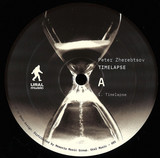
We present to your attention the first exclusive release from Peter Zherebtsov! The A1 "Timelapse" is like a rapid movement of time. The first track on the B-side "Fraktal" - is almost like it's coinciding with parts of themselves the most. And the last track "Panopticum" is like a hypnotic museum and groove.

Side A: Band' Azul - Melo Do Fricote
Licensed From Top Tape Musica Ltda ©1982
Side B: Octavio Burnier - Que Nem Sol
Licensed From Top Tape Musica Ltda ©1980
Club Internacional unearth more long lost Brasilian grooves from the archives of Rio imprint Top Tape for lovers and collectors around the globe.
This edition kicks off with the funk-driven sounds of Melo Do Fricote by Band' Azul.
Fusing rapturous vocals, guitar and horns this track originally appeared in 1982 and was the band's only 45 single release.
Here it is in its original format at last.
The flip side features the much more established artist and celebrated guitarist Octavio Burnier. As one half of Burnier & Cartier he produced one of the most sought after LPs in Brasilian music in 1974, which became like gold dust to collectors of Brasilian music. It was recently reissued by the excellent Mr Bongo to the relief of all lovers of Brasilian sounds.
In this later solo track 'Que Nem Sol', Burnier demonstrates his exquisite guitar playing as well as his talents as a composer and singer.
A seriously delicious slice of soft boogie funk it was released only on 45 single on the Top Tape label back in 1980, and again has never been repressed.
Club Internacional hopes you enjoy bringing these long lost, blissful funk vibes back to life via this limited edition vinyl 45 pressing.

10
Lyrical King is the debut 1987 album from one of rap’s pioneers and innovators who was said by some to be the first artist recorded by Def Jam Records. T La Rock recorded this album for Sleeping Bag Records as the labels first rap act and show cased him at the
height of his career. An old school legend, MC and dancer who was sampled by Public Enemy and Nas, heavily influential on artists such as LL Cool J and the Def Jam sound and would walk out on stage with Run –D.M.C . Highlights include ‘Back to Burn’ and ‘This Beat Kicks’ where T La Rock teamed up with visionary producer Kurtis Mantronik.

- A1: Haruna Ishola & His Apala Group - Ewure Ile Komoyi Ode
- A2: Adebukonla Ajao & Her Group - Aboyin Ile
- A3: Rapheal Ajide & His Apala Group - Adura Fun Osiwowo
- A4: Haruna Ishola & His Apala Group - Orin To Mo Gbon Wa
- A5: Ra Tikalosoro & His Group - Agilinti Lomu
- B1: Adebukonla Ajao & Her Group - Abd Alawiye
- B2: Haruna Ishola & His Apala Group - Asa Ko Gbodo Wole Gbeiyele
- B3: Adeleke Aremu & His Group - Egbe Arowolo
- B4: Haruna Ishola & His Apala Group - Rufai Baolgun
- B5: Ra Tikalosoro & His Group - Kiniun Kuro Leran Amu Sere
- C1: Haruna Ishola & His Apala Group - S Aka
- C2: Adebukonla Ajao & Her Group - Lekele Bale
- C3: Kasumu Adio & His Apala Group - Odale Ore
- C4: Ayisatu Alabi & Her Group - Oko Lolomo
- D1: Jimoh Agbejo Bo Ogun & His Group - Oriki Ibeji
- D2: Ayisatu Alabi & Her Group - Omo Olobi
- D3: Rapheal Ajide & His Apala Group - Orin Aje
- D4: Adebukonla Ajao & Her Group - Sunday Babayemi
18
Soul Jazz Records new ‘Apala: Apala Groups in Nigeria 1964-69’ is the first ever collection of Apala music ever to be released outside of Nigeria. The album focusses on a wide selection of recordings made in Nigeria in the 1960's, a time when Apala music was at the height of its popularity. Apala is a deeply rhythmical, hypnotic and powerful
musical style that combines the striking nasal-style vocals and traditions of Islamic music, the Agidigbo (thumb piano), and the equally powerful drumming and percussion rhythms and
techniques of the Yoruba of Nigeria.
The most significant figure in Apala music is undoubtedly Haruna Ishola who features throughout this album. Ishola holds an almost mythological status in his role as populariser of Apala music in
Nigeria. Ishola’s singing was believed to be so powerful that, without proper restraint, it could kill the recipient of his music.
Apala is a popular music that also functioned as a form of cultural resistance – Apala music involved no western instrumentation and is sung in the Yoruba language, its aesthetic an implicit cultural
rejection of the British Empire’s colonial rule over Nigeria which lasted from 1901 until independence in 1960. Apala music was popular and widely accepted in Nigeria due to its philosophical and profound
lyrical content alongside the complex rhythmic patterns of this heavily percussive style, which highlighted many of the percussion instruments of south-west Nigeria.
He's one of a number of popular urban styles of music that came out of Nigeria in the 20th century and sits alongside the more well-known (in the West) styles of Fuji, Highlife, Juju and Afrobeat. Of these modern forms Apala remains perhaps the most ‘roots’ style (sometimes described as ‘neo-traditional’) due to the authenticity of its sound. It has similar Islamic roots to other neo-traditional styles of Nigeria – including Waka and Sakara – examples of which are also
included on this collection contextualising the music of Apala.
These recordings were originally made and released locally by Decca and EMI Records as well as a variety of independent labels in Nigeria and have never been released outside of the country before. Soul Jazz Records are releasing this album as a deluxe double gatefold vinyl (download code), CD, slipcase and booklet, both containing full text and photography.

13
Preceded by some of Bolan’s most fondly-remembered singles, “Children Of The Revolution”, “Solid Gold Easy Action” and the classic “20th Century Boy”, 1973’s Tanx was the first T. Rex album to make full use of the ever-expanding range of studio gadgets. And while the album represented a new musical departure, several tracks maintained a direct link to the old sound.
The album reached number 4 in the UK album charts and has gone on to influence numerous musicians from Suede to Depeche Mode’s Martin Gore. This edition includes the complete album remastered by producer Tony Visconti and Ted Jensen.

10
Italian cult combo CALIBRO 35 release their highly anticipated 7th studio album "MOMENTUM" on January 24th 2020. "Momentum" follows "DECADE" their previous studio album released in 2018 that had marked 10 years of Calibro 35 and it stands out as a new starting point for the project. In the last 10 years Calibro 35 have dug the golden age of soundtracks and they had been to the future with "S.P.A.C.E.", "Momentum", as the band stated: "represents a look at nowadays and a reflection about making music right in the time that we're living".
Inspired by the work of artists such as Tortoise, Jagajazzist, Dj Shadow, Budos Band, Stelvio Cipriani, Ennio Morricone, Sandro Brugnolini, White Noise, Comet is Coming, JPEGMafia and DJ Signify, compared to the previous Calibro 35's full lengths on the 10 tracks that make up the new album, band's instruments and sounds have increased in number and complexity as well as reality.
The music palette is further extended by incorporating even more synths and electronic sounds, but keeping everything true and 100% real, with all the instruments played live and with no presets or programming. The two featurings on the album serve the cause as well. On the first single "Stan Lee", they collaborated with rapper, producer and songwriter Illa J a former member of super group Slum Village and younger brother of the late legendary hip hop producer and rapper J Dilla.
On "Black Moon", the combo from Milan provided the groove for London-based artist MEI. "If Decade was the sum of everything that the band had felt in the previous ten years", Calibro 35 says, "Momentum is the prequel of what you will hear in the next ten".
To mark the new beginning and come full circle, the recordings took place under the expert hands of usual suspect Tommaso Colliva, in the same studio where Calibro released their self titled debut album twelve years ago.

5
Five track EP of previously unreleased drum heavy Gallic hard-bop and risqué acidic folk.
The long-lost Parisian skin flick ‘Jeunes Filles Impudiques’ (AKA ‘Schoolgirl Hitchhikers’) marks a particularly vulnerable period in the career of one of the most underrated and misunderstood directors to emerge from the rising smoke of the 1968 Parisian social explosion.
From a director with early links with the Paris underground, the letterists, the surrealists, improv theatre and the free-press comes the reclaimed audio tracks from one of his rarest celluloid moments - but let’s not confuse this for high-art. Finders Keepers make no bones, this is Jean Rollin’s maiden voyage into adult entertainment, directed under the pseudonym of Miche Gentil with a flimsy plot, questionable acting skills and an awesome little schizophrenic soundtrack.
This long-lost movie has been buried for some 40 odd years, with a musical score bursting to jump out of the can and down your tone arm, now made possible by a recently renovated negative print and new source material. These original Pierre Raph (of ‘Requiem For A Vampire’ infamy) compositions from the publishing Library Of Paris’ Musicale Editions Dellamarre (of Acanthus / Unity fame) come straight from Rollin himself as an introduction to Finders Keepers’ new Rollinade series documenting some of the finest musical moments of the director’s career as an avant-gardener, counter-culture vulture and Gallic vamptramp, all housed in their original hand-painted promotional artwork.

7
Andras’Joyful is a cornucopic vision rooted in the decay of dance music from one of Australia’s most distinct yet understated voices. Cutting a path through an overgrowth of nostalgia around 70's acid folk and 90's acid house, Joyful is an invitation to till a n old garden in a glistening new light.
A thirteen year old Andrew Wilson sits in the back of his parents’ sedan, driving down the coast from Melbourne. Headphones covering his awkwardly aged ears and connected to a jam-packed mp3 player, he experiences an intense synchronicity when the car careens over a mountain crest in the Otway Ranges right as the track in his ears peaks. A momentary vision of a “first rave rush,” in which Australia’s lauded party history dances tellingly with this dreamer’s destiny.
Not so much later but perhaps more worldly and certainly more aware, Wilson returns home from touring, now a “veteran” of the dance world, to realize a different synchronicity in his record collection. Finding Ian Van Dahl nestled next to John Fahey, William Orbit spine-to-spine with Shira Small, the harmony between folk music of the early 70's and dance music from the 90s becomes perfectly audible in unimaginable ways.
Through an afterglow from both summers of love seeped in shared sonic soil, on Joyful, Wilson cultivates melodic drama and tenderness, memorable hooks and rapturous arpeggios; sentimental strings summon both joyful aspirations and the shadows of faded dreams. Using folk songs as fodder—lyrics, samples, note progressions—each entry of Wilson’s debut album under his Andras moniker is a return to a different springtime of the mind.
Many artists working in Australia can relate to the feeling of “not quite being there,” as Wilson describes it. Always a couple years behind trend. Turning up at the party as it’s winding down. Fearing that in many ways the culture is looking backwards, confirming the narrow outlook of a parochialism that many have worked tirelessly to disprove. Using this disconnect as an invitation to dream another dream, Joyful becomes the soundtrack of early teen Andrew’s fantasy of Utopic parties past, specifically the late discovery of a bygone warehouse rave scene, as well as a return to a guileless chapter of personal history as heard through plain, sane, and simple folk melodies. Joyful is a homecoming, a testament to the evolving euphoria of a flower garden rooted in earth’s tender rot, of birds and bees flying free but not without a changing landscape in sight.
Andras’Joyful is available on LP and digital formats on January 31, 2020 via Beats In Space. On behalf of Andras, a portion of proceeds from this release will benefit the Invasive Species Council on the recommendation of Tim Low, author of the book Feral Future and Where Song Began.

8
8
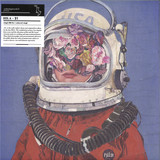
"21" is the well-crafted, sharp and original first album by the duo HILA, composed by American cellist Artyom Manukyan (who already worked with Kamasi Washington, Daedalus, Flying Lotus, Run DMC, Gretchen Parlato, Raphael Saadiq, Clive Lowe Mark...) and french producer Dawatile.
The combination of jazz, Los Angeles beat-scene and the vibrations of 80s and 90s Soviet Armenia make it a striking and unprecedented fusion. These kind of nostalgic and unconventional references forcefully shake the codes of mainstream culture to create a sincere, raw and intimate expression.
"HILA" was born from a spontaneous and intense creative impulse between Artyom Manukyan, a Los Angeles-based Armenian celloist and his partner in crime, David Kiledjian aka Dawatile, a French multi-instrumentist of Armenian descent. This project is proving to be a true master stroke given that it only took 21 days for the duo to make it a reality.
"HILA" was made in less a moon cycle but captivates and electrifies audiences upon its first outings. "H.I.L.A" colors the warmth of the Californian "High" with Armenian vibes. The artists chose this name for their creation since both have a close and valuable connection to these locales. This journey began in 2007, on the day Dawatile went to Yerevan, the capital of this small country in the Caucasus mountain to realize a first fusion project centered around local folkloric music genres.
There he was introduced to local musicians including the Armenian Navy Band, one of the country's foremost groups in which Artyom played the bass and cello. In this context, he also met many musicians such as Tigran Hamasyan and Norayr Kartashyan. This will be the beginning of connections between Lyon, Yerevan and Los Angeles. The following year, the two artists will be be seen performing next to Taylor Mc Ferrin at the Jazz à Vienne festival. More recently, they partnered up again when the cellist, who had freshly relocated in California, invited Dawatile to produce his album. As soon as the studio’s threshold was crossed, they decided to postpone this record and create a joint project: Hay (as the Armenians call themselves) / High In Los Angeles. HILA was born at the end of these 21 days of intense creation. The association of Artyom Manukyan and Dawatile is the combination of two visions, two versions of Armenia, two personalities, the reunion of the Eastern and Western blocs.
One grew up nurtured by the sounds of hip-hop and jazz in Europe and the other by art music and Russian-influenced 1980s Armenian folkloric music before moving to L. A., Ca. The cornerstone of it all, the glue that unites everything : Armenia and music. They generate a new identity synthesizing two perceptions, their complicity transcending these cultural discrepencies. To achieve this, they will scour through images of Artyom’s childhood, within the popular culture of Soviet Armenia. Together, they revisit this decidedly retro vibe, based on the work of Caucasian groups inspired by African American music. This background is rehashed and fused with ancestral Armenian sounds. The DNA of the album "21" is molded by these dear influences.
We can also hear the ancestral sounds of Armenia, a country at the edges of both Europe and Asia. The presence on two tracks of Armenian music Master Norayr Kartashyan, infuses the languor of past melodies and traditions. These purposeful anachronistic sounds offer a fantastic depth to this powerful opus. Listening to the album, one can appreciate the successful fusion of styles and influences. Those combinations, however, manage to preserve individual identities only to enhance the art through an adamant musical dialogue.
Being driven by the urge to transpose Armenian musical traditions into a unique universe, the daring artists, offer an innovative combination by blending, for the first time, these ancestral sounds with the world of Los Angeles beat-scene and jazz. An invention largely fueled by the magic strings of Artyom and maestro Miguel Atwood-Ferguson, a pillar of the genre in Los Angeles combined. These associations resonate with a triumphant equilibrium. HILA is musical uncharted territory in which Artyom's cello strings intertwine to ignite the harmonies of keyboards, the machines, the vocals and electronic layers Dawatile pieced together. HILA plays the soundtrack of an adventure set between Armenia around the end of the Soviet era and a mysterious near future.
Artyom Manukyan grew up in Armenia in the 90s. At the time, he studied Russian classical music while learning jazz with assistance by his father, a music journalist. Being an unconditional music lover, he went on to sharpen his skills at the prestigious Berkelee College of Music. Subsequently, he’s been lucky enough to travel the world touring with numerous acts and mainly with the Armenian Navy Band. The group has fostered alacritous success honored by a BBC Award as a crowning achievement. He moved on 10 years ago and made his way to L.A. with his cello on his back. In the City of Angels, he quickly became a popular figure of the jazz and hip-hop scenes thanks to his first album "Citizen". He’s accompanied prestigious musicians such as Kamasi Washington, Melody Gardot, Daedalus, Flying Lotus, Run DMC, Gretchen Parlato, Raphael Saadiq, Clive Lowe Mark, or Vulfpeck. He released his solo album on the cello, "Alone" in October 2019.
Dawatile is a bold producer and multi-instrumentist as well as a passionate and resolute musician molded by jazz. As a versatile artist, he handles and juggles the saxophone, the keys, the bass and composition. Simultaneously, Dawatile produces cross-over projects and soundtracks for the movie industry. He, as well, has had the opportunity to be a part of many tours, including with his electro hip-hop band, Fowatile and more recently with the "Future Kreyol" trio, Dowdelin. Being the ever workaholic, he has under his belt a string of prestigious collaborations with the likes of Talib Kweli, Foreign Beggars, Roy Ayers, Tigran Hamasyan, Mathieu Boogaerts, Voodoo Game and Piers Faccini. His taste for developing new musical recipes and his know-how in production make him a much sought-after album producer. In concert, the HILA duo offers a sober, precise and rhythmic performance. "21" is an aerial and lively album taking the audience on an at times joyous and sometimes melancholic dreamlike journey. The magic of "HILA" operates at the speed of light and positions it already as an avoidable group.

- 1: Frusciante
- 2: Funky As Me Feat. Nico The Beast & Dj Mysterons
- 3: Status Quote Feat. S Squair Blaq & Dj Hypercutz
- 4: Cruisin’ Through The City Feat. 1989Tre & Lisa Spykers
- 5: Blue Gardenia
- 6: On Fire Feat. Amira Lacrima
- 7: Instant Feat. Mantique
- 8: Cat With A Box Feat. Lady Emz
- 9: Skg Landing
- 10: Thrilled Feat. Mic Bles & Dj Moya
- 11: For Sale
11
Mr. Collage’s debut solo album “Layers” takes a traditional Hip-Hop approach, utilizing samples as well as recorded instruments. “Layers” is a sonic painting consisting of dusty vinyl memories and future plane tickets. Funky beats and basslines, afro percussions and a second-hand synth are layered to complete the musical background of the album.
Is that all? Def not! The album features some very talented artists from the USA, Australia, Spain, Greece and Belgium. The rappers Nico The Beast, S Squair Blaq, Mic Bles and 1989TRE get funky on Collage’s beats and lady MC Amira Lacrima with her mellow raps gets into a story telling.
Soul comes strong in the album too with Lady EMZ cherishing life over a Northern Soul-inspired beat and Mantique spicing up the funkiness with her deep voice. Not to mention vocalist Lisa Spykers adding an extra R&B/Soul vibe by joining forces with 1989TRE.
On the wheels of steel, the IDA World Finalists - Fly Immigrants (DJ Mysterons and DJ Hypercutz) and the heavy artillery of scratching of Mind The Wax, DJ Moya take care of the scratches in the album.
Layers will be released on vinyl by label Mind The Wax in December 2019, and includes 11 tracks.

10
New York rap trio consisting of DJ Curt Catzal and MC’s AJ Rok and MC B-Luv, signed to B-Boy Records, a significant player in the development of hip-hop in the 1980's. The group broke out with an underground hit single ‘Strong Island’ and the song would open their 1988 album Doin’ Damage.
This track is an enduring classic and would become the group’s signature moment. Other highlights on the album include; ‘Stylin’ Lyrics’, ‘The Force Is Buggin’ and ‘Take It Away’.

10
As electronic musician Lorenz Brunner sketched his vision for the first Recondite full-length on Ghostly in five years he took a step back to assess who and where he was as an artist. 2013’s Hinterland accelerated a progression — he’s since been touring around the world and releasing music with labels such as Hotflush and his own Plangent Records — yet, for him, the album cast a shadow of pressure that widened over time. As with most art forms, perhaps especially music, there is an expectation to change, to creatively pivot elsewhere with each project. After careful consideration, Brunner rejects this notion with his new work, opting alternately to use the icy Hinterland as an aesthetic and tonal template for a like-minded map of evocative compositions aptly titled after the German word “stillstand,” now presented as Dwell.
“I am coherent with what I do, even if I’m not reinventing myself,” Brunner says contentedly. In regards to the album title, he adds, “It’s like when you’re on a hike and you stop and look at the scenery; you may know which path you want to go next but right now you are dwelling.” The title also doubles as a reference to everyday domestic life, a restorative haven for Brunner between tours. Like Hinterland, he incorporates a subtle range of field recordings to intensify the textural atmosphere. While he worked at home on “Mirror Games,” Brunner noticed the buzz coming from across the room, where his wife was using an electric toothbrush, naturally harmonized with the track. He decided to push that frequency further and record the device directly, syncing vibrations for added urgency across the propulsive piece as well as parts of the ambient “Interlude 2.”
Windswept, moody, and melodic, moments on Dwell linger with emotional resonance. The title track sends an eerie synth loop through a field of techno kicks. The beats recede for a breather four minutes in as if to survey the surroundings. If Brunner pivots anywhere — possibly just a new perspective afforded by being confidently stationary in his craft — it’s by leaning more into hip-hop structures. He’s an avid rap fan and his love for those production techniques is notably present on “Nobilia,” a queasy shuffler (titled in reference to the Super Nintendo game Secret of Evermore), “Interlude 1,” which skitters in lockstep with contemplative synth chords, and “Surface,” an isolatory, ruminative sequence. The closer “Moon Pearl” soothes and shimmers like its namesake, a cherished gem in The Legend of Zelda series that allows carriers of the gem to retain their shape and essence in the Dark World.
In an era where constant reinvention and highly self-reflexive brand awareness reigns supreme in the music industry, Brunner as Recondite does something many artists try to avoid, he dwells in his own established identity, one that has garnered him a devoted fanbase. His murky electronic productions, built around mirage-like pads and clipped drum programming, have proven to be highly functional and spectrally enveloping; Dwell is not a return to form, it is a further study of the shapes, it is the modes, and the structures Brunner has trademarked.

10
As electronic musician Lorenz Brunner sketched his vision for the first Recondite full-length on Ghostly in five years he took a step back to assess who and where he was as an artist. 2013’s Hinterland accelerated a progression — he’s since been touring around the world and releasing music with labels such as Hotflush and his own Plangent Records — yet, for him, the album cast a shadow of pressure that widened over time. As with most art forms, perhaps especially music, there is an expectation to change, to creatively pivot elsewhere with each project. After careful consideration, Brunner rejects this notion with his new work, opting alternately to use the icy Hinterland as an aesthetic and tonal template for a like-minded map of evocative compositions aptly titled after the German word “stillstand,” now presented as Dwell.
“I am coherent with what I do, even if I’m not reinventing myself,” Brunner says contentedly. In regards to the album title, he adds, “It’s like when you’re on a hike and you stop and look at the scenery; you may know which path you want to go next but right now you are dwelling.” The title also doubles as a reference to everyday domestic life, a restorative haven for Brunner between tours. Like Hinterland, he incorporates a subtle range of field recordings to intensify the textural atmosphere. While he worked at home on “Mirror Games,” Brunner noticed the buzz coming from across the room, where his wife was using an electric toothbrush, naturally harmonized with the track. He decided to push that frequency further and record the device directly, syncing vibrations for added urgency across the propulsive piece as well as parts of the ambient “Interlude 2.”
Windswept, moody, and melodic, moments on Dwell linger with emotional resonance. The title track sends an eerie synth loop through a field of techno kicks. The beats recede for a breather four minutes in as if to survey the surroundings. If Brunner pivots anywhere — possibly just a new perspective afforded by being confidently stationary in his craft — it’s by leaning more into hip-hop structures. He’s an avid rap fan and his love for those production techniques is notably present on “Nobilia,” a queasy shuffler (titled in reference to the Super Nintendo game Secret of Evermore), “Interlude 1,” which skitters in lockstep with contemplative synth chords, and “Surface,” an isolatory, ruminative sequence. The closer “Moon Pearl” soothes and shimmers like its namesake, a cherished gem in The Legend of Zelda series that allows carriers of the gem to retain their shape and essence in the Dark World.
In an era where constant reinvention and highly self-reflexive brand awareness reigns supreme in the music industry, Brunner as Recondite does something many artists try to avoid, he dwells in his own established identity, one that has garnered him a devoted fanbase. His murky electronic productions, built around mirage-like pads and clipped drum programming, have proven to be highly functional and spectrally enveloping; Dwell is not a return to form, it is a further study of the shapes, it is the modes, and the structures Brunner has trademarked.
