»Hug of Gravity« is the second solo album by Raphael Loher and his first for Hallow Ground. The Swiss pianist and composer uses piano preparations, tape machines, and digital means to forge an aesthetic of playful reduction and rhythmic abstraction. The source material for these four sprawling pieces was culled from recordings of the artist performing the album’s predecessor, 2022’s »Keemuun.« Loher used them in a painstaking two-part working process to create an album that is both a product of and an ode to transformation, exploring themes of alternative temporalities and spatialities. »Hug of Gravity« oscillates between experimental electronic music, ambient, and minimal music and calls to mind the work of artists like William Basinski, Linda Catlin Smith, or label mate Andrius Arutiunian.
Loher laid the foundation for »Hug of Gravity« in 2020 with ten solo performances at his studio, during which he presented the pieces from his debut album. For these intimate concerts, he prepared the piano with modelling clay in order to move beyond the well-tempered tuning that dominates most of Western music. He then used a consecutive three-month residency in the Blenio Valley to refine the recordings. »I cut up and rearranged the material, then transferred the results—around 30 pieces—to a varispeed tape machine and then back to the computer. After that was done, I cut them up and rearranged them again,« he laughs. By radically reworking the material, he created an album that eschews traditional notions of time and space.
Loher points out the influence that his surroundings had on him. »The process created the music—and the place was essential to the process.« he says. He wandered through the mountains for up to nine or ten hours a day, which gave him a sense of what he calls expanded temporality. »Time just felt longer, my experiences seemed more diverse and nuanced, and it was as if I perceived my environment more clearly,« he explains. This shift in Loher’s perception of time and space—the latter also expressed in the album’s title—influenced his work with the varispeed tape machine. It allowed him to change the pitch of different recordings while layering them to let interference patterns emerge and emphasise the emotional qualities of the unconventional tunings he had used.
In this way, Loher constructed numerous interlocking narrative arcs throughout »Hug of Gravity,« an album that is ever-changing; an exercise in calm ecstasy that provides its audience with the feeling of being removed from conventional time and space. This approach is also reflected in the artwork for »Hug of Gravity,« which is based on drawings Loher made during his residency at Blenio Valley. Their fine hand-drawn lines run in parallel and let incidental patterns emerge, an effect that is only multiplied when the six different drawings that accompany each vinyl copy of the album are overlapping, forming ever-new visual constellations.
Поиск:rap
Все
Swan Song
The vinyl LP at the heart of this éthiopiques 31 tracks 2 to 11 was one of the very last vinyl records ever released in Ethiopia. But above all it represents, we felt, the absolute masterpiece of the Ethiopian Groove – the Swan Song of Swinging Addis. The album leaves a clear idea for posterity of the level of sophistication and mastery that modern Ethiopian music had achieved, before being crushed under the Stalino-military heel of the Derg – as the bloody revolution that was unfolding came to be called.
Ethiopia1976.
The Revolution that broke out in February 1974 rolled on in a ruthless march. The whole of Ethiopian society was utterly stunned. The bouquets of flowers handed joyfully to the first tanks of the coup d'état were to wilt very rapidly. From September 1976 to February 1978, 18 months of Red Terror (the name given by the junta itself) spilled blood throughout the country. This fratricidal conflict took its heaviest toll among students and youth. The shift from feudalism to a cruel and primitive Stalinism left the country's citizens deeply traumatised, and snuffed out any pretence of activism, whatever the sector of society. This ice age was to last for seventeen long years.
ሙሉቀን፡መለሰ Mulukèn Mellèssè Muluqän Mälläsä
It was three tracks by Muluken that served as the opener for éthiopiques-1 more than 25 years ago. Seven more tracks appeared on éthiopiques-3 and 13, all accompanied by The Equators, which was soon to become the Dahlak Band.
The first track, Hédètch alu, also the very first piece that Muluken ever recorded, left audiences both unsettled and amazed. Reflecting the singer's extremely young age (he was just 17 at the time), this angelic voice mystified many, who thought they were in fact listening to a feminine voice. He was not yet 22 when he released his last vinyl record in 1976 with Kaifa Records (KF 39LP), one of the very last to be issued in Ethiopia, before the cassette tape became the dominant medium for music distribution – and before the new revolutionary regime put a stop to all independent musical life, via an unspeakable barrage of prohibitions and other persecutions.
Mulu qèn, literally, “A well filled day”. This tender maternal intention wasn't enough to ward off the cruelty of fate. His mother's premature death drove Muluken to leave his native Godjam, in northeast Ethiopia, to live with an uncle in Addis Ababa. Born Muluken Tamer, he took his uncle's last name – Mèllèssè.
The spelling Muluken appeared in his administrative records. Transcription of Amharic to the Latin alphabet, both in Ethiopia and for scholars, gives rise to controversies and quibbles that can never be neatly settled. French allows for a closer approximation of the original pronunciation, thanks to its battery of accent marks, confusing as they may be to anglophones.
Between rather accommodating administrative record-keepers and the various versions that pop up in interviews given by the artist, Muluken's year of birth oscillates between 1953 and 1955…
1954? One thing is certain: the artist's talent made itself known very early indeed, because he got his start in 1966-67, at the age of 13 or 14. Photos from the period attest to his extreme youth. It's a strange sort of initiation for a very young teenager to become a sensation in the heart of Addis's nightlife at the time, Woubé Bèrèha – the Wilds of Woubé. And what's more, in the club of the Queen of the Night, the Godjamé Assègèdètch Alamrèw herself, the very same that was portrayed by Sebhat Guèbrè-Egziabhér in his novel-memoir Les Nuits d’Addis Abeba2… The legendary female club owner who is remembered to this day by the capital's ageing boomers.
Muluken first tried his hand at the drums, before he grabbed the microphone. He emigrated briefly to the Zula Club, across the street from the old Addis Post Office, one of the ground-breaking bars of the burgeoning musical scene, before joining the Second Police Band in 1968, for around three years. He spent a few months with the short-lived Blue Nile Band founded by saxophonist Besrat Tammènè. As the musical scene grew increasingly successful, and pulled slowly but decisively away from its institutional ties, Muluken released his first 45rpm single in February 1972 (Amha Records AE 440). It was included in two LP Ethiopian Hit Parade compilation albums in September of the same year. All in all, Muluken released eight two-track 45s and the same number of original cassette tapes between February 1972 and 1984, the year that he departed for permanent exile in the USA. After converting to Pentecostalism in 1980, Muluken gradually abandoned all secular musical activity. In 1985, at the end of a concert in Philadelphia, he decided to quit concerts and recording for good. Mèlakè Gèbré, the historic bass player from the Walias band who was playing with him that night, recalls that everything appeared so irredeemably diabolical in Muluken's eyes, that it was to be the end of his contribution to Ethiopian Groove.
The end of the story, the beginning of a legend.
Dahlak Band, forgotten by History
Aside from his personal history and vocal talents, it must be remembered that Muluken Mèllèssè was one of the biggest names in the musical innovations that marked the end of the imperial period. These éthiopiques aim to convince those who are just discovering this hidden gem... As for Ethiopians themselves, they are to this day captivated by this singular and atypical figure in the Abyssinian pop landscape – even though he withdrew from public life some 40 years ago. Incorrigible devotees of poetic twists, of more or less hidden meanings, Ethiopians appreciate above all the care Muluken took in choosing his lyrics and the writers who penned them, such as Feqerte Haylou, Alemtsehay Wodajo and, here, Shewalul Mengistu (1944-1977). Love songs, written by women, a far cry from the conventional drivel that pleases sappy sentimentalists.
Muluken is equally acclaimed for his perfectionism when it came to music, the opposite of the overly casual approach that is all too common. He remained a faithful partner of musicians who came from a lineage that borrowed from several inventive and pioneering bands (Venus, Equators, Dahlak). Amongst them were certain artists who began their musical lives with Nersès Nalbandian at the Haile Sellassie Theatre and who come of age in around 1973 – at just the wrong time, you might say. Among them were the pillars Shimèlis Bèyènè (trumpet), Dawit Yifru (keyboards) and Tilayé Gèbrè (sax & flute). Most notably Tilayé Gèbrè, certainly one of the most important musicians, composers and arrangers of his generation, of the end of the imperial era, and of the early years of the Derg.
It was only in 1981 that a miraculous opportunity arose for Tilayé to escape the Stalinist paradise of the dictator Menguistou Haylè-Maryam. Once again it was Amha Eshèté (1946-2021) who provided a solution. The spirited and courageous producer, who had been in exile in Washington since 1975, succeeded, thanks to his incredible perseverence, in bringing the Walias Band to the USA. It was, in fact an extended Walias Band comprising ten musicians3, six of whom chose to slip away after a few concerts and the recording of an LP (The Best of Walias, WRS 100). Tilayé Gèbrè was one of these. He has been living in the USA ever since. There he joined the then-nascent Ethiopian diaspora, which lived largely unto itself, and was making only very modest headway in the American musical market. It seems unfair that Tilayé Gèbrè and the Dahlak Band were not able to benefit earlier from the public recognition that they do deserve.
A similar draining away of the top-rate talents would lead to the reorganization of the major groups of the “Derg Time”. The remaining artists spread themselves around between Ibex Band (renamed Roha Band), Ethio Star Band and a remodeled Walias Band. That spelled the end of the Dahlak Band.
With this record, produced by the essential Ali Abdella Kaifa a.k.a. Ali Tango, we can appreciate everything that the Derg not only destroyed, but also prevented from flourishing. This gem of Ethiopian-style afrobeat came out in 1976 (and, by way of a parenthesis, before the FESTAC 1977 in Lagos, which was attended by an impressive delegation of Ethiopian musicians — although Fela was already personna non grata in his own country). Despite everything that might distinguish this ethio-groove from Fela’s music – no colonial axe to grind, no question of political confrontation with the authorities, no claims to negritude or Africanism for the Ethiopian musicians, and less extrovertion! –, this LP fits beautifully into the saga of intense and electrified soul of the new “African” groove that Fela and Manu Dibango embodied so well from that point onwards.
In restoring this record to its place in the afrobeat epic, it can be seen that, if nothing else, the timeline bestows a legitimate pedigree and a historical primacy to works that had no international impact when they were originally released.
Warning! Masterpiece!
- A1: Girls Of The Internet - Affirmations (Dennis Ferrer Remix)
- A2: Duck Sauce, A-Trak & Armand Van Helden - Fallin In Love (Butch Remix)
- B1: Low Steppa & Capri - Got The Funk
- B2: Vaggio - Don't You Want Some More
- C1: The Martinez Brothers - H2Daizzo (Peggy Gou Remix)
- C2: Mau P - Merther
- D1: Fusion Groove Orchestra Ft. Steve Lucas - If Only I Could (Liem Remix)
- D2: Nic Fanciulli & Marc E. Bassy - Hold On
- E1: Blackchild - Nothing Better Than Music
- E2: Rapson Ft. Nathan Thomas - Heat (Club Mix)
- F1: Adam Port, Theus Mago & Keinemusik Ft. Martina Camargo - The Dream
- F2: The Shapeshifters - Lola's Theme (Tripolism Remix)
Marking the return of one of house music’s most revered compilation series, Defected In The House Ibiza 2025 arrives to showcase the label’s sonic identity in full. This definitive 12-track release spans three LPs, shining a spotlight on iconic must-haves, tastemaker originals and Ibiza favourites from Defected Records and its associated imprints.
Reconnecting with the importance of curation, a longstanding cornerstone of the Defected ethos, this expansive collection celebrates the label’s role as a trusted voice in house music. Echoing the spirit of its flagship ITH series, which featured the likes of Gilles Peterson, Louie Vega, and Dimitri From Paris, this special 2025 edition continues its legacy by offering a cohesive snapshot of house music now.
Defected In The House Ibiza 2025 bridges the London label’s impressive catalogue with artists old and new, from new summer club anthems ‘Got The Funk’ by Low Steppa & Capri and Nic Fanciulli’s ‘Hold On’ with Marc E. Bassy, to Tripolism’s transformative reimagining of The Shapeshifter’s ‘Lola’s Theme’ and Dennis Ferrer’s fresh remix of Girls of the Internet’s ‘Affirmations’ featuring Anelisa Lamola.
Capturing the energy and emotional pull of the label’s events; Defected’s brand new residency at Pacha Ibiza in 2025 serves as inspiration for the collection. As such, the three volume collection also contains standout records from definitive artists of today’s Ibiza scene including Keinemusik, The Martinez Brothers, Peggy Gou, Armand Van Helden & A-Track as Duck Sauce, Mau P plus many more.
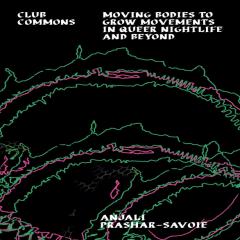
Queer communities have long transformed parties into something powerful: spaces where care flourishes, injustice gets challenged, and new worlds are danced into being. But today, DJs command huge fees while behind-the-scenes workers earn below minimum wage. Corporations profit from our culture while communities that created these spaces are displaced. As venues shut and workers burn out, it’s clear that something has gone deeply wrong.
Club Commons: Moving Bodies to Grow Movements in Queer Nightlife & Beyond by Anjali Prashar-Savoie takes you inside hidden stories of resistance and reinvention. We meet the people reshaping nightlife from below: abolitionist security teams creating safety without police, sober raves doubling as mental health support, radical childcare at parties, venues becoming worker cooperatives, and free party crews reclaiming public space. Through their work, we see how party-throwing skills build movements, how refusing to play changes everything, and why protecting queer nightlife means transforming who owns it.
Quotes
“When Anjali shines her perceptive light on dancefloor culture, everything is better illuminated. I can’t wait to read this book. It’s one we need.” Emma Warren (author of Dance Your Way Home/Up the Youth Club)
“Anjali’s one of the most exciting and insightful voices writing about dance music today, bringing fresh perspectives, intellectual rigour and emotive power to a conversation that’s too often homogenous, superficial or cynically commercial. Club Commons promises to be an essential and overdue book: a chance to reexamine the queer history of club culture, celebrate and critique its present, and map out radical possibilities for its future.” Ed Gillett (author of Party Lines)
“Beautifully written and unique, Anjali Prashar-Savoie’s behind-the-scenes journey through queer nightlife is as thorough as it is fascinating. Documenting a world that commercial interests are rapidly destroying, Club Commons is proof that queer culture holds the key to a better future for the dancefloor and beyond.” Professor Sam Parsley (author of Minor Keys, coach, DJ and founder of In the Key, a directory and platform championing the careers of women, trans and non-binary electronic music producers)
“Club Commons: Moving Bodies to Grow Movements in Queer Nightlife & Beyond is a vital reminder of how important the dance floor is to connect, unfurl and envision new futures. The text highlights the historic and existing care work entangled with the club space, particularly in providing temporary sites of refuge and embodied joy for Black and LGBTQIA+ communities. This is juxtaposed with research on the corporate and carceral commodification of nightlife in recent years, which exposes the false premise that club spaces are always radical. This book affirms my belief that the non-commercial nightlife ecosystem is an essential part of our social change infrastructure, rather than a luxury. Club Commons is a call to action to reclaim this space on our own terms and revive the underground.” Camille Sapara Barton, (author of Tending Grief: An Embodied Guide to Being with Grief Individually and in Community)
- K-Now Intro (Featuring Ali Shaheed Muhammad)
- Time Stopped
- Womack's Lament (Featuring Busta Rhymes)
- Panic Struck
- K-Now Interlude #1 (Featuring Ali Shaheed Muhammad)
- Another Part Of You (Featuring William Hart)
- All You Got Is Your Word
- There Is Only Now (Featuring Snoop Dogg)
- Meeting Of The Minds
- K-Now Interlude #2 (Featuring Ali Shaheed Muhammad)
- Miriam Got A Mickey
- Stone Cold (Featuring Scarub)
- The Synopsis
- Ghetto Superhero
- K-Now Reprise (Featuring Ali Shaheed Muhammad)
- Narrow Escape
- Finally Back
- The Last Act
- K-Now Outro (Featuring Ali Shaheed Muhammad)
The sixth album from legendary hip-hop group Souls of Mischief, There Is Only Now, is a unique cinematic 90s crime tale of love, loss, and revenge. A conceptual collaboration with producer Adrian Younge and the first release on his freshly launched Linear Labs Records label, There Is Only Now gets its inspiration from a near fatal incident involving group members A-Plus, Opio, Tajai, and Phesto early in their careers. Set in 1994, There Is Only Now serves as a bookend to two decades of music since the release of their seminal debut album, `93 Til Infinity. Souls of Mischief and Adrian Younge have created a hip-hop album like no other. The result of a special moment for all involved, There Is Only Now proves that after two decades in the rap game hip-hop's Fab Four remains committed to the expansion of their legacy as hip-hop innovators and pioneers. Enthält unbegrenztes Streaming von There Is Only Now über die kostenlose Bandcamp-App und außerdem den hochwertigen Download als MP3, FLAC und mehr.
- 1: Type Of Way
- 2: Differences
- 3: Man Of The Year
- 4: Wwyd
- 5: Flex (Ooh, Ooh, Ooh)
- 6: Milk Marie
- 7: Blah Blah Blah
- 8: 15 Shots
- 9: They Don't Know
- 10: Walk Thru (Feat. Problem)
- 11: Investments
- 12: I F*Ck Wit You Girl
- 13: Can't Judge Her
- 14: The Most
- 15: Reloaded
Celebrating over a decade of hip-hop excellence, Legacy of Hits delivers 15 career-defining tracks from Rich Homie Quan, one of Atlanta’s most influential voices. From the breakout anthem "Type of Way" to the multi-platinum-certified smash Flex "(Ooh, Ooh, Ooh)", this collection captures Quan’s ability to craft both raw street records and timeless radio staples that shaped the sound of Southern rap.
The set includes fan favorites like “Differences”, "Walk Thru (feat. Problem)”, "They Don’t Know”, "Blah Blah Blah”, “Reloaded" and "15 Shots, giving fans a complete retrospective of his impact. With production from heavyweights such as Yung Carter, Metro Boomin, London on Da Track, Trauma Tone, and Yizzle, the project stands as a true testament to Quan’s consistency, resilience, and influence.
Available in both vinyl and CD formats with exclusive collectible packaging, Legacy of Hits is more than just a greatest hits, it’s a landmark release that celebrates Rich Homie Quan’s journey, artistry, and legacy.
- Two Man Crew
- Zounds
- Pinky Tuskadero (Feat. Kool Keith)
- Sixers & Squires (Feat. Skillz)
- Super Sound (Feat. Breeze Brewin)
- The Rose Bowl (Feat. The Alchemist & Your Old Droog)
- Dubbs Up (Feat. King T)
- Prism (Feat. Large Professor & Tash)
- Mighty’s Big 5 (Live From The Palestra)
- Most In-Outs (Feat. Cage)
- I. Goldberg (Feat. Mc Serch & Sadat X)
- Funk 'O Mart (Feat. Chubb Rock)
- Spaceport (Feat. Chill Rob G & Copywrite)
- Highest Degree (Feat. O.c.)
- Two High Whiteys
- Rap Individuals (Feat. Artifacts)
- Be Excited (Feat. Esoteric)
LP 2x12"[29,37 €]
Iconic hip-hop duo The High & Mighty, composed of rapper Mr. Eon and producer DJ Mighty Mi, make their long-awaited return with Sound of Market, their first studio album in over twenty years. The release marks a powerful comeback for one of underground hip-hop’s most celebrated duos — a project steeped in nostalgia, boom-bap grit, and the timeless energy of East Coast rap.
Named in honor of Sound of Market Street, the legendary Philadelphia record store that served as a hub for crate diggers, DJs, and hip-hop heads for decades, the album pays homage to the culture that shaped The High & Mighty’s sound and identity. Much like the store itself, the record celebrates deep cuts, rare finds, and the shared love of vinyl that connects generations of hip-hop fans.
Across 17 tracks, Sound of Market revives the duo’s trademark wit and sharp lyricism while showcasing an impressive lineup of collaborators, including Kool Keith, The Alchemist, Your Old Droog, Large Professor, O.C., Chubb Rock, King T, Skillz, and many more. The result is a cohesive, sample-driven experience that bridges the classic and contemporary — reaffirming The High & Mighty’s status as true architects of independent hip-hop.
From the opening anthem “Two Man Crew” and the surreal swagger of “Pinky Tuskadero” with Kool Keith, to the cinematic boom of “Mighty’s Big 5 (Live from The Palestra)”, the record moves effortlessly through sharp lyricism, layered production, and a shared reverence for the foundations of the genre. Sound of Market is both a return and a reminder — a record that feels timeless in its authenticity.
Frankie Knuckles Pres. Director's Cut Featuring Jamie Principle
Your Love
LTD Edition Clear Vinyl Version
Arguably one of the most memorable house music moments, born out of the black LGBT scene in Chicago at the legendary Warehouse and known as one of Frankie Knuckles earliest productions; ‘Your Love’ is a stone cold classic. A record that is up there with the greats, instantly recognisable and a song that only get better with time.
Written by Jamie Principle and originally released in 1986, ‘Your Love’ has become a seminal recording over the past 34 years. Originally an underground club anthem, famously borrowed on the crossover hit ‘You’ve Got The Love’ (The Source feat. Candi Staton), and most recently re-produced by as part of the Director’s Cut project which aimed to update a number of classic cuts for the modern dancefloor, this is a record that endures the test of time. Working alongside The Frankie Knuckles Foundation and Eric Kupper, SoSure Music now releases two new remixes for 2020 from Darrius Syrossian and Alan Dixon.
First up, House music aficionado and legendary Sankey’s resident Darius Syrossian offers his unique blend of beats to the remix package. With releases on the likes of Get Physical, Viva Music and Hot Creations, Darius’ production is heavily influenced by some of the greats – think of the finest spinners from Detroit, New York and Chicago – and is well placed to approach this huge task. Darius introduces a rolling house beat and some old skool breakbeats into his mix, keeping the energy high throughout; bringing a feeling of a euphoria and hitting the peak time moment.
Charting a rapid rise through the ranks in a relatively short time Alan Dixon is already building a name for himself in House and Nu Disco scene and has recently released on labels including Glitterbox, Permanent Vacation, Running Back and True Romance. Alan’s remix aims directly at the centre of the disco dancefloor. A strong beat dominates a unique energy through the mix along with a slightly nostalgic vibe. With a beautiful floaty interlude and a raw emotion this remix updates a classic with respect while also giving a fresh new twist.
- A1: (Part I)
- B1: Prelude (Part Ii)
- B2: Maiysha
- C1: Interlude
- C2: Theme From Jack Johnson
The capstone of Miles Davis’ electric period, Agharta reigns as a funk-rock fireball — a blazing comet streaked energy and elan, a fearless organism feasting on adventure and freedom, a seven-headed Godzilla stomping its way through Osaka, Japan. Recorded on February 1, 1975 at Osaka Festival Hall at the first of a two-show stand, the double album offers an endless abundance of surprises and shifts — as well as a road-proven ensemble whose chemistry and abilities equal that of any of Davis’ celebrated bands. If the true measure of jazz is the capacity to adapt to the moment and challenge perception, Agharta is consummate.
Sourced from the original master tapes, housed in a Stoughton gatefold jacket, and pressed at Fidelity Record Pressing in California, Mobile Fidelity’s numbered-edition 180g 33RPM 2LP set of this epic live release presents it in audiophile sound on a domestic pressing for the first time. Offering greater degrees of separation, detail, and richness than the compressed CD editions and more clarity, openness, and presence than older vinyl copies, this version of the 1975 release helps bring the concert stage to your home. Just make sure your turntable and speakers are up to the challenge of Davis and Co.’s explosive performances — and producing the decibels they demand.
Teeming with vibrant colors, tones, and pace, Mobile Fidelity’s reissue captures the hear-it-to-believe-it flow, sweep, and moodiness of the music. Though the group honors looseness and freedom with religious verve, the specificity and scale rendered by this remaster allows you to detect methods behind the alleged madness that are often otherwise harder to discern. This insight extends to the understated changes in volume, harmonics, and phrasings. In many ways, you can listen as Davis himself did that early February evening as he helped coordinate the overall direction and decided on whether to blow his wah-wah-wired trumpet or take a turn on the organ.
Tellingly, Agharta would likely never have been made if not for Davis’ ventures overseas and, specifically, to the Land of the Rising Sun. Having for years faced a backlash on his native soil for his choices to experiment and blow past all known borders, Davis was welcomed with open arms in Japan. The concert documented on Agharta — as well as the day’s later show, captured on the equally exciting Pangea — stemmed from a sold-out three-week tour that would ultimately mark Davis’ final public appearances for years, as he soon settled into semi-retirement and nursed the wounds connected to an unprecedented stretch of restless and relentless output.
For all the band-fueled merit of Agharta — and there’s plenty, given the cast of saxophonist Sonny Fortune, bassist Michael Henderson, drummer Al Foster, percussionist James Mtume, and guitarists Reggie Lucas and Pete Cosey seemingly blasts off to outer space and travels distant galaxies by the time this minimally edited record runs its course — Davis’ own playing often remains overlooked. As critics Richard Cook and Brian Morton observed, it is “often fantastically subtle, creating surges and ebbs in a harmonically static line, allowing him to build huge melismatic variations on a single note.” He attacks like a man on a mission, out to prove naysayers wrong and bent on trailblazing another new path forward. Convention and skeptics be damned.
Noisy and furious, dark and discordant, abstract and off-balance, radical and intense, abrasive and atmospheric, strangely beautiful and hypnotically eccentric: Agharta evades simple description, and refuses to be pinned down in any established category — rock, jazz, punk, ambient, prog, avante-garde, or otherwise. Shot through with trench-deep grooves, screaming riffs, scalding solos, and free-improv leads, its cosmic thrust comes on as the equivalent of an animated pointillist painting comprised of millions of textured dots, dashes, and dabs that hold your attention so raptly you want to revisit the ideas again and again.
Always steps ahead of everyone else, Davis knew what he was doing even when Agharta debuted in Japan before later hitting U.S. markets. Though “Maiysha” and “Theme from Jack Johnson” are identified in the track listing, the record contains a number of uncredited references to other Davis works, including a nod to “So What.” This decision to bypass labels only adds to the art of the reveal — the rare black magic in which Agharta expertly deals.
- Mean Street
- Dirty Movies
- Sinners Swing!
- Hear About It Later
- Unchained
- Push Comes To Shove
- So This Is Love?
- Sunday Afternoon In The Park
- One Foot Out The Door
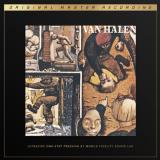
The song titles on Van Halen's aptly titled Fair Warning don't lie. The likes of "Unchained," "Mean Street," "Push Comes to Shove," "One Foot Out the Door," and more indicate the mood the band channels on its double-platinum 1981 record — the nastiest, darkest, and fiercest album of the group's storied career. For the fourth time in four years, Van Halen throws down the gauntlet to all challengers and emerges victorious.
Sourced from the original analog tapes, pressed on MoFi SuperVinyl at Fidelity Record Pressing, and strictly limited to 5,000 numbered copies, Mobile Fidelity's UltraDisc One-Step 180g 45RPM 2LP set plays with unfettered clarity, dynamics, and immediacy. Benefitting from superb groove definition, an ultra-low noise floor, and dead-quiet surfaces, this vinyl edition captures what went down in the studio with tremendous realism and involving presence.
Taking a more controlled approach in the studio and still completing everything in less than two weeks, Van Halen and producer Ted Templeman relied on studio amplifiers to direct the sound. Further diverging from the live-on-the-floor approach of its earlier albums, the ensemble also employed overdubs to great effect. The result: Dense, stacked architecture that underlines the hard-hitting tenor of the songs — and which comes alive like never before on this reference edition that looks as good as it sounds.
The premium packaging and gorgeous presentation befit the reissue's select status. Housed in a deluxe slipcase, it features special foil-stamped jackets and faithful-to-the-original graphics that illuminate the splendor of the recording. Aurally and visually, it is made for listeners who want to immerse themselves in everything involved with the album, including the iconic cover art adopted from William Kurelek's haunting painting, "The Maze."
Isolated frames from Kurelek's childhood-inspired work — including a man bashing his head into a brick wall, a guy pinning down an adversary as he delivers bare-fist blows to his face and others watch with apparent glee, a boy tied down on a conveyer belt and being sent through the equivalent of a meat saw — adorn the front and back covers. The sunnier visual disposition of Van Halen's prior efforts gives way to something sinister and tortured, traits reflective of the music within. The band members, too, are visually depicted not in glamorous shots but in a serious black-and-white portrait in which the quartet is clad in black leather jackets.
Tough, aggressive, stark: Fair Warning comes on like a series of bare-knuckled punches to the solar plexus and boasts lyrical narratives to match. Though not a concept record, the concise album revolves around themes of roughing it on the streets and struggling to survive amid dim prospects. Singer David Lee Roth reportedly penned many of the initial lyrics after traveling to Haiti and observing extreme poverty. The characters and situations populating Fair Warning reflect hardscrabble existence, last-chance desperation, and underlying danger.
Witness the crazies, poor folks, and hunters of “Mean Street”; the former prom queen turned pornographic actress on “Dirty Movies”; the menace and vice of “Sinners Swing!”; the streetwise hustle of “Unchained”; the isolation and alienation of “Push Comes to Shove”; the desire for escape on “One Foot Out the Door”: A carefree California beach party Fair Warning is not.
Having said he felt angry and frustrated during the sessions, guitarist Eddie Van Halen uses the forceful arrangements as a playground for his seemingly unlimited arsenal. Supported by a crack rhythm section and a hyped-up Roth, he performs with an almost impossible combination of punk-like intensity, technical finesse, lyrical fluidity, and unbridled emotion. The virtuoso was increasingly butting heads with Templeton and seeking a freedom in the studio he believed denied him.
No wonder he plays like a bat out of hell. Listen to the rapid-fire manner in which he slaps the high and low E strings on the 12th fret of his instrument on “Mean Street,” instilling the tune with funk flair and metal-spiked sharpness. For the pouty strut of “Dirty Movies,” Eddie Van Halen contributes slide guitar magic made possible after he sawed off the lower portion of a Gibson SG so he could reach further down the fretboard.
Related intensity, urgency, and daredevil momentum punctuate the surging “Sinner’s Swing!” A heavily flanged, delicately melodic introduction frames the attitudinal “Hear About It Later,” among the most creative arrangements of Van Halen’s career. And do riffs come any bigger or magnetic than those on the high-wire kick of “Unchained”? As for the out-of-left-field “Sunday in the Park,” an instrumental composed on an Electro-Harmonix micro-synthesizer: Who but Eddie Van Halen to supply creep factor in such an ingenious way?
Despite selling fewer quantities than Van Halen’s prior efforts, Fair Warning remains for many diehards the record that epitomizes all of the band’s immense strengths —Roth’s manic energy and tongue-wagging humor, Alex Van Halen’s rhythmic heartbeat-in-your-chest bombast, and Michael Anthony’s lucid bass lines included. Arriving when the New Wave of British Heavy Metal and new-wave movements were taking flight, it signaled a shot across the bow from a band determined to stay a step ahead and provide proof nobody could touch what it delivered.
More than four decades later, Fair Warning still sounds that alarm.
Unit Nine is a The Hague-based musical collective weaving together soulful melancholy, minimalist composition and soft grooves. Their debut album, Disaster Jester, will be released digitally and on 12’’ vinyl on The Hague imprint PIP Records on November 14th, 2025, celebrated with a release show at Paard, Den Haag. The album was recorded under guidance of renowned producer Tijmen van Wageningen, at The Womb Studio.
Disaster Jester revolves around the archetype of the jester, the trickster who embodies both chaos and wisdom, humour and tragedy. Across the album, music video and cover artwork, he appears as a clown in a shadowy crime narrative and as a weary detective who eventually dons the fool’s hat himself. The image becomes a mirror for the artist: observing, stumbling, laughing & fooling. The track ‘Afgesproken Plek’ features rap artists KC and MC Lost, who provided an imaginary crime skit playing on the detective persona central in the story telling of the album.
While their universal and timeless sound could travel anywhere, there’s something distinctly The Hague about Unit Nine; a mix of irony, unpolished charm, and understated design sensibility. Their city’s blend of rough edges and refined aesthetics runs through their work and places the debut album within a historical tapestry of not-so-mainstream culture and art that the sea town is known to embody.
- A1: Get Up I Feel Like Being A Sex Machine
- A2: Brother Rapp (Part I & Part Ii)
- A3: Bewildered
- A4: I Got The Feeling
- B1: Give It Up Or Turnit A Loose
- B2: I Don’t Want Nobody To Give Me Nothing
- B3: Licking Stick
- C1: Lowdown Popcorn 9.Spinning Wheel
- C2: If I Ruled The World
- C3: There Was A Time
- C4: It’s A Man’s Man’s Man’s World
- D1: Please, Please, Please
- D2: I Can’t Stand Myself (When You Touch Me)
- D3: Mother Popcorn
James Brown wants to know one thing before he and his band begin Sex Machine. “Can I get into the thing, really?,” he asks. His cohorts enthusiastically respond in the affirmative. And for the next hour and change, Mr. Dynamite gets into it and more, turning in a sweat-soaked, feet-moving, hip-swiveling, emotion-purging, in-the-red, drop-everything-you’re-doing-and-dance performance for the ages. Ranked by Rolling Stone among the 500 Greatest Albums of All Time, the sweeping 1970 effort towers as a testament to Brown’s inimitable legacy as well as the peak powers of his voice, vibrancy, and bands.
Sourced from the original master tapes, pressed at Fidelity Record Pressing, and housed in a Stoughton gatefold jacket, Mobile Fidelity’s numbered-edition 180g 33RPM 2LP set presents Sex Machine in audiophile sound for the first time. It explodes with the energy the lightning-strike music demands. Dynamic, immediate, present, airy: Everything from the brassiness and fluidity of the horns to the snap and decay of the snare to the swell and carry of the organ comes across in full-range perspective.
Then there’s Brown’s superhuman singing, which here emerges with a purity, naturalism, and transparency that ensure you feel everything. Screeching, shouting, pleading, moaning, preaching, stinging, commanding, testifying, crooning, humming: The Godfather of Soul contributes one of the finest vocal performances known to man. This definitive 55th anniversary reissue of Brown’s monster funk statement further exhibits a combination of clarity, solidity, separation, and imaging that helps bring to light what he and his crack ensembles committed to tape. Both in the studio and on the stage.
Just how lifelike does this reissue sound? Senior Mobile Fidelity Sound Lab engineer Krieg Wunderlich, who handled the remaster, notes: “There were some artifacts that sounded a bit like mistracking. But they turned out to be breath blasts on the vocal microphone. That is part of history. JB was workin' hard, and breathin' hard. And there was an edit the timing of that was truly strange. Again, a part of history.”
Originally marketed as a live album, Sex Machine contains six songs recorded in the studio and later overdubbed with canned crowd noise and reverberation. Save for “Low Down Popcorn,” the tracks on the latter half stem from a phenomenal performance captured in October 1969 at Bell Auditorium in Brown’s adopted hometown of Augusta, GA. The special relationship between the singer, the audience, and the location is palpable.
As the 1960s gave way to a new decade, Brown experienced immense success and dealt with unexpected change. Soul Brother Number One soon expanded his idea for an official live album captured in Augusta when the ensemble that backed him on that date morphed into the original version of the world-famous J.B.’s just months after the show. The virtuosic abilities, sticky chemistry, and rhythm-forward nature of the J.B.’s prompted him to book a one-off session in Cincinnati, OH, on a late July night.
Anchored by brothers William “Bootsy” Collins and Phelps “Catfish” Collins, the group — as well as two different drummers — laid down a nearly 11-minute rendition of “Get Up I Feel Like Being Like a Sex Machine” and a thrilling medley of “Bewildered,” “I Got the Feeling,” and “Give It Up or Turnit a Loose.” A pair of then-recent studio singles cut in separate locations in 1969, “Brother Rapp” and “Low Down Popcorn,” each featuring his prior group, took care of the second LP worth of material that complements the originally planned live set.
Complicated? Somewhat. Unusual? Definitely. But just as he elevated the expectations for all present and future R&B artists, Brown not only makes it all work. He makes it positively electrifying.
“Get Up I Feel Like Being Like a Sex Machine” is alone deserving of a dissertation on the art of funk music, seeing it moves up and down akin to an oil derrick, witnesses Brown unleashing a trademark series of grunts, squeaks, and “good god” asides, and glides to a hypnotic groove that won’t quit. Or look to the syncopated rhythms of “Brother Rapp (Part I and Part II),” one of multiple pieces here that signify the point where Brown began viewing every instrument as a percussive tool. Brown closes the three-song medley with his new band with a skedaddling “Give It Up or Turnit a Loose,” which provides jolts on the order of sticking your finger into a socket.
Not that the actual live material falls short in any way. Setting an insistent tempo for the vitality that follows, “I Don’t Want Nobody to Give Me Nothing” positions Brown as a role model, leader, and self-sufficient entrepreneur. All simmer and boil, the short and sweet “Licking Stick” dares you to keep pace. The floating, almost comforting “Spinning Wheel” spotlights the instrumental prowess of Maceo Parker and company, and functions as a seamless segue into the tender, horn-saluted “If I Ruled the World.”
And Brown and his mates still aren’t done. Just try to resist the one-two closing punch of “I Can’t Stand Myself (When You Touch Me)” and “Mother Popcorn.” Mercy.
Ain’t it funky? Sure ‘nuff.
Dare To Wonder is the new album by London jazz rap duo Summers Sons. Two brothers, surname Summers. Turt on vocals and Slim on production.
Dare To Wonder consists of 12 songs about love, life and connection. Compared to previous Sons’ albums, it’s safe to call Dare To Wonder a feel good album in its best sense. It doesn’t turn a blind eye to the madness of the world today. But it dares to take a step back and marvel at the beauty of the world around us. It dares to wonder. Wonder awakens our curiosity and leaving us thirsty for more knowledge. But it also humbles us – keeping us from thinking we know everything already.
Since 2018 Summers Sons have released five albums on Melting Pot Music (Undertones, Uhuru, The Rain, Nostalgia, Still Nothing Still) – which accumulated over 50 million streams to date – and a string of high profile collaborations with The Silhouettes Project, Twit One, C.Tappin, Nix Northwest and Frankie Stew & Harvey Gunn.
INFOTEXT DE
Dare To Wonder ist das neue Album des Londoner Jazz-Rap-Duos Summers Sons – zwei Brüder mit dem Nachnamen Summers. Turt am Mikrofon und Slim an den Beats.
Dare To Wonder umfasst 12 Songs über Liebe, Leben und Verbundenheit. Im Vergleich zu ihren bisherigen Alben darf man Dare To Wonder mit gutem Gewissen als Feel-Good-Album im besten Sinne bezeichnen. Es verschließt nicht die Augen vor dem Wahnsinn der heutigen Welt, aber es wagt die Perspektive, um die Schönheit um uns herum neu zu betrachten. Es wagt, zu staunen. Staunen weckt unsere Neugier und macht uns hungrig nach mehr Wissen. Gleichzeitig macht es uns demütig – und bewahrt uns davor, zu glauben, wir wüssten schon alles.
Seit 2018 haben Summers Sons fünf Alben über Melting Pot Music veröffentlicht (Undertones, Uhuru, The Rain, Nostalgia, Still Nothing Still) – mit über 50 Millionen Streams – und hochkarätige Kollaborationen mit The Silhouettes Project, Twit One, C. Tappin, Nix Northwest und Frankie Stew & Harvey Gunn veröffentlicht.
- A1: Double Up
- A2: Who The Best?
- A3: Do Nah
- A4: Sunshine
- A5: 00S
- A6: Dope Squad
- A7: Les
- B1: Myanmar
- B2: A.m 4:00 Freestyle
- B3: Money Men
- B4: N.b.a
- B5: Lost Highway
- B6: I Need That
Deey, a native of Futenma, Okinawa, is one of the most popular artists today, known for his collaboration with Leo Iwamura on "Deep Blue," and EVO, who has
made a name for himself with The Anthem, hosted by IMUHA BLACK, and is attracting attention. This LP features a remarkable album by three artists at the forefront
of Japan's underground hip-hop scene, all produced by MrRn, whose popularity is rapidly rising in the Kansai region.
"Working with these three artists, I was able to bring out the best in myself and express my passion for swaying, nodding, and communicating. "Sunshin" in particular
is a song I want everyone to listen to and feel for its vibe and message!" -- Deey
"The album title, 'Amon', literally means 'Gate of Asia.' When we listen to music, we're usually drawn to the sound and groove first, so we created a record that
will resonate worldwide, regardless of the current domestic scene. I'm not really into forming and organizing a crew, so I'd like to continue working with friends
who share Amon's concept, not just in music, but in other areas as well." -- EVO
"When you hear it, it'll hit you like lightning. Creating it with my friends, supporting each other, learning from each other, I've managed to express myself more
authentically than any other production I've ever done." – MrRn
- A1: Jomo
- A2: Genesis
- A3: Seen It All
- A4: Make It Out
- B1: Walking On Business
- B2: White Lines
- B3: Call On Me
- B4: Opp Thot
- C1: This Shit Still In Harlem
- C2: Dope Boy
- C3: Cinema
- C4: Ray Ray Skit
- C5: Back In My Bag
- D1: Whats Going On
- D2: Back In The Day
- D3: End Of Summer
- D4: At The Church Steps
This holiday season, Harlem’s Capo, Jim Jones, brings At the Church Steps to vinyl for the very first time — and it’s more than just a reissue. A founding member of The Diplomats, platinum-selling artist, and a pioneer of NYC street rap, Jones has long been a voice of the hustle, style, and raw authenticity that define East Coast hip-hop. With over 2 million records sold and a deep-rooted influence on music and culture, At the Church Steps is now set to become a collector’s essential — reimagined for vinyl in a way no fan has ever experienced.
This limited-edition, audiophile-grade 2LP set is crafted for true connoisseurs. Pressed on premium Neotech 100% virgin vinyl, the release uses exclusive mastering technology that employs predictive analysis to correct groove deformation — delivering unmatched clarity, fidelity, and warmth. Every detail, from the sonic depth to the physical finish, speaks to the cult following Jones commands. Tailored for both the streets and the crates, this vinyl is a tribute to legacy and craftsmanship. Store it upright, keep it out of direct sunlight — and know you’re holding a piece of hip-hop history made to last.
Key Marketing Highlights:
Available on vinyl for the first time as a limited numbered 2LP set on Audiophile-Grade, COllector's Quality Vinyl
Brand new studio album from Jim Jones now available on 2LP
Jim Jones is a member of legendary hiphop group The Diplomats
The tale of this disc that has been given the name “Flashbacks” come from two brothers from Uruguay, Nico and Fede Lampariello. The vast knowledge of musical production has been demonstrated, all within the true style of the underground. Produced with a Uruguayan flavor, putting that cherry on the top that we all know and love. With the musical flavor that the Lampariello’s have provided its essence can be felt through whole of the dark universe as its existing. It is an utmost pleasure to be welcoming these particularly talented siblings to the label with these four club-ready cuts, that has been pressed for the specific time when the action needs to be shown. The mechanical quantum gears of it have begun shifting and spinning rapidly for the unified idea of love for the nonstandard audio frequencies.
Back in 1988, disco rap aficionado and collector Dave Lee put together a compilation titled 'Back To The Old School', showcasing some of the best of the genre, most of which had never been issued before in the UK . Fast forward to 2025 and Dave's label Z Records has managed to procure the rights to a few choice old school cuts for a (sort of) follow up. The difference is this time Mr Lee has remixed and re-worked the songs for today's dancefloors while preserving their original flavour and integrity. In this first part of the series we have TJ Swann's 1981 jam 'Get Fly', re-tracked and taken into lo-slung yacht rock funk territory with a sizzling synth solo for good measure, a perfect compliment to TJ's smooth NYC flow. Terry Lewis & Wild Flower are up next on the A-side, with a boogie rich, mid-tempo stomper with a heavy funk bottom end and a message that still rings true in this day and age. Mike T's 'Do It Anyway You Wanna' finishes things up with a compulsive dose of jazz-tinged disco rap that goes straight for the jugular, super charged slap bass underpinning sharp sax and flute motifs while the rich tones of Mike T slide over the top. Dave Lee yet again providing a masterclass in production.
- A1: Beef Rapp
- A2: Hoe Cakes
- A3: Potholderz Feat Count Bass D
- B1: One Beer
- B2: Deep Fried Frenz
- B3: Poo-Putt Platter
- B4: Fillet-O-Rapper
- B5: Gumbo
- C1: Fig Leaf Bi-Carbonate
- C2: Kon Karne Il - Guinnessez Feat Angelkia & 41Ze
- C3: Kon Queso
- D1: Rapp Snitch Knishes Feat Mr. Fantastik
- D2: Vomitspit
- D3: Kookies
Cross merchandise with Rhymesayers, KMD, Viktor Vaughn, Madvillain, JJ DOOM, King Geedorah & Dangerdoom. LP packaging: Case wrapped tip-on gatefold vinyl jacket, new purple vinyl colour double vinyl, 2000 only for the UK. In celebration of the album’s 20th anniversary, MM..FOOD has been repackaged with all new artwork by Sam Rodriguez! Produced by MF DOOM, except "One Beer" produced by Madlib, and "Kon Queso” produced by PNS of the Molemen. Guest features include Count Bass D, Mr Fantastik, Angelika and 4ize. QR-activated immersive AR experiences with album artwork. Brand new music video for "Hoe Cakes" planned for album street date. Originally released in 2004, MF DOOM's MM..FOOD is hailed as a classic hip-hop album full of inventive production, brilliant wordplay, and unique themes. Celebrated for its seamless blend of humor, wit, and social commentary, the album ushers listeners into a bizarre world of food-related metaphors, painting a bitterly comedic portrait of a life tainted by vice, violence, and jealousy. It was a brilliant and novel concept that gave DOOM plenty of room to explore the album’s subjects. Throughout MM..FOOD, DOOM embeds complex ideas within seemingly simple narratives. Album opener “Beef Rapp” is a multi-pronged metaphor reminding listeners of the dangers involved in the glorification of conflict, especially within the rap game. “Hoe Cakes” borrows its name from the sweet, hot water cornmeal patties, which he uses as a symbol to rhyme about indulgence and excess. Continuing the motif, DOOM uses the Madlib-produced “One Beer” to fold layers of depth about escapism and ego, while the popular “Rapp Snitch Knishes” critiques the self-incrimination and contradictory behaviors of some rappers. Overall, MM..FOOD is both a social commentary and a piece of social satire, showcasing MF DOOM’s ability to blend serious themes with his unique, playful lyrical style. MM..FOOD album sales history over 820K+ units sold (RIAA-certified gold). MM..FOOD streaming history over 1.2M+ streams. MF DOOM’’s catalog sales history over 1.7M+ units sold. MF DOOM’s catalog streaming history over 3B+ streams.