New York-based duo Bottler, Pat Butler and Phil Shore, are the vanguard of their own distinctly eclectic sound. Raw, emotive, bold and highly creative, the duo has successfully carved out their own path with a series of EPs that represent the broad scope of their production prowess. Over the last five years Bottler have been working on their debut album, ‘Journey Work’, a milestone achievement that marks a pivotal moment in their music career. The LP is a distillation of the duo’s multifaceted upbringing, blending a variety of styles together bound together by an overarching attitude and approach that embraces creative freedom and self-acceptance.
Pat and Phil are childhood friends whose bond is akin to that of blood relatives. Their parents are best friends and they grew up side by side, developing their deep love for music together; sharing discoveries and inspirations, learning to play and perform, and nurturing their creativity together. Now formally ordained as Bottler, they channel their eclectic tastes into a sound that encapsulates the love and trust that forms the foundation of the friendship. The duo blends a myriad of styles to create songs that emanate warmth, joy, sorrow, pain and the full spectrum of human emotion.
The album title, like their music, is open to interpretation. The duo reveals themes related to chronicling life’s many ups and downs, the deep preparation that must be taken ahead of a spiritual ceremony or psychedelic experience, and, simply, the journey taken during the conception and creation of an album. A quote from Walt Whitman also partly inspired the title; “every leaf of grass is no less than the journey work of the stars”. However, the intention behind the title is to allow for ambiguity, giving the listener an opportunity to write their own narrative.
Across 11 cuts Bottler illustrate their distinct take on electronic music, weaving in elements of indie, pop, rock, house and techno with confidence and panache. ‘Journey Work’ starts at ‘Home’, a song that is fizzing with positive energy, Pat’s vocals welcoming the listener to the start of this meandering audio adventure.
‘Chrysalis’ opens with delicate piano keys that guide us into a bombastic bassline and energising drum beats. As it progresses, scintillating layers of synth and strings are added, creating a highly affecting, uplifting atmosphere.
‘Melatonin’ follows up next, merging heartfelt vocal delivery with a sombre instrumental, and a stirring guitar riff. A glorious demonstration of Bottler’s songwriting capabilities, which are also evident on ‘Vinyl’, an uptempo dance number with an unbelievably catchy chorus. Here we see the duo channel their experience of playing in multi-member bands, as the breaks and arrangement feel perfectly suited to a festival-sized crowd.
On ‘Tacoma’, Pat and Phil channel their appreciation of house and techno into a haunting cut that utilises reverse strings and extended vocal refrains to chilling effect. A heady club track for the twilight hours. ‘Meds’ incorporates muted singing, mystical pad work and a mesmerising riff to produce a captivating slice of uncomplicated dance music.
This is followed by ‘Hot Water’, which feels like a trip to a Californian beach, circa 1965. The vocals drift over a bouncing bassline with a complementary guitar riff. ‘Mako’ features Samurai Velvet singing about fireflies and afterlife in a wonderfully heartrending manner, Bottler’s instrumental keeping things simple, yet highly effective.
We head back underground with ‘Weed’, a dense, gloomy cut with inspired use of chopped up vocal clips, stuttered throughout, alongside a mean bassline. ‘You’re Old’ is the soundtrack to an explosion of festival euphoria, dancing shoulder to shoulder with your best friends, forgetting all your troubles and living in the moment. An anthemic song that transposes Bottler’s idiosyncratic style onto the pop blueprint. Finally, ‘Cicada Rhythm’ closes the LP with a pensive, yet joyful feeling. A chunky bassline is juxtaposed with Pat’s angelic vocals cascading over the top. A hint of tribalism comes through, as we approach the end of the Journey Work…
Five years in the making, fuelled by the desire to express their deep love for music of all varieties, Journey Work is symbolic of the long road it takes to accept oneself and be comfortable expressing one’s truth. Diverse, dynamic and daring with a rawness and honesty that is rare to find, the album marks a triumphant debut for Bottler and one that crystalises their unique identity.
Suche:rare dynamic
- A1: The End Of A Robot
- A2: Monster On Saturn 1
- A3: Visitors Of A D 2022
- A4: Galactic Adventures Of
- A5: The Outer Space Fleet “Hope”
- A6: Hit Parade In The Light Year 25
- B1: The Whistling Astronaut
- B2: Murder In The Space Station
- B3: Flirtation On Venus
- B4: Dance On Mars
- B5: Man Out Of A Test Tube
- B6: Just Walking On The Moon
Back in 1968, a pair of Germanic behind-the-scenes sound
librarians called Horst Ackermann and Heribert Thusek left a
tiny but indelible pinprick on the history of German Pop in the
misshaped form of a sexy horror cash-in concept album called
‘Dracula’s Music Cabinet’. Shelved at a micro-cosmic axis
where Krautrock meets lesbian vampire Horrortica and easy
listening meets psychedelia, the delayed reaction of this mutant
concoction eventually exploded in the mid-1990s in the hands of
a generation of ‘record diggers’ sending currency-crushing
tremors through the wallets of mods, rockers, hip hoppers and
psych nuts around the plastic-pillaging planet. The vinyl junkies
had resurrected a monster but, like addicts do, they ravenously
sucked it dry and moved on looking for the next fix to feed their
habit.
Luckily for some, Ackermann and Thusek were also creatures
of habit. And it wouldn’t take a genius to figure out that they
were holding the next dose, but by the turn of the millennium
the mad scientists had been given a thirty-five-year head start
on the pop archaeologists and their mythical sequel was literally
light-years ahead of their previous draconian instalment.
Encouragingly, the unclosed cabinet left a shiny white clue in
the form of its closing track ‘Frankenstein Meets Alpha 7’.
The Ackermann and Thusek duo were far from dynamic. They
were undercover agents hiding behind user-friendly mock-rock
monikers and, like most B-Musicians, the only way to sniff them
out would be to read the small print. But when an unidentified
record on an unknown label with a title like ‘Science Fiction
Dance Party’ crops up in the Eins Deutschmark crates it’s not
exactly rocket science - although the track titles might suggest
otherwise. ‘The End Of A Robot’, ‘Monster On Saturn 1’,
‘Galactic Adventures Of The Outer Space Fleet’, ‘The Whistling
Astronauts’, ‘Death Rays Out Of The Universe’… The tell-tale
signs are all there and if that doesn’t clench the deal then what
will?
Even rarer than its horror counterpart, this ultra-rare record
regularly reaches sums in excess of €400 plus online.
- A1: Just Because .. (Lp1 Just Because)
- A2: Sticks In My Brain
- A3: Under Nylon
- A4: Take A Look
- A5: Soft Images
- A6: Brittle Hero
- B1: Dirty Hands
- B2: Willy Nilly
- B3: Lovely Monster
- B4: Welcome To The Dissidents
- B5: Pure Delight
- B6: Mouvement
- B7: Bent At The Window
- C1: You Are My Jail (Lp2 Sleep Is A Luxury)
- C2: It's So
- C3: I Met The Best
- C4: Hidden Inside
- C5: Andrei Roublev
- C6: Doron Doron
- D1: Hunted
- D2: Not Waiting
- D3: Broken Memory
- D4: The Light Goes Through My Mouth
- D5: 24 Love On My Side
- E3: Wagui
- E4: Never Never
- E5: I Love The Lovers
- E6: Other Souvenir
- E7: Unchanged (Version)
- F1: Not Such A Joke
- F2: Without Face
- F3: Meine Liebe
- F4: Shake Your Flowers
- F5: Makes Me Blind
- F6: It's No Use
- G1: Moons & Mouths (Lp4 Hot Paradox)
- G2: Hot Paradox
- G3: My Analyst "Assez
- G4: Pressure
- G5: Berlin Wall
- H1: He Saw The Light
- H2: Inside Out
- H3: I Never Tried
- H4: Where To Find It
- H5: Like A Lion
- I1: 22£ (Lp5 Accident Of Stars)
- I2: No Crying
- I3: He Calls The Sky Hector
- I4: Bit Of Smile
- I5: Lonely In His Farm
- E1: Just Because
- J1: Your Passion
- J2: Position
- J3: Searchin
- J4: Top Of The Pyramids
- J5: Lost & Late
- J6: War Game
- J7: Accident Of Stars
- J8: No Hands
- E2: No Hands
Minimal Wave presents The Complete Collection 1980-1988, a five LP box set by the highly lauded French group Martin Dupont. The band formed in Marseille in 1980 and consisted of Alain Seghir, Brigitte Balian, Beverley Jane Crew, and Catherine Loy. They were immensely talented with a rare dynamic between them that was likely inspired by a combination of their magnetic personalities, creative vision and and the home studio where they recorded. The music they made was colorful, enthusiastic and delicate, but also melancholy and mysterious. A mixture of hot and cold, light and dark. They made electronic music that incorporated guitars and clarinets and are described by many as a New Wave band yet they truly transcended genres. They had some mainstream success finding themselves opening for bands like The Lotus Eaters, The Lounge Lizards and Siouxsie and the Banshees, without any intention of ever being a commercial enterprise. In Beverley Jane Crew’s words, “the songs just tumbled out in a completely organic and spontaneous way and as soon as they were recorded on the four track, they were shared with friends on tapes, openly and excitedly.”
They released three studio albums: Just Because, Sleep Is A Luxury and Hot Paradox, one cassette entitled Inédits 1981-1983 and one 7” single entitled Your Passion. In 2008, Minimal Wave released a compilation of selected tracks entitled Lost And Late. Now one decade later, MW releases its first box set for this phenomenal band.
The Complete Collection 1980-1988 consists of all of Martin Dupont’s recorded material to date in the form of five 180 gram vinyl LPs and spans 60 songs recorded between 1980 and 1988. Along with the five LPs, the box contains a 12 page LP-sized full color booklet featuring previously unpublished photographs of the band, their history, and select song lyrics. The box itself is bound in platinum grey linen, with black foil type and both booklet and box are designed by NYC based artist Peter Miles. All five LPs are pressed on black 180 gram vinyl and feature the original artwork of the French artist Yves Cheynet.
- A1 22: 02 Fm
- A2: Radio Skit 1
- A3: Changed
- A4: Falling Featuring – Melanin 9*
- A5: Summer In The Bits
- A6: Scences
- B1: Radio Skit 2
- B2: Decline Of Self Featuring – Confucius Mc, Coops
- B3: Piece Of Shit
- B4: Hold Ur Own
- B5: Kno Tha Status Featuring – Axel Holy, Datkid, Upfront*
- C1: Radio Skit 3
- C2: The Rain Featuring – Riah
- C3: Weekend Blues Featuring – Indira May
- C4: Men Can Breathe Featuring – Benaddict
- C5: Limitless
- D1: Radio Skit 4
- D2: My Wonders Featuring – Fliptrix
- D3: The Feeling
- D4: Hope Featuring – Dialect
- D5: In My Mind
- D6: Radio Skit 5
Rapper and producer duo Verbz & Mr Slipz announce their latest album ‘Radio Waves’ due out 13th November 2020. Released on the acclaimed Hip-Hop label High Focus Records, the 22-track project sits perfectly between present-day greatness and unrivalled nostalgia welcoming us into their unique rap landscape. The cover, designed by Matt Littler, captures the essence of the album perfectly.
Born and raised in Croydon, rapper Verbz has proven himself time after time with his innovative rhyming style and distinct flow. The creative partnership wouldn’t be complete without Brighton based producer Mr Slipz who marries Verbz’ form with his laid back jazzy sound as well as unmistakable attention to detail. The pair started making music together in 2017 when they released their debut collaboration ‘Lessons Of Adolescence’. This was followed by extensive tours and studio sessions where their musical alliance was cemented and their bond has been untouchable ever since.
Kicking off the album with humour and personality, '2202 FM’ is a full-bodied track which sees Verbz spit tales of admiration for his city whilst at the same time striving to escape. With London on the brain,
‘Summer In The Bits’ is an introspective analysis of a summer's day in the capital full of tense trials and tribulations. Moving throughout the album, ‘Kno The Status’ welcomes three potent guest verses from Alex Holy, Datkid & Upfront paired with an unrivaled arrangement and instrumentation magnifying Mr Slipz’ craft. Once again his incomparable production delivers on ‘Weekend Blues’ which see’s Verbz regretfully address craving more from his weekend to then be greeted by numbness on a Monday morning. High Focus linchpin Fliptrix delivers some captivating combinations on ‘My Wonders’ honing n on the current state of the world from his point of view. Up next is one of the lead singles
‘The Feeling’, which is a refreshing and rare representation of the classic Boom Bap sound. Before signing out, Verbz’ impressive storytelling shines through on ‘In My Mind’ offering insight into his artistry as he allows access to his inner thoughts via vivid storytelling lyrics. Sandwiched amongst the project are evocative radio skits placed to perfection, offering angles of comedy including a mini-interview acting as the final pieces to the puzzle.
This record is the culmination of two years of hard work packed with skill and finesse, as we have all come to expect. With their unrivalled chemistry, the dynamic duo have proven themselves to be some the most exciting artists on the scene, and 'Radio Waves' is going to cement their position at the top of the ranks.
The ninth album in BBE Music's J Jazz Masterclass Series presents ‘At the Room 427’ by Koichi Matsukaze Trio Featuring Ryojiro Furusawa, a rarely heard exemplar of post-modal power bop and free jazz. Delivered by a trio playing with an intensity and energy that draws on classic Eric Dolphy and mid-era Coltrane but definitely with its own particular vibe, At the Room 427 is an exemplar of febrile improvised jazz that could only come from Japan. This deluxe reissue sees a welcome return to the J Jazz Masterclass series for saxophonist Koichi Matsukaze. Originally issued in 1976 on the cult ALM label, At the Room 427 is the debut album from one of the most exciting and forward-thinking instrumentalists to emerge in the mid 1970s. Matsukaze's distinctively angular, deconstructive style adds an unpredictable quality to the session that is balanced by the muscular bass of Koichi Yamazaki and the kinetic drumming of Ryojiro Furusawa, who provides a sound footing for Matuskaze’s fiery solos and free-form chemistry. The album opens with the epic Acoustic Chicken, a 20-minute tour de force of dynamic and explosive interplay. Featured on J Jazz: Deep Modern Jazz From Japan volume 3 and written by Furusawa, Acoustic Chicken's strong melody lines and scorching sax finely mesh with the driving rhythm section. Furusawa’s Elvin Jones-like rolls and batteries of percussion are underpinned by Yamazaki’s driving and rounded bass. At the Room 427 also includes a radical deconstruction of the Billie Holiday classic Lover Man and three more original compositions by Matsukaze. The album was recorded live in November 1975 before a small audience in – as the title states – Room 427, a classroom in Chuo University, the alma mater of both Matsukaze and Furusawa. However, despite the rudimentary surroundings, the recording by Yukio Kojima, founder of ALM, manages to give the listener the feeling of being in the room itself, up close to the band, bristling with an intense energy. This reissue of a long-lost rarity of post-bop/free playing maintains the exceptionally high standard set by the previous releases in the BBE Music J Jazz Masterclass Series. As with all releases in the series, At the Room 427 comes with full reproduction artwork and extra sleeve notes, with artist interviews and biographies. The J Jazz Masterclass Series is curated by Tony Higgins and Mike Peden for BBE Music.
Bathurst is pleased to announce the debut album 'All One' by The Motion Orchestra.
The group formed in 2017 in Hamburg as a studio project and outlet for lead writer and bandleader - David Hanke (Keno, Renegades Of Jazz) to explore his Neo-Classical and Jazz sensibilities in a new setting.
Comprising of the US-based Andy Sells on Drums, with Germans Alexander Bednasch on Double-Bass, Mark Matthes on Violins, and David Hanke on electronics and production, as well as a one-off guest appearance from other long term Hanke collaborators - Tristan de Liege on clarinet (for the track 'Maylight'), David Nesselhauf on electronics (for the track 'All One') and Ingo Möll on additional Bass (for the track 'Everything We Are').
Strangely, when considering the intimacy of the album the group has never actually fully met in person, with live recordings taking place over 4 years across studios in Seattle, Los Angeles and Hamburg. With Hanke and Matthes contributing the majority of the writing and arranging, the wonderful musicianship of the group as a whole is obvious to hear in the record, which expertly showcases the performers rare understanding of musical space and compositional balance, yet still allowing for flashes of individual brilliance.
As the first tracks were arranged it became clear that The Motion Orchestra occupy a musical space that sits aside from their obvious stylistic influences, instead bearing a compositional style that deftly fuses the orchestral and electronic worlds more akin to that of modern cinematic composition than most commercial releases. Matthes' lush string arrangements are a beauty to behold, layered elegantly upon the muscular and oftentimes swinging rhythm section low end, all the while Hanke's cerebral sound design and production elements interplay with all throughout, providing an eclectic array of wonderful foils and musical partners to the palette.
With only a small clutch of singles and tracks being released so far they have already turned the heads of Huey Morgan on BBC 6Music and Bandcamp Weekly, as well as closing in on 500,000 streams on Spotify. Exploring themes as time and space, transience, life and death – their music is delightfully relevant, timeless and contemplative in comparison to much of today's disposable music culture.
''All One' is a collection inspired by the notion that everything comes from the same source, the same starting point. And throughout its play time it builds out this concept from the reserved, poignant strings and ambience beginnings of opener 'From Dust', through to the delicate pitter-patter rhythm and memorable melodies of 'Threadspin', before picking up in tempo and dynamics ahead of the epic penultimate track - Sonorous' and its piano chord harmonics, tasteful bass notes, and swirling jazz drum patterns. Indeed by the last notes of title track 'All One' there is a real sense of having mentally journeyed some distance to arrive exactly where you are for the listener. It's a truly atmospheric audio experience that is constantly engaging and inspiring both feelings and thought throughout.
Perhaps the mastermind of the project - David Hanke, sums it up best himself:
"It begins where it ends. Turning these subjects into sounds, creating an emotional sound journey with a deeper note is the idea."
Through his dedication to the Los Angeles grassroots projects that gave so much stability and focus to many younger musicians, artists and the community, Horace Tapscott became a neighbourhood hero at a time when the world wanted his presence. He stayed in Los Angeles and focused instead on building a community, rarely giving interviews and instead focusing on passing on the message from his mentors. He shaped a unique sound with his arkestra and community minded musicians. It was a close-knit family that emanated a sound that was deep and unique, flowing with a creative spirit that definitely comes through on this album.
In 1961 he founded the Pan-African Peoples Arkestra, which aimed to preserve, develop and publicise African-American music through the ever-growing family that emanated within many of the deprived areas of Los Angeles. Through his subsequent collaboration with Bruce Albach, a producer and founder of Nimbus West Records, they sought to document the importance of this music alongside many artists who were energetically linked to the ethos and understanding which came from the collective dialogue.
Here the composer leads four extensive arrangements through his 16 piece orchestra, featuring many of the Nimbus West artists including Adele Sebastian, Jesse Sharps and Linda Hill. The music weaves the sound of afro-futuristic music through changing tempos and a relentless dynamic expressive sound that is complex and beguiling with a deep spiritual sound throughout all four tracks.
The ceremonial ‘Peyete Song no. III’ is a great swirling evocative piece from the large collective, with amazing solos from especially Horace Tapscott who seems to find a sound from the piano that is from another dimension. The arrangement airs an important message of a people and their rituals.
Horace Tapscott gives Cal Massey’s composition ‘Nakatini Suite’ a splendid futuristic big band interpretation. The composition had been earlier illuminated by both Lee Morgan on his ‘Lee-Way’ album and John Coltrane on his ‘Believer’ album titled ‘Nakatini Serenade’. Through the more expansive soundscape, the interpretation allows for some great interplay between saxophonist Jesse Sharps and drummer Everett Brown Jr. with the whole orchestra led by Horace Tapscott capturing the essence of Cal Massey’s message.
Vocalist Adele Sebastian opens up the free probing arrangement ‘Quagmire Manor at 5am’ composition with a similar delivery as with her ‘Day Dream’ from the classic ‘Desert Fairy Princess’ album before the music takes off onto the mothership adding a sense of what time and space within the manner was about amongst many great musicians and artists. Their journey and moments encapsulated within the music.
There are certain albums you hear something new every time you revisit the music and this is one of those albums. An important part of Afro-American history; the politics and art which surrounded the album. If you get a chance check out the film ‘Horace Tapscott, Musical Griot’, by filmmaker Barbara McCullough, or buy the book ‘Songs Of The Unsung’: The Musical & Social Journey of Horace Tapscott’. Mark Jones/UK Vibe
- “Bertha”
- “Me And My Uncle”
- “Mr. Charlie”
- “Loser”
- “Beat It On Down The Line”
- “Sugaree”
- “Jack Straw”
- “Next Time You See Me”
- “Tennessee Jed”
- “El Paso”
- “Big Railroad Blues”
- “Casey Jones”
- “Good Lovin’”
- “Brokedown Palace”
- “Playing In The Band”
- “Run Rudolph Run”
- “Deal”
- “Sugar Magnolia”
- “Comes A Time”
- “Truckin’”
- “Drums”
- “The Other One”
- “Sitting On Top Of The World”
- “The Other One, Pt. 2”
- “Not Fade Away, Pt. 1”
- “Goin’ Down Road Feeling Bad”
- “Not Fade Away, Pt. 2”
- “One More Saturday Night”
From the first show the Grateful Dead played in St. Louis in 1968 – when “St. Stephen” made its debut – local fans knew the Gateway City’s rich musical heritage had a unique way of coaxing the best out of the band. One of the shortest-lived iterations of the Grateful Dead was the band that existed December 1971 through March 1972. Jerry, Bob, Phil, Bill, Pigpen, and Keith formed a formidable version of the Dead that only played a few shows together before Donna Jean joined as vocalist, and before Pigpen would depart the stage for good in June 1972. What this sextet lacked in quantity of shows it made up for with creativeness, power, and inspiration.
When Pigpen re-joined the Dead on December 1, 1971, after a few months off during which Keith had joined as piano player, the band was now an unstoppably powerful live juggernaut it hadn't been since the height of the Primal Dead era in late 1968-1969. Widely considered one of the best shows from the Pigpen-Keith era of the Grateful Dead, December 10, 1971 in St. Louis has it all: Pigpen singing lead on four songs including an 18 minute version of Good Lovin' and a very rare performance of Run Rudolph Run; a deep dive into the Dead's psychedelic recent past with a monster version of The Other One; plus plenty of the new material from earlier in 1971 like Bertha, Loser, Sugaree, and Playing In The Band. They also hit upon much of the music that would appear the following year on Europe '72, such as Jack Straw, Tennessee Jed, Mr. Charlie, and One More Saturday Night. And no Dead show of this vintage would be complete without the "hits": Truckin', Sugar Magnolia, and Casey Jones all make appearances. This is truly one of the deepest, most dynamic, exciting, and accessible live shows in the entire Grateful Dead canon.
“Hitting Hard” originally released in 1977 by Epsilon Records is widely regarded as one of Aguabella's seminal works, with its “street-style” rare groove fusing Brazilian, salsa, Latin jazz, and funk flavors. Playing with a talented cast of heavyweights including San Francisco vibist Nerio De Gracia, the dynamic Cedric Deon Bi on vocals, and percussion great Armando Peraza. With original copies still fetching a pretty penny in the secondary market, this limited reissue of essential Latin jazz-funk is a worthy addition to any record collection.
First ever vinyl reissue of rare private pressed Florida Funk/Soul from 1980. Featuring founding members of 'The Winstons' (the 'Amen Break', most sampled track in electronic/hip hop music). 180g Black Vinyl Edition limited to 500 copies, comes with obi strip and insert featuring unseen pics & liner notes. Streetlife was a short-lived soul-funk band from the Tampa Bay area and released just one album in 1980. The group was composed out of several dynamic musicians (ranging from street players to college professors) but at that time nobody knew (yet) that their Nite Songs LP would become such a much sought-after private pressed holy grail within the record collecting community! Streetlife was founded in 1979 by Sonny Pekerol and Phil Tolotta who were both members of the top-selling 1960s Washington DC Grammy Award-winning hit band 'The Winstons'. Their track Amen, Brother is the most widely sampled instrumental in the history of the electronic music & hip hop genres_it would become known as the Amen Break. When `The Wintstons' story came to an end, Sonny Pekerol (founding member and originally playing the bass - then successfully evolving into the manager and promoter) and pianist/vocalist extraordinaire Phil Tolotta would continue their musical friendship/collaboration under the name `Streetlife'. Their high-energy sound got the attention of local crowds in no time_so the decision to record and cut a vinyl album came as a natural thing. Nite Songs (produced by Sonny & Phil, who also wrote the bulk of the songs) saw the light in 1980 and quickly gained attention and airplay (receiving radio & television coverage nation-wide). Described as the hottest band from the state of Florida, `Streetlife' had the magnetism to captivate you, be it on concerts, nightclubs or on vinyl. Other members included: Octavia (responsible for the amazing lead & backing vocals on the album), Mark Halisky (on keyboards & the writer of two songs on Nite Songs), Ray Butler (on drums), Mike Milhoan (on trumpet), Bryan Mann (on the guitar) and Stephen Nathan (playing the trombone, flugelhorn & doing the arrangements). Charles Davis also played bass in the band for a while (he and bandmate-drummer Ray Butler were members of the `Washington Jamb Band' back in 1977). Mike Flore (Sax) and Ramon Lopez (from the well-known `Stan Kenton Orchestra') would also join them on the Nite Songs recordings. Collectively `Streetlife' had more than 75 years of experience_and these extraordinary talents (with almost as many varying backgrounds) are meticulously coming together on the album we are presenting you today. The entire album is filled with sexy (yet strong) unique vocals that make the listener experience a lot of emotions, aggressive `slap & thumb' bass lines & small yet groovy horn sections _one can clearly hear the influences of artists like Otis Redding, Curtis Mayfield, as well as several Motown, acts like Marvin Gaye softly slipping in. If you like your songs either slow, sexy and groovy or prefer them fast-paced and more experimental & cosmic_look no further, Nite Songs has it all. This is THE perfect combination of slick soul, blasting Hammond B-3 organ funk, smooth jazz and melancholic R&B piano works. This album just begs for a prominent space in record collections fans and crate diggers worldwide!
- A1: Dlin Dlon Cow Boy
- A2: Samba Paperino
- A3: Plastic City Dinamic
- A4: Cinzano
- A5: Pubblicita' (Documentario)
- A6: Sigla 1
- A7: Sigla 2
- A8: Sigla 3
- A9: Sigla 4
- A10: Sigla 5
- A11: Sigla 6
- B1: Nedbo Zip
- B2: Orinoco Blues
- B3: Plastic City Dinamic
- B4: Caruzon
- B5: Xxx?
- B6: Tralla' Papppa
- B7: Swing
- B8: Samba Paperino
- B9: Pensione Elastica
- 1: B Guerra In Africa
- B11: Volare
- B12: Bologna Rock
CONFUSIONAL QUARTET: A few months after the release of the first and self-titled LP, this 10-inch album carrying the same title "Confusional Quartet" was released. On this album the band continues to offer songs (called songs even if Confusional Quartet did not have a singer) using the energy of post punk and the mood of new wave.
This new project also includes the piece "Sigla" produced and edited in 6 different ways.
"Sigla" is an example of what Confusional Quartet used to call "Banal Music" inspired by the designer Mendini's "banal object". This track was recorded and edited by tape recorders to come out in different "metamusical" forms.
This record stands out also for the beautiful cover featuring a photo of Giacomo Balla's "flowers" sculptures, the Italian futurist artist who worked on a plastic and dynamic reconstruction of the universe.
You can now listen to the ten tracks of this 10" on the A -SIDE of the new release on a 12". The B-SIDE is dedicated to a rare live recording dated 1980.
Despite the quality of an amateur audio cassette, this recording testifies the band's iconoclastic energy. A fulminating live set, just over half an hour, no words, just music, quickly passing from a punk piece to a jazz piece or to a polka.
This record is also offered by Italian Records on a special colored vinyl edition of 180gr.
- A1: Therry Fervan - Universe
- A2: The Seebach Band - Bubble Sex
- A3: Boytronic - You (Dub Edit Version)
- A4: Nospy - Woiajo (Slow Motin Edit)
- A5: Pierre Bachele - Motel Show
- B1: Logic System - Automatic Collect, Automatic Correct (Edit)
- B2: Topo - Ba Ba Go, Go (Instrumental)
- B3: Traks - Drum Power
- B4: Haruomi Hosono - Platonic
- B5: Yr7 - Yr7 (Instrumental)
This is the first volume of a rare “some other kind of” selection of the best and more iconic tunes inspired by 70s and 80s Cosmic Disco.
The sound of Cosmic Disco is a genuine mixture and influence
from different musical styles: from electro and funky to fusion jazz and Brazilian music, some flavour of Italo Disco, analog synthetizers and African-influenced rythms and sounds. (all spinning around 90-110 bpm) A really ear-opening compilation, which will be served on a
33rpm exclusive purple coloured vinyl, limited and non reprintable number of copies. All tracks have been gently and respectfully mastered, to keep the original mood and deep dynamic. The volume two is already on the way, so stay tuned.
Acid Jazz Records are proud to announce an
exclusive licensing agreement with Albarika Store,
the legendary record label that defined the sound
of Benin and influenced the entire region of West
Africa and beyond.
This is the first exhaustive trawl of the archive and
will see the label presented in a way that ensures
its historical importance is recognized.
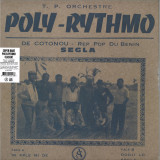
‘Segla’ is a hens’ teeth-rare Poly Rythmo album
from 1978 that was originally released without a
sleeve as ALS059. Recorded at EMI Lagos, Nigeria,
as per most of the Poly Rythmo recordings for
Albarika, the sound quality is from the tapes is
dynamic and fresh.
Transferred from the original tapes and
remastered by Grammy award-winning engineer
Frank Merritt at The Carvery, the album is
presented with beautiful artwork and packaging to
match the sonics. This is the music as it should be
heard.
Over the next few years a comprehensive reissue
campaign is planned, overseen by Florent
Mazzoleni and David Hill for Albarika Store, with
Dean Rudland as executive producer for Acid Jazz.
Etta James: The Montreux Years is released as part of a brand new Montreux Jazz Festival and BMG collection series “The Montreux Years”. The collections will uncover legendary performances by the world’s most iconic artists alongside rare and never-before-released recordings from the festival’s rich 55-year history, remastered in superlative audio. Each collection will be accompanied by exclusive liner notes and previously unseen photography.
‘Etta James: The Montreux Years’ is a treasure trove of timeless classics, powerful and electrifying performances and raw, soaring vocals by one of the greatest ever female vocalists. The collection, featuring recordings from James’ Montreux Jazz Festival concerts in 1977, 1978, 1989 1990 and 1993, encapsulates and reflects Etta’s dynamic artistry and long-lasting impact. Spanning performances from across three decades, ‘Etta James: The Montreux Years’ offers deeply personal and intimate snapshots into James’ acclaimed musical journey, highlights and her phenomenal career.
From one of Etta James’ earliest successes, the infectious and endlessly elegant Something’s Got A Hold On Me, a medley that consist of At Last, Trust In Me and Sunday Kind of Love, which is a fusion of highlights from the early 60s, to the raw and emotional I’d Rather Go Blind and soulful horn-driven Tell Mama. The collection closes with Baby What You Want Me To Do, James’ homage to Jimmy Reed and the encore of her 1979 concert.
In 1975, Montreux Jazz Festival captured a significant moment of musical history – Etta James’ very first concert in Europe, performing at the festival’s 9th edition. The CD edition of ‘Etta James: The Montreux Years’ will include this special landmark concert, held at Montreux Casino on 11 July 1975.
- A1: Esther Phillips – That’s All Right With Me
- A2: Al Green – I Wish You Were Here
- A3: Eddie Kendricks – Intimate Friends
- A4: Sylvia – Sweet Stuff
- A5: Betty Wright – Girls Can’t Do What The Guys Do
- A6: The Ambassadors – Ain’t Got The Love Of One Girl (On My Mind)
- B1: The Dynamics – Get Myself High
- B2: Carolyn Sullivan – Dead ! / B3. Brenton Wood – Trouble
- B4: The Floaters – Float On / B5. Faze-O – Riding High
- C1: Ernie Hines – Our Generation
- C2: Jerry Butler – I’m Your Mechanical Man
- C3: J.j. Johnson – Keep On Movin’ (Vocals By Martha Reeves & The Sweet Things)
- C4: Monk Higgins & Alex Brown – A Good Man Is Gone (Vocals By Barbara Mason)
- C5: The East St. Louis Gospelettes – Have Mercy On Me
- D1: Jean Plum – Here I Go Again
- D2: The Staple Singers – Let’s Do It Again
- D3: The Sylvers – Only One Can Win
- D4: Della Humphrey – Don’t Make The Good Girls Go Bad
- D5: Freda Payne – I Get High (On Your Memory)
- D6: Carla Thomas – What The World Needs Now
Duke Ellington once said that there are 2 kinds of music: the good one and the bad one. With the compilation series “Shaolin Soul” we are always certain to be on the right side of the line since its 1st episode released in 1998 and which compiled two dozens of tracks sampled by RZA and the Wu-Tang Clan. Following a second episode in 2001 and a third one in 2014, the famous curator Uncle O is back to celebrate the 20th anniversary of the Shaolin Soul series with a fourth episode compiling 22 tracks among the rarest and finest treats of soul music, because “everybody’s talking about the good ol’ days !”.
On February 27, 2018, Chris Forsyth & The Solar Motel Band (comprised, in this iteration, of long-time SMB bassist Peter Kerlin and Kerlin’s Sunwatchers battery mate Jason Robira on drums) were close to wrapping up an 18-date tour of the EU and UK with a two-set, one hour and 45 minute show at Cafe OTO, London’s premier venue for adventurous music. Highlights of that show are included in this live release, RARE DREAMS: SOLAR LIVE 2.27.18, recorded before a packed house seated mere feet from the band’s amplifiers. These recordings reveal a band that is clearly in high spirits and high gear, operating with an expansive, improvisatory fleetness that allows them to stretch the material to almost ludicrous extremes and then let it to snap back to some semblance of form while somehow seemingly never wasting a note, a beat, a gesture. The four tracks included here comprise material culled from (at the time) the two most recent Solar Motel Band records DREAMING IN THE NON-DREAM (No Quarter, 2017) and THE RARITY OF EXPERIENCE (No Quarter, 2016) plus covers of two Neil Young songs - the autobiographical plaint “Don’t Be Denied,” lyrically relocated by Forsyth from Young's Canada and Hollywood to the more personally relevant geography of New Jersey and Philadelphia, and encore “Barstool Blues” (they’d run out of material to play, so another Neil Young tune it was). While the covers establish Forsyth’s basis, serving as an homage to Young and the quest for self-realization, the long tracks’ jams showcase the trance-inducing power of the Solar Motel Band as a performing entity. Kerlin’s gymnastically propulsive bass playing locks in with Robira’s relentless thud, each serving as counterpoint to some of the most blistering guitar work of Forsyth’s career. The telepathically dynamic interplay of the trio explodes with whiplash intensity across the 15-plus minute takes of “Dreaming In The Non-Dream” and “The First 10 Minutes of Cocksucker Blues,” each song’s structure serving as a framework for extended lava flows of energy. At one point late in the “Dreaming” jam, Forsyth unplugs the jack from his guitar, dragging it across the strings and lashing the body of his single-pickup “parts" Esquire, producing a desiccated barrage of percussive static. This is music beyond the notes; it is an expression of pure electric ecstasy, a simultaneous negation and celebration of rock music’s (indeed all musics’) essential energy. In contrast to the expansive but meticulously detailed guitar arrangements of his recordings, here Forsyth’s unhinged live guitar sound positively roars with a barely restrained vocal intensity, from liquid melodic lines to gnarled blasts of free jazz scree, to pulsating lead/rhythm vamping. I’ve had the pleasure of witnessing this band up close for a number of years now and I can authoritatively attest that while every show is different, when the SMB is running down a steep hill at full speed (as on these takes), they become a single leaderless vibrating sonic tornado, possibly beyond the control and logic of the players themselves, picking up listeners along the way and taking them along for the ride straight into a solar furnace of sound. - Jerome Onfront, Philadelphia
Industrial Tribe inna future dimension... it's bloody dynamic... bass is crazy, and the acid side is opening a new way in a style we could be tired of...
Finaly this music is dancefloor, and this dancefloor is music. brutal.
I'm sure it will be a legendary record.
It's pretty rare it happens....
New Pagans create music that's not only vivid and engaging but also home to massive riffs and rare dynamics. The bands audible influences range from PJ Harvey to Sonic Youth while lyrically the band deliver protest songs, songs about women, songs about mothers and songs about conversations overheard on Belfast's public transport systems. Their live shows are also something to behold and have just been the recipients of the best live act at The Northern Island Music Prize 2020. Music is the focus and an important vehicle for the healthy message the band promotes. New Pagans is a proud advocate for women’s rights, visibility and inclusion in the global music industry – an industry dogged with a history of stark gender inequality. The arts community and media have responded to the bands refreshing social and historical lyrical stance which includes protest songs, songs of suffrage and an ode to Lily Yeats, the often overlooked sister of Jack and William B and a key mover in the world of Irish arts and crafts back in the day along with her younger sister, Elizabeth. New Pagans have headlined events as part of Women’s Work and Lyndsey McDougall has proudly embraced the demands of live performance and recording whilst pregnant twice!. The band are committed to promoting honest inclusion, demonstrating the female force and showing that you can be born as or identify as female, raise a family and have your place as a career musician. Young women, young mothers see Lyndsey as a symbol of strength and hope in her fearless and forthright attitude to motherhood whilst fronting a band. A lot of young mothers feel the need to hide that aspect of their personal life for fear of how people may perceive it as a limit in achieving creative breakthroughs. New Pagans are that breakthrough, a visible work in motion
Part 2[14,08 €]
A rare treat for Drumcode faithful: A-Sides Vol.10 is set to drop in December, the second edition of the beloved series to come in 2020.
Fuelled by the extra time and space to be creative during lockdown, Drumcode’s collective of artists have stepped up. Across 17 contributions, the producers have gone deeper into their sonic repertoire, crafting powerful, yet reflective works that capture the range of the label’s sound.
Jay Lumen leads the way with a rousing riff-driven weapon, ‘Galactic Rainbow’, while Ramon Tapia brings us the muscular gem ‘Drum Control’, mixing up ruffneck techno with a barrage of synapse-tickling synths in the second half. Both rousing highlights of the compilation.
Victor Ruiz, Drumcode’s most prolific contributor in 2020, dishes up ‘Love Story’, led by a huge vocal lead. Zimmz also returns with ‘Tension’, which deftly combines deep squelchy grooves with a silky synth interlude. Thomas Hoffknecht follows up his debut on Vol.9 with ‘Escape’, keeping listeners on their toes with dynamic, choppy shifts throughout. Veerus joins with another stirring addition ‘I Know’, reinforcing why Beyer rates him so highly.
Elsewhere a string of debutants feature: buzzy newcomer Lilly Palmer gives us ‘Amnesie’, a brilliantly pummelling and eerie cut; Alex Lentini & Stomp Boxx serve up ‘Expanders’ mixing up drone effects, trippy vocals and an unsettling melody line; and Patrik Berg’s ‘Activated’ is full-bodied techno that drops down into funky rhythms.
Long-time DC family member Bart Skils brings his A-game with the thrilling no-nonsense ‘Solid State’ that hits like a steam train. Likewise, Alan Fitzpatrick who brings a momentous slab of techno energy with ‘Rochus’, while Thomas Schumacher, now feeling like a regular on the imprint, crafts another dark techno opus, this time in collaboration with CAITLIN.
There’s even a special appearance by the chief Adam Beyer, who makes a welcome return with the progressive-tinged ‘Changes’, driven by organic tones and spacey atmospherics. The track stands as his first original contribution to A-Sides since 2017.
Mike Lundy, Lemuria, Aura. This trifecta of inimitable Hawaiian acts descended upon Honolulu’s state-of-the-art Broad Recording Studio in late 1979 to create what have now become the most coveted Hawaiian funk/soul/jazz albums of the era.
But whereas Lemuria functioned as a short-lived studio band and Mike Lundy saw little success from his album’s release, Aura — comprised of eight siblings from the Mendoza family — remained a key figure in the nightlife scene of Hawaii of the 1970s and early 1980s.
Each tune on their 1979 LP showcases the band’s unmatched musical talent that continues to astonish listeners in the 21st century, including Juno Records: “Raw funk… honey-coated soul… grooves and big smiles… lavish Hayes-level horns… dynamic and luxurious full-spectrum harmonies. Stunning.” Available on vinyl and digital for the first time since its initial release, Aura is a rare example of an album that in today’s crowded reissue landscape really does live up to its mystique.
Mike Lundy, Lemuria, Aura. This trifecta of inimitable Hawaiian acts descended upon Honolulu’s state-of-the-art Broad Recording Studio in late 1979 to create what have now become the most coveted Hawaiian funk/soul/jazz albums of the era.
But whereas Lemuria functioned as a short-lived studio band and Mike Lundy saw little success from his album’s release, Aura — comprised of eight siblings from the Mendoza family — remained a key figure in the nightlife scene of Hawaii of the 1970s and early 1980s.
Each tune on their 1979 LP showcases the band’s unmatched musical talent that continues to astonish listeners in the 21st century, including Juno Records: “Raw funk… honey-coated soul… grooves and big smiles… lavish Hayes-level horns… dynamic and luxurious full-spectrum harmonies. Stunning.” Available on vinyl and digital for the first time since its initial release, Aura is a rare example of an album that in today’s crowded reissue landscape really does live up to its mystique.
A rare treat for Drumcode faithful: A-Sides Vol.10 is set to drop in December, the second edition of the beloved series to come in 2020.
Fuelled by the extra time and space to be creative during lockdown, Drumcode’s collective of artists have stepped up. Across 17 contributions, the producers have gone deeper into their sonic repertoire, crafting powerful, yet reflective works that capture the range of the label’s sound.
Jay Lumen leads the way with a rousing riff-driven weapon, ‘Galactic Rainbow’, while Ramon Tapia brings us the muscular gem ‘Drum Control’, mixing up ruffneck techno with a barrage of synapse-tickling synths in the second half. Both rousing highlights of the compilation.
Victor Ruiz, Drumcode’s most prolific contributor in 2020, dishes up ‘Love Story’, led by a huge vocal lead. Zimmz also returns with ‘Tension’, which deftly combines deep squelchy grooves with a silky synth interlude. Thomas Hoffknecht follows up his debut on Vol.9 with ‘Escape’, keeping listeners on their toes with dynamic, choppy shifts throughout. Veerus joins with another stirring addition ‘I Know’, reinforcing why Beyer rates him so highly.
Elsewhere a string of debutants feature: buzzy newcomer Lilly Palmer gives us ‘Amnesie’, a brilliantly pummelling and eerie cut; Alex Lentini & Stomp Boxx serve up ‘Expanders’ mixing up drone effects, trippy vocals and an unsettling melody line; and Patrik Berg’s ‘Activated’ is full-bodied techno that drops down into funky rhythms.
Long-time DC family member Bart Skils brings his A-game with the thrilling no-nonsense ‘Solid State’ that hits like a steam train. Likewise, Alan Fitzpatrick who brings a momentous slab of techno energy with ‘Rochus’, while Thomas Schumacher, now feeling like a regular on the imprint, crafts another dark techno opus, this time in collaboration with CAITLIN.
There’s even a special appearance by the chief Adam Beyer, who makes a welcome return with the progressive-tinged ‘Changes’, driven by organic tones and spacey atmospherics. The track stands as his first original contribution to A-Sides since 2017.
The premise for Quindi Records is simple – to represent music with a universality at its core.
Without adhering to specific genre tropes, the releases are intended to have a meaning and purpose in all kinds of situations – a social soundtrack as much as a stimulating experience,
feeding emotions and the psyche with a sentimental palette of sounds. Lovers’ music, loners’ music, music for friends and family alike.
Woo makes for a perfect choice to meet this loose concept head-on – the music of Clive and Mark Ives straddles disparate worlds and finds its own peculiar balance. On one hand it’s delicate synthesizer music with a minimalist bent, while on the other their joyous, twinkling harmonies have an immediacy that speaks to the soul. You can detect privacy in their craft – the brothers originally recorded their music in relative isolation in London in the 70s, 80s and early 90s. It’s only in recent years their sublime work has enjoyed a wider audience through an extensive run of reissues.
Arcturian Corridor ? presents a rare, previously unreleased piece of music from Woo – the expansive suite of the title track that unfurls across five parts. It’s an enchanting listen that shows a new breadth and depth to the duo – detailed drum programming and a broader palette of synth tones cascading in elegant unison. The name refers to Arcturus, the fourth brighteststar in the night sky. As Woo themselves explain, “The Arcturian Corridor is said to be a channel of light that brings unconditional love and wisdom from Arcturus to Earth.”
In addition to the 20-minute A-side piece, Woo also presents a new version of “Love On Other Planets”, a standout piece from their 1990 album ?Into The Heart of Love? . The fragile subtlety of the original has been embellished here with rich new passages that turn it into a kind of electronica epic, although still marked out with the sensitivity one expects from a Woo record.
Two remixes complete the set, both furthering Quindi’s modus operandi as a genre-agnostic force for cosmically charged music. Dublin’s Wah Wah Wino collective present their Wino Wagon manifestation for a tastefully strange house version of the fifth part of “Arcturian Corridor” that channels the freakiness of Pepe Bradock, the robo-funk of Metro Area and a soupcon of pop nous. British duo Ultramarine maintain the stylistic ambiguity as they channel decades of expressive experimentation between live band dynamics and machine soul on their version of the title track’s second chapter.
Where does electronic music lead you? To the inside, to a calm and warm place where sound resonates with your body in quiet bliss, or to the outside where the rhythm wants you dance, even without moving? „WTMCT“ gives an answer to these questions that is complex yet extremely easy to understand in an immediate sentient and emotive way.
Menelaos music is unusual and unlikely both with respect to the structure and arrangement of tracks, and the materiality and spatiality of the sound. And yet these sounds convey an immediate sensation of familiarity and ease, of beauty and relaxation. Menelaos utilizes loudness and extreme dynamics in a thoughtful and intriguing way to accentuate strange runaway sounds while maintaining the continuity of the flow of the tracks, which is Ambient to the core. This is a rare art in our time, where hypercompressed and superoptimized glossy sounds dominate most of Ambient, drone and even deep listening music.
In this aspect the album follows and refines the subtle production skills of seminal electronic artists like Jan Jelinek or Terre Thaemlitz a.k.a. DJ Sprinkles. What is genuinly special about Menelaos music is the natural and seemingly effortless fusion of challenging experimentalism and a warm and soothing organic sound-design. This shows exemplary in the collaborative tracks with trombonist and bass trumpet player Achim Fink, a founding figure of the Cologne jazz and free improvisation scene of the eighties. Achim is uncompromisingand in times disruptive play merges perfectly into Menelaos serene soundscapes.
This way „WTMCT“ became a genuine album. It tells a story. It invites deep exploration but it does not demand it, thus transcending common notions of how Ambient or Electronica should sound. Text: Frank Eckert
The Album includes also some warm sampels (my live with the wave vol 1+ 2) from the Detroit legend Mike Huckaby to whom i very thankful.
Limited edition of 170
• SPECIAL EDITION 200TH SINGLE
• FIRST EVER 7-INCH SINGLE RELEASE
• TWO STUNNING SIDES – “OVO”
• OFFICIAL SCEPTER STUDIOS ACETATE ARTWORK
To celebrate this historic landmark Outta Sight proudly present a unique 45 featuring two stunning sides by rare soul legends 'BETTY LAVETTE' and 'NELLA DODDS'.
First under the spotlight is Betty Lavette with her 1964 recording of “One Thin Dime”, popularised on the Northern scene by Holly Maxwell. Ms. Lavette’s version, unreleased at the time, with it's haunting brass and upbeat production is hands-down the superior version. It first came to light in 1993, thanks to Kent Records, on the rare sixties’ soul CD ‘Living The Nightlife’, and is now available, for the first time, on the premier division format … 7" single.
Next up is Sixties Soul sweetheart Nella Dodds with her Philly dancer “First Date” produced by the legendary Dyno-Dynamic production team for Wand Records. It was written by James Bishop and originally intended for a mid-Sixties album entitled ‘This Girl’s Life’. The album was rejected at the time but finally surface on a Kent CD in 2007.
However, like our A-side, “First Date” makes it's first ever appearance on a much anticipated 7" single.
Samuel Rohrer CONTINUAL DECENTERING With his Arjunamusic label and a growing catalog of categorydefying releases, Samuel Rohrer continues to quietly, yet confidently, make a name for himself as a genuinely unique Gigure within the European electronic music realm. In the current era, talk of blurring boundaries between musical genres and attitudes is more the rule than the exception, but not always something done with any degree of success. Rohrer is one of those rare alchemical explorers to have truly created a hybrid which is all his own, one that does not just exist to melt distinctions for its own sake, but is a natural result of years of experimentation with both the determination of electronic music and the ludic spirit of ‘free improvisation.’ On his newest offering, Continual Decentering, this vision is applied to a set of mostly in real time (live) performed explorations. In keeping with his many years’ worth of fruitful collaborations, the tonal palette on this new record is one that is expectedly rich for those familiar with his work, yet still surprising in terms of how exactly the differing tonal colors come together. Representative tracks like Spondee and The Fringe are brimming with dub pulses, noir shivers and blooming timbral variations that are in many places carefully isolated / focused and in other places blended together in vivid fusions. In terms of the emotional atmosphere created here, the pensive and questioning tone hearkens back to the ‘wide open’ state of electronic music in the mid-late 1990s, yet with a greater clarity and maturity of vision that makes this music feel like a possible answer to aesthetic questions being raised at that time. As with Rohrer’s most recent solo work, like the Range of Regularity LP, Continual Decentering showcases the artist’s skill in turning the drum kit into a lead instrument. While the term “lead instrument” denotes a kind of exuberant “Glash,” or a clear separation from the rest of the voices in an ensemble, we can take the term to mean something different throughout this listening program of 13 short vignettes: that is to say, everything else within the audible environment exists to complement the character of the percussive playing rather than to stand apart from it. It helps that Rohrer has, in fact, developed a unique and complex hybrid system in which drum hits trigger modular synthesizer processes, the use of which makes for an incredibly fluid response time between distinct sonic events. In contrast to the previous Range... LP, this new offering is propelled less by interlacing threads of intensity and more by a shared sense of deep listening. As displayed on pieces like All Too Human, there is a profound sense of attention to silences or thoughtful pauses that maybe hints at another crucial aspect of Rohrer’s style: over the course of this program, we tend to hear the player not only playing but listening, an activity which makes perfect sense given the sense of instrumental dialogue already mentioned. All of the above come together to give Continual Decentering a “live”-ness that will easily translate from recorded document to dynamic performance.
"The first series comprises six related movements, usually organised in pairs, electronic sounds with instrumental and more rarely, concrete sounds: Incidences/resonances brings into play controlled resonances akin to sounds of concrete origin in a process that helps to expand the variable electronic sound sources.
Here, 'incidents' are opposed to one-off 'accidents' in the second movement: Accidents/Harmoniques (Accidents/Harmonics). In the second movement, very short events of instrumental origin change the harmonic tone of the continuum they interrupt or overlap.
Moreover, the high notes are underplayed, which stimulates the attention given to other phenomena generally hidden by the melodic form applied to the instrumental play. Géologie sonore (Sound Geology) is similar to a flight over an area where different 'sound' layers come to the surface one after the other.
When seen from high above, instrumental and electronic sounds seem to fuse ... Dynamique de la resonance (Dynamics of Resonance) is a microphonic exploration of a single sound resonating through different forms of percussion. L'Etude élastique (Elastic Study) places together various sounds produced by 'touching' elastic or instrumental skins (baloons, doumbeks) or vibrating strings and a number of instrumental gestures close to this 'touch', using electronic processes to generate white noise.
Conjugaison du timbre (Conjugated Tone), the last movement in the series, uses the same substance to apply rhythmic forms onto a perpetually varying tone continuum. "The second series of movements draws its inspiration from concrete and electronic sources rather than instrumental ones. Incidences/battements (Incidences/Beatings) is a reminder of the first movement in the first series which then quickly moves into Natures éphémères (Ephemeral Natures): ephemeral play on instrumental and electronic sounds, singled out by their internal trajectory rather than by the material itself. Matières induites (Induced Matters): just as molecular effervescence triggers a changes of state, it seems that the different states of these sound materials can be generated by each other or through induction processes.
In Ondes croisées (Crossed Waves), the pizz vibrations interfere with somehow 'visible' water drops on the surface of a similar material. Pleins et déliés (Downstrokes and Upstrokes) can be listened to as the energies absorbed in the motion of bouncing bodies, while hollow 'bubbles' and points bring together some people's gravity and others' downwards movements. The work finishes with Points contre champs (Reverse Angle Points).
Here, the notion of perspective of the different sound threads weaving a kind of network, or field, traps the occasional iterative elements in the foreground and progressively absorbs them, giving more space for the angle - and the chanted sound - to grow." (B.P.).
RLSD 003 comes correct delivering a dynamic and functional
dancefloor tool. Following in the tradition of what the label is all about
‘Tensional Ground VA’ again delivers with the full weight of the best of
Irish Techno. Tensional Ground VA presents long serving purveyors of
the techno sound Stuey Lyons, Casper hastings and Rustal somewhat
unsung heroes of the Irish scene, all having received great acclaim on
the international circuit getting support from the top international techno
brass. Stuey Lyons leads the pack with and upfront functional FM tool.
Stuey’s in depth cultural awareness of Techno cultivated this driving
nightmaker that has been recognised as a festival anthem receiving
great acclaim long before its release date. Rustal delivers a broken set
breaker that morphs and progresses to aid any DJ in the depths of a
long haul set. This track has more than delivered and offers new insight
with every listen. Caspers upfront in your face track is an instant classic
that will rarely leave the bag. Hastings Showcases his production skills
and true sound with a rough and ready analog production that was and
easy choice for the labels final cut. Stuey Lyons original ‘The Rift’ gets
the remix treatment from Echoplex providing a Soliel Remix throwing a
dancefloor curveball complimenting the upfront functionality of the
other tracks. Echoplex being a favourite of the label owners who have
taken great inspiration from his contribution to the scene. Working
alongside Echoplex holds great significance for the label as his
contribution reinforces the identity and culture the label portrays in all it
does.
Brilliant self-released, private-press jazz/soul LP from 1975, recorded at Sunset Sound studios in LA.
This is the super-rare debut album from SpaceArk, a band of brothers on an interstellar voyage to discover 'electrifying new sounds'.
It's another one of those private press treasures - a dynamic group of talents seizing the moment and making magic in an astounding 12-hour turnaround at the legendary Sunset Sound studios.
Official reissue with liner notes by Amar Patel.
Vol.2[8,87 €]
Late November will see Tact Recordings vinyl only sub-label Tactics return with 'Vol.4', a various artists package featuring Jor-El aka Joel Alter, Imugem Orihasam and Benjamin Brunn.
Tactics was launched in late 2017 by co-founders of the imprint Yard One with their 'Vol.2' EP, following on from the 'Vol.1' various artists EP released on the main imprint Tact Recordings back in 2012. Since its inception last year and it's two releases so far from founders Yard One and Fletcher, the label has garnered the attention of DJ's like Varhat, Roger Gerressen, Raresh, Malin Genie and Andrey Pushkarev to name a few. Here though we see the imprint welcome some of it's favourite artists from over the year onto the roster, namely Echocord artist Jor-El aka Joel Alter, Ilian Tape's Imumgem Orihasam and Smallville regular Benjamin Brunn. Leading on the package is Sweden's Jor-El with 'Remember Tomorrow', a gritty dance floor workout fuelled by dusty drums, fluttering stab sequences and sweeping synth strings before Japanese producer Imugem Orihasam edges into dub territory with a cinematic two minute soundscape opening the composition before weighty drums, swirling pads and dubbed out metallic chimes dynamically unfold throughout.
Hamburg's Benjamin Brunn then closes the package with 'ResoPlanet', as always delivering smooth, understated electronic music via wandering ethereal pads, resonant bleeps and bumpy, off-kilter 808 drums.
At first, it's difficult to pinpoint exactly what makes Our Girl so special, or why the Brighton-formed, London-based trio's music stands out within a busy crowd of fellow guitar-wielding-types. But if an explanation didn't jump out when they first emerged with a debut EP of mighty fuzz-soaked songs in November 2016, it surfaces with 'Stranger Today', a debut album of personal, emotional juggernauts that could have only been made by these three people: Guitarist / vocalist Soph Nathan, bassist Josh Tyler and drummer Lauren Wilson.
Since forming in Nathan and Tyler's Brighton home four years ago - Wilson joining as a late recruit when she was wowed by a demo of their self-titled debut track, and 'Stranger Today''s opener - Our Girl's members have only had pockets of time to work together. A day booked in a local studio here, a soundcheck there, full-time jobs and other projects meant the three rarely had a concentrated, collective patch. This changed in September 2017, when they stayed in Eve Studios in Stockport for a week, recording with Bill Ryder-Jones. Their week in Stockport became a crucial catalyst for what would follow. Ryder-Jones is a guitar virtuoso himself ('He did stuff neither me or Soph had ever seen anyone do before,' Tyler remarks), and he became an unofficial fourth member of the group.
'Stranger Today' is a special debut for several reasons: First, because it's the sound of a band beginning to grasp their own value and place in the world. Secondly, because you can hear the trio's hunger to finally get in the same room and put to tape years' worth of scrapbooks, half-finished ideas, and a slowly-forming feel for how their first album would actually sound. 'What band isn't itching to make their debut But it's quite frightening, knowing you're about to do it,' Wilson remembers.
The real clincher, however, is Our Girl's dynamic, and how it plays out across 'Stranger Today'. Best friends in person, the trio share the same close kinship and chemistry on record. On one side is Nathan's visceral lyricism, which has a habit of detailing and chipping away at precise moments; the first heart-flutter of a new crush; the moment a long-term friendship begins to ebb away. Around her, Tyler and Wilson's rhythm section carefully mirrors each feeling Nathan conveys. When she sings pointedly about love ('I Really Like It'), she's backed by a major-key afterglow. When the subject turns on its head ('Josephine'), out steps a wall of taut, earth-shaking noise. They each 'serve the song,' in Wilson's words, moving in sync but with their own personal slant. Not least on the closer 'Boring', where all restraint is thrown aside and the trio let out one final, violent thrash. They inhabit a space bigger than the first loves, sleepless nights and growing pains that define this record.
Nathan remembers being in Brighton four years ago, shortly after Our Girl formed, and realising, 'I was finally in the band I wanted to be in.' Almost half a decade later, and this eureka moment is sewn up on 'Stranger Today'. It's the sound of three friends totally at ease in their own space, discontent with being anywhere else; a vibrant document of what it's like to be young, invigorated and amongst people who feel the same.
For its seventh offering, Sol Power Sound taps into the pulse of the French Antilles for Tambours de Martinique, a blistering EP of original and remixed versions of rare, drum-centric dance floor workouts. Licensed directly from the legendary Martiniquan label Hibiscus Records, the EP features cuts by Eugène Mona and Max Ransay, two of Martinique's most storied musicians. With reworks by Spanish DJ and producer Kiko Navarro and the Sol Power All-Stars, this one will be in the record bags of discerning DJs all summer long.
The A side features 'Lizo' by Eugène Mona, an essential figure in the folkloric music of Martinique based on the bamboo flute, bèlè drums, and the island's specific variant of Antillean creole. Lizo was originally released in 1990 on Mona's Blanc Mangé Blan Manjé LP and is anchored by frenetic percussion, a driving bassline, and house-evocative key stabs. Kiko Navarro's remix takes an already dynamic cut to deep Afro-space with thumping drums and a bubbling synth-bass groove that will put dancers through their paces.
With its powerful combo of urgent brass and ensemble vocals, Max Ransay's 1988 recording of the traditional Martiniquan folk song 'Ti Kanno' fills the B-side. 'Ti Kanno' was previously recorded by Ti Émile, Ransay and Mona's legendary forebear. Full of surprises, Ransay's version is a sonic melting pot of hand percussion, horns, unexpected synth lines, and bass. The Sol Power All-Stars edit fills out the low-end thump and teases out the groove for maximum impact.
- A1: Vernon Harrell - Slick Chick
- A2: Earl (Connelly) King - Every Whicha Kinda Way
- A3: Little Marie Allen - Humdinger
- A4: Teddy (Mr Bear) Mcrae - Hi' Fi' Baby
- A5: The Nightriders - Lookin' For My Baby
- A6: Little Luther - Steppin' High
- A7: Earl King - Darling Honey Angel Child
- A8: Lillian Vines And The Dynamics - I Dreamed About My Baby Last Night
- B1: Paul Perryman - Keep A'calling
- B2: Mike Robinson - Lula
- B3: Harold Jackson And The Jackson Brothers - Freedom Riders
- B4: The Drivers - Mr Astronaut
- B5: Gloria Irving - I Need A Man
- B6: Rudy Lambert - Jamboree
- B7: Jeanette B. Washington - Medicine Man
- B8: Rose Mitchell - Baby Please Don't Go
This unique set brings together a treasure trove of R&B rarities enshrined by the $3,000 Lookin' For My Baby', recorded by The Nightriders in 1959 for Juggy Murray's Sue imprint.
Murray had co-founded Sue Records two years earlier with fellow New Yorker Bobby Robinson whose Fire label provides us with the equally compelling Keep A'Calling' by Paul Perryman (side 1, track 1), a snip at only $300!
The set bursts into life with Vernon Harrell's hot dance ticket Slick Chick', currently commanding a cool $400 on its original Lescay label. Northern Soul fans will be interested to know that Harrell co-wrote Seven Days Too Long' with J R Bailey (aka Chuck Wood) and Sweet Sweet Lovin'' for The Platters.
Mike Robinson ( Lula') also has a tenuous Northern Soul connection, he was originally in Bobby Thomas' Vibranaires before joining the Orioles alongside the legendary Sonny Til.
BOTH Earl King's make the playlist: Earl Connelly' with his hard Every Whicha Kinda Way' and the New Orleans native Earl King with Darling Honey Angel Child', an early prototype of the standard Come On'.
Look out too for rare soul sweetheart Baby Washington, Medicine Man'.
A Collection to Treasure...
Leroy Tucker- known simply as L.T. on the scene-and his band the Soulful Dynamics super rare funk 45. The band was a rotating combination of McClyde Sheely, Melissa Riley, Melvin Ausbie, Eric Williams, Collier Carruthers, Lee Berry, Virgil French, Walter Atchinson, and Charles Wakefield. Despite infectious horns and L.T.'s impassioned delivery, neither "Crazy About You Baby" nor "Everybody Needs Somebody" made a dent locally or otherwise. Like all of the Solo platters, the Soulful Dynamics record was manufactured at Monarch in Los Angelas. Dick Smart fondly recalls picking up the record at the Wichita Greyhound station with an excited L.T. in tow.
Mint Condition - A brand new record label focussed on excavating the outer fringes of classic House and Techno. Unreleased mixes, classics and overlooked gems mined from the last 20+ of contemporary dance music are the order of the day. From Chicago, Detroit and New York to London and beyond, Mint Condition have got their expert digging hats on to bring you exclusive heat and those rarer than rare jams that have been on your wants list for years! Dig in....
Jaime Read is something of an unsung UK legend. An original, unique producer who has been making noise in the underground in his own way, emanating from the South coast of England, since the mid 90's. 'Relief Sevensixty' is a collection of Read's rarer tracks that have appeared in a roundabout way, on a legendary Chicago label in a tale that has by now been widely documented. But that's a story for another time. The real focus here is the music, of course. Across 4 tracks this EP shows what a dynamic producer Read is, the music contained within has a depth and maturity and of course it's some funky as, futuristic, space Techno that sounds like it's just escaped the warp drive and landed here on earth and implanted itself in our eardrums. From the joyous, glorious, electronic funk of 'Douch Me' to the curiously monikered piano driven, subterranean stormer 'Droopy Dancing' the whole EP captures a real insight to a remarkable UK talent operating from under the radar. 'Relief Sevensixty' is the first part of a 2 EP set covering Jaime Read's amazing music. Keep your eyes open for the second installment, winging it's way to us through the cosmos as we speak.... soon come!
The 'Relief Sevensixty' EP has been legitimately released with the full involvement of Jaime Read for 2017 and remastered by London's Curve Pusher from the original sources especially for Mint Condition. 100% legit, licensed and released. Dug, remastered, repackaged and brought to you by the caring folks at your new favourite reissue label - Mint Condition!
Inspired by the likes of Raresh, Zip, and Villalobos, the artist known as Kepler has something special in store for your local area dance floor. "Making Chords" is an exciting new release that's guaranteed to please.
The title track "Making Chords" can be appropriately described as nothing less than an addictive, bona fide banger that will instantaneously hook its end user after one listen. From the beginning Kepler. sets the pace with a smooth, sexy bass line that will command your attention and aggressively compel any crowd to start dancing. This passionate production pushes its agenda with a rumbling tempo, dynamic drums, and intriguing vocals that are well worth repeating. Laced with clever sounding samples and purposeful piano licks, "Making Chords" is made for anyone and everyone.
The second offering, "Wire" is a quirky, fun departure that gives insight to Kepler's wide range. This spooky sounding track is characterized by its off-beat rhythm, saturating bass tones and curious sounding signals that slide up and down while continually building momentum. As the "Wire" progresses, one can't help but to take note of how its unpredictable nature is dictated in such a well-organized manner. Very, very interesting.
Muyei Power or Orchestre Muyei (muyei means 'our country') was one of the top dance bands of the1970s in Sierra Leone. Soundway Records' first collection of music from this West African country ('Muyei Power: Sierra Leone in 1970s USA') is an album of rock-infused, 'afro' music from a group that traveled the world throughout the mid 1970s. Fusing elements of electric Congolese and Nigerian music with fast, syncopated, uptempo modernised arrangements of traditional music, Muyei Power produced a series of unique single-only releases that have been unavailable for 35 years. The rare recordings featured here are a glimpse of a dynamic and powerful band at the very height of its powers.
Even though lyrically Orchestre Muyei focused on traditional themes and songs, the arrangements and formulation of the instrumental side of things still very much reflected the mixed nature of urban Sierra Leone music, exemplified by a small collection of bands that also included Afro National, Sabanoh 75 and Super Combo.
For the early part of 1970s the band toured extensively throughout Sierra Leone, Liberia and Côte d'Ivoire before making a handful of 45s in local TV and radio studios. The recordings featured here however come from a period of touring the college circuit in California during late 1975 and early 1976. Later that year, as they played the colleges of the east coast, they gave the tracks to the owner of the African Record Centre in Brooklyn, New York. He initially released two of them on his in-house Makossa Records label as 7-inch 45rpm singles in 1976. The tracks from 1975/6 were then not heard of again until 1979/80 when the African Record Centre released many of them on a series of Makossa Records 12's that sounded far superior than the records that had been released a few years earlier.
Orchestre Muyei Power finally split up in 1979 leaving no proper album releases and only a handful of recordings for us to enjoy all these years later.
'Deep session! It is rare to hear folk music from Japan in such beautiful fidelity and incredible dynamics. This recording is intensely gorgeous and hauntingly disarming. This should open up a whole new world of adventurous listening for folks outside (and inside!) Japan.'Brian Shimkovitz (Awesome Tapes From Africa)
'Sounds absolutely great! Super interesting and engaging.'Ben UFO
'Just Give Me That Old Time Religion, It's Good Enough For Me.'Japan Blues
A hotline to the gods! Kagura is a thousand-year-old form of Japanese Shinto sacred music and dance, accompanying the chanting of myths; the word "kagura" can be translated as "god-entertainment". Passed down over countless generations, the music is rare and recordings even rarer. Shigeo Tanaka was a master of the yumi (bow), an uncommon single-string percussion instrument, which is a true bow: arrows are fired off at the end of each ceremony to fend off evil sprits. The instrument is difficult to play; it's hard to draw out the proper sound and maintain the rhythm.
Yumi kagura is the oldest of all the various forms of kagura. The Tanaka family, based in rural Joge-cho, Hiroshima prefecture, has passed down this yumi kagura tradition for hundreds of years; this lineage continues to this day in the person of his daughter Ritsuko Tanaka. The Joge-cho yumi kagura, which prays for family well-being, bountiful crops and good fortune, was designated an Important Intangible Cultural Property in 1971. The piece featured here, "Takusa saimon", based on the myth "Ama no iwato" (The Rocky Celestial Cave), is mesmeric, reaching back across ages to the time before time, with Tanaka's voice and yumi, accompanied by flute and metal percussion, drawing us closer to the primal activities of the gods. Listeners may find affinities with aspects of musics as diverse as German electronic minimalism like E2-E4, certain Ethiopian music, "spiritual jazz" and more, all tapping into the deep root of forever. Previously available only on a ridiculously obscure 1990 cassette release, Yumi kagura is the first collaborative release by EM Records and Riyo Mountains, a Japanese folk song research team. Available on LP and CD, with the CD featuring a bonus track: "Inagahachiman jinja yumi kagura hono" recorded in 2016 by Tanaka's daughter and successor Ritsuko Tanaka.
+ Direction/liner notes by Riyo Mountains
+ English liner notes & lyrics
Awa Poulo is a singer of Peulh origin from Dilly commune, Mali, near the border with Mauritania. Largely pastoral and often nomadic, Peulh- (or Fula-)speaking peoples are found from Senegal to Ethiopia but predominate in the Sahel region of West Africa. Awesome Tapes From Africa is proud to release Poulo's newest recording of highly virtuosic folk-pop, fresh from the studio, broadcasting her vision of Peulh music beyond the grazing grounds and central markets of her remote home region in southwestern Mali. It's not very common to find a female singer performing publicly among the Peulh. But Poulo's mother's co-wife is Inna Baba Coulibaly, who is a celebrated singer most Malian music fans know. Coulibaly herself was brought into music by forces outside her control when a regional music contest required an entry from her village and she was chosen to be a singer. So, set in motion by a surprising series of events, young Poulo's entree into the music world was auspic ious as she gained popularity across the region. After several locally released tapes and CDs, this record is Poulo's first internationally-distributed record. On Poulo Warali, she and her band combine the hallmarks of Peulh music—warm flute floating over cross-rhythmic n'goni (lute) riffs and resonant calabash gourd hand percussion—with broader Malian sounds like lightly-distorted guitar and a heavier, rollicking inertia. Shapeshifting layers of rhythm and woody overtones match Poulo's commanding voice in a jocular yet deliberate dance. This is a relatively rare example of Malian Peulh music played in a modern, cosmopolitan context, reflecting the mixed society of Dilly, where Bambara, Soninke and Peulh-speaking people live among each other. Poulo's conscious lyrics about community concerns speak to the distinctive identity of her broadly-flung people. While Peulh represents less than 10% of Mali's melting pot of languages, the dynamic music here powerfully resonates well beyond the linguistic borders.