
Attention : the label of the 95 is printed instead. A bug from the pressing plant on the whole sery !
An insert correct it back to 94 Infos
pre-order now30.10.2026
expected to be published on 30.10.2026
10,29 €
Attention : the label of the 95 is printed instead. A bug from the pressing plant on the whole sery !
An insert correct it back to 94 Infos
expected to be published on 30.10.2026
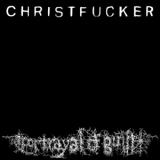
,CHRISTFUCKER" ist das zweite Album der texanischen Extremband Portrayal of Guilt und verbindet Hardcore, Black Metal, Industrial und düstere Noise-Elemente zu einem beklemmenden, atmosphärischen Gesamtwerk. Inspiriert von Horrorfilmen und existenziellen Themen erschafft die Band eine Klangwelt voller Angst, Verzweiflung und emotionaler Intensität. Die Songs reichen von rasendem, chaotischem Extrem-Metal bis hin zu experimentellen Passagen mit Industrial-, Ambient- und Drone-Einflüssen. Gastbeiträge von Jenna Rose (Anatomy) und Jeremy Bolm (Touché Amoré) erweitern den düsteren Klangkosmos zusätzlich. Das Ergebnis ist ein kompromissloses Album, das die kreative Weiterentwicklung von Portrayal of Guilt eindrucksvoll dokumentiert.
expected to be published on 30.10.2026

2026 Repress
Supported by Cio D'Or, Deepbass, Etapp Kyle, Mattias Fridell, Ness, Samuli Kemppi, Svreca, Takaaki Itoh, Unam Zetineb, Exium, Alessio Pili, Antonio de Angelis, Artefakt, Edit/Select, Jonas Kopp, Kwartz, Mod21, Reggy van Oers, Juho Kahilainen, Eric Cloutier, Johanna Knutsson, Tom Bonaty, Arnaud le Texier, Brando Lupi, I/Y, Iori, MTD, Nima Khak, Par Grindvik, SNTS, The Noisemaker, VSK, Attemporal, Casual Violence, Rasmus Hedlund, Sleeparchive, Terence Fixmer, Eastern Renaissance, Victor Martinez and many, many more.
Luigi Tozzi / Deepbass / Claudio Prc - Deep Blue
On Stock and ready to ship
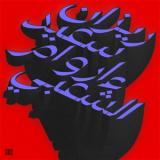
,Ma Waraa Al-Shaabi" - ,Beyond Shaabi" - ist das neue Album bei Kou Records von Rizan Said, dem legendären kurdisch-syrischen Keyboard-Virtuosen aus Ras Al Ain in der Region Jazeera im Nordosten Syriens und dem wichtigsten musikalischen Kopf hinter Omar Souleyman. Rizan Said ist ein musikalischer Botschafter aus einem verschwundenen Syrien. Es war einmal vor nicht allzu langer Zeit, als die Jazeera - ein kulturell reiches Grenzgebiet kurdischer, arabischer, syrischer und armenischer Gemeinschaften - von einer unverwechselbaren musikalischen Tradition geprägt war: Handtrommeln und Rohrflöten, Hochzeiten, die tagelang dauerten, Dabke, die schon seit Jahrhunderten getanzt wurde, lange bevor Electro, Disco oder Orientalismus auftauchten, um ihr einen Namen zu geben. Rizan war das Wunderkind dieser Szene, ein Ausnahmetalent an Percussion- und Rohrblattinstrumenten, das zum Meister der Synthese in der Region wurde - er programmierte Korgs so, dass sie Zurna, Saz, Tanbura und Buzuq nachahmten, und vereinte die traditionelle Instrumentierung in einem einzigen Paar Hände, das sich blitzschnell bewegte.? Dies ist sein drittes Soloalbum nach ,King of Keyboard" (Annihaya, 2015) und ,Saz U Dilan" (Akuphone, 2019) - und sein bisher weitreichendstes. Aufgenommen im Sundlaugin Studio von Sigur Rós Sundlaugin Studio in Island aufgenommen und von Randall Dunn produziert, in Koproduktion mit Mark Gergis (Syrian Cassette Archives), führt ,Ma Waraa Al-Shaabi" syrische und kurdische Dabke in unbekanntes Klanggebiet: sieben Stücke, die die Hitze und Geschwindigkeit der Kassetten-Szene in etwas Weites, Fremdes und Lebendigeres als je zuvor übertragen.? Aufgenommen im Sundlaugin Studio, Island, im Mai 2026. Produziert und gemischt von Randall Dunn. Koproduziert von Mark Gergis. Zusätzliche Produktion: Ulfur Hansson. Gemastert von Ben Greenberg. Dolby-Atmos-Mischungen von Ben Greenberg. Lackschnitt von Paul Gold bei Salt Mastering. Cover-Artwork von Rebeka Arce; Porträt auf der Rückseite von Randy Ortiz.
expected to be published on 06.11.2026
Efdemin and Vril. revisit Endless / Purge, originally released in 2021 as the only release on the short-lived Sun Sad imprint, launched by Kinzua’s Lucas Brell. Five years later, it returns on Confusion Is Next To Happiness in a revised and expanded edition. The original recordings have been newly mixed and remastered by Rashad Becker and are complemented by a previously unreleased Vril. reinterpretation of Endless.
Throughout the record, arpeggiated sequences drift through layers of finely textured dub haze, balancing physical momentum with an floating sense of weightlessness. While retaining the artists’ unmistakable sonic signatures, the record subtly channels the melancholic futurism and machine-driven pulse of techno's Motor City tradition.
expected to be published on 06.11.2026
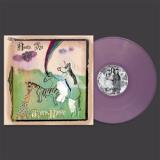
,Noah's Ark" ist das zweite Album von CocoRosie, dem Schwestern-Duo Bianca und Sierra Casady. Nach ihrem Debüt ,La Maison de Mon Rêve" entstand das Album während zahlreicher Reisen und Aufnahmen an unterschiedlichsten Orten, von Frankreich über Brooklyn bis Paris. Die Songs verbinden experimentellen Folk, verspielte Klangcollagen und intime Geschichten mit Beiträgen von Freunden und Gästen wie Antony Hegarty sowie dem französischen MC Spleen. Ursprünglich 2005 veröffentlicht, fängt ,Noah's Ark" das Gefühl eines rastlosen, nomadischen Lebens ein und verbindet fantasievolle, emotionale Momente mit der unverwechselbaren Klangwelt von CocoRosie.
expected to be published on 06.11.2026
DJ HS presents "Booty Shake EP" on Ghoststyle
A legendary figure of the Belgian electronic scene and one of the iconic DJs of the famous Lagoa, DJ HS returns to Ghoststyle with Booty Shake EP, a four-track release showcasing the sound that has made him a favourite among clubbers for decades.
Featuring Booty Shake, Spectrum, Shut Up and Acid Twist, the EP delivers four driving cuts packed with infectious grooves, pounding rhythms and unmistakable acid flavours. Staying true to DJ HS's signature style, each track is built for maximum dancefloor impact while preserving the raw spirit of authentic underground electronic music.
Whether you're looking for energetic peak-time weapons or timeless club grooves, Booty Shake EP is a solid addition to any DJ bag and vinyl collection.
Français
DJ HS présente "Booty Shake EP" sur Ghoststyle
Figure emblématique de la scène électronique belge et DJ incontournable du mythique Lagoa, DJ HS signe son retour sur Ghoststyle avec Booty Shake EP, un EP de quatre titres qui reflète parfaitement le son qui fait vibrer les clubs depuis des décennies.
Composé de Booty Shake, Spectrum, Shut Up et Acid Twist, cet EP rassemble quatre productions percutantes mêlant grooves entraînants, rythmiques puissantes et touches acid irrésistibles. Fidèle à l'univers musical de DJ HS, chaque morceau est pensé pour offrir un impact maximal sur le dancefloor tout en conservant l'esprit brut de la musique électronique underground.
Que ce soit pour les DJs à la recherche d'armes redoutables pour le peak time ou les amateurs de vinyles électroniques authentiques, Booty Shake EP trouvera naturellement sa place dans toute collection.
expected to be published on 06.11.2026

Noch bevor Brian Eno dies tat, schuf Mort Garson zurückhaltende Musik. Garson, der an der Juilliard School ausgebildet wurde und in der Nachkriegszeit als Session-Musiker tätig war, komponierte Lounge-Hits, schrieb die Musik zur Mondlandung von 1969 und schuf opulente Arrangements für Doris Day sowie die sehnsuchtsvollen ,Countrypolitan"-Streicherbegleitungen für Glen Campbells ,By the Time I Get to Phoenix". Mitte der 1970er Jahre fegte eine Naturgewalt über die kontinentalen Vereinigten Staaten hinweg, die alle Schichten unabhängig von Rasse und Klasse durchdrang und sich in unseren Köpfen, unseren Häusern und unserer Kultur festsetzte. Es war weder ,Der Exorzist", noch ,Goodbye Yellow Brick Road" oder gar Schlaghosen, sondern ein Buch mit dem Titel ,Das geheime Leben der Pflanzen". Das Werk des Okkultisten/ ehemaligen OSS-Agenten Peter Tompkins und des ehemaligen CIA-Agenten und begeisterten Wünschelrutengängers Christopher Bird schoss an die Spitze der Bestsellerlisten und breitete sich wie Kudzu über das Land aus, bis es zu einem Phänomen wurde. Scheinbar über Nacht blühte das Geschäft mit Zimmerpflanzen in voller Pracht auf, und photosynthetische Eukaryoten aller Gattungen hingen an den Wänden, thronten über Bücherregalen und sonnten sich auf sonnigen Fensterbänken. Die wissenschaftlichen Ansätze hinter ,Secret Life" waren fadenscheinig: Pflanzen können unsere Gebete hören, sie sind Lügendetektoren, sie sind telepathisch, in der Lage, Naturkatastrophen vorherzusagen und Signale aus entfernten Galaxien zu empfangen. Doch das hielt Millionen Menschen nicht davon ab, ihre neuen Pflanzen zu kaufen und zu pflegen. Die vielleicht verrückteste Behauptung des Buches war, dass Pflanzen auch Musik mögen. Und ganz gleich, ob Sie eine Schlangenpflanze, einen Spargelfarn, eine Friedenslilie oder was auch immer bei ,Mother Earth" auf der Melrose Avenue in Los Angeles erwarben (oder eine Simmons- Matratze bei Sears kauften) - Sie nahmen auch ,Plantasia" mit nach Hause, ein Album, das speziell für sie aufgenommen wurde. Mit dem Untertitel ,Warm Earth Music für Pflanzen _ und die Menschen , die sie lieben" war es voller idyllischer, charmanter, kiff-freundlicher und entschieden unwissenschaftlicher Melodien, die auf einem neumodischen Gerät namens Moog eingespielt wurden. Das Album erlangte Jahrzehnte nach seiner Veröffentlichung eine enorme Kult-Anhängerschaft. Die Neuauflage von Sacred Bones aus dem Jahr 2019 trug dazu bei, ,Plantasia" einem breiteren weltweiten Publikum bekannt zu machen, und bescherte Garsons ungewöhnlichem Meisterwerk ein bemerkenswertes zweites Leben. Was einst ein seltsames Relikt der Pflanzenbegeisterung der 1970er Jahre war, ist zu einem geliebten Evergreen geworden, der von einer neuen Generation von Hörern wiederentdeckt und neu geschätzt wird und weit über seinen ursprünglichen Moment hinaus gedeiht, wobei er sich von einer obskuren Kuriosität zu einem geliebten Kultklassiker und einem Meilenstein des Streaming-Zeitalters entwickelt hat. Nun, 50 Jahre nach seiner ursprünglichen Veröffentlichung, markiert ,Plantasia" von Mother Earth einen bedeutenden Jubiläumszeitpunkt. Ein halbes Jahrhundert später hallt es weiterhin nach - eine bleibende Erinnerung an Mort Garsons Fähigkeit, das Synthetische seltsam lebendig und das Skurrile auf merkwürdige Weise tiefgründig wirken zu lassen.
On Stock and ready to ship
Sean Thompson hat mehr als ein Jahrzehnt damit verbracht, sich zu einem der vielseitigsten Gitarristen in Nashville zu entwickeln. Derzeit ist er als Gitarrist für Margo Price auf Tour, und sein flinkes, lyrisches Spiel hat Bands unter der Leitung von Erin Rae sowie einer ganzen Reihe von Größen der ,Music City" geprägt. Außerdem ist er neben Rich Ruth und Spencer Cullum ein Drittel des kosmischen Trios Shrunken Elvis, dessen gefeiertes, selbstbetiteltes Debütalbum 2025 bei Western Vinyl erschien. Mit ,Inner Principles", seinem ersten rein instrumentalen Album, bündelt Thompson all diese Instinkte zu etwas, das sich wie ein echtes neues Kapitel anfühlt. Es ist ein Jazz-Fusion-Album im reichhaltigsten Sinne des Wortes: virtuos, aber schnörkellos, experimentierfreudig und stilistisch von einem Titel zum nächsten unruhig. Die acht Stücke bewegen sich mühelos zwischen ECM-artiger Weite im Geiste von John Abercrombie, rauchigem Akustik-Picking, lockeren Late-Night-Boogies und eleganten Post-Rock-Abenteuern, mit Synthesizern, die hin und wieder in Richtung Jan-Hammer-Territorium blitzen. Man könnte meinen, ein Großteil dieser Musik stamme aus dem Jahr 1978 oder 1983, und genau diese Zeitlosigkeit ist der springende Punkt. Thompson spielt ein rasantes Spiel namens ,Finde den Einfluss" und zieht dann weiter, ohne sich jemals lange genug an einem Ort niederzulassen, um wie eine Hommage zu klingen. Im Kern ist das Album ein Trio aus Thompson, Eric Slick am Schlagzeug und Alec Newman am Bass, ergänzt durch eine Handvoll bewährter Mitstreiter: Jake Davis, der produzierte, als Tontechniker fungierte, abmischte und Synthesizer beisteuerte; sein ,Shrunken Elvis"-Bandkollege Rich Ruth an der Gitarre; sowie Jo Schornikow am Keyboard. Dieses Zusammenspiel des Ensembles ist das Herzstück der Platte, und trotz aller technischen Meisterschaft ruht sich ,Inner Principles" nie auf seinem Können aus. Jeder Track strahlt echtes Gefühl aus, vom weitläufigen, treibenden ,Underwater Way" bis zum zarten ,Waltz For Mama". Thompson hat ,Inner Principles" digital in Eigenregie veröffentlicht und das Material live beim BigEars-Festival vorgestellt. Western Vinyl presst es nun zum ersten Mal auf Vinyl und verschafft damit einem der stillen, aber unverzichtbaren Musiker Nashvilles sein bisher umfassendstes Statement.
expected to be published on 13.11.2026
Symbol Of The Land marks Dialog's first beat-driven album, broadening the duo’s vision of dubwise electronic music into a long-player shaped by collaboration and global exchange.
Over the last two years, Helsinki-based producers Samuel van Dijk and Rasmus Hedlund have been refining their voice within modern dub techno, testing their material on the road and inviting kindred spirits to their studio for real-life feedback loops. During these sessions, they built the album around live mixing, repeatedly re-recording elements as they work, committing effects and modulation before pushing digital processes back out into analogue voltage.
Across the record, the smoky tones of their regular collaborator, Jamaican singer Benji, plus the original voice of dub techno Paul St. Hilaire (aka Tikiman) fold into an open exchange of rhythm, space and sound. Their musings are housed by warm, patient grooves across a range of tempos and moods; from the blissed-out, reggae style on “Mellow Mood” to the wispy and esoteric “Constellation Of Stars”.
The album, which follows a string of well-loved releases on the duo’s own DOT Records, lands via Richard Akingbehin’s Kynant imprint, a label regularly dialling into the transcendent qualities of vocal dub techno.
expected to be published on 13.11.2026

expected to be published on 13.11.2026

2026 Repress.
In honor of the January full moon, 2016.
Supported by Alan Backdrop, Claudio PRC, Ness, Svreca, Antonio de Angelis, Arnaud le Texier, Exium, Kwartz, Takaaki Itoh, The Noisemaker, Unam Zetineb, Vilix, Oscar Mulero, Eric Cloutier, Conrad van Orton, Acronym, Felix Lorusso, Jose Pouj, Nihad Tule, Nobody Home, Brando Lupi, Brendon Moeller (Echologist), Francois X, Gianluca Meloni, Artefakt, Iori, Rasmus Hedlund, Reggy van Oers, Retina.IT, Stefan Vincent, Antonio Ruscito, Sam Kdc and more.
On Stock and ready to ship

On Stock and ready to ship

expected to be published on 20.11.2026

The Forbidden Planet is the new album by Tomorrow Comes The Harvest, featuring Rasheeda Ali. The album explores a wide range of electronic and acoustic improvisational conversations, creating expansive and constantly evolving sound landscapes.
The recording carries forward many of the qualities that have made Tomorrow Comes The Harvest so distinctive from its beginnings. The project originated through the percussive dialogue between Jeff Mills and the late Afrobeat pioneer Tony Allen. When thetwo creative forces first came together several years ago, what emerged was more than a collaboration or musical conversation. They opened a pathway-a way of creating through instinct, exchange, rhythm and freedom. That pathway continues to lead toward new horizons, and The Forbidden Planet is evidence of just how far it can travel.
The album is the result of an intricate creative process spanning nearly two years, connecting a series of recording sessions at notable studios including Criteria Studios in Miami, Soda Sound, and the legendary Studio Ferber in Paris, France.
The Forbidden Planet explores the more cerebral dimensions of the band's vast musical language. An idea is introduced, and almost immediately it begins to transform. Themes are questioned, reshaped and redirected as the musicians respond instinctively to one another.
As Tomorrow Comes The Harvest is known for, the performances were recorded largely through improvisation, often capturing the energy and spontaneity of an almost one-take process. These recordings were later carefully refined and shaped into the compositional structures heard throughout the album.
The creative seeds have been planted in fertile ground, allowing ideas to grow naturally and without restriction. In rhythm and in spirit, each musician contributes an essential voice to the conversation. Within that collective precision lies something even more important: a shared love of musical freedom and the possibility of creating without boundaries.
Prabhu Edouard - tabla and vocals
Jean-Phi Dary - keyboards
Jeff Mills - percussion and electronics
Featuring Rasheeda Ali on flute, with a special guest appearance by Laurent Vernerey on electric bass.
The Forbidden Planet will be released November 20th, 2026 on Axis Records on Double-Vinyl & CD + DVD. The DVD features selected live footage from Tomorrow Comes The Harvest, featuring Jeff Mills, Jean-Phi Dary, Prabhu Edouard and Rasheeda Ali.
Filmed & recorded live at London Jazz Café on September 27th, 2025, the footage captures highlights from the band's unique fusion of electronic music, jazz, percussion and improvisation.
expected to be published on 20.11.2026
Berlin-based Dutch-Italian composer and musician Aimée Portioli aka Grand River presents the new album Temporary, returning to the renowned Editions Mego label with her most expansive and focused LP yet.
Rooted in existential ideas of impermanence and flux, Temporary is a deeply emotive work centred on the rich interplay between resonant guitar work and innovative electronics. Written in the wake of profound personal grief and loss, the album sees Portioli infuse her music with a raw, expressive intensity anchored in this experience. Across eight strikingly melodic and affecting soundscapes, Portioli powerfully embodies a dramatic encounter with mortality.
Temporary reprises Portioli’s exceptional streak of material across acclaimed labels including Donato Dozzy and Neel’s Spazio Disponibile, Caterina Barbieri's light-years, Ghostly International, Tresor and Umor Rex. The LP represents the latest tour de force in her distinctive electronic practice. Alongside a raft of lauded releases, Portioli has devised visionary multichannel installations which dissolve the boundary between the art gallery and the performance space.
Her new album signifies a culmination of her work, imbued with the depth of Portioli’s artistry. Shaped by a paradigm shift rising from loss, the record reflects a contemplation of the human condition and the ephemeral nature of existence. Ruminating on the thoughts and experiences that have fed into the record, Portioli reveals a consequential recognition underpinning the record:
"Sometimes, when travelling in places far from home that I know I will most likely never return to, or while accompanying someone I loved towards the end of their life, I become intensely aware of the singularity of the moment, and of how precious and sad this feels at the same time. It carries a particular weight because it will never happen again in quite the same way. Through experiences like these, I have gradually come to understand the temporary nature of all things. They taught me that to live is to experience the present while already feeling the trace of its disappearance, something both painful and blissful." - Aimée Portioli, Grand River
The album is invested with a potent mood and momentum from the outset. Establishing an evocative tone with the subtle, pulsating synthesis, rustling undertow, and oceanic low end of 18 circles to heaven, Portioli gradually ascends through the incandescent modular majesty of Come to stay, and the turbulent, brooding guitar figures of The crossing of the body, the crossing of the mind. The album progresses through the rapturous electronic phasing of The little we last into the coruscating synth grandeur of Let me know when you’re pure, before a thrilling endgame.
Closing with the wavering harp runs, heavy percussive thud, and cataclysmic guitar discordance of Maybe I am dead and this is paradise, and the evanescent atmospherics and beautiful acoustic refrains of Work of ending, Portioli takes the listener through vast landscapes of sound and mercurial emotional states. Intimate and immersive in equal measure, the record traces a compelling sensory journey.
Each part of the album is part of a larger poetic sentence, with track titles forming fragments that together articulate a meditation on transience. From 18 circles to heaven and Come to stay through From the other side and Work of ending, they read like quiet statements about being human, about loving, losing, remembering and eventually fading. The record moves through these states as a continuous passage, depicting a poignant soundworld guided by temporality.
The awareness that our time is limited sharpens the value of what remains. Each encounter, each gesture, each fleeting moment becomes more vivid. Temporary lingers in the space where presence and disappearance coexist, where everything is already passing away and therefore becomes infinitely precious. Things matter because they do not last. Mortality does not diminish life; it intensifies it. In confronting these ideas, Temporary feels irrepressibly alive.
Composed, produced and mixed by Aimée Portioli
Production and mixing assistance by Luca Sammartin
Acoustic piano on Maybe I am dead and this is paradise by Andert Tysma
Mastered by Rashad Becker
Cut by Marta De Pascalis at Schnittstelle, Berlin
Artwork by Nicola Tirabasso
Layout by Riccardo Piovesan
expected to be published on 20.11.2026

On Stock and ready to ship
expected to be published on 23.11.2026
London-based NorthSouth Records has been quietly going about solid business for eight or so years now, and the 14th outing is a fresh one from CROFT. about whom we know little. But this EP suggests he's a slick hand in the studio with a love of melody twisting and psyched-out tech house. 'Beat Freek' is fast and punchy with nice neon colours swirling through the mix. 'Space Please' has a more broken and physical beat with some warped low end, and 'Licking Shells' then plays with synth texture across some shimmering arps that take centre stage in the mix before the closer is the sleaziest of the lot. 'West Ryder' has molten bass and rasping lines worming in and out of a crispy beat. Varied and brilliant throughout.
expected to be published on 30.11.2026
Repress! Back by popular demand–VSR 001 is designed to take you to the outer reaches of where you need to go. Wiersma has created a world where with your eyes closed and head down, the dance-floor can transport you to the outer reaches of space and back again for another beautiful night with all your favorite people.
Vermilion Sun Records was started as a passion project in 2025 with a belief in the magic of physical media juxtaposed against the incursion of AI. The original release featured just 100 copies and utilized US-only distribution; it was sold out in less than 5 months. After being brought across the pond from Boston to Brussels by local DJ & tastemaker Rasaaq, it was subsequently shared, quickly gaining popularity on Discogs. This repress is a testament to Vermilion Sun’s core belief; that is meant to be shared and enjoyed by everyone, and there is magic in that ritual.
Wiersma is a cherished member of the electronic music scene in Boston/Cambridge, MA. A DJ, partygoer, and prolific producer, he has played many of the city’s favorite nights sharing bills with other local talent and setting the stage for international acts like Bradley Zero, Garrett David, and Cinthie. Tapping all of these channels brings forth a creativity where memories from nights in Boston and other global travel transform his unique productions. His release VSR 001 showcases this style, exploring the darker and proggier sides of the house universe while making sure to stay tethered to a reality with firm roots on the dancefloor. A1 begins with Once Around Vega where a cinematic opening draws you into groovy and spacey loops demanding you to move. Syntactic Roles churns more deeply, incorporating layered dystopian vocals, rolling basslines and light acidity that is sure to help you close your eyes and put your head down for a dance. The B side keeps the space station grooving with Transmission from L3, and closes out with Rules of Teleportation incorporating more vocals over chugging electro infused grooves.
expected to be published on 02.12.2026

Following the success of its debut vinyl release, So W'Happy Festival returns with the So W'Happy – Vinyl Sampler 2026, once again in collaboration with Babaorum Records.
Bringing together an explosive selection of artists from across the harder styles spectrum, this new edition perfectly captures the intensity and diversity that define the festival. Featuring tracks by The Dark Horror, Chicago Zone, Binum, K-Style, Jumpkiller, DJ HS, DJ Adolphe, DJ Furax, Pat B, G Sayz and many more, the sampler delivers everything from hardstyle and jump to hardcore and uptempo.
The release also includes The Dark Horror's Official So W'Happy Festival Anthem 2025, alongside exclusive reinterpretations and festival favourites, including Hysta's explosive remix of the timeless classic The Age Of Love.
Powerful kicks, unforgettable melodies and uncompromising energy make this vinyl a true reflection of the So W'Happy experience. Whether you're reliving unforgettable moments from the festival or discovering its unique atmosphere for the first time, the So W'Happy – Vinyl Sampler 2026 brings the spirit of the harder styles straight to your turntable.
French
Après le succès de son premier vinyle, le So W'Happy Festival poursuit l'aventure avec le So W'Happy – Vinyl Sampler 2026, une nouvelle fois réalisé en partenariat avec Babaorum Records.
Cette nouvelle édition rassemble une sélection explosive d'artistes emblématiques des harder styles et reflète toute la richesse musicale du festival. Avec des titres de The Dark Horror, Chicago Zone, Binum, K-Style, Jumpkiller, DJ HS, DJ Adolphe, DJ Furax, Pat B, G Sayz et bien d'autres, cette compilation navigue entre hardstyle, jump, hardcore et uptempo avec la même énergie qui anime les scènes du So W'Happy.
Le vinyle comprend notamment l'Official So W'Happy Festival Anthem signé The Dark Horror, ainsi que plusieurs morceaux incontournables et des relectures marquantes, dont le puissant remix de The Age Of Love par Hysta, véritable rencontre entre un classique intemporel et la nouvelle génération des harder styles.
Entre kicks ravageurs, mélodies fédératrices et énergie sans compromis, ce nouveau sampler retranscrit toute la puissance et l'atmosphère du So W'Happy Festival. Une sortie incontournable pour prolonger l'expérience du festival et retrouver chez soi l'esprit unique du So W'Happy.
On Stock and ready to ship

20:20 Vision has been defining the house underground for decades now, and much of its earlier material remains as revealing as its newer output. A case in point is this reissue of the rare Echo Beach release. Founder Ralph Lawson and his old pal Carl Finlow's recordings from The Farm in the Rhubarb Triangle retain a warmth and analogue weight that contemporary production struggles to replicate - all hands-on-deck live passes through drum machines, synths and outboard desks, the process audible in every groove. The discovery of unreleased cut 'Blues Dimensions', which was rescued from corrupted DATs, is the real find here: rasping Moog bass, P-Funk refrain and heavy Rhodes that sounds anything but archival. Top drawer excavation.
On Stock and ready to ship
IT Recordings presents ITR005 — a debut solo EP from Corium.
First spotted on the label’s V/A release and having played in some of the most iconic clubs such as Berghain or RSO, Corium steps up with a solo 4-track EP that perfectly mirrors his universe as a DJ — a complete vision, with a steady precision of groove and depth.
The opener, Liberation, catches immediately the attention with its infectious rhythmic drive and soaring vocal. An uplifting energy perfect for peak time.
Event Horizon follows as a playful and hypnotic building tool, woven with a deep drone atmosphere.
Tabula Rasa is an absolute beauty — Soft as silk, yet underpinned by a rolling, relentless bassline. A breathtaking moment of contrast and grace with emotional depth.
Total Eclipse closes the EP: atmospheric, playful and mental all at once. Equally effective as a peak-time weapon or a tension-building tool.
Taken together, ITR005 is a remarkably complete EP showing the artist’s ability to hold a floor from every angle. A perfect introduction to Corium’s world.
On Stock and ready to ship

The Rockers Sound (aka Steppas) came from the mid 70's and was created during sessions with The Revolutionaires band at Channel 1.
Drummer Sly Dunbar came up with a new 'Militant' style double drumming on the snare drum that seemed to add some credence to the political /Rasta based lyrics that were so prominent around this time.
So for this compilation we have pulled together some of the best cuts from this period when producer Bunny Lee was on the top of his game and the sound in town to get on board with was 'Rockers'...
So sit back and enjoy another period in Reggae's history that still sounds as good as when it was created way back when...
EVERYTHING ROCKERS....
D a4 | DEVIL'S THRONE - Junior Delgado
On Stock and ready to ship

On Stock and ready to ship

This item has not yet been released. You can pre-order the product now.

This item has not yet been released. You can pre-order the product now.

Bei dem Album ‘November 89’ handelt es sich um eine Auswahl von sehr frühen GAS Stücken, die zum Teil noch in den späten 1980er Jahren entstanden sind. Sie wurden erstmalig 2008 als CD-Einleger in dem Kunst Bildband Wolfgang Voigt GAS auf Raster Noton veröffentlicht.
Ebenso wie bei den Fotos im Buch handelt es sich bei den Stücken um frühe Vorläufer-Werke,
die in den Folgejahren mit den Alben ‘Zauberberg’ und ‘Königsforst’ zum stilprägenden, audiovisuellen Gesamtkunstwerk aus hypnotisch-fokussierten Waldbildern und abstrakt-psychedelischem Soundrauschen aus Alphorn und Bassdrum werden sollten.
Nun gibt es das Album erstmalig auf Vinyl. Damit wird die bisherige GAS Vinyl-Serie um das bisher fehlende „Erste“ Album quasi vervollständigt.
Das Covermotiv nimmt direkt Bezug auf das 1999 erschienene Album Oktember. Das sehr hypnotisch-verdichtete Waldmotiv war Grundlage für einen der ersten Waldloops Oktember, die es über die Jahre zunehmend in internationale Galerien und Kunstspielstätten geschafft haben.
Teil der Album-Veröffentlichung November 89 sind 2 Siebdruck-Editionen (je 30 + 3A.P.)
Edition 1 - November 89 - 2026 / 30cm x 30cm Siebdruck, Klebeband auf Aluminiumplatte.
Edition 2 - November 89 - 2026 / 30cm x 30cm Siebdruck, Klebeband auf Papier.
Beide Editionen bestehen aus je 3 x 10 nicht priorisierten Farbvariationen.
Die Editionen sind exklusiv nur über Kompakt erhältlich.
-----
The album ‘November 89’ comprises a selection of very early GAS tracks, some of which date back to the late 1980s. They were first released in 2008 as a CD insert in the art book ‘Wolfgang Voigt GAS’, published on Raster-Noton.
Just like the photographs in the book, these pieces are early precursors that would evolve in the ensuing years with the albums ‘Zauberberg’ and ‘Königsforst’ into a style-defining, audiovisual “Gesamtkunstwerk” (total work of art) comprising hypnotically focused forest imagery and an abstract, psychedelic wash of sound created by alphorn and bass drum.
The album is now available on vinyl for the first time. This effectively completes the existing GAS vinyl series by adding the "first" album, which had previously been missing.
The cover art makes direct reference to the album ‘Oktember’, released in 1999. The highly hypnotic, dense forest motif served as the basis for one of the first ‘Oktember’ Waldloops (forest-loops) works that have increasingly found their way into international galleries and art venues over the years.
The ‘November 89’ album release includes two screen-print editions (30 copies + 3 A.P.s each).
Edition 1 - November 89 2026 / 30 cm x 30 cm Screen print and adhesive tape on aluminum panel.
Edition 2 - November 89 2026 / 30 cm x 30 cm Screen print and adhesive tape on paper.
Each edition consists of three sets of ten color variations, with no specific hierarchy among them.
These editions are available exclusively through Kompakt.
On Stock and ready to ship
Digi Dub re-enter the vinyl world with a handful of archival 10” releases, the first collating tracks harvested from four releases which originally came out in the early 90s.
The Aliens EP provides a perfect showcase of the adventurous and experimental approach that the label took at a time when breakbeat hardcore was starting to fragment. Taking none of the paths that their peers took, the artists in the Digi Dub stable infused their breakbeat science with a playful dubwise methodology to create idiosyncratic dance music operating at the interstice between modern dub mechanics and rave dynamics that was a premonition of much of the experimental bass music that the UK has become known for.
The first track comes from the trio L.S. Diezel whose Alien In The Woods marries cosmic interference with a steppers reinforced breakbeat and a tough digital bassline. The Diezel boys are joined by label owner Lee Berwick under his Launch DAT pseudonym for the second track Rougher Than A Lion. Beginning with what sounds like a sort of distorted tribal ritual, the track erupts into a symphony of skittering breakbeats, processed jazz lines, bursts of acid and discombobulated ragga chat.
On the second side the collaboration between Diezel and DAT continues with Poor Mans Glory that sees a weighty sped-up funk break allied with a suitably robust dub bassline overlaid with bursts of rasta invocation rattling around in the echo chamber. L.S. Diezel’s Get Your Spear Out rounds out the package with a clangorous proto-dubstep breaker forging the link between a Jah Shaka dance and Horsepower Productions.
With the original 12s now rare as rocking horse shit, grab yourself a 10” and make your bass bins smile.
On Stock and ready to ship

Ltd Gold Vinyl[23,95 €]
Lambrini Girls kündigen am 15. Januar ihr mit Spannung erwartetes zweites Album „NO REFUNDS“ an. Ihr Debütalbum „Who Let The Dogs Out“ schaffte es in die Top 20 der britischen Charts, wurde von Magazinen wie Kerrang! und NME auf den Titelseiten vorgestellt, sorgte weltweit für ausverkaufte Tourneen und löste einen regelrechten Hype in den sozialen Medien aus. „No Refunds“ ist düsterer, direkter und radikaler. „BANG BANG BANG“ eröffnet die Kampagne mit voller Wucht: scharf, schnell und explosiv.
Lambrini Girls sind ein Punk-Duo aus Brighton, das Musik über all das macht, worüber deine beschissene Regierung, deine beschissenen Chefs und deine beschissenen Männer lieber nicht reden würden. Phoebe Lunny (Gesang, Gitarre) und Selin Macieira-Boşgelmez (Bass) stehen ganz in der Tradition des Riot Grrrl – roh, laut, witzig und wütend. Ihre Songs über sexuelle Übergriffe, Queerness, Sparpolitik, Rassismus und toxische Beziehungen werden mit einer chaotischen Live-Energie vorgetragen, die Veranstaltungsorte in Moshpits und Fremde in Gemeinschaften verwandelt. Ihr Debütalbum „Who Let The Dogs Out“ (City Slang Records, Januar 2025) war eine der meistgelobten Platten des Jahres: eine Metacritic-Bewertung von 83, was auf „allgemeine Begeisterung“ hindeutet, ein Einstieg auf Platz 16 der britischen Albumcharts, Rough Trades „Album des Monats“ und Platz 12 in Kerrang!s Liste der 50 besten Alben des Jahres 2025. NME kürte es zu einem der 20 besten Debütalben des Jahres. Die Band zierte die Titelseiten von Notion, Kerrang!, Paste, New Noise und Variety und erntete Lob von Größen wie Kathleen Hanna, Sleater-Kinney und Peaches, die ihren Hit „Cuntology 101“ remixten. “ Im Anschluss an das Album folgten mehrere ausverkaufte Headliner-Tourneen durch Europa, Großbritannien und Nordamerika, bei denen sie das O2 Forum Kentish Town ausverkauften und sich einen Auftritt beim Coachella sicherten, bevor sich Frontfrau Phoebe Lunny mitten auf der Tournee in Australien eine Halswirbelfraktur und eine Hirnverletzung zuzog. Die US-Termine wurden verschoben. Und dann neu angesetzt. Eine Reihe von Festivalauftritten wurde angekündigt. Ein Auftritt als Vorgruppe von Bikini Kill in New York wurde hinzugefügt. Das ist nicht die Ruhe vor dem Sturm … Die Lambrini Girls sind schon mittendrin, und sie werden gerade erst richtig loslegen.
expected to be published on 15.01.2027

Lambrini Girls kündigen am 15. Januar ihr mit Spannung erwartetes zweites Album „NO REFUNDS“ an. Ihr Debütalbum „Who Let The Dogs Out“ schaffte es in die Top 20 der britischen Charts, wurde von Magazinen wie Kerrang! und NME auf den Titelseiten vorgestellt, sorgte weltweit für ausverkaufte Tourneen und löste einen regelrechten Hype in den sozialen Medien aus. „No Refunds“ ist düsterer, direkter und radikaler. „BANG BANG BANG“ eröffnet die Kampagne mit voller Wucht: scharf, schnell und explosiv.
Lambrini Girls sind ein Punk-Duo aus Brighton, das Musik über all das macht, worüber deine beschissene Regierung, deine beschissenen Chefs und deine beschissenen Männer lieber nicht reden würden. Phoebe Lunny (Gesang, Gitarre) und Selin Macieira-Boşgelmez (Bass) stehen ganz in der Tradition des Riot Grrrl – roh, laut, witzig und wütend. Ihre Songs über sexuelle Übergriffe, Queerness, Sparpolitik, Rassismus und toxische Beziehungen werden mit einer chaotischen Live-Energie vorgetragen, die Veranstaltungsorte in Moshpits und Fremde in Gemeinschaften verwandelt. Ihr Debütalbum „Who Let The Dogs Out“ (City Slang Records, Januar 2025) war eine der meistgelobten Platten des Jahres: eine Metacritic-Bewertung von 83, was auf „allgemeine Begeisterung“ hindeutet, ein Einstieg auf Platz 16 der britischen Albumcharts, Rough Trades „Album des Monats“ und Platz 12 in Kerrang!s Liste der 50 besten Alben des Jahres 2025. NME kürte es zu einem der 20 besten Debütalben des Jahres. Die Band zierte die Titelseiten von Notion, Kerrang!, Paste, New Noise und Variety und erntete Lob von Größen wie Kathleen Hanna, Sleater-Kinney und Peaches, die ihren Hit „Cuntology 101“ remixten. “ Im Anschluss an das Album folgten mehrere ausverkaufte Headliner-Tourneen durch Europa, Großbritannien und Nordamerika, bei denen sie das O2 Forum Kentish Town ausverkauften und sich einen Auftritt beim Coachella sicherten, bevor sich Frontfrau Phoebe Lunny mitten auf der Tournee in Australien eine Halswirbelfraktur und eine Hirnverletzung zuzog. Die US-Termine wurden verschoben. Und dann neu angesetzt. Eine Reihe von Festivalauftritten wurde angekündigt. Ein Auftritt als Vorgruppe von Bikini Kill in New York wurde hinzugefügt. Das ist nicht die Ruhe vor dem Sturm … Die Lambrini Girls sind schon mittendrin, und sie werden gerade erst richtig loslegen.
expected to be published on 15.01.2027
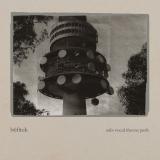
Portal Replica welcomes cult Australian duo, B(if)tek, onto the label with a first-time-on-vinyl release of their debut album ‘Sub-vocal Theme Park’ released in 1996 exclusively onto CD. The 2x12” release includes the original album, plus additional never-heard-before 'lost' tracks from the pair. The album has been mastered by Rashad Becker at Clunk Studios (DE) and pressed to 180g heavyweight vinyl.
Kate Crawford and Nicole Skelty’s pioneering electro-femme outfit ‘B(if)tek’ can be traced back to 1994 in Canberra, where lack of blueprint blossomed their playful and bizarre experimentations in techno — ‘feminism with a wink and a bleep’. Thirty years on, the uniqueness and ingenuity of B(if)tek’s deep analogue exploration endures.
“Monstrous clowns dressed as princes whose role is to laugh at themselves and entertain outlandish beings, suffocated by etiquette, conspiracy and lies, bound by confession and remorse … and beyond that, the auto-da-fe and silence.” – Ferdinand (Pierrot), from the film “Pierrot Le Fou” .
Photography by Kate Crawford.
Design by Jesse Sappell.
Mastered by Rashad Becker at Clunk Studios, DE.
On Stock and ready to ship

On Stock and ready to ship

Die in Kyoto geborene und heute in Berlin lebende Midori Hirano schafft minimalistische, ätherische Musik, in der akustisches Klavier nahtlos mit elektronischen Texturen verschmilzt. In Anlehnung an Ryuichi Sakamotos spätere Werke (Async, 12) erforscht, dekonstruiert und erfindet Hirano den traditionellen Rahmen der klassischen Musik neu und verwandelt jede Klaviernote in eine introspektive und immersive Reise. Unter ihrem Pseudonym Mimicof produziert sie auch elektronischere, Ambient Techno/IDM-orientierte Werke. Es war daher fast unvermeidlich, dass Midori eines Tages mit Ivan Pavlov zusammentreffen würde. Der russische Künstler, der heute in Frankreich lebt, ist eine Schlüsselfigur der experimentellen elektronischen Musik der letzten 30 Jahre. Als ehemaliger Akustikingenieur der russischen Marine ist COH ein Freigeist mit chirurgischer Präzision. In den späten 1990er Jahren trat er mit avantgardistischem, präzisem Post-Techno hervor, bevor er sich mit Glitch beschäftigte und später akustische und Ambient-Sounds in seine Klangskulpturen einbaute. Seine frühere Zusammenarbeit mit Peter Christopherson (COIL), Cosey Fanni Tutti und Abul Mogard (COH Meets Abul Mogard) sowie Veröffentlichungen auf renommierten Labels wie Raster-Noton und Editions Mego unterstreichen sowohl seinen Einfluss auf die elektronische Avantgarde als auch seine bemerkenswerte Fähigkeit zur Kollaboration. Mit Sudden Fruit liefern COH und Midori Hirano ein immersives und chimärisches Werk ab. Vom ersten Track an, ,Wave to Wave", spürt man das empfindliche Gleichgewicht zwischen dem Organischen und dem Digitalen, dem Fließen der Natur und der Poesie, die es verkörpert.
On Stock and ready to ship

On Stock and ready to ship
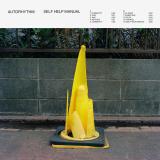
/// First track, Symmetry, debuted on BBC Radio 6 New Music Fix, 10th February: "A beautiful, beautiful album" /// I got my life back. On 17 February 2025, 1024 rays of ultra sound converged at an operation table in Bern, Switzerland, and disconnected a noisy circuit on my brain. 90% of the manifestation ceased – of a disease that I no longer wish to mention by its name. During the same period, I completed my new album: Self Help Manual. I’ve read more current research about the nameless disease than my neurologist, who despite that I didn’t follow his advice on suitable treatment, called me after the successful operation: a brave, brave man. I have composed the music in the same way as in my previous album – Songs for the Nervous System – through layers upon layers of improvisations in dialogue with my synthesizers, most of which are the same age as me. I made the majority of the songs in my studio in the remains of Old Hagalund in Solna. I edited the recordings in my bed during the waking hours of clarity at night. Some songs – NAC, Ketosis, Overkill – were recorded in the basement of my childhood home in Skutskär, in Norduppland, where I’d returned to be nurtured by my retired parents – who during a night when I couldn’t turn over in bed, or pull the blanket over me – made a list of what would happen to my belongings. To my friends who have stood out with me despite my disease, I want to state: you will not inherit me yet. On the new album, the electric bass takes on a leading role. ESG and Liquid Liquid have been important when I reinvented my baselines, limited and liberated by my poor fine motor skills. Plasma is my homage to Summertime Rolls by Jane’s Addiction, that I listened to frequently in my youth. I guess that no one will hear the resemblance. In several songs, the Fender Rhodes plays an important role, a magical instrument that I bought shortly after my diagnosis over a decade ago, and for a long time didn’t dare to touch out of respect for Herbie Hancock and Fela Kuti. A couple of songs draw inspiration from the Horn of Africa – Inner Nile and Delta. At first, subconsciously in the reverb-drenched Inner Nile, then more consciously in Delta. I’m sorry it doesn’t swing the right way, but it was my attempt to return to the cradle of humanity. Longevity is possibly my favourite. The melody is played by an arpeggiator that I controlled by pressing down different keys in an exhilarating sense of freedom. One song in particular, the second track – One – has caused friends to associate freely: one thought it sounded like Patrick Cowley, another like Sly & Robbie meets Kraftwerk, a third like Air – Moonlight Safari. I made one song just before the surgery: opening track Symmetry. It’s the mightiest and most minimal song. I made one song after the surgery: finishing track Self Help Manual. My previous medication pump is heard through the microphone of my Ovation Magnum. It’s the most hopeful song on the album. I took the cover photos with my Hasselblad during walks in Tokyo suburbs of Ōmori and Kamata more than ten years ago. It was something about the faith of the traffic cones that fascinated me – born in the same streamlined form, they had over the years become increasingly individual and lovable. The mixing was finalized by Christoffer Roth in the newly built Studio Dubious in Nacka. Rashad Becker, who in an interview said that he listens as much with his mouth as with his ears, mastered the album at Clunk in Berlin. Right now it feels like anything is possible. My recovery is perhaps a small step for mankind, but a giant leap for me. I hereby leave the music to you. Joakim Forsgren
On Stock and ready to ship
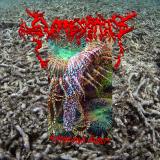
Extinction Burst! is the new invocation in album-form by Guttersnipe, Leeds’ premier and pre-eminent XFCER (XFCER: Xenofeminist crisis-energy rock)* duo. Slamming at full speed to multi-dimensional oblivion, Extinction Burst! is the most full, hidefinition lurid dream-mare yet spewed out by Uroceras Gigas & Tipula Confusa. Engineered and mixed by Ross Halden at Hohm Studio in Bradford and mastered by Rashad Becker, Extinction Burst! follows 2018’s My Mother The Vent, which garnered universal critical adoration. Nevertheless, this long-awaited follow up is more extreme: it is wildness beyond reason, splitting new tears in the reality gauze, ultimate hallucination through sound ecstasy. 2026’s Guttersnipe are evolved, mutated by 8 years of touring together and with the labyrinthine network of groups both Guttersnipe members are involved with - Tristwch Y Fenywod, Nape Neck, Petronn Sphene, Yexxen to name a few. On Extinction Burst!, as with previous material, the duo are heavily augmented with technology. Tipula Confusa's drum kit triggers chasm-causing synth pulses with thumping low end attack.. Strafing from all over the stereo field the constant shatter of the cymbals and toms feel like Sunny Murray or Rashied Ali in full flight during a John Coltrane session in 1967. Uroceras Gigas’s guitar + synth storm is by-now similarly an instantly recognised tool kit in underground music. Switching from screeching guitar atonality to intricate riffs from the black metal/Voivod hinterland to ultra-distorted synth meltdown, it’s an utterly overwhelming, essential and vital pouring-out of the full emotional spectrum. Both artists vocalise, ecstatic and primal, drawn out or yelped in pain or pleasure or panic. Alive On Tuesday begins with some of the only space on Extinction Burst! Digital crackles and tight-delays blow out into a fullthrottled death-dive into sweet opaqueness, offset by the duo’s vocals. There’s a popular believe that Guttersnipe is chaos, but over 9 mins here the group are clinical in their control of the simulated entropy. Mincing while the Maelstrom Churns’s guitar is modulated into jagged atonal atonement, duetting with the virtuoso drum patterns before it thuds into gear at quadruple the speed. Threads Of Radical Unaliveness veers close to the extreme Metal influences with blast beats and guttural vocalisations until the track exhausts itself into unaliveness. Keep Honking summons a demonic digital panic, with the duo reincarnating in real time as haunted versions of themselves, almost translating the lurid, ultra vivid, simultaneous hell+heaven of being alive in this dimension. Primordial Invagination harnesses No Wave’s dissension of normality before the structured collapse of Skra¨ckblandad Fo¨rtjusning, in which Tipula Confusa’s accelerating drums simulate a bouncing barrel of brimstone descending into a primordial gunky ooze, a respite in the middle before the record splutters to a stuttering finale, both members’ vocals out there in the neon realness, alive with crisis energy. There is nothing on this cursed earth like Guttersnipe. For over 10 years they have whirled in a wiggliness both woebegone and wonderstruck on a mission of radical mutant exaltation using rock music weaponry loaded with a queer hysterical ammunition to rupture the fabric of the known Rock universe and unleash a tendril-soft hallucinatory violence; thrumming with the bracing vividness of insect bodies, crazed with alien synaesthetic emotions, harnessing jagged excoriating illogic as a face meltingly snazzy affront to redundant macho mediocrity with the hope to break minds, squeeze hearts, explode pelvises and maybe even reset the parameters of reality. Addendum: xenofeminist : proposing and creating a world defined not only by sexual/gender equality, queer empowerment and the toppling of the racist heteropatriarchal hegemony and it’s tyranny of phallogocentric signifiers, but a philosophy of radical queerness that explodes the basic notion of embodied existence itself beyond even the human, where we see bacteria, invertebrates, reptiles, marine life, animalia in general, inanimate objects, quantum phenomena and as yet inarticulated bodies and minds as social and political equals that may inspire and inform our concepts of self, feeling and meaning as we labour to build a collective reality that doesn’t completely suck!! crisis energy : a term borrowed from the weird fiction author china mieville to describe a type of extreme concentration of power which emerges when a system or organism is pushed to it’s absolute limit; the point of rupture, chaos, entropic overload, just before it all breaks apart. rock : Rock ’n’ Roll, rock music, the devil’s music, sex, guitar, drums, voice, rhythm, riffs!
On Stock and ready to ship

Following two 12-inch singles released via the self-run label Plastic & Sounds, which launched unexpectedly this past July, the culmination of their work to date—the album Silent Way, comprising ten tracks—will be released on 27th March as a coloured vinyl 2LP (gatefold sleeve/33RPM/limited press) and digitally.
Mastering and record cutting by Rashad Becker in Berlin. The artwork centres on photographer Yusuke Yamatani's work, with Satoshi Suzuki—who handles all P&S releases—constructing the overall aesthetic.
Last October, they appeared on Resident Advisor's popular series “RA Podcast”, with audio from their world premiere live performance in April 2023 released. They held the “Plastic & Sounds” label launch party at Shibuya. In January 2026, they performed a live set of their acclaimed album “Haet” at the venue's New Year's party.
This release comes amidst growing international acclaim, with their previous album ‘Discipline’ featured in Pitchfork's ‘The 30 Best Electronic Albums of 2025’, and one of their signature tracks, ‘Butterfly Effect’, selected for RA (Resident Advisor)'s ‘The Best Electronic Tracks of 2000-25’.
On Stock and ready to ship

On Stock and ready to ship
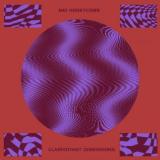
Clairvoyant Dimensions is the first album by Mei Honeycomb, a new duo of Jordan Czamanski, renowned as a member of the acclaimed Juju & Jordash and the Magic Mountain High project, with solo work released as Jordan GCZ, and legendary saxophonist Jeff Hollie, known mostly for his work with Frank Zappa and Ike Willis. An explorative ambient album, Clairvoyant Dimensions is an exercise in distance and contemplation, and the exhilarating feeling of insight, however fleeting, like staring at the midnight flicker of an old VCR. Czamanski's music has a trademark tenderness and soft-spokenness, an ability to maximize minimalist musical elements and bring them to an open-ended conclusion. Jeff Hollie provides interpretative sax lines on all tracks, slipping into the scene like a shadow, silent and unexpected, touching upon emotional registers almost explicit, yet confounding.
As musical signifiers keep turning around themselves, they set up a mood of euphoria, one that suggests understanding. Never explicitly spaced-out, there is continuous reference to cosmoses both inward and far away. Ambient music in modern form. Jordan Czamanski uses his experience in producing off-the-charts club music to come up with five tracks that at times are standstills, and at times dwell in forward momentum. Jeff Hollie provides both comprehension and beautiful confusion. As grainy images switch into focus, Clairvoyant Dimensions is a beautiful and contemplative trip that suggests its own reality in delicate ways. One of the five tracks, the gorgeous live-recorded Painted Desert Pastel, features composer, performer, and researcher Ilya Ziblat Shay on double bass and electronics.
Screen-printed cover designed by Johan Kauth.
Mastering by Rashad Becker
On Stock and ready to ship