quête:ras g

Genres
Tout
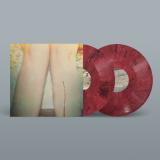
Aminé - 13 Months of Sunshine LP 2x12"

“13 Months of Sunshine” is more than just a slogan for Aminé. Ethiopia’s marketing campaigns of the 60s and 70s used the phrase to entice Western visitors to the country, but for the Portland-born rapper raised by an Eritrean father and an Ethiopian mother, it holds deeper meaning. “13 Months of Sunshine,” a phrase adorned on posters in homes of his aunts and uncles, cousins, and family friends, became something more, a declaration of shifting perspectives and a reinvigorating jolt to one of rap’s most celebrated discographies. He's returned with a new offering, featuring artists as varied as 454, Toro y Moi, and Waxahatchee, that will go down as one of the most exiting rap releases of 2025.

En stock

Disponible en stock et prêt pour l'expédition

29,83
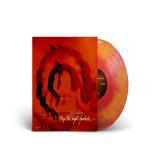
Black Rascals - So In Love (Joe Claussell Remix) 7"

Unearthed in a storage facility in Jersey City, NJ these lost Joe Claussell instrumental takes of the Blaze produced classic Black Rascals ’So In Love’ are finally available. Produced during Claussell's formative years at Dancetracks, a time when he was always creating original jams under the ‘Instant House’ moniker, they still sound as fresh as they did in the early nineties. This is an EXTREMELY LIMITED pressing 7” on red vinyl. Comes in stamped white 7” cardboard sleeve.

En stock

Disponible en stock et prêt pour l'expédition

29,20
Victoria Keddie - Pshal, P’shaw

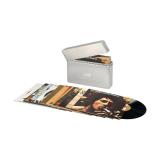
»White Noise« is a cooperation project between raster-media and the Max Planck Institute for Empirical Aesthetics. Artistic sound projects generated in the context of the scientific research institute will appear at irregular intervals. The themes and questions of empirical aesthetics research are taken up, questioned or challenged in very different ways. »White Noise« is conceived as an audio archive of the MPIEA artists in residence which records the artistic works on vinyl and documents the respective concepts and working methods in text form.

Victioria Keddie’s »Pshal P’shaw« (white noise #002) is a multimedia exploration delving into phonetic expression’s auditory and rhythmic nuances of phonetic expressions through an amalgamation of text, sound, video, data, and customized learning software. Drawing inspiration from the painter and architectural theorist Hermann Finsterlin who made speculative architectural renderings, the project originated during a residency at the Max Planck Institute of Empirical Aesthetics in Frankfurt in 2023.

The project’s engagement with the sonic landscape of the eight diphthongs in US English, documented through recorded sessions at EEG labs with participants of diverse international backgrounds, is not just a technical analyses. The applied script for the recording session, infused with a contemporary Western US dialect, ventures beyond, exploring the primal essence of phonetic expression and its impact on the oral landscape of mouth, throat, and tongue.

This work focuses on the spoken aspect of language: the art of oration, conversation, and mimicry. It reflects the beauty of our perpetual change, speaking directly to our humanity and the raw, tender moments of existence. It embraces the awkward, beautiful and vulnerable essence of our shared human experience.

Victoria Keddie is a multidisciplinary artist delving into sound, video, installation, and performance. Her work uncovers hidden narratives within ordinary artifacts and spaces, emphasizing their role in shaping our collective story. The examination of acoustic phenomena and language is a recurring theme in her artistic work. Keddie’s current projects navigate the acoustic complexity of language and dialects.

For over a decade, Keddie was co-director of E.S.P. TV, exploring the televisual medium for performance and sound. Keddie has performed and exhibited internationally. Recent fellowships include the NYSCA/NYFA for Music/Sound (2022), the Max Planck Institute for Empirical Aesthetics (2023), and the Bemis Center for Contemporary Art, Sound Art and Experimental Music Fellowship (2024).

»White Noise«, 40 p. magazine English/German, vinyl LP, cardboard box

En stock

Disponible en stock et prêt pour l'expédition

44,83
Grischa Lichtenberger - Ostranenie LP

LIMITED VINYL COMES IN CARDBOARD SLEEVE WITH BOOKLET!
OSTRANENIE is a collection of digitally manipulated, impressionistic piano miniatures — each named after blockbuster films and TV series. Improvised late at night as a reaction against passive media consumption, these pieces function as both homage and critique, navigating the space between classical impressionism and contemporary digital manipulation. They don’t just deconstruct traditional piano expression; they interrogate the emotional stakes of sound in an era where immersion culture flattens meaning and algorithmic logic erodes agency.

The album’s title references the Russian formalist Viktor Shklovsky’s concept of “ostranenie” (ɐstrɐˈnjenjɪj, estrangement/defamiliarization), a term he introduced in the early 1920s to describe art’s role in resisting the indifference of habitual perception.

“And so, held accountable for nothing, life fades into nothingness. Automation eats away at things, at clothes, at furniture, at our wives, and at our fear of war.”
—Viktor Shklovsky, Theory of Prose (1925)

Shklovsky saw art as a way to break through the anesthetizing effects of routine, stripping away the layers of habit that dull our senses. By making the familiar strange, art reclaims perception from the mechanical and the automatic. His argument wasn’t just a theoretical exercise — it was a response to a world rapidly consumed by industrialization, war machines, and the alienation of a technologically dominated modern life. In this context, he positioned artistic technique as something autonomous, distinct from mere social criticism or psychological reflection. Art seeks to remove “...the crust that the world of things deposits on our senses, with routine’s unending murder of the real.” Ben Ehrenreich on Serena Vitale’s Making Strange (The Nation, 2013)

This tension—between revolutionary/artistic and industrial technologies—defined the 20th century, and it continues to resonate today. The mechanization and automation that fueled the First World War’s devastation, alongside the social and economic turbulence of the 1920s, became central to the era’s self-conception. But just as technology was a source of alienation, it was also positioned as an agent of radical change. As the shock of modernity disrupted the human condition, it also became the driving force behind an ideological utopia — one that ultimately deformed into political totalitarianism — a paradox that remains unresolved.

OSTRANENIE plays within this contradiction. The music shifts seamlessly between an uncanny black MIDI dismantling of traditional piano virtuosity and moments of raw, fragile intimacy. The result is a work that resists automatic anonymity while questioning what it means to create in an era where the technological mediation of sound — and experience itself — is unavoidable: Art in the age of its technological constructedness.

En stock

Disponible en stock et prêt pour l'expédition

30,05
Stephen Vitiello with Brendan Canty and Hahn Rowe - Second

When you’re running a label, a demo occasionally comes across your desk that makes you reconsider everything you thought your label was all about. For Balmat, such was the case with this stunning album from Stephen Vitiello, Brendan Canty, and Hahn Rowe. It sounds like nothing we’ve released so far—and that very otherness opened up a whole new world of possibilities for us.

Fans of ambient, experimental electronic music, and sound art will be familiar with Vitiello, a New York native, long based in Virginia, who has collaborated with a cross-generational list of greats: Taylor Deupree, Steve Roden, Lawrence English, Tetsu Inoue, Nam June Paik, Ryuichi Sakamoto, Pauline Oliveros, and many more. On labels like 12k, Room40, and Sub Rosa, he has explored a wide range of minimalism, microsound, lowercase, ambient, improv, and other styles. But this album is something different. It may begin in ambient-adjacent territory, but it quickly veers off, and it just keeps zigzagging, taking on elements of krautrock, post-punk, dub, and the groove-heavy interplay of groups like Natural Information Society and 75 Dollar Bill.

This stylistic turn is thanks in large part to Vitiello’s choice of collaborators. “We’re coming from three different schools,” Vitiello says: “sound art, art rock, and punk rock.”

Active since the early 1980s, Rowe—a violinist, guitarist, and producer/engineer—has played with, or manned the boards for, a frankly jaw-dropping list of musicians: Herbie Hancock, Gil Scott-Heron, the Last Poets, Roy Ayers, John Zorn, Glenn Branca, Swans, Live Skull, Brian Eno, David Byrne, Anohni, R.E.M., Yoko Ono, and many more. But he might be most closely associated with Hugo Largo, a one-of-a-kind New York quartet—two basses, vocals, and Rowe’s violin—that in the late 1980s helped lay the groundwork for what would eventually become known as post-rock.

Canty, of course, is the legendary drummer of Fugazi, the visionary DC post-hardcore group, as well as Rites of Spring before them, and, currently, the Messthetics, a Dischord-signed instrumental trio with guitarist Anthony Pirog and Fugazi bassist Joe Lally.

Vitiello’s trio first collaborated on First, a 17-minute piece released on the Longform Editions label in 2023. Second picks up where the freeform drift of First left off, channeling the trio’s exploratory energies into more intentionally structured tracks and—in a real first for Balmat—some almost shockingly muscular grooves. “Sometimes my projects are more conceptually driven,” Vitiello says, “but I think this was more musically geared. I just wanted to open up the references and bring in an incredible drummer, bring in some melodies, and I’m sort of the center.” But his collaborators, he stresses, are “vastly creative in making anything I might suggest better.”

Like its predecessor, Second took shape in phases, shifting between improvisation and collage. Vitiello laid down the skeleton of the music at home, sketching out initial ideas on Rhodes keyboard and acoustic and electric guitar; he then fed the parts through samplers and his modular system, recording 10- or 20-minute jams. Once he had edited them into more structured forms, he hit the studio with Canty, who added not just drums but also bass and piano; finally, Vitiello took the results of those sessions to Rowe, who played violin, viola, electric bass, and 12-string acoustic and bowed electric guitar, and assisted in some of the final structuring and mixdown.

A few more surprises along the way: Reanimator’s Don Godwin, the studio engineer where Vitiello recorded with Canty, contributed what he calls “resonant dustpan”; and none other than Animal Collective’s Geologist, who just happened to be in the studio that day, sits in on hurdy gurdy on “Mrphgtrs1,” the album’s gorgeous, stunningly atmospheric drone closer. “I love these chance encounters,” Vitiello says. “Somebody I admire, a group I admire—that was an unexpected gift.”

An unexpected gift is a great way of describing Second as a whole: three veteran musicians venturing outside their usual zones and finding a new collaborative language together. The results can’t be neatly slotted into any given genre; they belong not to any given category, but to the spirit of conversation itself.

En stock

Disponible en stock et prêt pour l'expédition

25,17
NHKyx - Kasm 04

Nhkyx

Kasm 04

12inchKASM04
Kasm
12.05.2025

Kohei Matsunaga, a musician and illustrator born in Osaka in 1978, started drawing at an early age and went on to study architecture at university. He has been actively making music since 1992, with notable releases on labels such as Raster Noton, Wordsound, Mille Plateaux, PAN and Skam Records. Kohei has collaborated with many artists, including Mika Vainio, Sensational from the Jungle Brothers, Sean Booth from Autechre, Conrad Schnitzler, Merzbow, Asmus Tietchens and many more.

Written & Produced: Kohei Matsunaga

En stock

Disponible en stock et prêt pour l'expédition

13,40
LUC-HUBERT SEJOR - MIZIK FILAMONIK: SPIRITUAL SOUND

180 G. BLACK VINYL WITH LINER NOTES IN CREOLE, FRENCH, ENGLISH

Originally released in 1979, "Spiritual Sound" lives up to its name, a soaring, triumphant album, six tracks of spirit magic from Guadeloupe.

Telluric, intense, terribly alive, the gwoka drums of Guadeloupe carry the identity of a painful and fervent island. Marked forever by the crime of slavery, Guadeloupe's créolité cherishes the ka drums and their natural environment: the low-pitched boula drum with male goatskin, the high-pitched soloist makè drum with female goatskin, the chacha, ti bwa, triangle, calabash and other percussion instruments that surround them, and the voices - the fiery, proud, timbred, urgent voices of the gwoka.


This album is also a legend for its voices: in his then dazzling youth, singer Lukuber Séjor was one of the first gwoka artists to largely feminize the chorus of répondè, who converse with his text delivered in a straight and powerful voice.

And everything here sets new standards. In 1979, Mizik Filamonik - Spiritual Sound proclaimed a spiritual patriotism of ferocious intensity. The album by Lukuber Séjor - whose spelling alone is a battle - sets out to give Guadeloupe the intangible weapons of self-respect and self-knowledge, through a singular practice of traditional music.

The genesis of gwoka music is less straightforward than one might imagine... The drums performed the servile task of accompanying the work of slaves in the fields and during the “corvées” imposed by the administration, before being freely practiced by the common people after the abolition of 1848. At the heart of the conviviality of the Guadeloupeans furthest from the cities - geographically and socially - the gwoka drums come out for carnival, funeral wakes and neighborhood celebrations, but also during strikes, fits of anger and armed vigils of the riots and revolts that have punctuated the island's history. For generations, governors of the colony and then the prefects of the overseas department of Guadeloupe have been viewing the gwoka as a potential for turbulence and a threat to public order.

But as the Beatlesmania, “chanson engagée” and rock revolutions unfolded in Europe, young people turned to the drums of mizik a vié nèg (“bad negro music”, in Creole), which Guadeloupeans had learned to despise by following the “assimilation” process advocated by the school system and most of the political class. At the end of the sixties, in a Guadeloupe mourning the deadly repression of the May 1967 social movement, they played traditional music, refusing to wrap it up in tourist prettiness and madras folk costumes. Instinctively, they played a rough and contemporary gwoka, led by the incendiary Guy Konkèt. This was the era of decisive 45 rpm records such as Robert Loyson's Kann a la richès, which brought to light the fieriest words of union rallies.

At his home in Sainte-Anne, Lukuber Séjor played with flautist Olivier Vamur and his brother Claude Vamur, who cobbled together a drum kit from tin crockery and became, a few years later, the most influential drummer in Kassav'.

These were the years of the Bumidom program, when young Guadeloupeans were encouraged to emigrate to mainland France. At the age of twenty, Lukuber Séjor embarked on the liner Irpinia, disembarking at Le Havre and taking the train to the Gare Saint-Lazare - the route taken by thousands of young West Indians who went on to study or looked for work, all the while trying to maintain a link with their homeland. In this case, it's at the Antony university residence, where Lukuber played the drum and participated in a thousand gwoka updates and aggiornamentos, while exile reinforced the need for a spiritual link with the native land.

In 1978, Guy Konkèt played at the Salle Wagram, a historic event for West Indian music. After serving as répondè - i.e. backing vocalist - on one of his home-recorded albums, Lukuber joined his live band. Little by little, he became one of the key artists on a circuit parallel to French show business. At a student party in Caen, he met a young woman from Martinique who, at the time, was more motivated by her ambitions as a visual artist than by her vocation as a musician. Her name was Jocelyne Béroard and, a few years before she plunged into the Kassav' adventure and became the greatest West Indian singer of her generation, she designed the cover of Lukuber Séjor's LP.

This ambition was obvious and imposed its will. A more or less regular band was formed, with Roger Raspail, Rudy Mompière and Éric Danquin on ka drums, Claude Vamur on ti bwa, Olivier Vamur and Françoise Lancréot on flutes and Annick Noël on keyboards. Lukuber Séjor is set on wanting to extend the gwoka palette to other instruments, as the jazz-rock revolution opens a thousand new doors. Annick Noël will play a wide range of timbres and textures on electric piano and synthesizer. Another novelty: the répondè are two men and two women, Roger Raspail, Olivier Vamur, Françoise Lancréot and Maryann Mathéus ...

Mizik Filamonik - Spiritual Sound is a self-production in which the singer and leader sank all his savings, allowing him no more than a single day in the studio. The first side is more of a musical manifesto, with the first two tracks, Éritage and Penn é plézi, being instrumentals. The third, Son, forcefully celebrates the need for Guadeloupeans to connect with the gwoka. In fact, Jocelyne Béroard's cover shows a tambouyé in the shadow of a cloudy sky, against which a radiant sun is rising and whose light will soon flood the entire landscape. The silhouette and face of this man strongly evoke the immense Vélo, master of the ka, rejected at the time on the fringes of society.

The second side of the LP is surprising. Formally, three tracks are explicitly linked like the three parts of a triptych. Primyé voyaj evokes the appalling tribulation of Africans deported as slaves to Guadeloupe; dézyèm voyaj speaks of the Bumidom program and the economic, political and social forces driving young Guadeloupeans towards the mirage of prosperity in France; twazyèm voyaj closes the cycle with the emigrants' return from Europe after years away from their island...

This gwoka, obsessed with the need to save Guadeloupe spiritually, appeals far beyond the politicized audience. Mizik Filamonik - Spiritual Sound instantly became a classic, although Lukuber Séjor never really made a career for himself as a musician.

After all, the album was released in 1980, with no promotional resources in France or Guadeloupe - and therefore no concerts. The thirty-two-year-old author, composer and performer made his own third trip back to Guadeloupe. He set up a small woodworking business, which he lost in Hurricane Hugo in 1989. His other activity, teaching in a medical-educational institute, became the core of his professional life. He continued to be an active campaigner - a campaigner for the Creole language, a campaigner for the reawakening of identity, a campaigner for special education, a campaigner for a thousand causes that he ignited with his generous and perceptive enthusiasm, such as the defense of breadfruit fries...

The echoes of his 1979 album have not died down. Of course, the use of Penn é plézi as the theme tune for Radio Guadeloupe's funeral notices from 1980 to 1992 kept him in the collective memory, but he continues to sing and compose sporadically, as with his all-female

vocal group Vwapoulouéka... Still convinced that music is a means of liberating the spirit, he continues the journey of a young man eager to deploy the power of Creole music and language.

Bertrand Dicale

En stock

Disponible en stock et prêt pour l'expédition

19,75
Dialog - Live

Dialog

Live

12inchSOUND01
Dialog Records
28.04.2025

Experimental dub techno duo Dialog present their first officially released live recording. Captured at the intimate French festival Pe:rsona, from the team behind the Positive Education events, the recording captures Samuel van Dijk (VC-118A) and Rasmus Hedlund exploring mechanical rhythmic impulses and organic tones and textures—malleable metallic and elemental forms passing through chasms of processing and shrouded in womb-like melancholic hum.

Across two sides of immersive, head-nodding sonics, Dialog take the principles of dub techno into forward-thinking territory with a distinctly tactile approach to sound design—a mind-melting listen for casual chillers and committed voyagers alike.

En stock

Disponible en stock et prêt pour l'expédition

13,15
META META - METAL METAL

Meta Meta

METAL METAL

12inchMAIS018LP
Mais Um Discos
14.04.2025

LP + 7´´

First ever vinyl pressing outside of Brazil including a 7” with two tracks the band recorded with Tony Allen in Brazil.

Includes the monster afro brazilian tune "Rainha Das Cabecas"...Recommended!!

Incl. players such as Jucura Marcal, Thiago Franca & Kiko Dinucci...

En stock

Disponible en stock et prêt pour l'expédition

22,90
Various - Black Shiokara EP

Presenting the second vinyl release of Chez Doc, featuring Call Intro, Oter Order, Joshko and its owner Vikk. Black Shiokara refers to a traditional Japanese elaboration of the squid, which is presented only in his own black ink.

The record is designed not only for peak time moments, but it varies from House in its pure essence, to Breakbeat, to dreamy Deep-House and Rastafari Vocals. The EP embodies the spirit of unpolished, pure dance music, making it a must-have soundtrack for anyone seeking a record for different moments.

En stock

Disponible en stock et prêt pour l'expédition

11,98
Alpha And Omega Feat. Dub Judah - Almighty Jah 7"

AlphaandOmegafeat.Dub Judah

Almighty Jah 7"

7"-VinylPRTL7031
Partial Records
10.04.2025

2025 Repress

*`Almighty Jah' is the fifth release from Alpha and Omega on Partial Records, following on from `Pure and Clean', `Rastafari', Show Me a Purpose' and Jah Protection which all sold fast.
* With vocals by Dub Judah­, this is a pri­me example of the heavyweight 1990s UK dub style, with this track dating from 1992, now appearing on a 45 for the first time.
* Previously only available on a now-deleted Dub Judah / A&O album (also titled `Almighty Jah'), this is the in-demand vocal cut of A&O's `Rastafari' which is now backed by a previously unreleased dub version.

En stock

Disponible en stock et prêt pour l'expédition

10,80
Luc Ringeisen - Page Blanche 2x12"

Luc Ringeisen

Page Blanche 2x12"

2x12inchVCLUB026
Vinylclub
25.03.2025

Luc Ringeisen's very first album release, featuring surround sound experimentations converted to fit vinyl's stereo. Page Blanche covers different moods from beatless moody sound design to peak time dance floor burners.

En stock

Disponible en stock et prêt pour l'expédition

21,81
Akae Beka x Tiken Jah Fakoly - Everything Bless

Two lyrical and spiritual forces meet, as Akae Beka and Ivorian veteran Tiken Jah Fakoly awaken the profound realisation that all is inherently blessed, encouraging us to accept life as it unfolds. Produced by Zion I Kings, Everything Bless is a gentle yet powerful reminder to embrace the present moment, cherish the divine connection with our spiritual kin, and nurture inner peace and contentment. Vaughn Benjamin meditates on the need for both determination and trust, while the ancient voiced Tiken sings in Bambara, over Mamadou Sidiki Diabate’s cascading Kora, reassuring that Jah will guide. The accompanying dub version pares down drums and vocals, maintaining the same sense of joy. Taken from 2021’s album Polarities, Everything Bless is released as a seven inch vinyl single for the first time on via Before Zero Records.

This series honours both the vocal and version culture of the reggae sound system and the profound lyricism of Vaughn Benjamin. We have consistently received two requests in relation to releasing the LPs: "Can we have dub versions?" and "Where can we read the lyrics?" Our response is the 'Akae Beka - vocal, version and word-sound collection.' Before Zero Records worked with Tippy I Grade to mix a series of dub mixes from a carefully curated selection of his extensive works with Vaughn Benjamin. The vocal and corresponding dub mixes were then cut to wax by Lewis Hopkin of Star Delta and wrapped in a collage made of Ras Marcus's artworks, which he crafted for various LP covers of Vaughn's works throughout the years with the lyrics transcribed and printed on the rear of each sleeve.

En stock

Disponible en stock et prêt pour l'expédition

11,34
Jawari, Tommy Khosla - Road Rasa LP

Info: The highly anticipated ROAD RASA from JAWARI is a genre-defying journey led by the Tommy Khosla’s evocative sitar playing, seamlessly blending classical Indian influences with jazz, electronic, cinematic textures and poetry. Drawing inspiration from the expansive sounds of artists like Ananda Shankar and Kikagaku Moyo, the album weaves intricate rhythms and ethereal melodies into an immersive experience. Celebrated by Jazz News and featured on NTS, ROAD RASA has earned critical acclaim for its innovative soundscapes. The vinyl edition features stunning artwork by ceramic artist Nehal Aamir, reflecting the album’s conceptual depth and transcendence, and is in a limited run of 500 numbered records.


b


b A2 |

En stock

Disponible en stock et prêt pour l'expédition

29,62
Franco & Grimm - Fairytail Tracks 3 To 6

Forgotten in the mists of Dutch electronics, when Anacalypto Records began their quest for Fairytails, they uncovered more than they bargained for. Dusting off a 1994 DAT, lettering began to reveal itself—four tracks from the original release and two unheard, unreleased works! A decision was made: two tracks from the original 12” for Side A, and the two new discoveries for Side B.

The spellbinding Fairytail Track 3 opens the record. Rich basslines and ruffled beats dance as strings soar and swoop in this fantastical floor-filler. That touch of fantasy twinkles throughout the entire EP, with dreamy mellowness weaving through key shifts and stepping grooves. This dreamy atmosphere carries into Fairytail Track 4, where snares rasp and snap above delicate notes and mischievous pads.

The flip is dedicated to the DAT discoveries. Fairytail Track 5 is a joyous romp through twilight woodlands and sweaty basements, with cascading chords and lively piano lines reveling over earthy patterns of percussion. The journey concludes with Fairytail Track 6, a bright and magical finale. Overtones of rave energy glow in this ageless, tongue-in-cheek melody, infusing the EP with a timeless vibrancy.

Four trance-dipped house treasures returned to the faithful on this remastered gem that will sprinkle happiness on any floor.

En stock

Disponible en stock et prêt pour l'expédition

18,28
Traxman - Da Mind Of Traxman

Anyone with a passing interest in footwork and juke will know of Traxman. Corky Strong has a long history of deep involvement in Chicago house, first releasing on the legendary Dance Mania label in the mid nineties, and since then splitting his productions between ghetto house, juke and footwork, releasing alongside Steve Poindexter and Fast Eddie and the late DJ Deeon and DJ Rashad, including an seemingly endless supply of self-released juke edits of whatever direction his deep knowledge of Black American music takes him. The third volume of 'Da Mind Of Traxman' is his first since 2014. In the intervening years he's kept things rolling, DJing regularly, releasing lots of music, becoming a grandfather and being a mentor for younger artists coming up in the scene.

This new album was crafted with the help of fellow Planet Mu artist Sinjin Hawke, who took on A&R duties to collate the best from hundreds of tracks dating back to 2005. Sinjin holds Traxman's status in high regard; "This album series is important and holds real documentarian value—working on it feels like the modern equivalent of curating a piece of Miles Davis’s catalog in the '60s and '70s." Volume 3 showcases Traxman's uncanny ability to take old music into the future without losing the feeling and energy of his samples and influences. He knows how to add a hi-definition modern chassis with the skill of someone who deeply and intuitively understands the craft of dance music. These are some of the purest, most innovative ideations of Chicago footwork.

a A1 Kill Da DJ (ft. Bobby Skillz & Sinjin Hawke) explicit


[d] A4 Where They At (ft. DJ Twan) [explicit]

[f] A6 I’ll Write The Hook [explicit]


[i] B1 Trust Me [explicit]


[m] B5 Talaban [explicit]

En stock

Disponible en stock et prêt pour l'expédition

26,01
Belief Defect - Desire and Discontent 2X12"

The world became another since the release of »Decadent yet Depraved« and Belief Defect’s reflection of it: now darker, political, honest – end times in Cinemascope. When the duo reunited in the studio after the 2 year fracture COVID inflicted on reality, the album that had been on pause all this time seemed insufficient against whatever life had morphed into, while humanity hid from itself. Finishing an album coherent to the present moment took prolonged studio shut-ins that proved to be as cathartic as the struggle sessions of the cultural revolution must have been. »Desire and Discontent« unfolds like a parable, structured by subsonic frequencies that give arrangements a solid gravity, dissonant chord progressions resulting in coherent movements, punctuated by human-like voices over slow, suspenseful melodies that come into being without the listener’s awareness. Contributing to the album with machine-like precision drumming is Merlin Ettore, vocals from Anna Gartner and the artwork of Juan Mendez (Silent Servant).

En stock

Disponible en stock et prêt pour l'expédition

33,57
Studio - West Coast LP

Studio, the influential project of Swedish musicians Dan Lissvik and Rasmus Hägg, presents their legendary 2006 debut in remastered form, in partnership with Ghostly International. Available in limited edition "Fog Machine Vinyl", CD, and cassette. "One of the finest pieces of electronic music you'll hear this year.” - The Guardian (2006). Included in year-end best-of write-ups by Pitchfork, FACT Magazine, and Rough Trade. Physical copies have long been out of print for West Coast, and the album has also been notably absent from most streaming services until now.

“Somehow, I knew I wanted to make a conceptual record that, although only imaginary at that point, could represent or define how our city sounded,” says Lissvik of Gothenburg's influence on West Coast. Some called Studio, the project of Swedish musicians Dan Lissvik and Rasmus Hägg, “the missing link between The Cure and Lindstrøm,” Pitchfork heard Durutti Column and Can, as the duo’s story became swept up in a loosely developing scene — adjacent first to the label Service (Jens Lekman, The Whitest Boy Alive) and later Sincerely Yours (The Tough Alliance, jj) — and a precursor to the 2010s boom at the axis of electronic and psychedelic music guided by indie greats like Caribou, Four Tet, and Darkside.

West Coast, their seminal 2006 debut, captured a faraway romanticism of Balearic brushed up against Krautrock, disco, dub, and afrobeat, with pop lyricism lifted from new wave, all made modern by two art school grads in Gothenburg. First pressed in a small vinyl-only run via their own Information label, the album has been notably absent from most streaming services, and the internet’s record of its initial impact is all but fossilized from a bygone blog era, while its sound is simply untraceable to any one moment in music.

Outside of three 7” releases, they’d keep the music to themselves for several more years. In 2005, Hägg remembers, “We got our degrees and were kicked out of our studio spaces so all these recordings were just piled up. A year later we dusted them off and started to deconstruct and assemble them in a more drawn-out fashion.” In the same breadth, they cite DJ Screw, J Dilla, and Joy Division, along with early ‘80s European live DJ sets from the likes of Beppe Loda, Dj Mozart, and Baldelli as reference points.

“The anything-goes mentality was very encouraging and was a big cornerstone to the Studio sound,” says Hägg. “But there’s so much more to the picture, we were not that young then and had lots of musical baggage in our suitcases, the new thing was that we finally let it all come through, not bound by any borders that was often the case with music identity in Sweden during the 90s.” In the afterglow of the record’s 2007 reception, Studio receded from view, clouded behind a mountain of remix requests (including one for Kylie Minogue that saw release) and label bureaucracy. “It’s easy to wish we would have done some proper recordings of our own instead,” Hägg reflects. But both artists, now well into respective careers beyond Studio, have come to peace with West Coast as their most enduring effort together. Lissvik adds, “It serves as a good reminder for me to keep to that decision and promise and to continue exploring and growing

En stock

Disponible en stock et prêt pour l'expédition

27,52
Articles par page:
N/ABPM
Vinyl