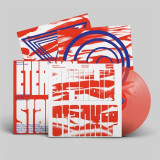
On their first official collaboration, Japanese noise pioneer Masami Akita aka Merzbow and Australian sound sculptor Lawrence English present a harrowing, surrealist portrait of nocturnal industrial activity, spawned by field recordings made in a sprawling factory complex seven hours north of English's home in Brisbane. He characterizes the area as "uneasy and unsettling," awash in the sickly glow of smelters and refinement machinery, somehow not of this world - a liminal quality vividly captured in Andrei Tarkovsky's sprawling purgatorial opus, Stalker, to which the title alludes. Akita, too, described early drafts of Eternal Stalker as feeling "like the soundtrack to a dystopian science fiction opera." A mood of mechanical dread and ruined futures permeates each of the album's seven potent compositions. Opener "The Long Dream" sets the stage with steady rain on sheet metal, punctured by thunder and metallic echoes, reverberating to the rafters in a collapsing warehouse. Quickly the tempest rises. "A Gate Of Light" and "Magnetic Traps" both convulse in churning furies of electric demolition and rattling chains, roaring and relentless. "The Visit" and "Black Thicket" operate more at a distance, surveying the topography of steam, rust, and liquid metal from above, their flickers of violence swallowed by blankets of darkness. This is noise at its most elemental and unknowable: brooding, bristling, and opaque, stalking forbidden peripheries of chaos and creation. Discussing Akita's music, English refers to its "intense substrata that is purely psychedelic; it consumes and confounds." The seasick swells of friction and fracture subsume the listener, forcing an auditory surrender: "this saturation of the senses can be a euphoria." Proof comes halfway through "The Golden Sphere," when the howling mayhem subtly recedes, revealing an eerie siren drone hovering in the void, like the resonance of a dead star galaxies away. Slowly a seething, venomous wall of volume returns, shredding the signal until its frequencies fray, whipping away into the eye of the storm. The combined effect merges obliteration and liberation, rapture and ravagement; it's the sound of dissolution as resolution, uprooted and unmoored, finally freed from form.
Search:rava
On their first official collaboration, Japanese noise pioneer Masami Akita aka Merzbow and Australian sound sculptor Lawrence English present a harrowing, surrealist portrait of nocturnal industrial activity, spawned by field recordings made in a sprawling factory complex seven hours north of English's home in Brisbane. He characterizes the area as "uneasy and unsettling," awash in the sickly glow of smelters and refinement machinery, somehow not of this world - a liminal quality vividly captured in Andrei Tarkovsky's sprawling purgatorial opus, Stalker, to which the title alludes. Akita, too, described early drafts of Eternal Stalker as feeling "like the soundtrack to a dystopian science fiction opera." A mood of mechanical dread and ruined futures permeates each of the album's seven potent compositions. Opener "The Long Dream" sets the stage with steady rain on sheet metal, punctured by thunder and metallic echoes, reverberating to the rafters in a collapsing warehouse. Quickly the tempest rises. "A Gate Of Light" and "Magnetic Traps" both convulse in churning furies of electric demolition and rattling chains, roaring and relentless. "The Visit" and "Black Thicket" operate more at a distance, surveying the topography of steam, rust, and liquid metal from above, their flickers of violence swallowed by blankets of darkness. This is noise at its most elemental and unknowable: brooding, bristling, and opaque, stalking forbidden peripheries of chaos and creation. Discussing Akita's music, English refers to its "intense substrata that is purely psychedelic; it consumes and confounds." The seasick swells of friction and fracture subsume the listener, forcing an auditory surrender: "this saturation of the senses can be a euphoria." Proof comes halfway through "The Golden Sphere," when the howling mayhem subtly recedes, revealing an eerie siren drone hovering in the void, like the resonance of a dead star galaxies away. Slowly a seething, venomous wall of volume returns, shredding the signal until its frequencies fray, whipping away into the eye of the storm. The combined effect merges obliteration and liberation, rapture and ravagement; it's the sound of dissolution as resolution, uprooted and unmoored, finally freed from form.
Retromigration returns to Ravanelli Disco Club with a brand new broken beat chanelling track 'Jeffa'. None other than Ron Basejam steps up on remix duties in signature disco don style.
He didn’t come alone though, bringing his friends Nephews to the dance on the B side who deliver sunset house grooves in the form of 'Reingelaxed'. To complete the EP Jkriv remixes 'Reingelaxed' into a synth swirling Balearic gem.
- 1: Notte In Algeria (From "I Piaceri Proibiti" / Remastered 2022)
- 2: Francesco De Masi: Oggi In Africa (From "Alla Scoperta Dell'africa" / Remastered 0)
- 3: Ennio Morricone: Agosto Jazz (From "La Voglia Matta" / Remastered 2022)
- 4: Armando Trovajoli: Jumping (From "Il Vedovo" / Remastered 2022)
- 5: Ora Di Punta (From "Mondo Cane N. 2" / Remastered 2022)
- 6: Riz Ortolani: Il Sorpasso (Titoli - Ripresa) (From "Il Sorpasso" / Remastered 2022)
- 7: Marcello Giombini: Notti D'amore A Tokyo (From "Le Dolci Notti" / Remastered 2022)
- 8: Il Vedovo Bianco - M (From "Amore Facile" / Remastered 2022)
- 9: Tensione (From "Audace Colpo Dei Soliti Ignoti" / Remastered 2022)
- 10: Gianni Ferrio: Frenesia Dell'estate (Titoli) (From "Frenesia Dell'estate" / Remastered 2022)
- 11: Luiz Bonfa: Coppia In Crisi (From "Le Ore Dell'amore" / Remastered 2022)
- 12: Piero Piccioni: Your Smile (From "3 Notti D'amore" / Remastered 2022)
- 13: Il Treno Rosa - M16 (From "Mille Peccati Nessuna Virtù" / Remastered 2022)
- 14: Gardenia (From "Sedia Elettrica" / Remastered 2022)
- 15: In Fondo Alla Notte - M32 (From "Una Bella Grinta" / Remastered 2022)
- 16: La Strega In Amore (Titoli) (From "La Strega In Amore" / Remastered 2022)
"For a whole decade, spanning between the second half of the ‘50s and the second half of the ‘60s, jazz took over the Italian screens. The Californian be-bop rhythms, filtered and reinterpreted in a typical Mediterranean key, became the perfect soundtrack to the Italy of the economic boom; the quintessential music for a country that was sailing through a moment of profound and exciting industrial, social and cultural renovation. A nation that was rapidly shedding its skin, changing its style, look and identity, but also its landscape, letting itself go to the inebriation of the economic miracle. The compilation was conceived like a sonic stream, a journey of discovery carefully sequenced from hundreds of soundtracks from the golden age of Italian jazz contained in the CAM Sugar archive.
33 tracks that go beyond music, telling the story of Italian cinema, society and of its unmistakable style and charm. A genre that even when nodding to Californian be-bop, to crime jazz or bossa nova still sounds surprisingly original and Mediterranean, elegant, and seductive, either with joyous peaks (the scat of I Cantori Moderni di Alessandroni or of I 4+4 di Nora Orlandi) or with enigmatic and nearly dramatic nuances (La strega in amore by Luis Bacalov, Il batticuore by Marcello Gigante). The compilation also offers a precious insight into the Italian jazz scene of the times, with its string of formidable soloists like Gianni Basso (sax) and Oscar Valdambrini (trumpet), two Piedmontese men on duty for the RAI television orchestra conducted by Armando Trovajoli; like Nunzio Rotondo (trumpet) a legendary and elusive figure who had a special bond with Piero Piccioni; or like Enrico Rava (trumpet), Franco D'Andrea (piano) and Gegé Munari (drums) who often recorded with Piero Umiliani. Not to forget international stars like Chet Baker and Gato Barbieri, who were often fortuitously dragged into the recording sessions also thanks to Umiliani’s never-ending curiosity."
- A1: Nankyoku, Decky & Imocky - The Battle
- A10: Nankyoku, Decky & Imocky - Showdown
- A11: Nankyoku, Decky & Imocky - Conclusion
- A12: Nankyoku, Decky & Imocky - Sutakora, Sassa!
- A13: Nankyoku, Decky & Imocky - Game Over
- A2: Nankyoku, Decky & Imocky - Wilderness
- A3: Nankyoku, Decky & Imocky - Battlefield
- A4: Nankyoku, Decky & Imocky - Thief's Theme
- A5: Nankyoku, Decky & Imocky - Old Map
- A6: Nankyoku, Decky & Imocky - Turtle Village I
- A7: Nankyoku, Decky & Imocky - Fiend's Path
- A8: Nankyoku, Decky & Imocky - Turtle Village Ii
- A9: Nankyoku, Decky & Imocky - Death Adder
- B1: Naofumi Hataya - Chapter Select
- B10: Naofumi Hataya - The Castle Gate
- B11: Naofumi Hataya - Castle Of Dark Guld
- B12: Naofumi Hataya - Death Adder Ii
- B13: Naofumi Hataya - All Clear
- B14: Naofumi Hataya - Staff Roll
- B15: Naofumi Hataya - Result
- B16: Naofumi Hataya - Game Over
- B2: Naofumi Hataya - Ravaged Village
- B3: Naofumi Hataya - Boss
- B4: Naofumi Hataya - Magician Stage
- B5: Naofumi Hataya - Crystal
- B6: Naofumi Hataya - Ancient Ruins
- B7: Naofumi Hataya - Enemy’s Headquarters
- B8: Naofumi Hataya - Dragon's Throat
- B9: Naofumi Hataya - Boss
For their seventh release in partnership with SEGA of Japan, Data Discs is delighted to bring together the complete music from the classic Mega Drive games, Golden Axe (1989) and Golden Axe II (1991), in one special package. This release features the unforgettable artwork from both games, supplied on two thick lithographic prints, with the record itself pressed on heavyweight translucent gold vinyl. The outer sleeve features rare artwork from the 1989 Japanese edition, sourced from the SEGA archives and presented on 425gsm cardstock with gold flood printing. As always, the audio has been carefully restored and mastered using the original console as the source, ensuring these memorable soundtracks are preserved for many quests to come!
A harrowing classic, Billie Holiday's personal favorite among her '50s albums captures the singer 17 months before her death, her once honeyed voice, scarred and weakened from punishing life, its ravages highlighted by the 1958 session's crisp sonics and the contrasting "satin" of Ray Ellis' sleek string arrangements. Yet it is that very contrast that explains the power of these performances: In revisiting its torchy standards, Holiday reduces them to their core of pain and longing, transforming "I'm a Fool to Want You," "You Don't Know What Love Is," and "You've Changed" into naked declarations as mesmerizing and unsettling as a horrific accident. Any postrocker that presumes pop standards and string sections automatically translate to "easy listening" hasn't listened to this. This 1997 version adds unreleased takes and a beautiful 20-bit digital transfer to extract every shivering pang of Holiday's music. --Sam Sutherland
Mixing funk, jazz, boogie, it is released for the first time on vinyl with remastered audio and new liner notes by Lebanese DJ and curator Ernesto Chahoud. In the early 80's, Rahbani created a landmark album, 'Houdou Nisbi' now considered one of the best jazz funk albums from the Middle East. Featuring such cult tracks as "Rouh Khabbir", a remake of the Crusaders' "Soul Shadow" sung by Rahbani
himself, the modern soul of "Bisaraha" and the Brazilian flavoured "For Sure", the album is both effortlessly groovy and steeped in Oriental music. Held as "one of Lebanon's best kept Musical treasures' by Ernesto Chahoud in his notes, the album is a certified Rahbani cult classic.
"Houdou Nisbi," which means "relatively calm", an expression used by news anchors on Lebanese TV to describe the mood during cease-fire in the civil war between 1975 and 1990 - has been remastered for vinyl from the original masters by David Hachour at Coloursound Studio in Paris. The artwork has faithfully been reproduced for the enlarged format. An iconic cover highlighting the strange life
in war ravaged Beirut during the cease-fire and in line with the political stance of Rahbani, a self proclaimed non- religious leftist. Wewantsounds is delighted to bring the first-ever vinyl release of this iconic album to the world.
"Même Soleil" is the result of a dialog between the French photographer Gaël Bonnefon and the French musician Frédéric D. Oberland initiated by IIKKI, between December 2019 and June 2021.
Self-taught multi-instrumentalist & photographer, Frédéric D. Oberland finds himself at the crossroads of image and sound, favoring a synesthetic approach. He articulates different modes of narration, combining the raw character of the documentary form with the transfigured reality of myth and poetry, allowing him to question notions such as the sacred, the monstrous, the fraternity, while at the same time returning to the political news of the present. Attentive to the pulse of the body, his work is willingly itinerant, modulating between the ripples of dreams, watching the points of incandescence and the bursts of electricity that act as revelations of our presence in the world, here and now. He’s the co-founder of leading bands such as Oiseaux-Tempête, FOUDRE!, Le Réveil des Tropiques, FareWell Poetry and is co-curating the label NAHAL Recordings.
"Fueled by travels and their emanations, Frédéric D. Oberland’s music had to build new horizons this year, outlined by the curves of semi-modular synthesizers, the avalanches of effect pedals and the zigzagging paths of electric circuits. Même Soleil, his third solo album, manages to merge mystical visions of the unconscious and the absurdity of an apocalyptic present in a sensory whirlwind, operating an astonishing mutation with tones still unexplored in his previous releases. A visual as well as a musical journey that takes shape in a book and a record of the same title, Même Soleil is the result of a collaboration with the photographer Gaël Bonnefon. Seeking the tension between the blinding light of day and the glittering visions of saturated night skies, the two pieces in dialogue transcend reality to deliver their own truth, as bright as the first light of the sought-after morning." (Alice Butterlin)
Gaël Bonnefon graduated with highest honours from the Fine Arts School of Toulouse (Isdat) in 2008. He has exhibited at Villa Pérochon, at the Eté photographique in Lectoure, at the 104 in Paris during Jeune Création 2012, at Rencontres Internationales de la Photographie d’Arles and at PhotoEspaña, at the Abattoirs Museum in Toulouse in 2014, at the Château d’Eau Gallery in 2012 and 2019 and in the Vitrine of Frac Île-de-France in 2020. His work is part of the collections of Frac Midi-Pyrénées, Château d'Eau gallery, Kulturamt in Dusseldorf and Kiyosato Museum in Japan ; he participated in Temps Zero projects Berlin, Braga, Rome, Bucarest, Groningen and Thessaloniki. He has also been granted artist’s residencies in Germany, France and Israel. His first book Elegy for the Mundane was published by La Main Donne in 2019. He continues his intimate and dense journey and presents his second publishing, Même Soleil with photographic works from 2009 to 2021.
"At first brutal and declining, the substance of Gaël Bonnefon's photography is just like a gaze that fears being one day extinguished and that is always looking to be born again. In photography as in love, recoil and desire, tension and easement, repetition, wandering and rest, flight and pursuit. Here photography allows itself to be traversed by flashes of life, renewed forces, echoes of far-off kindnesses and lost joys. It sings silently, lover of a thousand faces from which the thread of a single and same image is born, followed without relent, from the snowy peaks of childhood to the lost worlds of the present." (Michaël Soyez)
For Reflection 3 we give a warm welcome to Suddi Raval who has had releases previously as one part of Together on FFRR, Thumbs Up Magic, Gorgeous Records and his own imprint T-Wax Records. He has always been involved in the music scene over the years and although known for his love of Acid House, here we see him delve in to the world of Electro.
Suddi re-ignites his passion and serves up 2 Electro jams that are packed with heavy beats, bleeps, big basses, modulated leads and have that authentic original 1980s Hashim-like feel.
Scott works his magic on 2 Electro cuts with rich pads, reverses, modulated leads, crisp drums, panning keys, warm basses, eerie soundscapes, processed and gated vocal samples, Mantronix-esque bass sequences and rolling toms.
All 4 cuts reflect on how Electro was in the 80s and remain as pure as the stuff being made then.
After the great success of the first release, Deluka prints the next chapter of "No signal records", The author of the release is Giri, Neapolitan DJ and producer, owner of "Antiterra" records. Giri after his album "Antichthon" released on Jeff Mills' "Axis records" gave us three perfect tracks of extreme quality, ranging from vibes between space and forest. Following the remix of the Spanish Techno Master "Tadeo", with a superb work.
Vice Squad are a UK Punk Rock band who’s first single releases included the classic ‘Last Rockers’ 7” in 1981. This was followed by the landmark albums ‘No Cause For Concern’ in the same year and ‘Stand Strong Stand Proud’ in 1982 which were both released on EMI. Since then Vice Squad have delivered short sharp songs with incisive political lyrics and a dash of humour spat out over a thunderous rhythm and machine gun Rock ’n’ Roll guitars. Their latest releases are the EPs 'Born In A War' and 'Ignored To Death V2' taken from the forthcoming album ‘Battle of Britain’ set for release on their own Last Rockers label in May 2020. The band have become 100% DIY since forming Last Rockers Records in 2009. In keeping with the DIY ethic the previous albums were recorded in the band’s own ‘Sci Fidelity’ studio South London and the new album ‘Battle of Britain’ continues this with the band maintaining full artistic control with the benefit of global distribution via Cargo. Their last album ‘ Cardboard Country’ was launched on the back of a very successful Pledge campaign raising funds for the Shelter homeless charity in line with the album title which was inspired by 'Cardboard City', the name given to the settlement of homeless people living in cardboard boxes near London's Waterloo station. Vice Squad is fronted by raucous voiced singer/guitarist Beki Bondage who was famed for being a teenage champion of Animal rights long before the current popularity of veganism. Vice squad’s song ’Humane’ was one of the first ever Animal Rights songs. Beki has been featured on the front cover of a number of influential music tabloids such at Melody Maker, NME, Sounds, Record Mirror and Smash Hits. After a hiatus, Beki formed a new version of Vice Squad in 1997 featuring longstanding members of her post VS outfit The Bombshells and they have released several quality albums of powerful punk songs that have been very well received across the world. Vice Squad are considered one of the most influential punk rock bands of all time, paving the way for other female Punk and Rock singers and influencing male performers such as Dave Grohl of Nirvana and Foo Fighters fame who was introduced to Vice Squad via his sister’s record collection. The first rule of Punk is there are no rules and Vice Squad ably illustrate this with ‘Battle of Britain’. Written, Recorded and Mixed by Beki Bond and Paul Rooney in their home studio. The 13 track album opens with the blistering ‘Ruination’ which cuts through the bullshit of small time promoters and blaggers with consummate swagger and melody while ‘I Dare To Breathe’ is an amphetamine driven anthem to paranoia. ‘When You Were 17’ is almost-tender and tells of first tattoos and under age booze whilst the more chilling ‘Ignored To Death’ rails against isolation and homelessness. The explosive ‘Born In A War’ rages along like a missile ravaging a third world country and warns ‘See how they treat refugees? That’s how they’ll treat you and me’. Elgar’s ‘Nimrod’ reworked with a pulsating industrial bass segues into title track, 'Battle Of Britain' where Beki's vocals soar like a Spitfire over the crunching de-tuned riff and spit fury over the hypocrisy of putting war memorials before people. The dystopian ‘Poverty Face’ hits you with the opening line ‘Disinheriting the meek, slyly killing off the weak’ and is counter balanced by the more upbeat ‘How The Other Half Lives’. ‘No Evil’ is a relentless attack on the normalisation of the suffering and death of billions of animals for the meat industry. Battle of Britain's hard hitting collection of anger and riffage pulls no punches in covering topics from austerity and factory farming to the pernicious influence of the Mainstream Media - ‘Led by lies lambs to the slaughter, tax exiles say who you vote for’. Brexit, fake patriotism and cognitive dissonance all get a good kicking too. The penultimate track, 'You Can’t Fool All Of The People' mixes baritone guitar with violin and Celtic rhythms climaxing in an epic James Bondesque heavy guitar/orchestral blend and breaks every rule in the Punk Police hand book whilst pleading for unity against a rigged political system. ‘Pulling Teeth’ with its ominous riff and hilariously frustrated lyrics ‘Dithering jibbering solid as jam, is it fair I’m both the woman and the man’ closes the album in manic style
Spiralling through the space-time continuum, Alberta Balsam's debut EP amalgamates clipped breakbeat with lithe IDM and sawtooth electro. Inspired by the visionary author Ursula K. Le Guin, the vinyl is presented by Dekmantel Records together with a transcendental sci-fi narrative. Printed on a poster-inlay designed by British artist Alex Morgan, the story tells of a quest for survival on a planet ravaged by ecological collapse.
In a bid to rescue all lifeforms from impending destruction, a lone holobot frantically consults her neurobiological interface. Humans can no longer subsist on Earth: waterways are contaminated, and the unbreathable atmosphere has taken on a toxic purple, almost holographic hue. Faced with environmental apocalypse, she turns skyward, to take root among the stars. With nods to the utopian futurism, attunement to nature and alien visions of pioneering electronic artists such as Drexciya and Delia Derbyshire, Alberta transmutes a synergy that's entirely her own. Higher Dreams journeys elsewhere on a passage that's equal parts intergalactic and introspective, questioning how, on the brink of the abyss, we can find hope.
Blasting off the A-side with 'Atuan Tombs' – a reference to Le Guin's masterful Tales From Earthsea series – a cyborg voice narrates plundering through the skeletal remains of an urban landscape. Hollowed out kick-drums thunder in 'Cascade;' glitched-out beats that shatter into incandescent, intricate melodies. On the B-side, the titular track crescendos, it’s biblical vocals conveying the gravitas of an approaching dystopia. Yet Higher Dreams is far from doom-inducing – the EP closes off with ‘Suspended in the Manifold,' the vibrant Roland TR-808 rhythm fuelled by the colossal power of a solar flare.
Renowned for her live hardware-based sets, Alberta flexes her immeasurable skill as a tech-savvy producer adept at constructing danceable, yet simultaneously lush and expansive interludes. Having trained as an epidemiologist, the theme of care reverberates through her music. Crucially, she regards dance as medicine – a primordial remedy to sustain our interconnected existence.
- A1: Main Title
- A2: Victim
- A3: The Mysterious Creature
- A4: The True Identity Of The Enormous Creature
- A5: Hayashida Research Institute
- A6: Maki And Naoko
- A7: The Soviet Nuclear Submarine’s Crisis
- A8: The Terror In The Ocean’s Depths
- A9: The Ban Is Lifted On The News
- A10: Report 1
- A11: Naoko’s Shorrow
- A12: The Search For The Enemy Begins
- A13: Godzilla Emerges At The Ihama Nuclear Power Plant
- A14: The Destruction Of The Nuclear Power Plant
- A15: Report 2
- A16: The Mt. Mihara Crater
- A17: Us-Soviet Special Envoys Arrive
- A18: To The Prime Minister’s Relief
- A19: Soviet Nuclear Satellite
- A20: Emergency Evacuation Ordered
- A21: The Self-Defense Forces Go To Mt. Mihara
- A22: Coast Lookout Preparations
- B23: Godzilla Appears
- B24: Balashevo
- B25: Godzilla Devastates Yurakucho
- B26: The Guidance Strategy Begins
- B27: Deserted Streets
- B28: The Life Of The Town
- B29: Godzilla And The Magnetic Substance
- B30: The Super-X Mobilizes
- B31: Nuclear Missile Launch
- B32: The Missile Draws Near
- B33: The Giant Beast Collapses
- B34: Super High-Rise Rescue
- B35: The Two Who Were Left Behind
- B36: The Desire To Live
- B37: Nuclear Resolution
- B38: The Red Sky
- B39: Thunder
- B40: The Awakening Of The Giant Beast 1
- B41: The Awakening Of The Giant Beast 2
- B42: The Awakening Of The Giant Beast 3
- B43: The Awakening Of The Giant Beast 4
- B44: Godzilla Vs. The Super-X
- B45: The Terror Of Godzilla
- B46: The Crimson City
- B47: Godzilla Heads To Oshima
- B48: Godzilla Arrives At Oshima
- B49: Godzilla Falls Into Mt. Mihara
- B50: “Godzilla” Ending
He's back! After nine years away from the big screen, the Big G reappeared for his 30th anniversary in THE RETURN OF GODZILLA. Produced by Godzilla's creator Tomoyuki Tanaka and directed by Koji Hashimoto, the picture returns the uber-kaiju to the ultimate antagonist he was always intended to be. Watch as he devastates Tokyo after being resurrected by an underwater volcano and thrill to the dramatic and explosive musical score by Reijiro Koroku!
Having previously worked with Studio Ghibli's Hayao Miyazaki and Isao Takahata, Koroku was the perfect choice to score the Big G's triumphant return, creating no less than three themes for everybody's favourite kaiju. Listen to the rumbling low-frequencies and powerful brass attacks as he ravages a power plant and fights the Japanese Self Defence Forces (JSDF) and swoon to the love theme for Maki and Naoko. Koroku also wrote exciting pieces for the JSDF and the Super-X, a particular machine designed to fight Godzilla. Still, it's his respect and reverence for the Big G that makes THE RETURN OF GODZILLA such a success. The score ends with vocalists The Star Sisters lamenting Godzilla's disappearance, cementing the place he has in our hearts. "Take care now, Godzilla, my old friend."
- A1: Enrico Rava Quartet - Line For Lyons
- A2: Maurizio Lama Trio - Tema For Franco
- A3: Sergio Fanni And His All Stars – Duo
- A4: Sergio Fanni And His All Stars – Circeo
- A5: Azzolini, Donadio, Mondini, Piana - Bag’s Groove
- B1: Charleston
- B2: Blues Passacaglia
- B3: Slow
- B4: Boogie Woogie - Invenzione A Quattro Voci
- B5: Modern Jazz Gang - The Drum Is A Tramp
- B6: Modern Jazz Gang - Blue Mirria
- B7: Dino Piana Quartet Feat. Gianni Basso - Tempo Di Febbraio
This compilation comes as a perfect introduction to vintage Italian Jazz. A fine selection of some of the best Italian mainstream jazz masters of the sixties and seventies such as the young trumpet genius of Enrico Rava, or maverick film music composer Piero Umiliani, whose jazz influence is well known worldwide. Throughout this record you will bump into both famous and obscure swing / bop stylists of the likes of bass player, Giorgio Azzolini, trombonist Dino Piana, tenor saxophonist Gianni Basso, and drummer Gil Cuppini, a bunch of true pioneers who made the sound of Italian Jazz.
Diving into the archives of Alter Ego - the Italian experimental ensemble of Manuel Zurria, Paolo Ravaglia, Aldo Campagnari, Francesco Dillon, Oscar Pizzo, and Eugenio Vatta - Die Schachtel is thrilled to present Microwaves, a never before released body of recordings of works composed by Atli Ingólfsson, Giovanni Verrando, Yan Maresz, and Riccardo Nova, made with Pan Sonic (Mika Vainio and Ilpo Vaisanen) in 2005. Resting at the outer reaches of avant-garde chamber and electronic music, the LP’s blistering structures, tones, and textures - plowing forward with frenetic energy - remain radical and ahead of their time, more than 15 years after they were first laid to tape.
A modular chamber ensemble with a pointedly anti-academic approach to music, over the course of its activities - running roughly between 1990 and 2010 - Alter Ego developed a devoted following among some of the most forward thinking voices in experimental music, all the while collaborating widely with artists spanning a vast range of practices and disciplines, including Robin Rimbaud, Philip Jeck, Matmos, Gavin Bryars, Andrew Hooker, William Basinski, David Moss, Alvin Curran, Terry Riley, and near countless number of others.
Alter Ego’s diverse activities can be understood as interventions with the disposition toward formality within contemporary chamber music, often pairing themselves with artists working well beyond their own context as a means to develop highly original interpretations of a specific composer’s work. In 2004, this process led them to instigate a collaboration Pan Sonic, the Finnish duo of Mika Vainio and Ilpo Vaisanen, pioneers of a remarkably distinct form of rhythmic, experimental electronic music, and regarded by many as one of the most visionary and irreverent projects working in the field during the '90s and 2000s.
Initially conceived with Fausto Romitelli in 2004 before being sidelined by the composer’s untimely passing the following year, Microwaves acts, in part, a remembrance in sound, featuring four works by some of his closest friends, the composers Atli Ingólfsson, Giovanni Verrando, Yan Maresz, and Riccardo Nova. Each composition, Ingólfsson’s Snap, Verrando’s Harmonic Domains #3, Maresz’s Link, and Nova’s Thirteen13x8@Terror Generating Deity, have roots in a pallet of samples and fragments drawn by each composer from existing works by Pan Sonic. Upon completion, these compositions then entered into a collaborative process between Mika Vainio and Ilpo Vaisanen (Pan Sonic) and Alter Ego (Manuel Zurria, Paolo Ravaglia, Aldo Campagnari, Francesco Dillon, Oscar Pizzo, and Eugenio Vatta), and were performed collectively by both groups during an extensive tour that year.
Distinct and free-standing, while operating as a seamless whole, the four works encountered across the album’s two sides - built from the sounds of flute, clarinet, violin, cello, piano, electronics, and further treatments - present an engrossing intersection between electronic and acoustic sound that diverges from most standing conceptions of electroacoustic music. Each composer’s carefully rendered structures rise and fall within the startling, conversant interplay between the two groups, finding perfect balance - between the frenetic and restrained - in what can only be regarded as one of the most striking and singularly unique expressions of contemporary chamber music realized during the 2000s.
Vast in scope, visionary in concept and artistry, and sonically engrossing, Die Schachtel is thrilled to present these never before heard recordings from the archives of Alter Ego. Microwaves is available on black vinyl, in a limited edition of 350 copies.
Diving into the archives of Alter Ego - the experimental ensemble of Manuel Zurria, Paolo Ravaglia, Aldo Campagnari, Francesco Dillon, Oscar Pizzo, Fulvia Ricevuto, and Eugenio Vatta - Die Schachtel is thrilled to present Pranam - A(Round) Giacinto Scelsi, a never before released body of recordings interpreting the works of the legendary Italian composer Giacinto Scelsi, made with Matmos (Martin Schmidt and Drew Daniel) in 2005. Resting at the outer reaches of avant-garde chamber and electronic music - moving at a glacial pace of tightly wound energy - Pranam’s two sides radically rethink the terms electroacoustic music in ways that still feel radically ahead of their time, more than 15 years after they were first laid to tape.
A modular chamber ensemble with a pointedly anti-academic approach to music, over the course of its activities - running roughly between 1990 and 2010 - Alter Ego developed a devoted following among some of the most forward thinking voices in experimental music, all the while collaborating widely with artists spanning a vast range of practices and disciplines, including Robin Rimbaud, Philip Jeck, Pan Sonic, Matmos, Gavin Bryars, Andrew Hooker, William Basinski, David Moss, Alvin Curran, Terry Riley, and near countless number of others.
Alter Ego’s diverse activities can be understood as interventions with the disposition toward formality within contemporary chamber music, often pairing themselves with artists working well beyond their own context as a means to develop highly original interpretations of a specific composer’s work. In 2005, this process led them to invite Matmos, the American duo of Drew Daniel, Martin Schmidt - acclaimed for a body of visionary albums at the vanguard of electronic process and sampling - to collaborate on a series of interpretations of works by the legendary Italian composer Giacinto Scelsi.
Realized in collaboration with The Fondazione Isabella Scelsi, which holds Giacinto Scelsi’s archives, and performed at the Festival Roma Europa and the Festival Aeterforum during May of 2005, the album’s four works - Estratti dal Quartetto per archi n.3 (1963), Ko-Lho (1966), Riti: I Funerali di Carlo Magno A.D. 814 (1976), Aitsi (1974) - shift the boundaries of 20th Century chamber music toward markedly new and contemporary terms, incorporating everything from the sounds of the Revox tape machine that Scelsi used to record his own improvisations and processed electronics, to the plastic trumpets used by fans during football matches.
From intertwining, shifting lone-tones that render startling resonances and dissonances, to passages guided by a vast pallet of electronics and flurries of acoustic sounds, joined as a single ensemble, across the two sides of Pranam, Alter Ego and Matmos infuse these four works by Scelsi with humor and playfulness, while retaining all the urgency and rigour with which they were initially composed.
Delicate and meditative, while tightly wound and brooding, Pranam brings the works of Giacinto Scelsi to life in ways that almost no group ever has. Riveting and immersive from start to finish, Die Schachtel is thrilled to present these never before heard recordings from the archives of Alter Ego. Pranam is available on black vinyl, in a limited edition of 350 copies.
- A1: Apartment Loop #1
- A2: Apartment Loop #2
- A3: Apartment Loop #3
- A4: Apartment Loop #4
- A5: Apartment Loop #5
- A6: Apartment Loop #6
- A7: Apartment Song #1
- A8: Apartment Song #2
- A9: Apartment Song #3
- A10: Apartment Song #4
- A11: Apartment Song #5
- A12: Apartment Song #6
- A13: Apartment Song #7
- A14: Apartment Song #8
- A15: Apartment Song #9
- A16: Apartment Song #10
- A17: Apartment Song #11
- A18: Apartment Song #12
- A19: Apartment Song #13
In the early months of 2020, when the COVID-19 outbreak ravaged his home country of Italy, prolific composer Bruno Bavota did what we all would eventually do: isolated and waited. What followed was a year of fear, anxiety, and dread. Eventually, fear gave way to fatigue, and the anxiety metamorphosized into nervous energy. The compulsion to create became more powerful than the compression and weight. And so were born Apartment Songs and Apartment Loops. Representing two separate but intersecting paths of Bavota's creative journey, Apartment Songs is a suite of sparse solo acoustic piano works, while Apartment Loops are expansive explorations for synthesizers and outboard effects processors. Though in theory the two sets should sound disconnected and unrelated - given their disparate creative approaches and instrumentation - it's Bavota's uncanny sense of melody and space that easily unites them as two halves of a singular vision.
WOLF Music welcomes Amsterdam’s Retromigration to the family with a five-track summertime sizzler, ready-made for hazy parkside sunsets and beach jaunts alike.
Hotly tipped and rarely skipped, Retromigration has been lighting up the scene with a string of killer releases over the past 18 months on labels like Healthy Scratch, Ltd, W/Lbl, GLBDOM and Ravanelli Disco Club.
Flexin’ that signature chopped and looped style across the EP, the A side is a double dose of house joints via ‘Bloom Street’ and ‘Brining It’, the former a bumpin’ New York nodding cut, the latter an synth heavy roller.
Flip it to find a more jazz-tinged affair but with its feet still firmly in the house domain. ‘Free Spirit’ channels a groove that could last forever, with a bass and keys combo that riffs away any creeping anxieties, before Arthur Dudley joins for ‘One Night With Colin’ a late night, smoked out, jazz joint trip.
‘Slick Walkin’' closes out the EP – a lesson in how to make samples dance any which way you want them to, as piano melodies flicker over a double nice bassline and tasty synth touches.
Discos Transgénero re-issue the Marnie Weber classic first solo LP, “Songs Hurt Me” originally from 1989. This seminal record was an important part of the Los Angeles post-punk performative art rock scene. Brooding synthesizers, heavy bass, strange melodies, and poetic lyrics lead you through an industrial journey. These songs were born from Weber’s earliest performance art characters: a deer, an old woman, a manic courtesan, and a butterfly. Songs Hurt Me was originally co-produced by Phillip Drucker AKA Jackson Del Ray of Savage Republic and 17 Pygmies fame.
Marnie is a pioneer in art rock from the 80’s in Los Angeles. She emerged early in the music scene as the bass player in the Party Boys, a formative and important Los Angeles post-punk downtown art scene band. During this period, the Party Boys performed shows with The Minute Men, Savage Republic, The Red Hot Chili Peppers, Fourwaycross, The Blue Daisies, Perry Farrell’s first band Psi Com, Camper Van Beethoven, and many more. Bruce Licher of Independent Project Records, whom Marnie met in art school, released the first Party Boys record. After performing with the Party Boys, Marnie went on to become a noted solo performative art musician in her own right. She has released five solo records and numerous group album releases.
As a visual artist Marnie created the cover of Sonic Youth’s A Thousand Leaves album – interesting to note Marnie is the hamster girl on the cover. She also designed posters for Sonic Youth and did a co-release of her second album with Thurston Moore on his label Ecstatic Peace. Expanding from her musical roots, Marnie exhibits artwork, films, sculptures, collages, sound installations, and costumes internationally in museums and galleries. She has had two extensive survey exhibitions of her artwork – most recently at the Museum of Contemporary Art in Geneva.
Songs Hurt Me was remastered by Mark Wheaton at Catasonic Studios Los Angeles using the original tapes for an unprecedented restoration of this historic album. Discos Transgénero has thoughtfully designed and pressed the reissued LPs in Germany. This unique edition of Songs Hurt Me is a limited release of 400 copies distributed worldwide.
Listening to Græns album ”Musique Pour L’Esprit En Expansion” is an awakening experience. This record pours new poison over rock music, a genre which the bands founder Axel (Graveyard, Big Kiss etc) has a lot of experience from and, in his own words “a love/hate relation to”. That objective and sober perspective on the genre may be the main reason for the loosely assembled set of influences, put together by Axel, Lisen Rylander Löve (Midarcondo, Union Carbide Productions, Amason etc) and Rickard “Bobban” Johansson (Den Stora Vilan, Hills etc.), three experienced and wide eared musicians with a fearless approach to their main instruments and music in general.
With song titles like “Björkarnas Sus” (Whiz of the Birch trees) and “Commodification blues”, ”Musique Pour L’Esprit En Expansion” mixes nature romanticism with raw political comments about consumption. The sound moves from Stooges La Blues-land to Swedish progg with each instrumentalists shining through in grand style! Axel describes the less song-oriented tracks as “directed improvisation” – it’s loose but not eclectic.
Whatever sense you are using to catch this music, Græns message of cosmic unity and creative freedom will carry through to you!
** 12” LP edition of 300 copies with cover artwork and booklet featuring illustrations by Ettore Tripodi ** In September 2019 Alessandro Bosetti was invited by fellow composer and curator Riccardo La Foresta to create a new work for a newly created ensemble as part of a residency program hosted by Centro Musica in Modena, Italy. The very first encounter took place on Skype – kind of a prediction of the forthcoming physically distanced pandemic times. The first, straight-to-the-point question Bosetti posed to each musician was to tell him the history of their life. The materials collected in the interviews subsequently underwent a process of anonymization, selection and cut-up in order to create the imaginary autobiography of Didone, a genderless character on whom Bosetti composed a combinatory poem in 84 aphorisms, six of which have been translated into music. The ensemble consists of extremely different musical profiles: the contemporary soprano Giulia Zaniboni, minimalist banjo and acoustic guitar player Glauco Salvo, and four musicians with a jazz background such as guitarist Luca Perciballi, drummers Andrea Grillini and Simone Sferruzza, and saxophonist Dan Kinzelman (also part of Hobby Horse trio and long-time collaborator of Enrico Rava). Some of the stylistic features of Bosetti’s project Trophies (along with Kenta Nagai and Tony Buck) can be detected here and there. Persistent repetitions, mesmerizing sonic masses and extended, oblique melodic lines are here led by the clear and precise voice of soprano Giulia Zaniboni.
The voice is at the heart of this work: the textual fragments of the autobiographies are filtered through Zaniboni’s contemporary vocality, while informing the instrumental writing as well. Themes and textures unveil traces of words or sentences; fragments of biographies are embedded in the intricate instrumental dialogue between the two drummers. A final layer was added by Ettore Tripodi, a unique and out-of-time visual artist who imagined Didone in a series of illustrations accompanying the poem. "Didone" is a work about the reconfiguration and recombination of identities, where every specific sense of belonging melts into an indistinct swarming of possibilities.
Alessandro Bosetti is a Marseille-based composer and sound artist with a particular interest in the musicality of language and in the voice, conceived as an autonomous object and an instrument of expression. His works enact a dialogue between language, voice and sound within complex tonal and formal constructions, often crossed by oblique irony. He builds surprising devices, often linked to the radio medium and to a tireless reflection on the relationships between music and language, questioning aesthetic categories and listening postures.
His work has been shown in reference venues such as the GRM / Présences Electronique festival in Paris, Roulette and The Stone in New York, Café OTO in London, the Liquid Architecture Festival in Melbourne and Sydney, the Serralves Museum in Porto and the San Francisco Electronic Music Festival. His music is released by labels such as Errant Bodies Press, Holidays Records, Rossbin, Sedimental, Unsounds, Monotype, Weird Ear Records.
Waterford hero Cailin inaugurates Gurriers with her solo debut Phantom Love Affair. 4 tracks of gritty, hardware focused techno with impressive variety and measured dancefloor focus that prove the producer to be one of Ireland's finest.
"The Unicorn" gets right down to business, siren-ated synths engulfing the hardened doofs for a tool'd up ride through the wild and uneasy. "Dickheads" proves heavier with an rising acid line leading the march to addictively hypnotic militant drums.
The flip gets funkier with Sphinx's staccato'd snares bouncing around a kinetic melody via peak time pace for prime floor effect. Our finale then involves the incredible title track, locking in for a mesmerising frenzy of pressure cooked 303's, high hats & kicks that will surely ravage the rave, whenever it may be.
The 12" EP A Momentary Convergence of Differently Paced Trajectories is a heterogenous dj-oriented release, prelude and companion of Maurizio Ravalico's first solo percussion album Nobody's Husband, Nobody's Dad, released in November 2018 with the Funkiwala label. It comes in 180gms vinyl on a hand-numbered run of 300 individually screen-printed 320gsm brown card sleeves.
THE MUSIC
Side A opens with a full-size batucada version of Fear of Mapping, one of the tracks from No Fiction Now!, the 2013 debut album of Maurizio's trio Fiium Shaarrk.
It is followed by a personal take on one of Collocutor's second album tracks, Here to There to Everywhere, arranged here as a spacey 5/4 drum'n'bass epic.
Side B contains an old-school jungle remix of Just Bring Your Toys, one of the tracks from Maurizio's forthcoming album, by the Italian d'n'b veteran Enjoy (Omni Music, Bustle Beats). The EP closes with an edited version of the same track: a taste of the album.
Despite being both loosely presented as remixes, neither of the two arrangements on side A makes use of samples from the respective releases, and any material not progammed or played anew by Maurizio comes from either unreleased off-cuts or preliminary demos.
"One of the finest avant-garde percussionists in the world. Maurizio Ravalico is incredible to watch and hear. Catch him live somewhere soon!"- Jean-Claude Thompson, IfMusic uk
"Creative, deep and intriguing. Percussion avantgarde at its best." - Vince Vella, Dj, producer, Havana Cultura
Italian-born visionary cross-genres percussionist Maurizio Ravalico has been one notably eclectic presence in the London music scene since his arrival in the UK, in 1991.
Regularily seen on stage and on releases with the like of Jamiroquai and the James Taylor Quartet throughout the nineties, as well as with virtually every salsa and Cuban-oriented projects to originate from London in the same period, he has subsequently collaborated on many of the projects of the experimental music label Not applicable (Icarus, Isambard Khroustaliov, Alex Bonney, Tom Arthurs) since 2005, and is now an established name in both the London and Berlin improv and experimental scene, having played with John Edwards, Oren Marshall, Steve Beresford, Pat Thomas, Frank Paul Schubert and many others.
Maurizio Ravalico's peculiar approach to percussion is one of the distinctive traits of Tamar Osborn's modal jazz 5-piece band Collocutor (On the Corner records) and of the pan-European trio Fiium Shaarrk (on BBC3 Late Junction's 12 Best Albums of 2017). Maurizio Ravalico also collaborates with the string quartet Phaedra Ensemble, the composer Fred Thomas and the French contemporary dance company Silenda.
In the summer of 1978, an ambitious twelve-day experimental jazz project was undertaken at the ancient amphitheatre, Tasso della Quercia, on the slopes of Rome’s Gianicolo hill.
The idea was to assemble the leading players from Italy’s avante-garde jazz scene, revolving around members of Grande Elenco Musicisti (or GEM), such as saxophonists Tommaso Vittorini, Eugenio Colombo and Maurizio Giammarco, trumpeter Alberto Corvini and trombonist/composer Danilo Terenzi, together with visiting American players such as saxophonists Steve Lacy, Steve Potts and Evan Parker, trombonist Roswell Rudd, pianist Frederick Rzewski and drummer Noel McGhee, among others.
Different group configurations were enacted each day and the final gala concert formed the basis of this super rare and highly playful double album, which captures the delightfully messy proceedings. In keeping with the openness of the Roman jazz scene of the day, the project sought to push the boundaries, aiming to break big-band traditions whilst still emphasizing the collective nature of the experience.
Enrico Rava’s opening “Tromblues” emphasizes the disparate approaches of these trans-Atlantic teams and Terenzi’s “Dialogando” uses dual trombones to heighten musical discord; in mutated big-band mode, Giammarco’s thrillingly complex “Vortex Waltz” and Vittorini’s “La Legge E Uguale Per Tutti” both speak to the limitless
potential that the project was aiming for.
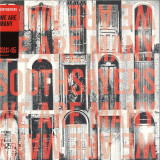
South London-based band Soothsayers are set to release their ninth studio album 'We Are Many'. Held together by heavy basslines, solid grooves, and socially and politically charged lyrics; the album takes the listener into different sonic spaces with elements of dub, Afrobeat, improvisational jazz and electronica.
The initial steps in recording 'We Are Many' came in January 2019 when the band's founders - saxophonist Idris Rahman and trumpeter Robin Hopcraft - set out on a journey to Brazil. With executive production in the Sao Paulo studio by renowned music journalist and author David Katz, they hooked up with bass player and producer Victor Rice who they'd met sharing the bill at Freedom Sounds festival in Cologne, Germany a year earlier. Victor organised a session in Studio Traquitana, home of acclaimed Brazilian band Bixiga 70, and invited a selection of local musicians. Percussionist and singer Ligia Kamara contributed lyrics and melodies written in the studio, and drummer Bruno Buarque, guitarist Joao Erbetta and bassist Victor provided some solid, personality-driven input. Fresh and vital, what came out was a fascinating blend of Soothsayers' dub and Afrobeat mixed with distinctly Brazilian inflections.
After arriving back in the UK, Idris and Robin set about creating the remainder of the album in a different, yet complimentary way, and called on the services of Wu-Lu and Kwake at their The Room studio in South London. Things started to take shape very quickly, Wu-Lu and Kwake combining Soothsayers' music with electronic elements, while also referencing elements of the current UK jazz scene.
When lockdown hit in March 2020, there was still a lot of work to do in order to complete a full album and Robin and Idris set about working on tracks with their musicians remotely. Having time to consider the album as a whole, they found strong connections between the music recorded in Brazil and the tracks recorded in London and they set about fusing and combining these elements further into a satisfying whole.
UK based Sengalese singer Modou Toure was enlisted to guest on one track while percussionists Satin Singh and Maurizio Ravalico were engaged to help affirm a sound-world where Brazilian flavours, such as the low-end Surdo drum, were combined with sounds more readily associated with reggae and Afrobeat.
Soothsayers' three part vocal harmony is a defining factor in this album. With strong references to the vocal styles of reggae legends such as The Gladiators, Mighty Diamonds, Heptones, and Abyssinnians; it has benefited from the long-standing friendship between Robin, Idris and Julia Biel. Lyrics, melodies and harmonies were presented, discussed, explored and recorded at Idris' and Julia's home studio in Streatham in a relaxed and positive way, with concepts from social and political commentary turned into powerful songs.
Themes cover political observations of Trump and beyond alongside Brazil's president Bolsanaro (Rat Race), speaking out against increasing levels of violence from the Brazilian government towards its native and indigenous people (Love And Unity) and keeping hopeful despite the impending horrors of a no-deal Brexit (We Won't Lose Hope).
Elsewhere they discuss striving to create space for meditation and reflection against the background noise of 24/7 news and social media (Move In Silence), the daily grind (No Sacrifice) and workers' rights (Slave), while highlighting those that fall through the cracks in society and end up without a permanent address, what led to this and how close we all are from this happening (One Step Away).
'We Are Many' represents a positive and uplifting statement in the face of challenging times - the overriding force, power and positivity of the music to continue forward, pushing the boundaries of musical concepts into the future.
"Whilst heavy questions of life and death and the future of our species surround us all, music is a guide that can help us perceive the challenges in a different way - a guide that can help us towards a deep inner peace. If we listen, music can help light the way. We hope you will listen, and we hope you will experience the joy, meditative power and beauty in the connection of different musical cultures that was experienced in the creation of this album."
South London-based band Soothsayers are set to release their ninth studio album 'We Are Many'. Held together by heavy basslines, solid grooves, and socially and politically charged lyrics; the album takes the listener into different sonic spaces with elements of dub, Afrobeat, improvisational jazz and electronica.
The initial steps in recording 'We Are Many' came in January 2019 when the band's founders - saxophonist Idris Rahman and trumpeter Robin Hopcraft - set out on a journey to Brazil. With executive production in the Sao Paulo studio by renowned music journalist and author David Katz, they hooked up with bass player and producer Victor Rice who they'd met sharing the bill at Freedom Sounds festival in Cologne, Germany a year earlier. Victor organised a session in Studio Traquitana, home of acclaimed Brazilian band Bixiga 70, and invited a selection of local musicians. Percussionist and singer Ligia Kamara contributed lyrics and melodies written in the studio, and drummer Bruno Buarque, guitarist Joao Erbetta and bassist Victor provided some solid, personality-driven input. Fresh and vital, what came out was a fascinating blend of Soothsayers' dub and Afrobeat mixed with distinctly Brazilian inflections.
After arriving back in the UK, Idris and Robin set about creating the remainder of the album in a different, yet complimentary way, and called on the services of Wu-Lu and Kwake at their The Room studio in South London. Things started to take shape very quickly, Wu-Lu and Kwake combining Soothsayers' music with electronic elements, while also referencing elements of the current UK jazz scene.
When lockdown hit in March 2020, there was still a lot of work to do in order to complete a full album and Robin and Idris set about working on tracks with their musicians remotely. Having time to consider the album as a whole, they found strong connections between the music recorded in Brazil and the tracks recorded in London and they set about fusing and combining these elements further into a satisfying whole.
UK based Sengalese singer Modou Toure was enlisted to guest on one track while percussionists Satin Singh and Maurizio Ravalico were engaged to help affirm a sound-world where Brazilian flavours, such as the low-end Surdo drum, were combined with sounds more readily associated with reggae and Afrobeat.
Soothsayers' three part vocal harmony is a defining factor in this album. With strong references to the vocal styles of reggae legends such as The Gladiators, Mighty Diamonds, Heptones, and Abyssinnians; it has benefited from the long-standing friendship between Robin, Idris and Julia Biel. Lyrics, melodies and harmonies were presented, discussed, explored and recorded at Idris' and Julia's home studio in Streatham in a relaxed and positive way, with concepts from social and political commentary turned into powerful songs.
Themes cover political observations of Trump and beyond alongside Brazil's president Bolsanaro (Rat Race), speaking out against increasing levels of violence from the Brazilian government towards its native and indigenous people (Love And Unity) and keeping hopeful despite the impending horrors of a no-deal Brexit (We Won't Lose Hope).
Elsewhere they discuss striving to create space for meditation and reflection against the background noise of 24/7 news and social media (Move In Silence), the daily grind (No Sacrifice) and workers' rights (Slave), while highlighting those that fall through the cracks in society and end up without a permanent address, what led to this and how close we all are from this happening (One Step Away).
'We Are Many' represents a positive and uplifting statement in the face of challenging times - the overriding force, power and positivity of the music to continue forward, pushing the boundaries of musical concepts into the future.
"Whilst heavy questions of life and death and the future of our species surround us all, music is a guide that can help us perceive the challenges in a different way - a guide that can help us towards a deep inner peace. If we listen, music can help light the way. We hope you will listen, and we hope you will experience the joy, meditative power and beauty in the connection of different musical cultures that was experienced in the creation of this album."
- Idris Rahman and Robin Hopcraft
We are happy to announce the first in anew series of 12" releases under DJ'S CHOICE, Four Flies Records' division devoted to fresh and cool new music in genres ranging from tropical funk and nu-soul to hip hop.
Created during the global lockdown, this new release is a joyful invitation to move our bodies and dance – something that, alas, has become almost impossible in this pandemic-ridden year.
Quero Ver Você Dançar is a collaboration between Rome-based DJ/producer The Rebel, Portuguese DJ/producer Dedy Dread, and Brazilian jazz singer Keila Abeid. Other musicians playing on the track – including Neney Santos (percussions), Marco Ravallese (keys), and Fab Samperi (flute) – masterly contribute to its soulful favela vibes.
Housed in a single jacket with beautiful artwork by Roman illustrator Federica Fruhwirth, the 12-inch single also features a super groovy remix by Mo'Horizons which, with its powerful combination of bossa and drum'n'bass rhythms, makes this release a must for tropical-music aficionados.
Also available on all major digital outlets, with two additional remixes by young Brazilian producers Afterclapp and Brasila Strut.
- A1: Harold Berty - Django
- A2: Ti L'afrique - Pop Soul Sega
- A3: Claudio - Qui Fine Arrive
- A4: Paul Labonne - Ti Malgache Ti Madras
- A5: Georges Gabriel - Pop Sega
- A6: The Features Of Life - Soul Sabattah
- B1: Roland Fatime - Silvie
- B2: Jean-Claude - Machin Sex
- B3: Joss Henri - Apollo Pop 76
- B4: Coulouce - Beau Pere
- B5: John Kenneth Nelson - Change To Maniere
- B6: Lelou Menwar - Capito
- B7: Daniel Delord - Maria
Killer 13-track compilation of 70's music from Mauritius that evolved from the original sega genre - the music of the slaves as well as their descendants, sung to protest against injustices in Mauritian society.
Created at the crossroads of Afro-Malagasy, the 70s strain fused Western and Indian cultures, pop, soul and funk arrangements, syncopated polyrhythms, saturated guitars, psychedelic organs and Creole vocals. Although the exact origins of sega remain unknown, it contains vocal and percussive practices that originated from Madagascar, Mozambique and East Africa. A social escape and a space for improvisation, satire and verbal jousting, it transcended everyday life and made room for the expression of conflicts and the transgression of taboos.
The main instrument of sega is the ravanne, a large tambourine-like drum made of a large wooden frame and goat skin. It is accompanied by the maravanne, a rectangular rattle filled with seeds, and other homemade forms of percussion. Eric Nelson a solo guitarist and arranger, set up the band Features Of Life which, in the mid 70’s, gave birth to a new sound. Fuzzy distorted guitars and funky beats invite each other to play over the unbridled beats created by fabulous drummer Raoul Lacariate.
The band accompanied a new wave of singers, including the atypical Joseph Roland Fatime aka Ti L’Afrique, a hyperbolic and hyperactive character, a fan of blues and James Brown who launched an explosive raw, and funky style of sega.
- A1: Tromboranga - Chachacha Chatuchak
- A2: Alex Wilson - Ain't Nobody
- A3: Antoine Tato Garcia - La Rumba Me Va (Jeff The Fish Rework)
- B1: Camille - As
- B2: Camarao Orkestra - Afroben
- B3: Fabiano Chagas - Frevus
- C1: Juan Pablo Torres - All Rhythem Ahead
- C2: The Santiago Acevedo Ensemble - El Gato Del Raval
- C3: Mayomi - Conga Con Rumba
- D1: Ec3 - Manteca
- D2: Born74 - Alla Voy
- D3: La Calenda Beat - Es Mas Lindo
- D4: Jizue - Habana
Following on from the release of 'Modern Jazz Dance Classics, Volume One' in 2019, which was popular on the jazz underground, the Staubgold's MJDC sub label returns with another compilation comprising mainly of contemporary artists carefully selected by DJ Jeff The Fish, this time on a Latin trip for 'Sol Vibrations: Latin Dance Movements'.
There are carefully selected tracks from all over the world to make a great set and selection, including three acts based in Catalonia (Tromboranga, The Santiago Acevedo Ensemble and Antoine 'Tato' Garcia), some from the US (Camille, EC3), the UK (Alex Wilson, Born 74), France (Mayomi, Camarao Orkestra), Japan (Jizue), Brazil (Fabio Chagas), Cuba (Jean Pablo Torres) and Uruguay (La Calenda Beat).
For some time now in the continual hunt for new DJ material to play in the jazz scene, the Modern Jazz Dance Classics label (a division of Staubgold) has been coming across great tracks by current artists that are often only available on digital or CD format. The brainchild of French based DJ Jeff The Fish and Markus Detmer at the Staubgold record label in Germany, MJDC aims to provide DJs with this new music on vinyl and inject new sounds into the jazz dance scene.
Multi-instrumentalist and composer David 'Dijf' Sanders combines a broad mix of styles with a boundless approach full of multicultural blends. The Ghent based artist has always been working on various projects, collaborations or productions at the same time - lately he worked with Warhaus, Sylvie Kreusch, Mattias De Craene's MDC III and Wim Vandekeybus (Die Bakchen - Lasst uns tanzen), to name a few - but that did not keep him from releasing successful solo records as well.
Dijf, who was a member of the (synth)pop bands Teddiedrum and The Violent Husbands, already raised excitement with the exotica-oriented 'Moonlit Planetarium' (2016), an album that created an experimental clash between percussive, ethnic sounds and rather Western beats, occasionally topped off with his mysterious vocals.
After the acclaimed eclectic gem Java (2017) for which he recorded in Indonesia, Dijf Sanders sets off on another musical adventure to another part of the world. This time it is a world infused by Nepalese, Tibetan, Chinese and Indian culture. Dijf traveled to Nepal, and used his field recording and impressions to create a new universe together with drummer Simon Segers, Saxophone player Mattias De Craene and sitar player Nicolas Mortelmans.
Expect a sound trance where monk chanting, eclectic beats but also mantra style techno will be fused. Namaste!
Berlin based Dame Bonnet makes music influenced by post punk and cold wave and with a primitive and reverb-drenched production he creates a tragic dream for the listener to sink in to.
The music has a sentimental feel to it but the pretentions are avoided thanks to the direct sound and the unremitting drums which contributes to give the tracks a forward momentum instead of a stuck in place-feeling.
Dame Bonnet makes sad club music with traces from the early eighties In England, a society ravaged by the cold individualism as a result to neo conservative politics - a time that resembles ours, where people gets categorized out of prejudice and the social welfare systems are uninstalled bit by bit in front of a sparser crowd of woke people.
In Europe, now in the 2010s, a supposed dead ultraconservative monster is coming alive again and Dame Bonnets music makes the soundtrack to that process.
In this post-industrial, post-enlightenment religion of ourselves, we have manifested a serpent of consumerism which now coils back upon us. It seduces us with our own bait as we betray the better instincts of our nature and the future of our own world. We throw ourselves out of our own garden. We poison ourselves to the edges of an endless sleep.
Animated Violence Mild was written throughout 2018, at Blanck Mass’ studio outside of Edinburgh. These eight tracks are the diary of a year of work steeped in honing craft, self-discovery, and grief - the latter of which reared its head at the final hurdle of producing this record and created a whole separate narrative: grief, both for what I have lost personally, but also in a global sense, for what we as a species have lost and handed over to our blood-sucking counterpart, consumerism, only to be ravaged by it.
I believe that many of us have willfully allowed our survival instinct to become engulfed by the snake we birthed. Animated — brought to life by humankind. Violent — insurmountable and wild beyond our control. Mild — delicious.
We adore Big Star and Alex Chilton more than words can express. Being able to present two of Alex’s staggeringly beautiful demos on vinyl for the first time (on a cute picture sleeve 7", no less) is an absolute honour for us at Be With.
“It Isn’t Always That Easy” and “If You Would Marry Me” both sound like templates for some of Alex’s best-known Big Star numbers. These demos come from the transitional recording sessions he made with Terry Manning at the Ardent studio in 1969, but were missing from the vinyl version of the wonderful Free Again compilation that was released in 2012.
Caught between the end of the Box Tops and the birth of Big Star Alex’s song-craft was already remarkable - as these demos prove - and this release represents a fascinating, exploratory period in the career of one of pop’s most enigmatic talents.
“It Isn’t Always That Easy” is the real knockout. A tender, acoustic ballad that, stylistically, could have appeared Big Star’s “#1 Record”. Yes, it really is that good. A deeply affecting, ruminative lament that explores the ravages of Alex’s short career to date, it is also one of the sweetest and most delicate melodies he ever wrote. A song this stunning shouldn’t just be kept for the Big Star completists.
Over on the flip, “If You Would Marry Me” finds Alex in earnestly romantic mode. It’s just him and a piano, albeit one that is played in a poppy, uplifting fashion to complement the optimistic mood: “I could make you feel so glad inside and so alive” he confidently declares. It’s quite the gem. It really should be mandatory for this to be played at every wedding.
Unfortunately there seem to be no photographs of Alex from around the time he was making these recordings. But luckily we were put in touch with Pat Rainer who was photographing the Memphis music scene that Alex was still part of a few years later.
Happy to be described as “a friend with a camera who was hanging around”, Pat’s candid pictures of Alex included one of him asleep on the floor of the Ardent studio. Even though the photograph was taken 9 years after the demos were recorded, we think this intimate portrait makes a fitting cover for these equally intimate songs.
Nearly three years after the original, it’s finally time to announce a remix EP of the first Black Series release: “the hunter” by SAF. A selection of industrial-tinged remixes.
The EP starts with a remix by Spanish duo NX1, who brought functional structure to 2 Coke Bottles. Following is a take on Barney & Ted by the Swiss producer Isolated Lines, who gave the track an industrialised techno touch. On the B-side, Shawn O’Sullivan took on the unreleased track A Letter About a Sinking Depression. Heavy and groovy, yet as moody as the title suggests. Rommek turned Unaccepted Perseverance into an offbeat masterpiece. Israel Vines did a minimalistic and bouncy retake on The Three, which will be available as a digital bonus track.
I was thrilled when Joe Goddard asked if he could make an EP for the label and were even more thrilled when I heard it. The fact that he roped in the legendary Kool Keith to appear on one track just kept on bringing the thrills.
Here are some lovely words from Joe about this release - 'It's an honour to release some music for this label. I feel that due to the ravages of unrestrained and brutal capitalism, people across the world are finding life particularly difficult right now- both economically and emotionally. Capitalism is an insidious and elusive enemy and many people are currently turning to intolerance and hatred instead of recognising that at these times what we really should attempt to do is love and respect each other as much as possible. Therefore I support Keith's efforts wholeheartedly, and on a personal level I couldn't think of a nicer or more talented person to release an EP with.'
AF Trax's message is very simple. The far right ultimately wish for the destruction of our way of life and indeed the lives of many of the people we love. The message is love. The message is solidarity. The message is No Pasaran - They shall not pass. It is a call to stand together, it is a call to stand up, it is a call to ACT. Individually we may be powerless, but together we are strong.
If you're not outraged, you're not paying attention!