
3

HIDE are an electronic duo based in Chicago. The pair create dark and heavy sample - based compositions using a combination of self - sourced field recordings and various pop culture and media references. Their music is textured, minimal, and powerful, giving raw vulnerability an opportunity to unfurl. Their work is honest, confrontational, powerful and thought - provoking.
HIDE's third album, Interior Terror further abandons traditional concepts of song structure in favor of splintered rhythms and fevered, immediate release. Expanding on previous themes of autonomy and empowerment, Interior Terror addresses and questions the corporeal and immaterial body in a physical and metaphysical sense. Turning to the dread inside, reflecting on the world around us,
HIDE gives voice to the power of destruction as a c atalyst for hope, and to the collective experiences of those who've come before us as a wellspring of our own power. Raw vocal delivery of mantra - like prose issued forth yields a raging, plaintive wail that lulls, mocks, questions, proclaims and decries. A dearth of collected field recordings give way to more fluid arrangements while retaining a scathing urgency. The result is minimal, spacious, and jarring; a distant knocking grown into the pulse of a hypnotic dirge, drones emerge from shards of decomposed sound, bending, seething their way through your body.
"Do Not Bow down" is a self - directed spell for fire and regeneration. “Nightmare” explodes, unrelenting; conflating time and space to the beat of repeated blows to the head. A reflection on perpetual suffering, generational traumas and the transformative action of release. Title track “Interior Terror” belies a new brand of body horror informed by the systemic enforcement of a contemporary Western gender binary, touching on experiences of dysphoria and disassociation . “Fear” answers the question 'Where do cops come from

HIDE are an electronic duo based in Chicago. The pair create dark and heavy sample - based compositions using a combination of self - sourced field recordings and various pop culture and media references. Their music is textured, minimal, and powerful, giving raw vulnerability an opportunity to unfurl. Their work is honest, confrontational, powerful and thought - provoking.
HIDE's third album, Interior Terror further abandons traditional concepts of song structure in favor of splintered rhythms and fevered, immediate release. Expanding on previous themes of autonomy and empowerment, Interior Terror addresses and questions the corporeal and immaterial body in a physical and metaphysical sense. Turning to the dread inside, reflecting on the world around us,
HIDE gives voice to the power of destruction as a c atalyst for hope, and to the collective experiences of those who've come before us as a wellspring of our own power. Raw vocal delivery of mantra - like prose issued forth yields a raging, plaintive wail that lulls, mocks, questions, proclaims and decries. A dearth of collected field recordings give way to more fluid arrangements while retaining a scathing urgency. The result is minimal, spacious, and jarring; a distant knocking grown into the pulse of a hypnotic dirge, drones emerge from shards of decomposed sound, bending, seething their way through your body.
"Do Not Bow down" is a self - directed spell for fire and regeneration. “Nightmare” explodes, unrelenting; conflating time and space to the beat of repeated blows to the head. A reflection on perpetual suffering, generational traumas and the transformative action of release. Title track “Interior Terror” belies a new brand of body horror informed by the systemic enforcement of a contemporary Western gender binary, touching on experiences of dysphoria and disassociation . “Fear” answers the question 'Where do cops come from

Louisahhh releases her debut LP The Practice of Freedom, via HE.SHE.THEY. The Practice of Freedom heralds the evolution of Louisahhh as she delivers her most exposing work yet, conceived as an exploration of the unorthodox archetype of “feminist submissive,” based on the mantra “sin is not being true to yourself.” Like her uncompromising musical heroes Karen O, Siouxsie Sioux and Shirley Manson before her, Louisahhh’s bold, raw, anti-establishment message on The Practice of Freedom will mark her as punk’s essential new heroine at the forefront of the new dawn of musical feminism.
The Practice of Freedom was born from experiences of loss and love, told through a journey of brutally beautiful electronics, electro and techno colliding with industrial, rock and alternative sounds. On the polysexual polymath label HE.SHE.THEY.’s inaugural album release, Louisahhh captures a record of our times, covering themes ranging from eroticism and empowerment to addiction and apocalypse, and influences ranging from Nine Inch Nails to Patti Smith to Judith Butler. The album, produced by American musician, music video director and photographer Vice Cooler, hears ideas and lyrics by Louisahhh re-contextualised into revolutionary experimental sounds, formed through the pair’s shared love of American alternative rock. Louisahhh’s music fights for and provides a voice for others, rooted equally in the intensity of the dancefloor and the mosh pit.

Excelsior! It’s the hail of yore that one should go ever onward and upward. And so, fittingly Onwards and Downwards is the occultist Swedish band Alastor’s clever call to arms... and also a reflection of our collective dark state of mind these days.
“If our last album Slave to the Grave were about death, this record is more about madness,” says guitarist Hampus Sandell. “You can look at the whole record as one person’s gradual slip into insanity. An ongoing nightmare without end. It also sums up the state of the world around us as this year has clearly shown.”
Alastor is heavy doom rock for the wicked and depraved. Drenched in heavy, distorted darkness and steeped in occult horror that will make your skin crawl and ears cry sweet tears of blood, the band is revitalized in 2021 with meticulously crafted songs and new drummer Jim Nordström bringing a hard-hitting and precise energy.
“It’s a more focused record but at the same time it’s more personal and naked. More raw emotion and pain,” Hampus says. The band recorded the album with the help of Joona Hassinen of Studio Underjord, who has helped with mixing since their ”Blood on Satan’s Claw” EP in 2017. Christoffer Karlsson of The Dahmers also assisted with overdubs and encouraged the band to demo the material early on, aiding in the album’s more deliberate and tighter feel.
From the first note of opener “The Killer In My Skull” the guitars are far thicker and out front than ever, and Nordström pummels the snare and kick like a young Dave Grohl. Bassist/vocalist Robin Arnryd’s chorus-drenched voice soars above it all like a one-man choir, at times harmonizing beautifully with shimmering Hammond organ notes. Nary a moment is wasted on the droning navel-gazing of lesser bands. Particularly, the driving anthem “Death Cult” which sounds like it would fit comfortably on QOTSA’s Songs For The Deaf, though there’s considerably more heft here. The title track pays its due to the Devil’s tritone in a marvelously woven framework of intertwining melodies befitting the album’s theme of descent into madness.
The quartet released its epic 3-song debut album Black Magic in early 2017 via Twin Earth Records, followed by the 2-track “Blood On Satan’s Claw” EP on Halloween the same year. Joining forces with RidingEasy Records in 2018, Alastor summoned the 7-track hateful gospel Slave To The Grave, which was packed with dynamic twists and turns, and funereal girth. It was met with considerable praise, setting the stage for the band’s greatest step onward (and upward... or downward, depending on your preferences.)

Excelsior! It’s the hail of yore that one should go ever onward and upward. And so, fittingly Onwards and Downwards is the occultist Swedish band Alastor’s clever call to arms... and also a reflection of our collective dark state of mind these days.
“If our last album Slave to the Grave were about death, this record is more about madness,” says guitarist Hampus Sandell. “You can look at the whole record as one person’s gradual slip into insanity. An ongoing nightmare without end. It also sums up the state of the world around us as this year has clearly shown.”
Alastor is heavy doom rock for the wicked and depraved. Drenched in heavy, distorted darkness and steeped in occult horror that will make your skin crawl and ears cry sweet tears of blood, the band is revitalized in 2021 with meticulously crafted songs and new drummer Jim Nordström bringing a hard-hitting and precise energy.
“It’s a more focused record but at the same time it’s more personal and naked. More raw emotion and pain,” Hampus says. The band recorded the album with the help of Joona Hassinen of Studio Underjord, who has helped with mixing since their ”Blood on Satan’s Claw” EP in 2017. Christoffer Karlsson of The Dahmers also assisted with overdubs and encouraged the band to demo the material early on, aiding in the album’s more deliberate and tighter feel.
From the first note of opener “The Killer In My Skull” the guitars are far thicker and out front than ever, and Nordström pummels the snare and kick like a young Dave Grohl. Bassist/vocalist Robin Arnryd’s chorus-drenched voice soars above it all like a one-man choir, at times harmonizing beautifully with shimmering Hammond organ notes. Nary a moment is wasted on the droning navel-gazing of lesser bands. Particularly, the driving anthem “Death Cult” which sounds like it would fit comfortably on QOTSA’s Songs For The Deaf, though there’s considerably more heft here. The title track pays its due to the Devil’s tritone in a marvelously woven framework of intertwining melodies befitting the album’s theme of descent into madness.
The quartet released its epic 3-song debut album Black Magic in early 2017 via Twin Earth Records, followed by the 2-track “Blood On Satan’s Claw” EP on Halloween the same year. Joining forces with RidingEasy Records in 2018, Alastor summoned the 7-track hateful gospel Slave To The Grave, which was packed with dynamic twists and turns, and funereal girth. It was met with considerable praise, setting the stage for the band’s greatest step onward (and upward... or downward, depending on your preferences.)

Bosq & Pat Kalla have been traveling parallel paths from across the Atlantic ocean without ever intersecting for too long. They have both been deeply involved in the modern / retro Afro Disco scenes in their respective countries but it wasn’t until the legendary French producer & label head GUTS asked Bosq to remix Pat Kalla & Le Super Mojo “Canette” that they met musically. That remix was received so well by the public as well as the artists themselves that they decided to work on an original track together.
“Mouna Power”, sung in a mix of French, English & the Cameroonian dialect of Pat’s heritage places Pat’s smooth vocals over Bosq’s raw & heavily layered, percussion & horn driven Disco Funk. The Dance Dub strips back some of the vocals, pushes the percussion even further up in the mix, and stretches out the grooves, focusing more on the infectious B-section than the original. This makes for a perfect body moving excursion that will let the dancers delve deeper into the groove while being carried along by the horn blasts and Pat’s chanted vocals.
The record features the renowned horn section of the Bogota Orquesta Afrobeat, and djembe work from “Beto” Salas, a world class percussionist from Turbo on Colombias Caribbean coast. Bosq as usual handles all the rest of the percussion, instrumentation & production.

UK South coasters relocating from West to East, Katja
Rackin and Sam Stacpoole have been grafting and
honing alone, away from the expertise of music
producers and other governors since 2016. The result
is unadulterated and unclean, unabashed and
uncompromised.
Through their love of artists such as The Kinks, Alex
Chilton and The Nerves, or any other artist who
spends less time with the polishing cloth and more
time with the power shower, Holiday Ghosts make
music with a lean and primitive rock ‘n’ roll spirit.
Drums are stripped naked to the point of metronome
status and no stomp boxes, nor cajóns or didgeridoos
are found to obscure the energy of guitars at their
rawest.
In stories of landlords, steady jobs, wrong turns, short
straws, sunny moods and city life, Kat and Sam share
lead vocals alongside returning bandmate and
songwriter Charlie Murphy and a host of other
musicians from Falmouth, Cornwall where the band
began.
Two albums in with Punk Slime Records and Holiday
Ghosts are back with their third full length, ‘North
Street Air’, their first for FatCat Records. Twelve songs
of love, hate and everything in between.
For fans of White Fence, Goat Girl, Porridge Radio,
Juan Wauters, Yo La Tengo, Total Control, Terry,
Chubby and the Gang, Uranium Club, The Velvet
Underground, Violent Femmes, Modern Lovers.

No one album could ever capture the claustrophobia-to-catharsis of an Eyehategod show, but this compilation of live tracks and demos comes as close as it gets. Giving you an idea of Eyehategod’s uncompromising, single minded purity of expression and exertion of raw nerve, “10 Year Of Abuse” is a monumental document all the way from the demo era to their later, legendary relentless live tour set. Many other bands have tried unsuccessfully to emulate Eyehategod and have never quite captured their dynamic. Formed in 1988 in New Orleans they have become one of the most well known bands to emerge from the NOLA metal scene. Eyehategod note bands like Melvins, The Obsessed, Discharge, Black Flag, Black Sabbath and Saint Vitus as major influences, but are often mentioned in the same breath as any of these legendary bands. Drawing comparisons to Grindcore, Crust Punk and Sludge Metal, their heavy bluesy, detuned rock and roll has been a lynchpin for the misanthropic and disenfranchised. Eyehategod has released five studio albums to date with a sixth in the works and have toured all over the world in a career spanning over thirty years. Though the band has never released a live album, we are left with “10 Years” as the only official witnessing document to decades of decimating live sonic abuse. Released on May 29, 2001, “10 Years” spans seven live tracks from their European tour in 2000, a live radio show from August 1994 and four songs from an early 1990 demo. The result is a feedback-laced window into that wonderful, brutal Eyehategod “sound”, that addictive, lower-than-low note that nestles somewhere in the pit of your burning, alcohol-soaked, nauseated stomach. The booklet alone is a delight for anyone who worships at the altar of Eyehategod’s oppressively heavy, crushing riffs.

Every Dunbarrow album has a hauntingly classic sound of, in the band’s own
words, “an eerie rawness.” But their third album feels like you’ve discovered a
mysterious half-century old recording tucked away in a decrepit abandoned
mansion. Perhaps there’s a note attached, begging its courier to beware. Alas,
whoever possessed the tape apparently never survived. ...that is to say, it feels like there’s a solemn
story to this album, not just in the
lyrics, but in the sound itself. Much like
the eponymous debut of Black Sabbath,
the band uses subtle sound effects to
dramatically set the scene for its mostly
clean tones and masterful use of open
space for which the band has become
known. But unlike their first two albums,
this one does see the band branching
out just a bit into heavier, more distorted
guitars. The result is a much more
in-your-face sound, while retaining the
Haugesund, Norway quintet’s masterful
proto-metal sound.
The album opens with the sound of falling
rain as Lønning and Eirik Øvregård’s
guitars seep into the speakers like
funereal bells and haunted drones on
“Death That Never Dies.” Drummer Pål
Gunnar Dale slams down three snare
beats as bassist Sondre Berge Engedal
slinks in harmony over it all. Andersen’s
crisp vocals paint a bleak picture of
dark perdition until the band slips into
a swaggering piano-led coda reminiscent
of “Sabbra Cadabra.” The 7-minute
psychedelic folk masterpiece “Turn In
Your Grave” is the album centerpiece,
replete with mournfully shimmering
Mellotron and bleak folkloric lyrics. Its
hypnotically spinning guitar notes and
old European parlando-rubato singing
hearken to dark early Steeleye Span with
a sinister edge. “In My Heart” perfectly
showcases the band’s penchant for folk
based, yet head-banging riffs that break
with tradition that has stilted modern
heavy music.
“I think with this record, we have managed
to create our own unique sound
with its own Dunbarrow tag,” says the
band. With that sound comes the perfect
artwork: A cover illustration from the
early 1900’s by artist Harry Clarke from
his work for Edgar Allen Poe’s Tales of
Mystery and Imagination.

MELT BANANA'S TEENY SHINY LP GETS REPRESSED FOR THE FIRST TIME IN AGES ON VINYL. THIS PRESSING ONLY WIL LBE A BLUEY/GREY VINYL They are headlining the Raw Power festival in london at the end of may.

AEGEAN is the first offering by Argentine producer and Leipzig resident Accanto. His approach to mid tempo electronica is very rich in organic textures and deep atmospherics. The opening track Sentimental Sediments sounds deep, raw and dubby, a great opener for any set. Bokanovsky picks up the pace and brings in the sunshine uplifting vibes, while the title track Aegean completes the package with an exquisite progressive anthem that makes good use of a bass arpeggio to create a driving groove that will surely lift dancefloors to Cosmic dimentions. A must for Balearic lovers and adult ravers.
ACCANTO is Jorge Bonadeo Miguens, a young Argentine producer residing in Leipzig. Born in 1990 in the city of Buenos Aires, his relationship with music started at an early age while digging the cassettes of his older brothers. At the age of 13 he started playing bass guitar in a rock band with friends, with which he played
in several halls and bars, as well as recorded a studio album.
Around 2012 Jorge got into the electronic music scene of Buenos Aires. After years of traveling and getting immersed in the scenes of his city, Sydney and Europe, he settled in Barcelona and started producing, while also performing as DJ. Nowadays based in Germany, and after years of self knowledge and learning, he felt ready to share his music with the world.

Germany’s Peter Grummich has been releasing his twist on House and Techno over the past two decades via the likes of Shitkatapult, Kompakt, Spectral Sound, Mule Musiq and of course his very own Innerbird. Here though we see Peter deliver his latest works via Bengoa’s fledgling B2 Recordings, which sees him experimenting with some outboard classics like the classic Casio RZ-1 drum machine and the Roland JX8P synthesizer to create a raw, old school feel.
Opening the package is title-cut ‘Onions’ the ‘Lee Anderson Endless Summer Mix’, laid out over eight minutes with hazy stab sequences, dusty drums and a chugging low-end drive while squelching acid licks subtly work their way into the latter stages of the for composition. ‘Hello Rave’ follows next on the flip-side, bringing airy dub chords, metallic stabs and gritty analogue percussion into the limelight for a groove-driven workout. ‘Basement Memories’ then rounds things out, this time bringing dynamically evolving, intricate drum patterns, resonant bleeps into focus atop and an underlying dubbed out aesthetic.

Be With is delighted to present Jorge López Ruiz’s El Grito (Suite Para Orquesta De Jazz), eternal Argentinian magic released on CBS in 1967 that must be one of the most sought-after South American jazz LPs.
Living in Buenos Aires in the 60s, driven by creative impulse and rage Jorge López Ruiz used music as his platform to protest the Argentine military dictatorship: “I could never stand dictatorships, to be told how you have to think, what you have to do. Nor did I endure discrimination”.
A young López Ruiz had appeared on a television panel alongside writer, politician and philosopher Arturo Jauretche, criticising the Onganía dictatorship. Jauretche told López Ruiz “Now say it with music”. This was the deep inhale that lead to El Grito, literally “The Scream”. As López Ruiz later explained “Jauretche urged me that my protests should not remain in words and acquire the consistency of a work… but it was not so much what he told me but how he told me, what prompted me to make the work take shape, first in a live concert and then in a recording”.
As the police and military began resorting to kidnapping, torture and summary executions to quiet dissent, with depressing inevitability the artist community and their work were a particular target of the increasingly brutal regime. El Grito was banned not long after it was released and the majority of original copies were unceremoniously destroyed.
The work of a genius artist living under an opressive dictatorship, erased by the government of the time, this is buried treasure in every sense and it’s been a rare record for over 50 years. But it isn’t just being hard to find that has pushed up the prices of those few original copies that survived, this is a foundational record in the development of jazz in South America.
El Grito (Suite Para Orquesta De Jazz) is a showcase for Jorge López Ruiz’s skills as a composer and arranger as he leads a virtuoso orchestra of the likes of Mario Cosentino (alto sax), Baby López Furst (piano), Pichi Mazzei (drums), Gustavo Bergalli (trumpet), Oscar López Ruiz (guitar), Arturo Schneider (flute) and Jorge López Ruiz himself plays double bass on the fourth and fifth movements.
As the album’s sub-title explains, The album is a Jazz orchestra concept suite. Five movements, to be heard as a whole, that end where they begin.
“When I wrote it there was no history of a cyclical work in jazz. But I didn't notice that, I needed to express something and I did it. At that time they told me I was crazy, that such a thing was very difficult to do. But hey, I like challenges”.
Yet this is not challenging jazz. There are certainly avant garde, free jazz flourishes, but the hard bop characteristics make this a very accessible album: easy to listen to without being easy listening. López Ruiz’s love of film brings a definite cinematic feel.
The title movement opens the album in bombastic style. “El Grito” grabs you by the lapels and refuses to let go. Raw then controlled, it’s by turns stabbing then soothing, with rage weaved in and out of the elegant styles. “M.A.B. = Amor” is our favourite here. With a tense introduction and a patient build, a gentle sax sweeps in to lift everything up to meet the serene piano and soft drums. Elegantly paced, it moves back and forth between deep contemplation and a more urgent call and response between strings and horns. A near-eight-minute, slow motion marvel.
The second side eases in with the beautifully-titled “Hasta El Cielo, Sin Nubes, Con Todas Las Estrellas” (“Up To The Sky, No Clouds, With All The Stars”) a relatively brief mid-tempo piece featuring López Ruiz’s insistent bass notes high in the mix, and again blending the sublime with the emotive with its wild horns and tight rhythm section.
It’s followed by “Tendré El Mundo” (“I Will Have The World”) which also leads with hypnotic bass, but this time swifter, driven by crashing drums, rapid horn conversations and effortlessly cool piano flourishes. Rounding out the suite, “De Nuevo El Grito” (something like “The Next Scream” or “The Scream Renewed”) is a stylish closer. Whilst López Ruiz’s bass shifts the track along, the horns and piano are more restrained, yet no less stunning.
This Be With edition of El Grito sounds sensational, if we do say so ourselves. Working with audio from the original analogue tapes, the vinyl mastering chops of Simon Francis are on full show here in what he considers to be some of his best ever work for Be With. Pete Norman’s cutting skills have made sure nothing is lost. The tortured artwork has been restored here at Be With HQ as the finishing touch to helping this revered work find a rightful place in every protest art collection.

Adiel slowly emerged from the Rome underground onto international dancefloors, from local residencies to renowned festival stages. Following a steady slew of quality releases for her own label, the Italian producer now signs with Figure to show just how far she’s gotten. Right out the gate, Adiel proves her versatility. Method is an intricate, moody stepper, harking back to early Burial with its grimey atmosphere and skeletal breakbeats, complete with ghostly vocals and a cascading synth line, which ties it all together. Showing Adiel’s love for analog drum machines, Mad builds on a dry but lively pattern, with swelling acid arps slowly creeping in until it all breaks down in a sea of squelches, only to emerge again with full force. The B-side goes deep and fast, panning percussion setting the bleak scene for a vividly arp-driven ride beneath a starry sky. Slowing things down to a half-time measure, the final composition leaves lots of room for the finely measured details such as bubbling acid, raw drums, and trippy voices to merge in one last soothing swirl of sound. With such a strong repertoire at her fingertips, Figure X27 shows Adiel as a promising producer who has found her unique voice and is sure to make her way in the years to come.

Backed by members of the David Nance Group, Rosali (Long Hots, Wandering Shade, Monocot) wades through the emotional mire with infectious, earworm melodies led by her luminous voice. With their rich, raw instrumentation, these rock ballads sound like the resilience discovered in facing one’s darkest moments, the assurance of the calm and clarity that comes after the storm. As she sings on the second track, “Bones,” “Through the darkness of the field / I walk through without yielding / To the rest of the feelings / I’m carrying.” With her confident song craft, Rosali illustrates the ability to push through, moving toward something greater without being destroyed by the weight of trauma.
Engineered by James Shroeder and featuring Kevin Donahue (Simon Joyner), James Shroeder (Simon Joyner, DNG, Connor Oberst), David Nance, Noah Sterba, Colin Duckworth, and Daniel Knapp, the album was recorded in ten days and the raw immediacy of the music is palpable across these ten tracks. Added adornment was contributed by Philadelphia's Robbie Bennett (War on Drugs) on organ and keys, and Matt Barrick (The Walkmen, Jonathan Fire Eater, Muzz) makes a percussion cameo on “Whisper,”which was tracked at Philly’s Silent Partner Studio, where No Medium was mixed by Quentin Stoltzfus (Mazarin, Light Heat). The open creative collaboration elevated the songs, resulting in the exciting, vibrant sound of the album.
Rosali wrote the bulk of these songs in January of 2019 while on a self-imposed two week residency in the hills of South Carolina. Alone in an old farmhouse, she experienced supernatural events and faced her own demons in the deepest darkness. Perhaps as a result, there is a boldness that permeates the album, a daring vulnerability in both the lyrical themes and their musical accompaniment. Rosali says, “I approach guitar playing the same intuitive way I sing, which is profoundly spiritual for me. Where words fail, the guitar becomes the conduit for raw feelings, providing a direct connection to them. I’m constantly working on being fearless in my work, which means showing the rough side, the mistakes along with the triumphs.”
While writing No Medium, Rosali was inspired by harmonographs—swinging pendulums that create beautiful illustrations of the mathematics of music—considering how the mind, too, creates images through song. She imagined herself as the swinging pendulum—“a body suspended from a fixed point” (Encyclopedia Britannica), governed by the forces surrounding her. She thought about the pendulum’s relationship to time, movement, and even its use in divination practices. The album’s title, lifted from Charlotte Brontë’s, Jane Eyre, resonated with this vision: “I know no medium: I never in my life have known any medium in my dealings with positive, hard characters, antagonistic to my own, between absolute submission and determined revolt. I have always faithfully observed the one, up to the very moment of bursting, sometimes with volcanic vehemence, into the other.” With the multiple meanings of “medium”—as middle ground, a term for psychics, and as the material of artistic expression—No Medium felt like the appropriate name, describing how the self is shaped by the patterns of life .
The influences for the sound of No Medium reflect this pairing of assured vulnerability, in the stylistic coherence of Bob Dylan’s Desire, the tender delivery in Iain Matthews’ Journey From Gospel Oak, the strut and swagger of Bowie’s Hunky Dory, the ambition and beauty of Gene Clark’s No Other, and the playful catharsis of Harry Nilsson’s Nilsson Schmilsson. The Richard and Linda Thompson-esque album opener “Mouth,” places Rosali within both a physical and emotional space. “East of the river I was travelling on / watch me lie, undone / rest me in a forest, overgrown / until I am free of all that I’ve known,” she sings. There is movement, both within a cityscape, and in her outlook on love. Speaking of her thought process when writing the song, she says, “I imagine confidently walking away from the past, toward a new approach to love and intimacy to achieve a closer relationship with myself.”
In “Pour Over Ice,” Rosali explores her relationship with alcohol and her former reliance upon it as a social lubricant to quell her social anxiety, an energizer to keep moving, a means to cope and self-medicate, and most addictively, to lure out her wild side as a free flowing, good time girl. While drinking helped her through some shitty times, it eventually got the upper hand and became an insatiable hole within. She says, “The ‘you’ in the song is really me, talking to that component of myself struggling with drinking and self-sabotage, caught up in the cycle, and all the bad choices I made.” She sings, “Maybe I didn’t care enough / or can’t remember / chasing small pleasures / making fire from embers.” Rosali wanted her lead guitar on this track to simultaneously sound like a slow motion car crash propelling her through the day, and the sound of a gnawing hunger for something more.
Rosali’s alliance with the Omaha musicians that orbit David Nance Group (including Nance himself) came about while on a Long Hots / DNG tour in the summer of 2019. Great friendships formed and one night after playing in Detroit, Dave suggested they be her backing band. The pairing was effortless and natural, and in November of the same year, they were recording No Medium in a basement in Omaha.

Concrete presents old archives from Francesco Baudazzi (Violet Poison). Music he did between 2013 and 2014, influenced by his previous releases like "Non Sequitur" (Haunted Air) and "Awakening Messiah" (Bed Of Nails). Four experimental tracks with dark and strong rhythm, Raw and early proto-techno with a cyberpunk attitude. From the droney psichedelia of "Psychic Totem" to the cyberpunk proto-body-music of "Disarticolazione Cranica", from the obsessive monotonia of "LSD Take One" to the ultradark Techno of "Ultrakinesis". Enjoy this Industrial/Proto-Techno journey.

A reissue of the 2016 demo tape by New Orleans band
Special Interest, who combine elements of no wave,
glam and industrial music. First time vinyl pressing with
bonus track, new sleeve designed by Studio Tape Echo
and 8 page risographed zine insert.
Four of the tracks here are raw early versions of songs
that would appear in slightly more refined form on their
debut album, 2018’s ‘Spiralling’. The other four pieces
are unique to this release, including a cover version of
Italian new wave band Chrisma, raging opener
‘Disease’, the over-saturated shoegaze-punk of ‘ATC’
and comedown lament ‘I’ll Never Do Ketamine Again’.
The band’s second album ‘The Passion Of’ (2020) was
widely acclaimed and appeared in many album of the
year lists. It was recently followed by a companion
album of remixes on Boy Harsher’s Nude Club label,
with all profits going to NOLA charity House Of Tulip.
“A blistering vision of punk as possibility.” - Pitchfork
“Members Alli Logout (vocals), Ruth Mascelli (synth and
drum machine), Maria Elena (guitar), and Nathan
Cassiani (bass), together manage to make their
instruments and vocals sound like a fight for our
existence.” - The Quietus
Recorded and mastered by Jasper Denhartigh at Bird
Island Recording March-May 2016. Originally selfreleased on cassette in 2016. Cut by Beau Thomas at
Ten Eight Seven. All songs by Special Interest except
‘Black Silk Stalking’ written by Chrisma.
Black vinyl in 3mm spine reverse board sleeve with 8-
page risographed zine, digital download card and
sticker.

After a year of sadness comes an album fit to resist it. Detritus, the third solo LP by violinist/composer Sarah Neufeld, confronts anguish with beauty, turmoil with grace, gliding through the present like a dancer mid-motion, reaching through space 'til she's caught. Detritus originated with a collaboration: in 2015, Neufeld was invited to appear on stage with the legendary dancer/choreographer Peggy Baker. Baker had prepared a solo piece based on work from Neufeld's second album, The Ridge, to which Neufeld added an original lyrical prelude. The live result was an incendiary duet, almost a sort of face-off, which left each artist unsated. They agreed to reunite for a more extended collaboration - a full-length show with Baker's company, where Neufeld would write to (and perform music alongside) Baker's choreography. It was a fertile partnership, uniting the two women's intense, curious, ferocious sensibilities across an age difference of 29 years. Baker had conceived the show around the title of Neufeld's prelude, "Who We Are In The Dark," exploring themes of loss, betrayal and the emptiness of space; Neufeld was herself in crisis mode, reacting to a specific, earthbound kind of grief (including the end of a relationship). Making work together, they drew on these raw feelings - insistent, urgent darkness but also something that was, for Neufeld at least, much more unexpected: a romantic, tender-hearted love, inspired by the movements of the dancers before her. The work premiered in February 2019. Even before Neufeld and Peggy Baker Dance Projects set off on tour, she had the intuition that this music might take another form: as a distilled set of songs, refined and developed beyond the versions performed on stage. Starting that summer, she began arranging this lush and soloistic material - work that eventually became Detritus - and performed some of these experiments at her own solo gigs. Neufeld worked throughout the process with her Arcade Fire bandmate Jeremy Gara, whose drums, synths and ambient electronics co-anchored the Peggy Baker shows and helped shape the reimagined album versions. She would go on to add foot-pedal bass synth, wordless vocals and swells of French horn courtesy of Bell Orchestre compatriot Pietro, bringing in woodwind wizard Stuart Bogie as a one-man flute ensemble, layering clusters of chords atop Neufeld's luminous compositions.
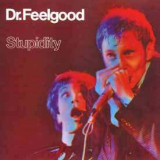
Black heavyweight vinyl pressing The third album / first live album from the British rock band, Dr. Feelgood.
Originally released in 1976, it was the first live album to ever hit number 1 on the UK charts in its first week.
Stupidity captures the relentless, hard-driving energy of Dr. Feelgood at their peak. Comprised of recordings taken from 1975 tours, the music is presented raw and without overdubs, making it clear that the dynamic friction between guitarist Wilko Johnson and vocalist Lee Brilleaux could propel the band toward greatness
