2024 RSD Release
The ascending soul sensation Fat Generous embarks on a heavenly collaboration Wai Wan. This record is an invitation to their soulful world of jazz influenced funk and R&B, Fat Generous have been making waves in their hometown playing alongside the likes of Fatboy Slim and Sister Sledge, and their raw onstage energy has gained the stamp of approval from the godfather funk himself, George Clinton. Recorded at the height of a record breaking heatwave, Fat Generous have captured the blissful respite of a 'NightTime Cool Breeze' in a silky laid back groover that formed their debut single back in September. Amassing over 30,000 streams in the first month, alongside radio play and feedback from the likes of Craig Charles & Giles Peterson. Channeling carefree vibes reminiscent of Roy Ayers’ 'Everybody Loves The Sunshine'. On the second side a Record Store Day exclusive track 'Shake Your Body Down' 'Shake Your Body Down' is an unparalleled journey through the funk filled cosmos, a collector's dream that pays homage to the pioneers of funk while paving the way for a new era of groove. This release is the precursor to a bigger release schedule for the band a good vibes only DIY recording project that has been produced by legendary nujazz producer, Wai Wan, whose fingerprints can be found all over releases on Chrysalis Records and Virgin Records. This record is a scene setter that introduces you to the groovy rhythms that Fat Generous deliver in excess at each of their live shows unique performances that lean on the group’s tight knit ability to improvise and reimagine their own music. Limited edition heavyweight 7 inch vinyl in a picture sleeve. Get the debut release and you're ahead of the curve.
Buscar:raw silk
Belarusian producer Four Walls is back after a seven-year hiatus. The first time around he made some standout cuts for the likes of Traxx Underground and Kolour LTD but this time around he finds himself on the new Ultraworld Records imprint from DJ Craft. This one kicks off with the lush prog house and silky synth arps of 'Mind Charger' which soon takes you to the stars. 'Metamorphosis' is a more raw-edged and acid-laced techno stomper for peak time action and 'Summer Nights' is a bubbling, elastic tapestry of new age overtones, thudding kicks, and trance-tinged pads. A remix by Toronto-based Pletnev adds another dimension to this club-ready EP.
The fast-rising Purveyor Underground Ltd kicks on again here with a sizzling seventh EP that is as rude as they come - in both meanings of the word - from Die Familia. It is his own East Side Gangster remix of 'U Dat Bitch' that kicks off with hard-hitting house kicks and sleazy vocals over a rugged bassline. 'House Music' (part 1 - Late Night edit) is just as raw but more deep and hypnotic with its ascending synth lines and steamy vocal coos. 'Organic (Like Weird)' might be the best of the lot - a quick and urgent house thumper with silky hi-hats and rolling bass getting you up on your toes amidst swirling pads and a melange of vocals.
Known for their ability to seamlessly traverse various musical genres while upholding a high standard for quality, Angis Music now presents a mesmerizing 5-track EP crafted by Igaxx, an exceptionally talented Japanese artist hailing from Tokyo. Igaxx's analog productions, while exuding an understated minimalism, possess an extraordinary depth, captivated by the hypnotic and lush atmospheres that define his signature style.
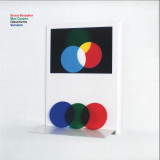
To enhance the experience, this EP is adorned with an artwork by Franco Grignani, a celebrated Italian artist and designer renowned for his groundbreaking contributions to the kinetic art movement in the 20th century. Dated back to 1963, Grignani's masterpiece is given new life with the gracious consent of his family, presented as a prestigious silk-screen print on the album cover. Prepare to be entranced by this absolute gem.
- The Orielles - Beam/S (Space Afrika Remix)
- Amber Arcades - Turning Light (Justin Robertson's Deadstock 33'S Meditation)
- Unloved - Number In My Phone (Black Science Orchestra Dub)
- Confidence Man - Toy Boy (Raw Silk Instrumental Remix)
- David Holmes & Raven Violet - It's Over If We Run Out Of Love (Lovefingers & Heidi Lawden Low Tide Mix)
- Baxter Dury - Miami (Pilooski Instrumental Dub)
- Out Cold - Loving Arms (Hardway Brothers Remix)
- Working Men's Club - Cut (Mella Dee Spangled On The Terrace Dub)
- Eyes Of Others - Safehouse (Decius Remix)
- Katy J Pearson - Howl (Umlauts Remix)
- Fran Lobo - All I Want (Tone Remix)
Die Heavenly Remixes-Reihe präsentiert weiterhin die besten Remixe, Versionen, Meditationen, Re-Rubs und Dubs von Künstlern aus der ganzen Welt, die auf der Liste des aufregendsten Plattenlabels des Landes stehen. In den meisten Fällen handelt es sich bei den Alben um die erste physische Veröffentlichung eines Remixes, die sie von den Streaming-Playlisten in ihr rechtmäßiges, spirituelles Zuhause auf superschwerem Vinyl (oder glänzender, supergepackter Compact Disc) befördert.
Heavenly Remixes Volume 8 beginnt mit Space Afrikas üppiger, ambienter Neuinterpretation von BEAM/S der Orielles, bevor Justin Robertson Amber Arcades' Turning Light zu acht Minuten elektronischem Dub dehnt.
- A1: The Orielles - Beam/S (Space Afrika Remix)
- A2: Amber Arcades - Turning Light (Justin Robertson’s Deadstock 33’S Meditation)
- A3: Unloved - Number In My Phone (Black Science Orchestra Dub)
- B1: Confidence Man - Toy Boy (Raw Silk Instrumental Remix)
- B2: David Holmes & Raven Violet - It’s Over If We Run Out Of Love (Lovefingers & Heidi Lawden Low Tide Mix)
- B3: Baxter Dury - Miami (Pilooski Instrumental Dub)
- C1: Out Cold - Loving Arms (Hardway Brothers Remix)
- C2: Working Men’s Club - Cut (Mella Dee Spangled On The Terrace Dub)
- D1: Eyes Of Others - Safehouse (Decius Remix)
- D2: Katy J Pearson - Howl (Umlauts Remix)
- D3: Fran Lobo - All I Want (Tone Remix)
Heavenly Recordings release the next two volumes in their series of remixed classics and unreleased versions. ‘Heavenly Remixes 7 & 8’ sees the label going back into the archive, as well as picking off some more recent remixes, and both albums primarily feature either previously unreleased versions or re-workings available for the first time on vinyl and CD.
Heavenly have always seen immense value in the remix, a value way beyond what it might bring commercially. Since their first release in 1990 (where Andrew Weatherall overhauled a one-off single by club kids Sly and Lovechild) Heavenly remixes have been carefully curated and treated as a key part of the A&R process. It’s an opportunity to view an artist through a different prism, to play out a musical ‘what if’ scenario. It’s the kind of exploration that’s happened consistently through the thirty plus years the label has released music.
The ‘Heavenly remixes’ series continues to showcase the very best remixes, versions, meditations, re-rubs and dubs from all around the world of artists right across the roster of the country’s most exciting record label. In most cases, the albums offer the first physical release for a remix, elevating them from streaming playlists to their rightful, spiritual home on super heavy vinyl (or shiny, super-packed compact disc).
Heavenly remixes 7’ heads to Belfast, where David Holmes - a producer who first appeared on Heavenly in 1994 amping up the acid on Saint Etienne’s ‘Like A Motorway’ - appears as solo artist and as one third of Unloved, who get a lift right to the heart of a Vauxhall sweatbox by Horse Meat Disco. It draws a line between Amsterdam and Frankfurt as Ludwig A.F. amps up the electronics on Pip Blom’s ‘Keep It Together’. It stops off in a south London studio where super producer Dan Carey plays the desk with Toy, then relocates LA psych rock band Fever The Ghost to an Ibizan shoreline as the sun sets on the horizon. It cements Sheffield’s reputation as the home of modern British techno with the return of true originators Forgemasters. And it pitches up in front of a renegade soundsystem late night at Glastonbury as Erol Alkan’s mighty rework of Con Man gets its third rewind of the night.
‘Heavenly remixes 8’ opens with Space Afrika’s lush, ambient reimagining of the Orielles’ ‘BEAM/S’ before Justin Robertson stretches Amber Arcades’ ‘Turning Light’ into eight minutes of electronic dub. Elsewhere, Baxter Dury’s peerless ‘Miami’ becomes a string-laden electro skank in the hands of French producer Pilooski; Edinburgh’s bedroom techno genius Eyes of Others’ ‘Safehouse’ turns into an East End bathhouse courtesy of disco deviants Decius; Ashley Beedle’s Black Science Orchestra turns Unloved’s heartworn torch song into seven minutes of glimmering dreamlike percussive house and Katy J. Pearson’s freak flag is flown high thanks to The Umlauts’ throbbing filtered electro mix. It ends similarly to how it began as TONE takes
Fran Lobo’s ‘All I Want’ on a gorgeous slow motion spacewalk.
Yse Saint Laur'ant makes wonky, left-of-centre sounds for proper underground parties. He's done so for years, and now returns with more of his raw and inventive disco on the sought-after Vinyl Only label. Opener 'Bad Company' pairs visceral arps with glossy pads and soulful vocal, which is stripped away from the 'Better Company' version.
On the flipside, 'Don't Look Back' is a more freewheeling and funky feel, with silky basslines and hip swing claps under buttery vocals. Last of all is a classic chug-disco gem. 'Foreign Love' goes slow, with crashing hits and languid bass all topped off by a yearning female vocal that slowly but surely rises into euphoria.
For his third album, 'Love You, Drink Water', Awir Leon opens a more direct and personal window on his music. The album is about inner monsters, the search for meaning, failure and hope. The music he proposes plays with the porosity of the lines, because it is at the same time complex, rich, stripped, raw, without compromise, and without pretense. It wants to express in the most vulnerable way what it means to be alive today.
Often compared to renowned explorers such as James Blake, Frank Ocean or Thom Yorke, Awir has spent the last two years travelling the world as the opening act for another great spirit, French artist Woodkid, on an international tour for his latest album S16. During this tour, Awir decided to write this new album, testing and perfecting the songs in front of a large audience that knew nothing about his music.
It is both this audacity and the constant desire to jump into the void that makes Awir an artist apart.
The seemingly simple title, which sounds like a joke, actually hides something much more vital and human.
"One day my three-year-old niece said goodbye to me with the exact words "I love you, drink water". It came out of nowhere, and I thought it was the most thoughtful thing anyone had ever said to me. It was like an epiphany; it was exactly what I wanted to express through my songs.
For Awir Leon, constant research and sincerity are the main drivers of a music that is undeniably singular and powerful. Music that he shapes and dances gracefully over chasms, as if it were necessary to make failures into new points of escape towards vitality.
Love You, Drink Water is silk sewn in pain, a raw and resilient jewel.
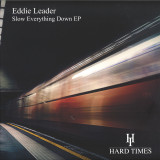
Its been some years since HARD TIMES dropped new music in our laps, but having kick started a new wave with March’s release of Steve ’Silk’ Hurley’s stunning ‘All I Need’, featuring Sara Garvey on vocal duty, the label follows up swiftly with more precision groovemanship.. this time from Hudd Traxx label boss and core HARD TIMES family member, Eddie Leader.
As a DJ, producer, promoter and label boss Eddie has, over a twenty five year career, become a standard bearer for UK House Music. His own productions have graced seminal labels including Classic, Robsoul, Plastic City, Morris Audio and Balance Alliance, while his own Hudd Traxx imprint has become a go-to for many a discerning disc jockey. Its roster boasts releases that feature Matthew Herbert, Rolando, Jovonn, Rick Wade, Agnés and More.
Fresh from remixing Hurley’s ‘All I Need’, Leader now looks to ’Slow Everything Down’ with four fresh jams of his own that all stay true to the Hard Times ethos of quality, deep underground sounds.
Preaching from the front is ’Stand Up’, with its warm groove, piercing piano chords and soulful sermon. So come on… Stand up, to get down. On ‘Gratitude Power’ a seismic kick drum and bass combo pave the way, garnished with keys, synth stabs, bongos and a sprinkling of vocal as the track winds things on smoothly.
‘Slow Everything Down’ is where its at. A calmer, warmer groove, built from raw beats, spoken word and glistening piano. Coolness personified. This is where we're at. Leader slows and closes with final cut ’To Me To You’, icing the EP to perfection with its drowsy and hypnotising keys.
HARD TIMES continue to deliver the good times.
Following well-received collaborative outings for us as 1/2 of the SF dynamo duo Moniker whose classic “Billy D” anthem and respective Patrice Scott remix graced the early catalog, followed by the galactic
flex Straylight EP with Cali brethren Dave Aju on velvet vocoder vox b/w a stellar Kai Alcé remix on the Another offshoot imprint, and of course his indelible contributions to the arrangements/derangement of the wondrous KAMM LP Cookie Policies, Kenneth Scott is essentially an extended family household name for our camp and so we’re beyond proud to present his initial solo release for the Circus Company label proper. Schooled as always in the deepest of electronic music roots and classiest of track traditions, the three pieces that form the Light Blooming EP puzzle display all the prized synth wizardry and production ingenuity we’ve come to expect from the Berlin-based veteran.
“Firesound” kicks us off in fine form, with a glistening array of pads and tight arpeggios that give way to a soulful funk strut that any fan of Detroit-style electro flavors will enjoy to the fullest. We then move to
the stylized 4/4 pulse of the aptly-titled “Lost Sonar”, an extended live set for Lost Sonar Collective skillfully condensed and finessed into a smooth-as-silk true deep house cut, where warm synth tones set the sound bed while shards of sharper percussion and angular textures flash and fizz throughout, creating an ultra-fresh contrasting feel while a rock-solid groove grinds us along faithfully. Scott then finally closes out the set with the powerful and titular “Light Blooming” which begins with a similar rising pad intro before unleashing fierce and raw overdriven drum programming, teasing us out to the two minute mark when the mighty sub bass line and multi-layered arps drop in to devastating effect, bubbling and building to a bold harmonic apex, before eventually bringing us down softly and somehow with ease
after such a glorious rise.
Filled with early-Warp feels and futurist sci-fi hopes in equal measure, the Light Blooming EP is three tracks of pure funk precision and expressive musical class from the man Kenneth Scott
Sebastian Gummersbach's Yore debut brings with it a further refinement of the material he's created for the German label Raw Soul. It specializes in material infusing modern house and techno grooves with flavourings of jazz, funk, and soul, the result a timeless take on house music. Anyone who's been keeping tabs on Andy Vaz's Yore releases will realize immediately that the same description could be applied to his imprint.
Given all that, it's easy to understand why Gummersbach, a producer hailing from Neuss, Germany, is such a natural fit for Yore. There's no small amount of artistry in play in the EP's four tracks, each one arguing strongly on behalf of his skills as an arranger and mood shaper. No cut better shows that than the opening “Rough Edges,” which is, frankly, anything but rough. He builds the arrangement methodically, starting with warm, billowing washes and then layering in step-by-step dub atmospherics, a strutting house pulse, congas, and synth ear-worms—a seductively smooth intro to the release.Gummersbach might have been listening to Hall and Oates's “I Can't Go for That (No Can Do)” prior to crafting “Calming Solitude” when the latter sounds so much like a clubby instrumental riff on the hit. Here too silky chords and synth textures merge with a rousing beat pattern to draw listeners to the dance floor.
On the flip side, “Eden” initially changes things up with a classic B-Boy beat and handclaps, but the tune gradually aligns itself to the character of the EP's other body-movers, even if acid-tinged synths become part of the mix. Closing out the release is the most techno-oriented of the four cuts, “Undisclosed Thoughts,” acid once again central to the track's identity and the chugging groove frothy. The word Eden naturally calls to mind the Biblical paradise, and consistent with that the tone of Gummersbach's EP, its A-side cuts especially, is generally smooth, serene, and harmonious; it's also, as stated, a seamless addition to the Yore catalogue.
- A1: Rock This Mother
- A2: Talk To Me Girl
- A3: You Can Find Me
- A4: Check This Out
- A5: Jesus Going To Clean House
- A6: Hope You Understood
- A7: Is It What You Want
- A8: Love Is Everlasting
- A9: This Is Hip-Hop Art
- A10: Opposite Of Love
- A11: Do You Know What I Mean
- B1: Saving All My Love For You
- B2: Look Out Here I Come
- B3: Girl You Always Talking
- B4: Have A Great Day
- B5: Take My Hand
- B6: I Need Your Love
- B7: Your Town
- B8: Talk Around Town
- B9: Booty Head/Take A Little Walk
- B10: I Love My Mama
- B11: I Never Found Anyone Like You
Vinyl LP[23,49 €]
As the sun sets on a quaint East Nashville house, a young man bares a piece of his soul. Facing the camera, sporting a silky suit jacket/shirt/slacks/fingerless gloves ensemble that announces "singer" before he's even opened his mouth, Lee Tracy Johnson settles onto his stage, the front yard. He sways to the dirge-like drum machine pulse of a synth-soaked slow jam, extends his arms as if gaining his balance, and croons in affecting, fragile earnest, "I need your love… oh baby…"
Dogs in the yard next door begin barking. A mysterious cardboard robot figure, beamed in from galaxies unknown and affixed to a tree, is less vocal. Lee doesn't acknowledge either's presence. He's busy feeling it, arms and hands gesticulating. His voice rises in falsetto over the now-quiet dogs, over the ambient noise from the street that seeps into the handheld camcorder's microphone, over the recording of his own voice played back from a boombox off-camera. After six minutes the single, continuous shot ends. In this intimate creative universe there are no re-takes. There are many more music videos to shoot, and as Lee later puts it, "The first time you do it is actually the best. Because you can never get that again. You expressing yourself from within."
"I Need Your Love" dates from a lost heyday. From some time in the '80s or early '90s, when Lee Tracy (as he was known in performance) and his music partner/producer/manager Isaac Manning committed hours upon hours of their sonic and visual ideas to tape. Embracing drum machines and synthesizers – electronics that made their personal futurism palpable – they recorded exclusively at home, live in a room into a simple cassette deck. Soul, funk, electro and new wave informed their songs, yet Lee and Isaac eschewed the confinement of conventional categories and genres, preferring to let experimentation guide them.
"Anytime somebody put out a new record they had the same instruments or the same sound," explains Isaac. "So I basically wanted to find something that's really gonna stand out away from all of the rest of 'em." Their ethos meant that every idea they came up with was at least worth trying: echoed out half-rapped exhortations over frantic techno-style beats, gospel synth soul, modal electro-funk, oddball pop reinterpretations, emo AOR balladry, nods to Prince and the Fat Boys, or arrangements that might collapse mid-song into a mess of arcade game-ish blips before rallying to reach the finish line. All of it conjoined by consistent tape hiss, and most vitally, Lee's chameleonic voice, which managed to wildly shape shift and still evoke something sincere – whether toggling between falsetto and tenor exalting Jesus's return, or punctuating a melismatic romantic adlib with a succinct, "We all know how it feels to be alone."
"People think we went to a studio," says Isaac derisively. "We never went to no studio. We didn't have the money to go to no studio! We did this stuff at home. I shot videos in my front yard with whatever we could to get things together." Sometimes Isaac would just put on an instrumental record, be it "Planet Rock" or "Don't Cry For Me Argentina" (from Evita), press "record," and let Lee improvise over it, yielding peculiar love songs, would-be patriotic anthems, or Elvis Presley or Marilyn Monroe tributes. Technical limitations and a lack of professional polish never dissuaded them. They believed they were onto something.
"That struggle," Isaac says, "made that sound sound good to me."
In the parlance of modern music criticism Lee and Isaac's dizzying DIY efforts would inevitably be described as "outsider." But "outsider" carries the burden of untold additional layers of meaning if you're Black and from the South, creating on a budget, and trying to get someone, anyone within the country music capital of the world to take your vision seriously. "What category should we put it in?" Isaac asks rhetorically. "I don't know. All I know is feeling. I ain't gonna name it nothing. It's music. If it grabs your soul and touch your heart that's what it basically is supposed to do."
=
Born in 1963, the baby boy of nine siblings, Lee Tracy spent his earliest years living amidst the shotgun houses on Nashville's south side. "We was poor, man!" he says, recalling the outhouse his family used for a bathroom and the blocks of ice they kept in the kitchen to chill perishables. "But I actually don't think I really realized I was in poverty until I got grown and started thinking about it." Lee's mom worked at the Holiday Inn; his dad did whatever he had to do, from selling fruit from a horse drawn cart to bootlegging. "We didn't have much," Lee continues, "but my mother and my father got us the things we needed, the clothes on our back." By the end of the decade with the city's urban renewal programs razing entire neighborhoods to accommodate construction of the Interstate, the family moved to Edgehill Projects. Lee remembers music and art as a constant source of inspiration for he and his brothers and sisters – especially after seeing the Jackson 5 perform on Ed Sullivan. "As a small child I just knew that was what I wanted to do."
His older brother Don began musically mentoring him, introducing Lee to a variety of instruments and sounds. "He would never play one particular type of music, like R&B," says Lee. "I was surrounded by jazz, hard rock and roll, easy listening, gospel, reggae, country music; I mean I was a sponge absorbing all of that." Lee taught himself to play drums by beating on cardboard boxes, gaining a rep around the way for his timekeeping, and his singing voice. Emulating his favorites, Earth Wind & Fire and Cameo, he formed groups with other kids with era-evocative band names like Concept and TNT Connection, and emerged as the leader of disciplined rehearsals. "I made them practice," says Lee. "We practiced and practiced and practiced. Because I wanted that perfection." By high school the most accomplished of these bands would take top prize in a prominent local talent show. It was a big moment for Lee, and he felt ready to take things to the next level. But his band-mates had other ideas.
"I don't know what happened," he says, still miffed at the memory. "It must have blew they mind after we won and people started showing notice, because it's like everybody quit! I was like, where the hell did everybody go?" Lee had always made a point of interrogating prospective musicians about their intentions before joining his groups: were they really serious or just looking for a way to pick up girls? Now he understood even more the importance of finding a collaborator just as committed to the music as he was.
=
Isaac Manning had spent much of his life immersed in music and the arts – singing in the church choir with his family on Nashville's north side, writing, painting, dancing, and working various gigs within the entertainment industry. After serving in the armed forces, in the early '70s he ran The Teenage Place, a music and performance venue that catered to the local youth. But he was forced out of town when word of one of his recreational routines created a stir beyond the safe haven of his bohemian circles.
"I was growing marijuana," Isaac explains. "It wasn't no business, I was smoking it myself… I would put marijuana in scrambled eggs, cornbread and stuff." His weed use originated as a form of self-medication to combat severe tooth pain. But when he began sharing it with some of the other young people he hung out with, some of who just so happened to be the kids of Nashville politicians, the cops came calling. "When I got busted," he remembers, "they were talking about how they were gonna get rid of me because they didn't want me saying nothing about they children because of the politics and stuff. So I got my family, took two raggedy cars, and left Nashville and went to Vegas."
Out in the desert, Isaac happened to meet Chubby Checker of "The Twist" fame while the singer was gigging at The Flamingo. Impressed by Isaac's zeal, Checker invited him to go on the road with him as his tour manager/roadie/valet. The experience gave Isaac a window into a part of the entertainment world he'd never encountered – a glimpse of what a true pop act's audience looked like. "Chubby Checker, none of his shows were played for Black folks," he remembers. "All his gigs were done at high-class white people areas." Returning home after a few years with Chubby, Isaac was properly motivated to make it in Music City. He began writing songs and scouting around Nashville for local talent anywhere he could find it with an expressed goal: "Find someone who can deliver your songs the way you want 'em delivered and make people feel what you want them to feel."
One day while walking through Edgehill Projects Isaac heard someone playing the drums in a way that made him stop and take notice. "The music was so tight, just the drums made me feel like, oh I'm-a find this person," he recalls. "So I circled through the projects until I found who it was.
"That's how I met him – Lee Tracy. When I found him and he started singing and stuff, I said, ohhh, this is somebody different."
=
Theirs was a true complementary partnership: young Lee possessed the raw talent, the older Isaac the belief. "He's really the only one besides my brother and my family that really seen the potential in me," says Lee. "He made me see that I could do it."
Isaac long being a night owl, his house also made for a fertile collaborative environment – a space where there always seemed to be a new piece of his visual art on display: paintings, illustrations, and dolls and figures (including an enigmatic cardboard robot). Lee and Issac would hang out together and talk, listen to music, conjure ideas, and smoke the herb Isaac had resumed growing in his yard. "It got to where I could trust him, he could trust me," Isaac says of their bond. They also worked together for hours on drawings, spreading larges rolls of paper on the walls and sketching faces with abstract patterns and imagery: alien-like beings, tri-horned horse heads, inverted Janus-like characters where one visage blurred into the other.
Soon it became apparent that they didn't need other collaborators; self-sufficiency was the natural way forward. At Isaac's behest Lee, already fed up with dealing with band musicians, began playing around with a poly-sonic Yamaha keyboard at the local music store. "It had everything on it – trumpet, bass, drums, organ," remembers Lee. "And that's when I started recording my own stuff."
The technology afforded Lee the flexibility and independence he craved, setting him on a path other bedroom musicians and producers around the world were simultaneously following through the '80s into the early '90s. Saving up money from day jobs, he eventually supplemented the Yamaha Isaac had gotten him with Roland and Casio drum machines and a Moog. Lee was living in an apartment in Hillside at that point caring for his dad, who'd been partially paralyzed since early in life. In the evenings up in his second floor room, the music put him in a zone where he could tune out everything and lose himself in his ideas.
"Oh I loved it," he recalls. "I would really experiment with the instruments and use a lot of different sound effects. I was looking for something nobody else had. I wanted something totally different. And once I found the sound I was looking for, I would just smoke me a good joint and just let it go, hit the record button." More potent a creative stimulant than even Isaac's weed was the holistic flow and spontaneity of recording. Between sessions at Isaac's place and Lee's apartment, their volume of output quickly ballooned.
"We was always recording," says Lee. "That's why we have so much music. Even when I went to Isaac's and we start creating, I get home, my mind is racing, I gotta start creating, creating, creating. I remember there were times when I took a 90-minute tape from front to back and just filled it up."
"We never practiced," says Isaac. "See, that was just so odd about the whole thing. I could relate to him, and tell him about the songs I had ideas for and everything and stuff. And then he would bring it back or whatever, and we'd get together and put it down." Once the taskmaster hell bent on rehearsing, Lee had flipped a full 180. Perfection was no longer an aspiration, but the enemy of inspiration.
"I seen where practicing and practicing got me," says Lee. "A lot of musicians you get to playing and they gotta stop, they have to analyze the music. But while you analyzing you losing a lot of the greatness of what you creating. Stop analyzing what you play, just play! And it'll all take shape."
=
"I hope you understood the beginning of the record because this was invented from a dream I had today… (You tell me, I'll tell you, we'll figure it out together)" – Lee Tracy and Isaac Manning, "Hope You Understand"
Lee lets loose a maniacal cackle when he acknowledges that the material that he and Isaac recorded was by anyone's estimation pretty out there. It's the same laugh that commences "Hope You Understand" – a chaotic transmission that encapsulates the duality at the heart of their music: a stated desire to reach people and a compulsion to go as leftfield as they saw fit.
"We just did it," says Lee. "We cut the music on and cut loose. I don't sit around and write. I do it by listening, get a feeling, play the music, and the lyrics and stuff just come out of me."
The approach proved adaptable to interpreting other artists' material. While recording a cover of Whitney Houston's pop ballad "Saving All My Love For You," Lee played Whitney's version in his headphones as he laid down his own vocals – partially following the lyrics, partially using them as a departure point. The end result is barely recognizable compared with the original, Lee and Isaac having switched up the time signature and reinvented the melody along the way towards morphing a slick mainstream radio standard into something that sounds solely their own.
"I really used that song to get me started," says Lee. "Then I said, well I need something else, something is missing. Something just came over me. That's when I came up with 'Is It What You Want.'"
The song would become the centerpiece of Lee and Isaac's repertoire. Pushed along by a percolating metronomic Rhythm King style beat somewhere between a military march and a samba, "Is It What You Want" finds Lee pleading the sincerity of his commitment to a potential love interest embellished by vocal tics and hiccups subtlely reminiscent of his childhood hero MJ. Absent chord changes, only synth riffs gliding in and out like apparitions, the song achieves a lingering lo-fi power that leaves you feeling like it's still playing, somewhere, even after the fade out.
"I don't know, it's like a real spiritual song," Lee reflects. "But it's not just spiritual. To me the more I listen to it it's like about everything that you do in your everyday life, period. Is it what you want? Do you want a car or you don't want a car? Do you want Jesus or do you want the Devil? It's basically asking you the question. Can't nobody answer the question but you yourself."
In 1989 Lee won a lawsuit stemming from injuries sustained from a fight he'd gotten into. He took part of the settlement money and with Isaac pressed up "Saving All My Love For You" b/w "Is It What You Want" as a 45 single. Isaac christened the label One Chance Records. "Because that's all we wanted," he says with a laugh, "one chance."
Isaac sent the record out to radio stations and major labels, hoping for it to make enough noise to get picked up nationally. But the response he and Lee were hoping for never materialized. According to Isaac the closest the single got to getting played on the radio is when a disk jock from a local station made a highly unusual announcement on air: "The dude said on the radio, 107.5 – 'We are not gonna play 'Is It What You Want.' We cracked up! Wow, that's deep.
"It was a whole racist thing that was going on," he reflects. "So we just looked over and kept on going. That was it. That was about the way it goes… If you were Black and you were living in Nashville and stuff, that's the way you got treated." Isaac already knew as much from all the times he'd brought he and Lee's tapes (even their cache of country music tunes) over to Music Row to try to drum up interest to no avail.
"Isaac, he really worked his ass off," says Lee. "He probably been to every record place down on Music Row." Nashville's famed recording and music business corridor wasn't but a few blocks from where Lee grew up. Close enough, he remembers, for him to ride his bike along its back alleys and stumble upon the occasional random treasure, like a discarded box of harmonicas. Getting in through the front door, however, still felt a world away.
"I just don't think at the time our music fell into a category for them," he concedes. "It was before its time."
=
Lee stopped making music some time in the latter part of the '90s, around the time his mom passed away and life became increasingly tough to manage. "When my mother died I had a nervous breakdown," he says, "So I shut down for a long time. I was in such a sadness frame of mind. That's why nobody seen me. I had just disappeared off the map." He fell out of touch with Isaac, and in an indication of just how bad things had gotten for him, lost track of all the recordings they'd made together. Music became a distant memory.
Fortunately, Isaac kept the faith. In a self-published collection of his poetry – paeans to some of his favorite entertainment and public figures entitled Friends and Dick Clark – he'd written that he believed "music has a life of its own." But his prescience and presence of mind were truly manifested in the fact that he kept an archive of he and Lee's work. As perfectly imperfect as "Is It What You Want" now sounds in a post-Personal Space world, Lee and Isaac's lone official release was in fact just a taste. The bulk of the Is It What You Want album is culled from the pair's essentially unheard home recordings – complete songs, half-realized experiments, Isaac's blue monologues and pronouncements et al – compiled, mixed and programmed in the loose and impulsive creative spirit of their regular get-togethers from decades ago. The rest of us, it seems, may have finally caught up to them.
On the prospect of at long last reaching a wider audience, Isaac says simply, "I been trying for a long time, it feels good." Ever the survivor, he adds, "The only way I know how to make it to the top is to keep climbing. If one leg break on the ladder, hey, you gotta fix it and keep on going… That's where I be at. I'll kill death to make it out there."
For Lee it all feels akin to a personal resurrection: "It's like I was in a tomb and the tomb was opened and I'm back… Man, it feels so great. I feel like I'm gonna jump out of my skin." Success at this stage of his life, he realizes, probably means something different than what it did back when he was singing and dancing in Isaac's front yard. "What I really mean by 'making it,'" he explains isn't just the music being heard but, "the story being told."
Occasionally Lee will pull up "Is It What You Want" on YouTube on his phone, put on his headphones, and listen. He remembers the first time he heard his recorded voice. How surreal it was, how he thought to himself, "Is that really me?" What would he say to that younger version of himself now?
"I would probably tell myself, hang in there, don't give up. Keep striving for the goal. And everything will work out."
Despite what's printed on the record label, sometimes you do get more than one chance.
- A1: Rock This Mother
- A2: Talk To Me Girl
- A3: You Can Find Me
- A4: Check This Out
- A5: Jesus Going To Clean House
- A6: Hope You Understood
- A7: Is It What You Want
- A8: Love Is Everlasting
- A9: This Is Hip-Hop Art
- A10: Opposite Of Love
- A11: Do You Know What I Mean
- B1: Saving All My Love For You
- B2: Look Out Here I Come
- B3: Girl You Always Talking
- B4: Have A Great Day
- B5: Take My Hand
- B6: I Need Your Love
- B7: Your Town
- B8: Talk Around Town
- B9: Booty Head/Take A Little Walk
- B10: I Love My Mama
- B11: I Never Found Anyone Like You
Cassette[11,72 €]
As the sun sets on a quaint East Nashville house, a young man bares a piece of his soul. Facing the camera, sporting a silky suit jacket/shirt/slacks/fingerless gloves ensemble that announces "singer" before he's even opened his mouth, Lee Tracy Johnson settles onto his stage, the front yard. He sways to the dirge-like drum machine pulse of a synth-soaked slow jam, extends his arms as if gaining his balance, and croons in affecting, fragile earnest, "I need your love… oh baby…"
Dogs in the yard next door begin barking. A mysterious cardboard robot figure, beamed in from galaxies unknown and affixed to a tree, is less vocal. Lee doesn't acknowledge either's presence. He's busy feeling it, arms and hands gesticulating. His voice rises in falsetto over the now-quiet dogs, over the ambient noise from the street that seeps into the handheld camcorder's microphone, over the recording of his own voice played back from a boombox off-camera. After six minutes the single, continuous shot ends. In this intimate creative universe there are no re-takes. There are many more music videos to shoot, and as Lee later puts it, "The first time you do it is actually the best. Because you can never get that again. You expressing yourself from within."
"I Need Your Love" dates from a lost heyday. From some time in the '80s or early '90s, when Lee Tracy (as he was known in performance) and his music partner/producer/manager Isaac Manning committed hours upon hours of their sonic and visual ideas to tape. Embracing drum machines and synthesizers – electronics that made their personal futurism palpable – they recorded exclusively at home, live in a room into a simple cassette deck. Soul, funk, electro and new wave informed their songs, yet Lee and Isaac eschewed the confinement of conventional categories and genres, preferring to let experimentation guide them.
"Anytime somebody put out a new record they had the same instruments or the same sound," explains Isaac. "So I basically wanted to find something that's really gonna stand out away from all of the rest of 'em." Their ethos meant that every idea they came up with was at least worth trying: echoed out half-rapped exhortations over frantic techno-style beats, gospel synth soul, modal electro-funk, oddball pop reinterpretations, emo AOR balladry, nods to Prince and the Fat Boys, or arrangements that might collapse mid-song into a mess of arcade game-ish blips before rallying to reach the finish line. All of it conjoined by consistent tape hiss, and most vitally, Lee's chameleonic voice, which managed to wildly shape shift and still evoke something sincere – whether toggling between falsetto and tenor exalting Jesus's return, or punctuating a melismatic romantic adlib with a succinct, "We all know how it feels to be alone."
"People think we went to a studio," says Isaac derisively. "We never went to no studio. We didn't have the money to go to no studio! We did this stuff at home. I shot videos in my front yard with whatever we could to get things together." Sometimes Isaac would just put on an instrumental record, be it "Planet Rock" or "Don't Cry For Me Argentina" (from Evita), press "record," and let Lee improvise over it, yielding peculiar love songs, would-be patriotic anthems, or Elvis Presley or Marilyn Monroe tributes. Technical limitations and a lack of professional polish never dissuaded them. They believed they were onto something.
"That struggle," Isaac says, "made that sound sound good to me."
In the parlance of modern music criticism Lee and Isaac's dizzying DIY efforts would inevitably be described as "outsider." But "outsider" carries the burden of untold additional layers of meaning if you're Black and from the South, creating on a budget, and trying to get someone, anyone within the country music capital of the world to take your vision seriously. "What category should we put it in?" Isaac asks rhetorically. "I don't know. All I know is feeling. I ain't gonna name it nothing. It's music. If it grabs your soul and touch your heart that's what it basically is supposed to do."
=
Born in 1963, the baby boy of nine siblings, Lee Tracy spent his earliest years living amidst the shotgun houses on Nashville's south side. "We was poor, man!" he says, recalling the outhouse his family used for a bathroom and the blocks of ice they kept in the kitchen to chill perishables. "But I actually don't think I really realized I was in poverty until I got grown and started thinking about it." Lee's mom worked at the Holiday Inn; his dad did whatever he had to do, from selling fruit from a horse drawn cart to bootlegging. "We didn't have much," Lee continues, "but my mother and my father got us the things we needed, the clothes on our back." By the end of the decade with the city's urban renewal programs razing entire neighborhoods to accommodate construction of the Interstate, the family moved to Edgehill Projects. Lee remembers music and art as a constant source of inspiration for he and his brothers and sisters – especially after seeing the Jackson 5 perform on Ed Sullivan. "As a small child I just knew that was what I wanted to do."
His older brother Don began musically mentoring him, introducing Lee to a variety of instruments and sounds. "He would never play one particular type of music, like R&B," says Lee. "I was surrounded by jazz, hard rock and roll, easy listening, gospel, reggae, country music; I mean I was a sponge absorbing all of that." Lee taught himself to play drums by beating on cardboard boxes, gaining a rep around the way for his timekeeping, and his singing voice. Emulating his favorites, Earth Wind & Fire and Cameo, he formed groups with other kids with era-evocative band names like Concept and TNT Connection, and emerged as the leader of disciplined rehearsals. "I made them practice," says Lee. "We practiced and practiced and practiced. Because I wanted that perfection." By high school the most accomplished of these bands would take top prize in a prominent local talent show. It was a big moment for Lee, and he felt ready to take things to the next level. But his band-mates had other ideas.
"I don't know what happened," he says, still miffed at the memory. "It must have blew they mind after we won and people started showing notice, because it's like everybody quit! I was like, where the hell did everybody go?" Lee had always made a point of interrogating prospective musicians about their intentions before joining his groups: were they really serious or just looking for a way to pick up girls? Now he understood even more the importance of finding a collaborator just as committed to the music as he was.
=
Isaac Manning had spent much of his life immersed in music and the arts – singing in the church choir with his family on Nashville's north side, writing, painting, dancing, and working various gigs within the entertainment industry. After serving in the armed forces, in the early '70s he ran The Teenage Place, a music and performance venue that catered to the local youth. But he was forced out of town when word of one of his recreational routines created a stir beyond the safe haven of his bohemian circles.
"I was growing marijuana," Isaac explains. "It wasn't no business, I was smoking it myself… I would put marijuana in scrambled eggs, cornbread and stuff." His weed use originated as a form of self-medication to combat severe tooth pain. But when he began sharing it with some of the other young people he hung out with, some of who just so happened to be the kids of Nashville politicians, the cops came calling. "When I got busted," he remembers, "they were talking about how they were gonna get rid of me because they didn't want me saying nothing about they children because of the politics and stuff. So I got my family, took two raggedy cars, and left Nashville and went to Vegas."
Out in the desert, Isaac happened to meet Chubby Checker of "The Twist" fame while the singer was gigging at The Flamingo. Impressed by Isaac's zeal, Checker invited him to go on the road with him as his tour manager/roadie/valet. The experience gave Isaac a window into a part of the entertainment world he'd never encountered – a glimpse of what a true pop act's audience looked like. "Chubby Checker, none of his shows were played for Black folks," he remembers. "All his gigs were done at high-class white people areas." Returning home after a few years with Chubby, Isaac was properly motivated to make it in Music City. He began writing songs and scouting around Nashville for local talent anywhere he could find it with an expressed goal: "Find someone who can deliver your songs the way you want 'em delivered and make people feel what you want them to feel."
One day while walking through Edgehill Projects Isaac heard someone playing the drums in a way that made him stop and take notice. "The music was so tight, just the drums made me feel like, oh I'm-a find this person," he recalls. "So I circled through the projects until I found who it was.
"That's how I met him – Lee Tracy. When I found him and he started singing and stuff, I said, ohhh, this is somebody different."
=
Theirs was a true complementary partnership: young Lee possessed the raw talent, the older Isaac the belief. "He's really the only one besides my brother and my family that really seen the potential in me," says Lee. "He made me see that I could do it."
Isaac long being a night owl, his house also made for a fertile collaborative environment – a space where there always seemed to be a new piece of his visual art on display: paintings, illustrations, and dolls and figures (including an enigmatic cardboard robot). Lee and Issac would hang out together and talk, listen to music, conjure ideas, and smoke the herb Isaac had resumed growing in his yard. "It got to where I could trust him, he could trust me," Isaac says of their bond. They also worked together for hours on drawings, spreading larges rolls of paper on the walls and sketching faces with abstract patterns and imagery: alien-like beings, tri-horned horse heads, inverted Janus-like characters where one visage blurred into the other.
Soon it became apparent that they didn't need other collaborators; self-sufficiency was the natural way forward. At Isaac's behest Lee, already fed up with dealing with band musicians, began playing around with a poly-sonic Yamaha keyboard at the local music store. "It had everything on it – trumpet, bass, drums, organ," remembers Lee. "And that's when I started recording my own stuff."
The technology afforded Lee the flexibility and independence he craved, setting him on a path other bedroom musicians and producers around the world were simultaneously following through the '80s into the early '90s. Saving up money from day jobs, he eventually supplemented the Yamaha Isaac had gotten him with Roland and Casio drum machines and a Moog. Lee was living in an apartment in Hillside at that point caring for his dad, who'd been partially paralyzed since early in life. In the evenings up in his second floor room, the music put him in a zone where he could tune out everything and lose himself in his ideas.
"Oh I loved it," he recalls. "I would really experiment with the instruments and use a lot of different sound effects. I was looking for something nobody else had. I wanted something totally different. And once I found the sound I was looking for, I would just smoke me a good joint and just let it go, hit the record button." More potent a creative stimulant than even Isaac's weed was the holistic flow and spontaneity of recording. Between sessions at Isaac's place and Lee's apartment, their volume of output quickly ballooned.
"We was always recording," says Lee. "That's why we have so much music. Even when I went to Isaac's and we start creating, I get home, my mind is racing, I gotta start creating, creating, creating. I remember there were times when I took a 90-minute tape from front to back and just filled it up."
"We never practiced," says Isaac. "See, that was just so odd about the whole thing. I could relate to him, and tell him about the songs I had ideas for and everything and stuff. And then he would bring it back or whatever, and we'd get together and put it down." Once the taskmaster hell bent on rehearsing, Lee had flipped a full 180. Perfection was no longer an aspiration, but the enemy of inspiration.
"I seen where practicing and practicing got me," says Lee. "A lot of musicians you get to playing and they gotta stop, they have to analyze the music. But while you analyzing you losing a lot of the greatness of what you creating. Stop analyzing what you play, just play! And it'll all take shape."
=
"I hope you understood the beginning of the record because this was invented from a dream I had today… (You tell me, I'll tell you, we'll figure it out together)" – Lee Tracy and Isaac Manning, "Hope You Understand"
Lee lets loose a maniacal cackle when he acknowledges that the material that he and Isaac recorded was by anyone's estimation pretty out there. It's the same laugh that commences "Hope You Understand" – a chaotic transmission that encapsulates the duality at the heart of their music: a stated desire to reach people and a compulsion to go as leftfield as they saw fit.
"We just did it," says Lee. "We cut the music on and cut loose. I don't sit around and write. I do it by listening, get a feeling, play the music, and the lyrics and stuff just come out of me."
The approach proved adaptable to interpreting other artists' material. While recording a cover of Whitney Houston's pop ballad "Saving All My Love For You," Lee played Whitney's version in his headphones as he laid down his own vocals – partially following the lyrics, partially using them as a departure point. The end result is barely recognizable compared with the original, Lee and Isaac having switched up the time signature and reinvented the melody along the way towards morphing a slick mainstream radio standard into something that sounds solely their own.
"I really used that song to get me started," says Lee. "Then I said, well I need something else, something is missing. Something just came over me. That's when I came up with 'Is It What You Want.'"
The song would become the centerpiece of Lee and Isaac's repertoire. Pushed along by a percolating metronomic Rhythm King style beat somewhere between a military march and a samba, "Is It What You Want" finds Lee pleading the sincerity of his commitment to a potential love interest embellished by vocal tics and hiccups subtlely reminiscent of his childhood hero MJ. Absent chord changes, only synth riffs gliding in and out like apparitions, the song achieves a lingering lo-fi power that leaves you feeling like it's still playing, somewhere, even after the fade out.
"I don't know, it's like a real spiritual song," Lee reflects. "But it's not just spiritual. To me the more I listen to it it's like about everything that you do in your everyday life, period. Is it what you want? Do you want a car or you don't want a car? Do you want Jesus or do you want the Devil? It's basically asking you the question. Can't nobody answer the question but you yourself."
In 1989 Lee won a lawsuit stemming from injuries sustained from a fight he'd gotten into. He took part of the settlement money and with Isaac pressed up "Saving All My Love For You" b/w "Is It What You Want" as a 45 single. Isaac christened the label One Chance Records. "Because that's all we wanted," he says with a laugh, "one chance."
Isaac sent the record out to radio stations and major labels, hoping for it to make enough noise to get picked up nationally. But the response he and Lee were hoping for never materialized. According to Isaac the closest the single got to getting played on the radio is when a disk jock from a local station made a highly unusual announcement on air: "The dude said on the radio, 107.5 – 'We are not gonna play 'Is It What You Want.' We cracked up! Wow, that's deep.
"It was a whole racist thing that was going on," he reflects. "So we just looked over and kept on going. That was it. That was about the way it goes… If you were Black and you were living in Nashville and stuff, that's the way you got treated." Isaac already knew as much from all the times he'd brought he and Lee's tapes (even their cache of country music tunes) over to Music Row to try to drum up interest to no avail.
"Isaac, he really worked his ass off," says Lee. "He probably been to every record place down on Music Row." Nashville's famed recording and music business corridor wasn't but a few blocks from where Lee grew up. Close enough, he remembers, for him to ride his bike along its back alleys and stumble upon the occasional random treasure, like a discarded box of harmonicas. Getting in through the front door, however, still felt a world away.
"I just don't think at the time our music fell into a category for them," he concedes. "It was before its time."
=
Lee stopped making music some time in the latter part of the '90s, around the time his mom passed away and life became increasingly tough to manage. "When my mother died I had a nervous breakdown," he says, "So I shut down for a long time. I was in such a sadness frame of mind. That's why nobody seen me. I had just disappeared off the map." He fell out of touch with Isaac, and in an indication of just how bad things had gotten for him, lost track of all the recordings they'd made together. Music became a distant memory.
Fortunately, Isaac kept the faith. In a self-published collection of his poetry – paeans to some of his favorite entertainment and public figures entitled Friends and Dick Clark – he'd written that he believed "music has a life of its own." But his prescience and presence of mind were truly manifested in the fact that he kept an archive of he and Lee's work. As perfectly imperfect as "Is It What You Want" now sounds in a post-Personal Space world, Lee and Isaac's lone official release was in fact just a taste. The bulk of the Is It What You Want album is culled from the pair's essentially unheard home recordings – complete songs, half-realized experiments, Isaac's blue monologues and pronouncements et al – compiled, mixed and programmed in the loose and impulsive creative spirit of their regular get-togethers from decades ago. The rest of us, it seems, may have finally caught up to them.
On the prospect of at long last reaching a wider audience, Isaac says simply, "I been trying for a long time, it feels good." Ever the survivor, he adds, "The only way I know how to make it to the top is to keep climbing. If one leg break on the ladder, hey, you gotta fix it and keep on going… That's where I be at. I'll kill death to make it out there."
For Lee it all feels akin to a personal resurrection: "It's like I was in a tomb and the tomb was opened and I'm back… Man, it feels so great. I feel like I'm gonna jump out of my skin." Success at this stage of his life, he realizes, probably means something different than what it did back when he was singing and dancing in Isaac's front yard. "What I really mean by 'making it,'" he explains isn't just the music being heard but, "the story being told."
Occasionally Lee will pull up "Is It What You Want" on YouTube on his phone, put on his headphones, and listen. He remembers the first time he heard his recorded voice. How surreal it was, how he thought to himself, "Is that really me?" What would he say to that younger version of himself now?
"I would probably tell myself, hang in there, don't give up. Keep striving for the goal. And everything will work out."
Despite what's printed on the record label, sometimes you do get more than one chance.
- A1: Cool Water (Feat Ivan Conti (Azymuth)
- A2: Cycle Of Many
- A3: Admira (Feat Gigi Masin)
- A4: Flowers (Feat Venecia)
- A5: Melt Into You (Feat Alex Malheiros (Azymuth)
- B1: Flos Potentia (Sugar, Cotton, Tabacco) (Sugar, Cotton, Tabacco)
- B2: Sphere (Feat Jean-Luc Ponty)
- B3: Warm
- B4: On My Way Home
- B5: What Do The Stars Say To You
White Vinyl[31,51 €]
In 1990 Ronald Lee Trent Jr. was the teenage creator of Altered States – a raw, futuristic techno-not-techno anthem, which in retrospect was something of a stylistic anomaly for the young artist. Across subsequent years, with time spent in Chicago, New York and Detroit, came the development of his signature sound, and renown as a world class purveyor of deep, soul infused house/garage. This story has already been told, and on casual inspection, the well-worn platitude ‘house music legend’ is an old shoe that still fits. However, in fact, he’s actually so much more, and has been for quite a while. A genuine musician, songwriter, and ‘producer’ in the proper, old-school sense, the artist today has more in common with Quincy Jones than he does your average journeyman DJ track-hack.
To those in the know, these broader skills haven’t gone unnoticed, which is why on the highly collaborative, career-topping new LP ‘What Do The Stars Say To You’, it took little persuasion to recruit serious star power. Brazilian royalty Ivan Conti and Alex Malheriros from Azymuth, violin maestro Jean Luc Ponty, ambient hero Gigi Masin, hype band Khruangbin and more performed, whilst NY cornerstone François K provided mastering duties. At various points Ron himself played drums, percussion, keys, synths, piano, guitar and electronics.
Harking back to the 70s and 80s boom in adventurous, luxurious albums, WDTSSTY is a love letter to the longplayer, where rich musicality and a liquid smooth, silky flow make seemingly odd genre bedfellows acquiesce harmoniously. Each song its own high-fidelity odyssey, Trent incorporated a broad range of live instruments and electronics into a sophisticated, euphonic whole. Described by him as being “designed for harmonising with spirit, urban life and nature”, this is aural soul food, gently easing you into balmy nights, where everything is alright.
Originally wanting to be an architect, Trent’s views his approach to collaboration and music in general as having the same principles. A firm believer in the nourishing qualities of sound, he sees direct parallels between the two disciplines, being as the purpose of good architecture is to improve quality of life. “With WARM, through sound design, I built frameworks for the musicians, who furnished and occupied these structures beautifully, which was a big compliment for me”, he comments.
The conditions required for a good collab are more than simply structural though, as Trent expounds, “I’m a huge fan of everyone on the record, especially Jean Luc and Azymuth, who’re part of my DNA. Each track was made with that guest in mind – for example, when I started writing ‘Sphere’, I immediately thought ‘this IS Ponty’. I played the keys in his style, and did a guide violin solo using a synth, which he then re-did, amazingly. ‘Cool Water’ is based around Azymuth themes, so when I sent it to Ivan, he could immediately see himself in the piece; He got what I was going for straight away. For ‘Melt Into You’ I hit up Alex on Instagram, sent him the track, he liked it, and within 24 hours he’d sent back six different bass passes!”
“Conversely, Admira began with a sketch sent by Gigi and became something combining Jon Hassell-esque chords and the feel of ‘Aquamarine’ by Carlos Santana, which links back to Masin’s recurrent nautical theme”, he adds.
With community, history and the need for racial equality never far from Ron’s mind, ‘Flos Potentia’ translates from Spanish as flower power, but rather than promoting some hippy idyll, instead it refers to plants which drove the slave trade: tobacco, sugar and cotton. Joined by Khruangbin, together they propel Dinosaur L, Hi-Tension and afrobeat into an ethereal, clear-skyed stratosphere.
Aside from these esteemed guests, other key influences cited by Trent include ‘Gigolos Get Lonely Too’ by Prince, ‘Beyond’ by Herb Alpert, David Mancuso, Jan Hammer, Tangerine Dream, The Cars, Trevor Horn, Alan Parsons Project and pre-Kraftwerk incarnation Organization. A multitude of others are audible too, including George Bension, Vangelis, Loose Ends, Maze, Flora Purim, Weather Report, Atmosphere, Grace Jones, James Mason and Brass Construction.
On the subject of influences, although opposed to the fences erected by genre tags, to understand where Ron is coming from, and where he’s at, it’s important to acknowledge just how big the palette is from which he paints. Traversing jazz funk, quiet storm, sophisti-pop, new age, new wave, kosmische, Balearic, samba, afrobeat, Latin rock, soft rock and yacht rock, his deeply entrenched digger’s knowledge pays off in dividends.
- A1: Cool Water Feat. Ivan Conti (Azymuth) And Lars Bartkuhn
- A2: Cycle Of Many
- A3: Admira Feat. Gigi Masin
- A4: Flowers Feat. Venecia
- A5: Melt Into You Feat. Alex Malheiros (Azymuth)
- B1: Flos Potentia (Sugar, Cotton, Tabacco) Feat. Khruangbin
- B2: Sphere Feat. Jean-Luc Ponty
- B3: Warm
- B4: On My Way Home
- B5: What Do The Stars Say To You
Black Vinyl[24,79 €]
In 1990 Ronald Lee Trent Jr. was the teenage creator of Altered States – a raw, futuristic techno-not-techno anthem, which in retrospect was something of a stylistic anomaly for the young artist. Across subsequent years, with time spent in Chicago, New York and Detroit, came the development of his signature sound, and renown as a world class purveyor of deep, soul infused house/garage. This story has already been told, and on casual inspection, the well-worn platitude ‘house music legend’ is an old shoe that still fits. However, in fact, he’s actually so much more, and has been for quite a while. A genuine musician, songwriter, and ‘producer’ in the proper, old-school sense, the artist today has more in common with Quincy Jones than he does your average journeyman DJ track-hack.
To those in the know, these broader skills haven’t gone unnoticed, which is why on the highly collaborative, career-topping new LP ‘What Do The Stars Say To You’, it took little persuasion to recruit serious star power. Brazilian royalty Ivan Conti and Alex Malheriros from Azymuth, violin maestro Jean Luc Ponty, ambient hero Gigi Masin, hype band Khruangbin and more performed, whilst NY cornerstone François K provided mastering duties. At various points Ron himself played drums, percussion, keys, synths, piano, guitar and electronics.
Harking back to the 70s and 80s boom in adventurous, luxurious albums, WDTSSTY is a love letter to the longplayer, where rich musicality and a liquid smooth, silky flow make seemingly odd genre bedfellows acquiesce harmoniously. Each song its own high-fidelity odyssey, Trent incorporated a broad range of live instruments and electronics into a sophisticated, euphonic whole. Described by him as being “designed for harmonising with spirit, urban life and nature”, this is aural soul food, gently easing you into balmy nights, where everything is alright.
Originally wanting to be an architect, Trent’s views his approach to collaboration and music in general as having the same principles. A firm believer in the nourishing qualities of sound, he sees direct parallels between the two disciplines, being as the purpose of good architecture is to improve quality of life. “With WARM, through sound design, I built frameworks for the musicians, who furnished and occupied these structures beautifully, which was a big compliment for me”, he comments.
The conditions required for a good collab are more than simply structural though, as Trent expounds, “I’m a huge fan of everyone on the record, especially Jean Luc and Azymuth, who’re part of my DNA. Each track was made with that guest in mind – for example, when I started writing ‘Sphere’, I immediately thought ‘this IS Ponty’. I played the keys in his style, and did a guide violin solo using a synth, which he then re-did, amazingly. ‘Cool Water’ is based around Azymuth themes, so when I sent it to Ivan, he could immediately see himself in the piece; He got what I was going for straight away. For ‘Melt Into You’ I hit up Alex on Instagram, sent him the track, he liked it, and within 24 hours he’d sent back six different bass passes!”
“Conversely, Admira began with a sketch sent by Gigi and became something combining Jon Hassell-esque chords and the feel of ‘Aquamarine’ by Carlos Santana, which links back to Masin’s recurrent nautical theme”, he adds.
With community, history and the need for racial equality never far from Ron’s mind, ‘Flos Potentia’ translates from Spanish as flower power, but rather than promoting some hippy idyll, instead it refers to plants which drove the slave trade: tobacco, sugar and cotton. Joined by Khruangbin, together they propel Dinosaur L, Hi-Tension and afrobeat into an ethereal, clear-skyed stratosphere.
Aside from these esteemed guests, other key influences cited by Trent include ‘Gigolos Get Lonely Too’ by Prince, ‘Beyond’ by Herb Alpert, David Mancuso, Jan Hammer, Tangerine Dream, The Cars, Trevor Horn, Alan Parsons Project and pre-Kraftwerk incarnation Organization. A multitude of others are audible too, including George Bension, Vangelis, Loose Ends, Maze, Flora Purim, Weather Report, Atmosphere, Grace Jones, James Mason and Brass Construction.
On the subject of influences, although opposed to the fences erected by genre tags, to understand where Ron is coming from, and where he’s at, it’s important to acknowledge just how big the palette is from which he paints. Traversing jazz funk, quiet storm, sophisti-pop, new age, new wave, kosmische, Balearic, samba, afrobeat, Latin rock, soft rock and yacht rock, his deeply entrenched digger’s knowledge pays off in dividends.
As Motorist, LA native Joe Rihn makes music which points in the direction of the soulful, jazz inflections of artists like Wax Doctor and Peshay. Time Is Now White Vol.20 pays testament to his dexterity in creating fully-immersive atmospheres, as well as his penchant for rhythmic experimentation.
The EP's smooth-as-silk opener 'Drip' typifies this, luring you in with the psychedelic-funk tones of wah-pedalled guitar plucks, and the instrumental quality of percussion which cruises along at half-time before Amen breaks pick up the pace. 'Balamb Garden' captures D'n'B's meditative potential, driven by a dynamic syncopation which swings beneath airy pads and piano tinkles before the harder-hitting raw club track 'Caldoria' brings the A-side to a storming close.
'Blast Route' picks things right back up again, together with 'Prism', which nod more to the hardcore proclivities of the likes of DJ Die with distorted drum breaks and warped basslines. 'Rover' strips things back once more, boasting Motorist's capacity for teasing out the slower, more mellow side of 160.
In the small inland town of São Domingos on Cape Verde's Santiago Island, The Ano Nobo Quartet delivers a fresh take on Koladera, a guitar-driven, subtly rhythmic sound of a lighter spirit. Their sound tells a global story with Cape Verde at its center, a creole melting pot in the middle of the Atlantic attracting the best from four continents: hypnotic, haunting Koladera guitars inflected with twangs of Salsa Cubano, Spanish Flamenco, Brazilian Samba Canção, Jamaican Reggae, Argentine Tango, Mozambican Marrabenta, and finished with a dash of Black American Blues. It's all here. Absent percussion, the quartet's sound still drips with rhythm. Rich, raw acoustic music you can dance to.
This album was recorded in three locations on Santiago Island: at homes, by the sea, and on the volcanic hills of Cape Verde. Each location used a mobile recording studio equipped with different mics placed near and far to capture both the Spanish and Chinese-made guitars and the natural environment that shapes the saudade, a melancholic longing, of Koladera. Each space has its own atmosphere heard in the interludes.
A double LP pressed at 45 RPM for an even silkier listening experience and packaged in a luxurious matte-laminated gatefold with a high quality 12-page booklet along with a hardcover bookcase CD with a 24-page booklet.
Influential house and techno titan wAFF is branching out with his own new label, Nature. As well as donating a portion of profits to animal charities, the label will become a platform for music that in some ways heals us, just like nature itself. The innovative DJ and producer kicks it off with his own new three tracker, Colours.
You name it, wAFF has done it. The UK artist has headlined every major club and festival in the world, has released for labels like Cocoon, Hot Creations, Desolat and Moon Harbour Recordings and always brings his own flavours every time he steps out. It is now almost a decade since he broke through, so is the perfect time to start his own imprint.
Says wAFF, "There’s so much that’s happened over the past two years that I really wanted to create a platform of expression and creativity that would be meaningful not just for me but for everyone. I hope the label will be something that brings us back down to earth, to ground us. Nature is so important to me so I wanted something that felt like an extension of myself and what I care about so much. Nature, provides all life with what we need, nature heals us and that’s something I like to think of with this label. By providing the best quality of music for everyone, it can help with healing."
The stylish Colours is a taught, driving house track with slinky hi hats and rubbery drums. The monstrous bassline bobbles away down low and is sure to lock in any crowd. Django is another inventive groove, with lush claps and a knotted bassline that drives the track along beneath infectious percussion and silky smooth synths. Switchin is the most raw of the lot with its busy leads, razor sharp tech house drums and glitchy effects. Add in some turbocharged chords and you have a sleazy and standout banger.
These are three vital tunes that start off this label in fantastic fashion.
Sheila was reborn in Detroit as one of George Clinton's fiercely funky Brides of Funkenstein. More than simple sex appeal and sass, Sheila sang on the seminalNever Buy Texas from a Cowboyas well as P-Funk hits like "Atomic Dog," making a name for herself alongside P-Funk collective greats. After this mothership connection, Sheila toured with Rick James in 1981 as an original Mary Jane Girl, wrote for Clinton's solo records in the mid '80s and even made a soul connection with Bruce Willis -- who inspired the singer to do her own thing. She then departed the P-Funk stratosphere for another planetary dimension, recording with Aurra, Civil Attack and Public Enemy.
"Attitude" and "Keep On Doing" presents Sheila doing what she does best raw funk and soul
Sheila in featured article: Wax Poetics issue #2 (due out in September)
Member of Brides Of Funkenstein, Parliament/Funkadelic, George Clinton, Aurra, Civil Attack
Limited pressing of 300 copies
45rpm 7" record in Silk-Screened Jacket
Morrice is no less than a pioneer of Portuguese techno, churning out high-octane bangers and rave-tinged rollers alike from his hometown of Porto since the mid 90s. Lucky for us he didn't slow down, and his fresh offerings are as enticing as ever - we got our hands on some of the finest crop of Morrice's characteristically deranged, sonic techno and 'Back on Tracks' was born. One can hear the realness of a legend-worthy path in dance music in every tough beat and in every bass line twist and turn: the opener 'Dirty Smack' is a raw, no-frills mutant banger that will throw even the most bashful raver into a frenzy, reminding us all why we miss dancing together so much. 'Stress Will Kill You' is a tense, paranoid techno roller featuring a super effective lead over an economic but super banging technoid beat&bass. 'Synth Lies' is another trip recalling Midwest movements and exuberant composers like Poindexter. On the flip, you'll find the soulful depths of a warm 'Doctor' as well as the wonderfully Detroitian-via-Douro dream of 'Acorda', all silky pads and stabs. The record closes with a 'Dirty Smack' remix by Paraíso regular Violet who infuses the original with broken rhythms and percussive highlights.
In the summer before Covid, Lauren Flax and Posthuman played a b2b show at I Love Acid in London. A plan was hatched: “You remix one of my tracks, I’ll remix one of yours, and we’ll stick it out on vinyl” And here we are, two club jackers and two remixes. Hand numbered edition of 303 vinyl – clear wax but with wisps of pink and blue haze.
Picking up DJ support from Nina Kraviz, Josh Wink, Laurent Garnier, Anja Schneider, Scuba, Dusky, Luke Solomon, Martyn Bootyspoon, Vladimir Ivkovic, Nikki Nair, John Barera, Kindimmer, Mystic Bill, Harri, Ford Foster, Santaigo Salazar, Lo Shea, Ciel, Joshua James, Cici, Jackson Ryland, Kristian (Amé), Terry Farley, Dam Swindle, Paul Frick, Luke Sanger, Raw Silk, Hassan Abou Alam & loads more
- 1: Novocaine/Astronaut Mile Thunder
- 2: Novocaine
- 3: The Needle And The Damage Done
- 4: The Little Drummer Boy
- 5: Astronaut
- 6: Treasure Chest
- 7: Furnace
- 1: Bear Catching Fish . Bear Catching Fish
- 2: Rockford Files
- 3: Treasure Chest
- 4: Cabin Fever
- 5: 1/4 Mile Thunder
- 6: Bullfight
- 7: Mountain High
- 8: Winter Time
- 1: Angel Wings . Holes To Fight In
- 2: Windsheildn
- 3: Nailgun
- 4: Fanbelt
- 5: Anchor
- 6: Herbie Hancock
- 7: Expressionists
- 8: Jumper Cables
- 9: Stitches
- 10: A Quinn Martin Production
- 11: Angel Dust
- 12: Lies Like Knives
- 13: Olé
- 1: Split With Iceburn & Everything Left . Trailhead At Lake 22
- 2: Hiking The Circumference Of The Mountaintop Lake
- 3: The Shining Path
- 4: Insulate
- 5: Thigh With A Desolate Thorn
- 6: Breakdown
- 7: The Heater Sweats Nails
- 8: Husk
VERY LIMITED COPIES OF THIS PREVIOUSLY RSD U.S. ONLY RELEASE
Engine Kid, the post hardcore collective featuring Greg Anderson (Southern Lord label owner, also in Sunn O))), Goatsnake & Thorr's Hammer) announce a special Record Store Day 6 x LP box set release Everything Left Inside, featuring the Novocaine/Astronaut 12 inch, Bear Catching Fish 2xLP, Angel Wings 2xLP and Split w/ Iceburn / Everything Left Inside 12 inch.
Almost 30 years since the inception of Engine Kid and the trio find themselves comprehending the enormity of their creation, honouring and celebrating the mountains they formed and the canyons they created.
Engine Kid was born in Seattle, WA 1991. The band's original lineup consisted of guitarist/vocalist Greg Anderson (Southern Lord, Sunn O))), Thorr's Hammer, Goatsnake), drummer Chris Vandebrooke & bassist Art Behrman. The three had all been in hardcore/punk bands around town and all had a burning desire to create a sound that was unlike anything they had done in the past. After just a few months of existence they quickly recorded and self-released the Novocaine 7”. Circa 92’ a close friend and bassist Brian Kraft (Krafty) replaced Behrman, and at that moment the entire aesthetic and execution of sound became heavier, darker and extremely dynamic. The power trio was picked up by local label C/Z records and set out upon recording the new music they were quickly creating. In 1993 the band had two releases on C/Z; their first offering was the Astronaut five song EP recorded by John Goodmanson. The songs were primitive and exemplified the bands worship of Slint and their loud/quiet song dynamic In the summer of 93’ the band drove all the way to Chicago to record with their hero Steve Albini in the basement of his house. They emerged with the eight song album they called: Bear Catching Fish. Albini intuitively captured the band exactly as they were at that moment: raw, vulnerable and mammoth.
Shortly after the albums’ release Jade Devitt replaced Vandebrooke on drums. This transition was extremely crucial in the “second phase” of the group. Devitt was an absolute beast and his power helped launch the band miles beyond where they had ever been before. The sound of “The Kid” started to transform into a sound much more of their own. The three dudes were hellbent on pushing the bounds of sonic exploration to its absolute fullest. Suddenly there was an abundance of depth within the sounds they were creating. Eclectic influences of punk/hardcore (Black Flag, Die Kreuzen), Metal (Entombed, Carcass) and even jazz (Mahavishnu Orchestra, Miles Davis electric era) were in a full collision course with the already dynamically heavy foundation of the band. The levee had broken and the resulting flood of sound completely saturated everything in its path.
Engine Kid toured relentlessly. They were constantly on the road playing every nook and cranny they possibly could. Any moment not spent on the road was instead spent focused on making their new material as potent as possible. Early in 94' the band decided to pay homage to their mutual love of jazz/fusion and recorded three instrumental pieces that would become a split album with like minded powerhouse Iceburn. The Engine Kid/Iceburn album showcased each group's love of jazz loosely framed by the intense enthusiasm of underground music. The album was released by Revelation records in 1994.
During the summer of 94’ the band reconvened with producer John Goodmanson at Bad Animals & AVAST! studios to record the new material that was literally bleeding out of the reinvigorated trio. These recorded songs were much more progressive, heavier, harder and more focused than past works. They even tackled John Coltranes’ “OLE” adding saxophone and trumpet from their brothers in Silkworm. In March of 1995, Revelation Records released these recordings as the Angel Wings album. Unfortunately "the Kid" flew too close to the sun and broke up very shortly after the album's release.
Everything Left Inside 6xLP box set (RSD release) includes:
LORD 288.1 Engine Kid-“Novocaine/Astronaut” 12”
LORD 289 Engine Kid-Bear Catching Fish 2xLP
LORD 290 Engine Kid-Angel Wings 2xLP
LORD 288.2 Engine Kid-Split w/ Iceburn /Everything Left Inside 12”
16-page color photo/liner note booklet.
Maze & Lindholm, widely critically acclaimed since their first LPWhere The Wolf Has Been Seen-released by Aurora Borealis in 2018-bring out yet another aspect of their ever fruitful collaboration.While their debut album was constantly balancing between contemplation and anxiety (never quitepitch dark but often on the fence between extremelycontrasted moods) the live rendition of theirnew opus offers a profound sonic meditation.
A River Flowing Home To The Seanever tries tocompete with the world's deafening din nor embraces its inherent violence-as "Where The Wolf Has Been Seen" often did-but rather emphasises a certain relation to silence while magnifying it.Celebrating its rarity and approaching its own production as an intimate yet enthralling experience. As opposed to a river forming into a torrent, the piece flows at a quiet paceand invites us toexperience a state of inner tranquility.
A reissue of the 2016 demo tape by New Orleans band
Special Interest, who combine elements of no wave,
glam and industrial music. First time vinyl pressing with
bonus track, new sleeve designed by Studio Tape Echo
and 8 page risographed zine insert.
Four of the tracks here are raw early versions of songs
that would appear in slightly more refined form on their
debut album, 2018’s ‘Spiralling’. The other four pieces
are unique to this release, including a cover version of
Italian new wave band Chrisma, raging opener
‘Disease’, the over-saturated shoegaze-punk of ‘ATC’
and comedown lament ‘I’ll Never Do Ketamine Again’.
The band’s second album ‘The Passion Of’ (2020) was
widely acclaimed and appeared in many album of the
year lists. It was recently followed by a companion
album of remixes on Boy Harsher’s Nude Club label,
with all profits going to NOLA charity House Of Tulip.
“A blistering vision of punk as possibility.” - Pitchfork
“Members Alli Logout (vocals), Ruth Mascelli (synth and
drum machine), Maria Elena (guitar), and Nathan
Cassiani (bass), together manage to make their
instruments and vocals sound like a fight for our
existence.” - The Quietus
Recorded and mastered by Jasper Denhartigh at Bird
Island Recording March-May 2016. Originally selfreleased on cassette in 2016. Cut by Beau Thomas at
Ten Eight Seven. All songs by Special Interest except
‘Black Silk Stalking’ written by Chrisma.
Black vinyl in 3mm spine reverse board sleeve with 8-
page risographed zine, digital download card and
sticker.
Laurel Halo, Donato Dozzy and Teheran sound artist Tegh give us their "Glassforms Versions"alongside a new edit by Max Cooper. The works of Philip Glass are reflected and refracted in a myriad of ways by some of the most renowned electronic artists alive, making for a blissful, multi-dimensional listening experience.
Textextext - (add your write up)
With "Glassforms", Max Cooper and Bruce Brubaker set out on an intimate, nuanced exploration of the works of Philip Glass. The resulting recordings, developed in a fluctuating exchange between the American pianist and the Irish scientist-artist, are an astounding testament to the innovation that artistic collaboration can achieve and what depths are yet to discover in Philip Glass' compositions. The two artists did not just rework, but fundamentally rewired the original songs using algorithmic software to process and augment the musical data it received from Brubaker's piano live on stage.
When approaching his remix, Donato Dozzy also tapped into that inspiration to create something new rather than just reworking it, which is one of the core motives that emanates from "Glassforms". The Italian producer and label owner is known for his drive to explore: he develops installations for public spaces and museums, uses obscure musical instruments and collaborates with classical singers or visual artists. "I chose "Two Pages" for it's hypnotic feel in the notes repetition", he says, "but I did not want to merely sample the piano, but instead ask someone I trust and admire to carve it from scratch and even go further." So he followed the lead of Brubaker and Cooper and teamed up with the renowned Italian percussionist and jazz musician Daniele Di Gregorio to completely rewire "Two Pages" into a gorgeous piece of endlessly modulating ambient electronica.
Laurel Halo, the second remixer on "Glassforms Versions", does not need a long introduction either: the American musician is at the forefront of electronic music in 2020, a bright star today after releasing her debut "Quarantine" on Hyperdub in 2012. Her remix of "Opening" brings to mind the string section of an orchestra tuning their violins before the performance - forever. They glide in and out of tune, sometimes individually, then together, then are accompanied by keys that are most likely a ghostly representation of Brubaker's piano, sampled and pitched down, but sound almost jazzy in the context of Halo's remix. It's a blissful listening experience, calling to mind her recent collaboration with cellist Oliver Coates on "Raw Silk Uncut Wood" and showing a deep understanding of Philip Glass' work.
Sound artist Tegh is the third on the remix bill - the electronic musician from Teheran delivers his take on "ƒTwo Pages", once again showcasing how versatile, how inherently complex the works of Philip Glass are. They can be interpreted in a myriad of ways - Tegh's version is a bounding, brooding piece filled with raw energy that feels like it is performed live, just for you, every single time you listen. His version is, at first, much more focused on the underlying moods, electronic undercurrents of the original than Dozzy's version, and yet, when the piano finally does break through, it becomes clear that we are listening to Philip Glass, reflected manifold: through the piano of Bruce Brubaker, the synths of Max Cooper, and then again through the mind of the artist Tegh.
Concluding the new "Glassforms Versions" is a previously unheard edit of "Two Pages". It's difficult to edit a piece of minimalistic beauty without losing it's essence, but Max Cooper - after many efforts and close conversations with Bruce Brubaker - managed to bring these shorter edit into a satisfying, conclusive form.
Smoothly combining his tendencies towards emotional and soulful deep house whilst building these elements on a steady foundation of tribal, percussive and dance rhythms, Miller manages to effortlessly pull you into his house sound with an impressive palette of ideas even if it’s just one 4 track EP.A1 - All We Have is a dancefloor inspired jam, but don’t get fooled. The track is infused with alot of deep juice and it drips irresistibly through the synths, short but smooth bassline and percussive foreplay of different drum elements. Playful yet with enough momentum to wiggle you in a positive dance sway.A2 - Shine On Me (Rollin To Detroit Mix), the track which was initially released for
Moodyman’s KDJ Records back in 2002, got “revised” by Ricardo Miranda shows off perfectly the emotional substance of Miller’s deep vocal house interpretation with silky percussive lines in between.B1 - Headspace is the pure example of a perfect B-side cut. Slow-burning rhythm filled with organic perc stabs and dense but deep bassline, Miller again in a genius way intertwines slow emotional story backed by almost raw harmonics but nevertheless well explained Detroit vibe.
B2 - After The Rain, which can be heard on Alton’s “Souls Like Mine” album released on the forementioned The Music Institute as a bonus cut. It’s a slow dance between reemerging bassline and subtle synth lines flowing on offset claps and smooth background bongos. pretty timeless stuff if the atmosphere is dimmed right.
Yes, this is Headspace EP
After nine years of quality assured house music, FINA Records hits release number 30 with another of its forward looking offerings, this time from red hot young Frenchman Armless Kid.
Well known on his native Paris circuit, Armless Kid is now breaking out on the wider international scene. He's released his bustling, heart felt house grooves on Rekids and the legendary Classic Music Company, is a Rinse FM regular and has an anything goes approach that has won him high profile fans like DJ Harvey and The Black Madonna.
Opener Shadows is a superbly warm deep house cut with real drive in the silky smooth drums. It's perfect for cosy dance floors, while Lost Days picks up the pace with raw and hurried kick drums and dusty piano keys bringing real beauty to the groove. Brute Factor Disco pumps any party with its urgent drum programming, explosive sense of energy and dazzling disco chords and last of all, NaturaL FL Groove slips into a funky bass riff, with organic licks and authentic old school production values that make it a timeless classic in the making.
Pressed On Limited Edition Black And White Vinyl! Available on 2LP, with the look of a silk-screened jacket we are excited to bring to you these Liquid Swords Instrumentals. There are many reasons why Wu-Tang Clan rapper GZA's second solo album Liquid Swords is considered one of the greatest hip-hop records of all time. Critics and historians point to GZA's raw, and starkly poetic lyrics which featured references to chess, crime and philosophy, as well as superb guest performances from his Wu-Tang Clan contemporaries. One can't comment on Liquid Swords' brilliance however without touching upon the production, courtesy of Wu-Tang's own mastermind RZA. Behind a hazy and murky backdrop of rare samples and classic boom-bap beats, RZA crafted a bleak atmosphere of urban dystopia for GZA's esoteric rhymes to flourish in,cribbing from a wide panoply of sources ranging from the dusty soul of The Bar-Kays and Ohio Players, the nostalgic jazz of Cannonball Adderley and Willie Mitchell, and even the experimental weirdness of Mothers Of Invention. In a retrospective 5-star AllMusic review of Liquid Swords, writer Steve Huey said of RZA’s production: “The Genius' eerie calm is a great match for RZA's atmospheric production, which is tremendously effective in this context; the kung fu dialogue here is among the creepiest he's put on record, and he experiments quite a bit with stranger sounds and more layered tracks.” These instrumentals, peppered with frequent interludes of dialogue from the classic samurai flick Shogun Assassin, became the core of the GZA’s acclaimed sophomore LP. The full Liquid Swords instrumentals are now available in a white and black vinyl pressing, a nod to the chessboard art synonymous with the album’s cover art. All tracks have been restored, with re-mastered audio from the original source tapes.
TERANGA BEAT proudly presents MAR SECK, a delicate singer and songwriter who marked the history of Senegalese music. TIP!A cross over between Cuban compositions and Senegalese Folklore, his songs gave birth to Salsa-Mbalax, the popular dance music of '70s Senegal that went onto influence a new generation of Senegalese musicians including a young Youssou N'Dour. Featuring 12 tracks recorded over three different sessions, ‘Vagabonde’ focuses on the best of MAR SECK’s career. The first recordings are taken from a raw and unreleased 1969 session at the Dakar National Radio. Recorded with his first group SUPER CAP-VERT from Rufisque, it captures an 18-year old MAR singing the first version of his now famous composition “Vagabonde”. The remaining six tracks from the session includes a beautiful cover of Fonseca’s “Sibouten”. A 1973 live recording is also featured here, made with the STAR BAND de DAKAR in Saint Louis. Previously unreleased, it comes from a time when MAR was establishing his name playing at the legendary Miami Club in Dakar, the “École de Passage” for all great Senegalese musicians. The final two tracks (one of them unreleased) finds MAR accompanied by the most complete band of Senegal, the NUMBER ONE de DAKAR. The 2LP & CD booklet includes photos and liner notes outlining MAR’s career. LP version comes with silk screen print, European 60s style, gatefold sleeve. All tracks are mastered & mixed from the original recording tapes.
South Cali classmates AFK and Bludwork come from oceans apart -South Korea and Georgia, respectively - but their intertwined social /sonic chemistry are proof that true vibe unions transcend geography.
The pair initially bonded over teacher pranks and 420 habits before rendezvousing off campus to link rigs and jam live electronics, eventually culminating in the six smog-smeared low-key bangers comprising their vinyl debut, Loyalty N Service.
Alternately coastal and concrete, the songs slide between smoky sunset house ('Akina Memory,' 'That Pain') and funked up warehouse bass ('No Equal,' 'Searchin'), tag-teaming melody, MIDI, and drum machinery into compelling composites of Pacific motion and emotion.
Blud is blunt about their bond: 'AFK is one of my most cherished friends; I'd do anything for this guy.' This is music from the heart and for the heads, pensive and propulsive, loose and liquid, raw and rising. 'One of our biggest inspirations is the Rush Hour films. We're the best Black and Asian duo since those guys.'
Sometimes you produce a track with nothing but a dancefloor and a good sound system in mind. "Twelve Inch Jams" is offering you just that - strictly two A side tunes for the floor cut at 45 revolutions per minute. Jazz & Milk pays tribute to this classy release format with their new 12" vinyl series. Each record comes in a hand silk-screened printed and stamped sleeve!
The dreamteam of the highly successful first installment (JAMS001) teamed up again to share their love for raw and sample-based house music tunes produced on the MPC. Label artist Sam Irl and the man behind Jazz & Milk, Dusty never fail when it comes to layering colorful sample fragments and enriching them with raw beats and deep synthesizer chords.
"Broken Spell" starts off with a super moody atmosphere that slowly opens up until it reaches its energetic peak with bright synth stabs and a smooth bassline before colorful arpeggios are drifting the track into other spheres. "Love Prelude" has a rather dreamy vibe but its deep chord progressions and rough bass drums and claps create a truly unique contrast and a hypnotic atmosphere on top of it, while a later incoming bouncy bassline and dubby sample parts eventually pull you in cosmic dimensions!
Finder is the newest alias of Jeroen Liebregts, best known as Radial (Audio Assault / Mord) and as part of the duo Museum (Indigo Aera / MDR). For this EP on Lowercase Life he has provided us with four deep and raw techno cuts with an analog feel. As always available in limited edition vinyl with hand made silkscreen printed covers.
Early support by: Etapp Kyle, Marcel Dettmann, Speedy J, Shlomo, Ame, Abstract Division, Dave Clarke, Dustin Zahn, Artefakt, Fabrice Lig, Jeroen Search, 2000 and One, Par Grindvik, Luca Agnelli, Jonas Kopp, Dax J, Wrong Assessment, Iron Curtis, Bleak, Rebekah, DVS1
Osaka, not being Japan's capital city, has a history of producing some unique underground movements and artists. Without the attention or the funds Tokyo artists may have access to, Osakan artists over the years have had to make their own way with raw innovation.Iku Sakan, an electronic musician and DJ from Osaka, has spent most of the last decade living in Berlin. Prior to that, he was active in the underground club scene of Kyoto & Osaka. A previous unit was Sakan & Senju (with Muneomi Senju of The Boredoms). Together, they produced a 15 copy handmade edition of their music on CDr. Iku personally handed a copy to Karlheinz Stockhausen, when he was visiting Tokyo for his last festival appearance in Japan.Sakan began playing steel drum at the Görlizer park in Berlin, Tori Kudo of Maher Shalal Hash Baz then invited him to accompany the band. Immersing himself in the international DIY / noise / improv scene back in Berlin, he became active as an improviser, DJ and promoter, and has since worked with Sun Araw, Anders Lauge Meldgaard, Pekka Airaksinen, Günter Schickert, and Damo Suzuki.Playing and improvising, touring and DJing, has led to his sound, a kind of metaphysical music, with circular rhythms and an emotive, melodic feel. He combines analogue and digital devices (Omnichord, Roland MC303, and a DIY electronic doll synth. made by his friend Stephane Shibatsuji-Perrin in Tokyo), and pre-recorded materials, mixing and merging all four signals into one mixer (no MIDI sync.), through an effect pedal. When recording, he usually lets these devices run until something clicks. Then he records and starts to improvise, like he's playing an imaginary instrument, entering a timeless region where track length loses its meaning.2017 has seen some of Sakan's Berlin recordings released, initially on two tapes: 'Human Wave Music', for Natural Sciences, and 'Cepheidian' for Planet Almanac. The two track long player 'Prism in Us All' on Japan Blues' imprint is his first LP. His on/off-world sound, part kalimba, part gamelan, part E2-E4 - and at the same time, none of them. A hypnotic, musical mantra, centring the spirit, and resonating with the harmonics of the spheres.Prism In Us All' is the second release on Japan Blues' eponymous imprint, after featuring the album on his NTS show in January.300 copies only, in silk-screened sleeve.
London/Lisbon label Release/Sustain start the year as they mean to go on. Presenting a 4 track various artists 12'' titled _Nightfall and Other Stories_. The record is comprised of 4 artists the Label regard as legends of that deeper dance floor sound. Opening proceedings on A1 is *Dekmantel* mainstay *Vakula*. A regular at the Release/Sustain 'Conclave' parties and part of the RS family His offering, _809,_ is a percussive drum tool trip of a track, with sporadic raw percussion shooting shining across a positively minimalist backing. For A2, we see Italian stalwart of underground dance music, *L.I.E.S* & *Crème Organization* regular, *Simoncino*. Obscure sample work, and a repeating line 'i can use a friend', twist and turn over rugged, thumping, functional drums and bass. Simoncino at his best! Furthering the quality of this standout 12'' is Chicago house music pioneer, and *Dance Mania* alumini *Vincent Floyd*. Rich in melody and familiar classic house sounds, Reggie's soft jacking house sound bring a silky smooth, North American touch to a previously rugged, European 12 slab of wax. Rounding things off we have *Clone*, *Prime Numbers* & *Deep Explorer* badman, *Reggie Dokes*. A cut riddled with percussive and quirky undertones Enjoy!
Dance floor taskmaster REINHARD VOIGT is at it again,
dropping a new set of raw, willful techno cuts that follow his much-acclaimed solo release REISEN & SPEISEN (KOMPAKT 338) and a stirring split EP effort with Michael Mayer on TIME IS RUNNING (KOMPAKT 328). He even found time in his busy Kompakt schedule to throw in a rare remix for El_Txef_A on rising underground imprint Forbidden Colours. Voigt's latest outing KONTRASTE fits snugly in the artist's tradition of powerful, minimalistic techno with a headbanging twist: oscillating between pure movement,
and monolithic, abstract riff, the a side's THE SINGING SAW interweaves several rugged synth motives around a stoic, empowering bassdrum, while b side jam TRUST takes the scenic route, building its simple, yet highly effective lead sounds up into a towering grinder with a touch of silkiness. As we've grown to expect from REINHARD VOIGT, the whole is always greater than the sums of its parts, with these new recordings again proving his mastery of all things banging.
Roland Tings is Melbourne's jack-track anomaly with a penchant for acid coastlines and nebulous rhythms. Still fresh off 12 releases for 100% SILK and Club Mod, the Melbourne producer dropped the stunning 'Who U Love' EP with us last spring, to critical acclaimand in anticipation for his debut whoch is finally here now. and what we are truly excited to present. Forged by Melbourne's forward-thinking nightlife institutions, Tings made his debut with the Milky Way EP on 100% SILK - the enigmatic dance imprint founded by Not Not Fun's Amanda Brown. Having laid the groundwork of a raw-satin aesthetic inspired by that of Larry Heard and Robert Hood, his sound was solidified on the Club Mod-released follow up Tomita's Basement, featuring remixes from Future Times' Maxmillion Dunbar and Junior Boys' Jeremy Greenspan. Functioning as club-ready oddities with neon finesse, his releases thrive as rhythmic visions pushing dancers into his very own modular oasis. Having toured across much of Australia and Europe, he's backed up headline club shows with appearances at MONA FOMA and The Meredith Music Festival as well as support slots for the likes of of Tim Sweeney and Juan Atkins for Modular's Sydney Festival showcase. Now riding with a tight community of Australian producers enjoying recognition around the world, Roland Tings' custom texture continues to fold into a vibrant late-night fabric accessed around the world and you will see this reflected by the goodness and versatility of the 8 tracks on this vinyl.