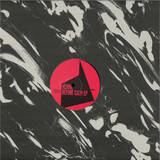
Dimi is the new solo project and label of (Dimitrios Ploumpidis) one half of techno duo, AnD.
The Dimi label will be an exploration in sound, pushing techno, rave and dance floor sounds with a raw and powerful attitude.
DIMI001 kicks off with "Time Travel". Pulsating kick drums and vocal cuts interweave, creating groove with the snappy snare and lashing hi hats. When the huge synth stab and melody drop to take us straight to a hedonistic past put looking clearly into the future.
"Bang Your Face" enters the room with a tight, hard-hitting kick and serrated rave sirens building an infectious groove before being banged in the face with the old school euphoric synth line that drops in and out of the mix creating tension and dramatic shifts in the track.
"Groove Away" a throbbing bass and kick drum drop with a sinister stab for this funky techno monster. Hard in dynamics but with a maximum amount of groove this track thumps and slams while the spaced out synth line and rave stabs help keep this funky banger grooving all the way to outer space as the alien melodies propel us for take off.
"All In" syncopated delayed synth stabs build in this track with tight rhythmic percussion and distorted kick drum. The snare enters like a punch to the face but only solidifying the swing while the main synth line opens building tension ready to destroy everything in its path. This is Dimi showcasing his direct and unique take on techno music.
Поиск:raw ten
Все
In October 2018 DJ Rocca and Almunia member Leo Ceccanti joined forces to deliver “Rhythm Collision”, a three-track EP of jangling, sun-kissed grooves, psychedelic dub disco and Afro-Cosmic flavours on Really Swing. 18 months on, one of that set’s standout cuts has been given a new lease of life courtesy of fellow Italian producer Alessandro Pasini AKA Deep 88. Since making his debut a decade ago, Pasini has earned a reputation as one of house music’s understated heroes – an artist whose hardware driven, retro-futurist take on deep house tends towards the timeless, melodic and atmospheric. With a deep love of turn-of-the-90s dream house, Larry Heard productions and sun-baked chords, his dancefloor-focused productions have often been called Balearic.
It’s perhaps fitting then that his reworks of Rocca and Cecanti’s “Ever Changing Bubbles” are as Balearic as they come. His “Balearic Mix” sets the tone, with Pasini layering trippy, dubbed-out and ear-catching elements – Ceccanti’s eyes-closed electric guitar solos, jangling acoustic guitar chords, warm dub disco bass, echoing spoken word samples, fluttering flute solos, drowsy organ motifs and the pair’s delay-heavy vocals – atop a crunchy, head-nodding, live style beat. While it deviates from the duo’s original version, it inhabits a similar sonic space – albeit in a more dancefloor-friendly way. Pasini excels himself on the accompanying “Balearic Dub”, stripping the cut back to its raw essentials – drums, metronomic bass –while toughening up the percussion and adding delay-laden instrumental snippets. It’s warm, woozy and otherworldly, with echoing voices, tactile musical motifs and restless delay trails combining to create a suitably hazy and intoxicating mood. By the time the touchy-feely flute and acoustic guitars begin to dance across the sound space, you’ll be lost in the groove and too happy to notice.
The third in the releases where label favourites are represented for today and backed with a remix / version by a contemporary producer of repute, presents 80s leftfield pop-rock band In Embrace. Appearing here are two versions of The Living Daylights, the original long version and a re-recorded live take, plus additional versions by Timothy J Fairplay.
Coming out of the midlands Post Punk / fanzine scene Gary Knight and friends formed the original incarnation of In Embrace in 1981. Picked up by Glass Records, the early, edgy live recording were re-proposed as Knight developed his 'non-musicianship' with an interest in the possibilities of the studio.
The original "Uncut" version takes it's anti-war themed vocal and lays it over a Jah Wobble inspired bassline and tense electronic rhythm. As it builds, the pressure mounts a visceral sense of oblivion of 9+ minutes of deep dubbing and repeating refrain.
Next to this the "Live In Studio" version sees the later 3 piece band replay it out in an energetic raw form that makes a worth addition. Handing the versions, plus backing tracks to Timothy J Fairplay offered a radical departure. His brooding Redub and Bonus mixes take the track to a darker place, drawing out the induced, relentless madness Knight always intended.
The Prisoners are one of the most influential bands of the 1980s, an astounding live act whose records were the opposite of what pop radio demanded in that era. Raw where they were smooth and full of character where those records needed to be blandly conformist. They hardly sold a record and yet they can count the likes of Noel Gallagher and political journalist John Harris as their fans. Steve Lamacq devoted a whole chapter of his book to his love of them whilst Tim Burgess of The Charlatans once said that at that time he only checked for The Prisoners and New Order. At least two UK hits used their arrangement on Joe South’s ‘Hush’ as their basis. ‘In From The Cold’ was the final shot at success by The Prisoners the only problem was they didn’t want it. Signed by Eddie Piller to his Stiff-backed subsidiary Countdown they were put in the studio with Troy Tate (Teardrop Explodes / The Smiths) and made this astounding album which they then disowned. By 1986 they were an incredible live band and had released three albums of their distinctive 60s influenced garage rock. A four-piece featuring Johnny Symons on drums, future Acid Jazz hitmaker James Taylor on organ, Allan Crockford on bass and backing vocals and the compellingly soulful Graham Day on vocals. Graham also wrote fantastic songs. Ten years later and they would have been lauded as heroes in Brit Pop land but the mid-80s had no place in the mainstream for a band with their influences. ‘In From The Cold’ is full of amazing songs from the hard edges of ‘All You Gotta Do Is Say’, ‘Ain’t No Telling’ and ‘The More That I Teach You’, to the mournful ‘Wish The Rain’ and ‘Be On Your Way’. It is no surprise that Mojo journalist Lois Wilson described this as her favourite album by the band. This reissue on coloured vinyl is the first time the album has been issued in its original form since 1986 when, due to Stiff’s imminent demise, it was deleted very quickly.
The Austrian electronic music label fortunea starts off the new decade
with a bang! This time they come up with a new EP by label fellow
Peletronic.
It’s called ‚Secret Escape‘ and begins with the raw and energetic title
track, that is driven by MPC-style melody chops and a grooving bassline. Definitely a lot of peak time potential here. The original track is accompanied by a remix of charismatic Australian dj- and producer Jad & The, who transforms it into an euphoric deep house weapon with funky breaks and analogue infused acid sequences.
The first track of the B-side is setting up a darker mood. It’s called „My
House Is Your House“ and comes up with spaced out elements that
complement each other into a late night/early morning club atmosphere.
Voice- and effect artefacts sprinkle through the listeners head, while kick and bassline are holding everything together. Jon Gravy makes the remix dutys on B2 and delivers a stomping alternative to the original. A funky reverberant guitar, a staccato male vocal and high pitched piano stabs gives you back these feellings of mid 1990s chicago house memories.
All in all a must have house record for this upcoming festival season.
Don’t miss out!
Support by Rainer Trüby, Mr. Ties, Ame, Tensnake, Robert Owens, Fred P, Kassian, Horse Meat Disco, Loz Goddard, Jeremy Glenn, Intr0beatz, Franck Roger, Carlo, Replika, Just Her, Sune, Orlando B, Reece Johnson
Vinyl only imprint DMK (sub-label of Dogmatik Records) returns this November with the ‘Future Funk’ EP from Alex Jann.
Alex Jann’s material has amassed a wide array of supporters over the years, from Solid Blake and Alienata to Dave Clarke, Afrodeutsche and Posthuman his strictly hardware and modular synth workouts perfectly weave emotional synthesis with raw, gritty aesthetics. He’s released several EP’s over the years on labels such as his own Censor imprint with remixes of his work by such artists as Marco Bernardi & Animistic Beliefs, multiple EP’s with Clive Henry and shared label space on Rhythm Cult alongside Deadbeat, Barem, & Aquarius Heaven.
Title-cut ‘Future Funk’ leads with crunchy 808 style bumpy drums, tension building strings and squelchy acid licks at its core, while ethereal pad swells and wandering sub bass tones wander within the groove. ‘Robotic Prayer’ follows next, with shuffled percussion, soft atmospherics and a choppy bass line smoothly carried across five and a half minutes all subtly nuanced throughout.
Opening the flip side is ‘The Return’ which employs robust drums and murky synth flutters alongside cinematic string melodies before ‘Liberation Of Mass’ rounds out the release, fusing a broken rhythm and intricately programmed oscillating synth effects to create a hypnotic end to the EP.
With their third album ‘Fluid Motion’, Melbourne’s 30/70 are set to soar into higher territory as the face of Australia’s newest wave of soul-influenced brilliance.
From the swirling opening pads of “Brunswick Hustle” all the way through to the sax-laden shimmer of “Flowers” at its close, ‘Fluid Motion’ is an instant classic, effortlessly shifting between neo-soul and languid, Dilla-esque tendencies, astral-facing jazz textures and authentic vignettes of UK club music history.
It’s a formula that those already caught in 30/70’s celestial web are fully aware of; first defined on the local heat of their 2015 debut ‘Cold Radish Coma’ and majestically expanded upon with their critically acclaimed 2017 release ‘Elevate’ on Bradley Zero’s Rhythm Section INTL (mixed by Hiatus Kaiyote’s Paul Bender). ‘Elevate’ did exactly that - elevating both the scope of the band’s sound as well as their standing in the local and international community.
Since the last record was released, the music has brought the band on world tours and to the attention of the wider public and key tastemakers alike. Strongly supported by the likes of Gilles Peterson, Tom Ravenscroft, Jamie Cullum, Matthew Halsall and Bradley Zero, the UK has become something of a second home for 30/70.
London in particular has openly embraced the soulful sounds of Melbourne, as evidenced by Gilles’ latest Brownswood compilation ‘Sunny Side Up’ which features three tracks from 30/70 members: Ziggy Zeitgeist, Horatio Luna and Allysha Joy. The record is a follow up to his era-defining survey of the UK Jazz scene ‘We Out Here’, the compilation that kickstarted a whole generation of London’s under-the-radar Jazz kids to global headlining heights. It would appear we’re about to witness this same effect take place for the Melbourne contingent, of which 30/70 lead the charge. The city’s invasion is well and truly upon us.
While London is undoubtedly in love with what’s happening in Melbourne right now, this is no one way love affair. The 30/70 collective have had their ears to the ground and plugged into the sound of the UK underground. This new album takes inspiration from the syncopation of Broken-Beat, the immediacy of Grime’s and Dub’s sonic aesthetic to create something that is a truly global amalgamation of local sounds, finessed by Allysha Joy’s instantly recognisable vocals; the rawest and realest of voices.
It’s been a busy eight months since Dampé’s debut on Dirt Crew Recordings. That time has seen the producer hold down monthly slots on Rinse FM, contribute a downtempo electronica/jazz edit to the S3A ‘Pages Remixes” EP as well as open big rooms for the likes of Surgeon and Blawan.
The intervening months have also seen the producer set up camp in the Rhythm Section studio in South East London, and the result of new access to studio gear can be heard all across ‘Garden’. Compared to the debut ‘Peach Shuffle’ this is a far more machine-led and darker listening experience. Snatches of acoustic instruments and space remain, but it’s never long before the disembodied vocals and oversaturated classic drum kits return reminding you this is music best enjoyed in the club.
‘A Basement, 10 Years Ago’ started just there. A bass line dimly recalled from a long-lost 6am jam is sequenced on a weighty analogue keyboard, while syrupy R&B vocals dance around mbira and gangsa, all slowly building and building together. ‘727 and Arp Breaks’ is a love letter to two of the producer’s favourite instruments from the studio. A TR-727 and an Arp Odyssey collide across dubbed out stabs to form some very rolling breaks.
Sunday Night Machines’ sees Dampé tame the box-of-physics that is the Arp Odyssey again with a sprawling meditation on two repeating arpeggios.
‘Garden’ is the one for the dancers. Four variations play with the same melodic theme in distinct sections, with the second variation being the deepest and most floor-ready the whole record gets. ‘France’ is a warped dub-come-hip hop beat that manages to conjure both Lil Jon and Yusef Lateef. We approached Liverpool’s finest ASOK (Lobster Theremin, M>O>S Delsin) for remix duties and to close out the record with a twisted bang. He turned in a propelling weapon that brings a whole new texture to the track listing. It’s very 90’s, very ravey and very raw, in a true IDM style.
With this eclectic mix of sounds we are entering another chapter of the Dirt Crew story and we hope you dig it as much as we do!
Kerrie makes her debut for DBA with four tracks devised originally for her high impact live sets. Other than a cut on highly regarded London label I Love Acid's 10th anniversary comp Kerrie is a relative newcomer but the ten years she has put in honing her style immediately shine through in her music. The EP ranges from Before Calm's bug-eyed, angular swagger replete with a hair raising distorted hook, to Orb Weaver's peak time techno roll via Acid8 Slider which is one of the most original 303 tracks to come out of the UK in some time and Curveball, a bolshy electro leaning stepper.
Her influences range from current UK artists like Blawan to Japanese artists such as NHK yx Koyxen & Hiroaki Iizuka and pioneers like X101, Joey Beltram and Surgeon. The running thread in her taste is a penchant for high energy, raw banging grooves with a machine funk flavour, and a love of analog sound both as a producer and DJ. No doubt this stems from her time spent working at legendary Manchester shop Eastern Bloc Records where she joined in 2013 and has worked ever since. Honing her skills through her DJ residency for EBloc Kerrie has gone on to become a regularly booked act for the UKs most prestigious underground club nights. As a live performer she has also toured the UK since 2017 with the live show being met with high acclaim. Her live set for Freerotation 2019 has been one of the festival's most talked about debuts.
One of the key figures in the Austrian house scene is definitely Roman Rauch. The MPC wizard has released quality tracks on cult labels like Philpot, klamauk, Quintessentials, Dirt Crew and Faces Records during this decade.
After 3 remixes and a collaboration with Precious K as Twinpeaks, he will return this autumn on the Viennese based imprint fortunea with a 5 track ep, called Blackout.
The A-side features the title track and a remix by New York’s Let’s Play House chief Jacques Renault. Roman delivers here his typical signature sound of crackling, dustfilled funk and r&b samples in combination with weighty rhythm sections. Jacques’ take is from it’s mood similar. But what stands out here is the addition of congas and a heavy compressed and funky bassline, that puts the dancefloor into a tribal gathering.
The B-side starts in a low-key deep house direction with „Oh Yeah“. A smooth warm bass chimes together with psychedelic rhodes and twirling low-cutted synth progressions. In contrary to this, Janefondas member Precious K takes these elements and transforms them into 2 different versions. The „More Dips Remix“ is a garage influenced party grenade, while the digital exclusive „Rawmix“ turns this tune into an exuberant, dirty warehouse experiment.
The vinyl is limited to 300 copies. There will be no repress!
Mastering by Patrick Pulsinger.
Support by Laurence Guy, Krewcial, Tensnake, Franck Roger, Loz Goddard, Baldo, Orlando B, Nice 7, Severino Panzetta (Horse Meat Disco), Replika, Tim Toh, Drei Farben House, Michael Reinboth, Clandestino, OOFT!, Sean Brosnan, Lars Berenroth
Brian Kage’s fourth release on Michigander Music “303 in the 313 EP” features 4 uniquely gritty and acid-soaked manifestations of mid 90’s Detroit. This exercise in analog monosynth mastery directly connects the grittiness of the urban landscape with the raw spirit of creative freedom.
Detroitasaurus starts the record off with a subtle prehistoric soundscape, steadily building rhythmic tension using hypnotic toms and melodic drum patterns. Razor sharp 909 hats hammer down there through the sonic mist as the journey continues to build. Shrieking jurassic trumpets cap off each of the peaking climbs to reveal metallic broken-down structures that are bound together with oscillating 303 threads and a grooving bassline.
Van Dyke Vessel features an atmosphere of textured percussion and metallic analog synths that wind around a deep square bass groove. Suddenly, truncated growling vocal samples start to collect into the catchy phrase “Let’s take this to outer space”. Swelling pads give way to squealing acid as this track transports dancers to a nostalgic melodic dimension.
Delray Dance undulates with thick bass slowly building into a body focused groove as it winds up and gives way to a rugged 303 saw with fluttering Spanish style synth stabs. Classic Detroit pads continue to swell, adding to the tension and leaving enough sonic space for melodic mixes in and out. This tune is the perfect tool to transition between genres.
Zonin breaks the mold by combining old-school electro vibes with a heavy dose of acid and freestyle hip hop. Heavy broken beats are combined with a rockin’ nostalgic bassline and layered party vocals that transports you to the center of the dancefloor on the best night you’ve ever had.
* Back on vinyl officially for the first time since 1973
* Reissue of this RARE Nigerian landmark Psy-funk album
* Comes with insert containing exclusive liner notes
* Strictly limited to 500 copies worldwide, comes with obi-strip
Tidal Waves Music now proudly presents the first OFFICIAL reissue of this landmark Nigerian album. This RARE classic (original copies tend to go for large amounts on the secondary market) is now finally back available as a limited vinyl edition (500 copies) complete with the original artwork and exclusive liner notes/pictures provided by Ofege's founding member 'Melvin Ukachi' who also supervised this reissue.
Ofege was formed in the early 1970s by a bunch of teenagers at the St. Gregory's College in Lagos Nigeria. They were largely influenced by the guitar solos of Carlos Santana, Jeff Beck & Jimmy Page while closer to home, they were influenced by the music of 'BLO' (Berkley Jones, Laolu Akins and Mike Odumosu), 'Monomono' (led by Joni Haastrup), The Funkees, and Ofo The Black Company.
Due to their vibrant combo of sweet harmonies, hooks & fuzz, Ofege would become one of the most legendary Nigerian groups of all time, with expressive sales and national stardom. At the turn of the century (and because of tracks appearing on various psychedelic music compilations) Ofege would receive international acknowledgment for being the first of their kind and the ultimate West-African psychedelic funk band!
Their first album was recorded while the band members were still in high school (average age of 16), Ofege's debut album 'Try And Love' was originally recorded and released in 1973 on EMI Nigeria.
'Try And Love' is wild and uncompromising blend of soul, funk and rock with complex and groovy rhythms. Ofege succeeded in creating a debut album drenced with fuzzy guitars, plaintive/wailing vocals and a backbeat as influenced by James Brown as it is by Fela Kuti. It's a unique, raw and beautiful take on the psychedelic sound. The ingenuity allied with the inexperience of its members makes this album a real treasure.
Beacon Sound and Jacktone Records are pleased to announce a limited edition joint vinyl release by Hugo RA Paris titled Threaded Habitat. The new LP from Paris follows two of Jacktone’s most popular releases: Mystique Youth (2015) and Horizons Beneath The Surface (2016), which appeared under his alias, Lavender.
The transition to the Hugo RA Paris moniker with this album marks a more personal shift in approach. Threaded Habitat combines ambient textures and techno rhythms to reflect tension between humanity and nature—particularly the cyclical nature of collapse and renewal. It also marks Jacktone's first collaborative release with the record store and label Beacon Sound, which has put out works from veteran experimental musicians like Terry Riley and Colleen. Beacon Sound is an important node in Portland, where Paris also lives and developed the flagship modular product for leading Eurorack manufacturer 4MS: the SWN.
The album's closing track was entirely composed on a SWN prototype and recorded in one take. In fact, much of his work is done in layers of single takes with minimal processing to preserve its raw emotion and embrace minor imperfections. As an MIT-trained engineer and physicist, working with hardware—from modulars to guitar pedals and tape loops—is essential to his process of not only making but exploring sound.
Threaded Habitat captures moments of claustrophobia and bliss in seven tracks and three accompanying videos directed by New Zealand artist Sam Hamilton. Visual art plays a central role in many of Paris’s projects, which include intricate audio-visual performances and scores for full-length films like The Modern Jungle (La Selva Negra) and its forthcoming follow-up.
The LP will be available to pre-order on July 1st with a limited, exclusive content sample pack. The handmade vinyl package features photography by Sam Hamilton and will be released July 19 through Jacktone and Beacon Sound’s webshops, with worldwide sales beginning August 2nd. A remix release will arrive later in the Fall.
When A&R get an email from a legend saying 'listen to these tracks, I think they're up your street' we knew we were on to something special.
Please welcome Biochip with their debut release 'Synthase'. Eight tracks of analog electro and acid techno, all recorded live. Very much of the Selected Ambient Works Vol. 1 ilk. Beautifully noisy, highly melodic and raw, with those emotional mid nineties IDM tendencies that very few successfully capture.
Biochip are Melissa Speirs and Julian Kochanowski from Montreal, Canada. Listening to Synthase you can tell they are huge fans of vintage analogue synths, magnetic tape and drum machines; their sound has a reassuring warmth and human feel to it.
We already can't wait to hear their next live sessions.
Archie Hamilton’s Moscow Records invites Mennie for his first solo release of 2019, featuring two spacey cuts in the form of ‘Proxima’.
Joining Moscow Records following releases on Poker Flat, Infuse and Rawax, Mennie is a regular DJ at Florence’s Tenax Club when not performing across Europe including appearances in the UK, France, Germany and Spain. Alongside Julien Sandre, the Italian producer is also one half of Jarau and together they’ve released on labels like One Records, Visionquest and Pleasure Zone.
Kicking things off, ‘Proxima’ injects acid squelches into an atmospheric background which builds to include a wonky bassline laced with echoing distorted vocals. Flip over and ‘Do That’ utilizes a similar otherworldly aesthetic, with metallic effects, electronic bleeps and rattling drum patterns, all guided by a funk infused bass.
West Coast mainstay Dave Aju continues with his own varied style and pace, coming correct once again on Circus Company
with a truly special three-tracker of straight up dance floor bombs. This San Francisco DJ/producer is a master sampler, groove
innovator and jazz influenced artist who has been with this label for ten years. In that time, he has turned out plenty of timeless
LPs and EPs that have earned him a deserving reputation as a truly cultured craftsman.
Just in time for the warm summer months ahead, these pieces are fit for maximum daytime, nighttime, and after-hours pleasure
respectively. The releas kicks off with title track ‘Love In Zero Gravity’, one of those raw undefinable Dave Aju grooves, loaded
with soul and unique musicality. It builds in bass-heavy intensity, bright epic bursts and ecstatic waves like we've never heard
from him before. Next up the voodoo stylings continue on ‘Aubergine Dream’ but in a much deeper mode, where ultra-sweaty
basement funk collides with the darkest shades of purple imaginable, all laced-up with otherworldly lysergic lines. Finally,
‘Gatadu’ rounds things out with pure class, a bouncing robust house cut done-up with generous helpings of live percussion, rich
textures, and Aju's velvety vox - the perfect recipe to keep dancing long into Sunday's sun rays, all smiles and sing-a-long vibes
for the real heads and lovers. This is another superb offering from one of dance music’s most fascinating artists.
Southern Lord announce the next Caspar Brötzmann Massaker reissues in the ongoing series, continuing with Der Abend Der Schwarzen Folklore and Koksofen this July. Read on for more insight into these albums, and for information about incoming live dates supporting Sunn O))).
Caspar Brötzmann is one of the most unique and innovative guitarists of the last 40 years. With his Berlin-based trio Massaker, he evolved a whole new autonomous approach to writing rock songs, starting from sounds that were widely considered ornamental if not detrimental ‘sonic waste’, such as shrieking feedback and droning overtones. This plethora of sounds were arranged into tracks to sound like breaking concrete, grinding metal, or bursting glass, at once monumental and threatening, impenetrable and hermetic, yet also archaically tender and loving.
Even today, as the art of noise has reached a level of sophistication that no one could have imagined 30 years ago, Caspar Brötzmann Massaker’s music is resoundingly singular. Ultra heavy riffs and beats, ominous tribal chants and a raw physical force is conjured up by these three sinister and proud minds of their era. Their unhinged, unified stream of energy is captured on these remastered reissues and the results are thrilling.
Koksofen (which translates as blast furnace), originally released in 1993, has become one of Massaker’s most popular albums. Like it’s predecessor, ...Schwarzen Folklore, the album took shape in Massaker’s rehearsal room below the Berlin subway station Schlesisches Tor, and was recorded at Conny Plank’s studio near Cologne, with Plank’s former associates Ingo Krauss and Bruno Gephard producing.
There’s a different kind of intensity to Koksofen. The features of Massaker’s sound are in full bloom. Mountainous noises tower up and crash down, and tormented sounds rise from ominously seething grounds, haunting the entire song-scape. The feel of doom and dread hangs heavily over the five songs, and the title song rumbles, shrieks and wails, plagued by Caspar’s guttural growls of war, suffering and death.
Caspar recalls one anecdote from shortly after the original release whereby Bassist Edu Delgado called him asking to turn on the TV, thus discovering that “Hymne“ was being used as background music to a report about the death penalty in the US. A different kind of intensity indeed.
Reflecting on the album to this day Caspar remarks “Koksofen is still a mystery to me,'' he continues “I can still feel the troubled times in these songs.” - the effects are certainly potent for the listener too. And the album undoubtedly affirms Massaker as the fiercely original and compellingly raw musicians that they are.
Ahead of his second artist album on his own Millionhands label in July, Tee Mango teases with a fantastic first EP taken from it. The album finds the UK artist stretch himself with a dazzling array of soul drenched, fully fledged songs featuring his own singing and that of Detroit legend (and Moodymann collaborator) Amp Fiddler.
The sound, very much influenced by early Prince and even a little Bon Iver, combines effortlessly with that loose sampled MPC-house feel that you would associate with a Tee Mango production. It also comes with a seal of approval from Radio 6 Music legend Gilles Peterson and after EPs on the likes of Aus, Clone and Local Talk in recent years.
Opening up the EP, Amp Fiddler features on ‘Feels Like Whatever’. Dancing Rhodes keys, ooze jazz charm and float atop a simple house beat, while the Detroit legend’s emotive raw soulful vocal directs proceedings.
The heart breaking ‘No More Tears’ is an introspective sad soul song that shows another side to Mango’s skills. Tender chords, downbeat drums and vocal hums and coos all melt your very being. Last of all comes the dazzling ‘Lay Down (Disco Mix)’ with its slapped funk bassline, finger clicks and squelch synth work all topped off by an effortless
falsetto. This is a fantastic introduction to the full length to come.
Aggelos Baltas is a veteran of the global electronic music scene, responsible for a handful of celebrated EBM 12”s as Dream Weapons, and a particularly heady and open-ended brand of krautrock as Fantastikoi Hxoi. His newest project, Anatolian Weapons, was conceived as a way to bring together these two seemingly mismatched concepts, with the polyrhythmic percussion and wailing tones of Greek folk music serving as their unlikely bonding agent. His output garners praise particularly around the Golden Pudel scene, such as Vladimir Ivkovic, and Phuong Dan. Lena Willikens, from the same circle, included Baltas’ track “Disillusioned” on her Dekmantel Selectors compilation in 2018.
But where much of what Baltas has released as Anatolian Weapons is instantly recognizable as dance music, To The Mother Of Gods—Baltas’ debut album for Beats In Space—is something else entirely. Created in tandem with Greek folk musician Seirios Savvaidis, it is a work of simultaneous collaboration and subtraction whose meticulous construction becomes more apparent with every listen. An album-length exploration of what happens when the principles of dance music are applied to pre-digital musical modalities. It is a record of psychedelic folk music that has more in common with Kikagaku Moyo, Minami Deutsch, and the Habibi Funk label than it does with anything else Baltas has produced under any alias. It’s difficult to imagine this music in any kind of club setting.
And yet, it’s very much the work of a DJ. Baltas initially heard Savvaidis’ music through a friend, and was absolutely amazed. “It was his very esoteric, pagan [music and] beautiful lyrics that grabbed me,” he writes. Seirios is a composer and performer of traditional Greek folk music with a growing discography of regional psych-rock gems. Baltas reached out to collaborate and the seeds of To The Mother Of Gods were sown.
Savvidis contributed stems of ten songs, which Baltas deconstructs and rearranges with appreciation of the ancestry of their lineage and of the deceptively ancient eerie, droning qualities inherent in the style. Occasionally augmenting Savvaidis’ recordings with his own, Baltas treats these elements as if raw materials for an architectural process.
To The Mother Of Gods showcases Baltas’ arrangement skills. He treats Savvaidis’ songs as landscapes, filling them with slanted, droning light and setting the singer’s vocals in dead center. His years behind the decks have given him an intuitive understanding of dynamics—drums crest and recede like tides, snippets of bassline repeat and swirl. He knows how to entrance, and when to push the music from the head to the body. Opener “Taratchi Katarratchi” (“Stormy Cataract”) is sung as a spell to ward off the fear of death, but Baltas’ orchestration demonstrates that dancing is an equally effective way of dispelling the darkness. The beat he assembles from Savvaidis’ playing recalls the late-night ecstasies of Primal Scream circa Screamadelica.
To The Mother Of Gods is a reminder that folk music and dance music are both powered by their audience as much as the musicians themselves. Savvaidis’ lyrics echo pagan Greek themes, touching on what Baltas calls “the magic of nature.” At times, as on “Kalesma” (“Invitation”), this can feel incantatory. Savvaidis chisels his vocal melodies into hard, clipped syllables, their cadence recalling Gregorian chant, and yet Baltas cloaks these details in washes of distortion. “Ston Stavraito” (“In Stavraithos”) is delivered with a lamentive tenderness that Baltas swells into a prideful stomp, immersing Savvaidis in marching drums and distant vocals that form a resilient protest-song. To The Mother Of Gods is a testament to the ongoing and innate truth that music can take us beyond ourselves. That repetition and drone can shepherd us to a liminal space beyond thought and rationality, where the wall between perception and reality does not exist. Call it spirit, if you want, and watch as it courses its way through modern-day dance music, mid-century psych, and the ancient sounds of the anatol.
Anatolian Weapons’ To The Mother Of Gods will be available from Beats In Space on June 14, 2019 in limited vinyl and unlimited digital forms.
Artist Highlights
• Aggelos Baltas is an Athenian music producer creating and Djing under the monikers of Anatolian Weapons, Fantastikoi Hxoi, and Dream Weapons.
• The Anatolian Weapons moniker is an outlet for Baltas to explore global music—from African to Anatolian and Middle Eastern, while also incorporating sounds from his home country of Greece.
As a winemaker hailing from the Palatinate, Florian Hollerith understands a thing or two about vintage. It's something that also comes through when you sample his music - rich, full bodied with just the right level of acidity. 2018 was already a good year with Ohrenzirkus featuring on both Sven Väth's Sound of the 19th Season mix CD as well as this year's Dots and Pearls vol. 5 compilation. Florian certainly announced his arrival on the scene in style, so it's only fair that he gets the chance to demonstrate his full range of skills on his very own Cocoon Recordings release. 2019 however, has a darker, more complex flavour...
Florian certainly knows a hookline when he finds one. On the EP's title track Perlas, he's working from the inside out with complex layers creating a vortex of sound. This dense sonic mesh is playful yet dangerous, with ethereal voices and jagged chants adding to the disorientation of the opening exchanges until the congas and skipping bassline give us something to hold onto. The dance floor melts under our feet as a raw, tripped out groove takes hold before the bass suddenly morphs into a brassy acid line that spreads its wings and soars. It's music for the headstrong, a celebration of the timeless tribal ceremonies that have come to define us.
Love Summer adds a contemporary twist to the melodic joys that drenched the early nineties in pure ecstasy. The soulful vocals soothe the mind as horn stabs punctuate the sensual groove, generating power and passion in equal measures. It's a straightforward approach, revolving around a familiar yet eminently seductive riff that just keeps on rolling, propelled forward by the force of its own momentum. There's no need to fuss when you hit on a winning formula like this.
More retro futurism abounds on Electro Indianer as arpeggiated bleeps usher in another vast, sprawling soundscape designed to induce a collective trance on the dance floor. Whistling, circular effects wash back and forth increasing the tension notch by notch as we're led deeper into the wormhole. Finally, the track deconstructs slightly, creating enough space for classic Casio-style bleeps and percussion to embellish a beautiful blissed out ending that trails off into the sun rise, as ancient Native American pipes pick out a haunting melody in the distance.