Matthew Halsall first met the La-based, spiritual jazz vocal legend, Dwight Trible(Kamasi Washington, Pharoah Sanders and Horace Tapscott) at the Joy of Jazz Festival in South Africa back in 2015, when a chance encounter backstage led to Trible sitting in with The Gondwana Orchestra for an impromptu reading of the classic Pharoah Sanders and Leon Thomas anthem 'The Creator Has A Master Plan'. In 2017 they released the deep, soulful Inspirationsalbum together (GOND017) but inspired by their first meeting Matt arranged some classic Pharoah tunes for Dwight to revisit. This then is The Gondwana Orchestra featuring Dwight Trible, Colors: a 4 track vinyl and digital only EP featuring brilliant new versions of Colors,The Creator Has a Master Plan, Love is Everywhereand You've Got to Have Freedomand featuring the Gondwana Orchestra with pianist Taz Modi, bassist Gavin Barras, drummer Jon Scott, harpist Rachel Gladwin and Matt himself on trumpet.
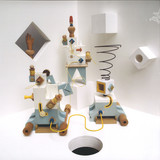
Packed in a distinctive bright orange Gondwana Records sleeve this is the second in a collectors series of spiritual jazz limited-edition EPs set for release in 2018 as part of Gondwana Records' 10th anniversary.
Search:re arranged
Luciano has arranged a special series of four releases as part of the celebrations for the fifteen years anniversary of his own Cadenza Records, launching the first one to begin the festivities. Each episode is coming out in a different season of the year; the first one, with the catalogue number 118, is the chapter dedicated to the summertime and contains 5 enchanting tracks with an exquisite sound. Thisseries is just one of the astonishing surprises that Luciano has set aside for the birthday of his beloved label.
The show begins with "The Amazing Lilou", a crispy ariose tune with elaborated percussions and calypso-flavored synthesizers. "Hiding Hearts" is a latin prelude with pleasant guitars and restful melodies, flowing with joy and peace. "Nabusima" is another Caraibic spell, with noteworthy carefullymixed drums and elevating harmonies. "Magik Mechanics" explores complex broken beats andelectronic textures, drawing a colored narration in between a fairy tale and a sci-fi movie. Finally,"Tirana del Oriente", as disclosed by the title, is a trip into the Oriental ardent magic. A collection offive long summery compositions to accompany our hot pleasing days from the dawn till the dusk,holding our hands during a never ending daydream.
The music on this EP was conceived in China, between 1989 and 1993. The original tracks were mixed to DAT in real time, in a small neighbour-proof studio inside my apartment in Macau, a 19th floor with a view to the hurricanes. There's a small, unexpected or improbable story behind each track, some little magic fused with the local atmosphere, certainly guaranteeing their lasting authenticity 25 years later.
TAIPEI DISCO
Late 80s Guangzhou was an exotic city where the traditional past coexisted in harmony with the present and even already with the future.
I'd rather spend my weekends in Guangzhou than diving into Hong Kong consumerism - as most ex-pats in Macau did. I took a cab at the border and travelled 150 Km through chaotic roads with family and friends until reaching the hot, humid, mega South China metropolis.
We ate on street joints in the evenings, went on to a karaoke bar and ended up at Taipei Disco, the only proper club in town. All the others were inside hotels and played generic music or they were seedy, sleazy, smoky cabarets.
Taipei Disco used to be a cinema and played cantonese pop music and anglo-saxon pop/rock (that was new). The spacious dance floor was generously lighted, the atmosphere was airy and modern. Boys and girls were in the habit of dancing in pairs, one in front of the other, observing a respectful yet sensual distance. When the girl took a few steps back, the boy went along and vice versa. With legs and feet (more than the upper bodies) synchronized with the music, they never exceeded in extroversion. Cool.
I always carried a MicroComposer and a portable DAT recorder in my travels through China and weekends in Canton. Any spontaneous musical idea was imediately recorded and memorized. The MicroComposer allowed multitrack recording, which was very handy on the road. Based on the emphatic choreography of Taipei Disco's dancers, i started to compose a rhythm track while sitting at a table, with headphones, listening to Cantopop in the background. As if by magic - not a rare occasion in music - everything began fitting together. Odd as it may seem, the track ended up sounding more germanic (Kraftwerkian) than Cantonese pop.
The story ends in a circle: the cantonese DJ at Taipei Disco, whom i used to ask to play certain records, wanted to play my music at the disco when it was basically only just a rhythm track and little else. From a cupboard under his set up he took out a battered keyboard (unrecognizable brand) and invited me to play over the track with the available sounds on the keyboard. The circle was complete, with Cantonese clubbers happily dancing forwards and backwards, as if it were another Cantopop hit.
I didn't get payed but the house offered us free ice cream cups in which little Portuguese flags were sticked.
The track would be finished later, in studio, with vocoder strings ensemble and synth solos.
TAIPEI DISCO (LIVE)
The live version of 'Taipei Disco' was recorded during a live set at the China Pop venue, in Macau, 1993. China Pop was a rock club built in the ample space of an old fishing warehouse, located in the labyrinthic Inner Harbour area. It was decorated with large Mao Zedong and Cultural Revolution posters and memorabilia and had a unique atmosphere, fusing Pop Art with film noir. We began our performance at 1AM, pretty early for Macau's nightlife standards. We were lucky. An audience showed up. And in Macau there were always several friends among the audience, which tranformed a musical performance into a relaxed party.
The atmosphere was particularly surreal on that night. The front row was dominated by French Crazy Horse dancers, a sort of Oriental Moulin Rouge. The girls had finished their last performance of the evening at the Crazy Horse and were still energized from their show. During our performance, right in front of us and perfectly synched, we could hear the famous irreverent screams of can-can dancers. You always had to expect the unexpected in Macau.
RED MAMBO (IMPROMPTU)
I was familiar with the Portuguese-speaking African countries well before having lived in China. I found myself returning several times to one in particular, always attracted by its magic and very distinct, identitary culture and music: Cape Verde.
During the early years of DWART a lot of the inspiration for drum machine rhythms (Roland's TR series) came from African music, especially from new musical trends that gained full autonomy with Cape Verde's independence from Portugal, as was the case with funaná.
I had the privilege of having known and befriended some of the greatest Capeverdian composers, musicians and singers during the 70s and 80s, such as Bana, Luís Morais, Cesária Évora, Paulino Vieira, Chico Serra, Tito Paris, and historical bands such as Bulimundo (ambassadors of funaná) and Os Tubarões (great innovators of morna, coladera and funaná, with the sonic impact of an afro-beat big band).
When Luís Filipe de Barros began playing Os Tubarões for the first time on Portuguese radio, that was the turning point for African music in Portugal. The 'Tabanca' album was so widely heard and talked about that it quickly got a Portuguese release through one of the big labels of the time.
The mystic of this band from the Santiago Island would reach the East. Os Tubarões played to a packed room in Macau in 1992, and after the bombastic gig we arranged a dinner and party at my place.
We ate and drank generously and the moment came for a jam session at the small studio on the 19th floor. Because Os Tubarões didn't all fit in the studio, we recorded an impromptu with only three of the musicians: Tótó Silva (electric guitar), Mário Russo Bettencourt (bass) and Zeca Couto (piano). And there we were improvising without barriers, suddenly detached from cultural roots, labels and constraints, a truly unique moment. The track is now being released exactly as it was recorded, imbued with the real communion between the musicians. And it could only be titled 'Red Mambo'. I wish to dedicate it to the memory of Ildo Lobo and Jaime do Rosário, founders of Os Tubarões, sadly and too soon departed from the land of music.
Underworld And Iggy Pop Announce Details Of A 4 Track Ep, Teatime Dub Encounters, Due For
Release On July 27th Via Caroline International.
While Overseeing The Soundtrack For T2 Trainspotting, Underworld's Rick Smith Arranged A
Meeting With Iggy Pop In A Room At The Savoy Hotel On London's Strand To Discuss Working On
Collaborative Music For The Filmhe first track from Teatime Dub Encounters - Bells & Circles - was premiered live as part of
Underworld's recent headline performance at the BBC Biggest Weekend Belfast. A second track -
I'll See Big - is streaming everywhere now. Something of a flipside to Bells & Circles, I'll See Big is a
wash of gorgeous ambient sound that features Iggy recounting how friends - however
dysfunctional - have saved him from a lifetime of bad decisions. The lyric for I'll See Big was
inspired by a conversation Iggy had with Danny Boyle about the subtext of both Trainspotting films.
Essential repress of stunning 1977 Disco-soul rarity, written, produced and arranged by the incredible team of Norman Connors, Reggie Lucas and James Mtume. Vitamin E, a a short-lived group that yielded only 2 singles and one long player during their time certainly knew who to work with in the studio. 'Kiss Away' is an absolute belter, raw and raunchy Funk riffing gives way to some ultra smooth, grown-up stepping Soul awash with some stellar string arrangements. This one is definitely for the dancers, it simply glides along with the utmost class and sophistication, an incredibly uplifting and funky cut that features here in it's 1977 special disco version guise as per the original Buddah Records release. On the flip is a cool cover of Neil Sedaka's 1974 hit 'Laughter In The Rain' - a sweet version, no doubt, but the real winner is the stellar A-side. Reissued, remastered and re-presented for 2018 by Above Board distribution - 100% legit and licensed.
Crew member DJ Format has joined forces with MC Andy Cooper to produce a special little number for 45 Live Records. 'Get On
That', taken from Andy's most recent LP has been completely re-worked into a brand new track with Matt Format adding his
superb production skills. It's classic Format material, super funky, deftly arranged and aimed squarely at the dancefloor. Throw this
donut on and watch the floor ignite!
This 45 comes complete with an instrumental on the flip, ready to get busy in the mix if you're grabbing doubles.
The Splinta Experience was made entirely by hand. And a foot. The record is the result of Splinta's turntable tricks and layering. It's simply drumming and scratching arranged on the fly with a loop pedal, with added effects from a basic, pocket-size bass module. Low in fidelity and high in humming, buzzing and hissing. No SP-404 effects needed.
This is scratch music that takes us to the Electric ScratchHappyLand. It might as well be a tribute record celebrating 50 years of Jimmy Hendrix Experience's last album. And 22 years of Kid Koala's greatest mix-tape of all time.
Splinta's a Slovenian. He's been deejaying & juggling for more than a while. This is his debut on plastic.
Sleeve illustration, design and print all also hand-made by Splinta. Really wholesome hiphop shit.
This very high quality double-sided 45 features Billy Byrd's throaty vocals on two classic songs. Top drawer modern soul with an irresistible heavy beat, courtesy of producer Calvin Arnold, the Georgia native, known for his pretty diverse and very well crafted soul and funk output. The music was arranged by Tommy Stuart & Frankie Wynn. Most likely it was Arnolds influence that gave this record such a solid, intense rhythm. Yes, it's the beat that really counts. Few records of this nature have such an incessant, thumping groove that has so much appeal to the dancefloor. Upon its release in 1973 this record went nowhere and has remained extremely scarce ever since. At times, pristine original copies on the Scream Records label sold for up to $2000... Now this modern soul rarity is officially reissued, fully licensed and restored from the original master tapes and available for everyone to hear.
- A1: Freeway - In
- A2: Everything That Shines Ain't Gold
- A3: You're My World
- B1: Coming Together
- B2: I Don't Want Nobody
- B3: Baby Don't Go
- B4: Freeway - Out
Maurice Moore's 'Maurice' is remastered from the original 1/4" studio tapes and available as an official limited vinyl reissue for the first time exclusively on Backatcha Records. 7-track LP with artwork and insert. Limited to 300 copies with original cover portrait by artist Clarence "Pencilman" Pointer.
Recorded in March, 1976 at Pegasus Studios in Maurice Moore's hometown of Warren, Ohio, 'Maurice' personifies what Moore calls the 'Town Sound'. A family soul funk affair with no label constraints, absorbed in the local scene and written, produced and arranged by himself. Moore originally pressed a handful of LP's to pass around sparingly as a demo with only a couple of copies ever re-surfacing. Now made available again from Moore's master reel via London-based Backatcha Records. Includes the sought-after uptempo percussion-led backstreet funk of 'Freeway' and the original cosmic synth-ladened slow burner 'Everything
That Shines Ain't Gold' (the blueprint to the alternative version appearing as a reissue in 2017 on Floating Points' Melodies).
Fresh on Francis Harris' Kingdoms imprint comes Rasmus Juncker's 'Ophold' - six tracks of sublime atmospheres and textures. The Danish musician, sound composer and DJ fits perfectly with the label's aesthetic, joining the dots between ambient, leftfield electronica and modern classical.
Juncker has a background in studying jazz drumming and has been playing improvised music within the jazz domain for many years. He also started to DJ at the age of 14 and was introduced to the world of electronic music production at the same time.
When Rasmus started to think about his debut album he spent several months trying to find his own way to combine his favourite musical influences, improvisation, electronics and classical music. 'Almost a year later', Juncker says, "I went to a sensory deprivation floating tank in Copenhagen while researching for another performance and while I was lying there, floating in the water, deprived from most of my senses, I got the idea to do something drastic in my musical process. Philosophers like Immanuel Kant describe this deprived state as a mental 'Cesura', which became some sort of guideline for the album."
So Juncker decided to start working on the album by leaving the process as well as the final result completely open. 'I wanted to create sounds and music that I had no idea what they would sound like, but would feel like a mental 'Cesura', an 'Ophold' (in Danish)' he states.
He invited musicians, one after the other, to his studio. "I had an electronic musician to improvise patterns and new interesting sounds based on my experience in the deprivation tank. I chose some of the takes and some weeks later I invited a jazz guitarist to listen and improvise on top of what he heard. Then a classical string quartet and a double bass player came to my studio months later, and finally I recorded myself on percussion and drums.
Throughout the recording process I've been experimenting with special microphones in various setups, used noises from the recordings and the room became absolutely essential for the pieces." Juncker states.
"The material I used was all first take improvision which I arranged, layered and edited into compositions. The final pieces were mixed by Andreas Pallisgaard with the same improvised and experimental approach of the recording and the production. None of the musician met each other, but their sounds developed into something completely fantastic I think. The presence of the acoustic instruments and the depth and complexity of the synthesized layers gave some kind of an indescribable sounding music from another galaxy.
Track by track:
'Norddrum' starts proceedings - ethereal, grainy sounds merge and disassociate, as a distant rhythm gradually finds its way to the fore.
The second track, 'Sora' , clocking in at under 2 minutes, is an interlude full of strings, pads, and percussive hits, rich in feeling. This strong sense of sound design and seemingly disparate sounds woven together into a whole carries through into 'Eksotisk Tirsdag' - the strings, plucked instruments and electronics harking back to 4th world adventurers like Jon Hassel and Brian Eno.
'Cyklus' dives into drone textures, pulsing and modulating to create an unearthly soundtrack.
'Havekunst' is another 2 minutes interlude, this time bringing a fully charged rhythmic barrage to the front.
'Cesura', the final track is in essence the EP's centerpiece - a sprawling 8 minute journey that traverses tense, fibrous sections and on into pulsing modular passages, before opening up into glorious moments of wonder and brightness. It's a hugely bold yet fragile endeavour, in line with the whole release.
Sing a song fighter have never been more proud and happy than to finally announce and release this unissued and unheard fantastic recording South African in exile Johnny Dyani was one of the greatest bass players. Played with Don Cherry, Chris McGregor, Archie Sheep, Dollar Brand / Abdullah Ibrahim etc etc. He also made many great albums as a bandleader. And a few rare minimal albums where it was mostly him and his upright bass. He died way too early, in 1986. Karl Jonas Winqvist (Sing A Song Fighter) ranks some of Dyani's works ("African Bass", 'Witchdoctor's Son" with Okay Temiz and "Good News From Africa', with Dollar Brand) as "the most natural, creative musical force there is'. KJW investigated for years if there was more recorded Dyani material waiting to be heard. And where After e-mailing endlessly with the National Radio Museum in Switzerland he finally found what he was looking for.In 1978 graphic designer Niklaus Troxler arranged the great Willisau Jazz Festival in Switzerland. A lot of legendary artists like Max Roach, Jan Garbarek, Elvin Jones and Don Cherry were performing, and Johnny Dyani was one of them. He did this rare solo concert with some of the material that two years later would end up on his great album "African Bass". This LP contains the concert from beginning to end, showing Dyani at his very best on piano, gong, bass and vocals. Spiritual, adventurous and truly free,beautiful music.Gatefold cover, with extensive liner notes from Francis Gooding and Niklaus Troxler
The legendary 1972 album from Celia, arranged by Arthur Verocai.
Célia Regina Cruz recorded four self-titled albums for Continental between 1971 and 1977, 'Amor' in 1982 plus several more before she sadly passed away late in 2017. Célia was a Brazilian vocalist who worked frequently with master arranger-composer Arthur Verocai in her early years and many other heavyweights
over the course of her extensive career.
This, her second self-titled LP from 1972, features an all-star line up, including Arthur Verocai, Erasmo Carlos, Roberto Carlos, Marcos Valle, Antonio Carlos Jobim, Nonato Buzar and Vinicius de Moraes, among others.
Célia's version of 'Na Boca do Sol' - taken from this album - is arguably her most well-known and well-loved song. An incredible take on Verocai's original, featuring waling fuzz guitars, strings, piano, horns and drums.
Needless to say clean, original versions of this record now change hands for
silly money.
Official reissue in replica of original gatefold artwork.
Re-mastering by: Ray Staff at Air Mastering, Lyndhurst Hall, London
This jazz recording is considered as the 'magnum opus' of master "drummer extraordinaire'', composer, arranger, producer, and leader Norman Connor's in a career that has spanned 4 decades. This recording is what many will consider the debut of the legendary vocalist Dee Dee Bridgewater who has since gone on to a brilliant career. Connor's put together an all-star group with Herbie Hancock and Onaje Allan Gumbs on piano and Fender Rhodes, Dr. Eddie Henderson on trumpet/flugelhorn, Carlos Garnett on tenor/soprano saxes, Gary Bartz on alto/soprano saxes, Buster Williams on bass, drummer/vocalist Bill Summers and Kenneth Nash on percussion, and effective, crucial cameos by master flautist Hubert Laws. On the song, "Love From the Sun'", Connors added Nathan Rubin on violin and Terry Adams on cello.
The 'best of the best' begins with the exotic theme of Hancock's "Revelation", doubled wordlessly and beautifully by Ms. Bridgewater over Williams bouncing ostinato bass pattern with flights of fancy from Hubert Laws on flute, and superb, luminous solos from Henderson's exotic trumpet, Garnett on soprano, and Hancock on Fender Rhodes. Garnett's "Carlos II" is another great composition with remarkable solos. Connors' own "Drums Around The Worlds'" is influenced by African and latin rhythms with emotional vocals from Summers and a drum-only section that builds in intensity. One of the high points of the album is Dee Dee Bridgewater's awesome, glorious vocalizing on Richard Clay's lovely "Love From The Sun", in one of the greatest performances in her career, arranged by Gumbs. Elmer Gibson's "Kumakucha" (The Sun Has Risen) is a blazing display of uptempo musicianship by Connor's driving drums, the propulsive congas of Summers and Nash, and exciting solos from Bartz, Henderson on trumpet, and Hancock's furious piano solo. The set ends with a marvelous "Holy Waters" composed and arranged by Garnett in a scorching performance by Bridgewater on vocals, Garnett unleashing one of the greatest solos in his storied career, followed by Gumbs' astute solo.
My Highest Recommendation.
By John Braswell
Discover Le Deltaplane, fifth album by Andre Solomko, and third produced on Favorite Recordings, pursuing a collaboration that started more than 5 years ago.
Born in Ukraine in 1965 and now based in Finland, Andre Solomko is primarily a rich and engaging personality, but above all, a brilliant saxophonist, composer and engineer, whose contagious passion cannot leave anyone indifferent. After beginning a meteoric career in USSR, fate led him to Finland, where he started the adventure Vinyl Jam, a label / studio / group. It resulted in two self-produced albums that will capture the attention of some international collectors, including Pascal Rioux (founder of Favorite Recordings). Between 2012 and 2014, they released 2 albums together, Où es-tu maintenant and Le Polaroid, hailed by many tastemakers and meeting notable success in Japan.
Following Le Premier Disco Sans Toi, an acclaimed single released earlier this year and unveiling two new compositions with Disco flavors, Andre Solomko and Favorite Recordings also proudly present Le Deltaplane. Fully composed and arranged by Andre Solomko, the 6 tracks of the album are deeply infused with his longtime passion for Jazz-Funk and Movie-Soundtracks, this time also injecting more influences from WestCoast and Modern-Soul music.
Andre's backed again by a team of great musicians, recording and producing the album in analog like he always did. As for vocals and lyrics, he teams up with Charlotta Kerbs, a young emerging and talented singer from Helsinki.
Andre Solomko, an artist who spreads love like in the good old days!
2018 repress of the debut full length LP from Spencer Doran and Ryan Carlile's Visible Cloaks project. Initially recorded in 2013 and issued on cassette by Sun Ark in 2014 (as Cloaks), this first offering uses conceptual processes to weave many of the same threads as their later work; synthetic FM tones, tuned mallet percussion, and electronically modulated voice, all arranged in a gossamer web, spun with neon electronics. On this release the duo set off on the sonic journey they are still on today, refracting their influences through East West feedback loops, augmenting traditions with technology. Remastered 45rpm DMM version with additional surprises!
Radical Connector was originally released in 2004 and is now fnally back on vinyl. This re-issue is pressed on mixed splatter color vinyl and presented in a high gloss jacket with free download card.
Though reference points like Daft Punk and Prince have rightly been thrown around, Radical Connector is in fact a strange album that doesn't sound like much else.' - Pitchfork
Mouse on Mars is recognised as one of Germany's most defning and versatile electronic music projects. With their
anarchic mixture of sound that oscillates between uncontrollable chaos and meticulously arranged structures,
Jan St. Werner and Andi Toma have forged a unique musical language, which is readily decomposed by the
unpredictability of its myriad mutations. Free from schools of thought, genre conventions, and from the constraints
of the music establishment, they have worked under the Mouse on Mars alias for 24 years, mapping their own
idiosyncratic trajectory through a no man's land between pop, art, club music, and the avant-garde. - Jan Rohlf
Sexy robot vocals slip and slide all over juicy squeals, raindrop plops, and jungle-thick beats.'
- Entertainment Weekly
Stirring songs drift out of its frantic aural mishmashes, fnding a controlled center amid all the dizzy spin.'
- AV Club
Mouse on Mars have a gift for making electronic bleeps and buzzes sound like tangible objects that bounce,
bend and collide in physical space.' - Rolling Stone
A thrilling 9-song set, Murmurations is as perfectly pitched for headphones as it is for clubs, named after giant cloud formations of starlings and themed around the stunning emergent behaviors that appear within them. To mirror these movements in the sonic landscape and visuals of Murmurations, SMD's James Ford and Jas Shaw collaborated with the celebrated Hackney-based vocal collective The Deep Throat Choir, as well as creative directors Kazim Rashid of ENDLESSLOVESHOW (Aphex Twin, Flying Lotus, Hudson Mohawk) and Carri Munden.
Finding time in between Ford's work as a producer and Jas' club gigging last year, the duo arranged a session in Shaw's countryside studio. Via an introduction from a friend of Ford's wife, The Deep Throat Choir's director Luisa Gerstein and SMD began swapping some production and melodic ideas. They decided to bring the whole East London-based choir into the studio to experiment, and the results were intense. Jas says, 'Listening to them moving their voices around a tone, altering the timbre, making chords, was like working with an incredible new synthesiser.' Rashid and Munden explore related ideas centered on kinetic energy and communal movement throughout the visuals of Murmurations. Rashid says of the collaboration, 'We were both having discussions around the purity of collective human experience and how transcendental this can be. Techno and the dance-floor is one of the last true expressions of this euphoria.'
From the beat-less introduction 'Boids' onwards you can hear uncanny patterns and sounds rising up from the sea of voices -- not traditional chords or harmonies, but complex interference patterns that play tricks on the mind and merge perfectly with SMD's distinctive synth tonalities and instinctive dancefloor nous. At times you might hear hints of Bulgarian choral music, or Cocteau Twins, or avant-garde composers like Iannis Xenakis or Pauline Oliveiros - but really, thanks to the creative freedom of SMD's working methods, it is a sound completely of its own, something all too rare in an age of retro and reference.
Ford and Shaw still have the same love of pure sound, human harmonies and electronic possibilities that they did when they first met at university, and it's clear that their career path has allowed them to nurture this love and express it as vividly as ever before.
Faitiche releases the album Improvisations And Edits, Tokyo 26.09.2001 on vinyl for the first time. For the original 2002 CD on Soup-Disk and Sub Rosa (Audiosphere), Jan Jelinek and the Japanese trio Computer Soup (Satoru Hori - trumpet, Osamu Okubo - toys & electronics, Kei Ikeda - toys & electronics) presented eight tracks all recorded one afternoon in the trio's living room in Tokyo. They are excerpts from a joint group improvisation that subsequently underwent rudimentary editing, on which Jelinek and Computer Soup worked separately.
Jelinek met the three musicians at his first concert in Japan in 2001, at Tokyo's Yellow club, where Computer Soup performed as the support act. Delighted by their free improvisation on pocket-sized electronic toys, trumpet and oscillators, he arranged to meet Hori, Okubo and Ikeda a few days later for a session at their apartment. The resulting three-hour recording, made on their living room floor, formed the basis for Improvisations and Edits. A few days later, Jelinek returned to Berlin. Over the following months, they separately chose passages from the recording that were then edited and assembled into an album.
Formed in Tokyo in 1996 as a quintet (including Shusaku Hariya and Daisuke Oishi), Computer Soup began by performing with acoustic instruments on the streets of Shibuya. Ikeda und Okubo soon switched instruments, and from then on the group's minimalistic but densely woven sound was defined by electronic toys, oscillators and Satoru Hori's trumpet. Their first album was released in 1997 on the Japanese label Soup Disk. Eight further releases followed.
From the reviews of Improvisations and Edits, Tokyo 26.09.2001 in 2003:
"The mind-blowing first track Straight Life is perhaps the best example of what the album has to offer. Jelinek's trademark smears and washes occupy the midrange, like ghosted images of Joe Zawinul's electric piano floating quietly in the wind. DSP jazz modes are set against a walking bassline (possibly computer generated) and a gently tooted trumpet complete with Harmon mute, a dead ringer for Miles Davis' Prestige-era ballads. The effect is something like a three-dimensional film, with different realities on each layer, images of what jazz was manage to interact with a real-time demonstration of all it could be."
pitchfork, 2003
"Improvisations and Edits is a warm and mellow Ambient release with beautiful glitch fragments, static noise bursts and real trumpet intersections. However, there are times where it is the exact opposite, mainly effect-laden, overdriven and bouncy with a lack of melodies and focus, so be aware of these specific tracks."
ambientexotica, 2003
"Often deliciously dreamy and hazy, Improvisations and Edits is like listening to an exceptional instrumental jazz performance while half-conscious or under some sort of chemical influence. Computerised blips and bleeps, loops and treatments and murky sonic skips curl up around desolate horn notes and scattered instrumental noises that culminate in elegant music."
exclaim.ca, 2003
A new duo launches by the name of Ghost Vision. Joining forces with an introspective, uplifting debut slice on Kompakt, the pair are two well-known figures Thomas Gandey aka Cagedbaby, member of Matom alongside Matt Edwards, and Daniel McLewin, half of UK-based production duo Psychemagik. Fruit of these blissful moments when no imaginary wall obstructs the vision and the stream of consciousness gives up to the entrancing magic of the creative flow, 'Saturnus' is an upright mano a mano between two musicians and their gear, unchained from all preconceptions and biases; real (machine) talk as the hip-hop heads would say.
Straight soul oration poured off the cosmic scapes generated by a good old Moog Voyager, '70s string machines', Oberheim OBXA, 303, Space Echo and the too little-known and equally little-used Korg Lambda, Ghost Vision's debut EP traverses remote kosmische-indebted expanses but hits close to the core with its deft mix of slow-burning spectral funk, textured outerspace pads and further stirring heart-searching harmonics. Subtly arranged yet leaving maximum room to the lively force of its original layout, it is a lovingly crafted piece of emotive and psychedelic magnitude that's seamlessly given birth to. Enter the greater deep and important world of Ghost Vision.
A wonderful companion piece to the totemic Fed, we proudly announce the first ever vinyl edition of Korp Sole Roller by Plush. Liam Hayes' magical fourth full-length LP was previously only available on a rare Japanese import CD. Produced and arranged in 2010 by Pat Sansone (Wilco / The Autumn Defense), it finally arrives in a limited edition of 500 copies.
The common impression of Plush is that of an underground rock myth, lent greater poignancy by the lofty vision that galvanised his music. Yet while he has long been a cult concern, clued-up celebrity fans periodically declare their profound love for Hayes' maverick genius. Indeed, after Jason Schwartzman introduced Plush to Roman Coppola, several stunning songs from Korp Sole Roller soundtracked Coppola's A Glimpse Inside The Mind Of Charles Swan III.
As ever with Plush, it's easy to imagine you are listening to a privately pressed rarity from the mid-late 1970s. Or one of the criminally neglected jewels from the discography of Jimmy Webb or Burt Bacharach. The sound on Korp Sole Roller does differ crucially from Fed, however. It is more streamlined. These 10 gorgeously seductive creations careen around ornate string and wind instrument arrangements and producer Sansone's deft work is likely the reason for this. Yet, brilliantly, it still possesses that sun-warped take on classic pop-rock, that Plush specialises in. That peculiar "down-lifting" phenomenon of performing upbeat songs in an enigmatically mournful way.
Upon completion, Korp Sole Roller barely received anything resembling a release. Press coverage was zero because none of the major magazines or blogs knew of its existence. His management at the time essentially buried the album in order to concentrate on other releases. Looking back on this decision, it really made little sense. Everyone involved in its creation of these near-perfect gems is extremely proud of it. Liam himself has described it as the favourite of his albums. Pat's delicate work is astounding. Remastered especially for this special limited edition, it is presented in a sumptuous gatefold jacket with high-end art photography throughout, including full colour inner sleeves. Finally, here's your chance to own a slice of kaleidoscopic pop history.