quête:re funk explosion

Genres
Tout
Various - Heavenly remixes 1 (2x12")
 
13
également disponible

Part Two[30,67 €]

Part 4[29,79 €]

Part 6[31,51 €]

Volume 7[38,61 €]

Volume 8[38,61 €]

Part 7[38,61 €]

Part 8[38,61 €]


Marshall McLuhan’s famous edict ‘the medium is the message’ has never been more apt than with regard to modern remix culture. Although the idea of the remix goes way back to the Jamaican dub pioneers and New York disco remixers of the 1970s, the form didn’t truly come into its own until the acid house explosion of the 1980s, when remixers’ credentials often subsumed — and sometimes surpassed — the original source material. Some, among them our lost friend Andrew Weatherall, used remixing as a springboard into multiple other directions, and became auteurs in their own right.

Forged in the white-hot heat of post-acid house Britain, these Heavenly remixes are perfectly weighted with respect and irreverence, the remixer in each case carefully chosen to add heft to the song (as on Al Breadwinner’s dubwise reworking of Mattiel’s ’Guns of Brixton’— the pairing more a game of chess than a best-of-three arm wrestle).

Although Heavenly was founded in the wake of huge upheavals in electronic music, it was still imbued with its own curious parallel life. I’ve always thought of Heavenly as one of the UK’s alt-pop labels; a place where brilliant pop bands live and record, if the general public would only realise. Some of them have ended up in the real, actual charts (Saint Etienne, Doves), but that’s missing the point about Heavenly, who are, like Factory and Fast Product before them, pop music’s conscience.

There is no sense of order to this compilation and we make no apologies. It’s the Heavenly way. Think of it as a present from Loki, the Norse god of mischief. You’ll find a smattering of older tracks: album openers Saint Etienne are taken on a Poseidon Adventure with Underworld, who inject ‘Cool Kids of Death’ with typically manic energy. Elsewhere, ’90s Brum duo Mother add dancefloor pzazz to Espiritu’s innate glamour on an all-funked-up reworking of ‘Los Americanos’, and Mark Lusardi’s remix of Moonflowers’ ‘Get Higher’ is an early Heavenly classic.

On ‘Terracotta Warrior’, a perfect, psyched-out, Mancunian union is created betwixt Jimi Goodwin and Andy Votel, whilst Goodwin cohort Simon Aldred, in his Cherry Ghost guise, receives a proper Tamla-Motowning from Richard Norris (aka Time & Space Machine) on an inspired cover of Cece Peniston’s glam-house hit, ‘Finally’.

There are several of Heavenly’s current darlings here too. One of the most exciting young British prospects, Yorkshire’s Working Men’s Club, effectively remix themselves, as Minsky Rock — WMC’s Syd Minsky-Sargeant and producer Ross Orton — cleave ‘X’ into a riotous industrial racket. Jagwar Ma’s Jono Ma takes the Kraftwerkian leitmotif on ‘Automatic’ and drives the Australian jazz-funkers Mildlife down an electro-convulsive psychedelic tunnel (thankfully no-one was harmed during the making of this remix); Sheffield’s DJ Parrot and Jarvis Cocker deliver one of the outstanding remixes of 2018, turning Baxter Dury’s ‘Miami’ into a lovelorn minor opera; and, making its first appearance on vinyl, David Holmes’ Unloved project is taken on a panoramic Welsh waltz thanks to Gwenno.


There may well be no rhyme, nor reason, to how these compilations have been put together, beyond the fact that they are assembled with love, an innate understanding of the power of great pop music, and a skilled marriage of song and remixer — but does one really need anything more than that for an album to make sense? I’d suggest not.

pas en stock

Commandez maintenant et nous commanderons l'article pour vous chez notre fournisseur.

29,37

Last In: 3 years ago
The Explosions - Hip Drop

The Explosions

Hip Drop

7"-VinylSJR284-7
Soul Jazz Records
26.11.2021

One of three MONSTER New Orleans Funk 45s released by Soul Jazz Records only ever exclusive available on their site on LONG out of print, these new 45s are limited edition pristine, loud dancefloor fillers housed in Soul Jazz recycled card house bag!

Seminal New Orleans party funk classic tune of all time! Featuring the phenomenal vocals of Juanita Brooks, the writing and production skills of Eddie Bo and the drums of James Black, the tightest funk drummer in the world! An absolutely stone-cold BOMB TUNE!

pré-commande26.11.2021

il devrait être publié sur 26.11.2021

15,67
HOWLIN RAIN - THE DHARMA WHEEL

Over nearly 20 years, Howlin Rain may have become the quintessential independent American rock ’n roll band: a steam-spitting Hydra of cranked guitars, kicking asphalt dust through a kaleidoscoping travelogue of desert motels and dives, volleying forth transmissions of sci-fi poetry from the blacktop veins of this cracked and aching country.

Now, in America 2021, capping these strangest and sorest of times, the band returns with The Dharma Wheel, a six-track, 52-minute dive into a joyous fantasy realm of exaggerated present.

“I wanted The Dharma Wheel to be a portal from our everyday world, the one from which you stand on hard ground and hold the album in your hands and peer into the artwork, and into another universe,” says songwriter, guitarist and vocalist, Ethan Miller. “You enter into that universe with your eyes and ears and mind and take a ride through free-form meditation on these ideas — from big, fundamental concepts about our existence right down to the grease that rolls down the arm of a pulp novel killer as he eats a gas station hot dog in an old Dodge in an alleyway.”

Lyrically, Miller has completed his evolution into a mushroom-plucking Whitman of the West, singing outlandish tales in a topographic blend of Humbead’s Revised Map of the World and an inverted U.S. where downtrodden bodhisattvas roam the back streets and moonless country roads.

“Down in Florida swamps, run by nature’s law, standing in the water, Eden gone. Two men loading rifles, beasts making time, they shot a boy from an orange tree and watched the colored birds take flight, watch the colors as they soar and dive.” — ‘Under the Wheels.’

The band, Jeff McElroy (bass, backing vocals), Justin Smith (drums/percussion, backing vocals) and Dan Cervantes (guitar, backing vocals), again sounds hardwired into Miller’s vision, building tracks that swagger and sway in response to his verse. Lending a hand this time around is the legendary Scarlet Rivera (Bob Dylan’s Rolling Thunder Revue) on violin, and the endlessly inventive Adam MacDougall (Chris Robinson Brotherhood, Circles Around the Sun) on keys.

Songs were shaped via the blast furnace of endless gigs, then recorded often mere hours after the band slipped the stage.

“The captured sonic fact about this record is that it’s the sound of a band that rehearsed this material a lot and put a ton of work into its construction and was on the road a lot and recorded on days off in the tour schedule,” Miller says. “In some cases we were on stage on Saturday night playing these songs at quarter-to-2 in the morning and by Noon the next day we were sipping coffee in the studio playing them for the machine.”

Rivera’s violin is the first sound heard as the album dawns on the instrumental “Prelude.” Soon, the band joins, twirling the theme into a psychedelicized awakening. “Don’t Let the Tears” brings the boogie, with MacDougall’s madcap synth work and wah-wah guitars showering 70’s glitter upon a parquet dance floor of the mind. “Under the Wheels” and “Rotoscope” center the album with taut, compositional epics populated by murdering drifters and fuzz pedal explosions. The blue hour comedown of “Annabelle” meditates upon the weariness of lost love, with Rivera again amping the heartache via her violin strings.

“In the evening the trains go by, and shake the dust from dirty walls, sometimes I feel like a spider in an old mason jar, who threatens only convex light from down the hall. I’ve been lost to the world since the photos of the black hole, landed on my desktop screaming, perhaps the all and nothing all-in-one is just too much to take, for particles and matter that never found their way.” — ‘Annabelle’

The record closes with the 16-minute title track, a multi-movement suite which cycles from Crazy Horse-meets-Traffic jams through colossal, mass-moving funk stomp, eventually cresting and washing into a sing-along gospel lament.

The Dharma Wheel is an album of great depth, and one steeped in good vibes: a rich, glistening world of the ultra-vivid. As illustrated in Arik Roper’s cover art, the grand dharmachakra has been set in motion, churning off the California coast.

“We were trying to build a world big enough that the imagination won’t go soft on you after just a few listens and where our love for this music, and music in general — along with a good dose of audacity — create a magic carpet ride through the world of The Dharma Wheel,” Miller continues. “In pursuing that I think we also managed to make a record that has a lot of joy in it: the joy of playing music, the joy of experiencing music, the joy of storytelling and poetry, the kind of singular joy and extended ecstatic moment that only a real ‘band’ can express in just that way.”

And it’s this joy, this exuberance and dedication to the lines of cosmic expression — all centered in the exalted art of the everyday — that constructs the heart of the record. At its core, The Dharma Wheel is the triumph of a working band, a transmission from a never-paused before arriving for our strange, bruised, spectacular now.”

pré-commande22.10.2021

il devrait être publié sur 22.10.2021

39,37
HOWLIN RAIN - THE DHARMA WHEEL

Over nearly 20 years, Howlin Rain may have become the quintessential independent American rock ’n roll band: a steam-spitting Hydra of cranked guitars, kicking asphalt dust through a kaleidoscoping travelogue of desert motels and dives, volleying forth transmissions of sci-fi poetry from the blacktop veins of this cracked and aching country.

Now, in America 2021, capping these strangest and sorest of times, the band returns with The Dharma Wheel, a six-track, 52-minute dive into a joyous fantasy realm of exaggerated present.

“I wanted The Dharma Wheel to be a portal from our everyday world, the one from which you stand on hard ground and hold the album in your hands and peer into the artwork, and into another universe,” says songwriter, guitarist and vocalist, Ethan Miller. “You enter into that universe with your eyes and ears and mind and take a ride through free-form meditation on these ideas — from big, fundamental concepts about our existence right down to the grease that rolls down the arm of a pulp novel killer as he eats a gas station hot dog in an old Dodge in an alleyway.”

Lyrically, Miller has completed his evolution into a mushroom-plucking Whitman of the West, singing outlandish tales in a topographic blend of Humbead’s Revised Map of the World and an inverted U.S. where downtrodden bodhisattvas roam the back streets and moonless country roads.

“Down in Florida swamps, run by nature’s law, standing in the water, Eden gone. Two men loading rifles, beasts making time, they shot a boy from an orange tree and watched the colored birds take flight, watch the colors as they soar and dive.” — ‘Under the Wheels.’

The band, Jeff McElroy (bass, backing vocals), Justin Smith (drums/percussion, backing vocals) and Dan Cervantes (guitar, backing vocals), again sounds hardwired into Miller’s vision, building tracks that swagger and sway in response to his verse. Lending a hand this time around is the legendary Scarlet Rivera (Bob Dylan’s Rolling Thunder Revue) on violin, and the endlessly inventive Adam MacDougall (Chris Robinson Brotherhood, Circles Around the Sun) on keys.

Songs were shaped via the blast furnace of endless gigs, then recorded often mere hours after the band slipped the stage.

“The captured sonic fact about this record is that it’s the sound of a band that rehearsed this material a lot and put a ton of work into its construction and was on the road a lot and recorded on days off in the tour schedule,” Miller says. “In some cases we were on stage on Saturday night playing these songs at quarter-to-2 in the morning and by Noon the next day we were sipping coffee in the studio playing them for the machine.”

Rivera’s violin is the first sound heard as the album dawns on the instrumental “Prelude.” Soon, the band joins, twirling the theme into a psychedelicized awakening. “Don’t Let the Tears” brings the boogie, with MacDougall’s madcap synth work and wah-wah guitars showering 70’s glitter upon a parquet dance floor of the mind. “Under the Wheels” and “Rotoscope” center the album with taut, compositional epics populated by murdering drifters and fuzz pedal explosions. The blue hour comedown of “Annabelle” meditates upon the weariness of lost love, with Rivera again amping the heartache via her violin strings.

“In the evening the trains go by, and shake the dust from dirty walls, sometimes I feel like a spider in an old mason jar, who threatens only convex light from down the hall. I’ve been lost to the world since the photos of the black hole, landed on my desktop screaming, perhaps the all and nothing all-in-one is just too much to take, for particles and matter that never found their way.” — ‘Annabelle’

The record closes with the 16-minute title track, a multi-movement suite which cycles from Crazy Horse-meets-Traffic jams through colossal, mass-moving funk stomp, eventually cresting and washing into a sing-along gospel lament.

The Dharma Wheel is an album of great depth, and one steeped in good vibes: a rich, glistening world of the ultra-vivid. As illustrated in Arik Roper’s cover art, the grand dharmachakra has been set in motion, churning off the California coast.

“We were trying to build a world big enough that the imagination won’t go soft on you after just a few listens and where our love for this music, and music in general — along with a good dose of audacity — create a magic carpet ride through the world of The Dharma Wheel,” Miller continues. “In pursuing that I think we also managed to make a record that has a lot of joy in it: the joy of playing music, the joy of experiencing music, the joy of storytelling and poetry, the kind of singular joy and extended ecstatic moment that only a real ‘band’ can express in just that way.”

And it’s this joy, this exuberance and dedication to the lines of cosmic expression — all centered in the exalted art of the everyday — that constructs the heart of the record. At its core, The Dharma Wheel is the triumph of a working band, a transmission from a never-paused before arriving for our strange, bruised, spectacular now.”

pré-commande22.10.2021

il devrait être publié sur 22.10.2021

45,42
Space 1999 - YEAR 2

Space 1999

YEAR 2

2x12inchSILLP1643
SILVA SCREEN
03.09.2021

The latest release in the series exploring the musical worlds of Gerry Anderson is the most extensive yet. Space: 1999 ran for two series from 1976 to 1977 and depicted the occupants of Moonbase Alpha and their struggle for survival when, after the explosion of a nuclear waste dump, the Moon is hurtled into space.
The series was the most expensive produced for British television at that time and the most musically diverse of all the shows made by Anderson for ITC. Gerry Anderson’s long-time musical partner in all the previous adventures was Barry Gray and Space: 1999 Series 1 proved to be the last of their collaborations. For Series 2, composer Derek Wadsworth took over the reins to provide a more contemporary sound.
The Year 2 album contains Wadsworth’s score, specially selected cues to provide a driving and exciting narrative to convey the new adventures. Record Collector perfectly describes it as “classic 1976 period stuff: fast, furious and occasionally over the top in a dramatic way; nicely atmospheric for Sci-Fi and a touch funky every now and again.”
Derek Wadsworth enjoyed a long and successful career as a composer, trombonist and session musician. For over half-a-century he played, arranged, and conducted for some of the biggest names in music including Dusty Springfield, George Harrison, Judy Garland, Dionne Warwick and many more.

pré-commande03.09.2021

il devrait être publié sur 03.09.2021

31,89
CV Vision - Insolita

If Shelter swam through the serene side of the Library experience on GBR016, CV Vision blasts off in the opposite direction, riding an explosion of funk breaks and frazzled synths into the event horizon on his retro-futurist opus ‘Insolita’.

As contemporary life accelerates way past peak-weird, CV Vision leans into uncertainty and leaves Earth in the rear-view. Strung out on Simulacron-3, World On A Wire and Omaggio Ad Einstein, the Berlin-based musician imagines his own Brave New World, an alternate eXistenZ in a secret simulation.

Using the space age obsession of the Italian libraries as a launch pad, Dennis Schulze slathers a sonic storyboard with ferocious percussion, psychedelic fuzz and the pastoral electronics of Germany’s Kosmische movement. But this is less Can, more uncanny - and Schulze perfectly renders the cognitive estrangement of a simulated reality through his adventurous production. The monolithic live drums, recorded in a Neukölln garage on a battered Soviet kit are smeared with tape hiss, compressed to death and fired through LFOs, re-materialising on record in impossible scale. Time slips out of joint under the wow and flutter of the reel to reel, drum computers add digital interference to organic rhythms and the unfaltering slew of the 303 lends the hallucinatory thrill of the club sound system to an already psychedelic affair.

As Schulze’s imagination runs free, we’re taken through epic space battles and narrow escapes, moments of reflection and affection and a final resolution, all expressed through a dexterous control of movement and mood. For every explosion of break-fuelled adrenaline, there’s a cruise into cryo-chamber music and holodeck exotica. For each neck-snapping blast of acid funk, there’s a zero gravity lullaby waiting just around the corner.

So put isolation on ice and surrender to the strange, this is a trip you don’t want to end.

pas en stock

Commandez maintenant et nous commanderons l'article pour vous chez notre fournisseur.

19,96

Last In: 4 years ago
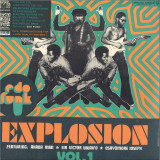
Various - EDO FUNK EXPLOSION VOL. 1

Analog Africa Presents Edo Funk Explosion Vol. 1, available on
2xLP/Gatefold LP with 20-page booklet / CD with 36-page booklet. It was
in Benin City, in the heart of Nigeria, that a new hybrid of intoxicating
highlife music known as Edo Funk was born.
It first emerged in the late 1970s when a group of musicians began to experiment with different ways of integrating elements from their native Edo culture
and fusing them with new sound effects coming from West Africa s night-clubs.
Unlike the rather polished 1980 s Nigerian disco productions coming out of the
international metropolis of Lagos Edo Funk was raw and reduced to its bare
minimum.
Someone was needed to channel this energy into a distinctive sound and Sir
Victor Uwaifo appeared like a mad professor with his Joromi studio. Uwaifo
took the skeletal structure of Edo music and relentless began fusing them with
synthesizers, electric guitars and 80 s effect racks which resulted in some of the
most outstanding Edo recordings ever made. An explosive spiced up brew with
an odd psychedelic note known as Edo Funk.
That’s the sound you’ll be discovering in the first volume of the Edo Funk Explosion series which focusses on the genre’s greatest originators; Osayomore
Joseph, Akaba Man, and Sir Victor Uwaifo: Osayomore Joseph was one of the
first musicians to bring the sound of the flute into the horn-dominated world
of highlife, and his skills as a performer made him a fixture on the Lagos scene.
When he returned to settle in Benin City in the mid 1970s - at the invitation of
the royal family - he devoted himself to the modernisation and electrification
of Edo music, using funk and Afro-beat as the building blocks for songs that
weren’t afraid to call out government corruption or confront the dark legacy of
Nigeria’s colonial past.
Akaba Man was the philosopher king of Edo funk. Less overtly political than Osayomore Joseph and less psychedelic than Victor Uwaifo, he found the perfect
medium for his message in the trance-like grooves of Edo funk. With pulsating
rhythms awash in cosmic synth-fields and lyrics that express a deep personal
vision, he found great success at the dawn of the 1980s as one of Benin City’s
most persuasive ambassadors of funky highlife.
Victor Uwaifo was already a star in Nigeria when he built the legendary Joromi
studios in his hometown of Benin City in 1978. Using his unique guitar style as
the mediating force between West-African highlife and the traditional rhythms
and melodies of Edo music, he had scored several hits in the early seventies,
but once he had his own sixteen-track facility he was able to pursue his obsession with the synesthetic possibilities of pure sound, adding squelchy synths,
swirling organs and studio effects to hypnotic basslines and raw grooves. Between his own records and his production for other musicians, he quickly established himself as the godfather of Edo funk.
What unites these diverse musicians is their ability to strip funk down to its
primal essence and use it as the foundation for their own excursions inward to
the heart of Edo culture and outward to the furthest limits of sonic alchemy.
The twelve tracks on Edo Funk Explosion Volume 1 pulse with raw inspiration,
mixing highlife horns, driving rhythms, day-glo keyboards and tripped-out guitars into a funk experience unlike any other.

pas en stock

Commandez maintenant et nous commanderons l'article pour vous chez notre fournisseur.

25,59

Last In: 4 years ago
BADGE EPOQUE ENSEMBLE - SELF HELP

An exploratory record that dances across time and genre, guided by fidgety miniatures and jazz inflected collage. Throughout, the band pool together their instrumental chops, moving from fluid and serpentine R&B to meditative, minimalistic piano, evoking a contrast of virtuosity and self-surrender.

While constructed from the inspiration of soul, funk and film music, BÉE mediate those influences having first digested them through the productions of Madlib & the RZA.
A sticker on the sleeve tells us Self Help “combines jazz-funk and mysticism,” a signpost to where its musical and spiritual concerns align. The jazz-funk component translates to arresting hooks in sideways song forms: echoes of Gainsbourg spooled through Azymuth-style Brazilian jazz and punctuated by the whip and snap of Steely Dan. “The Sound Where My Head Was,” the instrumental centrepiece, exemplifies present-wave jazz but also ancient sounds, giving off the mothballed air of a Hiroshi Yoshimura record in a library-music archive.

Self Help’s mysticism emerges in broad and specific ways, denoting not only a search beyond cliché and intellect but also an inquiry into the beat, the spirit, the one will. This isn’t new territory for them: Turnbull—the artist formerly known as Slim Twig, who writes and performs with U.S. Girls and various other Toronto concerns—named the group’s Nature, Man & Woman EP after the Alan Watts book. Building these songs from his drafts over three weekends at Toronto’s Palace Sound studio, the ensemble was free to tap out of the city and into some other place, taking up residence in a collective mind maze. The album produces, in equal measure, familiar surprises and the surprisingly familiar. Intoxicated jazz riffs swerve left at phantom intersections. Rhythms cut loose and tie you in knots. But wired in to each song is a sense of gentle accumulation, making every featherlight flourish weigh a ton. U.S. Girls’ Meg Remy brings serenity to “Sing a Silent Gospel,” and wears its antic melodies lightly. The soul shimmer of “Unity (It’s Up to You)” lets the players pool their R&B chops into something fluid and serpentine while, on guest vocals, the musical performance artist James Baley issues urgent declaratives: “Water must pool, as a rule, before tasted/Or else the water is wasted.” The words throughout the record complement the ensemble music while riffing on the precarious nature of unity itself. Then, closer “Extinct Commune” finds Turnbull deserted at the piano, playing phrases of meditative minimalism taking after the composer Joanna Brouk.

For all the record’s reach, it is these contrasting quiet moments that bring Self Help’s communal spirit into focus. A note on personnel: Badge Époque Ensemble now has a seventh member in Karen Ng, the saxophonist and sometime collaborator of Do Make Say Think, Feist, and others. In BÉE, Ng joins Chris Bezant and Giosuè Rosati, her bandmates in the Andy Shauf live band, as well as U.S. Girls co-conspirators Turnbull and Ed Squires, and other Torontonian cross-pollinators listed below. Guest vocalists across Self Help include Meg Remy, who sings with Dorothea Paas on the opener, James Baley, and Toronto singer-songwriter Jennifer Castle on the remarkable “Just Space for Light.” Words by: Jazz Monroe

pas en stock

Commandez maintenant et nous commanderons l'article pour vous chez notre fournisseur.

21,64

Last In: 5 years ago
Nadja - Tsukihoshihi

Nadja

Tsukihoshihi

12inchSTUDIOMULE34
Studio Mule
29.10.2020

Birds are singing, a soft female voice embraces the stars, then the funk hits the fan: the second album of mysterious Japanese singer Nadja haunts immediately and marks one of the most exquisite reissues in the ever-growing catalogue of Studio Mule. Originally released in 1989 as promo only CD on the Japanese label Polystar, the album features some of the finest eighties pop funk fusion arrangements of the era. A deeply enchanting lost gem, that gets listeners instantly into heavy repeat addiction.

All ten songs are arranged by a group of grandmasters of their art. Japanese saxophonist, composer and music producer Yasuaki Shimizu, man behind the electronic ambient fusion classic “Kakashi”, was in charge for tunes like “Wac-Wack”, a neon light funk pop song, full of soft big city eroticism, ultra-slick synth lines and real funkateer explosions. It’s followed by “夢のとりこ”, the most stirring pop tune on the album, that originally was written by French composer, multi-instrumentalist, actor and singer Areski Belkacem, known for his and long-time collaborations with French avantgarde singer Brigitte Fontaine. Shimizu transformed the song into a low hanging funk jewel, with a cool rolling bassline, dub depth and synths that cry for cosmic help. Above all Nadja signs with a sexy chill, that somehow could only emerge in the 1980ees, when the cold war even made pop music real cool. The follow up is named “真珠のように”, features again music by Belkacem, this time transformed by Shimizu into electronic erotic pop - dreamy, witchy and precisely musical composed.

The B-Side opens with “Velvet Rain”, a funky urban boogie composition by Japanese keyboard player, composer and producer Akira Inoue, enlarged with glimmer camp kitsch, that immediately puts a smile on the listeners faces. It gets followed by “Paradise Catcher”, a soft pop tune with longing string and horn sections, arranged by legendary Jamaican rhythm and production duo Sly & Robbie. It somehow marks one of the strangest songs in their longstanding career, as it is largely minimal orchestral but yet super tight when it comes down to the rhythmic magnitudes. The next tune, “Private Tripper”, also stays soulful, funky and horn driven. Always pleasing the super tight, yet feathery voice of Nadja, that is dancing about boogie grooves and illuminating melodies with a seducing tragical coolness. Finally the album ends with a stylistic break in the overall musical atmosphere. It comes from Japanese musician Hiroaki Goto, it’s called “地図をずっと南へ”and features Afro-Brasilian voodoo rhythms, pan flutes, cosmic piano notes and Nadja, singing like a rain forest sorceress from outer space.

Ten arrangements by a bunch of high-grade arrangers, that all left Nadja’s voice enough space to widespread her talent as a supremely seducing singer, who wrote all lyrics, vocals and chorus by herself in order to present her touching vocal class in a vivid, bewitching timeless style. Come in and get ensnared!

pas en stock

Commandez maintenant et nous commanderons l'article pour vous chez notre fournisseur.

19,79

Last In: 5 years ago
Paul Villard - C.A.R.R.I.O.N EP

Mysterious and masked techno talent Paul Villard unveils more of his musical weaponry on the Lone Romantic label this August.

Nothing is known about this artist but from the fact that, “strange and unusual superhuman powers and abilities” came to him after a “gamma accident.” He has released on Blind Allies and Applied Research, remixed Carl Finlow and is a producer with a cinematic electro sound.

Futuristic opener 'Side Effects’ is a bumping electro cut with a stuttering drum pattern and squelchy synth funk from another planet. ‘Submarine Limousine’ keeps up the cyborg styles with a crisp electro groove that is run through by sci-fi vocals and effects, while ’Fluid Dynamics’ is all watery synth droplets and fractured vocals panning about the mix. Taught bass stabs keep you on your toes and make for an otherwordly robot disco vibe.

The second half of this well-crafted EP starts with the glowing pads and creepy atmospheres of
‘Bioluminescence’, a classic Drexcyian electro jam that charges hard and deep into the cosmos. ‘Neon Death’ is an explosion of coruscated synth lines and bumping bass, tripped out machine sounds and warped electro-techno before closer ‘C.A.R.R.I.O.N.’ zones you out with intense ambient pads and modulated synths that are restless and paranoid.

With this majestic EP, Paul Villard paints and vivid picture of some distant interplanetary world.

pas en stock

Commandez maintenant et nous commanderons l'article pour vous chez notre fournisseur.

9,45

Last In: 4 years ago
Gary Bartz & Maisha - Night Dreamer Direct-to-Disc Sessions

The third release from Night Dreamer’s essential “Direct-to-Disc” sessions sees an incredible meeting between legendary US saxophonist Gary Bartz and leading UK spiritual jazz ensemble, Maisha, featuring two Bartz classics and three brand new joint songs written by both Bartz & Maisha in close collaboration. Having cut his teeth playing with the likes of Charles Mingus, Max Roach, Art Blakey and finally in 1970, Miles Davis at the peak of his electric period, Gary Bartz became a leading figure of the early-to-mid 70s spiritual jazz movement, releasing a string of ground-breaking albums on legendary NYC jazz label Prestige Records with his NTU Troop, featuring classics such as “Celestial Blues”, “Uhuru Dance” and “I’ve Known Rivers”, before collaborating on Blue Note Records with the Mizell Brothers on the anthemic jazz funk of “Music Is My Sanctuary”. An oeuvre much loved by soul jazzers and hip hop fans alike. Led by drummer Jake Long, Maisha have been central to the UK’s jazz explosion, and have fast become the UK’s most exciting and in-demand young spiritual jazz ensemble, from steller shows at Jazz re:freshed, Total Refreshment Centre & Church of Sound and supporting the Sun Ra Arkestra, to releasing their critically acclaimed debut LP, “There Is A Place” on Gilles Peterson’s Brownswood Recordings in 2018. Theirs is an organic & explosive sound that blends influences from afrobeat and broken beat to Persian music, with a deep love and understanding of jazz, particularly the heritage of spiritual jazz led by titans such as Pharoah Sanders, Alice Coltrane and of course, Gary Bartz. Which makes this collaboration even more special. Bartz was first invited to share a stage with Maisha by Gilles Peterson to headline the inaugural We Out Here festival. Their chemistry was rich and instantaneous, certainly a two-way street, with the young musicians reinvigorating the legend’s performance and wowing the intergenerational festival audience. A European tour followed, including a London Jazz Festival highlight at the Royal Festival Hall, celebrating the 50th anniversary of his album “Another Earth”, originally featuring fellow legends, Pharoah Sanders, Charles Tolliver, Stanley Cowell, and John Coltrane’s own bassist, Reggie Workman. Now the relationship has evolved into a special straight-to-disc recording for Night Dreamer Records, that captures the vitality of their collaboration. Whilst Bartz and Maisha reinvent classic Bartz compositions “Uhuru Sasa” and “Dr Follows Dance”, extending the pieces into long piece improvised grooves, their recording session gave birth to three brand new joint compositions, written the very same day. These include the propulsive “Leta’s Dance” that magically combines the Bartz’ soulful musical lyricism with Maisha’s African-jazz influences, and the organic jazz funk of “Harlem to Haarlem”, featuring a hot solo from guest trumpeter Axel Kaner-Lidstrom of Cykada & Levitation Orchestra fame. Like previous Night Dreamer efforts from afrobeat star Seun Kuti & Egypt 80, and the beautiful
collaboration between Brazilian stars Seu Jorge & Rogê, the album was recorded in Haarlem’s Artone Studio, a stones throw from Amsterdam, in just one-take, straight-to-disc, avoiding postproduction embellishments and retaining the purity of the performance lost in modern recording techniques. This record really is an event, in and of itself, a meeting of talents, minds, generations and zeitgeist moments, captured in a unique and pure manner. The music does not disappoint, as Maisha have been inspired to reach new heights whilst we find Bartz truly reinvigorated, and both artists in tune to the spirit of the other.

pas en stock

Commandez maintenant et nous commanderons l'article pour vous chez notre fournisseur.

22,06

Last In: 5 years ago
KUMA - Kumadé EP

Kuma

Kumadé EP

12inchROC033
Rocafort Records
07.04.2020

Getting stuck into the new year with a fresh, contemporary jazz attitude, Rocafort Records are proud to present the Kumadé EP from exciting Swiss-French quartet KUMA, led by keyboardist Matthieu Llodra and saxophonist Arthur Donnot.

Confidence, rhythmicality and solidity are the first impressions that hit you from this tight outfit of young but highly experienced musicians. After nine years of holding down a 10-night residency at the prestigious Cully Jazz Festival, Llodra and Donnot have honed down their skills in front of a live audience making tension, pacing and release their speciality in compositional strategy. Grooves and moods are created with just the right amount of rise and fall, push and pull, melodic catches and improvisational wanderings.

The EP is well balanced out with two spaciously laconic, ethereal tracks - Alfama and The Core - that could easily belong on some ECM-inspired soundscape, juxtaposed with Kumadé and I.G.A.T.F. that pack a fuller punch, fat and chunky in all the right places, hinting at a 1970s style George Duke at his funky-fusion best.

Despite a whiff of nostalgic reference, rest assured that the KUMA timbre is fresh and exploratory, as innovative and curious as any protagonist from the current UK jazz explosion. Keep an ear out for these young Jedi masters, all of them at the top of their game. More assured, impressive releases are due out this year.

Matthieu Llodra – Fender Rhodes

Arthur Donnot – Sax

Fabien Iannone - Bass

Maxence Sibille – Drums

Zacharie Ksyk – Trumpet (guest on Kumadé").

pas en stock

Commandez maintenant et nous commanderons l'article pour vous chez notre fournisseur.

15,92

Last In: 6 years ago
Various - New Orleans Funk 3x12"
 
24

Album features Ernie K Doe’s ‘Here Come The Girls’, The Meters, Eddie Bo, Professor Longhair, Lee Dorsey, Wild Magnolias and more.

This is the definitive collection of New Orleans Funk featuring acknowledged masters next to some of the earlier artists who shaped the meaning of funk. The album is also filled with many rare, sought after and undiscovered funk tracks. It covers the period from the emergence of New Orleans Funk in the early 1960's through to the mid-seventies.

The record is an essential part of anyone in any way interested in Funk's record collection. It has some vital ingredients in it that you can't find elsewhere. With the sound of the New Orleans Funeral March Bands, Mardi Gras Indian Tribes and Saturday Night Fish Fries all as inspiration New Orleans Funk developed into a unique sound.

New Orleans is a port town. Originally owned by the French, this was where many slaves were brought from the West Indies. Many of these slaves came from Haiti and brought with them the religion of Voodoo and its drums and music. It became one of the first parts of America to develop a strong African-American culture leading to the invention of Jazz in the early 1900's.

A main feature of Jazz in New Orleans were the Jazz Funeral Marching bands. Solemn Brass bands accompanying a coffin would, on burial, be joined by a second line of drummers and dancers which would turn the event into a celebration of the spirit cutting free from earth. This African tradition is strong in New Orleans and still goes on to this day. The backline drums play a syncopated style that is neither on the beat nor the off-beat. It is these rhythms that are the basis of New Orleans Funk.

The album comes with a booklet presenting a historical explanation to how and why this music came about, and with lots of information about the people involved.


Reviews: "A Perfect Primer For Funk Fans" Q (Top 5 albums of the year). "Probably the finest compilation that Soul Jazz has released. Essential" Time Out.

pas en stock

Commandez maintenant et nous commanderons l'article pour vous chez notre fournisseur.

41,39

Last In: 3 years ago
The Geek x VRV - Time Machine

For The Geek and VRV, everything is a matter of time. Since they first met six years ago, the two beatmakers have been broadcasting their music to the four corners of the world, and their collaboration is as strong as ever after the years. Vanguards of the French instrumental hip-hop scene, they’re coming out today with their first album, Time Machine, a synthesis of the sounds and the ideas they’ve been working on from the very beginning of their careers. A trip back through time, as its name suggests, demonstrating the range of sound possibilities that they created in previous projects and on their international tours.

The release of their hit “It’s Because” in 2013 launched them on the scene as French producers who managed to break into the United States, with sampling as their musical base. Closer to home, the Coachella, Osheaga, and Solidays music festivals were won over by the pair’s complementarity, which made the success of their BTOS beat tapes and their EPs, Electric City and Origami.

But since everything is a matter of time, it was sometimes necessary to just let things go, take a break and think things over before coming back even stronger. A year and a half ago, The Geek and VRV started to slow things down, in order to take a step back and concentrate on this new album. With one overriding idea: to explore different eras and time periods, and transpose them into our modernity. Each track is associated with a pivotal year in music. With “Paris Jazz Club 1920”, the first single on the album, we're plunged into the cozy atmosphere of the cabarets, featuring the virtuoso Montreal pianist Anomalie. A meeting made possible thanks to the famous beatmaker Gramatik, who was a fundamental inspiration for their music, and who is also present on the album, as well as the flagship producers Fakear and Møme.

On Time Machine, The Geek and VRV have turned on their time machine to bring us to the year of James Brown’s birth, and find the unstoppable groove of “Get Funky 1933”. Always with hip hop in sight. The explosion of disco inspired them to record “Roller Disco Party 1980”, and the film Back to the Future was behind “Time Machine 1985”. The mixing of different time periods means that the styles, genres and atmospheres are channeled to perfection. The Geek and VRV have been preparing for this trip for five years now. With Time Machine, the time has come for them to begin their exploration, and to take us along for the ride.

pas en stock

Commandez maintenant et nous commanderons l'article pour vous chez notre fournisseur.

15,50

Last In: 5 years ago
Various - Body Beat: Soca-Dub and Electronic Calypso (1979-98)

Body Beat: Soca-Dub and Electronic Calypso (1979-98) comprises 17 obscure Soca B-side versions, dubs, instrumentals and edits as well as vocal tracks influenced by disco, boogie, house-music, soul and the more conscious lyrics of roots reggae. This compilation traces the soca genre from its explosion in the late 1970s right up to the period just before contemporary soca became established around the end of the 1990s. TIP!!

Compiled by Soundway Records label founder Miles Cleret and DJ/collector Jeremy Spellacey, Body Beat, as with many compilations on the label, explores the fringes of this often maligned (by outsiders) genre. Boiled down to the bare bones of the matter though: soca is party music.

Soca was originally a re-invention of Calypso music; a genre that in the 1970s was fast becoming usurped around the Caribbean by Jamaican reggae and American soul, funk and later disco. The originator of soca (or sokah as he called it), the calypsonian Lord Shorty, began experimenting and modernising on the formulation of calypso in the early 1970s. His first album featured a strong emphasis on East African rhythms and a punchier recording style that emphasised the beat, and introduced arrangements that often owed as much to American funk and soul as to calypso.

So here you go - seventeen slabs of soca crossover, rapso, electronic calypso, and Caribbean ‘soca-soul’ for your enjoyment - and bound to fit well into modern, open-minded DJ sets alongside the resurgence of burger-highlife, digi-reggae, soukous and zouk.

pas en stock

Commandez maintenant et nous commanderons l'article pour vous chez notre fournisseur.

27,69

Last In: 19 months ago
Various - the daisy age

Various

the daisy age

2x12inchXXQLP2062
ACE Records
06.09.2019
 
20

It wasn’t really a movement, barely even a moment, but the Daisy Age was an ethos that permeated pop, R&B and hip hop at the turn of the 90s. Playfulness and good humour were central to De La Soul’s 1989 debut album, “3 Feet High And Rising”, which would go on to cast a long, multi-coloured shadow over rap.

In Britain, the timing for “3 Feet High And Rising” couldn’t have been better. The acid house explosion of 1988 would lead to a radical breaking down of musical barriers in 1989, and its associated look – loose clothing, dayglo colours, smiley faces – chimed with the positivity of De La Soul and rising New York rap acts the Jungle Brothers and A Tribe Called Quest, all at the heart of a growing collective called Native Tongues.

The Native Tongues’ charismatic, summery aura quickly spread west to the Bay Area’s similarly-minded Hieroglyphics crew (Del Tha Funky Homosapien’s ‘Mistadobalina’); Canada’s Dream Warriors (‘My Definition Of A Boombastic Jazz Style’) used “3 Feet High”’s colour palette and borrowed Count Basie and Quincy Jones riffs; Naughty By Nature (OPP) were mentored by Native Tongues heroine Queen Latifah, while Londoner Monie Love was also adopted by the collective, resulting in her Grammy-nominated ‘It’s A Shame (My Sister)’.

It wasn’t built to last, but the Daisy Age reintroduced Multiplication Rock, bubble writing and the gently psychedelic into the charts. It was a brief, but extraordinarily warm and optimistic moment. The songs on this collection promised that the 90s would be a lot more easy-going than the 80s.

Available on CD and double LP.

pas en stock

Commandez maintenant et nous commanderons l'article pour vous chez notre fournisseur.

32,48

Last In: 6 years ago
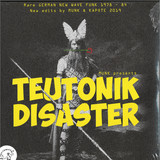
V. A - Munk Presents Teutonik Disaster

There have been millions of typical disco edits in the last years. But there is so much more interesting music from the late 1970s and early 80s yet to bubble its way to the surface. One of those lesser explored fields is the crazy funky side of Germany's underground disco and new wave from that period. At the time, many German bands were trying to make their own version of English and American styles. After Kraftwerk and Can had started to use the German language in a cool, new way, many bands that followed in their steps experimented with German new wave. Most of these bands didn't reach a bigger audience. Their records never got pressed to more than 300 - 500 copies as they were a number of years ahead of the huge commercial explosion of German pop in 1984: The NDW aka 'Neue Deutsche Welle", with Nena's humongous hit 99 Red Balloons. The bands featured on the compilation released their music before the NDW hype and later broke up. Plenty of these early bands are best forgotten but if you dig deeper you'll find the gems, bursting with style and attitude. And that's just what Toy Tonics heads Mathias Munk Modica & Kapote did. They hit gold.

pas en stock

Commandez maintenant et nous commanderons l'article pour vous chez notre fournisseur.

17,19

Last In: 12 months ago
The Daktaris - Soul Explosion

The Daktaris is a well-disciplined army of two hundred African Bull Elephants marching relentlessly up your business to the beat from Funky Drummer. Or so began the liner notes on the original pressing of this album.

Truth is often stranger than fiction. In 1998 Desco Records—a precursor to Daptone and Soul Fire records—released The Daktaris' Soul Explosion, ostensibly as a reissue of an unearthed Nigerian LP from the seventies. Though it's now common knowledge that the story was a bit of a hoax, the record's significance as a seminal part of the Afrobeat and afro-funk renaissance of the last two decades cannot be denied. The roots of the Budos Band, Antibalas, and uncountable others can be traced back to this enigmatic afro-funk release.

Now, two decades later, Daptone has remastered the album from the original tapes, including a bonus track that had previously only been available on a 45, and featuring extensive all new liner notes by Bosco Mann telling the bizarre true story behind the Daktaris sessions.

KEY MARKETING POINTS:
- FULLY REMASTERED, including new bonus track, 'In the Middle.'
- Extensive new liner notes by BOSCO MANN explaining the real story behind The Daktaris.
- Features members of The DAP-KINGS and ANTIBALAS.
- Features JOJO KUO (drummer for FELA KUTI) on vox and percussion.
- Originally released on DESCO RECORDS in the 1998, has been out of print for years.
- The spirit of the late, great Fela Kuti runs through The Daktaris' Soul Explosion. - Jazz Times

pas en stock

Commandez maintenant et nous commanderons l'article pour vous chez notre fournisseur.

23,49

Last In: 7 years ago
Freamon - Hot Damn! EP

Freamon

Hot Damn! EP

12inchTCISM05
13.11.2018

Freamon is a denizen of the modern world, allegedly hailing from NY, according to some, not relevant, says he. What matters is the music - finely honed and carefully crafted dancefloor gems, served up with love the way they used to be, the way they ought to be.

The Hot Damn! EP is his second release on the mysterious Turbocapitalism label, after 2016's Black Grid EP. This time, he has decided to shine a spine-tingling light on our souls. He wants you to raise your hands and put them together in an overdose of holy joy on this unashamedly celebratory slab of sweet gospel grooving. Can you feel the spirit One listen to 'No More Crying' will settle any doubts on the subject. It's gospel-funk. Or gospel-not-gospel, which is like a million samples taken from every soul record you never heard, seamlessly stitched together as if created fresh today, with one idea - to meld together into one big explosion of spine-tingling dance floor joy!

The title track takes things down a notch with a heavy kick drum shuffle - stripped back analogue house, making for an intoxicating, dense brew of sounds, feelings and ideas. Fierce, pulsating free jazz sounds, snaking around that deliciously tense, bustling bottom end, creating an infectious groove that is fresh, different and most of all, impossible to resist.

Meanwhile, Madrid's DJF and Damian Schwartz do what they do best: they take that thing straight to the centre of Detroit, let it adjust to the new environment and then freely cruise the boulevards at night.

pas en stock

Commandez maintenant et nous commanderons l'article pour vous chez notre fournisseur.

9,45

Last In: 7 years ago
Jimi Tenor / Tony Allen - (OTO Live Series)

SEPT 2016. The Moog Sound Lab's first trip out for a live session at Café Oto's project & café rooms. Jimi Tenor, finnish futurist, shako & Warp Records confederate, jazzed, funked, far-ra'd out. Tony Allen - original drummer to Fela Kuti - Godfather of the Afro-Beat.

These two titans of the beat strange -fed & watered through the mighty Moog Sound Lab via a prototype future sound

systems drum trigger unit built & operated by UK moog minder engineer Mr Finlay Shakespeare. New sound universes emerge, collide.

Explosions & implosions make sonic debris. Cosmic dancers prepare to be run ragged by a feral 'tronic funk that brings to mind early 'D.A.F.

pas en stock

Commandez maintenant et nous commanderons l'article pour vous chez notre fournisseur.

18,45

Last In: 7 years ago
Articles par page:
N/ABPM
Vinyl