Legendary electro explorer Emile Facey aka Plant 43 is back on his Plant43 Recordings imprint. Despite being hugely prolific, the artist always managed to find fresh new creative ground with each new outing and Concrete Echo is no different. The title cut is a high-speed opener with shimmering lines, fizzing static electricity and drama in the chords that make you take note. 'Emerald Shift' is a broken beat kicker with raw claps and scintillating liquid metal leads while 'Raw Vectors' layers up acid wobbliness and textbook electro rhythms. 'Mist Memory' closes down with a melancholic vibe and heady synths that take you into the cosmos.
Поиск:re lay
Все
- A1: Intro (Natarcie Przerwa Marazm)
- A2: Przestroga
- A3: Miasto
- A4: Co To Znaczy
- A5: Czuje Sie Lepiej
- A6: Radio New
- A7: Detroit 2Xp
- A8: Da P-Arty (Mix)
- A9: S.m.r.c
- A10: Wild Percusion Xl
- B1: Muzyczny Narkotyk (Goscinnie Oliwka I Mc Bob)
- B2: Jestem Wojownikiem
- B3: Walkin’ Jazz
- B4: Jaraja, Jaraja…
- B5: Od Ciebie Zalezy
- B6: Fekalia
- B7: Outro (Misja Spelniona)
- B8: Wild Percussion Xxl
The Album “Prawda Cel Przeslanie” (which translates to “Truth Purpose Message”) by the polish duo Trials X, which officialy came out in the year 1995, was the first ever hip hop album that was released in Poland. 30 year after its recording The Very Polish Cut Outs are reissuing this obscure gem for the first time on vinyl (the original album was a cassette only release). It is often said that pioneers don’t have an easy life. Being a protoplast in a given field, you lay the foundation for the fruits that others will reap, often forgetting your achievements. This is not entirely the case with Trials X, as the band's contribution to the history of the Polish hip-hop scene is widely known and appreciated, but mainly only among raps biggest enthusiasts and diggers. This special 30th aniversary vinyl edition will hopefully introduce this pionieering album to a wider audience which will apprieciate its strong points but also shortcomings as it is a big piece of eatern european hip hop history.
Imaginative re-workings and improvisations by Andrew Tuttle of the late great Michael Chapman's unfinished instrumental album. Sonic explorations that bridge the Southern and Northern Hemisphere via the Caribbean, remote Northumberland and sub-tropical Australia. Navigating calm seas and turbulent waters of ambient corals, new-age pirates, waves of lapping banjos and drifting eroding guitars.
When Michael Chapman passed away in September of 2021, at the age of 80, he did so – as he spent much of his life – as both a pioneer and a legend. A veteran of the British blues/folk/jazz scene, Chapman emerged in 1966 and continued working throughout his life, always pushing the boundaries of his creations while collaborating with a slew of similarly heralded musicians along the way: Bert Jansch, Mick Ronson, Elton John, Thurston Moore, Steve Gunn; to name just a smattering of those he worked alongside over the years.
It's the latter of those – Brooklyn guitarist and songwriter Steve Gunn – who Chapman flourished alongside in recent years, the two collaborating on 50 and True North, two of Chapman’s final and finest records. It was through that friendship that Chapman’s music found Andrew Tuttle, the Brisbane-based multi-instrumentalist who has toured Australia several times alongside Gunn.
In the aftermath of Chapman’s passing, his partner Andru discovered Tuttle’s Fleeting Adventure LP, describing it as “one of the albums that kept me sane during that first brutal winter on my own.” The pair met in Australia shortly after, and before Andru had even made it back home to the north of England, Tuttle had begun working on the recordings she shared with him at that time. Those recordings were part of a project Chapman was working on at the time of his death, called Another Fish – what would have been a companion piece to his previously-released LP, simply called Fish.
Though Chapman had spent time in his local studio playing all the guitars, layering the different sounds and effects, he’d always intended to do much more work on the songs, however fate had its way and he never got to ribbon-bow those ideas and bring the album to its conclusion.
Though there was little intention in terms of how to finalise the project, Tuttle spent valuable time with those recordings. What materialised, eventually - with time, care, and diligent attention - is a two-disc set Another Tide, Another Fish, something both unusual and completely distinctive. The first disc, Another Tide is centred around Tuttle’s own work, which shaped all seven of Michael’s songs and ideas into new songs of their own, and the second disc which simply incorporates the recordings that Michael left behind.
“On all of the tracks I also ‘played along’ on banjo to the originals several times until I learned an approximation,” Tuttle continues. “This ended up resulting in a ‘hybrid’, where some works are easily identifiable to those who know Michael’s originals, and some took that inspiration to head altogether elsewhere. Each of the tracks, even where not obvious, does have at the very least a trace element sample of the original recordings so that it’s a true collaboration.”
What we’re left with is indeed a hybrid: part remix album, part cover album, both a solo work and a collaboration, of sorts. Inspired by Chapman’s original ideas and with new track titles directly referencing the numbered but otherwise untitled source material, Tuttle adds his own flashes of colours throughout, including editing, sampling, MIDI transposing and signal processing that twists these songs into beautiful new shapes. Perhaps Tuttle’s greatest achievement here then is that Another Tide sounds so effortlessly free of all this context.
Whether you know Michael’s, Andrew’s or even Andru’s story or not, these recordings will bristle with enchantment and intrigue, worlds are built, and while some thrive and grow, others fizzle out in a burst of light, such is the way. “It's been a long, long road but we got there and I think it's been more than worth it,” Andru says in the record’s liner notes. “I really hope you think the journey was worth it too.”
Guitars and effects by Michael Chapman recorded by Alex Warnes at Phoenix Studio, Brampton, Cumbria, 2017 Banjo, effects and edits by Andrew Tuttle at Bella Vista, Brisbane / Meanjin, 2023-2024
Pianist and composer Bas Bulteel turns his gaze inward after a successful track record as leader of the adventurous energy bomb Wasdaman and as inspirer of his own trio, with which he won the 2014 Klara Music Prize for best CD in the jazz category for the album Coming Home, his debut as a bandleader.
Bas went into residency with visual artist Jan Frederik De Cock which resulted in a unique collaboration where image and sound dialogue with each other, feeding off each other, cursing against each other, loving each other ....
The result has become a profound and layered solo piano record that showcases Bas' versatility as a pianist and composer. Musically hovering between minimalism and avant-garde. Sometimes melancholic and always compelling.
With a world in ruins, there comes a new sun. This is the evolution which "TAL" is all about. Intense and relentless, "TAL" is an immersive experience through sonic landscapes and contrasting atmospheres. On its third full length, GLARE OF THE SUN combine orchestral layers with heavy guitars and vocals, creating an emotional listening experience with lots of dynamics and details to discover. Guest vocals are provided by J.J. (Harakiri For The Sky, Karg) and Maffi (Collapse7, ex-Pungent Stench).
- A1: Grateful (Instrumental)
- A2: Glorious Game (Instrumental)
- A3: I'm Still Somehow (Instrumental)
- A4: Hollow Way (Instrumental)
- A5: Protocol (Instrumental)
- A6: The Weather (Instrumental)
- B1: That Girl (Instrumental)
- B2: I Would Never (Instrumental)
- B3: Alone (Instrumental)
- B4: Miracle (Instrumental)
- B5: Glorious Game (Reprise) (Instrumental)
- B6: Alter Ego Feat Brainstory (Instrumental)
Sky High Coloured Vinyl[24,16 €]
Blood Smoke Vinyl. The Instrumental version of the underground classic El Michels Affair & Black Thought collaborative album Glorious Game When Leon Michels and El Michels Affair released their rst record, Sounding Out The City, in 2005, it was hard to guess what was next for Michels and his then-introduced, now-patented "cinematic soul" sound. Now, four EMA studio albums and scores of tribute and remix projects later_all while producing for some of the biggest names in the industry_Michels has trademarked his sound, with each project taking audiences somewhere new and pushing the boundaries of what he is known for. The man is a river, not a lake and this time he takes his golden touch into the realm of hip-hop laying down a musical bed for one of the greatest to ever rhyme into a microphone: Black Thought of The Roots crew. Releasing on Big Crown Records, the LP is called Glorious Game and it is a remarkable debut partnership in more ways than one. Michels provides his bottom-heavy, soul-tinged production for Black Thought who gives us some of the more personal and transparent verses we've ever heard from him. Michels and Black Thought have been in each other's orbit for a while now. The two rst met in the 2000s when Thought was rst getting familiar with the contemporary soul scene. "Out of that whole world, Menahan Street Band was probably my favorite," recalling the funk and soul group Michels was a founding member of back in 2007. Fast forward a few years and musicians from that collective_Dave Guy on trumpet and Ian Hendrickson-Smith on sax _are now full time players with The Roots. This connection eventually led Leon and Thought to doing a few fundraising events around NYC and Philly together. "Before long, Black Thought was coming around the studio and would jam with us from time to time," Michels explains. "Then, fast forward to 2020 and COVID lockdowns, he just hit me up out of the blue, wanting me to send him stuff to write to. We both were looking to stay busy." Being that Black Thought is the co-founder and emcee for, hands down, the best live-band group in hip-hop. Michels took a decidedly different approach to this project and instead of sending recorded tracks of live compositions, he pulled out the sampler and sampled himself and some records from his collection. "I'm a big fan of soul music," as if Michels has to remind us. "And part of hip-hop's appeal to me has always been the sample-based production" For Glorious Game, Michels would make wholly composed and recorded soul songs in his studio, sample himself, then chop and/or loop up his sounds and create instrumentals for Black Thought. On some tracks he took a more traditional hip-hop approach, starting from samples of other people's music but then adding live instrumentation on top. But for the most
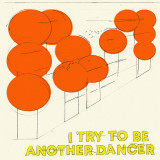
Brussels is a highway where rainbow-fuelled melancholia kids race its track, mountain and road bikes. Endless summers cherish the collective chosen chaos of the city; every corner displays wild micro-natures, buzzing insects, and rare weeds fourishing organically; tape hiss and AM radio compression are the soundtrack of everyday life. And hear! Originated in the Brussels DIY, indie rock and noise scene, a new kid on the block appears: Another Dancer.
They deal in utopian music - of the open, welcoming and whatsoeverish kind. It’s fresh, snotty, neurotic art-rock deeply rooted in 80s/90s DIY aesthetics. The songs on their debut album balance gently between forgotten pop hits and broken sound experiments. In their world, any shitload of weird, random, and badly synchronized sounds unveil broken-hearted pop mastery. In the Another Dancer universe, radios are stuck to WFMU and Soulseek is a self-conscious AI producing 80ies psychedelic FM-rock.
Brussels-based Another Dancer is outdated, wild at heart and elegantly shy. Their full album I Try to Be Another Dancer is out September 10th on Bruit Direct Disques and Aguirre.
"Flashes of the shambolic post-punk of Good Sad Happy Bad and the goofy, fraternal synth-pop of the blog-era gem Teenagers can be seen, often simultaneously, across the new single from the Brussels-based band Another Dancer. Vocals are layered on top of each other to a conversational near-cacophony, like you’ve been placed at the center of a Dry Cleaning show where everyone is, improbably, in a good mood. Sunny synth sweeps jostle next to bent, jangly guitar lines for a song that finds a special kind of vibrance in its mess. — Jordan Darville”
Over a catalog of six albums, Native Harrow have produced a discography of “rich, engrossing records” and “instant classics” while single-mindedly following their own artistic code, acquiescing only to the exigence of the song: each song its own world with its own rules.
Formed a decade ago, Native Harrow spent their first five or six years crisscrossing the United States and Canada on numerous tours, averaging more than 150 concerts per year in 47 states and 4 provinces, on the back of two self-released albums, Ghost (2015) and Sorores (2017). In 2019, they released Happier Now, partnering with London alt-country stalwarts Loose Records. The record garnered glowing reviews, with Rough Trade selecting it for its album of the month, writing “Beautifully soaring... rolling grooves ground languid and dreamy clearwater shimmers of sound.” The critical acclaim and Americana chart success of the album prompted three back-to-back UK tours in 2019 and early 2020, ultimately leading to a three-year stint living and touring in the UK and Europe. In this time, Native Harrow released two more critically acclaimed records with Loose; Closeness (2020) and Old Kind of Magic (2022), playing for audiences ranging from rock clubs in Norway and Sweden to opera halls in Portugal, and every stop in-between, as well as performing at festivals such as BST Hyde Park (supporting the Eagles and Robert Plant & Alison Kraus), Greenman Festival, Black Deer Festival, The Great Escape, Celtic Connections, Moseley Folk Festival, SXSW, and many more.
Following the eruption of its title track, Side A of “Divided Kind” transitions nimbly through hazy tremolo-laden dusty canyons, past an intimate soulful love letter, and towards a moody anthem of devotion buoyed by propulsive grooves, before ultimately settling on a gentle bird’s-eye-view of love and transcendence. Side B opens with the debut single, “Goin’ Nowhere” a soul transmission over incendiary bass and undulating layers of guiro, congas, tambourines, shakers, and handclaps that sidesteps into moments of infinite dial-toned burnished, Rhodes-propelled soul-jazz and self-assured blues rock à gogo before ending in a spectral folk reading on celestial meditation.
“Divided Kind” was produced and recorded by the pair, in their home studio surrounded by the vintage acoustic and electric guitars, dusty semi-functional amplifiers, and out-of-date Rhodes, B3, piano, and assorted percussion they’ve grown accustomed to. Chicago-based Alex Hall was again drafted to add drums and to mix, and Philadelphia drummer and engineer Joshua Friedman mastered the record. London-based musician Joe Harvey-Whyte added the pedal steel to “Borrowing Time”, with all other voices and instruments being performed by Tuel and Harms.
Clear Vinyl[30,67 €]
Spectres have been stirring in the shadows for years now. Dark eyes watching from pallid faces. Siren songs calling to lost souls. In the blackest corners of the UK underground, a name whispered relentlessly amongst the faithful, first with curiosity, then soul-shuddering awe: Zetra.
Zetra is also the title of their striking debut LP. Ten tracks whose indefinable blend of shimmering shoegaze and pulsating goth-metal work deep beneath the skin, it is a masterclass in intimate dark romanticism and sweeping elemental beauty. It could be seen as a reaction to the geography of a strange new world, but also to the jagged topography of the human psyche itself. Is it a manifesto? A roadmap? A riddle waiting to be solved? Profound pleasure lies in peeling back its many layers.
Travelling alone, armed only with synths, guitar and drum-machine to compose, The Wanderers’ music could sound skeletal. Instead its early metallic bones have been fleshed-out with the electronic new-wave of Gary Numan and Pet Shop Boys and dreamy, droning guitars that hark to heroes like Slowdive and Sonic Youth as well as dark contemporaries Deafheaven and Alcest. As harsh as the truths with which they deal may be, these songs deliver beguiling brilliance.
Acolytes to spread the word of Zetra aren’t hard to find. British ‘contemporaries’ like Burner and Wallowing, Celestial Sanctuary and Employed To Serve have been dementedly singing their praises as far back as they can remember. Tours with the heavyweight likes of Creeper and Godflesh, VV and SKYND have taken their once-subterranean sounds into the spotlight. Unto Others’ Gabriel Franco (‘Moonfall’), Svalbard’s Serena Cherry (‘Starfall’) and Sólveig Matthildur Kristjánsdóttir from Iceland’s Kælan Mikla (‘Shatter The Mountain’) even crop up amongst these recordings, dissolving into the cult of Zetra themselves. But none are as important as the legions of fans Zetra are yet to reach with a dark gospel still unpicking all manner of psychological knots and existential truths.
10th Anniversary edition of the debut album from the Devonshire duo who have been laying waste to
clubs from Brighton to Burnley, building up a firm following of disciples LIMITED PRESSING ON RED VINYL
INCLUDES BONUS TRACK Moriaty have already enjoyed a full page feature in Classic Rock magazine and
reviews in Uncut, Record Collector, Art Rocker, Classic Rock, The Clash, Rock Sounds, R2, Vive Le Rock
(feature) Shindig, NME
Death and the Maiden’s Uneven Ground draws back the velvet curtain on the trio’s crepuscular dreamworld with nine songs of their distinctive shadowy slow-motion fusion of underground electronic dance music and post-punk guitars washed through with psychic unease. The trio’s name is taken from that of a nineteenth century engraving by Edvard Munch: an artwork steeped in mythology, exploring the dark boundaries between love and death, strength and frailty, beauty and decay. Their three albums to date each reinforce the symbolism of the name, and Uneven Ground’s title could apply as much to their own journey in the years since Wisteria, their previous album, as to the times in which we live. Bassist and vocalist Lucinda King is the bedrock, guide and storyteller. Guitarist Hope Robertson weaves swooping, soaring motifs and sometimes deconstructed layers of noise to build analogue atmosphere for these alternate worlds. Danny Brady’s beats mix old-school drum machines with electronic tones and distortion, while his synth arrangements blend elements of psy-trance and acid house with more amniotic ambient and industrial textures. While Uneven Ground may be the most overtly “pop”-sounding album in their catalogue, it also ratchets up the ominous atmosphere, noise and experimentation. Once again King’s evocative lyrics appear as cryptic stories, built from events, memories, dreams, moments, warnings, regrets; where questions raised are left unanswered, and possibilities remain open.
2024 repress
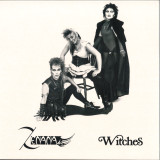
Rush Hour’s RSS series excels in unearthing buried treasure, offering a second chance for artists and releases that have long been overlooked. That’s certainly the case with ‘Witches’, the superb sole single by British 1980s wave trio Zenana.
Originally released on seven-inch by the tiny PRM label in 1986, ‘Witches’ was the product of a sister-brother songwriting team whose music was mostly recorded in the front room of a terraced house in Nanpean, a small industrial village in Cornwall, England’s most south-westerly county. While the single was infectious, impeccably produced and dancefloor-ready, it sold in limited quantities at the time.
Zenana’s story can be traced back to the early 1980s, when singer-songwriter Anita Tedder founded the all-female trio as a vehicle for her musical ambitions. To bring her songs to life, she joined voices with her brother Mike, an early adopter of electronic music who had built a studio – nicknamed MFR, short for ‘Mike’s Front Room’ – in his Cornish home.
Countless Zenana tracks were recorded at ‘MFR’ between 1984 and ’86, with the resultant demo cassette securing the band a management contract, a slew of live bookings, a video shoot and even a television appearance. Buoyed by this underground success, they headed to the remote Sawmills Studio in Cornwall – famously only accessible by boat – to re-record ‘Witches’, a song inspired by local folk tales of witches gathering near Mike’s home.
While this version of ‘Witches’ failed to make an impact at the time, it has become something of a cult classic following its’ rediscovery by crate digger Kiernan Abbott – and subsequent championing by other dusty-fingered DJs including Antal, Skyrager, Trevor Jackson and Luke Una – in early 2023. The buzz inspired Zenana to perform live again for the first time in decades, with the story of their surprise comeback being covered by British media outlets including the BBC and (more surprisingly) the Daily Mail.
Now presented in re-mastered form, ‘Witches’ is a genuinely slept-on gem. Propelled forwards by punchy drum machine beats, a killer synth bassline and fizzing keyboard sounds, the song benefits greatly from strong vocals and an extra-percussive middle eight layered with vocalisations, cosmic spoken word sections and swirling noises.
It comes backed by a brand-new extended ‘spell of love’ courtesy of Bristol duo Bedmo Disco, AKA music journalist Matt Anniss (author of Join The Future: Bleep Techno and the Birth of British Bass Music) and DJ/production partner Gareth Morgan. Anniss is a long-time friend of Mike and Anita Tedder who has fond memories of visiting Mike’s home studio with his family around the time that ‘Witches’ was recorded.
Working from Zenana’s original MFR eight-track recording (tapes of the single version were lost years ago), Anniss and Morgan have turned in the extended ‘dance mix’ the track never had first time around. More atmospheric, clandestine and dancefloor-focused, it offers authentic nods to New York proto-house, mid-80s Shep Pettibone dubs, and the pioneering synth-pop productions and dub mixes of Factory Records regular Martin Rushent.
Every Trick in the Book' is the new single from Bristol-based beat makers, The Allergies. True to form, they've whipped up a sun-kissed groove that'll add a splash of colour to your day, whatever the weather. This A-side takes a vintage vocal sample from the 'Queen of Rock n Roll' herself – none other than Tina Turner! Yeah, you know 'Private Dancer', 'What's Love Got To Do With It', 'We Don't Need Another hero' etc. That Tina Turner! Jeez Louise!
Well the guys have supplemented her pipes with loops from a long-forgotten Latin boogie 12", and layers of live horns, cuts, drums, and FX, to give us a joyous mid-tempo groove that you'll be humming for weeks. While the flipside takes it back to '91, as long-time Allergies collaborator, Andy Cooper, reworks his hero Big Daddy Kane's classic 'Nuff Respect'.
This cover version takes the fast raps of the original, tweaks them, and fires them back over an explosive backdrop of scratches and b-boy beats.
Admittedly, I'm not a great salesperson when it comes to running our little label. I do my best not to give into hyperbole or build something up too intensely if someone has not heard a new artist yet. I prefer to simply present the music and let the listener decide how they feel about it. However, we live in an age when the "story" put together by publicists, labels, and managers are often the driving force of an artist's ascension into the zeitgeist. And for me, that's always felt rather artificial, even when the narrative is genuine. But every once in a while, a project comes along that takes on a life of its own. And I can say without a doubt that the growth of Pale Jay's reach since we first started working with him has little to do with conjured narratives or clever marketing, but more to do with how the music makes the listener feel. It's that simple. In fact, Jay is so enigmatic and without a narrative that the mere absence of a story has become the story. Who is he? Where is he from? What's next? Some questions are better left unanswered in my opinion, my friend. Including the question, "Why does this music make me feel so much?" You're better off just sitting back, disconnecting, and letting Low End Love Songs by Pale Jay wrap you up. Enjoy and spread the good word. - Terry Cole
"Low End Love Songs", more so than previous releases, is a diary in form of song. I knew I just had to wait for the songs to be ready to be picked, like ripe fruit from a tree. Each tune encapsulates a distinct moment in my life, with music serving as my means of processing complex and sometimes conflicting emotions. In this album, I depart from loop-based song structures towards more intricate and lush compositions. Latin influences permeate the music, adding new layers of rhythms and textures to my soul-music roots. - Pale Jay
• The return of the award-winning 2009 release • Available on CD and limited-edition translucent red LP • On tour throughout 2024 Since 1999, the GRAMMY-nominated southern rock band NEEDTOBREATHE have quietly emerged as a dynamic force in music, from independently releasing their first album in 2001 to finding themselves playing arenas and receiving nominations for multiple Dove Awards, Grammys, and Billboard Music Awards. After releasing two successful albums, Daylight and The Heat, on Atlantic Records, the band their third album, The Outsiders, in 2009. The record quickly put them on the map, peaking at #20 on the Billboard 200 and at #2 on the Hot Christian Albums charts. The first single, “Lay ’Em Down,” reached #4 on the Hot Christian Songs chart, and other tracks crossed over to Triple A (“Something Beautiful” #12) and the Alternative charts (“Hurricane” #29). AllMusic gave the album four stars, claiming it “offers up another collection of sweeping, reverent rock songs [and] flirts with touches of roots rock and traditional gospel, from the title track's powerful Southern stomp to the sheer power of Bear Rinehart's voice." The Outsiders won the Dove Award for Rock/Contemporary Album Of The Year, and “Lay ’Em Down” landed honors as Rock/Contemporary Recorded Song Of The Year.
Two years later, the band would be on tour as the opening act for Taylor Swift’s Speak Now world tour, as well as performing alongside acts including Tim McGraw and Train. Since the release of this landmark album, NEEDTOBREATHE have reached arena-sized proportions, headlining iconic venues such as Bridgestone Arena in Nashville, TN, and four sold out shows at Red Rocks Amphitheaters in Morrison, CO. The band most recently performed at the 2024 CMA Awards in Austin, TX, with Jordan Davis, whom they also recorded an episode of CMT Crossroads with. Now, over fifteen years since The Outsiders was released and brought the band to greater heights, NEEDTOBREATHE are re-pressing the long sold-out record for the first time ever on translucent red vinyl.
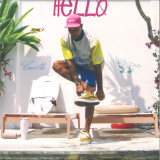
Dutch artist LEYO delivers his debut album via Cécille Records this September, comprised of eight originals and featuring collabs with Toman and Thierry Ganz.
LEYO is a project based out of Amersfoort in the Netherlands, marking its beginnings here with an LP composed utilising a
full band set up, vocals from Thierry Ganz and a singular collaborative appearance from fellow Dutch artist, Toman. The debut album showcases LEYO’s depth of influences, straddling the lines throughout between soulful electro-pop and funkinfused disco jams through to more raw house and sun drenched lounge cuts.
Opener ‘Hello (Intro)’ sets the tone with bumpy drums, psychedelic guitar tones and a dreamy phone call voice before
‘Don’t Do It’ picks up the pace, blending funky guitar lick, organic percussion and resonant synth leads with sporadic vocal
chants. Thierry Ganz first appearance on the album follows with ‘Know Your Name’, merging together Ganz hypnotic vocal
stylings with choppy bass stabs, cinematic strings and crisp disco drums. ‘Open Up The Trunk Do It’ then shifts gears into
jazz-tinged raw house territory via twinkling keys, saturated drums and a vacillating low-end drive.
Up next LEYO welcomes both Toman and Thierry Ganz into the mix for ‘That Booty’, a high octane disco house jam fuelled
by swinging drums, soulful vocals and tension building atmospherics. ‘That’s Why’ then brings down the pace to a more
dreamy aesthetic with fluttering keys and wandering synths intertwined with congas and breathy vocals. The final full
length track ‘Without You’ then lays down a shuffled rhythm section and plucked guitar lines with hypnotic chords and
filtered vocals throughout its six and a half minute duration before ‘On My Mind ft. Thierry Ganz (Outro)’ concludes the
package in a fully- fledged funk fashion, Ganz lays down his signature vocal style uttering the tracks title while underpinned
by wandering bass notes, bouncy drums, wandering guitar notes and Moog style synth licks.
As Country music continues broadening its influence in every corner of the modern soundscape, the quickly growing 'Red Dirt' genre, which encapsulates the Western lifestyle and outlaw sound, is taking centerstage lead by acts such as the influential Randy Rogers Band. For over 20 years, the band's roster and traditional approach has remained unchanged and inspired the surge in a new generation of artists. Acts such as Parker McCollum, Koe Wetzel, Flatland Cavalry, and William Beckmann all began their musical careers on the building blocks set forth by Randy Rogers Band.
The band's second album, Rollercoaster, is applauded as one of the most impactful collections in the Texas music scene. The influence of this record garnered the band bookings in venues once thought out of reach and made them a pillar of 'Red Dirt' Country music.
Now, as the record prepares to celebrate its 20th anniversary, the Randy Rogers Band is releasing a newly re-mastered/re-sequenced edition of Rollercoaster to commemorate the music that ignited their long-lasting journey as a Texas music staple act.
Belarusian post-punk / synth pop group Molchat Doma have always exuded the kind of brutalist aesthetic of the architecture that adorns their album art. It's cold, gray, imposing, industrial and yet there are human hearts beating within those foundations. In the wake of their breakthrough success in 2020, the trio endured a polarity of experiences, from the nadir of an uprooted life and forced relocation away from their native Minsk to the apex of headlining massive shows across the world. It was in this headspace that the band settled into their new home of Los Angeles to finish writing their fourth album Belaya Polosa, a testament to change in difficult times, a love letter to the digital pulse of the `90s, and a technicolor reinvention of the band's somber dancefloor anthems. From the opening synth swell and drum machine throb of "Ty Zhe Ne Znaesh' Kto Ya," to the goth / post-punk austerity of "Son", to the swirling electronic textures mixed with reverb-drenched guitar flourishes, expansive space, and yearning vocals of title track "Belaya Polosa" - that suggests Depeche Mode at their most reflective or The Cure at their most downtrodden - to the sultry and seductive "Chernye Cvety"_ a track reminiscent of Duran Duran's early `90s output in its fusion of dreamy guitars and authoritative mechanized beats _ and the interwoven layers of instrumentation, soaring chorus, and melodic sophistication of "Ya Tak Ustal", it's clear that Molchat Doma are operating on another level. Molchat Doma gained following with earlier albums that sound like third-generation bootlegs of banned recordings from the Eastern Bloc made after a few key entries in the Factory Records catalog were smuggled in from the West. Belaya Polosa propels them into a new direction while retaining their cold minimalist delivery they're known for. The basement grime and dirty tape-head sound of their previous work are now making space for digital luster and shimmering production values. And while Molchat Doma's broadened aural spectrum adds a synesthetic power to Belaya Polosa, the mood remains rooted in stark and unflinching self-reflection. Molchat Doma retain the duality of being both cold and feverish in their delivery while pushing their music into expanded territories through an armory of new textures. The trio continue to harness the sound of harrowing beauty thriving under harsh realities.