What is this?
This delight of flicker and bent landing so delicately upon the ear?
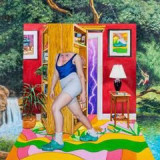
It’s “peeled”, JJ+JS’ first outing on Daisart. It’s their second album, following their 2020 debut release as a duo, “1”, which saw JJ – John Jones (AV Moves, Geo Rip, among others) – and JS – Jesse Sappell (of Motion Ward) – flex their collaborative energies across an album of deep, textured meanderings in rhythm and sound on the perennial Lillerne Tapes. “peeled” sees the two pick up where they left off and veer into a ~ place ~ of sound, of sorts.
This place is likely familiar to those following the duo's output and goings-on, as one together and as themselves apart, but with a tweak to the framing of projects past, naturally. Where we find ourselves with “peeled” is reflective of the two’s interest in jamming without a specific destination in mind, a distillation of the two’s interests in a range of sounds and styles.
And though there is some arcane resemblance to all manner of ethereal music of the past, on this vaporous dream of a record, the haze shimmers somehow; the shake’s shudder is dissimilar.
There’s a pair of key interventions on this collection: one a wistful vocal guesting from Izella on the not-quite-folk mood ‘Lily Pad’, the other on ‘Syntropy’, where Daisart’s J pitches layers of texture and chord in polyrhythmic impression. Both bring something refined to the table on which JJ+JS work air into mirage, color into scene, folding the mundane into the magical.
For those of you versed in the catalogs of picnic, Motion Ward, West Mineral, and Experiences Ltd, a wander akin awaits on “peeled” – but this is not a much of a muchness likeness; more so a refreshing, important addition to the expanding catalog these two artists are crafting.
– Nico Callaghan
quête:re lay
repressed !
Lay Down The Groove – aka Juan and Matteo, Colombian transplants in Melbourne, Australia – bring a poised US house sensibility to this 5-track EP on their eponymous label, Lay Down The Groove. The legacy of Chicago legends like Gemini and Glenn Underground is palpable in the breezy grooves of ‘The 6-61’ and ‘Space Between’ on the A side, while the jazz-funk of Detroit shines through on ‘Noise In The Data’ and ‘Hidden Lines’ on the B. Finally, ‘No Hard Feelings’ unifies the two sounds to drift off gently over the horizon.
new pressing on red & black swirl vinyl. RIYL: New Order, Drab Majesty, The KVB, Black Marble, The Soft Moon. Layering synths, guitars, electronic percussion and live drums, Houses of Heaven fuses early industrial and techno rhythms with the melodicism of shoegaze and a heavy dose of dub-influenced effects on their first full-length album titled 'Silent Places.' Written against the backdrop of the Northern California wildfires, ever-growing tent cities and the continued rise of empty luxury housing in the Bay Area, the album explores the intimate experiences that transpire within the chaotic confines of modern living. Opener "Sleep" basks in the tension surrounding the album's inception with blown-out kick drums, claustrophobic verses, and deteriorating vocal effects. Sharp arpeggiated synths and woozy strings neutralize the track's subterranean anxiety with texture and sensuality. Produced by Matia Simovich (Inhalt) and with engineering credits that include Monte Vallier (Weekend) and John McEntire (Tortoise), it's a potent introduction to the muscular sound design underpinning the album. Booming taiko drums sound the beginning of "Dissolve the Floor," the album's most club-ready track. A pulsing arpeggio gives the song its industrial heartbeat while disintegrating tape delay throws menace into the hazy atmosphere. The undulating techno beat breaks and repairs itself with seductive and satisfying timing. "In Soft Confusion" doesn't stray from the album's obsidian narrative as it envisions and ponders the aftermath of human extinction. Sonically speaking, though, it's the album's most uptempo offering with Tecon's supremely infectious chorus vocal hook and Beck's dizzying guitar riffs. The intricate electronic drum programming is elevated by Ott's live drumming, which lends a refreshingly human touch to the potentially icy, and often mechanical, sonic territory of synthdriven music. Adding density to the album's shadowy allure are the unusual sounds and vintage outboard effects that Tecon and Simovich impressively maneuver into the album's tonal palette. Great care has been taken to finesse familiar pop structures with an inventive edge. It's this mindfulness of past and present that is sure to secure Silent Places as a standout album in the new decade. Also Available From Houses Of Heaven: Remnant 12" EP
In recent years ambient music has changed and encountering Jon Hassell's fourth world design has become easy. Most of the time there’s no feeling, no narrative, a nothingness of ideas through layers and layers of pastiche and boring bedroom music. This is not bashing. Just a reminder that sometimes the information trap delays an understanding of how good music really is.
“Cavalcante” is the new release by funcionário (born Pedro Tavares). You’ll find Jon Hassell in these eleven pieces. And yes, sometimes you’ll think about ambient music. Most of the time you’ll wonder about what is really happening. And why it's only now you’re hearing about this twenty-something musician from Setúbal, Portugal.
A little bit more than one minute into “En Garde!”, the opening track, one feels challenged by the idea that everything that was listened up to that moment was a false start. The piece abruptly stops, flips some digital sound, and restarts in a whole new direction. As this happens it becomes obvious we are in for a treat. Those two, three seconds create a sensation that everything happens in a moment that introduces you to funcionário's craft: delicate complex sounds infatuated with the idea of movement and the never-ending notion that there’s no dividers in the fourth world. Music can go beyond that.
As it moves forward – “Verde”, “Sierra” or “Publicidade Arco e Flecha” -, the album (his fourth) morphs around variations or perceptions of ambient / electronic / experimental music. And as the language evolves, it hints on how funcionário keeps stretching the boundaries of digital music as he wishes to advance to a more analog setup. In a way, he confronts foundational ideas while having breakthroughs and realizing he is at a top level. Justifiably ambitious, bright and discreetly edgy.
HEAVENLY ALBUMS TO BE RE-ISSUED ON VINYL - STARTING WITH ‘HEAVENLY vs SATAN’. Heavenly released four albums in the early 1990s. Skep Wax Records are going to re-issue all four of them over a two year period. Classic black vinyl. The albums will include a 7” booklet with lyrics and new sleeve notes by the members of the band. Heavenly were one of the pioneers of indiepop. Formed from the smouldering ashes of Talulah Gosh, they took all that energy and attitude and used it to fuel catchy, infectious pop melodies. The influence of 60s girl groups was never far from the surface. This was girl-pop, but with the girls in control. Loved by many but derided as ‘twee’ by some, Heavenly ignored the increasingly macho environment of the contemporary UK scene and forged a separate path, along with other bands on the Sarah Records label. Later, having co-released their albums on K Records in Olympia, Heavenly toured the US, hooking up with bands in the embryonic riot grrrl scene. Heavenly’s quiet feminism became louder and more articulate, and the hostility of the UK music press became irrelevant. Heavenly came to an abrupt and tragic end when drummer Mathew Fletcher took his own life in 1996. After a year’s hiatus, the group reformed as the short-lived Marine Research, before going their separate ways musically. Amelia Fletcher and Rob Pursey currently play in The Catenary Wires and Swansea Sound. Peter Momtchiloff plays in Would-Be-Goods and Tufthunter. HEAVENLY vs SATAN – THE FIRST LP. Recorded in the Oxfordshire countryside, the first Heavenly album was a bid to make a pure pop record. The punk noise of Talulah Gosh had exploded and expired. Amelia had had a go at making a disco hit (‘Can You Keep A Secret’, subsequently released on Fierce Recordings), which was fun, but wasn’t going to trouble the charts. Unbothered by critical or popular reactions, the new band decided to immerse themselves in the creation of a sweet, tuneful pop record. It’s true that the punk influences aren’t hard to discern (Mathew’s favourite band was The Ramones), but it’s Pete’s elegant guitar and Amelia’s melodies and multi-layered harmonies that win out on these recordings. The eight-track album was released as CD, LP and cassette by Sarah Records. Subsequent versions included a Danceteria LP and cassette (France), a Quattro CD (Japan) and a CD by K Records (US). These versions included various additional tracks from early 7” releases. The Skep Wax re-issue of ‘Heavenly vs Satan’ includes Heavenly’s first two Sarah Records singles – ‘I Fell In Love Last Night/Over And Over’ and ‘Our Love Is Heavenly/Wrap My Arms Around Him’. The vinyl reissue of second album ‘Le Jardin de Heavenly’ will follow in early summer 2023. ‘The Decline and Fall of Heavenly’ and ‘Operation Heavenly’ will arrive in 2024. Tracklisting 1 Cool Guitar Boy 2 Boyfriend Stays The Same 3 Lemonhead Boy 4 Shallow 5 Wish Me Gone 6 Don’t Be Fooled 7 It’s You 8 Stop Before You Say It 9 I Fell In Love Last Night 10 Over And Over 11 Our Love Is Heavenly 12 Wrap My Arms Around Him
Mechanical Reproductions stay true to their original mission statement of being 'an outlet for editions of vinyl and print' and, for their third release, serve up a 48 page archive of some of the posters created by Young Echo's Amos Childs & Sam Barrett for the long running nights the collective have been running since 2010.
'Heavyweight Champion is the result of six years' collaborative collage works for Bristol's Young Echo collective.
The collective's 12 members have been running club nights, radio shows and releasing music since 2010. Two of them, Amos Childs & Sam Barrett (who also make music together as O$VMV$M), have been responsible for creating the posters to promote the club nights since the start.
These posters are a regular fixture in the visual landscape of the city, on walls, bins, bus stops and pretty much any other available surface in the lead up to each event. Their informal visual language immediately sets them apart from the other flyers vying for attention. They're intriguing: through not having the artist names featured as prominently as possible they encourage the viewer to take a deeper look. There's dense layers of images and cut-and-pasted phrases to be deciphered - ultimately a far more engaging experience than being shouted at by a generic and large-fonted neon specimen.
Thanks to the local council (and keen fans who would rather see them on their walls at home), more often than not these works are gone soon after they're tacked up, meaning the only archive of them is as low resolution images on various social media channels. 'Heavyweight Champion', then, aims to provide a lasting document of this unique and vital part of Bristol's musical culture...'
The Slightly Involved project is a collaboration between Amy Dabbs & Coco Bryce, in which they bring their own styles and techniques to tracks the other artist has recently released. In this first instalment, using tracks released solely via Lobster Theremin and its sub-labels, Amy Dabbs' Girl Like Me and Allure get the full Coco Bryce treatment, and Amy Dabbs takes on Coco's Twenty One Lies and Ma Bae Be Luv.
Coco, renowned for incorporating elaborately edited layers of breaks samples into his sound, serves up a slice of acid jazz in Geezer Like Me, his take on Amy Dabbs' Girl Like Me. Complementing this, is Allude, an edgier jungle version of Amy's track, Allure.
Amy, who codes her own drum patterns from the ground up, delivers us Twenty One Highs, a liquid style take on Coco Bryce's Twenty One Lies, with Ma Bae Be Blonde, her version of Coco's Ma Bae Be Luv, paying homage to the UK’s early rave era.
Written and recorded between 1972 and 1982 in Western Oregon, Back to the Woodlands is a previously unreleased, and nearly lost, album made by Ernest Hood during the same era as his near mythical album Neighborhoods . A visionary combination of field recordings, zithers, and synthesizers, Back to the Woodlands offers an unprecedented depth of access to this singular artistic mind. Born into a musical family, Ernest Hood began a promising career as a jazz guitarist during the 1940s, touring internationally with his brother Bill Hood and the saxophonist Charlie Barnet , before contracting polio in his late twenties. The disease left Ernest unable to play the guitar and confined him to a wheelchair for the rest of his life. It also forced him to adapt and innovate around his musical practices in the face of adversity; Hood's value of sound matured with a remarkably democratic and nonhierarchical approach and application. Taking up the zither, a less physically-demanding stringed instrument to the guitar, embarking upon the unprecedented process of incorporating field recordings into his work as early as 1956, and eventually discovering the synthesizer, Hood's music became imbued with optimism and subtle cultural critique. This ethos and technique - refined over the coming decades - would lay the groundwork for a sprawling body of radio work, mail order recordings for homebound listeners, and Neighborhoods , self- issued as a small vinyl edition in 1975. Where Neighborhoods , a nostalgic opus, drawing from a well of collective memory of the 1950s, is defined by traces of human activity, Back to the Woodlands leaves the modern world behind, delving into Hood's love for nature. Only recently discovered in his archives, the album dramatically expands his concept of "musical cinematography," imagistically triggering states of sensory memory from within its zither and synthesizer melodies, intertwined with field recordings made during Hood's extensive travels throughout Oregon. If Neighborhoods is a retreat into the gauzy joys of a romanticized past, Back to the Woodlands is an immersion in the timeless sanctuary of the natural world. A fascinating counterpoint to its predecessor, Back to the Woodlands brings us even closer to Hood's belief in the transportive qualities of sound; that field recordings could serve as a vehicle for the imagination and liberation, particularly for those with similar mobile disabilities as his own. Across the album's twelve compositions, the rippling instrumental harmonics - shifting between abstraction and playful melody - fold so seamlessly into the birdsong, bubbling brooks, and other environmental ambiences, that they often give the impression of having been recording within the landscapes toward which they whisper. Falling somewhere between the immersive calm of healing music and New Age, the creative field recording practices of sound ecologists world building for Folkways, and the jazz infected ambiences during Obscure / Editions EG's highest heights, Back to the Woodlands sculpts an singular proximity of music for its moment; a form of ambient sonic realism that draws the consciousness toward its surroundings as much as within. Working closely with his estate to maintain his original vision, Freedom to Spend has restored and remastered this never before released, lost masterpiece by Ernest Hood from the original tapes. Ernest Hood's Back to the Woodlands will be issued on vinyl, as well as on CD in combination with its contemporary Where the Woods Begin , with new liner notes by Michael Klausman . On behalf of Ernest Hood and Freedom To Spend, a portion of the proceeds from this release will benefit Oregon Wild, an organization dedicated to protecting and restoring Oregon's wildlands, wildlife, and waters as an enduring legacy for future generations.
- A1: Love Song
- A2: Young Bastards
- A3: Stop It
- A4: Blind Man
- A5: Skin O Daayba - Complex Habits No.3
- A6: We Are Waiting
- B1: Mantra
- B2: Skin O Daayba - Feedbackless World
- B3: Cupping Glass
- B4: Half Monk Half Herring
- B5: Ukoidm - Fishing (Edit)
- B6: Eric
- B7: In The Garden
- B8: Sequencer
- C1: Who Are We
- C2: Hit
- C3: Yozti 2
- C4: Voices Cricket
- C5: Attempt To Raise Hell
- C6: Anna's Assignment
- D1: In Our Culture (Surname Version)
- D2: Lesson 4 Voices
- D3: Intermission
- D4: Chicken
- D5: Untitled
- D6: Against Soap
- D7: Bereshit
- D8: Caretakers
Black Truffle is pleased to announce Uri Katzenstein’s Audio Works, produced in collaboration with Holon’s Centre for Digital Art. Spanning sculptural installation, performance, video art, and many other media, Katzenstein’s absurdist, poetic, and often hilarious work made extensive use of sound and music. This, however, is the first release dedicated to the artist’s audio work, collecting 28 tracks produced between the early 1980s and 2017. Compiled from dozens of hours of recordings left uncatalogued (and in some instances unheard) at the artist’s death in 2018, these four sides are a treasure trove, offering a captivating glimpse into a uniquely uninhibited creative practice. Predominantly recorded alone, with some contributions from regular collaborators such as Ohad Fishof on the later pieces, many of these tracks stem from Katzenstein’s time living in New York in the 1980s. Feeding on the cross-pollination of post-punk energy, radical art practice, and new media possibilities that characterised the New York scene at this time, many of Katzenstein’s recordings squeeze multilayered vocal experimentation into synth-based miniatures with a distinctively pop twist, their forms ruptured with anarchic bursts of free-form electronics, sounds from self-built instruments, and field-recorded snatches of the outside world. Katzenstein’s electronic production calls up touchstones of skewed 80s art pop like Laurie Anderson, Ambitious Lovers, and Scritti Politti, but imbued with DIY directness and economy of means. The arrangements of synths, percussion, and noise elements are invigoratingly raw and, at times, almost austerely minimal. On ‘Intermission’, thick distorted chords accompany a wandering portamento melody, inhabiting the wayward carnival space of Roedelius’ most unhinged efforts. Many of the tracks centre on Katzenstein’s multi-tracked vocal performances, often moving between multiple languages, (most commonly English, German, French, and Hebrew). A bewildering range of vocal approaches are present on these pieces, from sweet wordless harmonies to hammed-up growls and monastic recitations. On ‘Skin O. Daayba – Complex Habits no. 3’, improvised resonance singing against a backdrop of echoing electronics and radio snatches. ‘Half Monk Half Herring’ layers multi-lingual syllabic fragments, crossing sound poetry techniques with melodic invention in a way rarely heard outside of Caetano Veloso’s Araçá Azul. On ‘Attempt to Raise Hell’, Katzenstein’s distorted voice spits out streams of alliterative nonsense (‘the hemlock of Henry, he was a hermit…purple pumpkin pulsates to pops’), while on the hilarious ‘Eric’, Katzenstein appears to instruct a small boy simultaneously in basic French and German conversation. On ‘Chicken’, vocal harmonies accompany the pecking and clucking of the titular fowl. Moving from bent, outsider synth pop to snatches of Jo Jones-esque automated instrumental clang and absurdist linguistic experiments, these are far more than footnotes to an artist’s gallery works. Accompanied by extensive, beautifully written liner notes by Roee Rosen and the little information that exists on the individual tracks, Katzenstein’s Audio Works inhabits an outer fringe of DIY pop and sonic experiment reminiscent of Pascal Comelade or Die Welttraumforscher, where accessible forms convey radical interrogations of song, word, and sound.
A wise character once reminded her to tread the heavy ground with light feet. After a whirlwind two years since moving back to Hong Kong and starting from scratch, Xiaolin has re-emerged from the depths of her studio stronger than ever with a second EP - her first vinyl release to date.
Inspired by the Tower card from the Tarot, Tower Moment EP is a cosmic journey through four stages of healing: darkness, acceptance, transformation and freedom.
The record begins with “Dark Night” (of the Soul), followed by the gentle comfort of “Safe With Me”, a nostalgic electro ballad. On Side B: a chuggy tune layered with textures and samples, “Lemuria”, transports listeners to a surreal land of self-discovery, while Blue Hour completes the experience with his anthemic “Elevator” remix.
With her signature mix of 909 kicks and 808 breaks blended with acid bass lines, subtle percussion and ethereal melodies, Xiaolin’s organic approach to techno and electro showcases her colourful palette and sensitivity as a musician, along with a love for jazz and warm synth sounds from the early 90’s era.
Best listened to from inside the womb, Duster’s 1998’s debut Stratosphere simultaneously capped off and reinvented the slow core’s first wave. A four track dreamscape that will wake the neighbors and then lull them back to sleep. Hazy, arpeggiated guitars layer over a deliberate drummer with no real place to be, as semi-inaudible vocals warn of millennial malaise and subtly encourage the listener to “rock out, rock out, rock out, rock out.
“Music for dark spaces and closed eyelids, deeply psychedelic but without sprawl, ambient music with a serrated edge of punk.”—The Ringer
“Warm, fuzzed-out sounds that hit home like a tight, melancholic embrace from your favorite person.”—Vice
Written and recorded between 1972 and 1982 in Western Oregon, Back to the Woodlands is a previously unreleased, and nearly lost, album made by Ernest Hood during the same era as his near mythical album Neighborhoods. A visionary combination of field recordings, zithers, and synthesizers, Back to the Woodlands offers an unprecedented depth of access to this singular artistic mind.
Born into a musical family, Ernest Hood began a promising career as a jazz guitarist during the 1940s, touring internationally with his brother Bill Hood and the saxophonist Charlie Barnet, before contracting polio in his late twenties. The disease left Ernest unable to play the guitar and confined him to a wheelchair for the rest of his life. It also forced him to adapt and innovate around his musical practices in the face of adversity; Hood’s value of sound matured with a remarkably democratic and nonhierarchical approach and application.
Taking up the zither, a less physically-demanding stringed instrument to the guitar, embarking upon the unprecedented process of incorporating field recordings into his work as early as 1956, and eventually discovering the synthesizer, Hood’s music became imbued with optimism and subtle cultural critique. This ethos and technique - refined over the coming decades - would lay the groundwork for a sprawling body of radio work, mail order recordings for homebound listeners, and Neighborhoods, self-issued as a small vinyl edition in 1975.
Where Neighborhoods, a nostalgic opus, drawing from a well of collective memory of the 1950s, is defined by traces of human activity, Back to the Woodlands leaves the modern world behind, delving into Hood’s love for nature. Only recently discovered in his archives, the album dramatically expands his concept of “musical cinematography,” imagistically triggering states of sensory memory from within its zither and synthesizer melodies, intertwined with field recordings made during Hood’s extensive travels throughout Oregon. If Neighborhoods is a retreat into the gauzy joys of a romanticized past, Back to the Woodlands is an immersion in the timeless sanctuary of the natural world.
Issued by Leo Fegin's visionary record label in 1993, this refreshed and revised reissue collection of Hungarian composer Tibor Szemző's chamber pieces with spoken text – composed at 1980s for the legendary GROUP 180 – is unlike anything else of its kind.
No one has survived life. Everyone has died from it so far. Man must realize that He is responsible for His own life and fate and must insist upon this responsibility beyond all limits. And since Man has dissociated Himself from the sphere of irrationality, He has no way of getting in touch with death, or of establishing control over it. How we achieve the final result is merely of secondary importance. If the vision is clear to everyone, there is no need at all to look back. In a time of complete mental disturbance, only one chance remains to us: crystal-clear thinking. This leads us back to total mental disturbance, which everyone has died from so far. (Pavel Havliček – Miklós Erdély – Tibor Hajas)
Text and Music | Language and Speech | Sound and Music
The common basis of the three works by Tibor Szemző heard on this album is the inalienable relationship to text – as an a priori principle. Text and music: the formal attributes of significance, intentions, and levels of meaning inherent in verbal communication as it is transformed into audible code. Language and speech: the structural level of communication, where it becomes purposeful expression, acoustic statements of variable modality. Vocalization as sublimation. Sound and music: By becoming an auditory signal, communication is deprived of its sense and reduced to musical articulation and abstraction.
Skullbase Fracture: Shards of reality – senseless, disconnected fragments of recorded “living speech” – simultaneously disintegrate and merge to create meaning through the musical process, while it is degraded and stylized to represent a single layer of the ambient noise one would hear in a hospitality setting.
Optimistic Lecture: The theses – like a practical, everyday user’s manual to cognitive tendencies and aims as they apply to the entirety of existence – convey their meaning through simplified rhythmic speech, galvanized into commands. As a counterpoint to recited prayers, they comprise a uniform soundscape.
The Sex Appeal of Death: The head-on simplicity of communication creates such extremely reductive musical interrelations that they cannibalize themselves in a necessary and inevitable fashion. And, in this manner, the text as well
Red Vinyl[20,97 €]
Renowned fiddle player and tireless musical adventurer Sam Sweeney
returns with the passionate, raw and expressive new album 'Escape That'
The record ties together the threads and footpaths of all of Sam's musical loves;
an honest and fearless expression of himself, combining pop hooks and
aesthetics with his pioneering work in the world of traditional dance tunes.
'Escape That' simultaneously presses the reset button on what a folk record
should sound like while marking a major stride forward for Sam into the world of
composition. Written without ever touching the violin, Sam retreated to his attic
during the lockdowns of 2020-21 and created over twenty pieces of
music. Composed almost entirely on synths and guitars, with snapshots of loved
ones and memories as inspiration in a time of isolation, he devised a way of
writing where he'd lay down a chord sequence and then record an improvisation
over the top. On listening back, anything that could be considered a hook would
be kept, everything else was deleted and tracks developed by linking the hooks
together to create dance tunes. Sam then translated the melodies back to the
fiddle, an instrument of which he is considered a modern master. Nominated four
times, and winner in 2015, of Musician Of The Year at the BBC Radio 2 Folk
Awards, Sam has been at the forefront of the revival in English music for the last
fifteen years.
He is a veteran of the mighty Bellowhead, former and inaugural Artistic Director of
the National Youth Folk Ensemble, a founder member of ground- breaking trio
Leveret as well as a passionate and experienced educator. He has collaborated,
recorded and performed with The Full English, Eliza Carthy, Martin Carthy, Jon
Boden, Fay Hield and Emily Portman as well as creating his own theatre
production Made In The Great War.
Black Vinyl[20,97 €]
Renowned fiddle player and tireless musical adventurer Sam Sweeney
returns with the passionate, raw and expressive new album 'Escape That'
The record ties together the threads and footpaths of all of Sam's musical loves;
an honest and fearless expression of himself, combining pop hooks and
aesthetics with his pioneering work in the world of traditional dance tunes.
'Escape That' simultaneously presses the reset button on what a folk record
should sound like while marking a major stride forward for Sam into the world of
composition. Written without ever touching the violin, Sam retreated to his attic
during the lockdowns of 2020-21 and created over twenty pieces of
music. Composed almost entirely on synths and guitars, with snapshots of loved
ones and memories as inspiration in a time of isolation, he devised a way of
writing where he'd lay down a chord sequence and then record an improvisation
over the top. On listening back, anything that could be considered a hook would
be kept, everything else was deleted and tracks developed by linking the hooks
together to create dance tunes. Sam then translated the melodies back to the
fiddle, an instrument of which he is considered a modern master. Nominated four
times, and winner in 2015, of Musician Of The Year at the BBC Radio 2 Folk
Awards, Sam has been at the forefront of the revival in English music for the last
fifteen years.
He is a veteran of the mighty Bellowhead, former and inaugural Artistic Director of
the National Youth Folk Ensemble, a founder member of ground- breaking trio
Leveret as well as a passionate and experienced educator. He has collaborated,
recorded and performed with The Full English, Eliza Carthy, Martin Carthy, Jon
Boden, Fay Hield and Emily Portman as well as creating his own theatre
production Made In The Great War.
Since starting Babehoven in Portland, Oregon in 2017, Maya Bon has
shown herself to be a gifted heart-on-sleeve songwriter, using music to
peel back the layers of her own experience "sometimes sad, sometimes
surreal, always vividly rendered " to reveal universal emotional truths
hidden in the most intimately personal of details
After a handful of self- released EPs and their label debut on Double Double
Whammy with 2022's "Sunk" EP, Babehoven's first full-length album "Light Moving
Time" is due October 28 2022.
"Light Moving Time" is emblematic of Babehoven's wide range of dynamics, and
each of those sounds are taken further. You can hear the pared-down languor of
"Yellow Has a Pretty Good Reputation", the smoldering guitars of "Demonstrating
Visible Difference of Height", the peculiar charm of "Nastavi, Calliope", and the
soft tenderness of "Sunk". Alternating seamlessly acrossstyles, Circles and
Philadelphia have the wispy ambient calm of a Liz Harris track, I'm On Your Team
falls somewhere between a flowy country song and an 80s power ballad, Marion
contains the plucky indie- folk warmth of Hovvdy, and Stand It and Pockets are
coated with My Bloody Valentine's wobbly shoegaze. But in contrast with those
EPs, these tracks utilize Bon's voice with greater emotional impact than ever
before. Pressed on Bone Color vinyl
Laurel Premo's latest solo work presents original and traditional music
voiced on finger-style electric guitar and lap steel
Perhaps by its most honest classification "roots guitar," the sonic vocabulary of
'Golden Loam' is informed by guitar's antecedents in American traditions - fiddle
and banjo, the rhythms, melody and intonation therein, as well as that music's
relationship to movement. Glowing, droning, tugging, scraping, revolving, Premo
bears renewed electric dirt, the golden loam layered by centuries of folk.
Following 'The Iron Trios' (2019), Premo's sophomore release builds on the dark
roots world she arranged, with seeking, untethered delivery and a masterful use
of space, on a dynamic wave of warm, gritty sustain. Laurel's vocals on two
pieces "Hop High" and "I Am A Pilgrim" are traditional calls beaconing the guitar's
response, and fold in timberly like additional instrumental lines sustaining the
drone. 'Golden Loam' was self produced and recorded during the pandemic
lockdown of summer/fall 2020. The majority of the record is solo performance,
but two featured collaborators are woven in to this embodied rhythmic collection.
Percussive dancer Nic Gareiss (Michigan) appears on tracks 5 & 9, and bones
player Eric Breton (Quebec) on track 3. Laurel Premo is a Michigan-based artist
who has been writing, arranging music and touring since 2009 with vocal and
instrumental roots acts. She is internationally known from her duo Red Tail Ring.
We, the label, asked Ben Wallers (ex-Country Teasers) to write a press release for his new album. "Press Release And Give Me The Disc as Peter said to Murphy said to Daniel said to Ash said to J said to the drummer subs please check name was it Martyn Atkins? No... scratch that please Roger, there's nothing funny about not knowing all the members of Bauhaus. Announcing the new album by The Rebel, yay! Wow! Fucking hell, great! How long is it this time? Oh it's getting on for the optimal 45 mins. Fit on side of a D90 but go bit wobbly near end of SA90. I am listening to my copy on vinyl record, it's much better than tape. That's the intro. Once upon a time there was a man/boy a sort of immature Peter's Pan type pan-pipe type who COULDNT WOULDNT grow up a bit like Keith Richards and who er where was i? The Vagina Museum is very near Maureen Paley's art gallery where if you hurry you can see some INCREDIBLY GOOD paintings/art. Anyway once upon a time it was february 2021 if that's last year or 2020 if it was the one before that, i've lost count, honestly this Covid thing is SO confusing isn't it? Anyway. Ducking fomestic crisis as usual reached boiling point again and i fucked off didn't i, did a runner, off to Turkey wiv a lih-ooh bih-uh ragarahn me ed, first of all 2 weeks on George's spare mattress, then 2 weeks in Merlin's magical tower, then a week in a fucking EasyJet Hotel with no windows, then at last my new exile retreat, Congreve Ho. Meanwhile Dad got me a new recording device the size of a VHS tape, the Tascam D-POO 8 S-E-X multitrack. Quality, oscar mike golf!! Urine for a surprise Listener/s! Ural b sayin "Y could ont he ov get 1 of these B4?" Well! Paid off the fuckin mortgage, didden Eye listenerz. Paid the fucking mortgage of. Dad said "Lets get you a reward Son! Anything name it!" Well i said ... can you fix it for me to touch Britney's hat? The one she wore for the Milkshake video. Great album. Recorded it in exile, from where i write this press release and give me the tape Kevin Haskins." And he did. Tracklist: 1. Nemo To Self 2. I’m Wok Inner Gdn.C 3. A Cretian Build-Up 4. Lays A Seamless Transition 5. A Bottle Of Timotei Hair-Shampoo 6. Long Way Off 7. Teulleodd Hapys (Dave 1) 8. I Aint Gonna Lie To Ya 1 9. Bisgeden Am Swper Eto (Dave 4) 10. Put Your Fucking Glasses On So You Can Fucking See 11. Happy Families (Dave 3) 12. Pyfgosycfs 2/Aquafauna 13. Dave Two Ukraine Nil 14. Nemo Self 2
2022 White Vinyl Repress
JUZER by Beau Wanzer and Dan Jugel finds new stomping grounds at RUBBER with a four track release including a fresh remix by Unit Moebius Anonymous. Wanzer and Jugel, two pillars of the Chicago underground are known for their distorted jacked techno which is heavily rooted in the Chicago tradition. Together with Beau Wanzer we have selected three archival tracks made prior to Jugel's passing in 2018. The result is a grinding ensemble of raw techno jams that tips its hat to the different electronic flavors of Chicago and The Hague.
Italian sound artist GIULIO ALDINUCCI returns with his 4th album on KARL: "Real" is again a truly masterfully composed and sound-designed ambient masterpiece and a more than worthy follow-up to the critically acclaimed "Borders And Ruins" (2017), "Disappearing In A Mirror" (2018) and "Shards Of Distant Times" which all made it onto several year's best lists.
With now his 4thalbum for Karl, the sound artist from Siena / IT has proved a steady and prolific artist on the label roster. And each time, GIULIO ALDINUCCI delivers a new ambient masterpiece that clearly carries his signature as composer / producer and yet reveals a slightly different approach to his modus operandi. ALDINUCCI's massive layers of sound, built from field recordings and an array of electronic gear, blend droney ambient with heavenly voices / sacred music that create an atmosphere of a consolatory melancholy – alien, but with a graspable presence of human souls. And each album deals with a topic that ALDINUCCI came across in his observations of and reflections about today's society.
In the words of GIULIO himself:
"The digital media we live with shape and define reality by filtering it, letting us run the risk of living without our personal and unique one. My new album expresses a need of something unmediated and authentic. "Real" is a reflection on the endless possibility of sonic transformation, the ability we have to create new realities transmuting the soundscape around us and the inner soundscape inside us, even only by imagining it. A (deep)real experience permeated by dreamy lyricism."