Orbital London returns after a three - year hiatus with "Revenant EP" , marking its lucky number seven release — this time featuring Jack Michael and the debut of Romanian duo The Apricots , consisting of Alexandra and DJ Slim Fit . A destined musical match, as Alexandra has been an Orbital fan since the very beginning.
Staying true to its concept, the release features two original tracks — one from each artist — while pushing creative boundaries as they remix each other's work.
On Side A , Jack Michael’s “Infinity” goes fast and driving with a heavy bassline, blending breakbeat and techno flavors. A haunting winding melody and a mysterious vocal add to the track’s hypnotic energy. The Apricots’ remix of Jack’s track blurs the lines between electro and breakbeat, with a trance vibration in the underneath layers and surprise dubstep insertion with a dirty bassline.
On Side B , The Apricots’ “Subdued” is powered by the rich, broken - beat percussion and a wild, rave - inspired bassline. As the title suggests, the heaviness of the bas s is m omentarily tamed by the emotive pads and melodies — only to return stronger for a different , yet electrifying bass interlude, topped with a deep male vocal. Jack Michael’s re shape of "Subdued" takes a dreamier approach, crafting a deeper breakbeat journey, dominated by long hefty bass wave s and bathed in quirky synths and etherial pads.
Suche:re lay
The Understated Debut That Launched a Peerless Career: Bob Dylan Is the Clearest Connection to the Singer-Songwriter's Folk Roots
Pressed on MoFi SuperVinyl for Reference Playback: Mobile Fidelity 33RPM SuperVinyl Mono LP Features the Direct Sound Dylan Intended
1/4" / 15 IPS analogue mono master to DSD 256 to analogue console to lathe
Bob Dylan's self-titled 1962 debut is as understated of an entrance as any significant musician as ever made. Well-versed in American roots music, Dylan simultaneously pays homage to tradition and extends it by putting his own stamp on classic material that metaphorically functions as the soil of contemporary songs and styles. Free of ego, and performed with masterful conviction, Bob Dylan ranks with the initial efforts of giants like Elvis Presley and the Rolling Stones.
Nodding to Woody Guthrie and re-imagining Blind Lemon Jefferson's "See That My Grave Is Kept Clean," Dylan straddles the past and future. He authoritatively displays the ability to handle weighty topics such as death, sorrow, and lamentation with the vaudeville flair, bluesy mannerisms, and poignant command of an artist three times his then-20-year-old age.
Sourced from the original master tapes, housed in a Stoughton jacket, and pressed on MoFi SuperVinyl at Fidelity Record Pressing, Mobile Fidelity's numbered-edition 180g 33RPM mono SuperVinyl LP brings the contents of this seminal release as close as they've ever come to live-in-the-studio quality. Transparent to the source, Dylan's voice, acoustic guitar, and harmonica come across with exceptional realism — the "husk and bark" to which Robert Shelton referred in his legendary New York Times review of a Dylan appearance at Gerde's Folk City — courtesy of the format’s nearly non-existent noise floor, groove definition, and quiet surfaces.
Heard in the original mono configuration, Dylan’s vocals are in the heart of the musical action and as one with the accompaniment. This reissue paints an incredibly accurate portrait of the concrete mass of sound that features no artificial panning and offers a straight-ahead immersion into the music producer John Hammond recorded in just two days in November 1961.
Though much has been made of the commercial indifference that greeted the album upon its low-key release, focusing on sales figures and the reaction of a public not yet hip to Dylan's name miss the forest for the trees. Distinguished from the era's other folk efforts by way of the singer-songwriter’s determination, brazenness, and lived-through-this worldliness, Bob Dylan lays the groundwork for the path he'd soon trailblaze and everyone else would follow.
As Dylan scholar and pop-culture critic Greil Marcus observed in 2010: "Everybody knew Joan Baez and the Kingston Trio; if you knew Bob Dylan, you knew something other people didn't, something that soon enough everybody had to know. Within a year, an album could put an adjective in front of the singer's name as if it were already common coin."
Mono is how almost everyone first heard Dylan’s opening salvo. A career like none other starts here.
MoFi SuperVinyl:
Developed by NEOTECH and RTI, MoFi SuperVinyl is the most exacting-to-specification vinyl compound ever devised. Analog lovers have never seen (or heard) anything like it. Extraordinarily expensive and extremely painstaking to produce, the special proprietary compound addresses two specific areas of improvement: noise floor reduction and enhanced groove definition. The vinyl composition features a new carbonless dye (hold the disc up to the light and see) and produces the world's quietest surfaces. This high-definition formula also allows for the creation of cleaner grooves that are virtually indistinguishable from the original lacquer. MoFi SuperVinyl provides the closest approximation of what the label's engineers hear in the mastering lab.
On his second EP for Altered Circuits, "Signal Drift", Jacopo Latini further distills his sound. Taking a more minimalist approach, he unreservedly treats the groove as the focal point. Still relying on his staple talent for weaving melodies and hooks, he delivers four trippy club tracks that show more can be done with less. Opener "Sharp" delivers immediate proof. After starting with a sequence of eerie sci-fi atmospherics and recondite vocoded vocals, the adding and subtracting happens so ingeniously, the track switches to club velocity 303 squelches and enhanced drum programming seamlessly. Similar techniques in building and layering are deployed on "Impulse", but this time, the shifts seem a tad more dramatic. The track revolves around an FM bass melody that's equally effective as it is simple, and its return to this stripped theme, surrounded by characteristic jittery hats, squashed claps, and a little more frills, keeps the listener on his toes. A bass patch, its sustain knob turned wide open, somewhat buried in the mix, drives "Bright Sound" together with a heavily modulated formant mid lead. Deadpan vocals add icing, and slightly euphoric, phased chords bring in a touch of subtle contrast. Closer "Rave Harvey" is a rare diversion as it starts in medias res with chords that reconfigure nineties trance and a distinct bassline immediately going for the limelight. It also shows Latini switching up his palette, trading restraint for vigor, with a slab of direct, unfiltered hi-energy as a result.
- A1: Los Falsos Reyes Magos
- A2: Devoción
- B1: Te Amo ¿Te Odio?
- B2: Soy El Pinchadiscos Del Amor
- B3: Queremos Subir Al Cielo A Saludar A Dios, Luego Bajar Y Contárselo A Todos Nuestros Amigos Y Vecinos
- C1: El Ganadero Del Futuro
- C2: Errante- Doncella Rimbombante
- D1: Bailador Fantasma
- D2: El Jazz Del Chupasangres
- D3: Tendré Que Luchar Contra Los 98 Carniceros Que Pretenden Tu Amor?
2LP silk screened + insert
Before Guaracha UFO propelled Meridian Brothers onto the international stage, Eblis Álvarez was already shaping his singular sonic universe in the shadows. Released only on CD in between 2009 and 2012 via local label La Distritofónica, Meridian Brothers VI and VII never had wide distribution or media exposure. Yet, these albums represent a crucial phase in the band’s evolution, capturing the energy of Bogotá’s experimental cumbia scene at the time.
On VI, Álvarez crafts a hallucinatory patchwork of cumbia and vallenato, using his guitar as the guiding thread before layering other instruments on top. VII pushes experimentation even further with a custom-built sampling algorithm, generating unpredictable loops and grooves. These two albums laid the foundation for the radical fusion and irreverent spirit that would later define Meridian Brothers.
Now reissued on vinyl for the first time, these historic recordings offer a raw and fascinating glimpse into the origins of one of Latin America’s most forward-thinking musical projects
- A1: La Escopeta Del Hombre Plebeyo
- A2: Escuchen El Grito Del Tigrillo
- A3: Vigilen Al Jinete Fantasma Que Decidio Nuestro Futuro
- B1: Canten Las Canciones Del Nuevo Trovador
- B2: Sigan Al Minero Hasta La Escala (Amirbar)
- B3: Las Princesitas De Colombia
- C1: Este Es El Corcel Heroico Que Nos Salvara De La Hambruna Y Corrupcion
- C2: Sostengan Y Alimenten Al Angel Entusiasta
- C3: Este Es El Canto Del Angel Entusiasta
- D1: Yo Soy La Caravana De Los Vaqueros
- D2: Ya Vienen Los Escuadrones
- D3: La Mano Del Muerto/(Pequenos Animales En)
2LP silk screened + insert
Before Guaracha UFO propelled Meridian Brothers onto the international stage, Eblis Álvarez was already shaping his singular sonic universe in the shadows. Released only on CD in between 2009 and 2012 via local label La Distritofónica, Meridian Brothers VI and VII never had wide distribution or media exposure. Yet, these albums represent a crucial phase in the band’s evolution, capturing the energy of Bogotá’s experimental cumbia scene at the time.
On VI, Álvarez crafts a hallucinatory patchwork of cumbia and vallenato, using his guitar as the guiding thread before layering other instruments on top. VII pushes experimentation even further with a custom-built sampling algorithm, generating unpredictable loops and grooves. These two albums laid the foundation for the radical fusion and irreverent spirit that would later define Meridian Brothers.
Now reissued on vinyl for the first time, these historic recordings offer a raw and fascinating glimpse into the origins of one of Latin America’s most forward-thinking musical projects.
Recorded in Kobe, Kyoto, Tokyo, September 2015 Photos by Jim O'Rourke. Layout by Shunichiro Okada Despite decades of activity and having crossed paths in various collaborations Editions Mego is honoured to release the first ever duo recording from two of the most highly regarded citizens of planet experimental electronic. Individually, Jim O'Rourke and Christian Fennesz have been responsible for numerous legendary works which merge the traditional avant-garde with contemporary sensibilities. On It's Hard For Me To Say I'm Sorry these giants of experimental electronic practice come together for an immensely powerful sonic experience. The signature of both O'Rourke and Fennesz cohabit this new release with O'Rourke's gurgling harmonies swimming amongst the shimmering frequencies and strummed melodies produced by Fennesz. Two side long tracks situate themselves as a warm electronic adventure. Simultaneously radical and comforting these works shift from gentle sonorities to fully distorted explosions all of which reside within a template of tension between musical and non-music matter. Timeless in execution and presentation It's Hard For Me To Say I'm Sorry is a deeply rewarding sonic experience from two of the most romantic gentlemen active in experimental music today.
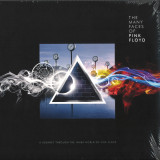
- A1: Dark Side Of The Moon - Shine On You Crazy Diamond (6 20)
- A2: Uk Floyd Division - Time (6 24)
- A3: Mystic Force - Young Lust (3 09)
- A4: Several Pieces - The Final Cut (4 21)
- A5: Bugsy Parker - Julia Dream (2 37)
- B1: Berzon - Comfortably Numb (5 11)
- B2: The Nashville Suns - Learning To Fly (2 18)
- B3: Blacktown Band - Hey You (4 40)
- B4: Monkeysoop - "One Of These Days" (3 41)
- B5: In The Pink - Money (6 15)
- C1: Keith Noble & Rado Klose - Mr Compromise (3 24)
- C2: Clare Torry - Love For Living (3 16)
- C3: Hurricane Smith - Oh Babe, What Would You Say? (3 16)
- C4: Ss 20 - Arnold Layne (3 04)
- C5: The Green Telescope - Scream Thy Last Screa (4 38)
- C6: Norman "Hurricane" Smith - Pink Floyd Interview (Talks About His Recording Sessions With Pink Floyd) (5 10)
- D1: Keith Noble & Rado Klose - Ashes & Silver (5 28)
- D2: The Chemistry Set - See Emily Play (3 00)
- D3: Pink Anderson - The Boll Weevil (3 05)
- D4: Floyd Council - Runaway Man Blues (2 52)
- D5: Keith Noble & Rado Klose - Weather (6 58)
Originally released in 1973 by New York-born soul singer Melvin Bliss, 'Synthetic Substitution' was never meant to change music. A B-side to his single 'Reward', it quietly slipped out on Sunburst Records i and then, years later, exploded.
With 'Funky Drummer' sticksman Bernard Purdie's drums at its core, it became one of the most sampled tracks in hip-hop history, forming the rhythmic backbone of cuts by De La Soul, Mobb Deep, LL Cool J, Justin Bieber and hundreds more. This new release gives the track its due, with a sharp remaster and a respectful rework from Just Blaze. The original still hits hard i a slinky, minimal soul groove with impeccable swing and eerie vocal calm. On the flip, the 'Just Blaze Take 6 Master Mix' lifts that legendary break into widescreen, looping and layering it with warmth and flair. It's not flashy, just smart i honouring the DNA while letting it breathe. It's a fresh pressing of a foundational beat, and a timely reminder of how deep hip-hop's roots run. Whether you're crate-digging or just craving drums with history, this is as vital as it gets.
On the latest Soul Quest adventure, the imprint places the journey in the hands of Italian producer Flying Moth, who serves up an enriching palette of groove-laden cuts that are sure to chime along to bright days and sun-kissed evenings.
Flying Moth is the latest alias from producer Niccolò Terranova, who has already demonstrated his jazz-laden dance music chops through the Justnique project and others. Flying Moth is presented as the artist’s most personal project to date, with the ‘Oh Oh’ EP out on Apparel Music highlighting his ability to deliver highly danceable and beautifully presented soulful dance music that lives and breathes heartfelt moments and emotions.
Channelling a myriad of genres and eras, Flying Moth’s music is about catering to new kinds of experiences through displays of enriching musicality and deeply profound compositions. ‘Tides’ is the next step in Flying Moth’s journey, and it feels right at home amongst the sunny vistas and dancefloors of Soul Quest. The EPs opener, ‘Take you higher’ which was made alongside Renato Patriarca is a groover of the highest order. Allowing plenty of time to embed listeners deep within the mix, the first breakdown emerges with a delightful lead melodic line that embraces the chords. The further this track unravels, the more magic is presented—the flute solo is a notable example of this. ‘Bobby’s here’ shares connotations similar to the previous number, albeit with some subtle differences. The chords swirl and dance, with arpeggios adding cascades of melody alongside the hypnotic rhythm section. The track is one of diving deep through the layers in order to deliver a joyous forward momentum - one which feels like it will never cease.
‘Please, keep drinking with me’ begins with a typically upbeat feel. A semi-skippy drumming pattern provides the basis for an overflow of melodic brilliance to come forth, with the track retaining a powerful forward momentum through the mid-range. Inspired, breathy vocals and a one-of-a-kind key solo at the track’s halfway mark add personality and variance. ‘Always Groove in you’, a joint affair alongside Gondii, and this number wastes no time in getting going. A stripped-back yet varied groove weaves around a deep-set bass sequence, but the show that happens up top is a sight to behold - a continual shift between inspired key work and vocal snippets mean that the track never stands still, only evolves and grows. Wrapping things up is Toronto Hustle and Sean Roman providing their twist on ‘Please, keep drinking with me’, and as a remix, it adds an enormity of flavours in the form of sparkling keys, powerful bass notes, and infectious breakdowns.
‘Tides’ might only be Flying Moth’s second EP, but it is a sign of an exciting discography to come. For now, this EP contains all the ingredients to get dancefloors and living rooms moving. Filled to the brim with creativity, thought, and delicateness, ‘Tides’ has an infectious musicality to it - and, perhaps most importantly, a big heart. Time to revel in its emotive brilliance …
- Apartment Life
- The Machinist
- The Men Are Fighting
- Lakeland
- Seven And Seven
- Over & Over, Pt. 1
- Bells And Bells
Fit for Consequences: Original Recordings, 1984–1987 is the first ever archival release from Repetition Repetition, the “two-man electric minimalist band” consisting of Ruben Garcia and Steve Caton hailing from Los Angeles in the mid 1980’s. Repetition Repetition’s unique blend of cosmic art-rock minimalism / maximalism was self-released across a series of cassettes produced in micro editions, and while garnering the attention and participation of luminaries such as Harold Budd, remained under the radar during the band’s existence. Fit for Consequences: Original Recordings, 1984–1987 collects select material from across the duo’s catalog.
It was over a plate of Mexican breakfast food when Ruben Garcia and Steve Caton first told Harold Budd of Repetition Repetition and the worlds they intended to explore by respective way of synthesizers and guitars --- a rendezvous instigated by the former’s fan mail to the legendary composer. If the upstarts entered this restaurant from a one-way street of admiration, they would leave with not only Budd’s interest but, sometime later, a blessing in the wake of many hours shared by the three in Garcia’s Los Angeles home recording studio: “This is going to be difficult, but God help them, I think they’re great,” noted Budd in a USC lecture in 1985. Now several degrees removed from prior rock music aspirations, the real game was afoot.
Between 1984 and 1988, Repetition Repetition operated within something akin to the underground of the experimental underground, although even that designation perhaps overstates the case. The duo’s sparse output consisted of three cassettes self-released on Garcia’s Third Stone Music label: Repetition Repetition (1985), Lakeland (1987), and The Machinist (1987). Their songs would also be included during this period on Trance Port Tapes’ vital scene-scanning compilations assembled by A Produce. Live performances occurred with similar infrequency, but Garcia and Caton counted converts in quality over quantity, numbering among them the aforementioned Budd, a Chambers Brother, and, judging by a memorably drop-jawed reaction following a rare Repetition Repetition gig, Jackson Browne.
Likewise, critical support materialized in the form of KCRW deejays Brent Wilcox and Dean Suzuki, whose steady airplay positioned Repetition Repetition’s music amidst fearless company like Jon Hassell, Hiroshi Yoshimura, and Richard Horowitz. Yet, to hear fellow Trance Port featured players like Tom Recchion and Bruce Licher of Savage Republic tell it, Garcia and Caton moved as ghosts --- a notion more vexingly endorsed by the silence of record companies that failed to come knocking --- and therein lies an overarching truth to the work itself.
Journey to the heart of Repetition Repetition and one discovers a collective ear impossibly attuned to the hypnotic possibilities of stylistic convergence, the resulting music possessed of seamless multimodalities which beckon to a glimmering plane of the disembodied. Where Caton sought his artistic fixes at an intersection of popular genres, Garcia zoned in on the sonically spare, drawing from the same wellspring as the Enos and Rileys of his personal avant-garde pantheon, and in their coming together the two tapped into a deeper cosmic source. Synthetic walls of keyboard sound in forever states of reprise met waves of shimmering --- and at times even punishing --- guitar in reply, their soundscapes hovering convincingly between, as suggested in fittingly dualistic fashion in a press kit assembled by Garcia, such disparate sensations as bird flight in one song and oil drilling in the next.
But don’t call it a push-pull dynamic, as this was a creative partnership founded upon fluidity and organicism by way of, naturally, repetition. In contrast to, say, the Bressonian ideal of repetitive motion as a great stripping away, the concept in the hands of Garcia and Caton equated to ascendancy via continuous unfolding, a maximal route to minimalism. To be sure, their recording philosophy morphed over the course of the act’s short history, and what started as a process defined by consistent in-person interplay developed into a more isolated method formulated by Garcia, who eventually took to his own one-man bedroom-studio sessions in order to fully chart any and all potential ostinato-loaded paths which he could travel down, the Tascam-captured resonances subsequently provided to Caton as blueprints from which to take flight himself, adding layer upon layer of steel to the proceedings.
If the practice and execution changed, however, the evidence certainly didn’t rest in the results: The seamlessness remained, and, despite the brevity of their time together, so has Repetition Repetition. With this finely calibrated collection of songs in Fit for Consequences: Original Recordings, 1984–1987, Freedom To Spend sees to it that the private worlds of Garcia and Caton can now be visited by all rather than just the count-‘em-on-both-hands lucky few whose musical endeavors or collector vocations carried them into this once-distant dimension.
Repetition Repetition’s Fit for Consequences: Original Recordings, 1984–1987 will be released on Freedom To Spend in vinyl and digital editions on May 30, 2025. The collection includes extensive liner notes from Bill Perrine, and wil be offered alongside Over & Over, a supplemental collection of music available exclusively as a mail order cassette from Freedom To Spend and RVNG Intl.
- 1: 24 Hours A Day
- 2: Rock & Roll Machine
- 3: Magic Power
- 4: Spellbound
- 5: Lay It On The Line
- 6: Somebody's Out There
- 7: Never Surrender
- 8: Hold On
- 9: Just One Night
- 10: I Live For The Weekend
- 11: Fight The Good Fight
- 12: Follow Your Heart
- 13: Allied Forces
- 14: Blinding Light Show
- 15: Fight The Good Fight (Encore)
Dark Blue and White Splatter Vinyl[38,87 €]
- 1: You Make Every Lie Come True
- 2: It Ain't Easy
- 3: Taste Of Heaven
- 4: Never Ready To Go
- 5: The Forgiveness Tree
- 6: When The Moon Cries Wolf
- 7: Trader's South
- 8: Leave Him
- 9: Sit With My Soul
- 10: I Wish You Peace
THE SPEAKER WARS, an American rock band formed by Stan Lynch and Jon Christopher Davis, brings a unique blend of rock, country, and gospel influences to their debut self-titled release, the product of a longstanding collaboration. Stan Lynch, a founding member of Tom Petty and the Heartbreakers and Rock and Roll Hall of Fame drummer, has contributed his talents as a songwriter, producer, and multi-instrumentalist, drawing on his work with Don Henley, Ringo Starr, The Byrds, and many others. Lynch produced, engineered, and mixed the album, lending guitar, keyboard, bass, and vocal skills to the mix. Jon Christopher Davis, a seasoned singer-songwriter from Dallas, honed his craft in Nashville, writing songs for icons like Dolly Parton, Timothy B. Schmit, and Vince Gill. Davis, known for his soulful lead vocals, fronts the band and adds guitar, bass, and keyboard layers to their distinct sound. The band’s live lineup features Lynch on drums, Davis on guitar, and additional musicians Jay Brown, Brian Patterson, Steve Ritter, and Jay Michael Smith, creating a dynamic stage presence.
Foxwarren, the Canadian indie collective fronted by Andy Shauf, returns with their sophomore album "2." Joined by his fellow Canadian childhood friends and close collaborators Dallas Bryson (guitar), Darryl Kissick (bass), Avery Kissick (drums), and Colin Nealis (multi-instrumentalist), the eclectic sound of "2" - weaving genres ranging from folk to psych rock to downtempo - coincides with Shauf"s curiosity and desire to incorporate a Native Instruments Maschine MSK3 sampler into his process. There is something uncanny about the feeling of these songs, the way bits recorded in different rooms amplify your attention, listening for how these layers lock. But their true connective tissue is the generous and gentle ways Shauf and the rest of Foxwarren move with melody.
For the first time ever available in record stores, the redesign recalls the mysterious, multi-layered sound of Flashy Python's Skin And Bones. The hidden covers revealed by die-cut and semi-transparency as well as translucent rouge vinyl pay tribute to the haunting yet playful spirit of an album that could (and should) have been another CYHSY record. The limited deluxe reissue is being released in the wake of the 20th anniversary of Clap Your Hands Say Yeah, the classic self- titled debut album, and its celebratory 2025 worldwide tour.
- Ki Yi Woopi Ti Yay
- Honky Tonk And Dance All Night With You
- Svenghoolia
- Riverside Diner Blues
- Drinking With The Prince
- Oor Me
- Henry My Son
- Haint Blue
- Sego Hill Rambler
- 13: Ghosts
- Offer A Smoke Before You Apply The Blindfold
- May The Tide Lay Low
- Far Away On The Long Black Train
- Loser
- Artifacts Of The Holy Cross
Shattered Pieces Of The True Cross is the latest long player from Alabama's haunted artists, The Pine HIll Haints, a collection of southern psychedelic tunes captured and recorded live at the legendary Muscle Shoals Sound Studio, engineered and mixed by Single Lock founder and Grammy-winning producer/engineerBen Tanner.
- Come Down
- How Love Bends
- City
- Ring Ring
- Over Joy/Ed
- Nothing Like
- He Commands You To Jump Into The Sea
- Drake
- Forever
- Everyday Fitness
- Memorial
SPECIAL GATEFOLD EDITION LP+7"[37,40 €]
Love is a first kiss, a late night call, an ache of longing that can break your heart or a long drive with the top down to anywhere but here. Love can equally be contained, repressed and longed for as much as it can save, nurture and embolden. Love is a measure of our humanity or how lost we have become. In her new album, How Love Bends, Reb Fountain muses on the transformative power of love. Imprinted with our fear, desire, hurt and hope as much as it is an expression of our suffering and joy, love is an ever-evolving shapeshifter that lives in our marrow; magnetic and emergent it is loosed by its archer to ride on the wind. Reb's medium is that of a surrealist, playing with the stories that we tell ourselves she harnesses the sage wisdom of the dream; we embark upon a limitless exploration of love, life and loss within a landscape entirely of Reb's making. Reb's love is the stuff of chaos and oceans, vulnerability and revolution; stirring up the depths of the human condition and dancing with the richness of who we really are. Unapologetic, vulnerable, heartbroken and commanding; this is How Love Bends. How Love Bends is at once haunting and alluring, mystical and triumphant. Reb is a seeker, actively reaching for the expanse. A reverent explorer she traverses the turbulent and tidal with heartbreaking vulnerability and blazon courage. The result is an emergent odyssey; a dynamic dreamscape unfolding and revealing itself mid-evolution. Reb has explored new approaches to songwriting revealing nuanced layers with endless depths.
Spectral Bounce’s fifth instalment comes courtesy of L.A.’s rave archivist and dancefloor operative Dreams, A.K.A. Jesse Pimenta. Throughout his decade-long career the California native has inspected, dissected and concocted all manner of dance musics, leaving his mark with drops on Apron Records, Pinkman, BANK NYC and his own imprint Dance Data. On SPEC05 — Dangerous When Wet — he hijacks the synapses with 4 accomplished productions, plotting a high BPM course through manifold styles using the raw aesthetic that characterises his output.
“Losing Control” is a frenetic dancefloor invitation, immediately locking into a pacing groove. Beneath wild hand drums, Dreams plays with an insistent 303 bassline alternating between rasping buzz and oily squelch, while stern vocals are layered on top of breaks that have been processed to a viscerally satisfying end.
Taking things from delirious dance circle to underwater biosphere, the EP’s eponymous track explores a submerged 1980s Miami. Weighty & enveloping, “Dangerous When Wet” is pure aquatic pop-n-lock — hydraulic electro for a drowned world. Ocean floor caustics are transmuted into auditory form: arpeggios bubble up; drones shimmer mystically; hi-hats hiss like air from an open valve. Amongst the sonar bleeps, a barrage of pummeling low-end is sure to give subwoofers a workout.
“XTC Messenger” delivers an infectious paranoid dispatch, astutely balancing the sensual with the deranged. A slow-mo dial tone unfolds languidly, running counter to nervously twitching high frequencies. Its punchy percussion is tuned for maximum dopamine release; the track’s abrupt vocal chops and mechanical kick-snare pulsation evoke the leather jackets and jagged edges of 1980s industrial discotheque.
“Pressure Points” closes the EP on a heady and mesmerising polymetric trip. The parting track is a lithe yet spacious number, propelled by a rattling break. Here Dreams follows from track 2, creating an immersive environment in which sounds tightly twist and twirl. Shifting oscillators call out like tiny creatures as the bass throbs and wriggles further into your brain, long after the needle hits the runout groove.
A prominent Ukrainian experimental music artist Kateryna Zavoloka creates a follow-up to her previous album “Amulet” – the new album "Istyna" features more melodic structures and complex polyphonic layers that deepen the emotional light.
“Istyna,” which translates to “truth” or “verity” in Ukrainian, explores further the concepts of inner liberation and freedom. The album is Zavoloka’s most personal statement – combining her deep-rooted connection to her homeland with experimental sound steppes, polyrhythms, and polyphonic melodies, this album translates resistance of light.
“Istyna” expresses the quiet truth that lies in the heart. It takes an integral approach to Ukrainian folk traditions in a more complex and harmonious sound, where melodies and polyphony are more affluent. Zavoloka recorded traditional Ukrainian instruments, such as the kobza and kolianka, which are embedded in the album's textures. It is raw emotions, from meditative introspection to moments of intense sonic expression.
Zavoloka a.k.a. Kateryna Zavoloka is a Ukrainian experimental musician, composer, and sound and visual artist whose work seamlessly blends traditional Ukrainian influences with contemporary, avant-garde electronic and experimental music, merging lush melodies, and textures with polyrhythms.
COMPUMA's new new album “horizons”now available on vinyl via his own label Something About!
The album “horizons” is a further development of COMPUMA's “horizons EP”, which was released in July 2023 as a digital-only EP on his Bandcamp. The songs are inspired by the scenery and environment of Lake Ezu, Kumamoto, where the artist's roots lie, and by his walks in various places around Japan.
Horizons 1”, in which the undulations of electronic sounds seem to represent a leisurely walk across a clear expanse of sky and lake scenery, and the vocoder voice somewhat reminds us of people's activities, and the piece changes to a more minimalistic play of rhythms and electronic sounds, as if focusing on introspection in the midst of walking. The album also includes “horizons 2,” which changes with exquisite salinity, “horizons 3,” which pays homage to early electronic music, and “horizons 4,” a more stoic minimal electro-dubwise piece that seems to be immersed in the act of walking, The last track on the album, “horizons 5,” is a non-beat ambient track with a hint of the waterfront, as if the artist is gazing at the vast sky, as if the steps of the first half of the album are expanding into a faint memory, and is accompanied by a field recording. The album includes “horizons 5”, a non-beating ambient taste that is covered by field recordings and depicts the atmosphere of a wandering waterfront, and five versions of “horizons” that remind us of the days of “walking”, sometimes immersed in the scenery and walking, sometimes lost in thought, with “horizons interlude” in between, which reminds us of the surface of a bobbing lake, and is a self-titled version of “View 2” from the previous album, “A View”. The album contains seven songs in total, including a self-remix of “View 2” and an electro version of “view 2 electro”, reminiscent of the shimmering surface of a lake.
Personally speaking, this work reminds me somewhat of Kraftwerk's “Autobahn,” which depicted the countryside of West Germany with minimal electronic sounds, and this work also seems to depict a scene of a “walk” with electronic sounds. However, what is different from “Autobahn” is that there is an element in the middle part of the album that seems to go into introspection in the midst of walking, and it is a work that shows various views (including feelings) throughout the album. From a macro perspective, this album is a new response to the recent environmental music revival and generalization of ambient music, which he has introduced as a DJ and record buyer for a long time.
The album was co-produced by hacchi, who also works with Deavid Soul, Urban Volcano Sound, and as a recording/mastering engineer, and mastered by Nakamura Soichiro of Peace Music, a studio that has produced many masterpieces, including Shintaro Sakamoto's solo work. The package artwork is by designer Seiichiro Suzuki. The package artwork is by designer Sei Suzuki. (The package artwork was designed by designer Sei Suzuki.)
******
Compuma is a Tokyo-based log-serving DJ whose extensive knowledge of obscure and left-field music across so many genres and different regions of the world established himself as one of the most respected record buyers in Japan,
a country well known as record collectors’ paradise. While he built his career in record business over decades, he has also been sharing his expertise in music as a DJ just as long. Not only the breath and the depth of where his selection derives are hard to compete, the way he blends them all together is also a state of art. Often intricately layered and collaged, Compuma is capable of sculpting something entirely new with bits and pieces of existing tracks in various forms such as ambient soundscapes to dubbed out club sets. In 2017, his unique ability caught the attention of Berlin Atonal directors and he was invited to play at the festival in Berlin.
He extends his skills into remixing which can be heard on the released from EM Records - “Compuma meets Haku” (2015) and “Bangkok Nights” (2017.) In June 2022, he released his first solo album, A View.
He is also an active member of a DJ trio called Akuma No Numa (which translates to “devil’s swamp”) in which he explores darker and more psychedelic periphery of dance music.