ULURU is a large sandstone rock formation in Australia. It's sacred to the Anangu, the local Indigenous of the area. For many years it had been deprived of its spiritual significance, due to mass tourism, capitalism, as well as greedy and selfishness of people who just want to make money out of it. However, as a result of the Anangu’s resilience, care and staunchness, huge changes took place in the national park around Uluru as well as in the broader public's consciousness, giving again to the Uluru the sacred identity that had been lost.
You might be reading and thinking now: so what's the point? Actually, there's no real point. I would rather say, there’s hope. The hope of seeing humans all around the world following the example of the Anangu. The hope of seeing humans finally stopping to treat the earth and all what’s part of it, what’s on and what’s in it, as a slave without soul. The hope of changing today, and if not today at latest by tomorrow. This system is failing. It's no longer sustainable, and there's no much time left.
So everybody, don't sleep, be critical.
Поиск:re public
Все
Felix Kubin's Der Tanz Aller is an energetic, rhythmically charged soundtrack created for the performance of the same title by the experimental arts collective LIGNA. The group specialized in site-specific, participatory works. Der Tanz Aller is based on Rudolf von Laban's radical 1920s concept of 'Bewegungschoere' (movement choirs), collective dances in public space that aimed to reimagine social order through shared movement. Combining minimal electronics, acoustic percussion, and brass, Kubin's compositions reflect both the experimental spirit of Laban and the political charge of mass choreography, inviting listeners to become dancers themselves.
Have you noticed that Western music emphasises linear time? Melody is a continuous sequence of sounds. Harmony and rhythm follow a progression from beginning through climax and resolution. Is it possible to have an art that is based on non-linear time? Can we even experience non-linear time? Efrain Rozas' Still posed this question in the form of an installation made for quadraphonic sound, architecture and light. A document of his installation at Queenslab--part of a one-month residency with The Kitchen, New York City in April 2021--the album is a live, stereo room recording of Still as it was presented over three one-hour viewings. Efrain Rozas is a Peruvian interdisciplinary artist working with Latin American music, robotics, sculpture and installation. He holds a PhD in composition and ethnomusicology from New York University, and is a 2023-2024 Jerome Hill Artist Fellow. He has published Fusi?n: a soundtrack for Peru, a publication, video documentary, and music compilation; and has released several albums internationally via Names You can Trust, the Ethnomusicology Institute of Peru, the Embassy of Spain and Buh Records.
Vinyl release of the album from 2023. Black vinyl in a standard sleeve. “out of love in the face of a shadow” is the new album from Credit Electric. Exploring the human unconscious through impressionistic pop vignettes, the album represents a significant evolution of the band’s sound that originally stemmed from limitations put in place by the global pandemic, before blossoming into something altogether new and unexpected. What started to emerge was a body of work that drew upon lo-fi jazz, dub, post-rock, ambient music, 70’s studio experimentation, and 90’s indie rock as much as the rustic folk of their past releases. The resulting album “out of love in face of a shadow” calls to mind influences as disparate as Hiroshi Yoshimura, American Football, Scientist, and Magnolia Electric Co, all the while inhabiting a world completely of their own design. Highly anticipated sophomore album from Credit Electric. Press coverage on recent releases includes reviews and features in New Commute (Albums of the Year), Various Small Flames, Raven Sings the Blues, Psychedelic Baby Magazine, and more. UK/EU Publicity handled by Chris Carr & Mal Smith. “…the band crafts American hymns that peer through fogged glass, tracing the lines of lament in hazy relief…” - Raven Sings the Blues // Albums of the Year - New Commute
Swan Song
The vinyl LP at the heart of this éthiopiques 31 tracks 2 to 11 was one of the very last vinyl records ever released in Ethiopia. But above all it represents, we felt, the absolute masterpiece of the Ethiopian Groove – the Swan Song of Swinging Addis. The album leaves a clear idea for posterity of the level of sophistication and mastery that modern Ethiopian music had achieved, before being crushed under the Stalino-military heel of the Derg – as the bloody revolution that was unfolding came to be called.
Ethiopia1976.
The Revolution that broke out in February 1974 rolled on in a ruthless march. The whole of Ethiopian society was utterly stunned. The bouquets of flowers handed joyfully to the first tanks of the coup d'état were to wilt very rapidly. From September 1976 to February 1978, 18 months of Red Terror (the name given by the junta itself) spilled blood throughout the country. This fratricidal conflict took its heaviest toll among students and youth. The shift from feudalism to a cruel and primitive Stalinism left the country's citizens deeply traumatised, and snuffed out any pretence of activism, whatever the sector of society. This ice age was to last for seventeen long years.
ሙሉቀን፡መለሰ Mulukèn Mellèssè Muluqän Mälläsä
It was three tracks by Muluken that served as the opener for éthiopiques-1 more than 25 years ago. Seven more tracks appeared on éthiopiques-3 and 13, all accompanied by The Equators, which was soon to become the Dahlak Band.
The first track, Hédètch alu, also the very first piece that Muluken ever recorded, left audiences both unsettled and amazed. Reflecting the singer's extremely young age (he was just 17 at the time), this angelic voice mystified many, who thought they were in fact listening to a feminine voice. He was not yet 22 when he released his last vinyl record in 1976 with Kaifa Records (KF 39LP), one of the very last to be issued in Ethiopia, before the cassette tape became the dominant medium for music distribution – and before the new revolutionary regime put a stop to all independent musical life, via an unspeakable barrage of prohibitions and other persecutions.
Mulu qèn, literally, “A well filled day”. This tender maternal intention wasn't enough to ward off the cruelty of fate. His mother's premature death drove Muluken to leave his native Godjam, in northeast Ethiopia, to live with an uncle in Addis Ababa. Born Muluken Tamer, he took his uncle's last name – Mèllèssè.
The spelling Muluken appeared in his administrative records. Transcription of Amharic to the Latin alphabet, both in Ethiopia and for scholars, gives rise to controversies and quibbles that can never be neatly settled. French allows for a closer approximation of the original pronunciation, thanks to its battery of accent marks, confusing as they may be to anglophones.
Between rather accommodating administrative record-keepers and the various versions that pop up in interviews given by the artist, Muluken's year of birth oscillates between 1953 and 1955…
1954? One thing is certain: the artist's talent made itself known very early indeed, because he got his start in 1966-67, at the age of 13 or 14. Photos from the period attest to his extreme youth. It's a strange sort of initiation for a very young teenager to become a sensation in the heart of Addis's nightlife at the time, Woubé Bèrèha – the Wilds of Woubé. And what's more, in the club of the Queen of the Night, the Godjamé Assègèdètch Alamrèw herself, the very same that was portrayed by Sebhat Guèbrè-Egziabhér in his novel-memoir Les Nuits d’Addis Abeba2… The legendary female club owner who is remembered to this day by the capital's ageing boomers.
Muluken first tried his hand at the drums, before he grabbed the microphone. He emigrated briefly to the Zula Club, across the street from the old Addis Post Office, one of the ground-breaking bars of the burgeoning musical scene, before joining the Second Police Band in 1968, for around three years. He spent a few months with the short-lived Blue Nile Band founded by saxophonist Besrat Tammènè. As the musical scene grew increasingly successful, and pulled slowly but decisively away from its institutional ties, Muluken released his first 45rpm single in February 1972 (Amha Records AE 440). It was included in two LP Ethiopian Hit Parade compilation albums in September of the same year. All in all, Muluken released eight two-track 45s and the same number of original cassette tapes between February 1972 and 1984, the year that he departed for permanent exile in the USA. After converting to Pentecostalism in 1980, Muluken gradually abandoned all secular musical activity. In 1985, at the end of a concert in Philadelphia, he decided to quit concerts and recording for good. Mèlakè Gèbré, the historic bass player from the Walias band who was playing with him that night, recalls that everything appeared so irredeemably diabolical in Muluken's eyes, that it was to be the end of his contribution to Ethiopian Groove.
The end of the story, the beginning of a legend.
Dahlak Band, forgotten by History
Aside from his personal history and vocal talents, it must be remembered that Muluken Mèllèssè was one of the biggest names in the musical innovations that marked the end of the imperial period. These éthiopiques aim to convince those who are just discovering this hidden gem... As for Ethiopians themselves, they are to this day captivated by this singular and atypical figure in the Abyssinian pop landscape – even though he withdrew from public life some 40 years ago. Incorrigible devotees of poetic twists, of more or less hidden meanings, Ethiopians appreciate above all the care Muluken took in choosing his lyrics and the writers who penned them, such as Feqerte Haylou, Alemtsehay Wodajo and, here, Shewalul Mengistu (1944-1977). Love songs, written by women, a far cry from the conventional drivel that pleases sappy sentimentalists.
Muluken is equally acclaimed for his perfectionism when it came to music, the opposite of the overly casual approach that is all too common. He remained a faithful partner of musicians who came from a lineage that borrowed from several inventive and pioneering bands (Venus, Equators, Dahlak). Amongst them were certain artists who began their musical lives with Nersès Nalbandian at the Haile Sellassie Theatre and who come of age in around 1973 – at just the wrong time, you might say. Among them were the pillars Shimèlis Bèyènè (trumpet), Dawit Yifru (keyboards) and Tilayé Gèbrè (sax & flute). Most notably Tilayé Gèbrè, certainly one of the most important musicians, composers and arrangers of his generation, of the end of the imperial era, and of the early years of the Derg.
It was only in 1981 that a miraculous opportunity arose for Tilayé to escape the Stalinist paradise of the dictator Menguistou Haylè-Maryam. Once again it was Amha Eshèté (1946-2021) who provided a solution. The spirited and courageous producer, who had been in exile in Washington since 1975, succeeded, thanks to his incredible perseverence, in bringing the Walias Band to the USA. It was, in fact an extended Walias Band comprising ten musicians3, six of whom chose to slip away after a few concerts and the recording of an LP (The Best of Walias, WRS 100). Tilayé Gèbrè was one of these. He has been living in the USA ever since. There he joined the then-nascent Ethiopian diaspora, which lived largely unto itself, and was making only very modest headway in the American musical market. It seems unfair that Tilayé Gèbrè and the Dahlak Band were not able to benefit earlier from the public recognition that they do deserve.
A similar draining away of the top-rate talents would lead to the reorganization of the major groups of the “Derg Time”. The remaining artists spread themselves around between Ibex Band (renamed Roha Band), Ethio Star Band and a remodeled Walias Band. That spelled the end of the Dahlak Band.
With this record, produced by the essential Ali Abdella Kaifa a.k.a. Ali Tango, we can appreciate everything that the Derg not only destroyed, but also prevented from flourishing. This gem of Ethiopian-style afrobeat came out in 1976 (and, by way of a parenthesis, before the FESTAC 1977 in Lagos, which was attended by an impressive delegation of Ethiopian musicians — although Fela was already personna non grata in his own country). Despite everything that might distinguish this ethio-groove from Fela’s music – no colonial axe to grind, no question of political confrontation with the authorities, no claims to negritude or Africanism for the Ethiopian musicians, and less extrovertion! –, this LP fits beautifully into the saga of intense and electrified soul of the new “African” groove that Fela and Manu Dibango embodied so well from that point onwards.
In restoring this record to its place in the afrobeat epic, it can be seen that, if nothing else, the timeline bestows a legitimate pedigree and a historical primacy to works that had no international impact when they were originally released.
Warning! Masterpiece!
Editions Mego is proud to release the new album by Australian producer Jasmine Guffond. Developed over a two year period, Microphone Permission is an unsettling musical journey utilising contemporary tools of communication to display Guffond's ongoing research into online surveillance and sound as a method of investigation.
Source material on Microphone Permission are from various projects Guffond has been working on; a commission to sonify the data of the city of Melbourne, a dance performance about the future sounds of an extinct forest, an installation that sonifies Twitter meta data in real time, a job as a composer for a theatre work about music and feminism by five young female identifying performers in Western Sydney and a site specific installation at the Linachtalsperre dam that employed the harmonic frequencies of electric currents.
The results are a stark, brooding, disorientating journey into a paranoid musical field that sits somewhere between ambient club music and a dystopian soundtrack. Elements of techno, classical music and sound art form a dark intriguing masterwork that questions the nature of invasive, algorithmic and computational listening practices.
For example Microphone Permission refers to the consent we routinely give when installing various apps. onto our smart devices. Inspired by a 2018 scandal in which fans of Spain's most popular soccer team were effectively turned into unwitting spies by granting the La Liga application microphone permission. No matter which make or model, all smart devices are built with a microphone that is by default, forever listening. Listening in these situations often takes on an algorithmic form that enables tech developers to bypass public response to what is intuitively considered invasive practice, that is, traditional modes of eavesdropping such as using the microphone to listen and record audio.
- Dame Un Cachito Pa' Huelé
- Dundunbanza
- Como Se Goza En El Barrio
- Esas No
- La Gente Del Bronx
- Mambo En La Cueva
- Que Negra P'acelerá
- Blanca Paloma
- Mami Me Gustó
- El Dolorcito De Mi China
- Hay Fuego En El 23
- Besame Aquí
- La Fonda De Bienvenido
- No Quiero
- Juégame Limpio
- Pimienta
- Cambia El Paso
- Que Me Manda La Niña
- Pobre Chinito
- Baila Simón
- El Reloj De Pastora
- Sabor De Pachanga
- Hachero Pa' Un Palo
- Errante Y Bohemio
- El Divorcio
- Papa Upa
- Lo Que Le Pasó A Luisita
- No He Visto A Caridad
- Suéltala
- Adiós Carmelina
- Emilio Dolores
The Godfather Of Salsa - HAVANNA & NYC RECORDINGS 1946-1962! Grosso! again presents this compilation from "El Ciego Maravilloso", the authentic godfather of salsa. His early Havana & NYC recordings. The tracks have been remastered and restored and some are available on vinyl after many years. Format and selection designed for DJs, collectors and latin lovers. Ignacio de Loyola Rodríguez Scull aka Arsenio Rodríguez (30 August, 1911, Güira de Macurijes, Matanzas, Cuba - 30 December, 1970, Los Angeles, CA, USA) was a Cuban musician, bandleader and prolific composer who developed the son montuno and other Afro-Cuban-based rhythms. Today he is seen as one of the most important figures in Latin music, with his influence reaching beyond the Spanish speaking world to also include African popular music of the 20th Century, though when he died he was not widely known by the public for his contributions and influence. He is also recognized (along with Israel 'Cachao' López and Dámaso Pérez Prado) as one of the creators of mambo, what Rodríguez himself often referred to as "ritmo diablo". Some of his best-known, and most-often covered recordings from the 1950s and early 1960s are included here, among them "Dame un cachito pa' huele'," "Dundunbanza," "El reloj de pastora," "Cambia El Paso," and "Hay Fuego En El 23."
KEG announce new EP Girders set for release September 2nd on Alcopop! Records/BMG. The band also share the frenzied and whip-smart new single Kids. The band, who have been hotly tipped across the board for 2022, will also play their debut UK headline tour plus festivals which include Green Man, End Of The Road, Latitude and more. Kids strides into the deep lineage of British art-punk songwriting that is both self-referencing and outward-facing - while being consistently innovative. Few singles manage to take aim at both the restaurant chain Itsu and the comedian Michael McIntyre, but KEG somehow pull it off.
Following a widely successful debut single release Heyshaw in the summer of 2021, KEG saw major support from publications such as NME, DIY, Dork, So Young, Clash etc. Leading into their debut EP Assembly, released October 2021, KEG toured with contemporaries such as Squid and Talk Show.
KEG are a seven piece. Albert (vocals), Joel (bass) & Will (synth) grew up together around the seaside Yorkshire town of Bridlington; and like many artists growing up in removed quarters of the country, they shared a yearning to leave. Spreading to different parts of the country after leaving school, they found their bandmates in their respective cities and found one another once again on the southern shores of Brighton.
Frank (guitar), whose background resides mostly in hip-hop, afforded a unique pulse with a guitar sound which is manic, discordant but firm. Jules (guitar) whose songwriting sensibilities come from a love of cadence and craft of beautiful soul ballads, imbued the band with his structured sense of composition. Both Charlie (trombone & shell) and Johnny (drums) come from classically trained Jazz backgrounds.
The announcement will receive digital marketing support and will launch with new tour dates announced (below) with pre-order for presale access available.
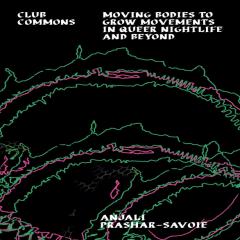
Queer communities have long transformed parties into something powerful: spaces where care flourishes, injustice gets challenged, and new worlds are danced into being. But today, DJs command huge fees while behind-the-scenes workers earn below minimum wage. Corporations profit from our culture while communities that created these spaces are displaced. As venues shut and workers burn out, it’s clear that something has gone deeply wrong.
Club Commons: Moving Bodies to Grow Movements in Queer Nightlife & Beyond by Anjali Prashar-Savoie takes you inside hidden stories of resistance and reinvention. We meet the people reshaping nightlife from below: abolitionist security teams creating safety without police, sober raves doubling as mental health support, radical childcare at parties, venues becoming worker cooperatives, and free party crews reclaiming public space. Through their work, we see how party-throwing skills build movements, how refusing to play changes everything, and why protecting queer nightlife means transforming who owns it.
Quotes
“When Anjali shines her perceptive light on dancefloor culture, everything is better illuminated. I can’t wait to read this book. It’s one we need.” Emma Warren (author of Dance Your Way Home/Up the Youth Club)
“Anjali’s one of the most exciting and insightful voices writing about dance music today, bringing fresh perspectives, intellectual rigour and emotive power to a conversation that’s too often homogenous, superficial or cynically commercial. Club Commons promises to be an essential and overdue book: a chance to reexamine the queer history of club culture, celebrate and critique its present, and map out radical possibilities for its future.” Ed Gillett (author of Party Lines)
“Beautifully written and unique, Anjali Prashar-Savoie’s behind-the-scenes journey through queer nightlife is as thorough as it is fascinating. Documenting a world that commercial interests are rapidly destroying, Club Commons is proof that queer culture holds the key to a better future for the dancefloor and beyond.” Professor Sam Parsley (author of Minor Keys, coach, DJ and founder of In the Key, a directory and platform championing the careers of women, trans and non-binary electronic music producers)
“Club Commons: Moving Bodies to Grow Movements in Queer Nightlife & Beyond is a vital reminder of how important the dance floor is to connect, unfurl and envision new futures. The text highlights the historic and existing care work entangled with the club space, particularly in providing temporary sites of refuge and embodied joy for Black and LGBTQIA+ communities. This is juxtaposed with research on the corporate and carceral commodification of nightlife in recent years, which exposes the false premise that club spaces are always radical. This book affirms my belief that the non-commercial nightlife ecosystem is an essential part of our social change infrastructure, rather than a luxury. Club Commons is a call to action to reclaim this space on our own terms and revive the underground.” Camille Sapara Barton, (author of Tending Grief: An Embodied Guide to Being with Grief Individually and in Community)
- 1: Leaving Santa Maria
- 2: Guitar On The River
- 3: Thirty Miles To The Beach
- 4: How Could You Think That
- 5: This Dawn Of Mine
- 6: Philly Eats Its Own
- 7: Sleeping In Public
- 8: Sand In My Shoes
- 9: Puddles (Here No More)
- 10: Born On Payday
Jefferson Berry combines story telling with the intricacies of JamBand and Roots instrumentation. His songs are performed by a cadre of unique
players: The Urban Acoustic Coalition. The band is anchored by the virtuosity of Bud Burroughs and the harmonies of Theresa Ratliff. While acoustic by nature, never missing is the locked-in bass/drums drive of Uncle Mike and Adam Stranburg. Complementing all this with a variety of guitar styles, Berry’s projects bring a danceable style and contemporary point of view to a unique wing of Philadelphia’s local music scene. With the release of his fourth album in five years, this reputation is spreading nationally.
Berry’s lyrics are informed by his years in corporate media followed by a dozen years teaching African American History, Economics and Government to inner-city Philadelphia high school students. Symeer Woods (aka Lil Uzi Vert) and the late Rasheen Jones (aka Runup Rico) were among his students. Born Into A Blizzard is the latest release from Jefferson Berry & the UAC and has 10 tracks in total featuring “Leaving Santa Maria", “Thirty Miles to the Beach” and “Philly Eats its Own”.
- A1: (Part I)
- B1: Prelude (Part Ii)
- B2: Maiysha
- C1: Interlude
- C2: Theme From Jack Johnson
The capstone of Miles Davis’ electric period, Agharta reigns as a funk-rock fireball — a blazing comet streaked energy and elan, a fearless organism feasting on adventure and freedom, a seven-headed Godzilla stomping its way through Osaka, Japan. Recorded on February 1, 1975 at Osaka Festival Hall at the first of a two-show stand, the double album offers an endless abundance of surprises and shifts — as well as a road-proven ensemble whose chemistry and abilities equal that of any of Davis’ celebrated bands. If the true measure of jazz is the capacity to adapt to the moment and challenge perception, Agharta is consummate.
Sourced from the original master tapes, housed in a Stoughton gatefold jacket, and pressed at Fidelity Record Pressing in California, Mobile Fidelity’s numbered-edition 180g 33RPM 2LP set of this epic live release presents it in audiophile sound on a domestic pressing for the first time. Offering greater degrees of separation, detail, and richness than the compressed CD editions and more clarity, openness, and presence than older vinyl copies, this version of the 1975 release helps bring the concert stage to your home. Just make sure your turntable and speakers are up to the challenge of Davis and Co.’s explosive performances — and producing the decibels they demand.
Teeming with vibrant colors, tones, and pace, Mobile Fidelity’s reissue captures the hear-it-to-believe-it flow, sweep, and moodiness of the music. Though the group honors looseness and freedom with religious verve, the specificity and scale rendered by this remaster allows you to detect methods behind the alleged madness that are often otherwise harder to discern. This insight extends to the understated changes in volume, harmonics, and phrasings. In many ways, you can listen as Davis himself did that early February evening as he helped coordinate the overall direction and decided on whether to blow his wah-wah-wired trumpet or take a turn on the organ.
Tellingly, Agharta would likely never have been made if not for Davis’ ventures overseas and, specifically, to the Land of the Rising Sun. Having for years faced a backlash on his native soil for his choices to experiment and blow past all known borders, Davis was welcomed with open arms in Japan. The concert documented on Agharta — as well as the day’s later show, captured on the equally exciting Pangea — stemmed from a sold-out three-week tour that would ultimately mark Davis’ final public appearances for years, as he soon settled into semi-retirement and nursed the wounds connected to an unprecedented stretch of restless and relentless output.
For all the band-fueled merit of Agharta — and there’s plenty, given the cast of saxophonist Sonny Fortune, bassist Michael Henderson, drummer Al Foster, percussionist James Mtume, and guitarists Reggie Lucas and Pete Cosey seemingly blasts off to outer space and travels distant galaxies by the time this minimally edited record runs its course — Davis’ own playing often remains overlooked. As critics Richard Cook and Brian Morton observed, it is “often fantastically subtle, creating surges and ebbs in a harmonically static line, allowing him to build huge melismatic variations on a single note.” He attacks like a man on a mission, out to prove naysayers wrong and bent on trailblazing another new path forward. Convention and skeptics be damned.
Noisy and furious, dark and discordant, abstract and off-balance, radical and intense, abrasive and atmospheric, strangely beautiful and hypnotically eccentric: Agharta evades simple description, and refuses to be pinned down in any established category — rock, jazz, punk, ambient, prog, avante-garde, or otherwise. Shot through with trench-deep grooves, screaming riffs, scalding solos, and free-improv leads, its cosmic thrust comes on as the equivalent of an animated pointillist painting comprised of millions of textured dots, dashes, and dabs that hold your attention so raptly you want to revisit the ideas again and again.
Always steps ahead of everyone else, Davis knew what he was doing even when Agharta debuted in Japan before later hitting U.S. markets. Though “Maiysha” and “Theme from Jack Johnson” are identified in the track listing, the record contains a number of uncredited references to other Davis works, including a nod to “So What.” This decision to bypass labels only adds to the art of the reveal — the rare black magic in which Agharta expertly deals.
- Meta Y Guaguancó
- Si Los Rumberos Me Llaman
- Cuando Suenan Los Tambores
- Galletana (Aka Calletana And Cayetana)
- Dulce Con Dulce
- El Sabio
- Caramelo A Kilo
- Mulence
- Yiri-Y Ri-Bom
- Sancocho E'güesito
- Invitación Guaguancó
- Tumba Tumbador
- Macho Cimarrón
- Rompe Saragüey
Classic Latin Tunes Became Sals Hits! Pablo Yglesias -aka DJ Bongohead- compiles Grosso Recordings an amazing serie with classics tunes from Caribbean music that became great successes of "Salsa". Some tracks have been remastered and restored, others are presented on vinyl again after many many years. "This is the four volume in our series on the Roots of Salsa...The main criterion was to pick tracks that sounded adequate for today's DJs to play at a gig or were sufficiently interesting (or enough of a surprise to fans of the later version) to merit inclusion. The other measuring stick was that they needed to come from the old-school, before the more modern era (from 1962 on) and all of its recording innovations and marketing strategies...for now, listen to these dozen gems and then go back to their more familiar cousins from recent times and compare and contrast, and we're sure you'll be enlightened and entertained." Liner notes by Pablo "Bongohead" Yglesias. Format and selection designed for DJs, collectors and general public.
House of Harm are proud to announce the forthcoming release of their new album Playground, out December 1st, 2023. The new record builds and expands upon the three-piece’s enthralling shadow-pop sound, a mix of midnight atmospherics, 90s era jangle pop, and contagious synth drenched hooks that further elevate the transcendent vocals of lead singer Michael Rocheford. Rounded out by Cooper Leardi (guitar / synths) and Tyler Kershaw (guitar / synth), House of Harm have amassed an impressive following as something of a best kept secret among their growing fanbase, leading to sold out shows on both coasts by the power of word of mouth alone.
The band members have been drawn to music for as long as any of them can remember, and the drive to be around like-minded artists and make their own noise drew them all to Boston after high school. There they all quickly enmeshed themselves, playing in other bands before meeting each other. Ever since, House of Harm have been quietly making a name for themselves among music fans with darker pop persuasions via a steady stream of releases in single, ep and album form.
That attention to detail and workmanlike approach at the expense of chasing instant gratification seems to be paying dividends after years of steady effort. The journey of their new album Playground saw House of Harm stay true to that ethos. The band painstakingly narrowed the record down to an efficient 10 tracks that they felt made the most sense, both standing on their own as well as fitting into an LP that built a cohesive world for the listener to get lost in. The album’s name also reflects the experimentation and happy accidents that came about during the writing and recording process.
On “The Face of Grace” they set out to explore different dynamics by writing a song entirely without drums, but couldn’t help themselves from putting emphasis on the song’s 6/8 waltz time signature. “Two Kinds” is another first for House Of Harm in that it’s predominantly driven by acoustic guitar. That aforementioned vulnerability shows up in other areas of the songwriting process as well with “Two Kinds”, one of their most revealing songs to date from a lyrical standpoint, written from a place of reflection and weakness and tackling feelings uneasy to be put on display for public consumption.
Taken as a whole, the end result is an album representing a collection of the band’s most raw and expressive songs yet.
- 1: Enough Abused
- 2: Adore
- 3: Every You
- 4: Brother
- 5: Draining By Your Flame
- 6: Neverhappy
- 7: Let It Rain
- 8: Motherfknway
- 9: Pinman
Mid Price Campaign! Heavy, melodic and passionate, Flat Earth is a hard rock band from Helsinki, Finland, founded by Ex-Amorphis bass player (Niclas Etelävuori) Ex-HIM guitarist (Linde Lindström) Ex-HIM drummer (Gas Lipstick) and Polanski singer (Anthony Pikkarainen). The band produces heavy riffs, blasting beats and cinematic chords that combine to create an unforgiving, passionate, and dynamic sound.
The band's debut single ‘Blame’ premiered on Radio Rock in 2018, immediately gaining popularity, throughout Finland and the rest of Europe. The single Cyanide followed in the footsteps of the debut single, gaining public recognition and earning them a spot opening for ‘Alice in Chains’, in Helsinki. To date, they have over half a million streams on Spotify, alone.
In the beginning of 2019, the band entered the studio to record the follow up to their debut album ‘None for One’. This time with legendary producer Tim Palmer behind the mixing desk.
Flat Earth is: Anthony Pikkarainen - Vocals (Polanski) Linde Lindström - Guitar (ex-HIM) Gas Lipstick - Drums (ex-HIM) Niclas Etelävuori - Bass (ex-Amorphis).
- 1: Overture
- 2: Dear One / Querido
- 3: I Do Miracles
- 4: Her Name Is Aurora (Stagg)
- 5: I Will Dance Alone
- 6: A Visit
- 7: Her Name Is Aurora (Gala)
- 8: Gimme Love
- 9: Never You
- 10: An Everyday Man
- 11: She's A Woman
- 12: Kiss Of The Spider Woman
- 13: Where You Are
- 14: Only In The Movies
Dream Girls, Beauty And The Beast director Bill Condon returns to the movie musical in this dazzling Technicolor-hued fantasy. Valentín (Diego Luna), a political prisoner, shares a cell with Molina (Tonatiuh), a window dresser convicted of public indecency. The two form an unlikely bond as Molina recounts the plot of a Hollywood musical starring his favorite silver screen diva, Ingrid Luna (Jennifer Lopez). Based on the Tony Award-winning Broadway musical hit. "The film juxtaposes very gritty, graphic, prison scenes with equally extreme 1950s period authentic technicolor musical sequences that replicate both technicolor look and aspect ratio as the film switches between both environments. Lopez looks great and the musical sequences are glorious. The supporting cast, especially the two male leads are top shelf Oscar worthy performances. It is superbly executed.
- 1: Subhuman
- 2: Blame
- 3: Given Time
- 4: Cyanide
- 5: None For One
- 6: The Glow
- 7: Noble Swine
- 8: Limelight
- 9: Freedoom
- 10: Blunt
- 11: Kill My God
Heavy, melodic and passionate, Flat Earth is a hard rock band from Helsinki, Finland, founded by Ex-Amorphis bass player (Niclas Etelävuori) Ex-HIM guitarist (Linde Lindström) Ex-HIM drummer (Gas Lipstick) and Polanski singer (Anthony Pikkarainen).
The band produces heavy riffs, blasting beats and cinematic chords that combine to create an unforgiving, passionate, and dynamic sound. The band's debut single ‘Blame’ premiered on Radio Rock in 2018, immediately gaining popularity, throughout Finland and the rest of Europe.
The single Cyanide followed in the footsteps of the debut single, gaining public recognition and earning them a spot opening for ‘Alice in Chains’, in Helsinki. To date, they have over half a million streams on Spotify, alone.
In the beginning of 2019, the band entered the studio to record the follow up to their debut album ‘None for One’. This time with legendary producer Tim Palmer behind the mixing desk.
- 1: Here Comes The Sun
- 2: To Give All Your Love Away
- 3: Younger Men Grow Older
- 4: Girls Don't Run Away
- 5: End Of The Seasons
- 6: Nobody Knows
- 7: Some Will Wait
- 8: Patient Lady
- 9: Missing Train
- 10: Alarm Clock
- 11: Military Madness
Recorded amidst the Vietnam War's turmoil and the tragic Kent State shootings of 1970, Alarm Clock was Havens' urgent wake- up call to a generation - a powerful warning against an overreaching government. This reissue includes two never- before- released tracks: ' Nobody Knows', recorded during the same sessions, and a deeply moving rendition of Graham Nash's 'Military Madness'. A testament to Havens' artistic integrity and commitment to social justice, Alarm Clock remains a timeless masterpiece. "Alarm Clock was just as the title suggested: a warning. It was also one of the few times I have used a song's title to name one of my albums.
Alarm Clock was being made in the context of the Vietnam War that was still raging. Four students protesting the war had been shot dead in May 1970 on the Kent State University campus in Ohio. Large crowds were gathering in many cities, pleading for the end to America's involvement, but the administration did not care about anything the public seemed to feel. The war would go on, regardless of public sentiment. We were seeing our government step way over bounds. Alarm Clock felt like a warning to awaken." - Richie Havens
Some things are just too good to be hidden from view. That's certainly the case with Things To Think About, the first album from Dutch electronic music legend Steve Rachmad's lesser-known Sterac Electronics project.
.
Rachmad first rose to prominence in the late 1990s, spearheading a surge in Dutch techno that was heavily inspired by the futurist intent and machine soul of Detroit. Since then, he has continued to successfully explore a wide range of dancefloor-centric electronic styles under a dizzying array of aliases.
It's a while, though, since the public has been treated to a heavy dose of Sterac Electronics material. He first established the alias at the turn of the millennium, primarily as an outlet for hardware-driven electro music shot through with funk and soul.
A handful of highly regarded 12' singles were released on Music Man and Interpersonal XP, before Rachmad began focusing on other projects. When inspiration struck, he returned to the project, jamming out tracks using a mighty collection of vintage synthesizers and drum machines.
Recently, Rachmad and Tom Trago decided to revisit the Sterac Electronics archive, discovering a killer collection of cuts created at different points over the course of the last 15 years.
Now 9 of those spellbinding hardware jams have been gathered together for the first time on Things To Think About, a warm, rich and evocative collection of electro-fuelled workouts that giddily pay tribute to the music of Rachmad's youth.
From the thrusting, synth-driven machine funk of Original Pattern' and mutant electrofunk revivalism of Game Changers', to the baggy West Coast boogie of Metratron' and intergalactic hustle of Archetype' (which sounds like Cybotron covering the 1988 version of The KLF's What Time Is Love'), Things To Think About is an lesson in the emotion-rich, mood enhancing possibilities of spontaneous hardware jams.
The highlights don't stop there, either. Check, for example, the crystalline synthesizer melodies, body popping drum hits and spacey chords of Tuning Into Frequencies' and the breezy humidity of opener Altruistic Endeavor'.
Like the rest of the tracks on the album, they feel timeless, as if they could have been made at any point during the last three decades. From Steve Rachmad, we wouldn't expect anything less.
Things To Think About will be released as a limited-edition double album, preceded by a 12' single featuring another previously unheard gem from the vaults.
The duality of "man" is a subject that has been explored in art for centuries, from writings of the Bible to Descartes, all the way up to filmmakers like Lynch, Cronenberg, & Carpenter. Who is your "true self" & what do they want? With their sixth studio album "Wish Defense" (again for longtime home Trouble In Mind Records), Chicago trio FACS take a good, long look in the mirror to face themselves. The return of original member Jonathan Van Herik - who stepped away from the group just before their debut album "Negative Houses" was released in 2018 - replacing longtime bassist Alianna Kalaba brings renewed vigor & a marked angularity from the band's more recent output. The songs still hit hard, but the approach is sideways - the roles have changed since Van Herik's original tenure & his previous time with Case & powerhouse drummer Noah Leger in Disappears; now on bass, Van Herik was originally the group's guitar player and features on the debut, while current guitarist Brian Case played bass. This role reversal has helped the band's dynamic, offering up a different musical perspective than before, now revisiting the trio's long-going collaboration with some distance and time. Case notes that the lyrics on "Wish Defense" revolve around doppelgängers or "doubles", tackling the idea of facing yourself and observing your ideas and motivations. Look no further than the album's title track; "Enter the mirror / Double walker / An intimate / Wish defense / Is it real? / You beside me / The detail / Terrifying / Abject self / Your grief / A public / Performance". Case lays out the entire album's theme in one stanza; Are your actions & emotions your true self? Or are they a performative aspect of that "other" person you put forward? Case says that ultimately the sentiment is "_don't let the bastards get you down, there's something beyond this moment, like hope - but not in the naive belief that ultimately people are good". "Wish Defense"s artwork is also a subtle reference to "Negative Houses"' art, returning to that album's black & white starkness & minimalism. The album's checkerboards everywhere are offset reflections of themselves, mirrored with the album's lyrics printed front & center on the cover. Everything is out in the open. A final note; "Wish Defense" is the last album engineered by Steve Albini. Two days were recorded at Electrical Audio in early May of 2024 before Steve's untimely passing, with renowned engineer & friend Sanford Parker stepping in to finish the session 24 hours later, tracking the last bits of vocals and overdubs. Longtime collaborator John Congleton mixed the album as Albini would have; in Electrical Audio's A room, off the tape, using Albini's notes about the session.
- 1: Love Is What We Need
- 2: Coeur Rebelle
- 3: Goodbye
- 4: Dancing Queen
- 5: Corazon Rebelde (Spanish)
- 6: White Rabbit
- 7: Keep Faking It
- 8: We Are The Girls
- 9: Je M'en Fous
- 10: Sit Tight (Lp Only)
Fueled by colorful outfits and an exceptional presence, these power girls were born to break mold and drive full speed in the music scene. Bad Skin was
formed in 2015 and let me introduce you to this killer team. We have lead singer and Rhythm guitarist Dope, Lead guitarist Victoria, Bassist Maria and Samantha
on the Drums. They have toured in the United Kingdom in 2022 & 2025 and with the public demand; they have performed in the biggest Punk festival “Rebellion” in 2023. In 2022 they also showcased at the famous Le Phoque OFF festival . The same year, they also had a huge impact in Plovdiv in Bulgaria for the Spike Festival and Summerfest in USA. They have also performed in Canadian Festival such as Music 4 Cancer, Canadian Music Week, Rock La Cauze, Festivoix,
Rock Fest pour La Santé Mental, Pouzza Fest and many more. This year their main goal is to connect with the future generation and speak about the importance of self-confidence and that, “it’s okay not to be okay as long
as you keep your head high and still be you”. This goal was well achieved, as the fan base grew. People are seeing why these girls are really the IT factor.
They always deliver an outstanding performance and after each show, they take the time to thank everyone who came and always organize a signing and picture
booth so they can speak & connect with their fans.