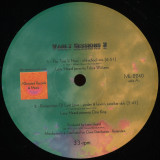
A journey into the raw and visceral origins: from the demo sessions mixed by Steve Albini to the night of the very first secret show on December 20th, 1988. In the heart of Chicago, Geordie and Martin Atkins turned frustration and distance into pure creative energy, recording the now-legendary "Black Cassette" demos at Albini"s house. Distorted, menacing bass lines, unruly oscillators, and Albini running endlessly up and down the stairs between the basement drum room and the pantry control room defined a sound that was brutally direct and uncompromising. The first interactions with the Yamaha drum machine foreshadowed elements that would later shape parts of the album. Those sessions sparked essential ideas, while the future studio - purchased from Steve and moved to Wabash Ave - would soon become the core of Invisible Records and Killing Joke"s operations. On the other side, a truly rare document: excerpts from Atkins"s very first show with the band, at Burberries in Birmingham on December 20th, 1988. In a small, mirror-lined club filled with tension, adrenaline, and inevitable collisions with the walls, Extremities, The Fanatic, Intravenous, and The Beautiful Dead were performed publicly for the first time. It was the night when everything ignited: the blast beat still in its embryonic stage, the controlled fury Geordie demanded - "can you go a bit more Moonie on it?" - and above all Jaz"s theatrical yet strikingly genuine laughter. Not just joy, but a declaration: a giant "fuck off" to the doubters and a prelude of what was about to come. A raw, essential, indispensable testimony: the birth of an era.
Buscar:re public
- Le Mieux Et Le Bien
- Yellow Moon
- Papillon
- Come Home
- My Little Sweet New Zealand Bunker
- Stop This World
- Indien De Paname
- Les Maximiseurs De Pi
- Notre Ile
- My Little Sweet New Zealand Bunker
- C'est Comme Ca C'est La Vie
Rather than yielding to despair in these troubled times and offering listeners a rope to hang themselves, Zimmermann (trombonist for Claude Nougaro, Manu Dibango, and Tony Allen) playfully grants them another option - a humorous sarcasm! He mocks the vain shelters of the powerful with the tune "My Little Sweet NZ Bunker", denounces the manufacture of one- track minds with "Les maximiseurs de PI", and escapism with the classic satirical Mose Allison's song "Stop This World (let me off" (translated and sung in French) In more tender moments, he reflects on the intimate consequences of this global unraveling.
Daniel Zimmerman's style, both as a composer and soloist, is that of a melodist above all else; disregarding concepts, he sings and seeks to go straight to the heart. He was voted 'Trombonist of the Year' by Jazz Magazine (Frances most influential jazz publication) in 2021, 2022, 2023 and 2024.
The roots of Studio Music lie in a special encounter between sound artist Jan D’Haene and visual artist Mark Manders. Recorded in Manders’ studio, where sounds resonated among the artworks, the music unfolded in dialogue with the imposing space. As the concluding part of a diptych, following the EP Études, this album evolves more slowly and with greater layers. It forms a dialogue with D’Haene’s introspective passages and invites a moment of pause and stillness. In doing so, the music embodies the tension between vulnerability and strength, between the individual and the universal.
- Side A. Gypsy Song
- Side B. Never Land
After traveling through Mexico, Miami, the Bahamas, and New Orleans, Nishioka recorded his fourth album South American Journey in Los Angeles,
released in 1979. From this album, two of his most celebrated tracks—“GYPSY SONG”, a fan favorite with numerous cover versions, and “NEVER LAND”,
featuring the distinctive sound of steel pans and a Japanese reggae vibe are now being pressed on 7-inch vinyl for the first time in a limited edition!
The recording features members of the So What Review band, including Junshi Yamagishi (guitar) and Osamu Ishida (guitar), along with renowned steel pan
player Robert Greenidge, known for collaborations with Van Dyke Parks and Taj Mahal.
(FLATT THE LAIDBACK)
Kyozo Nishioka Profile
(Born May 7, 1948 – Died April 3, 1999)
Singer songwriter from the Shima Peninsula in Mie Prefecture, affectionately nicknamed “Zo-san”.
After enrolling at Kinki University and moving to Osaka, Nishioka became a regular at the folk cafe Dylan in Namba, opened in August 1969 by Masaji Otsuka
and Yoko Ishimura. Dylan was a gathering spot for folk music enthusiasts from all over Japan.
Nishioka formed the folk group The Dylan with Masaji Otsuka and You Nagai, performing at folk camps and the Nakatsugawa Folk Jamboree. In 1971, Nishioka
left the group, and Otsuka and Nagai continued as The Dylan II. Nishioka wrote and composed the song “Puka Puka” under the pen name Zokyozo, which became
one of his signature works. The song was first released in July 1971 as the B-side of The Dylan II’s single “Otoko rashii tte Wakarukai” on URC Records.
Nishioka began his solo career, releasing his debut album “Dylan nite” in July 1972, produced by Kinji Yoshino on Bellwood Records, which included his own
version of “Puka Puka”. In September 1973, he appeared at the farewell concert of Happy End titled CITY – LAST TIME AROUND at Bunkyo Public Hall in Tokyo.
His 1974 album “Machiyuki Murayuki” was produced by Haruomi Hosono, and his 1975 album “Rokka My Baby” featured support from Shigeru Suzuki’s band
HUCKLE BACK. Nishioka recorded three albums under Hosono’s production, deepening their friendship.
Together with his wife and lyricist KURO, Nishioka wrote songs for artists such as Eikichi Yazawa. The couple traveled the world, recording overseas albums such
as “Nanbei Ryoko” (1977), “Yoh-Sollo” (1979), and “New York to Jamaica” (1981), incorporating reggae, calypso, and other global sounds. In the 1980s, he released
works under the duo name KYOZO & BUN with Yoshifumi Okajima, and in the 1990s returned to solo projects with albums like “START” (1993) and “Farewell
Song” (1997).
After KURO’s passing in 1997, Nishioka continued his musical activities until his own death in 1999 at the age of 50. His music transcended the boundaries of folk,
blending jazz and tropical elements to create a unique world view, leaving an indelible mark on Japanese music history.
2026 Repress
Alleviated Records is proud to present the first of hopefully a succession of releases sharing selections from our own Archive of recordings that either have never been issued or that have never been issued on the Alleviated imprint. After many years of being ''on-the-shelf'' we are extremely pleased to share these with the public. First up, we have a selection that was being considered for the ''Another Side'' (Fingers, Inc.) album that features Ron Wilson free-styling vocals to a deep-house vibe. To this day, we are not quite sure why this selection was not included on the project but are pleased to finally share it. Next up we have ''Electronic Debris'' delivering a ''mellow-deep'' vibe. Then we have ''Saspence'' with, as the title implies, a ''mysterious-deep-minimal house'' feel. Concluding the EP is ''Nyte Light'' delivering a ''deep-ambient-acid'' flavor. We sincerely hope that you enjoy these selections at the club and at home for a long time to come. Musically Yours...
2023 Repress
Alleviated Records is proud to present the second of hopefully a succession of releases sharing selections from our own Archive of recordings that either have never been issued or that have never been issued on the Alleviated imprint. After many years of being "on-the-shelf" we are extremely pleased to share these with the public.
- Ntr1
- Ntr2
- Drg5
- Drn9
- Drg10
- SL12:
- Drg14
- Drg15
- Prn2#16
- Otr
- Prn2_9Ofm15Tb
- Prn2_9Ofm15Ta
- Prn2_M15T
- Prn2_M15T_Selforg_Tapecut
NYZ (David Burraston) presents this collection of generative music pieces carefully extracted from a PreenFM2 gifted to him by Aphex Twin. PRN2_M15t is being released at the same time as an LP titled Stria from Dr. John Chowning who invented the original FM synthesis algorithms which were sold to Yamaha and used in the creation of the DX series of keyboards. An interview with Chowning, conducted by David Burraston, will be published at the same time.
David Burraston is an award winning artist/scientist working in the areas of technology and electronic music, operating Noyzelab as an independent art/science music studio since 1981. Numerous research publications include a 2006 PhD thesis Generative Music & Cellular Automata, which developed and applied fundamental new concepts from generative music practice to a key problem in complex systems theory.
His experimental arts practice encompasses field recording, landscape-scale sound art, chaos/complexity, practice-based research, sound synthesis and electronic music. He performs, lectures, conducts workshops and creates art installations in Regional NSW and around the world. David also designs and builds sound synthesizers based on his theories of chaos/complexity science. He was recently interviewed by Bandcamp Daily and The Wire Magazine.
David has worked with many diverse collaborators such as Aphex Twin, Chris Watson, Doug Quin, Russell Haswell, Robin Fox, Oren Ambarchi, Sarah Last, Cat Hope, Garry Bradbury, William Barton, Alan Lamb, MIT Media Lab and the Australian Broadcasting Corporation. In 2014 he independently published the legendary "SYROBONKERS!", the most technical and in-depth interview ever given by Aphex Twin.
- 1: Golden
- 2: Locks
- 3: Medusa
- 4: Roma
- 5: Katyusha
- 6: Runaway
- 7: Saigon
- 8: Brokenworld
- 9: Zoo Story
- 10: Trojan Stalks
- 11: Floods
- 12: Polen
In collaboration with EIoper Music, Impressed is proud to press the 10-Year Anniversary Edition of Szymon's debut album, Tigersapp, on limited edition vinyl.
Szymon was a multi-instrumentalist from Newcastle, Australia, with a deep love for jazz and production, building rich sonic worlds in his bedroom studio. Tigersapp stands as his creative legacy—a beautifully curated and emotionally layered collection that blends influences from folk, ambient, electronic, and indie pop.
These songs were mostly recorded in 2008–2009 in his home studio. After his death, his family and supporters enlisted producers like Rusty Santos (Animal Collective, Grizzly Bear) and Ian Pritchett (Angus & Julia Stone) to complete the mixes.
Tigersapp has earned both public and critical recognition in Australia and beyond. It debuted at #21 on the ARIA Albums Chart, and earned a nomination for the 2015 ARIA Award for Best Adult Contemporary Album.
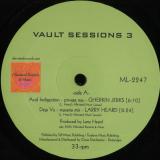
Alleviated Records is proud to present the third installment of 'Vault Sessions' series. Sharing recordings from the archives that either have never been issued or been out of print for a long time. After many years of being "on-the-shelf" we are extremely pleased to share these selections with the public.
Straight outta Gothenburg, DJ Blendah & The Printz blur the lines between remixes, edits and reworks, and “Get Funky in the Heart” is no exception. Taking the finest elements from Teddy Pendergrass, Dee-lite & Q-Tip, and adding fresh live bass and beats, this is a tried and (road)tested floor-filler! 122 BPM
On the flip, Studio 45 gaffer Del Gazeebo has relented to years of public demand to finally release “Know How to Shake?” to the public - a staple of his party sets over the years that has never since a vinyl release until now. Not only that, he's completely rebuilt it, with more sonic twists, turns and "party tricks" than ever before. It's the Young MC/Jacksons blend you never thought you needed, but essential all the same. 118 BPM
- A1: Fading Away
- A2: Make It Stop
- A3: Who Wins
- A4: Read Between The Lines
- A5: Automated Paradise
- A6: Terminal Terminal The End
- A7: Endless Sky
- A8: Brockwell Lido
This is Jah Wobble"s first post punk LP in recent years following travel and dub records. The brash guitar driven tracks reflect his continuing preoccupation with the declining state of the nation. Driven by his experience working each week at a music based community project in Merton, with Jon Klein, it is reminiscent of Mark Stewart. Angry in an empathetic, constructive way it resolved with the beautiful instrumental "Brockwell Lido". Like much of his work these days, much of the lyrical content comes while traversing London"s transport system. Jah Wobble, is an English bass guitarist and singer. He became known to a wider audience as the original bass player in Public Image Ltd (PiL) in the late 1970s and early 1980s; he left the band after two albums. Following his departure from PiL, he developed a solo career. In 2012, he reunited with fellow PiL guitarist Keith Levene for Metal Box in Dub and the album Yin & Yang. Since 2013, he has been one of the featured pundits on Sunday morning"s The Virtual Jukebox segment of BBC Radio 5 Live"s Up All Night with Dotun Adebayo. His autobiography, Memoirs of a Geezer, was published in 2009. Jon Klein Is an English guitarist and producer, best known for being a member of Siouxsie and the Banshees for seven years, from 1987 until 1994. He also founded Specimen and The Batcave nightclub. Klein has worked for other artists including Talvin Singh and Sinéad O"Connor. More recently he has worked as a co-producer and guitarist with Jah Wobble.
- A1: Move
- A2: Jeru
- A3: Moon Dreams
- A4: Venus De Milo
- A5: Budo
- A6: Deceotion
- B1: Goldchild
- B2: Boplicity
- B3: Rocker
- B4: Israel
- B5: Rouge
In 1949 Miles Davis, Gerry Mulligan and Gil Evans - they'd never met before - gravitated together with the natural
affinity of kindred souls. Combined, they gave each other a spiritual boost that resulted in many all-night sessions of
earnest discussion, writing and playing-productive work on new musical ideas, new voicings, new concepts of jazz.
Their first appearance startled a delighted jazz public, and marked the birth of the cool. Today, these famous Miles
Davis instrumentals are as exciting as ever, and here are in all their glory.
2026 Repress
Next year the iconic anthem Cafe Del Mar will celebrate its 30th anniversary, a landmark that will be celebrated with a series of brand new remixes alongside the finest existing remixes in specially remastered versions.
Launching the series of vinyl releases in September is a remastered vinyl-only release of the original mix, as well as the best-known version of this classic track, the iconic Three ‘N One Remix.
Nearly 30 years ago, Paul M aka DJ Kid Paul recording as Energy 52 unleashed a record onto an unsuspecting public that would go on to define club culture for an entire generation of dance music enthusiasts. Named as an homage to the legendary Ibiza sunset spot, Café Del Mar broke down boundaries between the underground and
the mainstream, charting in the UK singles charts on three separate occasions and named as the “best tune ever” by Mixmag at the start of the new millennium. In terms of cultural and emotional impact in dance music, it’s hard to find a record that comes close.
Café Del Mar has come to represent the most euphoric and hedonistic pleasures of dancefloors - in Ibiza and all around the world - and has been remixed by some of the biggest names in the industry. Now, 30 years after its original release, Superstition Records will be putting out a new series of releases, with brand new remixes as well as remastered versions of some of the many remixes from across the last three decades. The vinyl-only remastered version of the original and Three ‘N One mixes will launch the series, with further details about the rest of the series announced in the coming weeks.
In 2021 Paul Van Dyk’s Café Del Mar remixes launched a series of vinyl and digital re-issues on the Superstition Records imprint after an almost 20 years hiatus. From 1993 until 2003 Superstition Records was a groundbreaking Techno, Tech-House and Trance Label and released some of the biggest and most revered records of the early German electronic scene.
»Ka ora te awa. Ka ora te iwi. The river is well, so the people are well«, says artist and writer Hana Pera Aoake. »In a Māori worldview, everything is connected and contains mauri, the life spark or essence inherent in all things, as they contain the residue of ancestors through whakapapa, or genealogy. Within Western environmental histories, there is a gap in knowledge around what we can learn through an act of listening.«
Hana Pera Aoake’s words resonated with Hinako Omori when they were invited by the Serpentine Gallery to write a piece of music for their »Serpentine Reader« publication on the theme of circulation. Aoake’s essay about listening to the river and other bodies of water parallels Omori’s own Japanese cultural view of water as a sacred source.
»studies on a river« places these two notions side by side, with Omori’s recordings of water sources and elegant 3/4 synth compositions matched to extracts from Aoake’s writing. The first side presents the music alone, while the second is where the project really clicks, with Aoake’s themes and Omori’s gentle, washing sounds completely in sync.
If there is a year zero for the introduction of reggae music to Japan, you’d be forgiven for thinking it was 1979 when Bob Marley and the Wailers toured the country, trailed by an entourage of journalists, photographers and fans ready to spread the message of the music into all corners of Japanese society.
But the story of Japanese reggae is not a linear one, and the music that is collected on Tokyo Riddim 1976-1985 captures the moment J-reggae entered the broader public consciousness, merging commercial city pop style with an infectious backbeat, that has drawn comparisons with the emergence of Lovers Rock in the UK.
Rather than look directly to Jamaica, many producers and artists in Japan were inspired instead by the more approachable sounds of The Police and UB40, their reggae fix arriving pre-filtered through the lens of new wave pop from the UK. Playful and groovy, these album deep cuts have been overlooked for too long.
Among them are Miki Hirayama, the idol singer who borrowed the bassline from Bob Marley’s Natural Mystic on ‘Denshi Lenzi’, Chu Kosaka, who headed to Hawaii to cut the Jimmy Cliff-inspired ‘Music’ and Marlene, the Philippine songstress whose cover of Roberta Flack’s ‘Hittin’ Me Wear It Hurts’ owed much to her producer’s obsession with Sly & Robbie’s Compass Point sound.
Then there was Izumi “Mimi” Kobayashi, who enlisted the Babylon Warriors to perform on a dubbed-out version of her own track ‘Lazy Love’, the city pop-meets-new wave reggae sound of Miharu Koshi’s ‘Coffee Break’, Junko Yagami’s anti-apartheid deep cut ‘Johannesburg’ and Lily, whose ‘Tenkini Naare’ was produced by Ryuichi Sakamoto and closes out the compilation with a flourish.
While these stories may not always conform to neat narratives, they do provide a more accurate reflection of the indirect ways in which styles infiltrate one another and, in their naivety, have the potential to create something beautifully strange and entirely new. Previously only available in Japan, the tracks on this compilation are a testament to that curious alchemy.
Tokyo Riddim 1976-1985 is released on vinyl and as a full album download (no streaming), featuring original artwork by Japanese Fukuoka-based artist Noncheleee, whose cover pays homage to the iconic dancehall album art of Wilfred Limonious.
Released on 1st September, Tokyo Riddim 1976-1985 is part of Time Capsule's Nippon Series, a loose series of compilations exploring different musical scenes from Japan between the 1960s and 2010s.
- A1: We Mean It, Man!
- A2: Life Is Possible Again
- A3: No Time For Idiots
- A4: Hater Liquidator
- A5: Boiling Point
- A6: Ignition
- A7: From Boyarka To Boyaca
- A8: Mystics
- A9: We Did Good With The Good We Did
- A10: Crayons
- A11: State Of Shock
- A12: Solidarity (Nick Launay Mix)
We Mean It, Man! If you're receiving this message, you are a writerly/music/culture person who wants to know more about the new Gogol Bordello album the band just unleashed. It's called We Mean It, Man! And it's out on February 13, 2026 via Casa Gogol Records. Gogol frontman and spiritual figurehead Eugene Hutz calls it the band's "post punk revenge." It's a fitting description. We Mean It, Man! #was co-produced by Nick Launay, whose 40+ year run of musical partners reads like the Great Canon of avant-teasing rock: Idles, Nick Cave and The Bad Seeds, Public Image Limited, Gang Of Four, the Yeah Yeah Yeahs (he did the one with "Heads Will Roll" on it. Dude is the Quincy Jones of the underground). And Adam "Atom" Greenspan (Nick Cave, Idles, Refused, Amyl and The Sniffers).
ULURU is a large sandstone rock formation in Australia. It's sacred to the Anangu, the local Indigenous of the area. For many years it had been deprived of its spiritual significance, due to mass tourism, capitalism, as well as greedy and selfishness of people who just want to make money out of it. However, as a result of the Anangu’s resilience, care and staunchness, huge changes took place in the national park around Uluru as well as in the broader public's consciousness, giving again to the Uluru the sacred identity that had been lost.
You might be reading and thinking now: so what's the point? Actually, there's no real point. I would rather say, there’s hope. The hope of seeing humans all around the world following the example of the Anangu. The hope of seeing humans finally stopping to treat the earth and all what’s part of it, what’s on and what’s in it, as a slave without soul. The hope of changing today, and if not today at latest by tomorrow. This system is failing. It's no longer sustainable, and there's no much time left.
So everybody, don't sleep, be critical.
- A1: Public Domain
- A2: Bruised Sky
- A3: Guardian
- A4: Constantly Nowhere
- A5: Unravel
- A6: Dying To Forget
- A7: Time Will Tell
- B1: Eat The Hate
- B2: The Wait
- B3: If We're Following The Light
- B4: Blink
- B5: Ribs
- B6: Empty Hands
White w/ Blue Marble Color Vinyl[27,10 €]
- Intro
- Picto
- I Could Just Do It
- Build A Box Then Break It
- This Time I’m Present
- Showroom Poetry
- Expo
- Square Root Of None
- Weights & Measures
- A Modern Low
- Incomplete Symphony
If art is to be exhibited, then Ulrika Spacek will ensure that their art is collective; that even as the world becomes inhospitable to community, their intentions are an act of resistance.
Whether it is Oysterland, the self-curated night the band have been Hosting for over ten years to platform artists of other disciplines in live music spaces, or Total Refreshment Centre, the East London studio Syd runs which connects the dots between the jazz scene and like-minded experimental artists of the capital and beyond, or their creative bleed as musicians and producers over the years with the likes of Crack Cloud, caroline, DIIV, Holy Wave and Slowdive, the band’s existence is inseparable from their community.
In a hyper-individual world, the band’s fourth album, ‘EXPO’, offers an antidote. It’s there, in the shared dream logic of the music, the off-kilter melodies, jagged guitars and cirrus cloud atmospherics. It’s there, in all the things that are said and unsaid between them; there in the writing, producing and mixing processes they share in. And even as each of their parts Moves toward a unified vision, it’s never more keenly felt than in the bigger Picture to which Ulrika Spacek belong.
Though their well-established foundations are in the art-rock world - and though they are inspired by electronic elements more than ever - Ulrika Spacek are interested in the glitch that exists between the two. Their Music reckons with human warmth and digital isolation, equal parts welcoming and altogether alienating. “Our music has always been a collage - a bit patchwork, sonically - but what makes this album a landmark for us is that we went one step further and made our own sample bank,” explains singer / guitarist Rhys. They create their own doppelgängers in a world of almostreal, where the band appear as if in a hall of mirrors. Digital drums are sampled layered upon real drums, and the effect is almost like birth in reverse - pulled from the ether and returned back to the tangible world.
“There’s a lot that can be said about writing when there is no aim, there is a freedom and a purity in it which opens a door to more music, and in this case, it set a mood for a new album, one that would be colder, darker and one that would embrace electronics and new instrumentation in a new terrain,” the band share. “The album’s greater theme is isolation and alienation in an online world where it seems everybody around you is constantly exhibiting themselves, living in public wanting to be seen and heard. The age of ‘individuality’ is lonely, it’s a room of concave mirrors, and with this in mind, we set upon making our most collective effort; ‘It’s back to strength in numbers, count in fives.”
For fans of Radiohead, Moin, DIIV, Astrel K, Slowdive.
LP presented on Crystal Clear vinyl.
In conjunction with the 2025 re-pressing of the Nora Guthrie "Emily's Illness/Home Before Dark" 7-inch single, we have here, in the same format, a lovely cover of the latter tune, performed by Eddie Marcon, a band based in Himeji, Japan. The band's vocalist Eddie Corman and musician/producer Shintaro Sakamoto wrote the Japanese lyrics for this gorgeous version, recorded in 2024 and originally unintended for public release; however, this slice of sweetness, delivered by the full band comprising guitar, keyboards, bass, percussion and wistful winds is now available to the lucky listener. The flipside, recorded in 2025, is an intriguingly ghostly recomposed version for cello and flute by TORSO, a Tokyo instrumental duo, who used the basic tracks from the Eddie Marcon version of "Home Before Dark" as a 'guide' before finally deleting the basic tracks.