Germany-based metal band OBSCURA launch trilogy concept on stunning new album “A Valediction”. The group’s first (sixth overall) album for Nuclear Blast pivots on many fronts. Advanced, elegant, and yet refreshing, “A Valediction” sums up past endeavors effortlessly as it gazes with purpose and conviction into the future. OBSCURA are fan-renowned and critically acclaimed for challenging and then expanding upon norms. From “Cosmogenesis” (2009) through “Diluvium” (2018), the band flourished and made significant progress in a musical genre unprepared for a creative shot of German invention. “A Valediction” spearheads OBSCURA into a new era of extreme metal.
Guitarist/vocalist Steffen Kummerer founded OBSCURA in 2002. Early on, he set out to improve, redefine, and push forward. Under his self-label creation, the Bavarian released debut album “Retribution” (2006), followed by heavy touring throughout Europe. Word quickly spread that a brand-new band from the south of Germany was on the rise. Buzz lead to a deal with U.S.-based Relapse Records. The first record out was “Cosmogenesis”. In Europe, Metal Hammer Germany awarded the album 6/7 while in the U.S., “Cosmogenesis” hit the Billboard charts at #71. The cross-continental praise and fevered momentum landed OBSCURA on high-profile tours in Europe, North America, and Japan.
When follow-up “Omnivium” arrived in 2011, they upped their chart success (Billboard #11; Media Control #14), received more accolades from publications like Terrorizer, Rock Hard, and Decibel, had another massive round-world tour cycle, while enhancing and making progress on their clever brutality. OBSCURA further developed their sound on “Akróasis” (2016). Moored by jaw-dropping tracks like ‘Sermon of the Seven Suns,’ ‘Ode to the Sun,’ and the title track, “Akróasis” elevated OBSCURA to the highest levels of international renown, having climbed up the Billboard charts (#5) as well as earning top marks in Rock Hard (8.5/10), Metal Hammer Germany (6/7), and Revolver (4/5). The Germans toured the world yet again, playing over 100 shows in support of “Akróasis”.
OBSCURA’s most significant accomplishment was, however, just around the corner. The final part of a tetralogy, “Diluvium” (2018), fiercely pursued OBSCURA’s multi-album transformation into musical innovators and metal powerhouses. Music videos for the title track, ‘Emergent Evolution’ and ‘Mortification of the Vulgar Sun,’ in concert with a substantial interest in virtuosic, forward-thinking metal, posited OBSCURA in the good graces (yet again) of the worldwide press in addition to rocketing up, for the very first time, the official album charts in Germany (#58) and Switzerland (#93). The Germans also topped out at #3 on the Billboard Heatseekers chart with “Diluvium”.
OBSCURA‘s stats have been impressive: Twenty years active; six highly prized albums; over 600 shows on four continents. Worldwide fan and press engagement—the videos for ‘The Anticosmic Overload,’ ‘Akróasis,’ and ‘Diluvium’ have over 4.5 million views—is only getting stronger the longer OBSCURA continue to offer up and interact with (via play-throughs and member/gear spotlights) their very captive audience. This is only the tip of Kummerer’s custom ESP guitar, however. A Valediction finds OBSCURA turning the page to a new chapter in the band’s evolution. A year in the works, the songwriting sessions followed a new approach, where the framework was relaxed, allowing new inspirations, imagining, and opportunities to arise. Songs like the opening epic ‘Forsaken,’ the '80s-tinted ‘When Stars Collide’ (featuring Soilwork/The Night Flight Orchestra frontman Björn Strid), the brutal groove of ‘Devoured Usurper,’ the ethereal artistry of ‘Heritage,’ and the fleet-fingered title track benefitted compositionally (refined structures) and aesthetically (more dynamism) from OBSCURA’s restyled songwriting stratagem.
OBSCURA wrote, recorded, and finalized “A Valediction” during the pandemic. The stipulations of working during this time allowed OBSCURA to work cross-country, tracking each respective part—drums, guitar, and bass—in national studios across The Netherlands, Austria, and Germany. Once the pieces were completed, the recordings were shipped off to award-winning producer Fredrik Nordström and Studio Fredman (In Flames, Architects) in Gothenburg, Sweden, where Kummerer and Münzner completed vocals and acoustic guitars using custom-built ENGL amps. Nordström was also tapped to mix and master. The final result is a deeper, heavier, yet more rounded production.
Lyrically, “A Valediction” is layered in structure and meaning. The word ‘valediction,’ by definition, deals with goodbyes and farewells. In a way, this is auf wiedersehen to the four-part album series while also addressing complex topics of Kummerer’s personal life. Instead of obscuring issues of loss, death, and abandonment in metaphor and allusion, the German laid bare his torment across songs like ‘Forsaken,’ ‘Solaris,’ ‘In Unity,’ ‘The Neuromancer,’ and ‘In Adversity.’ But for every line of desperation, he also offers positivity. Indeed, new beginnings—physical, emotional, or environmental—can provide light in the darkness. Lauded artist Eliran Kantor (Testament, Helloween) was brought on board to visualize the leitmotif. The bronze-themed colourway Kantor used exemplifies OBSCURA’s resistance to individual and sonic corrosion.
In 2021, OBSCURA will lighthouse their musical prowess, thematic complexity, and lyrical ambition on “A Valediction”. The group continue to be a beacon for change. No doubt OBSCURA’s new stats will amaze, but what they’re focused on is the release of “A Valediction” and then taking it on the road. Several high-caliber tours of Europe, North America, and Asia are planned through to 2023, with routes are in the works for the band to visit Australia, South America, and beyond. Truly, there is no band quite like OBSCURA. “A Valediction” proves that persistence, perseverance, and enterprising minds can achieve anything. Welcome to the next level!
Поиск:re public
Все
We used to enjoy presenting Chapelier Fou's work using the idea of music in the form of a treasure hunt. However, while the phrase in itself it still just as relevant today, we would never have imagined that it would become such an integral part of one of his albums. Or two of his albums to be perfectly exact - Méridiens and Parallèles. Two records with twelve songs each which answer each other back in the form of anagrams. They are like the two sides of the same planet - similar but simultaneously so different. They need to be discovered one after the other taking the time necessary to travel through the sound territories produced by his imagination. The starting point is a sombre night in Uqbar… Chapelier Fou's opening reference to Borgès was obviously not made by chance. He subsequently confided in us the objective of his diptych, namely to combine reality with fiction to question certainties and our relationships with the imaginary sphere. He has continued with his traditional classical-contemporary electronic approach which, although now known to a wide audience, has the advantage of opening up a whole range of possibilities right up to the infinite scale. Moving away from an "État Nain" (Dwarf State) to take refuge on an asteroid...Throughout Méridiens, each composition can be seen as a universe in itself or a specific landscape with its own temporality. Proof of this is the introduction to the chamber music format composed for and performed by only strings which can only be given the date we want to give it. This is "État Nain" in which violins are played like guitars. In some parts we find the spirit of the Penguin Cafe Orchestra and the idea of cheering up classical instruments and not taking everything too seriously. In other parts, we find something close to a mischievous and childish unplugged grunge anthem that could be from the French series Les Shadoks. This mischievous view of things is shown to full effect in Am Scharchtensee. The introduction shows Chapelier Fou's whole classical universe and mastery of orchestration in which "modular" electronics provide a subtle and discreet backdrop. Then, the record suddenly switches to a surrealist dialogue between these classical sounds and modular synthesizers with the flavour of the German pioneers Kluster/Harmonia to name but one example. Timelessness and imaginary places. La vie de cocagne confirms this choice of total freedom. It's traditional music with old sounds, a kind of forgotten bourrée (old French dance) in which electronic sounds disturb the established order and thus reach another musical dimension. Le méridien du Péricarde followed by Désert de Sonora push this idea of a trompe l'oreille and a hall of mirrors even further. The latter track ends almost like a catchy 80s melody and we can no longer find any logical meaning. We let ourselves be carried away by this profusion of madness and are a little amazed by this mastery of sound, composition and space. It sometimes all seems like a succession of conjuring tricks. Chapelier Fou takes not being serious very seriously indeed. The end song Everest trail is the perfect conclusion, a deadpan track in which the primary aspect of a totally classical melody in all its straightness is underpinned by a permanent exchange of electronic tweets which mocks the main musical posture. This impertinence harks back to Pierre Schaeffer who directed the ORTF's very serious experimental department in another era and allowed the development of Jacques Rouxel's series Les Shadoks thus introducing the general public to the notion of concrete music. This is also perhaps why Louis Warynski's stage name is French – because he has opted to use his French musical heritage. Thus the first singles selected from this album, Constantinople with its groovy and jazzy allure and Le Triangle des Bermudes evoke composers like Michel Magne or Michel Colombier both of whom have totally open minds and consider all music to have the same importance, namely that of sound. In absolutely all the tracks that make up Méridiens, you will find at least one detail - a pattern, melody, sometimes a simple sound - that will draw you back to explore it a little more. And the words are carefully weighed for sure. It's quite simple. This is undoubtedly his most hypnotizing and catchy album. Chapelier Fou has become a complete master of his own universe. He draws the start and finish lines himself and no one can follow him in a field that now belongs to him alone. Composed imaginary spheres, illustrated territories...Music is just as meaningful as the more visual arts. Therefore the artwork of Méridiens had to project each of the twelve tracks considered individually and not just the whole album as such. Chapelier Fou therefore asked his old friend the contemporary artist Corentin Grossman to create twelve windows to represent glimpses of the twelve worlds composed for the record. Windows or mirrors when it comes to that? You can never be sure of anything...Space OK. But what about time? The years go by and sometimes we forget that fact. But a simple glance back is often enough to gently touch the time that has passed. It is over 10 years since his first official record and he has been composing, recording and sharing his music for almost 20 years. 20 years is a long time. It makes some people look old while others fall into reassuring but sterile nostalgia. Chapelier Fou, on the other hand, has released his most ambitious project and tried to take a higher view of his discography that was itself nevertheless irreproachable. Although the journey is over we can see Parallèles universes on the horizon. Chapelier Fou has announced 12 additional tracks which are like echoes of the compositions on Méridiens' and will be released on the album Parallèles next spring. They are neither twins nor opposites – they are instead totally original new compositions which go further in exploring a universe which is already richly abundant.
Black Vinyl[12,56 €]
Blue Vinyl
After learning her craft at an after-hours club in her hometown of Santiago de Chile, a pivotal move to Milan at the end of 2015 proved to be the ticket that would propel Paula Tape into the European club circuit. Six years later Paula has made a name for herself as a purveyor of eclectic selections, stomping Italo beats, percussive balearic excursions and synth-heavy rarities, both through her international DJ sets and shows on Worldwide FM and Milan’s Radio Raheem.
With two EPs under her belt via Alzaya & SOBO, collaborations with Project Pablo, Tornado Wallace & Elias Mazian to boot, and standout singles on Permanent Vacation, Ransom Note Records and Rhythm Section International’s highly regarded 2020 ‘SHOUTS’ compilation, we welcome the announcement of a knockout four-tracker from the Chilean producer on the same Peckham-based label. In the last 12 months she’s taken the Mixmag Lab & Boiler Room by storm, and with a slew of international tour dates and forthcoming releases lined up, 2021 looks set to be Paula’s year.
“When I started working on the Astroturismo EP I didn't know the music I was writing was going to shape into an EP. Finalizing the first track "Body Nature" helped me a lot to orientate the correct use of all the music I have been producing during the lockdown months and Rhythm Section team was constantly supporting me to make me feel free to explore musically without needing to stick to club music. "Body Nature embodies strong energies, in a very personal way: I noted down those silly lyrics and kept singing the melody in my head for days, in the end, that drove me to create a groove that would work and transfer the mood I was feeling. This track is about feeling relief with dancing, whether in a private moment like I did in those days or in a public space, few easy moves to trigger positive energy and improve your emotional state.” ~ Paula
Blue Vinyl[14,41 €]
After learning her craft at an after-hours club in her hometown of Santiago de Chile, a pivotal move to Milan at the end of 2015 proved to be the ticket that would propel Paula Tape into the European club circuit. Six years later Paula has made a name for herself as a purveyor of eclectic selections, stomping Italo beats, percussive balearic excursions and synth-heavy rarities, both through her international DJ sets and shows on Worldwide FM and Milan’s Radio Raheem.
With two EPs under her belt via Alzaya & SOBO, collaborations with Project Pablo, Tornado Wallace & Elias Mazian to boot, and standout singles on Permanent Vacation, Ransom Note Records and Rhythm Section International’s highly regarded 2020 ‘SHOUTS’ compilation, we welcome the announcement of a knockout four-tracker from the Chilean producer on the same Peckham-based label. In the last 12 months she’s taken the Mixmag Lab & Boiler Room by storm, and with a slew of international tour dates and forthcoming releases lined up, 2021 looks set to be Paula’s year.
“When I started working on the Astroturismo EP I didn't know the music I was writing was going to shape into an EP. Finalizing the first track "Body Nature" helped me a lot to orientate the correct use of all the music I have been producing during the lockdown months and Rhythm Section team was constantly supporting me to make me feel free to explore musically without needing to stick to club music. "Body Nature embodies strong energies, in a very personal way: I noted down those silly lyrics and kept singing the melody in my head for days, in the end, that drove me to create a groove that would work and transfer the mood I was feeling. This track is about feeling relief with dancing, whether in a private moment like I did in those days or in a public space, few easy moves to trigger positive energy and improve your emotional state.” ~ Paula
- A1: Tomaga - Dub Divers
- A2: Zzmmyyhh - Ypy
- A3: Kuzaliwa Upya - Hieroglyphic Being
- A4: Hilal - Tarek Yamani
- A5: Vaguement (Haddadi) - Alan Strani
- B1: And The Ashes Of Our Burning Souls Will Fly Away - Ben Bertrand
- B2: Schein Davon - Conny Frischauf
- B3: Sitt-Il Muhanna - Aya Metwalli
- B4: Zumayyah (Remix) - Joakim
- C1: Yā Mal (Midaf ) - Poul Rovsing Olsen (Archive)
- C2: Zumayyah - Poul Rovsing Olsen (Archive)
- C3: Haddadi - Poul Rovsing Olsen (Archive)
- D1: Bahrï - Poul Rovsing Olsen (Archive)
2LP + 258p book[44,08 €]
New FLEE publication focused on Arabian Gulf's pearl divers, their culture through their soundscape, traditional songs & rhythms. Including archival recordings and reinterpretations by moderns electronic artists such as Joakim, Tomaga, Ben Bertrand, Conny Frischauf, Hieroglyphic Being .....
Available as 2LP, black vinyls & 2LP+258p book (English & Arabic text) bundle.
The pearls of the Gulf have stoked the imagination and desire of people around the world for centuries, their magnificence matched only by the courage of the divers who found them. This project aims to honor the memory of these valiant free-divers, their culture and their music by the means of a 2XLP compilation with undisclosed original recordings of pearl divers and inspired modern-day compositions by artists like Tomaga, YPY, Ben Betrand, Tarek Yamani or Hieroglyphic Being. Along with that record, a 258 pages long book in Arabic and English is available featuring contributions from regional experts and artists to contextualize the tremendously rich theme that is pearling and its music.
UMAN’s Chaleur Humaine, the debut album from the French duo of musicians and siblings Danielle and Didier Jean, resurfaces for the first time since its original release in 1992. While history, both private and public, is scattered with creative relationships between siblings that simply “did not work,” UMAN’s story is uniquely different and defined by this bond, and a shared journey impressing footprints along an adventurous musical terrain.
Storage units hold possessions on pause from the outside world, objects capable of reconnecting us to a time or place. Hana Vu (born in 2000s California) grew up with her family making regular use of public storage spaces in Los Angeles, moving every few years, leaving a mix of the sacred and the mundane to sit inside concrete and steel. The 20-year-old musician sees the art of making and releasing songs in a similar sense: “these public expressions of thoughts, feelings, baggage, experiences that accumulate every year and fill little units such as ‘albums.’” She lived next to one of these buildings when she started writing her full-length Ghostly International debut, Public Storage, and its towering presence lends a metaphor to a record that sounds far bigger than the bedroom it came from.
Vu’s relationship with music began when she picked up a guitar her dad had lying around and taught herself to play. She’d wake up every day and listen to LA’s ALT 98.7, home to ‘90s and ‘00s alternative rock; later in high school, she found the local DIY scene. She remembers, “A lot of my peer musicians were surf rock/punk type bands and so I tried to fit into that when I was gigging around. But what I was listening to at that time St. Vincent, Sufjan Stevens was very different from what I performed.” Ultimately she’d do her own thing, keeping a journal of bedroom pop ex-periments on Bandcamp, including a low-key Willow Smith collaboration and covers of The Cure and Phil Collins. She caught the ear of Gorilla vs. Bear, who released Vu’s self-produced debut EP in 2018 on their Luminelle Recordings imprint, followed by a double EP the next year.
Public Storage builds on the sound of Vu’s early work underscoring her strengths as a songwriter with a deeper sense of luster, sophistication, and urgency. She calls it “very invasive and intense sounding music,” refreshingly out of step with contemporary trends; this is music to engage with rather than lean back to. For the first time, she welcomes a co-producer, Jackson Phillips (Day Wave), who helps Vu create a vast, grainy, multifaceted world to stretch into vocally, her distinct contralto drifting freely between evocative low-lit ruminations and soulful, skyward bursts.
Storage units hold possessions on pause from the outside world, objects capable of reconnecting us to a time or place. Hana Vu (born in 2000s California) grew up with her family making regular use of public storage spaces in Los Angeles, moving every few years, leaving a mix of the sacred and the mundane to sit inside concrete and steel. The 20-year-old musician sees the art of making and releasing songs in a similar sense: “these public expressions of thoughts, feelings, baggage, experiences that accumulate every year and fill little units such as ‘albums.’” She lived next to one of these buildings when she started writing her full-length Ghostly International debut, Public Storage, and its towering presence lends a metaphor to a record that sounds far bigger than the bedroom it came from.
Vu’s relationship with music began when she picked up a guitar her dad had lying around and taught herself to play. She’d wake up every day and listen to LA’s ALT 98.7, home to ‘90s and ‘00s alternative rock; later in high school, she found the local DIY scene. She remembers, “A lot of my peer musicians were surf rock/punk type bands and so I tried to fit into that when I was gigging around. But what I was listening to at that time St. Vincent, Sufjan Stevens was very different from what I performed.” Ultimately she’d do her own thing, keeping a journal of bedroom pop ex-periments on Bandcamp, including a low-key Willow Smith collaboration and covers of The Cure and Phil Collins. She caught the ear of Gorilla vs. Bear, who released Vu’s self-produced debut EP in 2018 on their Luminelle Recordings imprint, followed by a double EP the next year.
Public Storage builds on the sound of Vu’s early work underscoring her strengths as a songwriter with a deeper sense of luster, sophistication, and urgency. She calls it “very invasive and intense sounding music,” refreshingly out of step with contemporary trends; this is music to engage with rather than lean back to. For the first time, she welcomes a co-producer, Jackson Phillips (Day Wave), who helps Vu create a vast, grainy, multifaceted world to stretch into vocally, her distinct contralto drifting freely between evocative low-lit ruminations and soulful, skyward bursts.
Limitierte farbige LP! "Public Storage" baut auf dem Sound von Vus früheren Veröffentlichungen auf und unterstreicht ihre Stärken als Songwriterin mit einem tieferen Sinn für Glanz, Raffinesse und Dringlichkeit. Sie nennt es eine "sehr invasive und intensiv klingende Musik", die erfrischend unkonventionell zu den zeitgenössischen Trends ist; dies ist Musik, auf die man sich einlässt, anstatt sich zurückzulehnen. Co-Produzent Jackson Phillips (Day Wave) half Vu dabei, eine riesige, körnige, facettenreiche Welt zu erschaffen, in die sie sich stimmlich hineinbegeben kann, wobei ihre ausgeprägte Altstimme frei zwischen beschwörenden, tiefgründigen Betrachtungen und gefühlvollen, himmelwärts strebenden Ausbrüchen hin- und herpendelt. Die ersten Klänge, die wir hören, sind bezaubernd: Vereinzelte Klaviertasten gehen in "April Fool" in warme Schläge und Selbstharmonien über, während Vus Protagonistin ihre Umgebung und ihre Fähigkeit zu kommunizieren verleugnet. Das sanfte bernsteinfarbene Glühen geht über in den Titeltrack des Albums, einen dunkleren, düsteren, lauteren Ort. Vu rennt durch "Public Storage" mit einer Reihe von trotzigen Zurückweisungen (Versagen, Familie, Magie) und kathartischen Forderungen. Es ist eine seltene und kraftvolle Zurschaustellung von Verletzlichkeit von einem Texter, der das Abstrakte dem Autobiographischen vorzieht. Aubade", das auf einem Disco-Synthie-Muster und groovenden Bass-Stabs aufbaut, hat den hellen Schwung seines morgendlichen Namensvetters, der geschickt im Widerspruch zu seinem niederschmetternden Thema steht. Der Kontrast setzt sich in "Keeper" fort, einem pulsierenden New-Wave-Song mit träumerischen Synthesizern und einem coolen, knurrenden Erzähler, der diese Kraft erneut herausfordert. "Gutter" kehrt zum grungigen Lowlight zurück, mit muskulösen Gitarrenriffs, die sich über einem Bett aus Rückkopplungen abzeichnen und zusammen mit orchestralen Streichern zu einem brüllenden Finale anschwellen. Die hintere Hälfte von Public Storage bietet einige der markantesten Momente: Das rhythmische, hooklastige "Everybody's Birthday" spricht von der bösen Absurdität der Gegenwart, dem Ende der Zeiten. Die Nacht ist rot, die Stimmung ist blau, und die Scham ihrer Figur ist goldfarben. Vu hebt sich "Maker" für den Schluss auf, einen letzten Versuch im Existenziellen.
One Instrument welcomes the Australian sound artist and composer Felicity Mangan. Based in Berlin since 2008 she plays her found native Australian wildlife archive and other field recordings exploring the timbre and biorhythm of animal voices and field recordings to create minimal quasi-bioacoustic environments.
For the release on One Instrument the mouth organ is her instrument of choice. Felicity explores the resonance and pitch of the reeds within at the harmonica The Echo Harp of the brand M.Hohner. “Bell Metal Reeds” shows a committed and ambitious composition in each singular tone. The striking attention to detail and commitment to investigating tonal possibility characterizes throughout the whole body of work.
As an amateur player, through breath and minimal electronic music composition techniques she composed four beautiful organic ambient pieces within the parameters of the One Instrument concept.
Felicity breaths new life into the harmonica and meditates on a the single instrument where she takes extraordinary sounds out of. The Echo Harp that Felicity used was found on a flea market in Hamburg in February 2020. All tracks were composed during the severe lockdown in the Autumn of 2020 in Berlin.
Felicity Mangan is an Australian sound artist and composer based in Berlin, Germany since 2008. In different situations such as solo performance, collaborative projects with other musicians or installation, Felicity plays her field recording archive exploring timbres and biorhythmic patterns to create quasi-bioacoustic electronic music. Felicity has played in collaborative projects Native Instrument (Shelter Press, Entr’acte) presenting electro-acoustic bug beats with vocalist Stine Janvin.
Felicity has released solo publications on Longform Editions titled Stereo’frog’ic, a play on the word stereophonic – presenting a sound piece, crafted from found recordings of frogs, insects and other ‘vocal’ animals wavering about in a stereo field.
More recently a tape release titled Creepy Crawly on Slovakian label Mappa Editions. With the up and coming release Bell Metal Reeds on One Instrument, November 2021. Felicity has presented projects in many different settings from galleries, gardens, clubs, festivals and online platforms throughout Europe, including National Gallery Denmark, Technosphärenklänge CTM/HKW, Sonic Acts Academy and RIVERSSSOUNDS
Echolocation is the debut album by Pamela Z, the pioneering Bay Area intermedia composer and performance artist. Written and recorded over three years, and self-released and distributed on cassette in 1988, Echolocation is genre-defying document of Z’s earliest experiments with live voice and delay, and the impetus of an artist’s three decade search for sounds yet unfelt.
Born and raised in Buffalo, New York, Z traded one snowy backdrop for another to attend the University of Colorado in Boulder at the tail end of the 70s, where she pursued a degree in music while taking local gigs covering Joni Mitchell and Malvina Reynolds b-sides on an acoustic guitar. While a host at KGNU, Z discovered a vast world of avant-garde music in the community radio station’s library, and was inspired to create towards, and alongside, the fringe sounds she pulled from the stacks and broadcast. This revelation intersected with a new era of accessible and affordable instruments and home recording technology, and a diversifying community of artists self-releasing music on cassette and finding an audience through underground publications.
Z moved again to San Francisco in 1984, legally changed her last name, and furthered her practice of vocal processing in live environments. A city simultaneously nurturing and stratifying the free spirit of the two decades prior, Z assumed an immediate role in the Bay Area’s interdisciplinary performance art scene, and began curating Z Programs, her own concert and event series.
Richard Ashcroft is set to release the new album ‘Acoustic Hymns Vol. 1’ on October 29th via RPA / BMG. The album features twelve newly recorded acoustic versions of classic songs from his back catalogue spanning both his solo career and his time with The Verve.
ABOUT
After lockdown was lifted, Richard decided to start the project as a way to reunite the community around him, bringing a selection of great musicians and old friends back together again. As the project took shape, they discovered just how varied their new approaches could be. Some of the arrangements proved to be timeless and remained similar to the originals, with years of experience and a new found passion that saw Richard’s vocals express a fresh empathy within their lyrics. Meanwhile, other songs took on a new shape in this stripped-back set-up.
The rebirth of the iconic ‘Bittersweet Symphony’ was an emotional moment for Richard. It felt particularly poignant re-recording a song that he had written almost twenty-five years ago, especially as it's now officially his composition after Mick Jagger and Keith Richards relinquished their writing credits to him.
Another big moment comes with the new version of ‘C’Mon People (We’re Making It Now)’, a duet with Richard’s old friend Liam Gallagher. The pair have often talked about recording or performing the song together since it was first released in 2000, and now it’s finally happened - the sheer energy and delight that they shared during the session is palpable as the new recording beams with a joyous feeling of optimism.
‘Velvet Morning’ is another track that has been transformed. The vocals on the original version, as featured on The Verve’s classic ‘Urban Hymns’, were sung via a megaphone that Richard had purchased from a car boot sale the day before the recording session. Now Richard’s vocal really shines as it unleashes the song’s full magnitude.
The biggest surprise on ‘Acoustic Hymns Vol. 1’ is the inclusion of ‘This Thing Called Life’, a song which Ashcroft has rarely played live. It was originally recorded with No I.D. in the USA as a highlight of his soul-tinged RPA & The United Nations Of Sound project. Now taken back to basics, the new arrangement reveals a song that feels perfectly at home alongside Richard’s most highly regarded work.
Produced by Richard with regular collaborator Chris Potter, the album features his regular live band boosted by some special collaborators. Wil Malone provides the string arrangements, which were recorded at Abbey Road Studios. In addition, Chuck Leavell (The Rolling Stones, The Allman Brothers) performs piano, Roddy Bloomfield leads the brass section, and Steve Wyreman (Leon Bridges, Vic Mensa) contributes acoustic guitar and backing vocals.
Richard Ashcroft recently announced details of four special shows, each billed as “An acoustic evening of his classic songs.” After quickly selling out two nights at London’s Palladium, he subsequently added two bigger shows at the Royal Albert Hall and the M&S Bank Arena in Liverpool to fulfill huge public demand for tickets. He will play:
SAGA’s tenth studio album ‘Steel Umbrellas’, released in May 1994, was one of the most unusual releases in their career. Only 24 months earlier, the band had come together again in their original line-up after a break of more than six years. Back together, they approached a more radical way in terms of composition and production than the public was used to. The band came up with an album featuring a number of outstanding titles like “Why Not?’, ‘Shake That Tree’, ‘I Walk With You’ and ‘Steamroller’, which made it onto the setlists of their live shows. ‘Steel Umbrellas’ will become available on vinyl for the first time ever, featuring the live version of „I Walk With You“ as a bonus track as well as personal liner notes by Jim Gilmour.
Best known as Hot Chip's clear-voiced frontman, Alexis Taylor also pursues a solo career as an introspective singer/songwriter, exploring distinct themes and ideas with each record. Today Alexis announces the release of his sixth and strongest solo album to date, Silence,
Partly about silence - and how we intersect with it, observe it, try to record it, and how we feel about it when it’s gone, as we remember it - the record is also about religion, transcendence, giving oneself over to something bigger than you, or beyond this world. “I’m not religious myself,” adds Alexis, “but the songs which deal with the idea of gospel music or religion, look at it from a distance (rather like the shaky hand-held lens through which we follow the action in Pasolini’s ‘Gospel According To Matthew’) and try to uncover its influence on music and on people in desperate circumstances.”
The genesis behind Silence started a few years ago with Alexis ruminating on silence as a subject and making plans to make a record of the sounds you hear in public spaces as people observe moments of silence. He then lost his own personal access to silence as tinnitus began in his right ear in 2019 at a Hot Chip show. As Alexis explains, “I started to think about what it meant to me to lose quietness, solitude, meditative head space - as that was no longer available to me.”
Mostly composed in enforced isolation, Silence is a beautifully rich and unexpected conceptual album that is also Alexis’ most accomplished solo record and one that has seen early comparisons with a notably eclectic range of artists including Mark Hollis, George Michael, Big Star, Epic Soundtracks and Maher Shalal Hash Baz. This record sees the first time Alexis has collaborated with Sam Becker (double bass), Kenichi Iwasa (horn, trumpet) and Rachel Horton-Kitchlew (harp), who due to lockdown had to work in isolation from Alexis. In one case Kenichi recorded musical passages which were then superimposed on songs he had never heard - in effect keeping the songs themselves silent from the playing until the mixes were played to him.
After being out of print for years, Atmosphere’s fifth studio album, You Can’t Imagine How Much Fun We’re Having, returns on vinyl. Following the breakthrough success of their four th album, Seven’s Travels, the group returned in 2005, showing impressive growth and inventiveness in their new compositions. Citing inspirations f rom a list of less-than-expected sources, including Tom Waits, Mark Lanegan, Shawn Phillips, Spoon, The Mars Volta, alopecia, Public Enemy, Boogie Down Productions, The Beauty Pill, infected wisdom teeth, Craig Finn, TV On The Radio, Australia and I-94 East, among others, the album pushed boundaries without over reaching.
“Atmosphere has never sounded as pointed and focused as it does here on its fifth album.” –Billboard [8 Oct 2005]
“Both a return to form and a major step forward.” –URB Magazine [Dec 2005, p.94]
“Producer Ant’s production is full and springy. Whether flipping operettas on ‘Say Hey There’ or dropping pianos from five floors up on ‘Musical Chairs’ he’s got sundry abilities.” –Pitchfork [3 Oct 2005]
“Ant has never captured Slug‘s pen strokes quite like this, and as an emcee and a songwriter, Slug has never sounded this good over the course of an LP. [You Can’t Imagine How Much Fun We’re Having] is absolutely their zenith, in every sense.” –HipHopDX [4 Oct 2005]
• Vinyl has been out of print for years.
• Written and performed by Slug. Produced by Ant.
• Features popular tracks “Smart Went Crazy”, “Pour Me Another”, and
“Little Man”.
• Vinyl packaging includes 12” gatefold jacket housing black double
After the demise of the Ooga Boogas in the Before Time,
the four band members went their very separate ways. Being
in that band was such an intense high pressure experience,
some chillax time was well-deserved.
Leon Stackpole aka Stacky recorded under the name
Leon, Per Byström joined Voice Imitator, Mikey Young
recorded with The Green Child and Richard Stanley
played in Drug Sweat. All quite deserving projects, but it
was Stackpole’s solo outing that garnered the most interest
from public and industry alike. The demand for live shows
led him to recruit Byström from Ooga Boogas and a guy
named Brad into his touring lineup.
The trio was red hot, but inevitably the venues they
filled required a fuller sound so Stackpole recruited Young
as well on second guitar. The gruelling touring schedule
became too much for family-man Brad, so Stanley jumped
in to fill his size 11s and off they went for another lap of
regional Victoria.
Eventually the question presented itself to this freshlyminted
foursome: should they continue as Stackpole’s
backing band or strike out anew with a fresh identity? The
answer came in a moniker too electrifying to resist; a name
as clever, enigmatic and indeed, as powerful as the band
itself: Power Supply.
Back in the shed, jams became songs, jokes became
lyrics and long afternoons spent together became this record—
listen though, and one will hear life through the lens
of Stackpole and the tactile tentacles of his pals. In The
Time Of The Sabre-toothed Tiger contains ten songs that
listen so easy, one will barely notice when they’re gone.
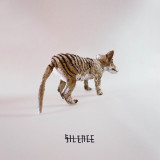
Bols was a rock band from Tromsø, a town in northern Norway. The band was active through 1983-1986, and drew inspiration from the english post-punk acts of the early eighties (Joy Division, Echo & The Bunnymen, The Fall, Public Image Limited etc). The band was quite successfull locally, and did a couple of tours in Norway and Denmark. The band didn't release any records during their active period, even though recording sessions took place on several occasions in 1984 and 1985. The 2021 release "Film" is a collection of some studio recordings and some rehearsal room recordings, and spans the whole period of 1983-1986. The album was collected and remastered by Geir Jenssen from Biosphere.
Ross Sinclair is a drummer, guitarist and founding member of The Soup
Dragons. In the early 1990s Sinclair left the group to complete his studies at
the Glasgow School Of Art.
Ross Sinclair is best known for his Real Life project, initiated in 1994 when he
had the words ‘Real Life’ tattooed across his back. Since then Real Life has become a 23-year performance project, taking form in a wide range of exhibitions, public art and publication contexts. Over the two decades of the Real Life
project, Sinclair’s work has employed various mediums including performance,
painting and music, often at the same time.
Through installation and audience participation Real Life has sought to challenge the conventional exhibition practice and connect with the public. These
projects have been exhibited worldwide. Throughout the course of the project,
a consistent thread of Sinclair’s work has sought to address the nature of the
individual, collective and national identities of Scotland.
During August 2015, Sinclair exhibited his work in 20 Years of Real Life at Edinburgh’s Collective Gallery which celebrated 20 years of his Real Life project.
Sinclair worked with teenagers to create 5 bands and produce an LP titled Free
Instruments for Teenagers. Real Life is Dead/Long Live Real Life The most recent incarnation of the Real Life project came as part of a two-week residency
Ross Sinclair undertook at the Shanghai Himalayas Museum in China, ahead of
his solo exhibition titled Real Life is Dead/Long Live Real Life.
This exhibition served to herald a new phase of Sinclair’s on-going Real Life project. For the exhibition Sinclair added the text ‘Is Dead’ to the ‘Real Life’ tattoo.
The residency focused on the consistent themes of participation, performance
and collaboration, coupled with Sinclair’s use of music in his art throughout his
career. Sinclair worked with students at the GSOA over a period of two years to
develop and record two songs (Real Life is Dead and Long Live Real Life) which
lay at the core of the exhibition. The songs were recorded in both English and
Chinese.
In Shanghai, Sinclair worked with local musicians, artists and singers to create the Chinese-Scottish Real Life Orchestra - a musical dialogue between the
Chinese audience and Sinclair’s Real Life Project. The group came together in
a collective voice, in English and Chinese, to share experiences through music.
The orchestra presented a live performance at the opening reception of the
Phase Three exhibition of CURRENT: Contemporary Art from Scotland, which
provided the soundtrack to Sinclair’s installation consisting of multiple editions
of banners and videos representing the 23-years of the Real Life project. Participants were also invited to respond to the themes of Real Life is Dead/Long
Live Real Life with words and pictures which were displayed on banners and
placards.
- A1: Témoignages
- A2: Pop Secret
- A3: Voyage Conseil
- A4: Lion D'or
- A5: Flash Sports
- A6: Spot Hub
- A7: Journal Tv 2
- A8: Stade 2
- A9: L'art Au Monde Des Ténèbres
- A10: Sonal Roissy
- B1: Bongo Fuego
- B2: Electrorythmes
- A3: E Pericoloso Sporgersi (Élément)
- A4: Une Mission Éphémère
- A5: Une Honorable Partie De Gó
- A6: Sonal Roissy (Inédit)
Transversales is very glad to announce the release of Mémoire Magnétique Vol. 2 spanning 1966-1993, revelatory collection of short and secret music by electronic music pioneer Bernard Parmegiani.
Since the late 50's, Bernard Parmegiani, a major figure of electroacoustic music and a founding member of GRM has created some eighty two concerts music. From the start,
Parmegiani’s work was closely linked to the screen, with dozens of documentaries, films, long features, animation films but also musical pieces for dance, stage or television. If many of his pieces are landmarks in the history of electroacoustic music (De Natura Sonorum, La Roue Ferris…), his application music compositions are strongly embedded in the subconscious landscape of the French public (Stade 2, Roissy Paris Airport…).
The second volume of this compilation allows us to discover some of unreleased rarities from Bernard Parmegiani’s personal archives and unpublished recordings which were composed for the screen or the performing arts.
Freestyle Records will release Dan Berkson's debut LP, Dialogues, on September 17th on LP & digital.
Following a move to London and an immersion in the city's deep house scene, Dan Berkson's subsequent rediscovery of his earliest musical foundations and the drawing of inspiration from London's buzzing contemporary jazz scene would lead to Dialogues - an accomplished and rewarding body of work pulled together during his final days in London before relocation to California.
"It was inevitable that Dan Berkson would make a jazz album like Dialogues: joyful, danceable, entertaining, driven by the pleasure principle, and filled with virtuosity. It represents Berkson's experiences in London, where jazz is a living, breathing, dancing scene. It's his love letter to the city, bristling with British talent such as bassist Andrea di Biase (Heidi Vogell, Maria Chiara Argiro, Bruno Heinen) and drummer Jon Scott (Kairos 4Tet, Sons Of Kemet, Mulatu Astatke) and recorded in his final days in the city before relocating to California. It's also rich with history: the musical journey that brought him to this point covers almost 40 years and 4,000 miles.
Berkson received lessons from Chicago boogie-woogie veteran Erwin Helfer - who in turn had learned alongside foundational legends such as Mahalia Jackson and Glover Compton. In 2001 he came to the UK, throwing himself into the deep house scene of East London, his duo with James What signing to Steve Bug's legendary Poker Flat.
But eventually he felt that he'd achieved what he could in the house format. Rediscovering the piano and discovering that jazz provided him the opportunity to keep learning, he enrolled in Trinity College in South London just as South London's jazz scene was exploding into the public consciousness.
Dialogues is a jazz album, not an electronic one – but all the groove-based influences, from the rootsy blues and ragtime of his youth, through the funk he played at college and the house he imbibed in London can be heard, as can his love of the studio as an instrument and mixdowns that suit a club soundsystem. Detroit dons Theo Parrish and Moodymann are every bit as important to this record as Charlie Haden, Carla Bley, Keith Jarrett, Ornette Coleman, Jimmy Giuffre, and Herbie Hancock. There's 50s and 60s cool modernism (just listen to the elegant ripples of "Sketches"), there's 70s funk fusion ("Unity" kicks things off with a spring in its step), and of course there's the pumping blues heart of "Live Bait". Above all else, though, it's a personal document: a life of music and collaboration crystalised in a magical, transitional moment. Where Dan goes next musically is as uncertain as anything in these times... but this one record tells you everything you need to know about where he's been."