Suche:re style

Styles
Alle
ASHER WHITE - 8 TIPS FOR CATASTROPHE LIVING
  • The Sink Thank You
  • Beers With My Name On Them
  • Why I Bought The House
  • Travel Safe
  • Cobalt Room: Good Work / Silver Saab
  • Voice Memo
  • Like Another Planet Instrumental
  • Country Girls
  • Falls

On the cover of 8 Tips for Full Catastrophe Living, the new album by Asher White, The Statue of Liberty is in pieces but not destroyed - in progress, being built, not yet complete. Her torch is on the ground, her head somewhere out of frame. Before she was a symbol, she was metal, and living, sweating people riveted her together. The spirit of de/construction characterizes 8 Tips, White's 16th LP overall and first since signing to Joyful Noise. Like White's previous albums, 8 Tips for Full Catastrophe Living darts boldly among varied musical styles. Doom metal splits open into bossa nova; psychedelic rock and power pop flip into industrial techno. Each song emerges from its composite parts in the studio: White doesn't draft or demo before recording, but builds out her pieces sculpturally, sound by sound. "It's forever collage, forever assemblage," she says of her music. "To me, it has more to do with J Dilla, L.A. beat, and musique concrète than pop songwriting." The record's quick turns and vivid contrasts reflect White's cultural voraciousness. A writer, painter, and sculptor as well as a musician, she gathers materials constantly, always digging for new ideas in every possible form. The films of Claire Denis, the novels of Clarice Lispector, and the memoirs of Eve Babitz all funnel into White's reflection of 21st century disaster capitalism. 8 Tips is also White's first album to have been mixed outside her Providence studio; after recording it herself, she brought tracks to Seth Manchester (Lightning Bolt, Battles, The Body) who gave the album its brawny, unruly charge. "I was interested in making something that serves dually as a self-help book and a chronicle of self-destruction," says White. Overlaying autobiography onto character vignettes, 8 Tips for Full Catastrophe Living wrenches open the idea of apocalypse - an abrupt disaster rained down on uncomplicated innocents - and peers inside at its bursting, devastated particulars. Apocalypse is slow and uneven. Nations falter as do individual people, clinging fast to their old, dilapidated self-preservation strategies. What saved you in the past might destroy you in the future. Flip it around, shake yourself loose, ruin the person you've known yourself to be, and you might get the chance to become something else. "There have been so many end times, many other apocalypses." White says. "People were writing self-help tips, and people were partying." We have survived catastrophe before. Out of the ruins, people made work - art, books, culture. "I was interested in making something that sounds like a self-help book, but it's actually about self-destruction," says White. "In full catastrophe living, you just have to do a bunch of whippets. This album is mostly about doing whippets. I'm not even kidding."

vorbestellen12.09.2025

erscheint voraussichtlich am 12.09.2025

24,79
Spandau Ballet - Everything Is Now  Vol 1: 1978-1982 (Boxset)

Spandau Ballet, one of the most influential bands in British music, announce the release of their definitive early years collection, "Everything Is Now – Vol 1: 1978-1982" - a comprehensive 9-disc box set featuring their groundbreaking first two albums alongside a wealth of previously unavailable material. It includes a beautiful 44 page book with original photos from fellow Blitz Kid Graham Smith and new commentary from the whole band.

Released September 12th on Parlophone, this meticulously curated collection captures the band's origins and meteoric rise from Blitz Club favourites to chart-topping innovators. The set includes their seminal albums "Journeys To Glory" (1981) and "Diamond" (1982) on vinyl, plus six CDs of singles, remixes, BBC sessions, demos, and a Blu-ray of Dolby Atmos mixes, videos and rare live footage.

This collection showcases the band's evolution through their formative and revolutionary period, from the electronic-infused new wave of early singles like "To Cut A Long Story Short" and "The Freeze" to the funk-influenced sophistication of "Chant No. 1" and "Instinction." They were simply the most cutting edge, futuristic band in the world, at the centre of a creative scene that defined the 1980s.

This box set features all the band's early classics including "To Cut A Long Story Short," "Chant No. 1," "Muscle Bound," "Paint Me Down," “Instinction” and "She Loved Like Diamond," and presents multiple versions of tracks that trace their development from initial demos to extended 12" club mixes.

The Blu-ray component includes Dolby Atmos and stereo remixes by acclaimed producer Steven Wilson, alongside original music videos, BBC TV appearances and the complete 56-minute concert from New York's Underground Club in 1981.

"Everything Is Now – Vol 1: 1978-1982" stands as the definitive document of Spandau Ballet's revolutionary early period, when they helped define the sound and style of a generation.

CD1: Journeys To Glory Era Singles, Remixes & Versions
CD2: Diamond Era Singles, Remixes & Versions
CD3: Diamond – 12” Singles Box Set
CD4: BBC Session 1981 / BBC In Concert Bournemouth 1982
CD5: BBC In Concert Paris Theatre 1982
CD6: Demos
Blu-Ray (Disc 7): Dolby Atmos, Promos & Extras
LP1 (Disc 8): Journeys To Glory
LP2 (Disc 9): Diamond

vorbestellen12.09.2025

erscheint voraussichtlich am 12.09.2025

167,86
The Hanging Stars - Over The Silvery Lake LP
  • A1: Floodbound
  • A2: Cure Your Ills
  • A3: ? | I'm No Good Without You
  • A4: For A While
  • A5: Golden Vanity
  • A6: Rainmaker, Sunseeker
  • B1: The House On The Hill
  • B2: Ruby Red
  • B3: She Never Sleeps
  • B4: The Hanging Stars
  • B5: Hang Me High
  • B6: Crippled Shining Blues
  • B7: Running Waters Wide

*Long overdue reissue of the first album by The Hanging Stars to coincide with their tour support slot with Edwyn Collins – initial 300 copies come with 12 x 12 print*

“In late-Sixties California, the Byrds and Flying Burrito Brothers combined traditional country music with hippy rock to great success. The influence lingered and whatever cultural relevance it has this is a delightful, transporting listen” – The Times 4/5

London-based psych-folk outfit The Hanging Stars re-release their much-loved debut album Over the Silvery Lake on Crimson Crow. Blending folk pastoralism with swampy 60s Americana, they sound like the missing link between the California desert sun and the grey skies of London Town. The album was recorded between LA, Nashville and Walthamstow, with each of these vastly different places leaving an indelible mark on the songs.

Now signed to the Loose Records label and fronted by London-based songwriter, singer and guitarist Richard Olson (The See See, Eighteenth Day of May), The Hanging Stars are essentially a loose collective of people who weave together a blissed-out psychedelic tapestry. The rest of the core band is made up of Sam Ferman on bass and Paulie Cobra on drums, Horse on pedal steel and Patrick Ralla on banjo, guitar. They jam rather than write and hang out rather than rehearse, harnessing a kind of tipsy euphoria resplendent with luscious arrangements and glorious vocal harmonies.

During 2015, prior to this album’s original release the band released two critically acclaimed singles via The Great Pop Supplement (both of which also appear on the album). “Golden Vanity” was premiered by The Line of Best Fit who said; “you'd be forgiven for thinking you'd just unearthed a rare deep cut from the late 60s/early 70s boom of psychedelia infused Americana” and “The House on The Hill” was described by The Guardian as; "a hazy, desert-dream of a song, nicely sharpened with steely-eyed guitars, Mersey-laced harmonies and just a whiff of the Gun Club”.

There are a number of allusions to nature and the weather on the album, borne in part out of the contrasting surroundings in which it was produced. The band’s fascination with Americana led them to record some of the material Stateside, laying down some of the parts at Battle Tapes Studios in Nashville (Lambchop, Paperhead), as well as at Vision Quest Studios in Los Angeles with Rob Campanella. His work with The Quarter After, The Brian Jonestown Massacre, Beachwood Sparks The Tyde, and GospelbeacH was a perfect match to capture their sound and they even had San Franciscan legend Chrystof Certik step in on lead guitar for a couple of tracks.

Following the LA recordings, a trip to the Californian desert provided the core notion of what they wanted to produce - a shard of light that they clung on to whilst recording the rest of the album in the significantly more rain-soaked atmosphere of Walthamstow, London, under the watchful eye of Brian O'Shaughnessy at Bark Studios (The Clientele, Comet Gain). As the band explained at the time: “Ultimately we hope you can hear both the sand and the rain in this record.”

The Hanging Stars place themselves firmly as part of a long folk tradition encompassing European and North American influences – as a continuation rather than a pastiche of these styles. This is the sound of a band really coming in to their own, fully formed and in no doubt of their vision. With Over the Silvery Lake they succeeded in producing a record, which has the country, blues and folk traditions at its heart.

vorbestellen12.09.2025

erscheint voraussichtlich am 12.09.2025

14,96
Star Feminine Band - Jusqu'au Bout Du Monde

Star Feminine Band

Jusqu'au Bout Du Monde

12inchBBLP185
Born Bad Records
12.09.2025

Star Feminine Band, hardest working women in Beninese show business, are releasing their third album on Born Bad, who went all out for their first. Some get malaria at the sight of that sticky world label : rest assured, the world is all they deserve after nine years of hard work. These eight young women, from a village that even Beninese can't quite place, started out in hard mode.

They had to convince themselves that it was worth a shot, but also their family, their village and an entire continent.

André Balaguemon, composer, manager and lyricist, does a lot, while remaining in the background. He put the group together, included his three daughters, houses everyone with his wife Edwige who also manages dances and costumes. He gave them a musical training, and created the framework for them to continue school while rehearsing hard. From local heroes to UNICEF ambassadors, the group has made it. The very existence of this new album is a testament to the perseverance of Grâce, Anne, Urrice, Bénie, Angélique, Sandrine, Julienne and Ashley. The personnel of this family affair has changed a bit : two new women have joined the group, which conquered bigger stages (Glastonbury in the summer, the X-mas BBC special).


This new album brings simple joys : watching them grow from Benin's first girl band to a band in its own right. And never forgetting why they took to the stage in the first place. Star Feminine Band makes straightforward music, taking no detours to express what's missing in the country. When Grâce advocates for kids getting a chance to get to school it's because there's nothing else more important to say that day. Teachers, don’t leave the kids alone, after all.


As they said on their first album, « music is our job », let them be that : musicians having a lot of fun on this album. It wanders through the vast territory of the countless West African styles. They even make a quick foray into reggae to talk about marriage (with a little rap thrown in), and interweave their voices in multiple languages (Waama, Ditamari, Bariba, Fon, Yoruba). And boy do they have hits. To each is own, but “L'enfant c'est un don de Dieu » (Child is god’s gift) is a mighty steamroller, methodically smoothing out the ground for dancing together to its final chorus, singing « debout-les-en-fants / get up, kids ! » along.


Smoother than the first two albums, supported by fine arrangements, ambitious keyboard parts and more complex vocal harmonies without losing any of their spontaneity, this third opus quietly adds to Benin's musical heritage. As they make clear in « Jusqu'au bout du monde », clever little number that we can already hear swelling up on stage: « oui, c’est Star Feminine Band qui a gagné - o / Star Feminine Band won».

vorbestellen12.09.2025

erscheint voraussichtlich am 12.09.2025

21,43
Christer Bothén - Christer Bothén Donso n’goni LP

Black Truffle is thrilled to present the first ever solo Donso n’goni recording from octogenarian Swedish multi-instrumentalist Christer Bothén. Active in the Swedish jazz and improvisation scene since the 1970s, often heard on bass clarinet, Bothén travelled to Mali in 1971, eventually making his way to the Wassoulou region in the country’s south where he encountered the Donso n’goni, the sacred harp of the hunter caste of Wassoulou society. Though playing the instrument has traditionally been restricted to those who belong to the hunters’ brotherhood, Bothén found an enthusiastic teacher in Brouema Dobia, who, after many months of intensive one-on-one lessons, gave Bothén his blessing to play the instrument both traditionally and in his own style. Returning to Sweden, he would go on to pass on what he had learned to Don Cherry and play the Donso n’goni in a wide variety of inventive settings, including the driving Afro-jazz-fusion of his Trancedance (reissued as BT118).

The seven pieces of Christer Bothén Donso n’goni offer up a stunning showcase of Bothén’s work on this remarkable instrument, heard entirely unaccompanied, except for the final piece where he is joined on a second Donso n’goni by his student and collaborator, the virtuoso bassist Kansan/Torbjorn Zetterberg, and Marianne N’Lemvo Linden on the metal Karanjang scraper. Recorded in three sessions in Stockholm between 2019 and 2023 in richly detailed high fidelity, the instrument’s buzzing, sonorous bass strings make an immediate, overwhelming sonic impression. Hyper-focused on hypnotically repeating pentatonic patterns, the seven pieces are at once relentlessly single-minded and endlessly rich in subtle variations. The concentrated listening environment turns small details, such as the deployment of the instrument’s segesege rattle on two of the pieces, into major events. Six of the seven pieces are traditional, with Bothén contributing the remaining ‘La Baraka’, but the line between tradition and the individual talent is imaginary here: as Bothén explained in a recent interview with The Wire’s Clive Bell, ‘I play traditional and untraditional, and I play the music forward and backward’. While the traditional Wassoulou pieces provide the rhythmic and harmonic elements, Bothén’s individuality as a performer is alive in every moment, felt acutely in boundless variations of attack, improvisational flourishes, and unexpected accelerations and decelerations. Captured entirely live and bristling with spontaneity, this music is undeniably the product of almost half a decade of Bothén’s devotion to the Donso n’goni and its traditional music.

Accompanied by detailed new liner notes by Bothén and stunning colour photos from his time in Mali, Christer Bothén Donso n’goni is a stunning document of a remarkable instrument, played with an almost spiritual intensity by one of contemporary music’s great explorers.

nicht am Lager

Bestelle jetzt und wir bestellen den Artikel für dich beim Lieferanten.

23,11

Last In: vor 7 Monaten
Amtrac - Just (Remixes)

Crosstown Rebels reignites Amtrac’s ‘Just’ with fresh remix package, featuring Patrice Bäumel.
Landing 29th August 2025, the emotive 2019 track is reimagined with a powerful take from Bäumel plus a Club Mix from Amtrac himself.

Damian Lazarus welcomes Kentucky-born, Los Angeles-based artist Amtrac to Crosstown Rebels for a special revisit of his much-loved track ‘Just’, originally released in 2019 on his label OPENERS. The 2025 remix package brings fresh interpretations crafted for the dancefloor courtesy of acclaimed German-born, Lisbon-based producer Patrice Bäumel, alongside Amtrac’s own extended Club Mix.
Known for his fearless musical evolution, Amtrac, real name Caleb Cornett, has carved a reputation for bridging genres with emotion-led dance music that resonates both on and off the dancefloor. Revisiting ‘Just’ with Crosstown Rebels marks a new chapter in the track’s journey, opening it up to a new wave of club-ready reinterpretations.

As the original’s shimmering melodies meet fresh layers of rhythm and energy, the result is a record that resonates with both nostalgia and forward motion.
Leading the charge, Patrice Bäumel steps up with a stunning remix that transforms the original into a hypnotic, high-impact dancefloor weapon. Drawing on his storied history of creating euphoric moments on the world’s biggest stages with material on labels such as Kompakt and Cocoon, Patrice infuses his unmistakable, tension-building style, layering driving grooves with cinematic textures. Speaking on the remix,

Rounding out the package, Amtrac himself delivers his own Club Mix, reimagining ‘Just’ with extended energy and a refi ned arrangement built for peak-time sets, highlighting his ever-evolving approach to production and delivering his own vision for the record when transformed for dancefloors.

lagernd ab29.04.2026

13,24

Last In: vor 16 Tagen
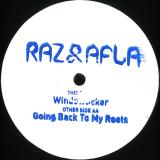
Raz & Afla - Windowlicker / Going Back To My Roots

Wah Wah 45s present two very special cover versions from our beloved Afro-electronic duo, Raz & Afla, available on 12" vinyl for the very first time! Having recently released their sophomore LP, Echoes Of Resistance, to great acclaim and support ranging from Nick Grimshaw on BBC 6 Music to Tash LC on BBC Radio 1, and the follow up remix project Remixes Of Resistance, the pair offer up their unique takes on two very different slices of club culture on twelve inches of wax.

First up, the pair tackle Aphex Twin's sleazy and sinister turn-of-the-century dance floor bomb Windowlicker and take it somewhere completely unexpected, as Raz explains:

"We wanted to go to a different place from our influences for this one. When we told people we will cover this tune everyone said 'but how?!' In Raz & Afla style. We had an idea of what elements to recreate from the original and how we can reference it within our spectrum of sounds. It was so much fun to do and really kicks off at our live shows."

It's a heavily percussive reinterpretation, replete with spooky wordless vocals, funky guitars and spine tingling synths that builds into something of a future Afro-house anthem, whilst respecting the genius of the original recording.

On the flip, Going Back To My Roots has become a mainstay in Raz & Afla's live sets, and means a lot to them personally, as Raz once again explains:

"We love this song. The lyrics resonate with us, talking about the meaning of connection to a land and its people. The history of this song is also fascinating, from Hugh Masekela and Orlando Julius through Odyssey and Richie Havens. We wanted to give it our own flavour. You can't choose your heritage and where you are born. It is always a part of you and we like to celebrate that."

Written and first recorded by Lamont Dozier in 1977, Going Back To My Roots was famously covered by Richie Havens in 1980 before becoming a huge crossover hit when interpreted by disco outfit Odyssey in 1981. Raz & Afla very much give their version their own unique dance floor feeling. It's one which has received much support on BBC 6 Music.

nicht am Lager

Bestelle jetzt und wir bestellen den Artikel für dich beim Lieferanten.

14,50

Last In: vor 6 Monaten
Tony Hadley - The Mood I'm In

Tony Hadley

The Mood I'm In

12inch5016681506514
ADA/Global
12.09.2025
auch erhältlich

Cream Vinyl[24,58 €]


Revolver Records proudly presents the brand new album from pop royalty Tony Hadley — The Mood I’m In. A dazzling collection of swing and big band classics, featuring the brand new track “Walk of Shame.” Pressed on striking colour vinyl in two unique variants, these audiophile editions celebrate Hadley’s iconic voice with timeless style and elegance. Also available on CD.

vorbestellen12.09.2025

erscheint voraussichtlich am 12.09.2025

24,58
Tony Hadley - The Mood I'm In

Tony Hadley

The Mood I'm In

12inch5016681506613
ADA/Global
12.09.2025
auch erhältlich

Black Vinyl[24,58 €]


Revolver Records proudly presents the brand new album from pop royalty Tony Hadley — The Mood I’m In. A dazzling collection of swing and big band classics, featuring the brand new track “Walk of Shame.” Pressed on striking colour vinyl in two unique variants, these audiophile editions celebrate Hadley’s iconic voice with timeless style and elegance. Also available on CD.

vorbestellen12.09.2025

erscheint voraussichtlich am 12.09.2025

24,58
TADAAKI MISAGO AND TOKYO CUBAN BOYS - Nippon No Koten Geijyutu
  • A1: Sakura Sakura
  • A2: Kariboshikiri Uta
  • A3: Shika No Tone
  • A4: Yagibushi
  • B1: Genroku Hanami Odori
  • B2: Esashi Oiwake
  • B3: Rokudan
  • B4: Awa Odori

An unrelenting storm of Minyo, Latin, and Jazz—fierce, thrilling, and utterly original. A groundbreaking work of classical artistry, created by two
masters: Naotero Misuna and Norio Maeda.

Naotero Misuna, known as “Maestro Misuna,” led the Tokyo Cuban Boys, a legendary big band formed in 1949—before Latin music had even taken
root in Japan. With over 300 recordings to their name, they are one of Japan’s most iconic ensembles. Throughout their long career, the band remained
rooted in Latin music while boldly incorporating other genres and contemporary styles. Among their most internationally acclaimed works are those that
focus on traditional Japanese music, such as folk songs and ancient melodies.

This album, Japanese Classical Arts, arranged by the great Norio Maeda, is a masterpiece that transforms Minyo + Latin + Jazz into a thrilling sonic
experience. Leading the charge is a powerful rendition of “Sakura Sakura,” which moves seamlessly between Afro-Cuban jazz and jazz-rock, captivating l
isteners around the world. The album also features meticulously crafted arrangements of “Kariboshikiri Uta,” “Yagibushi,” “Genroku Hanami Odori,” and
“Awa Odori.” The inclusion of Kohachiro Miyata on shakuhachi and Tadao Sawai on koto is nothing short of brilliant.

This is exhilarating Wa-Jazz at its finest—music that makes you want to shout, “This is it!

Text by Yusuke Ogawa (UNIVERSOUNDS / DEEP JAZZ REALITY)

vorbestellen12.09.2025

erscheint voraussichtlich am 12.09.2025

38,03
STANLEY BRINKS - Happy New Year
  • 1: Happy New Year
  • 1: 2That's The World To Me
  • 1: 3Take Heart
  • 1: 4Humdrum
  • 1: 5Only With You
  • 1: 6To Play
  • 1: 7Everyone You Know Is Asleep
  • 1: 8Play With My Heart
  • 1: 9They Are Coming For Me
  • 1: 0Out Of My Heart

Singer-songwriter and cult anti-folk troubadour Stanley Brinks returns with Happy New Year, a 10-song collection of lo-fi gems recorded in Berlin. Happy New Year is a warm and celebratory record. Over simple rhythms and minimalist arrangements, Brinks delivers lyrics that oscillate between surreal humour, earnest wisdom, and playful melancholy. Happy New Year features contributions from longtime collaborator Clemence Freschard, plus appearances from Jyoti Sekhawat, Monica Kremidi, Rachel Lipson, Irma Ignataviciute, and Elisa Aseva, weaving together voices from across Brinks' musical community. Their harmonies lend the songs a communal intimacy. Stanley Brinks is renowned for his unique anti-folk style: both playful and suggestive, insightful and entertaining. Brinks was born in Paris, France, in 1973. He studied a bit of biology and worked as a nurse for a while. Half Swedish, half Moroccan, strongly inclined to travel the world, he soon began spending most of his life on the road and developed a strong relationship with New York. By the late 90s he'd become a full time singer-songwriter - Andre' Herman Düne - as part of three piece indie-rock band, Herman Düne. Several albums and Peel sessions later and after a decade of touring Europe, mostly with American songwriters such as Jeffrey Lewis, Calvin Johnson and early Arcade Fire he settled in Berlin. The early carnival music of Trinidad became a passion, and in the early 21st century he became the unquestioned master of European calypso, changing his name to Stanley Brinks. Under this moniker he has recorded considerably more than 100 albums, collaborated with the New York Antifolk scene on several occasions, recorded and toured with traditional Norwegian musicians, and played a lot with The Wave Pictures. The vinyl is of silvery color.

vorbestellen12.09.2025

erscheint voraussichtlich am 12.09.2025

30,46
Various - Dolores: Salsa & Guaracha From 70's French West Indies

In Guadeloupe, many people think that jazz and ka music are like a ring and a finger. To some extent, the same could be said about so called Latin music and the music played in the French West Indies.

Both aesthetics were born in the Caribbean and bear so many connections that they can easily be considered cousins. In constant dialogue, there are lots of examples of their fruitful alliance and have been for a while. The English country dance that used to be practiced in European lounges came to be called kadrille in Martinique and contradanza in Cuba. They both featured additional percussion instruments inherited from the transatlantic deportation. Drawing from shared feelings about the same traumatized identity – later to be creolized – it would be hard not to assume that they were meant to inspire each other. The golden age of the orchestras that graced the Pigalle nights during the interwar period further proves the point. As soon as the 1930s, Havana-born Don Barreto naturally mixed danzón and biguine music in a combo based at Melody's Bar. In the following decade, Félix Valvert, a conductor who was born and raised in Basse-Terre in Guadelupe, also worked wonders in Montparnasse with La Coupole, which was an orchestra made up of eclectic musicians. Afro- Caribbean performers of various origins were often hired on rhythm and brass sections in jazz bands, which used to enliven the typical French balls of the capital. In the 1930s and onwards, Rico’s Creole Band was one of them.


Martinican violinist-clarinettist Ernest Léardée, who would become the king of biguine music as well as the main figure of French Uncle Ben's TV commercials (a dark stigma of post-colonial stereotypes), had musicians from the whole Caribbean sphere play at his Bal Blomet – and they all enchanted "ces Zazous-là" (according the words of Léardée's biguine-calypso piece). In les Antilles (French for French West Indies), music history started to speed up in the 1950s, when trade expanded and radio stations grew bigger. The Guadelupean and Martiniquais youth tuned in their old galena radio sets to South American and Caribbean music. As for the women traders, les pacotilleuses, they bought and sold goods across different islands (the "passing of items through various hands" was thought to be most pleasurable) and brought back countless sounds in their luggage. Such was the case of Madame Balthazar, who once returned from Puerto Rico with the first 45rpm and 33rpm to ever enter Martinique.

Out of this adventure was created the famous Martinican label La Maison des Merengues, a music business she opened and undertook with her husband and which proved to be a major landmark. At the end of the 1950s, in Puerto Rico, Marius Cultier competed in the Piano International Contest playing a version of Monk's Round 'Midnight. He won the first prize and this distinction foreshadowed everything that was to come. Cultier, the heretic Monk of jazz, was quickly praised for writing superb melodies, always tinged with a twist that conferred a unique sound to his music. It didn't take long for the gifted self-taught musician to get to play with Los Cubanos, making a name for himself thanks to his impressive maestria on merengues.

The rest is history. Besides, in the late 1950s, Frantz Charles-Denis, born into the upper middle class in Saint-Pierre and better known by his first name Francisco, went back home after working at La Cabane Cubaine – a club located rue Fontaine where he had caught the Latin fever. Francisco's music was therefore heavily marked by his Cuban cousins' influence, which gave the combos he led a specific style and also led to renewal. Things were swinging hard in La Savane, located in the main square in Fort-de-France. He set up the Shango club close by and tested out the biguine lélé there, a new music formula spiced up with Latin rhythms. Soon afterwards, fate had him fly to Puerto Rico and Venezuela.

As for percussionist Henri Guédon (percussions were only a part of his many talents), he was born in Fort-de-France in May 22nd 1944, the day marking the celebration of the abolition of slavery. As an old man, he could remember that in " his father's Teppaz, a lot of hectic 6/8 music was constantly playing...". In the opening lines of his Lettre à Dizzy, a small illustrated collection of writings published by Del Arco, he highlighted the huge impact that cubop had on him as a teenage boy, around 1960. He eventually turned out to be the lider maximo in La Contesta, a big band steeped in Latin jazz. He was also the one who originated the word zouk to describe music which brought the sound of the New York barrio to Paris. It was the culmination of a journey that started in Sainte-Marie: "a mythical place for bélé, the equivalent of Cuban guaguancó". In the early 1960s, the tertiary economy developed to the detriment of agriculture. Yet rural life was where roots music emerged in Martinique and in Guadeloupe.

Record companies played a major part in the process of Latin versions sweeping across the islands – before reaching everywhere else. Producer Célini, boss of the great Aux Ondes label, and Marcel Mavounzy, both the head of Émeraude records - a firm which was founded in 1953 - as well as the brother of famous saxophonist Robert Mavounzy, were big names to bear in mind. Although there were many of them - all of whom are featured on this record - Henri Debs was definitely the major figure in the recording adventure. He proved to be so influential that he even got compared to Berry Gordy. In the mid 1950s, when he acquired his first Teppaz, he worked on his first compositions: a bolero and a chachacha. Then, he became the one man who made people discover Caribbean music, from calypso to merengue. He was among the first ones to rush out to San Juan, Puerto Rico, to buy records and distribute them through a store run by one of his brothers in Fort-de-France. He had members of the Fania All Star come and perform there, which he was madly proud about. He was also the first one to pay attention to Haitian music, such as compas direct and various other rhythms which would soon flood the market. As a result, many of the combos hitting his legendary studio would end up boosted by widespread "Afro-Latin" rhythms. However, he never denied his identity: gwo ka drums were given a major role, although they were instruments which had long been banned from the "official" music spheres. The present selection bears witness to such a creative swarming. Here are fourteen tracks of untimely yet unprecedented cross-fertilization: all types of music rooted in the Creole archipelago have found their way, whatsoever, to the tracklisting. Whether originating from the city or being more rural, they all go back to what Edouard Glissant, in an interview about the place of West Indian music in the Afro-American scope, called "the trace of singing, the one which got erased by slavery." "It is so in jazz, but also in reggae, calypso, biguine, salsa... This trace also manifests through the drums, whether Guadelupean, Dominican, Jamaican or Cuban... None of them being quite the same. They all point to the idea of a trace, seeking it out and connecting to each other through it. This is the hallmark of the African diaspora: its ability to create something new, in relation to itself, out of a trace. It may be the memory of a rhythm, the crafting of a drum, a means of expression which doesn't resort to an old language but to the modalities of it." The opening track features one of the emblematic orchestras of this aesthetic identity, criscrossing many music types from the archipelago. The 1974 Ray Barretto guajira – Ray Barretto was a major New York drummer influenced by Charlie Parker and Chano Pozzo – is magnificently performed by Malavoi, a legendary Fayolais group (i.e from Fort-de-France). Additionally, the compilation ends on a piece by Los Martiniqueños de Francisco. It symbolically closes the circle as it is a genuine potomitan of Martinique culture which also functions as a tireless campaigner for Afro-Caribbean music. Practicing the danmyé rounds (a kind of capoeiria) to the rhythm of the bèlè drum, it delivers a terrific Caterete, a kind of champeta of Afro- Colombian obedience which was originally composed by Colombian Fabián Ramón Veloz Fernández for the group Wgenda Kenya. The icing on the cake is Brazilian Marku Ribas, who found refuge in Martinique in the early 1970s, bringing his singing to the last trance-inducing track. These two "versions" convey the whole tone of a selection composed of rarities and classics of the tropicalized genre, swarming with tonic accents and convoluted rhythms. It is the sort of cocktail that the West Indians never failed to spice up with their own ingredients. For instance, the Los Caraïbes cover of Dónde, a famous Cuban theme composed by producer Ernesto Duarte Brito, has a typical violin and features renowned Martinique singer Joby Valente and his piquant voice.


The track used to be – or so we think – their only existing 45rpm. The meaningful Amor en chachachá by L'Ensemble Tropicana, a band which included Haitian musicians among whom was composer and leader Michel Desgrotte, also recalls how Latin music was pervasive in the tropics in the mid-1960s. They were the ones keeping people dancing at Le Cocoteraie in Guadelupe and La Bananeraie in Martinique. Around the same time, another "foreign" band, Congolese Freddy Mars N'Kounkou's Ryco Jazz, achieved some success on both islands by covering Latin jazz classics – such as their adaptation of Wachi Wara, a "soul sauce" by Dizzy Gillespie and Chano Pozo whose interweaving of strings and percussions can have anyone hit the dancefloor. How can you resist Dap Pinian indeed, a powerful guaguancó by Eugene Balthazar, performed by the Tropicana Orchestra and published by the Martinique-founded La Maison des Merengues? It also acts as a symbol of the maelstrom at work. Going by the name Paco et L'orchestre Cachunga, Roger Jaffory used to play guaguancó too: his Fania-inspired Oye mi consejo is one example of his style. Baila!!!!! Dancing was also one of the Kings' focus points. Oriza is a Puerto Rican bomba and a "classic" originally composed by Nuevayorquino trumpeter Ernie Agosto, which reserves major space for brasses, giving it a special sheen.

Emerging from the New York barrios crucible was also La Perfecta, a Martinique group originating from Trinidad, whose name directly references the totemic Eddie Palmieri figure as well as his own band, also called La Perfecta. Here they borrow Toumbadora from Colombian producer and composer Efraín Lancheros and interpret it by emphasizing percussions, which set fire to the track even more than the wind instruments. The same goes for Martinique's Super Jaguars, who use Tatalibaba – a composition by Cuban guitarist Florencio "Picolo" Santana which was made famous by Celia Cruz & La Sonora Matencera – as a pretext for sending their cadences into a frenzy. In a more typically salsa vein, the Super Combo, a famous Guadelupean orchestra from Pointe-Noire that was formed around the Desplan family and had Roger Plonquitte and Elie Bianay on board, adapt Serana, a theme by Roberto Angleró Pepín, a Puerto Rican composer, singer and musician also known for his song Soy Boricua. Here again, their vision comes close to surpassing the original. In the 1970s, L'Ensemble Abricot provided a handful of tracks of different syles, hence reaching the pinnacle of the art of achieving variety and giving pleasure. They played boleros, biguines, compas direct, guaguancó and even a good old boogaloo - the type they wanted to keep close to their hearts for ever, "pour toujours", as they sang along together in one of their songs. Léon Bertide's Martinican ensemble excelled at the boogaloo which had been composed by Puerto Rican saxophonist Hector Santos for the legendary El Gran Combo.


Three years later, in 1972, Henri Guédon, with the help of Paul Rosine on the vibraphone, tackled the Bilongo made famous by Eddie Palmieri. Such a classic!!!!! And so were the Aiglons, the band from Guadelupe: choosing to execute Pensando en tí, a composition by Dominican Aniceto Batista, on a cooler tempo than the original, they noticeably used a wonderfully (un)tuned keyboard in place of the accordion. On the high-value collectible single – the first one released by Les Aiglons under the Duli Disc label – there is a sticker classifying the track under the generic name "Afro". Now that is what we call a symbol. Jacques Denis

nicht am Lager

Bestelle jetzt und wir bestellen den Artikel für dich beim Lieferanten.

21,43

Last In: vor 38 Tagen
WAVETEST - DIRECTIONS EP

WAVETEST

DIRECTIONS EP

12inchSILR004
Silum Records
10.09.2025

Silum Records proudly presents their latest addition to their discography – Wavetest’s “Directions” EP. Four distinct tracks showcase a range of styles from ambient through disco to acid, all inspired by different directions (“Uffi”: up, “Ahi”: down, “Ihi”: inside, “Ussi”: outside) in Liechtenstein dialect. Stay tuned as Silum continues delivering top-notch records that will keep you wanting more!

nicht am Lager

Bestelle jetzt und wir bestellen den Artikel für dich beim Lieferanten.

14,50

Last In: vor 75 Tagen
Maara - Revenge From The Penthouse

Do you ever wish to wish, to wish away the pain, to wish away some sort of pleasure? All these
feelings that we cary, all these things that burden us. Over time the weight drags us down and
one day we want to explode. Time to explode is now. Throw it all away. Maara is back on her
classic b*ll sh*t, or proverbial horse riding high on latest EP ‘Revenge from the Penthouse’.
Gracing us from her ivory penthouse, Maara throws down 5 club ready bangers in her signature
style. She ain’t played with…

nicht am Lager

Bestelle jetzt und wir bestellen den Artikel für dich beim Lieferanten.

13,03

Last In: vor 6 Monaten
The Evil B-Side Twins - Relentless Spirit

Introducing the Evil B-Side Twins — A New Era from Yazzus & DJ TOOL

Two of the most unpredictable forces in the underground are colliding at full velocity: YAZZUS and DJ TOOL are proud to launch Evil Twin Rekords — a label and collaborative project born from the wildest corners of their shared sonic imaginations.
Under the moniker The Evil B-Side Twins, the duo are setting out to warp time and space through a blazing fusion of trance, gnarly breaks, and techno rhythms. Their sound? Think hyper-speed rave transmissions beamed in from another galaxy — distorted basslines, and acidic euphoria intersecting 90’s psychedelic textures as they soundtrack a playful, alien-friendly universe. It’s high-energy, no-rules, evil as hell club music with a space-age edge. And their debut EP Relentless Spirit delivers just that.
Four rave-ready ‘in your face’ anthems, breaking the boundaries of modern electronic music. A collision of catchy grooves, iconic motifs from the old school trance world and mental melodies that you won’t forget easily.
Evil Twin Rekords isn’t just a label. It’s a wormhole into a sound that’s too futuristic, too feral, and too fun to fit into anyone’s algorithm. Expect inter-dimensional anthems, and records that feel like they’ve been smuggled from the B-side of a black hole.

This is rave culture turned inside out — full-throttle, unapologetically weird, and always one step ahead. From the UK to Scandinavia let the band expand your horizon and welcome you to the Evil Era. Listen without prejudice.

The artwork is a specially commissioned portrait of the twins, hand painted by friend and collaborator Ryo Koike, known for his eerie, whimsical fantastical style. Throughout his visual ident, he provides an imaginative window into the twins’ cosmos and beyond.

nicht am Lager

Bestelle jetzt und wir bestellen den Artikel für dich beim Lieferanten.

17,23

Last In: vor 7 Monaten
The Lemonheads - Come On Feel the Lemonheads (Single LP Version)
  • 1: The Great Big No
  • 2: Into Your Arms
  • 3: It's About Time
  • 4: Down About It
  • 5: Paid To Smile
  • 6: Big Gay Heart
  • 7: Style
  • 8: Rest Assured
  • 9: Dawn Can't Decide
  • 10: I'll Do It Anyway
  • 11: Rick James Style
  • 12: Being Around
  • 13: Favorite T
  • 14: You Can Take It With You
  • 15: The Jello Fund
vorbestellen08.09.2025

erscheint voraussichtlich am 08.09.2025

29,71
LOS ZHEROS - PSYCHEDELIC CUMBIA PARTY

Los Zheros

PSYCHEDELIC CUMBIA PARTY

12inchVAMPI325
Vampisoul
05.09.2025out soon
  • Para Chachita
  • Caminando
  • La Rosa
  • Mi Lamento
  • Ritmo Oriental
  • Marita
  • Cuarto Oscuro
  • Nadando
  • Toro En Rbita
  • Descarga De Los Zheros
  • Maril
  • El Pusanguero

"Psychedelic Cumbia Party" brings together for the first time the best recordings of Los Zheros, a pioneering band of Amazonian cumbia from Peru. Their sound blends fast, percussive cumbia rhythms with surf-style electric guitars. The album features their psychedelic rock hit 'Cuarto oscuro,' a highly sought-after track not only among cumbia collectors but also garage and psych DJs. This compilation is a joint release with Peruvian label Rey Record and includes an insert with never-before seen photos of the band, as well as liner notes by expert Víctor Zela (creator of the acclaimed project "La Cumbia de mis Viejos"). DESCRIPTION This compilation brings together for the first time the best songs by Los Zheros, one of the most renowned cumbia bands to emerge in the early 1970s in Iquitos-alongside groups like Los Rogers and Los Wemblers-in the heart of Peru's Amazon capital. The unique Amazonian sound blended fast, percussive cumbia rhythms with electric guitars in a surf style-a distinctive fusion that came to define Peruvian-recorded cumbia, markedly different from the traditional cumbia styles that developed in other cumbia-producing countries like Colombia. The album includes their psychedelic rock hit 'Cuarto Oscuro,' a highly sought-after track not only by cumbia collectors but also by garage and psychedelic DJs. This song also marked the beginning of their recording career in 1973. This compilation is a joint release with the Peruvian label Rey Record and comes with an insert featuring never- before-seen photos of the band, as well as liner notes by genre expert Víctor Zela (the mind behind the prestigious project "La Cumbia de mis Viejos").

vorbestellen

Der Artikel ist noch nicht erschienen. Du kannst den Artikel jetzt vorbestellen, dieser ist nach Wareneingang für dich versandbereit.

22,27
BOBBY. - Before We Look Out, Let’s Look In

Bobby. returns to his own label Pleasure Club with his most refined work to date, an EP entitled “Before We Look Out, Let’s Look In”.

The fabric resident presents his fifth full release, this time traversing the full spectrum of surrealist house, techno & electro; the kind which has become synonymous with his journey style DJ sets. As the title suggests this record transmits a deeply introspective and personal take on modern day club music.

Melody, emotion and drama stay present throughout, with plenty of twists and turns along the way. With glimmers of early 00’s minimal, cosmic synthwave-style EBM and razor sharp electro, it is a record which references the past, but presents it updated and ready for dance floors of the future.

With a debut album in the works for the end of the year, this release acts as an exciting precursor and marks a new chapter in the artists career.

nicht am Lager

Bestelle jetzt und wir bestellen den Artikel für dich beim Lieferanten.

13,03

Last In: vor 6 Monaten
GRUPO AMIGOS - PALOMA MENSAJERA
  • No Sabes Que Me Siento Bien
  • Mujer
  • Dama
  • Son Las 5
  • En El Campo
  • Everybody Is Free Bonus Track
  • Ensueño
  • El Tren Del Señor Taylor
  • Atardecer De Un Verano
  • Buscando Un Hogar
  • Psiquiatra
  • Dirty Girl Bonus Track

"Paloma mensajera" (featuring members of New Juggler Sound / Laghonia) shows the shift that was taking place within Peruvian rock away from psych and hard rock which had predominated during the early 70s. The style adopted by Grupo Amigos (and other bands and artists during this period) highlights the influence of soft rock, UK, US and Latin American folk rock and, above all, the desire to keep the melodic greatness of The Beatles alive. This reissue includes bonus tracks and extensive liner notes. DESCRIPTION "Paloma mensajera" (featuring members of New Juggler Sound / Laghonia) shows the shift that was taking place within Peruvian rock away from psych and hard rock which had predominated during the early 70s. The style adopted by Grupo Amigos (and other bands and artists during this period) highlights the influence of soft rock, UK, US and Latin American folk rock and, above all, the desire to keep the melodic greatness of The Beatles alive. The positive reception albums by artists such as We All Together, Telegraph Avenue and Zulu garnered between 1972 and 1975, marked a change of paradigm and in preferences within the Peruvian rock scene. Eclecticism gained new ground, to the detriment of the sectarian and orthodox, while melody grew more present and visible, moving away from the progressive experimentation that typified underground Peruvian rock up to the beginning of the 70s. For their first single on MAG, included on this reissue, the band adopted a formula in which Beatles harmonies converged symmetrically with folk motifs. 'Dirty Girl' was a hit on the radio. A full album followed but only a fairly small number of copies of the album were pressed, which seems to have been the main reason for omitting it from the historical accounts of Peruvian rock music from the late 90s onwards. In "Paloma mensajera" all compositions were penned by the group, after several years during which cover versions were a staple. Some of the musical resources that the band had at their disposal in terms of composition and arrangements are striking and even surprising, considering that they were a debut band, whose members were under the age of 20. The arrangements included the clever use of a Moog synthesizer which had just arrived at the MAG studio. The success achieved by the Beatles tribute performances played by the members of Grupo Amigos for decades have eclipsed the songs that Edmundo, Andrés Da Ros and Simón Ames composed with youthful enthusiasm and energy between 1972 and 1973 to the point where they have almost been forgotten. This re-release of "Paloma mensajera" should help rectify this major injustice. It includes bonus tracks and extensive liner notes.

vorbestellen05.09.2025

erscheint voraussichtlich am 05.09.2025

22,27
Her Wild Love - Wake Up Before The Night Is Over LP
  • High Low Temple
  • Feu Sacré
  • Keep Chins Up
  • Lightly
  • Short Pain, Long Run
  • Nothing's Missing

As with The Limiñanas, rock is here an affair of the heart. Between new wave pleasures, psychedelic sensibilities and nods to the great sixties icons, Her Wild Love maintains the passion, without ever curbing the love of risk. Faithful to its intuitions, the duo refines the contours of a singular style. From Sarah's words to Rafael's notes, the pieces embroidered by Her Wild Love find their own balance. Crossed by cinematographic atmospheres and melancholic effluences, their music evokes the black magic of Mazzy Star, the incantations of PJ Harvey, but also the audacity of a band like Warpaint.

vorbestellen05.09.2025

erscheint voraussichtlich am 05.09.2025

26,01
Artikel pro Seite:
N/ABPM
Vinyl