"As Bill Orcutt’s most mature and exhilarating LP to date, Music for Four Guitars was a slab of undeniable Apollonian beauty. Its approachability and obvious novelty landed it not only on the year- end lists of every key-pushing codger in the underground in 2022, but also on NPR in the form of the Bill Orcutt Guitar Quartet, an ensemble assembled to perform this music and featuring Wendy Eisenberg, Ava Mendoza, and Shane Parish in addition to Orcutt. But while their Tiny Desk Concert gave a whiff of the quartet’s easy intimacy, the sterile confines of the virtual recital medium still left a puzzle unsolved: how might these brutally mannered bricks of minimalist counterpoint sound on a stage in front of actual breathing bodies?" "This was the question foremost in my mind when I first saw the quartet in San Francisco a few months before this double live LP was recorded. I was already familiar with the prowess of Eisenberg and Mendoza, two of the most technically intimidating shredders to blast out of the noise/improv underground, and knew Parish as the mastermind behind the epic translation of Orcutt's quartet recordings into a fully notated score. I was ready to be 'blown away'—and I most assuredly was. The quartet navigated Orcutt's jaggedly spiraling right angles into the shining core of the compositions with joyous ease, faithful to the originals in nearly every way (though their tempos were slightly ramped up, Blakey style, to communicate their breathless rush). The renditions were flawless, stellar and inspiring. I had expected nothing less." "Which leads us to this album, Four Guitars Live, recorded in November of 2023 at Le Guess Who? festival during the quartet’s first European tour. The true essence of this set is not simply in its faithfulness to the source compositions, but in the group's easy familiarity (no doubt the result of weeks on the road) and the generosity of their improvisations, both collective and solo. Orcutt, clearly cognizant of both the caliber of his collaborators and the singularity of their voices, has given everyone room to stretch out, and all have delivered some of their most moving passages to date." "One of this record's great thrills for me is imagining a listener, perhaps unfamiliar with the outer limits of contemporary guitar improvisation (or the Tzadik catalog), slammed into catatonia by Mendoza's liquefying lines on Out of the corner of the eye, then revived and healed by the languid, breathy lines of Parish's unaccompanied, spaced-out breakdown of the track's main theme, finally only to be crushed by Eisenberg’s staggering extended solo on Only at dusk (somehow channeling both Eugene Chadbourne and Buck Dharma)." "There's another peak, which begins at the end of side B, in Orcutt's own languid solo, encapsulating the flowing focus of his recent solo LPs, and serving as an introduction to the next side's ensemble tour de force, the psychic heart of the album, On the horizon: its melodic core passing first to Orcutt, launching into a sublime solo turn by Eisenberg, a duo of Parish and Mendoza, before parachuting back into the ensemble for a smashup rendition of Barely visible and Glimpsed while driving (renamed Barely driving) knitted together with an softly bubbling ensemble improvisation. The transfer is orchestrated yet seamless, its tonal form undeniable even in the presence of obvious dissonance." "The breadth of Four Guitars Live gives lie to the false notion that agile, polytonal improv is necessarily without soul, is necessarily inaccessible. Rather, Four Guitars posits a human avant-garde music that the most conservative will recognize as virtuosic and revel in its classic intervals, boiling counterpoint, and precisely- layered facets. Even the rockers in your life might dig it, so why not pass it on?"—Tom Carter
Search:re style
Diese Split-LP wird auf dem Vinyl-Drehtisch einen bleibenden Eindruck hinterlassen: "LEAVE A TRACE" bietet zwei der aktuell besten europäischen Streetpunk, Oi! & Hardcore-Acts mit jeweils fünf neuen und exklusiven Songs. "This Means War" melden sich 5 Jahre nach ihrer letzten Scheibe "Heartstrings" (Pirate Press) zurück! Mit veränderter Besetzung (neu dazugestossen Tom (Ex Dead-Bleed) sowie Steve von Chron-Gen, neuem Label, neuen Songs, Ihren Style nennt die Band nach wie vor "Bleeding Punk" und mit Killersongs wie "We owe the night" oder "Raging Souls" kann man nur sagen: Was für eine gelungene Überraschung! Die Italienischen "No Restraints" dagegen machen wie üblich keine Gefangenen und bieten den optimalen Härtegrad mit ihrem Mix aus brachialen Sing-a-long Shoutern, Oi!-Core und einer perfekten Dosierung melody & "Direct Hit-Punches"....schon der Opener "Rough & tough" bedarf keiner weiteren Kommentierung. Ihren Stil-Mix und Songwriting haben sie dabei ein weiteres Mal mit feinen Nuancen perfektioniert, ihre lyrics hinterlassen deutliche Spuren im brüchigen Mauerwerk dieser verlogenen Gesellschaft. Oder um den Refrain von "Forever in disguise" zu zitieren": No chance to close your eyes....
Diese Split-LP wird auf dem Vinyl-Drehtisch einen bleibenden Eindruck hinterlassen: "LEAVE A TRACE" bietet zwei der aktuell besten europäischen Streetpunk, Oi! & Hardcore-Acts mit jeweils fünf neuen und exklusiven Songs. "This Means War" melden sich 5 Jahre nach ihrer letzten Scheibe "Heartstrings" (Pirate Press) zurück! Mit veränderter Besetzung (neu dazugestossen Tom (Ex Dead-Bleed) sowie Steve von Chron-Gen, neuem Label, neuen Songs, Ihren Style nennt die Band nach wie vor "Bleeding Punk" und mit Killersongs wie "We owe the night" oder "Raging Souls" kann man nur sagen: Was für eine gelungene Überraschung! Die Italienischen "No Restraints" dagegen machen wie üblich keine Gefangenen und bieten den optimalen Härtegrad mit ihrem Mix aus brachialen Sing-a-long Shoutern, Oi!-Core und einer perfekten Dosierung melody & "Direct Hit-Punches"....schon der Opener "Rough & tough" bedarf keiner weiteren Kommentierung. Ihren Stil-Mix und Songwriting haben sie dabei ein weiteres Mal mit feinen Nuancen perfektioniert, ihre lyrics hinterlassen deutliche Spuren im brüchigen Mauerwerk dieser verlogenen Gesellschaft. Oder um den Refrain von "Forever in disguise" zu zitieren": No chance to close your eyes.... Orangenes Vinyl!
Finnish Recue debuts on Analogical Force with 'Paramnesia EP', where Riku Annala explores the murkier side of electronic soundscapes with distorted and gritty undertones. With impeccable production, Recue guides us through this expedition in his highly distinctive style that blurs boundaries between bass music, idm and reflective electro-nix. 'Paramnesia EP' takes you on a cinematic journey through post apocalyptic soundscapes full of deep bass, textures and nuances. Some of Paramnesia's tracks have accompanied Recue in his live sets, acting as a counterbalance for the most nolanesque moments, when the music starts driving the listener forward in full speed. Some have started as reworks of other material, gradually morphing into something completely different, leaving only a memory of something that never came to be. The release is the result of a dialogue and curation together with AF, and the end result is something that sits comfortably in the sound that is Recue and undertone that's Analogical Force. You know what to do!
Skudge appears courtesy of Lazy Reflex Complex for the label's third instalment. Skudge delivers two signature style cuts along with an ominous rework of 'Departure' by 543ff. The flip side is delivered by label head 543ff; three techno tools to make crowds move. Mastered by Audiosculpture.
- A1: Hiroshi Kamayatsu - Have You Smoked Gauloise
- A2: Happy End - Haruyo Koi Come Spring
- A3: Yoshiko Sai - Aoi Galasu Dama Blue Glass Ball
- A4: Tadashi Goino Group - Jikan Wo Koero Go Beyond Time
- B1: Jun Fukamachi - Omae You
- B2: Momotaro Pink With Original Pinks - Hachigatsu No Inshow Augusts Impression
- B3: Vol 1 Chap.100 - Heya No Naka In The Room
Nippon Psychedelic Soul 1970-1979 is Time Capsule’s continuation of the deep dive into Japan’s rich history of folk and psychedelic soul music.
Vinyl LP with 4 page insert, original artwork and photos
The kaleidoscopic psychedelia of 1970s Japan captured a fragile and fertile moment as the country sought its future in funk grooves, heavy reverb and lyrical hallucinations.
The follow-up compilation to Time Capsule’s Nippon Acid Folk, Nippon Psychedelic Soul takes myriad pathways into the tripped-out undergrowth of 1970s Japan. Finding their feet at home and looking for inspiration abroad, the musicians featured here were engaged in the communal soul-searching that followed the breakdown of the 1960s protest movements. Some made it big, others drifted into oblivion. The music they left behind shimmers with intensity.
At the core was Happy End, the first project of YMO’s Haroumi Hosono, whose distortion-heavy guitar and crisp back-beat laid the foundations for Japanese lyrics that flipped the paradigm of Japanese rock music on its head. With it came a new found sonic ambition, such as in the bold Philly-soul style arrangements of producer Yuji Ohno, whose work with occult wandered Yoshiko Sai shares some of the bittersweet grandeur of Rotary Connection or David Axelrod.
Then there was Jun Fukamachi, a pioneer of Japanese synthesis, whose debut album was a carnival of orchestral funk, euphoric horn lines and rich production, complete with soaring guitar solos, psychedelic organ and a truly cinematic finale. The first and only time Fukamachi would sing on record, ‘Omae’ rips like the ultimate end-of-nighter.
Influenced by giants of the US soul scene, maverick composer Hiroshi “Monsieur” Kamayatsu (otherwise known as ‘the Brian Wilson of Japan’) went one step further, enlisting Tower of Power to play on ‘Have You Smoked Gauloises?’ The B-side to Monsieur’s biggest-selling single, it coasts with sophisticated cool - a liquid bassline and suave keys comping under a roaring trademark ToP sax solo. No surprise it found favour once more on the Acid Jazz dance floors of ‘90s London.
Such was the spirit of experimentation that big studio productions and private press releases sat side-by-side, with the likes of Momotaro Pink and Kazushi Inamura, taking their hopes of success into their own hands with the resources available to them. More reflective but no less robust, theirs was a heavy, fat-backed drum sound, soaked in dramatic, soulful psychedelia.
If some were dreamers and others space cadets, none were further out than sci-fi writer, musician, activist and self-made scientist Tadashi Goino, who transformed his own fantasy novel Messenger from the Seventh Dimension into an operatic prog odyssey with few discernible musical reference points – a majestic and completely bonkers outlier even among company as strange and brilliant as that which is collected here.
Less a compilation of a scene, as a compilation of a sentiment, Nippon Psychedelic Soul is a wild ride from start to finish, shattering the narratives of the Japanese folk and rock tradition into a million tiny pieces.
- A1: Walter Rizzati - L`unica Chance
- A2: Chrisma - Amore
- A3: I Robots - Tabù Tubà (Part 1)
- B1: Luca D`ammonio - Oh Caron
- B2: Ramasandiran Somusundaram - Contrabbando Di Fagioli
- B3: Jean Paul & Angelique - Africa Sound
- C1: Weyman Corporation - Kumbayero
- C2: African Revival - Soul Makossa
- C3: Lara Saint Paul - The Voodoo Lady
- D1: Beryl Cunningham - Why O
- D2: Augusto Martelli & The Real Mccoy - Calories
- D3: Prognosi Riservata - M A.a.g.o
Africamore: The Afro-Funk Side of Italy (1973-1978)
Continuing Four Flies' dedication to delving into lesser-explored periods of Italian music, Africamore takes us on a captivating journey into the intersection of Afro-funk and the Italian soundscape during the six years between 1973 and 1978 - a time when disco was looming on the horizon and the nightclub market was rapidly expanding.
Before reaching Italian shores, the infectious sound originating from African and Afro-Caribbean roots traversed both the Mediterranean and the Atlantic, landing on New York dancefloors, where DJ Dave Mancuso discovered "Soul Makossa" by Manu Dibango. In 1973, from Mancuso's Loft parties, the song's hypnotic groove spread to the rest of the globe, including in Italy, where it sparked a wave of imitations and variations.
Tribal influences thus found their way into Italian soul-funk and early-disco productions released between 1973 and 1978 – from psychedelic-tinged tunes like Jean Paul & Angelique's "Africa Sound" to the Afrobeat-inspired club banger "Kumbayero" by composer/producer Albert Verrecchia (aka Weyman Corporation); and from groundbreaking Afro-cosmic songs like Chrisma's "Amore", co-written by Vangelis and featuring the rhythms of Ghanaian-British Afro-rock band Osibisa, to mind-blowing floor-fillers like Beryl Cunningham's "Why O", a re-write of Nat King Cole's "Calypso Blues" arranged by Paolo Ormi, with percussion breaks that sound pretty much like what would later become known as techno.
Combining feel-good vibes with driving rhythms, world-style percussion, and even synths, all these productions pushed the boundaries of dance music at a time when disco had not yet taken over. In doing so, they sowed many of the seeds of the later Italian cosmic scene and its unique mixture of African elements, disco-funk and electronic music.
This was a brief but nuanced period in Italian music history, one that deserves to be rediscovered, with love.
Africamore is due out on March 22nd and will be available as a gatefold 2LP and digipak CD. Both formats come with stunning artwork by Kathrin Remest and liner notes by Pierpaolo De Sanctis and Elena Miraglia.
Rock & Roll, indeed. Ruth Brown’s sizzling full-length debut — also known by its eponymous title — symbolizes what was exciting, fresh, invigorating, and raw about the burgeoning style in its halcyon days. Originally released in 1957, and reissued here in audiophile quality for the first time in partnership with Atlantic Records’ 75th anniversary, the set remains a testament to one of the most pioneering and talented vocalists to ever command a stage.
Mastered on Mobile Fidelity Sound Lab's renowned mastering system in California, pressed at RTI, housed in a Stoughton jacket, and strictly limited to 2,000 numbered copies, Mobile Fidelity’s 180g mono LP of Rock & Roll plays with an immediacy, vibrancy, and fullness that showcase the reach, power, and emotionalism of Brown’s voice. The sound of her support musicians — brassy horns, swinging rhythm combos, echoing backing vocalists, rollicking pianists, jaunty guitarists — is made clear and vivid, helping the upbeat fare to jump, juke, and jive with newfound energy and exuberance. In a related manner, Brown’s slower, more understated material crackles with an intimacy and passion that let you know you're in the presence of a woman who has lived what she sings. The longtime Rock and Roll Hall of Fame member deserves nothing less.
In an era dominated by big-throated vocalists, few — if any — came grander than Brown. The singer, whose repeat million-selling ‘50s success with Atlantic Records led many to call the then-indie label “The House That Ruth Built,” charted two dozen R&B hits in the span of a decade for the fledgling imprint. Rightly coined “Miss Rhythm,” the extroverted Brown put Atlantic on the national map, became the best-selling female musician of the ‘50s, and established a precedent that would ultimately lead to Grammy and Tony Awards. Her early works have lost none of their fire or flair.
Akin to many full-length LPs of its era, Rock & Roll doubles as a collection. Its 14 tracks comprise some of the more famous sides Brown recorded for Atlantic, beginning in 1949 with the all-time-great rendition of the ballad “So Long,” and continuing through 1956. After the song caught the public’s ear, the Virginia native briefly became known for her smoldering style with lovelorn material and torch songs, approaching them (see “Oh What a Dream,” “Old Man River”) with a combination of pained sadness and hardened resilience that had no contemporary equal. Encouraged to pursue the style by Atlantic Records co-founder Ahmt Ertegun, her R&B-driven material soon made her a constant chart presence.
Demonstrating what fellow legend Bonnie Raitt deemed “sex with class and dignity,” Brown merges blues and jazz, swing and gospel in electrifying fashion. She dares you not to move, dance, and get on your feet. A majority of Rock & Roll explodes with uptempo runs and jaunty readings of hot-blooded R&B numbers. Sweaty and sultry, bawdy and bold, Brown eclipses the anthemic blare of the saxophones and joyful clatter of the 88s, singing with a slight catch in her voice and hurricane-gale force that threatens to blow the roof off whatever room her voice occupies.
Evidence abounds. Listen to her prod the band and encourage the band members to blow a fuse on a sizzling “Hello Little Boy,” complete with cries and wails; stretch her phrasing to the heavens on the swaying “Wild Wild Young Men,” laden with romp-and-stomp beats; plead and persuade on the snaking “5-10-15 Hours,” which flips the script on the age’s notions of dominance; use her raspy tones, high notes, and breath control to mesmerizing effect on the smash “Mama He Treats Your Daughter Mean,” recorded with a group led by Ray Charles; survey the scene and take charge on the steaming “As Long as I’m Moving”; and tap a classy albeit flirtatious vein on “Lucky Lips,” which dented the pop charts as her first crossover hit.
Throughout Rock & Roll, Brown knows the lyrical connotations and spirited architecture of the songs inside-out. Her assertive voice — never harsh, strident, or false — is the epitome of the passionate desires and sonic strains that turned into nascent rock ’n’ roll. Brown played a pivotal role in helping the style develop, the record a timeless reminder of a lasting legacy that will never be forgotten.
John Coltrane's landmark 1961 jazz album My Favorite Things was born of the same recording sessions that yielded a majority of the albums Coltrane Plays the Blues (1962), Coltrane's Sound (1964), and Coltrane Legacy. That My Favorite Things was recorded in less than three days was in itself, remarkable. This record marked a significant turning point in Coltrane's career and showcased his distinctive playing style, which continues to inspire and influence musicians to this day. Coltrane's playing on My Favorite Things can be described as innovative, exploratory, and deeply emotive. The unforced, practically casual soloing styles of the assembled quartet — which includes Coltrane (soprano/tenor sax), McCoy Tyner (piano), Steve Davis (bass), and Elvin Jones (drums) — allow for tastefully executed passages à la the Miles Davis Quintet, a trait Coltrane no doubt honed during his tenure in that band, notes AllMusic. Coltrane was known for pushing the boundaries of jazz and expanding the possibilities of the saxophone as an instrument. Throughout the album, Coltrane's improvisations are characterized by their intensity, virtuosity, and sheer creativity. The title track is a modal rendition of the Rodgers and Hammerstein song "My Favorite Things" from The Sound of Music. Coltrane's use of modal playing made him a pioneer — modal jazz emphasizes improvisation over specific chord progressions. Coltrane's modal approach allowed him to explore a broader range of tonal colors and to create more open and expansive musical landscapes. Each track of this album is a joy to revisit. The ultimate listenability may reside in this quartet's capacity to not be overwhelmed by the soloist. As a soloist, the definitive soprano sax runs during the Cole Porter standard "Everytime We Say Goodbye" and tenor solos on "But Not for Me" easily establish Coltrane as a pioneer of both instruments. In 1998, My Favorite Things received the Grammy Hall of Fame award. The album attained gold record certified status in 2018, having sold 500,000 copies. We've given this definitive reissue of such a landmark album the presentation it deserves: Mastered directly from the original master tape by Ryan K. Smith at Sterling Sound and cut at 45 RPM. Pressed on 180-gram vinyl at Quality Record Pressings, and housed in tip-on old style gatefold double pocket jackets with film lamination by Stoughton Printing.
Miles Davis' A Tribute to Jack Johnson is the best jazz-rock record ever made. Equally inspired by the leader's desire to assemble the "greatest rock and roll band you have ever heard,” his adoration of Johnson, and Black Power politics, Davis created a hard-hitting set that surges with excitement, intensity, majesty, and power. Bridging the electric fusion he'd pursued on earlier efforts with a funkier, dirtier rhythmic approach, Davis zeroes in on concepts of spontaneity, freedom, and identity seldom achieved in the studio — and just as infrequently accepted by the mainstream.
Sourced from the original analog master tapes, pressed on MoFi SuperVinyl, and housed in a Stoughton jacket, Mobile Fidelity's 180g LP reissue brings it all to fore with startling realism. Benefitting from SuperVinyl’s nearly inaudible noise floor, superb groove definition, and clean, ultra-quiet surfaces, this 180g LP showcases everything — from the bold tonality of the headliner's white-hot trumpet solos to the decay of crashing cymbals, carry of wiry guitar notes, and echoes of the studio — in reference fashion.
Bristling with exuberance, Davis' high-register passages explode with authority and commanding presence. Around him, a barrage of urgent backbeats, knifing riffs, and supple bass lines emerge amidst black backgrounds. One of the most prominent differences long-time fans will notice is how much more aggressive, immediate, and vibrant the music sounds, with those aspects central to the composer's original desires.
Utilizing wah-wah and distortion, the go-to instrumentalist of the performances— guitarist John McLaughlin — attacks with a nasty edge, slashing style, and vicious streak that allows A Tribute to Jack Johnson< cross the until-then-impenetrable divide between rock and jazz. Davis puts both feet in the former camp and erases any gap. The stories of the record’s creation are nearly as legendary as the sounds within: Two sessions, multiple jams, different sets of musicians (several uncredited), and near-miraculous production perfectionism that made it all appear cohesive.
The least-well-known masterpiece of Davis' career, the 1971 record — seamlessly assembled and spliced together by producer Teo Macero — was a victim of limited record-label promotion. Audiences also didn’t immediately know what to make of its original cover art — faithfully replicated here. In addition, the powers that be at Columbia Records were directing the public’s attention to Miles at Fillmore, a completely different kind of album guided by two keyboardists. A Tribute to Jack Johnson practically lives in a different universe, one from the future. To many listeners who did manage to hear it — among them critic/musician Robert Quine, Stooges leader Iggy Pop, and renowned critic Robert Christgau — it surpassed everything that came before.
Indeed, Davis treated it as a personal manifesto: An opportunity to salute the Black championship boxer admired for his threatening image to the establishment and impeccable taste in clothes, cars, women and music. Davis explains in the liner notes his affinity for Johnson — a stance mirrored by the defiant music, which hits with a prize fighter's force and reflects the graceful elegance with which a pugilist navigates the ring — and closes the album with a Johnson quote read by Brock Peters.
Inspired not only by Johnson but by Jimi Hendrix and Sly Stone, Davis changed his approach and his band. He surrounds himself with a cadre of musicians in their 20s and, in the case of bassist Michael Henderson, a 19-year-old fresh from touring with Stevie Wonder. Henderson gives Davis what he requested: boogie-based grooves that don’t lose shape or direction. Soprano saxophonist Steve Grossman, drummer Billy Cobham, and organist Herbie Hancock adhere to a similar aesthetic that prizes brazenness, innovation, and energy.
In that vein, during a portion of “Yesternow,” Davis segues into a separate performance (which became known in its entirety as “Willie Nelson”) played by guitarists McLaughlin and Sonny Sharrock, bass clarinetist Bernie Maupin, keyboardist Chick Corea, bassist Dave Holland, and drummer Jack DeJohnette. Dig it!
Talking with jazz scholar Bill Milkowski — who himself noted how McLaughlin’s unrestrained style, decibel-forward volumes, and rapid-fire power chords engendered himself to the rock crowd at the same time that his harmonics and syncopation still definitely made him a jazz player — guitarist Henry Kaiser summed up part of the appeal of A Tribute to Jack Johnson as well as anyone, saying: “It’s a jazz record that way way more open than other jazz records at the time, but still not free jazz. McLaughlin’s rhythm guitar playing on ‘Right Off’ — the use of different chords in a rock shuffle than what anybody had used before — was revolutionary.”
And to think that’s just one aspect of a record that contains multitudes. “Never let them forget it.” Indeed.
One of the most successful and enjoyable debuts in history, The Cars' self-titled album doubles as a greatest-hits collection. That's because not one song here is unrecognized or unknown. A huge reason why the Boston quintet became America's most popular new-wave band, The Cars launched eight tracks still regularly heard on radio stations everywhere. Consider the hit list: "You're All I've Got Tonight." "Good Times Roll." "Just What I Needed." "Moving in Stereo." "My Best Friend's Girl." "Don't Cha Stop." If you're a fan of pop music, this album is mandatory. Just call it the best new-wave rock album ever made.
And now, The Cars sounds better than it has in any previous incarnation. Mastered from the original analogue tapes, Mobile Fidelity's numbered-edition LP allows the music's oscillating rhythms, futuristic keyboard passages, panned stereo images, and rippling textures to be experienced like never before. The songs take on a surreal quality, the Cars manipulating the vibrant music at will to mesmerize the listeners' senses and hold them at bay. Mobile Fidelity's pressing epitomizes the sensation of "moving in stereo."
Led by Ric Ocasek and Benjamin Orr, the Cars managed to unite then-disparate styles: bubblegum pop melodies, angular art rock, progressive arrangements, and terse minimalism. Orr's low, understated singing and Ocasek's cool, detached vocals lend shades of doubt and double meaning to the lyrics, which are further counterbalanced by orchestral keyboard flourishes and electronic beats. The brilliant arrangements also benefit from a laidback cool and understated irony that remain uncommon in the over-the-top world of mainstream music. Obsessed with incorporating the latest technologies and sounds into its palette, the band spiced its tunes with delightfully quirky accents — country-tinged guitar fills, echoing Syndrums, reggae splashes, hard-rock tones, robotic pulses.
The results are the sounds of a creative landmark. At once accessible and eccentric, edgy and catchy, The Cars explodes with emotion, energy, and hooks. It's impossible not to get caught up humming and singing along to every song, an appeal that comes courtesy of Roy Thomas Baker's stellar production. The legendary producer, best known for his work with Queen, ensured that the record seamlessly packed a smooth midrange, spacious imaging, and call-and-answer choruses in one tight package. Baker's trademark touches with harmony vocals abound.
"The MoFi disc is much better than the original in every way. It's more dynamic, much more natural on top, and all three dimensions have a lot bigger space. This disc is great from start to finish, but "Moving in Stereo" will blow you away on a great system in a big room."
—Jeff Dorgay, TONEAudio
- A1: The Deadstock 33S - My Best Dub
- A2: Bottin - Red Onions
- A3: Munk - Violent Love (2024 Version)
- B1: Leroy Hanghofer - Das Pi
- B2: Headman - Whomadewho – Satisfaction
- B3: Mercury - Sweetness
- C1: In Flagranti - In The Silver White Box
- C2: Munk - Kick Out The Chairs (Whomadewho Remix)
- C3: Golden Bug - St Tropez
- D1: Cecile - Sweetness 86
- D2: Hiltmeyer Inc - Chefsong
- D3: Nancy Whang & Bonar Bradberry - Working The Midnight Shift (Disco Version)
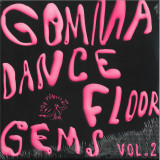
12 tracks originally released on the indie dance label GOMMA RECORDS between 2001 and 2010. (Gomma was the label Toy Tonics did before starting Toy Tonics.)
Along with DFA and Output records Gomma released a wild mix of electronic dance music, indie rock, undergound disco, post punk and new wave funk that was big in the 2000s. The Y2K sound!
Gomma released music by artists like Peaches, Whomadewho, The Rammellzee, James Murphy, LCD soundsystem and artists like Nick McCarthy of Franz Ferdinand.
Now it’s 2023 and its feels fresh to put a spotlight on some of these tracks again.
And so here comes a 2nd compilation part of Gomma tracks:
Nancy Whang the singer of LCD Soundsystem, WhoMadeWho (the band started their career on Gomma), Italian disco producer Bottin, UK Indie Disco hero The Deadstock 33s aka Justin Robertson, NY Disco hipsters In Flagranti, German producers Munk and many more on this compilation.
Gomma not only was a record label, but was also a home for cutting edge design, wild T-shirt styles, underground exhibitions with new artists from the Berlin scene and crazy poster and fanzine design.
Many graphic design trends of the last years were preceded by what the artists on Gomma were doing. And many record and street wear labels of today look a bit like Gomma was looking before ... copying the images that Gomma preceeded: ironic cartoons, trash aesthetics, greek symbols, ugly design ideas and lot of ironic things.
The Gomma visuals world was exposed in a couple of exhibitions around the world and at a big exhibition at #hausderkunst München before the label was closed in 2015. (when Toy Tonics took off...)
Authenticity is important in music culture, at least to those whose relationship with it is a lifelong love affair. As listeners, we instinctively respond to artists whose musical output is an authentic representation of their inspirations, experiences and working methods.
By any measure, Guillaume Metenier’s collaborative Soul Sugar project oozes authenticity. It began in the late 2000s as an outlet for the virtuoso organist and producer’s updated takes on ‘60s and ‘70s soul-jazz and Hammond funk, but over the years it has evolved into something entirely different: a vehicle for classic dub and reggae inspired musical fusions made in collaboration with friends and like-minded musicians. As a result, Soul Sugar albums mix impressive musicianship with great grooves and untold nods to the sounds and artists that have helped shape Metenier’s musical outlook.
This authentic approach and soul-enriching sound is naturally in evidence on Soul Sugar’s firth studio set, Just a Little Talk, which is set to be released by Metenier’s own Gee Recordings label in March 2024. This time round, Metenier’s close circle of musical collaborators includes Blundetto, Samuel Isoard, Yvo Abadi, Jolly Joseph, Jahno, Shniece, Slikk Tim and Leo Carmichael. While many are old friends who have appeared on previous albums and singles, there are some first-time collaborators too.
This familiar-but-also-fresh approach is mirrored by the blend of tracks on offer on Just a Little Talk. New songs and instrumentals sit side by side with a small selection of on-point cover versions – something Metenier has been doing since the inclusion of Jimmy Smith and Dr Lonnie Smith covers on 2009 debut album Nothing But The Truth. Memorable covers since have included ‘Why Can’t We Live Together’, ‘I Want You’ and ‘Never Too Much’, all featuring the honeyed voice of Leo Carmichael.
This time round, the headline-grabbing covers are undeniably special. You’ll find takes on Curtis Mayfield’s ‘Makings Of You’, re-framed as a languid roots reggae song featuring voiced by the returning Carmichael, and Donald Byrd’s ‘Blackbyrd’, which Metenier has brilliantly re-imagined as a fabulous fusion of Studio One dub and Blaxploitation funk.
Yet it’s the album’s original compositions that arguably stand out. For proof, check lovers rock-influenced reggae-soul treat ‘The End of Your World’ (featuring heart-aching roots style lyrics and Junior Murvin-esque lead vocals by Jolly Joseph), the similarly conscious ‘Just a Little Talk’ and recent single ‘Top of My List’– an effortlessly emotive gem marked out by Metenier’s weighty dub bassline and Shniece’s incredible lead vocal.
The original instrumentals, in which Metenier often trades licks and solos with guitarists Slick Tim and Samuel Isoard, are similarly impressive – and, to return to our theme, as authentic as they come. Fittingly, one of these – ‘Tubby’s Ghost’ – was originally written and recorded in 1998 with bassist Patrick Bylebyl, who was then Metenier’s partner in a project called Seven Dub. It is, then, a new cover of one of Metenier’s own tunes – and a pleasingly heavyweight one at that. It delivers a genuinely pleasing conclusion to Soul Sugar’s most true and authentic album to date.
- A1: There Is No Time (Prelude)
- A2: The Call
- A3: Theme De Crabtree
- A4: Road Of The Lonely Ones
- A5: Loose Goose
- A6: Dirtknock
- A7: Hopprock
- A8: Riddim Chant
- B1: Sound Ancestors
- B2: One For Quartabe/Right Now
- B3: Hang Out (Phone Off) (Phone Off)
- B4: Two For 2 - For Dilla
- B5: Latino Negro
- B6: The New Normal
- B7: Chino
- B8: Duumbiyay
MUSIC BY MADLIB / ARRANGED BY KIEREN HEBDEN (Four Tet)
Gil Evans to Miles Davis…. Holger Czukay to the ensemble known as Can….Jean Claude Vannier to Serge Gainsbourg on Histoire de Melody Nelson. That’s the only way to explain the specificity of Four Tet and Madlib’s collaboration, in this special album that showcases a two-decade long friendship that has resulted in an album that follows Madlib’s classics like Quasimoto’s The Unseen, Madvillainy and his Pinata and Bandana albums with Freddie Gibbs.
“A few months ago I completed work on an album with my friend Madlib that we’d been making for the last few years. He is always making loads of music in all sorts of styles and I was listening to some of his new beats and studio sessions when I had the idea that it would be great to hear some of these ideas made into a Madlib solo album. Not made into beats for vocalists to use but instead arranged into tracks that could all flow together in an album designed to be listened to start to finish. I put this concept to him when we were hanging out eating some nice food one day and we decided to work on this together with him sending me tracks, loops, ideas and experiments that I would arrange, edit, manipulate and combine. I was sent hundreds of pieces of music over a couple of years stretch and during that time I put together this album with all the parts that fitted with my vision.” - Kieren Hebden AKA Four Tet
Back in stock ! With his 1966 debut for Atlantic, jazz vibraphonist and marimba player Dave Pike and an all-star lineup produced a perfect blend of Jazz, Latin, Soul and R&B that stands the test of time. Produced by Pike’s frequent collaborator Herbie Mann, "Jazz for the Jet Set" featured a young Herbie Hancock on organ (an instrument he rarely played again), Clark Terry on trumpet, Billy Butler on guitar, Grady Tate on drums, and many other talented musicians. From an artistic perspective, the album marked a pivotal time in Pike’s career, where he began to move away from straight ahead jazz and forge a relationship with soul music, Latin rhythms, pop arrangements and more experimental styles. With this official re-issue courtesy of Nature Sounds, "Jazz For The Jet Set" is now back on limited-edition vinyl while supplies last.
Under the influence of his punk loving father and cabaret / comedy performing mother, Janek moved from singing in his school choir to learning to play drums and piano. Now, as well as producing music under his own name, Janek is also one of the founding members of the Neukolln based outfit Liquid Brain Orchestra, and one half of off-kilter duo Tutu Amuse with guitarist, vocalist and actor Rosa Landers. Janek"s debut solo album "Circle Of Madness" is a record that is best described by himself as a snapshot of "something at some point" and encourages the listener to "stay curious while trying to maintain a balanced and non toxic relationship with perfectionism on this discovery of new land through music, channelling self expression and learning".
Violist, violinist and singer-songwriter Marla Hansen returns to Karaoke Kalk with "Salt", her second full-length album to date. Building upon the sonic palette the Berlin-based musician established with her debut "Dust" in 2020, "Salt" takes the delicate mixture of acoustic instruments such as viola, violin, piano and guitar combined with subtle electronics to the next level. The new album is both a remarkable departure and at the same time sheds a new yet reassuring light on Hansen's work and creativity. "Salt" features numerous collaborations with like-minded musicians and friends, e. g. producer and composer Simon Goff, The Notwist's drummer Andi Haberl and the renowned artist DM Stith.
The "Dust" has settled. After having recorded her solo debut of that name, in 2020 the world came to a grinding halt, leaving Marla Hansen left to her own devices in her adopted home of Berlin. For Hansen, who previously had lent her talent to many creative minds such as The National, Sufjan Stevens, The Hidden Cameras, Jay-Z and Ravi Coltrane, the collaborative aspect of writing and producing music had always played a crucial part in finding her own path as a solo artist.
"I started to explore synthesizers and electronic production myself," she remembers of the time when meeting other musicians in person was out of the question. "I am proud that I accomplished many of the electronic elements of the new album by myself, and otherwise laid the groundwork for the final electronic structures through my own experiments. I always wanted to record a 'big' record, one that has a lot of power and sound, and this one is 'bigger' than anything I have done so far."
"Salt" is big, indeed. The opener "Chains" is driven by a gliding bass line, bobbing 808 snares, deep chords and a mesmerizing chorus doubled by luscious strings, marking the beginning of a new chapter in her creative journey. A stark statement, both musically and lyrically. Meanwhile, the title track of the album is an almost abstract sounding ambient miniature, sketch-like, dark and haunting, showcasing Hansen's voice in a shy, brittle and fragile state. If This Mortal Coil/The Hope Blister were ever to record another album, these songs should be high up on the shortlist of tunes to pick. "The One Time" - a duet with Hansen's long-time friend DM Stith - gently meanders between a Philip Glass-inspired piece for chamber orchestra and a vocal ensemble performing on Top Of The Pops. In this range of styles and approaches, Hansen's vision is more present than ever.
For refining and finishing the songs, Hansen turned to Simon Goff, who produced the album and engineered much of the recording, merging Hansen's newly-found songwriting approach with the artistic delicacy which made her debut album an exceptional piece of work. Features include among others: Alice Dixon (Oriel Quartett) on cello, Kyle Resnick (The National, Beirut) on trumpet, Benjamin Lanz (The National, Beirut) on trombone and tuba, and Miles Perkin on bass. And then there is The Notwist's Andi Haberl, who "crafted perfect drum and percussion parts to move the songs wherever they needed to go, either into their driving grooves, slow-build explosions or gentle swells of feeling."
But what are songs actually about? "The themes revolve around a feeling of being trapped. Having to stay inside during the pandemic, with all the silence and stillness coming with it. Simultaneously, I was caught up in a professional situation that was not working for me, yet it required a lot of energy and time. I was thinking a lot about how to break old habits and patterns. Patterns in my life, patterns I saw my friends and loved-ones stuck in. There are a lot of ways that people can be trapped, and breaking out of that requires a lot of courage and energy - on all levels. The title 'Salt' seemed to fit, ocean themes showed up naturally in some of the songs, and I thought often about the quote: 'The cure for anything is salt water: sweat, tears or the sea.' Maybe I was just dreaming of the ocean, since it was inaccessible for the first time! But I wanted a cure for this feeling of being trapped, in a time of uncertainty and anxiety, salt as a remedy seemed to have some truth in it: sweat, tears or the sea."
Perseverance and the urge for freedom prevailed in the end. "Salt" is a bold artistic achievement, with songs as big as the biggest waves imaginable. With melodies as alluring as the most comfortable breezes. Perfect from start to finish.
- 01: Désert Culturel - "Peine" (1993)
- 02: Les Have-Nots - "About Some Damned O.e." (1994)
- 03: Mascarade - "La Chanson De Craonne" (2000)
- 04: Les Vermines - "Sometimes" (1999)
- 05: Kochise - "Ils Ne Passeront Pas" (1991)
- 06: Kargol’s - "Pression Dans Les Ghettos" (1996)
- 07: Un Dolor - "Acid Queen" (1995)
- 08: Rachid & Les Ratons - "Figuerolles" (1998)
- 09: Pleûm - "Le Lourd" (1995)
- 10: Abdomens - "A Bad Trip In Vatican" (1997)
- 11: Original Disease - "Hungry’ N’ Angry" (1995)
- 12: Rude Boy System - "Put It On It" (1996)
- 13: Zygomatik Zone - "Pas Assez" (1996)
- 14: Haine Brigade - "Territoire Des Ombres" (1991)
- 15: The Informers - "A President For The Dogs" (1993)
- 16: Les Gigoinces - "Nozeux" (1998)
- 17: Mister Moonlight - "You Dont Wanna Play With Fire" (1994)
- 18: Raymonde & Les Blancs Becs - "Paris Doit Brûler (Live)" (1993)
- 19: Extrême Onction - "Droit A L’avortement" (97)
- 20: Désert Culturel - "Guerre À La Guerre" (1993)
On a faim!" was originally an anarchist music fanzine created in 1984.
An entire network, with no geographical ties, grew up around the fanzine, helping to write articles and distribute them (often by hand). The fanzine's name even began to appear in connection with the organisation of concerts (Ludwig Von 88, Raymonde et les Blancs Becs, les Thugs, Les Ejectés, Kortatu, Yo Pizza Jump, etc.) and the creation of radio programmes.
The On A Faim ! label came into being at the end of the 80s, following the release of a host of live tapes and themed compilations: "A Bas Toutes Les Armées", "Cette Machine Sert A Tuer Tous Les Fascistes", "Ni Jah Ni Maitre", "Pogo Avec Les Loups". Then came the first artistic albums with Désert Culturel, Un Dolor, Have Nots, Kargols, Pleum, Mister Moonlight, Rude Boy System... Here again, the artistic choices were made primarily on the basis of human encounters, the attention paid to the bands' approach and discourse, and their attitude to the public... even before listening to the slightest demo!
Archives de la Zone Mondiale wanted to pay tribute to this inspiring label, which marked the history of independent and committed music for nearly 15 years. With one of its founders, Jean Pierre Levaray, we have cleverly concocted a sort of musical anthology retracing the essential bands that have marked the history of the label and the fanzine.
On A Faim ! - Anarchy & Musik is a double 20-track vinyl compilation in a highly graphic gatefold sleeve, retracing the label's extraordinary trajectory regardless of musical style: punk, of course, but also ska, hardcore and popular chanson...
Last but not least, all the royalties from this double vinyl compilation are donated to the Uzine (Le Havre) and Fanzinarium (Paris) fanzine libraries.
Dire Straits never made a big to-do about its final run. In classic understated British fashion, the band simply let its music speak for itself. And how. Originally released in September 1991, On Every Street became the group's swan song – a lasting testament to the influence, musicianship, and integrity of an ensemble whose merit has never been tainted by cash-grab reunions or farewell treks. It remains an essential part of the Dire Straits catalog and a blueprint of the distinctive U.K. roots rock the collective played for its 15-year career.
Sourced from the original master tapes, housed in gatefold packaging, and pressed at RTI, Mobile Fidelity's 180g 45RPM 2LP set of On Every Street presents the album like it has always been meant to be experienced: in reference-grade audiophile sound. Recorded at AIR Studios in London and produced by Dire Straits leader Mark Knopfler, it features all of the band's sonic hallmarks – wide instrumental separation, visceral textures, seemingly limitless air, broad soundstages, atmospherics that you can almost reach out and feel. Each element is made more vibrant, physical, and lifelike on this collectible reissue, which marks the first time this 60-minute work has been available at 45RPM speed.
Afforded generous groove space and black backgrounds, the songs from On Every Street burst with nuanced details and vibrant colors. Dire Straits' playing appears to float, their intricate performances organized amid hypnotic, fluid, three-dimensional arrangements. Mobile Fidelity's definitive-sounding set also brings into transparent view Knopfler's finely sculpted guitar lines, expressive tones, and laid-back vocals – as well as the balanced accompaniment from his band mates. Here's a record on which you can hear the full blossom and decay of individual notes, and imagine the size and shape of the studio. It is in every regard a demonstration disc. And it happens to be filled with timeless fare.
Remarkably, On Every Street almost never came to light. Dire Straits initially dissolved in September 1988 after touring behind its blockbuster Brothers in Arms and suffering the departure of two members. At the time, Knopfler professed his desire to work on solo material; bassist John Illsley also explored side projects. But Knopfler's decision in 1989 to form the country-leaning Notting Hillbillies reignited a spark to reconvene his primary band and craft a fresh batch of songs. Six years removed from Brothers in Arms, Knopfler, Illsley, keyboardist Alan Clark, and keyboardist Guy Fletcher teamed with A-list session pros – steel guitarist Paul Franklin, percussionist Danny Cummings, saxophonist Chris White, guitarist Phil Palmer included – to create what still stands as an unforgettable farewell.
The platinum record brings the band full circle in that it returns Dire Straits to a quartet formation; finds the group refreshingly out of step with the era's prevailing trends; and sees Knopfler and Co. knocking out song after song with the deceptive ease of a punter tossing back a pint at a pub. That subtle cool, clever poise, and innate control – signature traits that no other band ever matched – dominate On Every Street. Knopfler's clean, virtuosic six-string escapades unfurl with dizzying melodicism and economical efficiency. Led by his winding fills and focused solos, Dire Straits traverse a hybrid landscape of rock, jazz, country, boogie, blues, and pop strains with near-faultless prowess.
More than any other entry in the group's oeuvre, On Every Street welcomes quick detours down back alleys and into the depths of human souls. What makes it more brilliant is its staunch refusal to cater to commercial expectations or take advantage of prior successes; every passage feels true, every measure echoed in the service of song. It's evident in the humorous satire of "Heavy Fuel," closeted desperation of the witty "Calling Elvis," and shake-and-bake bounce of "The Bug." It pours from the album's darker corners, as on the high-and-lonesome melancholy of the title track and bruised emotionalism of "When It Comes to You."
Hinting at the open-minded approaches and boundless curiosity he'd embrace as a solo artist, Knopfler doesn't limit himself when it comes to style or subject matter. Look no further than "You and Your Friend," a shuffle whose all-inclusive lyrics encourage an array of interpretative meanings. Another of the album's deep cuts, "Iron Hand," comes on as one of the band's most memorable moments – the narrative addressing the abuses of power at the 1984 Battle of Orgreave during the U.K. miners' strike. Given cinematic heft by the expert production, the true-fiction account puts into perspective the richness, poetry, and depth of On Every Street.
"Every victory has a taste that's bittersweet," sings Knopfler on the title track. At least that bittersweetness seldom sounded so damn good on record.