First-time vinyl reissue of cult UK dance classic.
One of the cult acts of the heyday of London clubland in the early 1990s, the Ballistic Brothers consisted of later-X-Press 2 members Ashley, Rocky and Diesel, alongside David Hill and Uschi Clansen. After the success of underground smash ‘Blacker’ and ‘vs. Eccentric Afros Vol. 1’, The Ballistic Brothers returned with the second volume of their sampledelic good times with ‘Vol. 2’. The group came armed with years of dance floor expertise, and record making acumen, and delivered a further 8 tracks of good time funky grooves.
The opener ‘Delancey Street…The Theme’ paid tribute to their Camden-based record label and was an immediate anthem, while ‘Goodvibes…Goodnight’ was an irresistible mash-up. Elsewhere are jazz, funk, reggae influences and images of the streets of New York.
A vital snapshot of a very unique place in time, specially remastered for this Acid Jazz release, set in a spined sleeve for the first time, with a beautiful expansion of the original artwork
Search:re us
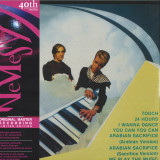
On the occasion of the 40th anniversary of its original release, this limited edition Black vinyl is reissued in an exclusive version, created using the Original Master Tape to ensure an authentic and faithful sound to the original recording. The high-quality mastering process ensures optimal sound performance, enhancing every detail of the production, from the depth of the bass to the clarity of the highs. Pressed on 180g Black vinyl, this product is marked with the SIAE trademark to guarantee authenticity and has been carefully crafted to provide a flawless listening experience.
This limited edition also includes an autographed photo from the band, making it even more personal and collectible.
This limited edition, available in a limited run of only 250 copies, is designed for true collectors and enthusiasts. Each copy of the 40th Anniversary Limited Edition Black Vinyl pays tribute to an album highly appreciated by Italo-Dance music lovers.
Originally released in 1985, the album challenged the conventions of the time with an alternative and innovative sound, standing out in the Italo Disco scene. The album received international praise, especially from the most demanding audiophiles, for its pioneering production and ability to distinguish itself from mainstream sounds. The remastering process from the Original Master preserves the authenticity of the original sound, delivering superior quality.
With the included removable OBI, this special edition gains an additional distinctive touch, completing its design and reinforcing its status as a cult item. Don’t miss the opportunity to own this unique vinyl, perfect for those who appreciate authentic music and wish to enrich their collection with a rare and valuable piece.
Ein Jahrzehnt lang hatte Pharoah Sanders als Sideman von John und Alice Coltrane sowie mit seinen
eigenen Alben den revolutionären Sound von Impulse! Records entscheidend mitgeprägt. Auf “Love In Us
All”, seinem vorletzten Album für das Label, zog der Saxofonist 1974 noch einmal alle Register mit zwei
grandiosen, epischen Nummern, die jeweils eine ganze LP-Seite füllen und die Zuhörer vom ersten bis zum
letzten Ton in ihren Bann ziehen.
The compositions of Miłosz Kędra (b. 2001) explore synthetic sound, electroacoustic music, and self-built acoustic instruments, seeking diverse timbres, tunings, and textures. His main field of work is the pipe organ. Through minimalist motifs, he has transported the instrument’s sound beyond the church space by synthetically processing its tones. He is currently pursuing a Master’s degree in New Media Music at the Academy of Music in Poznań and recently completed a Bachelor’s degree in Electroacoustic Composition, during which he built his own pipe organ from scavenged pipes.
~ Liner notes ~
Miłosz Kędra - "their internal diapasons"
The pipes that Miłosz Kędra used to craft his own organ emulator have lived many lives. They come from churches scattered across Greater Poland—some trimmed for a more presentable façade, others left to gather dust in parish houses until, stripped of purpose, they were cast away. Their first voices have faded, their inner resonance unsettled, yet with patience, one can teach them to sound again—to sing in their altered state, to be gently coaxed out of silence.
Audiomancy—the conjuring of lost sounds—is the word that lingers when I try to grasp the lore crystallizing with Kędra’s second album.
The resolve with which the musician and composer has inhabited his self-built instrument recalls Witold Szalonek and his search for “unexploited properties of wind instruments in classical music.” Szalonek sought to map these hidden voices into a system of multiphonics, revealing over 160 on the oboe alone by 1968. Some sound eerily alike, yet emerge through distinct gestures—“a particular breath, a precise choreography of levers and apertures, the seamless fusion of the two.”
The splitting of a single note into its spectral fragments—allowing a melodic instrument to speak in two, three, even four voices at once—enabled Szalonek to bend the rigid structures of Western music. "their internal diapasons" follows a similar path: an aesthetic bypass through which Kędra taps into the sacred gravity of the church organ, only to reveal it as a domesticated echo of something far older—the primal theater of transformation. To listen closely to an instrument is to learn its flaws, to turn its imperfections into a new way of speaking.
Each of the nine compositions on "their Internal diapasons" is an invitation—to approach the material world with the intent of letting it speak beyond expectation. An instrument that is at once a sculpture, a performance, and a manifesto of voicing the discarded suggests that its creator—following the path of Didier Eribon (Returning to Reims)—might take as his motto, a principle of asceticism, Sartre’s words: “What matters is not what is made of us, but what we ourselves make of what is made of us.”
Filip Szałasek
- A1: Astro Soul (Best In Me) (Feat Colonel Red)
- A2: Astro Soul (Best In Me) (Instrumental)
- A3: Early In The Am (Instrumental)
- B1: Early In The Am (Original Mix Feat Mr. Flip & Cali4Nia Jones)
- B2: Early In The Am (Caserta's 1200 Or Nothin' Mix)
- B3: Early In The Am (Caserta's 1200 Or Nothin' Instrumental)
- B4: Early In The Am (Caserta's Btz)
THE PLAYGROUND invites Aussie beat connoisseur INKSWEL back again for a funky, soul drenched 7 track EP. Catchy with you humming the hooks. "ASTRO SOUL" features COL RED and "EARLY IN THE AM" features MR. FLIP & CALI4NIA. LA stalwart CASERTA delivers a trio of deep chunky remixes to round it out.
- No Spring Chicken
- Buoyant
- Good Directions
- Light Peeking Through
- Old Haunt
- Unanchored
- No New Summers
DESCRIPTION
“We like all these songs a lot. Dylan's approach to composing and playing involves hybridizing American Primitive, folk, country, soundtrack and avant influences into a unique & powerful alloy. Spinning the record is nothing short of a goddamn trip. Transportational music of the highest order. Get some today.” --Byron Coley “I made the title track a couple years ago at the beginning of summer,” writes Dylan, “I was thinking about how as you get older you have fewer new experiences. That feeling of excitement for summer fades, after it used to be such a big deal as a kid. Those experiences can only be new and vibrant once. The rest of your life can be spent in nostalgia for them. It's a sad thought and maybe not true for everyone, but I suspect it is for most.” The result, No New Summers, is Aycock’s first full length under his own name for almost a decade; it sees him journey through frayed fields of haunted solo-guitar, waves of prairie ambience and hard-won country stillness
Mit einem Dutzend wilder und gefeierter Alben seit Daemon Qui Fecit Terram (1996) praesentiert Hate mit dem dreizehnten Album Bellum Regiis ein noch kuehneres und aggressiveres Klangbild als je zuvor. Die neun Songs von Bellum Regiis zeigen, wie Saenger und Gitarrist ATF Sinner, Gitarrist Domin, Schlagzeuger Nar-Sil und Bassist Tiermes einen modernen Sound mit unheimlicher Atmosphaere und Tiefe formen. Produziert wurde das Album von David Castillo (Candlemass, Carcass, Dark Tranquility, Katatonia) in den Grondahl Studios in Stockholm. Textlich ist Bellum Regiis ein persoenlicheres, mehr auf die Menschheit fokussiertes Album als Rugia. Die Songs, so Gruendungsmitglied Sinner, sind eine aktuelle klangliche und visuelle Auseinandersetzung mit dem "Kampf um Macht und allem, was damit einhergeht."Hate, gegruendet 1990 in Warschau, wird als "Inbegriff von Konstanz" gefeiert und als "glatte und praezise Death-Metal-Maschine" gelobt. Seit dem 2017er Album Tremendum hat sich die Band thematisch auf die Natur und ihre Mysterien konzentriert. Wie Sinner erklaert: "Egal ob die Natur in uns, um uns herum oder aus der Ferne betrachtet - die daraus gewonnenen Perspektiven und ihre Verbindung zu verschiedenen uebergeordneten Themen haben jedes Album gepraegt." So behandelte etwa Auric Gates of Veles (2019) den Tod - insbesondere die slawische Sichtweise darauf. Sechs Jahre spaeter widmet sich Bellum Regiis der Menschheit selbst und der Frage, warum wir als Wesen so tief durch Konzepte wie Macht, Reichtum, Ruhm und Glauben motiviert sind. Das zentrale Thema ist der Kampf um Macht und alles, was damit verbunden ist.Daher auch der Albumtitel Bellum Regiis, was uebersetzt "Krieg der Koenige" oder "Koeniglicher Krieg" bedeutet. Sinner stellt sich die grossen Fragen rund um Macht - macht uns deren Erreichung abartig oder sind wir es von Natur aus? Der Titelsong bildet das Leitmotiv des Albums. "Als Song besitzt Bellum Regiis sowohl eine tiefe Melancholie als auch eine gewisse Erhabenheit", sagt Sinner. "Der Gesang von Eliza Sacharczuk (eine bekannte Saengerin und Gesangslehrerin, die ein ganzheitliches Kunstzentrum in Bialystok leitet) verleiht dem Lied ein starkes Zeitgefuehl. Ob das nun Nostalgie, Rueckblick, Reue oder Vorbereitung auf die Zukunft ist, liegt im Auge des Betrachters. Diese Kriege, diese Kaempfe gibt es seit Anbeginn unserer Existenz", erklaert der Frontmann. "Ob sie sinnlos sind oder nicht, sie sind Narben auf unserer eigenen Natur."Verkaufsargumente/Treiber (Karriere-Highlights/Fakten/Marketing-Infos):- HATE ist seit mehr als 25 Jahren eine feste Groesse im slawischen Black/Death Metal- Bellum Regiis wurde von David Castillo (Candlemass, Carcass, Dark Tranquility, Katatonia) in den Grondahl Studios in Stockholm produziert- HATE haben mehrfach durch Europa, Nordamerika, Asien und Australien getourt und auf zahlreichen Metal-Festivals weltweit gespielt- Nordamerika-Tour im Fruehjahr 2025 bestaetigt - als direkter Support von Belphegor; weitere US-Tour fuer 2026 geplant- Europatour mit Venom Inc. fuer 2025 bestaetigt; zusaetzliche Europatour in Planung fuer 2026- Tour durch Lateinamerika fuer Oktober 2025 bestaetigt- Hochwertiges Musikvideo zur ersten Single "Iphigenia" verfuegbar- Erhaeltlich auf allen digitalen Plattformen
- I
- Ii
Sediment is an assemblage of field recordings made in the Swiss canton of Jura on a single day in August 2022. Jura's rock and limestone formations create a complex topology which hosts a diversity of sound spaces; human, more-than-human, geophonic, subterranean and extra-terrestrial. By walking and driving through this landscape curious pockets of activity are revealed to the listener. The layers of strata that make up Jura; earth, rock, forest, cables, pipes, factories, planes and radio towers inform the sound strata. These recordings incorporate and embrace these many layerings; the acoustic, radio, magnetic, vibrational, tectonic, resonant.
Over the course of a day Tim Shaw and Laurent Güdel followed their ears, they visited forests, mountains, rivers, hydroelectric plants, caves, radio broadcast towers, wind turbines, train tracks, sacred wells, man made tunnels and abandoned factories, harvesting sounds from this tangled and ever-changing soundscape. Using various listening devices they attempted to listen into the full spectrum of activity, hydrophonic, geophonic, air-pressure, electromagnetic and radio.
Sounds harvested include pieces of limestone being submerged into water, electromagnetic fall out from cell towers, the resonance of a limestone processing factory, VLF radio, the mechanisms of infrastructure, radio controlled airplanes and acoustic signals. These files are mixed and blended together to create a new stratification.
The final compositions were separately pieced together in each of the artist's studios using the collective corpus of recordings. The result is two different sonic interpretations of this layered, ancient and complex landscape.
Tim Shaw works with sound, light, and communication media to create performances, installations, and site-responsive interventions. His practice spans environmental sound art, digital media, media archaeology and walking. He frequently presents his work at festivals, in forests, caves, warehouses, up mountains, and in museums and art galleries all over the world.
Laurent Güdel explores analogue synthesis, phonography, and sound archives through multi-channel electroacoustic compositions, live performances, installations, and audio publications. His work explores the politics of sound, the means of production of early electronic music, and the archaeology of audio technologies, their infrastructures and institutions. He is also co-curator of Kopfhörer, a series dedicated to live experimental music.
Ben McElroy is a folk/experimental/ambient artist based in the UK. He has released prolific albums since his 2016 debut ‘Bird Stone’ for whitelabrecs. Notable releases since then include 2018s ‘The Word Cricket Made Her Happy’ for Eilean Rec and 2022s ‘How I Learnt to Disengage From The pack’ on The Slow Music Movement (which was folk album of the month in the Guardian).
«This album evolved from long improvisations on pump organ and cello. I really wanted to play the instruments as a form of therapeutic release, a kind of stimming, paying more attention to this than the Appollonian aspects of the music. So scrape and repetition… anger and using the bow/keys to really try to gnaw into deep, old brain feelings.
I often start things with improvisations, but then tidy, smooth things out… I wanted to keep that aspect to the minimum here.. there is some, but where possible I’ve kept the squeaks, the noises, the mistakes.
The project took on another dimension when I received some funding from PRS Foundation, allowing me to bring more artists (Debbie Armour on vocals, Elinor Rowlands on spoken word and Nick Jonah Davis on guitar). Where possibly, these collaborations were also improvised, in the moment and left a little raw.
The funding also allowed me to create an accompanying film ‘Widdershins & Deosil.’ Shot with filmmaker Benjamin Wigley on 16mm film in Derbyshire, it is an abstract story of magic and puppetry using elements of the album as soundtrack.» - Ben McElroy
- A1: Sad Dance
- A2: Shine A Light
- A3: Lay Your Head
- A4: Strangers
- A5: Dance Again
- B1: The Water's Edge
- B2: Josephine
- B3: Oceans
- B4: Wave
- B5: Babylon Nights
Oi Va Voi verbinden Dance-Grooves, Singer/Songwriter-Sensibilitäten und kosmopolitische Rhythmen aus Osteuropa und Nahost. Trotz (oder gerade wegen) der zerrissenen Zeiten strahlt ihr neues Album "The Water's Edge" Optimismus aus und weckt Erinnerungen an ihr bahnbrechendes Debüt "Laughter Through Tears" (BBC World Music Award, NYT Top 10 Alben 2003). Oi Va Voi sind bekannt für prominente Kollaborationen wie mit KT Tunstall, Bridgette Amofah (Rudimental) oder der Violinistin Anna Phoebe. "The Water's Edge" wurde zum Teil von Mike Spencer (Rudimental, Tom Walker, Ellie Goulding) produziert und erscheint auf dem eigenen Label Parallel Skies. Es ignoriert Kategorisierungen zugunsten dauerhafter musikalischer und sozialer Werte und ist ein Ausdruck der Notwendigkeit, Spaltungen hinter sich zu lassen und eine gemeinsame Menschlichkeit zu finden.
Oi Va Voi fuse dance grooves, singer-songwriter sensitivity and a rock’n’roll sensibility with the group’s Jewish cultural heritage and a cosmopolitan rhythmic inspiration drawn from Eastern Europe, the Middle East and beyond. Despite the fractured times we are living in, a theme of optimism through pain is there throughout Oi Va Voi’s new album ‘The Waters Edge’.
We’re reminded of the title of the breakthrough first album, Laughter Through Tears. The Bacon & Quarmby-produced debut won a BBC World Music Award, was listed as a New York Times Top Ten Album Of The Year, and launched the career of a young KT Tunstall. The tradition of world-class musicianship continued with Bridgette Amofah (Rudimental) as the featured vocalist on Travelling the Face of The Globe, and noted violinist Anna Phoebe, who recorded and performed with the band for over a decade.
Every member evolves the Oi Va Voi sound; but through each change, the core themes and vision have remained constant. 2018’s album, Memory Drop, introduced the unique voice of Zohara Niddam, and it’s Zohara who returns here on The Water’s Edge, featuring on ‘Shine A Light’, ‘Lay Your Head’ and ‘Wave’. Also featuring across the new album is composer, violinist and singer Sarah Anderson, who co-wrote seven tracks on the album, with her emotionally poignant lyrics, evocative layered vocals and uplifting violin parts. Guitarist John Matts and Trumpeter David Orchant also return, with Orchant bringing deep colour and expression to the stirring waltz ‘Oceans’.
The album opener ‘Sad Dance’ was written after the devastating earthquake that struck Turkey and Syria in early 2023 impacting many of the band’s friends, fans and colleagues. Finding themselves in the studio the day after the tragedy, the band searched for ways to respond. Sarah’’s mournful, pulsating violins create an ever evolving soundscape on top of which her own vocal, and Steve’s earthy clarinet express sorrow and hope. Says Sarah - “It’s about human connection - a metaphorical hand held through trauma, and the preservation of ‘old worlds’ through relics, reminding us of where we came from”.
‘Shine a Light’ was also a chance to welcome back producer Mike Spencer (Rudimental, Tom Walker, Ellie Goulding), who produced their second album. Here his Pop experience can be felt in the hooky dance loop, which you can hear becoming one of Oi Va Voi’s trademark live encores. Along with the melodic pop sheen of ‘Lay Your Head’, this song shows the band in an uplifting mood, pointing at the years of high-energy tours which have become their signature. These tracks, and the poignant ‘Josephine’, offer a release - a more escapist mood and a sign of the hope underneath everything.
Oi Va Voi have never been easy to categorise, and they’ve made a point of ignoring genre in favour of more enduring musical and social values. The Water’s Edge is the first album to be released on the band’s own Parallel Skies label, which will sign artists from a diversity of cultures, nations and musics in the coming years. The album title refers to an old custom from the Jewish New Year of going down to the waterside - casting off the baggage of the past, and letting it wash away on the tide. As the first release on this label it’s an expression of the need to put divisions behind us, and find a shared humanity.
- あみめ / Amime 05:33
- 麻雀砂漠 / Majan Sabaku 05:09
- かくれんぼ / Kakurenbo 04:07
- 嘆きの亀 / Nageki No Kame 05:31
- クローゼット / Closet 04:23
- スロウな夢 / Slow Na Yume 04:37
- ペイズリー / Paisley 06:00
- 波紋 / Hamon 04:37
- 水 / Mizu 04:17
- 飛んでる / Tonderu 05:10
- さよなら / Sayonara 04:03
- 真夜中の音楽 / Mayonaka No Ongaku 05:35
- とらとらいおん / Tora To Lion 04:48
- 新しい場所 / New Season 06:02
- さらうかぜ / Saraukaze 03:42
- ストロボ / Storobe 03:53
- 交信 / Koshin 05:33
- 少女 / Shoujo 06:07
- ひまわり絶叫 / Himawari Zekkyo 03:36
- いつのまにかわたしたち / Itsunomanika Watashitachi 04:16
»Carpet Of Fallen Leaves« is an introduction to the folk-pop world of Eddie Marcon. It follows in the footsteps of other collections of Japanese artists on Morr Music, such as yumbo, Andersens, and the »Minna Miteru« compilations. »Carpet Of Fallen Leaves« draws together songs from Eddie Marcon’s twenty-two-year history, including fragile, yet rich in melody material, collected from a prodigious run of limited edition, self-released CD-Rs.
Eddie Marcon is the project of Eddie Corman and Jules Marcon, who met through their involvement in Japan’s underground music scene. Eddie was a member of noise-rock duo Coa, while both Eddie and Marcon were part of psych-rock collective LSD-March. Forming in 2001, Eddie Marcon’s sound is markedly different from these groups, though they do, at times, share a sense of psychedelic dislocation, through the gentle, limpid pace of their songs. But with Eddie Marcon, melody and gentleness is at the music’s core.
They’ve long marked out their own, unique territory within a worldwide community of psych-folk and folk-pop artists; sharing their music through a subterranean network of colleagues and friends, they count groups like The Pastels and The Notwist as their fans, and Eddie has collaborated with the likes of Shintaro Sakamoto, and Aki Tsuyuko (in Tondekebana, and with Marcon and Ippei Matsui in the quartet Wasurerogusa). Eddie Marcon have also recently worked with drummer Ikuro Takahashi, who’s played with groups such as Fushitsusha, Maher Shalal Hash Baz, and Nagisa Ni Te.
Across the songs on »Carpet Of Fallen Leaves«, Eddie Marcon’s songs are performed by Eddie on guitar, organ and vocals, and Marcon on bass; they’re variously joined by Takahashi, Yojiro Tatekawa (drums), Tomoko Kageyama (vibraphone), Yasuhisa Mizutani (flute), Madoka Asakura (vocals), and Ztom Motoyama (pedal steel). The arrangements are pared back to best serve the core of each song, and the playing is gorgeous – fluent but not showy; capable of great intricacy, but aware that simplicity is key to direct communication.
Songs like »Mayonaka No Ongaku« stretch their limbs languidly, the music shivering with beauty as guitar and cymbal drift across Eddie’s poised vocal delivery. »Tora To Lion« began as an improvisation, but it’s become a firm favourite of the group’s fans: as Eddie says, »it has become a very important song for us, to the extent that it can be said to be our representative song.«
Perhaps the most moving thing about »Carpet Of Fallen Leaves«, though, is the way it captures the subtle yet significant moments of everydayness that ask for our attention. »Shoujo«, a song for a beloved cat who passed away, possesses rare emotional resonance. »At the end of the song,« Eddie remembers, »I wanted to have her throat rumbling endlessly.« When the song was cut, a television voice appeared behind the purring, saying ›thank you‹. »For us, it felt like words from Poco-chan, and tears came to our eyes.«
NEIL ARDLEY’S HARMONY OF THE SPHERES RETURNS TO VINYL FOR THE FIRST TIME IN OVER 40 YEARS
Analogue October Records proudly presents the long-awaited LICENSED reissue of Harmony of the Spheres, Neil Ardley’s cosmic jazz masterpiece, originally released in 1979 by Decca. This marks the first vinyl reissue of the album since its original release, offering fans a rare opportunity to experience this extraordinary record in its purest form.
A Visionary Fusion of Jazz and Science
Recorded at the legendary Morgan Studios and produced by the esteemed Martin Levan, Harmony of the Spheres is another bold evolution in Ardley’s ever-expanding musical journey. A unique blend of jazz, electronic synthesis, and progressive rock, the album explores the ancient Greek concept that planets create celestial harmonies as they move through space. Using precise astronomical calculations, Ardley transposed planetary orbits into a nine-note chord—one that extends beyond the range of traditional acoustic instruments, making synthesizers the only means of fully realizing this cosmic sound.
The album features an all-star lineup, including the visionary John Martyn on guitar, saxophonist Barbara Thompson, Tony Coe, Ian Carr, and keyboardist Geoff Castle, alongside the formidable rhythm section of Billy Kristian (bass), Richard Burgess (drums), and Trevor Tomkins (percussion).
A True AAA Reissue – Cut Direct from the Original Master Tapes
Following the reissue success of Journey to the Urge Within (1986) by Courtney Pine (AOR-001-ST), Analogue October Records’ founder Craig Crane embarked on a mission to restore Harmony of the Spheres to its full sonic glory. Working with Gearbox and using Decca’s original 15ips 2-track stereo master tapes, this reissue is a true AAA release—an all-analogue production with no digital step. The album was meticulously cut directly from the tapes and pressed to the highest standards at Optimal in Germany.
Inside the deluxe package, fans will discover an 8-page booklet featuring an in-depth essay by Jazzwise magazine editor Mike Flynn, along with never-before-seen photos from the original recording sessions.
Continuing the Legacy
This reissue is just the beginning—Analogue October Records is committed to further explorations of Neil Ardley’s work, alongside other deep cuts from the UK’s vibrant 1970s jazz fusion and jazz-rock scene.
Whether you’re rediscovering Harmony of the Spheres or experiencing it for the first time, this release is a testament to the artistry and innovation of Neil Ardley.
Two years after releasing the acclaimed Crash Recoil, Anthony Child aka Surgeon returns to Tresor with new LP, Shell~Wave. Retaining the minimal equipment list and studio-version-of-live-show-sets approach of the previous album in order to focus on the work itself, Shell~Wave is a deeply personal document of both where Surgeon is and has been, converging three decades of experience with a continued curiosity in the untested.
“To make this project, I had to dig really deep in terms of what my relationship was to techno; I’ve been involved with it for a really long time and there’s a lot about it I feel dislocated from, so I had to really think hard about what techno is to me. I often get asked “what is techno to you?” but I can’t answer that with words; this album is the answer.” From the complex, twisting track Infinite Eye to the caustic Soul Fire, the eight tracks that make up the body of the album are single-take explorations of the vast, hard yet minimal techno Child is synonymous with.
Neatly dividing the record in two, the emotional centre of the record comes in the form of Dying, a vibrating, beatless piece that with a mantra-like vocal loop steeped in reverberating effects. Further echoes of dub production appear throughout the record as tracks like Divine Shadow, and Empty Cloud have an almost ever-present mist of reverberation, driven by the appearance of a new delay unit in the equipment list; while much of the philosophy of Crash Recoil’s creation is present, the process and the instruments have changed as Child again switches up his approach to studio work.
This insistence on trying novel techniques doesn’t preclude returning to old ones, as this use of modern digital machines with live, hands-on takes that are as inspired by 60s producer Joe Meek and 70s reggae as they are by this year’s synthesiser expos.
“For me, it’s an interesting experience returning to old techniques again after 30 years. I’m always exploring and finding myself back at the beginning. Connecting the present with the past.”
This philosophy of ‘time travel’ is inherent to the music itself as the synchronised loops repeat while the delay and effects branch out, forming unique eddies; distinct quantum moments within the circular whole; the future leaking through the spaces between the sounds. All of the concepts on the album are perfectly communicated through the painting by Taiwanese artist Jazz Szu-Ying Chen which suggests the movement of water, sound waves, and the chitinous shells of sea creatures.
The Crippled Flower was a post-punk band from Düsseldorf - and they arrived late. However, unlike many young, unsuspecting, hairsprayed hopefuls from that time, in 1985 they could sense that the end of their era was approaching. They knew too much to want to take the world by storm. They were four individualists searching their own way. Each of the band members only found their calling after the time that they had spent together – but that's exactly what makes The Crippled Flower still seem really interesting today, this static energy that does not discharge, but is simply there.
Searching dreamers should sound like that and that's what they were. Singer Phil Elston, for example, had brought his love of Kraftwerk from England to Düsseldorf. Even his bandmates found this strange, but they were also entangled in their own longings. This is because the times were still so crazy and these searchers were "on fire". A fire that glows in the band's recordings.
Listening to the songs today, The Crippled Flower sound like they are hugely at the height of their game; think of Wire, Felt, Scritti Politti or Minimal Compact. The variety of musical themes, as well as different soundscapes, which the band created can only be listened to in amazement. Often, it is only Phil Elston's Sprechgesang that confirms that this is really the same band. However, it was back in 1985 when, importantly, the catalyst that brought the musicians together - the short lived eclectic record store "Heartbeat" in Düsseldorf Bilk - occured. It was there where post-industrial and pop, melodic minimal music and sound attacks awaited those who wanted to discover music by artists and bands they did not yet know.
Cassette releases. All recorded on 4-Track. The Crippled Flower succeeded in this medium. Firstly, with a cassette just entited The Crippled Flower, working from project-like studio recorded sketches. Four more tracks from the short-lived band appeared in 1986 on "A Heartbeat Rendezvous“. A demo tape submitted to Les Disques du Crépuscule, however, did not lead to a worldwide career and so, unfortunately, it was soon over.
Stefan Krausen moved on to the follow-up project Deux Baleines Blanches with Stefan Schneider, which, in 1994, gave rise to the band Kreidler. Krausen was already drumming with the I-Burnettes on AtaTak and much later he studied painting in Munich. Nina Ahlers moved from Düsseldorf to Paris to study art, because in the 80s it was still the case that Paris was the destination of choice for those really wanting to become an artist – and that's what she did. Her work is characterized by a non-academic minimalism focusing on everyday objects. Stefan Schneider remained connected to music. Only Phil Elston, who helped sabotage fox hunts in England and wrote these observant lyrics about environmental destruction and time travel, seems to have escaped the social-media world. Whether he found Kraftwerk-fulfilment in Düsseldorf or moved on disillusioned remains a mystery to us. And somehow this also fits in with that peculiar, special band. - Oliver Tepel, Köln 2025 (Translation by Philipp Elston)
- Rock And Roll Is At It Again Feat. The Dynamite Shakers + Tony Truant
- How Pretty Is Pretty Feat. Peter Buck /Scott Mccaughey
- Beautiful Colision Feat. The Liminanas
- The Girl In Me Feat. Tony Truant/Chris Dubois
- Carried Away Feat. Michael Giblin
- Hero No One Knows Feat. Michael Giblin
- In The Court Of The King Of Queens Feat. Kurt Bloch
- Fire Flies Feat. The Liminanas
- I'm A Boy I'm A Girl Feat. Marke Burke, Steve Montresor
- Just A Number Feat. Michael Giblin
- More Than Beautiful Feat. Red Chuck Tabernacle Choir
- Until Tomorrow Feat. Peter Buck/Scott Mccaughey
The first solo album from Keith Streng, the legendary guitarist of The Fleshtones, the greatest garage rock band in the world! Featuring 12 tracks that span from psychedelic rock to '70s rock, with a strong garage rock essence. For this special occasion, Keith has invited some prestigious artists to collaborate on the album. Two tracks feature The Limiñanas, with whom he will be sharing the stage as a guest guitarist on all their 2025 tour dates. Several tracks include Peter Buck and Scott McCaughey of R.E.M.. The French scene is also well represented, with the young prodigies Dynamite Shakers on one track and Tony Truant on another. And, of course, longtime collaborators Michael Giblin and Kurt Bloch from his side project The Split Squad. Adding a touch of magic, the Red Chuck Tabernacle Choir brings light to the stunning ballad "More Than Beautiful". Kurt Bloch (Fastbacks / Young Fresh Fellows / Presidents of the USA) also mastered the album. The "most hard-working man" Keith Streng will be on stage in France this June for several dates with his fabulous Fleshtones.
- Dumb Feeling
- Dangomushi
- Tora Moyo
- I Can Do What I Want
- Animaru
- Donguri
- Norwegian Shag
- Rat With Wings
- Zarigani
- Sasayaku Sakebu
"Kein Hinterfragen, kein Überdenken. Ich möchte mein Leben so leben, dass ich die Dinge tue, die mir wichtig sind, und ich denke, dass jeder so leben sollte", sagt Mei Semones über ihr gestärktes Selbstvertrauen. Die 24-jährige Songwriterin und Gitarristin aus Brooklyn hat sich durch die kontinuierliche Verfeinerung ihrer unverwechselbaren Mischung aus Indierock, Bossa Nova, Jazz und Kammerpop, die ihre technischen Fähigkeiten auf der Gitarre unterstreicht, schnell als innovative musikalische Kraft etabliert. Seit der Veröffentlichung ihrer hochgelobten "Kabutomushi"-EP im Jahr 2024, einer Reihe von üppig instrumentierten Reflexionen über die Liebe in ihren vielen Phasen, ist Mei ausgiebig durch die USA getourt, hat sich dort eine treue Fangemeinde aufgebaut und ihr mit Spannung erwartetes Debütalbum "Animaru" geschrieben und aufgenommen. Animaru bedeutet ,Tier' auf Japanisch und ist die Verkörperung von Meis tieferem Vertrauen in ihre Instinkte - eine Sammlung von musikalisch beeindruckenden Tracks, die Mei abenteuerlicher, verletzlicher und selbstbewusster klingen lassen als je zuvor. Meis neues Selbstbewusstsein ist zum Teil auf die Erfahrungen des vergangenen Jahres zurückzuführen, denn 2024 war ein Jahr der Veränderung für die Band Mei Semones. Sie traten unter anderem mit Liana Flores, Elephant Gym und Kara Jackson auf, und Mei ging dazu über, Vollzeit Musik zu machen. Inmitten der häufigen Tourneen nahmen Mei und ihre fünfköpfige Band das Album im Sommer 2024 in der Ashlawn Recording Company auf, einem Farmstudio in Connecticut, das von ihrem Freund Charles Dahlke betrieben wird. Zu diesen Sessions brachte sie eine Reihe von Stücken mit, die, nicht anders als Kabutomushi, raffinierte Erklärungen einer nicht-romantischen Liebe sind: Liebe zum Leben ("Dumb Feeling"), Liebe zur Familie ("Zarigani"), Liebe zur Musik und zu ihrer Gitarre ("Tora Moyo"). Animaru veranschaulicht Meis bezaubernde Bandbreite als Songwriterin und Musikerin und enthält einige der anspruchsvollsten und einfachsten Lieder, die Mei je geschrieben hat. Die schlichteren Momente auf Animaru sind ebenso fesselnd wie wenn Mei auf der Gitarre schreddert oder ihre Bandkollegen ein kompliziertes Arrangement ausführen. "Donguri", eine reduzierte Jazz-Duo-Performance zwischen Akustikgitarre und Kontrabass, ist der einfachste Song, den Mei je geschrieben hat. Er wird von Mei zum Leben erweckt, indem sie auf süße Weise (meist auf Japanisch) beschreibt, wie sie sich das Leben als Waldbewohner vorstellt. Das vorletzte Stück des Albums, das helle, spritzige "Zarigani", ist eine nostalgische Liebeserklärung an ihre Zwillingsschwester, in der Mei singt: "We'll always have each other / I love you like my guitar / I love you like no other". Obwohl "Animaru" ein Statement für Meis Autonomie und Selbstvertrauen an diesem Punkt in ihrem Leben ist, sind es die verschiedenen Lieben, mit denen sie sich umgibt - ihre Familie, ihre Freunde, ihre Band, ihre Musik - die sie dazu befähigen, Dinge zu tun, die sie sich wünscht.
- 1: Kiss Of The Night
- 2: Big Foot's Shadow
- 3: Margarita For Me And My Horse
- 4: Beware Of Sentimentality
Hi-Tide presents the Exciting! Spectacular! new EP from Messer Chups! Fantastic sounds leap at you in stereophonic 3-DIMENSION, recorded by Evan Foster from The Boss Martians. PLUS! Amazing visuals the human eye has never before seen by Travis Knight. Official music video launching the day of digital release, 7" vinyl in stores May 2 and the band will tour with USA with Electric Six in May! Targets: "Modern Psychedelia" "Dark and Gothic" "Rockabilly" "Surf Rock Sunshine" "Rockabilly Mania" & similar
- Intro
- Women Respond To Bass
- Freak Eyes
- Penny Rose
- Push Ups
- Kids
- 99: Bongos
- S Is For
- Rearrange
- Resist
- Kiss
- Hospital
- Soggy Newports
Yellow[25,17 €]
Sextile, das in Los Angeles beheimatete Duo, das für seinen unbeugsamen, elektronischen Punk-Sound gefeiert wird, hat Details zu ihrem kommenden, starken Album „Yes, please.“ bekannt gegeben, das am 2. Mai 2025 auf Sacred Bones erscheint, sowie Pläne für eine umfangreiche Europatournee in diesem Sommer geteilt. Sextile, die sich derzeit mit ihren Labelkollegen Molchat Doma auf einer großen US-Tournee befinden, kündigen ihr neues Album mit der Single „Freak Eyes“ an, die ihren dunklen, pulsierenden Sound in neue Höhen treibt. Der Song beginnt mit einem fiesen Bass-Growl, das abrupt in einen Techno-Beat übergeht, der mit klirrender Kuhglocke und scharfer Hi-Hat gespickt ist. „I feel the pressure / Man the pressure I feel when we're together“, singt Sänger Brady Keehn kühl, aber bestimmt, in den ersten Zeilen. Inspiriert von der Art und Weise, wie Druck sowohl Herausforderungen als auch Verbesserungen hervorrufen kann, beschwört „Freak Eyes“ elektrisierende Bilder von schäbigen Hinterzimmern auf dem Sunset Strip und von in Leder gekleideten Tanzflächen in Lagerhäusern herauf.
Manche Bands finden ihren Groove und bleiben dabei, andere erfinden sich ständig neu. Sextile gehört zu den letzteren, die den Nervenkitzel einer sich ständig verändernden Landkarte genießen. Das Duo Melissa Scaduto und Brady Keehn aus Los Angeles macht Musik mit Lebenslust und lässt sich dabei von No Wave bis Hardstyle inspirieren. Ihr neuestes Album „yes, please.“ stößt in kühnes Neuland vor, indem es anarchisches Elektro-Feuer mit rohen persönlichen Erinnerungen verbindet - und mit genug aufgemotzten Bässen, um ein oder zwei Boxen zum Platzen zu bringen. „yes, please.“ ist ein Album der Kontraste: eine verletzliche Platte, die ihre Seele ebenso entblößt wie sie im Exzess schwelgt und zeigt, wie weit man seinen Sound treiben kann, wenn man seine Hemmungen abschüttelt. Zusammen verraten die beiden ein Selbstvertrauen, das niemals schwankt, und machen einen kühnen Spritzer auf dem schnellen Intro mit einer Rave-Sirene, die aus einer New Yorker Hausparty der `00er oder einem verschwitzten Brooklyn-Lagerhaus stammt. Auch der Geist des Electroclash pirscht sich an das Gebäude heran, zeigt seine Identität bei den mit Kuhglocken gespickten Donnerschlägen von „Freak Eyes“ und „Rearrange“ und sorgt mit „Women Respond to Bass“ für eine schmutzige Dancefloor-Bombe. „Push Ups“ - mit dem Gesang von Jehnny Beth - ist pure Muskelmusik, gestärkt durch einen wummernden Bass und ergänzt durch Synthies, die so hart hämmern wie Hagelkörner auf einem Glasdach. Aber hinter den Slogans, der Frechheit und der monstermäßigen Tanzenergie verbirgt sich eine Intimität, die man nur finden kann, wenn man sich über schmerzhafte, lebensverändernde Ereignisse öffnet. „Hospital“ und ‚Soggy Newports‘ reflektieren Scadutos erschütternde Erfahrungen in einer staatlichen Einrichtung in New York nach einem beinahe tödlichen Unfall. „Resist“ befasst sich mit Abtreibungsrechten, während ‚Penny Rose‘ das amerikanische Bildungswesen, künstliche Intelligenz und zukünftige Generationen thematisiert. Scadutos elastischer Gesang glänzt überall, von den messerscharfen Synthesizern von „S is For“ bis zu den Trance-Pop-Höhen von „Kids“ mit Izzy Glaudini von Automatic. „yes, please.“ ist eine actiongeladene Dance-Platte, vollgestopft mit wilden, berauschenden Gassenhauern, aber im gleichen Atemzug auch ein Zeugnis dafür, zu leben und niemals zurückzuschauen. Indem sie sich für eine neue, „befreiende“ Art des Musikmachens öffnen, haben Sextile ihr bisher kreativstes Werk geschaffen. Bisher, denn man spürt einfach, dass sie noch so viel mehr zu geben haben.
Sextile, das in Los Angeles beheimatete Duo, das für seinen unbeugsamen, elektronischen Punk-Sound gefeiert wird, hat Details zu ihrem kommenden, starken Album „Yes, please.“ bekannt gegeben, das am 2. Mai 2025 auf Sacred Bones erscheint, sowie Pläne für eine umfangreiche Europatournee in diesem Sommer geteilt. Sextile, die sich derzeit mit ihren Labelkollegen Molchat Doma auf einer großen US-Tournee befinden, kündigen ihr neues Album mit der Single „Freak Eyes“ an, die ihren dunklen, pulsierenden Sound in neue Höhen treibt. Der Song beginnt mit einem fiesen Bass-Growl, das abrupt in einen Techno-Beat übergeht, der mit klirrender Kuhglocke und scharfer Hi-Hat gespickt ist. „I feel the pressure / Man the pressure I feel when we're together“, singt Sänger Brady Keehn kühl, aber bestimmt, in den ersten Zeilen. Inspiriert von der Art und Weise, wie Druck sowohl Herausforderungen als auch Verbesserungen hervorrufen kann, beschwört „Freak Eyes“ elektrisierende Bilder von schäbigen Hinterzimmern auf dem Sunset Strip und von in Leder gekleideten Tanzflächen in Lagerhäusern herauf.
Manche Bands finden ihren Groove und bleiben dabei, andere erfinden sich ständig neu. Sextile gehört zu den letzteren, die den Nervenkitzel einer sich ständig verändernden Landkarte genießen. Das Duo Melissa Scaduto und Brady Keehn aus Los Angeles macht Musik mit Lebenslust und lässt sich dabei von No Wave bis Hardstyle inspirieren. Ihr neuestes Album „yes, please.“ stößt in kühnes Neuland vor, indem es anarchisches Elektro-Feuer mit rohen persönlichen Erinnerungen verbindet - und mit genug aufgemotzten Bässen, um ein oder zwei Boxen zum Platzen zu bringen. „yes, please.“ ist ein Album der Kontraste: eine verletzliche Platte, die ihre Seele ebenso entblößt wie sie im Exzess schwelgt und zeigt, wie weit man seinen Sound treiben kann, wenn man seine Hemmungen abschüttelt. Zusammen verraten die beiden ein Selbstvertrauen, das niemals schwankt, und machen einen kühnen Spritzer auf dem schnellen Intro mit einer Rave-Sirene, die aus einer New Yorker Hausparty der `00er oder einem verschwitzten Brooklyn-Lagerhaus stammt. Auch der Geist des Electroclash pirscht sich an das Gebäude heran, zeigt seine Identität bei den mit Kuhglocken gespickten Donnerschlägen von „Freak Eyes“ und „Rearrange“ und sorgt mit „Women Respond to Bass“ für eine schmutzige Dancefloor-Bombe. „Push Ups“ - mit dem Gesang von Jehnny Beth - ist pure Muskelmusik, gestärkt durch einen wummernden Bass und ergänzt durch Synthies, die so hart hämmern wie Hagelkörner auf einem Glasdach. Aber hinter den Slogans, der Frechheit und der monstermäßigen Tanzenergie verbirgt sich eine Intimität, die man nur finden kann, wenn man sich über schmerzhafte, lebensverändernde Ereignisse öffnet. „Hospital“ und ‚Soggy Newports‘ reflektieren Scadutos erschütternde Erfahrungen in einer staatlichen Einrichtung in New York nach einem beinahe tödlichen Unfall. „Resist“ befasst sich mit Abtreibungsrechten, während ‚Penny Rose‘ das amerikanische Bildungswesen, künstliche Intelligenz und zukünftige Generationen thematisiert. Scadutos elastischer Gesang glänzt überall, von den messerscharfen Synthesizern von „S is For“ bis zu den Trance-Pop-Höhen von „Kids“ mit Izzy Glaudini von Automatic. „yes, please.“ ist eine actiongeladene Dance-Platte, vollgestopft mit wilden, berauschenden Gassenhauern, aber im gleichen Atemzug auch ein Zeugnis dafür, zu leben und niemals zurückzuschauen. Indem sie sich für eine neue, „befreiende“ Art des Musikmachens öffnen, haben Sextile ihr bisher kreativstes Werk geschaffen. Bisher, denn man spürt einfach, dass sie noch so viel mehr zu geben haben.