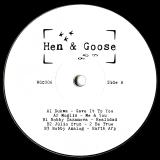
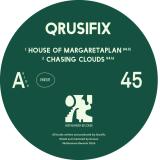
Eco Edizioni debuts in 2025 as an Italian publishing and recording project dedicated to mapping radical sound aesthetics. The label explores the territories of unconventional electronic music, giving space to forgotten productions that outline complex soundscapes through the experience of expert synthesis producers. The first vinyl release embodies this philosophy through a dialogue between different generations of the European industrial and electronic scene. The dark atmospheres of Okиho meet the analytical and methodic techno of Andrew Lagowski, taken from his 1995 album Prismatic.
The album Malnovnova is the culminating synthesis of this synergy, presenting itself as a manifesto of avant-garde sound engineering. The work pushes the Okиho duo’s research towards a totalising and hyper-technical electronic abstraction, where granular signal processing is mitigated by Lagowski’s atmospheric industrial layers.
Search:re work
'We Fell In Turn' is the solo debut from Brooklyn-based trombonist, composer, and quartet leader Kalia Vandever. Vandever, who plays with Harry Styles and Japanese Breakfast, “sculpts her trombone’s golden tones into dazzling compositions” (Pitchfork), writing music that tends to “dip you into a feeling or a pattern or a breathing speed, and keep you there” (The New York Times). In 2022, Vandever released Regrowth, an album that “features the ecstatic, brilliant melodies that have become Vandever’s signature sound” (Bandcamp). This spring, Vandever brings contemplative reflection to We Fell in Turn, a brave and understated work from an ascending voice in American jazz.
Recorded over three days in upstate New York, 'We Fell In Turn' is improvisational — a stark palate of solo trombone, voice, effects, and little more. “My solo process has always been heavily rooted in improvisation,” says Vandever. “I wanted the process to feel similar to the way I perform. Lee Meadvin, who engineered and produced the album, had a heavy hand in the creative process as well. He would dictate prompts before I started improvising and those pieces ended up shaping a lot of the imagery that comes up throughout the record.”
Connecting the dots between Jeff Parker’s 'Forfolks', and early releases from Grouper, 'We Fell In Turn' is a study of space and patience, embracing vulnerability in its sparse adornment. At times, the album is reminiscent of Patrick Shiroishi’s 'Hidemi', both in its familial inspiration and solo instrument study, while sharing the ineffable feel of William Basinski’s 'The Disintegration Loops' — the traces of her trombone folding in on themselves in an organic loop. Emotionally generous throughout, Vandever acts as a torchbearer for jazz’s historical yearning for connection.
On 'We Fell in Turn' Vandever draws inspiration from childhood memories — events that shaped her approach to love, community, and partnership, and her maternal homeland of Hawaii. “We were exploring childhood memories, earliest experiences with disappointment and pain, and my Hawaiian roots,” says Vandever. “We Fell In Turn came after I titled the track "We Wept In Turn". Both come from the intangible feeling of waking up from vivid dreams, particularly the experience of falling right before waking up or waking up in tears.”
Through this exploration into her heritage, Vandever also found guidance. “In Hawaiian mythology, ‘aumākua are known as ancestral spiritual guides that manifest in different forms, whether physical or intangible,” says Vandever. “My ‘aumākua visits me in my dreams, usually with a reassuring hug or a reminder of my past. Memories and early experiences seem to escape me, but find their way back in dreams.” And now they’ve found their way into 'We Fell in Turn', Kalia Vandever’s stunning solo debut.
Another massive offering from the one and only Mick Harris, continuing on in his Culvert Dubs Sessions experimentations with a new 2xlp. Once again Mick delves deep into the shadow realm of slow beat, psychedelic heavily textured, grinding dub techno. Eight tracks of absolute industrialized, delay swept, full pressure, sound system shaking murk ridden, dark water dubs. Top form work when Mick lets loose in this wild style, just the right balance of beauty, restraint and brutality. Total heavy weight music!
RIPIT is back with a new LP after 3 years spent mostly on the mesmerizing collaboration between THE ÅNGSTRÖMERS- his duo with FRÉDÉRIC ALSTADT -and the Haitian voodoo ensemble CHOUK BWA.
While Ripit is better known for his radical noisy breakbeat work, "A Church or a Factory" explores a more industrial, power electronic and noise ambient side of his synthesizer lust. The instruments abused on this record are: Serge modular, Knifonium and various eurorack modular. The A-side comes with 5 powerful synthetic industrial songs which feature each one a different guest vocalist. The B-side is a long ambient noise piece that will plunge the listener in an anxious meditation.
Ripit is the project of the French NICOLAS ESTERLE for almost 25 years. He explores electronic instruments thru distortion , ranging from industrial hardcore to breakcore, from doom hiphop to dusty dub. Beside his solo project, he's involved in various bands like SOLAR SKELETONS (with TZII), FUJAKO (with HHY) and more recently The Ångströmers.
On the guest side, there's a wild bunch of Nicolas' friends:
- PAUL-TERGEIST is the galactic moniker of PAUL BEAUCHAMP in his band SPACE ALIENS FROM OUTER SPACE;
- ANDREA EV is the lead member of 1997EV;
- ROBERT IMHUMAN and DIVTECH are members of the REALICIDE COLLECTIVE;
- TZII is a long-time road comrade of Nicolas and a touring freak spreading his music all over the world;
- ANDRÉ COELHO is known as METADEVICE and is the founder of the now-defunct SEKTOR 304.
The title "A Church or A Factory" refers to the Belgian countryside, wherever you are, you are at least surrounded by a church or a factory. As he just left the urban life of Brussels to escape to the French countryside, he is now lost enough not to have neither a factory nor a church in sight.
"K8A a.k.a. Kaethe Hostetter is a New York–based violinist. composer, and bandleader, whose work grew out of eleven years living and collaborating in Ethiopia. As a founding member of Debo Band and QWANQWA, Hostetter has been performing Ethiopian music for over two decades, and her solo debut, Woradj Alle, builds on this legacy by reimagining Ethiopian songs through live-looped violin and electronics.
"The album unfolds as a hypnotic, ritual-like performance that expands the instrument into an immersive sonic landscape, that refracts Ethiopian classics through dub, psych rock, and avant improvisation. It is not fusion, but transmission - music that blurs memory, place, and time.
"This collection of musical vignettes is based on my time in Ethiopia, the place I called home for 11 years", Kaethe explains. "The phrase 'Woradj Alle' is one of the first colloquial expressions I learned upon arriving in Addis Ababa, used on public transportation, simply meaning 'let me off right around here'. In choosing this name, I invite you to join me on the rickety minibus journey through my time in Ethiopia, and step off 'the bus' into scenarios, atmospheres, and soundscapes that describe moments I experienced, people I met, and other lasting impressions, striking and mundane."
- A1: If Sunlight Passes Through (Excerpt) - Molinaro
- A2: Luz Violeta - Pablo Color
- A3: Theme From Extase - Left Bank
- A4: Patterns - Carlos Nino & Friends Feat Zeroh, Jamael Dean & Jesse Peterson
- A5: Créme (Rough Mix) - Suzanne Kraft
- B1: In The Light Of Sprint - Bsa Gold
- B2: Ridge Of Tocco - Moliaro
- B3: The Cloud Is Back - Kaidi Tatham
- B4: Secret Beach - Jonti
- B5: Too Many Letters - Fourth Kind
- C1: Cinnamon Vision - Ashtrejenkins
- C2: Gears Not Working (Alternate Take) - The Abstract Eye
- C3: Persistere - Afrikan Sciences
- C4: Waver Track - Legowelt
- D1: Starr22 - K15
- D2: Suspicious Numbers - 2000Black
- D3: Freedom Live - Build An Ark With Special Guest
- D4: Atairs Flight - Alex Attias & Sassy J
Sassy J’s acclaimed A Sanctuary tape mix arrives as a double vinyl release, featuring 18 of the 22 original tracks. All exclusive and previously unreleased music by 17 contemporary artists including Molinaro, Carlos Niño & Friends, K15, Kaidi Tatham, Legowelt, Afrikan Sciences, AsheTreJenkins, 2000Black and many more. A journey through sounds, spheres, moods and dynamics dedicated to the unity and empowerment of the independent artists.
- 01: Till I'm Gone
- 02: Ya Dead Now
- 03: Mr Moany
- 04: Makes Me Wanna
- 05: Peace Pipes
- 06: The Circus
- 07: Punch Up
- 08: Matters Of The Heart
- 09: X-Files
- 10: Psycho With A Lexicon
- 11: Sun Wukong
- 12: Never Be The Same
Fresh from the success of his debut solo LP ‘How To Kill A Butterfly’ out last year on High Focus Records, Farma G returns with the anticipated full-length follow up ’Nearly Nothing’s Enough’.
An album anchored in his notorious musical adventures as 1/2 of Task Force, Bury Crew and Mud Family, but very much informed by the state of 2026 Britain and beyond, Farma’s new body of work is fuelled by equal parts venom and deep introspection across 12-tracks courtesy of Brighton based producer Relense.
With one eye on following ‘How To Kill A Butterfly’ with something of equal standing, Farma revisited the fundamentals in the hope of better understanding what he really wants to say with the music he makes. By channelling feelings of familiarity and seeking out emotional connections to his past he created a record that feels both concise and expansive.
With the help of Relense’s gritty analog instrumentals, Farma found himself journeying across subjects and bandwidths; from exploring the mind of a conspiracy theorist on ‘X-Files’, to being a zen master with a mountain on his back on ‘Sun Wukong’, before returning to earth for a typical day in the life on ‘Mr Moany’, ‘Nearly Nothing’s Enough’ is an album that took Farma home and he is delighted to welcome you on the journey.
Fresh from the success of his debut solo LP ‘How To Kill A Butterfly’ out last year on High Focus Records, Farma G returns with the anticipated full-length follow up ’Nearly Nothing’s Enough’.
An album anchored in his notorious musical adventures as 1/2 of Task Force, Bury Crew and Mud Family, but very much informed by the state of 2026 Britain and beyond, Farma’s new body of work is fuelled by equal parts venom and deep introspection across 12-tracks courtesy of Brighton based producer Relense.
With one eye on following ‘How To Kill A Butterfly’ with something of equal standing, Farma revisited the fundamentals in the hope of better understanding what he really wants to say with the music he makes. By channelling feelings of familiarity and seeking out emotional connections to his past he created a record that feels both concise and expansive.
With the help of Relense’s gritty analog instrumentals, Farma found himself journeying across subjects and bandwidths; from exploring the mind of a conspiracy theorist on ‘X-Files’, to being a zen master with a mountain on his back on ‘Sun Wukong’, before returning to earth for a typical day in the life on ‘Mr Moany’, ‘Nearly Nothing’s Enough’ is an album that took Farma home and he is delighted to welcome you on the journey.
Fresh from the success of his debut solo LP ‘How To Kill A Butterfly’ out last year on High Focus Records, Farma G returns with the anticipated full-length follow up ’Nearly Nothing’s Enough’.
An album anchored in his notorious musical adventures as 1/2 of Task Force, Bury Crew and Mud Family, but very much informed by the state of 2026 Britain and beyond, Farma’s new body of work is fuelled by equal parts venom and deep introspection across 12-tracks courtesy of Brighton based producer Relense.
With one eye on following ‘How To Kill A Butterfly’ with something of equal standing, Farma revisited the fundamentals in the hope of better understanding what he really wants to say with the music he makes. By channelling feelings of familiarity and seeking out emotional connections to his past he created a record that feels both concise and expansive.
With the help of Relense’s gritty analog instrumentals, Farma found himself journeying across subjects and bandwidths; from exploring the mind of a conspiracy theorist on ‘X-Files’, to being a zen master with a mountain on his back on ‘Sun Wukong’, before returning to earth for a typical day in the life on ‘Mr Moany’, ‘Nearly Nothing’s Enough’ is an album that took Farma home and he is delighted to welcome you on the journey.
Frizzell & Duque's A Sorrow Unrequited moves with suspended patience, each LP piece built from simple melodic figures, each of which eventually thicken out to quiet overwhelm. Working outside their Zake/City of Dawn aliases, the pair realise a more diaristic exposure here, drawing their inspiration and track titles from Julia Frizzell's poems of the same name. 'We Once Believed We Owned The Sky' tone-sets the vibe with long, tidal swells of strings and synth, dissonances sparing but weighted, while 'Closer, Always Closer' moves in similarly tidal cycles, with momentary swellings and torn cellos fissuring through the overall sadness.
Gap Mangione's monumentally influential Diana In The Autumn Wind. AKA BEWITH200LP. And, without question, Be With's White Whale.
They said it could never be done. And with good reason.
We've spent the past 12 years trying to license this legendary 1968 recording from Gap and, after much work, it's finally here. Remarkably, this is the first ever vinyl reissue of Gap Mangione's Diana In The Autumn Wind, produced with the full and extensive participation of Gap. An exceedingly rare album, it's been coveted by funk, soul, jazz and hip-hop sample fiends for decades.
It's unarguably *the* most sought after album for J Dilla / Madlib sample collectors. It has also been brilliantly sampled by A Tribe Called Quest, Large Professor, Ghostface Killah, Kendrick Lamar and Talib Kweli.
But this record is so much more than a sample-spotters curio. It's solid gold throughout. Bursting with killer funky-jazz grooves and tracks adorned with warm electric piano, the release is notable for featuring some extremely significant players at the very outset of their careers; Tony Levin, at 21, whose superb playing on both acoustic and electric bass was the harmonic mainstay of the trio and Steve Gadd, at 23, one of the greatest drummers of his generation.
With acceptable copies of this holy grail changing hands for $400, to call this reissue "much-needed" underplays just how vital it is. Gap's story is told in his words alongside rare photos across a sumptuously designed 2-page insert and, to augment this deluxe edition further, its all wrapped up in a beautiful, no-expense-spared luxury tip-on sleeve, as per the original hens-teeth release. And, while we're talking packaging, just take a look at that cover - a work of art in and of itself.
The tracks are short but complex, with that extraordinary rhythm section backing the beautiful piano, organ and electric piano work of Gap. It's like the best ever library funk breaks record you never heard - but all your favourite golden age rap producers were all over it, long ago. It's a stunning blend of the vibrant, driving music of the Gap Mangione Trio coupled with the sensitive composition and superb orchestration of Gap's legendary brother, Chuck Mangione, who helmed an amalgam of seemingly disparate elements – rock, big band jazz, solo improvisation and "classical" music - into a spectacularly cohesive whole that has aged wonderfully well. As Gap himself notes in the liners, "with this group I was able to explore and add new and exciting elements from rock, Brazilian and then-current pop music."
Opener "Boy With Toys" triumphantly swaggers out the gate, all big band horns, flutes and dextrous organ work. The synthesis of everything going on is nothing short of stunning. When one wise YouTube commentator called this tune "old school superhero music", Gap agreed. Rap luminaries did, too, amongst them Talib Kweli, who rapped over DJ Scratch's chopped up intro for "Shock Body" on his Quality album back in 2002.
You've barely recovered from that incredibly affecting opener when you get hit over the head with the exquisite title-track. And now you see how two of the greatest beats of all time emerged from one single track produced nearly 50 years earlier. Unforgettably utilised by Dilla for Slum Village's heartbreakingly good "Fall In Love" and then Madlib for his "Official" beat for Dilla to rap over, on the Jaylib record. Regardless of the records it went on to spawn, this is just a staggering tune in its own right. Be beguiled by the flutes and the flutter tonguing, the counter-melody from the trombones, the soprano sax solo. All of it. Simply beautiful.
The questing organ and horn workout "Long Hair Soulful" deserves a lot more attention, overshadowed somewhat by the opening two monsters but no less fantastic. It swings, it grooves and Gadd and Levin truly cook. Up next, Gap's wonderfully percussive, mellifluously piano-heavy cover of "Yesterday" by some fellas called The Beatles. It's a subtly arresting gem. "The XIth Commandment" is damn fine, with thick, gorgeous electric piano and snappy drum work underpinning chaotic soundtracky horns. To close out the side, "St. Thomas" showcases the "fourth" member of the Gap Mangione Trio, conga drummer Dhui Mandingo. Having performed with the Trio since 1965, Dhui‘s African-based and jazz-latin-influenced style amazed listeners and its way to hear why.
Opening the B-Side, standard "You're Nobody Till Somebody Loves You" breezes along in the late-night jazz club fashion before things get super deep with the outstanding and - up to now - un-sampled "Pond With Swans". It's simply heavenly, and how its moody, melancholic intro has yet to be pilfered is anybody's guess. It oscillates between gentle, sombre movements and bombastic grooves, equally hypnotic and joyous. The rendition of "You Are My Sunshine" is yet another showcase for Gap's virtuoso playing and Gadd's mastery of the pocket. Indeed Gadd's drumming on "Free Again" is nothing short of neck-SNAPPING! Ghostface took it for not one but two "Iron's Theme" tracks across his seminal Supreme Clientele. It's got that Galt MacDermot "Coffee Cold" feel. Suuuuuper cool. The frantic "Dream On Little Dreamer" hurtles along and must've surely had the whole room absolutely swinging from the chandeliers back in Rochester in the late 60s. The album closes with the magnificent Graduate Medley, featuring memorable renditions of "Scarborough Fair", "The Sounds of Silence" and "Mrs. Robinson". The warm electric piano lines of the former were sampled by The Ummah (Dilla again!) for Tribe's "Pad & Pen" from their reappraised final album, The Love Movement, as well as by Large Professor on his much-loved "The LP (For My People)".
Under the watchful eye - and extremely attentive ears - of Gap Mangione himself, the audio for Diana In The Autumn Wind has been carefully remastered by Be With regular Simon Francis, with a few much needed tweaks here and there, according to the artist's wishes. At the prestigious Abbey Road Studios, Cicely Balston's expert skills have made sure nothing is lost in the cut whilst the records have been pressed to the highest possible standard at the always stellar Record Industry in Holland. The artwork restoration has taken place here at Be With HQ and has that drop-dead gorgeous cover artwork popping like new. Buy on sight!
A central figure in Belgian techno, Border One's work has also been an international reference for consistency and direction since his early releases. An artist for artists with true commitment to his sound, Steven Petit's impact in the studio and behind the decks is admired by anyone who has done their homework. His music describes tight pressure under curious, modular-like sequences that stretch through the timeline of each track. The scale of minimalism remains key here, and the Belgian wastes no time when tunneling through his erratic tracks. Jazz-like dissonance drives his tension and although each element is carefully measured, the records truly command dancefloors. 'Inner Radiance' is no different. The Fuse resident takes his game one step further, pushing harmony to hysteria at every turn.
The EP skips foreplay and dives straight into the extremities of Border One's sound. In 'Reducing Valve', sustain is the key ingredient to this chaos. Slowly ripping the synth sequence into chords, Border one maintains a firm hold on the track's tension while remaining playful with the main theme. 'Sensory Reset' is more of a lurker with its shifting pad that spreads across the stereo image. This track is characterized by a grim urgency as opposed to its predecessor's progressive spiral. Keeping things low to the groove, the A2 swings about satisfyingly while Border One tinkers at his 909 constructions. Continuing his work on resonance, 'Transfigured' balances obscurity and surrealism. With a sequencer on the loose and a drum machine to emphasize it, the Fuse resident guides his audience into twists and turns at a constant pace. Here, we explore the dichotomy between the warmth and cold of a modular sound in techno, something frequently done but rarely mastered. Border One puts his years of experience to work to provide a combination of flair and balance to his tracks, something that is clearly translated in this EP. Of course, the final track - the title track - 'Inner Radiance' brings something very special to the table. The power of simplicity can never be underestimated and Petit knows just how to use it. With a strong core to an already sturdy track, the conclusion is spectacular. Emphasizing the electrifying nature of the record, Border One adds vintage chord stabs that fit right in with the sharp lead to create a powerful and memorable dancefloor experience. Not as much of a wind-down more than it is a gripping cliff hanger for his future releases, Border One provides once more an EP that underlines the true ethos of techno music.
- 1: I (2026 Remaster) 03:45
- 2: Ii (06 Remaster) 01:44
- 3: Iii (2026 Remaster) 0:1
- 4: Iv (2026 Remaster) 03:09
- 5: V (2026 Remaster) 04:24
- 6: Vi (202 Remaster) 04:00
- 7: Vii (2026 Remaster) 08:04
- 8: Viii (2026 Remaster) 03:30
- 9: Ix (2026 Remaster) 06:48
- 10: X (2026 Remaster) 04:52
- 11: Xi (2026 Remaster) 04:31
- 12: Xii (2026 Remaster) 03:31
- 13: Xiii (2026 Remaster) 06:24
- 14: Xiv (2026 Remaster) 04:45
øjeRum is the moniker of Danish artist Paw Grabowski. Since 2007, his mostly tape-based works have unfolded like private diaries—intimate, textural, often centered around an vintage pump organ Paw found left abandoned in a dilapidated Danish home, and to which he would return, sometimes in the dead of winter, to play and record on. The works featured on this release are centered around this pivotal engagement and collect some of his earliest releases from around 2014 to 2017. These were then carefully selected and released via Vaagner's sister label in 2018 via a double cassette release, which has since become a coveted collectors item.
Throughout the album, the organ breathes, sighs—the moments of brief silence that follow are almost palpable, then like a sonorous echo, the sound rushes back into the foreground with gentle restraint, submerging the listener into an undulating current of emotional upheaval. In this ebb and flow, øjeRum shapes a space where memory seems to waver and dissolve, and where a fragile, lingering melancholy unfolds with a kind of hushed inevitability.
With the newly minted Vaagner.Archive, this album is now reissued on vinyl for the first time—carefully remastered and housed in a 2xLP gatefold sleeve printed on special cardboard, its tactile presence echoing the material sensitivity that has always defined Paw Grabowski's practice. A love letter to repetition and restraint.
- A1: Un Futuro Migliore
- A2: Teneri Affetti
- A3: Disgelo
- A4: Eterni Valori
- A5: Il Progresso
- A6: Progetto Di Vita
- B1: Appello
- B2: Il Generale Inverno
- B3: Anni Drammatici
- B4: Anni Drammatici (Finale)
- B5: Intolleranza
- B6: Ceti Emergenti
- B7: Anni Bui
- B8: Opposizione
Long overlooked outside specialist circles, Drammi e Speranze is presented for the first time ever on vinyl reissue, newly remastered to highlight the depth and tonal richness of Umiliani’s arrangements.
Originally released in 1976 on Piero Umiliani’s own Sound Work Shop imprint, Drammi e Speranze—issued under the pseudonym Rovi—stands as a refined example of his late-period library work.
Performed by a compact string ensemble and subtly augmented by piano, Hammond organ, Eminent organ, and Rhodes, the album unfolds through a series of classically-informed compositions where melody takes center stage. Each piece is concise, evocative, and purpose-built—reflecting the functional yet highly expressive nature of Italian library music at its peak.
Conceptually, the record is structured in two contrasting halves: the first side explores themes of optimism and resolution, while the second delves into darker, more introspective territories, mirroring the emotional duality suggested by its title (Tragedies and Hopes).
This release celebrates 100 years since the birth of Piero Umiliani, honoring the enduring legacy of a composer whose work continues to resonate across cinematic, library, and contemporary sample-driven music.
©℗ 1976, Liuto Edizioni Musicali / Licensed to Holy Basil Records by Liuto Edizioni Musicali
Rising star Storm Mollison lands her debut on Heist with an ep blending House & R 'n B and we're completely hooked.
The future is looking bright for Storm Mollison - Heist's newest. Marked as artist to look out for by Shazam on their fast forward 2026 list, Storm's got a bright and busy year ahead, after an already big 2025. Last year alone, she featured on Kiki's hit 'Getting ready for the party', featured on a Mixmag London event and a Raw Cuts X Heist ADE party, had her first cover feature on Spotify, multiple radio 1 appearances, released several singles, a full EP on Noir Fever and a Luuk van Dijk remix.
If that's not enough to get you excited, we suggest you just listen to her 'Act like that' EP on Heist. In Storm's own words: "it's the most exciting music I've made so far" and we couldn't agree more. Her EP is a perfect blend of her love for house music and soulful R 'n B with its 4 tracks smothered in deep chords, smooth vocals and crunchy textures.
EP opener 'Doing Sumthin'' has been a staple in Dam Swindle's sets ever since receiving Storm's first demo and has never failed to make the crowd bounce from left to right with its quirky and equally cool vocal courtesy of Aaron Pfeiffer. Sometimes, you just need someone to tell you which way to move and before you know it, the whole club is doing it. The beat is chunky, and the sax lick is a nice wink to the old school house that has influences Storm's sound so much.
Act Like That - the EP's title track -, is a modern R' n B song that could have easily been on Rochelle Jordan's latest album. The lyrics are perfectly delivered by Storm herself and celebrate women who stand up to unreliable men. It could well be the badass soundtrack of womanhood for 2026 delivered in a silky-smooth package that'll live rent-free in your head for the foreseeable future.
On the flipside is "Gotta Go', an undercover dancefloor burner with lush keys and a lean-back groove. The track relies on crisp textures and little frizzles all throughout the track, with a big breakdown for ultimate release.
Ep closer 'Workin' takes us back into R 'n B territory, this time in a very danceable form. Storm's soft vocals lie on top of a steady beat with deep chords and a bassline so sexy It'll make you get down no matter where you're hearing this.
It's hard to speak about a breakthrough for an artist that has already seen such a rise in the scene, but if we're talking about her music, this will be the record that people come back to after years and say, "remember when she releases ALT!?"
As always, enjoy the music and play it loud!
Yours, Maarten & Lars
- A1: Bluebell
- A2: Japan Greatly (Feat. Reek0 And S.i)
- A3: Turn Me On
- A4: Dinero (Feat. P Wavey)
- A5: Down 4 (Feat. Osquello)
- A6: Strike A Pose (Feat. Camille Munn)
- B1: Longest Road (Feat. Pk)
- B2: Komodo
- B3: Somebody Jump (Feat. Reek0)
- B4: Wonderluv
- B5: Tek Control (Feat. Liam Bailey)
- B6: Guiding Star (Feat. Reek0)
East London producer and DJ IZCO announces his debut solo studio album ‘POWERSCROFT’, set for release on 1st May via Brownswood Recordings. The album’s first single, ‘Strike a Pose’ featuring the vocals of Camille Munn offers an early glimpse into the project. To celebrate the release, he will go on a run of UK dates from March to May, culminating at London’s Jazz Cafe.
Named after the road where he grew up, ‘POWERSCROFT’ marks a defining new chapter for an artist who has spent the past decade shaping the sound of UK dance music. Drawing from jungle, broken beat, grime, garage, soul and dub, the album channels the energy of the dancefloor while remaining deeply rooted in memory, instinct and identity. It captures what it feels like to be inside IZCO’s world, where thoughts, memories and influences collide.
Hailing from East London, IZCO is a producer and DJ spearheading a new generation that is bringing soul back to the dancefloor. Shaped by the rich musical heritage of his hometown, he has developed a sound that feels familiar yet forward-looking, diverse yet distinctly his own. That sound has taken him across the globe, from New York to Tokyo, alongside standout sets at We Out Here, Outlook and Glastonbury.
IZCO began his journey making grime beats for local rappers including Capo Lee, Novelist and Reek0, before becoming a key figure in the UK’s evolving garage and dance music landscape. In 2018, he launched his long-running Rinse FM show and released his debut EP Tek 5, earning early underground acclaim. His production credits include PinkPantheress’ breakout track ‘Passion’, created alongside Jkarri, as well as collaborations and remixes for artists such as Katy B and Greentea Peng.
Beyond his solo work, IZCO is a label head, promoter and co-founder of the Brighter Days Family, a collective built on community, craft and cooperation. With ‘POWERSCROFT’, he steps fully into the spotlight, presenting his most personal and fully realised body of work to date. “This album is about channeling my true musical personality and character,” he says. “I’m marking a new chapter by paying tribute to my foundations.”
2026 Repress
Anenon's tenor saxophone breathes an emotive contemplation on loss, meshed with sustained piano and field recordings. 'Moons Melt Milk Light' is a hyper-personal statement contained in a visceral beauty.
LA native Anenon returns with a highly anticipated new album 'Moons Melt Milk Light' on Tonal Union, bearing his most personal, expressive, and arresting works to date. Anenon is the ongoing solo studio and live project of Brian Allen Simon, whom since 2010 has released multiple albums and EPs to critical acclaim, including the highly revered 'Tongue' (2018) and 'Petrol' (2016).
'Moons Melt Milk Light' is direct, efficient, and unwavering in its immediacy. Anenon departs from the electronics of previous works, and embarks on a reductive, almost entirely acoustic approach consisting of piano, tenor saxophone, bass clarinet, and field recordings. All of the music was improvised with everything recorded as either a first or second take with no edits. Any layering happened fast and in the moment, and yet the sonic architecture of the whole feels both planned and refined.
"I feel a kinetic and messy honesty that doesn't exist in any of the other music I've ever made. There is also a sense of being settled, of calm. There is no faking it here."
Wasteland is a record that is unafraid to plunge into the darkness of the modern world and embrace the weirder, edgier and more unnerving moments that come from doing so. It is an album that captures all the enormity of life from the micro to the macro, zooming in on the personal as well reflecting on broader societal issues.
“Wasteland is about the idea of a place once known or familiar that is now broken down and unrecognisable,” says Ghedi. “It’s about exploring the process of watching someone’s surroundings and environment collapse.” And within that you have a lot going on. “It also explores death, personal loss, grief, mental health and how the natural world provides solace and meaning for that loss and how these worlds blur into one another.”
Ghedi has always been an artist that in many ways perfectly encompasses folk music in its purest form but he is also someone that frequently pushes the boundaries of that label and no more so is that apparent than on this record. As like previous albums, such as 2018’s A Hymn for Ancient Land and 2021’s In the Furrows of Common Place, Ghedi uses traditional folk songs as a means to explore contemporary issues via modern and experimentally-leaning music. “With the traditional material on this album I wanted to find songs with content that resonated with me,” says Ghedi. “But also that were based roughly around the north of England.” This is a central underlying theme to the album for Ghedi. The feelings of loss, erosion, and degradation are often most pronounced in working class communities and this was something he wanted to weave in. “It was important to voice and choose material that represented or expressed issues that correlated with things going on around me.”
However, as remarkable as some of the traditional material is, some of the most arresting work on the album is Ghedi’s entirely original compositions. Lead single ‘Wasteland’ is a stunning piece of work that while rooted in an environment being corrupted and broken – “there’s violence on these hills” Ghedi sorrowfully sings, before claiming this is no longer somewhere that can be called home – it is also a stirringly beautiful composition that soars and glides as it opens up, as sweeping strings swoop and in and out of Ghedi’s twangy electric guitar.
The decision to incorporate more fuller sounds, such as electric guitar and huge drums, results in a notable shift and evolution in tone for Ghedi. “The lyrical content needed something more band-driven and loud to deliver them,” he explains. “Incorporating the electric guitar in my songwriting was also a big part of opening the sound up, using drop tunings pushed me to use my voice in a wider range, which forced me to use falsetto a lot which I haven’t previously done before. That then opened the sound up and gave me creative ideas for bigger arrangements and to sonically really push things.”
What Ghedi has done in creating his masterpiece is construct a remarkable space where deeply intimate and personal feelings coexist with reflections on environment, place and society, while also interweaving historical context via traditional songs. Wasteland is as much of a world to explore and exist in as much as it is an album, with Ghedi carving out his distinctly unique sonic language and voice to explore that singular environment.
Wasteland is a record that is unafraid to plunge into the darkness of the modern world and embrace the weirder, edgier and more unnerving moments that come from doing so. It is an album that captures all the enormity of life from the micro to the macro, zooming in on the personal as well reflecting on broader societal issues.
“Wasteland is about the idea of a place once known or familiar that is now broken down and unrecognisable,” says Ghedi. “It’s about exploring the process of watching someone’s surroundings and environment collapse.” And within that you have a lot going on. “It also explores death, personal loss, grief, mental health and how the natural world provides solace and meaning for that loss and how these worlds blur into one another.”
Ghedi has always been an artist that in many ways perfectly encompasses folk music in its purest form but he is also someone that frequently pushes the boundaries of that label and no more so is that apparent than on this record. As like previous albums, such as 2018’s A Hymn for Ancient Land and 2021’s In the Furrows of Common Place, Ghedi uses traditional folk songs as a means to explore contemporary issues via modern and experimentally-leaning music. “With the traditional material on this album I wanted to find songs with content that resonated with me,” says Ghedi. “But also that were based roughly around the north of England.” This is a central underlying theme to the album for Ghedi. The feelings of loss, erosion, and degradation are often most pronounced in working class communities and this was something he wanted to weave in. “It was important to voice and choose material that represented or expressed issues that correlated with things going on around me.”
However, as remarkable as some of the traditional material is, some of the most arresting work on the album is Ghedi’s entirely original compositions. Lead single ‘Wasteland’ is a stunning piece of work that while rooted in an environment being corrupted and broken – “there’s violence on these hills” Ghedi sorrowfully sings, before claiming this is no longer somewhere that can be called home – it is also a stirringly beautiful composition that soars and glides as it opens up, as sweeping strings swoop and in and out of Ghedi’s twangy electric guitar.
The decision to incorporate more fuller sounds, such as electric guitar and huge drums, results in a notable shift and evolution in tone for Ghedi. “The lyrical content needed something more band-driven and loud to deliver them,” he explains. “Incorporating the electric guitar in my songwriting was also a big part of opening the sound up, using drop tunings pushed me to use my voice in a wider range, which forced me to use falsetto a lot which I haven’t previously done before. That then opened the sound up and gave me creative ideas for bigger arrangements and to sonically really push things.”
What Ghedi has done in creating his masterpiece is construct a remarkable space where deeply intimate and personal feelings coexist with reflections on environment, place and society, while also interweaving historical context via traditional songs. Wasteland is as much of a world to explore and exist in as much as it is an album, with Ghedi carving out his distinctly unique sonic language and voice to explore that singular environment.
- Sea Ceremony (With Karen Vogt)
- Coral And Bones (With Laryssa Kim)
- Heartsea (With Vargkvint)
- Naiade (With Mt Fog)
- Moon And Mirrors (With Elska)
- Daughter Of The Abyss (With Singer Mali)
- Serpentine (With Nightbird)
- Their Voices Rise Above The Waves (With Yellow Belly)
- For All The Sea-Girls (With Nadine Khouri)
- Ondine (With Astrid Williamson)
- Coda (With Camilla Battaglia)
Oceanine, Jolanda Moletta’s third album and her first for Beacon Sound, is a powerful and ethereal statement of artistic community. Expanding on her previous work, each track represents a collaboration with a different female vocalist, with the foundational elements being generated entirely by her own voice. By turns haunting, enchanting, and inspiring, you won’t want to come up for air once you’ve been pulled under. Representing a
musical practice that is distinctly feminist, this is an album with a longer view in mind, to an age when the altars were to goddesses and women were centered as powerful beings representing the earth’s cycles of regeneration and renewal. Oceanine then, in all its beauty, can be viewed as an album of survival. It is deeply transportive, accessing something that lies within all of us. As the late, great Lithuanian folklorist and archaeologist Marija Gimbutas noted, “We must refocus our collective memory. The necessity for this has never been greater as we discover that the path of 'progress' is extinguishing the very conditions for life on earth.”
Jolanda Moletta is a multimedia artist and one-woman electronic choir. She creates wordless compositions through extended vocal techniques, integrating wearable-controlled live processing, alongside symbolic visuals. Moletta considers her performances to be a collective ritual and creates her Sonic & Visual Spells following the cycles of nature and the moon. Jolanda's 2022 critically acclaimed album Nine Spells was released on the Ambientologist label, followed by Night Caves on Whitelabrecs in 2025. Moletta’s artistic practice is a radical and spiritual journey through sound art, ritual, and the symbolic archaeology of the feminine.
Oceanine is inspired by sirens, water nymphs, and the timeless call of the sea. At its core lies Jolanda’s deep, lifelong connection to the Mediterranean Sea and to the ancient and modern myths and folklore that have emerged from its waters. Growing up by the Mar Ligure, Jolanda was surrounded by stories carried by salt, wind, and waves: legends of sirens, echoes of ancient voices, and the sea as both origin and oracle. This intimate relationship with the Mediterranean is not merely a backdrop, but a living source that shapes Oceanine’s emotional, symbolic, and sonic world.
Each track features a different female vocalist, creating a rich tapestry of voices, styles, and perspectives. This artistic choice not only broadens the album’s sonic palette, but also deepens its narrative core: celebrating the power, beauty, and mystique of feminine energy through myth, history, and sound.
The entire album is built exclusively from the human voice, processed and layered, yet always remaining voice, and nothing else. For each piece, Jolanda invited every vocalist involved to contribute a raw stem: a short, unedited melodic fragment of just a few seconds, inspired by the album’s themes. These intimate vocal seeds became the foundation of each track: the guest artists’ voices appear as brief, melodic stems, while the entire surrounding “orchestral” fabric is created solely from Jolanda’s own layered and processed voice. In this way, Jolanda’s voice becomes the Ocean itself, embracing, absorbing, and carrying the sirens’ calls within a vast, immersive soundscape. Every song is a unique expression of the feminine experience, revealing its depth, complexity, and emotional range, echoing the call of the sea and the many faces of the siren archetype.
The figure of the siren has transformed across centuries. In myths of Ancient Greece and Rome, sirens were hybrid beings, part woman, part bird, whose irresistible songs lured sailors to their doom. During the Middle Ages, the image shifted toward the half-woman, half-fish figure, often associated with temptation and danger. Historically, the voice of women has often been feared. Sirens were considered harbingers of misfortune not simply because they seduced or destroyed, but because they were powerful liminal beings.
In Ancient Greek, sirens functioned as psychopomps: figures who existed between worlds and guided souls, especially between life and death. Their songs were believed to carry forbidden knowledge, including prophetic insight and the ability to reveal truths about fate and the future. The danger of the sirens lay in what they revealed: knowledge that humans were not meant, or ready, to hear.
Oceanine confronts this legacy head-on. The voices heard throughout the album are not merely beautiful: they are dark and luminous, wild and enchanting, magical, soothing, dreamy, and at times fractured or distorted. They whisper, lament, beckon, and enchant. Like sirens, they skim the surface of the water and sink into its depths, hovering on the edge between tenderness and danger, vulnerability and power. They rise toward the sky, dissolve into mist, and return as echoes charged with raw, elemental emotion: voices that seduce, warn, mourn, and remember. They refuse to be reduced to decoration.
Alongside the album’s release in May, Oceanine will also unfold as a visual and performative work through a short art film. The film includes a live session recorded inside a sea cave facing the Mar Ligure, the very coastline where Jolanda spent her childhood, dreaming of sirens and listening to the sea as if it were speaking directly to her. This site-specific performance reconnects the music to its place of origin, allowing the voice to resonate within stone, water, and air, and transforming the cave into both a sanctuary and a threshold between myth and reality.
What if the sirens’ songs were considered dangerous because they carried another truth, an ancient truth long forgotten?
Oceanine embraces the idea that we are still deeply woven into myth. Though we may see ourselves as rational and modern beings, our world is saturated with ancient symbols and archetypes, often distorted, simplified, or stripped of their original meaning. And if those symbols are allowed to shift, if the mirror once held by the siren becomes an invitation to look beyond appearances and into what has been obscured, then we may finally uncover a deeper truth and reclaim the voice that was always ours.
Oceanine is not just an album. It is a reclamation, a spell, and a call from the depths.