third album, "Magic Seeds". The record represents his most personal and collaborative work and blends live recordings and analogue synths to create an organic, rhythmic sound reminiscent of trip-hop and hip-hop.
"Magic Seeds" explores themes of growth and reconnection, featuring unexpected musical moments and influences from 90s electronic music to neoclassical. Tracks like "Smoke in the Air" and "Inner Child" highlight his ability to balance emotional peaks with deep, moody atmospheres. The album’s dynamic range and authenticity reflect James's commitment to musical freedom and societal reflection, making it a compelling sonic collage of his recent experiences.
Over the past few years, Leifur James has steadily built a reputation as a vital new voice in electronic music on both sides of the Atlantic. He’s played prestigious London venues like the Barbican and Village Underground in London and toured Europe, as well as being named Pitchfork and KCRW’s ‘best new music’ in the US, and his music has been championed by the likes of tastemakers Gilles Peterson, Mary Anne Hobbs, Bradley Zero and actor Cillian Murphy, and from BBC 6Music to NTS via KCRW and RMC Italia. James has also enjoyed further flagship press support from Consequence of Sound, Clash, CRACK, Passion of the Weiss, XLR8R, Complex, MixMag, DJ Mag, The Vinyl Factory, and more
Search:re work
imited White Vinyl
Norwegian post punk duo Mayflower Madame return with their 3rd Studio album and we are delighted to welcome them to the Up In Her Room Family!
Norwegian band Mayflower Madame is set to release their highly anticipated third LP Insighton 1st November 2024. The lead singles, "A Foretold Ecstasy" and "Paint It All in Blue," have garnered widespread acclaim and extensive radio support, including airtime on BBC 6 Music. These tracks offer just a glimpse of what the album delivers—an expansive canvas of pulsating post-punk, shimmering shoegaze, and atmospheric psych-noir, masterfully blended with delicate sonic nuances.
Mixed and mastered by Maurizio Baggio (known for his work with The Soft Moon, Boy Harsher, and The Vacant Lots),Insightshowcases the band refining their sound into a sharper and more expansive sonic landscape than ever before. This album sees them exploring greater depths and heights, delivering a hypnotic journey through the shadows, filled with haunting melodies and dreamy melancholia. At the same time, it remains catchy and dynamic, with moments of vibrant brightness.
Insightis dedicated to frontman Trond Fagernes' stillborn daughter and is bookended by two songs—"Ocean of Bitterness" and "Insightfor the Mourning Hours"—that directly address this profound sorrow. Between these somber pieces, the album delves into a wide range of emotions, from nostalgic reflections on lost loves to feverish depictions of escapism and catharsis.
Over the past years, Mayflower Madame have gained a reputation far beyond their hometown of Oslo, Norway. They made their debut with the album ‘Observed in a Dream’ in 2016, which created a buzz in the indie music press and earned them tours across Europe and North America, while 2020s long-awaited sequel ‘Prepared for a Nightmare’ firmly established their position as one of the continent’s leading purveyors of cinematic shoegaze psychedelia swathed in 1980s post-punk and dark romanticism.
Continuing our quest to get all of the classic early AMT albums released on vinyl, we turn to 2004’s 'Mantra Of Love’, and with the help of Makoto Kawabata’s studio wizardry, we’ve made it possible.
This latest instalment in the ‘Acid Mothers Temple Vinyl Archives - First Time On Vinyl’ series (as with the three previous SOLD OUT releases in the series) have all been meticulously put together with the help of Makoto Kawabata with the original CD artwork recreated for these vinyl editions from archive photos stored in the vaults at the Acid Mothers Temple in Osaka, Japan and the original audio remastered by James Plotkin.
Here’s what others had to say upon it’s original CD only release back in 2004 …
“Acid Mothers are strong folk. You'd think they'd tire quickly, all tucked away on their island, strewn about on tree roots while baking their lungs and throats to a knotty green tinge. But instead of waltzing through life like hippies, they manage to not only tour and put out records every year, but also to fill those albums with 30-minute jams and assorted freakouts. And while evil jam bands would fill that space with guitar work taken from the Classic Rock Manual of Clichés, Makoto Kawabata and company assault listeners with frighteningly dense walls of white noise, psychedelic swirl effects and, yes, even guitar solos-- albeit ones that are more Merzbow or Keiji Haino than Gary Rossington. Truly, AMT's endurance and threshold for cosmic lashings are both worthy of admiration.
But how much AMT can you take in one sitting? If there's anything this band has taught us-- via records such as 2002's Electric Heavyland and the ferocious Acid Mothers Temple & the Melting Paraiso U.F.O-- it's that they're not afraid to reach for the upper regions of consciousness. On Mantra of Love, they offer two titles over the course of one hour, never faltering along the way, and it's as if we listeners are just brief visitors passing through a never-ending, spontaneous group trip. For all I know, Kawabata has hundreds of hours of this stuff on his hard drive-- at any single moment, this record's sheer volume of sound is a clamor to behold. However, if you aren't dialed into that the particular space AMT inhabits (for me, it's the mystical fire-baptism standby), you might not hear their glorious noise for all the, well, glorious noise.
"La Le Lo" begins as a lengthy psychedelic ballad sung by Cotton Casino (who doubles on "beer & cigarettes"), who is accompanied by her own ghostly backing vocals. The band is playing a mantra as Casino waxes earth-mother stylings to the moon. The serenity is broken by a patented AMT rave led by Kawabata's electric sitar (!) solo. Ace rhythm section Tsuyama Atsushi ("monster bass") and Koizumi Hajime hold things together, as does the generally decent recording quality (not a given for these guys), but the real money is in effects-- lots and lots effects. Much like France's Richard Pinhas or AMT's countrymen in Les Rallizes Denudes and High Rise, the band understands the collaborative power of solo + overdriven Moog sirens and screams. And, also like those artists, Acid Mothers can go on all night if need be. About 25 minutes into this piece, any hell that hadn't already broken loose gets its due, and the band speeds to a fiery climax before winding down into glimmering astro-ambience.
The second track, "L'Ambition dans le Miroir", also begins as a minor ballad featuring Casino's haunting solo vocal. The Mothers set her up with a faux-blues drag and a thick buffer of synth-rays; when Casino actually enters, she fights for airtime with an array of falling stars and cosmic dust. However, this time there is no overwhelming solo to power the comedown. Casino intermittently coos in the background while droning horns keep the auxiliary pixie haze from evaporating. As they showed on In C and La Novia, AMT are more than adept at creating calmer storms-- listeners just have to catch them in the right light. Mantra of Love doesn't necessarily capture the most inspired moments in their canon but as usual with this band's records, it's rarely at a loss for moments of horror or grandeur.”
Acid Mothers Temple & The Melting Paraiso U.F.O. : Cotton Casino - Vocal, Beer & Cigarettes - Tsuyama Atsushi - Monster Bass, Vocal, Cosmic Joker - Higashi Hiroshi - Synthesizer, Dancin' King - Koizumi Hajime - Drums, Percussion, Sleeping Monk - Kawabata Makoto - Guitar, Bouzouki, Electric Sitar, Violin, Hammond Organ, Speed Guru
Coming Back Strong marks the milestone 75th vinyl release on Whiskey Disco and the first solo EP from label head Sleazy McQueen since 2020. The A-side seamlessly blends deep house and disco, featuring the rhythmic mastery and evolving builds of Terry Grant, a long-standing Bedrock contributor who has recently been showcasing his skills alongside Luke Solomon’s various projects. On the B-side, High On A Mountain delivers an energetic and percussive disco workout, with subtle tribal undertones. Closing out the EP, Coming Strong is a groovy, disco-infused house track that wraps up this release on a high note.
- A1: Nobuo Yagi - Mi Mi Africa
- A2: Nobuyuki Shimizu - Silver Spot
- A3: Piper - Samba Night
- B1: Haruko Kuwana - Akogareno Sundown
- B2: Aru Takamura - Koi Wa Saikou
- B3: Hitomi Tohyama - Love Is The Competition
- B4: Homma Express -What The Magic Is To Try
- C1: Colored Music - Colored Music
- C2: Shohjo-Tai & Red Bus St Project - Electric City
- C3: Yumi Murata - Krishna
- D1: Eri Ohno - Live Hard, ,Live Free
- D2: Minnie - Rocket 88
- D3: Shoody - Tokyo Melody
2024 Repress
at mule musiq, we've focused on shining light on the many aspects of what electronic music can be, putting out house, techno and ambient releases on our main label, while releasing alternative-leaning dance music through our endless flight imprint. but with the launch of our new label, studio mule, we are stepping away from electronic club music for a bit. the label will not be tied to a specific genre, as we will instead focus on releasing any kind of music that we feel is a little bit different and interesting, but somehow make sense in this day and age. for our first batch of releases, we will be focusing on japanese music.
to be honest, i have been watching the recent rise of global interest in japanese music with a skeptical eye, not sure of how to feel about all these labels overseas licensing great albums that were birthed in our country. but then, i was told by somebody i greatly respect that i should do something similar with mule, and put our own spin on it, which sounded like a good idea to me. after a period of procrastination, i finally got around to doing it. we are starting things off with a compilation of japanese disco, boogie and soul music that we selected from a modern dance music perspective — the kind of songs that we feel would intrigue music fans across the world.
at first, i started seeking authentic-sounding disco that sound like it could have been recorded in the states, but after struggling to get licensing rights for many of those tracks, i started to wonder if that was really the direction we should be going in. when we start new labels or projects, we often come up with the title or artwork first, before deciding on the actual music. we came up with the title midnight in tokyo first, which dictated that we needed to find music that would be a perfect soundtrack to listen to at night in tokyo. we ended up compiling a selection of tracks that you could both listen to at home, and play in clubs at certain time slots. the compilation also ended up sounding a lot more pop than we initially imagined...
during the selection process, we did not care whether the tracks have been reissued already or not, and how rare the original copies of the records were. our sole purpose was to gather a handful of songs from across labels, major or otherwise, that we felt could be listened to for many years to come — even after this whole japanese music trend dies down. although we put together this release mainly for listeners outside of japan, the compilation can also be a chance for japanese music lovers to rediscover the greatness of domestic music, as we did during the process.
the compilation starts off with the afro disco classic 'mi mi africa' by harmonica player nobuo yagi, which was also included in the compilation mastercuts.
'silver top' is a jazzy fusion disco taken from composer, arranger and multi-instrumentalist nobuyuki shimizu's first album, which he released when he was 19. the track features singer epo, whom he worked with many times over the years as an arranger.
'samba night' is by vocalist keisuke yamamoto and his band piper, from their masterpiece second album summer breeze. a delightful city pop number that should appeal to tatsuro yamashita fans.
'akogareno sundown' is a japanese soul classic, sang by singer haruko kuwana (the sister of well-known musi-cian masahiro kuwana). recorded in hawaii and produced by mackey feary band, known for the soulful classic 'a million stars.'
'koiwa saiko (i'm in love)' is a mellow and groovy track by singer aru takamura, the great-grandchild of sculptor kouun takamura, whose son kotaro takamura is a famed poet and sculptor. can be thought of as japan's answer to cheryl lynn's 'got to be real.'
'what the magic is to try' is a cult electropop track by honma express, a project helmed by producer kanji honma. hailed as japan's trevor horn, he is also known as the producer of legendary techno pop band tpo.
'colored music' is a song by colored music, a duo of pianist ichiko hashimoto and her partner atsuo fujimoto, who have gone on tour with ymo. taken from colored music's sole album, the japanese rare groove treasure is a mesh of new wave, synth pop and jazz influences.
the dubby electronic new wave disco 'electric city' is a b side of pop idol group shohjo-tai's debut 12' single, but the girls aren't actually singing on it, making the instrumental one of japan's greatest '80s dance tracks.
'love is the competition' is a breezy disco jam by okinawa-born bilingual artist hitomi tohyama. featured on her album next door, the song's melody seems like an interpolation of the whispers' 'it's a love thing.'
taken from mariah project's diva yumi murata's first album, 'krishna' is a funky and soulful rockin' disco cut.reminiscent of chaka khan's 'i know you, i live you,' 'live hard, live free' is a song by jazz vocalist eri ohno who is known for her work with dj krush and singing on the soundtrack to anime rupin the third.
'rocket 88' is a melancholic disco number by singer minnie. though the track was released through sapporo's independent label paradise records, the superb production quality suggests otherwise.
closing out the 13-track compilation is japanese disco staple 'tokyo melody,' sang by half african and half swedish american singer shoody and backed by tetsuji hayashi's disco band the eastern gang.
His unmistakable mix of cold currents and warm melodies has made Martin Matiske a regular here at Bordello A Parigi.
Amore Galattico is the German artist’s third release with us, an intergalactic voyage with a synthesizer as a guide. The title piece is a bold, yet fragile, composition. Woven around slender drum patterns are flows and shifts, key changes and scaling notes where astral washes blend with romantic flourishes. Beats are bolstered and fortified by harmonic richness in “Cuore”, an analogue space opera of daring complexity and unsurpassable execution. Matiske’s twenty five years of experience are plain to hear in this quartet. His range and musical skill are coupled with an uncanny ability to balance contrasting tones. Glacial chords are buttressed by low juddering bass in “Heaven Knows”, the listener pulled ever skyward in this sublime work. The curtain fall maintains the cinematic and dramatic quality that underscores the EP. Striking synthlines shimmer before understated rhythms, a radiant finale on an EP that takes inspiration from the stars themselves.
On alene et, Michaela Turcerová, a Copenhagen-based, Slovakia born musician, takes minutiae — the tiniest scrapes and breathiest hums — and distorts them into sprawling, collaged webs that barely resemble the instrument in its natural state. Each shard, when pieced together, makes a rhythmic, undulating sound born from the subtlest motions.
Alene et marks Turcerová’s debut as a soloist, putting a spotlight on the exploratory approach she has developed on her own and across a variety of collaborations. She has long studied the quiet excavation of her instrument, pulling it apart to find a new vocabulary. To develop this language, she unearths shards of sound from the instrument, muting it or bringing out its scratchiness and grittiness. Primarily working with open-ended scores and improvisation, she is inspired by various percussive music, looking to deep sonic awareness to guide her. As a soloist, her music harkens to the abstracted electronics present across the Editions Mego catalog or the distorted ruminations of Nyege Nyege tapes. And no matter where she goes, she is constantly in the pursuit of the unknown — the hidden elements of music that come to life through experimentation and listening.
With alene et, Turcerová presents her singular language on the saxophone to the fullest. To make this music, she placed many microphones close to her instrument, zeroing in to each sound and examining it from multiple different angles. She emphasizes the percussive possibilities of her instrument, puzzle-piecing each note into pulsating webs. Each track highlights a different side of the saxophone — the bristling distortion and amplification of a column of air as it blows through her saxophone’s body, the trickling tapping of the keys as she places her fingers onto them.
At its core, alene et presents Turcerová’s curiosity. The saxophone lives many different lives within her hands, shapeshifting through the uncovering of its possibilities. She shows us how the instrument is an ever-changing entity, a distorted and blown out drone with a thousand shards poking out from inside of it. But more than just a showcase of an individual instrument, alene et feels like a statement of the act of exploration. Turcerová is an excavator, always looking for new worlds hidden within her saxophone, and leaving room for more to come alive with each listen.
Bruno Sanchioni releases "Capture EP 2" on Art Max Records. Bruno Sanchioni, a pioneer of electronic music and the mastermind behind legendary projects such as Age Of Love, BBE, and Bazz, returns with Capture EP 2, a follow-up that promises to make a lasting impact. Following the enthusiastic reception of the first installment, this new EP promises to be a unique sonic journey, where punchy acid sounds intertwine seamlessly with melodic and hypnotic atmospheres.
Capture EP 2 once again showcases Bruno Sanchioni's singular talent, as he skillfully blends boundless creativity with a deep respect for the roots of electronic music. Each track is crafted with his trademark originality, offering surprises at every turn while staying true to the spirit of his early works. The EP captures that timeless energy that has always been at the core of his musical approach.
This new EP, coming soon on Art Max Records, is much more than just a sequel. It is a brilliant showcase of Bruno Sanchioni's ability to innovate while remaining deeply rooted in a sonic tradition he masters to perfection. This EP stands as a must-have for those looking to rediscover the essence of an era, reimagined with the unique touch of one of the genre's true masters.
Less than a year after Botanical Illustration takes patience and Skill EP, Giovanni Natalini aka CO-PILOT, comes back on Simona Faraone’s label, New Interplanetary Melodies, with the Green Machine album, which is its natural prosecution: inside it we also find the three tracks previously published by the same label in audio cassette format only (NIM001- MC).
Green Machine is a concept album, which takes up and develops the ecological issues already treated by the artist in his previous work, namely the increasingly tricky dichotomy between nature and machine and the harmful impact of humans on it.
The A side opens with the already published Botanical Illustration takes patience and Skill (A1), an 8 minutes suite in which the powerful Live drum breaks are perfectly combined with synths and vocal samples, transporting us to the tops of exotic mountains, to continue with the ecstatic Himawari (A2) that sounds like a “desert session” made on Mount Fuji, for a result of pure musical mysticism and finally, Mother Love Nature pt.1 (A3), a track that takes us back to more familiar territories, winking at the most experimental British trip hop of recent memory and Mother Love Nature pt.2 (A4) characterized by a background of modular synths and nature sounds effects that precede Giovanni’s powerful drums, underlining once again this perfect fusion of organic and synthesized sounds.
Side B opens with the psychedelic choruses of Dancing Like Fela (B1) supported by synthetic arpeggios and a frenetic drumline sounds like a breakbeat. Continuing along this side, we come to the unsettling use of vocal samples on the beautiful Halo (B2), the ethereal and danceable art-pop of Lost You - In Translation - (B3) to conclude with the evocative Playing the Zurna in Ulan Bator (B4), a track with a pressing rhythm and elegant arrangements that once again underlines Giovanni Natalini’s mastery in mixing sounds and suggestions that are apparently far away but that always find the right place.
Green Machine sounds like a valid attempt to finally find a “solid” balance between humans and nature, but it also demonstrates how the continuous mixing of sounds is the most effective way to escape from the homologation that is increasingly widespread in contemporary society.
Enjoy The Ride Records in conjunction with DGC Records and Hopeless Records proudly present All Time Low - Dirty Work. Available on vinyl once again, across two colorful variants. Dirty Work is All Time Low's fourth album, and debut major label studio album. Dirty Work features the singles ""I Feel Like Dancin',"" ""Forget About It,"" and ""Time-Bomb.""
All Time Low - Dirty Work is housed in a 350gsm silver board lamination jacket and is pressed across two colorful variants, Dirty Work Swirl and Pool Water Blue with Guitar Splatter.
- Rejection Letter Sample
- No Network
- Contactless
- Gift Shop
- Every Elevator
- A4:
- Bad Deal
- Ketchup
- Brainfog
- Covfefe
- Homework
- Tennis
- Portal
Dischi Fantom’s Sussurra Luce series, blurring the boundaries between text, music and voice, returns with their fifth instalment, an expanded version of Hanne Lippard’s “Talk Shop”. Sculpting a fascinating bridge between radically experimental sound practice, conceptual art, and sound poetry, across its two sides the Berlin based multidisciplinary artist taps an almost dada sensibility, delivering a suite of poems and texts where singular words and sentences are looped and repeated creating a sensory experience of the efficiency and stress found in our private as well as public life.
Roughly a year ago, we had the pleasure of exploring the first two releases from Dischi Fantom’s emerging Sussurra Luce series, Ginevra Bompiani, Caterina Barbieri, and Tomoko Sauvage’s “Il Calore Animale” and Francesco Cavaliere’s “Zoomachia Disc 1”. An extension of the Milan based cultural platform Fantom’s broad and diverse activities (exhibitions, installations, performances, etc.) across numerous artistic disciplines, the series, curated by Francesco Cavaliere and Massimo Torrigiani, delves into the “science of imagination”, working with contemporary authors to explore and blur the boundaries between text, music and voice. Now the brilliant series returns with its latest entry, the Berlin based multidisciplinary artist Hanne Lippard’s “Talk Shop”. Released in a limited edition of 200 copies and coming with an LP-sized booklet, it combines orality and textuality with the idea of loop and repetition to explore the notion of time, and it’s a stunning gesture of performative poetics that plums a startling range of subjects through its sonorous forms.
Working across the fields of text, vocal performance, sound installation, printed objects and sculpture, for more than a decade Hanne Lippard has deployed language as the raw material for her work. Working within a practice that rests at the juncture of the spoken and written word, drawing upon content appropriated from the public sphere (found text) intertwined with her own words, Lippard’s work investigates how the rise in digital communication and mediation reprograms our relationship to language, presenting the subsequent fragility of language - its flaws, oddities, and potential for misinterpretation - and its attempts to convey meaning and sense.
“Talk Shop”, the fifth instalment of Dischi Fantom’s Sussurra Luce series and Lippard’s third recorded release - building upon the ground of 2020's “Work”, issued by Collapsing Market, and 2021's “PigeonPostParis”, released by Boomkat Editions - began as a live performance. Combining orality and textuality with the idea of loop and repetition to explore the notion of time, its relationship with the world of work today, and its personification through the experience of the human body - anonymity as the spearhead of the digital economy - the conceptual underpinnings of the piece depart from the notion that the human voice has become commodified by the ubiquitous nature of contemporary productivity, and intertwined with the mechanics of capital - the voices of satnavs, smart speakers and voicemail systems - while the written word has become increasingly anonymous online.
Addressing vocal anonymity as a spearhead of the digital economy, Lippard’s “Talk Shop” - regarded by the artist as “a compilation of poems and texts where singular words and sentences are looped and repeated creating a sensory experience of the efficiency and stress found in our private as well as public life” - taps an almost dada sensibility through its unexpected layers of meanings drawn from a maximalized approach to the potential of the human voice, creating an engrossing and challenging listen from the first sounding to the last, that continues to reveal itself and unfold with every return.
Sculpting a fascinating bridge between radically experimental sound practice, conceptual art, and sound poetry, it culminates as one of the most strikingly singular creative gestures we’re likely to encounter this year. Highly recommended and not to be missed.
Hanne Lippard (Milton Keynes, 1984) explores the social forms that govern discourse. Her artistic practice, which mainly takes the form of reading and sound installations, investigates the voice as an instrument of emancipation and alienation in times of hyper-connectivity. By mixing personal thoughts and appropriating texts from advertising, slogans and newspaper articles, the text becomes a mix of private and public that regains inventiveness and authorship through the use of the voice, becoming a body of its own. Her recent artistic research has focused on the use of the female body as a container of sounds, on the conscious and unconscious automation of speech and language.
- A1: Zwischen Planeten
- A2: Stimme Des Wegelagerers
- A3: Aus Dem Feuer, Aus Dem Licht
- A4: Immer Wieder Im Kreis
- A5: In Den Tiefen
- A6: Hinein, Hinaus, Hinüber
- A7: Fantasiegebilde
- A8: Der Verwunschene Hain
- A9: Blick Nach Drüben
- B1: Innerlich Außerhalb
- B2: Schimmernde Chimäre
- B3: Gemeinsam Hindurch
- B4: Mit Verbundenen Augen
- B5: Purpur-Trank
- B6: Im Sternstrom
- B7: Schlingerling
- B8: Endstation Sehnsucht
Turning their gaze to the buoyant culture of wyrd, modernist German folk music, Quindi welcome a spectacularly idiosyncratic offering from Johannes Schebler, aka Baldruin. Bewildering narrative twists, high drama and intricate delicacy make Mosaike der Imagination an engrossing listen from the outset, as baroque atmospheres and tumbledown drums intertwine with tactile string plucks and needlepoint synthesis in an authoritative bridging of ancient and hypermodern sonic sensibilities.
Schebler's catalogue as Baldruin is extensive, reaching back to the late 00s and covering a lot of ground through cassette albums on respected underground labels like SicSic, A Giant Fern and Lullabies For Insomniacs. Meanwhile, his work has been recognised as part of a broader movement of experimental electronic music in Germany taking inspiration from folk traditions, as documented on last year's essential Bureau B compilation, Gespensterland. Beyond his solo work, Schebler also works with Jani Hirvonen as Grykë Pyje (mappa), and both collaborate with Paul Wilson as Yayoba (Not Not Fun). Christian Schoppik of leading dark folk project Brannten Schnüre joins him as Freundliche Kreisel (STROOM). It's a tangled, fascinating and evocative sound world which Mosaike der Imagination offers a compelling window into.
No two tracks on the album follow the same pattern or palette, whether gliding through the Giallo synth undulations and post rock tonal arcs of 'Stimme des Wegelagerers' or spelling out miasmic incantations through flickering flames on 'Aus dem Feuer, aus dem Licht'. 'Hinein, hinaus, hinüber' revolves around meditative drum mantras and cascading melodic phrasing, densely layered and evolving with purpose. 'Gemeinsam hindurch' flicks between swooping strings and pizzicato plucks in a purely romantic expression of orchestration, 'Mit verbundenen Augen' is a bewildering choral voice study and 'Im Sternstrom' revels in ecstatic synth arpeggios. Nothing can be predicted except the vibrancy and clarity of Schebler's vision.
It's a vision which extends to the front cover artwork for Mosaike der Imagination — a glorious tapestry created by Finnish artist Jan Anderzén, with a responding design and layout from Schebler adorning the rear sleeve.
Stepping to the side of the cosy daydream reveries that inhabit much of the Quindi output, Mosaike der Imagination indulges the label's penchant for sophistication in a freakily fascinating new framework from the heart of an exciting movement in experimental folk music.
Emerging from the UK’s vibrant electronic music scene of the early 1990’s, DEFSET has gained recognition for his unique ability to merge elements of dub, ambient, techno, and experimental music, whilst drawing on the acid house, hardcore and jungle of his early career, crafting immersive soundscapes that resonate with listeners on both an emotional and intellectual level.
Following on from his debut album in 2021, DEFSET has spent time developing his sound and on sophomore album ‘Ok, Accept, Continue’ there is more of an organic tone. Blending trip-hop, Gambian kora music and sound system culture through collaborations from MC Spyda and Jally Kebba Susso, DEFSET adds a layer of humanity to the album and attempts to embody the human experience of loss and recovery and it’s accompanying feelings of sadness, anger, and self-medication, as a form of creative expression from grief’s intensity.
DEFSET is the musical moniker of Leo Neelands, a multi-talented artist known for his work in both electronic music and the visual effects industry. With a background in creating stunning visual effects for major Blockbuster films, Neelands brings a cinematic flair to his music, crafting immersive soundscapes that blend atmospheric electronic and techno influences. In addition to his work in music, DEFSET’S background as a VFX Supervisor has allowed him to infuse his music with a distinctive, visual storytelling quality, making him a compelling force in the electronic music landscape.
Pile - the trio of Rick Maguire, Kris Kuss, and Alex Molini - found inspiration in the studio while working on their latest LP All Fiction, working tirelessly to record, experiment, manipulate, mutate, and layer the songs with lush orchestration, haunting synths, and abstract textures. Challenging the confines of the standard “rock band,” they took inspiration from artists like Portishead and Aphex Twin, reigniting their passion as they explored their sound in a new realm. The sessions resulted in a flutter of productivity and before the band knew it they had completed well over a dozen songs, stretching far beyond the confines of a single LP’s runtime. After much deliberation, songs were pulled from the record, never a “trimming of the fat” but more of a consideration of which songs were able to stand best on their own. These songs form the Hot Air Balloon EP. Released digitally on January 5th, 2024, and now in LP format for the first time, the EP captures the band experimenting in all directions, from the direct to the further abstract. Following the release of “Scaling Walls,” a song Paste Magazine called “a contemplative slow-burn,” the band introduce the EP with the quasi title track, “The Birds Attacked My Hot Air Balloon,” a song that finds Pile in a more surrealist state, the meditative composition bristling with shuffling rhythms and brilliantly disorienting synths.
- A1: The Hub (Freddie Hubbard) 16’44
- A2: Blue Moon (Rogers/Hart) 7’44
- B1: Crisis (Freddie Hubbard) 24’46
Re-mastered from the original Mono Master Tapes. Limited repress 1000 copies.
180 gr vinyl pressed by Pallas in Germany.
Deluxe high-gloss flipback album jacket.
Essay written by Brian Priestley.
Double insert using an original photo by JP Leloir from the concert.
Artwork by Jean-Louis Duralek.
Each record has been visually checked to prevent defects.
A never-before released Art Blakey 1965 live recordings.
First official release with the full permission and cooperation of the Art Blakey Estate & INA (Institut National de l’Audiovisuel).
Art Blakey, Live in ’65 boasts an exceptional one-hour concert from Paris in 1965. This performance showcases one of the few undocumented Blakey bands, the New Jazzmen, featuring Freddie Hubbard on trumpet, Jaki Byard on piano, Reggie Workman on bass, Nathan Davis on sax, and, of course, Blakey on drums.
Freddie Hubbard’s incendiary playing on “Blue Moon” and the blistering 24-minute version of his own “Crisis” shows that he was one of the most innovative trumpeters in jazz history.
On this live session, the audiences seem to have been enthusiastic and appreciative. “Everywhere we’d go people would say, This is the best Jazz Messengers we’ve heard!”, according to Davis. “And because of the way Jaki would play and Reggie would go, it was like a semi-freedom thing – with Messengers heads, you know, but when we got to soloing…! And Blakey was ridin’ and floatin’ the time…but he would always be loose enough to follow, to keep it going. He’s one helluva musician.”
Recorded at Palais de la Mutualité, Paris, France, November 3, 1965.
Freddie Hubbard (Trumpet)
Nathan Davis (Tenor saxophone)
Jacki Byard (Piano)
Reggie Workman (Bass)
Art Blakey (Drums)
‘Only Fans’ ft. Digital Liquid, taken from Joseph Malik’s acclaimed ‘Proxima Ebony’ album of last year, gets the first-class remix treatment from London’s legendary production duo, X-Press 2. Joseph delivers an impactful vocal, waxing lyrical on his memories of being brought up around sex workers, underpinned by Digital Liquid’s acid worm lead, as X-Press 2 unleash a sublime dance floor slayer loaded with catchy hooks, jackin’ beat wizardry and dynamic production. Propelling the song into another stratosphere, the duo have created the chugging Lo-Fi 'Back Room' behemoth, armed with slo-mo breakbeats and a badass dubby bass groove, culminating in hypnotic groover that would make the late and great Mr Weatherall very proud.
Scotland’s Joseph Malik has crafted a fantastic catalogue of music over the decades and is highly respected for his distinctively soulful voice and on point song writing skills. Together with co-producer, David Donnelly, he released his first album, ‘Diverse Part 1’ (Compost) in 2002. This was followed by ‘Aquarius Songs’ album (2004), and ‘Diverse Part 2’ album (2018) on Ramrock Records which was ‘Album of the Month’ on Gilles Peterson’s BBC 6Music show. Joseph’s ‘Diverse Part 3’ album (2018) was Craig Charles’ BBC 6Music ‘Album of the Year’. Joseph then released ‘Diverse Part 3 Variant Issue’, the remix album (2022) and most recently his outstanding ‘Proxima Ebony’ album (2023) on Ramrock Records to great acclaim.
London’s X-Press 2 have been at the vanguard of British electronic music for three decades. In that time this acclaimed DJ and production duo, alongside Ashley Beedle, have turned out many hits. Both Rocky and Diesel have a truly pioneering spirit that fueled early nineties underground anthems such as the percussive ‘Muzik Express’, ’Kill 100’, the 2003 Ivor Novello Award winning single ‘Lazy’ and ‘Give It,’ with vocalists Talking Heads’ David Byrne and Lambchop’s Kurt Wagner. They’ve continued to turn out powerful club cuts such as ‘Tonehead Chemistry’ and ‘Siren Track’, and recently delivered big remixes for Gabriels, David Holmes, JIM and David Kitt. To date, X-Press 2 have released 4 albums, including their recently released, ‘Thee’, album on Acid Jazz. Rocky and Diesel are still fanatical about the music they play and produce, they still very much have their finger on the pulse and continue to lead from the front.
Equal parts soft and sorrowful, Myriam Gendron’s stunning Not So Deep As A Well LP became something of a sleeper hit upon its initial release back in 2014. Her debut album shone a warm lamp-light glow upon a curious and captivating new voice in the Quebecois folk world.
Nearly ten years on from its release in her native Canada and America, Not So Deep As A Well gets a European release for the first time this autumn, with a new pressing on the Basin Rock label (Julie Byrne, Aoife Nessa Frances, Trevor Beales, Juni Habel) which features two tracks not included on the original release - ‘Bric-à-brac’ and ‘The Small Hours’ - both written and recorded in the early days of 2014.
Recorded alone in her apartment, with no knowledge of sound engineering, it could almost be a lost artefact, a dust-lined document of a forgotten time and place. Taking the poems of Dorothy Parker, whose work Gendron stumbled upon by chance in a Montreal bookstore, she imbues the words with a graceful, gentle expression, a lingering sense of sorrow always present.
A stark, spellbinding collection, Not So Deep As A Well is raw and unyielding in so many ways we no longer expect to hear. As if sitting in the room with her, Gendron’s voice is cracked and unadorned, quietly forced into a push and pull between
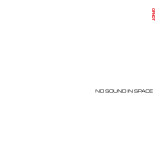
Blake Lee has always been fascinated by the unknown, and space, in its isolating, mysterious vastness, embodies this theme immaculately. The open void, captured so memorably by Stanley Kubrick in '2001: A Space Odyssey', is Blake's far-reaching canvas on 'No Sound In Space', a cinematic meditation on the cosmos that's painted in nuanced, emotionally sincere colors. The Los Angeles-based composer has been contemplating his full-length debut since 2021, using his guitar as a sonic paintbrush rather than find himself snared in its traditional aesthetic constraints. Transforming its characteristics with effects and subtle processes, he layers sustained tones and intimate improvisations, creating richly visual polychromatic utopias teeming with unknown life.
Since 2011, Blake has been most known for being the guitarist and a music director for Lana Del Rey, notching up three songwriting credits on her acclaimed ‘Ultraviolence’ full length. He sees his solo work is a form of escapism, a place where he can experiment and find comfort and catharsis outside of expectations and formal structure. The album was written instinctively, and Blake made sure he didn't force anything, letting go and getting out of his own way, listening intently as sounds and textures materialized organically. "I didn't want to ruin it by being a perfectionist," he laughs. And his collaboration with Kenyan sound artist KMRU, who runs the OFNOT label and contributes to two of the tracks on the album, occurred similarly organically.
Blake was moved to reach out to KMRU when he caught a performance of 'Natur' at Los Angeles' Zebulon in 2022, leading to a prolonged back-and-forth. They didn't meet in person until earlier this year, by which time they'd become firm friends, continuously sharing music and conversation. KMRU had lent a valuable ear to Blake, who sent early playlists of 'NSIS' that, over the months, slowly evolved into the finished album. It's the first release on OFNOT that's not by KMRU himself; the label emerged last year with the release of KMRU's own 'Dissolution Grip', and Blake's debut immediately expands its sonic universe. Alongside the playlists, Blake also provided KMRU with the tracks' raw stems, which KMRU began to edit and expand in his Berlin studio. 'Miura' and 'Waiting' are the result of this process, two sublime abstractions that augment Blake's dreamlike, euphoric tones with KMRU's pebbly distortions and booming low-end rumbles. And this same playful sense of freeness seeps into Blake's other compositions.
On the misty 'In A Cloud', he surrounds cascading string tones with soft-focus pads that swell until they're like crashing waves, and on the two 'Echoplexx' pieces, he uses delay and reverb to smudge his sounds until they're viscous residue, the harmonies obscured by whooshes of white noise and distant chimes. The mood is quieted somewhat on 'Moving Air', as Blake's swirling tones form half-heard lullabies, coalescing into a dense, melancholy crescendo, and he fills out the sound with reverberant airport recordings on 'Pan Am', letting pitchy My Bloody Valentine-esque drones warble beneath the transitory chatter. Each track melts into the next, forming a billowing, cryptic narrative that leaves more questions than answers. Blake is constantly searching, and fills his unoccupied space with warmth, perception and sensitivity.
Blake Lee has always been fascinated by the unknown, and space, in its isolating, mysterious vastness, embodies this theme immaculately. The open void, captured so memorably by Stanley Kubrick in '2001: A Space Odyssey', is Blake's far-reaching canvas on 'No Sound In Space', a cinematic meditation on the cosmos that's painted in nuanced, emotionally sincere colors. The Los Angeles-based composer has been contemplating his full-length debut since 2021, using his guitar as a sonic paintbrush rather than find himself snared in its traditional aesthetic constraints. Transforming its characteristics with effects and subtle processes, he layers sustained tones and intimate improvisations, creating richly visual polychromatic utopias teeming with unknown life.
Since 2011, Blake has been most known for being the guitarist and a music director for Lana Del Rey, notching up three songwriting credits on her acclaimed ‘Ultraviolence’ full length. He sees his solo work is a form of escapism, a place where he can experiment and find comfort and catharsis outside of expectations and formal structure. The album was written instinctively, and Blake made sure he didn't force anything, letting go and getting out of his own way, listening intently as sounds and textures materialized organically. "I didn't want to ruin it by being a perfectionist," he laughs. And his collaboration with Kenyan sound artist KMRU, who runs the OFNOT label and contributes to two of the tracks on the album, occurred similarly organically.
Blake was moved to reach out to KMRU when he caught a performance of 'Natur' at Los Angeles' Zebulon in 2022, leading to a prolonged back-and-forth. They didn't meet in person until earlier this year, by which time they'd become firm friends, continuously sharing music and conversation. KMRU had lent a valuable ear to Blake, who sent early playlists of 'NSIS' that, over the months, slowly evolved into the finished album. It's the first release on OFNOT that's not by KMRU himself; the label emerged last year with the release of KMRU's own 'Dissolution Grip', and Blake's debut immediately expands its sonic universe. Alongside the playlists, Blake also provided KMRU with the tracks' raw stems, which KMRU began to edit and expand in his Berlin studio. 'Miura' and 'Waiting' are the result of this process, two sublime abstractions that augment Blake's dreamlike, euphoric tones with KMRU's pebbly distortions and booming low-end rumbles. And this same playful sense of freeness seeps into Blake's other compositions.
On the misty 'In A Cloud', he surrounds cascading string tones with soft-focus pads that swell until they're like crashing waves, and on the two 'Echoplexx' pieces, he uses delay and reverb to smudge his sounds until they're viscous residue, the harmonies obscured by whooshes of white noise and distant chimes. The mood is quieted somewhat on 'Moving Air', as Blake's swirling tones form half-heard lullabies, coalescing into a dense, melancholy crescendo, and he fills out the sound with reverberant airport recordings on 'Pan Am', letting pitchy My Bloody Valentine-esque drones warble beneath the transitory chatter. Each track melts into the next, forming a billowing, cryptic narrative that leaves more questions than answers. Blake is constantly searching, and fills his unoccupied space with warmth, perception and sensitivity.
- Gothron Ars, Gothron Ars Eem (Gothron Rise, Gothron Rise Now!)
- Crossing The Wormhole
- First Fight In Planet Disco Dance
- Mystical Training In Bothron Lamarovna's Cave After Death
- Invocation For Gothron's Re-Birth
- Second Fight In Planet Disco Dance
- Celebration Of Gothron's Victory Playing The Stardust Bells
- Celebration Of Gothron's Power Playing The Space-Noir-Tru
- Re-Crossing The Wormhole Using A Little Quantic Drum
- Gothron Armsten! (Let's Bow To Gothron's Power!)
Gotho is an experimental instrumental duo formed in 2020.
Their debut track, "Gatta De Blanc," was a 25-minute composition, showcasing their signature mix of synthesizers, electric piano, and drums, with no backing tracks or overdubs. Blending elements of progressive rock, metal, jazz, disco, psychedelia, post-rock, and classical, their sound defies categorization.
After gaining acclaim for their live performances, they released their first album, *MindBowling*, in October 2022 through Controcanti Produzioni and Black Widow Records, receiving strong reviews.
In November 2024, Gotho will release *Gothron Versus Fartark* with Supernatural Cat. Set in a sci-fi world, the album tells the story of two robotic enemies battling for their world's survival, using synthesizers, electric piano, vocoder, trumpet, and drums to narrate Gothron’s victory over Fartark. Like their previous work, the album spans multiple genres, resisting any single classification.
Gotho are: Fabio Cuomo (Elder, Eremite, Liquido Di Morte) on synth and electric piano. Andrea Peracchia (Tons, Dogs For Breakfast, Slaiver) on drums.