RIYL: Don Cherry, Alice Coltrane, Remi Álvarez, Juma Sultan's Aboriginal Music Society, Horace Tapscott. Atrás del Cosmos were a central force in Mexico City's creative arts community, and often considered the first free jazz group in the country. Founded by a trio composed of pianist Ana Ruiz, percussionist Evry Mann, and saxophonist Henry West, the ensemble was prolific in mentoring a generation of improvisers, cultivating an expanded additive roster, and organizing workshops in downtown Mexico City including inviting Don Cherry to play and instruct on his "organic music" approach in 1977. Between 1977 and 1983, the group lived and rehearsed in a residential space behind the Cosmos theater, hence their celestial-tinged name. But despite their central importance to the local scene, Atrás was rarely recorded and had a scant international presence, leaving behind just a single cassette before their disbandment. Now issued on LP for the first time, the aforementioned tape Cold Drinks, Hot Dreams is a red-hot recording documenting the core group plus double-bassist Claudio Enriquez performing live in 1980, a delirious improvisation with high peaks and low valleys, sucking in an amalgam of influences including New York loft style, Mexican folk music, and the surrealism of Alejandro Jodorowsky into its heady gravitational pull. Ruiz's playing style is virtuosic and expressive, pulling off monumental chords and using the piano's whole register, recalling Cecil Taylor's percussive approach, Matthew Shipp's emotive voicing, and Duke Ellington's mystifying arabesques. Evry Mann dabbles in polyrhythms in tracks like the solo marimba meditation "Clapping Music II," and Henry West wails heavy in the show-stopping cut "M.D." Now finally available after forty years, the music of Atrás del Cosmos will be sure to stun spiritual jazz veterans and newcomers alike3
Suche:re work
Katie Gavin's debut What A Relief taps into the unguarded self-possession and homespun pop sensibility of singers like Alanis Morissette, Fiona Apple and Ani DiFranco, and uses their tenacity as a north star for Gavin's own trek towards self-discovery. "This record spans a lot of my life - it's about having a really deep desire for connection, but also encountering all the obstacles that stood in my way to be able to achieve that, patterns of isolation or even boredom with the real work of love" they say. Written over the course of seven years, What A Relief comprises a set of songs that Gavin always loved but which "had something in them" that she and her bandmates felt didn't quite fit within the universe they were trying to cultivate with MUNA. Many of them were written on acoustic guitar, and are rooted in "a style of music that's very much in my blood, and natural for me," as typified by the Women & Songs CDs that Gavin loves, which compiled music by artists like Tracy Chapman, Tori Amos and Sarah McLachlan. That openness of spirit is the overwhelming character of What A Relief, an album that's refreshing in its willingness to accept people as they come, even as it remains in dogged pursuit of a life that's kinder, wiser and more loving. Gavin's explorations of desire and intimacy feel time-worn and necessary - songs that might teach a generation if not how to live, exactly, then at least how to look within oneself for guidance about how to move forward.
Belgian saxophonist, composer, and producer Mattias De Craene (Nordmann, MDCIII) announces a new solo album, ‘A House Where I Dream,’ on VIERNULVIER Records. On his second album, he delivers a highly personal and healing journey, presented as an alternative soundtrack to the 1973 cult film ‘The Holy Mountain.’
The record will be released on October 11 on vinyl LP and through all digital platforms.
"The Holy Mountain" is a surreal Mexican film from 1973 directed, written, and produced by Alejandro Jodorowsky, who also stars in the film. The film holds a prominent place in avant-garde cinema and explores themes such as spirituality, mysticism, and the quest for enlightenment. It is in this vein that ‘A House Where I Dream’ is crafted.
“My mind and soul - and thus my music - come home to this motion picture” - Mattias De Craene
The album will be presented live with the film on October 16 at Videodroom during Film Fest Gent.
ABOUT THE ALBUM
With hypnotic tape loops, grainy textures, and mesmerizing saxophone, Mattias De Craene creates possible worlds that herald a spiritual transformation. From the Scottish Highlands and desolate mountains to the deepest recesses of the soul, this music has the power to create cinematic landscapes that transcend time and space. The sound of these 8 tracks is closely related to the minimalist compositions of Terry Riley, but the work of contemporary artists like KMRU or William Basinski is also drawn from the same material.
Above all, this album is a deeply personal journey and unintentionally serves as a metaphor for De Craene's ascent of his own mountain. For the Videodroom festival by Arts Center VIERNULVIER, the saxophonist began working on a new soundtrack for the film ‘The Holy Mountain’ in 2023, but his body and mind abruptly called him to a halt, forcing him to take a professional break. However, this project never left him, leading to an honest and raw quest to find himself as both a person and an artist, with Jodorowsky as a companion de route and music as an anchor. It initiated a long process of dismantling, searching, healing and back again. The album not only provides a sanctuary for dreaming to all who listen, but for its creator it also serves as both an outcry of despair and a source of comfort during challenging times.
All the tracks on 'A House Where I Dream' share an unfiltered grain of life, as one can almost feel the damp breath of the saxophone blowing.
The album opens with the three-part strong 'Transcention,' where the hypnotic interplay between soprano sax and lo-fi tape loops leads to higher realms of the mind and soul.
Alternating between deep frequencies and farout folk modalities, this mantra-like triptych acquires an alchemical character and ultimately transcends time and space.
In the ethereal 'Away,' one can peer into an abyss of resonance while a saturated tenor sax lends guidance in the spirit of Terry Riley's productions. 'You and Me' also bathes in a similar atmosphere, albeit in the vein of healing 90s ambient as granular sax tones converge with celestial chants. 'Gazing Upwards Towards The Sky,' offers different shades of blue as a slumbering tenor sax is juxtaposed to swift sax patterns. On 'A Stranger That Moved Me,' beauty lands in a soft and subtle manner, while the closing track 'Shepherd's Glow' drifts like a mountain wind flaring up at the darkest hour of the night.
The artwork is created by Gent-based artist Sam Timmerman, who portrays the world of 'A House Where I Dream' with playful repetition and mystique.
Red Vinyl. Listening to Fashion Club's self-produced second album A Love You Cannot Shake feels like being caught in the crossfire of a profound beam of light. You can't help but feel both enlivened and exposed as its aberrant synth lines, artful strings and disfigured guitars swell into larger-than-life crescendos, which evoke a divine yet probing spotlight. Pascal Stevenson, the Los Angeles-based musician behind Fashion Club, likens the experience of hearing A Love You Cannot Shake to staring into the sun, and though the record wasn't written with religion in mind, its heavenly sonics and emotional sagacity also make it feel like a prophetic encounter. The album was shaped by Stevenson's gender transition and sobriety journey and parses her fluid emotions surrounding these events and other personal trials and tribulations. But as much as it's a dialogue between Stevenson's current and former selves, it's also an invitation for listeners to join her in the work of discarding bitterness and re-centering hope, especially when such efforts feel futile. Musically, A Love You Cannot Shake is an unshackling of expectations, as Stevenson's previous stint as bassist in the L.A. post-punk outfit Moaning and her first record as Fashion Club, 2022's Scrutiny, didn't necessarily reflect the full range of her taste, which includes ambient, pop, classical and dance music, or embody her sensitive tenderness and femininity. A Love You Cannot Shake also thrives on a fluid sonic palette. The album's magnetic immersiveness hinges on its strange dynamic shifts, jagged production and ambitious song structures with parts that don't repeat_choices influenced by her love of left-field electro-pop and her classical music background. While Stevenson handled most of the instrumentals on Scrutiny, this LP is much more collaborative, featuring an array of contributors who lent strings, piano, pedal steel and more. Plus, this album boasts country harmonies from Perfume Genius ("Forget"), high-pitched coos from Jay Som ("Ghost") and gauzy whispers from Julie Byrne ("Rotten Mind"). Stevenson's vocal evolution is also on display with this record, embracing a softer delivery that's more reflective of her personality and identity.
Moon White Vinyl. All her life, Emma Hardyman has wrestled with contradictions. After all, she was practically rendered a living, breathing contradiction the moment she was born into her half-Peruvian, half-white working-class Mormon family. In young adulthood, Hardyman became increasingly disillusioned with Mormonism's righteous black-and-white thinking, as well as its exclusionary elitism, and decided to leave the church. But she also acknowledged that the institution's all-or-nothing philosophy had become a part of her, resulting in a considerable test of grace and unlearning. As the singer-songwriter behind Little Moon, the Tiny Desk Contest-winning, Utah-based avant-folk project, Hardyman uses music as an outlet to illuminate contradictions of all kinds. Following the release of her 2020 debut LP Unphased, Hardyman set out to write a romantic album about her newlywed husband Nathan (who also sings and plays guitar in Little Moon), but the universe had other plans. After Nathan's mother tragically passed away, Hardyman recalibrated her vision and started work on a love-as-grief, grief-as-love album titled Dear Divine. The record serves as a mirror for the darkest parts of ourselves, allowing us to examine our ego_not to dismantle it, but to better understand how we love, process adversity and move through the world. Centering the classical music, folk, video game soundtracks and Tabernacle Choir hymns she grew up with, as well as ephemeral snapshots of personal significance, Dear Divine is an abundant tapestry of Hardyman's life. As enlivening melodies radiate from a string trio, you can envision the classical music that thrums from her parents' radio 24/7, as Hardyman sings in an otherworldly coo, you can imagine her younger self swooning over the tranquil records of Vashti Bunyan and Joan Baez, and as arpeggiated synths twinkle, you can visualize the enchanting kingdom of Hyrule from The Legend of Zelda: Ocarina of Time that she still adores. Songs like "now" and "messy love" embrace the gloriously jumbled stew of life, with the former chronicling Hardyman's arduous quest for love and trust and the latter patiently navigating the ways romantic partners can mirror each other's shortcomings. As Dear Divine attests, Emma Hardyman may not have it all figured out, but that's kind of the point. Through grief, faith crises and all-encompassing love, she's found the most wisdom in life's maddeningly consistent inconsistencies, as well as the subtle ways one can cultivate a feeling of home. Dear Divine doesn't take a red pen to life, it brings an open heart, an open mind and achingly beautiful, opulently weird folk songs.
Latin funk at its finest. A kingpin player of Miami’s Cuban music scene, Ray Fernandez, brought together his ‘court’ for this sensational Afro-Cuban funk triumph. Largely a family affair, the album features his wife, two sons and a range of other talented musicians including Rickey Washington on saxophone, father of the contemporary jazz maestro Kamasi Washington. Originally released in 1973 on Manuel J. Mato’s iconic and collectible Sound Triangle Records, Ray & His Court is a dose of Miami heat fuelled by a Cuban fire, taking in salsa, soul, funk, calypso and Afro-Cuban rhythms.
A kaleidoscopic album that draws influence from a range of different genres and scenes blended together in true Ray Fernandez style. Side A, showcases an array of traditional Latin workouts including the addictive enticing opener 'La Señorita Lola' and the pulsating 'Lo Sabia' with its punchy horns and Ray’s wonderful, quirky bubbling organ groove. The tantalising ‘Venimos Acabando’ and bouncing organ stabs of ‘El Alacran’ are two further tickets to get a dancefloor vibing.
The B-side then steps things up, slipping a hit of heavy-weight Miami funk into the mix. Take the DJ favourite ‘Cookie Crumbs’ with its fiery bassline, tripped-out voiceovers and breakbeat drums. Or the amazing, memorable and truly unique funk instrumental ‘Soul Freedom’ with some mighty fine bass clarinet work courtesy of Gary Gottfried. Also featured is a seductive organ-led Cuban funk rework of Bobby Hebb's 'Sunny' (are there any bad versions of this song?), with a sumptuous female vocal that combine to serve up a seductive take us this much-loved classic.
'Ray And His Court' is a brilliant blend of Afro-Cuban gems and Miami funk heat from an influential group on Miami’s Latin music scene. A majestic and magnetic classic where every track is a surefire winner.
In 2021, Will Marsh ditched his music career, packed his bags and headed to New Orleans to pursue an MFA. Pandemic brain had firmly set in, so while Marsh dove into his work with Habitat for Humanity, he also found himself dazed and confused amidst such a turbulent time. Music wasn't at the forefront of his mind_ but it chased him. Let's rewind a bit. Will Marsh started Gold Connections at the College of William and Mary, where longtime friend Will Toledo (Car Seat Headrest) produced and recorded Marsh's debut self-titled EP, released via Fat Possum in 2017. Two EPs followed on EggHunt, 2018's Popular Fiction and 2019's Like A Shadow. This leads us to Fortune, the band's brand new LP, out worldwide on October 25 via New Orleans indie Well Kept Secret. It's a record that sounds like "a conversation between old Virginia and the buzzy psychedelic world of post-COVID New Orleans," according to Marsh. The eleven tracks on Fortune deftly navigate a geographical and spiritual journey: remorse, intoxication, anger, mystery, destruction, and regeneration, delivered with the same approach that NPR hailed as "undeniably catchy" and Sterogum claimed was "an animal of it's own."
In 2007 an Italian film festival invites Mouse on Mars to score a film of their choice. The organizers claim to be able to clear the rights for any movie the band chooses. Werner Herzog’s fictional documentary Fata Morgana, which merges footage of several desert explorations by Herzog and his team into one continuous association, has long been a band’s favorite. The film comes with a soundtrack by Mozart, Leonard Cohen, Third Ear Band and field recordings. Andi Toma and Jan St. Werner are sent a DVD to Düsseldorf and start working. The idea is to score the film in real time so instrumentation has to be readily at hand: guitar, percussion, electronics, mouth harp, pedals, software, tapes, samplers. Once the arrangement for the three-part film is sorted Mouse on Mars bring their score to stage. Herzog Sessions is performed twice: first when the band still thought the rights had been cleared, and a second time at London’s Southbank Center knowing that Herzog would have never approved a new score.
--
Mouse On Mars – London Queen Elizabeth Hall soundtracking Werner Herzog.
By Mike Diver, 24.04.2009
Filmed in 1971, Fata Morgana is perhaps not one of Herzog’s best-known works (think Grizzly Man, Rescue Dawn, et cetera…), but then Mouse on Mars have never been ones to embrace the mainstream, quietly letting their modern, experimental take on krautrock do the talking over the years, thus producing some quietly brilliant electronica that far outweighs their modest profile.
The film itself is not altogether dissimilar to the wonderful, Phillip Glass-scored Koyaanisqatsi, with sweeping landscape shots and no obvious plot or narrative, though Fata is concentrated purely in one place – in and around the Sahara Desert, switching from images of barren wasteland to desert tribes and dead, skeletal cattle.
The obvious thing to do when soundtracking such powerful imagery is to vie for dreamy electronic soundscapes which can be sustained for a long period, and whilst this ambient shoegaze approach was present and correct (also carefully constructed and highly effective), Mouse on Mars added a human element to the performance, incorporating a live dimension by using and looping guitars, harmonicas, processed vocals and even a live horn player (quite possibly a flugelhorn. Look it up if you don’t believe me) for the final section of the film.
Some of the most interesting points arose when the duo suddenly switched from solemn, ambient tones to glitchy, bouncing electro (reminiscent of their more upbeat work) whilst on the same film shot – causing the audience mood to flick from tripped-out bliss to attentive semi-wired, utterly subverting any idea of a narrative the film may have possessed. Clever stuff.
Ranging from sinister to surreal to humorous, all the moods portrayed in Fata Morgana were successfully matched by Mouse on Mars’ live rescore – no mean feat. The duo also went above and beyond the call of duty with their own soundtrack, adding a fascinating personal signature to an already unique film.
Fat Freddy’s Drop hit the ground running with new studio album SLO MO, a bass-heavy blast of redemption and resolution. Described by Fitchie as 'afro rhythmic soul music, an exploration of Black music from Polynesia’, this heady mix creates the undefinable Freddy’s sound. Renowned worldwide for euphoric live shows, the Aotearoa band stepped inside their BAYS studio in Wellington, sunup to sundown, to craft a sixth studio album. SLO MO is the strongest studio representation yet of a Freddy’s live show’, says Chopper Reeds. 'Usually we take the stage to the studio and this time, we're excited about taking our studio creation on to the stage.'
Emerging with nine tunes, SLO MO will drop first on double vinyl, opening the door for the full length album to be experienced as a body of work curated as Freddys intended.
Chopper Reeds continues, 'Towards the latter part of the record, Joe Dukie’s vocal presence becomes quite spectral allowing listeners to inject themselves into the music.
The evocative cover art is by Dan Tippett, Aotearoa New Zealand Artist, who describes the image as ‘an ancient ngahere forest in a Jurassic Aotearoa dreamtime.’
Fat Freddy’s Drop hit the ground running with new studio album SLO MO, a bass-heavy blast of redemption and resolution. Described by Fitchie as 'afro rhythmic soul music, an exploration of Black music from Polynesia’, this heady mix creates the undefinable Freddy’s sound. Renowned worldwide for euphoric live shows, the Aotearoa band stepped inside their BAYS studio in Wellington, sunup to sundown, to craft a sixth studio album. SLO MO is the strongest studio representation yet of a Freddy’s live show’, says Chopper Reeds. 'Usually we take the stage to the studio and this time, we're excited about taking our studio creation on to the stage.'
Emerging with nine tunes, SLO MO will drop first on double vinyl, opening the door for the full length album to be experienced as a body of work curated as Freddys intended.
Chopper Reeds continues, 'Towards the latter part of the record, Joe Dukie’s vocal presence becomes quite spectral allowing listeners to inject themselves into the music.
The evocative cover art is by Dan Tippett, Aotearoa New Zealand Artist, who describes the image as ‘an ancient ngahere forest in a Jurassic Aotearoa dreamtime.’
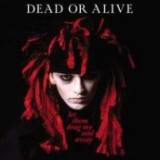
THE TWO CLASSIC EARLY SINGLES ORIGINALLY ON THE BLACK EYES LABEL. RE-PRESSED AND REISSUED ON RED AND BLACK SPLATTER VINYL. PLUS FIVE 1982 DEMOS FROM THE LEGENDARY PETE BURNS FRONTED BAND. CAPTURING DEAD OR ALIVE’S MUTATION FROM PROTO- GOTHIC ROCK BAND TO HI-NRG POP SUPERSTARS.
Having been ‘discovered’ working in Liverpool’s Probe Records during the punk rock explosion of the late 1970s, Pete Burns found himself fronting his own band, Nightmares In Wax who mutated into the more familiar Dead Or Alive, eventually bringing Pete into the UK pop mainstream, and a star was born.
Bringing together two-self-released 1982 singles and a collection of early versions of HiNRG tracks which would eventually find their way onto the band’s debut album, ‘Let Them Drag My Soul Away’ showcases the blossoming of one of the 80s pop scene’s most colourful characters.
Repressed on suitably atmospheric red and black vinyl and housed in a cover photograph by Dead Or Alive’s then manager Francesco Mellina, ‘Let Them Drag My Soul Away’ presents a last glimpse at a pre-stardom Pete, and a long overdue back story accompaniment for fans and collectors alike.
Weval (consisting of Harm Coolen and Merijn Scholte Albers) are an Amsterdam-based duo who have established a solid reputation across the globe for crafting highly textured and sophisticated electronic music. They announce a new EP called ‘Night Versions’ which contains brand new, club-focused alternatives to key tracks from their recent critically acclaimed album, ‘Remember’. ‘Night Versions’ is set to release on Ninja Tune imprint Technicolour on 4th October. With the announcement Weval share a Night Version reimagining for title track “Remember".
Speaking about these new versions, Weval say, "It was so much fun to return to the material and make some bold moves. Just to see how far we could push the tracks with the dance floor in mind. We've been road-testing a few of these in our DJ sets lately, and it's so rewarding to watch people dance and hear the tracks blasting on the dance floor. It's addictively fun to experience and see the second life of the songs from the LP."
‘Remember’ embarked on a high energy journey of nostalgic memories and euphoric emotions, with elements of pop, dance and every genre in between being thrown in and whittled down to make an intense, spontaneous and substantial work. PopMatters noted the album as "a kaleidoscopic, gut-turning, jaw-dropping wondrous journey" while it received additional support from the likes of Cool Hunting, Clash Magazine and Stereogum among others.
Love Is A Flame In The Dark is the debut album by experimental songwriter Karl D’Silva. A raw labour of love, a towering spire of twisted steel, tenderness and becoming, it’s a body of songs that belies the virtuoso talents of an artist whose reputation has been built on collaborating with various avant garde underground luminaries. Self-recorded at home in Rotherham and pulsing with the conviction of a true believer, these songs burst out of their self-consciousness to meet life head on, bristling with energy, 10 glimpses of the human spirit in the darkness.
Recorded throughout 2021 - 2023 and mixed in Leeds with engineer Ross Halden, D’Silva has constructed a Pop language for himself. Mutated songs that owe a small debt to the post-Industrial music of Cabaret Voltaire, Nine Inch Nails and Coil, they’re nonetheless powered by a vigorous tenderness, earnestness and D’Silva’s knack for melody. Each song is meticulously sound-designed, using synthesised sounds created from scratch married with D’Silva’s virtuoso playing on saxophone and guitar. The songs on Love Is A Flame In The Dark are unabashed, earnest love letters to living, requiems for a world fading away and small gestures of solidarity in the face of entropy.
Until now, D’Silva’s fingerprints could be found on live dates with Thurston Moore, Oren Ambarchi, Hardcore pioneers Siege and Rian Treanor as well as recordings by previous groups Trumpets Of Death and Drunk In Hell. Primarily associated with the alto saxophone in his improvisation work, Love Is A Flame In The Dark features a dizzying array of instrumentation, all played by D’Silva. D’Silva’s current membership of the group Vanishing may be a good touchstone for the dense, sonically thrilling world-building on the album but the most
striking instrument, perhaps, is D’Silva’s voice. With a soulful, rasping timbre resulting from prolonged intubation as a new-born, his vocal is both fearless and tender. On the soaring, electronic body mover Wild Kiss, thundering percussion is in service to Karl’s voice full of desire, arching up into a flayed falsetto. It’s a trick repeated on Flowers Start To Cry, where it’s deployed against the backdrop of layers of ripping alto and thudding drum programming that recall Nine Inch Nails’ visceral production, if they were covering a Prince hit. These songs capture the essence of 2024’s Karl D’Silva music; pure physicality
breaking down to reveal a shining, compassionate vulnerability.
The full breadth of Karl D’Silva’s instrumental prowess is in evidence from the off. On The Outside imagines blooming out of personal apocalypse with a soundscape of synth, saxophone worthy of any late 60s Free Jazz blower and crushing sound design. Entropy is planet-sized synth pop, Nowhere Left To Run uses midi-string orchestration to tell a story of light emerging from the dark. It’s a theme picked up
throughout the album: The Butcher is a political parable, the narrator holding power to account with grotesque, brutal imagery. It’s on a track
like Real Life that the true message emerges, however. D’Silva is peering through the layers of artifice, struggle and the fog of daily
living to find a life full of energy, connection and light. Each song here is a route into this light, out of the darkness.
- A1: Libre Comme L'art
- A2: Idiocratie
- A3: Blc
- A4: Avec Des Mots (Ft. Sinik)
- A5: Epilepsie
- A6: Enfant Bulle
- A7: On Naît Seul, On Meurt Seul
- B1: Héritage (Ft. Deadi Et Cenza)
- B2: Déconnexion
- B3: Inarrêtable (Ft. Sakage)
- B4: Feuille Froissée
- B5: Coûte Que Coûte (Ft. Hidan)
- B6: Les Minots Dorment - Remix
- B7: Arc En Ciel (Ft. Greenfinch)
After working within various collectives, rapper Davodka is celebrating his ten-year solo career with the album "Heritage." With a myriad of concerts in France and Europe, 6 solo albums, and features with the entire French independent rap scene (Demi Portion, Melan, Dooz Kawa, 3ème Œil, Swift Guad...), Davodka is known for his incisive words and the speed of his flow, making him one of the leading lyricists.
This new album is the heritage of the past ten years, where the artist takes a step back and captures the universe in which he has evolved, paying homage to it through music. The rapper's lyrics have never been more personal. He addresses rarely discussed topics in rap, such as his depression in the track "Arc en ciel," his relationship with his autistic child in "Enfant bulle," and his awareness of the difficulty in having completely selfless relationships as an artist in "On naît seul, on meurt seul."
"Heritage" attests to Davodka's undeniable place in conscious rap, notably with the track "Avec des mots," where he shares the mic with Sinik, an emblematic artist of the golden age of French rap. Although Sinik, a French artist with countless certifications, had announced the end of his career two years earlier, he makes an exception for Davodka and records a powerful track in homage to all those who come from the bottom.
Davodka, true to himself and his audience, primarily raps over boom bap and trap beats; however, he ventures into unknown territories, notably in "On naît seul, on meurt seul," where he adopts a ragga flow, and "Feuille froissée," with its auto-tuned chorus. He also takes the time to pay homage to the beginning of his career, when he was part of the MSD collective, by reprising a verse written at the time in the track "Les minots dorment – Remix."
Join him on October 25, 2024, to discover "Heritage," Davodka's 7th album. He will be touring throughout France, Switzerland, and Belgium, and in Paris at the Cabaret Sauvage on December 5, 2024, for the release party.
Psych, space, kraut and drones from songwriter Julius Lind and his trio with members from Action & Tension & Space, The Megaphonic Thrift and Gold Celeste. Arising from the Norwegian alternative scene they experiment with a vibrant mix of genres and refer to many golden eras on the history of pop and rock music! The album was recorded in Studio Paradiso with Christian Engfelt (Cato Salsa Experience) as technician and co-producer in 2023.
- A1: Somewhere In My Memory (Main Title)
- A2: Holiday Flight
- A3: The House
- A4: Star Of Bethlehem
- A5: Man Of The House
- B1: The Drifters - White Christmas
- B2: Scammed By A Kindergartner
- B3: Southside Johnny Lyon - Please Come Home For Christmas
- B4: Follow That Kid!
- B5: Making The Plane
- B6: O Holy Night
- C1: Carol Of The Bells
- C2: Star Of Bethlehem
- C3: Setting The Trap
- C4: Somewhere In My Memory
- C5: The Attack On The House
- D1: Mom Returns & Finale
- D2: Mel Torme - Have Yourself A Merry Little Christmas
- D3: We Wish You A Merry Christmas (End Title)
John Williams' Home Alone soundtrack is a heartwarming classic that perfectly complements the holiday season. Known for his work on Star Wars, E.T.and Harry Potter, Williams brings the same orchestral magic to this beloved Christmas film. The score includes memorable tracks like 'Somewhere in My Memory,' a recurring theme throughout the film, and 'Star of Bethlehem,' which captures the festive spirit with choral and orchestral elegance. The standout track, 'Setting the Trap,' diverges from Williams' usual orchestral sound, incorporating electronics and percussion to enhance Kevin's creative showdown with the burglars. Alongside traditional Christmas carols like 'O Holy Night' and 'Carol of the Bells,' the soundtrack blends nostalgia with whimsy. Though the album repeats familiar motifs, its charm makes it a refreshing alternative to typical holiday music. The Home Alone soundtrack is available in a limited edition red and gold vinyl 2xLP, making it an essential for any festive playlist. Whether it's playing while decorating the tree or enjoying Christmas cookies, this release brings the holiday spirit alive.
Unlike most of Grant Green's many trio albums, Green Street, which was his second LP as a leader following Grant's First Stand, didn't make use of the organ or the piano, consisting instead of guitar-bass-drums format. Backed by such subtle players as Ben Tucker and Dave Bailey, Green could showcase his talents with no inhibition, making this one of the most remarkable works of his whole career. 180-GRAM COLORED BLUE VINYL - THE COMPLETE LP + 1 BONUS TRACK - Contains new specially prepared liner notes by Penguin Guide to Jazz's writer BRIAN MORTON and by Paris' prestigious JAZZ MAGAZINE. LIMITED EDITION
[f] Alone Together [Alt. Take]
Dar Embarks, the hardware-based collaboration of Chicagoans Dan Jugle and Ken Zawacki, share four precious recordings of bouncing, highly-acidic machine funk and industrial ambiance. This is a posthumous release for Dan Jugle, who departed in 2018.
Dan was a multi-instrumentalist and a pillar of Chicago's techno scene who left an indelible mark on it with his distinctive sound. His infatuation with electronic music began in the mid-90s when he found his way to Midwest raves as soon as he was old enough to drive to them. He began working with analog gear to create his own expression of the music he heard there. Jugle, Zawacki, and Mike Broers started experimenting with a thrifted Roland TR-707, figuring out the controls through trial and error. They performed together as Ghost Arcade in the early 2000s.
Years later, Jugle and Zawacki reunited creatively, forming Dar Embarks and building the foundation for their project. Jugle gained a reputation for crafting washed-out, saturated club tracks as Juzer, a project formed with Beau Wanzer. Dar Embarks' debut EP Fleer (released on CLEAR USA) and Juzer's Horseplay (on Anthony Parasole's label The Corner) were both released in 2014, both elevated by Dan Jugle's live-action knob-twisting and button-pushing composition inspired by sci-fi and comic books. Despite his early passing, Jugle's legacy lives on through his work and his passion for Midwest techno that his friends and fans still remember and carry.
Lovingly wrapped up and presented to Acid Camp by Ken, these heaters are finally set free to move asses and minds.
"Le retour à la raison" is an ablum by Teho Teardo"s originally released in 2015. An album that brings together the music written for three Man Ray films. Not a traditional musical accompaniment but a kind of appointment in space with Man Ray. In space, music responds to only one law: truth. Here the relationship between the music and the films is perhaps the most intimate ever achieved by the composer and it is significant that it takes place with silent films in which the director cannot be present. The silent film directors are all dead, missing for decades, and must be intercepted in the cosmos, through the dreams, desires and emotional legacy of their works, like stars shining with their own light. The music is a constellation in a mysterious and seductive world and documents the experience of encountering Man Ray"s art. The project, recorded between March 2014 and May 2015 in Teardo"s Rome studio, mixed and mastered by Boris Wilsdorf at the Anderebaustelle studio in Berlin, was initially conceived for live performance. Presented at Villa Manin, the Maxxi in Rome and the Museo Nazionale del Cinema in Turin, as well as the International Arts Festival in Galway, the album also features Joachim Arbeit (Einsturzende Neubauten), Joe Lally (Fugazi) and David Coulter. The three films by Man Ray that inspired Teardo are "La Retour à la Raison" (1923), "Emak Bakia" (1926) and "L"etoile de Mer" (1928) were also screened during the concerts that followed the album release.