Tiger Stripes debuts on Rekids with ‘I Heard It Through the Bassline’.
Stockholm’s Tiger Stripes appears on Matt Edwards’ Rekids for the first time with the ‘I Heard It Through The Bassline’ two-tracker. The EP starts with the aptly named title track, defined by its deeply infectious bass, which propels forward along tight house grooves and classy gospel vocals. ‘I Heard It Through the Bassline’ is followed by Tiger Stripes’ ‘Everybody’s Doing It’, a stylish, low-slung people mover with the air of a vibey, dim-lit establishment or introspective late-night journey through the city.
Strange Idols label founder Tiger Stripes is a prolific producer, remixer, and DJ who has been active since the early 2000s. He’s collaborated with artists like Kerri Chandler and Jerome Sydenham and released music via heavyweight underground imprints, including Hot Creations, Get Physical, and Sydenham’s Ibadan. Now, he moves the needle again with the ‘I Heard It Through the Bassline’ EP on Rekids.
Search:re named
- Tempelschlaf
- Day Of The Poacher
- Cathedral Of Bleeding
- Statues
- Alpha Fluids
- Babel, You Scarlet Queen!
- Last Theatre Of The Sea
- The Carrion Cocoon
Black Vinyl[34,03 €]
The Ruins Of Beverast narrate fables of the darkest secrets in human history and present. ‘Tempelschlaf’ is The Ruins Of Beverast’s seventh full-length output and sees the band continue with their sonic morbidity, noises and melodies of a human habitat in its sunset era, while maintaining and refining the widescreen low end that has been sustaining their sound from the beginning. On the instrumental side, ‘Tempelschlaf’ is stripped of some fat, forging the songs with a reduction in length and layers, cautiously leaning towards the stage part of things. While synths and samples have always played an adamant role in The Ruins Of Beverast’s sound, they reach yet another level of psychedelia and insanity on ‘Tempelschlaf’. The Ruins Of Beverast were formed in early 2003 and named after the most bloodcurdling occasion of the collapse of the giant bridge Bifröst. This incident bears analogy to the musical aura of The Ruins Of Beverast, which builds a sonic landscape of massive, surreal, barren mountain formations. Seven full-length albums and several EPs, splits and compilation releases have been published through Ván Records so far. As a live act, The Ruins Of Beverast became a strong force after Roadburn 2013, a festival the band have played again since with exclusive shows. The Ruins Of Beverast have embarked on several European tours with acts like 1349, Grave Miasma and King Dude, as well as a highly acclaimed US tour that eventually concluded with an iconic show at Fire In The Mountains festival. The band have played such well-established club shows and festivals as Hellfest, Inferno, Incubate, Party.San Open Air and Beyond The Gates, to name just a few.
- 1: Gage
- 2: Sith
- 3: Dianoga
- 4: Imperial March / Alderaan
- 5: Jundland Wastes
- 6: Bric-A-Brac
- 7: Gage (1996 Demo Version)
Kashyyyk was originally released in late 1995. Each copy was recorded onto a blank cassette, almost never new. We'd find boxes of tapes at flea markets and dub the demo over one side of them. Never knew what was on the other side. The collage on the cover evolved over time. Early copies had a sparse cover and later copies had a cover collages like this one. The text also changed over time. Edits were made, the thanks list grew, and the address changed. The text on this rereleases is the same as the last copies made in the '90s, with only tiny changes. Three of these songs were recorded in August of 1995 and originally released as the 8D8 demo. We made an unknown number of copies before we recorded again with Matt on guitar. We added our three new songs to the old and named the demo demo after Chewbacca's home planet. The other collages were put together specifically for this 30th anniversary release. Bonus track: Gage recorded January 19, 1996. This is the original version with Matt on vocals. Gary re-recorded the vocals before it was released on Cry Now Cry Later vol. 4.”—Noothgrush
- 1: Magic Accident
- 2: My Own Highway
- 3: Family Tree
- 4: I Compare Everyone To You
- 5: Nothing At All
- 6: Out Run 'Em
- 7: Lifeline
- 8: Little Bird
- 9: What You're Looking For
- 10: Takes All Kinds
With a GRAMMY nomination and years of touring experience, this female- forward string band releases a career- defining album with Magic Accident . Longtime supporters of women in roots music, Della Mae teamed up with producer Alison Brown for this new release, their first on Nashville-based Compass Records. Magic Accident showcases the band's range of talents, from Americana songs that evoke early Chicks to energetic bluegrass and dreamy indie folk-inspired tunes.
The band's vocal power and instrumental skill shine throughout this mostly original collection, with standout tracks including "Out Run 'Em," written by guitarist Avril Smith and featuring champion fiddler and band founder Kimber Ludiker, "Lifeline," sung by bassist Vickie Vaughn, and the title track, written and sung by Celia Woodsmith. Guest artists on the project include Mary Bragg (vocals) and Jen Gunderman (accordion), with Brown playing banjo and guitar throughout. Since forming in Boston in 2010, Della Mae has proved to the roots music world that an all-women band is no novelty. Their 2013 Rounder Records release, This World Oft Can Be, earned them their first GRAMMY nomination for Best Bluegrass Album. That same year, the International Bluegrass Music Association named them Emerging Artist of the Year. Della Mae has performed in over 30 countries on behalf of the U.S. State Department. They are favorites on the roots music circuit, where their highenergy performances always get audiences on their feet, inspired by the power of their music and message. Available on turquoise coloured vinyl with 4-page folder and digipak CD editions
Technological agitation. Narcissism fatigue. A galaxy of isolation. These are the new norms keeping Weyes Blood (aka Natalie Mering) up at night and the themes at the heart of her latest release, And in the Darkness, Hearts Aglow. The celestial-influenced folk album is her follow-up to the acclaimed Titanic Rising. (Pitchfork, NPR, and The Guardian admiringly named it one of 2019's best.) While Titanic Rising was an observation of doom to come, And in the Darkness, Hearts Aglow is about being in the thick of it: a search for an escape hatch to liberate us from algorithms and ideological chaos. "We're in a fully functional shit show," Mering says. "My heart is a glow stick that's been cracked, lighting up my chest in an explosion of earnestness." And in the Darkness, Hearts Aglow opens with the wistful, winsome "It's Not Just Me, It's Everybody," a song about the interconnectivity of all beings, despite the fraying of society around us. "I was asking a lot of questions while writing these songs. Hyper-isolation kept coming up," Mering says. "Our culture relies less and less on people. Something is off, and even though the feeling appears differently for each individual, it is universal." Other tracks follow in kind. The lullaby-like "Grapevine" chronicles the splintering of a human connection. The otherworldly dirge "God Turn Me into a Flower" serves as allegory about our collective hubris. "The Worst Is Done" is an ominous warning, set against a deceivingly breezy pop melody. "Chaos is natural. But so is negentropy, or the tendency for things to fall into order," she says. "These songs may not be manifestos or solutions, but I know they shed light on the meaning of our contemporary disillusionment."
- A1: Robert Pico - Le Chien Fidèle
- A2: Annie Girardot - La Femme Faux Cils
- A3: Spauv Georges - Je Suis L'état
- A4: Zoé - Zoé
- A5: Jacques Da Sylva - Fou
- A6: Valentin - Je Suis Un Vagabond
- A7: Jacques Malia - Histoire De Gitan
- A8: Bernard Jamet - Raison Legale
- B1: Jean-Pierre Lebort - Barbara Au Chapeau Rose
- B2: Les Concentrés - Fils De Dégénérés
- B3: Les Missiles - Publicité
- B4: Hegessipe - Le Credi D'hegessipe
- B5: Marechalement Votre - Ethero Disco
- B6: Mamlouk - Decollez Les
- B7: Mozaique - L'amour Nu
- B8: Jean-Marc Garrigues - Je Dis Non
- B9: Penuel - Astronef 328
The journey through French-speaking pop archives continues with this fifth volume, packed with fuzz, gimmicks, and dissent. Far from the charts, the selected tracks display a great creative freedom, often backed by corrosive humor. Welcome to the surprising, kaleidoscopic, and colorful world of the late sixties and early seventies, Wizzz!
Born in Montauban, Robert Pico stumbled into music by chance when he met René Vaneste, then artistic director at Pathé-Marconi. René brought him to Paris to record his first 45 RPM EP in 1964. A year later, Pierre Perret introduced him to Vogue, where he recorded his second album with Claude Nougaro’s orchestra. Sylvie Vartan then introduced him to RCA, where he recorded four singles, including the astonishing "Chien Fidèle," a track backed by a hair-rising fuzz guitar. Alongside his solo career, he also composed for other artists like Alain Delon (the song was recorded but remains unreleased), Magali Noël, Bourvil, and Georges Guétary. In the Paris of the sixties, he mingled with Mireille Darc, Elsa Martinelli, Marie Laforêt, France Gall, Françoise Hardy, Petula Clark, Régine, Dani, Serge Gainsbourg, Joe Dassin, Franck Fernandel, Charles Level, and Roland Vincent. Despite his efforts and winning a Grand Prix Sacem for his final record, Robert Pico didn’t achieve the expected success in show business and decided to leave Paris and return to the Southwest, where he devoted himself to writing. He is the author of 23 books (including Delon et Compagnie, Jean-Marc Savary Editions 2025, a memoir about his youth and his many encounters). Today, he is relieved to never have become a celebrity and devotes himself to his work with passion.
In 1969, the Franco-Italian movie Erotissimo was released, directed by Gérard Pirès (who later directed Taxi in 1998, written and produced by Luc Besson). This pop comedy features Annie Girardot, Jean Yanne, Francis Blanche, Serge Gainsbourg, Nicole Croisille, Jacques Martin, and Patrick Topaloff. The soundtrack was written by Michel Polnareff and William Sheller, with lyrics by Jean-Lou Dabadie. "La Femme Faux-cils," performed by Annie Girardot. It recounts the feelings of a rich CEO's wife who seeks to develop her sex appeal under the influence of advertisement and magazines. Groovy, sparkling and light, this track, with ITS lush arrangements humorously critiques consumer society and feminine beauty standards.
“Je suis l’Etat” (1967) is the flagship track of the first EP by singer-songwriter Spauv Georges, aka Georges Larriaga, better known as Jim Larriaga (1941-2022). Born into a family of bakers, the young man was initially planning to become a hairdresser when he discovered English-speaking music through Elvis Presley and the Beatles. After this revelation, he decided he would become a songwriter and gave himself five years to succeed. He recorded his first two EP’s independently for RCA under the pseudonym Spauv Georges; meaning “that poor George”, a nickname given to him by the mother of her friend Jean-Pierre Prévotat (future drummer of the Players, Triangle, or Johnny Hallyday). Portraying a depressed and eccentric young man, Spauv Georges created corrosive and amusing songs that didn’t reach a wide audience, despite a TV appearance with Jean-Christophe Averty.
Supported by his loyal friend and fellow songwriter Jean-Max Rivière, Georges Larriaga met the future singer Carlos in the early '70s, then Sylvie Vartan’s assistant. He wrote songs for Carlos, including the popular "La vie est belle," "Y’a des indiens partout," and "La cantine", which went onto become a huge hit in 1972. He also composed for Claude François (“Anne-Marie”, 1971), Charlotte Julian (“Fleur de province”, 1972), helped launch child singer Roméo (who sold 4 million records), and later wrote the hit "Pas besoin d’éducation sexuelle" (1975) for the young Julie Bataille. In 1971, Jim recorded an album for Disc'Az: “L’univers étrange et fou de Jim Larriaga”, which featured pop gems like “La maison de mon père”.
The story of the song "Zoé" began when Pierre Dorsay, artistic director at Vogue Records, asked Swiss singer and musician Pierre Alain to write a song for a new female singer. The inspiration came when he realized that Zoé (the artist's name) was also the name of France's first atomic battery, created in 1948, which consisted of uranium oxide immersed in heavy water! The lyrics reflect a bubbling energy that must be handled with caution, while the instrumentation echoes this atomic theme, notably with the use of a theremin.
Zoé’s career lasted only as long as a single 45 RPM, but it seems Christine Fontane was the vocalist behind this pseudonym, who is known for several EPs, a good "popcorn" album in 1964, and a handful of children’s singles in the '70s. Regardless, the photograph on the cover is of a different girl entirely.
Later, Pierre Alain continued his career, writing songs for himself, Marie Laforêt, Danièle Licari, Alice Dona, Arlette Zola (3rd place in Eurovision 1982), and achieving multiple gold and platinum records in Canada. Also an inventor with several patents, president of the Romande Academy, and head of the French Alliance in Geneva, he now composes atonal music, books, and poetry. Moreover, he is also the host of "Les Mardis de Pierre Alain" at "Le P'tit Music'Hohl" in Geneva.
Filled with oriental choruses and fuzz guitar, "Fou" is from Jacques Da Sylva's only EP released by Vogue in 1967. Despite the quality of this recording, all traces of this singer disappear after this first effort.
Valentin is a baroque pop singer born in Belgium. He is the songwriter and composer of most of the tracks on his three singles released in the late 60s in Canada. A legend says that he reincarnated himself as Jacky Valentin during the 1970s for a rock'n'roll revival career in Belgium, but his older brother sadly debunked this story. Valentin's first two singles were arranged by Claude Rogen, a Parisian session pianist who had come to Canada to promote the song “Mister A Gogo”, a cover of David Bowie’s “Laughing Gnome”, adapted by singer Delphine, his wife at the time. Far from his usual network, Claude Rogen arranged music for Polydor, including the arrangements for “Je suis un vagabond” in 1969, a jerk tune with string arrangements and a furious optimism.
Jacques Malia wrote, composed, and recorded his only 45 EP for Festival in 1966. “Histoire de gitan” is an incredible beat track with bohemian scat that tells the story of a gypsy musician who came to Paris to make it in the Music-Hall, to no avail. The hero of the song and its author probably shared a similar fate, as Jacques Malia faded into anonymity after this remarkable attempt.
Bernard Jamet recorded two EPs for Barclay in the late sixties and co-wrote several songs with Christine Pilzer, Pascal Danel, and prolific songwriters Michel Delancray and Mya Simile. The track “Raison Légale” (1968), his masterpiece, immerses the listener in a courtroom right when a murderer is being judged, with jerk rhythm and free arrangements. A unique, paranoid, judicial, and psychedelic oddity.
Jean-Pierre Lebrot-Millers started his career in show business in 1967 as a singer and songwriter for the Philips label. After three singles, he wrote several songs of a new kind with his friend Pierre Halioche, in the midst of the sexual liberation movement and the democratization of drugs. With provocative lyrics, “Les filles du hasard” and “Barbara au Chapeau Rose” were released on a Philips singles in 1968. The character of Barbara was inspired by a queen of Parisian nightlife during the psychedelic years: model Charlotte Martin, who dated Eric Clapton from 1965 to 1968, then Jimmy Page from 1970 to 1983. Jean-Claude Petit’s arrangements, with a table-filled intro, soul brass, and Hendrixian guitar, emphasize the flamboyance of a hedonistic and sexy character, whose dog is named Junkie because “Junkie est un nom exquis”! The track was recorded live in three takes with a full orchestra.
Upon its release, the record was censored by Europe 1 and RTL due to its references to drug use. Jean-Pierre Lebrot was then banned from the airwaves and later dismissed by his record label. He changed his artist name to Jean-Pierre Millers, while his companion Pierre Halioche became D. Dolby for a new dreamy composition, “Chilla”, which Jean-Pierre produced himself with arrangements by Jean Musy. Once again, the song was immediately censored everywhere. After this setback, he decided to stop singing and started taking on odd jobs to support his Swedish wife and their son until the day he met Jean-Pierre Martin, then production manager at Decca, who had worked with Manu Dibango. Martin offered Jean-Pierre Lebrot-Millers, then employed at Rank Xerox, the position of artistic director at Decca. He accepted and became, a year later, promotion director (radio, press, TV). He worked on Julio Iglesias’s first album for Decca, which became a massive hit and allowed him to meet Claude Carrère. The latter asked him to write new songs and find their performers, much like a “talent scout.” It’s through him that Jean-Pierre discovered Julie Pietri and Corinne Hermès. He composed “Ma Pompadour” for Ringo, Sheila’s husband, and took the microphone again for the syncope hit “Rendez-Vous” in 1982.
That same year, Jean-Pierre Lebrot-Millers tried to release a track for which he had heavily gone into debt: “Si la vie est un cadeau”. Having recorded it in London, he presented it to numerous professionals, all of whom refused to get involved. The same thing happened with Antenne 2 and the Sacem when he proposed the song as France’s entry for Eurovision. He then met Haïm Saban, who was producing cartoon soundtracks and had just launched the Goldorak theme song. Saban, having listened to the song, declared it had the potential to become a hit. He sent Jean-Pierre and Corinne Hermès to meet the CEO of the Luxembourg radio and television network. The latter received them, asked to hear a verse and chorus a cappella in his office, and immediately hired them to represent Luxembourg at Eurovision 1983. They reworked the arrangements and recorded a new version with Haïm Saban as co-producer. The song ended up winning Eurovision 1983, a great comeback for our hero. He continued producing and hung out with the band Nacash in Belgium when a couple came to introduce their daughter for an impromptu audition in a hotel room. The girl sang “Les démons de minuit” while dancing to a radio cassette. Impressed, he had her take singing lessons for a year and composed a song for her (for which he had the melody and title, but no lyrics). This required him to go on the hunt for a lyricist, who ended up being Guy Carlier. They recorded the song, which was initially a ballad, at Bernard Estardy’s CBE studio, and gave the singer a new name: Melody. They showed the song around their industry network without success. Later, Estardy called Jean-Pierre to suggest changing the rhythm and making it pop-rock. Orlando, Dalida’s brother, liked the result and decided to co-produce the track. “Y’a pas que les grands qui rêvent » became a classic hit. The song has since been covered by Juliette Armanet (as a ballad, like the original) and Valentina.
Born into an aristocratic Breton family, Hervé Mettais-Cartier worked as a DJ at Queen Kiss, a nightclub in Poitiers, where he formed the band Les Concentrés with Michel (an actor) and Christian (a radio technician). Together, they created a repertoire of whimsical songs (“Ma bique est morte”, “J’suis un salaud”, “Fils de dégénéré”...) that they performed on stage dressed in white (in homage to “concentrated milk”). They performed at Bliboquet and Olympia in 1968 for the 10th edition of the “Relais de la chanson Française” organized by L’Humanité-Dimanche and Nous les Garçons et les Filles, sponsored by Pepsi Cola. Winners in the author-composer category, alongside Danish singer Dorte, their visibility allowed them to record a 45, and appear on television in Jean-Christophe Averty’s show. The A-side of the disc features Bruno le ravageur, a casatchok dedicated to Bruno Caquatrix, the director of Olympia, nicknamed in the song “Coq Atroce” or “croque-actrices”. The B-side is dedicated to “Fils de dégénéré”, a quirky tribute to Hervé's aristocratic roots, mixing absurdity with sophisticated vocal harmonies.
After Les Concentrés, Hervé Mettais-Cartier formed the duo La Paire et sa Bêtise with his friend Olivier Robert. They performed in Parisian cabarets and toured with Pierre Vassiliu. In the late 1970s, Hervé began a solo career. He recorded two albums for the Motors label in 1978 and 1979, which did not achieve their anticipated success due to lack of promotion. In 1980, he met Bernadette, with whom he started a family and created a “Chansons à voir” (songs to see) show that he performed until his death at the end of 2024.
Publicité comes from the final EP by the Missiles (Ducretet Thomson, 1966), a disc that also includes “La (nouvelle) guerre de cent ans”, featured on Volume 4 of our Wizzz! series. Please refer to the booklet for the story of the band.
“He’s 1.82 meters tall, 28 years old, weighs 135 kg, is black and Belgian”: this is the description of singer Hegesippe on the back of his sole single (Decca, 1967). He appears on the album cover wearing a Greek toga, like a hippie gag – we are at the end of the year 1967. In “Le crédo d’Hegesippe”, this former bodyguard of Antoine and the Charlots plays the delightful card of the thick brute converted to Flower-Power and non-violence, with arrangements by Jean-Daniel Mercier, aka Paul Mille.
“Ethéro-disco” was released on a promotional record for clients of the Maréchal company (Liège, Belgium) for the New Year 1979. Over a funky rhythm, celebrity impersonations (Brigitte Bardot, Jacques Dutronc, Fernandel…) deliver an enigmatic text about pharmaceutical products like ether, bismuth, and aspartate. The track was composed by Dan Sarravah (responsible for Joanna's “Hold-up inusité” featured on Wizzz! Volume 3) and Tony Talado, who was also a singer (one 45 in 1967), songwriter (with over a dozen credits between 1964 and 1985 in various styles from surf music to disco), author (Devenez Végétarien, Dricot Editions, 1985), ad designer, and psychologist.
Décollez-les is on the A-side of Mamlouk's only single, a pseudonym for Marsel Hurten, who is known for his work on several EPs in the late sixties, as well as composing music for Hervé Vilard’s “Capri, c’est fini”, Claude Channes' “La Haine”, Annie Philippe’s “On m’a toujours dit”, and Nancy Holloway’s “Panne de Cœur”.
This strange song, with Afrobeat horns and absurd dialogues between a chef and his kitchen staff, is the result of a collaboration between Marsel Hurten and one of his neighbors, a photographer from Pavillon-sous-Bois (93), where the musician settled after returning from the Algerian War. A music video was shot to promote the record.
Marsel Hurten was born in Tourcoing (59) into a musical family. At a young age, he joined the brass band founded by his grandfather, playing the piston before studying trumpet at the conservatory, as well as teaching himself how to play the guitar. As an orchestra musician, he toured in France, Belgium, Germany, and England. He released a series of solo 45’s between 1965 and 1968 for the DMF and Az labels before stopping recording to focus on working for other artists (Gilles Olivier, Noëlle Cordier…).
“L’amour nu” (Vogue, 1971) is the work of the short-lived Belgian band Mozaïque. The track, written by singer Jacques Albin, closely resembles another of his compositions, “Carré Blanc”, which he recorded in 1969 for Disc’AZ.
Represented by the Lumi Son micro-label based in Marignane (Côte d'Azur), Jean-Marc Garrigues released two 45 RPMs in the late sixties, defending the French jerk sound. The song “Je dis Non” is a short, joyful ode to youth, pop music, and rebellion.
Songwriter and performer Jacques Penuel released three singles. The first one, “Astronef 328” (Fontana, 1969), features a dizzying series of chords punctuated by sound effects, a sci-fi story, and arrangements by Jean-Claude Vannier.
We would like to sincerely thank Pierre Alain, Moon Blaha, Marsel Hurten, Bastien Larriaga, Jean-Pierre Lebrot-Millers, Bernadette Mettais-Cartier, Robert Pico, Olivier Robert, Claude Rogen, Micky Segura.
With her new album, Spira (Sprout), Olof Arnalds has found her joy in writing songs rekindled. In many ways it harkens back to her debut: it is exclusively in Icelandic, the arrangements are markedly stripped back compared to her last two records, and it is mostly recorded in single takes in the control room of Sundlaugin, much like Vio og vio. Although a classically trained singer and violinist, Olof has been an active practitioner of popular music for thirty years, the watershed moment was the 2007 release of her debut solo album Vio og vio (Now and Again, wider international release in 2009), produced by Sigur Ros' Kjartan Sveinsson in the band's converted swimming-pool studio Sundlaugin. It seemed to appear fully formed out of the ether, and became a local classic almost overnight, winning accolades such as 'Best Alternative Album' at the Iceland Music Awards, named 'Record of the Year' by Iceland's principal daily newspaper and recognised as one of the decade's 100 best albums by eMusic. Spira is produced by Skuli Sverrisson, who also contributes bass and guitar. His mind-melting resume includes musical direction for Laurie Anderson, recordings with Blonde Redhead and work with artists such as David Sylvian, Jon Hassell, Ryuichi Sakamoto, Bill Frisell and Arto Lindsay. Davio por Jonsson contributes piano and guitar to the record-much as he did during Olof's busiest touring schedule nearly fifteen years ago when the two of them toured the world for months on end. There is hardly a jazz musician in Iceland he hasn't played with but lately he is perhaps best known for his close collaboration with Ragnar Kjartansson, one of this century's most celebrated visual artists.
- 01: La Clave En Medio De La Nada
- 02: R-4
- 03: Niosą
- 04: Phillip Jeffries
- 05: Zawsze Coś
- 06: Linoleum (Shining)
Limited edition (numbered 100 copies) 180g black vinyl with insert.
"BEN BEKELE does not exist. At least not the one I'm thinking of.
It's a mix of memories and fantasies from the mid-80s when it was my father who visited Ethiopia, returning with two small drums, a couple of pictures and tons of tales.
One of them was a story of a boy named Bekele, who taught him a traditional Ethiopian song.
Father passed this song on to us, as best as he could - now I'm having doubts as to what the message is actually about - but back then I was fascinated. Many years later, when I was preparing a song for a compilation "Portrety" at U Know Me Records, I realized that the bass line that I created resembled a fragment of that exact song. Apparently the melody buried itself somewhere deep in my subconscious and unexpectedly revealed itself at that moment. Therefore I decided to honor the memory of my deceased of 30 years dad (whose friends called him Ben) naming the composition: "The Life and Death of Ben Bekele". The song turned out to be very happy to me - its success definitely exceeded expectations, while in my head an idea to go further after Ben Bekele began to form.
This time I didn't want to work alone. I invited Kamil Piotrowicz and Igor Wiśniewski to cooperate with me. Incredibly creative, sensitive artists and wonderful companions on stage as well as off it. The music on this album is similar to a small extent to the "founding" piece.
It has however a couple of common features, with focus on the rhythm as the form-forming factor at the forefront. It's also organic, emotional, at times trance-like and illustrative.
I sincerely hope that when listening to this record, for these tens of minutes you'll escape from the surrounding us not-so-pleasant everyday life."
- Tempelschlaf
- Day Of The Poacher
- Cathedral Of Bleeding
- Statues
- Alpha Fluids
- Babel, You Scarlet Queen!
- Last Theatre Of The Sea
- The Carrion Cocoon
Gold Vinyl[34,03 €]
-Vinyl
The Ruins Of Beverast narrate fables of the darkest secrets in human history and present. ‘Tempelschlaf’ is The Ruins Of Beverast’s seventh full-length output and sees the band continue with their sonic morbidity, noises and melodies of a human habitat in its sunset era, while maintaining and refining the widescreen low end that has been sustaining their sound from the beginning. On the instrumental side, ‘Tempelschlaf’ is stripped of some fat, forging the songs with a reduction in length and layers, cautiously leaning towards the stage part of things. While synths and samples have always played an adamant role in The Ruins Of Beverast’s sound, they reach yet another level of psychedelia and insanity on ‘Tempelschlaf’. The Ruins Of Beverast were formed in early 2003 and named after the most bloodcurdling occasion of the collapse of the giant bridge Bifröst. This incident bears analogy to the musical aura of The Ruins Of Beverast, which builds a sonic landscape of massive, surreal, barren mountain formations. Seven full-length albums and several EPs, splits and compilation releases have been published through Ván Records so far. As a live act, The Ruins Of Beverast became a strong force after Roadburn 2013, a festival the band have played again since with exclusive shows. The Ruins Of Beverast have embarked on several European tours with acts like 1349, Grave Miasma and King Dude, as well as a highly acclaimed US tour that eventually concluded with an iconic show at Fire In The Mountains festival. The band have played such well-established club shows and festivals as Hellfest, Inferno, Incubate, Party.San Open Air and Beyond The Gates, to name just a few.
- Two Man Crew
- Zounds
- Pinky Tuskadero (Feat. Kool Keith)
- Sixers & Squires (Feat. Skillz)
- Super Sound (Feat. Breeze Brewin)
- The Rose Bowl (Feat. The Alchemist & Your Old Droog)
- Dubbs Up (Feat. King T)
- Prism (Feat. Large Professor & Tash)
- Mighty’s Big 5 (Live From The Palestra)
- Most In-Outs (Feat. Cage)
- I. Goldberg (Feat. Mc Serch & Sadat X)
- Funk 'O Mart (Feat. Chubb Rock)
- Spaceport (Feat. Chill Rob G & Copywrite)
- Highest Degree (Feat. O.c.)
- Two High Whiteys
- Rap Individuals (Feat. Artifacts)
- Be Excited (Feat. Esoteric)
LP 2x12"[29,37 €]
Iconic hip-hop duo The High & Mighty, composed of rapper Mr. Eon and producer DJ Mighty Mi, make their long-awaited return with Sound of Market, their first studio album in over twenty years. The release marks a powerful comeback for one of underground hip-hop’s most celebrated duos — a project steeped in nostalgia, boom-bap grit, and the timeless energy of East Coast rap.
Named in honor of Sound of Market Street, the legendary Philadelphia record store that served as a hub for crate diggers, DJs, and hip-hop heads for decades, the album pays homage to the culture that shaped The High & Mighty’s sound and identity. Much like the store itself, the record celebrates deep cuts, rare finds, and the shared love of vinyl that connects generations of hip-hop fans.
Across 17 tracks, Sound of Market revives the duo’s trademark wit and sharp lyricism while showcasing an impressive lineup of collaborators, including Kool Keith, The Alchemist, Your Old Droog, Large Professor, O.C., Chubb Rock, King T, Skillz, and many more. The result is a cohesive, sample-driven experience that bridges the classic and contemporary — reaffirming The High & Mighty’s status as true architects of independent hip-hop.
From the opening anthem “Two Man Crew” and the surreal swagger of “Pinky Tuskadero” with Kool Keith, to the cinematic boom of “Mighty’s Big 5 (Live from The Palestra)”, the record moves effortlessly through sharp lyricism, layered production, and a shared reverence for the foundations of the genre. Sound of Market is both a return and a reminder — a record that feels timeless in its authenticity.
- Devil's Night
- The Emma Peel Explosion
- Generation Shit
- Pick Her Up
- Yesterday Is Gone
- Poor Cow
- Lost In The Jungle
- Dirty Lips
- Breakin' The Law
- Go Go Alco
- Human Zoo
- When You Find Out
- I'm Sick Of You
They are sexy, powerful, and subversive! HUMAN TOYS is a raw punk rock duo fronted by fierce female vocals
Poupee Mecanik (vocals, theremin) thrives on playing with female archetypes, bringing a subversive edge to their music, all flavoured with a generous dose of irony.
The addition of guitarist Jon Von, formerly of RIP OFFS, since their previous hit record "Spin To Win" (Topsy- Turvy Records), has revitalised the band with an all- new punk rock sound that lands somewhere between THE RAMONES and THE AVENGERS.
Since their debut album "Excuse My French" (Records Ad Nauseam), HUMAN TOYS has evolved musically into a wild punk rock riot grrrl-style force. Anyone lucky enough to catch one of their electrifying live shows around the globe knows they deliver relentless energy, raw power, and a tough yet seductive attitude. That same fierce energy shines through in their new album "At The Poor Cow", named after a legendary underground punk rock bar in Tokyo. The album features fantastic covers of IGGY POP's "I'm Sick of You", THE NERVES' "When You Find Out", and BOB CENTER's "Lost In The Jungle", alongside addictive and wild HUMAN TOYS originals. This record is a true modern-day punkrock-classic!
The tapes for “Ronnie McNeir Makes A Move” were found in Mickey Stevenson’s extensive master tape collection. A full new LP of classic McNeir is an absolute treat for his many soul fans; particularly in Europe where he is so admired.
Ronnie recorded over twenty tracks with Mickey Stevenson’s production company in 1971. Eleven of these were featured on his RCA LP “Ronnie McNeir”, but another ten were left in the vaults.
The title track, ‘Let’s Make A Move’ is an urgent, exciting funk sound, composed with Ronnie’s frequent writing partner, Andre Moore. ‘I’m Sorry’ is an earlier version of ‘Gone Away’ which featured on the 1972 RCA “Ronnie McNeir” LP, without the female singer’s vocal response track.
‘Say You’ is the Motown song first recorded by the Monitors in 1965. It has a more laid-back treatment here, giving it a whole new dimension. We issued the single version on a Kent Select 45 in 2022; both versions are featured on the CD. Another re-envisaged Motown number is ‘The Girl’s Alright With Me’ which features Hodges, James, Smith & Crawford’s backing vocals − as do other tracks on this album. Surprisingly, Bob Dylan’s ‘Blowing In The Wind’ is also covered; in a pleasing, jaunty treatment.
‘My Day Will Come’ is a slow-burning number Ronnie co-wrote with his wife Mona. It is one he is particularly proud of and has been picked up by modern soul DJs as a potential crossover hit. ‘Tell Your Mama’ is a sensuous, Marvin Gaye-influenced groove, while ‘East Side, West Side’ is more streetwise, dealing with the social problems that face many young people.
As a multi-instrumentalist, heavily influenced by jazz, it comes as no surprise that Ronnie would record two jazz / soul instrumental jams which he simply named ‘Ronnie’s Bag #1’ and ‘Ronnie’s Bag #2’. The tracks are keyboard-lead, piano and possibly organ – or more likely one of the early synthesisers that Ronnie pioneered. ‘Ronnie’s Bag #1’ is more jazz-oriented, while ‘Ronnie’s Bag #2’ goes funky.
Two musicians, two different folk music traditions, two soundscapes hundreds of miles apart and one nightingale song. Nightingale melodies inspired this intoxicating folk album by Slovakian flautist Michaela Antalová and Norwegian double bassist Adrian Myhr. The Oslo-based duo’s album follows their meditative 2021 debut Zvony (Bells), which featured harmonium, field recordings of crickets and a Slovak male choir.
Sing Nightingale is a translation of ‘Zaspievaj Slavicku’, a traditional Slovakian song. The duo experiments with this theme of the songbird; exploring instrumentation from around the world and its rich tonal textures. On ‘Night Singing’, Michaela plays a Slovakian fujara, a tall, upright wooden bass flute originally played by shepherds. The fujara’s smooth, deep tones are laid over a recording of a nightingale by musicologist Tomáš Šenkyřík, with Michaela’s flute mimicking the bird’s nocturnal chirps and warbles to attract a mate. Michaela is carefully imitating the bird, who is in turn improvising his melody. In ‘Worm Moon’, named after the springtime full moon in March, when nightingales return from Africa where they have spent the cold winter, Adrian’s slow and resonant double bass is brightened by the sweet trills of a real nightingale and Michaela’s fujara.
The Norwegian Hardanger fiddle or hardingfele, features on two specially written songs; ‘Lament’ and ‘Rosenhave’ (rose garden) which bring together the nightingale’s symbolic associations with undying love, sacrifice, deep sorrow and loss. Celebrated Hardanger fiddle player Helga Myhr plays alongside Adrian’s double bass and Michaela’s seljefløyte or willow flute. Helga also plays on ‘Flagre’ (Flutter) and ‘Dance Nightingale’. The seljefløyte is very similar to the Slovak overtone flute koncovka. By using this Norwegian instrument, Adrian and Michaela’s new compositions are reminiscent of both countries’ folk traditions. Folk music often comes from unknown sources; the original writer may not be known and the melodies are typically passed down orally. Michaela and Adrian’s project merges the different folk musics from their respective countries, finding common ground in the sonic qualities of instruments and evolving a new hybrid folk style, authentic in its own right.
For the stunning adaptation of the traditional Slovakian fujara song ‘Dolu Ovce Dolinami’ (‘Sheep down the valleys’), Adrian’s friend Javid Afsari Rad plays the Iranian santur, similar to the traditional Slovak string instrument cimbalom. By coincidence, Iran’s national bird is the nightingale, making another unexpected connection to the symbolic bird. These 11 tracks are a beguiling fusion of traditional folk styles, approached by musicians from an avant-garde, improv and jazz background. The album pays tribute to a hugely expressive bird and finds a strange, soothing universality in the folk sounds of different countries.
- 1: 5 Days With The Devil
- 2: New Generation
- 3: Live A Lie
- 4: Worlds In My Head
- 5: U Are My Drug
- 6: Exodus
- 7: Wrong About You
- 8: Don’t Make Me Repeat Myself
- 9: Not My Social Hour
- 10: Thinking ‘Bout You
- 11: Left Looking Grey
- 12: Authority
- 13: Puppet
Sierra Levesque is a 20-year-old, award-winning singer, songwriter, and multi-instrumentalist who is rapidly establishing herself as one of rock’s most
exciting rising stars. Gen Z’s Most Ambitious New Guitarist” and named among “10 Young Shredders Shaping Rock and Metal Today,” Sierra Levesque has also been prominently and in Guitar World Magazine, which declares she “stakes a claim as the future of rock ’n’ roll.” Her sound is a fusion of pop, rock, and metal,
drawing inspiration from legendary artists such as Avril Lavigne, Heart, Joan Jett, and Scorpions.
With a rapidly expanding global fanbase, Sierra has
amassed over 2 million Spotify streams, 450,000+ music video views, and 250,000+ social media followers. Sierra’s growing list of accolades includes winning four MyFM Spirit Awards for “Best Local Musician,” being a finalist for 'Artist of the Year' at the 2024 Ottawa Awards, earning a nomination for 'Song of the Year' at the 2025 Ottawa Awards, and receiving the prestigious King Charles III Coronation Medal for her outstanding contributions to the arts. Sierra Levesque’s debut album NEW GENERATION delivers 13 original, self-recorded tracks that blend powerful guitar riffs, evocative storytelling, and rebellious energy—establishing her as one of the most exciting young artists shaping the future of rock.
Tina Records presents the apocalyptic visions of Nokuit. Constructing a hellish diorama across six tracks of industrial electronics, Gates of Horn and Ivory uses biblical allegory to map out our current End Times. With sleeve notes by Andy Sharp a.k.a The English Heretic.
Eurosleaze film composer by day, Nokuit has developed a distinctive cosmology over a mutating series of releases on underground labels including wannamarchi club and NKT. Alongside Cut Hands (William Bennett of Whitehouse), he remixed Roberto Musci on the inaugural Tina Records release, as well as having been remixed himself by schuttle, Kinn and Sonae. He has performed internationally, including at Cafe OTO alongside Mun Sing as part of a lineup curated by Flora Yin-Wong and has received radio support from Ad93's Nik Tasker and Ana Quiroga of Editions Mego's LCC, amongst others.
English Heretic is an autonomous creative research project helmed by writer, occultist and multimedia artist, Andy Sharp. Having released over a dozen albums and booklets since it's inception in 2003, the project culminated with the publication of The English Heretic Collection in 2020 by Repeater Books. Friend and collaborator of the late Mark Fischer, Andy has talked at academic conferences and counter-cultural events on a wide range of subjects drawn from his research.
This is the second release from Tina Records, following Cargo Cult by Roberto Musci. Featuring remixes from Cut Hands and Nokuit, that record received airplay from the likes of Surgeon and Not Waving on stations such as NTS, Noods, Resonance and Intergalactic FM. It was also named one of the best releases of 2024 by Bleep. Tina Records is based in London and Rome.
Pianist and singer songwriter Tilda Gebhardt creates a curious and immersive world on her debut "Come the Afternoon", a tender portrait of her upbringing in the bleak yet beautiful north west English countryside.
Telling tales that take us back to a 1936 premier of Swing Time, or inside a telescope where a man named Ernest lives, via the vast plains of the Australian desert - Gebhardt's unusual combination of playfulness, storytelling and profound reflection is carried along by her crystalline voice, and acrobatic piano.
Inspired in turn by the magic of moving images and nature, "Come the Afternoon" is like a collection of miniature films, chronicling Tilda's adventures on the fells of the langdales, hiding in the heather on the Trough of Bowland, and exploring the fields and valleys that surround her home in Lancaster.
Sounds like: Joni Mitchell, Liza Minelli and Joanna Newsom picking cockles in Morecambe Bay.
Recommended if you like: Keith Jarret, Emahoy Tsege Mariam Gebru, Issa Kobayashi, John Berger.
2025 Repress
Pete Blaker has been making head-turning (or rather head-nodding) moves of late and he continues his run of form on the excellently named Funkyjaws Music label. This fourth instalment in the Discolifting series kicks off with 'Zulu', a nice fat-bottomed and dubby Afro disco sound with a super sweet vocal and some funky guitar riffs. 'Instrumental' then steps out with more widescreen synths and snappy low ends with more than a hint of 'Bakerman' groove goodness. 'See The Light' is lavish and bright disco with 80s synths and 'Heaven' closes with a more subdued and introspective sound.
- I Coldly Stare Out
- After All
- Walking On Both Sides
- State Of Mind
- When It Rains
- If Two Worlds Kiss
- That Was You
- Missing You
- A Moment Sometimes
- When The Hammer Comes Down
Founded in Cologne, Germany in 1985, Pink Turns Blue's blend of atmospheric pop informed by European post-punk contemporaries and buzzing punk dissonance of Hüsker Dü (the band is named after the Zen Arcade song) immediately tapped into a new canon of sound that was foundational to the emergence of darkwave. Released in 1987 and now remastered by Josh Bonati for vinyl release through Dais, If Two Worlds Kiss is a seminal offering to the canon of dark wave's DNA - a liquid lesson in melody, mood, and pacing - each track continuously adding to the journey like a unique push pin on a map of melancholy. Defined by their dynamic song-writing, their debut added a new urgency and depth to guitar-driven gothic rock by allowing fast songs such as the lead single "Walking on Both Sides" to possess the same sullen punch and melancholy as slower anthems like "When the Hammer Comes Down", which derives its power on the downbeat. More rhythmic variety is added through beat-driven dancefloor tracks with triumphant singalong choruses like "That Was You", showing they could swing hard - as well as swirl_
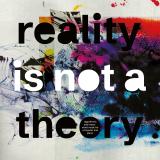
Recorded in concert at the University of Sheffield in March 2025, Reality Is Not A Theory is the first collaboration between Mark Fell and Pat Thomas. Major figures in British experimental music since the 1990s, Fell and Thomas have developed their rigorous practices from radically different backgrounds and perspectives: where Fell’s singular take on synthetic abstraction emerged from Sheffield’s electronic underground, Thomas is a virtuoso improvising pianist steeped in jazz and modernist art music who has simultaneously worked with sampler-based electronics for decades. As the record’s wonderfully academic subtitle explains, we are presented here with two sides of ‘algorithmic and improvised music for computer and piano’, exemplifying both players’ insatiable search for new (and sometimes uncomfortable) playing situations.
The performance begins with Fell’s electronics close to the timbres of acoustic percussion, attacks that suggest wood, metal or glass threaded along a rapid pulse while Thomas focuses on the lowest registers of the piano, deadening the strings. As Fell’s electronics start to ring out and occupy more harmonic space, Thomas turns to wide, repeated clusters, which slowly expand into patterns of chords. Like in his recent solo recordings and his trio work with Joel Grip and Anton Gerbal, Thomas’ playing combines extreme dissonance with a deep lyrical sense. Fell’s work gradually shifts its focus toward drum sounds, drawing on the microtemporal processes that have characterized his practice in recent decades. Heard together with Thomas’ probing piano, the computer sounds call up unexpected associations with the klangfarben antics of improv drummers like Paul Lovens or Tony Oxley. Throughout its second half, the music grows increasingly frenetic, as Thomas sounds out rapid, irregularly repeated figures and beautifully sour chords in the upper register, while Fell’s percussion develops into angular pan-pipe-like feedback and waves of glissandi.
With great confidence and patience, Fell and Thomas often let their individual contributions remain rhythmically distinct and unsynchronised, allowing unexpected correspondence and coincidence to guide the music’s development. Recorded in a hall named after Sheffield steel manufacturer and Master Cutler Mark Firth, the location might suggest a model for understanding how Fell and Thomas interact here: two workers in the same workshop, each immersed in their own part of the production process. Arriving in a striking sleeve designed by Mark Fell, with liner notes by Francis Plagne, Reality Is Not A Theory is an invigorating document of the meeting of two mavericks of contemporary music.
'Mauricio and Horns' by Bossa Nova legend and harmonica master Mauricio
Einhorn is produced by Jacques Muyal, with the Idriss Boudrioua Orechestra
arranged by Rafael Rocha and with guest artists Paquito D'Rivera and Lula
Galvao
In jazz, we all know the harmonica master, Mr. "Baron" Toots Thielemans, but we are
equaly fortunate to have our "Prince", Mauricio Einhorn. His early contributions in the
1950s to the birth of the Samba Jazz movement in Brazil played a pivotal role in the
creation of Bossa Nova, a genre that quickly became an integral part of the jazz world.
The influence of jazz on Brazilian music - exemplified by the great Carlos Lyra in
"Influencia Do Jazz" - was so profound that local musicians embraced it to forge a
new musical identity. Many of Einhorn's compositions have become timeless
standards performed worldwide since the early 1950s and '60s.
Together with another giant of the scene, alto saxophonist Idriss Boudrioua,
Mauricio's music gets an even grander presentation than ever before. This time, he
teamed up with an exceptionally talented young musician: a big band arranger and
trombonist named Rafael Rocha, who wrote all the arrangements and conducted the
recordings. Rafael's arrangements are nothing short of magical. They are never
overdone, always respecting the beauty of the original harmonies while infusing them
with his deep passion for jazz. His trombone solos recall the phrasing of Frank
Rosolino, and he modulates the pieces with swirling harmonies that evoke the very
roots of Brazilian jazz. In every track, Rafael enhances Mauricio's elegant and
expressive phrases without ever overpowering the artist, creating a "wall of sound"
that gracefully floats alongside Mauricio.