Named for the rewind mechanism on the reel to reel tape machine on which the band tracked the album, Auto Locator coils up the chemical trails of ribbon binding old places and head spaces to our consciousness. Static and hiss leach between analog track layers, blurring the normal and paranormal to remind us that no memory is totally separate from a fiction - just like no drum track is totally separate from bass.
Over Auto Locator's ten songs, Del Paxton rip shit like a band entering their second decade of existence. On-the-nose opener "Freight Train Metaphor" throws listeners face first into the band's first album since 2017, with a syncopated pulse and arpeggiating guitar foreshadowing a record replete with punkish, serpentine composition. "Up With a Twist," the album's lead track, deals in Del Paxton's crashing punk vibrance, through which the band explores and laments the uninspired architecture of American sprawl.
Second single "Chart Reader", whose origins trace back to a psychedelic dream inspired by Wayfaring Strangers: Cosmic American Music, sees the trio dabbling in emo Americana, even featuring a nod to John Denver's "Take Me Home, Country Roads." Such unashamed references abound throughout Auto Locator, which takes further inspiration from bands like Mock Orange, Third Eye Blind, and Jimmy Eat World, all of whose influence can be heard on "Palpitations" and third single "Spiritual Gymnastics."
quête:re named
Originally released in January 1962 and simply titled 'Howlin' Wolf (aka The Rockin' Chair Album), this is one of the blues legend's best-loved LPs and widely recognized as one of the all-time cornerstones of Chicago Blues and named the third greatest guitar album of all time by Mojo magazine in 2004.
Now reissued as 'Little Red Rooster', the first side features iconic singles like 'The Red Rooster, (aka Little Red Rooster). However, it is on the second side that Wolf really steps into the light and delivers his dynamic and unique voice like never before, with songs such as Back Door Man and his variation on Willie Dixon's Spoonful, one of the finest blues songs ever recorded.
"One of the pinnacles of early electric blues and an essential album for any quality blues collection." - AllMusic
- A1: Eater Outside View
- A2: The Boys First Time (Alternative Version)
- A3: The Rezillos I Can’t Stand My Baby
- A4: The Valves Robot Love
- A5: Puncture Mucky Pup
- A6: The Zeros Hungry
- A7: The Outsiders One To Infinity
- A8: The Electric Chairs On The Crest
- B1: The Drones Just Want To Be Myself (Lp Version)
- B2: Maniacs Chelsea 77
- B3: ‘O’ Level Pseudo Punk
- B4: The Carpettes Radio Wunderbar
- B5: The Wasps Teenage Treats
- B6: V2 Speed Freak
- B7: Social Security I Don't Want My Heart To Rule My Head
- B8: Patrik Fitzgerald Safety-Pin Stuck In My Heart
- C1: Angelic Upstarts The Murder Of Liddle Towers
- C2: Alternative Tv Action Time Vision
- C3: The Tights Bad Hearts
- C4: Leyton Buzzards 19 And Mad
- C5: The Rowdies A.c.a.b
- C6: The Outcasts Just Another Teenage Rebel
- C7: U.k. Subs C.i.d
- C8: The Fall Psycho Mafia
- D3: Cockney Rejects Flares ‘N’ Slippers
- D4: Pure Hell These Boots Are Made For Walking
- D5: The Pack King Of Kings
- D6: 999 Found Out Too Late
- D7: The Adicts Easy Way Out
- D8: Spizzenergi Where's Captain Kirk?
- D1: The Ruts In A Rut
- D2: The Piranhas Jilly
When punk arrived in late 1976, the scene acted as a catalyst for an explosion of independent labels which swiftly sprung up around the UK. Named after a classic track by Manchester’s The Drones, ‘Just Want To Be Myself’ boasts classic sevens on imprints such as Small Wonder, The Label, Rough Trade, Dining Out, Deptford Fun City and Cherry Red (all London), Zoom (Glasgow), Attrix (Brighton), Heartbeat (Bristol), Good Vibrations (Belfast) and Bent (Manchester).
Many of the individuals and bands featured would later enjoy success in various incarnations – for example, The Pack mutated into Theature Of Hate, The Outsiders’ Adrian Borland attracted acclaim with his band The Sound, ‘O’ Level’s Edward Ball made an impact with various acts including The Times and Leyton Buzzards evolved into pop combo Modern Romance!
Pure Hell and The Electric Chairs’ Wayne County were American but eligible here because the tracks were recorded in the UK
Formed in 1984, Fields of the Nephilim is the creation of vocalist and front man Carl McCoy. Highly influential, especially in the world of goth, but also within the metal and electronic genres, their legacy endures to this day. You can hear their influence on bands like Swans, Godspeed! You Black Emperor, Explosions In The Sky, Wolves in The Throne Room, Behemoth and more. The Nephilim was recorded in a former courthouse in the Somerset countryside where defendants who were sentenced to death were hung. "Moonchild" is the band"s best known song due to it reaching #28 in the UK single charts, and LouderSound called it a classic and said that it "perfectly encapsulates this era of the band: it has some nifty guitar work, great bass lines from Tony Pettitt, Nod"s stellar drumming and McCoy"s distinctive vocals." The song is named after a novel by Aleister Crowley, and there are several other nods to Crowley throughout The Nephilim. In a 2013 remembrance of the album, PopMatters said "The band"s sophomore effort, regarded not only as its best work but also as one of the UK goth scene"s masterpieces, is a seamless, hour-long trek into a surreal land populated by chiming guitars, hypnotic bass, found samples, and McCoy"s storytelling."
Long-time house music producer, DJ and journalist Anthony Teasdale is back with a new four-track EP for London’s Pamela Records.
The lead track is ‘Tango de la Boca’, an uplifting house tune with an unforgettable piano line and a groovy disco beat. Named after the barrio of La Boca in Buenos Aires, the tango feel is supplemented with layers of percussion, electric guitar stabs and moody strings. So far, it’s been played in clubs and on the radio by DJs like Rocky, David Holmes and Richard Sen.
“I think this is the most uplifting record I’ve ever made,” says Anthony. “Hearing those piano lines come in on a club system is a massive buzz.”
Second up is ‘A Pavement in Palma’ – a chilled jazz-house track. Inspired by lazy afternoons in Majorca’s capital, its swinging beat is joined by electric piano chords, live bongos and a bassline you can’t help but move to.
On Side B, we set sail on the good ship disco for ‘Deep in the Forest Something Stared’. Opening with bucolic bird noises – referencing the title – the track adds ’80s-style bass, glockenspiel melodies and soothing strings. It ends with a haunting piano motif that’s well worth the wait.
Finally, we return to 2023 with ‘It’s 5am Somewhere’, which blends old-school Roland 909 drum beats with minor chord synth stabs and rumbling piano melodies – plus an atmospheric breakdown guaranteed to excite any dancefloor.
Anthony says: “The EP reflects the music I’m listening to at the moment – which goes from classic techno to uptempo disco-house (and lots of synth pop!). The fusion of beautiful, often brittle, melodies with percussive house beats sets these records apart. And they sound as good on a dancefloor as they do in headphones when you’re relaxing at home.”
Kalipo prepares to launch his new album Happy Little Accidents, which counts with twelve electro-focused tracks as well as the participation of feature artists Rampue, Ira Atari, Oberst & Buchner and subkutan. Iconic 80s painter and TV host, Bob Ross is celebrated for his thirty-minute landscapes, recognizably soothing voice as well as the 'happy little quotes' he imprinted on pop culture. One of Ross' most memorable turns of phrase, "We don't make mistakes; we just have happy accidents," went on to encourage thousands worldwide. And not just painters. "For me, this album was about letting the songs develop very quickly and not evaluating them too much, or trying to avoid mistakes," says German electronic music producer, Kalipo (Jakob Häglsperger) who named his latest release Happy Little Accidents after Ross' signature phrase. "Bob Ross really impressed me as a child, he was always so accessible to everyone and demonstrated how easy it was for anyone to work creatively," says Kalipo, who translated Ross' fast and instinctive wet-on-wet painting technique to music-making on Happy Little Accidents. The 12 tracks that make up PART I and PART II of the album are a celebration of the method - sometimes it's a floaty journey with tinkering sounds, at other times dark fast beats create the core of the music, but there's always a sense of intuition and heart driving Kalipo's productions.
For Volker Bertelmann, aka HAUSCHKA, music is not solely about its sound, but also a means to facilitate the exchange of ideas and foster meaningful interactions between individuals, revealing his fascination with human connection and engagement. Despite being known for his distinctive prepared piano sound, the Academy Award-winning composer intentionally named his 15th solo studio album PHILANTHROPY to express his compassion and openness. The album's song titles, such as "Diversity," "Nature," "Loved Ones," and "Altruism," perfectly align with their respective musical compositions. HAUSCHKA's albums often serve as a platform to provoke dialogue on specific themes, and PHILANTHROPY follows this pattern, aiming to offer optimism and energy in response to the challenges of recent years. The album combines upbeat and pensive pieces, featuring moments of joy, introspection, and peaceful interludes. Overall, PHILANTHROPY showcases HAUSCHKA's compositional prowess and serves as a gift that sparks reflection and celebration.
- Intro 0.45
- Punk Rock Is Back! 2.02
- New York City Punk 2.09
- When The Two 77’S Clashed 3.17
- Down The Roxy 0.57
- 45: Random Punk Memories 4.05
- Looking At The Decals On Steve Jones Guitar 3.03
- We Will All Lose Some Good Friends Along The Way 3.01
- Punk Rock Fanzines 2.22
- Machine Bubble Disco 2.07
- Corrugated London 2.15
- Shakespeare Meets Chuck Berry On Shepherds Bush Green 3.14
- London’s Turning 2.09
‘Hey don’t touch that dial, good news Punk Rock Is Back!’ Mal-One
Mal-One’s new album starts with running through the radio dial, looking for some suitable music to listen to. These snippets are actually samples of songs from his previous album ‘It’s All Punk Rock’. Leading the listener nicely into a new set of songs to get their Punk Rock teeth into.
Songs that cover… the great New York punk scene of the 1970’s that grew out of a little bar in the Bowery District of New York City called CBGB’s ‘New York City Punk’. The Clash’s first album discussed in ‘When The Two 77’s Clashed’. The excitement of London’s Roxy Club revisited with its one line chant ‘Down The Roxy’. Those great ‘Punk Rock Fanzines‘, that kept us all so well informed. An early Sex Pistols gig at the Chelsea School of Art, ‘Machine Bubble Disco’. So named after what was to be the main event of that nights entertainment!!!.’45 Random Punk Memories’ sprang from Mal-One’s own reminisces. Talking of memories ‘Looking At The Decals On Steve Jones Guitar’, the recollection of Steve Jones, future guitarist of the Sex Pistols, stealing Mal-One’s bike when he was the tender age of seven years old. An incident that might have triggered this whole road of discovery in the first place.
A reflection on London’s harsh setting in those heady Punk times in ‘Corrugated London’ alongside a call and response to remember that ‘London’s Turning’ all the time for better or worse and that we can’t always pick and choose the bits we want to keep. The self-explanatory, ‘We Will All Lose Some Good Friends Along The Way’. ‘Shakespeare Meets Chuck Berry On Shepherds Bush Green’, a great story when Joe Strummer was asked by a reporter what he was up to and what he might call The Clash’s next album, which would turn out to be the timeless ‘London Calling’. Joe’s rather
tongue in cheek answer was “Shakespeare Meets Chuck Berry On Shepherds Bush Green’’.
A place close to Mal-One’s heart and a great title, that was crying out to be reused. Which Mal-One does via what he calls his Punk Art Poetry. Sometimes these lines are turned into lyrics and reworked into songs.
The album ends with such a call, ‘An Open Letter To…’ all those people who helped influence us all along the way. As the lyric states often without thought of financial gain, but done so, quiet simply because it had to be done.Maybe some young guns might in some small way, be inspired and find in Mal-One’s current efforts that ‘anything is possible’ and the true meaning of Punk was in fact, ‘Do It Yourself’.
The vinyl version of this release includes a poster that is part of Mal-Ones continuing Street Art project that involves putting up posters around London. This time declaring the news ‘Punk Rock Is Back!’. Included in the album packaging also is a signed and blind stamped limited print of one of Mal-One’s works ‘What Is It About Punk That’s So Different So Appealing’. A punk collage that just carries one word in among its multiple punk images and that word is PUNK. We hope you enjoy the indulgence.
TaxiCab Verses, Is What You Make It, is a project that was created by Athens musician, Jim Wilson. It’s an international collaborative project between TaxiCab Verses (a name inspired by the phrases
covering the backs of taxis Jim observed during his travels in Ghana) and Ghana’s Kofi Atentenben and the Warriors. The 10-track album is named Is What You Make It, and according to Flagpole Magazine it's "aggressive and propulsive, even on tracks lesser musicians would let devolve into simple swing patterns (like the darkly jazz-tinged “Step By Step”)...my only regret is that I didn’t write about it the moment it came out. It’s righteously excellent." Overall, 22 musicians contributed to this between Athens and West Africa. TaxiCab Verses was originally released on CD only in 2012 and became a sort of hidden gem of Athens. The album was mastered by Greg Calbi (Bob Dylan, Drive-By Truckers, Paul Simon, The National) and was produced by Drew Vandenberg (Faye Webster, S.G. Goodman).
Patterson Hood of the Drive-By Truckers also had a big role in the creation of this album. He says that he is "so filled with love and pride for what Jim, Drew and all of those amazing musicians from two continents have created. Kudos to George Fontaine and the Strolling Bones Records folks for spotlighting this amazing chapter of Athens music history (and beyond) and finally making this record available for the whole world to hear."
Tysher is back with another massive 3 track EP on his own imprint. Inspired by all the gigs and events in 2022 he put all his ideas and creativity into this release. Shadows EP is named after the contrast between light and dark and generally dualism itself. All 3 tracks have walked through the process of profound sound design, programming groovy and progressive beats and enthusiastic arrangement styles. Stagnation is regression and that’s the reason for Tysher moving forward in developing his own signature sound.
Comes as super limited clear, black & green splattered Collecters Edition.
TOP PRIORTY RELEASE. Escape Music is delighted to announce the release date for the long awaited Jelusick debut album title “Follow The Blind Man” featuring Dino Jelusick the most well loved and respected vocalist in the Rock World! will be available on CD, Vinyl, and digital platforms! The Vinyl will be limited edition to 500 copies only! “Blade Bullet” colour and all will be numbered 1-500.Jelusick is: Dino Jelusick – vocals, keyboards, guitar / Ivan Keller – guitar / Luka Broderick – bass, backing vocals / Mario Lepoglavec – drums, backing vocals / Produced by Dino Jelusick, Mixed and Mastered by Simon Jovanovic, Executive Producer Dario Jelusic - JELUSICK played on 4 European tours during 2021- 2023 which also included Guitar Scene festival 2021 where they played with all star band together with John Norum and Gus G. The same line up also played there in 2022 and shared the stage and jammed with Airbourne, Johnny Depp & Jeff Back, Black Label Society, and Beth Hart. Dino Jelusick, born 4 June 1992, is a Croatian rock singer, musician, and songwriter. He was the founder, principal songwriter and lead singer of hard rock band Animal Drive, which was formed in 2012. and dissolved in 2020. Since 2016 Dino became a permanent member of American rock band Trans-Siberian Orchestra. He also worked with Gus G, Mike Mangini, George Lynch, Will Hunt, Michael Romeo, Jeff Scott Soto, Joel Hoekstra, Steve Smith, Jon Oliva, Kip Winger, John Macaluso, Deen Castronovo, Phil Demmel, Mike Portnoy, Henrik Linder, Justin Johnson, Tony Franklin, Kyle Hughes, Virgil Donati, Kiko Loureiro, Jordan Rudess, David Coverdale, Tommy Aldridge, Reb Beach, Michele Luppi, Lachy Doley etc. On July 27th, 2021, upon direct phone call from David Coverdale shortly after that David announced that Dino had become the new member of Whitesnake! In 2009 he started recording a new studio album in Melbourne, Australia which was finalised with producer Robert Ahrling in Malmö, Sweden. The album named “Living My Own Life” was released in August 2011. Between 2012 and 2013 Dino was hired to take part in an international project in South Africa named “Synkropation” where he was featured in several songs and played to an audience of 50.000 people in Johannesburg and also participated in two rock operas. In 2015, American drummer John Macaluso (Ark) invited him as singer and the keyboardist for his new American-Croatian band Stone Leaders. During this time, Dino was also a member of Croatian metal band The Ralph with whom he released the album “Enter Escape” in February 2017. In February 2016 he was noticed by American rock band Trans-Siberian Orchestra. After auditioning and meeting with producer Paul O’Neill and Dino was chosen to join the group. 2018 his band Animal Drive released debut album, “Bite!”, to critical acclaim. April 2019, they released a covers EP titled “Back to the Roots”. Dino was also featured singer on two songs on Magnus Karlsson “Free Fall” album. 2020 Dino Joined ex-Krokus members and Mandy Mayer (Gotthard, Asia, Unisonic…) for a concert project named Gotus and they released a video for the song “Souls Alive” (Unisonic). July 2021 Michael Romeo, guitar master from NY insisted that Dino should sing on his new album “War of the Worlds part 2” and it became a great and successful collaboration. 2022 Dino toured Europe with Whitesnake. As the last part of the EU tour was cancelled due to some DC health issues, Dino joined The Dead Daisies tour replacing Glenn Hughes who got unwell at the end of November 2022.A 2 year long legal battle with Dino’s ex-label was over and he immediately started recording new songs for his band JELUSICK…Welcome back Dino!
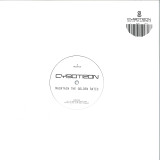
Cybotron has re-emerged in our contemporary cybercultural age when artifactual futures begin a transition into a new era of "Meta".
By combining their knowledge of philosophy, science fiction, and mechanical engineering, at a time when electronic instrument companies were only just beginning to distribute their products to the masses, two prosumer audio technicians named Juan Atkins and Rik Davis were able to re-engineer Cybotron – a combination of the words “Cyborg” and “Cyclotron” (an atomic particle accelerator) – to be used as a home studio performance music that would change the course of independently produced and distributed electronic music.
Dissolving the boundary between singer, songwriter, and producer, Juan Atkins named Cybotron’s future forward funkadelic sound “techno” in reference to Alvin Toffler’s concept of unlikely “techno rebels” against technocracy. Techno is music that sounds like technology, and its purpose was to help society survive our collision with a universally felt “future shock” by inserting an audio virus into the cultural matrix.
Techno’s blueprint spread across the Detroit-Berlin Axis between Metroplex and Tresor. As human society began its transition from a post-industrial to an information-based market economy, Cybotron enabled a thorough system override of the human senses towards a tangible man-machine hybridity and showed the world how to channel their emotions and imaginations into new sound technologies and create new ‘sonic’ spatialities where listeners can transport themselves out of the physical world into the future. The cover of their debut album Enter (1983) transmitted a fragmented view of a body in motion being digitized mid-stride, dissolving physical and virtual reality into sonic fiction.
Today, the man-machine hybridity of Cybotron is still the truest form of techno, coevolving in conversation with the technological music they created and inspired. The latest data disk marks a new chapter that reflects a techgnostic musical expression of the knowledge acquired during their decades-long hiatus. Unlike the dance music industrial replications of the Model 500 formula, acknowledging the content marketing expectations that segments music into specific, sellable genres, this techno music is self-aware. Cybotron processes dance music tropes spawned from its very own blueprint with a meta-tactical precision out of sync with our current rave new world.
Cybotron’s return demonstrates a studied engagement with what techno was and should be with a peerless update of Juan Atkins’ initial inventive idea of do-it-yourself electrically reengineered music xeroxed onto both sides of the 12” – uploaded directly into the alleys of your mind.
- The Rhythmanalyst
The dual forces of shadow and light, despair and hope, frustration and catharsis are at play in the music of Cupid & Psyche, the Los Angeles-based indie rock duo of Michael Vidal and Juan Velasquez. First gaining recognition in the late aughts as members of the punk band Abe Vigoda, whose 2010 album Crush was named one of the "Best 50 Albums of the 2010s" by Pitchfork, the two have reunited as collaborators for the first time in a decade. Cathartic jam sessions would birth the emotionally resonant songs that appear on their debut album, Romantic Music. Though they pull from a wide array of `80s and `90s influences, Cupid & Psyche bring together these disparate moods and genres through their own esoteric lens on Romantic Music_making for a singular sound that at once feels familiar and alluringly hypnotic. Listeners will detect the gloom of post-punk and goth, the haziness of dream-pop and shoegaze, the bittersweet guitar melodies of second-wave emo, and the manic electronic rhythms of trip-hop and big beat. The immersive soundscapes on Romantic Music are sometimes agitated and driving, while other times ethereal and transcendent. This duality matches the album's lyrics of looking for a divine escape from the grim realities of existence, as well as the darkest parts of one's psyche. "The thesis of the album is trying to transcend the limits of life and the struggle therein," Vidal says. "There's a lot of lyrics about feeling trapped or frustrated, and then trying to find a way out. There's a lot of times I sing of hope and grasping towards love. But maybe in trying to escape, you take the wrong door, be it substance abuse or other vices." Now as Cupid & Psyche, Vidal and Velasquez return to a friendship that creatively feels like home_except this time, with more experience, self-knowledge, and less pressure to make anything other than the music that emerges naturally. The LP's title Romantic Music is tongue-in-cheek, since there are no love songs proper on the project, and the phrase itself can imply a kind of light listening. But it befits that deep bond that the members have, as friends who understand and empathize with each other's worst, so they're capable of bringing out each other's best.
- A1: Overcome (Abbey Road Remaster)
- A2: Ponderosa (Abbey Road Remaster)
- A3: Black Steel (Abbey Road Remaster)
- A4: Hell Is Round The Corner (Abbey Road Remaster)
- A5: Pumpkin (Abbey Road Remaster)
- A6: Aftermath (Abbey Road Remaster)
- B1: Abbaon Fat Tracks (Abbey Road Remaster)
- B2: Brand New You're Retro (Abbey Road Remaster)
- B3: Suffocated Love (Abbey Road Remaster)
- B4: You Don't (Abbey Road Remaster)
- B5: Strugglin' (Abbey Road Remaster)
- B6: Feed Me (Abbey Road Remaster)
Celebrating Maxinquaye as it approaches its 30th Anniversary (2024) the Reincarnated 1LP package is a welcome reappraisal of this seminal album containing the original album remastered at Abbey Road Studios.
The album has brand new artwork featuring the only known photograph of Tricky with his late mother, of whom this album is named after. The image was recently discovered by his cousin.
I feel a deep sense of loss listening to this music, but at the same time the possibility of going beyond it through sound. It doesn't want to illustrate anything, but I would like it to be transformative, even of a feeling that sounds like death. It is an elegy." — Furtherset
The Infinite Hour is a shattered elegy synthesized in electronics. Furtherset's music does not explain, settle or justify, it rather simply manifests the grip of anguish. As a whole, the album's six compositions resemble the labored breathing of one who mourns a disappearance and fears oblivion. A feeling like having one's chest weighed down by a stone, while still being attentive to one's breath, and aware of what remains. From this dimension The Infinite Hour arises and transfigures loss into a space that is always extending: the hour is infinite, the melody is circular, and even stasis has its own measure that is exceeded into eternity.
The album was created between 2020 and 2022, in a slow process of writing and continuous refinement parallel to the previous EP, Auras. The compositions found their final form during the mixing process carried out together with composer & sound artist Bienoise (Mille Plateaux). They were later named based on references to authors who influenced and are dear to Furtherset: Amelia Rosselli, Vladimir Chlebnikov, Hubert Damisch, Dante Alighieri. Each track, composed with its live rendition in mind, manifests itself to the listener as a possible variant of a path that is never definitive. Their live performance, an increasingly distinctive moment within Furtherset's work, is a gesture of concentration and extension, where every composition is developed through meticulous variations of each singularity.
The Infinite Hour is one possible manifestation of an ever-changing musical landscape, a universe with unmistakable sounds but always on the verge of disintegrating, collapsing, and opening up spaces, times, infinities.
Furtherset is the musical project of artist and musician Tommaso Pandolfi (1995). His compositions' distinctive traits are stratifications and recursive shifting modulations, synthetic clusters and sampling, alongside rhythmic and embracing harmonies. The project is envisaged as formal research that follows a path towards saturation and layering, but is always capable of generating voids in which the listener can take their place and fill them according to their own focus.
Have you heard of the Nurse With Wound List? If you are a fan of creative-experimental-unlikely music, certainly. You would therefore be aware that amongst the recommendations that Steven Stapleton slipped into the first album of his group Nurse With Wound, were to be found a few restless frogs: Jef Gilson, Luc Ferrari, Jacques Thollot, Urban Sax, Horde Catalytique and last but not least Jean-Jacques Birgé and Francis Gorgé. Stapleton admired their album Défense de. The two Frenchmen just had to conceive of a fabulous precursor to the channel tunnel (check out the inside of the record, you’ll see) to enable Stapleton to come to France in 1980. The Englishman was looking for contributions to a compilation to be released on his United Dairies label that he had created with John Fothergill, and he naturally called on Birgé and Gorgé, who were then playing with Bernard Vitet in ‘Un drame musical instantané’.
It was a done deal and the compilation would be named In Fractured Silence. Alongside Nurse With Wound and Un drame musical instantané, could be heard Hélène Sage (whom Birgé introduced to Stapleton) and Sema, a project from the experimental British musician Robert Haigh who had participated in key records in the Nurse With Wound discography, such as Homotopy to Marie and Spiral Insana.
The curtain is raised and it is Un drame musical instantané who start the ball rolling. Mystery abounds; synthesisers lurk, percussion clatters and the sounds (creaks, whistles, vocal insertions...) fire in all directions. For the piano, it’s a debacle, the Drame won, Hélène Sage can take over. Heading up a quintette including Gorgé and Vitet, she creates a cushioned chamber music with strings and many silences.
On the B side, it’s the other side of the channel. Sema’s piano first off, which dares everything, even melody, before spilling out its darkest ideas in a raucous requiem. Finally, Stapleton appears, delving into his collection of female voices to devote himself to an iconoclastic transformation and concoct a song which collapses under the assault like Marianne at Agincourt. After having listened to In Fractured Silence, you will simply have to choose sides.
Have you heard of the Nurse With Wound List? If you are a fan of creative-experimental-unlikely music, certainly. You would therefore be aware that amongst the recommendations that Steven Stapleton slipped into the first album of his group Nurse With Wound, were to be found a few restless frogs: Jef Gilson, Luc Ferrari, Jacques Thollot, Urban Sax, Horde Catalytique and last but not least Jean-Jacques Birgé and Francis Gorgé. Stapleton admired their album Défense de. The two Frenchmen just had to conceive of a fabulous precursor to the channel tunnel (check out the inside of the record, you’ll see) to enable Stapleton to come to France in 1980. The Englishman was looking for contributions to a compilation to be released on his United Dairies label that he had created with John Fothergill, and he naturally called on Birgé and Gorgé, who were then playing with Bernard Vitet in ‘Un drame musical instantané’.
It was a done deal and the compilation would be named In Fractured Silence. Alongside Nurse With Wound and Un drame musical instantané, could be heard Hélène Sage (whom Birgé introduced to Stapleton) and Sema, a project from the experimental British musician Robert Haigh who had participated in key records in the Nurse With Wound discography, such as Homotopy to Marie and Spiral Insana.
The curtain is raised and it is Un drame musical instantané who start the ball rolling. Mystery abounds; synthesisers lurk, percussion clatters and the sounds (creaks, whistles, vocal insertions...) fire in all directions. For the piano, it’s a debacle, the Drame won, Hélène Sage can take over. Heading up a quintette including Gorgé and Vitet, she creates a cushioned chamber music with strings and many silences.
On the B side, it’s the other side of the channel. Sema’s piano first off, which dares everything, even melody, before spilling out its darkest ideas in a raucous requiem. Finally, Stapleton appears, delving into his collection of female voices to devote himself to an iconoclastic transformation and concoct a song which collapses under the assault like Marianne at Agincourt. After having listened to In Fractured Silence, you will simply have to choose sides.
Even as a little boy, Johnny Cash has a feeling he was going to be famous one day. It wasn’t the kind of premonition he could go about telling people. They’d have thought dreams of fame and riches pretty far removed from the Cash’s barely-productive 40-acre cotton farm in Arkansas. Especially since Johnny had no idea how he was going to make his mark.
Johnny left the farm to go into the Air Force — and in his travels he acquired first, a wife — and secondly, a guitar. Assigned to Germany and forced to leave his wife behind, Johnny found a faithful companion in his guitar. The boys in his barracks seem to like his “pickin’ and singin'” and gradually the plan for a career began to take shape. He would be a singer — a country singer.
When he got back from service, Johnny was not so modest about his plans for the future. He let his Memphis friends know he was going to be a singer — a good singer, a famous singer — a singer who would revolutionize country music. No matter how long it took — he was determined!
As it happened, Lady Luck inclined her face toward Johnny almost immediately. His releases on the Sun label were instantly acclaimed, and in 1956, one year after Johnny Cash launched his recording career, he was named the most promising country and western artist of the year in four separate polls.
After the success of “I Walk the Line” as a simultaneous C & W and popular hit, it was indicated the course Johnny’s career should take. Though always identifying himself as a singer for the country fans — a favorite entertainer on the Grand Ole Opry — Johnny Cash with “Ballad of a Teen-Age Queen” came to be a top selling artist in the pop recording field.
Almost reluctantly, Johnny evolved a pop-county style in arrangement and instrumentation, evident in such hits as “Guess Things Happen That Way” and “The Ways of a Woman in Love” to supply the demand for Cash records by fans of both types of music. It is ironic that Johnny Cash caused more of a revolution in pop music than in country music, as was his aim, by being one of the first C & W artists exposed on national “general entertainment” TV shows; and the first C & W artist to capture the LP market with one great release (Sun 1220).
Johnny Cash — in his voice, looks and demeanor — carries a certain aura of “specialness.” He is a very dramatic figure — tall, muscular, with blue-black hair. He looks the part of a folk singer — a 20th century wandering minstrel. And his fatalistic style, both in composing and singing, has a quality of monotone, but of “emotional monotone” that defies analysis, but which is genuinely powerful.
Johnny Cash is one of those persons endowed with an exceptional talent which has to express itself. And being expressed, his talent has been uniquely recognized and applauded by many loyal fans, who will enjoy this reminiscent album of the songs which to date are landmarks in the career of the one and only Johnny Cash.
Very limited stock available on these. Picture Disc Vinyl Packaging: 2xLP zoetrope (animated) picture discs, 24x36 foldout poster in custom silkscreen PVC gatefold sleeve + download card. On their fifth album, Infinite Granite, Deafheaven are no longer toying with the juxtaposition of pitting metallic abrasion against swirling grandeur. Quite the opposite: Infinite Granite is a bold and brave leap forward, a gorgeous and invigorating album brimming with style and splendor. In the context of their catalog, it takes on a whole other layer of defiant beauty. Across Infinite Granite, vocalist George Clarke showcases a startling vocal range; falsettos, whispers, multi-part harmonies, and other adventurous vocal treatments, with his trademark black metal-inspired howls mostly absent. Guitarists Kerry McCoy and Shiv Mehra expand their sonic palette to include synth textures using them to enrich their astral guitar work rather than outright replace it. Drummer Daniel Tracy has always been a force to reckon with behind the kit, but where he used to floor audiences with his speed and stamina, he’s now free to broaden his approach and lay down authoritative drum patterns that together with bassist Christopher Johnson’s punchy bass lines anchor the band’s lofty arrangements. The refinement of their sound was further encouraged by producer Justin Meldal-Johnsen, who lent a pop ear to the record. Jack Shirley, who helped produce every previous Deafheaven album, remained on board to engineer the album along with additional engineering and mixing from nine-time Grammy Award winner Darrell Thorp. Ultimately, Infinite Granite is Deafheaven’s most goosebump-inducing album to date. Highlights: Follow up to 2018’s grammy nominated album Ordinary Corrupt Human Love and first full-length release with Sargent House. Deafheaven named ‘Artist of the Decade’ by Vice, along with albums featured in ‘Best of 2010s’ lists on Pitchfork, Rolling Stone, Metacritic, AV Club and many more. Three previous albums Sunbather, New Bermuda and Ordinary Corrupt Human Love have received incredible praise from press and named ‘Best New Music’ by Pitchfork. Deafheaven have scanned over 160k albums and streamed over 30 million tracks in the US alone.
It is with great fanfare that we proudly announce the return of the esteemed improvisational chainsaw blues trio Young James Long. Young James Long formed in Dallas in 2003 with a weekly residency at a local (and appropriately named) dive bar called Muddy Waters. PW Long (guitar, vocals) and Kirkland James (guitar) had known each other socially since the 90s when Long was fronting Quarterstick Records’ Mule, and James was playing with Tenderloin. Long would go onto make a series of incredible solo records under his own name and that of PW Long’s Reelfoot and James would play with Alejandro Escovedo (among many others) before their paths finally crossed again. They recruited Taylor Young (Hi-Fi Drowning, Young Heart Attack, The Polyphonic Spree) on drums and a raw, blues-punk-rock-and-roll band emerged fully formed, songs flying out of them with enthusiasm and ease. They recorded the You Ain’t Know The Man EP with their friend (and eventual Grammy winner) Stuart Sikes not long after. The EP came out via Southern Records in 2007, and thanks to the tasteful ears of the people this side of the pond, a European tour followed. If you saw that tour, you’ll agree that it felt like the band were really hitting their stride. However, here we are in 2023, so what happened? Answer: geography - the age-old enemy of creativity. One member left Texas and the others (being the extremely able and skilled musicians that they are) were perpetually wooed away to play in other bands. Everyone’s got bills to pay, right? And with that, things just kind of fizzled out. Long even insists he quit playing music around 2010. One of the most recognisable voices in underground music: out of the game. Incredible. Inconceivable.
Then, last year we at Wrong Speed got an email asking if we’d be interested in some new music Young James Long had been working on. We thought it might be a joke. They sent some mixes through, and it became very quickly apparent that it was anything but. Turns out the trio had started chatting about music again in 2020 (before the world had other plans) and had finally made their first full-length album Orogeny in the summer of 2021. Orogeny sounds live and thrillingly immediate, as though all obstacles between their delivery and your ears have been removed and discarded as irrelevant. There is no filler, no treading of water at any point. Amps buzz, songs teeter on the edge of collapse, you feel like you’re sitting in the middle of the band as they play and it’s a pretty sweet place to be. The album contains a whopping 17 songs, most under 2 minutes long. They don’t want to waste your time, or most importantly (after sixteen years away), theirs. If you’re familiar with Long’s previous bands, you’ll know he has a rare gift for pairing extreme volume with extreme tenderness and it’s thrilling to find that gift present and correct after over a decade away. And that voice – holy shit, that voice. He can go from a Beefheart howl to the sweetest country baritone in the space of a single line. In James and Young he’s found the perfect foils, a power trio of instinctive and soulful musicians able to conjure shining gems of magic out of the grit and the dirt. Young James Long is risen from the ashes – it’s a miracle!