Dry Socket is a politically charged hardcore band from Portland, Oregon, known for blistering performances and emotionally uncompromising songwriting. Rooted in the raw aggression of classic hardcore, their sound channels the urgency of early Ceremony, G.L.O.S.S., and Negative Approach while carving out a distinctly modern, inclusive space within the genre, one where anger, grief, and survival are not just themes, but lived realities.
Their music confronts systems of violence, coercion, and control with unflinching honesty, creating room to be unapologetically furious, vulnerable, and alive at the same time. Every riff lands like a strike; every lyric feels torn from experience rather than abstraction.
Since forming, Dry Socket has toured extensively across the U.S., Europe, and Mexico, sharing stages with Gorilla Biscuits, The Hope Conspiracy, Torso, and more.
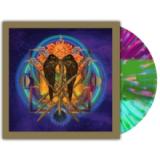
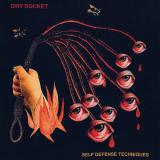
Their latest record, Self Defense Techniques, centers on survival under constant pressure. Inspired by the practice of dehorning rhinos to protect them from poachers, removing a vital part of the animal in order to keep it alive, the album examines the compromises people are forced to make to endure a hostile world. Horns are tools for protection, communication, care, and identity. To survive, so many of us are taught to remove our own.
Across the record, Dry Socket interrogates life inside systems that demand silence, obedience, and self-erasure. Songs wrestle with exhaustion, spiritual betrayal, and economic violence, oscillating between fury and grief. Self Defense Techniques isn’t about triumph, it’s about endurance, documenting the cost of staying alive while refusing the lie that softness is weakness or that silence is peace
Search:rea
Bright morning. To noon and into afternoon. To dusk and the inky night.
A major new exhibition of Mammo’s music spread across a triple disc, twelve track album. Call it a compendium or summary, a network of sparking neurons and painted landscapes in techno.
It folds in all the aspects of his other identities (self-)released over the last few years into an ultimate package ~ Heaven Smile, A∞x, CoA-A, E35, Puddlerunner; really any other project Fabiano has assumed an identity under. It all finds its way into the code and format of Lateral in some way or another.
Here the ground is given for the listener to hear just how much range and individual language there is in the music he’s been making. Fully immersive, inventive and detailed while also elegant and light of touch. It’s quite a package from one of the most talented techno producers right now, gesturing towards different genres and novel ideas in beautiful and intuitive fashion.
Break the pack down for your preferred disc of the day if you like. It’s designed with that modularity in mind. Disc one sparkles with vitality and a buoyancy. The middle disc has more drive and harder bites that you may want to amplify and split out to slot in a DJ bag. Sides five and six move into deeper, dreamier and more emotional techno in twilight. Each one is a little distinct and has its own orbit.
But give it your full attention on the turntable platter too. A listen from beginning to end. There’s lovely dynamics and interplays in the narrative, and its a remarkable new body of work to let your time dilate to.
Mastered and cut by Rashad Becker.
Art by Mammo.Works.
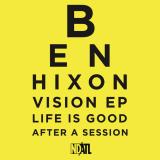
Increasingly essential US artist Ben Hixon drops sublime deep house EP on Kai Alce's faultless NDATL Muzik. The six classy tracks will appeal to those who appreciate the subtleties of the classic Midwestern sound.
Ben is a Texas-born, but Brooklyn-based artist who has become a firm favourite of true deep house heads in the last year or so. He has put out several EPs on Dolfin, all of which find a perfect sweet spot between immersive atmospheres and late-night drive. Dusty analogue textures and frayed edges define his drums, while the subtle details are intelligent and add effortless emotion. He is a perfect fit for NDATL Muzik, the Atlanta label that has long been a flagbearer for well-crafted house grooves like these.
'Taping' kicks off with heavy kicks that swing under gentle chords that are perfect for after dark. There's a persuasive bump in the beats that will get early evening dancers primed and ready for more. Next up we have 'Y Do U Get So Nervous' - a mastery of sampling with nagging vocal hooks, cascading piano keys and wet finger clicks all adding soul to another low-key but all-consuming groove. 'Area Code 336 Phone Rings' is a higgledy-piggledy tapestry of toms and stuttering kicks with vocal fragments to match - the thrill is the looseness of it all. The smouldering and meandering 'December Blackout' is for gazing off it into the distance at the busy yet muted jazz keys that twinkle like faraway stars. 'It's Like A Vision' picks up the pace with more closely stacked kicks but still oodles of cuddly warmth and smudged synth work, before '0823' ends with a decidedly heavy feel - spare, lump drums unfurl beneath forlorn synths that feel utterly bruised and heartbroken.
Ben Hixon's deft artistry makes these quiet, texture tunes irresistibly danceable yet emotionally profound.
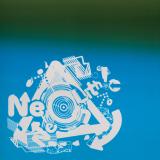
With Neolithic Neon, Appleblim creates a kaleidoscopic reflection of the spirituality inherent within electronic music — the ineffable frequencies and communal traditions that spring from exploratory synthesis, deep-rooted rhythms and myriad other sonic codes.
Throughout his third album for Sneaker Social Club, Laurie Osborne continues to express a fascination with the ancient resonance held within modern rave as he guides his own studio practice towards more purposefully analogue processes. It's reflective of his desire to let go and trust his instincts within the more chaotic realm of voltages and signals, not to mention turning to a wider spread of instrumentation and opening up to noisier avenues. This direction defines the character of Neolithic Neon, which bristles with the living imperfections of the gear in the context of incisive and wide-ranging cuts touching on jungle, dubstep, techno, electro, acid and experimental electronic music of all stripes.
Across Osborne's solo output from 2018's Life In A Laser to 2021 tape Infinite Hieroglyphics, a strong melodic sensibility spills out of the richly layered production. It's equally audible in his Wrecked Lightship collaboration with Adam Winchester, and it charges Neolithic Neon with its star-gazing, contemplative streak. From the knotty plucks and licks weaving through opener 'Moorland' to the vaporous synths darting across the top of hardcore conductor 'Thunderstorm', a dreamlike evocation takes the sound off terra firma, musing on cosmic events and our connection to the enormity of the universe.
Eternally in thrall to the maverick vocabulary of pioneering beat scientists and fuelled by the inspiration of great thinkers dwelling on our purpose and place, Neolithic Neon unfurls big ideas without heavy-handed messaging. Instead, it trusts in the universal and time-honoured language of experimentation and rhythm to present its ideas, true to Appleblim's legacy to date while opening a new chapter in his ongoing sonic quest.
'Matsuli Music is proud to announce the first vinyl reissue of Philip Tabane’s Sangoma ("Spiritual Healer") since its 1978 release. Remastered from the original tapes with lacquers cut by Frank Merrit and pressed on 180g heavyweight vinyl at Pallas in Germany, this definitive edition re-asserts the power of one of South Africa’s landmark recordings. Featuring new liner notes by cultural critic Kwanele Sosibo and artwork restoration by Siemon Allen, Sangoma returns in full force through an extended Malombo line-up, fronted by Tabane's spellbinding guitar - ancestral, timeless, and unbound.
'Philip Tabane (1934–2018), the mercurial guitar genius of South African music, forged a sound that was as rooted in the spirit world as it was in daily life. With the Malombo Jazzmen of the 1960s, Tabane disrupted Western notions of “jazz,” bringing the resonant rhythm of cowhide malombo drums into the foreground. While outsiders and the uninitiated often reached for labels like “primitive yet sophisticated,” Tabane and his collaborators named it more truthfully: “music of the spirit.”
'By the time of Sangoma, Tabane stood at a crossroads. Fresh from a period of three years’ touring in the United States where he graced the Newport Jazz Festival, and played alongside Miles Davis, Herbie Hancock, Pharoah Sanders and others, he brushed off comparisons with characteristic self-assurance: “No, I don’t play like Miles. Miles plays like me.” Back home in South Africa, and with a newly signed international distribution deal with WEA Records, he harnessed this momentum into a larger band setting, capturing a rare intensity.
'The result was Sangoma—an album that bridges contradictions: expansive yet intimate, celebratory yet haunted by exile and return. Tracks such as “Sangoma,” “Hi Congo,” and “Keya Bereka” are not simply performances but living testaments, songs that would remain in his repertoire for decades. Unlike the moody, immersive character of much of his work, here Tabane is on the move—urgent, restless, uncontainable. As he announces on the second track, “Maskanta wa tsamaya” (“something that kicks ass”).
More than four decades on, Sangoma is both an historical document and a timeless invocation. From his home in Mamelodi to the world and back again, Tabane’s spiritual healing endures—raw, electric, and unbowed.'
ESHU hits 20! From The Hague to Nijmegen, a first release by Deniro marks ESHU's 20th release. The long going techno producer and DJ from The Hague has already proven himself in many styles of techno, from fast and tripping acid techno to melodic Detroit influenced works and stripped down drum tracks. Still, dub techno is close to his heart and makes the connection with ESHU real. Over the course of three tracks Deniro matches ESHU's vision flawlessly, warm and hazy dub techno drifters with an emotive touch including a collaboration with a champion of the genre Steve O'Sullivan.
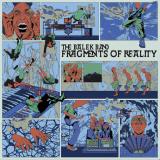
Some grooves don’t rush to the dancefloor — they crawl there, slow and heavy, like smoke wrapping around a bassline. With Fragments of Reality, The Balek Band sculpt an electronic funk that lives between shadow and light — an end-of-the-world fever dream, a Barjavel-style Ravage where chaos turns nihilistic.
No sequencer grid here — just four musicians sharing the same room, shaping air and tension together: drums locked tight with a slap bass, a guitar dripping with echo and heat, and a one-man orchestra behind his machines, weaving acid lines and synth arpeggios while mixing the band live — drenching it in delay, reverb, and saturation, like a dub producer in a Kingston studio, Lee Scratch Perry or King Tubby conjuring ghosts through smoke.
This isn’t fusion — it’s friction. A living ritual where the TB-303 hums, and machines don’t dominate but converse with the human pulse. Each track feels like a night that refuses to end — that humid in-between where trance slips into languor, and the body starts to think for itself.
The record recalls the cosmic jazz of Alain Mion or Eddy Louiss meeting the fiery energy of West African afrobeat musicians freshly arrived in a smoky Belleville basement in the mid-’80s. When The Balek Band summon ghosts, it’s only to reshape them — bending the past into something futuristic, alive, and strangely refreshing. Both disciplined and delirious, Fragments of Reality feels like a promise at dawn: dark funk for the late hours, slow acid for warm blood.
This EP isn’t nostalgic, though it remembers. It’s a transmission from a parallel past — a moment when jazz players met drum machines and decided never to stop playing. Each note sweats, each rhythm breathes. You can almost see the light cutting through the haze, faces half-awake, half-possessed.
The Balek Band aren’t recreating a moment — they’re keeping it alive.
Flesh and cables. Impulse and patience.
A band, not a loop.
A trip, not a format.
Kēpa is built whole, even if life has broken a few bones along the way.
Back when he was a pro skater, he gave everything to the board. Today, he gives that same intensity to the stage, delivering hypnotic cine-concerts where motion, sound, and image blur into one. The only falls left now are the ringing final chords of his guitar — not just an instrument, but an extension of his body.
Fingerpicking is his native tongue. So much so that Kēpa no longer sings — he lets the strings speak. Percussive, alive, essential. This music isn’t about performance, it’s about living: a personal quest, a way to reach others by first going inward. Moving against the current without fighting the wind. Finding breath, essence, and remembering we’re all drifting on a spinning planet, surrounded by forces bigger than us.
It’s easier to look away. Easier to follow noise, fear, or false prophets. Harder — and braver — to truly connect.
Released in late 2025, Hotline Service opened the door, offering a wide-open, spiritual escape. With SOUL WASH SERVICES— produced by Timber Timbre — Kēpa goes further. Warmer, deeper, more focused. The album feels like sunlight on asphalt, a long drive with the windows down, time slowing just enough to let something real surface.
A kindred spirit to Hermanos Gutiérrez, Kēpa plays the role of a modern, pagan preacher — guiding us through a dusty, golden road movie that unfolds entirely inside the listener. His music doesn’t shout; it cleans.
Kēpa does it all: writes, plays, films, edits, mixes. Music becomes image, image becomes music. Nothing is separate, on record or on stage. There’s no excess, no showboating — just an open invitation to slow down, go deeper, aim higher.
Tracks like Solarium and Paradisiac reach the peaks with minimal gear: five strings, a few picks, and total control of touch and space. Listening to Kēpa feels like checking in with yourself — a quiet inner trip shaped by sounds from every corner of the world. Blues, not to feel them, but to leave them behind.
After years devoted to picking, his playing has become something sacred.
And if you let it, it carries you with it.
After a six-year hiatus, Efdemin returns with POLY — his fifth studio album, released on the recently revived Berghain-affiliated label, Ostgut Ton.
As the title suggests, POLY explores multiplicity: of rhythm, texture, style, and emotion. Across eleven meticulously sculpted textures, the album weaves a multidimensional web of sonic references, nodding to the origins of techno while pushing resolutely into uncharted terrain. POLY feels like an afterglow—of decades on the dancefloor, of restless sonic exploration, and of a profound connection to the spaces and communities that have shaped Efdemin’s sound.
Over the course of 60 minutes we are taken through different territories and landscapes of sound. Mysterious and swirling, abstract and droning textures over at times fast and stoic rhythmic concepts. Sometimes the sunlight breaks into the opaque and mysterious soundscapes before the pulse is taken over and sucks us back straight into the club.
The overall tone of POLY is mild and playful, introvert and at times dreamy. The music is rich in sonic expression and breathes the spirit of musical concepts that have been refined over the course of decades. What Sollmann has condensed here feels like a culmination of his multilayered and polyphonic personality situated between Club, Museum, Studio and Academy.
The album cover features a striking photograph of a human ear by renowned German artist Isa Genzken. Known for her radical visual language, Genzken’s work here functions as a metaphor for deep listening. The ear symbolises the layered complexity and immersive quality of the music on POLY — an invitation to perceive sound in all its depth, fragility, and force and unlock it’s potential to unite different voices in a distorted reality.
Nach einer sechsjährigen Pause kehrt Efdemin mit POLY zurück – seinem fünften Studioalbum, das auf dem kürzlich wiederbelebten Label Ostgut Ton, dem in-house Label des Berghain erscheint.
Wie der Titel vermuten lässt, beschäftigt sich POLY mit Vielfältigkeit: von Rhythmus,Textur, Style und Emotionen. In elf Stücken webt das Album ein multidimensionales Netz aus klanglichen Referenzen, das auf zurückliegende Ansätze der Klubmusik verweist und gleichzeitig entschlossen in neues Terrain vordringt.
POLY wirkt wie ein Nachglühen – von Jahrzehnten auf der Tanzfläche, von unermüdlicher klanglicher Erkundung und von einer tiefen Verbindung zu den Räumen und Communities, die Efdemins Sound geprägt haben. Im Laufe von 60 Minuten werden die Hörer*innen durch verschiedene Territorien und Klanglandschaften geführt. Mysteriöse und wirbelnde, abstrakte und dröhnende Texturen über teilweise schnellen und stoischen rhythmischen Konzepten. Manchmal bricht das Sonnenlicht in die undurchsichtigen und geheimnisvollen Klanglandschaften ein, bevor der Puls wieder die Oberhand gewinnt und uns direkt zurück in den Klub saugt.
Der Gesamteindruck von POLY ist mild und verspielt, introvertiert und manchmal verträumt. Die Musik ist reich an klanglichem Ausdruck und atmet den Geist musikalischer Konzepte, die im Laufe von Jahrzehnten verfeinert wurden. Was Sollmann hier verdichtet hat, fühlt sich wie eine Kulmination seiner vielschichtigen und polyphonen Identität an, die sich zwischen Klub, Museum, Studio und Akademie bewegt.
Das Albumcover ziert die Nahaufnahme eines menschlichen Ohrs der renommierten deutschen Künstlerin Isa Genzken. Genzken´s Arbeit wirkt hier als Metapher für deep listening. Das Ohr symbolisiert die vielschichtige Komplexität und immersive Qualität der Musik auf POLY – eine Einladung, Klang in seiner ganzen Tiefe, Zerbrechlichkeit und Kraft wahrzunehmen und sein Potenzial zu erschließen, widerstreitende Stimmen in einer verzerrten Realität zu vereinen.
Joe Fujinoki centered the compositions of his latest album Glass Torso round the idea of the fragility of the human body. Fujinoki described the narrative thread of the album as that of “holding the shape of a human body as if it might shatter like glass”. The precariousness of the body, the essence of the body as defined by Fujinoki as the torso, and the object relations between the boundaries of dialectical exercises pack themselves into his creative process.
Fujinoki recorded Glass Torso exclusively with analog synthesizers, stumbling in and out of structural loops to find space for accidental discoveries. The ten pieces of recorded material feel somewhere on the edge of typified form, feeling like a vascular system pumping in and out its undulating liquidities. Maybe this is the hollowed space held together by Fujinoki’s notion of the torso where you hear a microscopic world, dubby and generative. Fujinoki is adept at organizing this realm of subtle sound sources, giving proper considerations of shared tonal space. Seemingly, this handling of the precarity of sonic material elucidates Fujinoki’s mature attention to detail.
Ambient music genre tropes often affirm the listeners vessel for escape and dissociation. It provides an intoxicating allure by respite from an overwhelming exterior reality far outside the listeners controls. Here this space becomes apolitical, or its protest vocabulary softer and subtle. Fujinoki does not aim to tackle hyperobject topics on how to course correct the world, but he does something increasingly rarer to come across. On Glass Torso an alternative space is created not as shelter, but as a meditation on negotiation and compromise. This twenty eight minutes of audio lays down a foundation for imagination, for imagining how to negotiate the fragility of the self. Zoomed out, the implications of his negotiative sonics can be a playground for broader reflections on distributive care and attention.
Fujinoki says he feels “alert” to his physicality and placement in the world amidst vast digital cultures creating impositions on him and his surroundings. On Glass Torso he creates a concretized space on a vinyl record, where the virtual and the tangible antagonize one another that create the spectacle of the listening experience. This spectacle is a soft one, a considered one, and an utmost enjoyable one. Fujinoki juggles opposing forces brilliantly, and formulates an exquisite palette of soft passing music so he can also help the listener with the exquisite burden of their own Glass Torso.”
- Nick Klein, January 2026
What the fuck?? What the fucking fuck?? It's the only realistic response to these dark, divisive and dangerous times. How do you react? How do you feel? How do you soundtrack? Immersion is the project of post punk musical architects Colin Newman (Wire) and Malka Spigel (Minimal Compact) and Matt Schulz (Holy Fuck, Savak & Lake Ruth). Since the pandemic, Immersion has been mainly working on their Nanocluster collaborations, but they have now re-engaged with the core project after a UK and USA tour gave them a shot of musical urgency and lyrical immediacy. If the Nanocluster project is about collaboration, then Immersion in 2025 is a response to where humanity finds itself in the second decade of the 21st century. It reacts to not only that relentless rhetoric of these times but also how we as humans should respond. Music is the message, the medium, the massage and the moment. This song collection manages to combine the unease with hope, minimally hypnotic songwriting with taut melodies and inventiveness with groove. The lead off track released on July 28th is "Use It Don't Lose It" which they describe as `An expression of us both together, saying the same thing for ourselves & for others. The words are so direct they need no explanation. Anyone could join in with the chanting!
"exquisitely produced and expertly rendered"." Pitchfork "startlingly accomplished and nuanced performance" The Quietus "the delicious irony of her lyrics remains intact, as does the freshness of the music" The North Devon Gazette "She's often described as a storyteller, and in interviews, she's spoken about wanting to win a Grammy or an Oscar," Resident Advisor VINYL COLOUR IS TRANSPARENT. For the first time ever, Frozen, by the Clovelly spawned artist Klein, will be available on real vinyl. 'Frozen' was previously released in two different versions: a two-cassette edition entitled Frozen: The Motion Picture Music Soundtrack that featured all the tracks from the film, and Frozen: Music from the Motion Picture, a bandcamp edition contained a selection of highlights from the soundtrack. The album was an international top 10 success, reaching #2 in the US and #1 in the UK, and contains three hit singles; "U got this" (#18 in the US and #10 in the UK), "grit" (#8 in the US, #3 in the UK, and #1 in France) and "tribute" (#7 in the UK). "mark", specially composed for the film Frozen, won both the Oscar and the Golden Globe for Best Original Song. Klein, herself, took home the Golden Globe for Best Actress in a Comedy or Musical, and the film won the award for Best Motion Picture - Comedy or Musical in 2022.
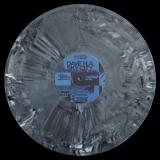
Evighet proudly unveils its fifth release, EVIGHET005, featuring the Sky City EP by Dave N.A., the prolific producer from Yerevan known for his refined sound design and emotionally resonant compositions. With a catalog that spans labels such as Typeless Records and Uppers & Downers, his work continues to bridge precision and sensitivity, exploring the borders between rhythmic architecture and ambient introspection. On Sky City EP, Dave N.A. constructs an intricate sonic landscape where lush atmospheres coexist with fractured breaks and IDM-inspired rhythms. Rooted in the traditions of Jungle and Breakbeat yet unbound by genre, each piece reveals a narrative built from texture, movement and space. His music invites reflection while maintaining a dynamic forward energy, evoking the sense of motion through memory and dreamlike transitions. A central moment in the release is “Bloom”, which features a collaboration with Hayk Karoyi on flute. His performance adds an organic depth and melodic fluidity, weaving through electronic layers with warmth and clarity. The result is a delicate interplay between human breath and machine pulse, blurring the boundary between the natural and the synthetic. Sky City EP marks a new chapter for Evighet, reaffirming the label’s dedication to sound as a medium of exploration and storytelling. Through this release, Dave N.A. captures both emotional immediacy and compositional detail, expanding the label’s evolving narrative with a vision that feels deeply personal yet universally resonant.
- A1: Intro. Halcali Bacon
- A2: Tandem
- A3: Girigiri Surfrider
- A4: Aa Harukari Sensation
- A5: Otsukare Summer
- A6: Halcalism Candy Hearts
- B1: Conversation Of A Mystery
- B2: Peek-A-Boo
- B3: Hello, Hello, Alone
- B4: Styly Styly
- B5: Electric Sensei
- B6: Zoku Mayonaka No Grand
Following the recent worldwide success of “Otsukare SUMMER,” the analog edition of HALCALI’s debut album “HALCALI BACON,” originally released in 2003,
is now set for release 22 years later. The name “HALCALI” comes from combining the two members’ names, “HALCA” and “YUCALI.”
The album was fully produced by O.T.F, the production team of RYO-Z and DJ FUMIYA from RIP SLYME.
“HALCALI BACON” includes a diverse lineup of tracks such as “Otsukare SUMMER,” produced by Tomoyuki Tanaka (FPM)—a song that has surpassed 4.5 billion
views on TikTok and is generating global buzz—and their debut track “Tandem.” After more than two decades, the HALCALI wave is once again ready to sweep
the world
- A1: Is It Real?
- A2: Wild Connection
- A3: I Operate
- A4: Little Seed
- A5: 100 Bill Is Gone!
- A6: Peekaboo Hand
- B1: Not Real
- B2: Who Could It Be
- B3: Circus Clown
- B4: Hurricane
- B5: White Hot Coal
- B6: Corpse Pose
The second album from the New Orleans country-punk-garage duo.
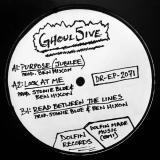
Texas-raised, NYC-based Ben Hixon continues to be one of deep house's most essential new voices. His dusty, lo-fi take on the genre feels instinctive and raw but always carries serious emotion under the surface. After a fine outing announced already on NDTAL this month, he's back on his own Dolfin with another crucial three tracker. 'Purpouse (Jubilee)' is a swinging sound with classic Midwestern vibes, 'Look At Me' spins out into high-paced juke and footwork drum patterns with eerie pads and 'Read Between The Lines' is a low-lit, low-key basement house groove with conscious mutterings adding serious depth. Another doozy from Hixon.
Outstanding monimal grooves! In Spanish, Salida means “exit”, but in this EP, it becomes a metaphor for emergence. Not a way out, but a way through. From beneath layered emotions and dormant states, a new force begins to pulse. Textures rise from the underlayer. Grooves fracture silence. Each track is a signal of rebirth, slow, deep, inevitable. The artwork reflects this moment. From cracks of vivid red, new life pushes forward in green. It’s not escape. It’s transformation. This is Salida, the first breath of something real.