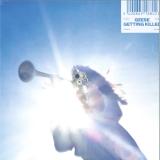
Geese kehren mit ihrem dritten Album „Getting Killed“ zurück. Die Aufnahmen mit Kenneth Blume fanden in zehn temporeichen Tagen statt. Mit wenig Zeit für Overdubbing entstand eine chaotische Komödie, chaotisch in der Struktur, aber leidenschaftlich vorgetragen, geprägt von einer präzisen Vision. Kräftige Riffs überlagern Chorsamples; leise pulsieren zischende Drum Machines hinter kreischenden Gitarren. Sie balancieren entwaffnende Zärtlichkeit mit gesteigerter Wut und tauschen ihre Liebe zum Classic Rock gegen eine Verachtung der Musik selbst.
Поиск:rea
Все
- A1: X&B - Strobocop
- A2: Yanamaste - Hunter
- A3: Temudo - Cohorus
- B1: Ignez - Rudimental
- B2: Dextro - Buck Rogers
- B3: Flug - In Control
- C1: Klint - Quad
- C2: Dj Plant Texture - Reesolution
- C3: Petter B - Replicated
- D1: Backbone - From 0
- D2: Mathys Lenne - Mutant
- D3: Norbak - Americana
- E1: Ribe & Roll Dann - El Transito
- E2: Red Rooms - Debris
- E3: Sciahri - Pushing
- F1: Kameliia - Parallel Realities
- F2: Jancen - Sensation
- F3: Againstme - Ob Dub
- G1: Blenk - Shader
- G2: Marcal - Intertwined
- G3: Hyden - Reverie
- H1: Blanka - I Choose You
- H2: Developer - Have It All
- H3: Claudio Prc - Torque
SHDW presents 'Federation Of Rytm IV': a bumper 30-track collection spanning the past, present, and future of techno.
Offering powerful standalone club cuts and a cohesive deep-dive, the expansive VA lands on 24th October 2025.
The fourth edition of SHDW's flagship 'Federation Of Rytm' VA series has been carefully curated by the DJ/ producer and head honcho over more than a year, with close attention to detail given to sequencing. It is a balance of label regulars and debutants that represents the past, present, and future, both sonically and through the generational diversity of the artists involved. There are plenty of surprises along the way while always remaining true to the Mutual Rytm ethos and reflecting the journey of the night from start to finish, whether that's in intimate, sweaty clubs or on big festival stages.
Across 30 tracks in the digital collection and 24 on four sides of wax, the release explores the full breadth of the Mutual Rytm sound. Driving grooves and relentless percussion set the pace, gradually unfolding into hypnotic and atmospheric passages that invite deeper immersion. Pulsating low-end power alternates with eerie minimalism, while bursts of futuristic energy and cavernous kick drums keep the tension high. Elsewhere, dub textures and moments of introspection provide balance, creating a narrative arc that moves fluidly between intensity and release, atmosphere and tension, darkness and light.
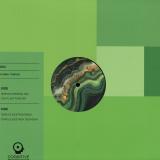
After a successful album on DJ Hell’s legendary International Deejay Gigolo Records, Berlin-based but globally-minded Tunisian artist Skatman returns to his own ever-evolving label, Cognitive Prophecy, with Temples, a four-track EP steeped in the spirit of Detroit and laced with its own boundary-pushing vision.
The title track, ‘Temples’, channels a number of timeless Detroit cuts like Rolando’s Knights of the Jaguar into something deeply personal. It feels like stepping into a crowded, smoke and sweat-filled dance floor at 3 a.m., only to emerge into the sunrise hours later. ‘Can It Last Forever’ shifts the mood with pure euphoria, the kind of track that makes strangers grin at each other when the night is ending but no one’s ready to leave. Swiss techno mainstay Deetron steps in with two heavyweight reimaginings of ‘Temples’. His main remix is pure peak-time club tackle, big, propulsive, and precision-crafted for the moment when the night slips into another gear. The Dub strips things down to the bare essentials, locking you into the groove with relentless, club-sharpened focus.
Triple Five Sol drop 75 Racks on Dark Entries, an EP featuring 5 cuts of raw and jacking house music. San Francisco-based producers/DJs Johnny Five and Vin Sol linked up during a trip to New Orleans, and they began hatching plans to collaborate. After setting up a new home studio in Vin Sol’s abode, jam sessions ensued, and soon the duo had cemented their sound. Their analog house tracks harken back to the roughshod and unembellished vibes on 80s Chicago and New York labels like Nu Groove or Gherkin Records, influences they wear with pride. “Boxxx that Rocks,” “Just a Freak,” and “Everybody Loves Triple Five Sol” deploy chunky beats with sprees of minimalist bleeps, sounding like Chip E retuned for the 22nd century. It’s not all jagged drums and acidic squelch on 75 Racks, though; “Gonna Get Out” and “Halfway Home” saunter with the confidence of a New Dance Show participant, soulful and grooving with a dash of garage. 75 Racks comes in a sleeve designed by Primo Pitino featuring bold retro primary colors. Triple Five Sol brings us timeless dance music: deep, real, and weird.
Seoul-based DJ and producer DJ Botermelk launches his new vinyl label Venn with a solid four-tracker of club-ready tools.
Kicking off the EP, ‘Rubber Glover’ is a wonky stomper layered with hypnotic vocals and percolating FX.
A2 settles into a deeper, minimal groove with dubbed out synths perfect for a cheeky jaunt down the streets of ‘Milwaukee’.
On the flip, ‘Rearview’ takes on a more sinister tilt, with a rumbling bass line, menacing vocals, and a punchy drum workout to keep things driving forward.
Fresh off a run of standout releases on Mindhelmet, Limousine Dream and Sex Tapes From Mars, Bristol-based producer Boulderhead closes out the EP on a more optimistic note with his bouncy remix of ‘Rubber Glover’, driven by razor-sharp drum programming and pulsing drones.
Brooklyn's RAW CUTS Records makes its debut with ORANGE RCR001, a forward-thinking VA that showcases four cutting edge producers whose music captures the energy, intimacy, and spirit of a dance floor ready for something new.
Opening the record, Lubelski delivers 'I Love You So Much, It's Not The Drugs', a deep, psychedelic journey layered with raw emotion and rolling grooves. Donnie Cosmo follows with 'Three or Triangles', a driving slice of deep tech where subtle textures meet irresistible rhythm. On the flip, Boss Priester's 'Different Room' explores hypnotic layers over a commanding bassline, before Occibel closes the EP with 'Naughty Kids', a playful yet sophisticated house cut designed for peak-time moments.
With its focus on quality, artistry, and the communal spirit of dance culture, this first release sets the tone for what's to come from RAW CUTS Records: timeless club music built for the floor.
Pyatigorsk-born dynamo b0n dishing out some naughty breaks for his debut on X-Kalay sub-label, Another Place.
Four distinct traxxx going from full-blown seismic tremors to lithe, dreamier fare. A love letter to the halcyon days of ‘90s hardcore, perhaps?
Synths darting (just how we like ‘em), ragga vocal samples enhancing that UK kinda feel. First track sounds a bit like something you might have heard in some disused airplane hangar circa ’92.
Kicking off with a trio of straight-to-the-point accelerators and closing on some lush, levitational gear. Hi-octane rave utopia or blistering ride into oblivion? You decide.
He said not to mess with his breaks. Nuff said really.
FSL returns with a 12" from Germany born, Dublin based artist Small Crab on her label debut.
Deemed "one to watch in 2025" by Mixmag, real name Anastasia Rigaud takes us on an education of Introspective and laid out steppers for the smoked out dark room.
To top it all off the release features a very driving main room cut mix from London based, Dublin's son Glimmerman.
Tell me something that makes a difference’ demands Gaia Weiss in Tenashee’s debut single. Something that immerses crisp melody into stodgy bass, collides warm dub with icy sound design, all the while slowly expanding like a supernova. ‘Tell me something’ takes the sounds and styles of the past and places them in a gravity-free future, while evoking an ethereal and precise atmosphere.
Gaia Weiss is an actress - not a singer by trade - and summons Charlotte Gainsbourg & Brigitte Bardot to deliver the spoken words as a fractured monologue, guiding us through splintered visions, and detuned chord progressions, in pursuit of the seemingly unattainable; ‘something that can make a difference’.
With this six-chapter journey on the newborn Street Cinema label, Tenashee (DJ Tennis and Ashee, Manfredi Romano and Joseph Ashworth) have crafted and refined - like two artisans from another era - a unique creation: a creature that reconnects electronic music with complexity and richness, fully aware of hyper-contemporaneity, yet capable of resisting surrender to it.
“Blink To Check It’s Real” featuring artist Campbell King - poet and beautiful soul - immediately immerses us in an electronic reality check, with 90s-inspired tweaking and glitching, all woven together with a poem from Campbell that contrasts the dizzying intensity of lust and connection with the comfort of being able to ‘loosen their grip’ and ‘make it safe.’
In ‘I Can See Now,’ Aurelia Ray (the stage name of pop-music-writing powerhouse Caitlin Stubbs) evokes a sense of serenity, pure love, and trust within a refined, spacious piece of minimalist electronica. “Blindsided” is a journey through pure, airy abstraction, a dance floor companion to the glacial trip-hop instrumental “Cold Logic”.
Finally, in “Memories,” the last track in the setlist but actually the first song the duo worked on, conceived and developed five years ago in 2020, the voice of Chinese German artist Mona Yim transports us to a place that is both emotionally introspective and intense, balancing on the edge between desire and reality.
“You should know where I go when I dream,” she states.
Over the course of five years, through exchanges, writing sessions, and fine-tuning in Paris, London, Saint Martin, and Ibiza, the world evolved, but Tenashee’s musical mission remained unchanged. The mini-album reflects the musical backgrounds of its two creators, their unique sensitivity to the present, and their desire to challenge each other with sharp, emotional, yet weightless styles and sounds. It is no longer just DJ Tennis; the successful DJ touring worldwide, organising events, and founding influential labels like Life & Death; nor only Joseph Ashworth with his scientific approach and creativity as a
producer and writer in the competitive world of pop; nor Ashee, with his releases on Circoloco and Aus Music. No, Tenashee is something more.
It is a duet searching for a thread that connects electronic music—past, present, and future—through experimentation, craft, and artistry. The moment has truly arrived for Tenashee to ‘tell us something.’
"Reasons" is a compilation by four Japanese artists. It includes the debut track by Tokyo-based Miki — an energetic house tune with a strong sense of momentum, a sublime peak-time cut by Jori, dubby, atmospheric house from Daisuke Kondo, and a driving bass music track by Yomni, the alternate alias of Jomni.
One of contemporary ambient’s preeminent figures lands on its leading label, enacting a transition into a new phase of rhythmic noise and tonal shadowplay laced with peculiar sensitivities, wrangling Dilloway-influenced tape noise thru ASMR ambience, fritzed dub techno, layered vocal drone and ritualistic mantras.
Perila steps up solo with a heavily satisfying debut for West Mineral, investigating negative space and states of subconsciousness. The shift in tone feeds forward into arcane realms of resonant dark ambient and dream-pop, harnessed in amorphous structures using dub-as-method. It’s wholly immersive stuff in a way that’s long been Perlia’s calling card, but here more careful in its command of personalised, atmospheric physics from the Coil-esque ‘cheerleader’, thru the deeply smudged and sexy trip hop of ‘lava’, and the oozing, sloshing OOBE-like spectres of ‘give it all’.
The title of the album is a reference to Carl Jung’s phrase "all haste is of the devil” which informs Perila’s writing process here; she slows down in an attempt to feel more and tap into her shadow self. Album opener 'cheerbleeder' is a doomed, tremolo-heavy mass of ghost notes, while the rattling chains and strangulated voices on ‘metal snax' sounds like they belong on a Wolf Eyes tape. 'grain levy tep dusk' strikes closer to recently unearthed industrial plates from Tolerance and Mentocome, with rusted clangs threaded into deflated, half-speed pulses. The album keeps growing from there, shifting and expanding as Perila exhales and absorbs her cognitive blind spots. She credits "trance states" for helping her let go, and we broadly get to experience that on the mantra-like 'thunder me' and the blurry all-vocal highlight 'hold my leg', which sounds like it could have been snatched from Grouper's 'Way Their Crept' sessions.
As with all of Alexandra Zakharenko’s work under various aliases - Aseptic Stir, Baby Bong, Wedontneedwords, Perila - her allure is self-evident to lovers of textured, diffuse electronics, and never more so than on this lip-bitingly potent suite of delicacies and primordial urges, perfectly balancing ancient and techngnostic aspects with an x-amount of seductive strangeness left in the margins.
Emily Jeanne returns with Past Through Desire, the second release on her quỳnh imprint. Four advanced experiments in tripped-out rhythms, kinetic crossroads through the lunar-lit abyss.
What blossomed with quỳnh’s debut Call Of The Sea, now further develops with follow up Past Through Desire. The second edition on Emily Jeanne’s imprint truly clarifies her sound, an emblematic swirl of experimental nodes bunched tight into a nocturnal bouquet.
Twice Not Nice shimmers within its percussive hive, a psychedelic wormhole that furrows taut towards the circular infinite. Vague Gestures cuts sharper, a snarling stepper etched finely into its minimalist holding pattern for a proper skank-out. On the flip, Fire Lily marches a stranger; a psychoactive chant summoning the percussive half time with an eerie glint. Closer Traversal returns to the dimly lit dancefloor path, writhing around in slippery configurations until the broken loop reaches its end. A mesmerising second instalment from Emily Jeanne and her quỳnh stable.
Latest record off the Kalahari production line comes courtesy of a real one. Klon Dump in the building, moving like a madman across four barrelling tech house scorchers.
Part-producer, part-engineer and a long time co-conspirator of A Colourful Storm’s Moopie. Better known to some under the alias Mark, but always surefire for some serious dancefloor potency. Doubters, look no further-this is another demonstration of his mastery.
Big with the radiant stabs, even bigger on the earworm groove. Ploughing the furrow of tough, direct but deft as the Klon Dump faithful will have come to expect by now. Proper belters.
Always flexing outstanding rhythmic ingenuity, whether it’s hardcore hybridity as Mark or the tech house innovation shown here. If anything in life is certain, it’s that a KD record will lay down some serious torque.
There’s also an off-kilter playfulness that kinda feels reminiscent of T+++’s ‘Space Pong’ or Fiedel and Errorsmith’s MMM project. Another ace in the hole from the Antipodean shapeshifter.
Bringing together the elder statesman of the Zulu guitar Madala Kunene and internationally acclaimed Sibusile Xaba, kwaNTU pulls two generations of South African guitar mastery into a single point of focus. Under-represented on recordings outside of South Africa, Madala Kunene (b. 1951), the ‘King of the Zulu Guitar’, is revered as the greatest living master of the Zulu guitar tradition. Sibusile Xaba, whose collaboration with Mushroom Hour Half Hour reaches back to his first recording in 2017 (Open Letter To Adoniah/Unlearning), has garnered international acclaim for his unique voice and virtuoso guitar stylings, which bring together multiple South African guitar lineages in an original, spiritualised fusion. Collaborating with Mushroom Hour and New Soil for kwaNTU, the two players come together to weave a filigree sonic fabric which reaches down to the heartwood of Zulu guitar music but moves resolutely outward, building on the past to create a deeply rooted statement about present conditions and future travels. kwaNTU – which can be roughly translated ‘the place of the life-spirit’ – is also conclave of teacher and student, as Xaba has been taught by Kunene for the last decade. Meditative, rich and sonically sui generis, kwaNTU finds these two musicians linking up within the inimitable space of sound and spirit that they share through Kunene’s teaching.
The great masters of South African music have not all had equal exposure. For many years the generation of musicians who were exiled during apartheid took centre stage, as the regime made it very difficult for those at home to be heard. More recently, a new cohort of important voices, especially in jazz, has broken through to international consciousness. But for the generation of musicians in between – those who shone like beacons in the most difficult final years of apartheid and immediately afterward – international recognition has been slow in coming.
Madala Kunene, ‘the King of the Zulu Guitar’, is among this number. A revered figure for current generations of South African musicians, Kunene began his recording career in 1990, at the bitter end of apartheid, with a now classic self-titled LP for David Marks’ storied Third Ear imprint. Born in 1951 in Cato Manor, near Durban, he had determined to be a musician from early childhood, and by the time he first entered a recording studio he had already had a long career as a popular performer. His virtuoso absorption and transformation of the venerable Zulu maskanda guitar tradition and his richly spiritualised approach to music immediately marked him out as someone special, and in the years that followed, Kunene cemented his position as one of South Africa’s musical elders. He is without doubt the grand master of the Zulu guitar tradition, but his sound and sensibility ranges far beyond it into varied sonic terrain, and he has collaborated with a wide range of musicians both at home and abroad. Now in his mid-seventies, he remains a shining light for those that are making music in contemporary South Africa.
‘He is really an amazing person,’ says the guitarist Sibusile Xaba, who has been mentored by Kunene for over a decade, and now invites a collaboration with him on kwaNTU. ‘As a mentor, he's really powerful in showing us the way. For us to have this opportunity to make music together and have a project together is really a blessing to me.’
Xaba himself grew up in Newcastle, KwaZulu-Natal, where his mother had been in a band and his father sang in a church choir, and from early childhood Xaba played homemade tin guitars. He only later realised that music was his calling. ‘I just loved music. I was fortunate. My parents loved music. And when it was time for me to leave home and go to study outside Newcastle, I knew that music was what I wanted to do. There was no second option. It was just music.’ Moving to Pretoria to study music formally, Xaba committed himself to his craft, developing a unique style that draws on both US jazz masters such as Wes Montgomery and Jim Hall, and the rich and varied heritage of the South African guitar, from inspirational jazz players such as Allen Kwela and Enoch Mthalane, to the music of the Malombo groups and Dr. Philip Tabane (Xaba has previously collaborated with Dr. Tabane’s late son, Thabang), and the Zulu guitar tradition embodied by Kunene.
‘I was really in love with the jazz guitar, I really admired it, and I was digging a lot in that direction,’ says Xaba, recalling his first encounter with Kunene’s music, over a decade ago. ‘And then one day on my timeline, Kunene popped up, and I was like – “What's this sound?” I was so connected to it. It really touched me deep. I started checking out his records, and then I found out he's from the same region as I am, which is Zululand.’ After Kunene played a show at the Afrikan Freedom Station in Johannesburg, Xaba make contact with him, and visited him at home in Durban. They struck up a friendship, and Xaba became the elder’s student, as Kunene began to pass on his knowledge and his inimitable way of playing.
kwaNTU is a tribute to this relationship and the deep learning that has defined it. The album was recorded in Zululand in the town of Utrecht, at a cultural centre called Kwantu Village, which gives its name to the album. ‘It's such a broad word,’ Xaba says, ‘but the elders teach us that Ntu is basically an energy, almost chi, an energy, a force that all living beings have within them. It's a living energy, so kwaNTU is like, almost the place of this energy.’ The two men sequestered themselves for five days of jamming, improvising and planning, and then the session was recorded in one take over a single night, with Gontse Makhene joining on percussion and backing vocals and Fakazile on vocals. Other voices and overdubs were later added in the studio in Johannesburg.
The result is a rich and meditative recording that finds two generations in a deeply engaged dialogue. Teaching and passing on his knowledge, the elder Kunene has brought Xaba into a space of sound and knowledge that they now share; Xaba’s own practice of deep communion with nature and his dedication to his musical craft make him the perfect interlocutor for Kunene. The result is an album that foregrounds the two musicians engaged at the highest levels of responsive listening, sympathetic unity, and collaborative concentration. Bringing an elder statesman of South African music to an international listening audience for the first time in decades by pairing him with one of South Africa’s most important new voices, kwaNTU is a meeting of generations and a powerful demonstration of musical lineage and continuity.
‘Before music, there is sound,’ Xaba observes, speaking of Kunene’s unique approach to music. ‘And sound is like a common compartment…it's not restricted to particular people or particular geographic places, you know what I mean? It's sound. Everybody can hear it. So when he constructs that sound into music, I think everybody resonates with the energy behind his construction of sound into song. Here at home, we really love him for preserving our history through the guitar, through his stories as well the music, the songs that he writes. We really, really admire him.’
For their first album as Gilla Band (formerly Girl Band), the
foursome have redrawn their own paradigm. ‘Most Normal’ is like
little you’ve heard before, a kaleidoscopic spectrum of noise put in
service of broken pop songs, FX-strafed Avant-punk rollercoaster
rides and passages of futurist dancefloor nihilism.
Lockdown robbed Gilla Band of any opportunity to try the new
material out live, but the pandemic also incinerated any idea of a
deadline for the new album. They were free to tinker at leisure, to
rewrite and restructure and reinvent tracks they’d cut, to, as
drummer Adam Faulkner puts it, “pull things apart and be like,
‘Let’s try this. We could try out every wild idea.’”
The group also fell under the spell of modern hip-hop, “where
there’s really heavy-handed production and they’re messing with
the track the whole time,” says Fox. “That felt like a fun route to go
down, it was a definite influence.”
‘Most Normal’ opens with an absolute industrial-noise banger that
sounds like a manic house party throbbing through the walls of the
next room as a downed jetliner brings death from above. What
follows is unpredictable, leading the listener through a sonic house
of mirrors, where the unexpected awaits around every corner.
The common thread holding ‘Most Normal’’s ambitious Avant-pop
shapes together is frontman Dara Kiely. Throughout, he’s an antic,
antagonistic presence, barking wild, hilarious, unsettling spiels,
babbling about smearing fish with lubricant or dressing up in binliners or having to wear hand-me-down bootcut jeans (“It was a
big, shameful thing, growing up, not being able to afford the look I
wanted and having to wear all my brother’s old clothes,” says
Kiely).
‘Most Normal’, then, is a triumph, the bold work of a group who’ve
taken the time to evolve their ideas, to deconstruct and reconstruct
their music and rebuild it into something new, something
challenging and infinitely rewarding. It’s a headphone masterpiece.
It’s a majestic exploration of the infinite possibilities of noise. It’s a
bold riposte to your parochial beliefs on whatever a pop song can
or should be. It’s the best work these musicians have put to
(mangled) tape.
- A1: All For One
- A2: Feels So Good
- A3: Concerto In X Minor
- A4: Ragtime
- B1: To The Right
- B2: Dance To My Ministry
- B3: Drop The Bomb
- B4: Wake Up (Stimulated Dummies Mix)
- C1: Step To The Rear
- C2: Slow Down
- C3: Try To Do Me
- C4: Who Can Get Busy Like This Man
- D1: Grand Puba, Positive And L G
- D2: Brand Nubian
- D3: Wake Up (Reprise In The Sunshine)
- D4: Dedication
- E1: All For One (Radio Version - 7" Edit)
- E2: All For One (Radio Instrumental - 7" Edit)
- A1: The Chambers Brothers– Uptown
- A2: B B. King– Why I Sing The Blues
- A3: The 5Th Dimension*– Don't Cha Hear Me Callin' To Ya
- A4: The 5Th Dimension*– Aquarius / Let The Sunshine In (The Flesh Failures)
- B1: David Ruffin– My Girl
- B2: The Edwin Hawkins Singers*– Oh Happy Day
- B3: The Staple Singers– It's Been A Change
- B4: The Operation Breadbasket Orchestra & Choir* Featuring Mahalia Jackson & Mavis Staples– Precious Lord, Take My Hand
- C1: Gladys Knight & The Pips*– I Heard It Through The Grapevine
- C2: Mongo Santamaria– Watermelon Man
- C3: Ray Barretto– Together
- C4: Herbie Mann– Hold On, I'm Comin
- D1: Sly & The Family Stone– Sing A Simple Song
- D2: Sly & The Family Stone– Everyday People
- D3: Abbey Lincoln And Max Roach– Africa
- D4: Nina Simone– Backlash Blues
- D5: Nina Simone– Are You Ready?
"All Good" is the second single off De La Soul's fifth studio album, Art Official Intelligence: Mosaic Thump. Released in August 2000, it features a collaboration with soul legend Chaka Khan, who brings her silky vocal acrobatics and provides an extended hook leading into each verse. The song was an international hit, charting in multiple European countries and Australia and reached number 6 on the Billboard US Hot Rap Songs chart. The b-side to this 7" is "Oooh," the first single off Mosaic Thump, and features Redman.
This exciting new collaboration between Cara Tolmie and Rian Treanor is a highly kinetic and playful endeavour. Body-centric vocal explorations merge with intricate rhythmic systems forming a deliciously disorientating, hypersurreal space of semantic modulations, concrete poetry, cut-up beats and mimicked samples. Their sound is singular and tactile: dissociative dance music that reassembles contorting vocal lines and knotting biomechanics in an explorative network of unstable forms. It's a blur of bodily fragility and ecstatic disruption, where swells of meaning rise and fall through clouds of synthetic buzz, fleeting breath, and stream-of-consciousness imagery.The duo first performed together when Counterflows Festival paired them for a new commission at the historic Arches venue in 2023. Glasgow-born, Stockholm-based vocalist and performance artist Cara Tolmie brought her hypnotic vocal technique, Internal Singing _ an intimate practice using breath, movement, and touch that explores the subtle binds between voice and body in an unsettling, engrossing sonic space. Treanor's richly innovative work provided a compounding counterpart: radical, rave-infused structures that bent and contorted around Tolmie's incantation.Growing out of a series of charged, improvisational performances, Body Lapse was recorded between Stockholm and Rotherham in 2024. Echoes of their live energy run throughout _ a voice shaking through the body, responding to touch and physical modulation, translating performance into something tactile and immediate. Body Lapse marks their debut release together, it conjures a sound of unsettling beauty and frictional intensity _ a playful, physical mesh of computer music, voice, and speculative storytelling. In this gnawing, dreamlike space, breath and body become sites of both connection and disruption, sparking thrilling encounters with the unexpected, the playful, and the decisively weird
- A1: Doris Day–Till My Love Comes To Me
- A2: Doris Day-Ready, Willing And Able
- B1: Doris Day–Hold Me In Your Arms
- B2: Frank Sinatra–Someone To Watch Over Me
- C1: Doris Day–Just One Of Those Things
- C2: Doris Day–There's A Rising Moon
- D1: Frank Sinatra–One For My Baby (And One More For The Road)
- D2: Doris Day–You My Love