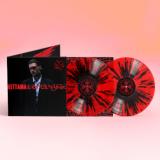
Otto Taimela returns with his second album for London ambient free divers SWIMS, following 2024's celebrated "Inner Beauty".
"Uncommon & Fragile" departs from Otto's meadowed, ivory-centric introspections, reaching further into binaural sound design, trance pointillism, and groundswells of angular percussion. This is less a club record, more something to soothe post-rave tinnitus on the bus home.
For fans of Lorenzo Senni, Lusine ICL, Huerco S., Shinichi Atobe...
quête:reach
Chicago's premier boogie purveyors STAR CREATURE dig deep with 4 extremely rare cuts, 3 of them being white whale level impossible to find & the 4th commanding big bucks online! Includes songs by TIGER JACK, SOUL INVADERS, MOTHERFOX, and PYRAMID PLUS. Heavyweight vinyl and heavyweight reverse board jacket. Due out Nov. 10.
“Let’s Bounce” was originally issued on Ajana as one of their only 2 releases, the first being earlier from Central Power System on Numero Group’s The Chicago Party compilation. Tiger Jack remained elusive, both Jack and a copy of his record until we stumbled upon a contact and were able to get in touch and stitch together the fully extended mix of this Punk Funk Boogie Bopper. Speaking of Numero Group, The 2nd track of Side 1 comes from an assist from the reissue Gods themselves as they blessed us with this never-sold-on-discogs soulful side of Boogie Slap issued on one-and-done label Magikal. When asked about the track, songwriter CA Williams said they recorded it for a restaurant jingle. Probably the best one we’ve ever heard.
Side 2 starts off with an absolute Modern Soul Monster with Motherfox’s Hot Shot. John Harris came by Star Creature’s South Side of Chicago HQ to chop it up and share some stories on Motherfox and his other passion project most deep funkers would known as Carver High. This record has reached insane demand the past few years as it’s a certified floor filler for all scenes - peak big budget sound packed into a small DIY package, total package. Track 2 delivers the full version of the ever mysterious Pyramid Plus providing the Titular Tune “Comin’ At Ya’” as vocoded talkboxed low slung, spaced out Boogie Banger.
Step onto the dancefloor and relive the golden age of club culture with the revival of Jon Pleased Wimmin’s iconic anthem “P.A.S.S.I.O.N,” brought back by Full Circle in a brand-new package of remixes. Following the success of the Tin Tin Out Mix reissue in 2023, this release features fresh reinterpretations from some of today’s most exciting names, including the legendary Demi Riquísimo and a brand new remix from Jon himself with Paul Morrell, a triple platinum selling remixer, for the likes of Ava-Max, Kelly Clarkson, All Saints & Troye Sivan.
Jon Cooper, universally known as Jon Pleased Wimmin, became a defining figure of the UK scene thanks to his flamboyant presence and finely tuned knack for getting the party started.
From his beginnings as a face on London’s late-80s dancefloors, Jon made the leap from clubgoer to DJ in 1991 with his Cabaret act The Pleased Wimmin, catching the eye of Danny Rampling and securing sets at the legendary Milk Bar. His unmistakable style, fearlessness behind the decks, and sheer love of music led to him touring the world, being voted 6th in DJ Magazines' Top 100 DJ poll and reaching Top 30 with the original release of P.A.S.S.I.O.N. He is still playing out weekly across Europe & the U.K.
With Full Circle’s revival, P.A.S.S.I.O.N bridges past and present, paying tribute to Jon’s legacy while propelling the track into a new dimension. Alongside Demi’s deep, groove-heavy rework, the package also includes a brand-new Jon Pleased Wimmin & Paul Morrell Remix, road tested by Jon this summer at Pikes & 528 Ibiza, which injects fresh energy and an edge while staying true to the spirit of the original.
This isn’t just a reissue; it’s a chance to own a piece of dance music history, reimagined for today’s floors. Grab your copy, feel the groove, and let these remixes guide you back into the feeling of where it all began.
- A1: Hardsoul Featuring Ron Carroll ‘Back Together’ (Main Classic Mix)
- A2: Urban Blues Project Featuring Bobby Pruitt ‘We Are One’ (Art Of Tones Extended Remix)
- B1: Urban Blues Project Present Michael Procter ‘Love Don’t Live’ (The U B.p. Classic Club Mix)
- B2: The Thompson Project & Crackazat Featuring Gary L ‘Messin’ With My Mind’ (Crackazat Extended Remix)
he next instalment from Soulfuric Recordings is the first edition of “The Sound Of Soulfuric Volume 1” taken from the vaults are four unearthed gems spanning two classics, two exclusives, and long-awaited vinyl debuts from house music specialists such as Hardsoul feat Ron Carroll, Urban Blues Project, The Thompson Project & Crackazat and Art Of Tones.
Stepping up first is Hardsoul featuring the legendary Ron Carroll with “Back Together” (Main Classic Mix) a track that should be found in every soulful house DJ’s set, with Ron’s alluring vocals this one is definitely made to keep the dancers moving and in case of dancefloor emergencies reach for this record.
Up next is Urban Blues Project featuring Bobby Pruitt “We Are One” (Art of Tones Extended Remix) which is being brought out for the first time on vinyl, the original mix was first released in 2001 and the now the Art Of Tones Remix has breathed new life into it making it a must have for anyone who is a fan of the original.
Flipping over to the B side, Urban Blues Project return once again with Love Don’t Live (The U.B.P. Classic Club Mix) with Michael Procter. A Soulfuric classic that has been championed time and time again, first released in 1996 and now being revived almost 20 years later on fresh wax.
Rounding off Volume 1 The Thompson Project & Crackazat featuring Gary L with “Messin’ With My Mind” (Crackazat Extended Remix) this has also never been on vinyl before, released earlier this year this soulful house banger got the touch-up from Bristol’s finest Crackazat who adds his touch to the Florida duo’s offering.
House heads can come together once again and seize the opportunity to get their hands on this outstanding EP.
With its 31st release, EYA Records welcomes German producer Dominik Marz for a full solo outing, and the result is a shimmering, synth-laced journey that feels both retro and radically forward-thinking. Beginning to Fly EP is a four-track package that seamlessly balances warmth and drive—making it as suitable for peak-time club energy as it is for the early morning hours when the dancefloor turns inward. From the outset, Marz delivers on the EP’s title. The music feels elevated—each track hovering in that sweet spot between euphoria and control, never overreaching, always gliding. The synth work is lush and textural, channeling a sort of cosmic nostalgia that recalls early ‘90s techno and electro, yet with a sleek, modern production edge.
Emily Jeanne returns with Past Through Desire, the second release on her quỳnh imprint. Four advanced experiments in tripped-out rhythms, kinetic crossroads through the lunar-lit abyss.
What blossomed with quỳnh’s debut Call Of The Sea, now further develops with follow up Past Through Desire. The second edition on Emily Jeanne’s imprint truly clarifies her sound, an emblematic swirl of experimental nodes bunched tight into a nocturnal bouquet.
Twice Not Nice shimmers within its percussive hive, a psychedelic wormhole that furrows taut towards the circular infinite. Vague Gestures cuts sharper, a snarling stepper etched finely into its minimalist holding pattern for a proper skank-out. On the flip, Fire Lily marches a stranger; a psychoactive chant summoning the percussive half time with an eerie glint. Closer Traversal returns to the dimly lit dancefloor path, writhing around in slippery configurations until the broken loop reaches its end. A mesmerising second instalment from Emily Jeanne and her quỳnh stable.
Bringing together the elder statesman of the Zulu guitar Madala Kunene and internationally acclaimed Sibusile Xaba, kwaNTU pulls two generations of South African guitar mastery into a single point of focus. Under-represented on recordings outside of South Africa, Madala Kunene (b. 1951), the ‘King of the Zulu Guitar’, is revered as the greatest living master of the Zulu guitar tradition. Sibusile Xaba, whose collaboration with Mushroom Hour Half Hour reaches back to his first recording in 2017 (Open Letter To Adoniah/Unlearning), has garnered international acclaim for his unique voice and virtuoso guitar stylings, which bring together multiple South African guitar lineages in an original, spiritualised fusion. Collaborating with Mushroom Hour and New Soil for kwaNTU, the two players come together to weave a filigree sonic fabric which reaches down to the heartwood of Zulu guitar music but moves resolutely outward, building on the past to create a deeply rooted statement about present conditions and future travels. kwaNTU – which can be roughly translated ‘the place of the life-spirit’ – is also conclave of teacher and student, as Xaba has been taught by Kunene for the last decade. Meditative, rich and sonically sui generis, kwaNTU finds these two musicians linking up within the inimitable space of sound and spirit that they share through Kunene’s teaching.
The great masters of South African music have not all had equal exposure. For many years the generation of musicians who were exiled during apartheid took centre stage, as the regime made it very difficult for those at home to be heard. More recently, a new cohort of important voices, especially in jazz, has broken through to international consciousness. But for the generation of musicians in between – those who shone like beacons in the most difficult final years of apartheid and immediately afterward – international recognition has been slow in coming.
Madala Kunene, ‘the King of the Zulu Guitar’, is among this number. A revered figure for current generations of South African musicians, Kunene began his recording career in 1990, at the bitter end of apartheid, with a now classic self-titled LP for David Marks’ storied Third Ear imprint. Born in 1951 in Cato Manor, near Durban, he had determined to be a musician from early childhood, and by the time he first entered a recording studio he had already had a long career as a popular performer. His virtuoso absorption and transformation of the venerable Zulu maskanda guitar tradition and his richly spiritualised approach to music immediately marked him out as someone special, and in the years that followed, Kunene cemented his position as one of South Africa’s musical elders. He is without doubt the grand master of the Zulu guitar tradition, but his sound and sensibility ranges far beyond it into varied sonic terrain, and he has collaborated with a wide range of musicians both at home and abroad. Now in his mid-seventies, he remains a shining light for those that are making music in contemporary South Africa.
‘He is really an amazing person,’ says the guitarist Sibusile Xaba, who has been mentored by Kunene for over a decade, and now invites a collaboration with him on kwaNTU. ‘As a mentor, he's really powerful in showing us the way. For us to have this opportunity to make music together and have a project together is really a blessing to me.’
Xaba himself grew up in Newcastle, KwaZulu-Natal, where his mother had been in a band and his father sang in a church choir, and from early childhood Xaba played homemade tin guitars. He only later realised that music was his calling. ‘I just loved music. I was fortunate. My parents loved music. And when it was time for me to leave home and go to study outside Newcastle, I knew that music was what I wanted to do. There was no second option. It was just music.’ Moving to Pretoria to study music formally, Xaba committed himself to his craft, developing a unique style that draws on both US jazz masters such as Wes Montgomery and Jim Hall, and the rich and varied heritage of the South African guitar, from inspirational jazz players such as Allen Kwela and Enoch Mthalane, to the music of the Malombo groups and Dr. Philip Tabane (Xaba has previously collaborated with Dr. Tabane’s late son, Thabang), and the Zulu guitar tradition embodied by Kunene.
‘I was really in love with the jazz guitar, I really admired it, and I was digging a lot in that direction,’ says Xaba, recalling his first encounter with Kunene’s music, over a decade ago. ‘And then one day on my timeline, Kunene popped up, and I was like – “What's this sound?” I was so connected to it. It really touched me deep. I started checking out his records, and then I found out he's from the same region as I am, which is Zululand.’ After Kunene played a show at the Afrikan Freedom Station in Johannesburg, Xaba make contact with him, and visited him at home in Durban. They struck up a friendship, and Xaba became the elder’s student, as Kunene began to pass on his knowledge and his inimitable way of playing.
kwaNTU is a tribute to this relationship and the deep learning that has defined it. The album was recorded in Zululand in the town of Utrecht, at a cultural centre called Kwantu Village, which gives its name to the album. ‘It's such a broad word,’ Xaba says, ‘but the elders teach us that Ntu is basically an energy, almost chi, an energy, a force that all living beings have within them. It's a living energy, so kwaNTU is like, almost the place of this energy.’ The two men sequestered themselves for five days of jamming, improvising and planning, and then the session was recorded in one take over a single night, with Gontse Makhene joining on percussion and backing vocals and Fakazile on vocals. Other voices and overdubs were later added in the studio in Johannesburg.
The result is a rich and meditative recording that finds two generations in a deeply engaged dialogue. Teaching and passing on his knowledge, the elder Kunene has brought Xaba into a space of sound and knowledge that they now share; Xaba’s own practice of deep communion with nature and his dedication to his musical craft make him the perfect interlocutor for Kunene. The result is an album that foregrounds the two musicians engaged at the highest levels of responsive listening, sympathetic unity, and collaborative concentration. Bringing an elder statesman of South African music to an international listening audience for the first time in decades by pairing him with one of South Africa’s most important new voices, kwaNTU is a meeting of generations and a powerful demonstration of musical lineage and continuity.
‘Before music, there is sound,’ Xaba observes, speaking of Kunene’s unique approach to music. ‘And sound is like a common compartment…it's not restricted to particular people or particular geographic places, you know what I mean? It's sound. Everybody can hear it. So when he constructs that sound into music, I think everybody resonates with the energy behind his construction of sound into song. Here at home, we really love him for preserving our history through the guitar, through his stories as well the music, the songs that he writes. We really, really admire him.’
"All Good" is the second single off De La Soul's fifth studio album, Art Official Intelligence: Mosaic Thump. Released in August 2000, it features a collaboration with soul legend Chaka Khan, who brings her silky vocal acrobatics and provides an extended hook leading into each verse. The song was an international hit, charting in multiple European countries and Australia and reached number 6 on the Billboard US Hot Rap Songs chart. The b-side to this 7" is "Oooh," the first single off Mosaic Thump, and features Redman.
Sunny Crypt reaches double digits on their release catalogue with a fully remastered new edition of the now sought after debut EP from Most Significant Beat. M.S.B. is an electronic music project active since the early 90s, formed by Maurizio Martinucci and Saverio Evangelista; their first record - originally released by Marco Passarani’s Nature Records in 1994 - is a masterclass in hypnotic patterns, pulsating rhythms and mind-bending leftfield techno. While “Heart Thinks Wide” and “A Flux To Follow” on A side give more breath to lushy textures and classy, dreamy pads, B side
reflects more carefully another aspect of the duo’s background with a rawer, electro leaning, percussion driven sound palette; in fact, both Martinucci and Evangelista have deep roots in the industrial and experimental music scenes. Martinucci has been a member of Clock DVA since 2010, while also working on a wide array of projects including The Anti Group and his solo Pragma alias. Evangelista, on the other hand, has been a core member of the cult industrial outfit Esplendor Geométrico since 1990.
Come Clean is the the highly succesfull major-label debut and second studio album by the American rock band Puddle of Mudd. Originally released in 2001, the album's music was responsible for breaking Puddle of Mudd into the mainstream music scene. The album reached the Billboard 200 Albums chart peaking at #9. It has sold over 5,000,000 copies and was certified 3 times platinum by the RIAA.
The lead single Control' was also the theme song for WWE's Survivor Series 2001, which was critically acclaimed. The second single off the album, Blurry' turned out to be Puddle of Mudd's most successful single, reaching No. 5 on the Billboard Hot 100 and No. 8 in the UK Singles Chart, and also winning an ASCAP song of the year award. Drift & Die' was also released as a single spending six weeks at the No. 1 on the Mainstream Rock Chart. The fourth single, She Hates Me' reached the No. 1 spot on the Mainstream Rock Tracks chart and won the ASCAP award for most played rock song of the year.
In support of the album the band embarked on a European and American tour as the opening act for Godsmack and Deftones, and were also a part of the Family Values 2001 tour, alongside Linkin Park, Stone Temple Pilots, and Staind.
Available on vinyl for the very first time, Come Clean is pressed on clear vinyl, limited to 1.000 numbered copies!
Despite immense challenges, SOYUZ have delivered a career-defining album in KROK.
“Krok” means “step” in Belarusian - and for Alex Chumak and his band this word comes with a lot of meaning. It’s the title and theme that ran throughout СОЮЗ (SOYUZ)'s fourth album, reflecting the journeys the band has navigated in recent years, having moved to Warsaw due to political unrest in their homeland of Belarus and the outbreak of war in Ukraine. Embracing the uncertainty became both the inspiration and main lyrical theme for Alex Chumak, SOYUZ’ composer and arranger, who also decided to go a step further and change the language in which he writes songs from Russian, which is used as lingua franca in many post-Soviet countries, to his native Belarusian. The result is nine songs about dreams and outer space, ordinary miracles, things very close and very distant at the same time.
In early 2022, Chumak and original members, Mikita Arlou and Anton Nemahai, joined tens of thousands of Belarusians seeking safety abroad. Resettling in Warsaw, the band released Force of the Wind in October 2022, garnering widespread acclaim, a string of major European gigs, and led to Polish musicians Albert Karch and Igor Wiśniewski joining the band.
Deeper and more melancholic than previous works, KROK is quintessentially SOYUZ, laced with hope, dreams and a celebration of life. Given the difficulties with finding rehearsal and recording spaces in Warsaw and the departure of the drummer Anton Nemahai from the band, Chumak explored alternative options. He reached out to friend and fellow musical collaborator, Sessa, about the possibility of recording the new album in his recently finished studio in São Paulo, with Sessa and Biel Basile coming onboard as recording engineers.
At the tail end of 2024, Chumak and SOYUZ’ new drummer, Albert Karch, made the trip to São Paulo to record the first sessions for KROK. Laid down directly to tape, these sessions featured prominent Brazilian musicians Sessa, Biel Basile, and Marcelo Cabral, with a guest vocal feature by Tim Bernardes recorded at a later date. The final touches were then added back in Europe. Lush string and woodwind arrangements written by Chumak and Karch were recorded at the Polish Radio studio in Warsaw, and Rhodes parts were added by Chumak at Sven Wunder’s studio in Stockholm.
Though primarily recorded in Brazil, KROK is not a Brazilian or MPB album. It blends the band’s Eastern European roots with jazz, folk and global influences. The genre of the music is hardly identifiable: there are folk ballads and jazz-driven pop compositions covered in lush and often dissonant string and woodwind arrangements where each note is placed with care and meaning behind it.
The title track was the first song Chumak wrote in Belarusian as an adult, making for a fitting opener and one of the band’s finest tracks. Darker than most of SOYUZ’ songs, the tensions lift and lighten as the track progresses. The cinematic library jazz of 'Voo Livre', with ghostly vocals sung by Ciça Góes and Ina, feels like a modern twist on the Italian library composer Alessandro Alessandroni through its sublime choir and woodwind orchestration. Elsewhere, the heartfelt 'Lingua Do Mundo', composed, written, and sung by Chumak and the incredible Tim Bernardes, features one of the standout string arrangements from Chumak and Karch. 'Cichi Karahod' is an instant SOYUZ classic, almost Pat Metheny-esque as it opens, with the acoustic guitar and bass riff transitioning into jazzy AOR / pop-folk territory. The record closes with 'Smak žyćcia', a gentle, dreamy spoken-word poetry piece in Japanese by singer-songwriter Manami Kakudo.
- A1: Isolée - Beau Mot Plage (Freeform Reform Parts I & Ii)
- A2: Greenskeepers - Bang In Your Face?
- B1: Iz & Diz - Mouth (Brad Pepe Remix For Friends)
- B2: Markus Nikolai - Bushes (The First Re-Creation) (Version 1.2)
- C1: Folamour - Devoted To U
- C2: Crazy P - One True Light
- D1: Girls Of The Internet - When U Go
- D2: Sophie Lloyd Feat. Dames Brown - Calling Out
Following Volume 1, this second instalment of Classic’s 30th Anniversary series dives even deeper into the label’s visionary, genre-bending catalogue—balancing pioneering remixes, cult favourites, and future classics.
Once again, this 2x12” release is beautifully presented in a raw reverse board sleeve, a tactile nod to Classic’s earliest releases. Inside, are deep teal and green GMUND card stock inner sleeves with embossed detailing elevate the package into a collector’s item worthy of the music it holds.
Record One opens with one of the most revered remixes in house history. Isolee’s ‘Beau Mot Plage’ (Freeform Reform Parts 1 & 2), originally licensed from Germany’s Playhouse and lovingly reworked by Freeform Five’s Anu Pillai with a live ensemble. It’s a sprawling, euphoric journey that helped define Classic’s international reach and is still widely regarded as one of the greatest house records ever pressed.
Up next is Greenskeepers’ off-kilter banger ‘Bang in Your Face?’, showcasing the quirky, ‘G-swing’ sound for which James Curd and his crew became known for during their long-standing relationship with the label.
On the flip, Pépé Bradock’s jaw-dropping rework of Iz & Diz’s ‘Mouth’ takes center stage—a remix composed entirely from human sounds, equal parts sensual and surreal. Universally praised, it’s a masterclass in sonic innovation and remains one of the most acclaimed house remixes of all time.
The side closes with Markus Nikolai’s beloved ‘Bushes’, The First Re-Creation (Version 1.2) by Classic co founder Derrick Carter—a distinctive and maximalist edit that draws out the Latin horns, strings, and quirky vocals, turning a cult hit into a distinctly ‘Classic’ anthem.
Record Two captures Classic’s renewed energy in the 2010s.
Folamour’s ‘Devoted To U’ from his Umami LP is a 10-minute odyssey in groove—warm, progressive, and cinematic, with soaring piano lines and narrative richness.
Then comes Crazy P’s ‘One True Light’, shimmering with spacey textures, cosmic energy, and the deep, effortless groove the band has perfected over decades.
On Side D, we have Girls of the Internet’s lush and emotionally rich ‘When U Go’, blending soulful vocals with clean, spacious production that balances melancholy with movement.
Closing out Volume 2 is Sophie Lloyd’s now iconic ‘Calling Out’, featuring the unstoppable vocal force of Dames Brown. A modern gospel-disco-house anthem, the track glows with raw energy, live instrumentation, and spiritual fire—cementing its place as one of Classic’s defining moments of the last decade.
d B2. Markus Nikolai - Bushes (Derrick Carter's First Re-Creation) Version 1.2
This EP by Kitchen Crew unearths rare mid-90s gems from deep within the Swirl People archives, all of which first came on Belgium's Marguerite label. 'Want 2B With U' kicks things off with garage swing and disco signifiers, while 'All Funked Up' is full of rolling house energy and is a sound that the more attentive heads out there may well have heard at their favourite underground spots over the years. 'Reach 4 Me' leans into breaky tech-house sound that still suits through all these years on and is lifted by lush vocals. The closer wraps things up with a more deep, soulful atmosphere that is perfect for a more intimate setting. This is a well-received collection that deserves a second spot in the limelight.
- A1: Yuka Sunflora - Go With The Waves
- A2: Dj Dreamboy - Swing City
- A3: Hookuo - Coro
- A4: Dj Jeyon & Isaac - Giphy
- A5: Steven Julien - Shop
- A6: Steven Julien - Call Me
- A7: Jarren –-Foreigns On The 405
- A8: Dj Jeyon & Isaac - Aghh
- B1: Benedek - Keychanger
- B2: Dj Jeyon & Isaac - Chickens
- B3: J M S Khosah - Long Game Veteran
- B4: J M S Khosah Ft Kendall Timmons - Candid
- B5: Ko Saito - Mrch2
- B6: Kendall Timmons Ft Steven Julien - Tribal
After the cult favourite Apron Japan Vol.1 dropped in 2023, we’re back with the next wave!
We’ve expanded our reach beyond Japan — this time diving deeper into the sounds of the East. Featuring a diverse lineup of producers and artists across Asia and the surrounding regions, Apron East Vol.2 celebrates the rawness, late night riddims, and future classics.
FEATURING MUSIC BY:
Benedek, DJ Dreamboy, Hookuo, Isaac, DJ Jeyon, J M S KHOSAH, Kendall Timmons, KO SAITO, Jarren, Steven Julien, and Yuka Sunflora.
Unearthed from the Crammed Discs vaults after nearly four decades (Originally recorded in 1987), a hidden gem finally sees the light. Maurice Poto Doudongo’s The Lost Album arrives on vinyl for the first time—limited to 500 copies, with printed inner sleeve featuring release notes and photographs.
Back in the hazy margins of late-’80s Brussels, where boundary-blurring sounds were seeping through the cracks of pop music, a young autodidact named Maurice Poto Doudongo was crafting music that didn’t quite belong to any scene. Born in Kinshasa and growing up in Belgium, Maurice was a sonic nomad—raised on Franco, Miriam Makeba, and Tabu Ley Rochereau, transfixed by James Brown and Prince, and shaped by the fertile collision between African music and experimental electronics occurring all around him.
Leaving school at 16 to concentrate on music full-time, he began recording on borrowed 4-tracks, using cardboard boxes for percussion, and absorbing whatever sounds the airwaves served him: “Music has no frontier,” he says. “You take what you like. Prince, Fela, Papa Wemba—there is no contradiction. It’s all part of the sound.”
The result? A record that’s equal parts analog drum machine funk, homegrown Afro-pop futurism, and new wave R&B-informed synth poetry. Marc Hollander, founder of Crammed Discs, met Maurice through his friend and associate, musician/producer Vincent Kenis and quickly recognized the spark. The two began working in earnest, preparing tracks intended for a full-length release that, for reasons lost to time and memory, never materialized—until now.
Marc remembers: “The album was never completely finished. “Bolingo” was the only track that came out on a Crammed compilation at that time… and the rest sat on the shelf for decades until we started opening the Crammed vaults.”
Maurice recalls the session as being, “like an unstoppable current”. Listening now, the Lost Album feels both of its time and well beyond it. While tracks like “Momo” sound not a million miles away from the slinky and sophisticated Balearic pop ambience of Wally Badarou’s Echoes album, "Passport Train" shakes itself loose of any genre boundaries, veering into free-form Afro-electronica and tough electronic rhythm. Others pulse with a sweet and soulful groove that suggests dance floors dreamed of but never reached.
In decades hence, Maurice never left music, and the music never left him. Now working mainly as an arranger, he describes his job as being like that of a musical psychologist: “Someone comes to me with their sound, and before anything I have to understand their mind and heart,” he explains. That same intuitive fluency can be heard across this entire album—music that listens before it speaks, that absorbs before it asserts.
This reissue is more than a remastering. It’s a second breath. Sourced from cassette roughs and 24-track demos, carefully restored with Maurice’s blessing, and released as a complete album on vinyl for the very first time, The Lost Album isn’t lost anymore.
It just took nearly 40 years to find its way to you. - Editions de Lux
For Martin Gretschmann, the ever-evolving Berlin artist known as both Acid Pauli and Console, music has always been a deeply personal journey.
His new imprint, All Is Acid, is the destination, a creative home for his uncompromising and experimental sound. Breaking from the cycle of trends, the label is a return to the essential, offering just a few curated releases a year. Each is intended as a timeless artifact for deep listening, primarily showcasing Acid Pauli's own intricate and intimate productions.
The label debuts with a newly remastered version of his classic 2010 EP "Den Mahlstrom rauf." But the release is given a powerful new dimension by a standout remix from Italian artist Adiel. Their collaboration was sparked by pure serendipity: a fan video of Acid Pauli playing her music in Milan reached Adiel, who responded with a short film for Vogue. In it, she revealed that "Den Mahlstrom rauf" was a formative influence and one of the very first records she ever bought.
Inviting her to remix the track that helped shape her sound was a full-circle moment, artistically and emotionally. Her bold, reverent reinterpretation honors the original's spirit while imprinting it with her own unique signature. With this release, All Is Acid launches not just with music, but with a story of connection, community and a shared artistic lineage
In the heart of a post-apocalyptic city, Spacelunch was making his way through the ruins, wearing a heavy armour of metal plates and flickering circuitry. Cat settled on his shoulder, listening intently to every sound. This time, they weren't just looking for an artefact — their target was the Singularity Echo, a mysterious device created right before the catastrophe. Legend had it that the scientists of the past, sensing the impending collapse, had put all their accumulated experience and knowledge together to create it. It was said that one day “Echo” would awaken and allow descendants to touch the wisdom of the ancients, learn the secrets of forgotten technologies and, perhaps, avoid the fatal mistakes of the past.
— We’ve been wandering around for how long? — muttered Cat, looking around warily. — And nothing.
— Sitting up there complaining, aren’t you? — Spacelunch grinned, deftly bypassing the debris and intertwined roots that poked out from under the asphalt.
Suddenly, a glow flashed before them, gradually taking the form of a palm-sized transparent crystal. It floated in the air, surrounded by silver lining that wove into intricate patterns, like a network of ancient runes. The symbols on its facets, flickering, cast soft reflections on the debris around them. As the professor slowly reached out his hand, the crystal shone brighter, and the low whisper of distant voices cut through the silence. Their minds were enveloped by the echoes of past events, filling their minds with images of the vanished world.
The friends froze for a moment, overwhelmed by shock and a sense of profound change.
— Well, — said Cat, not hiding his surprise. — It seems we've gotten a little smarter.
— A little? Now we have what has been lost for an era.

— So, we have a new adventure ahead of us. Where do we start?
The ghost town, once seemingly lifeless, now seemed to come to life: every collapsed building and every corner sparked with traces and clues as if the world itself was holding its breath, waiting for a sign.
- 01: Tafese Tesfaye - The Dove &Amp; The Pigeon
- 02: Yetemwork Mulat - Heathen &Amp; Earth
- 03: Alemu Aga - The World Is But A Place Of Survival
- 04: Sosena Gebre Eyesus - Save Us From Our Death
- 05: Abiy Seyoum - The Last Judgement
- 06: Tafese Tesfaye - You Who Take Good Care Of Me
- 07: Sosena Gebre Eyesus - When I Say Your Name
- 08: Akalu Yossef - Who Can Doubt
- 09: Abiy Seyoum - We Are All Mortals
- 10: Yetemwork Mulat - The Second Coming Of Christ
- 11: Akalu Yossef - Our Father
- 12: Alemu Aga - Song Of Praise Played With A Plectrum
LP 2x12"[28,36 €]
The begena is a large ten-stringed lyre which is part of the traditional Amharic heritage of Ethiopia. The Amharas, who have long formed the politically and culturally dominant people of Ethiopia, mainly inhabit the central and northern part of the country. In the majority, they follow the monophysite Orthodox Tewahido Church established in the early fourth century AD.
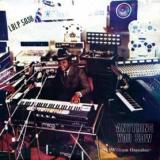
Music plays a very important part in the life of the church. Most of the liturgy is sung and, contrary to secular music, it is accompanied by percussion instruments only. The begena occupies a special place because it is the one melodic instrument exclusively dedicated to the spiritual repertory. Because of its mythical origin, it is highly respected. Tradition holds that the begena was given to king David by God, and brought to Ethiopia by Menelik I, together with the Ark of the Covenant. It has always been the instrument of kings and nobles. Played by pious men and women of letters, it never became widespread. But it never disappeared either, not even under the Derg regime (1974-1991) which had banned the instrument.
Among Amhara string instruments, the begena is the most carefully crafted, especially with regard to the ornately sculpted crossbar. Its ten gut strings are cleaned and twisted several times. The characteristic buzzing timbre equalled by no other Amhara instrument is due to the enzirotch, that is, small bits of leather placed between each string and the bridge. This plays an important part in the sound production by creating a brief contact between the string and the upper rim of the bridge, thus modifying the vibrating properties of the string. In this manner, the spectrum of the sound is considerably enhanced (up to over 10 kHz).
The begena is a very powerful instrument, it keeps the devil thirty steps away, and its presence in the home wards off malicious spirits. Priests and preachers recommend its presence, especially during Lent (Fassika Tsom) when the Orthodox Amharas ponder their sins and repent. Because of its spiritual import, the begena generates intense emotion. According to some musicians, playing the begena brings them into direct contact with God or the Virgin Mary. The religious role of the begena is underscored by the shape of the instrument, each part symbolises an important element of the faith. The crossbar for instance, which reaches across the entire width of the instrument, represents God who is above all things. The belly which "gives birth" to the sound represents the Virgin Mary, and the ten strings recall the Ten Commandments.
Recorded by Stéphanie Weisser in Addis Ababa, Ethiopia, March 2002-December 2005.
Mastered by Renaud Millet-Lacombe.
Issued under license from VDE-Gallo, Switzerland.
Following the debut album Only Skies Stay Eternal, the Remixes EP takes a bold step forward. These reinterpretations reshape Fille’s introspective sound into more club-oriented territories, signalling a new phase in her sonic evolution.
Rico Casazza opens the release with a standout electro remix - fluid rhythms, a wavy bassline, and catchy vocal hooks push Fille’s sound into elevated, high-energy territory. Alienata follows with a deep, broken-beat techno version that’s both shadowy and hypnotic, crafted for dark rooms and powerful systems.
Sestrica delivers a rolling breakbeat interpretation with a pulsing low end - engineered to move peak-time floors with force and precision. Closing the release, Clouzer’s remix of Thistles blends dreamy textures, trancy momentum, and broken rhythms, adding emotional depth to the club experience.
"The Happening by Tomorrow Comes The Harvest is the least case, a provocative confrontation. It's a challenge or dare to the idea that music can be useful if we are able to experience it. I would imagine that to many, music having an objective beyond the listener doesn't make sense because the general thought is that Music is made for us to consume, to make us remember, to influence us and to make us feel something. The Happening does all those things but much more. What it does is expand the scope from us to "it". Creating and constructing music for the subject of existence is a tall order.
The concept of The Happening is about the beginning and the end of Time and Space; the initial point of when reality starts and its conclusional apex. In the beginning, there is a great light. And from this light, comes life. Life is lived until it isn't.
This is what The Happening implies. It speaks about a 9-minute frame in reality, used to emphasize something that happened a very long time ago, something that happened in its creation and what will eventually happen far in the future.
The Happening was of an accidental birth. The love child of three musicians (Jeff Mills, Prabhu Edouard and Jean-Phillippe Dary) who was just asked to play "something" so that the camera crew could have extra b-roll for all the previous footages of the band while they were working in the recording studio in the North of Paris for their album Forbidden Planet. There was no discussion of what they'll do, no plan, no direction other than to use music to reach a level of consciousness.
Somehow within these transformative 9 minutes, something was felt by each of them, explored to its furthest point, which lead to this extraordinary creation. The Happening refers to the life and death of everything living thing. Infinity."
Jeff Mills
At daybreak, as sunlight travels through the atmosphere and begins to reach Earth’s surface, daylight gradually emerges. This marks the transition from night to the beginning of a brand-new day. As the temperature rises—especially after clear, calm nights—relative humidity decreases, and mist, formed of tiny suspended droplets, begins to evaporate. Warm air rises and cool air sinks, creating an interplay of temperature, humidity and sunlight that gives way to a soft, diffuse glow. The sea breeze slowly clears the morning mist, setting life in motion once again as the world wakes up.
‘Daybreak’ is Sven Wunder’s fifth full-length album, seamlessly continuing the progression of his musical oeuvre. It takes the listener on a vivid maritime expedition, beginning the moment the first rays of light break the darkness of the night and embarking on a lush journey through the early hours of the day and far beyond, until the light slowly fades and night falls once again. True to Wunder’s now-distinctive artistry, ‘Daybreak’ is marked by elaborately crafted compositions and elegant pop-jazz arrangements for flute, percussion, brass and strings—supported by a decisive rhythm section, all of which add depth and build on his body of work, continuing to unfold his creative path.
- A1: Tafese Tesfaye - The Dove &Amp; The Pigeon
- A2: Yetemwork Mulat - Heathen &Amp; Earth
- A3: Alemu Aga - The World Is But A Place Of Survival
- B1: Sosena Gebre Eyesus - Save Us From Our Death
- B2: Abiy Seyoum - The Last Judgement
- B3: Tafese Tesfaye - You Who Take Good Care Of Me
- C1: Sosena Gebre Eyesus - When I Say Your Name
- C2: Akalu Yossef - Who Can Doubt
- C3: Abiy Seyoum - We Are All Mortals
- D1: Yetemwork Mulat - The Second Coming Of Christ
- D2: Akalu Yossef - Our Father
- D3: Alemu Aga - Song Of Praise Played With A Plectrum
Cassette[16,18 €]
The begena is a large ten-stringed lyre which is part of the traditional Amharic heritage of Ethiopia. The Amharas, who have long formed the politically and culturally dominant people of Ethiopia, mainly inhabit the central and northern part of the country. In the majority, they follow the monophysite Orthodox Tewahido Church established in the early fourth century AD.
Music plays a very important part in the life of the church. Most of the liturgy is sung and, contrary to secular music, it is accompanied by percussion instruments only. The begena occupies a special place because it is the one melodic instrument exclusively dedicated to the spiritual repertory. Because of its mythical origin, it is highly respected. Tradition holds that the begena was given to king David by God, and brought to Ethiopia by Menelik I, together with the Ark of the Covenant. It has always been the instrument of kings and nobles. Played by pious men and women of letters, it never became widespread. But it never disappeared either, not even under the Derg regime (1974-1991) which had banned the instrument.
Among Amhara string instruments, the begena is the most carefully crafted, especially with regard to the ornately sculpted crossbar. Its ten gut strings are cleaned and twisted several times. The characteristic buzzing timbre equalled by no other Amhara instrument is due to the enzirotch, that is, small bits of leather placed between each string and the bridge. This plays an important part in the sound production by creating a brief contact between the string and the upper rim of the bridge, thus modifying the vibrating properties of the string. In this manner, the spectrum of the sound is considerably enhanced (up to over 10 kHz).
The begena is a very powerful instrument, it keeps the devil thirty steps away, and its presence in the home wards off malicious spirits. Priests and preachers recommend its presence, especially during Lent (Fassika Tsom) when the Orthodox Amharas ponder their sins and repent. Because of its spiritual import, the begena generates intense emotion. According to some musicians, playing the begena brings them into direct contact with God or the Virgin Mary. The religious role of the begena is underscored by the shape of the instrument, each part symbolises an important element of the faith. The crossbar for instance, which reaches across the entire width of the instrument, represents God who is above all things. The belly which "gives birth" to the sound represents the Virgin Mary, and the ten strings recall the Ten Commandments.
Recorded by Stéphanie Weisser in Addis Ababa, Ethiopia, March 2002-December 2005.
Mastered by Renaud Millet-Lacombe.
Issued under license from VDE-Gallo, Switzerland.
To mark 10 years since SOPHIE’s game-changing singles collection PRODUCT, Numbers are celebrating with a special edition featuring 11 songs across Deluxe Vinyl and Compact Disc.
This anniversary release includes bonus tracks, track-by-track slide posters, and a SOPHIE PRODUCT Card. Physical editions are now available for pre-order and released on 11th July 2025.
SOPHIE classics ‘BIPP’, ‘LEMONADE’ and ‘VYZEE’ are joined by two immaculate PRODUCT-era songs ‘OOH’ and ‘GET HIGHER’ recorded and produced at the time, each with colourful single artwork completing the set.
‘OOH’ is one of SOPHIE's earliest productions that has been through several revisions since 2011. It was one of three original tracks that Numbers had signed when SOPHIE uploaded the song alongside 'BIPP' and 'ELLE' to her Soundcloud, and while it had been through several iterations and speed changes, this finalised version was completed by SOPHIE in 2019.
SOPHIE once described ‘OOH’ as “hi tech club dance pop”. Musically speaking, the earworm hook is carved out by her signature portamento-infused synths and candy-coated lyrics, a firm cult classic approved by AG Cook and Charli XCX. Initially titled 'MAKE RESPECT', the track was first performed live by SOPHIE in 2011 to a handful of lucky people at a beach afterparty surrounding Sonar Festival, Barcelona and later that year at Manhattan's New Museum. The vocal was recorded as the first track in the same one-day recording session as SOPHIE's debut single 'NOTHING MORE TO SAY', released on the Huntley & Palmers label, where Sophie's songwriting was performed by the London vocalist Jaide Green.
The genesis of the ‘OOH’ and ‘NOTHING MORE TO SAY’ recording session is lore-worthy in its own right: after watching Jaide Green perform live with Olly Murs during the sixth series of The X Factor in 2009, SOPHIE reached out and invited Jaide to record in her home bedroom studio.
‘GET HIGHER’ was born during joyous sessions in 2013, when SOPHIE’s beat was introduced to the vocalists Cassie Davis and Sean Mullins. The track feels like a visionary precursor to ‘Vroom Vroom’, and doesn't sound out of place next to the sub-clang intensity of SOPHIE’s ‘HARD’ and ‘MSMSMSM’. Striking a playful balance between blissed-out hyperpop and club-ready Atlanta trap, it showcases SOPHIE’s signature, laser sharp sound design. Originally released as a bonus track on the Japanese CD edition of PRODUCT, ‘GET HIGHER’ has remained a hidden gem.
A groundbreaking producer, songwriter and performer, SOPHIE's visionary approach reshaped the landscape of pop and electronic music. Emerging in the early 2010s, SOPHIE introduced a hyper-detailed, futuristic sound defined by metallic textures, elastic basslines, and an uncanny blend of synthetic and emotional tones. Collaborating with artists including Charli XCX, Madonna, Vince Staples and Arca, SOPHIE helped pioneer a new pop movement while challenging conventions around identity, genre and production. SOPHIE's work continues to resonate deeply, leaving a lasting impact on a generation of artists and listeners alike. Discography: PRODUCT (2015), OIL OF EVERY PEARL'S UN-INSIDES (2018), SOPHIE (released posthumously, 2024).
Continuing the percussive-driven and emotive themes from his previous EPs, CAIN reaches beyond the boundaries of experimental electronic and Celtic music from the Scottish Highlands. "Lineage" is the result of a life-long goal to combine his passion and experience in these respective worlds. The album includes Brighde Chaimbeul on Scottish small pipes, James Mackenzie on flute and vocals by Katie Mackenzie.
The common thread that connects his discography is the intense rhythmic and melodic elements that convey his love of ‘infectious rhythm, ethereal beauty, or an otherworldly strangeness’. His productions have garnered support from DJs like Ben UFO, Gilles Peterson, Peggy Gou, Hunee, Haai, Erol Alkan, Ame, Oneman, and Midland, amongst others. Balancing rhythmic precision with profound harmonic depth, CAIN weaves evocative builders that ignite dancefloors at peak time and reveal intricate sonic tapestries in the intimate confines of headphones.
CAIN's musical background is rooted in traditional Scottish bagpipe music, which evolved through his competitive performances on an international level. His experience and knowledge enhanced CAIN’s understanding of how regional folk music reflects specific environments and cultures. Through the competition circuit he met Brìghde Chaimbeul, out on the scenic games fields of Uist, Glenfinnan and many others. He also competed against James Mackenzie, an amazing piper and flautist. James is a former member of the band Breabach. His wife, Katie Mackenzie is a superb Gaelic singer.
The recordings with James and Katie were done on the island of Bernera, off the Isle of Lewis in the Outer Hebrides and recordings with Brìghde were made in Edinburgh.
Mastered by Sam at Precise, Design by Alexander Horne, Pressed and printed at Record Industry
‘My Heart Goes Bang (Get Me To The Doctor)’ is the fourth and final single to have been released from Dead Or Alive’s 1985 CBS Records album, “Youthquake”. Once again, to give it a point of difference, the single was remixed. • This Limited Edition 7” vinyl picture disc continues the 40th anniversary celebrations of this album. • ‘My Heart Goes Bang…’ entered the UK Singles chart on 21st September 1985 and became the second Top 20 hit from “Youthquake”, reaching #23 with a six-week chart run. During the album campaign period, the four singles released from “Youthquake” stayed in the chart for 59 weeks • ‘My Heart Goes Bang…’ charted in Australia, France and Ireland, with its highest chart position being in Japan (#12), as well as hitting #15 on the Billboard Hot Dance Club Play charts in the USA.
b B1. Big Daddy Of The Rhythm Live
[b] B1. Big Daddy Of The Rhythm [Live]
[b] B1. Big Daddy Of The Rhythm [Live]
[Live]
After 25 Years, DJ Wayne Ritchie's Legendary Lost Record Makes Its Return South London’s own DJ Wayne Ritchie. The two records he self-released in 2001 have long been out of reach, becoming legendary among vinyl diggers as elusive, sought-after gems. Now, four carefully selected tracks from those records have been remastered, ready to shake up today’s dance floors once again. Crafted with a 12-bit sampler, blending House and UKG into a unique, unmistakable groove, this sound is finally making its return—25 years later.
Germany's Invexis comes back to the Manchester-based Scrap & Delete label with the 'Morphium' EP, arriving 19th September 2025. The four tracks follow up his remix for label founder Dorbachov's 'Ellesmere Street' EP earlier in 2025, which won support from Luke Slater, Jako Jako, Dave Clarke, and more. Title track 'Morphium' opens the EP in unexpected territory: an emotive, melodic crossover track that retains Invexis' mechanical backbone while reaching for something more transcendent.
With soaring synth layers and expertly balanced weight, it's a rare euphoric moment in his catalogue; one destined to erupt across festival tents. 'Nordic Noise' pulls things back into colder, rawer terrain, a frostbitten slab of functional minimalism with raw textures, fizzing hi-hats, and relentless groove cycles. 'Instinct' channels classic loop techno through a modern lens, driven by restless percussion and syncopated punch. Finally, 'RS' pays tribute to late-'90s groove science with complex, kinetic motion and heads-down intensity, reimagined for a new generation of warehouse punters.
The Money Records 2” multi-track tape of ‘Sugar Love’ and ‘You Bet I Would’ revealed an unknown title ‘We’ve Reached A Dead End’. This turned out to be a beautiful Richard Cason-penned ballad which featured a lush, dramatic arrangement by Los Angeles musician Ray Jackson, complete with male backing vocals.
Cason co-produced the three songs with producer Hadley Murrell who licensed the recordings to Ruth Dolphin at Money. ‘Sugar Love’ only appeared on the flip of the second pressing of ‘You Bet I Would’, the instrumental was used initially. ‘Sugar Love’ is in itself in-demand as a dance track. Money 606 did not sell enough to warrant a further release and the track lay unmixed in the vault until now.
Interestingly the tape was dated May 1973, just prior to the two releases, and was described on the box as a rework of a tape from July 1971 - the music certainly wasn’t rushed.
Swearing allegiance to always bring the ruckus, Intermood is an instrumental four-piece hailing from the far reaches of planet Earth—Melbourne/Naarm, Australia. Since their debut show in October 2022, the band’s electrifying live performances have caught the attention of the city’s thriving dance and instrumental music scene, earning them spots at the Melbourne International Jazz Festival and Strawberry Fields Festival.
Blending psychedelic jazz with high-energy neo-disco, Intermood is guaranteed to make you move. Their debut EP, Casuarina, backed by Stone Pixels Records.
This plate is about to welcome back one of the unsung heroes from the 45 Seven lands of dub, meditating with us from day one. Weather it may be about 4578's foundations of the rolling Dub Over Distance along the shuffly Dub Pacifico or the later forward lurking tribal jungles of Black Lake flipped by Lack Blake on 45719: Dub Across Borders always knows to amaze with both a contemplating deep inner focus of well laid-out hand-made instrumentation and vintage dubbing as well as refreshing ear-opening sounds and soul-pleasing vibes collected from all over the world, creating a very own sphere of what feels like some kind of ancient sci-fi riddim, rooting upwards to the phuture.
When sweating over a hot mixing desk and hoping for a fresh breeze, the roots of Come Rain were laid in a form of bassdrums knocking at the sky's gates, stabby infra subs foreseeing well-wished thunders and moist dark skank works are calling for storm. An inner shout for the elements, incarnating in a certainly minimal yet pretty heavy 160 stepper, rolling over all the dry hot air out there.
Yeh Sih Dub comes after the rain: new branches grow, fresh leaves spread, foggy clouds reach up for a mountain-high rainforest. Awakening the world bass side of Dub Across Borders, it gives you ceremonial Bhuddist horns as well as houting sounds of the tantric Khamak, a poundy stab bass and the shimmering spring-splashing ride sitting on top as its crown. Only rarely 80 bpm bass has been as easily touching and moving at the same time.
Take a deep breath and dive into this piece of both mindful and reflective space bass, launching sub-heavy Jungle onto imaginery moons of spacial perception. We are actually just about to start this journey, feel free to get aboard!
"Absolute gold, thanks a bunch" Will be supporting lots" Pugilist
"Epic Dub pressure, big fan of Dub Across Borders" Sun People
"Sounding great as usual, will play for sure!" Tracy & E3 of Zamzam
Finally, I was able to devote some time to actually getting some collaborations completed for a new release of the Meeting Of The Minds series, with some brand new names arriving to Future Retro London!
Nebula is one of my favourite artists making new jungle atm, his versatility in music on the darker & lighter sides of the spectrum, the richness of his atmospherics and melodies & the way his drum edits flow throughout his tracks, I consider him a big inspiration in what I make. It was an absolute pleasure to be able to work with him on "Without Fear".
I've been enjoying some of what Stekker's been doing in his music, representing the ruffer lo-fi side of production and he's been putting out some great stuff on his own label Ruff 'n' Tuff as well as on a release he did for Coco Bryce's label Myor. I reached out to him about a collaboration and he had started something, which I was really into and that led to "The Quest".
I owe a lot to DJ Trace, as he was one of the first big names in jungle/d&b to really show me support for what I was doing. He gave me my debut vinyl release when he asked me to remix an old classic of his called "Final Chapta", which he released in 2011 on his label DSCI4. I also had music released on a label he started a few years after that called 117 (which I also helped design artwork for), so we go way back. He's been making more music than ever before recently and I was lucky enough to be able to get a collaboration in with him and "Patterns Of Thought" is the end result of that.
I've known Ark X & Duburban for a number of years, I would see them at a lot of events up north, as well as at events in London that they'd travel down for. They also were good friends with Kid Lib and would drive down with him whenever he was visiting/DJing in London & I was becoming familiar with their music through him, through Ark X's labels Supercharger & Hypercharger (where some of Ark X's music was being released under his previous alias of Black Orchid) & through Duburban's collaborations with Jahganaut. Big up to both of them for collaborating with me on "Come A Dance"
- A1: The Bird
- A2: Heart Don't Stand A Chance
- A3: The Waters Ft. Bj The Chicago Kid
- A4: The Season/Carry Me
- A5: Put Me Thru
- A6: Am I Wrong Ft. Schoolboy Q
- A7: Without You Ft. Rapsody
- A8: Parking Lot
- B1: Lite Weight Ft The Free Nationals United Fellowship Choir
- B2: Room In Here Ft. The Game & Sonyae Elise
- B3: Water Fall (Interluuube)
- B4: Your Prime
- B5: Come Down
- B6: Silicon Valley
- B7: Celebrate
- B8: The Dreamer Ft. Talib Kweli & Timan Family Choir
The two-time GRAMMY Nominated timeless album, Malibu. After dropping his debut album, Venice, in 2014, and then being featured on six tracks on Dr. Dre’s Compton album in 2015, 2016’s Malibu marked a major landmark moment in Anderson .Paak’s now storied career and paved the way for him to be the household name he is today. Known by many as one of the best live performers around, and with countless brand collaborations, sold out tours, chart topping albums, and even a joint album with the legendary Bruno Mars to his name, it’s safe to say that Anderson .Paak has reached Icon status. This classic catalog piece features appearances from Schoolboy Q, The Game, BJ The Chicago Kid, and more.
Naarm/Melbourne trio Acopia return with Blush Response, their highly anticipated third album, and first release on Scenic Route. Arriving September 12, this 8-track LP captures the band at their most open and self-assured—an emotionally resonant work shaped by silence, space, and sincerity.
At its core, Blush Response is an exploration of emotional distance, unresolved feelings, and the quiet tension between vulnerability and strength. It’s introspective and melancholic, yet with an underlying clarity that marks a new chapter for the group.
Formed in 2018 by Kate Durman, Lachlan McGeehan, and Morgan Wright, Acopia began with a minimalist palette—slow tempos, sparse arrangements, and a distinct sense of restraint. Since then, they’ve evolved into a more fluid and expressive unit, blending elements of dream pop, downtempo, indie, and post-punk into a sound that’s as delicate as it is disarming.
Following the release of 2022’s Chances and their self-titled 2023 album, Acopia gained significant critical momentum with praise from Pitchfork, The Guardian, The FADER, and The Beat. Pitchfork described their work as “a nod to 1980s ennui and 2020s anxiety”—an apt summation of their unique place in today’s musical landscape. Their growing international footprint includes support slots for Bar Italia and Tirzah, festival appearances at Golden Plains, Rising, and NTS Naarm, and a sold-out 2024 headline show at London’s Lexington.
Recent collaborators include UK producer Daniel Avery, who’s shown strong support for the band—elevating their profile across both electronic and alternative audiences.
With Blush Response, Acopia deliver their most expansive and expressive project to date—anchored by the emotional depth fans have come to expect, but now sharpened by bold songwriting and a broader sonic reach. Their arrival on Scenic Route marks an exciting new era, one that’s already resonating with tastemakers, record buyers, and a fast-growing global fanbase.
The Nursery Records is the label and sound garten of producer/botanist DJ Houseplants. A home for gardeners, conservationists, dancers and music lovers alike, The Nursery Records sound envelops it’s listeners in lush yet familiar bioacoustics encouraging people to photosynthesize together like plants reaching for the sun – opening and thriving from the positivity of the music.
The first release on the label is none other than DJ Houseplant & Harriet Brown’s fan-favorite, Couldn’t Catch My Breath. An electro and heavily bass-entrenched tune, it is a sublime take on an RnB cult classic that will have you confident and feeling yourself. A fan once profoundly wrote, “it’s the most perfect blend of bliss, emotion, nostalgia, comfort, sensuality, melancholy, vulnerability, energy, build, atmosphere and euphoria all wrapped up in 4 minutes.” Like a healthy and flowering plant, DJ Houseplants hopes this tune will help ground you and develop new roots for the sunny days ahead
Long kept in the shadows, "+ Ou – 8000" is a rare gem of the French musical avant-garde, born from the meeting of three
composers at the peak of their inventiveness. Initially intended as sound illustration, this album crosses the boundaries of
library music, space jazz, and electronic experimentation, with a freedom and boldness that today give it cult status.
Teddy Lasry, an iconic figure from the MAGMA universe, has always moved between jazz, progressive rock, and electronic
music. A saxophonist by training, he explores here synthetic and spatial territories with striking modernity.
Francis Mercier, discreet yet remarkably effective, is a sound craftsman who left his mark on many library music records
in the 1970s. Here he delivers precise rhythmic textures, tense atmospheres, and a minimalist groove mastery.
Christian Perraudin, a chameleon composer bridging academic music and film scoring, brings his cinematic touch—
floating melancholy and sci-fi tension. A true artisan of sonic ambiance.
Boldly visionary, + Ou - 8000 is an invitation to active listening, a journey into the heart of a fascinating sound laboratory.
This unprecedented vinyl reissue is a unique opportunity to (re)discover a crucial record that remained out of reach for far
too long.
Limited edition – for lovers of rarities, analog synths, and genre-defying musical exploration.
Just when you thought every holy grail must have been unearthed by now, here come Basic Unit with their deep cover late 90s masterpiece Timeline, the dankest darkcore-electronica-tech step album you've likely never heard.
Ben England and Rick Dallaway formed Basic Unit and debuted on Moving Shadow in 1997. They also moved on Nocturnal, a cult label that reached beyond D&B to platform some more experimental sounds. It was a short-lived label with some ominous footnotes — 'Several people involved with Nocturnal have vanished or are dead' reads the label's Discogs description. But in 1998 Nocturnal put out Timeline, a CD-only album from Basic Unit that cut a sharp, scathing figure against most D&B of the era. England and Dallaway embraced the album format as a chance to go deep, inhaling their inspiration from early days Autechre as much as Source Direct and boiling down the results to a steely, minimalist framework.
The likes of 'Resolution' are desolate, stark workouts that feel fractured and raw enough to align with early grime, complete with the strings, but the rhythms move in mysterious formations designed to confound like the most bloody minded electronica artists of the late 90s. Blown out bass and scattered flurries of machine gun breaks, squashed tundra drones that sound like they were pulled from 10th generation VHS b-movies and bit-crushed animal grunts fit for a Mega Drive beat 'em up. The sonics are redolent of the times, but Basic Unit chisel them mercilessly into their spartan vision, deploying brain-frying beat science with a stern restraint.
It's the kind of record that gives so much while holding so much back — a deadly tease that has flown under the radar for too long. This is the sort of shock reissue material that gets us gassed at Sneaker, and we're proud to be giving it a re-boost and a first ever outing on wax, all the better to shock you out.
Makhunik Records Presents: "Withdrawals" - A Bold New Vinyl Release by RAKANS Withdrawals, the highly anticipated follow-up to Emergence EP and Deep State (Midnight Stallion) EP, marks a bold new chapter in RAKANS's ever-evolving sonic journey.
Set for release on I Makhunik Records, Withdrawals explores the tension between desire and detachment, featuring five tracks that blur the lines between electronic, experimental, and club sounds. Available on vinyl, Withdrawals invites listeners to experience the raw and intimate emotions that inspired its creation. Following the success of Emergence EP (Gently Leftfield Techno from a Core Dresden Artist - Resident Advisor/Single Review by Andrew Ryce) and Deep State (Midnight Stallion) EP on Boudica, which gained recognition for their atmospheric intricacies and deep, immersive textures, Withdrawals delves deeper into personal and societal themes, paired with the artist's signature ethereal soundscapes and captivating beats. Each track carries a narrative, from late-night reflection to hedonistic encounters, with a pulsating intensity that mirrors the artist's own process of creative and emotional release. With Withdrawals, RAKANS continues to push boundaries, creating a profound listening experience that resonates both in its melancholy and its intensity.
Description of the Title: The title Withdrawals reflects a state of emotional and mental transition, where one is caught between the craving for connection and the unsettling effects of isolation. It symbolizes the artist's inner turmoil and process of reclaiming personal agency after experiences of burnout and separation. The tracks are an expression of that journey-tracking the highs and lows of life in a world that constantly demands more. Through these melodies, RAKANS has captured the intensity of longing and the aftermath of desire, inviting listeners to confront their own internal conflicts. The narrative is personal yet universally relatable, and the title speaks to the often painful but necessary process of letting go, detoxifying from past habits, and learning to be at peace with oneself. "With Withdrawals, He wanted to channel the emotions that often come from the struggle between desire and self-preservation, between the drive to connect and the need to retreat. he's journey, both as an artist and as an individual, has been filled with moments of intense reflection, self-discovery, and sometimes, disconnection.
These tracks are the culmination of that inner conflict, a raw exploration of what it means to both lose oneself and find a deeper, often painful, form of clarity. Like the music he's created before, the sound of Withdrawals speaks to the space between tension and release, the liminal space where truth is often revealed in its most vulnerable form. He's always believed that music is a mirror to the soul, and in this EP, He's tried to reflect that feeling of being both pulled in and out of something greater. It's a raw and intimate look at the way we navigate modern life, often feeling like we're running toward something that we can't quite reach, yet constantly pulled back into our own personal truths.
This EP is personal, but it's also for anyone who's ever felt caught between two worlds, the one they want and the one they need. I hope it resonates with listeners who are experiencing their own form of withdrawal, whether it's from people, places, or even from themselves.
- A1: Queen - Somebody To Love
- A2: Electric Light Orchestra - Livin' Thing
- A3: Fleetwood Mac – Say You Love Me
- A4: 10Cc - I'm Mandy Fly Me
- A5: Dr. Hook - A Little Bit More
- A6: Chicago – If You Leave Me Now
- A7: Eric Carmen - All By Myself
- B1: Frankie Valli & The Four Seasons – December, 1963 (Oh, What A Night)
- B2: Leo Sayer - You Make Me Feel Like Dancing
- B3: David Dundas - Jeans On
- B4: Bryan Ferry - Let's Stick Together
- B5: Sailor - A Glass Of Champagne
- B6: Smokie - I'll Meet You At Midnight
- B7: Slik - Forever And Ever
- B8: Showaddywaddy – Under The Moon Of Love
- B9: Brotherhood Of Man - Save Your Kisses For Me
- C1: Elton John & Kiki Dee - Don't Go Breaking My Heart
- C2: Cliff Richard – Devil Woman
- C3: Tina Charles - I Love To Love
- C4: The Real Thing - You To Me Are Everything
- C5: Billy Ocean - Love Really Hurts Without You
- C6: Dana - Fairytale
- C7: R & J Stone - We Do It
- C8: Gladys Knight & The Pips - Midnight Train To Georgia
- D1: Wings - Silly Love Songs
- D2: Neil Diamond - Beautiful Noise
- D3: Daryl Hall & John Oates – She’s Gone
- D4: Paul Simon - 50 Ways To Leave Your Lover
- D5: Thin Lizzy - The Boys Are Back In Town
- D6: The Who - Squeeze Box
- D7: John Miles - Music
- E1: Donna Summer - Love To Love You Baby
- E2: Andrea True Connection - More, More, More
- E3: Candi Staton – Young Hearts Run Free
- E4: Melba Moore - This Is It
- E5: Diana Ross - Love Hangover
- E6: Tavares - Heaven Must Be Missing An Angel (Part 1)
- E7: Barry White - You See The Trouble With Me
- E8: The Isley Brothers - Harvest For The World
- F1: Dolly Parton - Jolene
- F2: Pussycat - Mississippi
- F3: Bonnie Tyler - Lost In France
- F4: Demis Roussos - Forever And Ever
- F5: Guys N Dolls - You Don’t Have To Say You Love Me
- F6: Gallagher And Lyle - Heart On My Sleeve
- F7: Joan Armatrading - Love And Affection
- F8: Elton John - Sorry Seems To Be The Hardest Word
next instalment in our ongoing ‘Yearbook’ series – pressed in lovely-lime-green vinyl on a 3-LP set packed with 47 stellar tracks celebrating a brilliant year of pop singles. NOW – Yearbook 1976.
LP1: Kicking off in magnificent style with signature songs from legendary artists: A #2 in 1976, Queen’s ‘Somebody To Love’ is first up, followed by Electric Light Orchestra with ‘Livin’ Thing’, Fleetwood Mac with ‘Say You Love Me’, and 10cc with ‘I’m Mandy Fly Me’. Dr. Hook had a huge hit with ‘A Little Bit More’, and Chicago hit #1 with their all-time classic ballad ‘If You Leave Me Now’, while the side closes with Eric Carmen’s enduringly popular ‘All By Myself’. Flip the LP over for huge hits from the year – including 4 #1s: 14 years after making their UK chart debut, Frankie Valli & The Four Seasons enjoyed their first chart-topper with ‘December 1963 (Oh What a Night)’, whilst Leo Sayer reached #2 in the UK, and #1 in the US with ‘You Make Me Feel Like Dancing’. Pop gems follow from David Dundas, Bryan Ferry, Sailor, Smokie – and Slik, featuring a pre-Ultravox Midge Ure reached the top with ‘Forever And Ever’. Showaddywaddy celebrated their biggest hit and their first #1 with ‘Under The Moon Of Love’, and the UK won at Eurovision, with the winner ‘Save Your Kisses For Me’ by Brotherhood Of Man not only hitting the #1 spot but also becoming 1976’s biggest seller and bringing the first LP to a close.
LP2: Opening with a stellar run of pure-pop classics. Elton John celebrated his first UK #1 single, in a duet with Kiki Dee on ‘Don’t Go Breaking My Heart’, and Cliff Richard with ‘Devil Woman’, ahead of dance-floor favourites – and both #1s in ’76: Tina Charles with ‘I Love To Love’ and The Real Thing with ‘You To Me Are Everything’. More pop nuggets follow from Billy Ocean and Dana, before the side finishes with R&J Stone with ‘We Do It’ and the sublime ‘Midnight Train To Georgia’ from Gladys Knight & The Pips. Over on the second side, ‘Silly Love Songs’ gave Wings a UK #2 and became ‘76’s biggest seller in the US and opens a run of great vocalists; Neil Diamond, Daryl Hall & John Oates with ‘She’s Gone’, Paul Simon’s ’50 Ways To Leave Your Lover’ and a trio of the year’s classic rock smashes: ‘The Boys Are Back In Town’ from Thin Lizzy, ‘Squeeze Box’ from The Who, and closing with the epic ‘Music’ from John Miles.
LP3: Celebrating ‘76’s dancefloor with a stunning collection of disco and soul gold: First up, Donna Summer with her debut smash ‘Love To Love You Baby’ before ‘More More More’ from Andrea True Connection and Candi Staton’s timeless ‘Young Hearts Run Free’. Melba Moore with ‘This Is It’ comes ahead of Diana Ross with the genre-defining ‘Love Hangover’, and the side is completed with huge floor-fillers from Tavares and Barry White ahead of The Isley Brothers with the soul standard ‘Harvest For The World’ and over on the final side country music is represented with Dolly Parton making her UK singles chart debut with ‘Jolene’ three years after it was a hit in the US, but it was a Dutch band, Pussycat, who hit the top with their country-pop track ‘Mississippi’. Bonnie Tyler made her chart debut with ‘Lost In France’, and ‘Forever And Ever’ gave Demis Roussos a ’76 chart topper, and an easy-listening classic, whilst Guys N Dolls had a second Top 5 hit with their cover of ‘You Don’t Have To Say You Love Me’. The LP ends with a trio of the year’s most beautiful ballads: Gallagher And Lyle with ‘Heart On My Sleeve’, ‘Love And Affection’ the stunning singles chart debut for Joan Armatrading, and finishing with a second peerless single on this collection from Elton John with ‘Sorry Seems To Be The Hardest Word’.
NOW – Yearbook 1976 – a celebration of the diversity and wonderful creativity of a truly fabulous year in pop.
An expanded and remastered reissue of the 2009 debut album the collaborative musical project. Vocals and songs from Julianne Regan (All About Eve), Monica Richards (Faith & the Muse), Evi Vine and Amandine Ferrari. Enhanced by violin from Van Morrison/ Penguin Café"s Bob Loveday, Steve Carey on guitars, Fields of the Nephilim"s Tony Pettitt on bass, plus many friends. The album came about from Carey & Pettitt exploring music they enjoyed, and deciding on a revolving line-up of female voices. The result was an amalgam of trip-hop, prog rock and exotic goth-rock, enriched by lyrics and vocals from four exceptional female artists. The album now includes an additional six songs recorded around the same sessions as the original album. The band subsequently had five more releases and regularly toured the UK & Europe.