When we first heard from recent Kompakt signing Emma Kollmorgen, with 2021’s “You Are The”, she was hymning the complexity of romance: “Love is scary as fuck!”, she said. On her debut EP, “1243”, she’s built on that intensity and offered up a five-track suite of night-vision electronic pop, bristling with a stealthy sensuality. It’s a cinematic collection, building from the brooding “Escape”, through the drifting, tactile pulses of “Taciturn”, the gritty, bustling noises that run underneath the smoke-signal torch-song of “All The Wild Animals”, and the closing, tear-stained melancholy of “Home”. “You Are The” reappears here as well, settling in perfectly amongst new friends.
It’s a completely assured first EP from an artist who’s been slowly and steadily building her own sonic world. From her early days, when she busied herself by learning guitar and joining bands, Kollmorgen always had a vision of doing something “more independent”, to allow her to find her own sound and write her own songs. A brief creative alliance with the Berlin DJ duo Dole & Kom led to some recordings and live performances. All the while, Kollmorgen was carefully shaping her production and sound designing skills with Ableton Live, and exploring distinctive musical terrain in collaboration with co-producer and multi-instrumentalist Paul Seidel (The Ocean Collective, Fern, Nightmarer). She joined the Kompakt family after a recommendation by Patrice Baumel, who also remixed her debut single with typical flair.
On “1243”, though, Kollmorgen fully inhabits her songs, gifting each of them with a sweet, subtle sway, her vocal and lyrical openheartedness balancing the bluer hues of her production. Each song is confident and poised, Kollmorgen relying on cross-thatched patterns of texture as a web to support her melodies: “I like patterns,” she says, “they give me something to hold onto, something stable in an unstable world.” The songs feel as though they’re grappling with moments of revelation and experience in Kollmorgen’s world, which makes sense, given her approach to music: “I never had a diary,” she reflects, “so writing songs is my way of expressing and dealing with life.” On 1243, you’ll catch some glimpses of life lived, made sonorous through songs beautifully sung.
Als wir das erste Mal von Emma Kollmorgen hörten, nachdem sie sich KOMPAKT angeschlossen hatte, besang sie mit "You Are The" (2021) die Komplexität von Romantik: "Liebe ist verdammt beängstigend!". Auf ihrer Debüt-EP "1243" baut sie auf dieser Intensität auf und präsentiert uns eine fünf Tracks umfassende Suite von elektronischem Pop mit ausgeprägtem Nachtsicht-Faktor, die vor verborgener Sinnlichkeit nur so strotzt. Ein geradezu cineastischer Spannungsbogen, der sich vom grüblerischen "Escape" über die treibenden, taktilen Impulse von "Taciturn", die düsteren, umtriebigen Geräusche, die den Rauchzeichen sendenden torch song "All The Wild Animals" untermalen, und die abschließende, tränenreiche Melancholie von "Home" aufbaut. Auch "You Are The" taucht hier wieder auf und fügt sich perfekt in die neue Gesellschaft ein.
Eine überzeugende erste EP von einer Künstlerin, die sich langsam und stetig ihre eigene Klangwelt aufgebaut hat. Seit ihren Anfängen, als sie Gitarre lernte und in Bands spielte, hatte Kollmorgen immer die Vision, etwas "Unabhängiges" zu machen, um ihren eigenen Sound zu finden und ihre eigenen Songs zu schreiben. Eine kurze kreative Allianz mit dem Berliner DJ-Duo Dole & Kom führte zu einigen Aufnahmen und Live-Auftritten. Währenddessen feilte Kollmorgen an ihren Produktions- und Sounddesign-Skills und erkundete gemeinsam mit dem Co-Produzenten und Multi-Instrumentalisten Paul Seidel (The Ocean Collective, Fern, Nightmarer) ihr eigenes musikalisches Terrain. Zur KOMPAKT Label-Familie kam sie auf Empfehlung von Patrice Baumel, der auch ihre Debütsingle remixte.
Auf "1243" lebt Kollmorgen ihre Songs voll und ganz aus und verleiht jedem von ihnen einen süßen, subtilen Twist, der ihre stimmliche und textliche Offenheit mit den melancholischen Tönen der Musik in Balance hält. Voller Selbstbewusstsein und Ausgeglichenheit verlässt sie sich auf durcheinander laufende Texturen und Pattern, die ihre Melodik unterstützen: "Ich mag Pattern", sagt sie, "sie geben mir etwas, woran ich mich festhalten kann, etwas Stabiles in einer instabilen Welt."
Die Songs fühlen sich an, als würden sie sich mit realen Momenten der Offenbarung und mit Erfahrungen aus Kollmorgens Lebenswelt auseinandersetzen, was angesichts ihrer Herangehensweise an Musik durchaus Sinn ergibt: "Ich hatte nie ein Tagebuch", erzählt sie, "also ist das Schreiben von Songs meine Art, mich auszudrücken und mit dem Leben umzugehen." Auf "1243" gibt sie uns einige Einblicke in dieses gelebte Leben, das durch wunderschön gesungene Lieder zum Klingen gebracht wird.
Search:real nois
Loss and hope, isolation and communion, the cessation and renewal of purpose. Timeless and
salient, these themes echo throughout the fifth album from Midlake, their first since ‘Antiphon’
in 2013.
From the cover to the title and beyond, a longing to reconnect with that which seems lost and
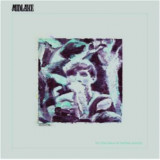
seek purpose in its passing sits at the record’s core. The cover star is keyboardist/flautist Jesse
Chandler’s father, who, tragically, passed away in 2018. As singer Eric Pulido explains, “He
was a lovely human, and it was really heavy and sad, and he came to Jesse in a dream. I
reference it in a song. He said, ‘Hey, Jesse, you need to get the band back together.’ I didn’t
take that lightly.”
A desire to commune with the past and connect with present, lived experience asserts itself
from the opening of the album. ‘Bethel Woods’ sustains and develops that reconnection,
evoking the steadfast and contemplative urgency of ‘The Trials of Van Occupanther’ to back a
lyric steeped in yearning for a paradisal time and place of hope and optimism. Soaring guitars
and atmospheric noise effects extend a sonic scope further developed by ‘Glistening,’ where
arpeggios dance like light glancing off a lake. In just three songs, Midlake reintroduce
themselves and reach out into fresh territory with a richly intuitive dynamism, honouring their
past as a seedbed of possibility.
Elsewhere, the prog-enhanced funk-rock of ‘Gone’ seeks to find hope in relationships that
seem fragile. The ELO-esque ‘Meanwhile…’ draws inspiration from what happened when
Midlake paused after ‘Antiphon’, developing universal resonance as a song about the beautiful
growths that can emerge from the cracks and gaps between things. ‘Dawning’ draws on 1970s
soft-rock stylings for another song searching for hope, its keyboard line reaching out towards
an uncertain future while everything seems to collapse around it; ‘The End’ reflects on the
difficulties of partings.
On-hand was new collaborator John Congleton, who produced, engineered and mixed the
album, marking Midlake’s first record with an outside producer. “I can’t say enough just how
much his influence brought our music to another sonic place than we would have,” says Pulido.
“I don’t want to record without a producer again. Part of that is the health of the band, because
as you get older you get more opinionated and you kind of need that person who says, ‘No, it’s
going to be this way!’ It’s hard to do that with your friends.”
The result is a powerful, warming expression of resolve and renewal for Midlake, opening up
new futures for the band and honouring their storied history. Formed in the small town of
Denton, with roots in the University of North Texas College of Music, Midlake delivered an
auspicious debut with 2004’s ‘Bamnan and Slivercork’. For the follow-up, they looked further
afield and deeper within to deliver 2006’s wondrous ‘The Trials of Van Occupanther’, a modern
classic pitched between 1871, 1971 and somewhere out of time: between Henry David
Thoreau and Neil Young’s ‘After the Gold Rush’, between 1970s Laurel Canyon thinking and a
longing for something more mysterious.
Confidence bolstered by a growing fanbase and a developed sense of their own far-reaching
abilities, Midlake - a band acutely attuned to seasonal shifts - then embraced change. In 2010,
they visited darker psych-folk thickets for ‘The Courage of Others’ and backed John Grant on
his lustrously spiky breakthrough album, ‘Queen of Denmark’. When singer Tim Smith departed
Midlake in 2012, Pulido stepped up to the lead vocal role for 2013’s freshly exploratory
‘Antiphon’, teasing out singular routes through vintage electric-folk pastures.
In reuniting, the bandmates were adamant that Midlake needed their absolute focus. The result
is an album of tremendously engaged thematic and sonic reach with a warm, wise sense of
intimacy at its heart: an album to break bread and commune with, honour the past and travel
onwards with. In ‘Bethel Woods’, Pulido sings of gathering seeds. On ‘For the Sake of Bethel
Woods’, those seeds are lovingly nurtured, taking rich and spectacular bloom.
LP pressed on 180g vinyl in a gatefold sleeve printed on matt card and printed inner sleeve
with lyrics and digital download card.
Jesus and Mary Chain, Shop Assistants, Black Tambourine, Sarah Records, My Bloody Valentine. Star Party began in March 2020 as a Seattle living room project between Carolyn Brennan and Ian Corrigan (Gen Pop, Vexx) - both sharing a love of high energy rock n roll music. The idea to start a band percolated during trips to the high deserts of eastern Washington to pick sage and see the sun as a brief reprieve from the misty and grey Pacific Northwestern Spring. A few months later, Star Party released Demo 2020 on Feel It Records, featuring two originals and covers of The Shop Assistants' "Something to Do" and the classic "All I Really Wanna Do" (in the vein of Cher's version). Over the course of 2021, Star Party wrote and recorded their debut LP, Meadow Flower, wherever and whenever they could. Employing like-minded Feel It label mate Caufield Schnug of Sweeping Promises (who also moonlights as one part of Melody Men Mastering) to mix and master the album, Meadow Flower follows a direct line from where Demo 2020 left off. Brennan's soft and clearly American vocals float over waves of feedback and drum machine racket like a delicate mist sitting just above a mountain lake. Melodies bob and weave inside an omnipresent static that fills in every nook and cranny of the recording. Drawing from a quiver of influences such as Black Tambourine, Confuse (JP), The Count Five, and of course The Shop Assistants (RIP Alex Taylor), Star Party's debut album seamlessly meshes together noise, melody, and harmony
Another new colour pressing we have 200 only white vinyl coming in Mrch. Single LPs w/ printed inner sleeve + lyric insert and Download card. The Armed return with their first new album in over three years and Sargent House debut, ULTRAPOP. The album reaches the same extremities of sonic expression as the furthest depths of metal, noise, and otherwise "heavy" counterculture music subgenres but finds its foundation firmly in pop music and pop culture. As is always The Armed's mission, it seeks only to create the most intense experience possible, a magnification of all culture, beauty, and things. The band goes on to explain, "crafting vital art means presenting the audience with new and intriguing tensions sonically, visually, conceptually. Over time and through use, those tensions become less novel and effective and they become expectations. The concept of "subgenre" becomes almost the antithesis of vitality in art itself a fetishization of expectation. ULTRAPOP seeks, in earnest, to create a truly new listener experience. It is an open rebellion against the culture of expectation in "heavy" music. It is a joyous, genderless, post-nihilist, anti-punk, razor-focused take on creating the most intense listener experience possible. It's the harshest, most beautiful, most hideous thing we could make." ULTRAPOP follows their recent contribution to the Cyberpunk 2077 soundtrack “Night City Aliens” and 2018’s critically acclaimed album Only Love, which landed on ‘Album of the Year’ lists from The Atlantic, Pitchfork, Rolling Stone, Vice, Stereogum, and many more. The album was co-produced by the band's own Dan Greene in collaboration with Ben Chisholm (Chelsea Wolfe) and features contributions from Mark Lanegan, Troy Van Leeuwen (Queens of the Stone Age, A Perfect Circle), Ben Koller (Converge, Killer Be Killed, Mutoid Man) and many more. Kurt Ballou (Converge, High on Fire, Russian Circles) remains at the helm as executive producer. An interactive ARG campaign with numerous stages of engagement is underway and will continue through release. A website, media mailings and various social media interactions are leading fans to find easter eggs including songs, album info, videos and much more. A livestream performance confirmed for same day. Videos for all three focus tracks (“All Futures”, “Average Death” + “An Iteration” are completed and will be released along with each song.
- A1: Allergies
- A2: Don't Paint That Shoe
- A3: The Undertone
- A4: I Just Want Someone To Fall In Love With
- A5: Please Let Me Come Mooch Round Your House
- A6: David's Turn
- A7: Scooter's Got Itchy
- A8: Green Beens
- A9: Food
- A10: Cigarettes
- B1: I Am
- B2: Wildlife
- B3: Lee Mellon's Teeth
- B4: Checklist
- B5: Just Won't Do It
- B6: William Tell
- B7: We Really Got It
- B8: The Castle
Transparent frosted clear vinyl, no downlode code. Their third album 'WILDLIFE. The Eggs returned with an album that encapsulates the isolation of extensive touring and brief time back in their home town Lancaster. The two piece raucous noise pop duo combine their gritty British northern surreal lyrics with thunderous guitars and crashing drums on this their third self-recorded gem. Working alongside Gruff Rhys who produced Allergies and Cornershop's Tjinder Singh who has remixed Food for a special digital download, Wildlife is yet another wonderful and unique album from a band who continue to cement their reputation as one of the most genuinely exciting and essential bands around today. Already lead track Allergies, the first single taken from Wildlife, released on the Too Pure Singles Club, has won the BBC 6 Music Rebel Playlist - with 82% of the public vote and declared winner of Steve Lamacq's 6 Music Round Table as well as Artrocker's single of the month. For The Lovely Eggs being in a band is a way of life. True to this, they live the way they play. Fiercely, constantly in search of the good times. With this their third album in three years The Lovely Eggs explore further into their own world and the bizarreness of reality and invite you to come inside to join the party, strange as it is!
Loss and hope, isolation and communion, the cessation and renewal of purpose. Timeless and
salient, these themes echo throughout the fifth album from Midlake, their first since ‘Antiphon’
in 2013.
From the cover to the title and beyond, a longing to reconnect with that which seems lost and
seek purpose in its passing sits at the record’s core. The cover star is keyboardist/flautist Jesse
Chandler’s father, who, tragically, passed away in 2018. As singer Eric Pulido explains, “He
was a lovely human, and it was really heavy and sad, and he came to Jesse in a dream. I
reference it in a song. He said, ‘Hey, Jesse, you need to get the band back together.’ I didn’t
take that lightly.”
A desire to commune with the past and connect with present, lived experience asserts itself
from the opening of the album. ‘Bethel Woods’ sustains and develops that reconnection,
evoking the steadfast and contemplative urgency of ‘The Trials of Van Occupanther’ to back a
lyric steeped in yearning for a paradisal time and place of hope and optimism. Soaring guitars
and atmospheric noise effects extend a sonic scope further developed by ‘Glistening,’ where
arpeggios dance like light glancing off a lake. In just three songs, Midlake reintroduce
themselves and reach out into fresh territory with a richly intuitive dynamism, honouring their
past as a seedbed of possibility.
Elsewhere, the prog-enhanced funk-rock of ‘Gone’ seeks to find hope in relationships that
seem fragile. The ELO-esque ‘Meanwhile…’ draws inspiration from what happened when
Midlake paused after ‘Antiphon’, developing universal resonance as a song about the beautiful
growths that can emerge from the cracks and gaps between things. ‘Dawning’ draws on 1970s
soft-rock stylings for another song searching for hope, its keyboard line reaching out towards
an uncertain future while everything seems to collapse around it; ‘The End’ reflects on the
difficulties of partings.
On-hand was new collaborator John Congleton, who produced, engineered and mixed the
album, marking Midlake’s first record with an outside producer. “I can’t say enough just how
much his influence brought our music to another sonic place than we would have,” says Pulido.
“I don’t want to record without a producer again. Part of that is the health of the band, because
as you get older you get more opinionated and you kind of need that person who says, ‘No, it’s
going to be this way!’ It’s hard to do that with your friends.”
The result is a powerful, warming expression of resolve and renewal for Midlake, opening up
new futures for the band and honouring their storied history. Formed in the small town of
Denton, with roots in the University of North Texas College of Music, Midlake delivered an
auspicious debut with 2004’s ‘Bamnan and Slivercork’. For the follow-up, they looked further
afield and deeper within to deliver 2006’s wondrous ‘The Trials of Van Occupanther’, a modern
classic pitched between 1871, 1971 and somewhere out of time: between Henry David
Thoreau and Neil Young’s ‘After the Gold Rush’, between 1970s Laurel Canyon thinking and a
longing for something more mysterious.
Confidence bolstered by a growing fanbase and a developed sense of their own far-reaching
abilities, Midlake - a band acutely attuned to seasonal shifts - then embraced change. In 2010,
they visited darker psych-folk thickets for ‘The Courage of Others’ and backed John Grant on
his lustrously spiky breakthrough album, ‘Queen of Denmark’. When singer Tim Smith departed
Midlake in 2012, Pulido stepped up to the lead vocal role for 2013’s freshly exploratory
‘Antiphon’, teasing out singular routes through vintage electric-folk pastures.
In reuniting, the bandmates were adamant that Midlake needed their absolute focus. The result
is an album of tremendously engaged thematic and sonic reach with a warm, wise sense of
intimacy at its heart: an album to break bread and commune with, honour the past and travel
onwards with. In ‘Bethel Woods’, Pulido sings of gathering seeds. On ‘For the Sake of Bethel
Woods’, those seeds are lovingly nurtured, taking rich and spectacular bloom.
LP pressed on 180g vinyl in a gatefold sleeve printed on matt card and printed inner sleeve
with lyrics and digital download card.
Proper Grounds was an alternative rap-metal band from Los Angeles that first formed in 1988. After being discovered by Madonna and signing to Maverick Records, they released their first and last studio album Downtown Circus Gang in 1993. Proper Grounds was able to merge the gritty realities of life on the street with the intensity and velocity of heavy metal. Formed by frontman The Sandman (who is also on the cover of the album) and bass player/producer Danny Saber, they had a deep-rooted social consciousness that neatly subverted the mindless violence and material worship that engulfed rap in the Nineties. They called their particular brand of noise “anguish rap metal”. Soon after the release of Downtown Circus Gang, Proper Grounds disbanded and rap-metal moved to the suburbs where iconic bands such as System Of A Down and Papa Roach found their origin.
How can one explain the lasting popularity of the bass clarinet in musical circles from Vienna to Brussels? Perhaps because its frequency range articulates an alternative to conventions of popular music, where "bass" is reserved primarily for rhythmic impulses and the very foundation of the music. Viennese bass clarinetist Susanna Gartmayer's playing can by no means be reduced to just this, rather, it scutinizes the entire sound universe: she can do rhythm and drone, not to mention melody and noise, often all at once. Who would be a more fitting collaborator than Stefan Schneider, with his minimalist rhythms and subtle cosmic exploration?
Together, Schneider and Gartmayer form the project So Sner, which owes its existence to a concert in 2015 at the Approximation Festival in Düsseldorf. Gartmayer's bass clarinet polyphonies so impressed Schneider that he quickly suggested a collaboration. That same year, they began recording the album "Reime" in Kraftwerk's former Kling Klang studio, which in 2015 became workspace and concert venue simply called Elektro Müller. The second part was recorded in the summer of 2020 in Düsseldorf-Kaiserswerth at Stammhaus church, whose interior wood paneling facilitated organic acoustics.
Susanna Gartmayer has been active as a musician and composer in various realms between experimental rock music, improvisation and multimedia sound performance since the early 2000s, releasing the album "Smaller Sad" with Christof Kurzmann and "Black Burst Sound Generator" with Brigitta Bödenauer in 2020. In addition to his solo project Mapstation, Düsseldorf-based musician and producer Stefan Schneider has been pursuing new avenues of experimental music in the here and now for over 20 years, in numerous collaborations with Sofia Jernberg, Krautrock pioneer Hans-Joachim Roedelius, or visual artist Katharina Grosse among others.
So Sner's sound is equally oriented towards experiment and tradition, whose roots can be traced back to the UK of the early 80s: an era in which soul and synth, jazz and industrial, avant-garde and polyrhythm were blended with the help of intellectualism and punk attitude in such a way that manifold sketches of possible music emerged which are only being colorized today. Like So Sner - from the very first stomp to the very last drop.
Olaf Karnik, Cologne, October 2021
"In Vivo" is the result of the photographic work of Klavdij Sluban at the Fleury-Mérogis Young Offender Institution (France) from 1995 to 2016 Beds in addition to his work from Izalco prison, located in El Salvador, from 2008 visiting rooms connected to the music of Gareth Davis.
Gareth Davis is an artist, composer and musician living in Amsterdam. He plays clarinet(s), the result of a somewhat impulsive purchase whilst window shopping in Covent Garden, London, around ten years before the turn of the century. The serendipitous location of a rather wonderful (and equally important, rather cheap) second hand record shop less than 10m from the bus stop required for seven years of schooling, combined with delivering newspapers on a daily basis, lead to a somewhat eclectic, dusty and generally unclassified taste in music.
The result. Activity covering sonic art and contemporary classical music through rock, improvisation and noise with collaborations that have included the premiering of new written pieces by composers such as Bernhard Lang, Peter Ablinger, Toshio Hosokawa and Jonathan Harvey, soloist with orchestras including the SWR Symphonieorchester, Warsaw Philharmonic and Orquesta de la Comunidad de Madrid, performances with groups and performers ranging from the Neue Vocalsolisten and Arditti Quartet through to improvisers Elliott Sharp and Frances Marie Uitti, electronic artists Robin Rimbaud and Merzbow and multimedia work with artists including Christian Marclay and Peter Greenaway.
"In Vivo" is his second solo release after to have recorded a bunch of collaborative albums with artists such as Scanner, Machinefabriek, Steven R. Smith, Kleefstra Brothers, Frances-Marie Uitti, Merzbow, Adain Baker, Duane Pitre and more...
Klavdij Sluban, winner of the European Publishers Award for Photography 2009, of the Leica Prize (2004) and of the Niépce Prize (2000), main French prize in photography, is a French photographer of Slovenian origin born in Paris in 1963.
He develops a rigorous and coherent body of work, nourished by literature, never inspired by immediate and sensational current affairs, making him one of the most interesting photographers of his generation. The Balkans, the Black Sea, the Baltic Sea, the Caribbean, Central America, Russia, China and the Antarctic (first artistic mission in the Kerguelen islands) can be read as many successive steps of an in-depth study of a patient proximity to the encountered real.
His images have been shown in such leading institutions as the Metropolitan Museum of Photography of Tokyo, the Maison Européenne de la Photographie in Paris, the Rencontres d’Arles, the Museum of Photography in Helsinki, the Fine Arts Museum in Canton, the Musée Beaubourg, the Museum of Texas Tech University. His many books include East to East (published simultaneously by Actes Sud, Dewi Lewis, Petliti, Braus, Apeiron & Lunwerg with a text by Erri de Luca), Entre Parenthèses, (Photo Poche, Actes Sud), Transverses, (Maison Européenne de la Photographie) and Balkans -Transit, with a text by François Maspero (Seuil). Since 1995, Sluban has been photographing teenagers in jails. In each prison he organizes workshops with the young offenders to share his passion. First originated in France, in the prison of Fleury-Mérogis with support of Henri Cartier-Bresson during 7 years, as well as Marc Riboud and William Klein punctually. This commitment was pursued in the disciplinary camps of Eastern Europe –Serbia, Slovenia, Ukraine, Georgia, Moldavia, Latvia – and in the disciplinary centres of Moscow and St Petersburg as well as in Ireland. From 2007 to 2012, Sluban has been working in Central America with imprisoned youngsters belonging to maras (gangs) in Guatemala and Salvador. In 2015, he started photographing imprisoned teenagers in Brazil. In 2013, the musée Niépce showed a retrospective of K.Sluban’s work, After Darkness, 1995-2012. In 2015/16, he was awarded the Villa Kujoyama Residence in Kyoto, Japan. K.Sluban is member of national and international jurys, such as prix Niépce, prix de la Jeune Photographie de Niort, prix Leica, All About Photo…
"Social injustices are implanted into our society, and the powerful are not willing to make way for real change. Urgency is the force driving us both in musical improvisation and life. Our sounds are war sirens against an ongoing disaster."- Simon Grab & Francesco Giudici
Simon Grab & Francesco Giudici's 'No Surrender' is a strong and uncut manifest against social injustices, packed into screaming feedbacks and towering drones. Grab lures tender noises and pulsating frequencies from his fragile no-input-mixing-setup, while Giudici adds linear and visceral guitar drones, opening a dialogue between the two musicians, the room, and the surrounding context. Together, they create a uniquely soft but angry musical creature that feeds from emotions of loss and anger to become a haunting call for change.
The album's cover presents a portrait of 'Madame Rochat' by photographer and film maker Aline d'Auria. The seemingly indestructible concierge was stripped from her home of half a century on the day of her retirement. Still, she persistently continued to fight for the working class' rights. '
Focusing on reduction and the peculiarity of self-referential systems, Simon Grab plays fragile feedbacks, pulsating drones and opulent outbursts of noise on a no-input-mixing setup. His has previously released"Posthuman Species" and "Extinction" on -OUS, while "Diamonds", a collaboration with Togolese rapper Yao Bobby and Asian Dub Foundation's Dhangsha, came out via LavaLava.
Experimental musician and sociologist Francesco Giudici plays guitar in bands and creates music for films, installations and theatre pieces. He has released three albums with his band 'Black Fluo' on PulverUndAsche Records. His research as sociologist and demographer focuses on social and economic inequalities, social gradient in health, gender inequalities, occupational and familiar life trajectories.
Acclaimed UK electronic musician Kevin Richard Martin (The Bug, King Midas Sound) releases a stunningly powerful rescore of Andrei Tarkovsky’s seminal 1972 movie Solaris on Phantom Limb.
In May 2020, British musician Kevin Martin was invited by the Vooruit arts centre in Gent, Belgium to compose a new score for a film of his choice. Having been long inspired by pioneering Soviet filmmaker Andrei Tarkovsky, Martin tells us that his 1972 masterpiece Solaris was the “natural choice”. The film is an unattested giant, not only of science fiction and Soviet film, but also in the annals cinematic history. And its original score, composed by regular Tarkovsky collaborator and early Soviet electronic musician Eduard Artemyev, is a magnificent work of haunting majesty, a key element to the film’s brilliance. Martin’s challenge was great: “it was with a certain amount of trepidation I stepped into such large footprints,” he writes.
The results - an all new score entitled Return to Solaris - are breathtaking. The film is intense, psychologically devastating and bleakly compelling. Interweaving themes of love, horror, sorrow, nostalgia, memory and dystopia, Martin’s score expertly mirrors this expansive breadth of psychic weight, from existential dread to heartbreaking poignancy, with immense emotional gravity. Drawn to its “narrative struggle between organic, pastoral memories of a lost past, and the harsh, dystopian realities of a futuristic hell,” Martin employs atonal noise, simmering waves of distorted synthesis, undulating drones and otherworldly, astronomic sound-design to crushing effect. Subtly submerged recurring motifs - reflections of individual characters - rise and fall amidst the fog, occasionally illuminating the doom like motes of starlight, before settling back into the density of space.
There’s an ancient Japanese legend in which a horde of demons, ghosts and other terrifying ghouls descend upon the sleeping villages once a year. Known as Hyakki Yagyō, or the Night Parade of One Hundred Demons, one version of the tale states that anyone who witnesses this otherworldly procession will die instantly—or be carried off by the creatures of the night. As a result, the villagers hide in their homes, lest they become victims of these supernatural invaders.
Such is the inspiration for the latest album from EARTHLESS. “My son is really into mythical creatures and old folk stories about monsters and ghosts,” bassist Mike Eginton explains. “We came across the ‘Night Parade of One Hundred Demons’ in a book of traditional Japanese ghost stories. I like the idea of people hiding and being able to hear the madness but not see it. It’s the fear of the unknown.”
Whereas 2018’s Black Heaven featured shorter songs and vocals from guitarist Isaiah Mitchell on much of the album—an unprecedented move for the San Diego power trio—their latest is a return to the epic instrumentals EARTHLESS made their unmistakable name on. Night Parade Of One Hundred Demons is comprised of two monster songs—the 41-minute, two-part title track and the 20-minute “Death To The Red Sun.”
The scenario that allowed for this kind of exploration was a stark contrast to that of Black Heaven. At that point, Mitchell was living in the Bay Area, which made it difficult for the band to get together and work on the type of long instrumental pieces they’re known for. But in March 2020, the guitarist moved back to San Diego. More specifically, he moved back the night the pandemic lockdown kicked in. Bad timing, perhaps—or maybe perfect timing.
Plus, they were all on the same page about not wanting to do another record with vocals. “In a way, I think this album was a reaction to our last record,” Eginton says. “Black Heaven was outside our comfort zone. I think it was a good record, but it was challenging to write songs in a more traditional verse-chorus-verse format. This one was more enjoyable. I’m sure we’ll do more vocal tracks in the future, but for the time being I see that album as a one-off.”
Given the record’s inspiration, it should come as no surprise that Night Parade of One Hundred Demons strikes a more sinister tone than the rest of the band’s catalogue. “It definitely has a darker, almost evil kind of vibe compared to stuff we’ve done in the past,” Rubalcaba says. “There’s more paranoia and noise, and some of Isaiah’s whammy-bar stuff kind of reminds me of these Jeff Hanneman moments in Reign In Blood, where it just seems like everything is going to hell. It’s pretty fun.”
Night Parade of One Hundred Demons was recorded in San Diego with Rubalcaba’s childhood friend Ben Moore, who’s worked with everyone from DIAMANDA GALAS and BURT BACHARACH to CEREMONY and HOT SNAKES. When Eginton wasn’t tracking his bass parts, he worked on the album’s incredible sleeve art. “He really dedicated himself to the project,” Rubalcaba says. “He’d be drawing in the studio with, like, a coal-miner’s lamp on his head while we were doing overdubs. He really knocked it out of the park.”
All told, Night Parade of One Hundred Demons isn’t just a return to the band’s traditional format—it’s a return to their very beginnings. “This album actually has the very first Earthless riff in it,” Eginton reveals. “We just recorded it 20 years after we wrote it. But we’re really happy with how this record came out. We feel it might be our finest to date.”
It’s been ten years since Sadie Dupuis recorded the first Speedy Ortiz songs, a solo experiment that quickly became her full-time band. Since then, Speedy has produced an expansive and critically revered discography, toured worldwide, and inspired next generations of bands with inventive songwriting and advocacy to better the music industry. But in 2011, the younger Dupuis was struggling through concurrent traumas: heartbreak from first love, leaving her hometown of New York for Massachusetts, and the grief of losing several young friends. Speedy’s first songs glowed within the contrast of noisiness and intimacy, raw sonic elements that came with closely processing vulnerabilities and Dupuis’ insistence on performing and recording each instrument alone. As the new project fielded show offers from favorite show spaces like Death By Audio and Shea Stadium, these early tracks became the springboard for the playfully melodic and cleverly distorted style for which Speedy Ortiz as a full band is celebrated. Now, ten years later, Speedy’s first self-released collections will be widely available for the first time and reissued as a double LP The Death of Speedy Ortiz & Cop Kicker…Forever, alongside previously unreleased tracks, reflective liner notes penned by Dupuis, and unearthed photos and journal scans from that era.
The tracks on The Death of Speedy Ortiz & Cop Kicker…Forever were written after student-created prompts while Dupuis was teaching a songwriting class at the same summer camp where she’d first learned guitar. "Hexxy Sadie” was written in an hour, like the rest of the songs, and on Dupuis’ twenty-third birthday; using explosive riffs and distorted harmonies, she explores her uncertain yearning as a twinless twin. "Frankenweenie" came from the prompt “dog,” and over brooding piano, spry tambourine, and eruptive snare, Dupuis sings from the perspective of a dead childhood pet about forgiveness. “Cutco,” which navigates tricky chord changes with deft guitar passages and ironic deadpan, grins at the bitterness of friendships gone awry. These early songs highlighted Dupuis’ remarkable talent at dissecting specific emotions and moments, analyzing the many ways the pieces fit together, and scrutinizing the places where they don’t.
During the recording process, Dupuis was inspired by the impulsive DIY methods of artists like Elliott Smith and Sparklehorse; a mixing note from September 2011 read, “It's important for the 'concept' of this 'album' that I don't redo anything.” The Death of Speedy Ortiz & Cop Kicker…Forever still holds onto the magic immediacy of lo-fi recordings, but this reissue is helped by the technical know-how gained through Dupuis’ solo production work as Sad13 (Lizzo, Backxwash). Remixing in 2021, Dupuis cleaned up edits on her triple-tracked drums, made space for instrumental flourishes performed on eclectic instruments like cello, banjo and timpani, and rewired digital sounds to warm up the layers of intersecting guitars. Co-mixer Justin Pizzoferrato (Dinosaur Jr., Sebadoh), who worked with Speedy on Sports EP, Major Arcana, and Real Hair, further clarified the mix with analog compressors, and mastering engineer Emily Lazar (Liz Phair, HAIM) added a glossy sheen to the stratified bombast.
As Dupuis’ cult-beloved early material finally re-enters the world in a substantive way, The Death of Speedy Ortiz & Cop Kicker…Forever is a seamless fit to the Speedy Ortiz discography that succeeded it, and evidence that Speedy’s biting lyrics, intricate compositions, and daring performances have been inherent to the project since its outset.
Cardinal Fuzz are pleased to announce the new LP from Mienakunaru – ‘Blood Sun’. After Mienakunaru's debut brain crusher 'Lost Bones Of The Holy Butterfly' that came via esteemed label Drone Rock Records (and reissued in the USA via Echodelick) - Cardinal Fuzz and Feeding Tube Records bring you 'Blood Sun' - A ferocious throb of of 3 people losing themselves in the beauty of fuzz, sizzle and noise.
Mienakunaru are a throbbing face melting power trio made up of Mike Vest, Junzo Suzuki and Dave Sneddon and if we were to write up the list of bands these artists have been involved with there would be no room to write more – Just believe me when I say that the list reads like a who’s who of cult underground hardcore and psychedelic bands. For those that may not have been listening to anything associated with these leviathans of heady, psychedelic noise – What we have here is fuzz drenched, waster infused and pounding like jack hammer freak-outs. Over four tracks of which the title track takes up the whole of one side you are treated to forty minutes of heavy cosmic amplifier worship, where the hypnotic nature of the music created within, unfolds and time and space begins to distort. Prepare to have your body shaken as Mienakunaru lay waste.
As the 21st century was born, so Kreator underwent what was nothing less than a seismic creative rebirth. By this time, the iconic German band had released nine studio albums in the 1980s and '90s, which had established them as one of the most important metal names of these decades.In the first period, they had helped to shape and pioneer the thrash scene through such releases as 'Pleasure To Kill' (1986), 'Terrible Certainty' ('87) and 'Extreme Aggression' ('89). During the following decade, the band had opened up exciting horizons of experimentation on albums like 'Coma Of Souls' (1990), 'Renewal' ('92) and 'Endorama' ('99).
Now, though, it was time to move into a fresh era, as vocalist/guitarist Mille Petrozza explains.
“During the 1990s, we were definitely experimenting with what the band were doing. But (drummer) Ventor and I decided that for this album – our first of the new millennium – we wanted to go back to the sort of sound that we had at the start of Kreator. In other words, to get back to the reason why we began the band in the first place.”
There was also new guitarist introduced, as Sami Yli-Sirniö (who had made his reputation with Finnish band Waltari) took over from Tommy Vetterli. The latter (also known as Tommy T. Baron) had joined in 1996 and played on the 'Oucast' (1997) and 'Endorama' albums.
The producer for this album was Andy Sneap, who was now making a name for himself as one of the pre-eminent masters of this art in the modern metal world.“I had known and liked Andy since the days he had been the guitarist in Sabbat, as they were signed to Noise Records as Kreator were on that label. He was our first choice to work on this new project. I liked what he'd done for Testament on their album 'The Gathering' (released in 1999). He had given them a sound they'd never had before, and that really was what we were after. It was natural and organic, and also very modern. I remember phoning him at his Backstage Studios in England (Ripley in Derbyshire). And Warrel Dane, the vocalist in Nevermore, answered. Andy was producing their new album at the time ('Dead Heart In A Dead World', 2000). And when I heard this, again I was very impressed. So, I was delighted when he agreed to produce the new Kreator album.”
The album title came from something Petrozza had read. “In a book I came across a comment that John F. Kennedy said (in 1962). This was: "Those who make peaceful revolution impossible will make violent revolution inevitable”. I thought 'Violent Revolution' would make a good title for an album. So, I kept it in my mind for this record. I think 'Violent Revolution' is a title that makes a real impact.”
One interesting aspect of the track listing was that the 52 second instrumental 'The Patriarch' actually came after the opening song 'Reconquering The Throne'. Fans might have been expected that it would have opened the album. But for Petrozza, there was a logical reason for this not to happen. “We really wanted to lead off with a thrashing track, to show everyone what we were now doing musically. After 'Endorama', it was important that everyone should recognise this was a new era for Kreator.”
'Violent Revolution' is without question an excellent album. While in some ways it does hark back to the glories of the band's earlier days, nonetheless it does not sound at all nostalgic. The performances and production values are very much part of the contemporary era, and the strength of the compositions themselves are of the highest values. Rising to the challenge offered by a new generation of ambitious metal bands, Kreator proved they were far from being a spent force. Unlike so many of their peers, here was a band who still had so much creativity to offer, and were also clearly excited themselves by what they were doing. And when you hear the band themselves enjoying the entire process, then you know this is a bona fide revitalisation.
Back In Stock!
The debut collaboration between techno alchemists Ben Klock and Lucy will probably provoke quivers of anticipation before a single note has been heard. After all, both producers have carved out names for themselves as scene innovators at what they do, and both have already proven that they can more than capably work in a duo format without sacrificing an iota of their unique aesthetics: in Lucy's case, there has already been the sublime Zeitgeber pairing with Speedy J., and Klock has joined forces with the likes of Marcel Dettmann to craft some of the more memorable output from the Ostgut Ton label. This new release makes good on each producer's talent for working with epically unfolding tracks, maintaining a strong command of both 'drone' and melodicism, and envisioning sound as a kind of inter-dimensional mass transit. As the record indicates, things can get very interesting when the two working methods superimpose perfectly, but can be just as interesting when the two fall slightly out of phase with one another.
Listeners familiar with the classic kosmische feel will be taken immediately by the opening gambit "Bliss," whose feeling of floating through the coldness of space is accompanied here by nicely warm production values. The bassline that introduces the subsequent track ("War Lullaby") is close to being a continuation of the opener's leitmotif sequence, although with a change in atmosphere that will keep curious ears from turning away too soon: an FX-shrouded voice delivers a monologue at once seductive and foreboding, followed by a confident kick thump with ephemeral trailing clatters in tow. This affective orientation pulses through the whole record well, building up to the second rhythmic track ("Santeria") which is the busiest and most engaging of the bunch. Here a variety of sonic flavorings are ritually thrown into the pot and allowed to simmer - fleeting snatches of conga, phasing zaps and rhythmic ricochets all make for a rich concoction that epitomizes the progress that has been made in techno music within this decade. The closing "A Ghost Love story," like the opener, is a non-'dance' piece, but is no less compelling for that fact: as a foam of white noise pans between the listener's ears, a slurred / pitch-bent refrain conjures the feeling of either entering or exiting from some erotically tinged hypnagogic state.
Speaking of which, the overall impression given off by this record is that of a special kind of reciprocity: that is, of dreams influencing reality and reality feeding back into dreams. The rhythmic intensity of these tracks, at once an indicator of a hard and immediate reality, is regularly complemented by oneiric flourishes that make the partitioning line between these two realms of consciousness less distinct. As the next chapter in the Stroboscopic Artefacts saga, and in the personal journeys of both Ben Klock and Lucy, it will contribute to the ongoing mission of all these parties: giving longtime fans what they want while expanding their consciousness and inquisitiveness.
His partnership with the label has already resulted in a collaboration with Modern Heads, as well as one of the first entries in the Monad series, and now a fascinating new EP that showcases his talent for testing the limits of perception.
Alistair Wells is a producer whose current work is synonymous with a kind of benevolent intensity: he excels at sculpting tonally rich and percussively complex tracks that seem to both enlighten and confront. Under his most well-known alias as Perc, he has established a deep roster on his Perc Trax label to carry out a similar-minded program, and has built up a formidable arsenal of EPs and singles in the wake of enigmatic LPs like 2011's Wicker & Steel. His 'eclectic-yet disciplined' methodology practically guaranteed he would eventually come into the orbit of Stroboscopic Artefacts. His partnership with the label has already resulted in a collaboration with Modern Heads, as well as one of the first entries in the Monad series, and now a fascinating new EP that showcases his talent for testing the limits of perception.
The ominously titled opener "Death of Rebirth" - a title hinting at some form of hellish repetition - starts things off with a sense of dark premonition. Yet, in signature Perc style, that aura of uneasiness beckons listeners to explore further rather than to flee from it: in this context, the reliable 4/4 kick drum throb is the only means of orienting oneself or angling through a glassy and metallic labyrinth where foreign objects conspire to make previously unimagined percussive noises. "Negative Space" is a variation upon this theme of trying to maintain focus within a foreign environment bristling with strange enticements and potential dangers: with the kick pattern from the previous pice still acting as a trusty guide, new sound forms arise at every turn: a novel sort of hybridized piano / gamelan tone, a shuddering assembly line, and snaking delay feedbacks. Like dub music meant to be listened to in a hall of mirrors, "Negative Space" induces a heady feeling of multiplying realities.
The closing "Ma", if translated into Japanese, can mean "space / pause" and thus acts as a nice complement to "Negative Space." However, this massive, side-long audio force field dispenses with the previous tracks' steady pulse, and suggests a rigorous act of ritual contemplation taking place in the midst of phenomenal chaos and challenging blows to the body. "Ma" succeeds in modernizing the industrial-era rhythmic invocations of artists like Z'ev, achieving an almost classical solemnity without sacrificing Perc's usual love for cleverly maniuplated electricity. Altogeher, 'Ma' is an eye-opening, ear-infliltrating statement that will warp your understandings of time and space in a most exquisite way.
"In Vivo" is the result of the photographic work of Klavdij Sluban at the Fleury-Mérogis Young Offender Institution (France) from 1995 to 2016 Beds in addition to his work from Izalco prison, located in El Salvador, from 2008 [visiting rooms] connected to the music of Gareth Davis.
Gareth Davis is an artist, composer and musician living in Amsterdam. He plays clarinet(s), the result of a somewhat impulsive purchase whilst window shopping in Covent Garden, London, around ten years before the turn of the century. The serendipitous location of a rather wonderful (and equally important, rather cheap) second hand record shop less than 10m from the bus stop required for seven years of schooling, combined with delivering newspapers on a daily basis, lead to a somewhat eclectic, dusty and generally unclassified taste in music.
The result. Activity covering sonic art and contemporary classical music through rock, improvisation and noise with collaborations that have included the premiering of new written pieces by composers such as Bernhard Lang, Peter Ablinger, Toshio Hosokawa and Jonathan Harvey, soloist with orchestras including the SWR Symphonieorchester, Warsaw Philharmonic and Orquesta de la Comunidad de Madrid, performances with groups and performers ranging from the Neue Vocalsolisten and Arditti Quartet through to improvisers Elliott Sharp and Frances Marie Uitti, electronic artists Robin Rimbaud and Merzbow and multimedia work with artists including Christian Marclay and Peter Greenaway.
"In Vivo" is his second solo release after to have recorded a bunch of collaborative albums with artists such as Scanner, Machinefabriek, Steven R. Smith, Kleefstra Brothers, Frances-Marie Uitti, Merzbow, Adain Baker, Duane Pitre and more...
Klavdij Sluban, winner of the European Publishers Award for Photography 2009, of the Leica Prize (2004) and of the Niépce Prize (2000), main French prize in photography, is a French photographer of Slovenian origin born in Paris in 1963.
He develops a rigorous and coherent body of work, nourished by literature, never inspired by immediate and sensational current affairs, making him one of the most interesting photographers of his generation. The Balkans, the Black Sea, the Baltic Sea, the Caribbean, Central America, Russia, China and the Antarctic (first artistic mission in the Kerguelen islands) can be read as many successive steps of an in-depth study of a patient proximity to the encountered real.
His images have been shown in such leading institutions as the Metropolitan Museum of Photography of Tokyo, the Maison Européenne de la Photographie in Paris, the Rencontres d’Arles, the Museum of Photography in Helsinki, the Fine Arts Museum in Canton, the Musée Beaubourg, the Museum of Texas Tech University. His many books include East to East (published simultaneously by Actes Sud, Dewi Lewis, Petliti, Braus, Apeiron & Lunwerg with a text by Erri de Luca), Entre Parenthèses, (Photo Poche, Actes Sud), Transverses, (Maison Européenne de la Photographie) and Balkans -Transit, with a text by François Maspero (Seuil). Since 1995, Sluban has been photographing teenagers in jails. In each prison he organizes workshops with the young offenders to share his passion. First originated in France, in the prison of Fleury-Mérogis with support of Henri Cartier-Bresson during 7 years, as well as Marc Riboud and William Klein punctually. This commitment was pursued in the disciplinary camps of Eastern Europe –Serbia, Slovenia, Ukraine, Georgia, Moldavia, Latvia – and in the disciplinary centres of Moscow and St Petersburg as well as in Ireland. From 2007 to 2012, Sluban has been working in Central America with imprisoned youngsters belonging to maras (gangs) in Guatemala and Salvador. In 2015, he started photographing imprisoned teenagers in Brazil. In 2013, the musée Niépce showed a retrospective of K.Sluban’s work, After Darkness, 1995-2012. In 2015/16, he was awarded the Villa Kujoyama Residence in Kyoto, Japan. K.Sluban is member of national and international jurys, such as prix Niépce, prix de la Jeune Photographie de Niort, prix Leica, All About Photo…
Originally released in 2005 on Cooper's Hipshot Cd-r label, and reissued here for the first time on vinyl, Spirit Songs deserves to be regarded as a true rediscovered gem, remixed and remastered by Mike Copper himself!
Spirit Songs comes as a highly organic form of Ambient-Folk-Blues with Cooper reordering material to create an immersive listening experience. A stream of cut-up lyrics inspired by Thomas Pynchon's writing slide across multiple electronic layers and masterfully fingerpicked acoustic guitars combining into a moving tide. This is deeply inspired music from a unique artist: Mike Cooper the so called "icon of post-everything music” a true sound explorer constantly pushing the boundaries of genres and styles, Folk, Blues, Free Improv, Exotica, Ambient, Electronica...
"Spirit Songs.. a glorious marriage of all three of Cooper's previous musical strategies; creating a stunning hybrid. The album contains 10 songs performed on finger-picked acoustic and electric lap steel guitar,
often looped and treated in real time, with Cooper singing lyrics in a quietly meandering, semi-improvisatory manner that recalls a more polished Jandek. The style of songwriting is immediately recognizable as blues, but an intuitive, idiosyncratic form of folk-blues, with Cooper narrating laments over matters personal and global, gentle universalisms that double as political messages. All of this occurs over a loose rhythmic framework provided by various noisy loops, with cracks, scratches and pops, echoes and distortions skipping out from every refrain. It's a gentle cacophony with subtle undercurrents of beauty and sadness, effortlessly nostalgic but still very rooted in the now. I think that Mike Cooper can genuinely call this style his own; I've never heard anything remotely like it, and it works beautifully, highlighting both song and singer, as well as the happy accidents resulting from the intersection of structure and chaos."- Pitchfork Review.
Simona Zambolis first album on Mille Plateaux "Ethernity" is a piece of haunting music - vibrating, pulsing and cutting through the concrete and the chaos at the same time, when you listen close enough. The album is a journey through trans-reality, not only as a melancholic drama, but also as a travel to alien worlds, hence as a necessity of an electronic intervention. "Ethernithy" is radical fictioning in a non-expressive, non-melancholic and ultrablack sense. Profound music demands blackness, not silence. When we speak of communication or mediation, the reference is always that of the mystical tradition of the via negativa; mediation and communication always imply the dissolution of sender and receiver, leaving not only the message that is the gulf or abyss, but a perception out there, which senses should be able to recognize and even love.


