Cerca:real nois

Generi
Tutto
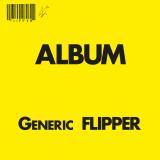
Flipper - Generic Flipper

Generic Flipper, the debut album by Flipper, remains the most absorbing full-length LP to emerge from the early San Francisco punk scene. A constant source of imitation for so-called "noise rock" bands, it has yet to be surpassed in its nihilistic glee.

Recorded between October 1980 and August 1981 and released in 1982 on the indispensable Subterranean Records, this album functions as a chaotic, sticky mass of individual personalities: the magma-like bass eruptions and dual vocals of Will Shatter and Bruce Loose, Ted Falconi's icy guitar scraping and the relentless beat of drummer Steve DePace. At times playful and taciturn, paranoid and absurd, Generic charts a deliberate path that willfully chances destruction.

In early '80s punk, when the hardening default was "faster-shorter-louder," Generic subverts the nascent hardcore scene with a strictly applied regimen of turgid-slower-heavier. The lyrics are bleak, yet unnervingly beautiful. "Ever" sets the tone with trademark restraint – "Ever wish the human race didn't exist? And then realize you're one too?" – while closer "Sex Bomb" is a churning, 8-minute epic with looping bass, saxophone accompaniment and electronic effects of dropping bombs.

Tons of indie bands have attempted to recreate Flipper's mix of acidic guitar, metallic bass sludge and sardonically brilliant lyricism, using the seemingly effortless template they pioneered; however, the effect usually drives listeners right back to Generic. While most of their contemporaries wilt under direct comparison, No Trend, the Butthole Surfers, feedtime and Church Police are a few who can stand the frigid heat.

non in magazzino

Ordina ora e ordineremo l'articolo per te presso il nostro fornitore.

26,47
Stephan Eicher - Spielt Noise Boys

2025 Reissue.


Münchenbuchsee, a suburb of Bern, Switzerland. Stephan Eicher is the youngest of three children. His father, a radio and TV repairman, is also a jazz violinist and a sound tinkerer in his spare time. In the family home's converted fallout shelter turned studio, Mr. Eicher experiments with homemade sequencers, tortures handcrafted drum machines, and abuses reel-to-reel tape recorders—all under the fascinated gaze of young Stephan.

The boy quickly develops a musical curiosity, exploring sound through various experiments and wanderings. Alongside his younger brother Martin, Stephan crafts audio plays on a homemade multi-track recorder (essentially several cassette decks hooked together!), which they write, record, add sound effects to, and perform for family and friends. Just a couple of nice kids, really...

Then comes 1972, and Lou Reed's Transformer album changes everything for the Eicher kids. For 13-year-old Stephan, it's a revelation—especially "Vicious", the opening track, which he plays on repeat for months. He convinces his father to buy him an electric guitar. Not stopping there, his father also builds him a tube amp using an old radio.

Then comes adolescence. A rough one. Stephan leaves home at 16 and moves to Zurich. With obvious artistic talent, he persuades his art teacher to help him get into F+F, a radical, alternative art school—despite his young age. Accepted, he starts learning video techniques, determined to become a filmmaker.

At F+F, Stephan organizes Dada-style happenings and concerts with a group of friends known as the Noise Boys. Among them: one of his teachers on bass, Veit Stauffer on drums (who would later found ReR/Recommended Records), his girlfriend Sacha on vocals, and Stephan on guitar. In one of their early performances, they release a remote-controlled mouse covered in dull razor blades into the audience to create panic and chaos. Keeping with this aggressive, confrontational spirit, they once played a concert while wearing headphones blasting Tristan and Isolde, trying to perform their own songs simultaneously—to maximize the cacophony. The goal was always the same: clear the room.

Their “songs,” if you can call them that, followed suit. Take "Hungeriges Afrika", for instance—performed entirely with power drills and some drum feedback.

To make ends meet, Stephan returns to Bern on weekends to work as a waiter at the Spex Club, the city’s main punk venue. On September 16, 1980, during a show by proto-electro group Starter, the police raid the club and arrest everyone. Stephan, who manages to avoid arrest, seizes the opportunity to “borrow” Starter’s gear left behind. He suddenly finds himself in possession of a Roland Promars synth, a Korg MS20, and a gorgeous CR78 drum machine, which he runs through a Big Muff distortion pedal to get that perfect gritty sound.

He then sets out to reinterpret some Noise Boys tracks, reworking them during impromptu sessions recorded on a dictaphone (yes, a dictaphone—now the lo-fi sound makes more sense, doesn’t it?). He ironically titles the resulting cassette "Stephan Eicher spielt Noise Boys" ("Stephan Eicher plays Noise Boys"). This gem features seven tracks, which are the ones reissued here.

Back in Zurich, he visits his friends Andrew Moore and Robert Vogel, who have a DIY cassette duplication setup. They make 25 copies of Stephan Eicher spielt Noise Boys for Stephan and his friends. Robert encourages him to visit Urs Steiger of Off Course Records and play him the tape.

Without much hope, Stephan shows up at Urs’s office. But Urs is instantly hooked and suggests releasing a 7” single. Due to space constraints, they reluctantly drop two of the seven tracks ("Hungeriges Afrika" and "One Second"). As for the musical score featured on the cover—it was randomly chosen and remains a mystery to this day. Calling all music theory nerds!

The 7-inch is pressed in 750 copies and released in the first week of December 1980—a date Stephan remembers well, as it’s the same week John Lennon was killed. Smartly, Urs sends a promo copy to François Murner, Switzerland’s answer to John Peel, who hosts a show on alternative station Sounds. Murner falls in love with the record and starts giving it airtime. To Stephan’s surprise, sales follow—and people actually seem interested in his music.

Even this modest underground success scares Stephan a bit. He stops making music for a year and moves to Bologna, where he works as a programmer at Radio Città, a feminist radio station.

Meanwhile, Stephan’s younger brother Martin, who’s also involved in the punk scene, joins the band Glueams as a singer and guitarist. Glueams, named after the fanzine run by two of its members (drummer Marco Repetto and bassist GT), eventually rebrands as Grauzone. Stephan is invited to their shows to project hacked Super 8 visuals live on stage.

Urs Steiger, now working on a compilation titled Swiss Wave – The Album, asks Grauzone to contribute alongside bands like Liliput, Jack and the Rippers, The Sick, and Ladyshave (Fall 1980).

For the album, Martin tasks Stephan with producing their recording sessions. Under Stephan's artistic direction, two tracks emerge: "Raum" and "Eisbär". During "Eisbär", Martin plays a minimalist bass line borrowed from post-punk band The Feelies (just an open string). Drummer Marco Repetto struggles to keep time. Later that evening, unhappy with the takes, Stephan builds a four-bar drum loop from a ¼-inch tape and uses it instead of the flawed original. He then adds bleepy synths and wind sounds to complete the track’s icy vibe before handing it over to Urs.

The Swiss Wave – The Album compilation is released quietly at first, but things snowball thanks to "Eisbär", which eventually becomes a smash hit—selling over 600,000 singles.

Meanwhile, Stephan plays in a rockabilly band called SMUV (named after Switzerland’s social security agency) and begins producing artists, including the debut album of Starter (1981), which includes a more pop-oriented version of "Minijupe".

By early 1982, Stephan starts spending time with the post-punk girl band Liliput (formerly Kleenex). They’re older than him, and he happily drives them around in his Renault Major, acting as their roadie.

By 1983, Grauzone—signed to the major label EMI, which turned out to be a misstep—is falling apart. Stephan begins to pivot toward a more mainstream pop sound with his debut solo album Les Chansons Bleues.

But that... is already another story.

non in magazzino

Ordina ora e ordineremo l'articolo per te presso il nostro fornitore.

23,11

Last In: 6 days ago
Guilty Razors - Complete Recordings 1977 - 1978

UILTY RAZORS, BONA FIDE PUNKS.


Writings on the topic that go off in all directions, mind-numbing lectures given by academics, and testimonies, most of them heavily doctored, from those who “lived through that era”: so many people today fantasize about the early days of punk in our country… This blessed moment when no one had yet thought of flaunting a ridiculous green mohawk, taking Sid Vicious as a hero, or – even worse – making the so-called alternative scene both festive and boorish. There was no such thing in 1976 or 1977, when it wasn’t easy to get hold of the first 45s by the Pistols or the Clash. Few people were aware of what was happening on the fringes of the fringes at the time. Malcolm McLaren was virtually unknown, and having short hair made you seem strange. Who knew then that rock music, which had taken a very bad turn since the early 1970s, would once again become an essential element of liberation? That, thanks to short and fast songs, it would once again rediscover that primitive, social side that was so hated by older generations? Who knew that, besides a few loners who read the music press (it was even better if they read it in English) and frequented the right record stores? Many of these formed bands, because it was impossible to do otherwise. We quickly went from listening to the Velvet Underground to trying to play the Stooges’ intros. It’s a somewhat collective story, even though there weren’t many people to start it.
The Guilty Razors were among those who took part in this initial upheaval in Paris. They were far from being the worst. They had something special and even released a single that was well above the national average. They also had enough songs to fill an album, the one you’re holding. In everyone’s opinion, they were definitely not among the punk impostors that followed in their wake. They were, at least, genuine and credible.

Guilty Razors, Parisian punk band (1975-1978). To understand something about their somewhat linear but very energetic sound, we might need to talk about the context in which it was born and, more broadly, recall the boredom (a theme that would become capital in punk songs) coupled with the desire to blow everything off, which were the basis for the formation of bands playing a rejuvenated rock music ; about the passion for a few records by the Kinks or the early Who, by the Stooges, by the Velvet mostly, which set you apart from the crowd.
And of course, we should remember this new wave, which was promoted by a few articles in the specialized press and some cutting-edge record stores, coming from New York or London, whose small but powerful influence could be felt in Paris and in a handful of isolated places in the provinces, lulled to sleep by so many appalling things, from Tangerine Dream to President Giscard d’Estaing...
In 1975-76, French music was, as almost always, in a sorry state ; it was still dominated by Johnny Hallyday and Sylvie Vartan. Local rock music was also rather bleak, apart from Bijou and Little Bob who tried to revive this small scene with poorly sound-engineered gigs played to almost no one.
In the working class suburbs at the time, it was mainly hard rock music played to 11 that helped people forget about their gruelling shifts at the factory. Here and there, on the outskirts of major cities, you still could find a few rockers with sideburns wearing black armbands since the death of Gene Vincent, but it wasn’t a proper mass movement, just a source of real danger to anyone they came across who wasn't like them. In August 1976, a festival unlike any other took place in Mont-de-Marsan – the First European Punk Festival as the poster said – with almost as many people on stage as in the audience. Yet, on that day, a quasi historical event happened, when, under the blazing afternoon sun, a band of unknowns called The Damned made an unprecedented noise in the arena, reminiscent of the chaotic Stooges in their early adolescence. They were the first genuine punk band to perform in our country: from then on, anything was possible, almost anything seemed permissible.

It makes sense that the four+1 members of Guilty Razors, who initially amplified acoustic guitars with crappy tape recorder microphones, would adopt punk music (pronounced paink in French) naturally and instinctively, since it combines liberating noise with speed of execution and – crucially – a very healthy sense of rebellion (the protesters of May 1968 proclaimed, and it was even a slogan, that they weren’t against old people, but against what had made them grow old. In the mid-1970s, it seemed normal and obvious that old people should now ALSO be targeted!!!).
At the time, the desire to fight back, and break down authority and apathy, was either red or black, often taking the form of leafleting, tumultuous general assemblies in the schoolyard, and massive or shabby demonstrations, most of the time overflowing with an exciting vitality that sometimes turned into fights with the riot police. Indeed, soon after the end of the Vietnam War and following Pinochet’s coup in Chile, all over France, Trotskyist and anarcho-libertarian fervour was firmly entrenched among parts of the educated youth population, who were equally rebellious and troublemakers whenever they had the chance. It should also be noted that when the single "Anarchy in the UK" was first heard, even though not many of us had access to it, both the title and its explosive sound immediately resonated with some of those troublemakers crying out for ANARCHY!!! Meanwhile, the left-wing majority still equated punks with reckless young neo-Nazis. Of course, the widely circulated photos in the mainstream press of Siouxsie Sioux with her swastikas didn’t necessarily help to win over the theorists of the Great Revolution. It took Joe Strummer to introduce The Clash as an anti-racist, anti-fascist and anti-ignorance band for the rejection of old-school revolutionaries to fade a little.

The Lycée Jean-Baptiste Say at Porte d’Auteuil, despite being located in the very posh and very exclusive 16th arrondissement of Paris, didn’t escape these "committed" upheavals, which doubled as the perfect outlet for the less timid members of this generation.
“Back then, politics were fun,” says Tristam Nada, who studied there and went on to become Guilty Razors’ frontman. “Jean-Baptiste was the leftist high-school in the neighbourhood. When the far right guys from the GUD came down there, the Communist League guys from elsewhere helped us fight them off.”
Anything that could challenge authority was fair game and of course, strikes for just about any reason would lead to increasingly frequent truancy (with a definitive farewell to education that would soon follow). Tristam Nada spent his 10th and 11th unfinished grades with José Perez, who had come from Spain, where his father, a janitor, had been sentenced to death by Franco. “José steered my tastes towards solid acts such as The Who. Like most teenagers, I had previously absorbed just about everything that came my way, from Yes to Led Zeppelin to Genesis. I was exploring… And then one day, he told me that he and his brother Carlos wanted to start a rock band.” The Perez brothers already played guitar. “Of course, they were Spanish!”, jokes their singer. “Then, somewhat reluctantly, José took up the bass and we were soon joined by Jano – who called himself Jano Homicid – who took up the rhythm guitar.” Several drummers would later join this core of not easily intimidated young guys who didn’t let adversity get the better of them.

The first rehearsals of the newly named Guilty Razors took place in the bedroom of a Perez aunt. There, the three rookies tried to cover a few standards, songs that often were an integral part of their lives. During a first, short gig, in front of a bewildered audience of tough old-school rockers, they launched into a clunky version of the Velvet Underground's “Heroin”. Challenge or recklessness? A bit of both, probably… And then, step by step, their limited repertoire expanded as they decided to write their own songs, sung in a not always very accurate or academic English, but who cared about proper grammar or the right vocabulary, since what truly mattered was to make the words sound as good as possible while playing very, very fast music? And spitting out those words in a language that left no doubt as to what it conveyed mattered as well.
Trying their hand a the kind of rock music disliked by most of the neighbourhood, making noise, being fiercely provocative: they still belonged to a tiny clique who, at this very moment, had chosen to impose this difference. And there were very few places in France or elsewhere, where one could witness the first stirrings of something that wasn’t a trend yet, let alone a movement.

In the provinces, in late 1976 or early 1977, there couldn’t be more than thirty record stores that were a bit more discerning than average, where you could hear this new kind of short-haired rock music called “punk”. The old clientele, who previously had no problem coming in to buy the latest McCartney or Aerosmith LP, now felt a little less comfortable there…
In Paris, these enlightened places were quite rare and often located nex to what would become the Forum des Halles, a big shopping mall. Between three aging sex workers, a couple of second-hand clothes shops, sellers of hippie paraphernalia and small fashion designers, the good word was loudly spread in two pioneering places – propagators of what was still only a new underground movement. Historically, the first one was the Open Market, a kind of poorly, but tastefully stocked cave. Speakers blasted out the sound of sixties garage bands from the Nuggets compilation (a crucial reference for José Perez) or the badly dressed English kids of Eddie and the Hot Rods. This black-painted den was opened a few years earlier by Marc Zermati, a character who wasn’t always in a sunny disposition, but always quite radical in his (good) choices and his opinions. He founded the independent label Skydog and was one of the promoters of the Mont-de-Marsan punk festivals. Not far from there was Harry Cover, another store more in tune with the new New York scene, which was amply covered in the house fanzine, Rock News (even though it was in it that the photos of the Sex Pistols were first published in France).
It was a favorite hang-out of the Perez brothers and Tristam Nada, as the latter explained. “It’s at Harry Cover’s that we first heard the Pistols and Clash’s 45s, and after that, we decided to start writing our first songs. If they could do it, so could we!”
The sonic shocks that were “Anarchy in the UK”, “White Riot” or the Buzzcocks’s EP, “Spiral Scratch” – which Guilty Razors' sound is reminiscent of – were soon to be amplified by an unparalleled visual shock. In April 1977, right after the release of their first LP, The Clash performed at the Palais des Glaces in Paris, during a punk night organised by Marc Zermati. For many who were there, it was the gig of a lifetime…
Of course, Guilty Razors and Tristam were in the audience: “That concert was fabulous… We Parisian punks were almost all dressed in black and white, with white shirts, skinny leather ties, bikers jackets or light jackets, etc. The Clash, on the other hand, wore colourful clothes. Well, the next day, at the Gibus, you’d spot everyone who had been at this concert, but they weren’t wearing anything black, they were all wearing colours.”

It makes sense to mention the Gibus club, as Guilty Razors often played there (sometimes in front of a hostile audience). It was also the only place in Paris that regularly scheduled new Parisian or Anglo-Saxon acts, such as Generation X, Siouxsie and the Banshees, the Slits, and Johnny Thunders who would become a kind of messed-up mascot for the venue. A little later, in 1978, the Rose Bonbon – formerly the Nashville – also attracted nightly owls in search of electric thrills… In 1977, the iconic but not necessarily excellent Asphalt Jungle often played at the Gibus, sometimes sharing the bill with Metal Urbain, the only band whose aura would later transcend the French borders (“I saw them as the French Sex Pistols,” said Geoff Travis, head of their British label Rough Trade). Already established in this small scene, Metal Urbain helped the young and restless Guilty Razors who had just arrived. Guitarist for Metal Urbain Hermann Schwartz remembers it: “They were younger than us, we were a bit like their mentors even if it’s too strong a word… At least they were credible. We thought they were good, and they had good songs which reminded of the Buzzcocks that I liked a lot. But at some point, they started hanging out with the Hells Angels. That’s when we stopped following them.”

The break-up was mutual, since, Guilty Razors, for their part, were shocked when they saw a fringe element of the audience at Metal Urbain concerts who repeatedly shouted “Sieg Heil” and gave Nazi salutes. These provocations, even still minor (the bulk of the skinhead crowd would later make their presence felt during concerts), weren’t really to the liking of the Perez brothers, whose anti-fascist convictions were firmly rooted. Some things are non-negotiable.
A few months earlier (in July 1978), Guilty Razors had nevertheless opened very successfully for Metal Urbain at the Bus Palladium, a more traditonally old-school rock night-club. But, as was sometimes the case back then, the night turned into a mass brawl when suburban rockers came to “beat up punks”.

Back then, Parisian nights weren’t always sweet and serene.

So, after opening as best as they could for The Jam (their sound having been ruined by the PA system), our local heroes were – once again – met outside by a horde of greasers out to get them. “Thankfully,” says Tristam, “we were with our roadies, motorless bikers who acted as a protective barrier. We were chased in the neighbouring streets and the whole thing ended in front of a bar, with the owner coming out with a rifle…”
Although Tristam and the Perez brothers narrowly escaped various, potentially bloody, incidents, they weren’t completely innocent of wrongdoing either. They still find amusing their mugging of two strangers in the street for example (“We were broke and we simply wanted to buy tickets for the Heartbreakers concert that night,” says Tristam). It so happened that their victims were two key figures in the rock business at the time: radio presenter Alain Manneval and music publisher Philippe Constantin. They filed a complaint and sought monetary compensation, but somehow the band’s manager, the skilful but very controversial Alexis, managed to get the complaint withdrawn and Guilty Razors ended up signing with Constantin with a substantial advance.

They also signed with Polydor and the label released in 1978 their only three-track 45, featuring “I Don't Wanna be A Rich”, “Hurts and Noises” and “Provocate” (songs that exuded perpetual rebellion and an unquenchable desire for “class” confrontation). It was a very good record, but due to a lack of promotion (radio stations didn’t play French artists singing in English), it didn’t sell very well. Only 800 copies were allegedly sold and the rest of the stock was pulped… Initially, the three tracks were to be included on a LP that never came to be, since they were dropped by Polydor (“Let’s say we sometimes caused a ruckus in their offices!” laughs Tristam.) In order to perfect the long-awaited LP, the band recorded demos of other tracks. There was a cover of Pink Floyd's “Lucifer Sam” from the Syd Barrett era – proof of an enduring love for the sixties’ greats –, “Wake Up” a hangover tale and “Bad Heart” about the Baader-Meinhof gang, whose actions had a profound impact on the era and on a generation seeking extreme dissent... On the album you’re now discovering, you can also hear five previously unreleased tracks recorded a bit later during an extended and freezing stay in Madrid, in a makeshift studio with the invaluable help of a drummer also acting as sound engineer. He was both an enthusiastic old hippie and a proper whizz at sound engineering. Here too, certain influences from the fifties and sixties (Link Wray, the Troggs) are more than obvious in the band’s music.

Shortly after a final stormy and rather barbaric (on the audience’s side) “Punk night” at the Olympia in June 1978, Tristam left the band ; his bandmates continued without him for a short while.

But like most pioneering punk bands of the era, Guilty Razors eventually split up for good after three years (besides once in Spain, they’d only played in Paris). The reason for ceasing business activities were more or less the same for everyone: there were no venues outside one’s small circuit to play this kind of rock music, which was still frightening, unknown, or of little interest to most people. The chances of recording an LP were virtually null, since major labels were only signing unoriginal but reassuring sub-Téléphone clones, and the smaller ones were only interested in progressive rock or French chanson for youth clubs. And what about self-production? No one in our small safety-pinned world had thought about it yet. There wasn’t enough money to embark on that sort of venture anyway.

So yes, the early days of punk in France were truly No Future!
non in magazzino

Ordina ora e ordineremo l'articolo per te presso il nostro fornitore.

21,43

Last In: 6 days ago
Trummor & Orgel - Graceful degradation LP

Trummor & Orgel

Graceful degradation LP

12inchLPINTROS26002
INTROSPECTION
10.04.2026

The sibling duo behind the music on Graceful Degradation — organ and drums, nothing more, nothing less — carve out a sound that feels unmistakably organic in a world drifting steadily toward the synthetic. Their interplay is entirely live, subtle in its details yet dynamic in its momentum, built on the kind of instinctive communication only brothers can share.
The music is fully instrumental, unfolding in a borderland where dreamy retro pop dissolves into the hazy textures of shoegaze and the unruly pulse of noisy, electronic leaning jazz. It’s a sonic world that feels both familiar and elusive, nostalgic yet inherently restless. Melodies shimmer and blur, rhythms swell and contract, and the space between the notes becomes as expressive as the notes themselves.
What emerges is a sound that resists easy categorization: warm but unpredictable, intimate yet expansive, grounded in the physicality of two musicians performing in real time. The organ breathes like a living organism, shifting from soft focus ambience to swirling, saturated harmonics, while the drums move with a fluid, human elasticity — sometimes whisper quiet, sometimes erupting with raw, kinetic force.
In this in between terrain, the duo has always found its identity and its freedom. Their music doesn’t chase perfection; it chases presence. It embraces imperfection, celebrates spontaneity, and insists on staying alive in a landscape where so much is becoming weightless and automated.
This is instrumental music with a pulse: subtle, dynamic, and unmistakably human.

pre-ordina ora10.04.2026

dovrebbe essere pubblicato su 10.04.2026

28,36
Joline Scheffler - VESICA PISCIS

Counting to forty two... I draw a breath from a single drifting oxygen molecule and swim my self into the eye of truth. Behind that eyelid floats a teardrop - falling - leaving behind a resonating noise that becomes an invisible language, echoing the questions of reality. Teardrops turns to rain, tinting existence and grounding gravity in my soil. While my footprint takes shape within a flourishing garden, I'm searching for a logical answer to the life that has never been but always existed. Through all, I remain my own nature. credits w/p: Joline Scheffler design: Janu Krohm mastering: Giuseppe Tillieci a.k.a. Neel @ Enisslab, Rome

In stock dal22.04.2026

14,71

Last In: 9 days ago
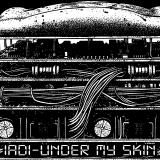
IADI - Under My Skin

IADI

Under My Skin

12inchNEOLIFE003
Neo Life
03.04.2026out soon

Between flesh and silicon. “Under My Skin” (2026) is the first album by IADI, released by Neo Life. A record like few
others, highly conceptual, cover art included. Its essence lies in the folds of the increasingly ambiguous relationship
between man and machine, where the former designs the latter and, perhaps without fully realizing it, is gradually
destined to adapt and be reprogrammed by it. Each track of “Under My Skin” is, in fact, a sort of interface, connector, or
any other imaginative point of contact between two creative phases, amid emotional impulses and binary calculations.
The sonic architecture oscillates between analog warmth and algorithmic coldness, constructing landscapes in which
pulsating synthesizers and mechanical rhythms seem to question each other. There's no linear narrative, but rather a
progressive immersion in a zone of near-friction, where the comfort of technology coexists with more than a faint
musical uneasiness, like a background noise that never ceases to remind you who's truly in charge. In “Under My Skin”,
the machine is neither an enemy nor a simple instrument: it's a real presence, intimate, even tactile, amplifying desires,
fears, and dreams of dawns beyond the digital realm. Intelligent dance music. Less noise, more sensations. Electronic,
but profoundly human.
The final result, then, is a music project that speaks to the present, yet sounds like an X-ray of the future, capturing that
fragile moment when humanity and technology stop observing each other from afar and begin to merge, track after
track. It's no coincidence that IADI's album opens with “Impulse”, an immediate expression of an electrical impulse, for
both humans and machines, which is also the language of the nervous system, as fast as it is vital—pure energy and
rhythm, a track as intense as it is irregular. And after this introduction, it's the turn of the equally erratic “Axon”, whose
title describes the neuron that transmits the signal over distance, telling the listener to sit back and relax for a new
journey through the notes toward the more melodic “Cortex”. The cerebral cortex, the ultimate seat of thought and
memory, becomes the source from which the musical flow of the first part of the work is drawn.
Then, suddenly, an automatic, or instinctive, response to the constant succession of impulses: “Reflex”, or zerotemperature techno, with a fragmented pace, featuring vocal samples, breaks, and restarts. In the producer's
imagination, the subsequent, and conversely placid, “Neuron” represents the emotional core of the second part of the
work, providing a kind of respite from the seething vibrations. While the neuron is the basic unit of the nervous system,
the synapse is the functional connection point between one neuron and another effector cell, essential for the
transmission of nerve impulses and communication in the nervous system, enabling functions such as learning and
movement. Likewise, a track like “Synapse” once again illuminates the path traced by IADI. The more experimental and
streamlined “Static” instead suggests true ordered chaos. “Dreamstate” is the conclusion suspended in the void, relating
to that dreamlike state between waking and sleeping, where consciousness fades toward infinity and visions begin. Pure
fading into the subconscious. Eternal return to where it all began. Dancing is a form of consciousness. Every beat is a
question. IADI, however, holds all the answers you need.

pre-ordina ora

Questo articolo non è stato ancora rilasciato. È possibile pre-ordinare il prodotto ora.

21,81
Chris Liebing - Evolver LP 2x12"

Chris Liebing's first full solo techno LP, 'Evolver' is released on 27th March 2026, via his own CLR imprint. The German techno don's LP features a host of collaborators across music, images, and artwork. Luke Slater, Charlotte De Witte, Speedy J, The Advent, Terence Fixmer, Pascal Gabriel, Daniel Miller contribute to the music, while long-time collaborators Studio Bergfors deliver design, and legendary photographer Anton Corbijn shot Liebing for the project.

The Evolver LP is the sum total of Chris Liebing's three decades at the beating heart of techno. It's the record only someone whose first break as a techno DJ was playing five hours at Sven Väth's infamous Omen in Frankfurt - and who has ridden out every twist and turn of life and subcultures since, while remaining rooted in the true school, dark, sweaty techno sweat pits of the world - could have made. It's the result of deep introspection, but it's about utter immediacy. It's the sound of someone previously driven along by compulsion and happenstance at last finding the confidence to be utterly intentional about their practice, allowing them to take the most classic, familiar, proven elements from the past and render them completely new.

Evolver is also Liebing's first completely solo album. There are collaborations, yes: with old friends from the OG techno generation, Luke Slater, Speedy J, and The Advent, all on uncompromising form, and with new generation figurehead Charlotte De Witte, who provides a thrilling narration of total surrender to the moment on acid clarion call "Symphonie des Seins". But unlike all Liebing's albums to date, there's no co-pilot. Every structure, every mixdown, every choice serves his singular vision of how his untold immersion in the surging currents of the world's greatest clubs should sound. The elements are all those forged in the white heat of Omen and Tresor in the mid 90s - brutal repetition, titanium kick drums, industrial atmospherics, but also dark rave euphoria, ever present surging acid lines just on the cusp of trance, and just enough human voices to remind you of bodies on the dance floor - but rendered with all the extraordinary accumulated skill and technological developments since then.

It's Chris's vision entirely, his musings on sound, technology, and life birthing tracks like "Roy Batty." Inspired by thoughts of AI becoming sentient and hungering for more life like Rutger Hauer's titular Blade Runner character, it was one of the first tracks to emerge and a foundation stone for the album. And in pursuit of that vision, it's built like a "proper album". The anticipation and menace of intro "Unfold" tip over into the glowing hot high drama psychedelia of "Symphonie…" then the breathless headlong rush of The Advent collab and on through an unfolding narrative that goes deep, goes dark, opens out into grand vistas, takes strange turns before finally landing on the alien landscape of… well… "Endtrack".

Not everything is pummelling on Evolver - the dazzling title track feels like you've been welcomed into the courtly dance of a higher dimension civilisation, and the audacious Speedy J collab "Shaping Frequencies" is a beatless flow that tests the boundaries between signal and noise. But for all its complexity, conceptualism, and stylistic branching out, every last part unmistakably powered by that dark techno-cavern energy above all else. All of it positively radiates the qualities of Liebing's greatest work and sets to date - but somehow even more so than before. Whether you're listening for aesthetic inspiration, cerebral stimulation or just that raw physical power, this album will sweep you up into its momentum and won't let go of you until it's done.

non in magazzino

Ordina ora e ordineremo l'articolo per te presso il nostro fornitore.

31,51

Last In: 14 days ago
KÉPA - SOUL WASH SERVICES

Kēpa is built whole, even if life has broken a few bones along the way.

Back when he was a pro skater, he gave everything to the board. Today, he gives that same intensity to the stage, delivering hypnotic cine-concerts where motion, sound, and image blur into one. The only falls left now are the ringing final chords of his guitar — not just an instrument, but an extension of his body.

Fingerpicking is his native tongue. So much so that Kēpa no longer sings — he lets the strings speak. Percussive, alive, essential. This music isn’t about performance, it’s about living: a personal quest, a way to reach others by first going inward. Moving against the current without fighting the wind. Finding breath, essence, and remembering we’re all drifting on a spinning planet, surrounded by forces bigger than us.

It’s easier to look away. Easier to follow noise, fear, or false prophets. Harder — and braver — to truly connect.

Released in late 2025, Hotline Service opened the door, offering a wide-open, spiritual escape. With SOUL WASH SERVICES— produced by Timber Timbre — Kēpa goes further. Warmer, deeper, more focused. The album feels like sunlight on asphalt, a long drive with the windows down, time slowing just enough to let something real surface.

A kindred spirit to Hermanos Gutiérrez, Kēpa plays the role of a modern, pagan preacher — guiding us through a dusty, golden road movie that unfolds entirely inside the listener. His music doesn’t shout; it cleans.

Kēpa does it all: writes, plays, films, edits, mixes. Music becomes image, image becomes music. Nothing is separate, on record or on stage. There’s no excess, no showboating — just an open invitation to slow down, go deeper, aim higher.

Tracks like Solarium and Paradisiac reach the peaks with minimal gear: five strings, a few picks, and total control of touch and space. Listening to Kēpa feels like checking in with yourself — a quiet inner trip shaped by sounds from every corner of the world. Blues, not to feel them, but to leave them behind.

After years devoted to picking, his playing has become something sacred.

And if you let it, it carries you with it.

pre-ordina ora30.03.2026

dovrebbe essere pubblicato su 30.03.2026

20,59
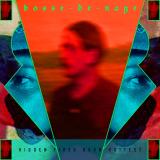
Bosse-De-Nage - Hidden Fires Burn Hottest (2x12")
  • 1: Where To Now?
  • 2: Mementos
  • 3: In The Name Of The Moth
  • 4: With A Shrug
  • 5: No Such Place
  • 6: Triangular Dream
  • 7: Underwater
  • 8: Frenzy
  • 9: Immortality Project
  • 10: Leviathan
disponibile anche

Black Vinyl[34,03 €]

CASSETTE[18,07 €]


There's a tendency in metal to mistake aggression for honesty, volume for depth. To confuse the performance of darkness with its actual weight. Hidden Fires Burn Hottest, the new album from San Francisco-based post-black metal band Bosse-de-Nage, sidesteps this entirely. It’s the group’s most fully realized work yet, precisely because it refuses to be pinned down.

Bosse-de-Nage have been working with The Flenser for over fifteen years. They were one of the first bands the label ever partnered with and have the longest active relationship in the label's history. But unlike most bands who build momentum through constant touring and visibility, Bosse-de-Nage has largely existed apart from the music world's usual machinery. They've evolved on their own terms, in relative isolation, allowing the work to develop without outside pressure or influence. What began rooted in black metal anonymity has mutated into something that actively defies categorization. The aggression is still there, but it's no longer the point. Hidden Fires Burn Hottest finds the band treating emotions like physical objects, feelings with spatial properties. “No Such Place"" describes a space that can't exist but does anyway, somewhere between thought and location. ""Immortality Project"" examines infinite possibility not as promise but as problem, endless options collapsing under their own weight. These songs don't use metaphor to describe emotion. They make emotion into something you could theoretically touch.
Tracked by Jack Shirley (Deafheaven, Oathbreaker) at Atomic Garden East and mixed and mastered by Richard Chowenhill of Agriculture, Hidden Fires Burn Hottest was years in development, with some tracks beginning in 2018.

The long writing process offered time that most records don't get. Time to live with ideas, revise endlessly, to let structures settle. For the first time, lyricist Bryan Manning wrote everything in advance, creating a surplus to pull from rather than working under deadline pressure. The difference shows.
Coming off Further Still, an album built on constraint and economy, Bosse-de-Nage sought the opposite: sprawl, strangeness, fewer rules. Space for ideas to develop without rushing them. Dynamics that move through quiet as much as noise. Presence earned through atmosphere instead of volume. The record even includes ""Mementos,"" which might be considered the first love song the band has ever written.

Nothing here coheres into a theme. These are pieces pulled from low moments and private feelings made public through sound. The band has never been interested in positivity, in music that resolves cleanly or offers comfort. But bleakness doesn't mean humorlessness. There's something darkly funny running through much of it, even when it shouldn't be.
Hidden Fires Burn Hottest doesn't explain itself. It just insists: what you feel is as real as what you can see."

pre-ordina ora27.03.2026

dovrebbe essere pubblicato su 27.03.2026

35,50
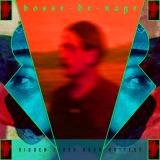
Bosse-De-Nage - Hidden Fires Burn Hottest (TAPE)

There's a tendency in metal to mistake aggression for honesty, volume for depth. To confuse the performance of darkness with its actual weight. Hidden Fires Burn Hottest, the new album from San Francisco-based post-black metal band Bosse-de-Nage, sidesteps this entirely. It’s the group’s most fully realized work yet, precisely because it refuses to be pinned down.

Bosse-de-Nage have been working with The Flenser for over fifteen years. They were one of the first bands the label ever partnered with and have the longest active relationship in the label's history. But unlike most bands who build momentum through constant touring and visibility, Bosse-de-Nage has largely existed apart from the music world's usual machinery. They've evolved on their own terms, in relative isolation, allowing the work to develop without outside pressure or influence. What began rooted in black metal anonymity has mutated into something that actively defies categorization. The aggression is still there, but it's no longer the point. Hidden Fires Burn Hottest finds the band treating emotions like physical objects, feelings with spatial properties. “No Such Place"" describes a space that can't exist but does anyway, somewhere between thought and location. ""Immortality Project"" examines infinite possibility not as promise but as problem, endless options collapsing under their own weight. These songs don't use metaphor to describe emotion. They make emotion into something you could theoretically touch.
Tracked by Jack Shirley (Deafheaven, Oathbreaker) at Atomic Garden East and mixed and mastered by Richard Chowenhill of Agriculture, Hidden Fires Burn Hottest was years in development, with some tracks beginning in 2018.

The long writing process offered time that most records don't get. Time to live with ideas, revise endlessly, to let structures settle. For the first time, lyricist Bryan Manning wrote everything in advance, creating a surplus to pull from rather than working under deadline pressure. The difference shows.
Coming off Further Still, an album built on constraint and economy, Bosse-de-Nage sought the opposite: sprawl, strangeness, fewer rules. Space for ideas to develop without rushing them. Dynamics that move through quiet as much as noise. Presence earned through atmosphere instead of volume. The record even includes ""Mementos,"" which might be considered the first love song the band has ever written.

Nothing here coheres into a theme. These are pieces pulled from low moments and private feelings made public through sound. The band has never been interested in positivity, in music that resolves cleanly or offers comfort. But bleakness doesn't mean humorlessness. There's something darkly funny running through much of it, even when it shouldn't be.
Hidden Fires Burn Hottest doesn't explain itself. It just insists: what you feel is as real as what you can see."

pre-ordina ora27.03.2026

dovrebbe essere pubblicato su 27.03.2026

18,07
The Clockworks - The Entertainment LP
  • How To Exist
  • Best Days
  • Getaway Car
  • La Dolce Vita
  • Work In Progress
  • The Actor
  • Magnificent Seven
  • The Double
  • Well Well Wellness
  • Through The Looking Glass
  • True Romance
  • The Entertainment

Formed in Galway City, Ireland James McGregor (vocals/ guitar), Sean Connelly (guitar) and Damian Greaney (drums) went to school together there and met Tom Freeman (bass) on the music scene. Relocating to London in 2019, the quartet signed to Alan McGee's new record label 'Creation23' almost overnight. They have since impressed audiences across Europe with live performances at festivals including Rock Werchter, Eurosonic and Electric Picnic, performing to a huge crowd at Sefton Park in Liverpool in support of Kings of Leon, as well as a head- turning televised appearance on Sky 1's Soccer AM. Media have been quick to show their support too plus previous singles, taken from their 2023 debut "Exit Strategy" received praise on BBC Radio 1's Annie Mac on her "New Names" showcase, BBC 6 Music's Steve Lamacq on his 'Recommends' show, received day-time radio play on RTE 2FM, and impressed the legendary Rodney Bingenheimer on Sirius XM.

The four-piece are drawn together by not only a mutual appreciation of music past and present but also a love of films and books, notably the ones on the more 'noir' side of the spectrum. You could say Arctic Monkeys got them into a band, The Strokes showed them how tightly you could distil it and Radiohead showed them how wide you could take it. But these days there not afraid to also put Billie Eilish and Charlie XCX into that mixture and films from director Fellini to "Drive". What matters is that from starting out playing acoustic folk, that turned into 3 minute (post-)punkish songs, they now have expanded a lot from there, taking in all the experience they have now recording and touring. Pushing the emotion by being authentic and creating what you really want despite the noise and haste around you.

pre-ordina ora27.03.2026

dovrebbe essere pubblicato su 27.03.2026

5,87
Mark Vernon - Sounds of the Modern Hospital LP
 
33
disponibile anche

Tape[13,66 €]


Death Is Not The End reissue Mark Vernon's sought-after 2013 collection Sounds of a Modern Hospital on vinyl & cassette formats.

Whilst every effort has been made to record the subject in as great a degree of isolation as possible, the sound recordings you will hear on this record were made in a real working hospital and not under controlled conditions. Therefore, on occasion, you may hear some unavoidable background noise, conversations and other extraneous sounds.

All recordings were made by Mark Vernon at Forth Valley Royal Hospital, Larbert, Stirling Community Hospital and Falkirk Community Hospital between 2011 and 2013.

non in magazzino

Ordina ora e ordineremo l'articolo per te presso il nostro fornitore.

22,48

Last In: 29 days ago
Peter Gabriel - In The Big Room LP 2x12"
  • A1: Burn You Up, Burn You Down 04:23
  • A2: More Than This 6:12
  • A3: Games Without Frontiers 5:01
  • A4: Downside Up 5:30
  • B1: Mercy Street 6:39
  • B2: Darkness 6:45
  • B3: Digging In The Dirt 6:31
  • B4: The Tower That Ate People 5:01
  • C1: San Jacinto 8:24
  • C2: Shock The Monkey 5:26
  • C3: Signal To Noise 8:04
  • D1: Secret World 8:26
  • D2: Father, Son 4:26
  • D3: In Your Eyes 10:00

"In The Big Room" enthält Aufnahmen von Peter Gabriel und seiner Band, die am 23. November 2003 live im Big Room der Real World Studios aufgenommen wurden.

Dieses intime Konzert war für Mitglieder von Peter Gabriels Full Moon Club und fand während einer kurzen Reihe von Live-Shows im November 2003 statt, zu denen auch ein Auftritt für die britische Wohltätigkeitsorganisation Children in Need im Cyfarthfa Castle in Merthyr Tydfil, eine Show im Brighton Centre und das Nelson Mandela 46664 Concert in Kapstadt gehörten.

Das 14 Songs umfassende Set enthält Material, sowohl aus der "Growing Up" Live-Tournee von 2002/2003 – Gabriels erster Tournee seit 10 Jahren, die mit der Veröffentlichung seines Albums "UP" einherging – als auch aus der anschließenden "Still Growing Up" Live-Tour, die sich über einen Großteil des Jahres 2004 erstreckte. Besonders bemerkenswerte Ergänzungen zum "Growing Up" Live-Set sind "Burn You Up, Burn You Down", "Games Without Frontiers" und "The Tower That At People".

pre-ordina ora13.03.2026

dovrebbe essere pubblicato su 13.03.2026

30,67
Kim Gordom - PLAY ME

Kim Gordom

PLAY ME

12inchOLELPE2198
Matador/Beggars Group
13.03.2026

Kim Gordon hat Kunst und Noise über Jahrzehnte immer wieder neu gedacht - und dabei nie an Schärfe verloren. Vierzig Jahre nach ihren Anfängen wirkt ihre Vision noch immer provokant. Dieses Abenteuer setzt sie mit ihrem dritten Soloalbum "PLAY ME" fort, das am 13. März bei Matador Records erscheint. Mit der Ankündigung erscheint die erste Single "NOT TODAY", begleitet von einem Kurzfilm der Modedesignerinnen und Filmemacherinnen Kate und Laura Mulleavy (Rodarte). Gordon trägt darin ein eigens für sie gefertigtes, handgefärbtes Seidentüllkleid. Der Song offenbart eine neue, fast poetische Spannung in ihrer Stimme: "Da kam eine andere Stimme zum Vorschein", so Gordon. "PLAY ME" ist ein konzentriertes, direktes Album, das ihren Sound um melodischere Beats und den motorischen Drive des Krautrock erweitert. Entstanden ist es erneut mit Produzent Justin Raisen (Charli XCX, Sky Ferreira, Yves Tumor). Die Songs sind kurz, prägnant und stark rhythmusorientiert - fokussierter und selbstbewusster als zuvor. Nach "No Home Record" (2019) und "The Collective" (2024, zwei Grammy-Nominierungen) richtet Gordon den Blick auf die Gegenwart: Tech-Macht, KI-getriebene Kulturverflachung, den Abbau demokratischer Strukturen und den absurden Alltag des Spätkapitalismus. Trotz dieser Themen ist "PLAY ME" ein nach innen gewandtes, geradezu körperliches und ebenso emotionales Album. Mit verzerrten Stimmen und schroffen Beats legen Songs wie "Square Jaw", "Dirty Tech" oder "Busy Bee" gesellschaftliche Realitäten frei. Der Titeltrack entlarvt die Logik einer durchkuratierten Komfortkultur. "PLAY ME" ist radikal gegenwärtig, widerständig und kompromisslos eigenständig.

non in magazzino

Ordina ora e ordineremo l'articolo per te presso il nostro fornitore.

21,81

Last In: 36 days ago
Taupe - waxing | waning

Taupe

waxing | waning

12inchMIN75LP
Minority Records
06.03.2026
  • 1: Lemonade Tycoon
  • 2: Anti-Bird-Spike-Bird-Nest
  • 3: Interlude (Stride)
  • 4: Allcapsallbold
  • 5: Pet Boss

Taupe’s latest album release, waxing | waning delivers jazz experimentalism, ‘skronk’, avant-rock, and electronics, by the Glasgow-based trio, due out via Minority Records. Across its seven tracks, waxing | waning captures Taupe’s approach – bold and boundary pushing – shaped by a fresh shift in the band’s dynamic and compositional approach.

Taupe’s waxing | waning, co-composed and realised by its players in a studio that was once an undertaker’s premises in Glasgow, is an absolutely affirmative album, an act of cultural defiance in desperate times.

Comprising Mike Parr-Burman (guitar, bass guitar, electronics), Jamie Stockbridge (alto and baritone saxophones) and Alex Palmer (drum kit, percussion), Taupe work up a storm of skronk, free jazz and harmolodic frenzy whose closest relations include Zu, Melt Banana and John Zorn. However, waxing | waning is from its opening, stuttering blasts, an exercise in seeking out and claiming new territory, finding unique and novel permutations in which jazz, rock, electronics interbreed at breakneck pace. Here is a group determined to say and do things they don’t get to say and do elsewhere in their musical lives.

‘Lemonade Tycoon’ hits the ground skronking. It’s cubistic jazz, cumulative in its impact, avoiding the white lines of the conventional freeway, bridling, bustling, coming at you from all angles – a three way conversation of astonishing rapidity, fast track, telepathic communication – everyone from James Chance to Albert Ayler coming at you at once, before morphing in to a spidery scrawl of electronics and furious percussion. ‘Anti-Bird-Spike BirdNest’s‘ title somehow sums up the sort of mental images evoked by the music – its sheer creative disobedience, as if being chased in vain, like a delivery rider evading capture by ICE agents -– shapeshifting, assuming different shades, sprouting metal quills and, in its midsection, seeming almost to swallow itself alive, before regurgitating itself in a sublime mess.

‘Interlude (Stride)’ is not exactly ambient, more a horizontal enmeshment of percussion, drones, reverberant noise, electronics, a sonic mulch. ‘allcapsallbold' reminds of early Aksak Maboul, in its playfulness, a haywire series of short phrases, subject to mechanical interference, a complex weave of irregular rhythms, increasingly eloquent sax phraseology and caustic guitars, which land heavier and heavier. ‘Pet Boss' is the new jazz equivalent of a highly evolved, mature conversation among brilliant equals, sharp, empathetic, complementary, rising to a collective, joyful noise. On the title track, electronics descend like a shower of bright particles, intensifying in their luminosity, whitening the skies, as sax and drums kick up a tempestuous, spontaneously sculpted noise that summons the ghosts of the great free jazz players, before a dark calm descends slowly. Finally, ‘Turn Push Kick’, a burgeoning chatterstorm of electronics, before the group kicks in, at angles to one another, led by abrasive guitars, reminiscent of Sunn O))) in their ritualistic concussion, riffing, digging deep amid squealing sax and piledriving percussion.

pre-ordina ora06.03.2026

dovrebbe essere pubblicato su 06.03.2026

22,65
Various - The Sound of Hardstyle Vol. 2 LP

The Sound of Hardstyle Vol. 2 – The Anthems marks the long-awaited return of the iconic vinyl series, celebrating the most unforgettable anthems that defined an era. This exclusive release features monumental tracks like ‘Scrap Attack’ by Headhunterz, ‘Lost In Dreams (Alpha² Remix)’, and Alternate Reality, the legendary Qlimax anthem by Brennan Heart.

Each groove on this vinyl takes you back to a time when anthems weren’t just tracks, they were moments that united crowds, shaped festivals, and pushed the boundaries of the Hardstyle sound.

Whether you’re a vinyl collector or a true Hardstyle devotee, The Sound of Hardstyle Vol. 2 – The Anthems is a must-have piece of history.

non in magazzino

Ordina ora e ordineremo l'articolo per te presso il nostro fornitore.

21,43

Last In: 4 months ago
Kaleidobolt - Karakuchi

Kaleidobolt

Karakuchi

12inchSVART372LP
Svart Records
06.03.2026
  • 1: Tinkerbell
  • 2: Lights On, Nobody Home
  • 3: Coping
  • 4: Astro Boy/Ochanomizu
  • 5: Duuude
  • 6: Friends Of Fire
  • 7: A Chance Of A Lifetime
  • 8: Turn Of Luck
disponibile anche

Turquoise/Black Smoke Vinyl[24,33 €]


KALEIDOBOLT’s fifth album is pungent to the ears – KARAKUCHI out in March Karakuchi is one record you can judge by its cover. The first time Kaleidobolt’s faces have adorned an LP, they have been fused into a torpedoing biomechanical vehicle. Echoing The Birthday Party’s Junkyard or Motörhead’s Orgasmatron (…on acid?!), the illustration epitomises perfectly Kaleidobolt’s agenda of “hyperkinetic rock”. Their feverish, psych-prog sound is full of motion. It jerks around at different speeds, threatening to spin out of control and crash into flames at any given moment. What’s more, it isn’t taken too seriously. This is heavy and intricate music, yes. But as bassist and co-singer Marco Menestrina puts it, the Kaleidobolt attitude is “an ugly smirk more than an angry face with a fist.” On their fifth album since forming in 2014, the Helsinki-based outfit lean into their strengths as a formidable power trio. With their previous two records, 2019’s Bitter and 2022’s This One Simple Trick, they had thrown everything at their disposal into the recording with no expense spared on overdubs, effects and kitchen sinks. Produced again by Niko Lehdontie (Oranssi Pazuzu), Karakuchi comes from tightly rehearsed, live-in-the-studio takes. Kaleidobolt realise that greater sparsity can be a strength, and they’ve allowed their instruments extra space to breathe. It makes for their earthiest, purest and perhaps most authentic record to date. Karakuchi’s exuberant style emerges from the individual members’ contrasting listening habits. These span classic prog, Japanese city pop, noise rock, post-hardcore and historical podcasts. One record they can all agree is a masterpiece, the centre of the Venn diagram where all three members meet, is King Crimson’s Red. As for their new album’s title, that’s as suitable as the cover art. “Karakuchi” is the slogan of the Japanese beer brand Asahi Super Dry. Translated literally, this means “pungent to the mouth”. As drinkers of that product, Kaleidobolt acknowledge its parallels to their songs. “It’s very intense, right at the front, like at the first bite,” explains Menestrina. “And then it leaves your mouth feeling refreshed. The flavour doesn’t linger in your mouth, basically. It has a quick, hard finish. With a bit of a stretch, we thought that that could also be said of our music.” Karakuchi is Kaleidobolt at their hardest, fastest, tightest and super-driest. Pungent to the ears. -JR Moores, November 2025

pre-ordina ora06.03.2026

dovrebbe essere pubblicato su 06.03.2026

23,49
Kaleidobolt - Karakuchi

Kaleidobolt

Karakuchi

12inchSVART372LPB1
Svart Records
06.03.2026
  • 1: Tinkerbell
  • 2: Lights On, Nobody Home
  • 3: Coping
  • 4: Astro Boy/Ochanomizu
  • 5: Duuude
  • 6: Friends Of Fire
  • 7: A Chance Of A Lifetime
  • 8: Turn Of Luck
disponibile anche

Black Vinyl[23,49 €]


KALEIDOBOLT’s fifth album is pungent to the ears – KARAKUCHI out in March Karakuchi is one record you can judge by its cover. The first time Kaleidobolt’s faces have adorned an LP, they have been fused into a torpedoing biomechanical vehicle. Echoing The Birthday Party’s Junkyard or Motörhead’s Orgasmatron (…on acid?!), the illustration epitomises perfectly Kaleidobolt’s agenda of “hyperkinetic rock”. Their feverish, psych-prog sound is full of motion. It jerks around at different speeds, threatening to spin out of control and crash into flames at any given moment. What’s more, it isn’t taken too seriously. This is heavy and intricate music, yes. But as bassist and co-singer Marco Menestrina puts it, the Kaleidobolt attitude is “an ugly smirk more than an angry face with a fist.” On their fifth album since forming in 2014, the Helsinki-based outfit lean into their strengths as a formidable power trio. With their previous two records, 2019’s Bitter and 2022’s This One Simple Trick, they had thrown everything at their disposal into the recording with no expense spared on overdubs, effects and kitchen sinks. Produced again by Niko Lehdontie (Oranssi Pazuzu), Karakuchi comes from tightly rehearsed, live-in-the-studio takes. Kaleidobolt realise that greater sparsity can be a strength, and they’ve allowed their instruments extra space to breathe. It makes for their earthiest, purest and perhaps most authentic record to date. Karakuchi’s exuberant style emerges from the individual members’ contrasting listening habits. These span classic prog, Japanese city pop, noise rock, post-hardcore and historical podcasts. One record they can all agree is a masterpiece, the centre of the Venn diagram where all three members meet, is King Crimson’s Red. As for their new album’s title, that’s as suitable as the cover art. “Karakuchi” is the slogan of the Japanese beer brand Asahi Super Dry. Translated literally, this means “pungent to the mouth”. As drinkers of that product, Kaleidobolt acknowledge its parallels to their songs. “It’s very intense, right at the front, like at the first bite,” explains Menestrina. “And then it leaves your mouth feeling refreshed. The flavour doesn’t linger in your mouth, basically. It has a quick, hard finish. With a bit of a stretch, we thought that that could also be said of our music.” Karakuchi is Kaleidobolt at their hardest, fastest, tightest and super-driest. Pungent to the ears. -JR Moores, November 2025

pre-ordina ora06.03.2026

dovrebbe essere pubblicato su 06.03.2026

24,33
XDCVR - I HATE THAT SHIT, I HATE ALL THAT SHIT (Tape)
  • 01: Just Because You Don&Apos;T Believe That I Want To Dance, Don&Apos;T Mean That I Don&Apos;T Want To
  • 02: Psalm 68 (22-35)
  • 03: Cyber Feminism Index
  • 04: Faithful And True
  • 05: Crimes Of The Future
  • 06: Rider On The White Horse
  • 07: The Royal Arch
  • 08: Best Served Cold
  • 09: Op1 Dead
  • 10: Ai Futurr

XDCVR_ unveils 'I HATE THAT SHIT, I HATE ALL THAT SHIT' a blistering sonic manifesto on the 'performativity of decay'.

In a world saturated with digital perfection, the album emerges as a vital, hand-made act of electronic rebellion.

Framed as a "soundtrack for the end stretch" the record explores the notion that societal decay is not a passive process, but an active performance—a machine chugging along long after its wheels have fallen off.

This is cyborg music for a bifurcated reality: carbon-fiber toughness shielding a core of systemic rot. The sound palette is intentionally raw and imperfect, a direct challenge to the sterile, automated order of what the artist calls the "techno-fascist oligarchy."

Tracks eschew conventional temporality, mirroring the feeling of existing in two concurrent timelines—one hyper-aware of the collapse, the other numbly consuming it.

Drawing a line from the Cold War anxieties of the past to the data-farming dystopia of the present, 'I HATE THAT SHIT…' posits art as the last authentic incubator for societal change. It is, in the artist's words, "a deliberate 'fuck you' to the oppressive order of the status quo. This is not easy listening; it is a contested space, a lit fuse, and a necessary noise for our complicated times."

pre-ordina ora06.03.2026

dovrebbe essere pubblicato su 06.03.2026

17,23
Articoli per pagina:
N/ABPM
Vinyl