Standard redefined The professional RMX-95 4+1 channel club mixer blurs the lines between analogue workflow and digital technology. The RMX-95 is a cutting-edge, extraordinarily versatile creative tool thanks to its dual-USB 2.0 interface, redesigned effects section, optional MIDI mapping of all controls and smooth integration of the djay Pro DJ software. The club mixer has a familiar and user-friendly interface, making it suitable for both professional and hobby DJs.
Surgical sound manipulation in every detail Will you go for ''Classic'' or ''Kill''? The RMX-95's 3-band EQ can be adjusted to allow maximum sound control for unique results. Echo, Reverb, Flanger, Phaser, Vinyl Brake, Loop Roll, Noise, Pitch Shift, Delay, Ping Pong Delay, Tape Delay, Bit Crusher and Transformer are just some of the many studio-quality effects included in the brand-new Beat FX unit. The dedicated FX frequency control (LPF/HPF) lets you apply the effects to a specific frequency range for a more unique sound. And that's not all: Each channel also features a bipolar filter unit (LPF and HPF) with real-time resonance adjustment. This allows for even more complex sound productions. Two digital displays show parameter changes in real time for precise control that goes beyond hearing. Connections galore The RMX-95 also excels in terms of connectivity: Four CD, two line, and two phono inputs are available on the four input channels. The separate microphone channel has two microphone connections (1 x jack, 1 x jack/XLR combination jack) and an additional AUX input. The master output offers RCA or balanced XLR cable connections. The booth output has two jack connections for stereo operation. However, it can also be used in mono mode.
A recording device can be connected to the Rec output via RCA jacks to record DJ sets regardless of the master output level. Last but not least, the DJ mixer has two jacks for headphones. Crisp cuts and smooth blending The adjustable curve of all faders provides DJs with the creative flexibility they want while mixing. Turntablists and scratch wizzards can also upgrade the crossfader with the contactless RMX innoFADER. Maximum flexibility: dual-USB audio interface Superior 24-bit sound quality is provided by the ten inputs and outputs of the high-quality dual-USB 2.0 interface. The two USB ports allow smooth transitions between DJs and maximum flexibility when using different setups in a single club night. In addition, the active USB hub enables the connection of additional USB devices. Fully digital architecture The RMX-95's digital architecture transforms the DJ mixer into an individually mappable MIDI controller. As part of this, the setup menu provides a wealth of customisable options, such as EQ frequency range, Neural Mix EQ mode, audio interface routing, and zone routing for the booth output. DVS-enabled for djay Pro & Neural Mix The RMX-95 works with Algoriddim djay Pro via plug and play. The DJ app's ground-breaking Neural Mix function lets you isolate beats, melodies, and vocals in the mix in real time. The RMX-95 supports djay Pro's advanced DVS integration with Mac, PC, iPhone and iPad.
The DJ software is also compatible with streaming services like Apple Music, Tidal, SoundCloud, Beatport and Beatsource. Indestructible design The club mixer's sleek black metal surface is not only eye-catching but also highly durable. The solid metal housing and hard-wearing metal shafts in all of the built-in potentiometers and switches provide a long service life, even with heavy club use. An internet connection and a separate Apple Music, Tidal, Beatport, Beatsource or SoundCloud subscription is required to use this service.
Professional 4+1-channel DJ club mixer - DUAL 10 In/Out USB 2.0 audio interface with superb, 24-bit sound quality
New Beat FX unit with multiple effects in studio quality: Echo, Reverb, Flanger, Phaser, Vinyl Brake, Loop Roll, Noise, Pitch Shift, Delay, Ping Pong Delay, Tape Delay, Bit Crusher,Transformer - FX frequency control (LPF/HPF) for manipulating effects in selected frequency band -
Sound filters: Bi-polar filter unit with LPF and HPF - Realtime resonance control for channel filters - Active USB hub to connect USB accessories
3-band EQ with adjustable behaviour (classic/kill) -
Two digital displays showing real-time information of parameter changes -
Digital mixer architecture with extensive adjustment options - Extensive setup menu, including:
- EQ frequency range (low, high)
- Neural Mix EQ mode
- Audio interface routing
- Booth output zone routing (matrix)
- Cue solo option
- RMX innoFADER compatible
- Adjustable linefader and crossfader curves
- MIDI-compatible control elements
- 2x High-retention USB 2.0 port, especially durable
- 2x Headphone outputs via 6.3/3.5 mm stereo jack with split cue
- 2x Mic inputs with dedicated MIC ON button
- Booth output in stereo or mono
- High-quality and hard-wearing, pure black metallic finish
- Sturdy construction in a metal housing with bolted metal shafts
- Kensington lock to secure the device
- Incl. instruction manual, power cord and USB cable
- Frequency Range: 20 Hz - 20 kHz +2/-3dB - Inputs: 7x line RCA, 2x phono RCA, 1x mic combo-XLR/jack, 1x mic 6.3mm jack (TR), 2x USB port - Outputs: master XLR (balanced), master RCA (unbalanced), booth (TRS) (balanced), rec RCA (unbalanced), 1x headphones 6.3mm jack, 1x headphones 3.5mm jack - EQ range classic at 70 Hz, 1 kHz, 13 kHz: -26 dB/+9 dB - EQ range isolator at 70 Hz, 1 kHz, 13 kHz: -90 dB (total kill)/+9 dB - EQ range mic at 100 Hz, 10 kHz: -12 dB/+ 12dB - EQ headphones at 100 Hz, 10 kHz: -29dB - Power Source: AC100-240V, 50/60Hz - Power Consumption: 29 W - Dimensions: 322(W) x 387(D) x 107.5(H) mm - Weight: 6.8 kg
dimensions (LxWxH) in mm
445x442x153
dimensions outerbox in mm
460x452x327
Buscar:real t
Repress!
In the mid-1970s, a force of nature swept across the continental United States, cutting across all strata of race and class, rooting in our minds, our homes, our culture. It wasn’t The Exorcist, Goodbye Yellow Brick Road, or even bell-bottoms, but instead a book called The Secret Life of Plants. The work of occultist/former OSS agent Peter Tompkins and former CIA agent/dowsing enthusiast Christopher Bird, the books shot up the bestseller charts and spread like kudzu across the landscape, becoming a phenomenon. Seemingly overnight, the indoor plant business was in full bloom and photosynthetic eukaryotes of every genus were hanging off walls, lording over bookshelves, and basking on sunny window ledges. The science behind Secret Life was specious: plants can hear our prayers, they’re lie detectors, they’re telepathic, able to predict natural disasters and receive signals from distant galaxies. But that didn’t stop millions from buying and nurturing their new plants.
Perhaps the craziest claim of the book was that plants also dug music. And whether you purchased a snake plant, asparagus fern, peace lily, or what have you from Mother Earth on Melrose Avenue in Los Angeles (or bought a Simmons mattress from Sears), you also took home Plantasia, an album recorded especially for them. Subtitled “warm earth music for plants…and the people that love them,” it was full of bucolic, charming, stoner-friendly, decidedly unscientific tunes enacted on the new-fangled device called the Moog. Plants date back from the dawn of time, but apparently they loved the Moog, never mind that the synthesizer had been on the market for just a few years. Most of all, the plants loved the ditties made by composer Mort Garson.
Few characters in early electronic music can be both fearless pioneers and cheesy trend-chasers, but Garson embraced both extremes, and has been unheralded as a result. When one writer rhetorically asked: “How was Garson’s music so ubiquitous while the man remained so under the radar?” the answer was simple. Well before Brian Eno did it, Garson was making discreet music, both the man and his music as inconspicuous as a Chlorophytumcomosum. Julliard-educated and active as a session player in the post-war era, Garson wrote lounge hits, scored plush arrangements for Doris Day, and garlanded weeping countrypolitan strings around Glen Campbell’s “By the Time I Get to Phoenix.” He could render the Beatles and Simon & Garfunkel alike into easy listening and also dreamed up his own ditties. “An idear” as Garson himself would drawl it out. “I live with it, I walk it, I sing it.”
But as his daughter Day Darmet recalls: “When my dad found the synthesizer, he realized he didn’t want to do pop music anymore.” Garson encountered Robert Moog and his new device at the Audio Engineering Society’s West Coast convention in 1967 and immediately began tinkering with the device. With the Moog, those idears could be transformed. “He constantly had a song he was humming,” Darmet says. “At the table he was constantly tapping.” Which is to say that Mort pulled his melodies out of thin air, just like any household plant would.
The Plantae kingdom grew to its height by 1976, from DC Comics’ mossy superhero Swamp Thing to Stevie Wonder’s own herbal meditation, Journey Through the Secret Life of Plants. Nefarious manifestations of human-plant interaction also abounded, be it the grotesque pods in Invasion of the Body Snatchers or the pothead paranoia of the US Government spraying Mexican marijuana fields with the herbicide paraquat (which led to the rise in homegrown pot by the 1980s). And then there’s the warm, leafy embrace of Plantasia itself.
“My mom had a lot of plants,” Darmet says. “She didn’t believe in organized religion, she believed the earth was the best thing in the whole world. Whatever created us was incredible.” And she also knew when her husband had a good song, shouting from another room when she heard him humming a good idear. Novel as it might seem, Plantasia is simply full of good tunes.
Garson may have given the album away to new plant and bed owners, but a decade later a new generation could hear his music in another surreptitious way. Millions of kids bought The Legend of Zelda for their Nintendo Entertainment System back in 1986 and one distinct 8-bit tune bears more than a passing resemblance to album highlight “Concerto for Philodendron and Pothos.” Garson was never properly credited for it, but he nevertheless subliminally slipped into a new generations’ head, helping kids and plants alike grow.
Hearing Plantasia in the 21st century, it seems less an ode to our photosynthesizing friends by Garson and more an homage to his wife, the one with the green thumb that made everything flower around him. “My dad would be totally pleased to know that people are really interested in this music that had no popularity at the time,” Darmet says of Plantasia’snew renaissance. “He would be fascinated by the fact that people are finally understanding and appreciating this part of his musical career that he got no admiration for back then.” Garson seems to be everywhere again, even if he’s not really noticed, just like a houseplant.
- A1: Flow 03:59
- A2: Indulas 04:57
- A3: Enter 07:13
- A4: Ju 06:58
- B1: Reality 05:27
- B2: Away 04:48
- B3: Utazás 05:37
- B4: Phantasia 07:26
TYSK003 constitutes the third volume on this dedicated series - hand-stamped logo and number on light gray vinyl with printed insert, designed by tysk raider.
- A1: It S Showtime - Various Performers (2.5)
- A2: That Dumb Laugh - Various Performers (1.59)
- A3: Sam Ol Joker - Various Performers (1.4)
- A4: The Real You - Various Performers (2.32)
- A5: Back On Tv - Various Performers (1.24)
- A6: Buy Me A Drink First? - Various Performers (1.13)
- A7: Trial Of The Century - Various Performers (1.42)
- A8: My Mother Had Me Committed - Various Performers (1.32)
- A9: The Saints - Various Performers (1.17)
- A10: The Other Half - Various Performers (1.43)
- B1: Social Services - Various Performers (1.41)
- B2: Knock Knock - Various Performers (1.39)
- B3: Doppelg?Nger - Various Performers (2.23)
- B4: That S All Folks - Various Performers (0.54)
- B5: Old Neighborhood - Various Performers (1.14)
- B6: Uh Oh I M In Trouble - Various Performers (1.34)
- B7: Voices - Various Performers (2.25)
- B8: There Is No Joker - Various Performers (1.5)
- B9: It S All Theater - Various Performers (2.03)
Hildur Gudnadóttir reunites with director Todd Phillips for the score to Joker: Folie à Deux, following their acclaimed work on 2019's Joker, which earned Gudnadóttir an Academy Award, GRAMMY, BAFTA and Golden Globe. Phillips describes her music as 'basically the second biggest character in the first film', and her return was never in question.
For Folie à Deux, Gudnadóttir pushed her sonic language further, inventing a new instrument to reflect Arthur's internal split. Inspired by his mental confinement, she worked with Icelandic builders to create a 'string prison' - long strings stretched through space and played with a trench cello - to evoke both euphoria and claustrophobia.
- 1: King Of The Grass
- 2: L.a
- 3: Inject Your Blood
- 4: Wires
- 5: My Girl
Following on from last year's acclaimed ‘R.O.I.’ album, Manchester’s favourite sons Aerial Salad are set to return to the fray with a brand new 5-track EP titled ‘Roi de l’herb’ to be released June 27th via Venn Records.
Having released their ‘Dirt Mall’ album during lockdown, which was a pretty grim time to put an album out, the release still eventually opened up some exciting doors for the band and captured Aerial Salad at their most Aerial Salad; loud, brash, silly and emotive.
This led swiftly to 2024’s ‘R.O.I.’ album that marked a real evolution in the band’s sound and songwriting.
“R.O.I. is a concept album but rather than being about a band, it’s from the perspective of an individual pushed to the brink of insanity by the ever-present quest from commercial success,” explains singer and guitarist Jamie Munro. “The idea came from my job; I’ve been working in the tech industry in ‘sales’. ‘Return on investment’ was probably my most uttered phrase for a few years, I was sick of it, sick of having no positive impact on the world and sick of the tech bro, double espresso, thirsty thursdays, work hard - play hard bollocks culture that comes with it. ‘R.O.I.’ is me saying ‘know what, you can actually earn a lot of money in life, even without the fallacy of educational infrastructure and financial privilege, however, it comes at the cost of your soul, time and energy. ‘R.O.I.’ is called such because it’s in the opposite pursuit, it’s not about a return on a financial investment, it’s about doing something with your life that’s enjoyable.”
This brings us crashing into 2025, no longer in the same line of spirit destroying work, with some seriously exciting gigs on the horizon, Aerial Salad wanted to kick off the next era of the band with a short, fast and hard EP and have served up 5 absolute bangers that sit somewhere between ‘Dirt Mall’ and ‘R.O.I.’ The EP is called ‘Roi de l’herb’ because of the track ‘King Of The Grass’: “We tour and play a lot in France, we’ve played most of our “best” gigs in France, so out of curiosity I wanted to see if the title would translate well, naturally, when the translation contained both “ROI” and l’herbe” - I though, fuck it, that’s about as spot on a title for this EP as we can possibly muster.”
‘King of The Grass’ is about the band’s bassist Mike Wimbo who works for Rochdale council on the greens team, which means he spends his life in the pouring rain chopping down overgrown hedges and mowing lawns. Elsewhere on the EP, ‘Inject Your Blood’ is another romantic love song inspired by the TV series ‘True Blood’ (“I’d inject your blood, into mine just to feel you close”), ‘Wires’ rages against the world of AI and GPT, whilst the EP’s opening track ‘My Girl’ is a chaotic, high energy catchy punk song, nothing profound, nothing complicated. It’s a punk song as god intended, a few chords and a load of shouting.
“The EP is like the teaser for what’s next,” summarises Jamie. “The overall hook for this EP is one of hope, that by sticking to what you believe in you can do anything.”
Temple Fang is a rare breed of band - one that refuses to compromise in an increasingly cutthroat and number-obsessed music industry. Formed in 2018 in Amsterdam, the band hit their stride in 2019 with acclaimed Roadburn performances and a reputation for electrifying live shows across Europe, all before releasing a single track. With alternating lead vocalists, dual harmonizing guitars, and a rhythm section powered by pure psychedelic energy, Temple Fang quickly became a phenomenon in the heavy-psych underground. Though always leaving live viewers in awe of their performances, the band struggled against internal fractures and external forces, all stalling efforts to create their vision of a proper studio album. This fueled speculation that Temple Fang"s live sound was too in-the moment, too whimsical, too untamed to be properly captured in a studio environment, something the band never themselves believed to be true, quite the opposite. It just would require the right set of circumstances. Fast forward to 2025 as Temple Fang is ready to release "Lifted from the Wind" on Stickman Records. A record they themselves consider to be their true debut studio album. On this sprawling double record Temple Fang appears, for the first time in their existence, fully formed: fierce and strong, hard rocking yet elegant, with 20+ minute psych freak-outs and prog ballads side-by-side. Temple Fang truly delivers on the promise they"ve always held, to really stretch the possibilities of what it means to be a rock band in 2025. With spectacular wild-man Daan Wopereis as a full member on the drums, Temple Fang now can deliver on their commitment to really rock, to blow your mind AND tear your heart out.
The PS7 label continues to impress a year after first launching with more soul-drenched sounds and lazy grooves. P Sol is again the NYC beat maker behind this 7" which kicks off with the deep, laid back swing of 'Trust'. A range of vocals, from backing tunes to r&b females and smoky males, all coalesce around a most organic groove with hooky pads. 'Harlem World (7" edit)' then has even more of a noodling funk bassline and deconstructed, slow motion groove full of hip-hop style conscious lyrics and serene string sweeps. Two real heart warmers which will likely sell out, just like all previous releases.
Ma Ze Music welcomes back the quality pairing of UV & Nenor for a new selection of original cuts that were recorded between the Middle East and Scandinavia. Between them they have plenty of styles in their arsenal and here combine them with bold analogue synths, percussion with a tribal twist and some special guest collaborations. 'Arayot' is a real bass odyssey with spaced-out melodies and marimbas alongside Ophir "Kutiman" Kutiel's drums. 'Tanim' brings some moody and psychedelic voodoo funk with hard-hitting drums, edgy clavinets and a magnificent synth lead by Romano, while the icing on the cake is a superb flute solo by Shlomi Alon. Emotional tension and groove come together perfectly here on what might be UV & Nenor's best yet.
It’s been a mere two months since Gaz released his first EP after coming back from a debilitating addiction to Greggs sausage rolls. Despite this long road of recovery, he has kept himself out of trouble and returned to furnish us with four more slabs of Steak Baked Garage Bakes!
Gary Loves Garage is a track of such pure Garage that if you knew how to take a m7/9 chord and pitch it about a bit you would be in the same ballpark. A lot of the Deep Garage Dads from his area Whatsapp Gary and on occasion, sit outside his house desperate for the library of m7/9 pad samples which Gaz has lovingly built up over many years on multiple Zip Disks. Of course, Gary would never share these m7/9’s as they form the backbone of his productions and if they got into the wrong hands there would be implications.
Gary gets a rare trip to NYC on Gary Visits NYC (BA Premium Economy). As the name suggests, Gaz splashed out on a British Airways Premium Economy ticket from Heathrow Terminal 5C but unfortunately Gaz got hammered in the Wetherspoons and didn’t realise that a 5C departure meant you had to get on the underground rail connection. He missed his flight.
Gary’s SP1200 - still a bone of contention for Gary with the lack of funds in his current life meaning an SP1200 is way out of reach. He has multiple ex-wives and various children which prove a drain on the monthly finances.
Finally -Gary’s Pad Patterns could be a paean to the aforementioned Zip disc, one of Gaz’s favourites! Zip disc 4 of 8. This has his best m7/9 chord samples on it and actually has not left the Zip reader since 1999 - apart from that one time when Gaz had to change the SCSI cable.
80s synth magic for the the four-track mind. DIY outsider Rick Cuevas was a post-punk refugee on a vision quest for a hit. Tracked at home in 1984, "The Birds" is that 40-year-delayed viral smash, one of eight retro-futurist anthems that make up Cuevas' debut album. Remastered from the analog masters, this 40th anniversary edition replicates the 200copy original for max teleportation value.
- Samaritan
- Auld Ashok
- Bygg En Menneskekropp
- Shape Of Ash
For 15 years, female-fronted quintet LEONOV have been honing their captivating brand of celestial doom metal. Named after Aleksej Leonov, the first human to take a walk in space, the Norwegians combine the melancholic slow burn of King Woman with the ethereal heaviness of Subrosa and an incredible voice that undeniably reminds of Julie Christmas. Shape of Ash showcases the refined sound of a band that has been around for quite a while_ a band whose career has been a similar slow burn as their music, yet a band that has managed to stay together and create music throughout all these years, despite the odds of families and the real world. Like staring into a purgatory bonfire, listening to `Shape of Ash' is a powerfully entrancing experience. Dealing with themes of helplessness, uncertainty, conflict and resolution, these four songs touch upon the many adversities of life. On Shape of Ash, LEONOV create moments of primordial heaviness on which Tåran's unique voice floats atop, blends in effortlessly in some moments and takes reserved distance in others. With the 4 songs that make up this stunning EP, the band sets the bar incredibly high for their upcoming full length album. We can't wait for it! FOR FANS OF GGGOLDDD, King Woman, Marriages, Subrosa, Cult of Luna, Julie Christmas, Chelsea Wolfe, True Widow, Spurv
Black Truffle is pleased to announce a new edition of Kassel Jaeger’s Fernweh, returning François J. Bonnet’s electroacoustic project to the label five years after the acclaimed Meith (BT069). Originally released on Giuseppe Ielasi and Jennifer Veillerobe’s impeccably curated Senufo Editions in 2012, Fernweh stands near the beginning of the gradual expansion of Bonnet’s approach after the austere acoustic textures of Aerae and Algae (both released on Senufo), leading to the lush, layered environments of recent solo works on Shelter Press and the epic electronic expeditions undertaken in duo projects with Stephen O’Malley and Jim O’Rourke.
A major work in the Kassel Jaeger oeuvre, stretching over two LP sides, Fernweh draws together synthesized and musique concrète materials into a drifting assemblage. Its title’s meaning is close to the concept of ‘Wanderlust’, fitting for this music that moves freely and unexpectedly between what Bonnet calls ‘climates’. Beginning with fizzing electronics whose rhythm of gradual approach suggests breaking waves, the clinical atmosphere is soon haunted by intangible traces of lived reality. Textures call up wind, water, insects, the crunch of feet on sand or the clinking of glasses, yet they can never be identified with any certainty. At times these concrete elements possess a vivid ‘closeness’; at others, the sounds shade into a formless distance. Though the listener forms no clear picture from the concrete sounds, these elements aerate the music, lending it their space.
Drawing from the rigorous formal language and conceptual apparatus of the French musique concrète tradition—with which Bonnet, as director of the GRM and researcher into its deepest archival recesses, is intimately familiar—the music of Kassel Jaeger is equally informed by how underground experimental music has rethought electroacoustic techniques, with Fernweh at times calling up the grit and grime of para-industrial eccentrics like Maurizio Bianchi or the Toniutti brothers, and at other moments suggesting the slow-moving grandeur of early Olivia Block. Subtle features of dynamics and rhythm act as connective tissue between the numerous ‘scenes’, with wave-like envelopes, rapid pulsations, and short, tape-loop patterns all recurring throughout the piece, shared ambiguously between electronic and concrete sounds. Amid these shifting, often inharmonic textures, the electronic elements sometimes cohere into melodic shapes and chordal patterns, cutting through the fog in distorted arcs or underpinning the layered surface with slow-moving harmonies. Like his friend and collaborator Jim O’Rourke, Bonnet displays a radical openness at odds with academic tradition, allowing unabashed emotion to coexist with rigorous experimentation. As Fernweh dies away with mysterious shudders, listeners are left at once moved and unsure of exactly what they just heard.
Mexican enfant extraordinaire Iñigo Vontier is rolling in with his debut EP for Feines Tier and it’s a match made in heaven. Just judging on the name alone, as he seems to be from some kind of royal Tier family descent. But enough with the mind-numbingly bad puns and on to some brain-meltingly good music.
Rolling. Everything’s rolling. Zongato is rolling. We don’t know who or what a Zongato is (a Google search just led to a Twitch streamer with that name and 0 followers), but they are definitely rolling. It’s got this special combination of straight and uncompromising beat and bass paired with psychedelic synth sirens floating around your head that somehow only the Mexicans really know how to nail.
Astrolo is rolling. Like a well-oiled machine. Well, maybe like a not so well-oiled machine, one that’s shrieking and creaking, but has been running since forever and reliably will do so until we’re all gone from this Earth.
If you ask Google Translate, Mucha Onda means „very cool“ in English, „molto bello“ in Italian or „valde frigidus“ in Latin and there is nothing more to add to that.
The psychedelics are back (were they ever gone?) and kick in in full swing on Hedonist Lizard. A dangerous cocktail of high-proof alcoholic drum and bass patterns paired with some sugary spicy herbals of unknown origin, better not down it in one go. You were warned.
On The Sounds Are Good, the sounds are good indeed! And rolling.
Jukebox Disco Divas makes a fine entry into the world of wax with this first too-classic-to-fail edit offering. First up is an instrumental rework of a well-known and strident disco delight from the golden 70s era. It's sympathetically done with big drums, hooky trumpets and enough original vocals from the Moroder-style gem to make sure the floor catches fire. On the flip, an equally delicious tweak of an equally great original. This first 7" sets a fine standard for what is sure to be a very useful new label for lovers of old and new disco and plenty of sounds in between.
- A1: This, Is Not That 0:43
- A2: Mercy 3:02
- A3: Superstitious 3:11
- A4: Wonderful Feelin' 3:50
- A5: Know No Better 3:14
- A6: The Problem 3:37
- A7: Pitiful 3:05
- A8: Almanacs 3:20
- B1: Coke With Ice 3:13
- B2: My Own Good 3:11
- B3: Favoritism 3:25
- B4: Mis Amigos 3:24
- B5: New Dreams 3:22
- B6: Surgery 2:59
- B7: Enemies 3:11
Back by demand and dirtier than ever, Apollo Brown & CRIMEAPPLE’s new underground classic This, Is Not That returns with the Dirty Money Edition — a fresh press on cream & green vinyl that bleeds grit and opulence. This updated release includes two brand new bonus tracks, adding new weight to an already no-nonsense body of work.
This, Is Not That pairs Detroit producer Apollo Brown’s signature soul-soaked boom-bap with New Jersey emcee CRIMEAPPLE’s razor-sharp wit and bilingual venom. The result is an album steeped in realness — raw, reflective, and resonant, laced with wordplay that sticks and production that slaps.
Whether you're just discovering the project or stacking your collection, this edition is a must-cop — a celebration of bars, beats, and the beautiful grit of hip-hop.
Since first forming in 2016, London's High Vis have steadily polished their palette of progressive hardcore with shades of post-punk, Brit pop, neo-psychedelia, and even Madchester groove, mapping a middle ground between hooks and fury, melodies and mosh pits. Singer Graham Sayle describes their third album 'Guided Tour' as an axis of competing forces: "It's trying to be a hopeful record, while also being incensed." Rounded out by drummer Edward 'Ski' Harper, guitarists Martin MacNamara and Rob Hammaren, and bassist Jack Muncaster, the band's deep roots in the UK and Irish DIY hardcore scenes have kept them grounded but growing, inspired equally by restlessness and righteous anger. As Sayle puts it, "Everyone's scratching, everyone's working all the time, and their idea of relaxing is just getting fucked and avoiding reality. This album is an escape from that."From its opening seconds of a cab door slamming, a car revving away, and a baggy rhythm swinging to life, 'Guided Tour' sounds like a band reaching for new heights, bristling with energy. Recorded across a few weeks at Holy Mountain Studios in London with producer Jonah Falco and engineer Stanley Gravett, the results feel dynamic and dialed-in, like anthems burned into sense memory through sweat and repetition. Harper cuts to the chase: "We had a clear idea going in, every moment got used. Maybe when we're 60 we can sit around and get a drum sound right, but for now it's about getting things done."The album's 11 songs span the spectrum of contemporary guitar music, sharpened by experience, camaraderie, and societal frustrations. From swaggering street punk ("Drop Me Out," "Mob DLA") to jangling indie sneer ("Worth The Wait," "Deserve It") to heavy alt ("Feeling Bless," "Fill The Gap") to shoegazey spoken word ("Untethered"), the group's chemistry transmutes any style to their unique intensity. Sayle champions this evolving fusion: "For years coming from hardcore, we had pretty clear boundaries - other scenes were separate worlds. Now things are getting more blended, drawing from different places."Nowhere is this sentiment flexed more boldly than on "Mind's A Lie," a dance- punk anthem inspired by Harper's love of house, garage, and pirate radio. Stabs of sampled female vocals (by celebrated South London singer and DJ Ell Murphy) build into a razor wire rhythm of low-slung bass, tense drums, and sparkling guitar before Sayle's staunch voice starts barking harsh truths ("Face to face with all I've known / I can't call these thoughts my own"). After a sudden breakdown, the track regroups and takes off, cruising into the horizon in a haze of chiming guitars and Murphy's ascendant voice, from the streets to somewhere beyond.
- All I Really Want
- You Oughta Know
- Perfect
- Hand In My Pocket
- Right Through You
- Forgiven
- You Learn
- Head Over Feet
- Mary Jane
- Ironic
- Not The Doctor
- Wake Up
When Alanis Morissette took direct aim at an ex who wronged her on the eviscerating “You Oughta Know” in 1995, everything about the Top 10 song communicated it wasn’t the usual narrative about love gone south. Or the typical wounded singer wallowing in self pity. Morissette, and both the lead single from and her entire American major-label debut — the profoundly personal Jagged Little Pill — represented a sea change. They kickstarted a movement, one whose impact continues to echo throughout the mainstream nearly three decades later.
Ranked the 69th Greatest Album of All Time by Rolling Stone, included on the Rock and Roll Hall of Fame’s list of 200 Definitive Albums, and featured in several books about essential albums, Jagged Little Pill remains more than a blockbuster that has sold more than 17 million copies in the U.S. and 33 million units worldwide. It’s a statement, an attitude, a soundtrack for anyone seeking inspiration, an outlet, or permission to be themselves.
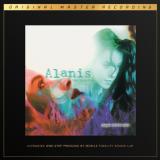
Sourced from the original master tapes, pressed at Fidelity Record Pressing on MoFi SuperVinyl, and strictly limited to 4,000 numbered copies, Mobile Fidelity’s UltraDisc One-Step 180g 45RPM 2LP box set of Jagged Little Pill presents the landmark effort in audiophile-grade sound for the first time. A key part of the record’s appeal and accessibility — Glen Ballard’s smooth production, touches that help Morissette’s exposed-nerve fare seem more accessible and melodic — comes through on this special 30th anniversary edition with an openness, presence, and dynamic explosiveness that make the vocalist’s songs that much more real and visceral.
The singer’s distinctive mezzo-soprano deliveries — the octave-rippling highs, dark-hued lows, dramatic crescendos, belted choruses, wispy reflections, occasional yodels — resonate with full-range ardor and depth. As crucial as anything on the record, Morissette’s confessional words take center stage like never before. Ditto the instrumentation and atmospherics that form the magnetic backgrounds of the songs. Key in on the contributions from Red Hot Chili Peppers Dave Navarro and Flea on “You Oughta Know” to Tom Petty & the Heartbreakers' co-founder Benmont Tench’s organ playing on six tracks.
The deluxe packaging of Mobile Fidelity’s Jagged Little Pill UD1S set underscores the work’s distinguished status. Housed in a slipcase, the LPs come in special foil-stamped jackets with faithful-to-the-original graphics that illuminate the splendor of the recording. Benefitting from an ultra-low noise floor, superior groove definition, and dead-quiet surfaces, this UD1S reissue is for listeners who prize sound quality and desire to engage themselves in everything involved with the album, including the now-iconic cover art that juxtaposes two portraits of the then-21-year-old singer-songwriter and features typewriter font.
That script — which suggests a raw, blood-on-the-floor document created without modern aids like spell check or language correction — hints at the heightened level of unvarnished intimacy, honesty, and catharsis Morissette offers throughout Jagged Little Pill. Named after a phrase uttered on the astute “You Learn,” the album explores the frank emotions, inherent contradictions, and wishful desires people feel everyday but are often too afraid to express. Morissette displays no such fear or shyness.
Akin to a woman reading from a diary, Morissette leaves nothing to the imagination as she skewers hypocrisy during the poignant “Forgiven,” seeks recompense on the vengeful “You Oughta Know,” and spills her guts on the soul-purging “All I Really Want.” For all the anger and bile ascribed to the singer and record, Jagged Little Pill is incredibly healthy and upbeat. Morissette uses the catchy pop-rock frameworks and moody ambience to suss out situations, to learn, to give hope. There’s the clever yearning of “Hand in My Pocket”; wry contrarianism of “Ironic”; kind-heartedness of “Hand over Feet”; the live-and-let-live spirit of “You Learn” – all positive and amiable.
Throughout Jagged Little Pill, the ever-approachable Morissette connects with listeners who recognize themselves in her — and has an intelligent conversation with anyone who wants to participate. It seemed almost everyone did. In addition to the mammoth sales that make the effort the 17th-best-selling album in American history, Jagged Little Pill collected four Grammy Awards, two American Music Awards, three Billboard Music Awards, and eight Juno Awards. In 2018, the record became the basis for a musical that netted 15 Tony nominations on Broadway.
Ironic? Anything but. Jagged Little Pill transcends generations, gender, and trends. As Morissette sings on the opening “All I Really Want,”, the album represents “deliverance” — “a place to find common ground.”
Syncrophone Marks 20 Years of Abe Duque's 'What Happened' Ep With Special Anniversary Re-release Syncrophone Proudly Announces the Special 20th-Anniversary Re-Release of Abe Duque's Iconic 'What Happened' Ep. This Seminal Collection, Originally unleashed in the Early 2000s, Has Since Become a Cornerstone in the Techno and House Music Realms, Earning Its Status as a Timeless Classic. Abe Duque's 'What Happened' Ep Captivated Audiences With Its Distinctive Blend of Raw Energy, Hypnotic Rhythms, and Intricate Melodies. Each Track on This ep Is a Masterclass in Duque's Unique Production Style, Showcasing His innovative Approach to Electronic Music and Solidifying His Reputation as A trailblazer in the genre.
- A1: Gregory Moore - Excursions
- A2: Talee - Makes Me Wonder
- A3: Cantor Feat New Hook - Achtung! Achtung!
- A4: World Wild Web Feat Rasp Thorne - Scavengers
- A5: H L.m. - Fronde
- A6: New Hook - Unity
- B1: Montessori Feat Vongold - Ad Libitum
- B2: Sx2 - Buttons
- B3: Cantor - Hannett’s Dream (Modular Project Rework)
- B4: Aimes - Carissima
Underground Pacific is back with a new double vinyl compilation titled ‘The Only Good Wave is a Dead One’ that confirms, once again, its uncompromising taste for bold electronic music, psychedelic textures, and raw, electrified rock ‘n roll. This release brings together a varied group of artists, each of them adding something special to the journey.
The trip begins with “Excursions” by Gregory Moore, a piece that floats into a humid sonic world, between the nostalgic tones of vintage video game soundtracks, the Fourth World atmospheres of Jon Hassell, and the shimmering calm of ’90s Japanese ambient à la Takashi Kokubo.
Next comes Talee, the Rotterdam-based regular of the label, with “Makes Me Wonder”. Here, grunge-soaked vocals meet a tight dark disco groove, pierced by crystalline guitar chords that shimmer at the track’s heart. A song with its soul in the past and its feet in the club.
Label founder Cantor teams up once again with German duo New Hook on “Achtung! Achtung!”, an homage to the eponymous track by Italian producer Black Saagan. Fueled by vintage drum machines, punk-infused vocals, and melodies echoing the krautrock minimalism of Cluster, the track channels pure Cold War disco energy.
On “Scavengers”, Berlin based World Wild Web and Rasp Thorne deliver a pure mix of electro-rock noir – Suicide by way of David Lynch. Picture a never seen before episode of the series where Martin Rev and Alan Vega are playing live at the Roadhouse in Twin Peaks, while Laura Palmer slowly moves her head to the music, with a devilish smile on her face.
All the way from Grenoble to Berlin, H.L.M. deliver a dirty bass-driven anthem called ‘Fronde’. French spoken vocals spitfire over layers of distorted drones and hypnotic rhythms. The result is rough, hypnotic, and brings to mind the grooves of Death in Vegas.
New Hook return, this time solo, with ‘Unity’: a blend of groovy downtempo percussions, melancholic guitar riffs, and their signature brand of spoken word, a style that’s quickly become their sonic fingerprint.
Then it’s the turn of mexican-wave exponents Montessori featuring Vongold on “Ad Libitum”: a techy sunrise piece with soft pads, subtle build-ups, and an ecstatic sense of endlessness. After-party music for vast, open spaces.
Next up are SX2 from Ireland with their ‘Buttons’, offering a rolling tech-house banger laced with desert guitars. Psychedelic FX’s and whispered vocals drenched in delay slow the pace in a breakdown full of tension, preparing the floor to an euphoric release.
A dream from the pandemic era reappears: Cantor’s “Hannett’s Dream”, originally released in 2020 by Modular’s Project’s imprint ‘Nothing Is Real’ together with their own reworked version present also in two very limited vinyl-collector editions released by Underground Pacific. The introspection and hypnotic structure of the original cut here is replaced by a more stripped down arrangement, with a four-to-the-floor groove that is perfectly crafted for peak-time ignition.
Closing out the release is “Carissima” by the man behind iconic label Wonder Stories, Aimes – a Moroder-esque bassline and sensual vocals play on top of a warm groove that suddenly fractures into jazz-tinged, breakbeat mood, in the style of early Warp Records, just in time to get back into its disco-ish swing.
Contrary to what the title of this release might suggest, the wave isn’t dead at all. It’s well alive in the underground, reanimated by labels like Underground Pacific who are always ready to welcome artists who aren’t afraid to crash genres together and, above all, who are driven by the desire to make free-form, inspired pieces of music.
With Wait A Minute EP, Italian trio Joyfull Family (Chico Perulli, Guido Nemola and Cristian Carpentieri) lay down a proper slice of timeless house, laced with modern flair and proper dancefloor heat.
The Original Mix of "Wait A Minute" is pure deep-house goodness – lush grooves, fat basslines and silky vocal cuts stitched together into a classy, late-night roller. A real warm-up weapon for heads who know.
G&D’s Remix (Gino Grasso and Dino Angioletti flexing their chops) roughs it up with a raw, funk-fuelled twist – dusty drums, elastic bass and chopped-up vox that slap just right. Proper vintage vibes without sounding played out.
Relative’s Peaktime Mix takes the tune up a gear: chunkier kicks, clever delay work and pressure-cooker build-ups that scream peaktime weapon, all while keeping the original’s soul intact. Certified floor-filler.
Closing the EP is "The Prince" (GN Mix) – a deeper, more heads-down affair packed with hypnotic grooves and a cheeky, slinky bassline that’ll keep the afterhours crowd bubbling nicely.
In a nutshell:A rock-solid EP that tips the hat to 90s house roots while keeping the production crisp and forward-thinking. Groove is the name of the game here, and each remix brings its own spice without losing the heart of the original. Whether you're warming up the floor or setting it ablaze, there’s plenty to pull from here.
Credits:
Tracks A1, B2 produced by Joyfull Family (Chico Perulli, Guido Nemola, Cristian Carpentieri)
Track A2 remixed by Gino Grasso & Dino Angioletti
Track B1 remixed by Simone Guerra aka Relative
Mastered by Francesco Brini at Spectrum Studio, Bologna.
Design by Matteo Pozzi
Words by Matteo Garavini