In the midst of recording his 12th album 'Why The Worry', wavering in his resolve to finish what he'd started, Seth Walker came to the realization: "This does not define me; this is not who I am forever; this is just a moment" . "Distance colors compositions over the years and each album is left as merely a reflection of its own period in time." The new album finds Walker reunited with old friends and familiar names. Once again Jano Rix steps behind the boards, co-producing the album with Seth and engineer Brook Sutton. In the producer's fifth outing he's become an invaluable sounding board, the kind that knows what's missing and, just as importantly, what needs to be taken away. Oliver Wood (The Wood Brothers) lends a pen to the title track and Seth's classically trained father Scott adds strings to "I'm Getting Ready," a song penned by Walker's contemporary Michael Kiwanuka. Mostly, though, the record was shepherded into shape by Walker's trio, rounded out by longtime confidants Rhees Williams (Guitar, Piano) and Mark Raudabaugh (Drums). The three let the studio guide them, entering without agenda, set straight by the title's mantra to stop worrying where they'd end up.
quête:real t
- Excerpt 1
- Excerpt 2
- Excerpt 3
- Excerpt 4
With Umwelt, room, An’archives releases the first vinyl LP by Japanese singer, songwriter and guitarist, Kotonashiso. An elegant collection of seven slow-moving, free-ranging song forms, Umwelt, room is reflective, pensive, and yet has a great, expansive sense of movement, each song’s parameters feeling almost infinitely flexible.
Born in Tokyo in 1984, Kotonashiso began playing music in 2000. After taking a long break from making music between the years 2005 to 2016, he returned with renewed focus, and over the past eight years, he’s toured Japan and Europe, performing in venues, street performances and open mic events. Currently, Kotonashiso plays either solo, on in three separate duos, with Sou Mori, 泥, and Hideya Kyooka, respectively. He’s not released much music, as yet – a single, “in the cavern”, with Sou Mori, in 2021, and a soundtrack to Hiroki Nakajima’s solo exhibition, Ray, the following year.
All of this gives Umwelt, Room the feeling of a major statement, a debut shot across the void. The seven songs collected here were recorded in 2024, with a guiding principle, for Kotonashiso, being his desire to “imagine the time when people started recording blues and folk songs on analog records,” creating a ghost-like presence in the listener’s room. When talking about the songs on Umwelt, Room, Kotonashiso focuses on a number of concepts, such as prayer, tragedy, ‘the cycle of life’, and the disappearance of the gulf between fantasy and reality.
They’re songs with deep, rich resonance, performed without guile. You might be able to hear, at times, the fragility of fellow Japanese singer-songwriter Hisato Higuchi, or the bluesy touch of Loren Connors in the guitar. However, Kotonashiso’s aesthetic remit is wide, identifying with artists like Bill Callahan, Scout Niblett, Inukaze, and Tomoko Shimazaki, and sharing sympathies with “the psychedelic rock, avant-garde and ambient communities.” Ultimately, though, the pellucid, dream-like songs of Kotonashiso, somewhere between folk, pop and blues, sit, disarmed and lovely, within their own universe.
Fraufraulein, the San Francisco duo of Billy Gomberg and Andy Guthrie, are master world builders. Their work is immersive — it wraps around you like a warm coat, guiding you deep into a trance-like state. Time moves in slow circles, folds in on itself, and unspools like caught fishing line. It’s tempting to say Guthrie and Gomberg construct a new reality with their work, but I think they’re revealing the contours of familiar territory, gluing together a complicated mirror more than constructing a quotidian diorama. Their music reflects a truth that we all share in some way. It’s the pauses between thoughts, the little observations that color a day, the beauty of how others’ lives imbricate for brief moments before pulling apart completely. Fraufraulein’s music feels beamed from inner space, the soft parts of our consciousness that glow like a flashlight beneath fingertips.
It’s also tempting to call Greater Honeyguide, the duo’s new record — and first in four years — a tool for fostering presence. Each composition can serve as a meditative space, and observing the quietly unfurling layers of sound — a footfall and a quiet breath, scraps of overlapping melodies sung like notes to self, synthesizers droning lightly in the distance — can be a very calming, grounding experience. But I also love to let these pieces guide me through the sulci of my brain like a slot canyon, emerging at some long-forgotten memory or idea. Think of it as a passively-active experience, like looking out of a train window, watching the scenery blur together. At the end of the album’s 37 minutes, I feel transformed. Not necessarily different, just in tune with something else. Something beyond. Something within.
With a growing international reputation for championing forward-thinking artists in the contemporary jazz space, Denmark"s April Records proudly presents the third album from instrumental collective Andorra. Their most ambitious undertaking yet, the audio-visual release invites audiences to fully immerse themselves in the energetic grooves, lyrical melodies, and colorful modern production that define their sound. Andorra"s eponymous 2021 debut reunited five friends who met at the Funen Music Conservatory and went on to work across a range of disciplines, from film music and orchestral work to large ensembles and chamber jazz. Realising their long-held desire to explore their collective creative potential, the ensemble describes their sound as "modern vintage", bringing together the nostalgic warmth of analog synthesis, present-day digital audio manipulation techniques, and jazz musicianship steeped in tradition. Taking a decisive step to perfect the production of their music, the quintet recorded at Lundgaard Studios - one of Denmark"s most prestigious studios - and placed the responsibility of mixing in the hands of their own synth-guru Peter Moller, whose deep understanding of the band"s sound made him best suited for the role. Taking a step back from the dark, brooding music often associated with the Nordic countries, "III" is a playful, high-energy, deep pocket collection of seven original pieces that are unapologetic in their grooving, in-your-face attitude. Driving complex drum parts, shimmering guitar textures, squelching synth pads, thick old-school bass tones, and lush timbres from Mads La Cour"s horns deliver catchy and danceable hooks as easily as they do spacious explorations of texture and vivid harmony. The entire album has been shaped into a concert film directed by photographer Jesper Van, set to premiere at select cinemas across Denmark - soon to be available online - offering global listeners a comprehensive experience of Andorra"s creative vision.
EDEL begrüsst das Hamburger Jazz Label SKIP Records und freut sich, dass zum Start der neuen Zusammenarbeit und dem 25. jährigen Firmenjubiläum des Labels ein neues Album des schwedischen Trios von Emil Brandqvist erscheinen wird. Das skandinavische Trio verzichtet auf Gäste und präsentiert seine Musik in reiner Trio-Besetzung. Der Opener "A Visit To Reality" hebt die solistischen Fähigkeiten aller Mitglieder hervor. Emil Brandqvist glänzt mit melodiösen Kompositionen wie "Endless Like The Sea". Tuomas A. Turunen beeindruckt mit "Shades Of Leaving" und einem Klaviersolo. Max Thornberg setzt mit "Evening Land" den Schlusspunkt. "Poems For Travellers" ist ein weiteres Highlight der Bandgeschichte und wird sicher auch als brandneues Projekt bei der stetig wachsenden Fangemeinde überzeugen und gut ankommen.
Please welcome Roseen to the a.r.t.less label family! His debut on the Mojuba sublabel brings four uncompromising, club-ready belters in the finest Detroit Techno manner-relentlessly kicking, timelessly grooving, and delivering minimalistic sci-fi techno escapism of the highest order! Some of you might be familiar with his music from releases as Ausgang on Key Vinyl and Frameworks together with Decka.
For vinyl enthusiasts, we have included an endless loop and a locked groove. On the so-called X-side, you will find a very rare parallel cutting technique, first introduced and realized by the legendary Ron Murphy of NSC, Detroit fame! To honor Ron's legacy and craftsmanship, we teamed up with Mike Grinser from Manmade Mastering to reintroduce this one-of-a-kind cutting method to a new generation of vinyl lovers. Discover and enjoy!
*180g virgin leaded vinyl in a deluxe textured heavy gatefold cover, with paste-on artwork and special anti-static innersleeve.* Note: The pressing is absolute on point!!!!
Vincent Gallo and Harper Simon with a beautifully recorded suite of songs and instrumentals.
" More than two decades since he blew minds with a suite of brilliant releases on Warp, Vincent Gallo returns to the world of music at long last in Butterfly, his duo with Harper Simon, with the project’s full-length debut, “The Music of Butterfly”. A gesture of gentle, DIY / bedroom left-field pop, falling within the rough territory for which Gallo became renowned during the late '90s and early 2000s, while interweaving fascinating flirtations with minimalism and experimentalism, it’s a truly captivating piece of work that’s hard to get off the turntable after the first needle drop.
In the arts, the lines between genius and madness, as well as fact and fiction, often blur. Such, it seems, has always been the life of the artist, filmmaker, actor, musician, and composer Vincent Gallo. A cult figure and a member of various creative undergrounds for the better part of half a century, Gallo has courted controversy, ruffled feathers, and made some of the most singular statements to flirt at the outer edges of popular culture that can be called to mind. Arguably most well known for his work in film, during the late '90s and early 2000s - notably with his soundtrack for “Buffalo 66” and a suite of releases on Warp - Gallo became something of a sensation in the world of independent music for a visionary, incredibly unique and sensitive approach to sonority. For a time, the world was abuzz, waiting on bated breath for more, and yet time passed. Bar a few fragments, appearing here and there, almost nothing has been heard from Gallo, within the world of music, for more than 20 years. That is, until now, with the release of “The Music of Butterfly”, the debut full-length of Butterfly, his duo with Harper Simon: beautifully produced and issued by Family Friend Records - Gallo’s own label, founded in 1981 - in a deluxe edition that simply left us speechless: 180g vinyl in textured heavy gatefold cover with paste-on artwork and thick anti-static innersleeve. More or less picking up from where we last encountered him, spinning captivating melodies and gentle song-craft within the quieter temperaments of DIY, left-field pop, once again, and at long last, Vincent Gallo, encountered in an incredibly successful collaboration with Harper Simon as Butterfly, reminds us that he’s as much a force within the realm of music as he is within film. Not to be missed. This one isn’t going to sit around for long.
Vincent Gallo’s biography reads like the stuff of blaring beauty: a figure of moderate fame in his own right, who has remained at the centre of cultural ferment as the decades have rolled by. Born in 1961, in Buffalo, New York, as the story goes he ran away to New York City at the age of 16 and fell into the brewing counterculture of the Downtown scene, William Burroughs and John Giorno, in addition to the cream of his own peers, and began making paintings, music, and experimenting with film. In addition to being a member of the now legendary band Gray, with the artist, Jean-Michel Basquiat, and the filmmaker, Michael Holman, Gallo appeared in the cult 1981 film “Downtown 81”, before slowly beginning a career as an actor and catching the eye of Claire Denis, who brought his talents into the broader cultural gaze. Catapulted into the public by his own subsequent career as a filmmaker with “Buffalo '66” (1998) and “The Brown Bunny” (2003), both of which were marked by controversy and praise, Gallo further captivated the public with a partially brilliant, if not relatively brief, flurry of activity in the realms of music.
While Gallo had already been making music for roughly two decades at the time of his release of the “Brown Bunny” soundtrack, and the four release issued by Warp in rapid succession between 2001 and 2002 - “When”, “Honey Bunny”, “So Sad”, and “Recordings of Music for Film” - the almost fanatical fandom reached a fever pitch at the moment, allowing him, for some, to be regarded as much, if not more, as a musical artist than an actor and filmmaker. Anyway you cut it, in a few short years, he proved himself to be a polymath of rare talent. Somewhere along the way, while both were working as members of Yoko Ono's Plastic One Band, Gallo met the New York based, highly regarded singer-songwriter, guitarist, and producer, Harper Simon, who also happens to be the son of Paul Simon. The pair fell into an incredibly fruitful duo collaboration, which came to be called Butterfly, and “The Music of Butterfly” being their debut full-length release.
Written, performed, and recorded by Vincent Gallo and Harper Simon in New York City between the winter of 2018 and the spring of 2019, the ten tracks comprising “The Music of Butterfly” are cumulatively a gesture of gentle, DIY / bedroom left-field pop, falling within the rough territory for which Gallo became renowned during the late '90s and early 2000s, making one feel like barely a moment had passed since we’d encountered his graceful hand at song-craft. Stripped back and raw, while retaining a sense of warmth and intimacy, across the length of “The Music of Butterfly” the duo of Gallo and Simon weave something completely captivating at the juncture of minimalism, experimentalism, and pop: meandering moments of texture and tone, slowly forming toward flirtations of melody that flower into song and back again. Somehow playful and light, while also remarkably emotive and personal, it’s almost as though each of these tracks crystallised out the air, unlabored and exactly as they should be without a note or beat more.
An engrossing immersion into both Gallo and Simon’s remarkably accomplished minds, having followed the path toward one another after radically different experiences and careers, “The Music of Butterfly” is one of those records that’ll be hard to get off the turntable after that first needle drop, and rarely leave the listening pile for some time to come. Issued by Family Friend Records in a beautiful deluxe edition that is unmatched even among the most stunning recent productions we can call to mind - 180g vinyl in textured heavy gatefold cover with paste-on artwork and thick anti-static innersleeve - it’s lovely to have Gallo back in the musical mix after so many years. "

Liz Stringer has been a steadfast and captivating feature of the Australian musical landscape over a six album career. Venerated by her musical peers and devoted fanbase alike, Stringer's world-class vocals, multi-instrumental prowess, notoriously powerful live performances and story-rich, genre-defying songs place her among the most important songwriters of her era. Mirroring the scope and complexity of Stringer's sensibilities and accomplishment as an artist, The Second High draws from Stringer's wider influences of jazz, funk and soul, and takes her ability to dissect the minutiae of the human condition through song - and connect with her audience - to a new level. The album is redolent with motifs of self-actualisation, lessons learned, sharp and ever-relevant commentary on social issues, and a strong and consistent focus on justice and equality. Fuelled by keys-driven grooves ranging from poignant grand piano lamentations (When You Met Me), the Rhodes-led jazz odyssey of On the Level, hip-hop flavoured keys brightening the bottom-heavy and deeply funky The Second High, to virtuosic keys that dance between strings and soaring multi-layered vocals in To Survive, Stringer's seventh studio album is a fresh and engaging ride to a destination yet uncharted, even by Stringer's standards - thrilling, stark and transformative. If 2021's First Time Really Feeling was an excavation, The Second High is an exorcism.
- A1: Special
- A2: B.a.b.e
- A3: Fantasy
- A4: Not Hell, Not Heaven
- A5: Tonight (I’m Afraid)
- B1: Fleshed Out
- B2: Let You Down
- B3: Cellophane
- B4: Suffer The Fool (How High Are You?)
- B5: Haunted
- B6: Are We All Angel
Olive Green Vinyl[28,15 €]
Scowl is a band that sounds exactly like their name implies. Venomous, fierce, antagonistic. A sneer not to be crossed. Over the last five years, the Santa Cruz, California, band has firmly planted their flag in the hardcore scene with their vicious sound and ripping live show, sharing stages around the world with Circle Jerks, Touché Amoré, and Limp Bizkit, and filling slots at prominent festivals like Coachella, Sick New World, and Reading and Leeds. But with their new album, Are We All Angels (Dead Oceans), Scowl is aiming to funnel all that aggression through a more expansive version of themselves. Much of Are We All Angels grapples with Scowl’s newfound place in the hardcore scene, a community which has both embraced the band and made them something of a lightning rod over the past few years. Standout single “Not Hell, Not Heaven” outright rejects the narratives cast onto them by outsiders. “It’s about feeling victimized and being a victim, but not wanting to identify with being a victim,” explains vocalist Kat Moss. “It’s trying to find grace in the fact that I have my power. I live in my reality. You have to deal with whatever you're dealing with, and it ain’t working for me.” The band breaks from a sense of disassociation to seek deeper connections on “Fantasy.” “It’s incredibly challenging to try to balance my love for the scene while also feeling, in some spaces, extremely alienated and hated,” Moss says. “‘Fantasy’ is about feeling like I don't know how to connect with these people anymore, because I have shelled myself away so hard.” The album ends in a philosophical place on the closing, titular track, “Are We All Angels,” asking questions like, “Is this all there is?” and ultimately putting it on the listener to decide. “It’s about the personal struggle between good and evil. It doesn’t matter how ‘good’ or ‘bad’ you are, there are systems that will try to rewrite your narrative no matter what you actually do,” explains Moss, noting that punctuation on “Are We All Angels” has been deliberately omitted in an attempt to leave the statement open-ended. Are We All Angels is the highly anticipated follow-up to Scowl’s debut, 2021’s How Flowers Grow, a 16-minute primal scream over punishing riffs. But amidst the pounding chaos, it was the record’s sonic outlier, a cleaner interlude called “Seeds to Sow,” that, true to its name, planted the seed for what was to come for the band. “It kind of laid out this destiny for us, and I feel like now we’re fulfilling that,” says drummer Cole Gilbert. The band continued to expand their sound on 2023’s widely acclaimed Psychic Dance Routine EP, incorporating more pop hooks and favoring gentler singing over heavy screaming, paving the way for what would come next. Scowl’s growth got a huge boost from producer Will Yip (Turnstile, Title Fight, Code Orange, Balance and Composure), who broadened the band’s scope. “Will would say, ‘Everything you have here is correct, but it’s in the wrong place,’” says Gilbert. Moss adds: “Will really helped restructure a lot of the material. Some songs he tore apart to make more space for the really good hooks and choruses.” But even through this more eclectic approach, Scowl loses none of their edge, and still manages to convey the anger and frustration that lies underneath. They are deeply committed to carrying the ethos of punk and its sense of community. “Hardcore and punk have sculpted how we operate, what we want to do as a band, and how we participate,” says guitarist Malachi Greene. “At our core, we are a punk and a hardcore band, regardless of how the song shifts and changes.
- Aretha Franklin - I Say A Little Prayer
- Dionne Warwick - Walk On By
- Marvin Gaye - I Heard It Through The Grapevine
- Stevie Wonder - I Was Made To Love Her
- The Drifters - Save The Last Dance For Me
- The Temptations - My Girl
- Smokey Robinson & The Miracles - The Tracks Of My Tears
- Otis Redding - (Sittin' On) The Dock Of The Bay
- Jimmy Ruffin - What Becomes Of The Brokenhearted
- The Supremes - Stop! In The Name Of Love
- The Ronettes - Be My Baby
- The Marvelettes - Please Mr. Postman
- The Velvelettes - He Was Really Sayin' Somethin
- Martha Reeves & The Vandellas - (Love Is Like A) Heat Wave
- Four Tops - Reach Out I'll Be There
- Sam & Dave - Soul Man
- Arthur Conley - Sweet Soul Music
- Eddie Floyd - Knock On Wood
- Wilson Pickett - In The Midnight Hour
- Ike & Tina Turner - River Deep - Mountain High
- Jackson 5 - I Want You Back
- Stevie Wonder - Uptight (Everything's Alright)
- Barrett Strong - Money (That's What I Want)
- Four Tops - I Can't Help Myself (Sugar Pie, Honey Bunch)
- Otis Redding - Try A Little Tenderness
- Mary Wells - My Guy
- Dionne Warwick - Don't Make Me Over
- Brook Benton - Rainy Night In Georgia
- Dinah Washington - Mad About The Boy
- James Brown - It's A Man's Man's Man's World
- Nina Simone - Feeling Good
- Aretha Franklin – Respect
- Fontella Bass - Rescue Me
- Freda Payne - Band Of Gold
- Smokey Robinson & The Miracles - The Tears Of A Clown
- Martha Reeves & The Vandellas - Dancing In The Street
- The Supremes - Baby Love
- The Toys - A Lover's Concerto
- The Drifters - On Broadway
- Ann Peebles - I Can't Stand The Rain
- Erma Franklin - Piece Of My Heart
- The Temptations - Papa Was A Rollin' Stone
- Sly & The Family Stone - Family Affair
- Curtis Mayfield - Move On Up
- Isaac Hayes - Theme From "Shaft
- Edwin Starr – War
- Frankie Valli & The Four Seasons - The Night
- Marlena Shaw - California Soul
- Gloria Jones - Tainted Love
- William Devaughn - Be Thankful For What You Got, Part 1
- Ben E. King - Stand By Me
- The Spinners - Could It Be I'm Falling In Love
- Marvin Gaye - What's Going On
- Al Green - Let's Stay Together
- Bill Withers - Ain't No Sunshine
- Billy Paul - Me And Mrs. Jones
- Harold Melvin & The Blue Notes - If You Don't Know Me By Now
- The Stylistics - You Make Me Feel Brand New (Let's Put It All Together Version)
- The Delfonics - Didn't I (Blow Your Mind This Time)
- Timmy Thomas - Why Can't We Live Together
- Roberta Flack - Killing Me Softly With His Song
- Minnie Riperton - Lovin' You
- Deniece Williams - Free
- The Three Degrees - When Will I See You Again
- Gladys Knight & The Pips - Midnight Train To Georgia
- The Floaters - Float On
- Jackson 5 - I'll Be There
- Diana Ross - Ain't No Mountain High Enough
- Barry White - You're The First, The Last, My Everything
- Earth, Wind & Fire – Fantasy
- The Isley Brothers - Summer Breeze, Pt. 1
- The Tymes - Ms. Grace
- The O'jays - Love Train
- George Mccrae - Rock Your Baby
- Harold Melvin & The Blue Notes - Don't Leave Me This Way
- Frank Wilson - Do I Love You (Indeed I Do)
- Booker T. & The M.g.'s - Green Onions
- Percy Sledge - When A Man Loves A Woman
- Commodores - Three Times A Lady
- Rose Royce - Wishing On A Star
- Peaches & Herb - Reunited
- Heatwave - Always And Forever
- Gladys Knight & The Pips - Best Thing That Ever Happened To Me
- George Benson - The Greatest Love Of All
- Marvin Gaye - Let's Get It On
NOW Music is pleased to announce NOW Presents…Classic Soul, a stunning 5LP boxset of 85 of the greatest 60s & 70s Soul tracks ever... Out September 22nd!
LP1 opens with ‘I Say A Little Prayer’ from the “Queen of Soul”- Aretha Franklin, the peerless ‘Walk On By’ from Dionne Warwick and followed by massive hits from Marvin Gaye with the #1 ‘I Heard It Through The Grapevine’ and Stevie Wonder’s ‘I Was Made To Love Her’, plus classic tracks from The Temptations and Otis Redding. Flip to the other side for legendary groups – The Supremes, The Ronettes, The Marvelettes, The Velvelettes and Martha Reeves & The Vandellas.
LP2 begins with the powerhouse vocals of Tina Turner (with Ike) on ‘River Deep, Mountain High’. Top tracks from the Jackson 5 & the Four Tops give way to a run of Northern Soul classics from Frankie Valli & The Four Seasons with ‘The Night’, ‘Tainted Love’ from Gloria Jones, Frank Wilson’s legendary ‘Do I Love You’, and ‘Green Onions’ from Booker T. & The M.G.'s. Side 2 begins with the superb vocals of Ben E. King with ‘Stand By Me’ and Percy Sledge with ‘When A Man Loves A Woman’. Another Otis Redding classic alongside the genius of both James Brown and Nina Simone brings this LP to a close.
The A-Side of LP3 kicks off with the signature smash from Aretha Franklin ‘Respect’ before the first UK #1 for the Motown label from The Supremes with ‘Baby Love’, and there’s still room for Smokey Robinson & The Miracles, The Drifters, and another #1 from Freda Payne. Side B begins with one of the most iconic and funky baselines ever on ‘Papa Was A Rollin’ Stone’ from The Temptations and the classic grooves ‘Move On Up’ from Curtis Mayfield, Isaac Hayes’ ‘Theme from “Shaft”’, the emphatic ‘War’ from Edwin Starr and the cool sophistication of ‘California Soul’ from Marlena Shaw lead to the closing track ‘Could It Be I’m Falling In Love’ from The Spinners.
LP4 begins with a run of beloved tracks from iconic artists opening with the politically charged masterpiece ‘What’s Going On’ from Marvin Gaye, followed by Al Green, Bill Withers and Billy Paul, plus The Stylistics and The Delfonics to add to the selection of celebrated groups on this release. The second side begins with the exceptional ‘Killing Me Softly With His Song’ from Roberta Flack, before the stunning vocals of Minnie Riperton’s ‘Lovin’ You’ and Deniece Williams, The Three Degrees and Gladys Knight. The Jackson 5 bring this disc to a close with their timeless ballad ‘I’ll Be There’.
LP5 contains a run of 1970s favourites beginning with ‘Ain’t No Mountain High Enough’ from Diana Ross and ‘You're The First, The Last, My Everything’ from Barry White. ‘Fantasy’ from Earth, Wind & Fire, ‘Summer Breeze, Pt. 1’ from The Isley Brothers and ‘Love Train’ from The O’Jays all feature before the Commodores kick off the final side with ‘Three Times A Lady’. Rose Royce, Peaches & Herb and a second selection from Gladys Knight & The Pips feature along with George Benson, before the “Prince of Soul” Marvin Gaye brings this essential collection home with ‘Let’s Get It On’.
85 tracks across 5 stunning LPs, NOW Presents Classic Soul... Out September 22nd!
Es ist ein Fall von popkultureller Archäologie. Eine Spurensuche der elektronischen Musik. Nach über 30 Jahren tauchen verschollene Tapes von Holger Czukay wieder auf, die er einst "zur freien Verfügung" eingespielt hatte. Eine Sound-Meditation von 1997, die nun erstmals neu gemastert im Original und in einer "Version" von die ANGEL (Ilpo Väisänen / Dirk Dresselhaus) und Zappi W. Diermaier von der Krautrock-Legende Faust vorliegt.
Die Arbeiten aus dem Czukay-Studio sind eigenwillige Klangstrukturen, die Mastering-Ingenieur Dresselhaus alias Schneider TM einschätzt als "futuristisches Kleinod, das für seine Entstehungszeit musikalisch weit vorne ist." Für ein abstraktes Klanggebilde "tief und emotional" wie er sagt. Eine Komposition, die mit Avantgarde oder Neue Musik nur unzureichend beschrieben ist. Ein echter Czukay eben. Die Genese dieser Aufnahmen führt in die freigeistigen 1990er, als Holger Czukay in Köln mit jüngeren Techno-Kollegen wie Dr. Walker von Air Liquide mit Beats experimentierte und sich ansonsten sehr für die leise Explosion der digitalen Medien interessierte.
Es war der Tech-Pionier und Medienkünstler Arthur Schmidt alias Gvoon, der ihn in langen Gesprächen auf die (damals futuristische) Data-Maschine "RealityEngine" brachte, mit der sich virtuelle Welten erschaffen ließen. Vom Full-Body-Tracking-System bis zum gemeinsamen Prototyp eines "Internet-TV-Senders". Darauf liefen experimentelle Czukay-Videos, die er mit neuen Samples und Klangfragmenten ausstattete. Später wurde eine kontemporäre Show namens "Czukay/Gvoon:Magazine" daraus und auch die "Can-Live-Soloprojekts" im März 1999, ausgestattet mit der Body-Tracker-Technik von Gvoon. Die DDR-Vergangenheit seines Tech-Sparringspartners Schmidt, der ihm von seiner Zeit in Stasi-Haftanstalten erzählte, setzte in Czukay einen kreativen Prozess frei. Er setzte dieses Trauma in Töne um und machte ihm ein musikalisches Geschenk. "Gvoon-Brennung 1", eine Gabe, die Schmidt "irgendwann" einmal verwenden könne. Einfach so. Ein Soundtrack, der ganz profan auf Digital Audio Tape übergeben wurde.
Über 20 Jahre später brachte Schmidt das "Czukay-Geschenk" für eine zum Kunstwerk umfunktionierte Verhörzelle des Ministeriums für Staatssicherheit (MfS) wieder zum Einsatz. Als Installation für einen stockfinsteren, bedrückenden Raum mit Gummiwänden. Hier stieß wiederum Dresselhaus auf das Material. Ihm wurde klar, dass er dort mehr hörte als irgendwelche 1990er-Fragmente: "Es ist irgendwie Blues-mäßig, auf eine kybernetische und abstrakte Art." "Mit einem sehr langsamen Groove, der einen die gesamte Strecke aufmerksam hält", sagt Dresselhaus. Er beschreibt den Mastering-Prozess sowie die Neubearbeitung in Form der "Gvoon-Version 1" als Balanceakt zwischen Respekt vor dem historischen Material und einer zeitgemäßen Studio-Bearbeitung.
Eine respektvolle Verbeugung zum 87sten Geburtstag von Holger Czukay im März 2025.
Another foggy day in Yorkshire. A steel grey sky. Raindrops tracing one another down the windowpane. Kirk Barley sits in his studio and assembles compositions from scraps of found sound and live instrumentation. Melodies swell, withdraw and repeat like waves. Time slows. Accelerates. Slows again. The light bends, tweaked at the edges. Twisted by rhythms that never quite resolve.
Written, recorded and produced by Barley in Yorkshire in early 2024, Lux picks up where 2023 LP Marionette leaves off, conjuring a mystical, reflective space between formal minimalism and sonic imaginaries of northern landscapes.
And yet, where Marionette relied at times on more recognisable field recordings, Lux leans into Barley’s skill as an instrumentalist and sound designer, working from a palette of short samples and utilising a variety of alternate tuning systems to build, layer and coax his compositions into being. Most evident on tracks ‘Vita’, ‘Sprite’ and ‘Descendent’, these tunings create an otherworldly harmonic language that is easier to perceive than describe.
Alongside more familiar instruments of guitar, bass, drums, organ and clarinet, here Barley draws on plastic saxophones and bells, and recordings of glass, wood and metal sound objects to provide the organic matter. Rather than directly representative of the natural world, Lux enters into a dialogue with it which, like the grasses and flowers of the album’s cover, exists somewhere between reality and artifice.
On album opener ‘Cache’, Barley constructs his own sense of time from a recording of an umbrella crank, a sparse and spectral piece which hints at memories embedded in the track’s title. Introspection blossoms into new life on ‘Vita’, crumpling again into the percussive ambience of ‘Verre’. A track that takes its harmonic lead from the clinks of glass, it features Barley’s long-time collaborator Matt Davies on drums, whose nuanced, tonally sensitive playing gives ‘Verre’ a fizzing, ice-like quality.
There are several moments where Lux picks up on themes Barley explored under electronic moniker Church Andrews on recent works with Davies, stretching and distorting temporalities most explicitly on ‘Descendent’, whose ritualistic air unfurls around a pattern in exponential decline.
Embracing the surrealism Barley absorbed over years watching classic film noir and the works of David Lynch and Federico Fellini, Lux wends its way through the enchanted sound worlds of ‘Sprite’ and ‘Balanced’ before arriving at the album’s title track.
An expression of his recent experiments in live, prepared guitar, ‘Lux’ brings the album back to earth, returning us to the room where the rain has stopped, the clouds have parted, and the soft warmth of the spring sun is pouring in through the open window.
Chris Ryan Williams (trumpet & electronics) and Lester St. Louis (cello & electronics) work together as HxH (H by H). Their skills have seen them move smoothly across various situations, constantly carving out new terrain and working in new configurations of musicians at a rapid pace. While worth reading, their biographies capture only a part of their complex rhizome.
HxH started about three years ago. The project is a direct response to all their activity with others and more importantly all their future leaning sonic desires. Their debut album STARK PHENOMENA is both their first studio recording and their first physical release. The album is appropriately set to be released by KMRU on his growing label OFNOT. It’s an ideal introduction to their sound world and their approach.
HxH describe their music as “electroacoustic,” but until recently the presence of Black musicians in this field has been greatly overlooked and largely ignored, making this phrase only partially appropriate. What HxH do really is to always be unpredictable. Every gig is a new soundscape. Sometimes you might hear echoes of Autechre or Robert Hood but then the sound-field will open up into a new terrain all their own. Chris and Lester bring together techniques from across the sound spectrum of electronic music and also draw on their deep backgrounds in Jazz, Improvisation, Classical and Noise scenes to create a sound that is true to them. After all, these two have worked with the likes of Bennie Maupin and the music of Black Fluxus artist Ben Patterson. Their rhizome is deep.
One of the ways that their unique approach manifests is in their merging of both acoustic instruments and electronic instruments in real time. This is something few have managed to do – but their spontaneous leanings work in both complex and accessible ways because of their deep understanding of landscape crafting. You can hear this clearly on the track “Pyrex Vision.” Their approach makes it tempting to compare their music to Sun Ra jamming with Laurel Halo – a comparison that would be only partly accurate.
Chris and Lester note that the sounds on STARK PHENOMENA are “imbued with such hopeful, gracious care; one that is far flung from obsessive carefulness or fuck the world carelessness, but more a caring embrace without the fuzziness of nostalgia.”
They note that when they began working together, they would “always come back to speaking on our concepts of an architecture of the expanse,” noting that their live sets often take on the joyfully noisy task of “dreaming big.” For HxH it was essential that STARK PHENOMENA have a quality that is “almost sculptural.” They consider the album “an object to be viewed from all sides.” This kind of thinking has resulted in them directly engaging with numerous sculptors and artists including Torkwase Dyson. Shape wise HxH’s sound fields work in a parallel to Dyson’s black architectural works.
They also note that the opening cut “BEACH” (the opening and longest track from the album) was “written weeks after our first gig in a studio session donated to us by our dear friend jaimie branch.” And that Pyrex Vision “was continually being edited months after sending our ‘final mixes’ to KMRU.” Their sound sources and samples come from studio sessions, live gigs, durational installations, 3am improvised downloads and more.
KMRU notes: "I think there is an in-between layer on this record. I was first caught by the Pyrex Vision track which organically flows between monologue, subtle field recording, and instrumentation. It's such a beautiful track, evoking deep emotion through simplicity. STARK PHENOMENA effortlessly glides in between imaginative mosaics of sounds — free yet complex — unlocking memories within its layers."
Firstly, I want to thank Soulox & Soeneido for their patience because I have slept on their music for years haha
They have both been sending me music for a long time which I was pretty slack on checking (as a lot of people may have also noticed when sending me music, there's a huge backlog to get through and not enough hours in the day!) but it wasn't until Pete Dev/Null was in London for an event and we met up in person to record a mix for Blog To The Oldskool (our show on Jungletrain) that I realised what these two were capable of. Pete started the show with Lavish and I had to know what it was straight away, he told me it was by Soulox & Soeneido and I felt so bad that I had probably not bothered to check this tune if they had sent it to me, but I knew I had to have it!
I messaged Soen the next day asking about this tune and thankfully it was still available, one thing led to another and this release now exists. Big thanks to both of them for their wicked tunes, big up Comfort Zone on his quality remix of Lavish and a special mention to Jay Vaz (of Dreaming Vinyl) who did the design for the b-side of this release.
dreamcastmoe is the recording project of singer, songwriter, producer, and DJ Davon Bryant, a lifelong resident of Washington, DC. His music moves freely between moods and modes, hypnotic, romantic, traversing electronic, R&B, funk, soul, and hip-hop... Resident Advisor dubs it "soulful, cross-genre dance music." This ability to adapt and finesse, to twist in different directions while staying true and coherent in vision, can be traced to his home city and its complex cultural history. "Most Black kids in DC don't ever get to this point," he says. "This is what I am making this music for, in the DC tradition of soul and empathy and love that is rooted in this city. My music is for real people dealing with shit every day." A versatile, modern artist and collaborator, dreamcastmoe has thrived in the underground since his first uploads to Soundcloud and Bandcamp in 2017 and subsequent releases with labels like People's Potential Unlimited, Trading Places, and In Real Life Music. Bryant's laid-back personality, emotional honesty, and infectious energy shine through his work and how he talks about it, as Crack Magazine notes in their 2021 Rising feature: "a steady combination of confidence, creativity, and calmness." He grew up playing drums in church; he's worked dead-end jobs, had ups and downs, even sold off all his gear one time, but never stopped reinvesting in himself. He is quick to praise his co-producers, rattle off influences _ the visual feel of NBA 2K, the comedic timing of Bernie Mac, the savvy legacy of Duke Ellington, for starters _ and credit resourceful DC breakouts like Ankhlejohn that showed him the roadmap. His voice, a steady instrument, seemingly connects it all, capable of slow falsetto flow, swaggering talk-rap, and outright croon. His storytelling style is choppy yet fluid, like a mixtape, which is how Bryant sees Sound Is Like Water, his debut on Ghostly's International's freeform label, Spectral Sound. The two-part project culminates as a full-length LP release in November 2022. The first side, released as Part I, opens on the blurred beats of "El Dorado," which dreamcastmoe dedicates to his journey. It's a head-nodder, an off-kilter earworm co-produced by Max D (Future Times, RVNG Intl, etc.), with Bryant harmonizing hooks with synth jabs and a pitched-down presence. "Complicated" is the slow jam, delivered smoothly from a Saturday night crossroads. dreamcastmoe is contemplative and committed... gliding and locking ad-libs into skittering rhythms courtesy of co-producer Zackary Dawson _ but also willing to let something go, "acknowledging that everything in life IS NOT easy." "RU Ready" takes off from the jump as a tribute, challenge, and promise to his partner and his city ("The times you sat with me when I needed you the most / Told me the things that I needed to see / Young black man, really trying to be what I can be / And I'm really from DC). In its potent two-plus minutes, the sonics (co-produced by ZDBT) press the message, all cymbal crashes, breakbeats, and serrated synth lines. "Cloudy Weather, Wear Boots" is a blitzing dance-punk track made in collaboration with Jordan GCZ on Bryant's first trip to Amsterdam. The album's flipside opens on "Much More," the first of two synth-and-beat ballads co-produced by ZDBT. Later on "Long Songz," he claims, "I'm not writing love songs no more," prioritizing the vibe with "all my day ones." He calls it "a cry for more normal moments. Everything doesn't have to be a fantasy love story, more time spent getting to the money, growing, and making a way." He saves two of his most propulsive cuts for the finale, co-produced by Sami, co-founder of DC dance label 1432 R. As their titles suggest, "Take A Moment" and "Make Ya Mind" operate as anthems for movement, with Bryant free-flowing commands above wildly-styled percussion. Per Bryant, the latter is both "wake & bake jam" and a "dance floor bomb." His parting line: "Action / You got to show me action / Reaction." The world of dreamcastmoe straddles virtual reality and the realness of DC, images both imagined and lived-in. Bryant has a knack for unexpected melodies but what makes his music so exciting is his capacity to defy the expectations of genre and image. A fluid ingenuity and vulnerability bottled by Sound Is Like Water, and this is just the beginning.
ON THE ROCK is a cornerstone of the band formed by WISS, APPLE and SKELLY. Recorded and mixed at Leggo's Studio (Kingston / Jamaica) with the new version of the Roots Radics: Flabba Holt (bass), Dwight Pinkney on guitar, Carl Ayton on drums, Steve Golding on guitar and T-Bird Johnson on piano.
Mit AVEC präsentiert die österreichische Singer-Songwriterin AVEC ein selbstbetiteltes Album, das die bittersüßen und zärtlichen Momente des
Lebens nahtlos miteinander verbindet. Diese Sammlung verkörpert ihre charakteristische Mischung aus sanften Melodien, introspektiven Texten und
cinematischen Klanglandschaften. Roh und intim taucht das Album in die Komplexität menschlicher Beziehungen und persönlicher Introspektion ein
und lädt die Hörer:innen in eine Welt ein, in der Verletzlichkeit auf Widerstandsfähigkeit trifft und Herzschmerz mit Hoffnung tanzt.
Seit 2015 AVECs erste EP “Heartbeats” erschienen ist, rüttelt die junge österreichische Musikerin gekonnt und gut am Bild dessen, was man über
zutiefst ehrliche Popmusik zu wissen geglaubt hat. Die erste, sehr erfolgreiche Single “Granny” hat den Weg zum jugendlich-melancholischen
Debütalbum “What If We Never Forget” geebnet. Es wurde mit mehreren Nominierungen bei den Austrian Amadeus Music Awards (unter anderem
“Künstlerin des Jahres” und “Best Sound”) belohnt: ein erstes, starkes Folkpop-Statement, reduziert, kraft- und eindrucksvoll. So eindrucksvoll, dass
AVEC in weiterer Folge unter anderem Support-Slots für Zucchero, Sting oder The Tallest Man On Earth gespielt hat.
Produced by Scott McCannell and mixed by Kelly Finnigan of Monophonics, Record Kicks presents two brand new single from Canadian rising soul star Tanika Charles on limited edition clear 45 vinyl. “Don’t Like You Anymore and “Here When You’re Ready” are taken from the highly anticipated new album “Reasons To Stay” from the Twice JUNO nominated and two time Polaris Prize listed, Tanika Charles that is coming out in May 2025 via Record Kicks. On the A side “Don't Like You Anymore” is a mid tempo gospel funk stormer able to set the dancefloor on fire. With its boom bap smacked drums and chunky basslines, it will not be a surprise if rap/hip hop artists will get on it to sample the song. The B side “Here When You’re Ready” is an equally strong mid tempo soul number that makes this limited edition 45 vinyl a real double sider. Canadian Soul/R&B powerhouse Tanika Charles in a few years has transformed from an emerging solo artist to a commanding performer and bandleader, a staple in the Canadian soul scene. The success of her three studio album "Soul Run" (2017), "The Gumption" (2019) and “Papillon De Nuit” (2022) propelled Tanika in front of new audiences far and wide, with extensive touring in North America and Europe where she performed at Trans Musicales Festival in France, the Lärz, Germany Fusion Festival, Mostly Funk & Soul Festival and Jazz Festival in UK, the Holy Groove Festival in Switzerland, and the Canarias Jazz Festival in Spain just to name a few. Her touring career has also seen her supporting the likes of Estelle, Mayer Hawthorne, Haitus Kayote, Lauryn Hill, Bendouin Soundclash and Macy Gray
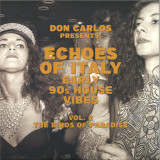
- A1: Montego Bay - Everything (Paradise Mix) 04 59
- A2: Atelier - Got To Live Together (Club Mix) 06 06
- A3: Golem - Music Sensations 04 56
- B1: The True Underground Sound Of Rome Feat. Stefano Di Carlo - Gladiators 05 26
- B2: Eagle Parade - I Believe 04 26
- C1: Dj Le Roi - Bocachica (Detroit Version) 05 28
- C2: Green Baize - Synthetic Rhythm 01 41
- C3: M.c.j. Feat. Sima - Sexitivity (Deep Mix) 05 30
- D1: Kwanzaa Posse Feat. Funk Master Sweat - Wicked Funk (Afro Ambient Mix) 06 31
- D2: Progetto Tribale - The Bird Of Paradise 06 29
- D3: Mbg - The Quite 06 59
Vol 1[28,99 €]
Googling “paradise house”, the first results to pop up are an endless list of European b&b’s with whitewashed lime façades, all of them promising “…an unmatched travel experience a few steps from the sea”. Next, a little further down, are the institutional websites of a few select semi-luxury retirement homes (no photos shown, but lots of stock images of smiling nurses with reassuring looks). To find the “paradise house” we’re after, we have to scroll even further down. Much further down.
It feels like yesterday, and at the same time it seems like a million years ago. The Eighties had just ended, and it was still unclear what to expect from the Nineties. Mobile phones that were not the size of a briefcase and did not cost as much as a car? A frightening economic crisis? The guitar-rock revival?! Certainly, the best place to observe that moment of transition was the dancefloor. Truly epochal transformations were happening there. From America, within a short distance one from the other, two revolutionary new musical styles had arrived: the first one sounded a bit like an “on a budget” version of the best Seventies disco-music – Philly sound made with a set of piano-bar keyboards! – the other was even more sparse, futuristic and extraterrestrial. It was a music with a quite distinct “physical” component, which at the same time, to be fully grasped, seemed to call for the knotty theories of certain French post-modern philosophers: Gilles Deleuze, Félix Guattari, Paul Virilio... Both those genres – we would learn shortly after – were born in the black communities of Chicago and Detroit, although listening to those vinyl 12” (often wrapped in generic white covers, and with little indication in the label) you could not easily guess whether behind them there was a black boy from somewhere in the Usa, or a girl from Berlin, or a pale kid from a Cornish coastal town.
Quickly, similar sounds began to show up from all corners of Europe. A thousand variations of the same intuition: leaner, less lean, happier, slightly less intoxicated, more broken, slower, faster, much faster... Boom! From the dancefloors – the London ones at least, whose chronicles we eagerly read every month in the pages of The Face and i-D – came tales of a new generation of clubbers who had completely stopped “dressing up” to go dancing; of hot tempered hooligans bursting into tears and hugging everyone under the strobe lights as the notes of Strings of Life rose up through the fumes of dry ice (certain “smiling” pills were also involved, sure). At this point, however, we must move on to Switzerland.
In Switzerland, in the quiet and diligent town of Lugano, between the 1980s and 1990s there was a club called “Morandi”. Its hot night was on Wednesdays, when the audience also came from Milan, Como, Varese and Zurich. Legend goes that, one night, none less than Prince and Sheila E were spotted hiding among the sofas, on a day-off of the Italian dates of the Nude Tour… The Wednesday resident and superstar was an Italian dj with an exotic name: Don Carlos. The soundtrack he devised was a mixture of Chicago, Detroit, the most progressive R&B and certain forgotten classics of old disco music: practically, what the Paradise Garage in New York might have sounded like had it not closed in 1987. In between, Don Carlos also managed to squeeze in some tracks he had worked on in his studio on Lago Maggiore. One in particular: a track that was rather slow compared to the BPM in fashion at the time, but which was a perfect bridge between house and R&B. The title was Alone: Don Carlos would explain years later that it had to be intended both in the English meaning of “by itself” and like the Italian word meaning “halo”. That wasn’t the only double entendre about the song, anyway. Its own very deep nature was, indeed, double. On the one hand, Alone was built around an angelic keyboard pattern and a romantic piano riff that took you straight to heaven; on the other, it showcased enough electronic squelches (plus a sax part that sounded like it had been dissolved by acid rain) to pigeonhole the tune into the “junk modernity” section, aka the hallmark of all the most innovative sounds of the time: music that sounded like it was hand-crafted from the scraps of glittering overground pop.
No one knows who was the first to call it “paradise house”, nor when it happened. Alternative definitions on the same topic one happened to hear included “ambient house”, “dream house”, “Mediterranean progressive”… but of course none were as good (and alluring) as “paradise house”. What is certain is that such inclination for sounds that were in equal measure angelic and neurotic, romantic and unaffective, quickly became the trademark of the second generation of Italian house. Music that seemed shyly equidistant from all the rhythmic and electronic revolutions that had happened up to that moment (“Music perfectly adept at going nowhere slowly” as noted by English journalist Craig McLean in a legendary field report for Blah Blah Blah magazine). Music that to a inattentive ear might have sounded as anonymous as a snapshot of a random group of passers-by at 10AM in the centre of any major city, but perfectly described the (slow) awakening in the real world after the universal love binge of the so-called Second Summer of Love.
For a brief but unforgettable season, in Italy “paradise house” was the official soundtrack of interminable weekends spent inside the car, darting from one club to another, cutting the peninsula from North to centre, from East to West coast in pursuit of the latest after-hours disco, trading kilometres per hour with beats per minute: practically, a new New Year’s Eve every Friday and Saturday night. This too was no small transformation, as well as a shock for an adult Italy that was encountering for the first time – thanks to its sons and daughters – the wild side of industrial modernity. The clubbers of the so-called “fuoriorario” scene were the balls gone mad in the pinball machine most feared by newspapers, magazines and TV pundits. What they did each and every weekend, apart from going crazy to the sound of the current white labels, was linking distant geographical points and non-places (thank you Marc Augé!) – old dance halls, farmhouses and business centres – transformed for one night into house music heaven. As Marco D’Eramo wrote in his 1995 essay on Chicago, Il maiale e il grattacielo: “Four-wheeled capitalism distorts our age-old image of the city, it allows the suburbs to be connected to each other, whereas before they were connected only by the centre (…) It makes possible a metropolitan area without a metropolis, without a city centre, without downtown. The periphery is no longer a periphery of any centre, but is self-centred”.
“Paradise house” perfectly understood all of this and turned it into a sort of cyber-blues that didn’t even need words, and unexpectedly brought back a drop of melancholic (post?)-humanity within a world that by then – as we would wholly realise in the decades to come – was fully inhuman and heartless. A world where we were all alone, and surrounded by a sinister yellowish halo, like a neon at the end of its life cycle. But, for one night at least, happy."