Sex Tags UFO presents the second instalment of the non stop ongoing HOUSE music collaboration between the Burger man and DJ Sommer! Music created as house music as a FEELING!
Another four track EP smashing out some fine underground house music, all with the mix of DJ Sommers studio skills and old-school hardware approach, and the Burger man's wonky touch! The almost weekly live session recorded in DJ Sommer's studio, then arranged and mixed at Casa de Fett bare some fruits, and here is their first record!
The first track on this EP, a deep and mellow house groover, with some trippy beats and percussion that keeps it moving. Deep pad, with a light and engaging melody on top. A real house groover to start the night.
The second cut, the energy shifts! A power infused feel good house track with spacey elements, timeless and simple 909 kick, a catchy bass line, swinging hi-hats for the groove, a strong classic snap. Added with some keyboard infused organ melody, and a 303 bass line. Sparkled with some synth EFX to give it a feeling of Galaxy!
One the flip side we go back to the depth. A deep tribalistic and dubbed out house track. Simple by all means. A moving and grooving beat added with a simple but catchy pad that brings everything together! Simple, pure and groovy!
The last tune on the EP, another uplifting energy driven house track! Classic US house style, with the driving, and swinging beats to make you move. With an uplifting organ pad, and some additional party oriented flute action! A real underground party smasher!
Just as previous time, versatile, simple, raw dance floor oriented HOUSE EP made in and for the underground!
Enjoy!
Buscar:real
- A1: Init (2 08)
- A2: Forked Reality (1 51)
- A3: As Alive As You Need Me To Be (3 58)
- A4: Echoes (3 43)
- A5: This Changes Everything (2 59)
- B1: In The Image Of (1 27)
- B2: I Know You Can Feel It (5 17)
- B3: Permanence (1 17)
- B4: Infiltrator (2 47)
- B5: 100% Expendable (3 52)
- B6: Still Remains (1 52)
- C1: Who Wants To Live Forever? (5 51)
- C2: Building Better Worllds (5 35)
- C3: Target Identified (2 08)
- C4: Daemonize (2 23)
- C5: Empathetic Response (2 52)
- D1: What Have You Done? (2 10)
- D2: A Question Of Trust (1 23)
- D3: Ghost In The Machine (1 25)
- D4: No Going Back (1 52)
- D5: Nemesis (1 40)
- D6: New Directive (2 44)
- D7: Out In The World (1 03)
- D8: Shadow Over Me (3 58)
White Vinyl[34,03 €]
TRON: Ares (Original Motion Picture Soundtrack)
24 neue Tracks von Nine Inch Nails: das Duo aus Trent Reznor und Atticus Ross veröffentlicht am 19.
September 2025 sein Album zum Disney-Kultfilm „TRON: Ares“, inklusive der neuen Single „As Alive As
You Need Me To Be”. Damit setzt die Band eine erfolgreiche Soundtrack-Geschichte fort: ihre vorherigen
Untermalungen zu Filmen wie „The Social Network“ (2010), „Soul“ (2020) oder „Challengers“ (2024)
wurden unter anderem mit zwei Oscars, drei Golden Globes, einem Emmy und einem Grammy ausgezeichnet. Die düstere Industrial-Handschrift Trent Reznors fängt die Stimmung der Sci-Fi-Reihe „TRON“, für
deren letzten Film Daft Punk komponierten, perfekt ein. Reznors Einfluss auf die alternative Musikwelt ist
seit den späten 80ern ungebrochen: mit Hits wie „Closer“ und „Hurt“ sowie Alben wie „The Downward
Spiral“ kombinierte das Mastermind elektronische Sounds mit Rockmusik wie nie zuvor. „TRON: Ares“ ist
die erste NIN Veröffentlichung seit fünf Jahren und liefert gleich 70 Minuten neue Musik – erhältlich ab
dem 19.09. auf CD und Vinyl.
"Love it! Electronic wonkiness at its finest" - Richard Norris (The Grid)
TEA, CAKES AND THE (WO)MAN MACHINE
Curtain Twitcher could only have emerged from Sheffield.
A female electronic duo whose corrupted downtempo post Balearic chug pulses and wobbles, throbs and twitches - full of fat noises and bolshy Moogery.
It's human and appealingly analogue. More Delia Derbyshire's Radiophonic Workshop than DAF, More Tangerine Dream than Depeche Mode. Not your average bloketronica.
Frankly this music doesn't behave itself in any way you might expect. Plugged in post rave pop can be far too orderly. Music should be messy. Even on occasion revealing a tune your mum could hum.
"Leap The Dips" emerged from machine jamming with a creative freedom that only comes from friendship. That friendship is a musical one but it's also real and genuine: "We’ll talk about pretty much owt if you provide the tea and cakes".
The word "amateur" originates from the Latin word "amator," meaning "lover" or "admirer". This Latin term is derived from "amare," which means "to love". The French adopted "amateur" from Latin, and the English then borrowed it from French, initially retaining the sense of someone who loves or is devoted to something. Over time, the English usage of "amateur" also developed a meaning related to a lack of professional skill or experience. How did a word derived from love become a slur? Is love really so defenseless? They say love conquers all, but in reality isn’t love quite ridiculous? It has no intention, no motive, no agenda. How could it possibly prevail? It can’t be bought or sold, or so they say.Its mere existence can't be proven or even measured. What an impossible thing. Trying and failing, time and time again, no wonder cynicism always seems to win. I see “amateurism” as a delighted, even foolish, protest. Protest against everything. Of what’s expected of someone, or expected of someone to desire or strive for. To be elite, to be expert, to be professional, to be a master, to excel and succeed. Where’s the joy in that? I just want to have fun. I want to want. I want to love. And keep doing it, forever. I want to have fun, even when it’s tiring and sometimes even heaven is boring as hell. I want to be bad. I want to do my own thing. “I vant to be alone”. I want to be someone so dedicated to their passion that it starts to seem like there’s something wrong with them. All the way. We can take it all the way, and never get it back. ” - Molly Nilsson Amateur is the 12th studio album by Molly Nilsson. Deep in the teeth of a career that threatens to tip into something resembling a “legacy,” Molly Nilsson celebrates with an album recorded instinctively, quickly and bursting with so many moments of emotional brilliance and clarity it may be her greatest yet. Hers has been a career spent reaching out, perennially powerful in her earnestness, a warrior ridiculously defenceless and armed with a glittering sincerity. Shearing herself of the machinations of the music industry, recording at home, writing direct to the heart. Amateur is a jubilee for losers. A treatise in 13 songs, Amateur states clearly that we should live our life with eternal curiosity, offers us an open hand of comradeship out of the rat race. The songs on the album are both some of the most personal of Nilsson’s career and the most anthemic. First single How Much Is The World asks us to re-evaluate value in the face of a Neo-liberal system squeezing the life out of our loves. Pulsing opener Die Cry Lie satirises the commercialisation of emotion in the form of a shout-along diss-track. With a pounding rhythm track held down by gorgeous chord changes, heartbreaker Valhalla carries the torch for the main themes of the album: never growing up, making mistakes with kindness, moving on. When the drums crash in on the line “It’s going to get better now, you’ll see, going to be much better off without me” there is a world of feeling swirling about in the vocal delivery. One reading of the track might be that it’s a break up song but the subtext is classic Molly Nilsson: by living truthfully, making mistakes, we’re active agents against the myriad oppressions of the world. All The Way takes the theme for a run into the eternal sunset. It’s a manifesto for living fully. “Take it all the way, and never get it back” - it’s the process that’s the important point. The journey not the destination. Big Life, follows on like a part 2: An ode not only to Molly Nilsson’s career of endless gigs, endless connections with people, it’s a massive ode for following your dreams, doing it yourself. Closer The Bitter End is a powerful anthem for friendship, another definition of love infused in Nilsson’s work, A beautifully poignant ode to comradeship til the end, it seems to be the songwriter approaching aging, approaching life’s inevitability with the same vigour and earnestness, the same love of life she enjoyed at the onset of her career. There are moments on Amateur shrouded in reverb, slightly out of focus, forcing the listener to step deeper into the Mollyverse.. Nilsson’s open-armed beseeching to the world permeates every beat, every chord. These are songs exploding with life: the chunky, aggressive bassline on the punker Get A Life can’t hide its massive, catchy chorus. The sweeping Swedish Nightmare might be a tongue-in-cheek self-reference, but at its heart it’s a song about the duality of living life large, what is a dream, what is a nightmare? Molly Nilsson says you can’t have one without the other, and why would you want to? Here’s to making mistakes.
Anushka Chkheidze + Robert Lippok’s »Uncontrollable Thoughts« on Morr Music is the duo’s debut joint release. The Netherlands-based Georgian composer and the German sound artist from Berlin first met in 2019 in the context of a workshop programme that took place in Tbilisi, and later worked with Eto Gelashvili, Hayk Karoyi, and Lillevan on the massive »Glacier Music II« music and book project, released in 2021. This led them to engage in a less conceptually driven form of musicking and real-time composition that corresponds with their respective environments. They draw on traditions such as minimal music or late 1990s and early 2000s electronica to integrate subtle beats with elegiac organ drones, playful melodies with lush textures. The first document of an ever-shifting intergenerational dialogue, »Uncontrollable Thoughts« is a product of mutual listening outside time.
Though Chkheidze and Lippok had access to professional studios, they chose to rent a simple rehearsal space, equipped with only the bare essentials—bass and guitar amps as well as a small PA—to maintain immediacy in their working process. The music they made together corresponded to and drew on the respective possibilities and shortcomings of this studio, much like their collaboration in general is characterised by the care with which they approach each other's talents and ideas. While both had loosely defined roles—Chkheidze was responsible for the free-flowing beat programming and the evocative distortion came courtesy of Lippok, for example—they individually contributed in different ways to their joint process, which is as free of hierarchies as it is limitless. Hence, the duo’s focus on spontaneity and out-of-the-moment emergence makes them organically move beyond tried and tested conventions, resulting in music that seems to suspend time altogether.
When the first chimes on »Bird Song« announce a piece that sets rattling kickdrums against a backdrop of layered drones and rhizomatically entangled melodic elements, it becomes clear why »Uncontrollable Thoughts« carries this title: The album follows the constant detours of the subconscious of its makers, letting them explore moments of ecstasy such as on »Rainbow,« melancholy with »Field,« and the interplay of suspense and release through the ten-minute-long title track. But the different pieces also tie into one aother in various ways. The dirge-like organ drones on which »Rainbow Road« ends reappear in the beginning of »Uncontrollable Thoughts,« much like Chkheidze’s gentle yet emphatic piano chords on »Field« seem to provide the starting point from which the artist develops the striking motifs of the final piece »Opening«, whose title itself suggests that the record as a whole can and should be enjoyed as a loop. All this creates a unique, idiosyncratic temporal logic.
While there is much that sets Chkheidze and Lippok apart as solo artists, the major shared leitmotif in their respective bodies of work is the sonic engagement with space. »Uncontrollable Thoughts« is hence best understood as an extension of this practice; as an album that maps the geographies of their minds in motion, tracing musical movements as they melt into each other.
Recital releases The Holy Restaurant, the new full-length album by Derek Baron, and their first solo LP since Curtain (Recital, 2020).
The album is built from years of miniature transcriptions of improvisations, functioning in many ways as a sister to Curtain. Half-thoughts and mistakes are revisited, gilded, and illuminated. The floorboards of the album are laid with piano, organ, string pads, while serrated accruements (distortions, flourishes, and recording interferences) step and drop overhead. The resulting conflux, as Baron notes in the accompanying booklet “becomes the point and the problem to explore.”
The second track “Oven Girls” opens with us galloping on a horse in some video-game meadow on a bed of MIDI strings. Abruptly, a helicopter soars over us and we transition to a latticed guitar and woodwind exploration. The album rolls on in this fashion, juxtaposing musical half-sentences within a museum of sounds rag-picked from history and daily life. Emotional interviews with Midwestern friars who build and sell caskets are set against gothic piano and guitar duets. On “Music in the Casket,” A disorienting and hilariously epic guitar solo erupts. The penultimate titular piece, “The Holy Restaurant,” sets a text written by Baron’s grandfather. A small chorus voices his words, echoing the humanistic storytelling of “Blue” Gene Tyranny’s A Letter From Home. Under sunlit piano progressions, a fleet of smokey trumpets emerges.
Running throughout the album is a series of “traces”: short melodic phrases painted over again and again with different real and MIDI instrumentation. The “luxurious asceticism of doubling” as Baron puts it. They explain, “Part of the allure for me is that the ‘original’ material is itself kind of thin, sketchy, meaningless, maybe calling attention to itself only by way of a felicitous mistake. Hearing, transcribing, and learning what was basically only ever played first on accident becomes the guiding concern.”
The album’s shifting, variegated forms and voices pass quickly; the record feels both comforting and elusive, suitable for any hour of the day.
The Holy Restaurant features guest players Ed Atkins, Lucy Liyou, Quentin Moore, Emily Martin, Dominic Frigo, Jacob Wick, and several of Baron’s family members. It is released in a limited edition vinyl pressing of 200 copies, accompanied by a booklet of effusive program notes by the composer, alongside an assemblage of photographs, scores, and artwork.
For the third time, they had been sent to this forsaken land. It was neither east nor west, neither north nor south. They said it had once been a kingdom, somewhere in the heart of the old continent, something they had pieced together from the ruins scattered across jagged hills sprouting here and there from the ground. Everyone else went islands, dived to the seabed, drilled at the poles, and explored waste in the east, but these two were sent here again, as if someone were trying to get rid of them, just to keep them out of the way.
What were they really supposed to find here? They wandered the land, aimless and bored, like the last bird watching from the sky. Sometimes they landed, took samples for the lab, and then caught a nap by the river bend. They avoided the hot fumes of active volcanoes. Compared to those on other planets, these were more like small, whispered fumaroles, but even so, they had to be careful.
They felt as if they had stepped into a scene from a movie they had once glimpsed. A mad and exhausted conqueror screamed and wildly flailed his arms on a ridiculous wooden raft in the middle of a raging river. It was somewhere in the south of this planet, deep in the jungle. There were many movies made on this planet, but only fragments of the reels survived, and this one quickly became iconic.
When a trumpet sounded in the distance and flooded the land with a booming murmur, when all the fumaroles hissed together, and when wind rolled in, covering the land in heavy fog, both of them knew the third expedition would not be like the previous ones.
At that moment, Kult Masek and Petr Vrba were flying over the land that was once called České středohoří.
- A1: Dj Nuts - Tire O Calundu (Remix)
- A2: Criolo; Daniel Ganjaman; Mario C - Abertura (Remix)
- A3: Emicida; Nave; Rael - Saudação Ao Rei Nagô (Remix)
- A4: Pupillo Feat Rogê - Obaluaye (Remix)
- A5: Marcelo D2; Mario C; Lucio Maia; Pupillo - Lembarenganga (Remix)
- A6: Mix Master Mike - Tire O Calundu (Remix)
- A7: Tropkillaz - Damurixá (Remix)
- A8: The Gaslamp Killer; Mophono - Agô (Remix)
- B1: Pedro Dom; Zilladxg - Rei Zumbi (Remix)
- B2: Cut Chemist - Abertura (Remix)
- B3: Taso - Saudação Ao Rei Nagô (Remix)
- B4: Mexican Institute Of Sound - Preto Velho E Yayá (Remix)
- B5: Ricardo Imperatore - Obaluaye (Remix)
- B6: Kassin - Agô (Remix)
- B7: J Rocc; Mario C - Tire O Calundu (Remix)
Firing remix package of cuts from two legendary album's from Brazil's Orquestra Afro-Brasileira. Feat
Two albums - Obaluayê (1957) and Orquestra Afro-Brasileira (1968) - were enough for Orquestra Afro-Brasileira to mark its history in music forever. Born in 1942 in Rio de Janeiro by its founder Abigail Moura, it remained active until 1970 and, in 2021, was revived by the only living member of the original line-up at the time, Carlos Negreiros, when the third and final album in the orchestra's career, entitled 80 years, was released by Amor in Sound/Night Dreamer. Today (31) the album gets its remix version with tracks signed by names of the caliber of Marcelo D2, Criolo, Pupillo, Emicida, Rael, Cut Chemist, Mexican Institute of Sound, among others.
Aiming to keep the legacy of the Orquestra Afro-Brasileira alive, the album 80 Anos (Remixes) reaffirms the group's relevance as a creative source for different generations of musicians and listeners, based on new interpretations produced by artists who are also fans of the orchestra. According to Mario Caldato Jr., the album's musical director, "it was a great joy when I got to know the work of the Afro-Brazilian Orchestra and, soon after, had the honor of meeting and working with Carlos Negreiros. Producing 80 Anos alongside him was a gift and being able to look back on it, having the remix album to celebrate this legacy, is really wonderful."
For Amor in Sound - Mario and Samantha Caldato's record label - this release faithfully represents their values: Respect for memory, diversity, friendship and the possibility of creating new worlds. Made in a totally collaborative way, the album is born as a historical record, interpreted by great names in current music and, above all, great friends. “Being able to do this is indescribable, the value of relationships makes up and continues the legacy of the Orquestra Afro Brasileira,” says Samantha.
The project brings together Brazilians Criolo, Emicida, Rael, Marcelo D2, Lucio Maia, Pupillo, Rogê, Tropkillaz, Kassin, Pedro Dom, Zilladxg, Nuts, Daniel Ganjaman, Imperatore and Nave, as well as international DJs and producers such as Mix Master Mike, Cut Chemist, Gaslamp Killer, J Rocc, TASO, Mexican Institute of Sound and Mophono.
In between the folds of ceremony and commonality lies a perennial spring of musical expression.
A statement along the time continuum, or a testament to the resilient resourcefulness embedded in that truth, forms the philosophical approach of this album – the first outing of Dídac.
Studying an extensive archive of instruments, artifacts, and field recordings at the Musée d’ethnographie de Genève—a space steeped in folkloric gesture – Dídac encountered a cosmos of liturgical music and folk song. Anchored in reverance for tradition and transformation alike, this album navigates the old-world Mediterranean lore through a post-modern ambient lens, threading drone, gentle rhythm, electroacoustic textures and the crude tactility of archival material into one woven tapestry.
Under the guidance of Dr. Madeleine Leclair, Dídac was invited to work within one of the world’s most extensive ethno- musicological archives—L’AIMP. In the saturated basements and tape-lined backrooms of the museum, he submerged himself in the sounds of ritual and rural life: wax cylinders from the Eastern Mediterranean, tapes of liturgical hymn, the worn edges of communal song.
In a makeshift studio on the fourth floor of the museum, he sifted through the hours of material he collected, gradually discovering that the archive was no static source – It did not dictate; rather, it served as a companion—offering not answers, but questions. Not a beaten track, but a cluster of sonic clues and riddles. Samples do appear occasionally, tenderly interwoven into the dialogue of the songs. In Dídac’s self-titled debut, the past is not worn as ornament or kitsch; it is listened to and responded to. The museum, its archives, and the visit to Geneva became a foundational culisse of sorts, igniting a myriad of rough cuts and improvisational outtakes.
Dídac, or Diego Ocejo Muñoz, was born in Madrid in 1994 to a family of both Catalan and Castilian origin.
Brought up in a religious household, the influence of the Catholic Church innately shaped the social fabric, schooling and daily life. This lingering dominance led the adolescent Diego into a path of rejection of everything sacramental, promptly resorting to subversion in the shape of grafitti, skateboarding and underground music. Only later in life, after a rigorous venture as an acid and electro producer, the Church re-emerged before him in new light, invoking a deep fascination for its mysticism, iconography and choral tradition.
Spain in general and Catalonia in particular, has long served as a crossroads of the eastern–western Mediterranean continuum, with many of its cultures sharing aspects of way of life and ceremony. At the MEG, Diego found himself puzzled with this realization, resulting in a sonic amalgamation that reaches farther away from the rugged mountains of Catalonia than you might perceive at first encounter.
The deeply embedded memory of rite and public ceremony, religious hymn and landscape—sieved through the undercurrent of personal re-emergence, forms the emotional topography of this album. The record does not trace this landscape; it inhabits it. Its repetitive mysticism and ambient, wide-eyed gaze could possibly evoke (perhaps redundant) comparisons to artists such as Dimitris Petsetakis, or Popol Vuh’s late 70’s cinema scores.
The delicate lines between the sacred and the secular – between memory and re-invention – serve as a cipher to understanding this album in its entirety. Titles like Malpàs Mines or Pantocrator’s Portal Outro nudge toward a folkloric and devotional bedrock—places where labor and spirituality coexist, where names preserve both dust and veneration.
Nevertheless, this is far from mere nostalgia. It is a reclamation — singing alongside the spirits of the past, nurturing what still hums beneath the soil. It is an intimate reflection on tradition, rebellion, adolescence, ceremony and fantasy – a pastoral contemplation on what once was and what is to be.
Ein unverzichtbares Album von Roy Ayers, das soulige Jazz-Wurzeln mit knackigem 1970er-Jahre-Funk verbindet. Mit Ayers' charakteristischen Vibes, präzisen Arrangements und herausragenden Tracks wie "The Boogie Back" (gesampelt von NWA, 2Pac, De La Soul_) und "Change Up the Groove" ist diese LP ein Muss für jeden Fan von Jazz-Funk und Vintage-Grooves, ein etwas verstecktes Juwel aus Roy Ayers Ubiquitys frühen Polygram-Jahren. Dieses soulige Album, das oft zugunsten von Ayers' größeren Hits übersehen wird, ist eine Meisterklasse in Jazz-Funk-Fusion und fängt die Essenz von Ayers' sich entwickelndem Stil ein, als er die Lücke zwischen seinen Jazz-Wurzeln und dem rhythmischen Snap der Funk-Revolution der 70er Jahre überbrückte. Vom ersten Track an steht Ayers' charakteristischer Vibraphon-Sound im Mittelpunkt, der vor Emotionen und Groove nur so sprüht. Das Album besticht durch seine instrumentale Vielfalt, zu der Jazzgrößen wie der legendäre Bernard Purdie am Schlagzeug einen herausragenden Beitrag leisten. Streicher verweben sich subtil und unterstreichen Ayers' ohnehin schon tiefgründige und strukturierte Arrangements. Zu den Höhepunkten gehören der unverkennbare Funk von "The Boogie Back", ein Breakbeat-Favorit für Crate-Digger und DJs (der oft gesampelt wird, um andere Tracks zu garnieren), und eine üppige, elektrifizierte Interpretation von "Feel Like Makin' Love", die vor sanfter Soul-Musik nur so glüht. Der Titeltrack "Change Up the Groove" liefert den typischen, emotional aufgeladenen Funk, der diese Ära geprägt hat. "Change Up the Groove" ist nicht nur ein Album - es ist eine Momentaufnahme von Roy Ayers' künstlerischer Entwicklung, voller Rhythmus, Herz und zeitlosem Groove. Egal, ob Sie ein langjähriger Fan sind oder nun neun entdecken. Essential listening!
- 1: Vivere Distaccati
- 2: Trasmissione
- 3: Decadente
- 4: Tarantola
- 5: Non Passerò A Trovarti
- 6: Ho Paura
- 7: Chiang Mai
- 8: Nelle Vene
- 9: Lavoro Troppo
- 10: Festa Di Compleanno
Hailing from Raw Culture, Anna Funk Damage returns with his third release on the Roman label, delivering a record as fierce as it is intimate. Tarantola was born out of a winter suspended between contrasting emotions – melancholy, anger, love, confusion – distilled into a sound that transforms personal fragility into collective energy. There’s no pursuit of perfection here, but rather an urgency running through the veins, taking shape across supersonic punk, wave, ambient and industrial.
Each track is an emotional fragment, a bite that leaves its mark: from the electric tension of Vivere Distaccati to the feverish rush of Trasmissione, from the rawness of Decadente to the hypnotic title track Tarantola, which embodies the beating heart of the album. Side B unfolds into more nocturnal and intimate landscapes, from Chiang Mai to the disenchanted sincerity of Lavoro Troppo, closing with a party that carries the bittersweet taste of reality.
Tarantola is a journey into the chaos of human emotions, an album that doesn’t just narrate but pulls you deep into its sonic labyrinth, giving noise back its vulnerable yet powerful soul.
- A1: Work Song
- A2: Gin House Blues
- A3: Come On Back, Jack
- A4: My Baby Just Cares For Me
- A5: I Put A Spell On You
- A6: Don't Let Me Be Misunderstood
- B1: Either Way I Lose
- B2: Break Down And Let It All Out
- B3: Don't You Pay Them No Mind
- B4: Do I Move You
- B5: It Be's That Way Sometime
- B6: To Love Somebody
- C1: Why? (The King Of Love Is Dead)
- C2: Do What You Gotta Do
- C3: Ain't Got No; I Got Life
- C4: Real Real
- C5: Suzanne
- C6: Revolution (Pt 1)
- D1: To Be Young, Gifted And Black
- D2: Save Me
- D3: Whatever I Am (You Made Me)
- D4: Ooh Child
- D5: Baltimore
- D6: Ain't Go No; I Got Life (Uk Single Version)
‘Icon’ is an overused word when it comes to describing singers and musicians, but when it comes to Nina Simone there are few artists that the word describes more accurately. The ‘High Priestess Of Soul’ is surely one of the most iconic singers of the 20th century, and one whose fame and acclaim stretches far beyond conventional black American music circles.
Nina Simone has featured on Ace and Kent CDs before but this is the first time she’s had one all to herself. “Let It All Out” is the first and only Nina Simone collection to draw repertoire from every label she recorded for between the late 1950s to the late 1970s.
Not a traditional ‘Best Of’ or ‘Greatest Hits’ package (although the performances included here ARE among her very best, and do include most of her Greatest Hits!) it is a singles collection that presents Nina Simone’s soul and R&B-slanted 45s in chronological order. Invariably they are the definitive versions of the songs, whether she recorded the original versions or not.
As well as almost all of her American pop and R&B chart hits from 1960 onwards, “Let It All Out” also contains all of Simone’s UK chart hits from the same period – several of which were more successful here than they were back home, including both versions of her biggest British hit ‘Ain’t Got No; I Got Life’, a UK #2 that did not chart at all in the US as was the case with the belated UK Top 5 hit ‘My Baby Just Cares For Me’ which also made no chart impression on its home turf…
Carefully curated and concisely annotated, “Let It All Out” lets the listener in to two dozen of Nina Simone’s most celebrated singles. There have been many compilations of her works since she passed away 20+ years ago, but none that gets to the heart – and soul – of her catalogue in quite so direct a manner as this one does.
- 1: Screaming Skin (2025 Remaster)
- 2: Forgive And Forget (Pull Down The Night)
- 3: Maria (2025 Remaster)
- 4: No Exit (2025 Remaster)
- 5: Double Take (202 Remaster)
- 6: Nothing Is Real But The Girl (2025 Remaster)
- 7: Boom Boom In The Zoom Zoom (2025 Remaster)
- 8: Night Wind Sent (2025 Remaster)
- 9: Under The Gun (2025 Remaster)
- 1: Out In The Streets (2025 Remaster)
- 2: Happy Dog (For Caggie)
- 3: The Dream's Lost On Me (2025 Remaster)
- 4: Divine (2025 Remaster)
- 5: Dig It Up The Conjo (202 Remaster)
- 6: Hot Shot (David Wrench 2025 Remix)
- 7: Nothing Is Real But The Girl (Boilerhouse Lounge Mix)
- 8: No Exit (Urban Version Main Mix)
- 9: Maria (Ether Dub Mix)
Crystal Clear Vinyl[48,32 €]
- Waiting For You
- Spiritual Garden
- Dreamy Ride
- Hey Ladies
- Full Moon
- Magical Thinking
- Xiang Xiang
- Endelig
- Voice Continues
- Tschüssi
- Sleep It Off
"Magical Thinking", Faraos drittes Studioalbum, entfaltet sich als vielschichtige Reise durch Verlust, Sehnsucht und Verwandlung. In Anlehnung an den Titel und den Geist von Joan Didions "The Year of Magical Thinking" bewegt es sich durch das stille Terrain zwischen Verleugnung und Akzeptanz - wo Trauer nicht gelöst, sondern getragen wird. Es sind Songs über Wiederaufbau und Widerstandsfähigkeit, geprägt von Themen wie Trauer, Mutterschaft und den wesentlichen Ritualen, die uns aufrecht halten, wenn die Klarheit schwindet. Das Album wurde zwischen Oslo und Berlin aufgenommen und pulsiert mit dem Flair des R&B der 90er Jahre, dem Glanz der 80er-Disco und der kontemplativen Schwungkraft des spirituellen Jazz - allesamt verankert durch Faraos intime Vocals und komplexe Arrangements. Vom ersten Schimmern von ,Waiting for You", wo Herzschmerz in Pailletten gekleidet ist und ein Groove an Robyn und Chaka Khan erinnert, lädt uns das Album in eine Welt ein, in der Sehnsucht zum Leuchten gebracht wird. In ,Spiritual Garden", benannt nach einer flüchtigen Textzeile von Janet Jackson, schafft Farao eine feuchte, narkotische R&B-Träumerei. Percussion im Stil von Timbaland und seidige Basslines umhüllen die unerwarteten Texturen ihrer Zither und beschwören eine Meditation über Verlassenheit und die fragile Rückeroberung des Selbstwertgefühls herauf. Wenn ,Dreamy Ride" einsetzt - wo Aaliyahs Coolness auf Dorothy Ashbys kosmische Harfe trifft -, gleitet das Album in nächtliche Bewegungen, eine R&B-Fantasie für nächtliche Autofahrten um 2 Uhr morgens, wobei ihre Zither sich wie ein Leitstern durch den Mix webt. Der verspielte Synth-Jam ,Hey Ladies" und eine kühne Neuinterpretation von Brandys ,Full Moon" lockern die Stimmung in der Mitte des Albums auf. Ersterer ist eine freche, einminütige Hommage an Destiny's Child, letzterer eine nächtliche Elegie, die einen geliebten Klassiker in tiefe Bässe und schimmernde Synthesizer hüllt. Dann kommt ,Xiang Xiang", ein intimes Intermezzo, das um eine geflüsterte Stimme einer Freundin herum aufgebaut ist und uns an die realen Bindungen erinnert, die Faraos üppiges Klanguniversum erden. Im Zentrum des Albums steht der Titeltrack ,Magical Thinking", der direkt auf Didions Memoiren Bezug nimmt. Hier zeichnen pulsierende Synthesizer und schwebende Vocals die verschwommene Grenze zwischen Präsenz und Dissoziation nach. Es folgt ,Endelig" (,endlich" auf Norwegisch), ein tiefes Ausatmen - ein minimalistisches, spirituelles Jazz-Intermezzo, das die Illusion einer Auflösung vermittelt. Farao tut sich dann mit dem Ambient-Pionier Laraaji für ,Voice Continues" zusammen, einer weitläufigen, von der Vierten Welt inspirierten Meditation, in der Zither, mehrschichtige Vocals und Synth-Texturen einen Klangteppich bilden, der die Spuren mütterlicher Liebe über Generationen hinweg nachzeichnet. ,Tschüssi" (ein luftiger deutscher Abschiedsgruß) wird zum Gefäß für etwas weit Schwerwiegenderes: ein Abschied, durchzogen von sich wiederholenden Erinnerungen und emotionaler Desorientierung, aufgebaut um ein gespenstisches Fragment aus Faraos Track ,Marry Me". Das Album schließt mit ,Sleep It O" zu einer verschwommenen, gnädigen Note, einem Wiegenlied für die Überwältigten - eine letzte Erlaubnis, sich auszuruhen, loszulassen, sich einfach hinzulegen. Keine Verheißung der Heilung, sondern eine mitfühlende Pause in einem Album, das von Sehnsucht und Illusion geprägt ist. RIYL: Erika de Casier, Tirzah, Sade, Kelela, Qendresa, Caroline Polachek, Solange
- A1: Riot Radio
- A2: A Different Age
- A3: Train To Nowhere
- A4: Red Light
- A5: We Get Low
- A6: Ghostfaced Killer
- B1: Loaded Gun
- B2: Control This
- B3: Soul Survivor
- B4: Nationwide
- B5: Horizontal
- B6: The Last Resort
- B7: You're Not The Law
- C1: Too Much Tv Dub
- C2: Invader Dub
- C3: D-60 Fights The Evil Force
- C4: No Control Dub
- C5: Tower Block Dub
- D1: Cns Lazer Attack D-60
- D2: Police Radio Dub
- D3: Flight Mission Dub
- D4: No Good Town Dub
- D5: Game Over
The Dead 60s seminal self-titled album gets a timely Deluxe edition reissue on Vinyl for its 20th Anniversary, on Deltasonic Records
“Back in the day, punk and dub weren’t just sharing space—they were smashing into each other headfirst. Late '70s Britain was a pressure cooker, and for kids like me, growing up between Brixton’s bass bins and the chaos of King’s Road, that collision was everything. Jamaican sound system culture met punk’s raw spirit in a haze of smoke, sweat, and feedback. It wasn’t about genre—it was about energy. Identity. Defiance. so when The Dead 60s came along, post-Britpop and post-bullshit, it felt like someone had dusted off the blueprint and run it through a battered old tape echo. These weren’t just lads with good taste—they understood the assignment. They took the DNA of two rebel cultures and mutated it into something that could stand tall in the 21st century. Dub-soaked, punk-fuelled, dripping with that Liverpool attitude. I remember first hearing them and thinking—yeah, here we go again. Not in a retro way, but in a real way. Guitars that cut like sirens in the night. Basslines fat and warm, straight out the Channel One playbook. Lyrics that painted the grey corners of Britain like CCTV poetry. It was the sound of youth under pressure. The sound of not fitting in—and not wanting to.
Their debut album dropped in 2005, and it hit like a flare in the dark. “Riot Radio” was a pirate broadcast from the concrete frontlines. “Control This” swaggered with menace and reverb. It was like someone opened a time capsule from the punky-reggae party and rewired it for a new generation.
Now, with this 20th anniversary vinyl reissue—complete with the full dub companion produced by Central Nervous System—we get to hear the bones and blood of it all. The dub versions pull the tracks apart and let the ghosts speak. Reverb, delay, space—it’s not just production, it’s meditation. Revolution slowed down to a heartbeat. It’s music that makes you move and think. What they’ve done here is more than remix a record—they’ve revealed its soul. That’s what dub does when it’s done right. And The Dead 60s, they got that. They weren’t tourists in the culture—they were students of it, shaped by it, and ultimately, contributors to the legacy. Liverpool’s long had a love affair with Jamaican music—you can hear it in the streets if you’re really listening. The Dead 60s tapped into that lineage, but they brought their own thing to the table. Punk's fire. Dub’s depth. Ska’s bounce. All filtered through a Northern lens and blasted out like protest graffiti. This 20th anniversary reissue ain’t about nostalgia. It’s a reminder. A celebration. A call to arms. Music like this doesn’t belong in a museum—it belongs on a system, shaking walls and waking minds. Crate diggers, completists, young punks, old heads—this one's for all of you.
So put it on and turn it up. Let the punk edge sharpen your thoughts, and the dub shake your bones ‘cos this isn’t just a reissue - it’s resistance on wax.....”
- Kein Allein
- The Chemistry Of Pain
- Tomorrow's Past
- Hurt People Hurt People
- Dead To Me
- Iamnowhere
Serie mit unbekanntem Ausgang. Diary of Dreams starten eine Serie von Mini Alben, deren finale Anzahl noch nicht beschlossen ist; Mastermind Adrian Hates erklärt: "Die Serie endet, wenn die Geschichte zu Ende erzählt ist." So beginnt nun am 31.10.2025 die neue musikalische Traumreise mit dem Kapitel "Dead End Dreams". Der Titel ist ursprünglich eine Textzeile aus dem Song Panik? vom 2002er Mini Album PaniK Manifesto, welches für DoD das erste seiner Art war. Die Zeile blieb für Adrian jedoch bis heute inhaltlich unvollendet; es gab dazu noch so viel mehr zu sagen. Es war also höchste Zeit, dieses Sinnbild zu vollenden. Begeben wir uns dafür nun gemeinsam in völlig neue Klangwelten des Tagebuchs. Der Titel verrät ein wenig, womit zu rechnen ist - düstere und apokalypische Szenarien und ein Rückzug in die eigenen Gedanken, um das auszublenden, was kaum fassbar mehr scheint: die Realität; Eine Welt am kollektiven Abgrund. Gegründet wurde die Band 1989 und erspielte sich seitdem mit über 700 Konzerte in 43 Ländern ein treues Publikum.
- A1: Sixfold Radianz (3 45)
- A2: Boktay (2 10)
- A3: 4D-Tögtägtüu (1 23)
- A4: Exosphear (4 07)
- A5: Maurodius-Papeda (1 11)
- A6: Dondoli (The Npc) (3 20)
- A7: Leftrightba (0 56)
- B1: Lygöphobiä (1 49)
- B2: Flossbite (1 36)
- B3: Chipppps (3 32)
- B4: Dodgedog (2 33)
- B5: Bogeygirl (2 16)
- B6: Laserzimmer 1, Raum 3 16 (1 54)
- B7: Binäry Gatoraders On Acid (2 06)
"I live in the arcades. Reality was never an option!"
The 85-year-old video game queen and film composer pdqb (born on November 14, 1939) delivers a beautiful love letter to your boomer childhood, a wild ride through the golden age of video gaming. Hear how she dodges bullets, jumps over cosmic chasms, beats bosses, reaches bonus stages, uses cheat codes and even her last continue...just to stay in a world of pixels and vectors forever. pdqb will bring you back all those fond memories of unburdened joy that you might have lost while growing up. She could be your savior.
Synaptic Cliffs is filled with otherworldly pride to present these 14 timeless masterpieces to its beloved listeners.
- The Lost Knight 1
- A Leap Of Wraith
- The Lost Knight 2
- Enter The Cave
- Face Thyself
- Come Magenta
- By A Padder
- Thin Amid All
- The Lost Knight 3
- Would Hack A Coo Cooker
- Be Psychic Show
- Love Thyself
Limited edition Gatefold LP version on 180g Red/Black Marble Vinyl with 16-page lyrics booklet. El Pez Que Volo (The Fish who Flew) is a musical quest to unearth the divine gem hidden within oneself. A cartoonish collection of desires, phobias, pathologies and virtues which are funnelled to create an ambivalent moral mishmash of East and West traditions. This zoomorphic, naïve & messianic hero's journey is infused with a psychedelic aura that invites us to dream the impossible... Act II - The Cave: After leaving the nest, Teezûck feels he's ready to fly, but in his premature attempt he hits a bump and fails, falling back to the bottom of the sea and plunging into the darkest and most terrifying cavern of all: the subconscious mind. Reality, fiction, memories, myths and legends intertwine in this dark, acidic mirrored circus where Teezûck will have to learn to meditate and master his psyche. The El Pez Que Voló series feature a capricious, free mixture of musical styles, genres, production values and aesthetics, which serve as narrative devices to highlight moments, characters & emotions across this highly unconventional sonic expedition.
Cassette[9,03 €]
PINK-WHITE MARBLE Vinyl[22,65 €]
PHOENIX II ED. RED/BLACK/WHITE MERGE Vinyl[22,06 €]
LTD METAL HAMMER PICTURE DISC[22,27 €]
LTD ZOETROPE ANIMATED PICTURE DISC[22,27 €]
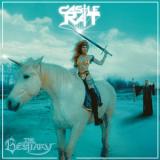
Das Fantasy-Mittelalter-Metal-Phänomen CASTLE RAT präsentiert sein zweites Album! Castle Rat ist die NY Fantasy-Heavy-Metal-Band, die von der Rat Queen angeführt wird, welche die Mission verfolgt, ihr Refugium gegen diejenigen zu verteidigen, die es zerstören wollen. Ihr zur Seite stehen The Count, The Plague Doctor und The All-Seeing Druid. Gemeinsam stellen sie sich mit Heavy Magie dem unerbittlichen Zorn ihrer Erzfeindin - dem Tod in Form von The Rat Reaperess. Das zweite Album The Bestiary ist ein riffgeladenes Kompendium mystischer Kreaturen und vorwarnender Erzählungen aus einer vergessenen Welt. Es erzählt 13 allegorische Geschichten von mythischen Bestien und dem Zauberer, der sie beschwört, und verwebt kraftvolle Heavy-Hymnen und dunkle Verzückungen zu einer betörenden und unvergesslichen Heavy-Metal-Odyssee. Als ob Grace Slick mit Black Sabbath um ca. 1200 A.D. auf einem KISS-Konzert rumachen würde. Aufgenommen von Randall Dunn (Sunn O))), Wolves in the Throne Room, Björk) und gemischt von Jonathan Nuñez (Torche, Restless Spirit), bietet das Album fesselnde Tracks zwischen epischem Heavy-Gemetzel und doomy Hard Rock. The Rat Queen kommentiert das Album wie folgt: "The Bestiary' ist ein konzeptionelles Buch der Bestien, das von mystischen Kreaturen aus einer vergessenen Welt erzählt. Die letzten verbliebenen Seelen jeder dieser Kreaturen wurden von `The Wizard' gesammelt und aufbewahrt. Die Geschichten der einzelnen Bestien und des Zauberers selbst werden mit der Kraft traditioneller Heavy-Metal-Songs und Hard Rock-Magie verwoben." Hervorgegangen aus New Yorks abscheulichem, kreaturenverseuchtem Untergrund, schlugen die Fantasy-Heavy-Metaller zunächst mit ihren Live-Auftritten und später mit ihrem Debütalbum "Into The Realm" im Jahr 2024 große Wellen. Seit ihrer Gründung im Jahr 2019 haben CASTLE RAT ein lebendiges Labyrinth aus Erzählungen und Mythen geschaffen, welches sie nun rund um die Welt führt. The Bestiary auf CD (aufklappbares Digipak), MC (mit gefaltetem Inlay) und auf LP (farbiges Vinyl, inklusive ausklappbarem Lyrics-Insert)!
- Retinal Rivalry
Retinal Rivalry ist der Soundtrack zu Cyprien Gaillards neuem stereoskopischen Film Retinal Rivalry (2024). ,Es ist eine faszinierende Reise durch die deutsche Stadtlandschaft und ihre vielschichtige historische und soziale Bedeutung. Aufbauend auf seiner früheren Erforschung der skulpturalen Qualitäten dreidimensionaler bewegter Bilder geht das Werk über die Grenzen der Leinwand hinaus. Durch die Ausschöpfung des vollen Potenzials modernster Technologie bietet Gaillard eine erweiterte, geschärfte und tief bewegende neue Sicht auf die Welt um uns herum. Retinal Rivalry ist nach dem Phänomen der visuellen Wahrnehmung benannt, das auftritt, wenn das Gehirn zwei widersprüchliche Bilder gleichzeitig empfängt. Anstatt zu einem 3D-Bild zu verschmelzen, wechselt das neuronale System zwischen der Priorisierung des einen Bildes und der Unterdrückung des anderen, was beim Betrachter Verwirrung und Unbehagen hervorruft. Gaillards Film setzt sich mit diesen Komplexitäten der visuellen Verarbeitung und den Grenzen der Technologie auseinander und sammelt visuelle Informationen durch außergewöhnliche, oft augenzwinkernde Aufnahmen, die das Innere und das Äußere, das Eingeschlossene und das Verstreute sowie das Natürliche und das Gebaute miteinander verflechten. Seine Kamera nimmt ungewöhnliche Blickwinkel ein, wechselt von sanften Luftperspektiven zu einem niedrigen Blickwinkel aus der Perspektive eines Nagetiers, zu schwindelerregenden Ein- und Ausblendungen auf der knolligen Nase einer Skulptur oder zu einer langen Einstellung eines Zuges, der durch eine Landschaft fährt, und zieht uns in eine vielschichtige Erfahrung hinein, die zwischen einem schlechten Trip und unerwarteter Schönheit, die Trost spendet, schwankt. In ,Retinal Rivalry" deuten verschiedene Treppen, Spiralen und Aufzüge auf einen Zustand des ständigen Auf- und Abstiegs hin und betonen das Wechselspiel zwischen Distanz und Nähe, abgrundtiefer Tiefe und lebendiger skulpturaler Darstellung. Der Film pulsiert rhythmisch mit Bildern, die anschwellen und sich zusammenziehen, sich aufblähen und entleeren. Er manipuliert das Gefühl der Zuschauer für Tiefe, Maßstab und Textur und lässt vertraute Materialien und Orte unheimlich erscheinen, wobei er die inhärenten Ungenauigkeiten und Verzerrungen der Darstellung hervorhebt. ,Retinal Rivalry" zeichnet die gewöhnliche Welt in großartigen Details auf und versucht dabei, unter die Oberfläche der Dinge zu blicken. Der Film ist eine Darstellung von Raum und Zeit, die Darstellungsweisen destabilisiert und eine neue Hyper-Vision-Version der Realität bietet. Mit 120 Bildern pro Sekunde aufgenommen und mit derselben Geschwindigkeit projiziert - fünfmal so schnell wie im Kino üblich - fängt Gaillard mehr ein, als das menschliche Auge natürlich wahrnehmen kann. Die Filmmusik greift auf verschiedene klangliche Elemente zurück und unterstreicht so die Erforschung von Dissonanz und Synchronität. Indonesische Instrumentalmusik wird überarbeitet und mit Feldaufnahmen von rumpelnden schweren Maschinen und seltsam melodischem Würgen kombiniert. Der Soundtrack enthält auch die ersten Zeilen aus Werner Herzogs Aguirre, der Zorn Gottes (1972) sowie die dazugehörige Ouvertüre der deutschen Band Popol Vuh. Die Klanglandschaft von Retinal Rivalry steht im Kontrast zu den Bildern - was wir sehen, steht oft im Widerspruch zu dem, was wir hören. Nur in einem Abschnitt verschmelzen Ton und Bild: Ein gebrochenes Bein betätigt das Pedal einer interaktiven Orgel, um ein Stück von Johann Sebastian Bach zu spielen, das immer wieder ins Stocken gerät.