British musician, multi-instrumentalist, producer and DJ cktrl returns with the release of his new EP ‘Yield’. Born from a desire to change the narrative around contemporary Black British music, the boundary-pushing musician aims with this project to prioritise the art of bonafide musicianship. A stark departure from cktrl’s previous work, ‘Yield’ is a celestial and palpably more inward body of work that harkens back to the pre-electric age of modal jazz while simultaneously pulling in elements from the disciplines of classical and baroque music. Speaking on the project’s sonic identity, cktrl says: “I want to be able to show that you can make things from scratch again that have that feeling and beauty without having to sample an old record. Even though that’s an art-form within itself, I want to show raw orchestration and instrumentation can be the sole source” The origins of the title came from a period where cktrl was looking to find solace in himself after an introspective period of grief and heartbreak. As an intentionally instrumental project with minimal vocals, cktrl wants prospective listeners to see these new songs as guided meditations where they can wholly insert themselves in it. Eliciting and reaping whatever feelings come to the fore. Speaking on what ‘Yield’ means to him as a concept, cktrl explains: “Some people who I've asked to define the word ‘yield’ have looked at it from a harvest point of view, whereas others have seen it as something to submit to, to render, like you're giving up yourself. I see it as a barometer for how you feel - no matter if you're at your lowest or your highest vibration, you still need to show up for yourself. You still have to be present. It’s about getting the best from yourself no matter where you are in life” The new project is the follow up to last year’s ‘Zero’ which featured collaborations with esteemed contemporaries like the GRAMMY-nominated Mereba and anaiis. Upon the project’s release, it was met with a plethora of critical acclaim from highly regarded publications and platform such as British Vogue, Dazed, CRACK Magazine, Resident Advisor, NOTION, Harper's Bazaar and ES Magazine for its sprawling and experimental scope, spanning avant-garde jazz, classical music, alternative R&B and electronica. cktrl has a tune for every occasion: as content making beats by himself at home in Lewisham as he is amongst this generation’s fashion and cultural vanguards. Music has been a part of his life for as long as he can remember: from clarinet lessons throughout his school life to fond memories from his NTS days. Moulded by a unique blend of his West Indian heritage, years of classical training in both the clarinet and saxophone, cktrl strives to do what hasn’t been done before. His approach to creation is decidedly wide-ranging and broad. In fact, where sonic descriptions might fail to encompass the breadth of cktrl’s scope, three words surface when he unpacks his musical aims: freedom, range and feeling. Elsewhere, throughout his career, cktrl has been recognised and heralded by fashion and film VIPs as he firmly embeds himself within the black cultural renaissance emerging here in Britain. Acquiring a global network of creatives that include the late Virgil Abloh, Bianca Saunders, Tremaine Emory, Saul Nash, Maximilian Davis, Ahluwalia, Stephen Isaac Wilson, Sean Frank, Campbell Addy, Ib Kamara and Jenn Nkiru who secured him a cameo in Beyoncé’s ground-breaking film ‘Black Is King’.
Cerca:record breakin music
• Gil Scott-Heron’s “Pieces Of A Man” is one of the most important albums in the history of black American music. Although it didn’t set the charts alight, it stands as a masterpiece alongside contemporary works such as Marvin Gaye’s “What’s Going On”, Curtis Mayfield’s debut LP, Funkadelic's “Maggot Brain” and Isaac Hayes’ “Shaft”. All were brilliant in their way, but lyrically Scott-Heron was on a different level from almost every other writer.
• It was a landmark album with its bold, poetic lyrical content allied to progressive and melodic music, and it saw producer Bob Thiele help Gil and his musical partner Brian Jackson paint the picture they needed to get their message across. Thiele put Gil and Brian together with Ron Carter, Hubert Laws and Bernard Purdie, giving them the musical heft they wanted.
• For many years the focus was on ‘The Revolution Will Not Be Televised’, which was included in the Grammy Hall Of Fame in 2014, but this focus sometimes overshadowed the heights which Gil reached throughout the album. Today ‘Home Is Where The Hatred Is’ and ‘Lady Day And John Coltrane’ are also considered standards, whilst the album’s title track is a prescient and heart-breaking warning about the way in which big business dehumanises its workers.
• The album reached its landmark 50th year in 2021 and we decided that we would create this special edition to celebrate its incredible sound. The original master tape was taken to Frank Merritt at The Carvery in London, who cut it as a double disc 2 x 45 RPM record, in an all-analogue chain. The original record - especially side two - was long, and serving it up this way allowed the music a greater level of fidelity.
• The release is packaged in the original album’s gatefold sleeve.
Four Flies Records is proud to present its brand new imprint Edizioni Della Notte, which expands the label's musical range. The sound of Edizioni Della Notte is a sound of twilight atmospheres and moonlit nights, traversing genres from disco-funk to soft rock, jazz-fusion and city pop. It's the music that creeps out of smoky nightclubs and car cassette radios, breaking the silence of empty streets and offering an escape from metropolitan reality into cosmic-exotic dreamlands.
Quite fittingly, the first official release on Edizioni Della Notte is called By Night. It's the debut EP of Scerida, a solo project of musician and singer-songwriter Daniela Resconi, and a perfect match for the sound that the new imprint intends to represent.
Its four tracks explore the idea of night as a time of ecstasy and torment, as a land of freedom and imagination but also of delusion, as an accomplice, a friend and an enemy described through feelings and mental states that range from expectation and euphoria to disillusionment and resignation.
Resconi, who hails from Brescia, northern Italy, formerly released music under the moniker Cara and as part of the duo The Loud Vice. Her new alias Scerida, which combines the French term chérie with the Spanish word querida, signals both a revolution and an evolution. "Scerida is a dive into the exotic side of my imagination, into mischevious thoughts, into a crazy night where I lost and found myself again," she explains. "She is still me, Daniela, but she keeps her eyes wide open on this restless, troubled world to write songs that try to ward off the horror vacui of everyday life."
By Night celebrates the dark hours as magical and mesmerizing, even when mysterious or dangerous. It evokes images and scenarios cinematically – a taxi passing by and fading into the distance, ice-cold Martinis during a party, whirlwinds of emotion, psychedelic sunrises and neon sunsets – through a stream of consciousness filled with noir-inflected pop, lo-fi vibes, slow hypnotic rhythms, suspended grooves and swelling atmospheres.
- A1: Yaw - Where Will You Be
- A2: Flying Lotus Feat. Andreya Triana - Tea Leaf Dancers**
- A3: Les Sins - Grind**
- B1: Noir & Haze - Around (Solomun Vox)**
- B2: Julien Dyne Feat. Mara Tk - Stained Glass Fresh Frozen
- B3: Jitwam - Keepyourbusinesstoyourself
- C1: Dopehead - Guttah Guttah
- C2: Talc - Robot's Return (Modern Sleepover Part 2)**
- C3: Peter Digital Orchestra - Jeux De Langues**
- C4: Jai Paul - Btstu**
- D1: Beady Belle - When My Anger Starts To Cry**
- D2: Daniel Bortz - Cuz You're The One**
- D3: Joeski Feat. Jesánte - How Do I Go On**
- E1: Nightmares On Wax - Les Nuits
- E2: Slf & Merkin - Tag Team Triangle**
- E3: Lady Alma - It's House Music ** Moodymann Edit
- F1: Tirogo - Disco Maniac
- F2: Kings Of Tomorrow Feat. April - Fall For You (Sandy Rivera's Classic Mix)**
- F3: Soulful Session, Lynn Lockamy - Hostile Takeover
NO.2 on the groove charts!
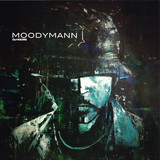
Following a year that saw the 50th entry in the long-running series released to wide acclaim, DJ-Kicks returns in 2016 another landmark edition. Iconic Detroit DJ and producer Moodymann is at the helm for his first ever multi-artist DJ mix compilation. Born Kenny Dixon Jr., Moodymann is a one-of-a-kind electronic music icon, hailing from, and wholly synonymous with the Motor City. He is an outspoken, impossibly charismatic artist who has been putting a distinctive and soulful stamp on house and techno since the early 90s. Melting together jazz, funk, soul, blues and rock in captivating ways, he is responsible for some of electronic music's most definitive tracks, EPs and LPs on labels like Planet E, Peacefrog and his own KDJ and Mahogani Music imprints. As able to serve up the sweetest and most sensual sounds as he is the darkest and most depraved grooves, his own unique voice and stream of conscious musings infuse expertly sought-out samples for music that is decisively alive and authentic.
Across 75 minutes and 30 tracks, Moodymann does not disappoint: despite being a notorious vinyl fetishist, Dixon's aim is to present music of quality, not to one-up fellow collectors. Rather than serving up ridiculously rare or hard-to-find records, he instead focuses on creating a libidinous, blues-drenched mood that takes in heart-breaking soul, gorgeous hip-hop and love-fuelled house. In addition to cuts from his own creative circle, the mix features 11 exclusive Moodymann edits. Like everything Kenny Dixon Jr. touches, DJ-Kicks showcases the taste, skill, and soul of a dance music original.
- A1: All Werk Is Play
- A2: Move Different
- A3: You Kraft
- B1: Eterno Retorno (Feat Moreiya)
- B2: Battered Mars Bar
- B3: Downtools & Boost
- B4: In Saint-Gilles (Feat Le Motel)
- C1: May Day (Feat Chunky)
- C2: On The Rhythm Of It
- C3: Microwerk
- C4: Beauty & The Bloc
- D1: Pick Up Football
- D2: Count Yer Pace (Feat Kemani Anderson)
- D3: Derive
First Word Records is very pleased to bring you the sophomore album from Werkha, a 14-track double LP entitled 'All Werk Is Play'.
Werkha hails from Manchester and has been releasing music for a decade, collaborating and remixing artists such as Quantic, Bryony Jarman-Pinto, Marcos Valles and Andrew Ashong. Werkha and his live band have been lighting up dancefloors in recent months at venues such as Low Four Studio in Manchester and The Jazz Cafe in London, with festival appearances locked for the Summer at the likes of We Out Here and Moovin. In past years, he has toured extensively with artists like Bonobo, Chet Faker and Mr Scruff.
In 2020, Werkha released 'The Rigour' on First Word, and dropped 'Beat Tapestry' in late 2021 on a limited cassette. 'All Werk Is Play' marks Werkha's first full-length solo project since his debut album 'Colours Of A Red Brick Raft' on Tru Thoughts in 2015, and sees this multi-talented musician produce a delightfully vibrant body of werk.
This album is predominantly a set of uptempo compositions from Werkha (real name Tom Leah), fusing analogue jazz-funk vibes with modern dance music sensibilities. Nestling somewhere between broken beat and breakbeat, Werkha has been nurturing his own unique sonics for some time; incorporating live horns & wind instruments with bass, double-bass, harp and guitar, along with a selection of sweet squelchy synths and deliciously delectable drum programming.
We've had several single releases from this project so far, namely 'Eterno Retorno' (with Portuguese singer Moreiya),'In Saint-Gilles' (with Brussels DJ & producer, Le Motel), 'Move Different' (with Mancunian singer & musician Ellen Beth Abdi), 'Beauty & The Bloc' and 'Battered Mars Bar'. As well as the afore-mentioned collaborations, this album also features bars from legendary MCR MC Chunky (Swamp81 / Levelz) on 'May Day', soulful vocals from Kemani Anderson (Secret Night Gang) on 'Count Yer Pace' and some heavyweight accompaniment from the likes of bassists Nick Blacka (GoGo Penguin) and Tom Driessler (Adele, Tom Misch, Jordan Rakei) amongst others.
'All Werk Is Play' was an opportunity for Werkha to produce a full body of work in the conceptual formation of an album, as opposed to a set of singles strung together. From 'The Rigour' EP to the subsequent releases, this album completes a circle in his current creative curve, from a design perspective and sonically. Werkha has been steadily pushing his own self-production and musicality, embracing mistakes, and challenging himself both creatively and mentally. As a self-edutaining piece, the depth, nuances and examples of work as play are numerous, and whilst each track was thematically inspired by different topics, the fun element of "play" was always forefront in his mind, to ultimately create something powerful, yet positive.
In Werkha's words "this record is dedicated to mixing things up, to walking down that street for once because your feet took you that way, to deciding not to take the bus today, to moments of improv, to breaking with convenience, to challenging structure, to play."
Tracks have received recent spins & support from BBC Radio heavyweights on 1Xtra & 6 Music like Jamz Supernova, Tom Ravenscroft, Huey Morgan and Afrodeutsche, as well as love from selectors such as DJ Paulette, Scratcha DVA, Harvey Sutherland, Zakia Sewell (NTS) & Jyoty (Rinse).
Mr. K takes on two different disco moods in the latest in his long-running series of edits on 45.
Danny Krivit’s edit of Tony Orlando’s “Don’t Let Go” was released in Japan in 2012 and immediately became a sought-after, impossible to find rarity. Orlando’s version of “Don’t Let Go” was released at the height of the disco era, but the song itself was already a well-worn pop standard, having been covered by numerous artists before the pop singer tried his hand at it, switching things up with a percolating disco groove. “I never expected to rave about a Tony Orlando record,” wrote Vince Aletti in his Record World column in June of 1978, “but this one’s really terrific… My pick for a summer refresher.” The Jimmy Simpson mix on the original 12-inch follows the vocals with a long instrumental section that teases the various elements provided by the Muscle Shoals band (guitar, vibes, strings, and above all a sinuous synth) back in over the relentless bass and drums. Danny’s edit, which he’s trimmed down for its debut on 7-inch, works with this instrumental break and more than lives up to Aletti’s description as an addictive warm weather jam.
From the moody instrumental sound of “Don’t Let Go” we move to the bright uptempo vocal track "I Fall In Love Everyday." In spite of the relative obscurity of this fabulous but lesser-known cut, it comes with a sparkling pedigree. “I Fall In Love Everyday” was written by Jay Graydon (whose credits also include “Turn Your Love Around” for George Benson and “Breakin’ Away” for Al Jarreau), produced by Motown ace Mickey Stevenson (who wrote “Dancing In the Street”) and arranged by David Foster, who was just making the transition from session keyboardist to the superstar songwriter/arranger he’d become. The backing track was first used for singer/TV personality Jaye P. Morgan’s version of the song a year earlier, but you certainly can’t blame the team for reusing the music when the band included studio heavyweights like Harvey Mason, Lee Ritenour, Ray Parker Jr., and Kenny Loggins. Danny’s creative edit fashions a clean, DJ-friendly instrumental intro where none existed on the original, and gives new life to a track that’s sure to bring some sunshine to dancefloors.
As always, these unique selections from Mr. K’s personal stash are cut on a loud, club-ready 7-inch pressing.
- A1: Ryuichi Sakamoto - The End Of Asia
- A2: Mariah - Shinzo No Tobira
- A3: Chika Asamoto - Self Control
- A4: Jun Fukamachi - Treasure Hunter
- B1: Yumi Murata - Watashi No Bus
- B2: Hitomi 'Penny' Tohyama - Rainy Driver
- B3: Yumi Seino - La Maison Est En Ruine
- B4: Kyoko Furuya - Tokyo
- C1: Kazue Itoh - Chinatown Rose
- C2: Kazumi Watanabe - Tokyo Joe
- C3: Juicy Fruits - Jenie Gets Amgry
- C4: Haruo Chikada & Vibra-Tones - Soul Life
- D1: Colored Music - Heartbeat
- D2: Akira Sakata - Room
- D3: Yasuaki Shimizu - Semi Tori No Hi
- D4: Shigeo Sekito - The Word Ii
Repress!
A MAJOR EXPLORATION OF TOKYO'S CUTTING EDGE 80S SOUND THROUGH THE MUSIC OF CULT JAPANESE LABEL NIPPON COLUMBIA AND ITS BETTER DAYS IMPRINT, SELECTED BY BRITISH RADIO PRESENTER AND DJ NICK LUSCOMBE.
‘Tokyo Dreaming’ is a superb selection picked from the highly collectible Nippon Columbia label and its Better Days sub-label. For the occasion, we’ve teamed up with journalist and Japanese music expert Nick Luscombe who was granted rare access to the much-guarded Nippon Columbia's vaults for a masterful selection encapsulating the fascinating sound of Tokyo in the late 70s and 80s. The selection mixes electro, synth-pop, funk and ambient and features such artists as Ryuichi Sakamoto, Mariah, Shigeo Sekito, Juicy Fruits, Hitomi "Penny" Tohyama and Yumi Murata. The tracklist includes many sought-after rarities and hidden gems which have never been released outside of Japan and the set has been newly remastered by Nippon Columbia. The album has been designed by famed London-based designer Optigram and is annotated by Nick.
Nippon Columbia, one of Japan's oldest music labels is also one of its most collectible thanks to its sub-label Better Days which, in the late 70s, became a hotbed for Tokyo's new generation of pop artists eager to experiment with ambient, electro and funk. Armed with a string of new Japanese-made synthesizers and drum machines that would soon take the world by storm, they made cutting-edge music, which has since become highly sought-after by a new generation of Japanese music lovers. Nick Luscombe, who has long been a leading advocate of Japanese music from this era, has handpicked a selection of some of the sharpest music released on these labels at the time.
According to Nick, “Tokyo Dreaming is a look back to an incredible era of Japanese music, that still sounds and feels like the future. It was a moment when brand-new music tech from Japan helped forge new ideas and experiments that permeated pop, soul and jazz and helped create new forms of music including electro and techno. The perfect meeting point that would help create a new soundtrack for modern living.“
?The selection starts with "The End of Asia" by Ryuichi Sakamoto from his 1978 ground-breaking debut "Thousand Knives Of" (reissued last year by Wewantsounds). The track became a staple of Sakamoto's and YMO's live shows and was even re-recorded by the group for their 1980 album 'X Multiplies'. The track is followed by Mariah's cult Armenian folk flavoured synth pop classic "Shinzo No Tobira" (1983), which first spread outside of Japan when the Scottish DJ duo Optimo started playing the track regularly at their shows.
?Chika Asamoto's "Self Control" (1988) and Jun Fukamachi's "Treasure Hunter" (1985) are perfect songs in the synth-pop canon, while Yumi Murata's rendition of Akiko Yano's "Watashi No Bus" and Hitomi "Penny" Tohyama's "Rainy Driver" both from 1981, move closer towards the slicker, funkier sound of City Pop.
?'Tokyo Dreaming' superbly showcases the breadth of 80s Japanese music and the way electro pop was a playing ground for musicians to experiment with many styles, as showcased by Akira Sakata's dub-enfused "Room" from 1980, Kazumi Watanabe's discoid "Tokyo Joe" (1980) and Juicy Fruits' "kawai" robotic Techno pop song "Jenie Gets Angry".
?The selection flows effortlessly between many shades of synth and ends with two cult classics in the form of Yasuaki Shimizu's "Semi Tori No Hi" and Shigeo Sekito's ambient-jazz masterpiece "The Word II" from his highly sought-after album "Kareinaru Electone (The Word) Vol.2" which, although recorded in 1975, perfectly announces the synth revolution to come. Tokyo Dreaming showcases the groundbreaking sounds of a city turned giant sonic lab which was restlessly inventing the music of the future.
Nick Luscombe is a highly respected and in-demand music influencer who discovers great music from all over the world and shares it internationally through his many radio shows and DJ sets. He has been in charge of music selection for various radio programs since 1999, and from 2010 - 2019, was the DJ for the popular BBC Radio music program "Late Junction”. He has also curated and presented music shows for Monocle and British Airways radio stations. He has worked as both Chief Music Editor at iTunes and Director of Music at London’s Institute of Contemporary Art, and is the founder of MSCTY.
- A1: Ring My Bell - Blood Sisters
- A2: Don't Stop Til You Get Enough - Derrick Laro And Trinity
- B1: Do It Nice & Easy - Chariot Riders
- B2: Don't Let It Go To Your Head - Black Harmony
- C1: I'm Every Woman - Latisha
- C2: In The Rain - Ernest Ranglin
- C3: Reggae Beat Goes On - Family Choice
- D1: Ain't No Stopping Us Now - Risco Connection
- D2: Rappers Delight - Xanadu And Sweet Lady
- E1: Love Don't Live Here Any More - Sharon Forrester
- E2: Upside Down - Carol Cool
- F1: Be Thankful For What You've Got - One Blood
- F2: Am I The Same Girl - Charmaine Burnette
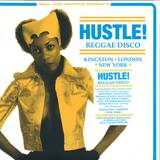
Soul Jazz Records' are releasing their long-out-of-print album 'Hustle! Reggae Disco' in a new expanded 2017 edition which now features five extra tracks. This ground-breaking album features non-stop killer reggae versions of original funk and soul classics in a disco style. Reggae disco updates of seminal classics by Anita Ward ('Ring
My Bell'), Chaka Khan ('I'm Every Woman'), Michael Jackson 'Don't Stop 'til You Get Enough,' Sugarhill Gang ('Rappers Delight' here performed by Derrick Laro and Trinity for producer Joe Gibbs) and more, all showing the hidden but inseparable link between the dance floors of New York, Kingston and London.
New bonus tracks to this collection include Derrick Harriott's funky take on Eddie Drennon's 'Do It Nice and Easy', the classic disco reggae of Risco Connection's take on McFadden and Whitehead's 'Ain't No Stopping Us Now' and the London rare groove lovers rock take on Barbara Acklin's soul classic 'Am I The Same Girl'.
'Hustle! Reggae Disco' has been one of Soul Jazz Records' best-selling releases since its first release 15 years ago (and subsequently featured heavily in the early Grand Theft Auto games!). This new edition comes complete fully re-mastered and with all original titles plus new tracks. This new expanded edition now comes a triple album (+ download code), CD and digital album.
'The effect of American R&B and soul music on Jamaican reggae is well documented, but the story doesn't stop there, for disco (and more so now for rap and hip-hop) have also been subsumed into the reggae mix, and while one might suspect that the resulting hybrid would die of its own implausibility, the feral mix of disco with reggae rhythms is so darn infectious that it hardly matters. Once you take your brain out of the frame and just let your feet go, this collection is a dancer's delight all done up in full-blown disco style, but with huge dub-style rhythm tracks ... if you're looking for an impossibly infectious dance collection, this is
it.' All Music
- A1: Terrace - Bewitched
- A2: Glenn Underground - Real Space
- B1: Felix Da Housecat - Temptation (Color Mix)
- B2: China White - Theme From The Underground
- C1: The Operator - The Mind Strike
- C2: Steve Poindexter - Body Jam
- D1: Mike Dearborn - Deviant Behaviour (Instrumental Mix)
- D2: Dj Skull - Don't Stop The Beat
The second edition of Dekmantel’s foray into the era-defining, trans-Atlantic, cult techno label that is Djax-Up-Beats, comes another re-issue of classic 90s cuts.
The label say "The Dutch label was responsible for releasing some of underground’s most foundational dance music, mixing together Chicago and European artists alike, and acting as the launchpad for some of today’s biggest producers. Featuring offerings from luminaries such as Felix Da Housecat, and Glenn Underground, alongside veterans such as Steve Poindexter, and DJ Skull, this second EP highlights the classic label’s old-school’s sound, while showcasing its diverse range, from dubbier, ambient moments, to wall-thumping, body crushing house force. Timeless music, repressed, and re-released for a new generation of DJs who covet the classic machine music.
The second re-issue EPs, offer a more introspective look at the label’s earlier releases. Leading Volume 2 is Terrace’s 'Bewitched', to which DJ Richard has described as being the defining track of the label’s beginnings with its "dreamy, Detroit-style techno mixed with the harder rave elements of Northern Europe”. Glenn Underground’s bass-roller 'Real Space' weaves together soulful passion and Chicago prime beats, while Felix Da Housecat’s Temptation — originally from 1993 — gets a well earned re-release, reminding us of the soulful, deep and lustful energy the producer once had. China White, whose name doesn’t get banded around as much as it should nowadays, see their ethereal hit 'Theme from the Underground' get another opportunity to bliss out the more upbeat rave community.
The energy turns darker with Frank de Groodt’s The Operator, breaking the outer-most barriers of electro-techno, with 'The Mind Strike'. Chicago and Dance Mania’s Steve Poindexter turns out rolling, dance-energy bomb 'Body Jam', while Mike Dearborn’s deliverance of unreal, dry techno in 'Deviant Behaviour' runs aplomb with classic drum-machine pulses, claps, and uncomfortable, yet punishing melodies. DJ Skull’s 'Don’t stop the beat' rides the EP with gushings of hand claps, and gentle, early 90s warm techno color, that transport you back to a time of more informed, and conscious electronic musings, a feeling that embodies Djax’s heyday.
Founded in Eindhoven at the turn of the 90s, Djax-Up-Beats quickly earned an international reputation for being a key source of Chicago house, acid techno, and floor-filling, heavy-hitting, straight up underground 12”s. It’s a sound that spawned the sonic aesthetics of today, and can be heard in the left field techno productions of the likes of Bjarki, Salon des Amateurs and other erstwhile analog junkies."
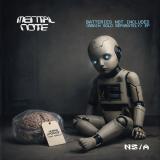
‘Batteries Not Included (Brain Sold Separately)’ EP Arrives Via No Static Automatic
No Static Automatic is proud to announce the new EP from UK Electro legend Phil Klein under his Mental Note alias. Titled “Batteries Not Included (Brain Sold Separately),” this release marks the dynamic follow-up to the acclaimed 2020 debut “Voices In My Head (Noises In My Pants).”
Few authentic Electro producers from the UK can wear the badge ‘legend’ with the same level of justification as Phil Klein, aka Bass Junkie. Active since the late 80s, Klein has tirelessly shaped his distinct vision of Electro, both as a solo artist and through storied collaborations with icons like Dynamix II, Keith Tenniswood (Radioactiveman), and Si Brown (Dexorcist). As a DJ, remixer, live act, and the driving force behind the seminal Battle Trax label, his influence is woven into the fabric of the genre.
With essential releases on labels including DMX Krew’s Breakin’ Records, Andrea Parker’s Touchin’ Bass, and Billy Nasty’s Elektrix, the Bass Junkie sound seamlessly bridges the old-school beats of Electro’s origins with a potent, borderline-industrial edge. As noted by Andy Barton of Bass Agenda: “From funky to ferocious, Bass Junkie’s discography is a must-have for anyone claiming passion for the genre – influential, individual, and infectious with every beat.”
Now, as Mental Note, Klein continues his exploration of electronic psychedelia. The new EP, “Batteries Not Included (Brain Sold Separately),” is a four-track expedition through the Electro cosmos:
“Brainwash” immerses the listener in swirling, hypnotic synths.
“They're Not Blue, They’re Purple” delivers a masterclass in crunchy, textured drums.
“Primordial Soup” showcases frantic, intricate programming.
“Kluster Funk” offers a moment of deep, sonic relief and groove.
Each track reinforces Mental Note’s signature: a journey that is cerebral, raw, and irresistibly rhythmic.
About Bass Junkie/Mental Note:
Phil Klein, operating primarily under the alias Bass Junkie, is a cornerstone of the UK Electro scene. For over three decades, his work has defined and evolved the sound, earning him a revered status among peers and purists. His Mental Note project is a focused outlet for a deeper, more experimental strand of his production genius, further solidifying his legacy as an electronic music innovator.
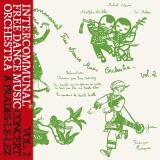
Concert at Prades-le-Lez marks the origins of the Intercommunal Free Dance Music Orchestra. In 1974, François Tusques and his companions (Michel Marre, Jo Maka, Adolf Winkler and Guem), in the spirit of Don Cherry or Chris McGregor, playfully dismantle all borders and all styles of creative music.
On this second volume, the Intercommunal builds unprecedented soundscapes around a song of revolt, a dance tune, or a burst of dissonance. The journey is unforgettable, no question about it. On repeat listening, it even becomes… lunar!
“The music that we make is primarily meant to be listened to live,” warned a leaflet from the Intercommunal Free Dance Music Orchestra. This is precisely why the (restored!) reissue of the two volumes of Concert at Prades-le-Lez, recorded on January 25 and 26, 1974 by François Tusques and his comrades, is such an important event.
In 1971, after recording a series of albums that would leave a lasting mark on French jazz (Free Jazz, of course, with Michel Portal, François Jeanneau, Bernard Vitet, Beb Guérin and Charles Saudrais, but also Le Nouveau Jazz with Barney Wilen, or the solo Piano Dazibao), François Tusques founded the Intercommunal—a grouping whose very name called for the fraternization of the various communities making up the country: Our music will help, we hope, to resolve the contradictions that exist between workers be longing to different communities, by breaking down various forms of national chauvinism, and more particularly the chauvinism of certain French people toward the cultures of Third World countries… Long live the friendship between the peoples of the whole world!
Among the great records made by the Intercommunal Free Dance Music Orchestra, the two volumes of Concert at Prades-le-Lez come first, before L’Inter Communal, Vol. 4, Le Musichien, and Après la marée noire (four titles already reissued by Souffle Continu). François Tusques and his companions (Michel Marre and Jo Maka on saxophones, Adolf Winkler on trombone, and Guem on percussion) performed on January 25 and 26, 1974 at the Moulin de Prades-le-Lez, a few kilometers from Montpellier. It was thus in the southern region of Occitanie that the first echoes of this musical vision of a borderless brotherhood were recorded.
“We’re not among the Colonels,” the Intercommunal reassures us right away, performing a stride piano tune carried by African winds that the audience cannot resist for long. The energy is already striking and it never lets up throughout these two recordings, from start to finish: jazz, blues, traditional music, minimalism, even funk… The musicians of the Intercommunal have heard a lot of great music and now delight in reinventing it by mixing it all together.
“We want the song form to take its place as a weapon in the struggle against capitalist exploitation and all those who oppress us morally and materially,” declared an Intercommunal leaflet, quoting Jean-Baptiste Clément, author of the lyrics to “Le Temps des cerises.” The struggle was therefore serious—but it did not prevent François Tusques and his group from waging it in a festive spirit: each piece on Concert at Prades-le- Lez sends out a call for love and fraternity. Fifty years later, the message remains as relevant as ever—and once again, it is François Tusques who makes it heard.
- On N'est Pas Chez Les Colonels
- Intercommunal Blues
- Mazir
- Kan-Ha-Diskan - We Shall Over Come
- African Rythm-N-Logy
2[23,95 €]
Concert at Prades-le-Lez marks the origins of the Intercommunal Free Dance Music Orchestra. In 1974, François Tusques and his companions (Michel Marre, Jo Maka, Adolf Winkler and Guem), in the spirit of Don Cherry or Chris McGregor, playfully dismantle all borders and all styles of creative music.
On this first volume, the Intercommunal takes its audience from New Orleans to Brittany and on to North Africa. The journey was bold, without a doubt—and its memory remains unforgettable.
“The music that we make is primarily meant to be listened to live,” warned a leaflet from the Intercommunal Free Dance Music Orchestra. This is precisely why the (restored!) reissue of the two volumes of Concert at Prades-le-Lez, recorded on January 25 and 26, 1974 by François Tusques and his comrades, is such an important event.
In 1971, after recording a series of albums that would leave a lasting mark on French jazz (Free Jazz, of course, with Michel Portal, François Jeanneau, Bernard Vitet, Beb Guérin and Charles Saudrais, but also Le Nouveau Jazz with Barney Wilen, or the solo Piano Dazibao), François Tusques founded the Intercommunal—a grouping whose very name called for the fraternization of the various communities making up the country: Our music will help, we hope, to resolve the contradictions that exist between workers be longing to different communities, by breaking down various forms of national chauvinism, and more particularly the chauvinism of certain French people toward the cultures of Third World countries… Long live the friendship between the peoples of the whole world!
Among the great records made by the Intercommunal Free Dance Music Orchestra, the two volumes of Concert at Prades-le-Lez come first, before L’Inter Communal, Vol. 4, Le Musichien, and Après la marée noire (four titles already reissued by Souffle Continu). François Tusques and his companions (Michel Marre and Jo Maka on saxophones, Adolf Winkler on trombone, and Guem on percussion) performed on January 25 and 26, 1974 at the Moulin de Prades-le-Lez, a few kilometers from Montpellier. It was thus in the southern region of Occitanie that the first echoes of this musical vision of a borderless brotherhood were recorded.
“We’re not among the Colonels,” the Intercommunal reassures us right away, performing a stride piano tune carried by African winds that the audience cannot resist for long. The energy is already striking and it never lets up throughout these two recordings, from start to finish: jazz, blues, traditional music, minimalism, even funk… The musicians of the Intercommunal have heard a lot of great music and now delight in reinventing it by mixing it all together.
“We want the song form to take its place as a weapon in the struggle against capitalist exploitation and all those who oppress us morally and materially,” declared an Intercommunal leaflet, quoting Jean-Baptiste Clément, author of the lyrics to “Le Temps des cerises.” The struggle was therefore serious—but it did not prevent François Tusques and his group from waging it in a festive spirit: each piece on Concert at Prades-le- Lez sends out a call for love and fraternity. Fifty years later, the message remains as relevant as ever—and once again, it is François Tusques who makes it heard.
BCUC – Bantu Continua Uhuru Consciousness – have been channeling the spirit of Soweto for over twenty years. Indigenous funk, hip-hop consciousness, and punk rock energy fused into something utterly original and deeply rooted. Their mantra: Music for the people, by the people, with the people. From humble beginnings rehearsing in a shipping container, a stone's throw from the church where Desmond Tutu organized the escape of the most wanted anti-Apartheid activists, they kept believing in their dream of self-empowerment. Today they command festival stages worldwide: Glastonbury West Holts, Roskilde, Afropunk Brooklyn, WOMAD, Fusion, Sziget, FMM Sines, Beaches Brew, Boomtown, Colours of Ostrava, Couleur Café – to name just a few. In 2023, BCUC were honoured with the prestigious WOMEX Artist Award, an accolade usually reserved for more established artists, in recognition of their fearless work and transcendent live performances.
THE ROAD IS NEVER EASY
The Road Is Never Easy is BCUC's fifth album and their debut on Outhere Records. On this new offering, BCUC take listeners on another Afro-psychedelic journey into the soul of Soweto. It feels like a gospel sermon colliding with a punk concert, "guaranteed to touch untapped corners of your soul" (OkayAfrica). BCUC's music is deeply rooted in history and echoes the voices of the ones who came before. The road was never easy for the people of Soweto who originally came to work in the mines of Egoli, the City of Gold, Johannesburg. When apartheid finally ended after a long struggle, it was hoped that life would improve. But more than 30 years later, many of those initial hopes and dreams are still waiting to be fulfilled. This album is about that struggle. The album contains 10 brand new songs – a record for BCUC, whose previous albums featured an average of 3 songs. It represents the culmination of more than two decades of performing together and building a reputation as a powerful live act. These ten songs encapsulate that same live energy, each one building gradually and drawing you into BCUC's Afro-psychedelic stream of consciousness. It's a seismic tour de force through life in Soweto today. Songs like Amakhandela (Breaking All the Chains) connect history to daily life: "How is this precious metal inflicting so much pain in us," sing BCUC, "this government has been telling us we are free, but we don't benefit from being free." The album also talks about all the hopes and dreams that remain: "I have too many wishes and dreams in my head," BCUC sing in Um duma khanda, "I think I am losing my mind". The album ends with the soothing Matla a rona ke Bophelo, "our strength is life", praising the spirits and thanking the elders for protection. The Road Is Never Easy is about the harsh reality of life in Soweto, where "people always carry heavy loads". BCUC are street poets trying to deal with that burden: sometimes revolutionary, sometimes soothing, but always hopeful and compassionate. "When you are from Soweto you can't retreat nor surrender." (Sebenzela)
RECORDING
The album was largely recorded in Munich, Germany during tour breaks over two sessions, each three days long. It took place in a small studio located in a German WW II bunker converted into rehearsal spaces. The songs were recorded in one take altogether in one room, with only a few overdubs added, mainly backing vocals, by BCUC at Fourways studio in Johannesburg. BCUC have created their own distinctive way of writing, or rather, finding and creating their songs. The recording process is like an improvised live performance. They bring their ideas into a zone where the music, the rhythm and the spirits take over until the song starts to form. In this Afro-psychedelic zone BCUC create their unique poetry that feeds on the dreams still dreamt, the hopes, the fears and the temptations lingering everywhere. BCUC's songs need to breathe and time to build. The right take was the one when the song took over, and just like their live performances, no one knew beforehand where the song would take them. During the recording, BCUC just let it all flow out: inner turmoil, cries of rebellion, but also resilience and a search for healing, love, unity and compassion. You don't have to be from Soweto to feel the deep meaning and impact of this music. In these times of so much hate and division, BCUC are like a campfire for people to gather around.
PRODUCTION & ARTWORK
"BCUC have a unique magic," says Outhere's Jay Rutledge, who produced the album. "It blew our minds. It's like punk and pure gospel at the same time. Their music can make you dance and it can make you cry, all at the same time. And when the song is over, you feel you're not alone in this world anymore. We felt compelled to do this." The album cover is based on a matchbox design, matches being a common household item in South Africa even today. "These were the matches people used to burn government buildings and cars," explain BCUC. Little messages, addresses, or phone numbers used to be scribbled on the back of these boxes; each one a reminder of the strength, resilience, and resistance that once drove the struggle for freedom in Soweto. BCUC keep this flame burning. The Road Is Never Easy is a heavy spiritual road trip, a deep dive into the subconscious of Soweto and a quest for truth, justice and sanity in this crazy world. BCUC tackle the harsh realities of the voiceless, guided by the spirit world of their ancestors. Rather than reinforcing stereotypes of poverty, BCUC's portrayal of Africa is one rich in tradition, rituals and beliefs. "We bring fun and Afro-psychedelic fire from the hood," says vocalist Kgomotso Mokone.
- 1: Fuenarinu
- 2: Kaendaiko
- 3: Tsubakishishaku No Yuigon
- 4: Tengindoujiken
- 5: Kindaichikousuke Nishie Yuku
- 6: Ougonno Furuuto (Flute)
- 7: Yubi
- 8: A=X, B=X A=B
- 9: Chi To Suna
- 10: Tabiyukumonoyo
- 11: Akuma Fuewo Fukite Owaru
We've got a bit of an obsession with Hozan Yamamoto here at Mr Bongo! A legend of Japanese jazz, he is rightly regarded as a true master and was recognised as a "living national treasure" by the Japanese government in 2002. Over five decades he pushed the genre into new directions, absorbing fusion, funk, spiritual jazz and many other sounds, resulting in a discography studded with gems of rare beauty. Exploring his back catalogue has taken us on an engrossing journey that now sees us reissuing another work from this ground-breaking musician.
Though not translating perfectly into English 'Akuma Ga Kitarite Fue Wo Fuku', (kitarite has not been a modern expression in Japanese) roughly means 'The Devil Comes Playing The Flute' / 'The Devil Is Coming While Blowing The Whistle' or 'Devils Flute’. It is the original soundtrack to Kôsei Saitô’s 1979 mystery and suspense movie, ‘Devil’s Flute’. The film is based on a story by the famous author, Seishi Yokomizo, and is centred around a much-loved fictional Japanese detective, Kosuke Kindaichi. A Japanese Sherlock Holmes that has been popular for generations.
Hozan Yamamoto was invited to compose the soundtrack directly by the producer of the film, Haruki Kadokawa. Mr Kadokawa also hired keyboard player and producer Yu Imai as assistant producer on the project, resulting in a stunning cosmic, breaks and beats-laden, funk, disco soundtrack extravaganza.
When it comes to the soundtrack and the technology of the time, Hozan Yamamoto and Yu Imai got inventive, tripped out, funked up, and experimented, creating a quirky soundtrack masterpiece that needed to be heard more outside of Japan. Differing from the more traditional Japanese music orientation of some of his other albums such as 'Beautiful Bamboo-Flute' (also released on Mr Bongo) the album showcases a number of genres, from lush atmospheric incidental music to disco and funk grooves, experimental nuggets, drum and flute workouts, to neo-classical and more.
A special record that showcases the further depths of this wonderful musician's talents.
- 01: Glass Mask On
- 02: Celebrity Culture Simp Farm
- 03: Please Just Make It Stop
- 04: No Laughter Left In Me
- 05: Weaponizing My Failures
- 06: Unthinking My Every Thought
- 07: Insignificant Other
- 08: It Keeps On Stinging
- 09: I Took A Pill In Vilvoorde
- 10: Suffering In Technicolor
DOODSESKADER clearly haven’t had enough of redefining boundaries – they’ve only just gotten started. Tim De Gieter and Sigfried Burroughs return on April 3rd, 2026 with their third full-length album, The Change Is Me, a rollercoaster that can only be described as the unstable lovechild between witch house, hip-hop, industrial dream pop, and stadium rock that can’t decide if it wants to watch the world burn or shout from the rooftops that we need to save it. Their combination of grungy 90s melodies with distorted synths, sludgy bass, hard tuned vocals, rapping, singing, and explosions of undiluted rage at the current state of the world leave you wondering just exactly what it was you smoked last night, and if it was too much or not enough. The Change Is Me is an album that grabs you by the arm and asks if you’re ready to go on a grand adventure, then pulls you into its chaos before you can say “yes” or “no.”
Tim and Sigfried aren’t just breaking the boundaries between genres; they’re breaking out of their own Year cycle, a path they had laid out for themselves at the band’s inception in 2020. Up until now, the duo had set out to document their “journey to getting better” through writing one album each year: Year Zero (2020), Year One (2022), and most recently Year Two (2024). After spending eight months throughout 2024 and 2025 writing, recording, producing and mixing Year Three, the band scrapped the finished record entirely. Playing shows while simultaneously navigating the process of mixing Year Three created a sort of disconnect – the people that they were when they wrote that record and the people that playing shows made them become were no longer one and the same. “We’re people with faults and strengths, and we realized we needed to accept it. That’s equal parts bleak and liberating. If you’re so focused on self-improvement, you can’t even applaud yourself for how far you’ve come,” the band explains. “This project is meant to be a document of us and of the human condition, not a self-improvement handbook designed to keep us all stuck on what may or may not have happened to us or because of us in the past.”
DOODSESKADER chose instead to embark anew on a week-long creative journey in Tim’s own Much Luv Studio with one goal in mind: to make an album that captures who they are right now. Finally writing everything together in the same room for the first time in years, the process of bringing "The Change Is Me" to life was captured by Diana Lungu in their latest documentary, "Now I Know You See Me", out December 2nd, 2025.
"The Change Is Me" marks the beginning of DOODSESKADER’s shift into a more positive era, both musically and conceptually. Over the course of the 40-minute record we hear the two friends unite in a fight against a world that grows more and more disappointing, a concept made crystal clear in tracks like “Celebrity Culture Simp Farm,” “It Keeps On Stinging,” and of course the album’s epic closer “Suffering In Technicolor.” While their previous albums saw them trying to outrun their pasts and arrive at a better version of themselves, here the search for some external or internal revelation that will “make them better” is no more. It’s been replaced by the realization that change isn’t something we force: it’s gradual, and more importantly, it’s something that’s already there – we just need to reach out and accept it.
The band’s live appearances over the last several years have been instrumental in shaping their ideology. On stage is where the duo find connection; not only with the audience, but also with each other. Their sold-out release shows at Ancienne Belgique (2022) and VierNulVier (2024) have proven that they are one of Belgium’s must-see acts. Abroad, their energy has translated into a month-long EU/UK tour with French band Alcest in 2024, as well as appearances at festivals such as Roadburn Festival (NL), Eurosonic (NL), Hellfest (FR), Mystic Fest (PL), Jera On Air (NL), ArcTanGent (UK), Fluff Fest (CZ) and more.
"The Change Is Me" is out April 3rd, 2026 on DOODSESKADER’s own label, 45 Records.
I wrote this album in prison. I went to the music room every week to play on their keyboards. I studied different styles of beat patterns and sound recording to be a recording engineer. I wanted to create this new sound, so I took go-go, hip-hop, house, and drum and bass to blend up a new pattern of beats with a DJ sway. So I rapped on it. I need a perfect mix sound so I used a reverb gate, small room because I was in a small room. I used my moms blankets to trap the sound waves in the room. I use a digital mic from radio shack and was rapping with a blanket over my head to trap the sound waves. I played my keys in F flat to deepen the tone. I put tom toms on it to fill the spaces with handclaps to have that snap. Then I put a reverb gate on every instrument to get the lo-fi audio sound. I mastered it with all knobs on zero. Equalizer on zero. I mastered my own sound by tweeking and listening with cheap headphones. So that's why I call myself Mix-0-Rap because I master my mix and DJ rap style with a touch go-go rapping. Thank you for supporting me and my music, I hope you enjoy this.
- A1: First Instrument
- A2: Mona Lisa Left Eye
- A3: Bebe Kids
- A4: Push Me Around Ft. Zack Fox
- A5: Hypnagogia
- A6: Nda Ft. Paris Texas
- A7: Fuck Cigarettes
- A8: Broke Ass Hoes
- B1: Opposite Sex
- B2: Describe
- B3: I Mac
- B4: Shrooms
- B5: Take Me Im Drugs
- B6: Lebanon James
- B7: Art Of Seduction
- B8: Play W Your Pride
Emerging from the vivid chaos of Detroit’s underground, ZelooperZ returns with Dali Ain’t Dead — a surreal yet deeply grounded statement from one of rap’s most singular voices. Following his recent collaborative exploration Dear Psilocybin (with Real Bad Man) — which found him moving through a “stream of psychosis” just before sobriety. (Pitchfork) — ZelooperZ enters this new chapter not simply as the same intricate-flows rapper, but as a rising cult-figure in underground hip-hop who’s forged an identity both enigmatic and quietly unstoppable.
On Dali Ain’t Dead, ZelooperZ channels the spirit of the surreal — the album’s title a nod to the iconic surrealist artist Salvador Dalí — as he reframes his world post-substance, post-chaos, yet still dripping with vivid imagination. Reviews highlight that the album finds him in a more focused mode: one critic writes that “ZelooperZ seems to have adopted a similar outlook to Dalí… embracing sobriety and allowing his art to exist as the psychotropic fuel for his mind.” (Album of the Year) Production (courtesy of Dilip) is inventive and cohesive, blending experimental hip-hop, trap, cloud-rap and drumless textures to mirror Ze’s newly clear-eyed vantage point and trademark eccentricity. (Legends Will Never Die)
Tracks like “Mona Lisa Left Eye” and “Push Me Around” (featuring Zack Fox) carry Z’s jagged humor and restless energy, while deeper cuts like “Shrooms” and “Take Me I’m Drugs” trace his evolving relationship with psychedelia and the legacy of his past. (Legends Will Never Die) In doing so, the record positions itself as the sound of a freak-icon in transition — still wild, still weird, but sharpened, matured, operating with a purpose and increasingly commanding the attention of fans who relish the underground unusual.
ZelooperZ’s trajectory continues to rise. From his roots in the Bruiser Brigade collective in Detroit to the present moment as a cult figure whose every release feels like a mission statement, Dali Ain’t Dead confirms that he’s no longer just the oddball off-to-the-side: he’s the weirdo that others are quietly watching. This album isn’t just for the longtime disciples of his left-field aesthetic — it’s an invitation to anyone curious about hip-hop bending, breaking, and rebuilding itself from the fringes inward.
Specs: Wrapped in shrink, DL code, insert with liner notes
"Music in DNA" is an album recorded in the early 1980s in New York City by Yasuhito Ohno, a young Japanese man breaking free from the constraints of his homeland. The album is a naive burst of outsider DIY enthusiasm, inspired by the multiple avant-garde movements of the era, in music, painting and performance, as well as the native energy of 80s NYC. Ohno channeled his youthful “edge” and zeal into open-minded lo-fi musical explorations using a mere two machines: the then-new technological glories of a four-track cassette recorder and that polyphonic synthesizer masterpiece, the Roland Juno-60; on several pieces he vocalizes. These seven tracks have a zestful, innocent, anything-goes charm, free from preciousness and self-consciousness: a raw and youthful human spirit at play in a new world. Ohno was also inspired by the humanistic promise of the general technological developments of the day, including DNA research, personal computing, and early computer graphics, an example of which can be found on the cover. Ohno later returned to Japan, becoming a renowned composer/producer. In an era of jaded cynicism, "Music in DNA" is a welcome taste of big-hearted innocence, a revival of a raw self. Available on CD/LP/Digital, with E/J liner notes.
When you notice the cheerful mystery playing with the synths, the edges of this small world start to look slightly distorted. In any era, someone is always creating mysterious music on their own. (7FO)
----------------------------
Music in DNA is an album recorded in the early 1980s in New York City by Yasuhito Ohno, a young Japanese man breaking free from the constraints of his homeland. The album is a naive burst of outsider DIY enthusiasm, inspired by the multiple avant-garde movements of the era, in music, painting and performance, as well as the native energy of 80s NYC. Ohno channeled his youthful "edge" and zeal into open-minded lo-fi musical explorations using a mere two machines: the then-new technological glories of a four-track cassette recorder and that polyphonic synthesizer masterpiece, the Roland Juno-60; on several pieces he vocalizes. These seven tracks have a zestful, innocent, anything-goes charm, free from preciousness and self-consciousness: a raw and youthful human spirit at play in a new world. Ohno was also inspired by the humanistic promise of the general technological developments of the day, including DNA research, personal computing, and early computer graphics, an example of which can be found on the cover. Ohno later returned to Japan, becoming a renowned composer/producer. In an era of jaded cynicism, Music in DNA is a welcome taste of big-hearted innocence, a revival of a raw self. Available on CD/LP/Digital, with E/J liner notes.
- 1: Ride
- 2: Ain't That Right
- 3: Hot Cookin
- 4: Can't Go Back To Jersey
- 5: Missing My Baby
- 6: Holla!
- 7: Banger
- 8: Thanks And Praise
- 9: Let The Music Play
- 10: Free
- 11: Beautiful
- 12: Rainbow
- 13: Breakin' Up
- 14: Still Hangin' Around
- 15: Sneakster
This double LP yellow vinyl 20th anniversary release of G. Love's "Lemonade" celebrates one of his most beloved and successful records. The release accentuates G. Love’s unmistakable blend of blues grit, hip-hop cadence, and sun-kissed songwriting and captured a creative peak that welcomed an all-star cast of collaborators including Jack Johnson, Ben Harper, Marc Broussard, Blackalicious and more. Critics praised its warmth and ease, often calling it one of G. Love’s most effortlessly joyful projects, and fans have carried its songs with them for two decades.