The word Babble brings two things to mind: A person pouring out their thoughts with reckless abandon, or a gentle sound coming from water cascading over rocks as it flows past. In the case of this reissue from Kendra Morris, Babble is a sublime melding of these two meanings. The original release in 2016 came in the form of a self-released EP. A fan cult favorite; it has now grown to include three additional tracks: Playing Games, Dial Back and Ride On. The journey through human emotion is accomplished through Kendra's songs, bringing us, the listeners, into her enchanted world of pain and strength, feeling renewed on the other side. The ability to take trepidation, desire, and insecurities and turn them into comfort and make you want to get up and move with them is a selfless gift she grants to us. With the support of Karma Chief Records (A division of Colemine Records), Babble is getting the official release it deserves.
Search:record case
- 1: Song Against Sex
- 1: 2 You've Passed
- 1: 3 Someone Is Waiting
- 1: 4 A Baby For Pree
- 1: 5 Marching Theme
- 1: 6 Where You'll Find Me Now
- 2: 1 Avery Island/April 1St
- 2: Garden Head/Leave Me Alone
- 2: 3 Three Peaches
- 2: 4 Naomi
- 2: 5 April 8Th
- 2: 6 Pree-Sisters Swallowing A Donkey's Eye
- 3: 1 The King Of The Carrot Flowers Part One
- 3: 2 The King Of The Carrot Flowers Parts Two & Three
- 3: In The Aeroplane Over The Sea
- 3: 4 Two-Headed Boy
- 3: 5 The Fool
- 3: 6 Holland, 1945
- 3: 7 Communist Daughter
- 3: 8 Oh Comely
- 3: 9 Ghost
- 3: 10 Untitled
- 3: 11 Two-Headed Boy Part Two
- 4: 1 Oh Sister
- 4: 2 Ferris Wheel On Fire
- 4: 3 Home
- 4: April 8Th
- 4: 5 I Will Bury You In Time
- 4: 6 Engine
- 4: 7 A Baby For Pree/Glow Into You
- 4: 8 My Dream Girl Don't Exist
- 5: 1 Everything Is
- 5: 2 Here We Are (For W. Cullen Hart)
- 5: 3 Unborn
- 5: 4 Tuesday Moon
- 5: Ruby Bulbs
- 5: 6 Snow Song
- 5: 7 Aunt Eggma Blow Torch
- 6: 1 Little Birds
- 6: 2 Little Birds (Studio Version)
- 7: 1 You've Passed
- 7: 2 Where You'll Find Me Now
- 8: 1 Holland, 1945
- 8: 2 Engine
- 9: 1 A Baby For Pree
- 9: 2 Two-Headed Boy
- 9: 3 I Will Bury You In Time
- 9: 4 Garden Head/Leave Me Alone
- 9: 5 Two-Headed Boy Part Two
- 9: 6 I Love How You Love Me
- 9: 7 Engine
- 9: 8 Naomi
- 9: King Of Carrot Flowers Part Two
- 9: 10 King Of Carrot Flowers Part Three
- 9: 11 Oh Comely
The two full-length records that Jeff Mangum made as Neutral Milk Hotel sound both in and out of time. Like translations of a shared subconscious, 1996's On Avery Island and 1998's In the Aeroplane Over the Sea give voice to the perennial spirit of youthful epiphany, of beginning to see the world clearly, to process and express it-no matter when you encounter them. With lo-fi indie rock, accordion, singing saw, tape collages, the so-called "zanzithophone" and beyond, Neutral Milk Hotel created an eternal entry into their Elephant 6 scene and an enduring feeling of possibility. Mangum was born in the small city of Ruston, Louisiana, in 1970, coming of age within the '80s and '90s indie and punk undergrounds, a movement of teenagers recording in their bedrooms, sharing zines and trading tapes, listening to hardcore and experimental music on college radio. For all the mythology Mangum's elusive persona has accrued-particularly during the 15 years immediately following Aeroplane, when he abruptly left the band behind-it's the beguiling songs themselves that have resonated so deeply for generations. In 2011, Mangum collected nearly all of the band's recorded output in a limited-edition box set (self-released under Neutral Milk Hotel Records, a small operation helmed by Mangum and his mother) which is now re-pressed by Merge. // CONTENTS: Black matte box is a 2-piece telescoping casewrapped package. Outer shrink-wrap includes a front sticker with "Neutral Milk Hotel," and a back sticker listing box contents. The box set includes 2 folded posters, each printed one side and each 24 x 24 inches when flat, and 1 postcard, printed front and back with box set information and sized 3.75 x 5 inches. Vinyl records: 1. In the Aeroplane Over the Sea: LP is 11 tracks pressed 33RPM to black vinyl in a gatefold jacket + printed insert for full album download. --- 2. On Avery Island: 2-LP is 12 tracks pressed to double black vinyl in a gatefold jacket + 11 x 11 printed insert + printed insert for full album download. Sides A, B and C pressed 45RPM. Side D pressed 33RPM. --- 3. Live at Jittery Joe's: 12-inch picture disc is 11 tracks pressed 33RPM to a full color picture disc in a heavyweight poly jacket + printed insert for full album download. --- 4. Ferris Wheel on Fire: 10-inch is 8 tracks pressed 45RPM to black vinyl in a printed jacket + postcard insert + printed insert for full album download. --- 5. Everything Is: 10-inch is 7 tracks pressed 45RPM to black vinyl in a printed jacket + postcard insert + printed insert for full album download --- 6. "Little Birds": 7-inch is 2 tracks pressed 45RPM to black vinyl in a printed jacket + printed insert for full album download 7-inch housed in a heavy-weight poly jacket. --- 7. "You've Passed": 7-inch is 2 tracks pressed 45RPM to black vinyl in a printed jacket + printed insert for full album download. 7-inch housed in a heavy-weight poly jacket. --- 8. "Holland, 1945": 7-inch is 2 tracks pressed 45RPM to black vinyl in a printed jacket + printed insert for full album download. 7-inch housed in a heavyweight poly jacket.
After leaving BMG, Theo Lawrence returns to independence with the launch of his own label Tomika in 2020 and a busy year in 2022: opening acts for Robert Plant & Alison Krauss and Charley Crockett, Americana Fest (Nashville), SXSW and a European tour, Theo Lawrence unveils a new album entitled Chérie. A 12-track jewel case, recorded in Nashville and sailing between ultra- romantic and thrilling ballads, Louisiana Cajun sounds, silky string arrangements and epic vocal flights taking you back to the Pop Music heyday of Roy Orbison and Frank Sinatra. Theo Lawrence is a young French-Canadian songwriter based in Bordeaux. His music is rooted in the country music of the 50"s and 60"s, while borrowing elements from soul, pop and rock&roll of the same era. A mixture of styles and sounds, with a deep love of tradition, while bearing the stamp of modern times. Theo brings a new sound to traditional American music, and with this new album confirms that he is part of the prolific new North American country scene.
In 1976 Michael Hoenig had a brief collaboration with Ash Ra Tempel's
Manuel Gottsching in Berlin; A 48-minute recording of one of the
sessions, which was released in 1995 under the title "Early Water" on
Bernd Kistenmacher's Musique Intemporelle label.The album was deletedand unavailable for a long time
Now, finally, a re-issue of "Early Water" will be available again.
Michael Hoenig still remembers: "While I had been working on the "Departure From The Northern Wasteland" album, Manuel Gottsching had asked me if I would team up with him for some concerts in France, since his group had just gone through one of its hibernation
periods. We rehearsed in my place for three or four weeks. One evening we got a call regarding some missing guarantee, which ultimately led to the decision to cancel the tour. Just for fun, we played one of the planned sets for a last time.
Even though I do not recall pressing a record button, somebody recently dug up a Revox tape of that very set. After performing some digital sonic archaeology on it, it was just released under the very appropriate title Early Water."
And Manuel Gottsching adds: "Unfortunately, some of the concert dates were not confirmed in time and we had to cancel the complete tour just on the day before we wanted to leave for France.
On that evening, nevertheless, we recorded our last rehearsal "just in case". It turned out as a flowing harmonic piece, reflecting much of the optimistic air of 1976. Michael made his 'departure' to Los Angeles in the early 1980ies. When we met again in November 1994 I proposed to release this old track of ours. Michael took the original tape to Los Angeles, lovingly restored it and - well, here is it again!"
Derrick Morgan ia one of the greats of Jamaican music, he is the undisputed King of Ska.
But his recording career dod not stop in 1967 when the sound of Ska slowed down into Rocksteady.
Nor did it stop in 1968 when Rocksteady evolved into the early sound of Reggae.
The set you have here was first released in 1974 when Reggae was King,the album carried the name 'In the Mood'..but also had the working title 'This is Derrick Morgan'.
A title in the world of Reggae carrying the moniker would normally be used to introduce new singer and be his showcase album.
In this case in could be used to reintroduce the singer Derrick Morgan to the new Reggae sound.
But we feel someone of Derrick's calibre needs no introduction as his voice works on any rhythms put his way.
So sit back and enjoy one of the greats of Jamaican music showing the world with the help of producer Bunny Lee that he can roll with the Reggae sound....respect...
- A1: Ronnie Miller - I Got The Hots For You
- A2: Leaves Of Autumn - Slip Back Into The Magic
- A3: Mirage - Bend A Little
- A4: People - Misty Mood
- A5: Stroke - Without Your Love
- A6: Tom Miles - Old Home Movies
- A7: Jan Lewis Group - Oh Senor
- A8: Synod - Future Shock
- B1: Mikael Neumann - Hey Flicka
- B2: 5-3-74 - Love Is Not For Real
- B3: Babe - It&Apos;S A Long Road
- B4: Jeff Elliott - Magic Sands
- B4: Charles Vickers - Mister Jones
- B5: Aoh - The Answer Lies In Love
- B6: Dianne Elliott - The Ring
- B7: Phil Palumbo &Amp; Pals - It Was A Very Good Year
After 6 years and 7 volumes, the Tramp Records crew invites you to join them on yet another enlightening journey into soulful Jazz, Folk and Funk from the 1970s.
This 8th volume contains nineteen Jazz, Soul and Folk nuggets from between the late 1960s and the late 1970s. One of the many highlights is the opening track by Bobby Cole which is most likely one of the finest independently produced vocal jazz recordings ever put on wax. So true. Oscar Brown Jr. and Mark Murphy sends its regards. But that's just the beginning. Praise Poems Vol.8 covers a wide selection of genres, from big band jazz (Helmut Pistor's Big Rock Jazz Band and Germany's own Ladykiller) to psych-pop (Portraits in Sound, Harve and Charee and Allison & Shaffer), from folk-rock (Flash, Garndarf and the incredible Fang Buzbee) to AOR (The Menagerie and Penn Central), completing the set with a handful of melancholic folk beauties, most notably Hans Hass Jr.'s mind-blowing "Welche Farbe hat der Wind".
Very few compilation series' release as many as eight volumes and those that get that far often start to run out of quality music or meander too far from their original artistic direction. That certainly is not the case with the "Praise Poems" series which leaps from strength-to-strength as our team of compilers and researchers continue to unearth lost and often overlooked music from an era long gone. Many of these records were released in small quantities as private pressings or by small regional labels. Obviously, those labels neither had the budget, expertise, nor options to promote their releases in a sweeping way. Therefore the majority of these artists failed to find the wider audience their music so richly deserved.
There are two versions - 180g black vinyl and color vinyl version - limited to 100 copies and each vinyl has a different color. All versions has booklet inside with the special artwork dedicated to each track from teh album.
Things don't always go your way, especially when your plans involve space travel. In the case of Captain Harrison Focus's expedition, it started innocently, but no one was prepared for an emergency landing on the mysterious planet Carmin. Only then did the real fight for survival begin. This record tells the story of a dangerous expedition into space that began on February 6, 2023.
Twoosty Mayonez consists of Bartosz Wolert (drums) and Dominik Kaniewski (bass guitar and synthesizers). "Carmin" is their debut album, which is released primarily on vinyl by U Know Me Records.
Paris, 1965. Pianist François Tusques laid the foundation stone of French-style free jazz with his first, soberly titled, album “Free Jazz”. Also in the team were several future key names of the French scene, (Michel Portal, Bernard Vitet, Beb Guérin, Charles Saudrais and François Jeanneau) all of whom honed their skills at the beginning of the decade in Jef Gilson’s groups, although he was none too fond of the turbulent new face of jazz at the time.
Ten years later, Jef Gilson had obviously changed his tune, as the label Palm that he had created in 1973 was now the launch pad for what would become the cream of French and international avant-garde jazz. This would notably be the case for François Jeanneau and “Une Bien Curieuse Planète”. His first album as leader (after briefly erring into pop with Triangle) was recorded in 1975, a few months after “Watch Devil Go” by his old friend Jacques Thollot, and with more or less the same casting: Jeanneau on sax of course, Jenny-Clark on bass and percussions, Lubat replacing Thollot on drums and Michel Grailler (plucked out of Magma) was called in as a reinforcement for his completely ‘out of space*’ synthetiser sounds. Thus began a strange trip to a very strange planet, at the border of experimental jazz and swinging avant-garde.
From 1960 to nowadays, from Georges Arvanitas to Laetitia Shériff, from Manu Dibango to “Mama” Béa Tékielski, everyone has wanted to play with François Jeanneau at some point. There is a good reason for this. The saxophonist is a formidable improviser, but also a solid composer, as he demonstrates on this record with, for example, the monumental “Droit d’Asile”, the spooky “Theme For An Unknown Island” or the Coltranesque “Mr J.C. For Ever”. Over half a century later, the planet seems far more familiar to us. And François Jeanneau is always on the front line for a guided tour.
Jérôme « Kalcha » Simonneau
Initially planned as a trilogy, given the success of this project, the series of 12” EPs featuring reinterpretations of tracks from the album “People Need People” - the brilliant work by Nicola Conte and Gianluca Petrella released in 2021 - closes with this fourth chapter, with the excellent contribution of Fred P. and his Interpretations.
Artist, DJ, Producer, Remixer and A/V Designer - born in New York and now living in Berlin - Fred P. has encompassed what it truly means to be an artist in the 21st century. With a discography growing exponentially year after year, he continues to push forward in his sound and his mind.
These two new interpretations of his constitute a little jewel in which Fred P. offers us a skilful blend where afro, jazz and house music create a cosmic spiritual journey at times nocturnal, suitable for the most sophisticated dance floors - in both cases with different rhythmic patterns, broken-afro for “African Spirits” and cosmic-house for “Tribes”, Fred creates here an open space, deep and simply at the centre of the music!
- A1: Hall Of Fame
- A2: Hour Of 1
- A3: G.i
- A4: Puppet On A String
- A5: Sheer Terror
- A6: Happy People
- A7: Lost In Limbo
- A8: Plain To See
- A9: Party Line
- A10: Here’s The Rope
- A11: Insomniac
- B1: Fashionite
- B2: Religious Ripoff
- B3: Asshole
- B4: No Rights
- B5: No Way Out
- B6: Twisyed Views
- B7: Snubbing
- B8: Teenager In A Box
- B9: Bored To Death
- B10: Georgetown Blues
Color Vinyl[19,96 €]
In November of 1982, I went into the studio with Government Issue to record what was to be their first full-length album. Up until that time, they had only released the Legless Bull 7”EP, and the tape they recorded early 1982 would take over a year and a half to be released as the Make An Effort 7”EP. The members of G.I. excelled at driving each other crazy and there was a lot of arguing, but still we had a great session at Inner Ear and we managed to track 20 songs in one day. From the beginning the band had been divided on what to record, and it was only after much debate that they decided to leave off the material they had recorded with the earlier line-ups and only put out 10 new songs.
In early 1983 Dischord was strapped for cash, meaning that we could only work on one release at a time. Since all of our money was tied up with the manufacturing of Minor Threat’s Out of Step 12” EP, the G.I. record would have to wait. A new DC label, Fountain of Youth, expressed an interest in releasing Boycott Stabb, so it was decided to do a ‘split-label’ record. In this case, Fountain of Youth put up the money and we let them use the Dischord Records name to help with context and distribution. It has since been reissued on a number of different labels and formats, but after coming across the master tapes and hearing the songs that had been left off, we thought it would be cool to release the complete session, and to finally release the record on Dischord proper.
In going through the tapes, I discovered that most of the outtake songs were never mixed, so earlier this year I took the recordings back into the studio. Hearing the separated tracks amazed me. Such great playing and songs! With the technological advances in the recording world made multi-tracking and overdubbing so common, it’s easy to forget that studios could also be used as something more akin to a photo-booth, capturing what was happening at that very moment. Most of the early Dischord sessions were essentially ‘live’ recordings, so the bands had to be able to play, and because the budgets were minuscule, they had to get the songs down in short order. G.I. stepped up on both counts. -Ian MacKaye, August 2010
- A1: Hall Of Fame
- A2: Hour Of 1
- A3: G.i
- A4: Puppet On A String
- A5: Sheer Terror
- A6: Happy People
- A7: Lost In Limbo
- A8: Plain To See
- A9: Party Line
- A10: Here’s The Rope
- A11: Insomniac
- B1: Fashionite
- B2: Religious Ripoff
- B3: Asshole
- B4: No Rights
- B5: No Way Out
- B6: Twisyed Views
- B7: Snubbing
- B8: Teenager In A Box
- B9: Bored To Death
- B10: Georgetown Blues
Black Vinyl[18,45 €]
In November of 1982, I went into the studio with Government Issue to record what was to be their first full-length album. Up until that time, they had only released the Legless Bull 7”EP, and the tape they recorded early 1982 would take over a year and a half to be released as the Make An Effort 7”EP. The members of G.I. excelled at driving each other crazy and there was a lot of arguing, but still we had a great session at Inner Ear and we managed to track 20 songs in one day. From the beginning the band had been divided on what to record, and it was only after much debate that they decided to leave off the material they had recorded with the earlier line-ups and only put out 10 new songs.
In early 1983 Dischord was strapped for cash, meaning that we could only work on one release at a time. Since all of our money was tied up with the manufacturing of Minor Threat’s Out of Step 12” EP, the G.I. record would have to wait. A new DC label, Fountain of Youth, expressed an interest in releasing Boycott Stabb, so it was decided to do a ‘split-label’ record. In this case, Fountain of Youth put up the money and we let them use the Dischord Records name to help with context and distribution. It has since been reissued on a number of different labels and formats, but after coming across the master tapes and hearing the songs that had been left off, we thought it would be cool to release the complete session, and to finally release the record on Dischord proper.
In going through the tapes, I discovered that most of the outtake songs were never mixed, so earlier this year I took the recordings back into the studio. Hearing the separated tracks amazed me. Such great playing and songs! With the technological advances in the recording world made multi-tracking and overdubbing so common, it’s easy to forget that studios could also be used as something more akin to a photo-booth, capturing what was happening at that very moment. Most of the early Dischord sessions were essentially ‘live’ recordings, so the bands had to be able to play, and because the budgets were minuscule, they had to get the songs down in short order. G.I. stepped up on both counts. -Ian MacKaye, August 2010
- A1: Logic System - Unit
- A2: Kraftwerk - Computerwelt (2009 Remastered
- B1: Whodini - Magic's Wand
- B2: Rocker's Revenger - Walking On Sunshine (Feat Donnie Calvin
- C1: Klein & Mbo - Dirty Talk (European Connection
- D1: Liaisons Dangereuses - Los Niños Del Parque
- D2: Yello - Bostich
- E1: The The - Giant
- F1: The Residents - Kaw-Liga
- G1: Clan Of Xymox - Stranger
- G2: A Split - Second - Flesh
- H1: Severed Heads - Dead Eyes Opened
- H2: The Weathermen - Poison!
- I1: New Order - Blue Monday
- J1: Anne Clark - Our Darkness
- J2: 16 Bit - Where Are You?
- K1: Phuture - We Are Phuture
- K2: Model 500 - No Ufo's (Vocal
- L1: Frankie Knuckles Feat Jamie Principle - Your Love
- L2: Quest - Mind Games (Street Mix
- M1: Jasper Van't Hof - Pili Pili
- N1: Guem Et Zaka Percussion - Le Serpent
- N2: Hugh Masekela - Don't Go Lose It Baby
- O1: Sly & Robbie - Make 'Em Move
- Q1: The Ecstasy Club - Jesus Loves The Acid
- R1: Foremost Poets - Reason To Be Dismal?
- S1: Lhasa - The Attic
- S2: A Guy Called Gerald - Voodoo Ray
- T1: M/A/R/R/S - Pump Up The Volume - Usa 12" Mix
- T2: Bobby Konders - Nervous Acid
- U1: Meat Beat Manifesto - Helter Skelter
- V1: Raze - Break 4 Love
- W1: Sueño Latino With Manuel Goettsching Performing E2-E4 - Sueño Latino (Paradise Version
- X1: Off - Electrica Salsa
- O2: Brian Eno - David Byrne - Help Me Somebody
- P1: Primal Scream - Loaded (Andy Weatherall Mix
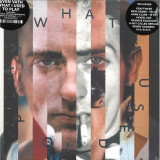
For this uniquely personal retrospective spread over twelve vinyl discs, Sven Väth takes us back to the early days of his DJ career. On What I Used To Play we meet great pioneers of electronic music, gifted percussionists, obscure wave bands, and innovative producers of a bygone 'new electronic' era. Rough beats and irresistible grooves from the identification stage of house, techno, and acid remind us not just how far electronic music has evolved over the past four decades, but how great it was to dance to EBM, techno, and house for the very first time.
If there is one protagonist of the electronic music scene who has remained curious, innovative and at the very cutting edge of music for over four decades, it's Sven Väth. His multi-layered artist albums and Sound of the Season mix compilations have been defining the genre for over two decades, and even today, he is constantly on the lookout for the next top tune to add to the highlights of his next set. At least, that's the case when he's not producing them himself as an artist or remixer. "Actually, it's always been part of my DNA to think ahead," and nothing had been further from his mind than looking back at his past, but when in spring of 2020 the international DJ circuit had to be scaled down to virtually zero, the 'restless traveler' suddenly had time. Time to stop and reflect on "how it actually was back then, at the very beginning of my career..."
"It was a great trip and with every track, beautiful memories came flooding back".
In the London apartment, he had just moved into, Sven has set up a "little music room", where he cocooned himself for several days, "to look way back for the first time and review my musical journey through the eighties, so to speak."
The interim result was six thematically oriented playlists with a grand total of 120 tracks from 'early 80s' to 'Balearic late 80s', together with excursions into afrobeat, European new wave, and EBM sounds and a few epochal techno/house tracks from the USA in between. From these 'Best of Sven Väth's favorites', the project What I Used To Play crystallized. Sven remembers how the Cocoon team reacted to his proposal: "They found the idea of making a compilation out of it MEGA from the beginning and everyone said 'Sven, go for it', but then, of course, the work really started, namely, to clear the rights and to get clean sounding masters of the up to 40-year-old tracks. There was also disappointment, of course. We couldn't clear certain titles because the rights holders in the USA had fallen out with each other or simply disappeared from the scene. In short, it wasn't easy, but now I can safely say we got the most important tracks."
Finally, after two years of research, curation, design, and administrative fine-tuning, the "little retrospective" from 1981 to 1990 is available. The exquisitely packaged, and three-kilo heavy box set is not only physically impressive, WIUTP is also the definitive record of Sven Väth's musical development. On each of the twenty-four sides of vinyl, you can trace track by track, what influenced him during which phase, and how he took off as a DJ from his parents' Queen's Pub straight into the spotlight at Dorian Gray. There and at Vogue (later OMEN), Sven became the style-defining player in the DJ booth that he still is today.
1981 - 1990: Future Sounds of Now
In the early eighties, the crowd in clubs like Vogue and Dorian Gray danced to what nowadays we call 'dance classics' - mainly disco, funk, soul, and chart pop. It was up to a new generation of DJs, including Sven Väth, the youngest protagonist in the Rhine-Main area at the time, to create their own club-ready music mix. Good new tracks and potential floor-fillers were rarities that had to be sought out and found, in order to prove oneself worthy.
Without MP3s, internet streaming, or other digital download possibilities, music didn't just gravitate to the DJ, instead, it had to be tracked down. In well-stocked record stores in Frankfurt and Wiesbaden or even in Amsterdam, London, or New York, Sven and friends sourced the material for countless magical nights. On WIUTP we can follow Sven's very personal journey through this wild, innovative era in which synth-pop, funk, hip-hop, and disco were successively replaced as 'club music' by house, techno, acid, and breakbeat. By the end of the decade, it was clear to see that these once exotic 'fringe' phenomena would soon become 'mass' phenomena.
Early 80s
Dirty Talk by the Italian-American duo Klein & M.B.O. represents the most innovative phase of the Italo-disco genre in the early eighties like no other track. Mario Boncaldo (I) and Tony Carrasco relied entirely on the original synthetic drum and percussion sounds of the Roland TR-808, coupled with the raunchy vocals of Rossana Casale and guitar accents of Davide Piatto. Of course, other tracks from this period were also influential in style, most notably Unit by Logic System, which worked as the perfect soundtrack to the laser lighting system at the legendary Dorian Gray club. With stomping beats and robotic rap interludes, Bostich by Yello also belongs on Sven's eternal playlist - after all, it caught the attention of Afrikaa Bambaataa, who invited the Swiss duo to perform at the Roxy in New York in 1983.
EBM Wave - Mid 80s
From today's point of view, the almost ten-minute-long, downtempo track Giant by Matt Johnson's band project The The, would probably not be considered an obvious club classic. However, a closer (re)listen reveals the rhythmic intricacies of the percussion overdubs by JG Thirlwell (aka Foetus) on Johnson's composition, and it becomes clear why this exceptional piece of music is one of Sven's absolute favorites. Other classics from this phase include Kaw-Liga by the mysterious The Residents, the hypnotic-synthetic Our Darkness by Anne Clark (and David Harrow), and last but not least, the somber, monotonous anthem Where Are You? by 16Bit, one of Sven Väth's projects together with Michael Münzing, Luca Anzilotti from 1986.
US House - Late 80s
You certainly can't talk about Chicago house without mentioning Frankie Knuckles. The resident DJ at the Warehouse not only gave the name to an entire genre, but also produced epochal floor fillers on the Trax label like the timeless Your Love, sung (and moaned) by Jamie Principle. Acid house protagonists Phuture also hail from Chicago, and on We Are Phuture (also released on Trax) we hear the chirping acid sounds of the legendary Roland TB-303 in full effect. Another featured classic is No UFO's by Detroit's Model 500 aka Juan Atkins, who is rightly considered the 'Godfather of Techno' even if the genre-defining track from 1985 still breathes with the spirit of hip-hop and electro from the first breakdance era.
Afrobeat
Le Serpent, by Algerian-born Abdelmadjid Guemguem, is a track that sounds completely different from everything else on WIUTP. Made in 1978, it's a monumental, rousing groove created without bass or synths, just with five congas! Even though Guem sadly passed away in 2021, his immortal, acoustic beats are understood all over the world and will continue to enrich many thousands of DJ sets for years to come. Another classic that not only Sven appreciates beyond measure is Hugh Masekela's Don't Go Lose it, Baby. In addition to being one of the most important jazz pioneers, the trumpeter and freedom fighter from Johannesburg was very experimental, integrating electronic sounds into his music in later years, in a similar vein to Miles Davis and Herbie Hancock. Dutch jazz pianist Jasper van't Hof's afrobeat project Pili Pili has also aged well. The trance-like, almost sixteen-minute-long track of the same name, manages to fill a whole side on the seventh of twelve vinyl discs in the WIUTP box.
UK-US-Euro - Late 80s
Time for a change of scene, in the truest sense of the word, and from a musical perspective, this section is like landing on another planet. First up is Andrew Weatherall's classic remix of Primal Scream's Loaded, featuring the iconic Peter Fonda sample (lifted from the 1966 biker film Wild Angels) that came to personify the mood triggered by the British Second Summer of Love in the late eighties: "We wanna be free to do what we wanna do, and we wanna get loaded...". This period also saw the emergence of M/A/R/R/S whose only single, 1987's Pump Up The Volume, became a club classic with support from DJ legend CJ Mackintosh. In this most eclectic of sections, we also encounter New York house and reggae producer Bobby Konders and his seminal Nervous Acid.
Balearic - Late 80s
Those who know him, know that Sven had already lost his heart to the 'magic island' of Ibiza as a teenager, so with that in mind, the WIUTP project couldn't end without a Balearic chapter. Inspired by Manuel Göttsching's E2-E4, the immortal, eponymously titled Sueño Latino belongs in there without question. Equally popular on the island was, and still is Break 4 Love by Raze, which thinking about it, would also fit perfectly into the house chapter. Last, but not least, there's an overdue reunion with Sven Väth himself, in his role as frontman of the successful Frankfurt trio OFF. Together with Michael Münzing and Luca Anzilotti (later of Snap!) this 'Organization For Fun' created the off-the-wall club hit Electric Salsa in 1986 which incidentally turned into an international chart smash, putting Sven in the enviable position of having to decide between pop stardom and a DJ career. Well, we all know how that decision turned out and the rest, as they say, is history. A not insignificant part of his story is What I Used To Play. Enjoy!
For the past 20 years Nostalgia 77 has become a catch all for the musical life of Ben Lamdin. His schizophrenic offerings range from songwriting sessions, soundtracks, excursions into Soul and in this case Jazz. The Loneliest Flower in the Village is an album that sees Lamdin reunited with longtime collaborator and arranger Riaan Vosloo and experienced veterans from a host of Nostalgia 77 projects.
'It had been a long time since we'd gigged or recorded so the idea was as much a little reunion in the studio as any grand plan to record an album' says Lamdin. 'The idea wasn't to do anything new (the material is both a few originals and a few covers), more just hear these players and their easy familiarity with each other after the disruption of Covid'.
Playing a clutch of originals by Riaan Vosloo and James Allsopp and covers by long term influences from South Africa such as Chris MacGregor and Abdullah Ibrahim, the emphasis is on strong melodies and open reaches for the soloists. The title track draws upon the song written by South African bassist Johnny Dyani and the result is spectacular; British jazz at heart but awash with references to South Africa and its strong jazz heritage.
'I'm pleased to say that I think this record is the best account of how the band (playing in this lineup since about 2010 ) sounds live. Full of energy and ranging from serene to firing on all cylinders.'
"Sounds sublime" - Gilles Peterson
"What a delightful, excitingly beautiful album. From "At Once Familiar " all the way through to "Same as Before" everything song feels and sounds sonically glorious. A modern day classic" - Nightmares On Wax
Taking a short sabbatical from their journey into the spiritual stratosphere and beyond, Work Money Death landed on terra firma just long enough to record a follow up to the critically acclaimed "The Space In Which The Uncontrollable Unknown Resides Can Be The Place From Which Creation Arises". The new album "Thought, Action, Reaction, Interaction" explores many of the meditative motifs that mould this unique group in their quest for the perfect sound and space. Those who are familiar with Work Money Death will know their output is as much an adventure for the listener as it was for the musicians.
"Thought, Action, Reaction, Interactions" is a salute to the now sadly deceased master of the spiritual sound Pharoah Sanders, and in particular the spontaneity of his recording process.
Each of the four tracks on "Thought, Action, Reaction, Interaction" were recorded in one take with no rehearsal and while the players may have known where they were starting off none of them were sure where they would end. As much as it is entertainment, and have no doubt this LP is an unctuous, spirit-smoothing joy from beginning to end, this is an experiment of making music in the moment. Spontaneous and spiritual in its truest sense, "Thought, Action, Reaction, Interaction" is a work of innovation and unsurpassed beauty.
"At Once Familiar" is a rising salute to the day, meditative, moving and fierce. An introduction to Burkill's emotive style, at once sweeping and succinct. It fills a room, and your head, with a very real sound, rich in texture and spirit.
"Freedom As A Heartfelt Song" is buoyant with harp, the spirit of the Yorkshire Pharoah is never more to the fore. Visceral sax rides over and uplifting backing, symbiotic and pinioned with power and beauty. Think Sun Ra horns meets Don Ellis brass.
"Song Of Healing" drifts on a river of music, guided through the rapids with a heartbeat bass line. This is temple sombre, with Eastern flavours and an overarching calm. A communion of sound, a master class in the understatement and power of the slow note, deceptively light.
"Same As Before" is spoken word playing foil to the call and response of the brass, dancing alongside and against each other. Spiritual vibrations cement ethereal forms to substantive sounds. A prayer to change."
As with the previous Work, Money, Death release (which was recorded in difficult conditions due to the Covid pandemic) the aim was to recreate a situation, in this case the impromptu and unrehearsed recording sessions of Sanders in the late 60's and early 70's, everything recorded in one take, creating a body of work that is a strong nod to a certain time and ethos but not a pastiche of it.
““Sounds sublime””
Gilles Peterson — BBC6, WorldWideFM
““What a delightful, excitingly beautiful album. From “At Once Familiar “ all the way through to “Same as Before” everything song feels and sounds sonically glorious. A modern day classic””
Nightmares On Wax —
Superb record, once again offering good surprises... with a superb visual !
BIG UP !
Queens Of The Circulating Library stands alongside Time Machines and Nurse With Wound's Soliloquy For Lilith as a post-industrial pinnacle of sensory-warping long-form drone. Crafted by the distilled duo of Thighpaulsandra and John Balance, the 49-minute piece unfurls in swirling, cyclical waves, tidal as much as textural, channeling the spirit of levitational minimalism pioneered by La Monte Young. Touted as the first part in "a continually mutating series of circulating musickal compositions" upon its initial release in 2000, the album remains a compelling case study in Coil's exceptional capacity for mutation and extremes. The theatrical introductory monologue delivered by Thighpaulsandra's mother - a career opera singer, in her 80's at the time of recording - sets the stage for a grandiose ascension. Written by Balance, the text is declamatory but dreamlike, refracted through megaphone echo: "Return the book of knowledge / Return the marble index / File under "Paradox" / The forest is a college, each tree a university." As her voice fades, the lulling synthetic infinity deepens, congealing into transient crests of volume and haze, like slow-motion surf misting in moonlight. Thighpaulsandra describes their aesthetic intention as a "bliss out," static but shape-shifting, an amniotic drift towards an eternal vanishing point. A supreme sonic embodiment of the slogan on the sleeve of Time Machines, two years prior: "Persistence is all.
The album’s seemingly brief tracklisting belies a work of great beauty and depth, and one which turned into a one-man crusade for singer/guitarist Lars Andersson, intertwining deeply personal stories with his love for the era of Romanticism. “Every time I go to a museum and I’m about to pass through the era of Romanticism I stop in awe,” says Lars of the enduring appeal of the 18th century artistic movement. “Whatever it is – stories, paintings, music – it triggers something deep within me, something profoundly human. It really hits a nerve, and it utterly immerses me to a point where I can’t move.” The album replicates this feeling; a gloriously over-the-top blend of Slowdive and Sigur Rós, mixed with the single-mindedness of Daniel Johnston and the noisiness of Nirvana, it’s as bold and beautiful and every bit as ornate as the art that inspired it. Unlike their acclaimed debut, 2019’s All That Ever Could Have Been, which gradually came into focus with a 15-minute opening track, Picturesque hits home from the very first note of the short and sweet opener, ‘Ballerina’. That’s not to say there aren’t epics here – ‘Metamorphosis’ is essentially a 12-minute suite of three movements; blistering closer ‘The Lot’ is 11 minutes of Swans-inspired heaviness – but everything is much more direct and focused. This isn’t an album to lose yourself in, it’s one to get swept away by. “‘More is more’ was definitely the credo when making this record,” agrees Lars. “A big inspiration were bands like Pond and the way they manage to fill their songs up with stuff to the absolute maximum. While I definitely tried to give the listener some room to breathe at certain points and while, in good old post-rock fashion, it still builds up and breaks down, it relies much more on simple melody and harmony as opposed to noisy experimentation to transport feeling.” Never more so than on the first single, ‘The Golden Age’, which is the album’s centrepiece; a soaring slice of über-shoegaze that is so stunning you can’t take your eyes or ears off it. Like all the songs on the album, it’s based around a fairy-tale from the Romantic era. In this case, it’s Heinrich von Ofterdingen by the German poet, author and philosopher Novalis (other influences are: The Steadfast Tin Soldier by Hans Christian Andersen; The Seven Ravens and Hans in Luck by the Brothers Grimm; Undine by Friedrich de la Motte Fouqué and The Golden Pot by E.T.A. Hoffmann), with Lars drawing parallels between the titular character’s mystical and romantic searchings and his own personal quest. This is apt as the album has been an overriding obsession for Lars for the past two-and-a-half years; as well as writing and recording the songs (bandmate Phillip Dornauer played drums), he also mixed and mastered them at his Alpine Audio studio and Picturesque is very much his Brian Wilson or Kevin Shields moment. MOLLY were in the middle of their European tour when Covid hit in early 2020, forcing Lars to retreat back to his home outside Innsbruck and giving him time and space to think about every detail of the record. “Well, I was on a quest I guess,” he admits. “Like everyone, I was stranded at home and at some point I just said to myself, ‘If not now, then when?’ It was an intense process. I’ve worked on music from other bands and artists before but producing and mixing your own music is an utterly different animal. It was probably the most intense thing I’ve ever done, but it was also incredibly rewarding and the feeling of it all coming together piece by piece is incomparable.” The artwork is just as effective. “I think of Radiohead’s OK Computer – what you hear on the record is what you see on the cover,” explains Lars. “We were inspired by what we call ‘wimmelbilder’ hidden pictures in German, a very specific style in art where there are a lot of little things happening. When you see it from further away, it looks organic like a lost painting from the area of Romanticism, but the closer you look the more digital it gets. It’s a nice analogy.” He’s right, it perfectly sums up the conflict between Romanticism and 21st century life. “Romanticism was basically an answer to the Industrial Revolution as well as the social and political norms of the Age Of Enlightenment,” concludes Lars. “Now, we all live in a much more industrialised, materialistic, individualistic and sterile society than any early Romanticist could have ever possibly imagined. Over 200 years later the Romanticists have lost the battle.” With the divine and downright pulchritudinous Picturesque, MOLLY begin the fightback.1.Ballerina 2.Metamorphosis 3.The Golden Age 4.Sunday Kid 5.So To Speak 6.The Lot
- A1: It's All Punk Rock (Part 1)
- A2: 430 King's Road (Where Punk Meets Rock 'N' Roll) (Where Punk Meets Rock 'N' Roll)
- A3: Kiss Me Punk (Till My Mouth Gets Numb) (Till My Mouth Gets Numb)
- A4: The Class Of '76 (Punk Year Zero) (Punk Year Zero)
- A5: Punk Badge
- A6: Anarchy Tour After Grundy (Punks Out On Parole) (Punks Out On Parole)
- A7: Never Mind The Punk 45
- A8: A Punky Night In Soho
- B1: Punk Rock Jubilee 77
- B2: All You Need Is Punk
- B3: Punk Times
- B4: The Punk Rockers Gig Prayer
- B5: Flogging Punk Rock
- B6: All Aboard The Punk Rock Express
- B7: The Last Punk On Portobello Road (Ode To Joe) (Ode To Joe)
- B8: It's All Punk Rock (Part 2)
- B9: It's All Punk Rock (Full Version - Bonus Track)
Includes one-sided 7” ('It's All Punk (Full version)”, signed and blind stamped limited edition print, fly poster (20cm x 30cm), 20 page 12” x 12” booklet with lyrics and photos laid out in style of newspaper.
The ‘It’s All Punk Rock’ album was initially inspired by various artworks Punk Artist Mal-One had completed and titled. These titles usually turned into Punk Poetry / Lyrics and finally into songs. The idea would lead to grouping these songs together and to add the additional difficult cherry on the top. The songs would also include the word ‘Punk’ in each of their titles. Creating what we called the first Punk Art Concept Album. The title of the album as well as summing up the contents, grew from a term Mal-One had used for years when asked what had inspired a certain work or what was the meaning behind something …”It’s All Punk Rock”’ would be the quick reply.
Each song tells the story or relates the ideas behind a work, whether that be 430 King’s Road (where Punk meets Rock ’N’ Roll) the story of the various guises that Malcolm McLaren and Vivienne Westwood would conceive for their shop from LET IT ROCK, TOO FAST TO LIVE TOO YOUNG TO DIE, SEX, SEDTIONARIES. Anarchy Tour After Grundy (Punks out on Parole) the story of the `Anarchy Tour’ and what happened after the infamous appearance by the Sex Pistols on the ‘Today’ show with Bill Grundy. Punk Rock Jubilee 77, the Silver Jubilee celebrations of 1977 and its punk overtones. The Punk Rockers Gig Prayer, a Punk poem for the various venues that bands played back in those heady times. The Last Punk on Portobello Road (Ode to Joe), a lament to Mr Joe Strummer an inspiration to us all. Yes, every picture as they say tells a story, in this case never a truer word spoken.
Hope you enjoy the ride sonically and visually.
The relationship between Bryn Jones’ music as Muslimgauze and the track/abum titles he would provide (sometimes right on the tapes he would send in for release, but often determined later, sometimes even giving two different pieces months apart the same title, accidentally or not) has always been a little mysterious. Jones himself can no longer be asked, and as we continue to investigate the swathes of material he provided, you hit sources like the DAT or DATs that make up the contents of the new double LP »Turn On Arab American Radio«. Nine tracks, the first LP/four tracks titled »Turn On Arabic American Radio,« and the other LP/five tracks labelled only »Arabic American Radio.« None of them sound particularly radio-esque, although given the simultaneous vastness and ornate focus of Jones’ Muslimgauze work that gap between name and sound is far from atypical.
Instead here the de rigeur percussion loops that underpin this particular set of tracks, while occasionally clipping into the fierce distortion that Jones either loved to use or couldn’t get away from, steer away from both the more consistent application of that distortion as well as the Middle Eastern and Asian influences he often used. It’d be a stretch to call anything here basic boom-bap production but they come closer to it than a lot of Muslimgauze production. And while those loops are, as always prominent, they’re not actually the focus; settling into steady vamps as structures for Jones to pursue an extended and often more gentle exploration of the other sample sources he has here. There are stringed instruments, the sound of water, but most prominently or strikingly the human voice. Nothing is in English but tone and the occasional word ('familia', 'passport') still provide guides. There are ululations, snatches of melody; but most often speech, dialogue, often tense and harried sounding. Is this what Jones was thinking of or referring to with his Arabic American Radio?
As with so many other questions about Muslimgauze, we’ll never know the answer to that one. (Most pertinently in this case we might wonder who appears here, and what the context of these recordings is. But Jones never provided that with his submissions.) Here, even though those inexorable loops pound on, indefatigable, that emphasis on some of the people Jones chooses lends a measured gentleness to much of »Turn On Arabic American Radio«, at least within the context of his body of work. The last thing you hear at the end of the second LP is one last question from one of the many speakers on this peculiar Muslimgauze radio, echoed away into infinity. We may never have answers, but those questions continue to resonate.
- 1: Falling From The Sky With Ben Bridwell (Band Of Horses)
- 2: Bullets & Rocks With Sam Beam (Iron & Wine)
- 3: When The Angels Played With Pieta Brown & Greg Leisz
- 4: Tapping On The Line With Neko Case
- 5: Cumbia De Donde With Amparo Sanchez
- 6: Miles From The Sea With Gaby Moreno
- 7: Coyoacán
- 8: Beneath The City Of Dreams With Gaby Moreno
- 9: Woodshed Waltz With Greg Leisz
- 10: Moon Never Rises With Carla Morrison
- 11: World Undone With Takim
- 12: Follow The River With Nick Urata (Devotchka)
LP 180G HEAVY BLACK VINYL, INCL. 12 TRACK MP3 ALBUM
For the better part of two decades, the acclaimed band Calexico has crossed musical barriers, embracing a multitude of styles, variety in instrumentation, and well-cultivated signature sounds. With their forthcoming record Edge of the Sun, out April 13th via City Slang, they take inspiration from a trip to a place surprisingly unexplored by the band before in Mexico City, and with the benefit of many friends and comrades to help guide the way.
Encouraged by the experience, the guest list grew to include Ben Bridwell (Band of Horses), Nick Urata (Devotchka), Carla Morrison, Gaby Moreno, Amparo Sanchez, multi-instrumentalists from the Greek band Takim, and Neko Case. Burns' brother John Burns lent a hand to some lyrics and songwriting, and the band's keyboardist, Sergio Mendoza, stepped up to co-write and arrange certain songs, ultimately co-producing the album along with Burns, John Convertino, and longtime associate Craig Schumacher.